

Global Medical Micro Injection Molding Market Size and Forecast – 2026 To 2033
The global medical micro injection molding market is expected to grow from USD 1,860.0 Mn in 2026 to USD 3,420.0 Mn by 2033, registering a compound annual growth rate (CAGR) of 9.1% from 2026 to 2033. The market for medical micro injection molding is poised for significant expansion, fueled by the soaring burden of chronic diseases, and surging demand for advanced medical devices requiring miniature and high-precision components.
For instance, the U.S. Food and Drug Administration (FDA) has an oversight of approximately 190,000 individual medical devices classified within over 18,000 device groups illustrating the growing medical device manufacturing ecosystem and increasing need for small, high precision components manufactured via medical micro injection molding approaches. (Source: Food and Drug Administration)
Key Takeaways of the Global Medical Micro Injection Molding Market
- Thermoplastics are projected to hold 47.5 % of the global medical micro injection molding market share in 2026, making it the dominant material type segment, throughout Europe due to stringent EU medical device material safety standards and the surging demand for biocompatible, sterilization-resistant plastics in minimally invasive and wearable healthcare devices. For instance, European Commission’s Medical Devices Regulation (EU MDR) mandates biocompatibility and traceability standards on medical device materials, facilitating a region-wide migration to more advanced medical-grade thermoplastics. (Source: European Commission)
- Drug delivery devices are projected to hold 31.8 % of the global medical micro injection molding market share in 2026, making it the dominant application segment, across North America due to high penetration of wearable injectors, prefillable syringes, and self-administrated biologics delivery systems demanding next generation miniaturized parts. For instance, the U.S. FDA guidance on combination products facilitates the regulation of complex drug-device combinations products, resulting in faster adoption of precision micro molded drug delivery components in the region. (Source: Food and Drug Administration)
- Medical device manufacturers are projected to hold 54.2 % of the global medical micro injection molding market share in 2026, making it the dominant end user segment, across Asia Pacific due to fast-paced growth in regional medical device manufacturers as well as growing investments in healthcare technology, and extensive government incentives policies that encourage domestic manufacturing in China, Japan, South Korea and India. For instance, Japan's Medical Device Industry Policy advocates innovation, domestic production and high-tech manufacturing investment in Japanese medical device industry. This policy helps fund expansion of micro business manufacturing technology and high-precision manufacturing of healthcare components throughout the Japanese medical device industry. (Source: Ministry of Economy, Trade and Industry (METI))
- North America maintains its dominance with an expected share of 39.6 % in 2026, bolstered by mature medical manufacturing infrastructure, robust regulation, and emerging investment in precision healthcare fields across the U.S. and Canada. The region remains a focus for modernized regulation supporting quality-oriented medical component manufacturing. For instance, Health Canada - Medical Devices Regulations (SOR/98-282) promote stricter compliance for the safety, traceability and quality of manufacturing of medical devices, leading Canadian industries to adopt superior precision micro molding technology. (Source: Government of Canada)
- Asia Pacific is expected to exhibit the fastest growth with an estimated contribution of 23.7 % share in 2026, driven by increasing government investment in domestic medical manufacturing, growing localization of medical device production, and developing mature precision engineering capabilities across the key economies. The region is under a significant policy framework to foster manufacturing of advanced medical technology and its competitiveness. For instance, Made in China 2025 initiative for medical devices strengthens indigenous innovation of high-end medical devices and further promotes the development of high precision micro manufacturing and medical components manufacturing so as to enhance existing production capacity. (Source: Chin Briefing)
- Increasing adoption of biodegradable and sustainable medical polymers: The requirements for environment-friendly and biodegradable medical solutions are leading to increased use of biodegradable polymers in disposable medical devices and components such as micro molded healthcare devices. Medical device companies are also actively investigating sustainable thermoplastics for single use applications that maintain biocompatibility, sterilizability and precision molding performance.
- Growing adoption of hybrid and multi-material micro molding technologies: Medical device manufacturers are increasingly utilizing hybrid micro molding methods that combines multiple materials within single miniature component to improve flexibility, sealing capability, ergonomic support and structural integrity. This trend is facilitating the evolution of state-of-the-art catheter systems, wearable healthcare devices, as well as minimally invasive surgical instruments with enhanced features and miniaturized profiles.
Segmental Insights
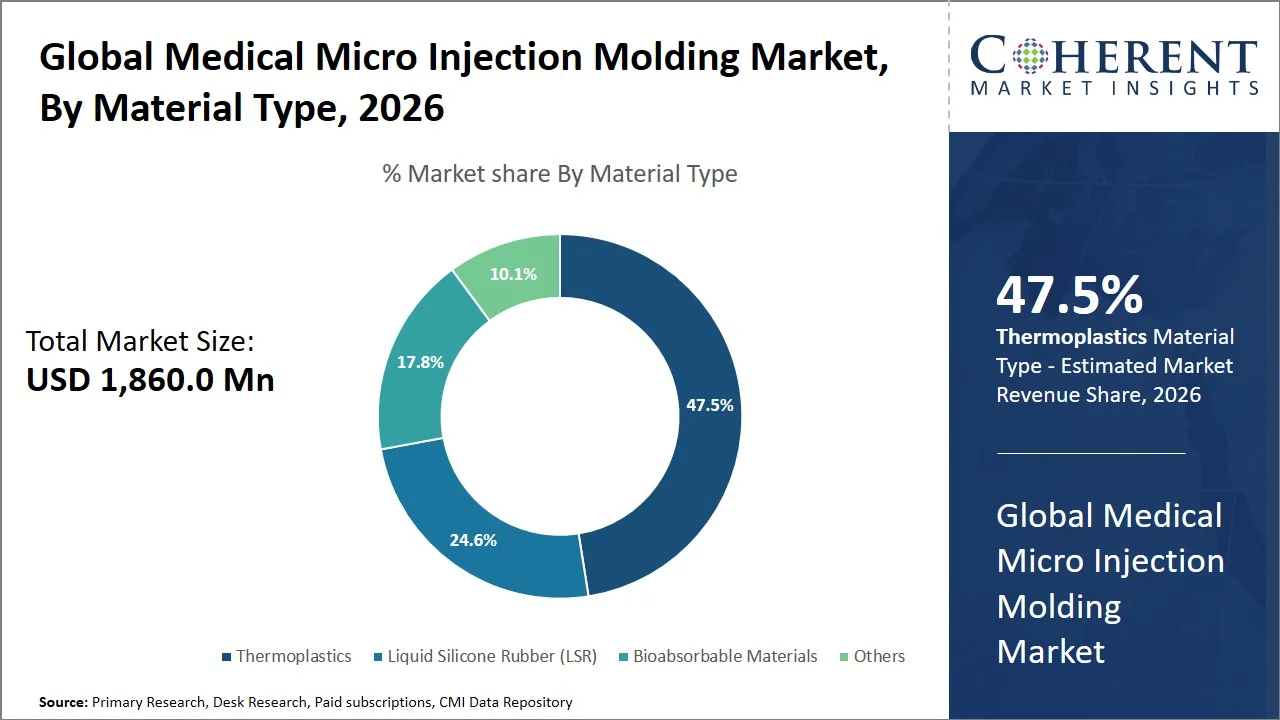
Why Do Thermoplastics Dominate the Global Medical Micro Injection Molding Market?
Thermoplastics are projected to hold a market share of 47.5% in 2026, owing to their biocompatibility, chemical resistance, sterilization properties and their proficiency in producing dimensionally precise and complex medical micro parts. Polypropylene, polyethylene, and polycarbonate plastics are often used in the manufacture of catheter systems, diagnostic cartridges, wear-able devices, and drug delivery systems as they help in producing high volume medical micro components with the required high accuracy and geometric complexity. Additionally, their cost-effectiveness and adaptability to disposable and minimal invasive medical devices contribute to their increasing use. For instance, BASF Medical Technology Engineering Plastics Portfolio showcases its comprehensive portfolio of high-performance engineering thermoplastics suitable for demanding medical technology applications that need consistency of formulation, sterility resistance and high precision for advanced healthcare components. (Source: BASF)
- Current Industry Events of 2026
- Market Size Estimation
- Regional Breakdown
- Competitive Landscape
- Customer Intelligence
- Segmental Analysis
- Pricing Analysis
- Key Market Drivers, Challenges & Future Trends
- Customized Insights Section
Why Do Drug Delivery Devices Represent the Largest Application Segment in the Medical Micro Injection Molding Market?
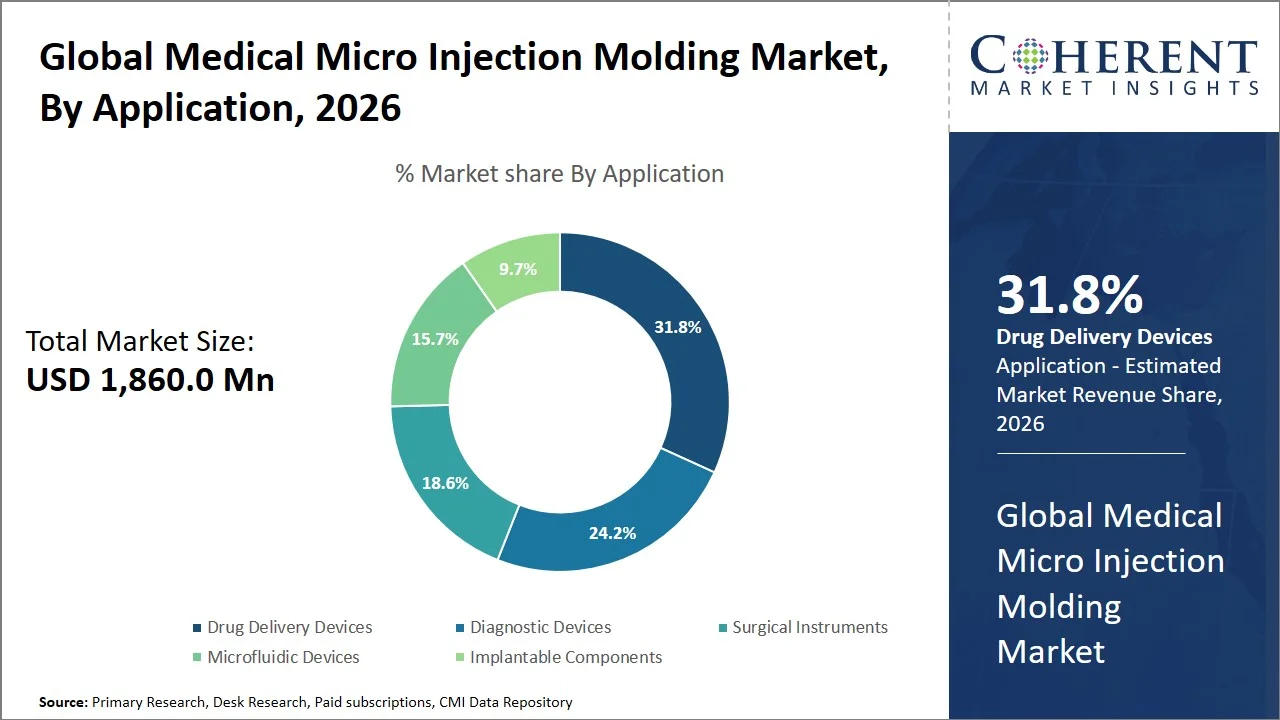
Drug delivery devices are projected to hold a market share of 31.8% in 2026, owing to escalating demand for minimally invasive therapies, self-injection device and precision medicine. Insulin pens, wearable injectors, inhalers, implantable pumps and others require miniature, high precision, and low tolerance, highly repetitive, miniaturized parts and that is offered by micro injection molding technologies. Patient-centric approaches and tiny drug delivery platforms push the demand for micro injection molded parts in the health and pharmaceutical industries. For instance, in January 2026, Ypsomed and BD’s partnership expansion for biologics delivery solutions announced the development of 5.5mL BD Neopak XtraFlow glass pre-fillable syringe designed to operate with YpsoMate 5.5 autoinjector systems, highlighting the growing requirement for miniaturized, precision engineered parts in drug delivery systems. (Source: Ypsomed)
Medical Device Manufacturers Segment Dominates the Global Medical Micro Injection Molding Market
The medical device manufacturers segment is projected to hold a market share of 54.2% in 2026, as they have sustained requirements for high precision and miniature size components to be incorporated in implantable devices, medical diagnostic devices, medical surgical instruments and wearable medical devices. High dimensional accuracy, complicated shapes, continuous mass production and adherence to U.S. FDA and ISO quality standards can be achieved with micro injection molding. In view of increasing use of minimally invasive surgical procedures and innovative new age medical technologies, adoption of precision micro molded medical device components is being driven up. For instance, in July 2024, Teleflex Incorporated received FDA 510(k) approval for its Ringer Perfusion Balloon Catheter demonstrating the current trend towards precision micro component manufactured for advanced interventional cardiology products. (Source: Teleflex Incorporated)
Currents Events and their Impact
Current Events | Description and its Impact |
U.S. FDA Implements Quality Management System Regulation (QMSR) Aligned with ISO 13485 (February 2026) |
|
European Union Strengthens Medical Device Compliance under EU MDR Transition Framework (December 2025) |
|
(Source: Food and Drug Administration, European Commission)
Medical Micro Injection Molding Market Dynamics
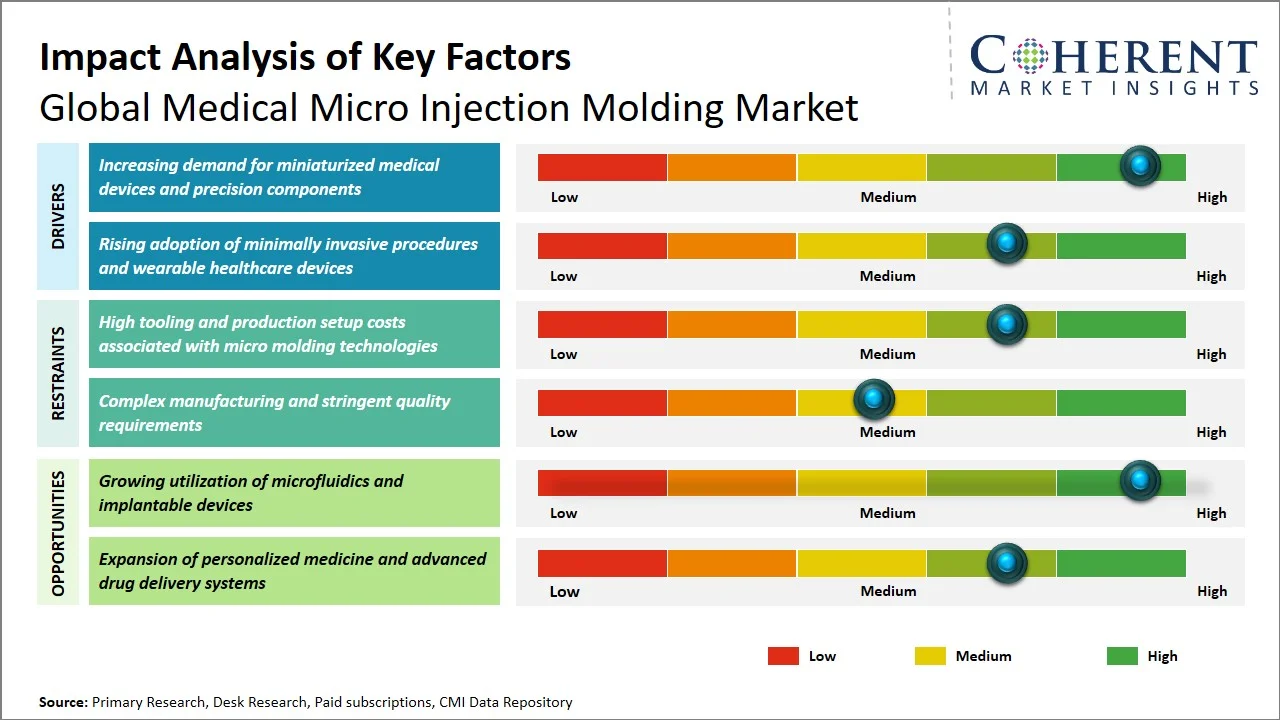
Market Drivers
- Increasing demand for miniaturized medical devices and precision components: The increasing trend of miniaturization in the healthcare industry, creates an increased demand for micro injection molding technologies to provide high precision and complexity micro molded components to be incorporated in medical implantable devices, portable diagnostic equipment, drug delivery systems and sensors worn on body. The adoption of minimally invasive procedures, such as microsurgery and the use of portable medical devices also increase the need of high-accuracy micro molded parts. For instance, in July 2025, Boston Scientific received U.S. FDA approval of extended labeling for its FARAPULSE Pulsed Field Ablation System, highlighting the rapid adoption of sophisticated, catheter-based systems which are dependent on miniaturized and precise medical components. (Source: Boston Scientific)
- Rising adoption of minimally invasive procedures and wearable healthcare devices: The growing popularity of minimally invasive and networked healthcare devices is leading to the development of high-precision micro-molded medical components in devices such as catheter devices, wearable injectors, bio-sensors and handheld monitoring equipment. Lightweight and mini size medical micro-injection molding is essential to manufacture small precision components for the advancing medical industry. For instance, in January 2024, Abbott launched its Lingo biowearable gadget enabling continuous glucose monitoring and tailored health tracking, illustrating an emerging trend toward miniaturization of medical wearables with use of finely machined tiny components. (Source: Abbott)
Emerging Trends
- Growing adoption of microfluidic and lab-on-chip devices: The growing implementation of point-of-care diagnostics and portable test platforms has created a demand for high-complexity micro molded components with super-fine fluidic channels and diminutive geometric shapes. Medical micro injection molding allows the manufacture of precise components for sophisticated diagnostic cartridges and microfluidic devices.
- Rising integration of automation in micro molding processes: The trend for increased use of robotics and AI-based process monitoring and automated cleanroom production has led to a boost in the dimensional accuracy and production consistency, making it possible to mass produce small medical devices with lower defects and better operations.
Regional Insights
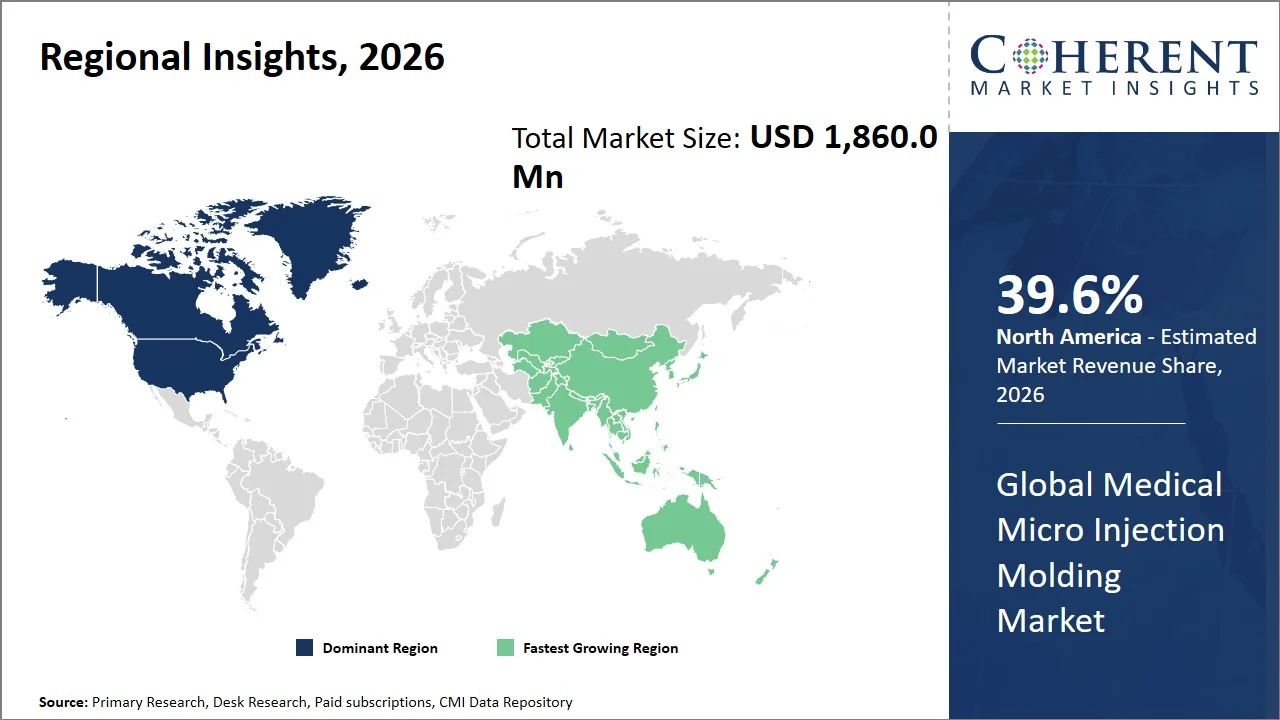
Why is North America a Strong Market for Medical Micro Injection Molding?
North America leads the global medical micro injection molding market, accounting for an estimated 39.6% share in 2026, due to the mature healthcare infrastructure, strong technical expertise and the existence of the medical device manufacturers' ecosystem. Strong regulatory standards followed by the U.S. FDA ensures that the production quality of micro injection molding technologies is in accordance with the required medical standards. For instance, U.S.-based micro molding manufacturers in the medical industry are required to conform to the FDA Quality System Regulation (QSR, 21 CFR Part 820), which calls for quality control for design controls, process validation, quality assurance, and traceability of the medical devices being produced. (Source: Code of Federal Regulations)
Moreover, government incentive for the medical technology and R&D investments greatly affect the market in this region. Key manufacturers in the region like Medtronic, Zimmer Biomet, and Jabil play a critical role in supplying various intricate parts used for the implants, surgical devices and diagnostic devices. Furthermore, extensive suppliers and manufacturing facilities enhance the supply chain and provide a leading edge for medical micro-injection molding.
Why Does the Asia Pacific Medical Micro Injection Molding Market Exhibit High Growth?
The Asia Pacific medical micro injection molding market is expected to exhibit the fastest growth with an estimated contribution of 23.7% share to the global market in 2026, due to the high industrialization, rise in health care spending, and expanding medical device market for countries like China, India, Japan, and South Korea. Increasing government support to promote manufacturing and exports in this sector as well as competitive labor costs and escalating local demand to accommodate the increasing medical device industry is fueling market growth. For instance, In India, a Production Linked Incentive (PLI) scheme for medical devices provides financial incentives to support the manufacturing of sophisticated medical devices locally. This incentive scheme encourages investments in the precision manufacturing technologies and high value medical component manufacturing capacities in India (Source: Ministry of Chemicals and Fertilizers). Trading practices and trade agreements within the region and with international markets, like FTAs, has led Asia Pacific to be one of the major production hub for the medical micro injection molding market.
Global Medical Micro Injection Molding Market Outlook for Key Countries
Why is the U.S. Leading Innovation and Adoption in the Medical Micro Injection Molding Market?
The U. S. is at the forefront of innovation and adoption in the medical micro injection molding market due to wide base of high-end medical device manufacturers (such as Medtronic, Boston Scientific, Abbott, and Johnson & Johnson) as well as niche precision molding companies producing miniature complex components (such as Accumold, Isometric Micro Molding, and MTD Micro Molding). Medical micro molded components are being adopted in catheter system, wearable injector, diagnostic cartridge as well as robotic assisted surgical device. Advanced cleanroom manufacturing as well as quicker adaptation of automation-led molding processes is also contributing for growth of high-volume precision production within the healthcare sector.
Is the U.K. a Favorable Market for Medical Micro Injection Molding Market?
The U.K. is one of the most promising markets for the medical micro injection molding market due to the country’s high investment in minimally invasive medical technologies and sophisticated diagnostics manufacturing processes coupled with their precision engineering capabilities. The country has a dense presence of medtech manufacturers (such as Smith+Nephew, Owen Mumford, and Creo Medical)., specialized healthcare manufacturing establishments involved in catheter systems, drug delivery systems and micro fluidic diagnostic platforms. Collaborative ventures between medtech companies and precision manufacturing companies also promote manufacturing of customized mini sized devices within all sectors of the healthcare system across the UK.
Is China Emerging as a Key Growth Hub for the Medical Micro Injection Molding Market?
China is positioned as a key growth hub in the global medical micro injection molding market driven by the tremendous growth in its domestic medical device manufacturing industry alongside a rising volume of precision healthcare component production. Strong demand from China exists for micro molded components used in medical wearable devices, micro-invasive surgical devices, diagnostic cartridges, and drug delivery systems. Increasing production capacity of China in high-volume, precision medical components is also driven by large-scale manufacturing clusters and significant investment in production capacity by large companies such as Mindray, MicroPort, and Lepu Medical.
Why Does Germany Top the European Medical Micro Injection Molding Market?
Germany is the leader in the European market for medical micro injection molding owing to its highly sophisticated precision engineering expertise and an embedded medical device manufacturing supply base. The country is home to premier medical device and healthcare equipment manufacturers like B. Braun, Siemens Healthineers, and Carl Zeiss Meditec. Moreover, German manufacturing specialization in highly precision tools and dies, automation and cleanroom facilities enable massive manufacturing of complex medical micro molded components to high quality standards.
Is Medical Micro Injection Molding Market Developing in Japan?
Japan is emerging as a lucrative market for medical micro injection molding due to excellent micro manufacturing abilities, and strong customer demand for small high-accuracy medical devices. Japan has great technical knowledge when it comes to the miniaturization of diagnostic instruments, catheter-based medical systems, wearable medical devices, and surgical robotic based medical instruments. Ongoing efforts in tooling precision, robotics integration, and ultra fine molding techniques are enabling the manufacture of complex medical parts with excellent accuracy and reproducibility.
Regulatory Landscape Governing the Global Medical Micro Injection Molding Market
Region | Authority & Classification | Approval Pathway | Key Regulatory Insight |
North America | U.S. Food and Drug Administration (FDA) – Medical Device Classification (Class I, II, III) | 510(k), PMA (Premarket Approval), and Quality System Regulation (QSR) compliance | Strong emphasis on biocompatibility, cleanroom manufacturing, traceability, and precision quality standards for micro molded medical components |
Europe | European Medicines Agency (EMA) & European Commission MDR (Medical Device Regulation) | CE Marking under EU MDR 2017/745 with conformity assessment by notified bodies | Strict focus on product safety, risk management, material compliance, and clinical evaluation for medical device components |
Asia Pacific | National Medical Products Administration (NMPA - China), PMDA (Japan), CDSCO (India) | Country-specific medical device registration and quality certification approvals | Increasing regulatory harmonization and rising investments in domestic medical device manufacturing and precision molding capabilities |
Latin America | ANVISA (Brazil), COFEPRIS (Mexico) | Local regulatory registration and import/manufacturing authorization approvals | Growing regulatory modernization and expanding healthcare infrastructure supporting advanced medical device adoption |
Middle East & Africa | Saudi Food & Drug Authority (SFDA), South African Health Products Regulatory Authority (SAHPRA) | Regional medical device registration and conformity approvals | Rising focus on healthcare localization, import quality standards, and expansion of advanced medical technology access |
How is the expansion of personalized medicine and advanced drug delivery systems creating new growth opportunities in the medical micro injection molding market?
The increasing developments in personalized medicine and drug delivery systems are contributing significantly to the overall demand within the global medical micro injection molding market, especially in producing high precision, patient-specific and miniaturized components. Micro injection molding processes are used for manufacturing critical and intricate components in wearable injector devices, microfluidic devices, inhaler devices, implantable drug delivery systems, diagnostic cartridges in a high precision, highly repetitive and accurately fashion. The new advancements in target therapies and self-administration devices are fueling the demand in micro molded medical parts. For instance, in October 2024, BD (Becton, Dickinson and Company) demonstrated its innovative drug delivery solutions including new prefillable syringe technologies and biologics delivery technologies at CPHI Milan (Source: BD). These trends will likely increase the demand for micro injection molded high precision medical components used in the next generation of drug delivery.
Market Players, Key Development, and Competitive Intelligence
Key Developments
- In November 2025, Vance Street sold Injectech and launched its medical molding platform, increasing breadth in the medical device, life science, and bioprocessing segments. This acquisition bolsters the company's knowledge in precision molding and single-use medical products.
- In October 2024, Biomerics introduced new vertically-integrated Metal Injection Molding (MIM) services which increased manufacturing capacity for high-precision parts used in medical devices. The new services improved the manufacturing efficiency of miniaturized medical device components using advanced precision manufacturing technologies, which is likely to promote the growth in medical micro injection molding market.
Competitive Landscape
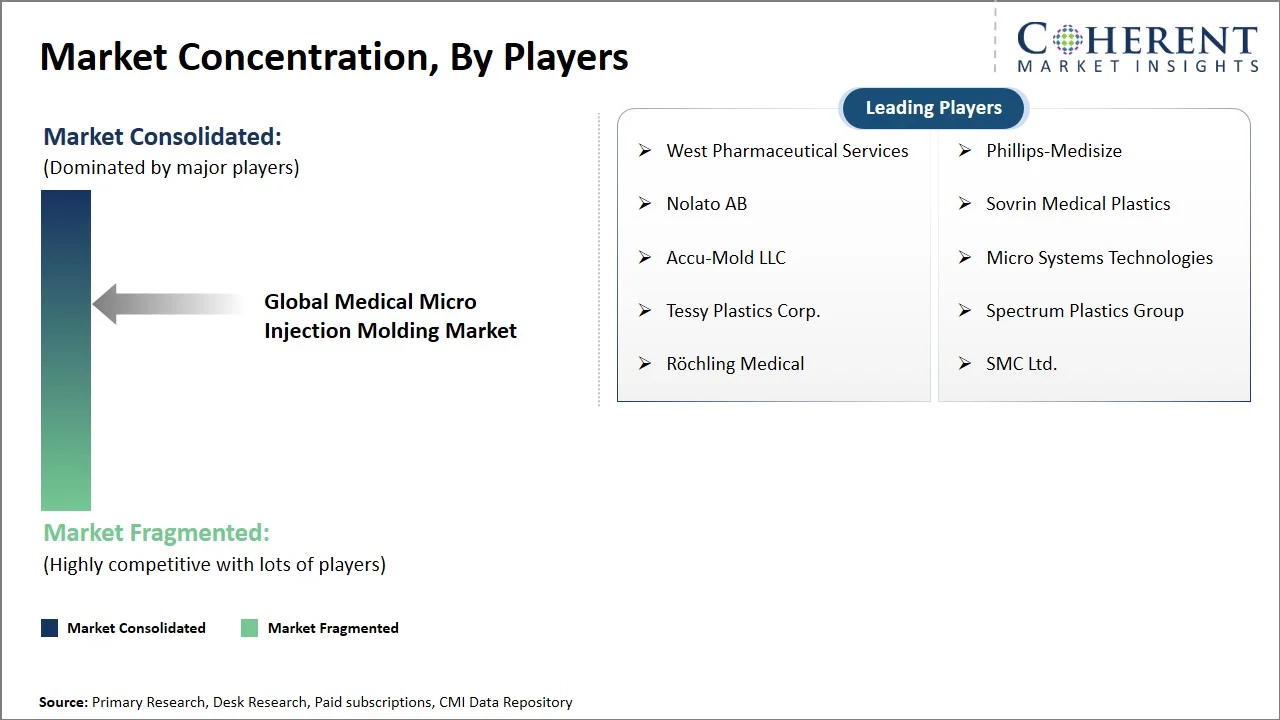
The global medical micro injection molding market is moderately competitive, comprising precision molding specialists, medical device manufacturers, contract manufacturing organizations, focused on micro miniaturized medical products and micro miniature high accuracy molding. Companies are striving to expand their business presence with enhanced focus on advanced technology adoption, automation and creation of micro-molded biocompatible products to boost their position in the market. Companies are also enhancing their clean room production facilities and regional presence due to the growing demand in the healthcare and diagnostic fields. Key focus areas include:
- Development of high-precision and ultra-miniaturized medical components
- Expansion of cleanroom manufacturing facilities and automated micro injection molding capabilities
- Strengthening partnerships with medical device OEMs and healthcare technology companies
- Increasing investment in biocompatible materials, product innovation, and high-volume precision production technologies
Market Report Scope
Medical Micro Injection Molding Market Report Coverage
| Report Coverage | Details | ||
|---|---|---|---|
| Base Year: | 2025 | Market Size in 2026: | USD 1,860.0Mn |
| Historical Data for: | 2020 To 2024 | Forecast Period: | 2026 To 2033 |
| Forecast Period 2026 to 2033 CAGR: | 9.1% | 2033 Value Projection: | USD 3,420.0 Mn |
| Geographies covered: |
| ||
| Segments covered: |
| ||
| Companies covered: | West Pharmaceutical Services, Phillips-Medisize, Nolato AB, Sovrin Medical Plastics, Accu-Mold LLC, Micro Systems Technologies, Tessy Plastics Corp., Spectrum Plastics Group, Röchling Medical, and SMC Ltd. | ||
| Growth Drivers: |
| ||
| Restraints & Challenges: |
| ||
Analyst Opinion (Expert Opinion)
- The future outlook for the global market for medical micro injection molding is projected to be influenced by an increase in use of miniaturized and precisely manufactured medical devices in diagnosis, drug delivery, wearable and minimally invasive applications, increased innovation in biocompatible polymer and automation along with growth in micro manufacturing technologies is expected to increase manufacturing efficiency as well as assist development of intricate and complex medical components with higher precision and accuracy.
- The maximum opportunities will probably exist within minimally invasive surgical instruments and wearable medical devices due to advancements in digitization of healthcare in the U.S., Germany, China, and Japan, the aging populations in the nations and increasing needs of highly technological medical equipment, where applications in catheters-based devices, microfluidic and portable medical devices will result in a great demand in precision micro molding.
- In order to obtain a competitive advantage, market participants should seek to develop their cleanroom manufacturing capabilities, investing in sophisticated automation and precision molding capabilities, and strengthening the relationships with medical device OEMs. Additionally, players must prioritize the development of tailored micro components with high-performance bio-compatible materials while reinforcing regional manufacturing and supply chain strengths to cater to the dynamic needs of the regulators and the medical device industry
Speak to the analyst
Want personalized insights?
Take the findings above to one of our principal consultants, or have the report rebuilt around the segments, geographies and competitors you actually track.
Market Segmentation
- Material Type Insights (Revenue, USD Mn, 2021 - 2033)
- Thermoplastics
- Liquid Silicone Rubber (LSR)
- Bioabsorbable Materials
- Others
- Application Insights (Revenue, USD Mn, 2021 - 2033)
- Drug Delivery Devices
- Diagnostic Devices
- Surgical Instruments
- Microfluidic Devices
- Implantable Components
- End User Insights (Revenue, USD Mn, 2021 - 2033)
- Medical Device Manufacturers
- Pharmaceutical and Biotechnology Companies
- Hospitals and Healthcare Facilities
- Research Institutes
- Others
- Regional Insights (Revenue, USD Mn, 2021 - 2033)
- North America
- U.S.
- Canada
- Latin America
- Brazil
- Argentina
- Mexico
- Rest of Latin America
- Europe
- Germany
- U.K.
- Spain
- France
- Italy
- Russia
- Rest of Europe
- Asia Pacific
- China
- India
- Japan
- Australia
- South Korea
- ASEAN
- Rest of Asia Pacific
- Middle East
- GCC Countries
- Israel
- Rest of Middle East
- Africa
- South Africa
- North Africa
- Central Africa
- North America
- Key Players Insights
- West Pharmaceutical Services
- Phillips-Medisize
- Nolato AB
- Sovrin Medical Plastics
- Accu-Mold LLC
- Micro Systems Technologies
- Tessy Plastics Corp.
- Spectrum Plastics Group
- Röchling Medical
- SMC Ltd.
Sources
Primary Research Interviews
- Medical device manufacturers and precision component engineers involved in micro injection molded product development and device miniaturization
- Healthcare OEMs and contract manufacturing organizations (CMOs) managing high-precision medical component supply chains
- Polymer material specialists and tooling experts engaged in biocompatible micro molding solutions and cleanroom manufacturing
- Researchers and healthcare technology professionals evaluating minimally invasive devices, wearable medical technologies, and microfluidic systems
Stakeholders
- Medical micro injection molding manufacturers and contract manufacturing organizations
- End-use Sectors
- Medical device and diagnostic equipment companies
- Wearable healthcare and remote monitoring device manufacturers
- Hospitals and surgical equipment providers
- Pharmaceutical and biotechnology companies
- Research institutes and microfluidics technology developers
- Healthcare packaging and drug delivery system manufacturers
- Regulatory & Health Bodies: U.S. Food and Drug Administration (FDA) – medical device regulations and quality standards, European Medicines Agency (EMA) – healthcare device and polymer safety guidelines, International Organization for Standardization (ISO) – medical manufacturing and cleanroom standards, World Health Organization (WHO) – healthcare infrastructure and chronic disease statistics
Databases
- WHO Global Health Observatory – chronic disease burden and healthcare infrastructure statistics
- OECD Health Statistics – healthcare expenditure and medical technology adoption trends
- CDC National Center for Health Statistics – healthcare utilization and medical device usage data
- World Bank Health Database – healthcare spending and industrial manufacturing indicators
- UN Comtrade Database – medical device and precision plastic component trade statistics
- Global Burden of Disease (GBD) Database – chronic disease and surgical procedure prevalence data
Magazines
- Medical Design & Outsourcing – medical device manufacturing and micro molding technology trends
- Plastics Technology – injection molding advancements and precision manufacturing updates
- Medical Product Outsourcing (MPO) – healthcare manufacturing and supply chain developments
- Injection World – micro molding equipment and polymer processing innovations
- MedTech Dive – medical technology and device industry advancements
Journals
- Journal of Medical Devices
- International Journal of Advanced Manufacturing Technology
- Journal of Micromechanics and Microengineering
- Medical Engineering & Physics
- Journal of Manufacturing Processes
- Microsystems & Nanoengineering
Newspapers
- Financial Times – healthcare manufacturing and medical technology market developments
- The Wall Street Journal – medical device industry and healthcare investment trends
- The New York Times (Health Section) – healthcare technology and medical innovation trends
Associations
- Medical Device Manufacturers Association (MDMA)
- Society of Plastics Engineers (SPE)
- American Medical Device Summit
- Advanced Medical Technology Association (AdvaMed)
- International Molded Parts Association (IMPA)
Public Domain Sources
- World Health Organization – healthcare infrastructure and chronic disease statistics
- U.S. Food and Drug Administration – medical device manufacturing regulations and approvals
- National Institutes of Health – biomedical engineering and medical device research publications
- World Bank – healthcare expenditure and industrial production data
- International Organization for Standardization (ISO) – cleanroom and medical manufacturing standards
Proprietary Elements
- CMI Data Analytics Tool, Proprietary CMI Existing Repository of information for last 10 years.
Get access to 250+ pages report
Every segment, forecast, competitor profile and data table behind the analysis above — available for instant download.
- ESOMAR Member
- ISO 9001:2015 Certified
- D-U-N-S Registered
- GDPR & CCPA Compliant
Missing comfort of reading report in your local language? Find your preferred language:
Transform your Strategy with Exclusive Trending Reports
Frequently Asked Questions
The global medical micro injection molding market is estimated to be valued at USD 1,860.0 Mn in 2026 and is expected to reach USD 3,420.0 Mn by 2033.
Thermoplastics dominate due to their high precision molding capability, biocompatibility, lightweight nature, design flexibility, and suitability for mass production of complex miniature medical components.
Medical micro injection molding is a precision manufacturing process used to produce extremely small and complex plastic components for medical devices and healthcare applications.
The CAGR of global medical micro injection molding market is projected to be 9.1%from 2026 to 2033.
Increasing demand for miniaturized medical devices and precision components, and rising adoption of minimally invasive procedures and wearable healthcare devices are the major factors driving the growth of the global medical micro injection molding market.
Medical micro injection molding is widely used in catheters, drug delivery devices, diagnostic equipment, surgical instruments, and wearable medical devices.
Precision is critical to ensure dimensional accuracy, product reliability, patient safety, and consistent performance in miniature medical components and devices.