

U.S. Wearable Healthcare Devices Market Size and Forecast: 2026-2033
The U.S. wearable healthcare devices market is expected to grow from USD 19.35 Bn in 2026 to USD 48.90 Bn by 2033, registering a compound annual growth rate (CAGR) of 14.2% from 2026 to 2033. The wearable healthcare devices market in the U.S. is poised for significant expansion, fueled by soaring burden of chronic diseases such as cardiovascular disorders, diabetes, obesity, and chronic respiratory disorders, which demand continuous monitoring and sustained management.
According to Centers for Disease Control and Prevention, three in four American adults have at least one chronic condition, and over half have two or more chronic conditions. Additionally, over 90% of adults aged 65 and above are affected by at least one chronic disease, reinforcing the need for long-term wearable healthcare devices in the U.S.
(Source: Centers for Disease Control and Prevention)
Key Takeaways of the U.S. Wearable Healthcare Devices Market
- Wearable monitoring devices are projected to hold 58.0 % of the U.S. wearable healthcare devices market share in 2026, making it the dominant product type segment, supported by widespread adoption of continuous monitoring technologies within healthcare organizations. For instance, Mayo Clinic has introduced remote monitoring services using data collected from wearables to monitor both heart conditions and post-acute cases, demonstrating how monitoring devices are embedded in care delivery for early intervention and reduced hospitalizations. (Source: Mayo Clinic)
- Consumer-grade is projected to hold 62.0 % of the U.S. wearable healthcare devices market share in 2026, making it the dominant grade segment, as a result of increasing popularity in payer-driven and employer-sponsored wellness initiatives that incentivize constant health monitoring. For instance, UnitedHealth Group incorporates wearable-based activity tracking into their wellness programs that encourage user participation by offering incentives and premium services, thus ensuring large-scale implementation beyond clinical settings. (Source: UnitedHealth Group)
- Fitness and wellness is projected to hold 46.0 % of the U.S. wearable healthcare devices market share in 2026, making it the dominant application segment, backed up by the increasing adoption of wearables within digital fitness applications and healthcare ecosystems. For instance, Strava, Inc. allows customers to connect their wearable devices to track their activities, analyze their performance, and engage with other users, thus ensuring high retention rates and daily use of the platform. Such platforms reinforce fitness and wellness as the most frequently used and scalable application, contributing significantly to segment dominance. (Source: Strava, Inc)
- Expansion of employer-sponsored and payer-integrated wearable programs: The employers and insurance companies in the U.S. have increasingly become more interested in using wearable devices in their wellness and risk-sharing programs to reduce future costs in the healthcare industry and improve the health outcomes of their employees. Wearables can be used in incentive programs, behavioral monitoring programs, and population health management programs leading to a steady stream of demand for these devices, which go beyond the scope of use in the healthcare industry. This is an opportunity for wearable firms to collaborate with insurers, self-insured organizations, and wellness providers.
- Growth of specialized wearable form factors (rings, patches, and smart textiles): Increased demand for non-invasive and disease-specific wearables, including smart rings, biosensor patches, and smart clothes, is being seen in the market. The need for such wearables are growing due to better comfort levels and continuous monitoring offered by them. Smart rings and biosensor patches have been gaining popularity in applications like sleep tracking, maternal healthcare, and post-surgical care. Such a trend holds promise for developing low-probability monitoring devices in addition to wrist-worn monitors.
Segmental Insights
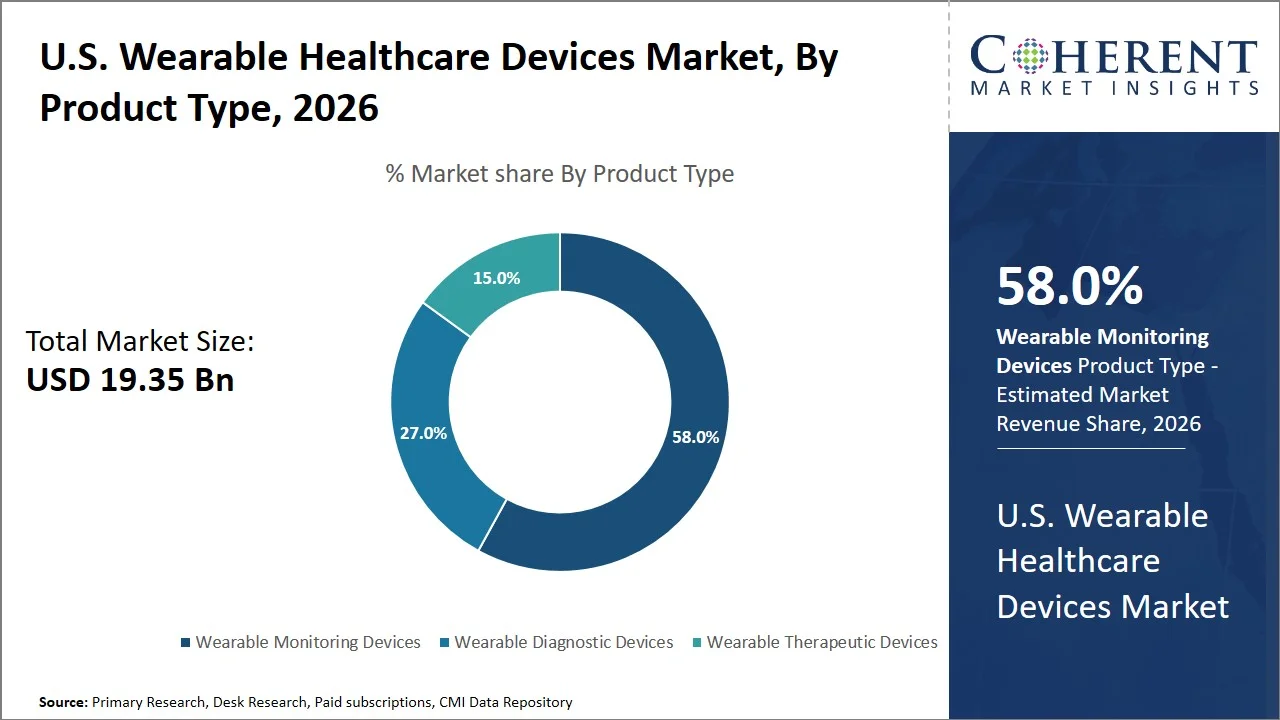
Why Does the Wearable Monitoring Devices Segment Dominate the U.S. Wearable Healthcare Devices Market?
Wearable monitoring devices are projected to hold a market share of 58.0% in 2026, because they serve as the primary data acquisition layer within the realm of digital health as they allow continuous longitudinal monitoring of physiological variables that can be utilized for clinical decision-making purposes. This is further facilitated through scalability across various care settings, excellent compatibility with reimbursement frameworks for remote patient monitoring and easy adoption across various acute as well as home care settings. This trend is reinforced by the developments in the market such a Medtronic plc, is developing ambulatory cardiac monitoring devices to enable long-term diagnostics (Source: Medtronic plc), while Dexcom, Inc. is working on improving its portfolio of CGM systems for better diabetes management using mobile technology. (Source: Dexcom, Inc.) The above advancements show how monitoring devices are becoming interoperable, clinically useful, and data-driven products, thus ensuring their continued domination in the U.S. wearable healthcare devices market.
- Current Industry Events of 2026
- Market Size Estimation
- Regional Breakdown
- Competitive Landscape
- Customer Intelligence
- Segmental Analysis
- Pricing Analysis
- Key Market Drivers, Challenges & Future Trends
- Customized Insights Section
Why Does Consumer-grade Represent the Largest Grade Segment in the U.S. Wearable Healthcare Devices Market?
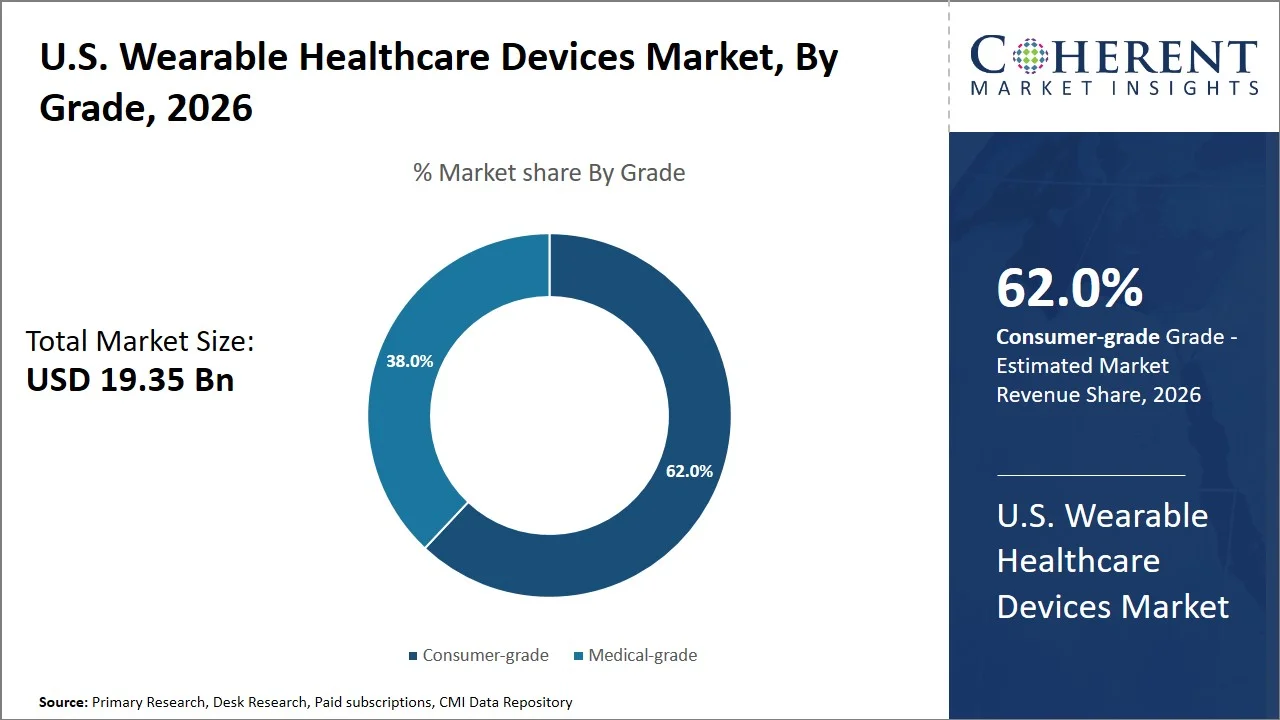
Consumer-grade is projected to hold 62.0% of the market share in 2026, based on account of the scalability, cost efficiency, and frequent usage associated with the devices that make the segment commercially most viable. The consumer grade wearables are used continuously for health tracking purposes by users and hence generate large numbers of active users and more data points in comparison to medical grade wearables. The consumer-grade segment is supported by frequent innovation cycles, integration into the technology ecosystem of mobile applications and cloud computing platforms, and direct selling strategies. For instance, Garmin Ltd provides wearables that have wellness capabilities including energy levels and stress management through its Garmin Health Platform. (Source: Garmin Ltd) The combination of above-mentioned factors makes the consumer grade segment the highest volume and most broadly adopted segment, thus determining the revenues of the total market in the U.S.
Fitness and Wellness Segment Dominates the U.S. Wearable Healthcare Devices Market
The fitness and wellness segment is expected to lead and hold 46.0% of the U.S. wearable healthcare devices market share in 2026, as they target the biggest addressable user population through applications that adopt prevention and lifestyle approaches rather than addressing medical conditions directly. Applications related to fitness and wellness incorporate step counts, exercise activities, sleep management, and stress reduction among others and are integrated in day-to-day lives and therefore enjoy increased engagement and constant usage. The other driving forces include behavioral health trends, corporate wellness initiatives, and even insurance incentives. For instance, WHOOP specializes in performance wearables that include sleep, strain, and recovery tracking services through subscriptions (Source: WHOOP), while Oura Health focuses on providing sleep and readiness analyses through smart rings. (Source: Oura Health) Fitness and wellness solutions are thus aimed at lifestyle optimization in a continuous way rather than episodic management and as such, represent the highest used applications within the U.S. wearable healthcare devices market.
Currents Events and their Impact
Current Events | Description and its Impact |
Regulatory Update: CMS–FDA RAPID Coverage Pathway for Medical Devices (April 2026) |
|
Policy Shift: CMS ACCESS Model & FDA Digital Health Pilot (beginning July 2026) |
|
(Source: Center for Medicare and Medicaid Services, Center for Medicare and Medicaid Services)
U.S. Wearable Healthcare Devices Market Dynamics
Market Drivers
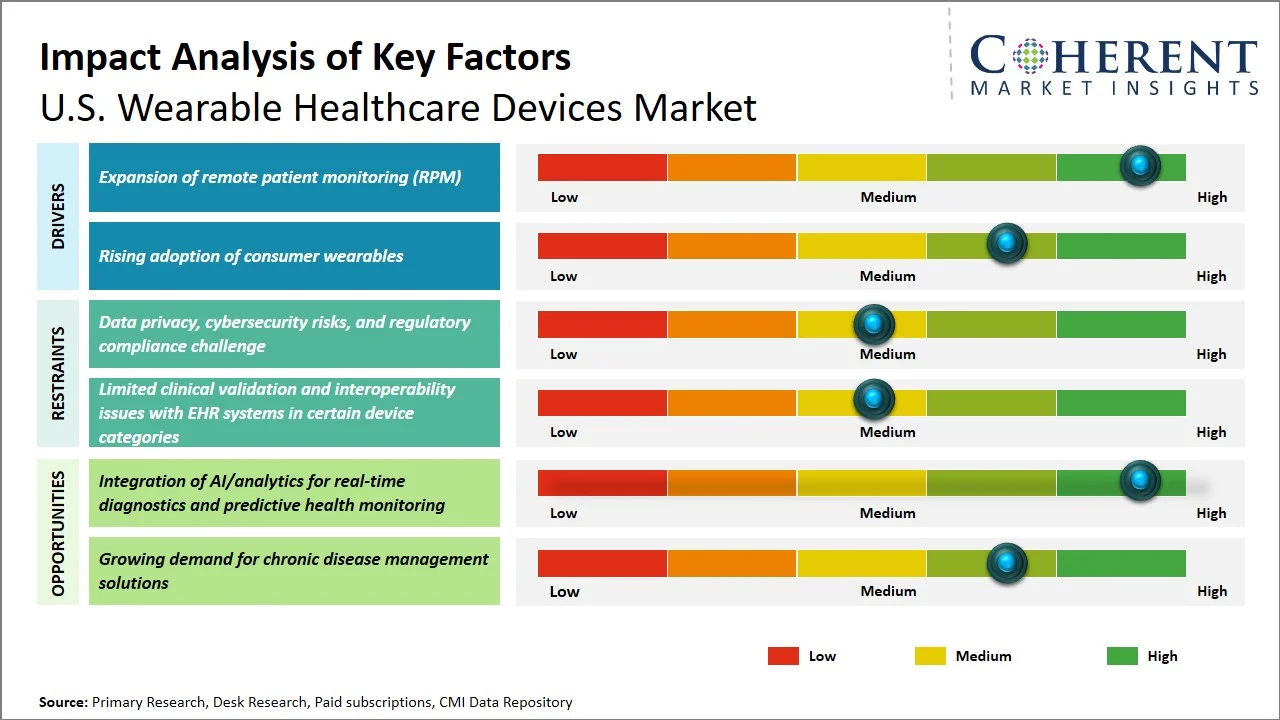
- Expansion of remote patient monitoring (RPM): The adoption of wearable healthcare devices in the U.S. is significantly driven by Centers for Medicare & Medicaid Services reimbursement policy that allows for the use of RPM billing codes 99453, 99454, and 99457. The codes correspond to the service of device set up and patient training (99453), providing devices and transferring data (99454), and monthly Wearable Healthcare Devices services (99457), facilitating provider’s ability to generate recurring revenue from Wearable Healthcare Devices programs. (Source: Panacea Healthcare Solutions, LLC.) For instance, continuous monitoring will be covered by Centers for Medicare & Medicaid Services if patients undergo testing for a minimum of 16 days within 30 days, where their health data will be gathered to ensure consistent engagement and clinical supervision. (Source: Health Resources and Services Administration) This structure of reimbursement has encouraged healthcare organizations to incorporate Wearable Healthcare Devices into their routine operations, making its adoption widespread in the country’s hospitals, physicians' offices, and home health facilities.
- Rising adoption of consumer wearables: Increasing penetration of consumer-level wearable devices is one of the key factors that fuel the development of the U.S. market of wearable healthcare devices due to enhanced awareness of health issues and the proliferation of smart watches and other fitness trackers. Modern devices designed by brands such as Apple Inc. and Samsung Electronics Co., Ltd. are being integrated with sophisticated health monitoring features such as tracking of heart rate, ECG, blood oxygenation level (SpO₂), and even sleep. For example, the Apple Watch provides U.S. FDA-certified functionality for ECG and notification about irregular rhythm; thus, consumers are capable of discovering health problems earlier and participating in preventive activities. Moreover, this trend is intensified by the fact that such devices can be linked with mobile health apps and cloud services, facilitating the transfer of health data to medical professionals. (Source: Apple) Therefore, wearable technology is becoming increasingly important in terms of providing a gateway for patients to receive clinical monitoring and care from afar.
Emerging Trends
- Transition toward AI-enabled predictive monitoring: The use of artificial intelligence and machine learning in wearable technology has enabled the shift from just tracking activities to diagnosing and predicting health conditions. This allows the detection of any abnormalities occurring in the body, including irregular heart rhythms, before any clinical intervention is made. This reflects the current value-based health care model.
- Expansion of remote patient monitoring (RPM) in home-based care: The transition from traditional hospital-based health care towards health care delivered at home through telemedicine and the use of wearable technology is increasingly becoming more common. It is expected that the use of wearables will become more prevalent in managing chronic diseases and post-acute care delivery, improving patient engagement while reducing healthcare costs.
Regulatory & Reimbursement Landscape Shaping the U.S. Wearable Healthcare Devices Market
Category
| Description | Market Implication |
Regulatory Framework | Governed by the U.S. Food and Drug Administration under medical device classifications (Class I–III), including pathways such as 510(k), De Novo, and PMA for wearable devices with clinical claims | Ensures device safety and clinical validation, but increases time-to-market and compliance costs, favoring established players |
Reimbursement Authority | Led by Centers for Medicare & Medicaid Services, with support from private payers for RPM and digital health services | Drives adoption of medical-grade wearables, particularly in hospitals and homecare settings |
Reimbursement Structure | RPM supported through CPT codes (e.g., 99453, 99454, 99457, 99458) covering device setup, monitoring, and care management | Enables recurring revenue models and incentivizes providers to integrate wearable devices into care delivery |
Coverage & Payment Models | Increasing shift toward value-based care, bundled payments, and remote care reimbursement frameworks | Encourages outcome-driven adoption of wearables and integration into chronic disease management programs |
Operational Requirements | Includes HIPAA compliance, data security standards, interoperability with EHR systems, and clinician oversight requirements | Necessitates robust IT infrastructure and secure platforms, creating barriers for new entrants but opportunities for integrated solution providers |
Policy Evolution | Ongoing expansion of telehealth and RPM reimbursement policies, along with regulatory updates for digital health and AI-based devices | Supports long-term market growth, accelerating transition toward home-based and preventive healthcare models |
How is the integration of AI/analytics for real-time diagnostics and predictive health monitoring creating new growth opportunities in the U.S. wearable healthcare devices market?
The use of AI and advanced analytics in wearable healthcare devices has resulted in substantial growth opportunities for the U.S. wearable healthcare devices market due to the transformation from reactive care delivery to proactive and predictive models. Using AI in wearable devices helps continuously process data from physiological sensors to detect abnormalities and predict potential health problems, including heart abnormalities and hypoglycemia, thus ensuring early clinical action and preventing hospitalizations. (Source: Towards AI Inc) For instance, solutions offered by BioIntelliSense and HealthSnap are utilizing predictive analytics in remote patient monitoring (RPM) for forecasting health risks and delivering better patient outcomes, while U.S. FDA-cleared AI-enabled medical devices are gaining traction in clinical settings. For example, BioIntelliSense device known as the BioSticker is a wearable medical device equipped with U.S.FDA clearance for use as well as incorporating AI technology to monitor vital signs including respiration, body temperature, and heart rate. The use of artificial intelligence predictive analytics allows the identification of early indications of deteriorating health in RPM programs to allow for effective interventions. (Source: BioIntelliSense)
Moreover, wearable technology systems with AI applications facilitate personalized therapy, automatic alerts, and clinical decision-making support, which improves the care delivery process and drives the shift towards value-based care models. In addition to facilitating better patient care, these innovations have led to the creation of new revenue sources in the form of diagnostic capabilities, analytics platforms, and RPM solutions powered by AI.
Market Players, Key Development, and Competitive Intelligence
Key Developments
- On May 7, 2026, Google LLC revealed its new screenless fitness band, which was introduced within the Fitbit product line as a means of facilitating constant health tracking without requiring any active engagement by the user. Among other things, the device offers AI health coaching functionalities, thereby fostering more personalized approaches to health management while accommodating trends in preventive medicine.
- In April 2026, WHOOP announced that it had received a contract, in partnership with MIT Lincoln Laboratory, to assist the U.S. Navy in deploying their wearable devices. The project is centered around the continuous tracking of fatigue, recovery, and readiness of the body physiologically, thus allowing performance optimization using analytics of data collected.
Competitive Landscape
The U.S. wearable healthcare devices market is extremely competitive, where companies compete based on clinical accuracy, capabilities of their platforms, advanced analytics, and seamless integration into health care systems. Market alignment with value-based care frameworks is increasingly strong and creating a need for technologies that prove their worth in terms of outcomes. Moreover, collaboration among device makers, healthcare professionals, and digital health companies is growing for expanding adoption within both clinical and home-based environments. Key focus areas include:
- Expansion of integrated RPM platforms (devices + software + services)
- Development of AI-driven predictive analytics for early intervention
- Increased focus on home healthcare and chronic disease management
- Alignment with payer reimbursement frameworks and value-based care
- Strengthening data security, interoperability, and EHR integration capabilities
Market Report Scope
U.S. Wearable Healthcare Devices Market Report Coverage
| Report Coverage | Details | ||
|---|---|---|---|
| Base Year: | 2025 | Market Size in 2026: | USD 19.35 Bn |
| Historical Data for: | 2020 To 2024 | Forecast Period: | 2026 To 2033 |
| Forecast Period 2026 to 2033 CAGR: | 14.2% | 2033 Value Projection: | USD 48.90 Bn |
| Segments covered: |
| ||
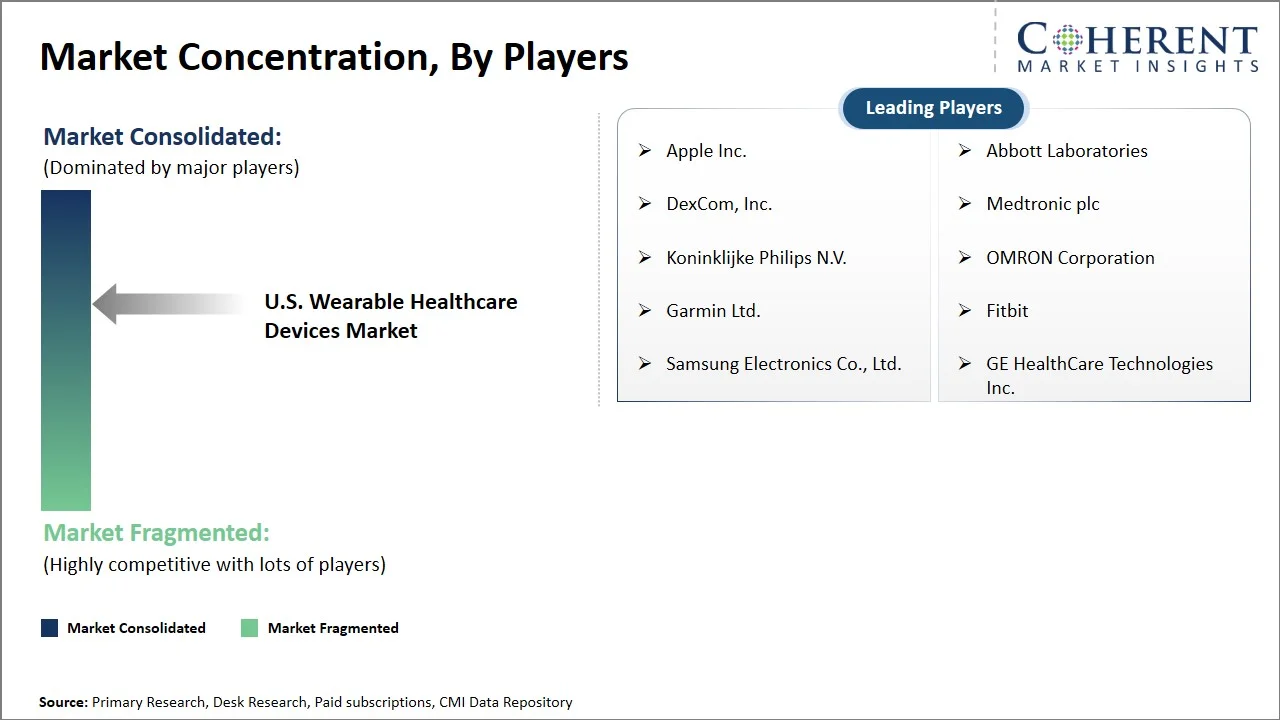
| Companies covered: | Apple Inc., Abbott Laboratories, DexCom, Inc., Medtronic plc, Koninklijke Philips N.V., OMRON Corporation, Garmin Ltd., Fitbit, Samsung Electronics Co., Ltd., and GE HealthCare Technologies Inc. | ||
| Growth Drivers: |
| ||
| Restraints & Challenges: |
| ||
Analyst Opinion (Expert Opinion)
- The future for the wearable healthcare devices market in the U.S. will shift away from growth in devices towards integrated health ecosystems where wearables serve as nodes that continuously collect data along remote care paths. In the next five to seven years, growth in this area will be driven by clinical validation, predictive analytics enabled by AI, and more integration with EHRs and telemedicine systems. The trend towards value-based care, and the reimbursement for RPM, will fuel adoption rates for this technology, especially among chronic disease sufferers.
- There will be an abundant scope in medical grade wearable monitoring devices specifically ones which are compatible with RPM and chronic disease management use cases. The cardiac monitoring, CGM monitoring, and respiratory monitoring devices will gain traction owing to higher disease burden and reimbursement for such medical devices in the U.S. Moreover, the demand from home health settings will be another major source as a result of decentralization of treatment centres and preference for at-home continuous monitoring devices.
- For gaining an advantage over others in this industry, companies need to focus on clinical validation and getting regulatory approvals to move from consumer products to medically reimbursable products. It would also be important to create interoperable systems that easily connect with the hospital systems and telemedicine ecosystems. In addition, having AI and advanced analytics would be vital because the insights derived would give the firm an edge over others who are simply selling information. Partnering with health care providers, insurance providers, and other digital health platforms would also be important to ensure scalability.
Speak to the analyst
Want personalized insights?
Take the findings above to one of our principal consultants, or have the report rebuilt around the segments, geographies and competitors you actually track.
Market Segmentation
- Product Type Insights (Revenue, USD Bn, 2021 - 2033)
- Wearable Monitoring Devices
- Wearable Diagnostic Devices
- Wearable Therapeutic Devices
- Grade Insights (Revenue, USD Bn, 2021 - 2033)
- Consumer-grade
- Medical-grade
- Application Insights (Revenue, USD Bn, 2021 - 2033)
- Remote Patient Monitoring
- Chronic Disease Management
- Fitness and Wellness
- Others
- End User Insights (Revenue, USD Bn, 2021 - 2033)
- Hospitals
- Specialty Clinics
- Home Healthcare Settings
- Individuals/Consumers
- Others
- Distribution Channel Insights (Revenue, USD Bn, 2021 - 2033)
- Institutional Sales
- Retail and Pharmacy Channels
- E-commerce Platforms
- Others
- Key Players Insights
- Apple Inc.
- Abbott Laboratories
- DexCom, Inc.
- Medtronic plc
- Koninklijke Philips N.V.
- OMRON Corporation
- Garmin Ltd.
- Fitbit
- Samsung Electronics Co., Ltd.
- GE HealthCare Technologies Inc.
Sources
Primary Research Interviews
- Chief Medical Officers / Physicians – wearable adoption in RPM, chronic disease monitoring, and clinical outcomes (U.S. hospitals & physician groups)
- Directors – Digital Health / Telehealth Departments (health systems & virtual care providers)
- Clinical Specialists – cardiology, endocrinology, pulmonology (wearable use cases and patient monitoring trends)
- Home Healthcare Providers – remote care delivery models and patient engagement using wearable devices
- Biomedical & Data Analysts – device performance, sensor accuracy, analytics integration, and patient data utilization
- Digital Health & Wearable Platform Providers – device deployment, interoperability, and service models
Stakeholders
- Wearable Healthcare Device Providers
- End-use Sectors:
- Hospitals (tertiary care & integrated delivery networks)
- Specialty Clinics / Physician Offices
- Ambulatory Care Centers
- Home Healthcare Settings
- Long-Term Care Facilities
- Regulatory & Health Bodies: U.S. Food and Drug Administration – device approvals and digital health regulations, Centers for Medicare & Medicaid Services – reimbursement frameworks (RPM CPT codes), Office of the National Coordinator for Health Information Technology – interoperability & EHR integration, Federal Communications Commission – connectivity infrastructure for telehealth
Databases
- National Center for Health Statistics – chronic disease prevalence and healthcare utilization
- Healthcare Cost and Utilization Project – hospitalization and cost data
- ClinicalTrials.gov – ongoing trials on wearable and remote monitoring technologies
- U.S. Food and Drug Administration Digital Health Database – approvals and performance benchmarks for wearable devices
Magazines
- Healthcare IT News – digital health and wearable adoption trends
- mHealth Intelligence – remote monitoring and wearable technology developments
- MedTech Dive – innovation and regulatory updates in wearable medical devices
- Fierce Healthcare – payer-provider partnerships and RPM initiatives
Journals
- Journal of Medical Internet Research (JMIR) – wearable health and RPM clinical studies
- NPJ Digital Medicine – AI-enabled wearable and remote monitoring research
- JAMA Network Open – healthcare delivery and wearable outcomes research
Newspapers
- The New York Times – coverage on digital health trends, wearable adoption, and healthcare innovation
- The Wall Street Journal – insights on market developments, company strategies, and healthcare technology investments
- USA Today – reporting on consumer health tech adoption and wearable device usage trends
- The Washington Post – coverage on public health, policy changes, and digital health advancements
- Los Angeles Times – articles on healthcare technology trends and regional adoption insights
Associations
- American Telemedicine Association
- Healthcare Information and Management Systems Society
- American Medical Association
- Advanced Medical Technology Association
Public Domain Sources
- U.S. Food and Drug Administration – regulatory frameworks and device approvals
- Centers for Medicare & Medicaid Services – reimbursement and coverage policies
Proprietary Elements
- CMI Data Analytics Tool
- Proprietary CMI Existing Repository of information for last 10 years.
Get access to 250+ pages report
Every segment, forecast, competitor profile and data table behind the analysis above — available for instant download.
- ESOMAR Member
- ISO 9001:2015 Certified
- D-U-N-S Registered
- GDPR & CCPA Compliant
Missing comfort of reading report in your local language? Find your preferred language:
Transform your Strategy with Exclusive Trending Reports
Frequently Asked Questions
The U.S. wearable healthcare devices market is estimated to be valued at USD 19.35 Bn in 2026 and is expected to reach USD 48.90 by 2033.
Wearable monitoring devices dominate due to their ability to provide continuous, real-time tracking of vital parameters making them essential for remote patient monitoring (RPM), chronic disease management, and preventive care, along with high adoption in both consumer and clinical settings.
The CAGR of U.S. wearable healthcare devices market is projected to be 14.2% from 2026 to 2033.
Expansion of remote patient monitoring (RPM) and rising adoption of consumer wearables are the major factors driving the growth of the U.S. wearable healthcare devices market.
Data privacy, cybersecurity risks, and regulatory compliance challenge and limited clinical validation and interoperability issues with EHR systems in certain device categories are the major factors hampering the growth of the U.S. wearable healthcare devices market.
Apple Inc., Abbott Laboratories, DexCom, Inc., Medtronic plc, Koninklijke Philips N.V., OMRON Corporation, Garmin Ltd., Fitbit, Samsung Electronics Co., Ltd., and GE HealthCare Technologies Inc. are the major players.