

Corneal Pachymetry Market Size and Share Analysis – Growth Trends and Forecasts (2026–2033)
The Corneal Pachymetry Market size is anticipated to grow at a CAGR of 4.1% with USD 391.9 Mn in 2026 and is expected to reach USD 519.2 Mn by 2033. The market growth can be attributed to factors such as the growing prevalence of glaucoma and other ophthalmic diseases, increasing need for the early and accurate detection of eye diseases, increasing use of ophthalmic diagnostic equipment, and increasing awareness about the preventive care of eyes. As stated in an American Journal of Ophthalmology study conducted in 2025, the prevalence of open-angle glaucoma in adults 40 years old or older globally in 2024 was 2.8%, or approximately 80.5 million people.
Key Takeaways
- The handheld segment will have dominance in the industry in 2026 at 61.8%. The factors driving the growth of this market segment include the portability of the technology, easy usability, and application in eye screening clinics and ambulatory clinics. According to the WHO Vision and Eye Screening Implementation handbook in 2024, community and primary eye screening is encouraged to detect eye diseases among the underserved communities using portable screening tools for eye care delivery.
- Optical pachymetry segment is projected to lead at 58.6% in 2026. Growth in this segment is attributed to the rising preference for non-invasive diagnostic methods, high accuracy, increased comfort for the patient, and use along with other ophthalmic imaging devices. As per the American Academy of Ophthalmology (AAO), non-invasive optical imaging technologies are gaining traction in eye examinations and preoperative refractive surgeries because of their accuracy and safety for patients.
- Glaucoma diagnostics segment is set to lead with 49.3% in 2026. The segment’s growth is owing to the rising prevalence of glaucoma and the routine use of central corneal thickness measurements to improve intraocular pressure assessment and disease management. According to the 2025 IAPB Vision Atlas, around 8 million people globally live with sight loss due to glaucoma, while glaucoma remains one of the leading causes of irreversible blindness worldwide.
- Hospitals segment is likely to dominate the market with 45.7% in 2026. The segment’s growth is owing to high patient inflow, availability of advanced ophthalmic diagnostic equipment, increasing ophthalmic surgical procedures, and multidisciplinary eye care services. According to the World Health Organization (WHO), at least 2.2 billion people worldwide have a vision impairment or blindness, with at least 1 billion cases being preventable or yet to be addressed, driving hospitals to expand ophthalmic diagnostic capabilities.
- North America is expected to acquire the largest share of approximately 39.2% in 2026. The regional superiority is because of the presence of a strong ophthalmic healthcare infrastructure, high rate of adoption of advanced diagnostic technology, good reimbursement policies, prevalence of glaucoma, and the presence of leading manufacturers of ophthalmic devices. According to the American Academy of Ophthalmology’s IRIS Registry, more than 50 million patients are registered yearly, including about 95% of the ophthalmologists in the United States. This statistic proves the extensive usage of diagnostic ophthalmologic procedures and technologies in the region.
Market Drivers
Rising Burden of Glaucoma and Other Corneal Disorders is Driving Growth in the Corneal Pachymetry Market
The increasing prevalence of glaucoma and corneal disorders is a key growth driver the corneal pachymetry market. Corneal pachymetry is a key process that aids in the determination of central corneal thickness (CCT), and is vital in the proper determination of intraocular pressure (IOP). Other uses of the procedure include the risk stratification for glaucoma, refractive surgery planning, and keratoconus diagnosis.
According to a 2025 review article published in Clinical Ophthalmology, the review highlights the fact that the measurement of the central corneal thickness (CCT) via corneal pachymetry is an integral part of glaucoma testing and risk factor analysis especially in the cases of adults above the age of 50 years and those suspected of having glaucoma.
In October 2024, Carl Zeiss Meditec AG announced that they will demonstrate their new technological advancements at the American Academy of Ophthalmology (AAO) 2024 meeting, which took place from October 19 to 21, 2024, in Chicago. The company released their new product called ZEISS VisioGen, which is an artificial intelligence-based technology aimed at helping patients better communicate and organize the work of the refractive clinics.
Growing Adoption of Advanced Non-Contact Ophthalmic Imaging Technologies is Accelerating the Corneal Pachymetry Market
Non-contact methods of testing eyes are becoming increasingly prevalent, which has helped drive the growth of the corneal pachymetry market. Optical pachymetry provides rapid, accurate, and non-contact corneal thickness measurements, reducing infection risk compared to contact-based methods. The incorporation of pachymetry into the process of optical coherence tomography, Scheimpflug imaging, and AI-assisted diagnosis systems has made diagnosis more precise for different conditions including glaucoma, keratoconus, and refractive surgeries.
According to American Academy of Ophthalmology (AAO) Preferred Practice Pattern 2024 concerning glaucoma and suspects, the fundamental tests to be done in order to diagnose the disease in the patients are the Optical Coherence Tomography (OCT) test, which helps evaluate the structure damage in the eye, and central corneal thickness (CCT) measurement through pachymetry.
In September 2024, Oculus introduced the Pentacam Cornea OCT, which is a state-of-the-art diagnostic equipment integrating OCT technology and Scheimpflug imaging in one piece of equipment. The platform uses both OCT and Scheimpflug imaging to analyze corneal thickness, detect ectasia and keratoconus at an early stage, plan surgeries, and improve anterior segment examination. This introduction marked a milestone in non-contact corneal diagnosis.
Current Events and Their Impact
Current Event | Description and its Impact |
March 2025 – Topcon Healthcare Expands Harmony Digital Eye Care Platform Across Europe |
|
Expansion of National Eye Screening and Vision Care Programs Worldwide (2024–2025) |
|
- Current Industry Events of 2026
- Market Size Estimation
- Regional Breakdown
- Competitive Landscape
- Customer Intelligence
- Segmental Analysis
- Pricing Analysis
- Key Market Drivers, Challenges & Future Trends
- Customized Insights Section
Segmental Insights
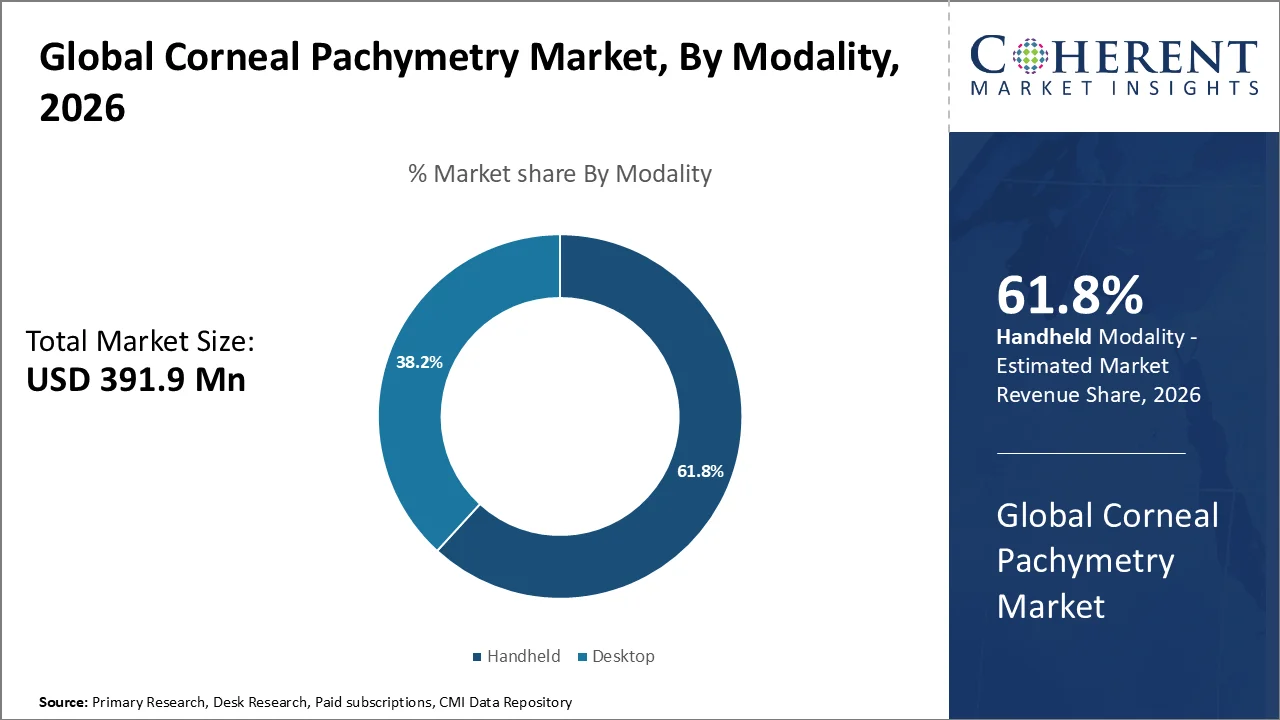
Why is the Handheld Segment Acquiring the Largest Market Share?
The handheld pachymetry devices are expected to occupy the maximum market share, holding about 61.8% of the total share in 2026. This high share can be attributed to its portable nature, easy usage, fast and reliable results, and increasing use in ophthalmic clinics, ambulatory care centers, and eye-screening campaigns. The handheld pachymeters allow the clinicians to measure the corneal thickness in various healthcare facilities, thus making them very useful for outreach programs.
According to a 2025 scoping review study in BMJ Open, after the evaluation of 216 studies on portable devices for diagnosing glaucoma, it was concluded that such handheld devices showed good correlation with gold standard methods of diagnosis and could be utilized successfully in both clinical and community settings.
In May 2024, Quantel Medical, a part of Lumibird Medical, introduced the release of POCKET III handheld ultrasound pachymeter. According to the manufacturer, this pachymeter is the lightest one among the existing handheld pachymeters, as its weight is 60 grams.
Why does Optical Pachymetry Hold the Largest Market Share?
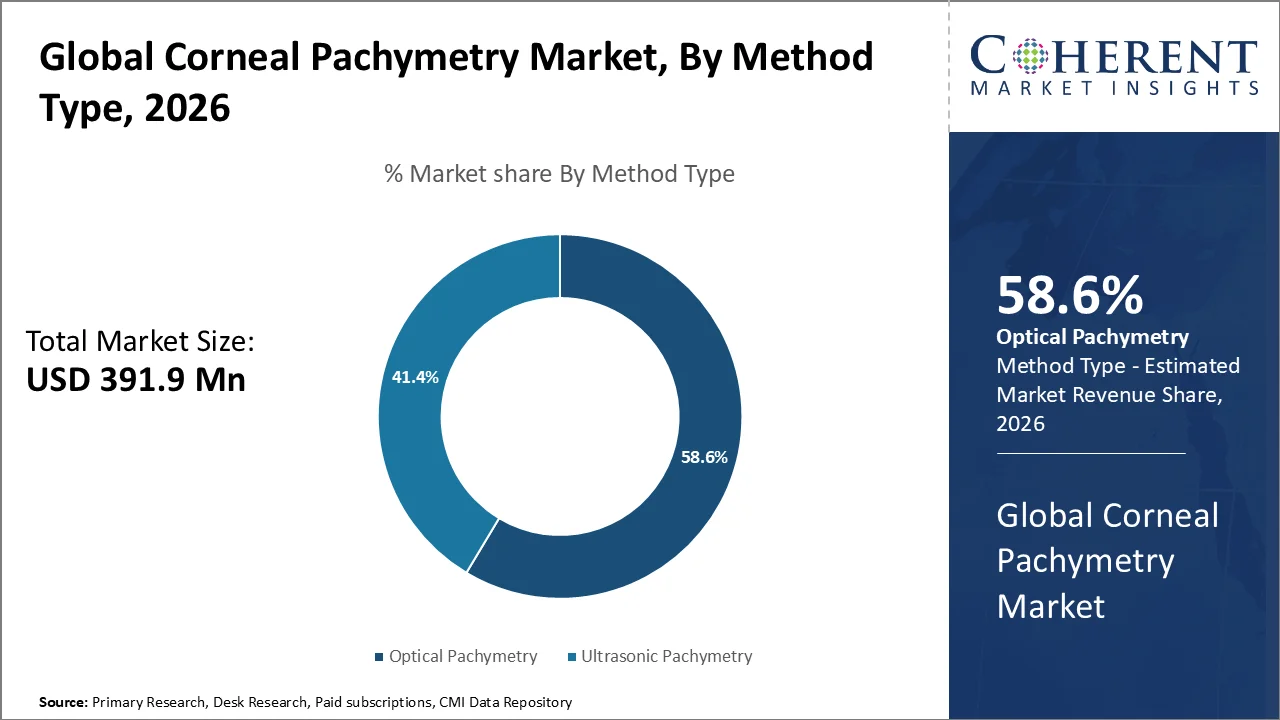
Based on method type, the optical pachymetry segment leads the market and holds approximately 58.6% of the entire market share by 2026. The dominance of this segment can be attributed to the growing inclination towards non-invasive methods of diagnosis, increased accuracy of measurements, improved patient comfort, and use with OCT and Scheimpflug imaging systems.
According to a 2024 article from The Open Ophthalmology Journal, swept-source optical coherence tomography (SS-OCT) and Scheimpflug camera estimates of central corneal thickness demonstrated an extremely high correlation (Pearson correlation coefficient = 0.989; p<0.0001), thus highlighting the remarkable reliability of modern optical pachymetry techniques.
In February 2025, Optopol Technology published the clinical performance of the REVO FC 130 Anterior Segment Optical Coherence Tomography (OCT) device in the Journal of Clinical Medicine. It was found that the REVO FC 130 offers reliable and repeatable optical pachymetry measurements whose performance is similar to that of the Optovue RTVue XR Avanti OCT device.
Why does Glaucoma Diagnostics Dominate the Application Segment?
By application, glaucoma diagnostics is forecasted to capture the maximum market share of about 49.3% in 2026. Growth in this segment is attributed to rising cases of glaucoma as well as the widespread practice of measuring corneal thickness to understand the intraocular pressure and assess the risk of glaucoma.
According to the 2025 Review of Clinical Ophthalmology, almost 50% of glaucoma sufferers are not diagnosed globally, considering glaucoma is one of the most common causes of permanent blindness. It is noted that pachymetry, which measures the thickness of the central cornea, is crucial when performing the test for glaucoma.
In March 2025, Altris AI launched its Advanced Optic Disc (OD) Analysis module for glaucoma diagnostics. The AI-powered solution analyzes optical coherence tomography (OCT) scans to provide personalized optic disc assessments, evaluate structural glaucomatous damage, and assign a severity score for disease progression.
Which End User Segment Dominates the Market?
Hospitals hold the major market share of around 45.7% in 2026 due to their advanced ophthalmic facilities, availability of skilled ophthalmologists, presence of modern equipment for diagnostics, and handling high patient traffic. Hospitals are the prime places for diagnosis of glaucoma, refractive surgery, corneal diseases, and complete eye examination and hence form the largest market segment for corneal pachymetry devices.
According to the American Hospital Association (AHA) Fast Facts (2026), there are 6,100 hospitals, out of which 5,121 hospitals are community hospitals, and these hospitals have more than 33.5 million admissions annually. The huge presence of hospitals and the large number of admissions keep driving the investments in sophisticated ophthalmic diagnostic devices such as corneal pachymeters.
Corneal Pachymetry Market Trends
- The growing fusion of AI with ophthalmic imaging devices is boosting the glaucoma screening process, keratoconus diagnosis, and refractive surgery planning, thus fueling the growth of sophisticated corneal pachymetry devices. The AAO 2025 highlights that AI-based ophthalmic imaging technology is increasingly becoming an integral part of routine practice within the glaucoma and corneal diseases management field.
- The global rise in the demand for refractive surgical procedures is leading to a rising need for corneal thickness evaluation. The ISRS 2024 clinical guidelines state that corneal tomography and pachymetry continue to be crucial aspects of screening prior to laser vision correction surgery. This is done to prevent any case of post-operative corneal ectasia.
- The increasing application of corneal biomechanics testing has increased the clinical application of corneal pachymetry beyond just measuring corneal thickness. In current ophthalmic practice, pachymetry is increasingly used alongside corneal biomechanics for better glaucoma risk assessment and refractive surgery screening. As reported in a 2025 study in the Journal of Clinical Medicine, use of corneal thickness and biomechanics testing together greatly increases early keratoconus detection over corneal thickness testing alone.
Regional Insights
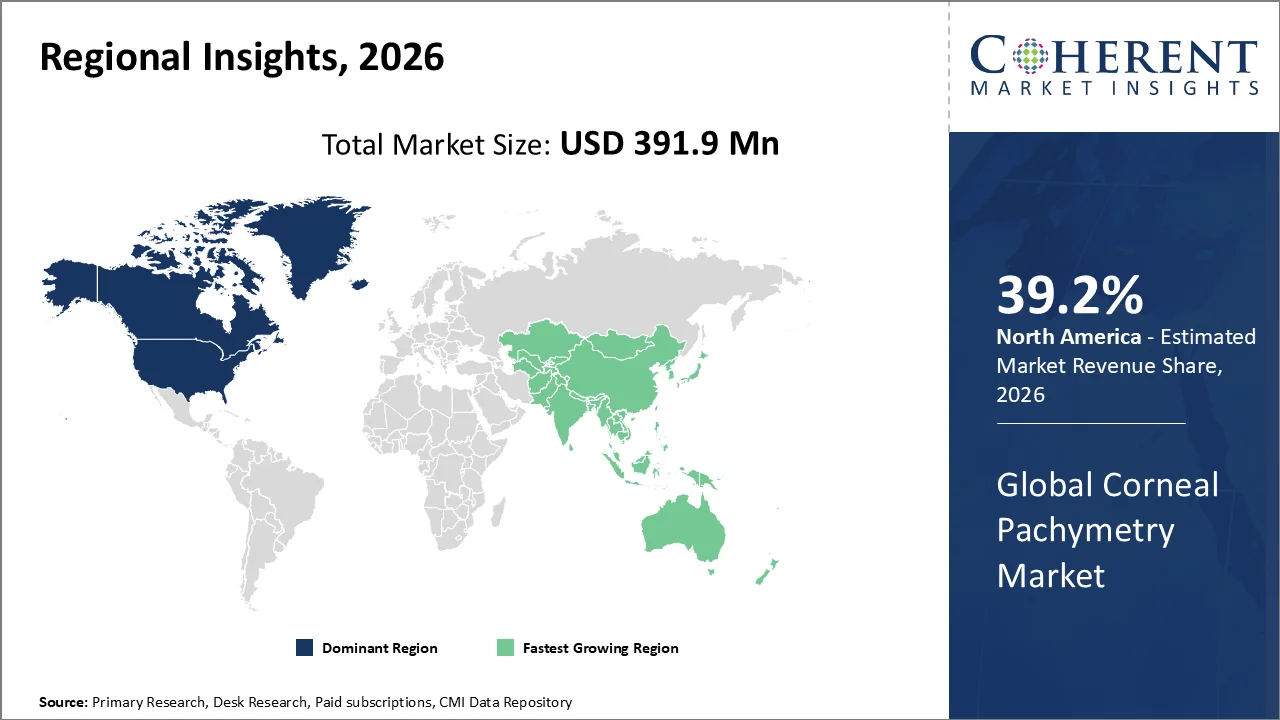
North America Dominates Owing to High Adoption of Advanced Ophthalmic Diagnostics
North America is projected to have a market share of 39.2% in the global Corneal Pachymetry Market during 2026, due to well-developed infrastructure of ophthalmic healthcare in the region, wide adoption of premium technological devices, favorable reimbursement policies and the availability of major players of ophthalmic instruments. Increasing incidence of glaucoma and early diagnosis among others will continue to favor the growth of the segment.
In September 2025, Alcon announced the commercial launch of wavelight plus, the first fully personalized LASIK treatment in the United States, with a Canadian commercial rollout planned for late 2025.
Asia Pacific Corneal Pachymetry Market Trends
The Asia Pacific region is anticipated to witness the highest growth rate among all regional markets during the 2026–2033 forecast period due to increasing infrastructures related to ophthalmology care, increase in glaucoma surgeries and refractive surgeries, rising awareness about early eye diseases diagnosis, and investment in advanced ophthalmic diagnostic technologies.
According to the World Health Organization (WHO) Western Pacific Regional Office (updated 2025), there are over 90 million people suffering from visual impairment in the Western Pacific Region, out of which 10 million are totally blind.
In April 2025, NIDEK Co., Ltd. participated in the 40th Asia Pacific Academy of Ophthalmology (APAO) Congress, which was held in New Delhi, India, between 3rd to 6th April 2025. NIDEK displayed their new ophthalmic diagnostics devices at the exhibit, taking place from 3rd to 5th April 2025, which included NON-CONTACT TONO/PACHYMETER NT-1p, Optical Coherence Tomography RS-1 Glauvas, Mir.
Growing Burden of Glaucoma and Ageing Population is Accelerating the Corneal Pachymetry Market Demand in the United States
The U.S. Corneal Pachymetry Market is witnessing steady growth due to rising incidence of glaucoma, an increasing number of elderly people, the extensive use of advanced ophthalmic diagnostics, and significant financial support for thorough eye tests. The U.S. population aged 65 and older is projected to grow from 58 million in 2022 to 82 million by 2050, increasing its share of the total population from 17% to 23%. Corneal pachymetry has become a common diagnostic technique for assessing glaucoma, planning refractive surgery, and treating diseases of the cornea.
According to the National Eye Institute (NEI, updated 2025), there are close to 3 million people suffering from glaucoma in America; however, about half of them do not even know that they have this disease, as the early stages of glaucoma do not have any symptom at all. This rising necessity for early detection is boosting the use of corneal thickness measurements in glaucoma screening.
Japan Corneal Pachymetry Market Trends
Japan's corneal pachymetry market is likely to experience substantial growth in the coming years on account of the fast growing elderly population, rising cases of glaucoma, robust ophthalmology infrastructure, and increased use of advanced ophthalmic diagnostics techniques.
According to Japan's Ministry of Internal Affairs and Communications, people aged 65 years and above accounted for approximately 29.3% of Japan's total population in 2025, making Japan one of the world's oldest societies. The growing elderly population is increasing the incidence of glaucoma, corneal diseases, and cataracts, thereby driving demand for routine corneal thickness measurements.
Who are the Major Companies in Corneal Pachymetry Industry
Some of the major key players in Corneal Pachymetry are Micro Medical Devices, Inc. (MMD), Reichert, Inc. (AMETEK Inc.), OCULUS Optikgerate GmbH, Quantel Medical, Optovue Inc., DGH Technology, Inc., Escalon Medical Corp., Carl Zeiss AG, Keeler Ltd., and Konan Medical USA Inc.
Key News
- In April 2026, Reichert, Inc. (AMETEK) announced that its SightChek Digital Phoroptor now integrates with the DigitalOptometrics tele-optometry platform. The integration enables eye care professionals to perform comprehensive remote refractions with improved efficiency, accuracy, and consistency.
- In May 2024, Quantel Medical launched the POCKET III handheld pachymeter. The new device features a 30 MHz probe, a measurement range of 150–1200 μm, Bluetooth connectivity, and FDA 510(k) clearance. It is designed for rapid corneal thickness measurement in glaucoma assessment and refractive surgery evaluation.
Market Report Scope
Corneal Pachymetry Market Report Coverage
| Report Coverage | Details | ||
|---|---|---|---|
| Base Year: | 2025 | Market Size in 2026: | USD 391.9 Mn |
| Historical Data for: | 2020 To 2024 | Forecast Period: | 2026 To 2033 |
| Forecast Period 2026 to 2033 CAGR: | 4.1% | 2033 Value Projection: | USD 519.2 Mn |
| Geographies covered: |
| ||
| Segments covered: |
| ||
| Companies covered: | Micro Medical Devices, Inc. (MMD), Reichert, Inc. (AMETEK Inc.), OCULUS Optikgerate GmbH, Quantel Medical, Optovue Inc., DGH Technology, Inc., Escalon Medical Corp., Carl Zeiss AG, Keeler Ltd., and Konan Medical USA Inc. | ||
| Growth Drivers: |
| ||
| Restraints & Challenges: |
| ||
Analyst Opinion
- The Corneal Pachymetry Market is reaping more and more benefits due to increasing emphasis on screening for keratoconus and safe planning of refractive surgery. An innovative anterior segment OCT showed remarkable repeatability and agreement in measurement of corneal pachymetry in normal, keratoconus, and post-refractive surgery eyes.
- The increased investments made towards digital ophthalmology and artificial intelligence-based diagnostics will drive the growth of the market. The integration of corneal pachymetry with digital imaging technology facilitates comprehensive anterior segment assessment, helps with clinical workflow efficiency, and assists in the early diagnosis of glaucoma and corneal conditions. By 2024, there were over 1,000 AI-based medical devices approved for marketing, among which ophthalmology is one of the top areas in using such diagnostic solutions.
- Digital ophthalmology and precision eye care are forecasted to bring many opportunities for the Corneal Pachymetry Market in the coming years. Artificial intelligence is being used with corneal imaging and pachymetry to enhance predictive modeling, surgical planning, and personalizing patient care. Machine learning models that use corneal thickness (pachymetry), keratometry, and topography parameters greatly improve predictions regarding the structural outcome of corneal collagen cross-linking in keratoconus.
Speak to the analyst
Want personalized insights?
Take the findings above to one of our principal consultants, or have the report rebuilt around the segments, geographies and competitors you actually track.
Market Segmentation
- By Modality (Revenue, USD Mn, 2021-2033)
- Handheld
- Desktop
- By Method Type (Revenue, USD Mn, 2021-2033)
- Ultrasonic Pachymetry
- Optical Pachymetry
- By Application (Revenue, USD Bn, 2021-2033)
- Glaucoma Diagnostics
- Refractive Surgery
- Keratoconus Screening
- Others
- By End User (Revenue, USD Bn, 2021-2033)
- Hospitals
- Specialty Clinics
- Diagnostic Laboratories
- Ambulatory Surgical Centers
- Global Corneal Pachymetry Market , By Region (Revenue, USD Mn, 2021-2033)
- North America
- U.S.
- Canada
- Latin America
- Brazil
- Mexico
- Argentina
- Rest of Latin America
- Europe
- Germany
- U.K.
- France
- Italy
- Spain
- Russia
- Rest of Europe
- Asia Pacific
- China
- India
- Japan
- Australia
- South Korea
- ASEAN
- Rest of Asia Pacific
- Middle East
- GCC
- Israel
- Rest of Middle East
- Africa
- South Africa
- Central Africa
- North Africa
- North America
- Key Players
- Micro Medical Devices, Inc. (MMD)
- Reichert, Inc. (AMETEK Inc.)
- OCULUS Optikgerate GmbH
- Quantel Medical
- Optovue Inc.
- DGH Technology, Inc.
- Escalon Medical Corp.
- Carl Zeiss AG
- Keeler Ltd.
- Konan Medical USA Inc.
Sources
Primary Research Interviews
- Ophthalmologists
- Glaucoma specialists
- Corneal specialists
- Cataract and refractive surgeons
- Hospital administrators
- Ambulatory Surgical Center (ASC) managers
- Specialty eye clinic directors
- Optometrists
- Medical device distributors
- Ophthalmic diagnostic equipment manufacturers
- Key Opinion Leaders (KOLs) in ophthalmology
Databases
- World Health Organization (WHO)
- Centers for Disease Control and Prevention (CDC)
- National Institutes of Health (NIH)
- National Eye Institute (NEI)
- U.S. Food and Drug Administration (FDA)
- PubMed
- ClinicalTrials.gov
- Organisation for Economic Co-operation and Development (OECD)
Magazines
- Ophthalmology Times
- EyeWorld
- Review of Ophthalmology
- Ophthalmology Management
- Optometry Times
Journals
- Ophthalmology
- American Journal of Ophthalmology
- Journal of Cataract & Refractive Surgery
- British Journal of Ophthalmology
- Cornea
- Clinical Ophthalmology
- Journal of Clinical Medicine
- Investigative Ophthalmology & Visual Science (IOVS)
- Indian Journal of Ophthalmology
Newspapers
- The New York Times
- The Wall Street Journal
- The Guardian
- Financial Times
- USA Today
Associations
- American Academy of Ophthalmology (AAO)
- American Society of Cataract and Refractive Surgery (ASCRS)
- European Society of Cataract and Refractive Surgeons (ESCRS)
- International Council of Ophthalmology (ICO)
- Asia-Pacific Academy of Ophthalmology (APAO)
- European Glaucoma Society (EGS)
- World Glaucoma Association (WGA)
- International Agency for the Prevention of Blindness (IAPB)
Public Domain Sources
- Company Annual Reports and Investor Presentations
- Company Press Releases and Product Catalogs
- Government Health Ministry Publications
- U.S. FDA 510(k) Database
- National Eye Institute (NEI) Publications
- Clinical Trial Registries such as ClinicalTrials.gov
- World Health Organization (WHO) Reports
- American Hospital Association (AHA) Publications
Proprietary Elements
- CMI Data Analytics Tool, Proprietary CMI Existing Repository of Information for the Last 10 Years
Get access to 250+ pages report
Every segment, forecast, competitor profile and data table behind the analysis above — available for instant download.
- ESOMAR Member
- ISO 9001:2015 Certified
- D-U-N-S Registered
- GDPR & CCPA Compliant
Missing comfort of reading report in your local language? Find your preferred language:
Transform your Strategy with Exclusive Trending Reports
Frequently Asked Questions
The Corneal Pachymetry Market is expected to reach USD 519.2 Million by 2033.
The Corneal Pachymetry Market is anticipated to grow at a CAGR of 4.1% during the forecast period from 2026 to 2033.
Corneal pachymetry is a non-invasive ophthalmic diagnostic procedure used to measure the thickness of the cornea (central corneal thickness), which is essential for glaucoma diagnosis, refractive surgery planning, keratoconus screening, and comprehensive eye examinations.
Corneal pachymetry helps clinicians accurately interpret intraocular pressure (IOP) measurements by assessing central corneal thickness, thereby improving glaucoma risk assessment, diagnosis, and long-term disease management.
The high cost of advanced optical pachymetry systems and limited access to ophthalmic diagnostic equipment in developing regions are the major factors restraining market growth.
The market growth is primarily driven by the increasing prevalence of glaucoma and corneal disorders, rising demand for early ophthalmic disease diagnosis, and growing adoption of advanced non-contact ophthalmic imaging technologies.
North America is expected to account for the largest share of the global Corneal Pachymetry Market during the forecast period.