

Light Therapy Market Analysis & Forecast: 2026-2033
Light Therapy Market is estimated to be valued at USD 1,153.6 Mn in 2026 and is expected to reach USD 1,667.0 Mn in 2033, exhibiting a compound annual growth rate (CAGR) of 5.4% from 2026 to 2033.
Key Takeaways
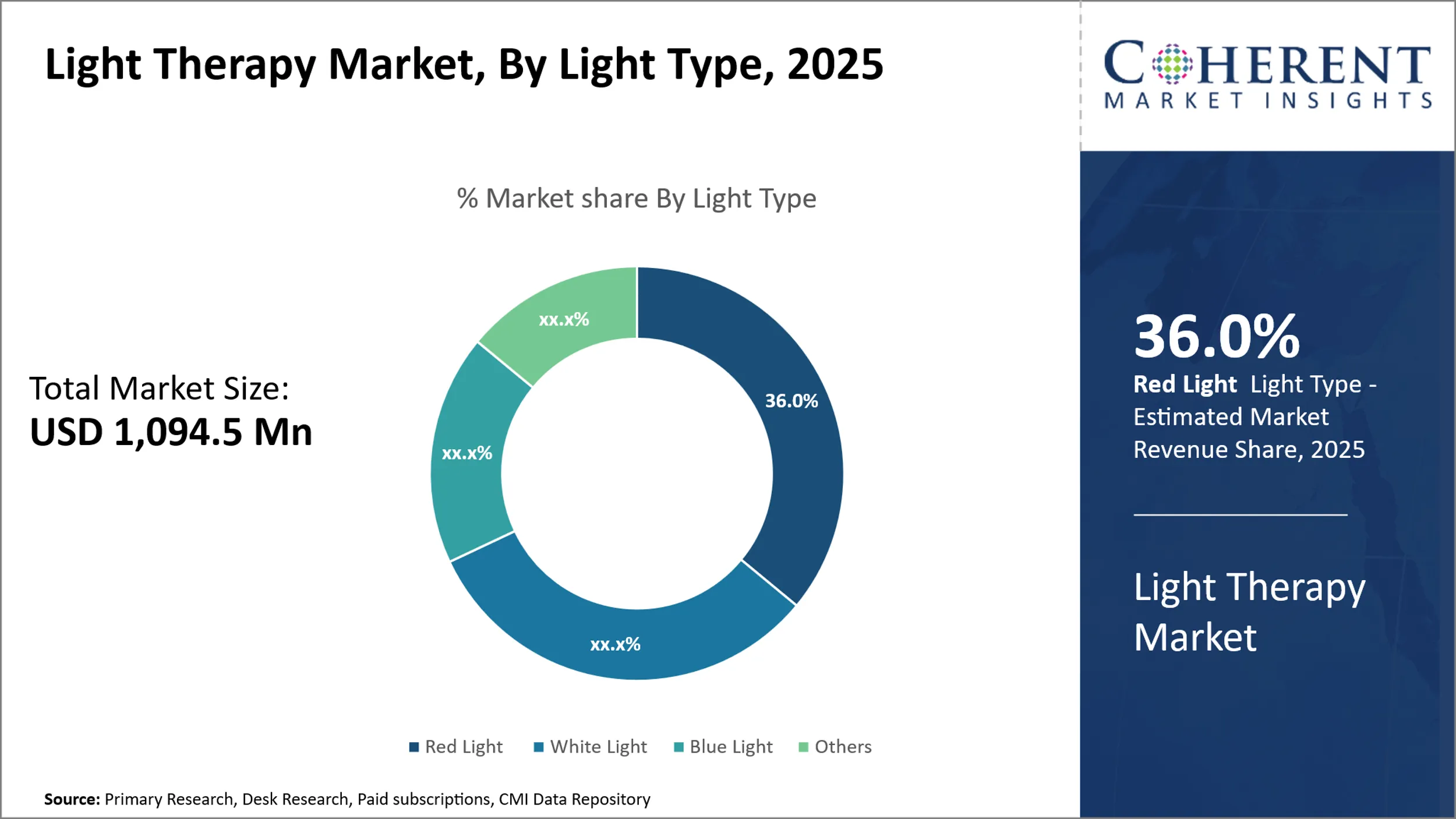
- By Light Type, Red Light Segment is expected to hold the largest market share, accounting for approximately 37.0% of the global light therapy market in 2026. This dominance stems from its extensive clinical use in treating skin conditions.
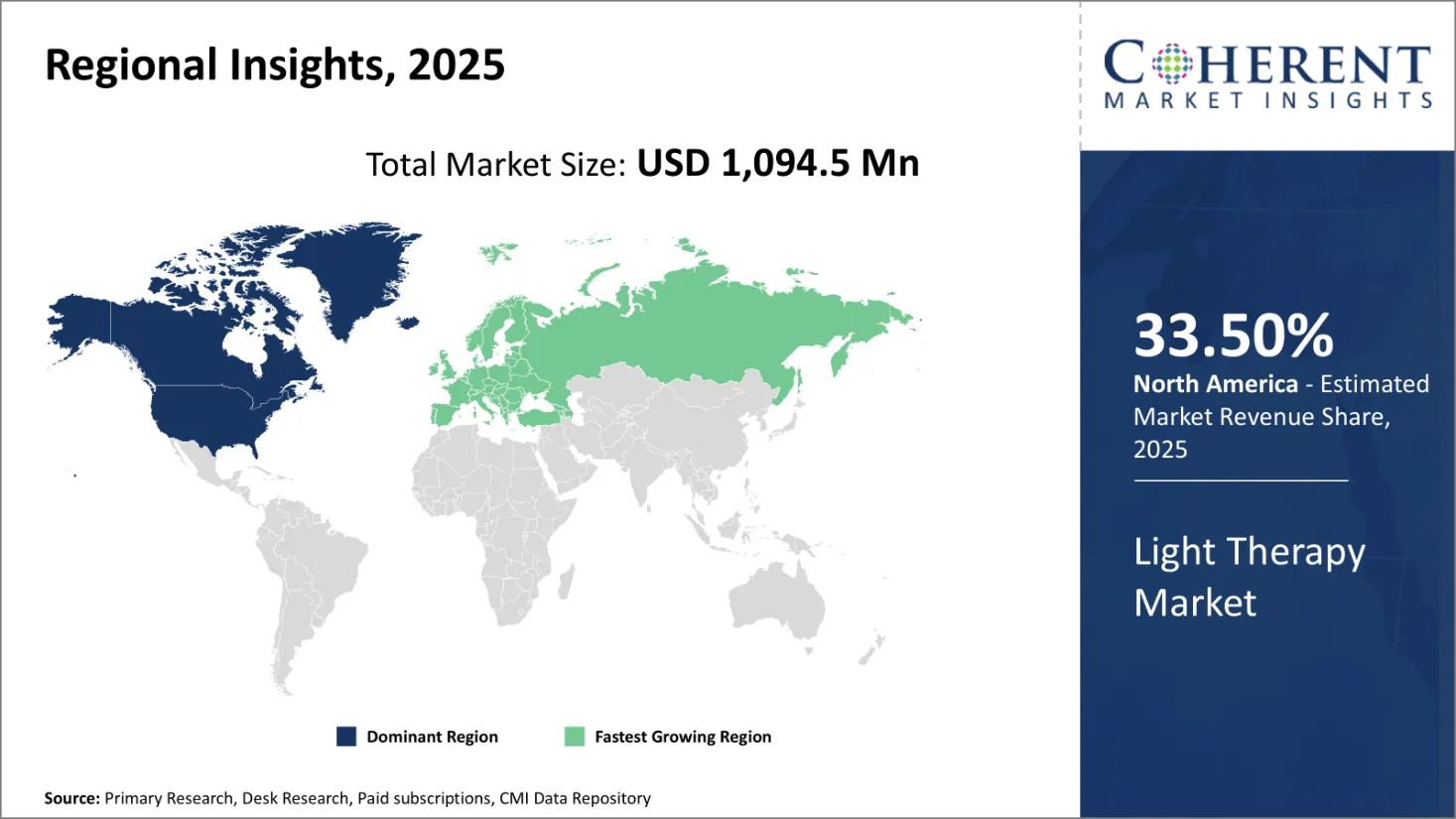
- North America is projected to lead the global light therapy market with an estimated 33.5% share in 2026. This regional dominance is driven by a strong healthcare infrastructure, early adoption of phototherapy devices, and rising incidences of sleep disorders and depression.
Market Overview
The global Light Therapy Market is experiencing steady growth, driven by rising awareness of non-invasive treatment options for skin conditions, depression, and sleep disorders. Red light therapy leads the market due to its effectiveness in cellular regeneration and pain management. Technological advancements and the proliferation of home-use devices are further boosting adoption.
Current Events and its Impact on the Light Therapy Market
Current Event | Description and its impact |
Product Innovations and Regulatory Clearances |
|
Collaborations and Expansion Initiatives |
|
Policy Shifts and Compliance Impact |
|
Pipeline Analysis – Light Therapy Market
The light therapy market is witnessing a robust innovation pipeline, with numerous clinical trials and product developments aimed at expanding therapeutic applications beyond traditional dermatological and psychological disorders. A notable focus area is the light therapy market on wrinkles, where red and near-infrared (NIR) light technologies are being optimized for anti-aging treatments. These wavelengths stimulate collagen production and improve skin elasticity, making them highly effective for reducing fine lines and wrinkles.
Key areas of R&D include wearable and portable light therapy devices, integration with mobile health platforms, and advanced wavelength modulation for targeted treatment. Clinical studies are also exploring the efficacy of light therapy in addressing circadian rhythm disorders, cognitive decline, and chronic fatigue syndrome.
Major manufacturers are investing in AI-driven customization features and app-based treatment tracking, making therapies more personalized and user-centric. As regulatory approvals gain momentum in North America and Europe, a growing pipeline of wrinkle-focused and multi-therapeutic light therapy products is expected to enter the market over the next 3–5 years, significantly driving long-term growth.
- Current Industry Events of 2026
- Market Size Estimation
- Regional Breakdown
- Competitive Landscape
- Customer Intelligence
- Segmental Analysis
- Pricing Analysis
- Key Market Drivers, Challenges & Future Trends
- Customized Insights Section
Patent Landscape – Light Therapy Market
The light therapy market is characterized by an expanding and diverse patent environment, reflecting strong innovation momentum. Since 2018, over 635 patents have been filed or granted globally in the field of light-activated therapies, with North America leading (≈35%), followed by Europe (≈33%) and Asia Pacific (≈30%). The United States alone contributes the largest share, with over 4,500 patents related to aesthetic, medical, and wellness light devices, focusing on precision, safety, and customizable therapeutic features.
Recent filings include US20250082955A1, a 2023-priority photobiomodulation system patent published in March 2025 that covers innovative device structures for optimized therapy delivery. Additionally, US20250121206A1, filed in late 2023 and published in April 2025, describes a wearable light therapy device tailored for personalized, mobile-based phototherapy use.
Multiple patent applications in 2024—such as US20240374916A1—include new system-level designs and control methods for administering light therapy with enhanced treatment accuracy and patient targeting. This growing patent activity underscores rapid technical progress, from wearable formats to intelligent therapy systems, positioning intellectual property as a critical competitive moat in the light therapy sector.
Reimbursement Scenario – Light Therapy Market
Reimbursement for light therapy remains limited and typically condition-specific. In the United States, coverage is largely available only for full-spectrum light boxes prescribed for Seasonal Affective Disorder (SAD) or recurrent major depression, under insurers like Aetna. Coverage requires a formal SAD diagnosis and documented medical necessity; many insurers, including Medicare and Cigna, classify red and near‑infrared devices as experimental or investigational, making reimbursement unlikely.
A breakthrough occurs in January 2025, when LumiThera’s multi-wavelength Valeda photobiomodulation treatment for dry AMD receives a Category III CPT code, marking the first step toward potential reimbursement pathways for ocular PBM therapies.
In Europe, reimbursement frameworks vary. In Germany, statutory health insurers (SHIs) may cover light therapy treatment sessions under specific conditions (copays of €10) for SAD, although home device purchases must meet strict requirements partial reimbursement is rare and case-by-case.
Overall, limited insurance recognition, device categorization ambiguity, and inconsistent clinical coding significantly hinder broad reimbursement access for light therapy treatments.
Prescribers’ Preference – Light Therapy Market
Prescribers are increasingly recommending light therapy as a non-pharmacological, low-risk intervention for a range of conditions, particularly Seasonal Affective Disorder (SAD), insomnia, circadian rhythm disorders, and mild-to-moderate depression. Psychiatrists, neurologists, dermatologists, and primary care providers favour light therapy for its clinical efficacy, minimal side effects, and ease of use, especially in patients who are resistant to or prefer alternatives to medication.
Among light types, red and near-infrared light therapy are gaining momentum in dermatology and sports medicine for skin rejuvenation and muscle recovery, while blue light is favoured for treating acne vulgaris and regulating circadian rhythms. Prescribers tend to recommend FDA-cleared, clinically tested devices, often guiding patients toward in-clinic treatments or home-use devices based on severity and budget.
The growing body of evidence supporting light therapy, alongside rising patient demand for drug-free treatments, continues to strengthen prescriber confidence and integration of light-based modalities into standard care protocols.
Light Therapy Market Trends
- Growing burden of mental health disorders
The prevalence of mental health conditions such as depression, anxiety disorders, Alzheimer's disease, and others is expanding, which is driving up demand for its therapies. These conditions are treated with light therapy.
For instance, according to a World Health Organization (WHO) report from September 2021, depression is a widespread mental illness that affects an estimated 5.0% of individuals worldwide. It is a major contributor to disability globally. The market will be driven by the use of light therapy for treating depression and the increasing prevalence of these conditions.
- Increasing adoption of growth strategies
A lucrative market expansion will result from the leading companies' core strategies, including collaborations, investments, mergers, acquisitions, and technical innovation. For instance, in March 2022, 10X Health System and DaVinci Medical collaborated to commercialize the Superhuman Protocol. With the help of the Superhuman Protocol, customers can experience a 360-degree whole-body approach to undo years of neglect and naturopathic ally improve health and performance.
The Thera Light treatment bed, which is included in this three-step regimen and speeds up ATP generation, is one of the steps. Partnerships fostering product innovation will therefore drive the market's growth.
Challenges in the Light Therapy Market
- Increasing side-effects due to light therapy
Use of high-intensity light for the treatment of neurological disorders such as bipolar and multiple sclerosis may lead to post-treatment side effects such as eye strain, headache, irritability, nausea, cough, and dizziness.
Moreover, the use of light therapy in people with drug-resistant non-seasonal depression can result in a hyperactive state called mania, which is also expected to hamper growth of the market. Such factors will restrain growth of the global light therapy market over the forecast period.
Segmental Insights
Global Light Therapy Market Insights, By Light Type
Red light therapy is projected to lead the global light therapy market, capturing approximately 37.0% of total market share in 2026. This dominance is primarily attributed to its widespread clinical effectiveness in treating a variety of conditions, including skin disorders, inflammation, muscle recovery, and seasonal affective disorder (SAD). Its mechanism of action stimulating mitochondrial activity to enhance cellular function and tissue repair makes it highly versatile for both therapeutic and cosmetic applications.
Red light’s non-invasive nature, minimal side effects, and ease of incorporation into portable and home-use devices have made it particularly popular among wellness-conscious consumers. The rise in awareness surrounding anti-aging, mental health, and chronic pain management has further boosted its adoption across both healthcare and personal care segments.
As technological advancements continue to improve treatment efficacy and affordability, red light therapy is expected to maintain its leadership, shaping the future of non-pharmacological healing solutions.
Regional Insights
North America Light Therapy Market Trends and Analysis
North America is projected to lead the global light therapy market, accounting for an estimated 33.50% share in 2026, solidifying its position as the most mature and innovation-driven region in this sector. This dominance is underpinned by a well-established healthcare infrastructure, early adoption of phototherapy technologies, and increasing prevalence of mental health disorders, including depression and seasonal affective disorder (SAD).
The region benefits from a high concentration of leading medical device manufacturers, strong investment in clinical research, and favourable reimbursement frameworks that support the widespread integration of light therapy in both clinical and at-home settings. The U.S. and Canada serve as primary growth engines, driven by rising healthcare expenditure, growing consumer awareness of non-invasive wellness solutions, and the popularity of personalized, drug-free treatment options.
Among emerging innovations, Green Light Therapy for Migraines is gaining notable attention for its potential to relieve pain without pharmaceutical intervention. Clinical studies across North America are evaluating its efficacy in reducing migraine frequency and intensity by using specific light wavelengths to modulate neurological responses.
Technological advancements such as wearable light therapy devices and mobile-integrated systems are also gaining traction across the region. With an increasingly wellness-conscious population and a strong push toward mental health and sleep health interventions, North America is expected to remain at the forefront of light therapy innovation and market growth.
Light Therapy Market Dominating Countries
United States
The United States leads the global light therapy market within the North America region, accounting for the majority of its projected 33.5% market share in 2026. This leadership is driven by a robust healthcare system, high prevalence of depression and seasonal affective disorder (SAD), and early adoption of light-based therapies across medical and consumer segments. The U.S. is home to many key industry players, advanced research institutions, and innovation hubs that continuously develop cutting-edge phototherapy devices.
Favourable reimbursement policies, strong consumer awareness around mental wellness, and the increasing integration of light therapy into home-use products such as wearable devices and mobile-controlled systems have further strengthened its market position. With rising demand for non-pharmaceutical treatments and increasing focus on mental health, the U.S. is expected to remain the dominant force in the global light therapy market.
Canada
Canada plays a critical supporting role in the light therapy market, benefitting from a comprehensive public healthcare system and rising public awareness of mental health conditions. The country has shown significant adoption of phototherapy devices, particularly for treating SAD and sleep-related disorders, which are common in northern regions with limited sunlight during winter months.
Canadian healthcare professionals actively recommend light therapy as a frontline treatment for mood and circadian rhythm disorders, contributing to widespread clinical acceptance. Additionally, government initiatives aimed at improving mental health services and preventive care support market growth. With a population increasingly interested in holistic wellness and digital healthcare tools, Canada is poised to expand its influence within the North American light therapy landscape.
Market Report Scope
Light Therapy Market Report Coverage
| Report Coverage | Details | ||
|---|---|---|---|
| Base Year: | 2025 | Market Size in 2026: | USD 1,153.6 Mn |
| Historical Data for: | 2020 To 2024 | Forecast Period: | 2026 To 2033 |
| Forecast Period 2026 to 2033 CAGR: | 5.4% | 2033 Value Projection: | USD 1,667.0 Mn |
| Geographies covered: |
| ||
| Segments covered: |
| ||
| Companies covered: | Koninklijke Philips N.V., Verilux, Inc., Northern Light Technology, TheraLight, LLC, Zepter International, Photomedex Inc., Beurer GmbH, Nature Bright, Lucimed SA, PhotonMD, Inc., BioPhotas, Chal-Tec GmbH, Johnson & Johnson, and Carex Health Brands Inc. | ||
| Growth Drivers: |
| ||
| Restraints & Challenges: |
| ||
Analyst Viewpoint – Light Therapy Market
- The global light therapy market is on a steady growth trajectory, driven by rising awareness around mental health, skin rash, and sleep-related issues. Analysts emphasize North America as the leading region, with strong healthcare infrastructure, high adoption rates of home-use devices, and an expanding base of wellness-conscious consumers.
- Technological innovations such as wearable light therapy, AI-enabled personalized treatment modules, and smartphone-integrated devices are transforming patient engagement and treatment outcomes. Experts highlight that manufacturers focusing on non-invasive, portable, and multi-functional phototherapy solutions are capturing a growing share of the market, particularly in consumer-focused segments like anti-aging and mood enhancement.
- While challenges such as device efficacy concerns, regulatory complexity, and limited reimbursement coverage persist, the long-term outlook remains positive. Continued clinical validation, favourable FDA approvals, and rising acceptance of non-drug therapies among prescribers are anticipated to enhance adoption. Strategic partnerships and R&D investments are further expected to shape future growth in this evolving market.
Light Therapy Market: Key Development
- In July 2025, Alcon to Acquire LumiThera and Its Photobiomodulation Device for the Treatment of Early and Intermediate Dry Age-Related Macular Degeneration (AMD).
- In Jan 2025, a new light therapy device could be a game-changer for millions at risk of vision loss. Developed by LumiThera Inc., the device showed promising results in a clinical trial, marking it as the first effective therapy for AMD.
- In Aug 2024, TheraLight, LLC Granted New Patent for Photobiomodulation System. This patent, licensed to TheraLight, LLC, introduces groundbreaking advancements in light therapy technology that are poised to transform protocols and outcomes across the health and wellness industry; it also encompasses an extensive number of features and specifications integrated into each TheraLight whole-body photobiomodulation system.
Market Segmentation
- Global Light Therapy Market, By Product Type (Revenue, USD Mn, 2021 - 2033)
- Light Box
- Lamps
- Light Visor
- Dawn Simulator
- Light Therapy Bulbs
- Handheld Devices
- Global Light Therapy Market, By Light Type (Revenue, USD Mn, 2021 - 2033)
- White Light
- Blue Light
- Red Light
- Others
- Global Light Therapy Market, By End User (Revenue, USD Mn, 2021 - 2033)
- Dermatology Clinics
- Home Care Settings
- Others
- Global Light Therapy Market, By Region (Revenue, USD Mn, 2021 - 2033)
- North America
- U.S.
- Canada
- Latin America
- Brazil
- Argentina
- Mexico
- Rest of Latin America
- Europe
- Germany
- U.K.
- Spain
- France
- Italy
- Russia
- Rest of Europe
- Asia Pacific
- China
- India
- Japan
- Australia
- South Korea
- ASEAN
- Rest of Asia Pacific
- Middle East
- GCC Countries
- Israel
- Rest of Middle East
- Africa
- South Africa
- North Africa
- Central Africa
- North America
- Company Profiles
- Koninklijke Philips N.V.
- Verilux, Inc.
- Northern Light Technology
- TheraLight, LLC
- Zepter International
- Photomedex Inc.
- Beurer GmbH
- Nature Bright
- Lucimed SA
- PhotonMD, Inc.
- BioPhotas
- Chal-Tec GmbH
- Johnson and Johnson
- Carex Health Brands Inc.
Sources
The Stakeholders Consulted
- Dermatologists, psychiatrists, neurologists, and sleep specialists
- Manufacturers and suppliers of light therapy devices (clinical and consumer-grade)
- Medical device distributors and health tech integrators
- Regulatory experts in medical device approvals (FDA, CE Mark)
- Clinical researchers and hospital procurement professionals
- Wellness industry consultants and spa chain operators
- Home healthcare equipment retailers and e-commerce platforms
- Patients using light therapy for SAD, depression, sleep disorders, and skin conditions
Databases Opened
- U.S. Food & Drug Administration (FDA) – Medical Device Database
- National Institutes of Health (NIH) – Clinical Trials & Medical Research
- Centers for Medicare & Medicaid Services (CMS) – Reimbursement Codes
- World Health Organization (WHO) – Global Health Observatory
Magazines & Trade Publications
- Medical Device and Diagnostic Industry (MD+DI)
- BioSpectrum – MedTech and HealthTech Section
- Medical Buyer Magazine – Hospital Equipment Trends
- Healthcare Tech Outlook – Therapeutic Technologies
- MedTech Dive – Devices & Innovation Coverage
Scientific and Industry Journals
- Journal of Affective Disorders
- Sleep Medicine Reviews
- Lasers in Medical Science
- Journal of Clinical Sleep Medicine
- Photodermatology, Photoimmunology & Photomedicine
- Journal of Cosmetic Dermatology
Newspapers & Media Outlets
- The Wall Street Journal – Health & Technology
- Bloomberg – Healthcare and Devices Innovation
- Reuters – Global Health and MedTech Market News
- The Economic Times – Healthcare Equipment Industry
- Business Standard – Medical Technology and Wellness Trends
Associations and Regulatory Bodies
- U.S. Food and Drug Administration (FDA) – Center for Devices and Radiological Health
- European Medicines Agency (EMA) – Medical Devices Regulations
- International Light Association (ILA)
- American Academy of Sleep Medicine (AASM)
- American Psychiatric Association (APA)
- Bureau of Indian Standards – Medical Equipment Division
Public Domain Sources
- Centers for Disease Control and Prevention (CDC) – Mental Health Statistics
- World Health Organization (WHO) – Depression and Sleep Disorder Burden
- International Agency for the Prevention of Blindness (IAPB) – Light-Based Therapies
- National Health Service (NHS), UK – Clinical Guidelines
- Health Canada – Medical Device Licensing Data
Proprietary Research Elements
- CMI Data Analytics Tool
- Proprietary CMI Repository of Market Data (covering past 8 years)
- CMI Expert Interviews and Transcripts (focused on phototherapy, clinical usage trends, regulatory shifts, and consumer adoption patterns)
Get access to 250+ pages report
Every segment, forecast, competitor profile and data table behind the analysis above — available for instant download.
- ESOMAR Member
- ISO 9001:2015 Certified
- D-U-N-S Registered
- GDPR & CCPA Compliant
Missing comfort of reading report in your local language? Find your preferred language:
Transform your Strategy with Exclusive Trending Reports
Frequently Asked Questions
The Light Therapy Market size is estimated to be valued at USD 1,153.6 Mn in 2026, and is expected to reach USD 1,667.0 Mn by 2033.
The CAGR of the global Market is projected to be 5.4% from 2026 to 2033.
The growing burden of mental health disorders and increasing adoption of growth strategies are expected to drive the market’s growth.
Red light is the leading light type segment in the market.
Light therapy offers a non-invasive, low-risk alternative to chemical peels and laser treatments for skin conditions, though results may take longer.
Reliable information about light therapy products can be found on medical websites like Mayo Clinic, Health line, and through FDA-approved product listings.
Increasing side effects due to the light therapy are expected to hinder the market over the forecast period.