

Global Medical Videoscopes Market Size and Forecast – 2026 To 2033
The global medical videoscopes market is expected to grow from USD 22.85 Bn in 2026 to USD 34.64 Bn by 2033, registering a compound annual growth rate (CAGR) of 6.1% from 2026 to 2033. The market for global medical videoscopes is poised for significant expansion, fueled by the rising endoscopy procedure volumes and expanding diagnostic capacity.
NHS England reported 275,000 additional endoscopies in 2024/25 following investments in endoscopy and imaging capacity. Increasing procedure volumes directly expand the utilization base for videoscopes across diagnostic and therapeutic endoscopy.
Key Takeaways of the Global Medical Videoscopes Market
- Flexible videoscopes are projected to hold 63.4 % of the global medical videoscopes market share in 2026, making it dominant product type segment, across North America due to the established use of flexible endoscopes across gastroenterology, urology, and pulmonary procedures. For instance, the U.S. Food and Drug Administration (FDA) classifies flexible colonoscopes, gastroscopes, duodenoscopes, cystoscopes, and bronchoscopes under its established medical-device framework, supporting the broad regulatory and clinical utilization of flexible endoscopy technologies
- Reusable videoscopes are projected to hold 77.2 % of the global medical videoscopes market share in 2026, making it dominant mode of operation segment, across Europe due to its established requirements for the safe reuse and reprocessing of medical devices. For instance, the European Commission specifies that reusable devices must undergo appropriate processes including cleaning, disinfection, packaging, and, where applicable, validated re-sterilization under the EU Medical Devices Regulation.
- High-Definition (HD) videoscopes are projected to hold 46.8 % of the global medical videoscopes market share in 2026, making it dominant technology segment, across North America due to the region’s established regulatory pathway for endoscopic video-imaging technologies and continued integration of high-quality visualization systems. For instance, the U.S. FDA’s device classification framework specifically recognizes endoscopic video imaging systems/components for gastroenterology-urology applications under 21 CFR 876.1500, providing a defined regulatory framework for endoscopic visualization technologies.
- North America market maintains dominance with an expected share of 32.8 % in 2026, bolstered by region’s established endoscopy infrastructure, high procedure volumes, and continued utilization of video-enabled flexible endoscopes across gastrointestinal and pulmonary applications. For instance, CMS coverage policies explicitly recognize video endoscopy as part of upper gastrointestinal endoscopic examinations and allow these procedures across physician offices, hospitals, outpatient settings, and ambulatory surgical centers, reflecting the broad clinical deployment environment for videoscopes in the U.S.
- Asia Pacific is expected to exhibit the fastest growth in the global medical videoscopes market, registering an estimated CAGR of 8.7 % during 2026–2033, driven by expanding hospital infrastructure, increasing medical-device investments, and greater adoption of advanced endoscopy technologies. For instance, in July 2026, India’s Department of Pharmaceuticals and Invest India signed an MoU with APACMed to strengthen investment, regulatory engagement, technology transfer, and domestic manufacturing in the medical-technology sector, with high-end medical devices and imaging equipment specifically identified as priority areas
Segmental Insights
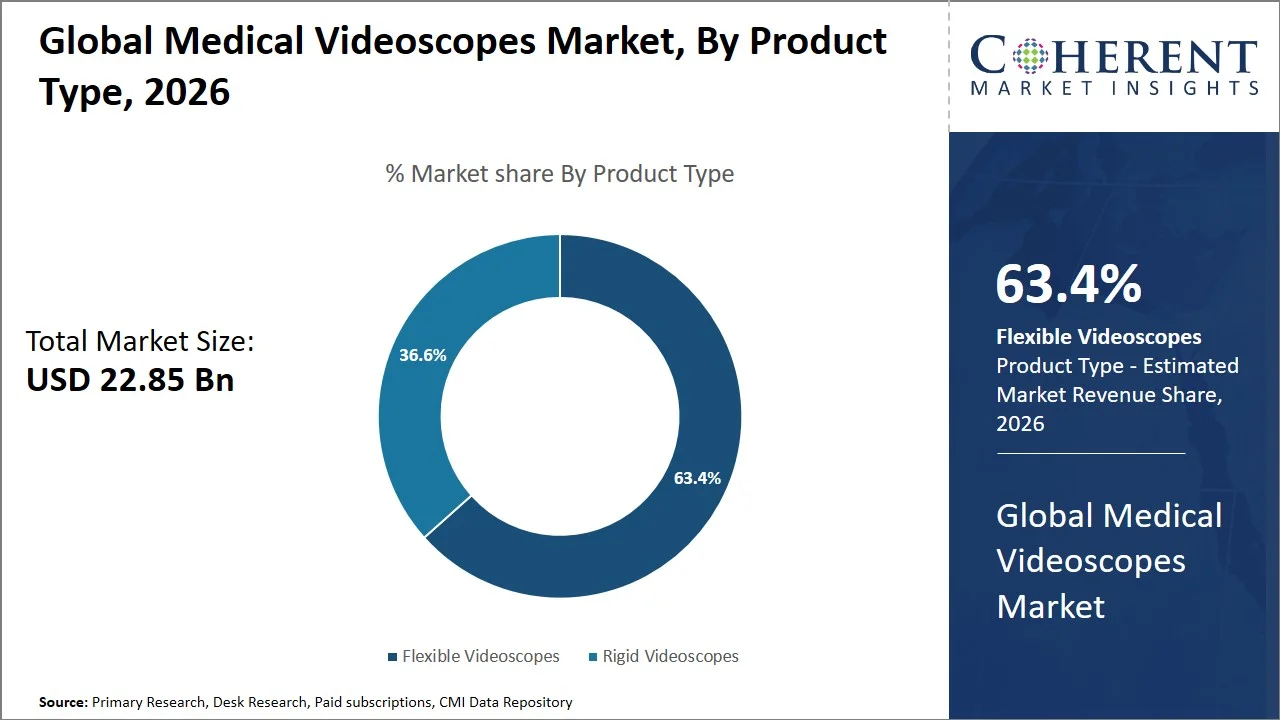
Why Do Flexible Videoscopes Devices Dominate the Global Medical Videoscopes Market?
Flexible videoscopes are projected to hold the market share of 63.4% in 2026, owing to its high degree of maneuverability and ease of access to different anatomical cavities, thus finding its wide application across gastrointestinal, pulmonary, urologic and other procedures. Their flexibility in diagnosis and therapy makes for broader applications than rigid systems. For instance, in February 2026, Stryker unveiled the F88 flexible reusable ureteroscope with 270° up and down deflection and graduating tube flexibility enabling improved reach to hard-to-access anatomy.
- Current Industry Events of 2026
- Market Size Estimation
- Regional Breakdown
- Competitive Landscape
- Customer Intelligence
- Segmental Analysis
- Pricing Analysis
- Key Market Drivers, Challenges & Future Trends
- Customized Insights Section
Why Does Reusable Videoscopes Represent the Largest Mode of Operation Segment in the Medical Videoscopes Market?
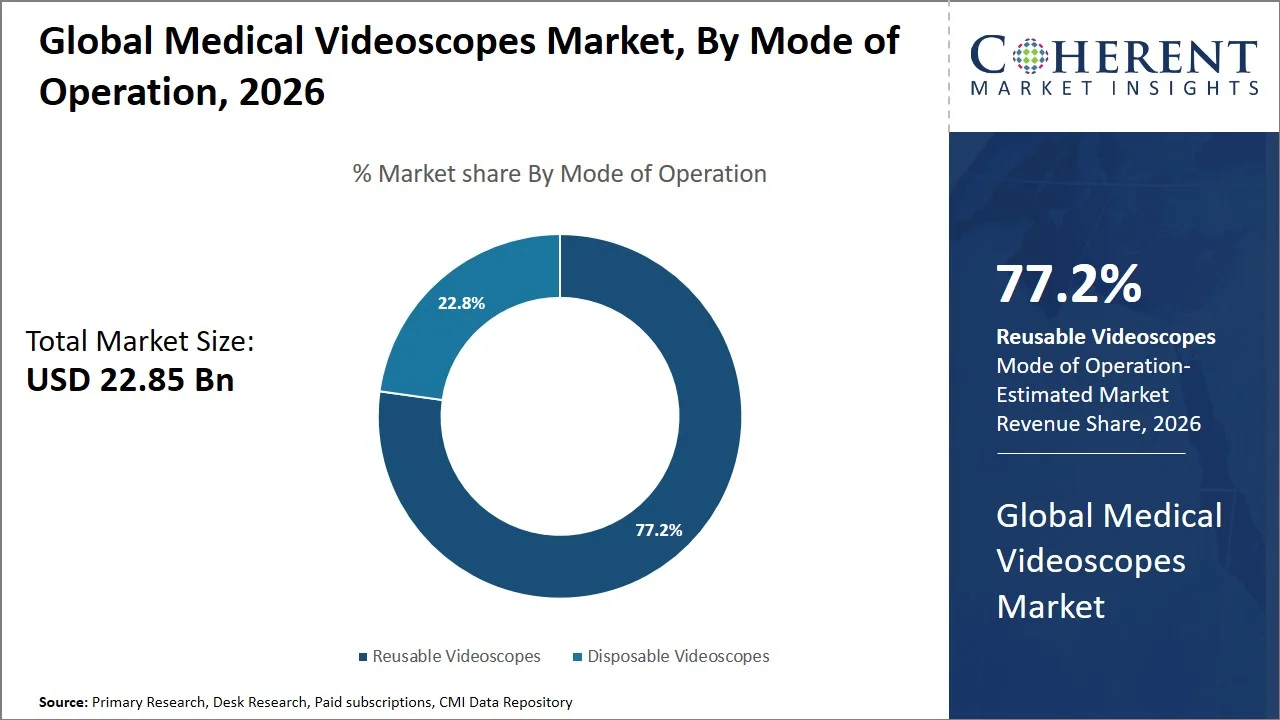
Reusable videoscopes are projected to hold a market share of 77.2% in 2026, attributed to it high reusability, durability, repeated-use cost-effectiveness and the existing high-volume applications like gastrointestinal examinations, where standard, long-term, reusable systems are widely used. These offer robust clinical serviceability with improved imaging and maneuverability at a low long-term cost of ownership appealing to many hospitals. For instance, Richard Wolf provides reusable flexible sensor endoscopes such as: BOA flexible sensor ureteroscope and MAMBA flexible sensor cystoscope suitable for repeated clinical use and high resolution with specialized imaging capabilities.
High-Definition (HD) Videoscopes Segment Dominates the Global Medical Videoscopes Market
The high-definition (HD) videoscopes segment is projected to hold a market share of 46.8% in 2026, driven by image clarity, clinical dependable performance, cost effectiveness and compatibility with the current endoscopy system. Its existing application in daily examination or operation is likely to contribute to ongoing sales of videoscopes in cost efficient health-care system. For instance, in August 2026, FUJIFILM India enhanced its endoscopy offering with an advanced range of next-generation of therapeutic gastroscopes offering high quality and more visualization possibilities, underlining sustained demand for high-quality endoscopic imagery.
Current Events and their Impact
Current Events | Description and its Impact |
Canada Funds Expansion of Endoscopy and Operating-Room Capacity (July 2026) |
|
United Kingdom Government Expands Access to Endoscopy Diagnostics (May 2025) |
|
Medical Videoscopes Market Dynamics
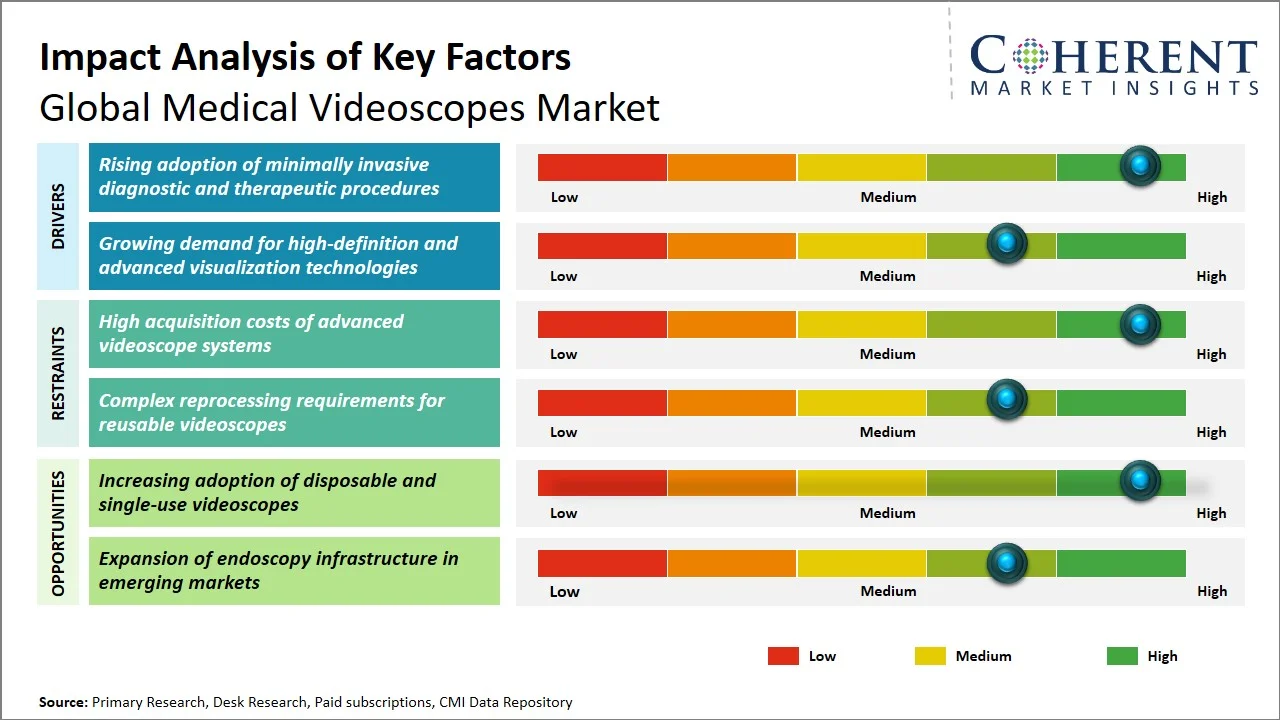
Market Drivers
- Rising adoption of minimally invasive diagnostic and therapeutic procedures: The increasing use of minimally invasive diagnostic and therapeutic procedures is expanding the need for real-time, high-quality visualization, making medical videoscopes an important component of modern endoscopic workflows. Growth in gastrointestinal, pulmonary, urological, and other endoscopic procedures is encouraging healthcare providers to expand and upgrade videoscope fleets. For instance, NHS England reported 100,778 diagnostic tests, including endoscopic procedures, through its bowel cancer screening program during 2024–2025, demonstrating the substantial procedural activity supported by endoscopic visualization technologies.
- Growing demand for high-definition and advanced visualization technologies: The growing emphasis on high-definition, ultra-high-definition, three-dimensional, infrared, and image-enhancement capabilities is increasing demand for advanced medical videoscopes that provide greater anatomical detail and support more precise lesion assessment. Healthcare providers are increasingly upgrading from conventional imaging systems to technologies that improve visualization during complex diagnostic and therapeutic procedures. For instance, in February 2026, the U.S. Food and Drug Administration (FDA) approved a 4K camera system with advanced imaging modalities under its endoscope regulatory framework, reflecting continued development of higher-resolution and advanced visualization technologies for endoscopic procedures.
- Increasing adoption of endoscopy screening and early detection programs: The expansion of organized endoscopy screening programs is increasing procedure volumes and creating a larger utilization base for medical videoscopes. Screening-driven examinations require reliable visualization of the gastrointestinal tract and support the adoption of advanced endoscopic imaging systems across healthcare facilities. For instance, NHS England reported that 3.4 million people participated in bowel cancer screening in 2024–2025, demonstrating the substantial and recurring procedural demand generated by population-based screening programs.
Emerging Trends
- Integration of artificial intelligence into videoscope platforms: Artificial intelligence is increasingly being integrated with endoscopic imaging to support lesion detection, anatomical recognition, image enhancement, and procedural quality assessment. This is shifting videoscopes from visualization-only devices toward intelligent systems that can provide real-time decision support.
- Rising adoption of single-use videoscopes: Healthcare providers are increasingly evaluating single-use videoscopes to reduce reprocessing requirements, improve procedural availability, and address infection-control concerns. Recent clinical evidence also demonstrates the feasibility of single-use gastroscopy and colonoscopy, supporting their expansion beyond specialized applications.
- Convergence of multiple advanced imaging technologies: Videoscopes are increasingly incorporating multiple imaging capabilities, including high-definition, three-dimensional, infrared, and fluorescence-based visualization within integrated systems. This trend is enabling clinicians to obtain different visualization modes without changing scopes and is particularly relevant to complex minimally invasive procedures.
Regional Insights
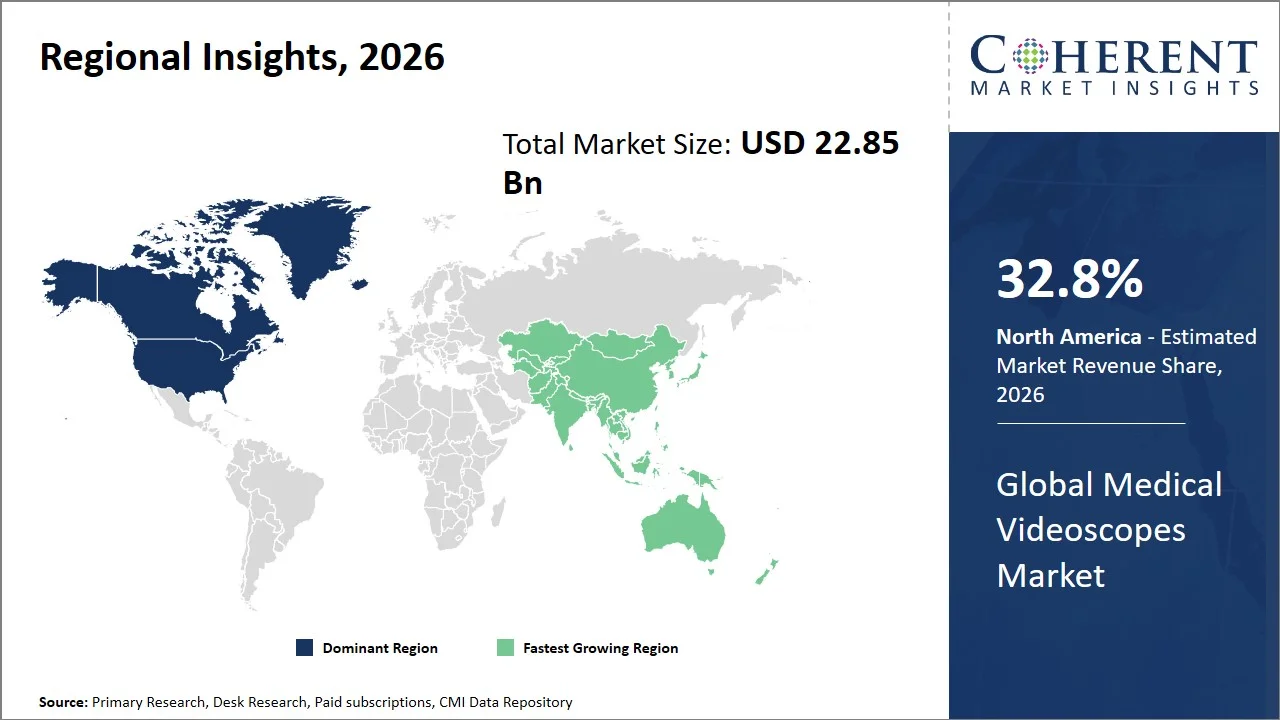
Why is North America a Strong Market for Medical Videoscopes?
North America leads the global medical videoscopes market, accounting for an estimated 32.8% share in 2026, driven by well-established healthcare industry, wide availability and access of sophisticated endoscopic equipment, and substantial investment made in research and development related to medical device innovation. Robust policies that encourage the innovation including the Food and Drug Administration's accelerated approval pathways in the U.S for medical devices.
For instance, the Breakthrough Devices Program by U.S. Food and Drug Administration (FDA) is an efficient process to facilitate the development and commercialization of eligible medical devices that are for life-threatening or irreversibly debilitating diseases or conditions, demonstrating greater potential to provide a more effective treatment or diagnosis. Moreover, the widespread accessibility of high-end endoscopy suites coupled with existing minimal invasive procedure protocols encourage continued adoption of videoscope for the various clinical specialties.
Why Does Asia Pacific Medical Videoscopes Market Exhibit High Growth?
Asia Pacific is expected to exhibit the fastest growth in the global medical videoscopes market, registering an estimated CAGR of 8.7% during 2026–2033. The region is projected to account for 27.0% of the global market in 2026, because of expansion in the healthcare infrastructures, increase in healthcare expenditure and widespread use of minimally invasive devices. Government regulations favoring access to health services, medical devices, and local manufacturing are bolstering the market in the region specifically from countries like China, India, Japan, and South Korea.
For instance, in June 2025, China National Medical Products Administration (NMPA) proposed measures to promote the localized manufacturing of imported medical devices and grant priority review and registration approval and production licensing approval to transferred products that were originally innovative medical devices. Additionally, increasing access to advanced endoscopy units and improved accessibility to health services will continue to fuel growth in demand for flexible, high-resolution and advanced video scopes.
Global Medical Videoscopes Market Outlook for Key Countries
Why is the U.S. Leading Innovation and Adoption in the Medical Videoscopes Market?
The U.S. has been in the forefront of innovation and adoption in the medical videoscopes market attributed to increased adoption of novel imaging, image visualization via AI and digitally incorporated endoscopic workflows. The ecosystem is inclined towards a smart endoscopic solution that assists in lesion detection, image enhancement, quality analysis and documentation of the process. Additionally, the country provides a clear regulatory framework for use of an artificial intelligence assisted system for augmenting video display of endoscopic examinations. This framework stimulates ongoing innovation across the country.
Is Japan a Favorable Market for Medical Videoscopes Market?
Japan is a favorable market for medical videoscopes due to a well-established endoscopic ecosystem and need for further advanced diagnostic visualization techniques. Market viability is promising for flexible gastrointestinal and urological videoscopes, as well as AI-enhanced endoscopic imaging solutions. Moreover, the Japan’s Pharmaceuticals and Medical Devices Agency (PMDA) have developed separate categories and review procedures to cover the development and usage of flexible video gastro-duodenoscopes, video cystourethroscope and other videoscope products.
Is China Emerging as a Key Growth Hub for the Medical Videoscopes Market?
China represents an emerging rather than a developed opportunity driven by proliferation of endoscopy facilities, increasing use of innovative visualization capabilities, and growing expertise in domestic medical devices. Government regulations to promote domestic development of expensive devices and technology localization are having a positive effect. For instance, in 2025, National Medical Products Administration increased the subsidy for domestic imported medical devices and prioritized the registration and approval of transferred innovative devices’ production license.
Why Does Germany Top the European Medical Videoscopes Market?
Germany boasts the highest market penetration in Europe, due to an established endoscopy infrastructure with clinical guidelines and a higher implementation of high-tech visualizations. The country’s guidelines suggest the use of videoscope devices, preferentially high definition for digestive diseases, further boosting demand in high end videoscope platforms. There are also detailed standardized requirements on cleaning flexible endoscopes, supporting an already high utilization of reusable videoscope devices.
Is Medical Videoscopes Market Developing in South Korea?
South Korea represents a developing market through adoption of AI and robotic-powered flexible endoscopy products. The country has been accumulating capabilities in terms of intelligent endoscopy technology with applications in areas such as scope automation and improved targeting for the process (AI-powered). Therefore, country can become a new market for sophisticated flexible videoscopes in field of gastroenterology and urology and minimally invasive applications.
Key Applications and Procedures for Medical Videoscopes
Application | Key Procedure Examples | Relevance to Medical Videoscopes |
Gastroenterology | Gastroscopy, Colonoscopy, Duodenoscopy | High utilization of flexible videoscopes for diagnostic and therapeutic procedures |
Pulmonology | Bronchoscopy, Endobronchial Ultrasound | Increasing use of video bronchoscopes for airway visualization and pulmonary diagnosis |
Urology | Cystoscopy, Ureteroscopy | Supports demand for flexible and rigid videoscopes |
General Surgery / Laparoscopy | Laparoscopic visualization | Drives use of rigid videoscopes and advanced imaging systems |
ENT / Otolaryngology | Nasal Endoscopy, Laryngoscopy | Supports routine visualization and minimally invasive procedures |
Gynecology | Hysteroscopy | Creates demand for compact and high-definition videoscope systems |
Orthopedics | Arthroscopy | Supports rigid videoscope utilization for minimally invasive joint procedures |
How is the increasing adoption of disposable and single-use videoscopes creating new growth opportunities in the medical videoscopes market?
Rising concerns about cross-contamination, complicated reprocessing instructions and procedure turnaround times, are prompting health-care providers to contemplate disposable or single-use videoscopes. These offer potential benefits to simplify workflow, eliminating the need to reprocess scopes from patient to patient, and ensure availability particularly in high-volume endoscopy settings. This opportunity is enhanced as single-use technology expands into other areas such as gastrointestinal, urological, pulmonary, and other applications. For instance, in April 2026, the U.S Food and Drug Administration (FDA) acknowledged a new determination of substantial equivalence for its flexible and rigid gastroscope, the EvoEndo Single-Use Endoscopy System by EvoEndo, Inc., under the category 21 CFR 876.1500, indicating a firm entrenchment of the use of single use videoscopes, among other medical device classification category systems.
Market Players, Key Development, and Competitive Landscape
Key Developments
- In August 2026, Olympus Corporation launched the ENDOEYE FLEX 3D flexible-tip videoscope, compatible with the VISERA ELITE III surgical imaging platform. The videoscope combines 4K, 3D, IR, and Yellow Enhancement imaging in a single device, reducing the need to change scopes for different observation requirements. The launch strengthens advanced visualization capabilities and supports the market’s shift toward multifunctional medical videoscopes.
- In May 2026, Olympus Corporation signed an exclusive global distribution agreement with EndoRobotics Co., Ltd. to add robot-assisted technologies to its EndoTherapy portfolio. The collaboration targets advanced therapeutic procedures such as endoscopic submucosal dissection (ESD), supporting greater precision, control, and procedural efficiency. The agreement expands the integration of robotic technologies with therapeutic endoscopy and supports innovation in advanced endoscopic care.
- In December 2025, FUJIFILM Healthcare UK completed the acquisition of the British endoscopy business of Aquilant Endoscopy Limited. The transaction transferred Fujifilm’s endoscopy capital equipment, endotherapeutic and accessory devices, and therapeutic endoscopy portfolio to FUJIFILM Healthcare UK. The acquisition strengthens Fujifilm’s direct sales, service, and support capabilities in the UK endoscopy market.
Competitive Landscape
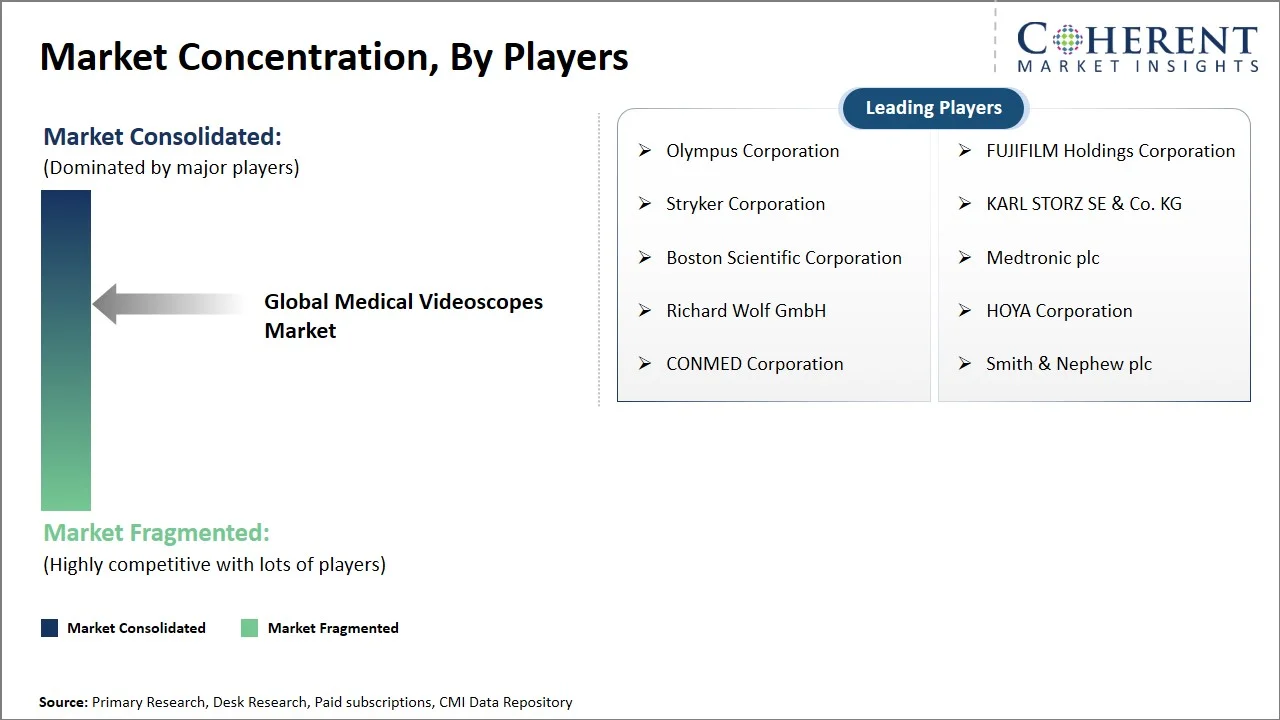
The global medical videoscopes market is moderately competitive, with competition centered on image quality, visualization capabilities, device maneuverability, infection-control performance, procedural efficiency, and compatibility with existing endoscopy systems. Market participants are increasingly focusing on advanced imaging, artificial intelligence-enabled visualization, single-use technologies, and application-specific videoscope designs to strengthen clinical utility across diagnostic and therapeutic procedures. Key focus areas include:
- Development of flexible videoscopes with improved maneuverability, articulation, and distal-tip control for complex procedures
- Advancement of high-definition, 4K, three-dimensional, infrared, and enhanced imaging technologies to improve visualization
- Expansion of disposable and single-use videoscopes to address infection-control and reprocessing requirements
- Integration of artificial intelligence-assisted image enhancement, lesion detection, and procedural support into videoscope systems
- Development of application-specific videoscopes for gastrointestinal, pulmonary, urological, otolaryngological, gynecological, and surgical procedures
Market Report Scope
Medical Videoscopes Market Report Coverage
| Report Coverage | Details | ||
|---|---|---|---|
| Base Year: | 2025 | Market Size in 2026: | USD 22.85 Bn |
| Historical Data for: | 2020 To 2024 | Forecast Period: | 2026 To 2033 |
| Forecast Period 2026 to 2033 CAGR: | 6.1% | 2033 Value Projection: | USD 34.64 Bn |
| Geographies covered: |
| ||
| Segments covered: |
| ||
| Companies covered: | Olympus Corporation, FUJIFILM Holdings Corporation, Stryker Corporation, KARL STORZ SE & Co. KG, Boston Scientific Corporation, Medtronic plc, Richard Wolf GmbH, HOYA Corporation, CONMED Corporation, Smith & Nephew plc | ||
| Growth Drivers: |
| ||
| Restraints & Challenges: |
| ||
Analyst Opinion (Expert Opinion)
- In the coming years, global medical videoscopes market will move toward intelligent, high-resolution, and increasingly application-specific visualization systems. The market is expected to shift beyond basic image capture toward integration of artificial intelligence-assisted detection, three-dimensional and ultra-high-definition imaging, advanced image enhancement, and digital workflow connectivity. At the same time, single-use videoscopes are likely to gain importance where infection-control, turnaround time, and reprocessing efficiency are major considerations. Overall, videoscopes are expected to evolve into more integrated platforms that combine visualization, decision support, documentation, and procedural workflow capabilities.
- The maximum opportunities are foreseen within flexible videoscopes for gastroenterology in the U.S. supported by the high volume of gastroscopy and colonoscopy procedures, established endoscopy infrastructure, replacement of aging equipment, and increasing demand for advanced visualization. Within this opportunity, systems combining high-definition or ultra-high-definition imaging, improved maneuverability, enhanced image processing, and artificial intelligence-assisted visualization are likely to attract the greatest investment. The opportunity is particularly strong in hospitals and high-volume ambulatory endoscopy centers seeking to improve diagnostic quality and procedural efficiency.
- In order to gain a competitive advantage market players should focus on advanced visualization, artificial intelligence integration, and workflow efficiency to differentiate their offerings. Developing application-specific videoscopes with improved maneuverability, high-resolution imaging, and single-use options, while strengthening interoperability and service support, can help companies improve clinical value and gain a competitive edge.
Speak to the analyst
Want personalized insights?
Take the findings above to one of our principal consultants, or have the report rebuilt around the segments, geographies and competitors you actually track.
Market Segmentation
- Product Type Insights (Revenue, USD Bn, 2021 - 2033)
- Flexible Videoscopes
- Rigid Videoscopes
- Mode of Operation Insights (Revenue, USD Bn, 2021 - 2033)
- Reusable Videoscopes
- Disposable Videoscopes
- Technology Insights (Revenue, USD Bn, 2021 - 2033)
- High-Definition (HD) Videoscopes
- 4K/Ultra-High-Definition (UHD) Videoscopes
- 3D/Advanced Imaging Videoscopes
- AI-Integrated Videoscopes
- Application Insights (Revenue, USD Bn, 2021 - 2033)
- Gastroenterology
- Pulmonology
- Urology
- General Surgery/Laparoscopy
- ENT/Otolaryngology
- Orthopedics/Arthroscopy
- Gynecology
- Others
- End User Insights (Revenue, USD Bn, 2021 - 2033)
- Hospitals
- Ambulatory Surgical Centers
- Specialty Clinics
- Diagnostic Centers
- Others
- Regional Insights (Revenue, USD Bn, 2021 - 2033)
- North America
- U.S.
- Canada
- Latin America
- Brazil
- Argentina
- Mexico
- Rest of Latin America
- Europe
- Germany
- U.K.
- Spain
- France
- Italy
- Russia
- Rest of Europe
- Asia Pacific
- China
- India
- Japan
- Australia
- South Korea
- ASEAN
- Rest of Asia Pacific
- Middle East
- GCC Countries
- Israel
- Rest of Middle East
- Africa
- South Africa
- North Africa
- Central Africa
- North America
- Key Players Insights
- Olympus Corporation
- FUJIFILM Holdings Corporation
- Stryker Corporation
- KARL STORZ SE & Co. KG
- Boston Scientific Corporation
- Medtronic plc
- Richard Wolf GmbH
- HOYA Corporation
- CONMED Corporation
- Smith & Nephew plc
Sources
Primary Research Interviews
- Gastroenterologists, pulmonologists, urologists, general surgeons, and ENT specialists using medical videoscopes
- Endoscopy unit directors, operating-room managers, and clinical procedure specialists
- Hospital and ambulatory surgical center procurement professionals responsible for endoscopy equipment
- Biomedical engineers and endoscopy equipment maintenance specialists
- Endoscopy reprocessing, infection-prevention, and sterilization professionals
- Medical-device distributors and specialty endoscopy equipment suppliers
Stakeholders
- Medical videoscope and endoscopy equipment manufacturers
- Hospitals, ambulatory surgical centers, specialty clinics, and diagnostic centers
- Gastroenterology, pulmonology, urology, ENT, gynecology, and surgical departments
- Endoscopy and minimally invasive surgery centers
- Medical-device distributors and healthcare equipment suppliers
- Endoscopy reprocessing and infection-control service providers
- Academic medical centers and clinical research institutions
- End-use Sectors
- Hospitals and Health Systems
- Ambulatory Surgical Centers
- Specialty Clinics
- Diagnostic Centers
- Endoscopy Centers
- Academic and Research Institutions
- Emergency and Outpatient Care Facilities
- Regulatory & Health Bodies
- U.S. Food and Drug Administration – Center for Devices and Radiological Health
- European Commission – Medical Devices Coordination Group
- Medicines and Healthcare products Regulatory Agency, United Kingdom
- Pharmaceuticals and Medical Devices Agency, Japan
- National Medical Products Administration, China
- Health Canada
- Therapeutic Goods Administration, Australia
Databases
- ClinicalTrials.gov – Clinical trials involving endoscopy, minimally invasive procedures, and medical imaging
- European Union Clinical Trials Information System – Endoscopy and minimally invasive procedure trials
- World Health Organization International Clinical Trials Registry Platform – Global clinical-trial records
- U.S. Food and Drug Administration Medical Device Databases – Videoscope classifications, regulatory submissions, recalls, and adverse-event records
- U.S. Food and Drug Administration Manufacturer and User Facility Device Experience Database – Medical-device adverse-event records
- EUDAMED – European medical-device registration and regulatory information
- World Health Organization Global Health Observatory – Healthcare and medical-device statistics
Associations
- American Society for Gastrointestinal Endoscopy
- European Society of Gastrointestinal Endoscopy
- Society of American Gastrointestinal and Endoscopic Surgeons
- American Urological Association
- American Thoracic Society
- American Academy of Otolaryngology–Head and Neck Surgery
- American Association of Gynecologic Laparoscopists
- American College of Surgeons
Public Domain Sources
- World Health Organization – Endoscopy, medical devices, and healthcare-system data
- U.S. Food and Drug Administration – Medical-device regulatory and safety information
- Centers for Disease Control and Prevention – Infection prevention and endoscope reprocessing information
- Centers for Medicare & Medicaid Services – Healthcare utilization and reimbursement information
- National Institutes of Health – Clinical and biomedical research
- European Commission – Medical-device regulations and reprocessing requirements
- National Health Service England – Endoscopy capacity and procedure data
- Organisation for Economic Co-operation and Development – Healthcare infrastructure and expenditure data
Proprietary Elements
- CMI Data Analytics Tool, Proprietary CMI Existing Repository of information for last 10 years.
Get access to 250+ pages report
Every segment, forecast, competitor profile and data table behind the analysis above — available for instant download.
- ESOMAR Member
- ISO 9001:2015 Certified
- D-U-N-S Registered
- GDPR & CCPA Compliant
Missing comfort of reading report in your local language? Find your preferred language:
Frequently Asked Questions
The global medical videoscopes market is estimated to be valued at USD 22.85 Bn in 2026 and is expected to reach USD 34.64 Bn by 2033.
Flexible videoscopes dominate due to their broader use across gastrointestinal, pulmonology, urology, and other minimally invasive procedures, along with their ability to access anatomically complex areas.
Medical videoscopes are minimally invasive imaging devices that provide real-time visualization of internal anatomical structures during diagnostic and therapeutic procedures.
The CAGR of global medical videoscopes market is projected to be 6.1% from 2026 to 2033.
Medical videoscopes include flexible and rigid videoscopes, with variations based on imaging technology, mode of operation, and clinical application.
Medical videoscopes are widely used in gastroenterology, pulmonology, urology, general surgery, ENT, gynecology, and orthopedics for diagnostic and therapeutic procedures.
Flexible videoscopes can navigate curved and anatomically complex pathways, while rigid videoscopes provide stable, high-quality visualization during procedures requiring a fixed access route.