

Global Medication Adherence Platform Market Forecast – 2026 To 2033
The global medication adherence platform market is expected to grow from USD 4.05 Bn in 2026 to USD 10.90 Bn by 2033, registering a compound annual growth rate (CAGR) of 15.2% from 2026 to 2033. The market for global medication adherence platform is poised for significant expansion, fueled by the growing medication-management needs of patients with chronic conditions.
In May 2026, the U.S. Centers for Disease Control and Prevention (CDC) reported that 90% of the nation’s USD 5.3 trillion in annual healthcare expenditures are attributable to people with chronic and mental health conditions, reinforcing the need for scalable digital tools supporting ongoing treatment and medication management.
Key Takeaways of the Global Medication Adherence Platform Market
- Integrated medication adherence platforms are projected to hold 56.4% of the global medication adherence platform market share in 2026, making it dominant platform type segment with Asia-Pacific emerging as a key adoption region as governments build connected medication-data infrastructure. For instance, in January 2026, the Australian Government announced the development of a National Medicines Record, using My Health Record, electronic prescribing, and the Active Script List to give patients, prescribers, and pharmacists a consolidated view of medicines prescribed and dispensed through digital platforms. This infrastructure directly supports integrated platforms that connect medication information across patients, providers, and pharmacies.
- Medication management and scheduling is projected to hold 24.8% of the global medication adherence platform market share in 2026, making it dominant solution segment with Europe benefiting from regulatory standardization of electronic prescriptions and medication-dispensing data. For instance, under the European Health Data Space (EHDS) Regulation, the European Commission has established ePrescriptions and eDispensations as priority health-data categories, with cross-border exchange scheduled to become applicable from March 2029. This framework strengthens the need for digital medication-management solutions capable of handling standardized prescription and dispensing information.
- Cloud-based is projected to hold 68.7% of the global medication adherence platform market share in 2026, making it dominant deployment segment with North America leading as U.S. health IT regulation increasingly supports API-enabled, remotely accessible digital-health systems. For instance, ONC’s HTI-4 Final Rule, effective October 1, 2025, established certification criteria for electronic prescribing, real-time prescription benefits, electronic prior authorization, and API functionality, strengthening the standards-based infrastructure required for cloud-connected medication platforms to exchange information across healthcare stakeholders.
- North America market maintains dominance with an expected share of 38.4% in 2026, bolstered by its well-established medication-management infrastructure, payer involvement, and interoperability initiatives across healthcare providers and pharmacies. For instance, U.S. CMS requires Medicare Part D sponsors to operate Medication Therapy Management (MTM) programs, with the programs coordinated with chronic-care management and designed to improve medication use and therapeutic outcomes. This regulatory framework supports continued adoption of digital platforms that facilitate medication review, monitoring, and adherence interventions.
- Asia Pacific is expected to exhibit the fastest growth in the global medication adherence platform market, registering an estimated CAGR of 14.9% during 2026–2033, driven by expanding digital medication-management infrastructure, increasing integration of electronic prescription and dispensing records, and government-led adoption of connected healthcare systems across the region. In August 2026, Japan’s Ministry of Health, Labour and Welfare (MHLW) updated its list of electronic medication-record services compliant with national guidelines. These services can connect with My Number Portal to retrieve prescription and dispensing records and allow patients to manage medication histories digitally, supporting medication-management and adherence platforms.
Segmental Insights
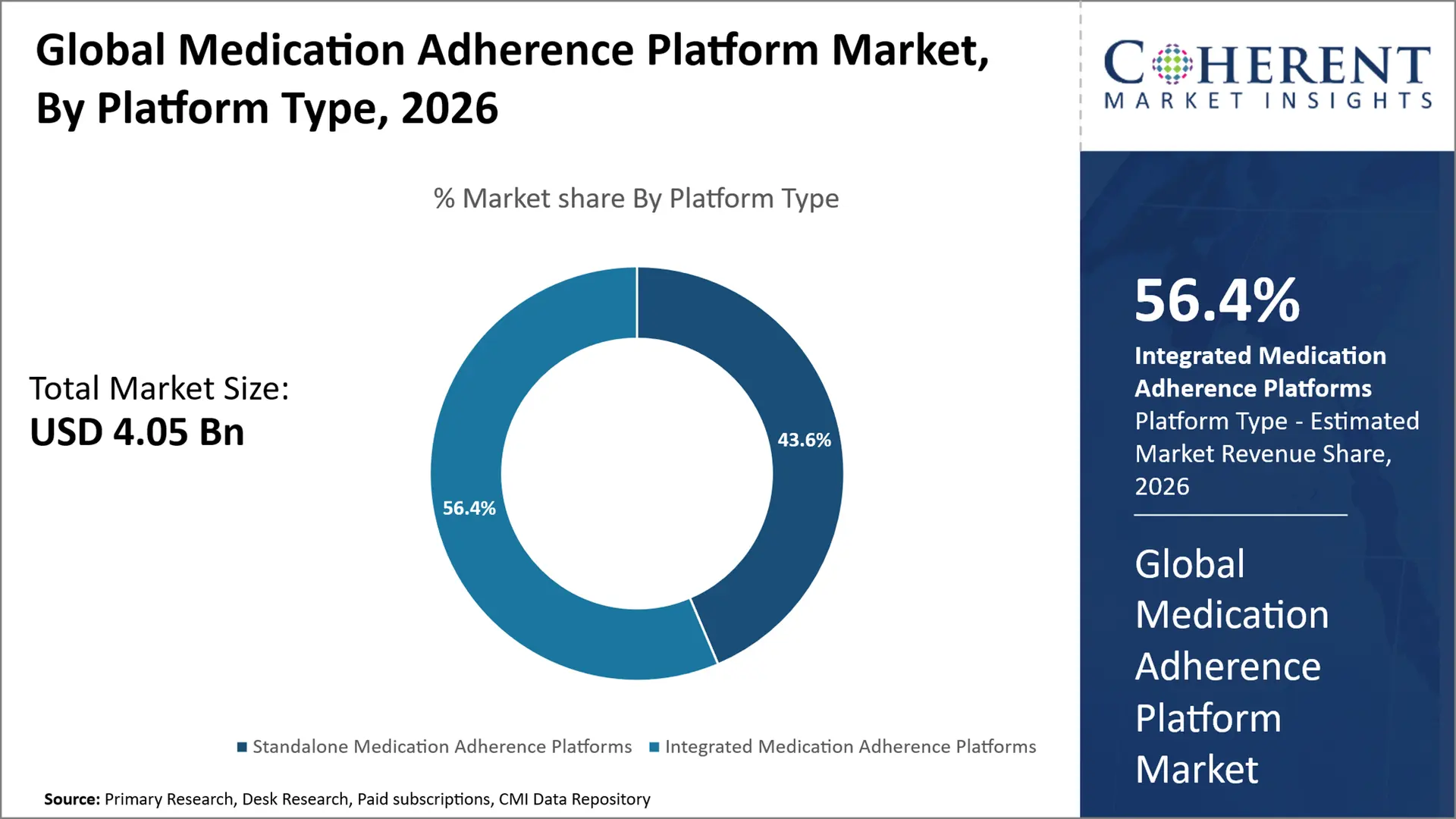
Why Do Integrated Medication Adherence Platforms Dominate the Global Medication Adherence Platform Market?
Integrated medication adherence platforms are projected to hold the market share of 56.4% in 2026, because they unify medication management and clinical, pharmacy, payer and patient-engagement processes in a single environment. An integrated platform combines multiple applications, and unlike point solutions it will connect medication histories, adherence metrics, reminders and intervention data to optimize coordinated care. Its integrative nature also means better integration of any research or resources used to identify and address non-adherence. For instance, in August 2026, adherent360 unveiled its Medication Kiosk and Pharmacy Platform at the Advent Health Clermont Emergency Room. Point of care medication dispensing and pharmacy services facilitate patients’ access to their prescribed medications at the time of discharge.
- Current Industry Events of 2026
- Market Size Estimation
- Regional Breakdown
- Competitive Landscape
- Customer Intelligence
- Segmental Analysis
- Pricing Analysis
- Key Market Drivers, Challenges & Future Trends
- Customized Insights Section
Why Do Medication Management and Scheduling Represent the Largest Solution Segment in the Medication Adherence Platform Market?
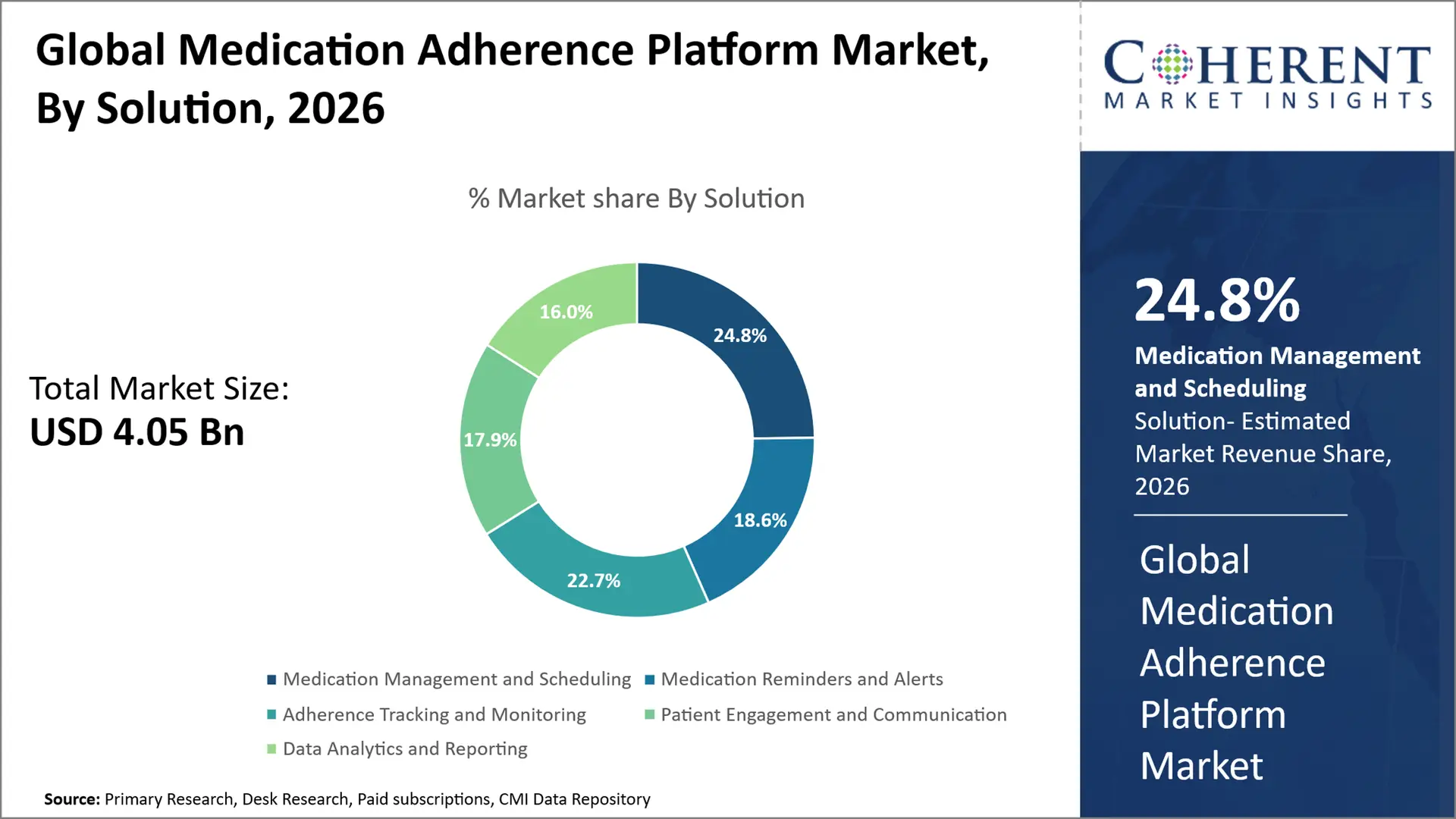
Medication management and scheduling is projected to hold a market share of 24.8% in 2026, owing to the significant impact it has on sorting complex regimens, decreasing missed doses or wrong timing of medication, and enhancing medication safety. Additionally, medication scheduling can also help with automatic reminders, medication schedule, refills synchronization, and schedule adjustments to treatment regimens. This can prove to be advantageous for patients with chronic illnesses and polypharmacy and can also reduce the manual patient tracking by the clinicians. For instance, in August 2026, the U.S. Community Preventive Services Task Force (CPSTF) changed its recommendation supporting targeted pharmacy-based adherence interventions such as medication calendars, refill synchronization, and improved follow-up. (Source: U.S. Centers for Disease Control and Prevention (CDC))
Cloud-Based Segment Dominates the Global Medication Adherence Platform Market
The cloud-based segment is projected to hold a market share of 68.7% in 2026, owing to high scalability, easy remote access and up to date synchronization and easy integration with EHRs and other digitized health solutions. Cloud deployment helps in reducing on-site infrastructure requirement and adherence data can be accessed by the patients, caregivers, providers, and pharmacies. Increasing focus on data standardization by the U.S. FDA and other authorities also prompts the adoption of the cloud-based. For instance, In July 2026, the Office of the National Coordinator for Health Information Technology (ONC) announced the release of the United States Core Data for Interoperability (USCDI) Version 7 to strengthen the standardized data set for exchanging electronic health information and enable interoperability across health information technology (IT) systems.
Current Events and their Impact
Current Events | Description and its Impact |
U.S. Centers for Medicare & Medicaid Services (CMS) Expands Technology-Supported Chronic Disease Care (September 2026) |
|
U.S. CDC Updates Pharmacy-Based Medication Adherence Guidance (August 2026) |
|
India Advances Interoperable Digital Health Infrastructure (July 2026) |
|
Medication Adherence Platform Market Dynamics
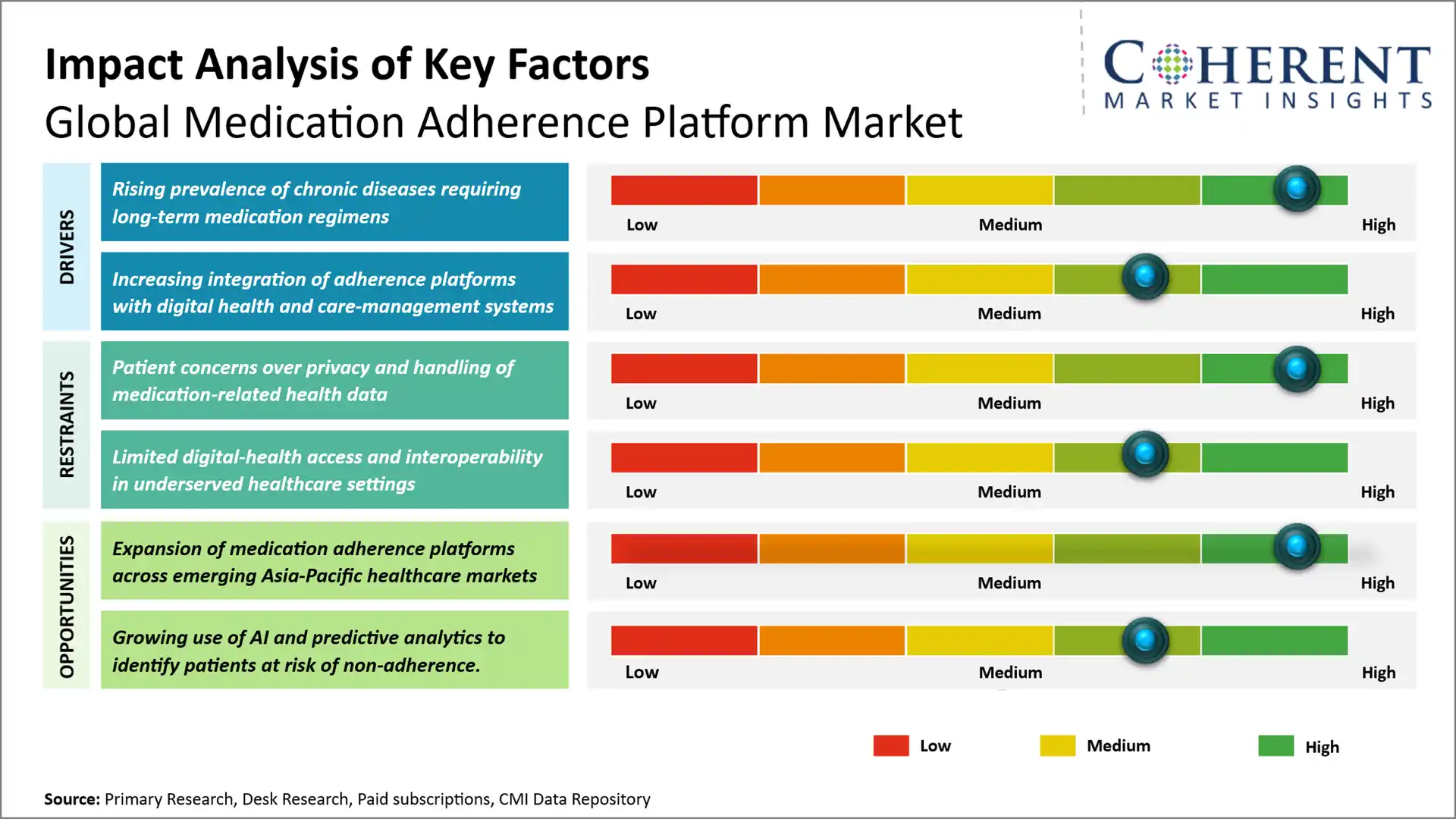
Market Drivers
- Rising prevalence of chronic diseases requiring long-term medication regimens: The growing prevalence of chronic diseases is expanding the number of patients requiring continuous, often lifelong medication, increasing the need for solutions that support consistent treatment adherence. Conditions such as diabetes, hypertension, and cardiovascular diseases require regular medication use, making adherence a critical component of long-term disease management. For instance, in September 2025, the World Health Organization reported that 1.4 billion adults aged 30–79 years were living with hypertension globally in 2024, with only 23% having their condition under control, underscoring the need for sustained medication management and adherence support.
- Increasing integration of adherence platforms with digital health and care-management systems: Integration with EHRs, pharmacy systems, patient-facing applications, and care-management platforms is making medication adherence data more actionable across the care continuum. Interoperable platforms can connect medication histories, adherence signals, clinical information, and patient engagement workflows, enabling providers and care teams to identify and respond to adherence issues more efficiently. For instance, in May 2026, U.S. Centers for Medicare & Medicaid Services (CMS) expanded its HealthTech Ecosystem initiative, emphasizing interoperable digital-health workflows and medication-data exchange across providers, pharmacies, and technology platforms, including the sharing of pharmacist-identified adherence signals with care teams.
- Growing adoption of value-based care models: The shift toward value-based care is increasing the emphasis on measurable treatment outcomes, medication utilization, and avoidable healthcare costs. This creates greater demand for adherence platforms that can provide actionable patient-level data and support targeted interventions to improve medication-taking behavior. For instance, in January 2026, U.S. Centers for Medicare & Medicaid Services (CMS) continued implementation of its Accountable Care Organization (ACO) REACH model, which links healthcare delivery and payment to quality and cost outcomes, strengthening the role of tools that support coordinated chronic-care management.
Emerging Trends
- AI-powered predictive adherence management: Platforms are moving beyond basic reminders toward AI models that identify patients at risk of non-adherence and trigger personalized interventions based on medication and behavioral patterns.
- Integration with connected medication devices: Smart pill dispensers, connected packaging, and digital sensors are increasingly being linked with adherence platforms to capture real-time medication-taking data and generate alerts for missed or delayed doses.
- Integration with healthcare and payer ecosystems: Adherence platforms are increasingly connecting with EHRs, pharmacy systems, payer platforms, and patient-support programs, enabling adherence data to become part of broader clinical and population-health workflows.
Regional Insights
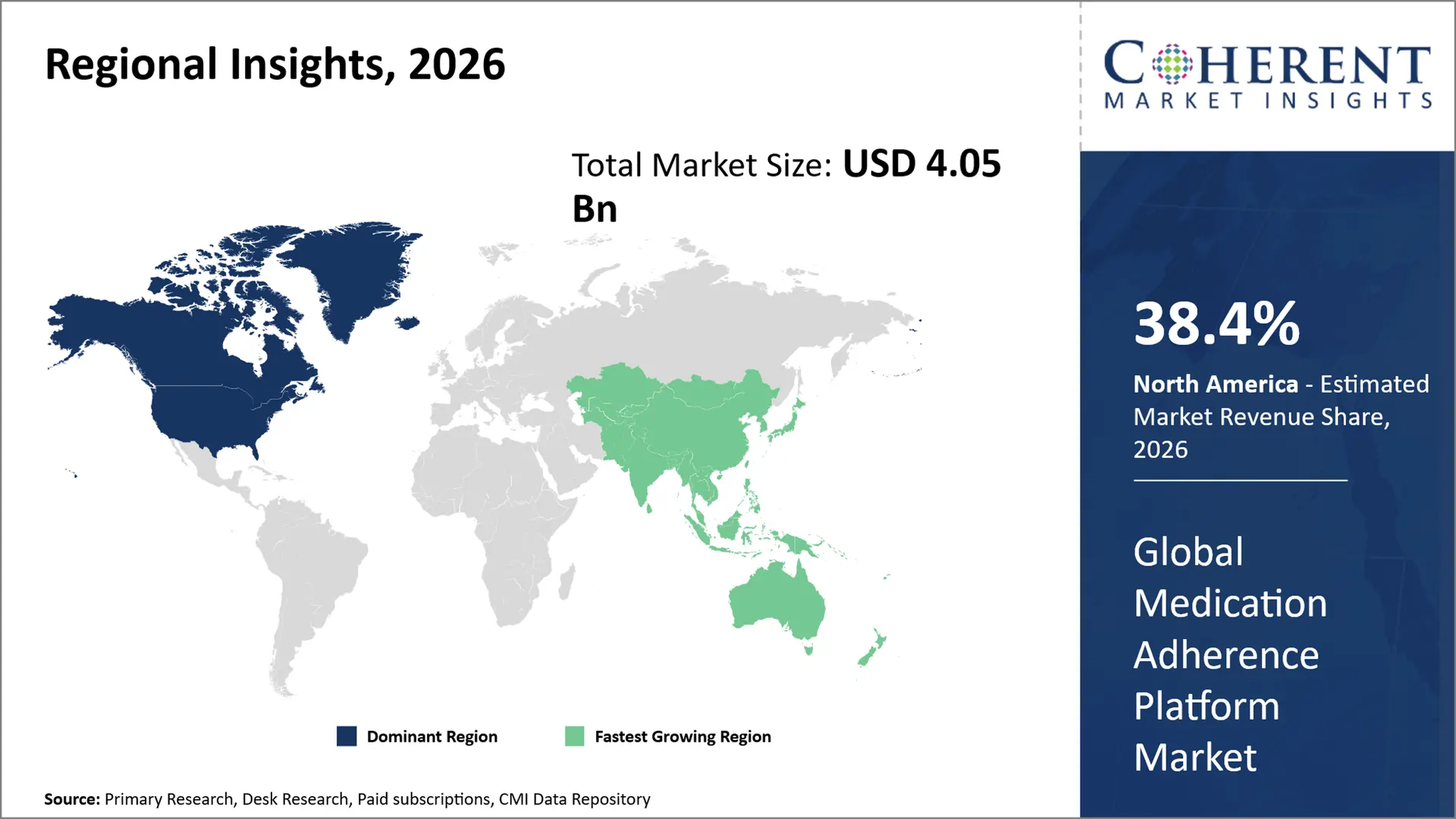
Why is North America a Strong Market for Medication Adherence Platform?
North America leads the global medication adherence platform market, accounting for an estimated 38.4% share in 2026, due to its advanced healthcare system, high adoption of digital health, high smartphone penetration, and significant healthcare spending. Besides, regulatory provisions favoring the sharing of electronic health information, interoperability, and medication management are expected to present opportunities for integrations between providers, pharmacies, and payers.
Furthermore, the increasing investments in connected care and patient-engagement technologies would also fuel the use of medication adherence platform in a chronic-care setting. For instance, on September 4, 2026, the U.S. Centers for Medicare & Medicaid Services (CMS) announced the state of Michigan received a federal investment of USD 25 million through the Rural Health Transformation Program to modernize digital health and data exchange systems, as well as grow telehealth and remote patient monitoring and technology-enabled care coordination. The funding provides a foundation for connected chronic-care and medication-management solutions.
Why Does Asia Pacific Medication Adherence Platform Market Exhibit High Growth?
Asia Pacific is expected to exhibit the fastest growth in the global Medication Adherence Platform market, registering an estimated CAGR of 14.9% during 2026–2033. The region is projected to account for 23.1% of the global market in 2026, owing to rapid digital transformation and growing prevalence of chronic diseases, along with medical care accessibility. The government of the countries such as China, India and Japan are supporting health care digitization and investing in smart health infrastructure, telemedicine & mobile health technologies.
For instance, in July 2026, the National Health Authority of India evaluated the next stage of the Ayushman Bharat Digital Mission Drug Registry, Unified Health Interface, Common LOINC Codes, and other interoperable digital health protocols. The assessment took into account the proposed digital infrastructure needed for synchronized medication reconciliation and adherence services. (Source: Press Information Bureau) In addition, increasing internet and smartphone usage penetration and interoperability of digital health platforms are anticipated to create a favorable environment for the growth of medication adherence platform market in coming years.
Global Medication Adherence Platform Market Outlook for Key Countries
Why is the U.S. Leading Innovation and Adoption in the Medication Adherence Platform Market?
The U.S. seems to be ahead in innovation and adoption, because medication adherence is deeply integrated into various pharmacy, payer and clinical-care workflows, rather than relying solely on standalone reminder apps. The market is also mature enough to include solid Medication Therapy Management (MTM) and digital-health infrastructure that likely helps adherence data contribute to medication reviews, communication and interventions. On the other hand, good interoperability of various healthcare players helps integrated adherence platforms to thrive.
Is Japan a Favorable Market for Medication Adherence Platform Market?
Japan is an attractive market for medication adherence platform, since their aging population, high chronic condition incidence and existing use of digital healthcare solutions make Japan an ideal setting. The high adoption of electronic prescriptions, medication digital records, and interconnected pharmacies also provide tremendous opportunities for medication scheduling, tracking and engagement platforms. Besides, the increasing connectivity of medication data between different stakeholders in healthcare should improve the market adoption.
Is China Emerging as a Key Growth Hub for the Medication Adherence Platform Market?
The further penetration of healthcare digitalization and nation-wide movement across hospital medication data sharing will make China an emerging major growth market for this industry. The expansion of continuous medication-management system, cross-institute medication records, AI-powered medication risk alert, adherence analysis and smart medication reminders in China will probably create a direct opportunity for adherence platform industry.
Why Does Germany Top the European Medication Adherence Platform Market?
Enhanced digital health infrastructure within the country is likely to ensure the dominance of Germany within the European medication adherence platform market. The nation has a robust ecosystem of electronic prescriptions, pharmacy systems and has a pre-existing reimbursement landscape for digital health applications, which in turn is poised to promote adoption of medication management, adherence tracking and engagement platforms, thereby driving demand within Germany.
Is Medication Adherence Platform Market Developing in UK?
The UK market for medication adherence platform is growing, possibly due to the NHS' transition to a more digital medicines pathway, including the convergence of prescribing, dispensing and medicines records. In addition, the increase in the use of the NHS App, electronic prescribing, prescription tracking and medicines interoperability standards would seem to support the development of a strong digital infrastructure supporting digital engagement for medicines management and adherence.
Medication Adherence Platform Features by Stakeholder
Stakeholder | Key Platform Features | Primary Use |
Patients & Caregivers | Medication reminders, scheduling, refill alerts, personalized notifications | Supporting day-to-day medication-taking behavior |
Healthcare Providers | Adherence tracking, patient dashboards, risk alerts, clinical data integration | Identifying and managing patients with potential non-adherence |
Pharmacies | Refill monitoring, medication synchronization, patient outreach | Supporting timely refills and medication continuity |
Healthcare Payers | Risk stratification, adherence analytics, population monitoring | Targeting members requiring adherence interventions |
Pharmaceutical Companies | Patient-support programs, engagement analytics, adherence monitoring | Improving persistence and engagement with therapies |
How is the expansion of medication adherence platforms across emerging Asia Pacific healthcare markets creating new growth opportunities in the medication adherence platform market?
Asia Pacific medication adherence platform market is expected to grow robustly owing to digitization of healthcare and innovations in chronic disease management. The digitalization of healthcare ecosystem, growing awareness about medication monitoring and rising trend for connected care and interoperable health-data systems are leading to the demand for medication adherence platforms. Large number of patient population as well as rising digital-health infrastructure will further open up the market. For instance, in July 2026, the China’s government has issued national guidance on the implementation of continuous medication management. It includes a number of implementations such as interoperability of medication records, adherence analysis, intelligent reminders, and personalized medication services for chronic diseases. (Source: National Health Commission of the People's Republic of China)
Market Players, Key Development, and Competitive Intelligence
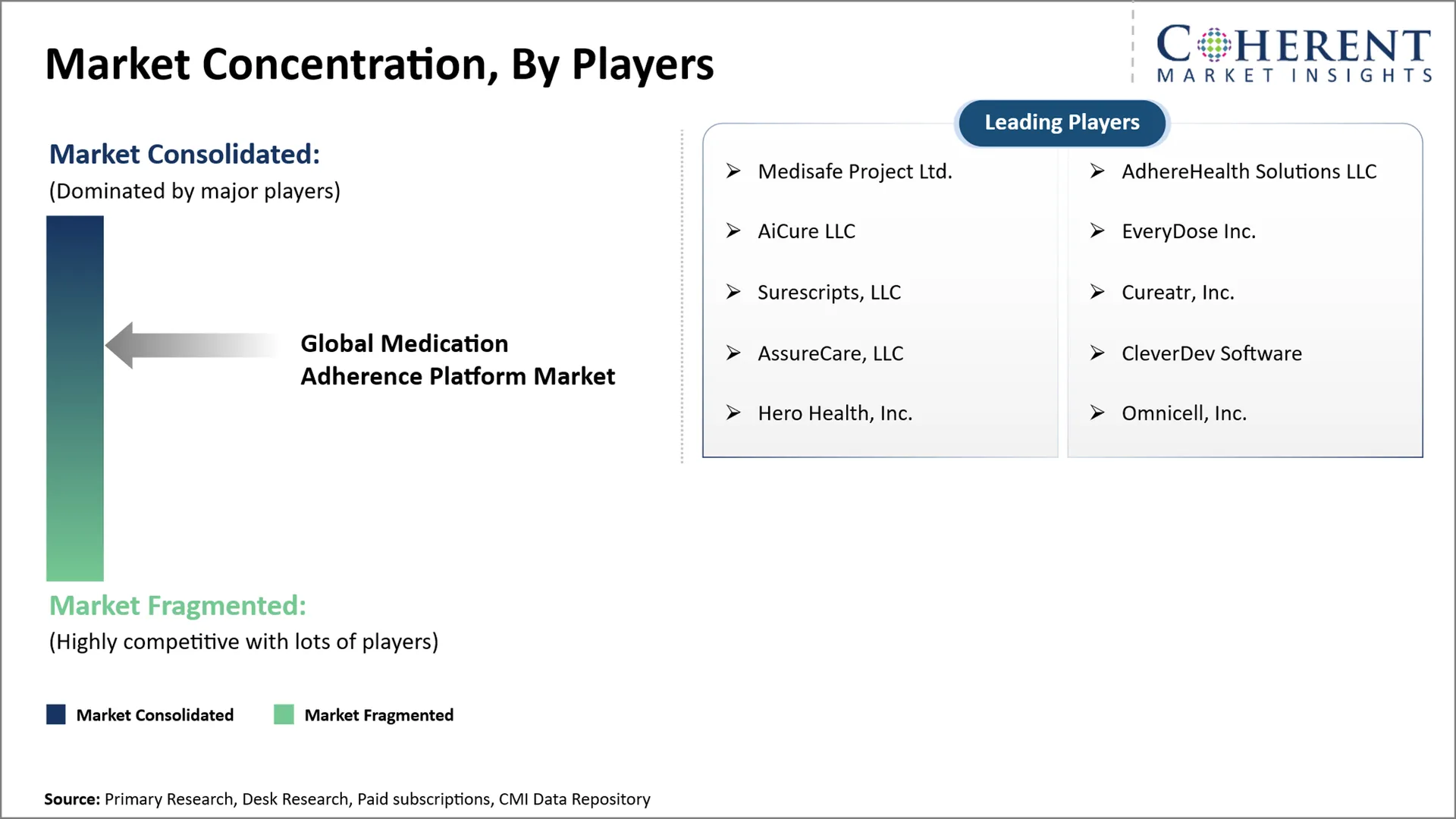
Key Developments
- On September 30, 2026, Clarest Health launched the next generation of Clarest Path, an AI-powered medication intelligence platform for health plans and providers. The platform uses real-time machine learning to identify medication-related risks and prioritize interventions, including adherence risks. It integrates medication adherence with other medication-management measures and clinical workflows.
- In July 2026, Sempre Health expanded its medication adherence platform to include generic medications across members’ full chronic-disease regimens. The expansion extends SMS-based refill reminders, adherence prompts, and health-plan-backed outreach beyond branded therapies to generics such as statins, beta blockers, ACE inhibitors, and ARBs. The company stated that its platform serves more than 19 payer and PBM partners covering approximately 60% of commercially insured U.S. lives.
- In May 2026, Clutch Health acquired Perx Health’s U.S. business, adding Perx’s behavioral engagement platform to its healthcare offering. The platform supports medication adherence through personalized tasks, gamification, incentives, and real-time behavioral nudges, while also supporting chronic-condition management and treatment-plan completion.
- In September 2024, AARDEX Group announced a collaboration with Compliance Meds Technologies to integrate MEMS Adherence Software with CMT’s CleverCap smart cellular device platform. The combined solution provides real-time data on clinical-trial patients’ dosing patterns, enabling study managers and sponsors to identify and address adherence deviations during trials.
Competitive Landscape
The global medication adherence platform market is moderately competitive, with competition centered on adherence monitoring, patient engagement, AI-driven interventions, interoperability, personalization, and integration with healthcare workflows. Market participants are increasingly focusing on digital solutions that improve medication-taking behavior, identify non-adherence risks, and enable targeted interventions across patients, providers, payers, and pharmaceutical companies.
Key focus areas include
- Real-time medication adherence tracking and dose-monitoring capabilities
- AI-driven prediction and identification of patients at risk of non-adherence
- Personalized reminders, behavioral interventions, and patient engagement
- Integration with EHRs, pharmacy systems, payer platforms, and digital health ecosystems
- Development of analytics and reporting tools for adherence outcomes and intervention effectiveness
- Expansion of connected devices, smart packaging, and IoT-enabled medication monitoring
Market Report Scope
Global Medication Adherence Platform Market Report Coverage | |||
Report Coverage | Details | ||
Base Year | 2025 | Market Size in 2026: | USD 4.05 Bn |
Historical Data For: | 2020 To 2024 | Forecast Period: | 2026 To 2033 |
Forecast Period 2026 To 2033 CAGR: | 15.2% | 2033 Value Projection: | USD 10.90 Bn |
Geographies covered: |
| ||
Segments covered: |
| ||
Companies covered: | Medisafe Project Ltd., AdhereHealth Solutions LLC, AiCure LLC, EveryDose Inc., Surescripts, LLC, Cureatr, Inc., AssureCare, LLC, CleverDev Software, Hero Health, Inc., Omnicell, Inc. | ||
Growth Drivers: |
| ||
Restraints & Challenges: |
| ||
Analyst Opinion (Expert Opinion)
- In the coming years, global medication adherence platform market is expected to move from basic reminder-based tools toward intelligent, predictive adherence management. Platforms that combine behavioral data, medication history, real-time monitoring, and AI-driven intervention will increasingly support proactive identification of non-adherence rather than simply recording missed doses.
- The maximum opportunities are foreseen within integrated medication adherence platforms for chronic disease management in the U.S., where platforms can connect adherence monitoring with payer, provider, pharmacy, and patient-engagement workflows. A parallel high-growth opportunity exists in integrated platforms for chronic disease management in India, particularly through mobile-first and scalable digital interventions.
- In order to gain a competitive advantage market players should prioritize interoperability, AI-based risk prediction, and personalized interventions rather than competing primarily on reminder functionality. Building integrations with EHRs, pharmacy systems, payers, and connected medication devices while demonstrating measurable improvements in adherence can strengthen platform differentiation and support long-term enterprise adoption.
Speak to the analyst
Want personalized insights?
Take the findings above to one of our principal consultants, or have the report rebuilt around the segments, geographies and competitors you actually track.
Market Segmentation
- Platform Type Insights (Revenue, USD Bn, 2021 - 2033)
- Standalone Medication Adherence Platforms
- Integrated Medication Adherence Platforms
- Solution Insights (Revenue, USD Bn, 2021 - 2033)
- Medication Management and Scheduling
- Medication Reminders and Alerts
- Adherence Tracking and Monitoring
- Patient Engagement and Communication
- Data Analytics and Reporting
- Deployment Insights (Revenue, USD Bn, 2021 - 2033)
- Cloud-Based
- On-Premise
- Application Insights (Revenue, USD Bn, 2021 - 2033)
- Chronic Disease Management
- Post-Discharge Medication Management
- Specialty Medication Management
- Others
- End User Insights (Revenue, USD Bn, 2021 - 2033)
- Hospitals and Clinics
- Pharmacies
- Pharmaceutical and Biotechnology Companies
- Healthcare Payers
- Patients and Caregivers
- Regional Insights (Revenue, USD Bn, 2021 - 2033)
- North America
- U.S.
- Canada
- Latin America
- Brazil
- Argentina
- Mexico
- Rest of Latin America
- Europe
- Germany
- U.K.
- Spain
- France
- Italy
- Russia
- Rest of Europe
- Asia Pacific
- China
- India
- Japan
- Australia
- South Korea
- ASEAN
- Rest of Asia Pacific
- Middle East
- GCC Countries
- Israel
- Rest of Middle East
- Africa
- South Africa
- North Africa
- Central Africa
- North America
Sources
Primary Research Interviews
- Health-system and hospital executives responsible for medication management, digital health, chronic disease management, and patient engagement
- Clinical pharmacists and pharmacy leaders overseeing medication management, refill monitoring, and adherence interventions
- Chief information, digital-health, and technology officers responsible for healthcare platform deployment and interoperability
- Healthcare payer and PBM executives evaluating medication adherence programs, member engagement, and outcomes-based initiatives
- Pharmaceutical and biotechnology executives managing patient-support programs, specialty medication adherence, and digital engagement
- Medication adherence and digital-health technology providers developing adherence monitoring, reminder, analytics, and AI-enabled platforms
Stakeholders
- Hospitals and health systems implementing medication adherence and chronic disease management solutions
- Pharmacies and pharmacy benefit managers using medication histories, refill data, and adherence signals
- Pharmaceutical and biotechnology companies developing patient-support and medication engagement programs
- Healthcare payers and insurers deploying adherence programs to improve medication utilization and patient outcomes
- Digital health and medication adherence technology companies developing AI, mobile, IoT, and analytics-based solutions
- Patients and caregivers using digital tools for medication scheduling, reminders, monitoring, and engagement
- End-use Sectors
- Hospitals and Clinics
- Pharmacies
- Pharmaceutical and Biotechnology Companies
- Healthcare Payers and PBMs
- Patients and Caregivers
- Specialty and Chronic Care Providers
- Regulatory & Health Bodies
- U.S. Food and Drug Administration (FDA) – oversight of digital health technologies, software, medical devices, and digital therapeutics
- Centers for Medicare & Medicaid Services (CMS) – Medicare, Medicaid, healthcare utilization, reimbursement, and interoperability policies
- Office of the National Coordinator for Health Information Technology (ONC) – EHR interoperability, health IT standards, APIs, and certified health IT
- U.S. Department of Health and Human Services (HHS) – healthcare privacy, security, and digital-health policy
- European Medicines Agency (EMA) – regulatory considerations for digital technologies associated with medicines and healthcare
- European Commission – digital health, health-data governance, and data-protection frameworks applicable to healthcare technologies
- World Health Organization (WHO) – digital health, medication adherence, and responsible digital-health guidance
- National Medical Products Administration (NMPA), China – regulation of medical devices, software, and digital healthcare technologies
- Ministry of Health, Labour and Welfare (MHLW), Japan – regulation of medicines, medical devices, and digital-health technologies
Databases
- CMS Data – Medicare, Medicaid, prescription-related claims, utilization, and healthcare-provider data
- ONC Health IT Data – EHR adoption, interoperability, certified health IT, APIs, and health IT datasets
- Agency for Healthcare Research and Quality (AHRQ) Data – healthcare utilization, medication adherence research, and health-system datasets
- Healthcare Cost and Utilization Project (HCUP) – hospital utilization, admissions, procedures, and healthcare outcomes data
- ClinicalTrials.gov – clinical studies involving medication adherence technologies and digital health interventions
- WHO Global Health Observatory (GHO) – global health, chronic disease, and healthcare-system indicators
- OECD Health Statistics – healthcare expenditure, pharmaceutical utilization, health-system, and population-health indicators
Associations
- American Hospital Association (AHA) – hospital operations, healthcare technology, digital health, and patient-care trends
- Healthcare Information and Management Systems Society (HIMSS) – health IT, interoperability, digital transformation, and healthcare technology adoption
- Pharmacy Quality Alliance (PQA) – medication adherence measures, pharmacy quality, and medication-use outcomes
- National Association of Chain Drug Stores (NACDS) – pharmacy-sector operations, medication services, and patient engagement
- American Pharmacists Association (APhA) – pharmacy practice, medication management, and patient-care services
- International Pharmaceutical Federation (FIP) – global pharmacy practice, medication use, and pharmaceutical-care initiatives
- International Society for Pharmacoepidemiology (ISPE) – medication-use, safety, effectiveness, and real-world evidence research
Public Domain Sources
- U.S. Department of Health and Human Services (HHS) – healthcare privacy, security, digital health, and medication-related information
- Centers for Medicare & Medicaid Services (CMS) – claims, prescription, reimbursement, healthcare utilization, and interoperability data
- Office of the National Coordinator for Health Information Technology (ONC) – health IT adoption, interoperability standards, and certified health IT data
- Agency for Healthcare Research and Quality (AHRQ) – medication adherence research, healthcare utilization, and patient-safety data
- U.S. Food and Drug Administration (FDA) – digital health, software, medical-device, and therapeutic-product regulatory information
- World Health Organization (WHO) – medication adherence, chronic diseases, digital health, and global health indicators
- OECD – pharmaceutical consumption, healthcare expenditure, health-system, and population-health statistics
- European Commission / Eurostat – digital health, healthcare expenditure, pharmaceutical, and population-health statistics
- National Health Service (NHS) England – medicines management, prescribing, dispensing, and digital medicines data
- Government of India / National Health Authority (NHA) – digital health infrastructure, ABDM, health-data standards, and medicine-related digital registries
Proprietary Elements
- CMI Data Analytics Tool
- Proprietary CMI Existing Repository of information for last 10 years.
Get access to 250+ pages report
Every segment, forecast, competitor profile and data table behind the analysis above — available for instant download.
- ESOMAR Member
- ISO 9001:2015 Certified
- D-U-N-S Registered
- GDPR & CCPA Compliant
Frequently Asked Questions
The global medication adherence platform market is estimated to be valued at USD 4.05 Bn in 2026 and is expected to reach USD 10.90 Bn by 2033.
Integrated medication adherence platforms dominate due to their ability to connect adherence monitoring with clinical, pharmacy, payer, and patient-engagement workflows.
Medication adherence platforms are digital solutions that help patients, providers, and caregivers monitor, manage, and improve adherence to prescribed medication regimens.
The CAGR of global medication adherence platform market is projected to be 15.2% from 2026 to 2033.
Rising prevalence of chronic diseases requiring long-term medication regimens, and increasing integration of adherence platforms with digital health and care-management systems are the major factors driving the growth of the global medication adherence platform market.
Patient concerns over privacy and handling of medication-related health data, and limited digital-health access and interoperability in underserved healthcare settings are the major factors hampering the growth of the global medication adherence platform market.
In terms of solution, medication management and scheduling is estimated to dominate the market revenue share in 2026.