

Global Meniere’s Disease Treatment Market Size and Forecast – 2026 To 2033
The global Meniere’s disease treatment market is expected to grow from USD 258.4 Mn in 2026 to USD 354.0 Mn by 2033, registering a compound annual growth rate (CAGR) of 4.6% from 2026 to 2033. The market for global Meniere’s disease treatment is poised for significant expansion, fueled by the substantial diagnosed patient population and continued need for long-term symptom management.
According to the U.S. National Institute on Deafness and Other Communication Disorders (NIDCD), approximately 615,000 people in the U.S. have Meniere’s disease, with around 45,500 new cases diagnosed annually, according to the American Hearing Research Foundation. This substantial patient burden supports continued demand for effective disease-management and treatment options.
Key Takeaways of the Global Meniere’s Disease Treatment Market
- Medication is projected to hold 54.7% of the global Meniere’s disease treatment market share in 2026, making it dominant treatment type segment, across North America, due to the established use of pharmacological maintenance therapy for symptom control. The American Academy of Otolaryngology–Head and Neck Surgery recommends that clinicians may offer diuretics and/or betahistine as maintenance therapy to reduce symptoms or prevent Meniere’s disease attacks, supporting continued medication use in clinical practice.
- Diuretics are projected to hold 34.6% of the global Meniere’s disease treatment market share in 2026, making it dominant drug class segment, across Europe, due to their established role in conservative disease management. The European Academy of Otology and Neurotology identifies diuretics as a first-line medical treatment option and notes that thiazide-group diuretics can form part of medical management for meniere’s disease.
- Hospitals are projected to hold 47.6% of the global Meniere’s disease treatment market share in 2026, making it dominant end user segment, across Asia Pacific, where specialized diagnosis and escalation to advanced interventions support hospital-based care. For instance, the Japan Society for Equilibrium Research issued its 2025 Clinical Practice Guidelines for Meniere’s Disease and Delayed Endolymphatic Hydrops, expanding treatment guidance to 15 clinical questions and providing detailed guidance on middle-ear pressure therapy and endolymphatic sac surgery, reinforcing the role of specialized clinical facilities in disease management.
- North America market maintains dominance with an expected share of 37.6% in 2026, bolstered by a strong clinical-trial and specialist-care ecosystem that facilitates development and evaluation of new Meniere’s disease therapies. ClinicalTrials.gov lists a Phase 3 study of SPI-1005 with nine U.S. clinical sites, including the House Institute, Northwell Health, Thomas Jefferson University, and the Medical University of South Carolina, demonstrating the region’s established infrastructure for late-stage Meniere’s disease research.
- Asia Pacific is expected to exhibit the fastest growth in the global Meniere’s disease treatment market, registering an estimated CAGR of 6.2% during 2026–2033, driven by expanding specialist care and greater adoption of standardized pharmacological management. For instance, the Chinese Medical Education Association established an expert consensus on betahistine use for vertigo that specifically addresses Meniere’s disease, including recommended use, dosage, treatment duration, follow-up, and adverse-drug-reaction management, supporting more standardized pharmacological treatment in China.
Segmental Insights
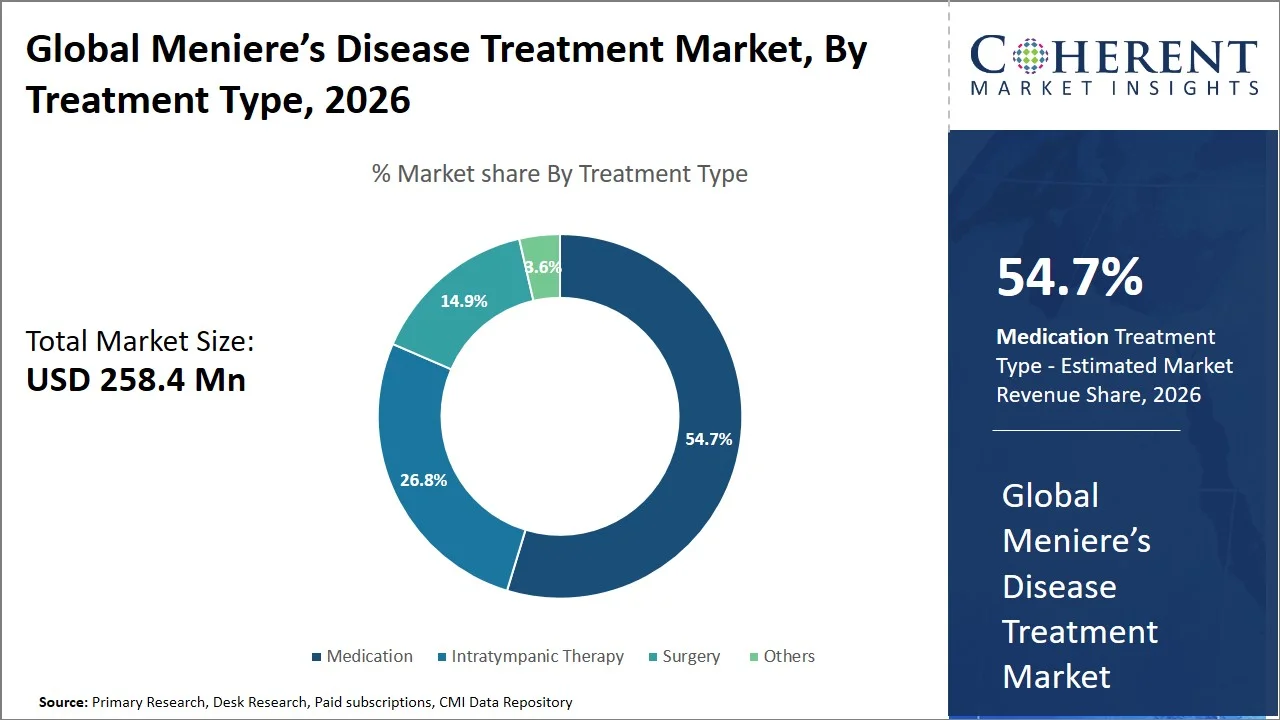
Why Do Medication Dominate the Global Meniere’s Disease Treatment Market?
Medication is projected to hold the market share of 54.7% in 2026, due to ease of use, non-invasive nature and convenient for chronic symptom management. These medication-based treatments serve as an essential aspect for managing symptom prior to an invasive treatment. For instance, in July 2025, a study conducted by Korean University Anam Hospital was published by MDPI, the study tested off-label empagliflozin, a natriuretic and osmotic-diuretic drug, in a treatment-refractory group of Meniere's disease patients, this highlights continuing search for pharmacological agents that may affect inner-ear fluid homeostasis.
- Current Industry Events of 2026
- Market Size Estimation
- Regional Breakdown
- Competitive Landscape
- Customer Intelligence
- Segmental Analysis
- Pricing Analysis
- Key Market Drivers, Challenges & Future Trends
- Customized Insights Section
Why Does Diuretics Represent the Largest Drug Class Segment in the Meniere’s Disease Treatment Market?
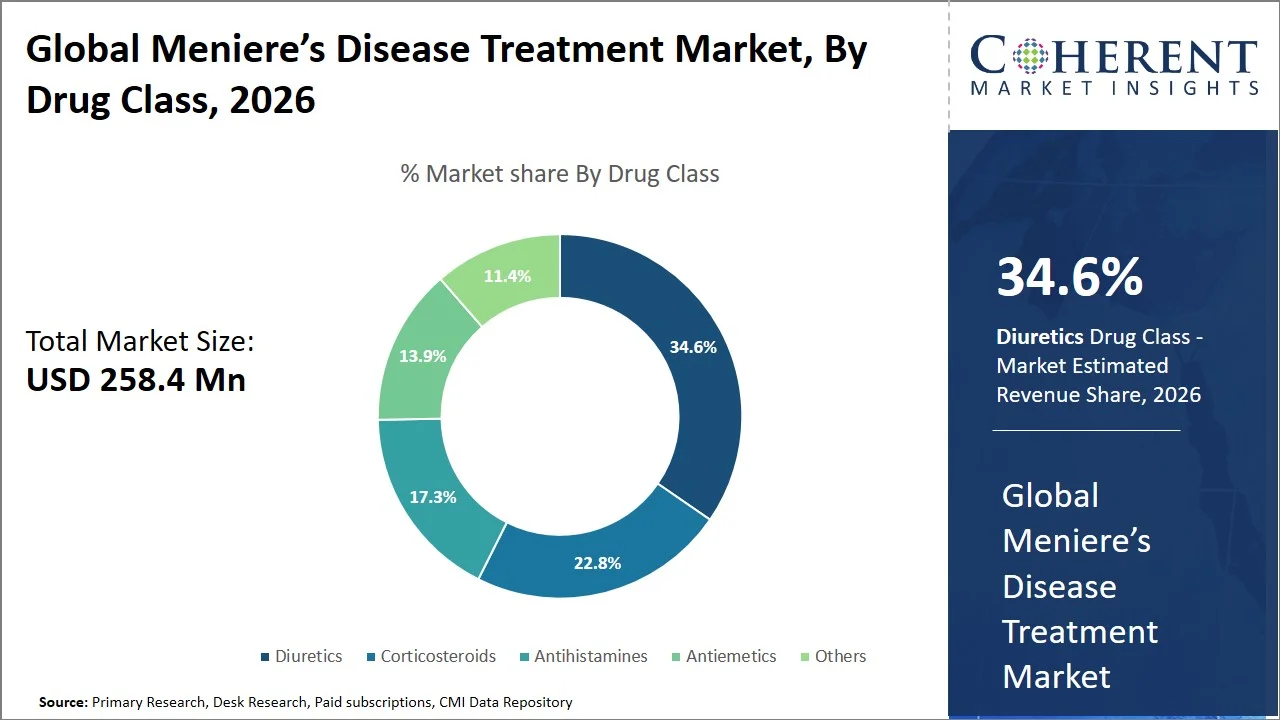
Diuretics are projected to hold a market share of 34.6% in 2026, driven by their proven effectiveness in vertigo, as well as managing fluid imbalances in Meniere’s disease. Oral administration and flexibility in the outpatient setting contribute to their continued use across the treatment spectrum. For instance, in May 2025, a clinic study conducted at the University of California, Irvine in the U.S. compared two groups in a double-blind trial for Meniere's with the use of both treatments combined with other therapies showing there is ongoing interest in evaluating chronic diuretic therapy.
Hospitals Segment Dominates the Global Meniere’s Disease Treatment Market
The hospitals segment is projected to hold a market share of 47.6% in 2026, due to the comprehensive facilities available under one service pathway (e.g. Diagnostics and specialist consultation, drug treatment and additional procedures). Hospital treatments are favored for chronic and refractory conditions requiring audiological and vestibular assessment, therapeutic escalation and ongoing follow-up. For instance, in June 2026, a tertiary-care study was published by a research team at King George's Medical University, India, using structured oral pharmacotherapy in Meniere's disease patients, in whom surgery was considered only after max oral therapy and in case of debilitating vertigo. (Source: National Library of Medicine)
Current Events and their Impact
Current Events | Description and its Impact |
European Clinical Trial Receives Regulatory Modification for Meniere’s Disease (July 2026) |
|
Double-Blind Trial Evaluates Endolymphatic Duct Blockage (July 2026) |
|
French Society of Otorhinolaryngology Issues Vestibular Rehabilitation Guidelines (January 2026) |
|
Meniere’s Disease Treatment Market Dynamics
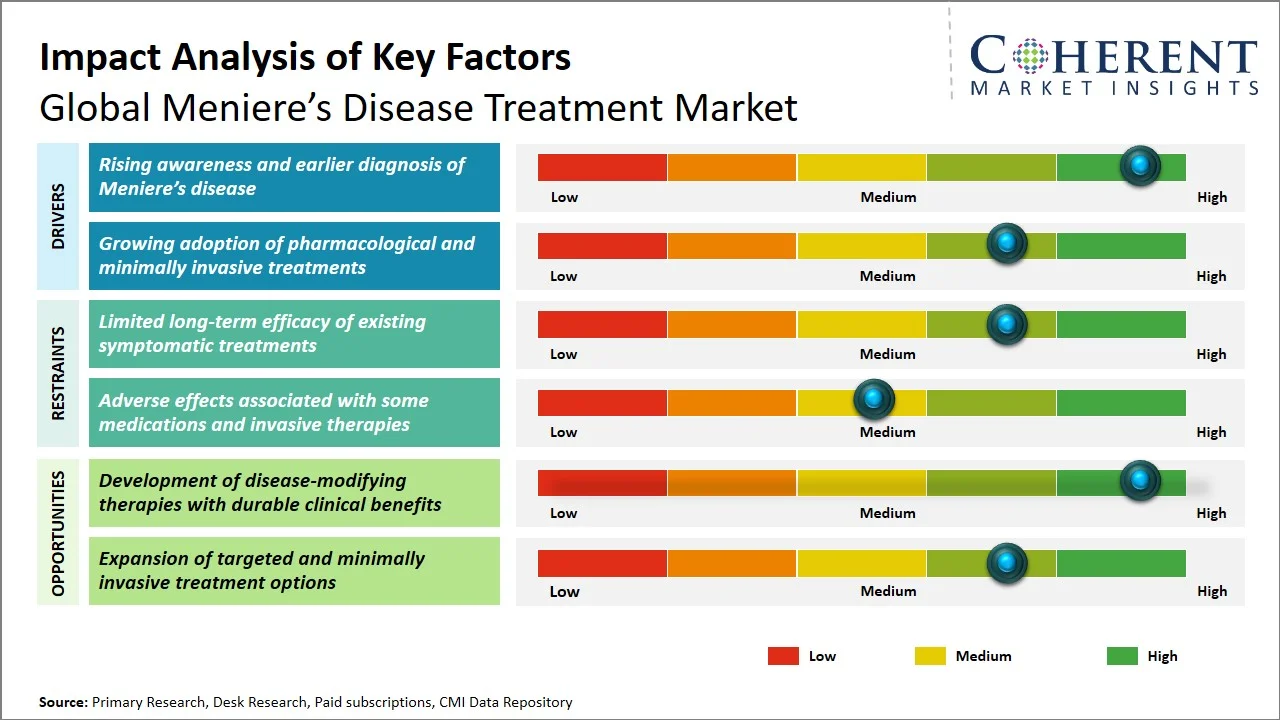
Market Drivers
Rising awareness and earlier diagnosis of Meniere’s disease
Rising awareness of Meniere’s disease is encouraging individuals experiencing recurrent vertigo, tinnitus, fluctuating hearing loss, and ear pressure to seek specialist evaluation, supporting earlier diagnosis and treatment initiation. Greater clinical recognition is also reducing delays caused by symptom overlap with other vestibular disorders and strengthening the pathway from diagnosis to appropriate therapy. For instance, the American Academy of Otolaryngology–Head and Neck Surgery developed a dedicated clinical practice guideline to improve diagnostic accuracy and provide objective standards for evaluating suspected Meniere’s disease.
Growing adoption of pharmacological and minimally invasive treatments
The shift toward pharmacological and minimally invasive treatments is expanding options for patients who require symptom control while limiting the need for more invasive surgery. Increasing use of localized therapies is particularly supporting treatment of patients whose symptoms remain uncontrolled with conventional medication, while advances in drug delivery are improving treatment flexibility. For instance, a Chinese expert consensus on intratympanic drug delivery for Meniere’s disease recognizes intratympanic corticosteroids as a treatment option when medication therapy is ineffective and provides recommendations on drug selection, dosage, and treatment endpoints.
Growing focus on multimodal and individualized treatment
The treatment landscape is increasingly moving toward multimodal management, combining medication with symptom-specific interventions and rehabilitation according to disease severity and treatment response. This approach is expanding the treatment pathway beyond a single therapy and creating opportunities for therapies that address vertigo, hearing loss, tinnitus, and persistent imbalance separately. For instance, the American Academy of Otolaryngology–Head and Neck Surgery guideline provides separate treatment recommendations for oral maintenance therapy, intratympanic steroids, intratympanic gentamicin, and vestibular rehabilitation, supporting individualized escalation of care.
Emerging Trends
Shift toward sustained-release and targeted inner-ear drug delivery
Developers are increasingly exploring long-acting intratympanic formulations and advanced delivery systems to maintain therapeutic exposure in the inner ear while reducing the need for repeated injections.
Growing adoption of hearing-preserving treatment approaches
Treatment development is increasingly focused on controlling vertigo while preserving auditory and vestibular function, encouraging interest in selective surgical techniques and less destructive interventions.
Expansion of personalized vestibular rehabilitation
Vestibular rehabilitation is becoming more tailored to individual vestibular deficits, disease stability, and treatment history, particularly for patients with persistent imbalance following medical or surgical vestibular suppression
Regional Insights
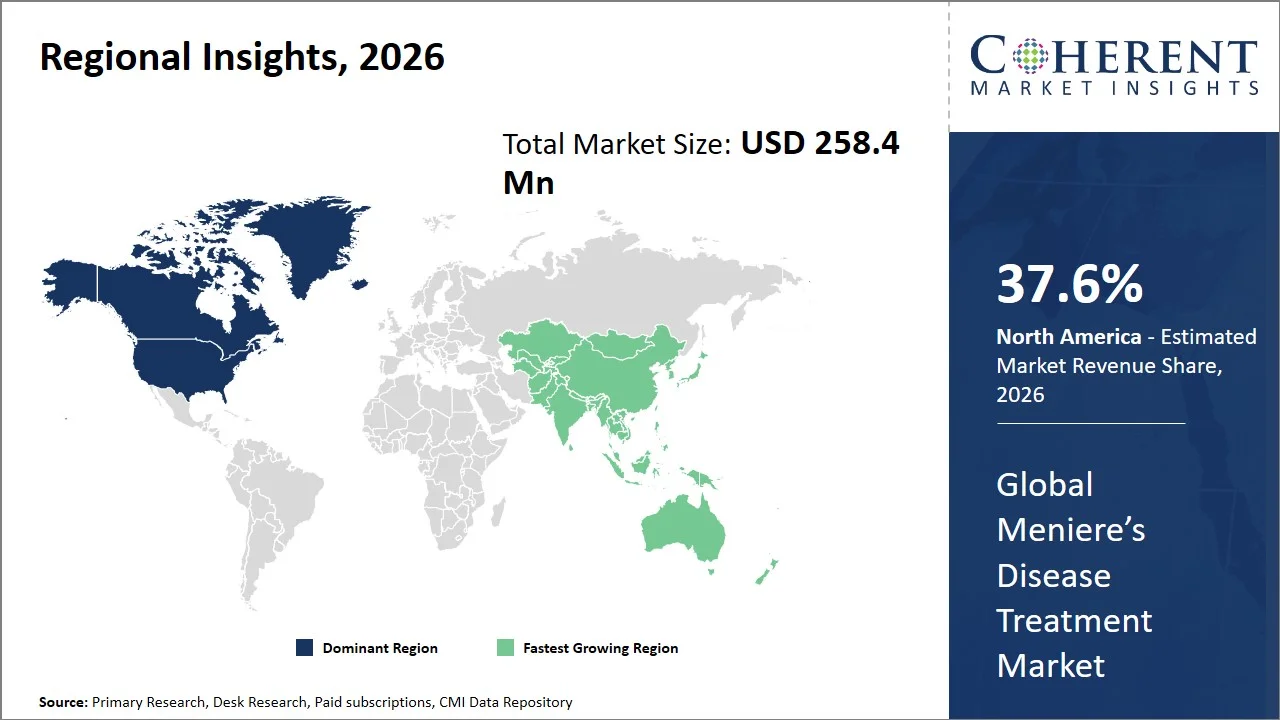
Why is North America a Strong Market for Meniere’s Disease Treatment?
North America leads the global Meniere’s disease treatment market, accounting for an estimated 37.6% share in 2026, due to the region's modern healthcare facilities, well-spread awareness about the condition, and government support for research and development. The presence of structured specialist care systems, large capacity of conducting clinical trials, as well as good availability of better treatment techniques allow favorable treatment opportunities in the U.S. Excellent healthcare spending and insurance coverage also fuel treatment adoption across the U.S., coupled with the continuous emphasis on novel treatment therapies across the region. For instance, the University of Southern California was awarded USD 701,848 for fiscal 2026 by the National Institute on Deafness and Other Communication Disorders for an “OCT Imaging of the Human Inner Ear,” study including Meniere’s disease patients that seeks to facilitate diagnosis and response to treatment monitoring.
Why Does Asia Pacific Meniere’s Disease Treatment Market Exhibit High Growth?
Asia Pacific is expected to exhibit the fastest growth in the global Meniere’s disease treatment market, registering an estimated CAGR of 6.2% during 2026–2033. The region is projected to account for approximately 24.0% of the global market in 2026, due to increasing health awareness, better access to specialized treatment centers and rising geriatric population. Growing investment in healthcare infrastructure and reforms in the regulatory sector of China and India has pushed pharmaceutical giants both native and international to increase their focus on advanced treatment options.
In October 2025, China's National Medical Products Administration launched a 30-working day pathway to review appropriate innovative drug clinical trials, which covers globally synchronized development of innovative drugs and international multicenter clinical trials, helping rapid clinical development. Furthermore, increased clinical research activities, better availability of treatments and a robust distribution network in Asia Pacific are key factors driving market growth in this region.
Global Meniere’s Disease Treatment Market Outlook for Key Countries
Why is the U.S. Leading Innovation and Adoption in the Meniere’s Disease Treatment Market?
The U.S. has been in the forefront of developing and approving innovative therapeutic strategies due to emphasis on novel pharmacological approaches, approaches that aim at preserving hearing and robust clinical development for Meniere's disease. The market trend will further move towards development of drugs that target the continued vertigo and hearing deficit not just on a symptomatic basis and to that extent the ecosystem of specialist care in the U.S and concentration of clinical research activities gives it the advantage over rapid acceptance of novel therapies.
Is Japan a Favorable Market for Meniere’s Disease Treatment Market?
The Japanese Meniere's disease treatment market presents an attractive market with specialized vestibular care ecosystem, well-established treatment paradigms and an increasing development of evidence-based treatments. The market contains wide treatment modalities from medication, intratympanic treatments to rehabilitation and surgery. The systematic clinical paradigm in Japan combined with progressive improvements in diagnosis and treatment provides fertile ground for implementation of the new Meniere's therapy.
Is China Emerging as a Key Growth Hub for the Meniere’s Disease Treatment Market?
China represents an emerging rather than a developed opportunity driven by increased specialist research, the rise of clinical trials and a growing acceptance and adoption of leading diagnostics and treatment options in the region. Chinese specialists are growing their expertise and capacities across all the treatment methodologies from oral pharmacological, through intratympanic therapy, to surgical and vestibular rehabilitation contributing towards an increasingly comprehensive Meniere's disease treatment market.
Why Does Germany Top the European Meniere’s Disease Treatment Market?
Germany constitutes a significant and mature market for Meniere’s disease treatment owing to its well-established pathway in specialist care, comprising otolaryngology, neurotology, vestibular diagnosis and multimodal management, for simple and refractory Ménière's disease. Furthermore, there are national structured procedures through the Association of Scientific Medical Societies for clinical diagnosis and therapy with up-to-date medical evidence-based guidelines.
Is Meniere’s Disease Treatment Market Developing in India?
India is emerging as a market for Meniere's disease treatment with growing expertise in the tertiary-care sector, ongoing clinical research and widespread utilization of methodical pharmacological and interventional therapies. The market growth will also be fueled by growing clinical interest in early diagnosis and customized treatment options, thereby opening up market for traditional therapies and modern intervention options.
Meniere’s Disease Epidemiology by Region
Region | Reported Prevalence / Incidence | Key Epidemiological Insight |
North America | 50–200 cases per 100,000 adults | Relatively well-characterized disease burden with established diagnosis and specialist care |
Europe | Up to ~205 cases per 100,000 adults | Established epidemiological evidence and specialist diagnosis |
Asia Pacific | ~17 cases per 100,000/year | Lower reported incidence, with increasing clinical recognition |
Latin America | Limited comparable population-level data | Epidemiological evidence remains fragmented, indicating potential underdiagnosis |
Middle East & Africa | Limited comparable population-level data | Limited surveillance and published epidemiological studies constrain reliable prevalence estimates |
How is the development of disease-modifying therapies with durable clinical benefits creating new growth opportunities in the Meniere’s disease treatment market?
The Meniere’s disease treatment landscape represents an opportunity for disease-modifying therapies that transition from symptomatic control of vertigo to long-term management of hearing loss, tinnitus, and the etiologies of inner ear pathology. Developments in focused delivery of treatments and inflammation modulation could allow for improved drug exposure to the inner ear with diminished systemic adverse effects and treatment burden. For instance, in February 2026, a Phase III double-blind randomized placebo controlled intratympanic latanoprost study was conducted for active Meniere's disease assessing impact on hearing, tinnitus and vertigo, demonstrating further development in local inner-ear treatment strategies for symptom control with reduced systemic exposure. (Source: National Library of Medicine)
Market Players, Key Development, and Competitive Intelligence
Key Developments
- In July 2026, Sound Pharmaceuticals completed enrollment of its second Phase 3 open-label study of SPI-1005, an investigational oral anti-inflammatory treatment for Meniere’s disease. The study enrolled 191 participants across nine U.S. sites, bringing total enrollment across four Meniere’s trials to 578 adults. The company is advancing SPI-1005 toward potential approval as a novel treatment for the disease.
- In April 2026, Spiral Therapeutics raised USD 27 million and entered a strategic R&D collaboration with Advanced Bionics to advance its inner-ear therapeutic pipeline. The financing will support development of SPT-2101, which has demonstrated a statistically significant reduction in vertigo in patients with Meniere’s disease, and preparation for a registrational clinical trial.
- In February 2026, Burcon Chiropractic in collaboration with the Meniere’s Research Institute, launched a clinical trial in Grand Rapids, Michigan, investigating an upper-cervical care approach for patients with unilateral Meniere’s disease. The trial aims to enroll up to 50 participants, reflecting continued exploration of alternative treatment approaches for vertigo and hearing-related symptoms.
Competitive Landscape
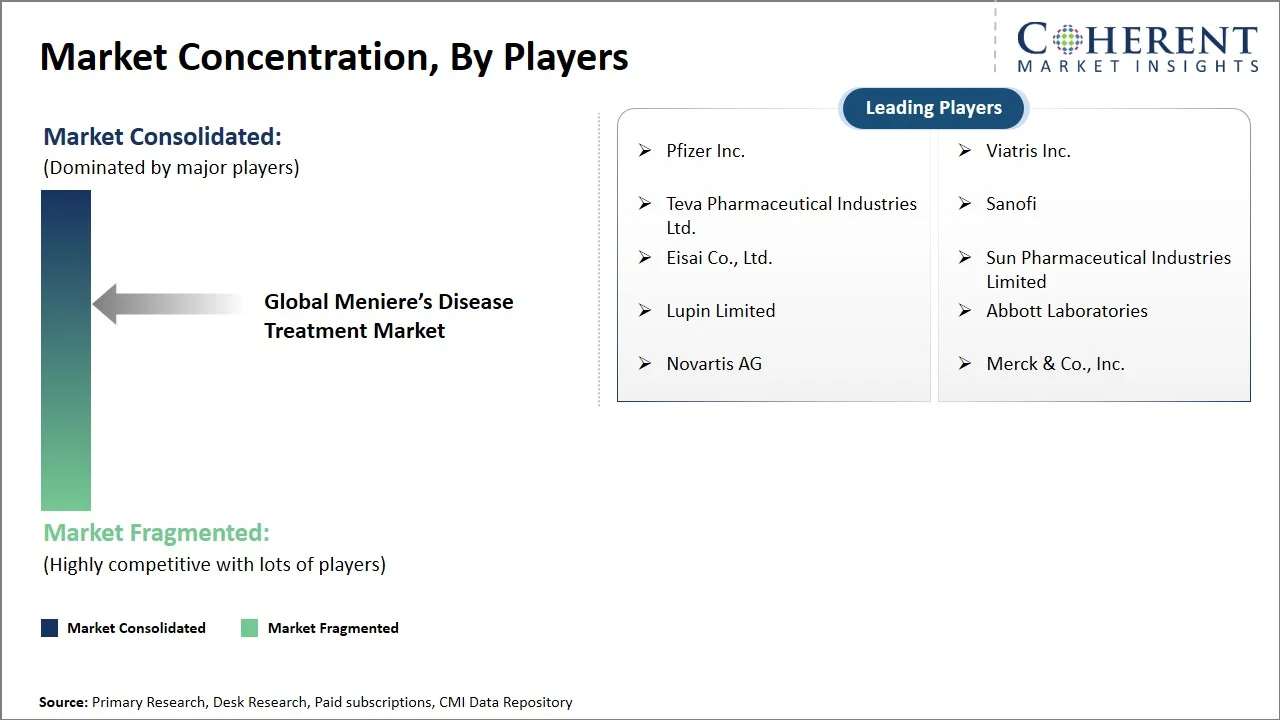
The global Meniere’s disease treatment market is moderately competitive, with market dynamics shaped by treatment innovation, clinical-stage pipeline development, targeted drug delivery, and efforts to improve long-term symptom control. Market participants are increasingly focusing on developing therapies that address persistent vertigo and hearing-related symptoms, while advancing less invasive treatment approaches and improving treatment outcomes. Key focus areas include:
- Development of novel pharmacological therapies for long-term symptom control
- Advancement of localized and intratympanic drug-delivery approaches
- Development of hearing-preserving and minimally invasive treatment options
- Expansion of clinical-stage pipelines for Meniere’s disease therapies
- Improvement of treatment approaches for patients with refractory or recurrent symptoms
- Development of therapies targeting inner-ear inflammation and disease mechanisms
- Strengthening clinical evidence for emerging treatment modalities
- Expansion of personalized treatment strategies based on disease severity and treatment response
Market Report Scope
Meniere’s Disease Treatment Market Report Coverage
| Report Coverage | Details | ||
|---|---|---|---|
| Base Year: | 2025 | Market Size in 2026: | USD 258.4 Mn |
| Historical Data for: | 2020 To 2024 | Forecast Period: | 2026 To 2033 |
| Forecast Period 2026 to 2033 CAGR: | 4.6% | 2033 Value Projection: | USD 354.0 Mn |
| Geographies covered: |
| ||
| Segments covered: |
| ||
| Companies covered: | Pfizer Inc., Viatris Inc., Teva Pharmaceutical Industries Ltd., Sanofi, Eisai Co., Ltd., Sun Pharmaceutical Industries Limited, Lupin Limited, Abbott Laboratories, Novartis AG, Merck & Co., Inc. | ||
| Growth Drivers: |
| ||
| Restraints & Challenges: |
| ||
Analyst Opinion (Expert Opinion)
- In the coming years, global Meniere’s disease treatment market is expected to move from predominantly symptom-control therapies toward hearing-preserving, localized, and longer-acting treatments. Greater emphasis will be placed on therapies that control recurrent vertigo while addressing hearing and tinnitus outcomes, with intratympanic delivery and novel pharmacological approaches likely to gain importance.
- The maximum opportunities are foreseen within minimally invasive treatment for recurrent/intractable Meniere’s disease in Japan. Japan offers a particularly attractive environment for therapies that can reduce recurrent vertigo while preserving hearing, as clinical development is already evaluating localized approaches such as middle-ear pressure treatment for atypical Meniere’s disease
- In order to gain a competitive advantage market players should prioritize differentiated therapies with measurable advantages in vertigo control and hearing preservation, rather than competing solely on conventional symptomatic treatment. Building evidence around sustained efficacy, reducing treatment frequency through localized delivery, and developing products for patients who do not respond adequately to existing therapies can create stronger clinical differentiation and commercial positioning.
Speak to the analyst
Want personalized insights?
Take the findings above to one of our principal consultants, or have the report rebuilt around the segments, geographies and competitors you actually track.
Market Segmentation
- Treatment Type Insights (Revenue, USD Mn, 2021 - 2033)
- Medication
- Intratympanic Therapy
- Surgery
- Others
- Drug Class Insights (Revenue, USD Mn, 2021 - 2033)
- Diuretics
- Corticosteroids
- Antihistamines
- Antiemetics
- Others
- End User Insights (Revenue, USD Mn, 2021 - 2033)
- Hospitals
- Specialty Clinics
- ENT Clinics
- Others
- Distribution Channel Insights (Revenue, USD Mn, 2021 - 2033)
- Hospital Pharmacies
- Retail Pharmacies
- Online Pharmacies
- Regional Insights (Revenue, USD Mn, 2021 - 2033)
- North America
- U.S.
- Canada
- Latin America
- Brazil
- Argentina
- Mexico
- Rest of Latin America
- Europe
- Germany
- U.K.
- Spain
- France
- Italy
- Russia
- Rest of Europe
- Asia Pacific
- China
- India
- Japan
- Australia
- South Korea
- ASEAN
- Rest of Asia Pacific
- Middle East
- GCC Countries
- Israel
- Rest of Middle East
- Africa
- South Africa
- North Africa
- Central Africa
- North America
Sources
Primary Research Interviews
- Meniere’s disease treatment specialists and otolaryngologists
- Neurotologists and vestibular-disorder specialists
- Audiologists involved in Meniere’s disease management
- Clinical investigators conducting Meniere’s disease drug trials
- Pharmaceutical and biotechnology companies developing Meniere’s disease therapies
Stakeholders
- Pharmaceutical and biotechnology companies developing Meniere’s disease treatments
- Hospitals and specialized otolaryngology and neurotology centers
- Meniere’s disease and vestibular-disorder treatment clinics
- Clinical research organizations conducting Meniere’s disease trials
- Diagnostic and hearing-care service providers
- End-use Sectors
- Hospitals
- Specialty otolaryngology clinics
- Neurotology and vestibular disorder centers
- Ear, nose and throat clinics
- Academic and research hospitals
- Regulatory & Health Bodies
- U.S. Food and Drug Administration (FDA) – Center for Drug Evaluation and Research
- European Medicines Agency (EMA)
- Medicines and Healthcare products Regulatory Agency (MHRA)
- Pharmaceuticals and Medical Devices Agency (PMDA), Japan
- National Medical Products Administration (NMPA), China
Databases
- ClinicalTrials.gov
- European Union Clinical Trials Information System (CTIS)
- World Health Organization International Clinical Trials Registry Platform (WHO ICTRP)
- International Standard Randomised Controlled Trial Number (ISRCTN) Registry
Journals
- Otolaryngology–Head and Neck Surgery
- JAMA Otolaryngology–Head & Neck Surgery
- Otology & Neurotology
- European Archives of Oto-Rhino-Laryngology
- Frontiers in Neurology
Associations
- American Academy of Otolaryngology–Head and Neck Surgery
- European Academy of Otology and Neurotology
- Barany Society
- American Academy of Audiology
- Japan Society for Equilibrium Research
Public Domain Sources
- National Institute on Deafness and Other Communication Disorders (NIDCD) – Meniere’s Disease publications and epidemiological information
- U.S. National Library of Medicine – ClinicalTrials.gov Meniere’s disease clinical-trial records
- U.S. Food and Drug Administration – Clinical trial and drug-development guidance
- World Health Organization – International Clinical Trials Registry Platform
- National Library of Medicine –MedlinePlus Meniere’s disease literature and clinical information
Proprietary Elements
- CMI Data Analytics Tool
- Proprietary CMI Existing Repository of information for last 10 years.
Get access to 250+ pages report
Every segment, forecast, competitor profile and data table behind the analysis above — available for instant download.
- ESOMAR Member
- ISO 9001:2015 Certified
- D-U-N-S Registered
- GDPR & CCPA Compliant
Missing comfort of reading report in your local language? Find your preferred language:
Frequently Asked Questions
The global Meniere’s disease treatment market is estimated to be valued at USD 258.4 Mn in 2026 and is expected to reach USD 354.0 Mn by 2033.
Diuretics dominates due to their established use in maintenance therapy to help control vertigo and reduce inner-ear fluid pressure.
Meniere’s disease treatment includes medications, intratympanic injections, vestibular rehabilitation, and surgery to control vertigo and other symptoms.
The CAGR of global Meniere’s disease treatment market is projected to be 4.6% from 2026 to 2033.
Rising awareness and earlier diagnosis of Meniere’s disease, and growing adoption of pharmacological and minimally invasive treatments are the major factors driving the growth of the global Meniere’s disease treatment market.
Limited long-term efficacy of existing symptomatic treatments, and adverse effects associated with some medications and invasive therapies are the major factors hampering the growth of the global Meniere’s disease treatment market.
In terms of end user, hospitals are estimated to dominate the market revenue share in 2026.