

Global Multi-Health-System Clinical Evidence Analytics Market Size and Forecast – 2026 To 2033
The global multi-health-system clinical evidence analytics market is expected to grow from USD 4.38 Bn in 2026 to USD 11.31 Bn by 2033, registering a compound annual growth rate (CAGR) of 14.5% from 2026 to 2033. The global multi-health-system clinical evidence analytics market is poised to grow significantly over the forecast period owing to surging adoption of value-based care and outcomes-based reimbursement models which require reliable clinical evidence from multiple healthcare providers.
The U.S. Centers for Medicare & Medicaid Services (CMS) projects 14.3 million Medicare beneficiaries will be in coordinated care through an Accountable Care Organizations (ACOs) in 2026, compared to 13.7 million in 2025, increasing the need for cross-system clinical outcomes measurement and analytics.
Key Takeaways of the Global Multi-Health-System Clinical Evidence Analytics Market
- Software and analytics platforms are projected to hold 54.8% of the global multi-health-system clinical evidence analytics market share in 2026, making it dominant offering segment, across North America because of high-end healthcare IT industry infrastructure as well as high adoption of interoperable analytics platforms. For instance, the Office of the National Coordinator for Health Information Technology (ONC) data stated that 76% of the U.S. hospitals engaged in all four measured domains of health information exchange in 2025, which increased demand for integrated clinical analytics platforms.
- Electronic Health Records (EHR) data is projected to hold 36.7% of the global multi-health-system clinical evidence analytics market share in 2026, making it dominant data type segment, across Asia Pacific, as the growth of the national health information infrastructure continues and cross-provider data sharing is increased. For instance, the Ministry of Health of Singapore has passed the Health Information Act, which requires all licensed healthcare providers to submit relevant patient information into the National Electronic Health Record (NEHR).
- Clinical outcomes and quality analytics are projected to hold 24.7% of the global multi-health-system clinical evidence analytics market share in 2026, making it dominant application segment, with Europe offering a promising market as they are working on issues like access to cross-border health data, research, and healthcare quality improvement. For instance, the European Health Data Space has identified a number of facilities that can be used to reuse health data in a safe way, thus allowing researchers and decision-makers to access clinical data across countries to facilitate research and patient outcomes.
- North America market maintains dominance with an expected share of 42.7% in 2026, bolstered by well-developed healthcare data infrastructure and innovative moves to establish interoperability on a country-wide scale. For instance, the U.S. Trusted Exchange Framework and Common Agreement (TEFCA) has exchanged 1 billion health records as of June 2026, further echoing the emergent efforts for cross-network exchange of health information and unified clinical data analytics.
- Asia Pacific is expected to exhibit the fastest growth in the global multi-health-system clinical evidence analytics market, registering an estimated CAGR of 18.6% during 2026–2033, owing to rapid development of digital health infrastructure and growing scope for interoperability programs in the region. For example, India’s Ayushman Bharat Digital Mission (ABDM), as on July 20, 2026, had issued 948.7 million (94.87 crore) ABHA IDs, registered 0.536 million (5.36 lakh) health facilities and enabled a robust base for integrated health data sharing and multi-source clinical analytics.
Segmental Insights
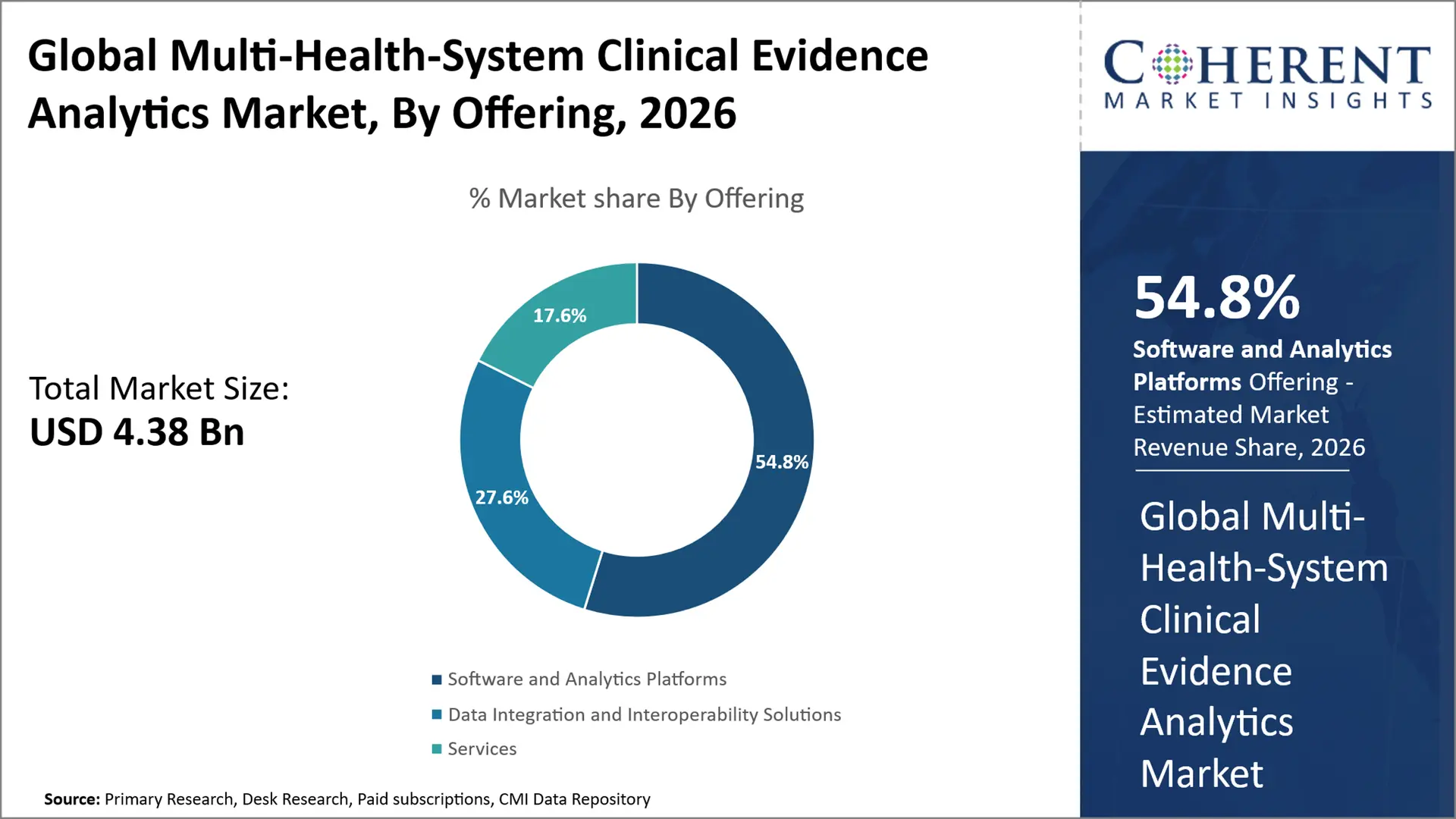
Why Do Software and Analytics Platforms Dominate the Global Multi-Health-System Clinical Evidence Analytics Market?
Software and analytics platforms are projected to hold the market share of 54.8% in 2026, as they can integrate disjointed clinical information, leveraged analytics with AI and provide real-time clinical decision support across healthcare networks. Their leadership position can be strengthened with the rising adoption of scalable platform for outcome monitoring, benchmarking performance and evidence generation. For instance, in February 2026, India’s Ministry of Health and Family Welfare launched the SAHI (Strategy for Artificial Intelligence in Healthcare for India) and BODH (Benchmarking Open Data Platform for Health AI) initiatives. BODH allows organizations to benchmark their AI models against anonymized real-world health datasets, which is driving demand for advanced skills in healthcare analytics. (Source: Press Information Bureau)
- Current Industry Events of 2026
- Market Size Estimation
- Regional Breakdown
- Competitive Landscape
- Customer Intelligence
- Segmental Analysis
- Pricing Analysis
- Key Market Drivers, Challenges & Future Trends
- Customized Insights Section
Why Do Electronic Health Records (EHR) Data Represent the Largest Data Type Segment in the Multi-Health-System Clinical Evidence Analytics Market?
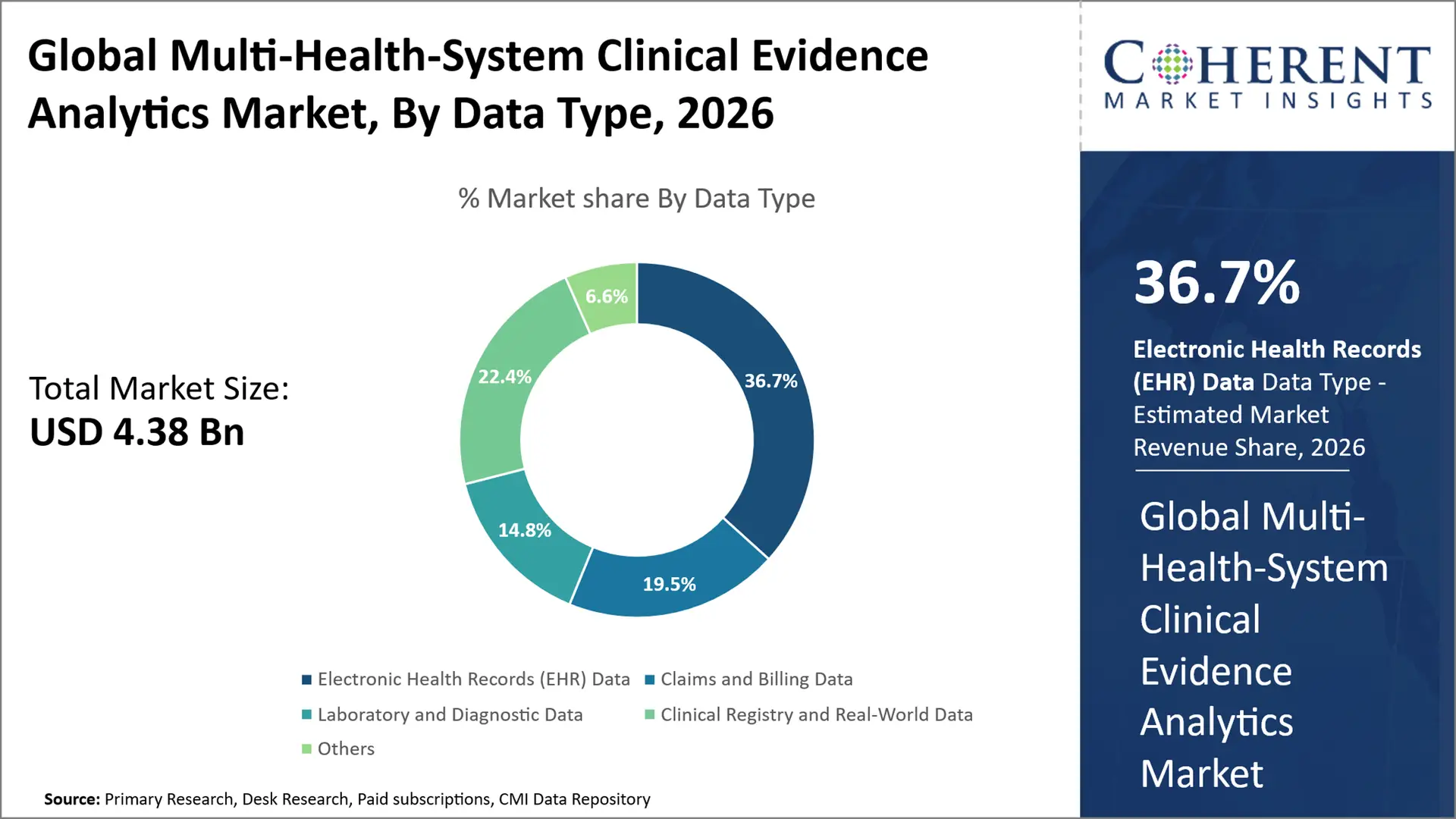
Electronic Health Records (EHR) data is projected to hold a market share of 36.7% in 2026, due to its comprehensive capture of patient demographics, diagnostics, treatment histories, current medications, and clinical data points. It provides a major source for evidence generation across systems and on longitudinal basis. Furthermore, the data type growth can be mandated by policies advocating for standardized and interoperable health records. For instance, India’s Ayushman Bharat Digital Mission crossed over 1 billion (100 crore) ABHA linked health records in May 2026, highlighting a rise in digital patient health records for integrated healthcare analysis. (Source: Press Information Bureau)
Clinical Outcomes and Quality Analytics Segment Dominates the Global Multi-Health-System Clinical Evidence Analytics Market
The clinical outcomes and quality analytics segment are projected to hold a market share of 24.7% in 2026, as it can be used to assess outcomes, find care gaps, and compare clinical quality across systems. Additionally, quality-reporting mandates with corresponding incentives will further spur the use of this segment, along with a stronger focus on tangible care outcomes. For instance, in April 2026, the U.S. Centers for Medicare & Medicaid Services (CMS) updated its Overall Hospital Quality Star Ratings for 4,609 hospitals based on 52 quality measures including mortality, safety of care, readmission, patient experience, and effectiveness and timeliness of care.
Current Events and their Impact
Current Events | Description and its Impact |
NIH Announces New Innovation Challenge to Improve Analytics Across Health Systems (September 2026) |
|
Government of Canada Invests USD 71.5 Million (CAD 100 Million) in VITAL Health Data Platform (June 2026) |
|
Multi-Health-System Clinical Evidence Analytics Market Dynamics
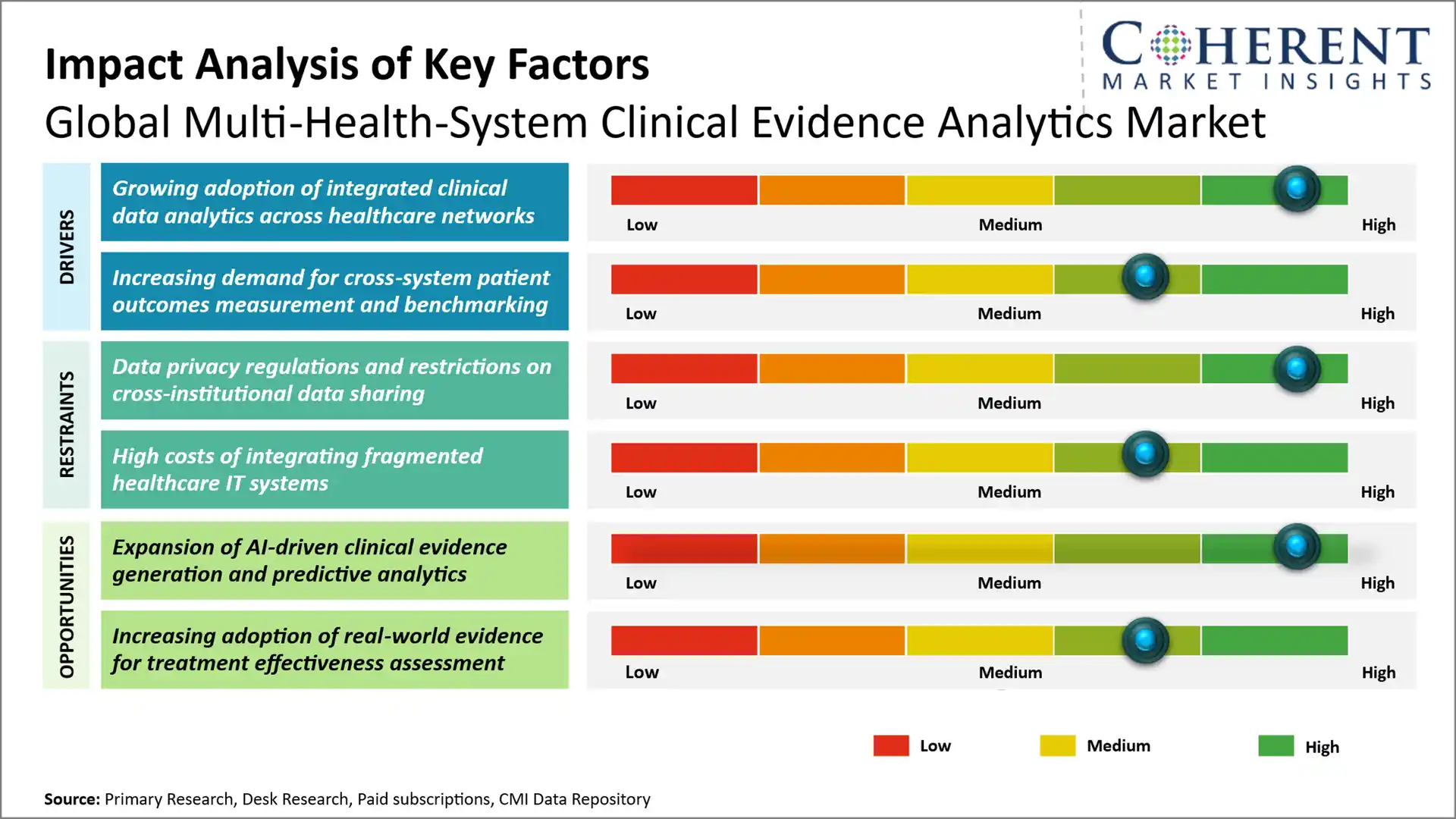
Market Drivers
- Growing adoption of integrated clinical data analytics across healthcare networks: Hospitals and health systems are investing into integrated data platforms that connect clinical data from hospitals and other providers to provide coordinated care and improve decision-making. In June 2026 the UK National Health Service (NHS) launched the NHS Federated Data Platform to link data across NHS organizations to enable near real time analytics for care co-ordination, operational planning and service improvement.
- Increasing demand for cross-system patient outcomes measurement and benchmarking: Healthcare organizations are increasingly demanding the adoption of standardized outcome measures to monitor clinical performance, uncover disparities in quality of care, and improve patient safety across healthcare networks. For instance, NHS England's July 2026 Quality Strategy, set out plans for the rollout of standardized national quality indicators, which include treatment results, patient safety and population health, with benchmarking available for each care provider and system.
- Growing government investment in interoperable hospital information systems: Public sector investment in hospital information systems, coupled with cloud-based data analytics platforms, is soon going to lead to shared clinical data across hospitals. For instance, the Government of India’s e-Hospital platform was rolled out in over 3,000 public health facilities in 2025-2026, with common dashboards, analytics and interoperable data standards.
Emerging Trends
- Adoption of AI-Driven Predictive Clinical Analytics: Healthcare organizations leverage artificial intelligence and machine learning, as well as natural language processing, through clinical analytics platforms to identify trends within large, multi-institutional patient data.
- Impact: These tools provide a way to perform predictive risk stratification, driven by their ability to identify adverse events early, evaluate treatment effects, and provide automated interpretation of free-text clinical records. They also increase the speed and granularity of generating clinical evidence in health networks.
- Market Relevance: This will create demand for sophisticated software and analytics tools that allow for sophisticated analysis and visualization of complex clinical data, such as predictive modeling and decision support solutions. Vendors providing AI and machine learning-powered decision support will likely see broader acceptance in integrated health care systems.
- Expansion of Federated Analytics and Privacy-Preserving Data Collaboration: Increasingly organizations are exploring federated analytics techniques that enable many institutions to analyze patient datasets spread across locations without bringing the data into a central pool.
- Impact: It enables shared clinical research, inter-hospital results comparisons, and multi-institutional data and knowledge generation, with fewer constraints to patient-level data, while also overcoming privacy and institutional governance barriers to data sharing.
- Market Relevance: Demand for privacy-preserving analytics is leading to discovery of platforms for federated learning, secure computation and decentralized data integration. Providers with the capabilities to facilitate scalable analytics for geographically distributed healthcare systems could strengthen their market position.
Regional Insights
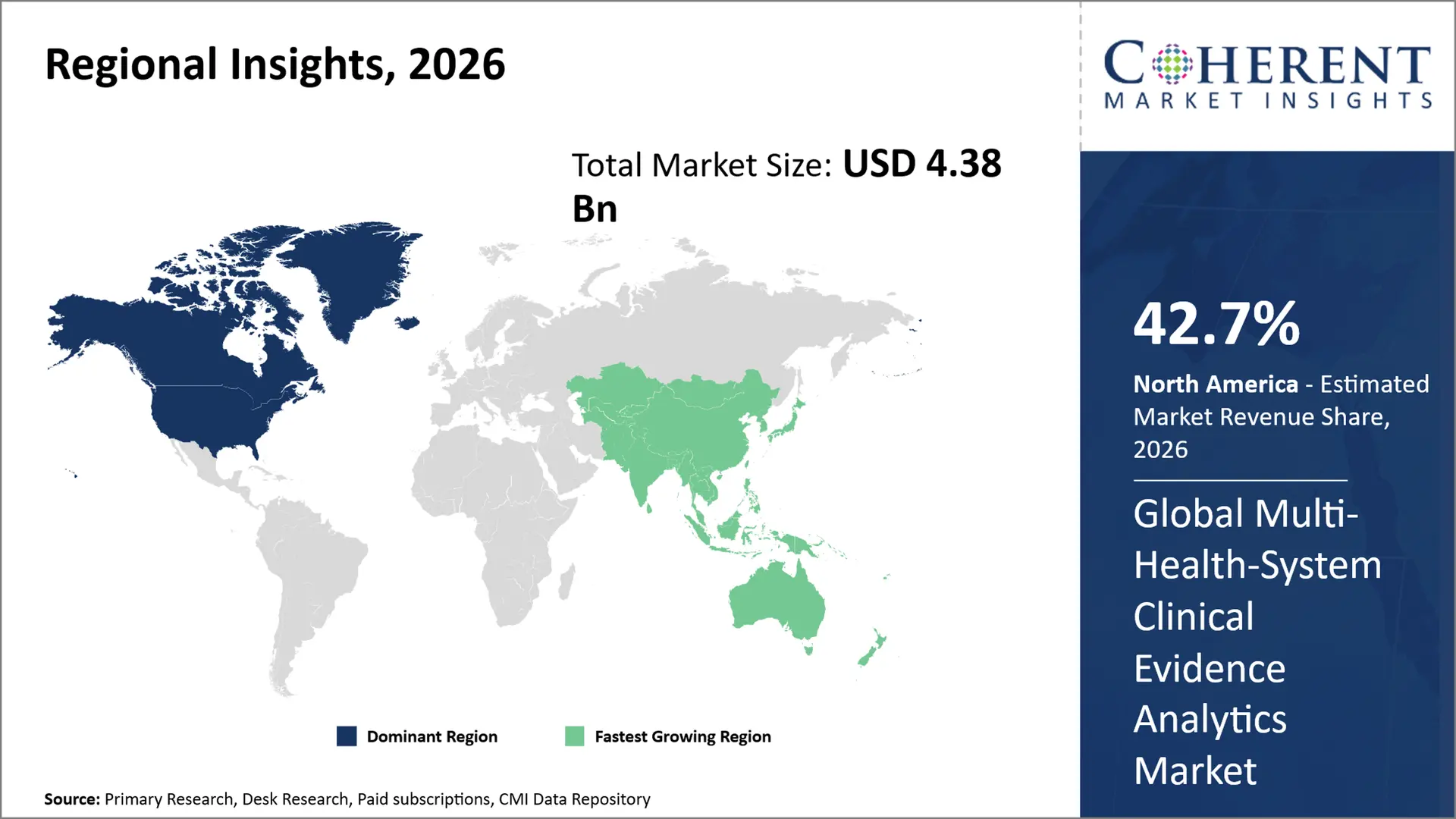
Why is North America a Strong Market for Multi-Health-System Clinical Evidence Analytics?
North America leads the global multi-health-system clinical evidence analytics market, accounting for an estimated 42.7% share in 2026, as the region has a large presence of multi health system providers, high penetration of digital health and well-established healthcare IT infrastructure. Increasing research activities in collaboration with the payer organizations, regulatory bodies and health system providers, and accelerating government efforts towards establishing a fully integrated and interoperable health record infrastructure is expected to support the growth.
For instance, the California Data Exchange Framework, authorized by AB 133, requires data exchange participants to comply with a common set of policies and procedures that promote orderly health information sharing among participating hospitals, physician practice groups, and other healthcare organizations.
Why Does Asia Pacific Multi-Health-System Clinical Evidence Analytics Market Exhibit High Growth?
Asia Pacific is expected to exhibit the fastest growth in the global Multi-Health-System Clinical Evidence Analytics market, registering an estimated CAGR of 18.6% during 2026–2033. The region is projected to account for 22.1% of the global market in 2026, owing to the growing healthcare infrastructure, booming digital health industry, and increasing demand for better clinical outcomes. The national policies promoting big data, AI in medicine, and information systems that interface with medical data are supporting the modernization of healthcare IT in developing nations like China, India, Japan, and South Korea.
For instance, in February 2026, China’s National Health Commission announced guidance to strengthen and standardize use of AI in health care. The guidelines focus on building national and provincial health information infrastructure, connecting public and private health institutions, and the integration of medical data to facilitate applications based on AI in health care.
Global Multi-Health-System Clinical Evidence Analytics Market Outlook for Key Countries
Why is the U.S. Leading Innovation and Adoption in the Multi-Health-System Clinical Evidence Analytics Market?
The U.S. is leading innovation and adoption driven by its mature healthcare information technology infrastructure, widespread use of electronic health records, and large number of advanced clinical analytics providers. Existing use of interoperable data standards provides a unique foundation that allows healthcare organizations to combine clinical data from multiple providers and healthcare systems. The country’s advanced offerings in artificial intelligence, machine learning, and real-world evidence analytics provide a foundation for large-scale clinical studies, treatment assessments, and data-driven care.
Is Japan a Favorable Market for Multi-Health-System Clinical Evidence Analytics Market?
Japan is emerging as one of the largest markets for multi-health-system clinical evidence analytics enabled by the country’s national healthcare digitalization and the emerging secondary use of clinical data. Governments' initiative to roll out a nationwide Electronic Health Record Information-Sharing Service and the adoption of HL7 FHIR standard are creating demand for interoperable data sharing and multi-institutional analytics. However, the existence of distributed hospital data systems and data inconsistencies make data harmonization and secure analytics a necessity.
Is China Emerging as a Key Growth Hub for the Multi-Health-System Clinical Evidence Analytics Market?
China is emerging as one of the core growth markets in the multi-health-system clinical evidence analytics due to government-led digital healthcare initiatives, regional health information platform growth, and implementation of AI into clinical workflows. China focuses on the interconnectivity of the country, provincial, and local health information platforms creating scope for cross-hospital data sharing and clinical evidence generation. However, success remains limited due to disjointed hospital IT systems and variable data standards requiring data harmonization, interoperability, and multi-institutional analytics secured solutions.
Why Does Germany Top the European Multi-Health-System Clinical Evidence Analytics Market?
Germany probably captures the largest share of the European multi-health-system clinical evidence analytics market fueled by the expanding growth of the hospital sector, a strong health research ecosystem, and the rising digitalization of healthcare data. Germany has a large hospital network, well-established health information system and the need for cross-institutional clinical analytics. The country is establishing multiple opportunities for the secondary use of health information and data interoperability.
Is Multi-Health-System Clinical Evidence Analytics Market Developing in India?
India is an emerging market for multi-health-system clinical evidence analytics enabled by the growing scope of Ayushman Bharat Digital Mission (ABDM), digital health records, and data-sharing infrastructure. Rising use of ABHA-linked health information exchange records is enabling cross-hospital data aggregation, population health analytics, and real-world evidence generation. However, lack of EHR interoperability between private and public hospitals, adoption gaps, siloed data, and sporadic data quality have limited widescale implementation.
Multi-Health-System Clinical Data Analytics Adoption Indicators by Country (2026)
Country | EHR Adoption / Digital Health Infrastructure | Health Data Interoperability Initiatives | Key Analytics Opportunity |
U.S. | Advanced EHR adoption across hospitals | TEFCA, national health information exchange | Clinical outcomes analytics and predictive modelling |
UK | NHS-wide digital health infrastructure | NHS Federated Data Platform | Population health and cross-provider analytics |
Germany | Expanding electronic patient records (ePA) | Germany's Health Data Lab and electronic patient record framework | Real-world evidence and treatment effectiveness analysis |
Singapore | National Electronic Health Record (NEHR) | National health information exchange infrastructure | Longitudinal patient analytics and care coordination |
India | Expanding ABDM-linked digital health ecosystem | Ayushman Bharat Digital Mission and Health Information Exchange | EHR integration and population health analytics |
How is the expansion of AI-driven clinical evidence generation and predictive analytics creating new growth opportunities in the multi-health-system clinical evidence analytics market?
The global multi-health-system clinical evidence analytics market has significant opportunity in the use of AI-driven clinical evidence generation and predictive analytics, which allow healthcare providers to access non-structured multi-source data and improve outcome prediction, risk stratification, and assessment of treatment effectiveness. The rising need for reliable AI models that perform equally well across healthcare systems will accelerate the growth of advanced analytics platforms. For instance, in September 2026, the U.S. National Institutes of Health (NIH) launched its Real-World Evidence Innovation Challenge. This challenge provides up to USD 6 Million to evaluate predictive models, machine-learning techniques, and other types of analytics across several separate health systems.
Market Players, Key Development, and Competitive Intelligence
Key Developments
- On October 15, 2026, UMass Memorial Health announced a multi-year collaboration with Accenture and Microsoft to combine all UMass Memorial Health electronic health record, clinical, operational and research data into a single cloud-based platform. This will replace disconnected reporting silos, improve cross-collaborative analytics and allow secure sharing of data and research.
- On October 13, 2026, Unity Point Health has rolled out Evidently’s Clinical Data Intelligence platform at 18 of its hospitals. The expansion will consolidate patient information and improve access to clinical data. It also signals a trend toward multi-health-system analytics solutions that support patient care data across organizations and guide evidence-based decision making.
Competitive Landscape
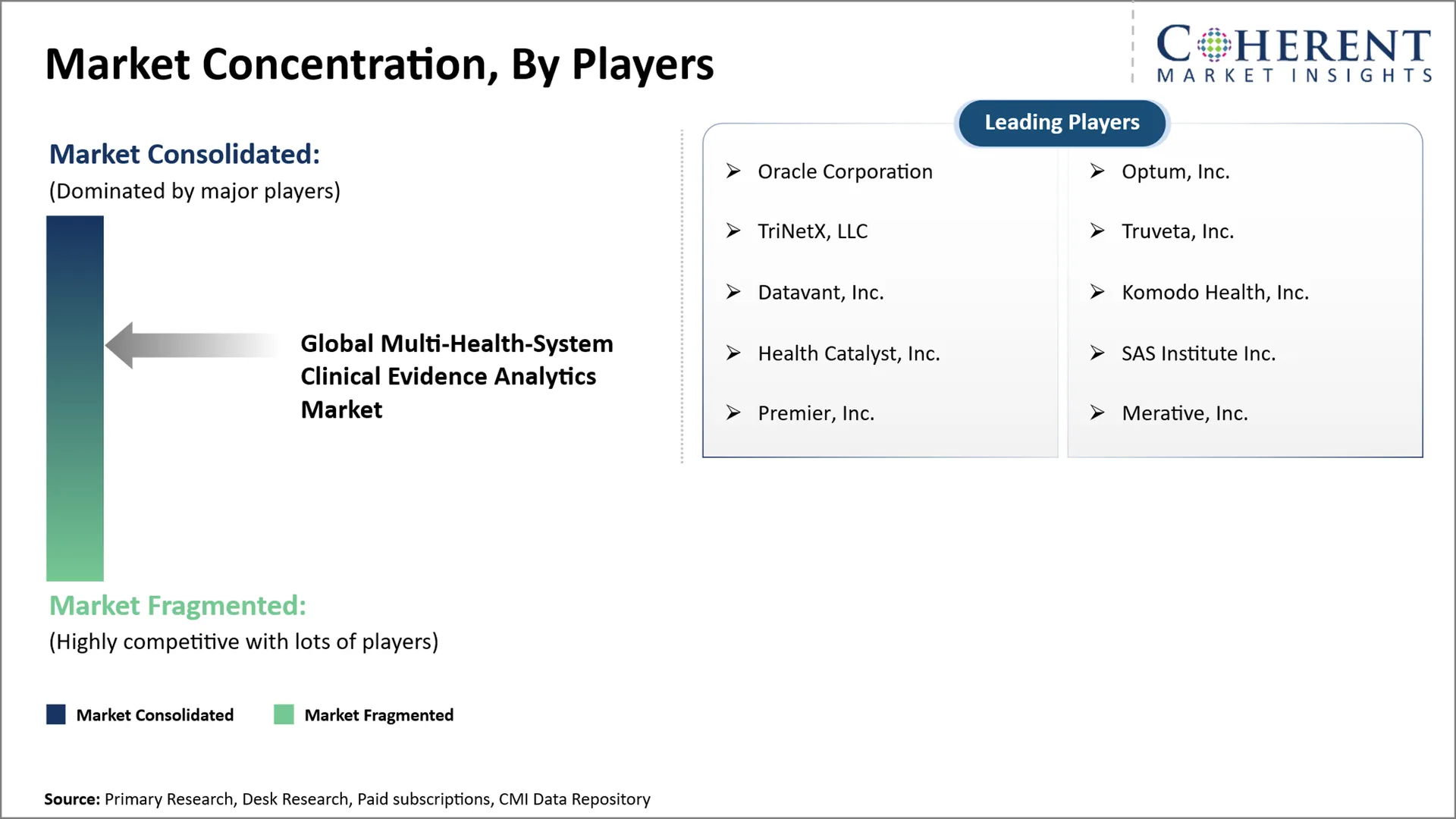
The global multi-health-system clinical evidence analytics market is moderately competitive, with various advancements in healthcare data connectivity, interoperability, artificial intelligence, real-world evidence creation, and clinical analytics across institutions. Companies in the market are focusing more on strengthening their analytics, enabling secure data sharing, clinical evidence quality enhancement, and instituting data-driven decision making for hospitals, providers, healthcare networks, payers, and research organizations. Key focus areas include:
- Development of AI-powered clinical evidence analytics and predictive modelling platforms
- Advancement of real-world data aggregation and multi-institutional evidence generation
- Expansion of EHR integration and interoperability solutions across multiple health systems
- Development of population health analytics, risk stratification, and clinical outcomes benchmarking
- Enhancement of privacy-preserving data sharing, federated analytics, and regulatory-compliant data governance
Market Report Scope
Global Multi-Health-System Clinical Evidence Analytics Market Report Coverage | |||
Report Coverage | Details | ||
Base Year | 2025 | Market Size in 2026: | USD 4.38 Bn |
Historical Data For: | 2020 To 2024 | Forecast Period: | 2026 To 2033 |
Forecast Period 2026 To 2033 CAGR: | 14.5% | 2033 Value Projection: | USD 11.31 Bn |
Geographies covered: |
| ||
Segments covered: |
| ||
Companies covered: | Oracle Corporation, Optum, Inc., TriNetX, LLC, Truveta, Inc., Datavant, Inc., Komodo Health, Inc., Health Catalyst, Inc., SAS Institute Inc., Premier, Inc., Merative, Inc. | ||
Growth Drivers: |
| ||
Restraints & Challenges: |
| ||
Analyst Opinion (Expert Opinion)
- In the coming years, global multi-health-system clinical evidence analytics market will move away from institution-specific reporting and toward integrated, cross-network clinical intelligence. The healthcare organizations will continue to adopt AI-enabled platforms that consolidate data from EHRs, claims, diagnostic records, and clinical registries to generate evidence for populations of patients. Federated analytics, predictive modeling, and privacy-preserving data collaboration will become essential capabilities for multi-institutional insights without putting patient data at risk.
- The maximum opportunities are foreseen within clinical outcomes and quality analytics field for population health and risk stratification applications in the U.S. With large integrated delivery network, rich patient data, and increased focus on value-based care, the prospects for growth seem more promising. Others such as EHR integration and multi-institutional clinical evidence generation may be explored in India. Increasing digital health infrastructure and connectivity among HCOs in India will be a driving factor for accelerating the need for interoperable analytics platform.
- In order to gain a competitive advantage market players should focus on interoperable analytics platforms that can integrate both structured and unstructured clinical data from different healthcare systems with data security and data consistency. Additionally, they should focus on using AI-enabled predictive analytics, automated data unification, and real-time clinical benchmarking to differentiate the offerings.
Speak to the analyst
Want personalized insights?
Take the findings above to one of our principal consultants, or have the report rebuilt around the segments, geographies and competitors you actually track.
Market Segmentation
- Offering Insights (Revenue, USD Bn, 2021 - 2033)
- Software and Analytics Platforms
- Data Integration and Interoperability Solutions
- Services
- Data Type Insights (Revenue, USD Bn, 2021 - 2033)
- Electronic Health Records (EHR) Data
- Claims and Billing Data
- Laboratory and Diagnostic Data
- Clinical Registry and Real-World Data
- Others
- Application Insights (Revenue, USD Bn, 2021 - 2033)
- Clinical Outcomes and Quality Analytics
- Population Health and Risk Stratification
- Treatment Effectiveness and Comparative Analysis
- Care Coordination and Performance Benchmarking
- Clinical Research and Real-World Evidence Generation
- Others
- End User Insights (Revenue, USD Bn, 2021 - 2033)
- Integrated Health Systems and Hospital Networks
- Academic Medical Centers
- Accountable Care Organizations (ACOs)
- Healthcare Payers
- Pharmaceutical and Biotechnology Companies
- Others
- Regional Insights (Revenue, USD Bn, 2021 - 2033)
- North America
- U.S.
- Canada
- Latin America
- Brazil
- Argentina
- Mexico
- Rest of Latin America
- Europe
- Germany
- U.K.
- Spain
- France
- Italy
- Russia
- Rest of Europe
- Asia Pacific
- China
- India
- Japan
- Australia
- South Korea
- ASEAN
- Rest of Asia Pacific
- Middle East
- GCC Countries
- Israel
- Rest of Middle East
- Africa
- South Africa
- North Africa
- Central Africa
- North America
Sources
Primary Research Interviews
- Chief Medical Information Officers (CMIOs) and Chief Medical Officers (CMOs) of integrated healthcare systems
- Clinical informatics directors and healthcare data analytics heads
- Health information management (HIM) and EHR interoperability specialists
- Clinical research directors and real-world evidence (RWE) specialists
Stakeholders
- Healthcare data analytics and clinical evidence platform developers
- EHR and healthcare interoperability solution providers
- Health information exchange (HIE) networks and data aggregators
- Healthcare consulting and clinical research organizations
- End-use Sectors
- Integrated Health Systems and Hospital Networks
- Academic Medical Centers and University Hospitals
- Accountable Care Organizations (ACOs) and Healthcare Payers
- Pharmaceutical and Biotechnology Companies
- Regulatory & Health Bodies
- U.S. Office of the National Coordinator for Health Information Technology (ONC)
- Centers for Medicare & Medicaid Services (CMS)
- Agency for Healthcare Research and Quality (AHRQ)
- European Commission
Databases
- ClinicalTrials.gov
- Healthcare Cost and Utilization Project (HCUP)
- Centers for Medicare & Medicaid Services (CMS) Data
- National Inpatient Sample (NIS)
Associations
- Healthcare Information and Management Systems Society (HIMSS)
- American Medical Informatics Association (AMIA)
- Health Level Seven International (HL7)
- American Health Information Management Association (AHIMA)
Public Domain Sources
- U.S. Office of the National Coordinator for Health Information Technology (ONC)
- National Institutes of Health (NIH)
- Centers for Disease Control and Prevention (CDC)
- Agency for Healthcare Research and Quality (AHRQ)
Proprietary Elements
- CMI Data Analytics Tool
- Proprietary CMI Existing Repository of information for last 10 years.
Get access to 250+ pages report
Every segment, forecast, competitor profile and data table behind the analysis above — available for instant download.
- ESOMAR Member
- ISO 9001:2015 Certified
- D-U-N-S Registered
- GDPR & CCPA Compliant
Frequently Asked Questions
The global multi-health-system clinical evidence analytics market is estimated to be valued at USD 4.38 Bn in 2026 and is expected to reach USD 11.31 Bn by 2033.
Software and analytics platforms dominate as it can consolidate multisource clinical data, generate valuable insights and support real-time clinical decision-making.
Multi-health-system clinical evidence analytics is the process of aligning clinical data from different healthcare systems to produce evidence related to patients, their outcomes, and healthcare quality. It involves bringing together information from different systems for the purpose of discovering important insights into a healthcare provider's success and quality of care.
The CAGR of global multi-health-system clinical evidence analytics market is projected to be 14.5% from 2026 to 2033.
Growing adoption of integrated clinical data analytics across healthcare networks, and increasing demand for cross-system patient outcomes measurement and benchmarking are the major factors driving the growth of the global multi-health-system clinical evidence analytics market.
Data privacy regulations and restrictions on cross-institutional data sharing, and high costs of integrating fragmented healthcare IT systems are the major factors hampering the growth of the global multi-health-system clinical evidence analytics market.
In terms of data type, electronic health records (EHR) data is estimated to dominate the market revenue share in 2026.