

Global Paresthesia Treatment Market Size and Forecast: 2026-2033
According to Coherent Market Insights, the global paresthesia treatment market is estimated to be valued at USD 6.20 Bn in 2026 and is expected to reach USD 8.05 Bn by 2033, exhibiting a compound annual growth rate (CAGR) of 3.8% from 2026 to 2033. This steady growth reflects increasing awareness of paresthesia symptoms and advancements in treatment options, contributing to the expanding market landscape over the forecast period.
Key Takeaways of the Paresthesia Treatment Market
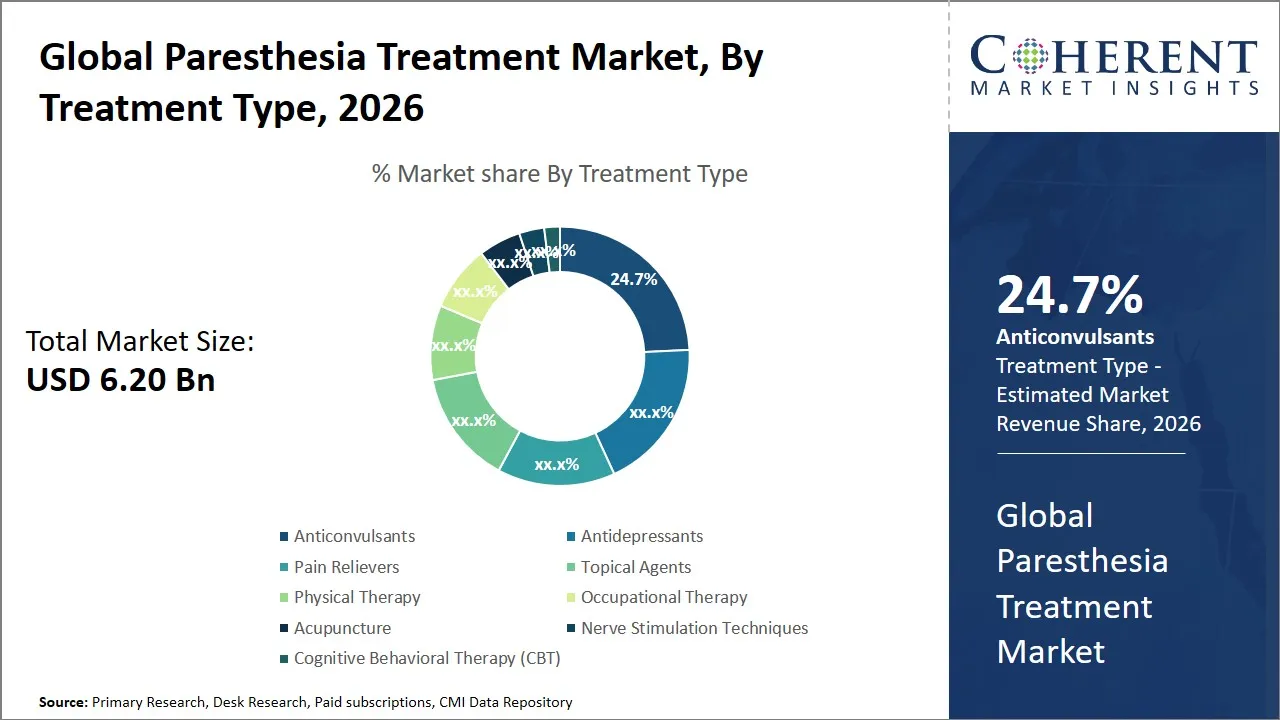
- Anticonvulsants segment is expected to lead the paresthesia treatment market capturing 24.7% share in 2026.
- Oral segment is estimated to represent 37% of the market share in 2026.
- Diabetic neuropathy segment is projected to dominate with 23% of the global paresthesia treatment market share in 2026.
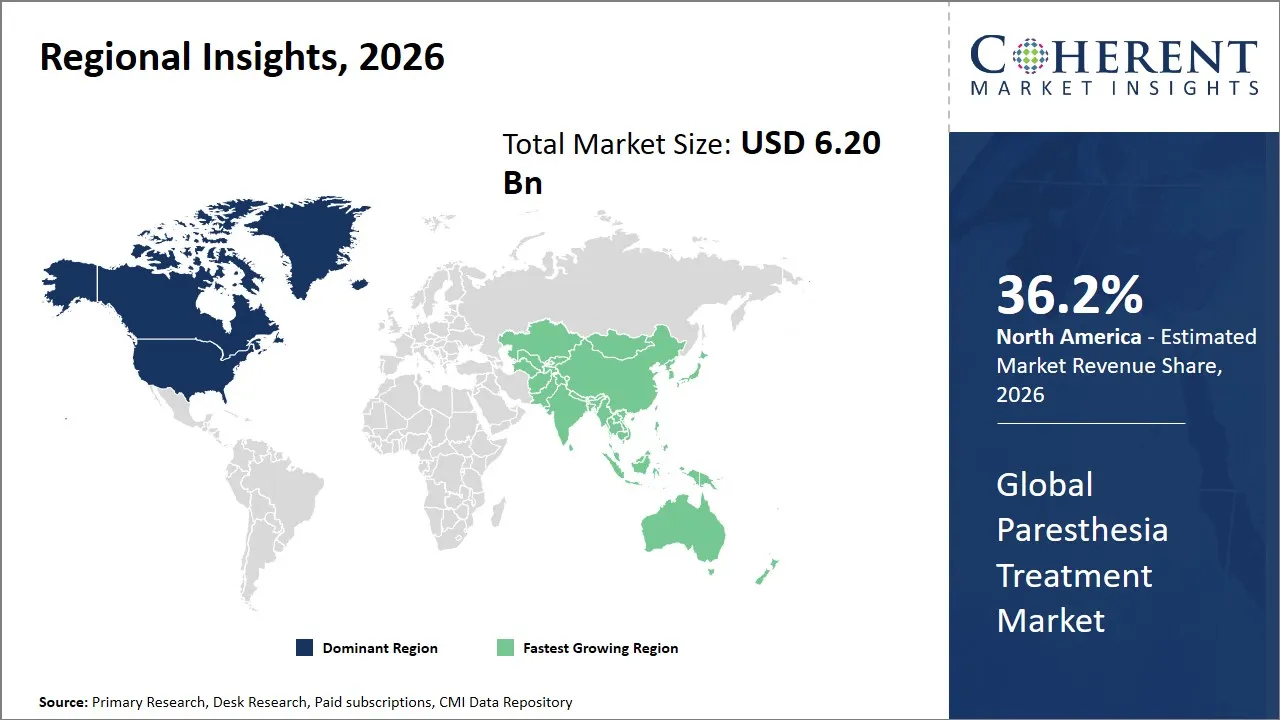
- North America is expected to lead the market, holding a share of 36.2% in 2026. Asia Pacific is anticipated to be the fastest-growing region, with 22.8% share in 2026.
Market Overview
- The global paresthesia treatment market is expanding, driven by rising awareness of neurological disorders and the increasing prevalence of chronic diseases like diabetes and multiple sclerosis.
- The market includes drug treatments, medical devices (such as neuromodulation technologies), and digital health solutions, with a focus on personalized and non-invasive therapies.
- Innovations in wearable medical devices and digital tools for symptom tracking are improving patient engagement and treatment outcomes.
- Accelerating regulatory approvals and clinical trials for new treatments are poised to significantly enhance the market offering and patient access to therapies.
Currents Events and Its Impact
Current Events | Description and its Impact |
Advancements in Drug Development |
|
Growing Awareness of Neurological Disorders |
|
Segmental Insights
- Current Industry Events of 2026
- Market Size Estimation
- Regional Breakdown
- Competitive Landscape
- Customer Intelligence
- Segmental Analysis
- Pricing Analysis
- Key Market Drivers, Challenges & Future Trends
- Customized Insights Section
Why Does the Anticonvulsants Segment Dominate the Global Paresthesia Treatment Market in 2026?
The anticonvulsants segment is expected to hold the largest share of 24.7% in 2026, primarily owing to their proven efficacy in managing neuropathic pain and sensory disturbances. Anticonvulsants which were initially created to treat epilepsy have proven to have a considerable advantage when used to stabilize nerve hyperexcitability, one of the major pathophysiological causes of paresthesia. This treatment benefit has made them the first-line agents of neuropathic conditions.
The mechanism of action, usually via the modulation of the calcium and sodium channels or increase in the gamma-aminobutyric acid (GABA) neurotransmission, aids in decreasing the abnormal nerve firing which causes tingling, numbness and burning pains like those seen in paresthesia.
For instance, Gabapentin is an anticonvulsant that is commonly prescribed to treat nerve pain and paresthesia. It works by stabilizing electrical activity in the nervous system and inhibiting abnormal nerve signals that cause tingling or numbness.
(Source- https://medlineplus.gov/druginfo/meds)
Why Does the Oral Segment Dominate the Global Paresthesia Treatment Market in 2026?
The oral segment is projected to hold the largest share of 37% in 2026, primarily because it optimizes patient compliance and accessibility. As opposed to injectables or topical applications, oral drugs provide substantial benefits, as they can be administered by the user without healthcare supervision or special equipment. This ease is especially important in long-term conditions such as paresthesia where the long-term care and the ability to adhere to treatment is vital to reducing the symptoms and enhancing the quality of life.
Oral therapies are also more preferred by the patients as they fit perfectly into the daily practices creating fewer disruptions regarding time spent in hospitals or other procedures. Also, orally administered preparations have a longer shelf life and are easier to carry, which becomes more crucial in remote or resource-restricted conditions.
For instance, Gabapentin (Neurontin) and pregabalin (Lyrica) are the primary oral anticonvulsants used to manage nerve-related pain, paresthesia, and neuropathy, including diabetic neuropathy and post-herpetic neuralgia. These medications work by calming injured nerves and are considered first-line treatments for these conditions.
Diabetic Neuropathy Dominates the Global Paresthesia Treatment Market
The diabetic neuropathy segment is expected to capture the highest share of 23% in 2026, driven largely by the escalating incidence of diabetes worldwide. Diabetes is a chronic hyperglycemic disorder which leads to gradual nerve damage with paresthesia symptoms, including tingling, numbness and a burning sensation, especially in the extremity. This great number of diabetic neuropathy imposes a monumental need on the effective management of the symptoms.
Urbanization, sedentary way of life and unhealthy eating habits are also factors that have led to the commonality of diabetic population and consequently, to the patients who are prone to suffer peripheral nerve complications. Diabetic neuropathy is one of the most prevalent and debilitating microvascular complications of diabetes that directly affects the quality of life of patients and clinically becomes quite challenging to manage.
Advancements in Drug Development: Emerging Therapies and Targeted Approaches for Enhancing Paresthesia Treatment and Patient Outcomes
Event
| Description | Impact |
Emerging Drug Therapies for Neuropathic Pain | Development of new drug classes such as Nav1.7 inhibitors, targeting specific sodium channels involved in nerve pain signaling. | These drugs offer a targeted approach, improving the efficacy and safety profile, especially in patients with chronic conditions like diabetes, potentially leading to better symptom relief and reducing adverse effects compared to traditional medications. |
Targeted Mechanisms of Action | Focus on drugs that modulate specific neurotransmitters involved in pain pathways, such as glutamate receptor antagonists. | Targeting specific molecular mechanisms offers the potential for more effective symptom management with fewer side effects, paving the way for more precise treatments in patients suffering from paresthesia due to nerve damage. |
Personalized Medicine Approaches | Pharmacogenomics and genetic testing are becoming more prominent in tailoring drug treatments based on individual genetic profiles and responses to medications. | Personalized medicine allows for optimized treatment plans, reducing trial and error in drug selection, improving outcomes for patients with chronic neuropathic conditions, and minimizing side effects. |
Regenerative and Neuroprotective Therapies | Clinical trials focusing on regenerative medicine, using stem cells and tissue engineering to repair damaged nerve fibers and restore normal sensation. | While still in early stages, these therapies hold the potential to provide long-term, durable solutions for patients, reducing dependence on pharmaceutical treatments and reshaping the treatment landscape for nerve damage-induced paresthesia. |
Regional Insights
North America Paresthesia Treatment Market Analysis and Trends
The North America region is projected to lead the market with a 36.2% share in 2026, driven by a well-established healthcare infrastructure, strong presence of pharmaceutical and medical technology companies, and supportive government policies promoting nerve disorder research and treatment accessibility. Both the U.S. and Canada invest in research and development, which encourages both pharmacological and device-based intervention of paresthesia.
Also, good reimbursement systems and the level of patient awareness also led to market leadership. The major manufacturers including Boston Scientific, Abbott Laboratories, and Pfizer have come up with sophisticated treatments that include the neurostimulation devices up to targeted drugs that have strengthened the grip of North America in the market.
For instance, a large number of companies are advancing disease‑modifying and non‑opioid therapies for diabetic neuropathy, a major cause of paresthesia, due to limited effectiveness of current treatments.
(Source- https://pmc.ncbi.nlm.nih.gov/articles/PMC4450668/)
Asia Pacific Paresthesia Treatment Market Analysis and Trends
The Asia Pacific region is expected to exhibit the fastest growth in the market contributing 22.8% share in 2026, due to increasing healthcare expenditures, expanding patient population, and rising awareness about neurological conditions. The fast urbanization, development of the healthcare infrastructure, and governmental programs to increase the access to the neurological healthcare in this region are of great help.
Medical innovation and manufacturing potential is being heavily invested in by countries such as China, India and Japan making the region a medical tourism destination of cheap but high-quality treatment. Other key players like Terumo Corporation, MTR Healthcare Pvt Ltd, and Jiangsu Hengrui Medicine are increasing their presence and forcing adoption to local production and partnering with the international giants.
Paresthesia Treatment Market Outlook for Key Countries
What are the Current Trends Shaping the U.S. Paresthesia Treatment Market?
The U.S. holds the top place because of its high rates of neurological diseases and properly-budgeted healthcare infrastructures. The existence of major businesses such as Medtronic and Boston Scientific has created a strong market both of medicinal and medical device-based prescription. Moreover, the U.S. can boast of easier FDA regulatory processes and high innovativeness focus, allowing innovative therapies to be introduced quickly. The presence of supportive insurance cover also improves the access of the patients to advanced treatments.
How is Germany Helping in the Growth of the Paresthesia Treatment Market?
The market in Germany is described as developed in terms of health care facilities and regulatory standards that promote quality solutions to treatment of paresthesia. Germany remains very strong in Europe with the leading companies like Bayer and Siemens Healthineers concentrated on neurotherapeutics, as well as diagnostic technologies. The access to patients is generated by the government policies of favoring neurological research and extensive health insurance schemes, which consolidate the market power of Germany further.
Key Drivers for the Growth of the China Paresthesia Treatment Market
Government programs such as the Healthy China 2030 are the drivers of the market in China since they intend to enhance the state of the neurological healthcare in the country. Rising cases of diabetes and related neuropathies are increasing the level of demand of paresthesia therapies. Local firms like Jiangsu Hengrui Medicine and Fosun Pharma are taking essential roles, as they are coming up with cost-effective drugs and machines. Besides, growth of private healthcare centers and increased awareness of health by the populace enhances the pace of market penetration in China.
India Paresthesia Treatment Market Trends
The market in India is growing at a very high rate because the population is very high and old with the likelihood of nerve disorders associated with a combination of better access to healthcare. This has been helped by the government programs to boost neurocare and growth has been promoted by the growing foreign direct investment. The players in the market like MTR Healthcare and Cipla play a significant role in offering cheap generic drugs and innovative therapies. Also, there are more partnerships between Indian companies and multinational companies which help in transfer of technology and availability of products.
Regulatory Approvals and Clinical Trials: Key Developments Shaping the Future of Paresthesia Treatment
- Recent regulatory action is increasing the number of treatment options on nerve related conditions that cause the paresthesia effects. Indeed, the Food and Drug Administration (FDA) of the U.S. has granted higher-level neuromodulation systems including spinal cord stimulation systems to manage painful diabetic neuropathy as alternative to the previous pharmacotherapy of symptoms such as tingling and numbness. FDA approval of non-opioid analgesics of the peripheral analgesic pathway such as suzetrigine, has also been noted, which points to a change in favoring safer analgesic strategies applicable to nerve related pain management. Such licensing concessions convey a wider belief of diversification in treatment modalities outside the traditional lines of drugs.
- On the clinical trials side, several studies are being conducted that may have an impact on the future treatment paradigm of paresthesia and associated neuropathies. Methods of gene therapy, including regeneration candidates of diabetic peripheral neuropathy, that are based on DNA plasmid are under assessment to repair nervous impairments at a biological level that may eventually lead to alleviation of the symptoms of chronic paresthesia. Also, new agents and formulations such as topical and systemic agents are also under ongoing trials to address chemotherapy induced peripheral neuropathy with an aim of enhancing nerve functioning and relief of symptoms. These trials suggest that there is a proactive pipeline that is focused on developing solutions to unmet medical needs in nerve injury and sensory dysfunction.
Market Players, Key Developments, and Competitive Intelligence
Key Developments
- In December 2025, Sangamo Therapeutics received the U.S. FDA Fast Track designation of ST-503, an investigational epigenetic regulator, to treat small fiber neuropathy pain, which has been noted to accelerate regulatory interaction and enables the development of nonopioid therapies that can be beneficial to patients with neuron-related sensory symptoms.
- In October 2025, MIRA Pharmaceuticals commenced the multiple ascending dose portion of a Phase 1 trial for Ketamir‑2, an oral candidate targeting CIPN, marking early clinical progress in novel oral treatments relevant to nerve dysfunction and paresthesia management.
- In September 2025, Lexicon Pharmaceuticals presented insights at PAINWeek 2025 showing that approximately 30% of diabetes patients suffer neuropathic pain with tingling and numbness, underscoring unmet needs in diabetic peripheral neuropathic pain (DPNP). The data supports advanced clinical development of pilavapadin, an investigational oral non‑opioid aimed at improving symptom relief compared with current treatments.
Top Strategies Followed by Global Paresthesia Treatment Market Players
Player Type | Strategic Focus | Examples |
Established Market Leaders | Established market leaders in the paresthesia treatment space invest heavily in R&D to develop next-generation therapies and devices that enhance efficacy and patient comfort. They differentiate themselves by focusing on innovation and forming strategic partnerships with OEMs to strengthen supply chains. | Medtronic leads with its advanced spinal cord stimulation (SCS) devices for managing neuropathic pain, forming partnerships with healthcare providers and expanding into regions with rising demand for effective pain management solutions. |
Mid-Level Players | Mid-level players in the paresthesia treatment market focus on offering cost-effective solutions that balance quality and affordability. By collaborating with technology and manufacturing partners, they enhance their production capabilities and access innovations without heavy R&D investments. These strategies help them gain visibility and expand reach, especially in price-sensitive markets. | Tivic Health Systems, a mid-level player, uses strategic partnerships to develop its ClearUP device for sinus pain and paresthesia, offering a non-invasive and affordable treatment option while expanding its market presence through collaborations with healthcare providers. |
Small-Scale Players | Small-scale players in the paresthesia treatment market focus on innovation and specialization, developing niche products tailored to specific patient needs. By adopting cutting-edge technologies like digital therapeutics and wearable devices, they differentiate themselves. They also form local alliances to enhance market entry and visibility in regional segments. | NeuroMetrix developed the Quell wearable device for chronic pain management, using digital therapeutics to offer a non-invasive solution, while forming partnerships with local distributors to expand its reach in targeted markets. |
Market Report Scope
Paresthesia Treatment Market Report Coverage
| Report Coverage | Details | ||
|---|---|---|---|
| Base Year: | 2025 | Market Size in 2026: | USD 6.20 Bn |
| Historical Data for: | 2020 To 2024 | Forecast Period: | 2026 To 2033 |
| Forecast Period 2026 to 2033 CAGR: | 3.8% | 2033 Value Projection: | USD 8.05 Bn |
| Geographies covered: |
| ||
| Segments covered: |
| ||
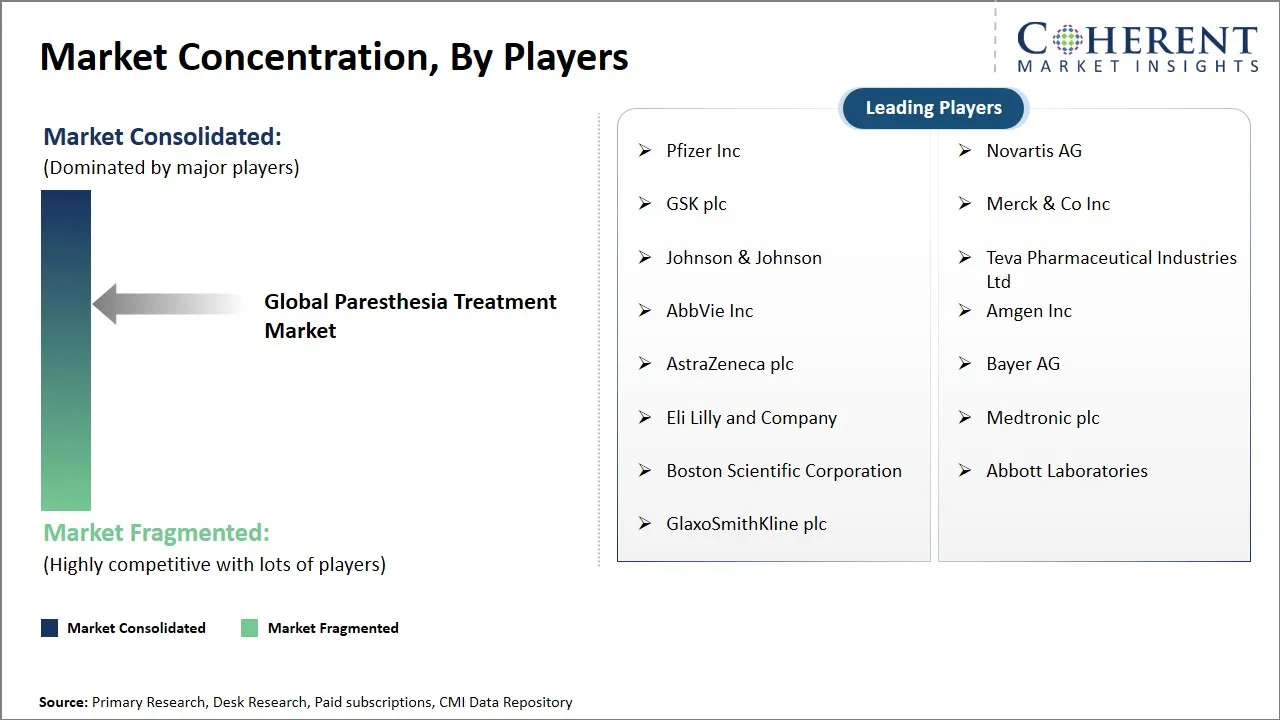
| Companies covered: | Pfizer Inc, Novartis AG, GSK plc, Merck & Co Inc, Johnson & Johnson, Teva Pharmaceutical Industries Ltd, AbbVie Inc, Amgen Inc, AstraZeneca plc, Bayer AG, Eli Lilly and Company, Medtronic plc, Boston Scientific Corporation, Abbott Laboratories, and GlaxoSmithKline plc | ||
| Growth Drivers: |
| ||
| Restraints & Challenges: |
| ||
Market Dynamics
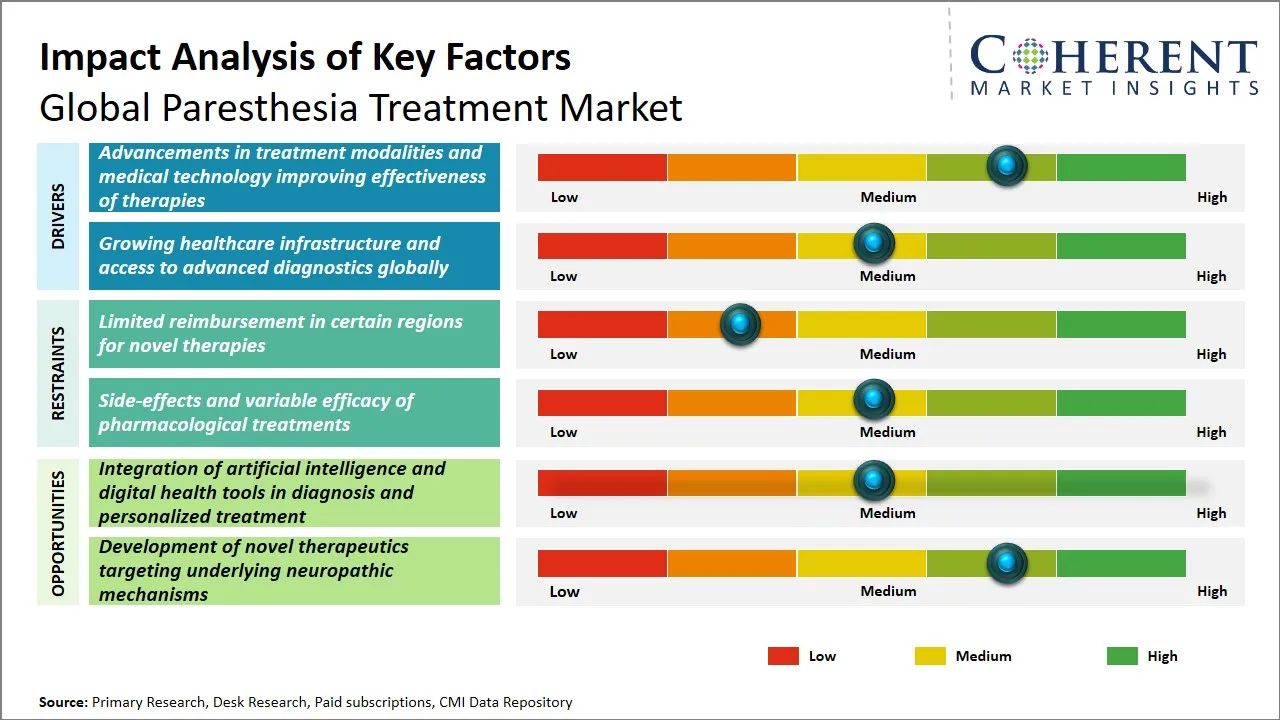
Global Paresthesia Treatment Market Driver - Advancements in Treatment Modalities and Medical Technology Improving Effectiveness of Therapies
Advances in treatment modalities and medical technology have had a profound impact on the sphere of paresthesia management, providing the therapeutic outcomes with the boost. The innovative approaches of conditioning the drug delivery system specifically to the lesions, minimally invasive surgical procedures, and the improvement of the quality of neurostimulation devices have expanded the application of the treatment procedures to the patients with the abnormal nerve sensations.
These developments not only increase the efficacy of the interventions but also decrease the side effects and recovery time, which is why they would be more popular among healthcare providers. Also, the incorporation of digital healthcare devices, such as wearable health sensors and telemedicine apps, enables constant monitoring and customized treatment and changes, improving adherence and long-term care.
For instance, next‑generation bioelectronic medicine and neural interface technologies are integrating precision neurostimulation with real‑time physiological modulation, enabling more effective, adaptive therapies for neurological conditions related to nerve dysfunction. These smart therapeutic platforms improve treatment accuracy by continuously adjusting stimulation based on patient feedback and neural responses, offering enhanced symptom relief compared with traditional approaches.
(Source- https://pmc.ncbi.nlm.nih.gov/articles)
Global Paresthesia Treatment Market Opportunity - Integration of Artificial Intelligence and Digital Health Tools in Diagnosis and Personalized Treatment
The combination of artificial intelligence (AI) and digital health technologies is potentially a massive market opportunity to enhance the global paresthesia treatment market. Diagnostic algorithms based on AI have the potential to improve accuracy and speed in detecting underlying parasthesia causes (e.g. nerve injury or neuropathy) through analysis of complex data, such as medical imaging, nerve conduction tests, and patient symptoms. This accuracy leads to earlier and more precise diagnosis, which means that intervention is made in time and the patient will have a better prognosis.
Moreover, online health solutions, such as wearables and remote patient-monitoring software enable real-time data collection and constant symptom tracker. All this patient-specific data is useful in the creation of individualized treatment plans that can dynamically change in response to patient responses to maximize the efficacy of the therapy. Also, AI algorithms are able to forecast success rates of a treatment and possible side effects so that clinicians can choose the most effective medication or therapeutic method to use on a particular patient.
For instance, AI‑driven digital tools are being deployed in radiology, genomics, and virtual care platforms to enhance diagnostic accuracy and create personalized treatment regimens, while wearable IoT devices enable continuous monitoring of chronic conditions, fostering proactive and individualized patient management strategies.
(Source- https://www.sciencedirect.com/science/article/pii/S2666990024000132)
Analyst Opinion (Expert Opinion)
- The market of paresthesia treatment is rising because of the efforts made in the creation of drugs, computer-related health applications, and the increasing number of patients seeking more efficient treatment. Next-generation therapies and wearables are some of the innovations that are enhancing management of nerve-related conditions and supportive regulatory frameworks that support market growth. Nevertheless, such issues as the high prices of sophisticated approaches and uptake in underdeveloped countries persist.
- Digital therapeutics and AI-based diagnostic tools are emerging and are offering promising outcomes in patients. Knowledge-sharing and policy development have been essential to the events such as the International Neuropathic Pain Symposium and the World Congress on Pain. Interesting programs, like Fast Track Designation of Pilavapadin by USFDA point to the prospects of new treatment as a developing factor in the market.
Speak to the analyst
Want personalized insights?
Take the findings above to one of our principal consultants, or have the report rebuilt around the segments, geographies and competitors you actually track.
Market Segmentation
- Treatment Type Insights (Revenue, USD Bn, 2021 - 2033)
- Anticonvulsants
- Antidepressants
- Pain Relievers
- Topical Agents
- Physical Therapy
- Occupational Therapy
- Acupuncture
- Nerve Stimulation Techniques
- Cognitive Behavioral Therapy (CBT)
- Route of Administration Insights (Revenue, USD Bn, 2021 - 2033)
- Oral
- Parenteral (Injectables)
- Topical
- Transdermal Patches
- Indication Insights (Revenue, USD Bn, 2021 - 2033)
- Diabetic Neuropathy
- Peripheral Neuropathy
- Carpal Tunnel Syndrome
- Post-Surgery Paresthesia
- Multiple Sclerosis
- Other Neurological Disorders
- End User Insights (Revenue, USD Bn, 2021 - 2033)
- Hospitals
- Clinics
- Homecare Settings
- Ambulatory Surgical Centers
- Age Group Insights (Revenue, USD Bn, 2021 - 2033)
- Geriatric
- Adult
- Pediatric
- Regional Insights (Revenue, USD Bn, 2021 - 2033)
- North America
- U.S.
- Canada
- Latin America
- Brazil
- Argentina
- Mexico
- Rest of Latin America
- Europe
- Germany
- U.K.
- Spain
- France
- Italy
- Russia
- Rest of Europe
- Asia Pacific
- China
- India
- Japan
- Australia
- South Korea
- ASEAN
- Rest of Asia Pacific
- Middle East
- GCC Countries
- Israel
- Rest of Middle East
- Africa
- South Africa
- North Africa
- Central Africa
- North America
- Key Players Insights
- Pfizer Inc
- Novartis AG
- GSK plc
- Merck & Co Inc
- Johnson & Johnson
- Teva Pharmaceutical Industries Ltd
- AbbVie Inc
- Amgen Inc
- AstraZeneca plc
- Bayer AG
- Eli Lilly and Company
- Medtronic plc
- Boston Scientific Corporation
- Abbott Laboratories
- GlaxoSmithKline plc
Sources
Primary Research Interviews
Industry Stakeholders List
- Neurologists and Pain Management Specialists
- Healthcare Providers (Hospitals and Clinics)
End Users List
- Patients Suffering from Neuropathy
- Caregivers and Healthcare Professionals
Government and International Databases
- U.S. Food and Drug Administration (FDA)
- European Medicines Agency (EMA)
- World Health Organization (WHO)
- National Institutes of Health (NIH)
- Centers for Disease Control and Prevention (CDC)
- U.S. National Library of Medicine
Trade Publications
- Neurology Reviews
- Pain Medicine News
- Journal of Pain Research
- Journal of Clinical Neurology
- The Clinical Journal of Pain
- Medical Device and Diagnostic Industry (MD+DI)
Academic Journals
- Journal of Neurology, Neurosurgery & Psychiatry
- Journal of Pain and Symptom Management
- Clinical Neurophysiology
- Pain Medicine
- The Lancet Neurology
- Neurotherapeutics
Reputable Newspapers
- The New York Times
- The Guardian
- The Washington Post
- The Wall Street Journal
- Financial Times
- The Globe and Mail
Industry Associations
- American Academy of Neurology (AAN)
- International Association for the Study of Pain (IASP)
- American Pain Society (APS)
- Neuropathy Association
- European Federation of Neurological Societies (EFNS)
- National Institute of Neurological Disorders and Stroke (NINDS)
Public Domain Resources
- National Institutes of Health (NIH)
- U.S. National Library of Medicine
- ClinicalTrials.gov
- World Health Organization (WHO) Global Health Observatory
- Centers for Disease Control and Prevention (CDC)
- European Medicines Agency (EMA) Public Assessment Reports
Proprietary Elements
- CMI Data Analytics Tool: Proprietary analytics tool to analyze real-time market trends, consumer behavior, and technology adoption in market
- Proprietary CMI Existing Repository of Information for Last 8 Years
Get access to 250+ pages report
Every segment, forecast, competitor profile and data table behind the analysis above — available for instant download.
- ESOMAR Member
- ISO 9001:2015 Certified
- D-U-N-S Registered
- GDPR & CCPA Compliant
Missing comfort of reading report in your local language? Find your preferred language:
Transform your Strategy with Exclusive Trending Reports
Frequently Asked Questions
The global paresthesia treatment market is estimated to be valued at USD 6.20 Bn in 2026 and is expected to reach USD 8.05 Bn by 2033.
The CAGR of global paresthesia treatment market is projected to be 3.8% from 2026 to 2033.
Advancements in treatment modalities and medical technology improving effectiveness of therapies and growing healthcare infrastructure and access to advanced diagnostics globally are the major factors driving the growth of the global paresthesia treatment market.
Limited reimbursement in certain regions for novel therapies and side‑effects and variable efficacy of pharmacological treatments are the major factors hampering the growth of the global paresthesia treatment market.
In terms of treatment type, anticonvulsants are estimated to dominate the market revenue share in 2026.
Pfizer Inc, Novartis AG, GSK plc, Merck & Co Inc, Johnson & Johnson, Teva Pharmaceutical Industries Ltd, AbbVie Inc, Amgen Inc, AstraZeneca plc, Bayer AG, Eli Lilly and Company, Medtronic plc, Boston Scientific Corporation, Abbott Laboratories, and GlaxoSmithKline plc are the major players.
North America is expected to lead the global paresthesia treatment market in 2026.