

Global PDRN Serum Market Size and Forecast – 2026 To 2033
The global PDRN serum market is estimated to be valued at USD 264.2 Mn in 2026 and is expected to reach USD 671.3 Mn by 2033registering a compound annual growth rate (CAGR) of 14.25% from 2026 to 2033. This growth is driven by the increasing consumer demand for regenerative-inspired skincare, growing interest in skin barrier repair, and the introduction of multifunctional serums that combine PDRN with well-established cosmetic ingredients.
Manufacturers are expanding their product lines to address a variety of skin concerns, from hydration to uneven skin tone and the visible signs of aging. In February 2026, SeoulCeuticals introduced its PDRN + Vitamin C Brightening Serum, combining vitamin C with polydeoxyribonucleotide in one formula. The launch emphasizes the way combinations of ingredients are creating opportunities for product differentiation and wider consumer adoption.
Key Takeaways of the Global PDRN Serum Market
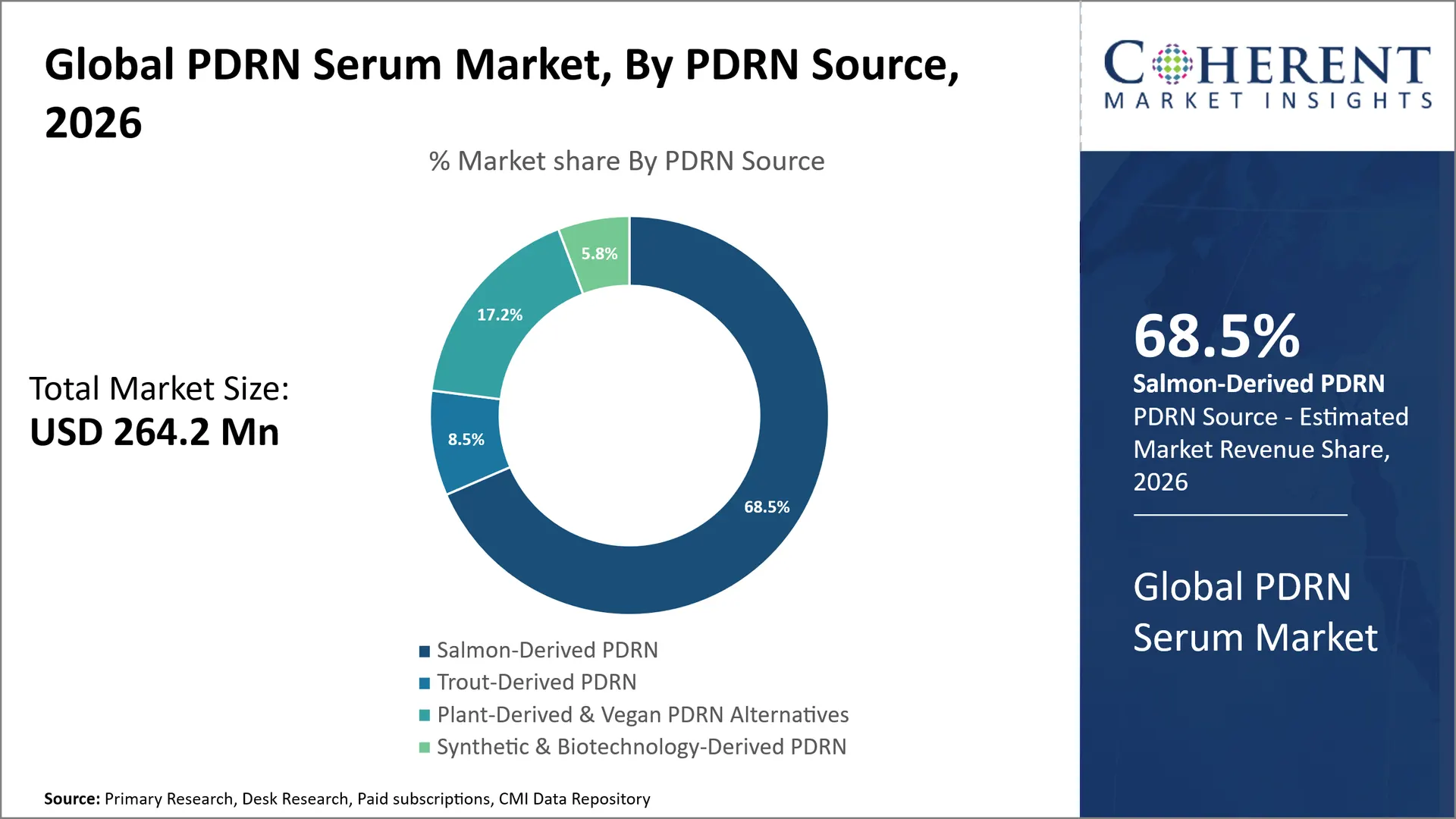
- Salmon-Derived PDRN is expected to register a CAGR of 13.4% during 2026-2033, and is expected to hold a 68.5% share of the global PDRN serum market in 2026. Established purification capabilities and familiarity with DNA ingredients from fish fortify its premium positioning. In February 2026, Marini SkinSolutions launched Marini Reboot, a concentrated salmon-derived PDRN serum for visible skin renewal.
- Conventional Liquid Serums are projected to grow at an estimated CAGR of 12.9% between 2026 and 2033, and are expected to account for 46.3% of the global PDRN serum market revenue share in 2026. They are user-friendly and fit into everyday skincare routines, which contributes to repeat sales in professional and retail settings. November 2026 SkinCeuticals Phyto Corrective PDRN Serum for Redness-Prone Skin launched on the website and at authorized skincare professionals.
- PDRN with Collagen & Peptides is estimated to record a 16.2% CAGR during 2026–2033, holding 30.8% of the global PDRN serum market in 2026. The blend of ingredients formulated for moisture, elasticity and a smoother texture supports multifunctional premium products. Nykaa launched Medicube’s PDRN Pink Peptide Serum in India in February 2026, a formulation containing hydrolyzed collagen and a cocktail of peptides.
- Anti-Aging & Skin Firming is anticipated to achieve an estimated 14.8% CAGR during 2026–2033, accounting for 32.3% of the global PDRN serum market in 2026. Measurable wrinkle and texture outcomes may help support differentiated formulations and increased consumer confidence. In July 2026, a clinical comparison of the use of topical PDRN eye-cream reported improvement in periocular wrinkle measures.
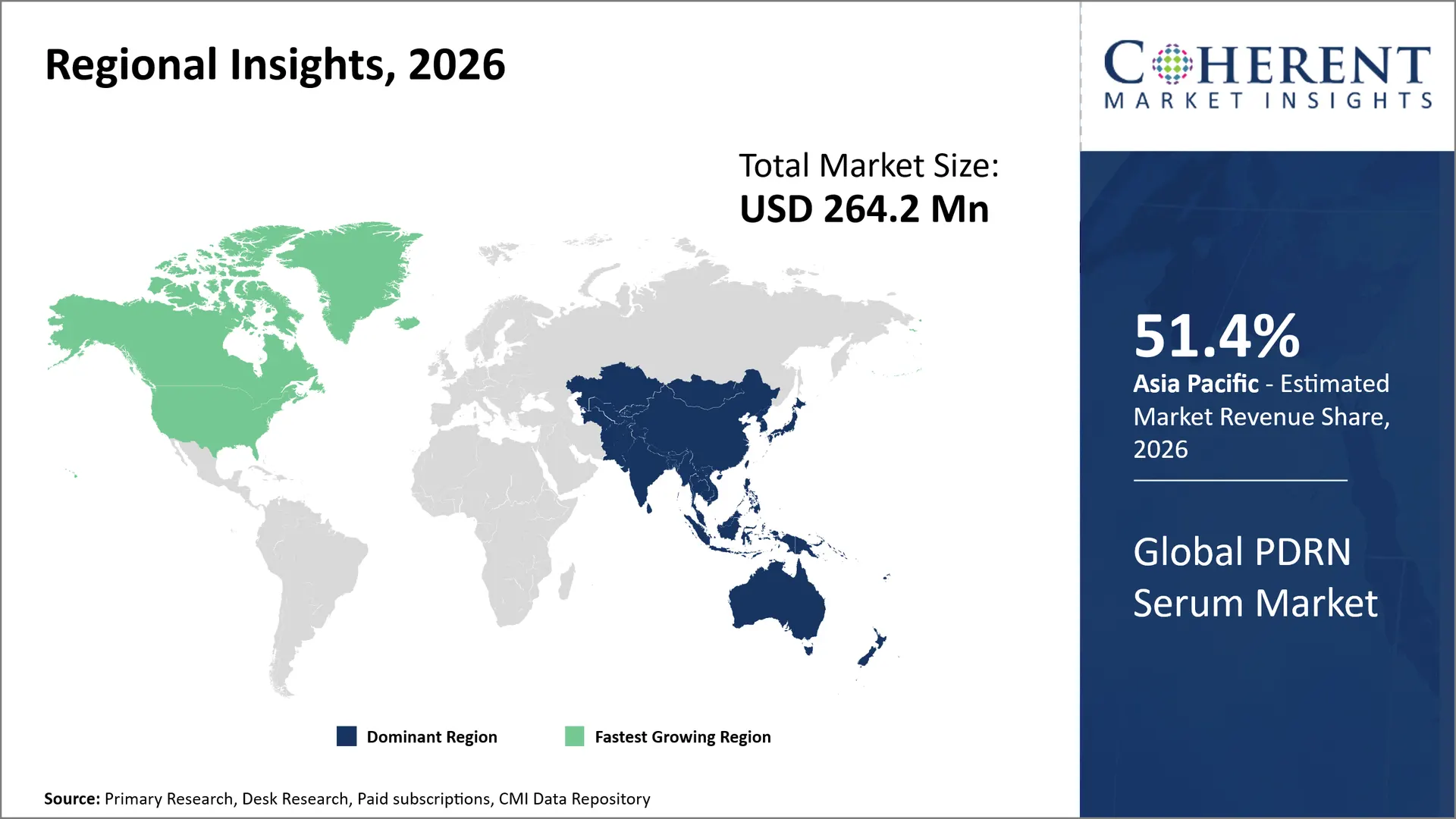
- Asia Pacific is projected to grow at an estimated 13.2% CAGR during 2026–2033, retaining a leading 51.4% share the global PDRN serum market in 2026. Product discovery and frequent portfolio expansion are facilitated by well-established Korean beauty manufacturers and specialist retail ecosystems. In September 2026, PharmaResearch introduced its REJURAN COSMETICS range with its Dual Effect and Turnover PDRN ampoules in Sephora Singapore.
- North America is forecast to register an estimated 18.3% CAGR during 2026–2033, from an expected 22.6% market share in 2026. National specialty-beauty distribution could allow PDRN serum to expand beyond the professional esthetics space and reach new, first-time buyers. In February 2026, Mediheal rolled out its PDRN collection, which features a lifting serum, to over 1,400 Ulta Beauty locations.
Segmental Insights
Why Does Salmon-Derived PDRN Dominate the Global PDRN Serum Market?
Salmon-Derived PDRN is projected to account for 68.5% of the global PDRN serum market by PDRN source in 2026. Its leadership demonstrates established ingredient specifications and the ability of formulators to distinguish marine DNA preparations from plant-derived alternatives that may vary in molecular composition. Sourcing that can be identified enables buyers to make better product choices, especially with PDRN incorporated into professional esthetic protocols. Manufacturers are obliged to ensure adequate purity, batch traceability and testing, since the quality of extraction can affect consistency and purchasing decisions. Specialist suppliers may find it useful to provide documentation to support clinic purchasing and formulation development. In July 2026 SkinSpirit introduced a PDRN Salmon DNA Microneedling Catalyst Serum Treatment to U.S. clinics with a 3% salmon DNA formula. This initiative shows the potential for professional service providers to develop more applications for marine-sourced PDRN ingredients.
- Current Industry Events of 2026
- Market Size Estimation
- Regional Breakdown
- Competitive Landscape
- Customer Intelligence
- Segmental Analysis
- Pricing Analysis
- Key Market Drivers, Challenges & Future Trends
- Customized Insights Section
Why Do Conventional Liquid Serums Represent the Largest Product Form in the Global PDRN Serum Market?
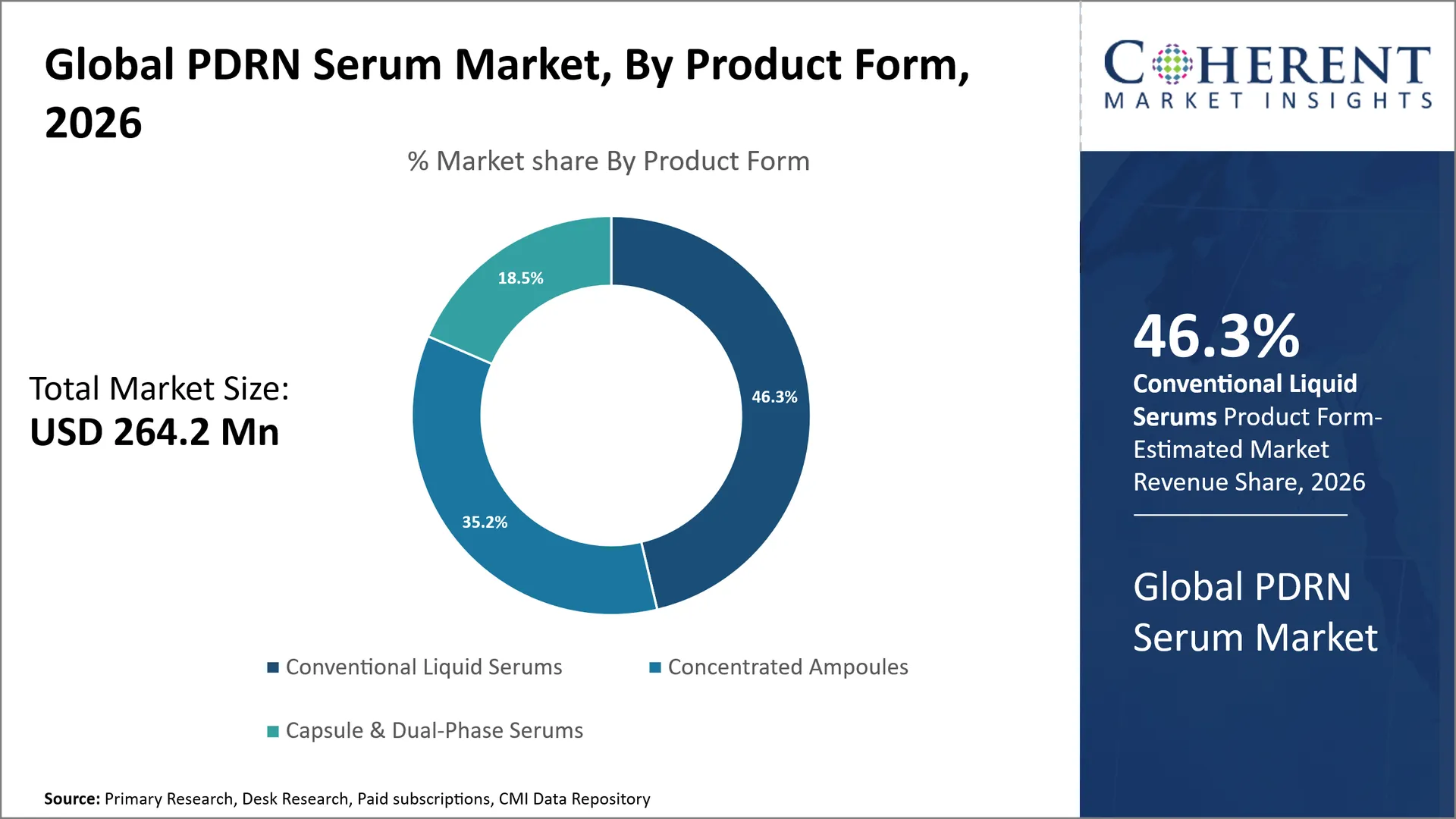
Conventional Liquid Serums are expected to represent 46.3% of the global PDRN serum market by product form in 2026. Their leading position is supported by simple product merchandising. Familiar bottle formats allow online retailers to explain dosage, texture and ingredient combinations without requiring consumers to understand reconstitution or multiphase systems. This simplifies purchase decisions and allows manufacturers to ensure predictable filling, labeling and packaging workflows. Liquid formulas are also well suited to targeted skincare uses such as hydration and visible texture management, with consumers comparing ingredients and user feedback before purchase. According to a February 2026 report, Dear Klairs Vitamin PDRN Bouncy Pore Serum was ranked No. 1 in the Official Cosmetics category on Qoo10 Japan for the month of January. Partly the visibility was the outcome of an educational creator review which is evidence of the retail strength of products which can be clearly demonstrated via digital channels.
Why Does PDRN with Collagen & Peptides Dominate the Formulation Type Segment of the Global PDRN Serum Market?
PDRN with Collagen & Peptides is estimated to hold 30.8% of the global PDRN serum market by formulation type in 2026. Its leadership reflects manufacturers' ability to develop multifunctional skincare products that address several consumer concerns within a single formulation. Collagen-containing serums support skin conditioning, while selected cosmetic peptides complement formulations targeting hydration, elasticity, and visible signs of aging. This combination strengthens premium product positioning and provides opportunities for manufacturers to differentiate their offerings. Contract manufacturers also benefit from expertise in ingredient compatibility, formulation stability, and product consistency. As of November 2026, Mixsoon offers its PDRN Collagen Serum 30ml, combining rice-derived PDRN alternatives, low-molecular-weight collagen, peptides, and niacinamide. The product demonstrates how manufacturers are integrating complementary ingredients to develop targeted skincare solutions for hydration, skin firmness, and daily use.
Current Events and their Impact
Current Event | Description and Its Impact |
September 2026 – South Korea MFDS identifies misleading cosmetic advertising |
|
July 2026 – EU fragrance allergen labeling requirements take effect |
|
June 2024 – U.S. FDA reinforces cosmetic registration and listing requirements |
|
Global PDRN Serum Market Dynamics
Key Market Drivers
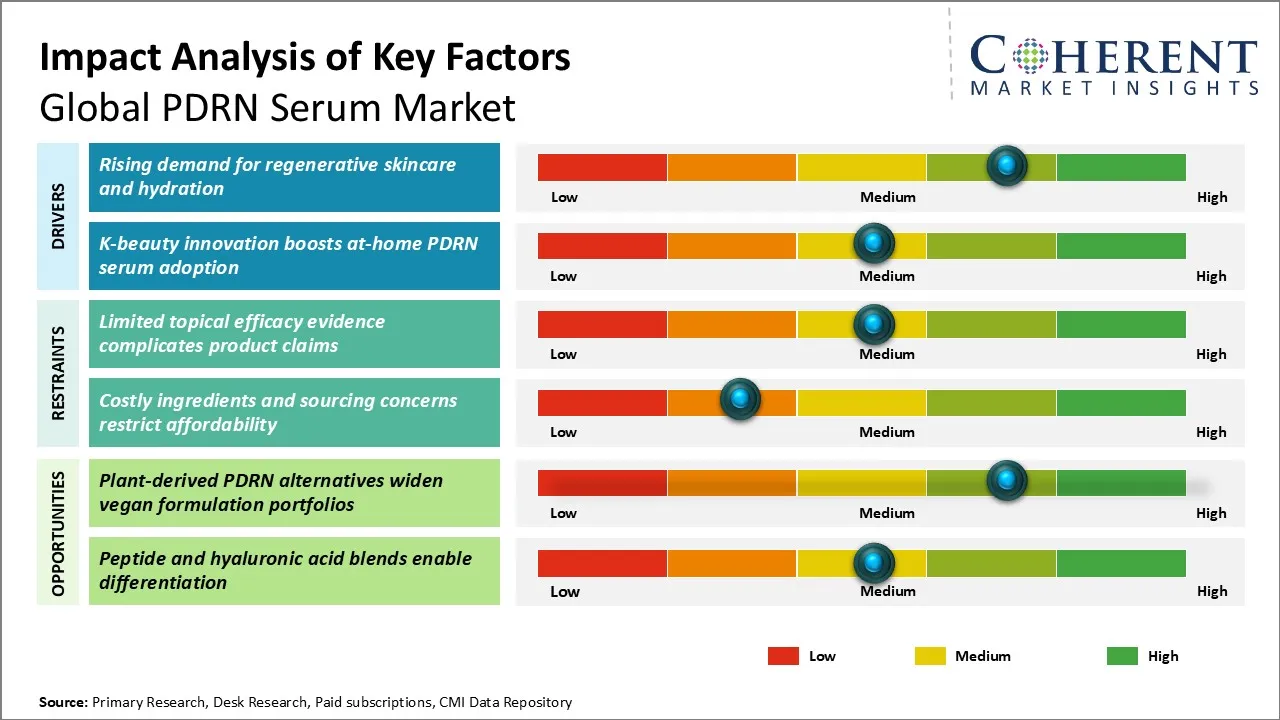
- Rising demand for regenerative skincare and hydration: Consumers are more likely to use PDRN serums for regular skin hydration, barrier comfort and visible recovery rather than as a replacement for clinical treatments. This shift supports repeat purchases and provides opportunities for manufacturers to gain premium positioning for well-tolerated, multifunctional formulations. Increased interest in recovery-focused products is a boon for ingredient suppliers and dermatological skincare brands. Then, in August 2026, AXIS-Y launched its Triple PDRN Barrier Boost Serum, which combines plant-derived PDRN alternatives, peptides, and NAD+ to target stressed skin barriers. This development shows the commercial potential of adding recovery-oriented ingredients to daily skin care formulations
- K-beauty innovation boosts at-home PDRN serum adoption: Korean skincare brands are boosting PDRN product use at home by offering lighter textures, easier application and multi-purpose formulations that fit more easily into daily routines. These innovations enable brands to reach consumers outside of professional esthetic environments, while creating additional purchase occasions. Retailers and formulation specialists benefit from improved product assortments and enhanced accessibility. In February 2026, Anua PDRN Collagen Glow Facial Serum Spray was launched at a New York launch event with capsule-based formulation technology and compatibility with makeup routines. The introduction shows how the ease of use of applications can help increase consumer acceptance of PDRN skincare.
Emerging Market Trends
- Fresh-Mix and Precision-Dose Serum Formats: Serum development for PDRN is gradually moving toward formulations that isolate sensitive ingredients until the point of application. Conventional pre-mixed products can be substituted by dual chamber packaging, concentrated ampoules and controlled dispensing systems.
- Impact: Such formats can offer increased formulation flexibility and assist manufacturers in product differentiation through packaging functionality. Higher production costs and added stability requirements could limit uptake among budget-focused brands.
- Market Relevance: Premium skincare manufacturers and specialist packaging suppliers are positioned to benefit. Commercially successful formats will need to show measurable benefits in stability, convenience and product consistency throughout the forecast period.
- Evidence-Based Product Selection and Performance Transparency: The evaluation of PDRN skincare products is moving to a higher level of scrutiny regarding ingredient concentrations, testing methods and proven cosmetic results. Consumers and professional purchasers are becoming more and more selective regarding products claiming regenerative or skin-repair benefits.
- Impact: Brands that back up product claims with controlled topical studies can gain leverage on pricing and retailer trust. Producers who rely only on the popularity of ingredients may be forced to improve their testing and documentation.
- Market Relevance: Independent testing laboratories, dermatological skincare developers and quality-focused ingredient suppliers could gain commercial opportunities. Transparent performance information will increasingly be a factor in product differentiation and purchasing decisions.
Key Restraining Factors
- Limited evidence for topical penetration: The accepted clinical indications for PDRN do not automatically translate to the same effects when applied to intact skin. Product comparisons are complicated by differences in molecular characteristics, delivery systems and application conditions.
- Restrictions on therapeutic claims: Cosmetic manufacturers cannot automatically market PDRN serums with medical claims of injectable treatments. Backing up claims with cosmetic testing and regulatory review, plus development costs.
- Raw material consistency and formulation challenges: Fish-derived DNA ingredients must have adequate purity, quality specifications and supplier traceability. Other sources of DNA bring additional challenges in terms of ingredient identity, stability and proof of comparable performance.
Regional Insights
Why Does Asia Pacific Dominate the Global PDRN Serum Market?
Asia Pacific is expected to account for 51.4% of the global PDRN serum market in 2026, supported by South Korea's formulation expertise and established skincare consumption across Japan and China. Regional manufacturers have specialized suppliers of cosmetic ingredients, established beauty distribution networks and contract manufacturing capabilities. PDRN products in different price categories is also another factor that increases access by consumers. Moreover, Korean manufacturers can use cross-border retail partnerships to introduce niche formulations without the need to establish separate distribution infrastructure in each country. In September 2026, CJ Olive Young expanded its K-Beauty Edit distribution initiative into Singapore, Thailand, and Malaysia, following its introduction in Hong Kong. This expansion demonstrates the additional commercialization opportunities that regional retail integration offers Korean ingredient-based skincare brands.
Why Is North America Emerging as the Fastest-Growing Region in the Global PDRN Serum Market?
North America is anticipated to emerge as the fastest-growing region in the global PDRN serum market, holding 22.6% of the global PDRN serum market revenue in 2026. The commercialization of treatment-inspired skincare through premium retail networks and as part of dermatological product portfolios is proof of its growth potential. Consumers are looking for alternatives to frequent esthetic procedures and want formulations that provide visible skin improvement and are easy to use. Cosmetic performance can be documented by manufacturers who can therefore command premium prices and reach buyers beyond traditional professional channels. In March 2026, Amorepacific launched IOPE in the United States through Sephora. Among IOPE products is the XMD Stem III Clinical Recovery Serum, which features a liposome complex with PDRN. The launch marks the commercialization of Korean treatment-inspired formulations into mainstream North American beauty retail.
Global PDRN Serum Market Outlook for Key Countries
Why Is the U.S. a Key Market for the Global PDRN Serum Market?
The U.S. is a huge global market for PDRN serums because of its well-developed medical esthetics industry and the potential for linking professional skincare advice to sales of take-home products. Cosmetic serums can be used in maintenance programs in dermatology clinics and medical spas to help retain customers and generate additional retail revenue. This structure also allows for the development of specialized formulations for enhancing skin comfort after esthetic treatments, without implying therapeutic efficacy. » January 2026: Induction Therapies, a Kentucky-based company, launched its Youth XO +PDRN Serum, a professional skincare product that contains exosome-related ingredients and plant-based PDRN alternatives. The company also incorporated the formulation into their private label demonstrating how U.S. esthetic practices can build differentiated skincare portfolios beyond their existing services.
Why Is South Korea Important in the Global PDRN Serum Market?
South Korea’s domestic cosmetic research capabilities and established expertise in advanced skincare formulations make it a central player in the global PDRN serum market. Manufacturers are targeting facial elasticity and skin texture with differentiated products that contain ingredients derived from DNA and complementary technologies. The country’s vertically integrated beauty ecosystem helps coordinate ingredient developers, formulators, and commercial brands. Launched in May 2026, the O HUI Prime Advancer Original Energy 100 Ampoule features LG H&H’s proprietary H-PDRN 90 ingredient and recombinant collagen technology. The move highlights South Korea’s ability to translate formulation research into high-end skincare products. These capabilities can be used by domestic producers to improve the quality of their products, the differentiation of their ingredients and their export competitiveness.
Why Is Japan a Key Growth Market for the Global PDRN Serum Market?
Japan offers growth opportunities for global PDRN serum market manufacturers through its established anti-aging skincare category and consumer preference for formulations addressing several visible skin concerns. The PDRN products of the Japanese brands can be differentiated with the use of DNA-derived ingredient and known moisturizing and skin-conditioning components. In addition, local formulation know-how and partnerships with Korean manufacturers help develop products that meet the preferences of the local population. In July 2026, Kracie released its Hadabisei Rejurise Advanced Serum, a salmon-derived PDRN and cocoa-derived product developed in collaboration with Korean cosmetics maker COSMAX. The product was to be launched by September 2026. The partnership shows how Japanese companies can retain their domestic brand positioning, establish retail relationships and consumer familiarity while add Korean formulation expertise.
Why Does China Support Growth in the Global PDRN Serum Market?
China holds strategic importance in the global PDRN serum market, owing to the ability of local skincare manufacturers to integrate local product development and a complete beauty retail infrastructure. Consumers are increasingly exposed to ingredient-specific formulations through cosmetics chains and digital commerce platforms, which creates opportunities for PDRN-based serums that focus on skin appearance and hydration. It is, however, important to provide sales people with information about ingredient characteristics to help turn interest into purchases. Shanghai Jahwa, which plans to launch its products in retail in September, conducted product training with Watsons beauty advisors in August 2026, showcasing its Dian Cui PDRN skincare range, which includes a serum. This initiative demonstrates how Chinese manufacturers can compete in the emerging PDRN category through retailer education, domestic manufacturing capabilities and specialized product positioning.
Why Is Germany a Strategic Country in the Global PDRN Serum Market?
Germany is a strategic European market for PDRN serums, given its established drugstore networks, giving consumers access to functional skincare at various price points. Product acceptance will depend on clear ingredient labeling, appropriate cosmetic claims and clear differentiation of conventional fish-derived PDRN from plant-based alternatives. Such requirements encourage manufacturers to focus on documenting their formulations and educating consumers, rather than making unsubstantiated regenerative claims. In October 2026 dm, the German drugstore retailer, released a special guideline to explain the difference between classic and vegan skin care, the use of PDRN in serum formulas and the benefits of PDRN. This development is one of many that underscore the ingredient category’s growing retail focus. Manufacturers of compliant formulations and accessible product information may gain market position in the competitive skincare retail environment in Germany.
PDRN Serum Consumer Preference and Product Evolution Landscape of the Global PDRN Serum Market
Key Market Factors | Consumer Preference & Behavior | Commercial Significance | Market Implications |
Skin Concern-Based Product Selection | PDRN serums are chosen by consumers for anti-aging, skin barrier recovery, hydration, and improved skin texture. | Prompts brands to create targeted skincare portfolios catering to specific consumer needs. | Specialized product positioning can help to increase differentiation and customer retention. |
Ingredient Transparency and Source Preference | Buyers assess salmon-derived, plant-derived, and biotechnology-based alternatives on sourcing, formulation composition and personal preferences. | Allows ingredient specific branding and specialization of product portfolio. | Clear labeling, source traceability, and accurate product claims become key purchasing factors. |
Premiumization and Product Value | For premium serums, consumers assess ingredient blends, product potency, brand image and perceived value. | Enables differentiated pricing and specialized skincare offerings across the consumer segments. | Formulation costs must be weighed against perceived product value and competitive pricing for manufacturers. |
Daily Skincare Routine Compatibility | Consumers prefer serums that easily fit in with moisturizers, sunscreens, and current skincare routines. | Encourages repeat purchases and the development of lightweight, easily applied formulations. | Product convenience, texture, and compatibility with other skincare products are factors in purchasing decisions. |
Professional Recommendations and Consumer Trust | Dermatologist recommendations, product testing information and credible skincare guidance are the primary factors that influence purchasing confidence. | Enhances opportunities for professional skincare brands and specialized retail partnerships. | Cosmetic claims that are properly substantiated can help brands build stronger credibility with consumers. |
Digital Beauty Discovery and Purchasing | Online beauty platforms provide consumers with a way to compare ingredients, product reviews, application demonstrations, and prices. | Allows specialized brands to access a wider market without having to build an extensive physical retail network. | Digital education, transparency in product information, and effective online merchandising become important competitive capabilities. |
How Are Traceable Animal-Free DNA Ingredients Creating New Growth Opportunities in the Global PDRN Serum Market?
There is an untapped commercial opportunity to develop cosmetic raw materials from plant-derived and biotechnology-derived DNA ingredients that are fully characterized and have consistent quality specifications.
This could be good news for consumers looking for animal-free skincare, vegan beauty brands, and contract manufacturers creating specialized serum portfolios.
Commercial uptake will depend on defining the identity of the ingredients, not assuming that all materials sold as vegan PDRN have the same molecular features as salmon-derived PDRN.
Suppliers can differentiate by documented sourcing, batch consistency, impurity testing and formulation stability. Initially, serum manufacturers could look at hydration and sensitive skin applications before moving on to premium products with more specialized performance claims.
Reliable extraction or biotechnology production processes, independent laboratory testing, regulatory documentation, and consistent raw material availability are all necessary to scale this opportunity.
Specialist ingredient developers may have proprietary production capabilities and established contract manufacturers may have advantages in formulation expertise and international distribution relationships.
Market Players, Key Developments, and Competitive Landscape
Key Developments
- In October 2026, FULLY announced its expanded U.S. distribution through more than 580 Sephora stores, including its Rice PDRN Glow Boosting Serum within the assortment. This development strengthens access to plant-derived PDRN skincare through specialty retail and supports broader commercial positioning for animal-free formulations.
- In September 2026, Medik8 presented its Exo-PDRN Prismatic+ serum, combining biotechnology-derived vegan PDRN with a triple exosome complex. This development highlights the commercial importance of differentiated molecular structures and delivery technologies, allowing premium skincare manufacturers to compete through formulation architecture rather than ingredient concentration alone.
- In November 2025, COSRX launched its 5 PDRN Vital Care collection on Amazon U.S., including the 5 PDRN Collagen Intense Vitalizing Serum. The introduction combined multiple DNA-derived ingredients with complementary actives, creating opportunities to expand product portfolios and reach customers through established online retail infrastructure.
Competitive Landscape
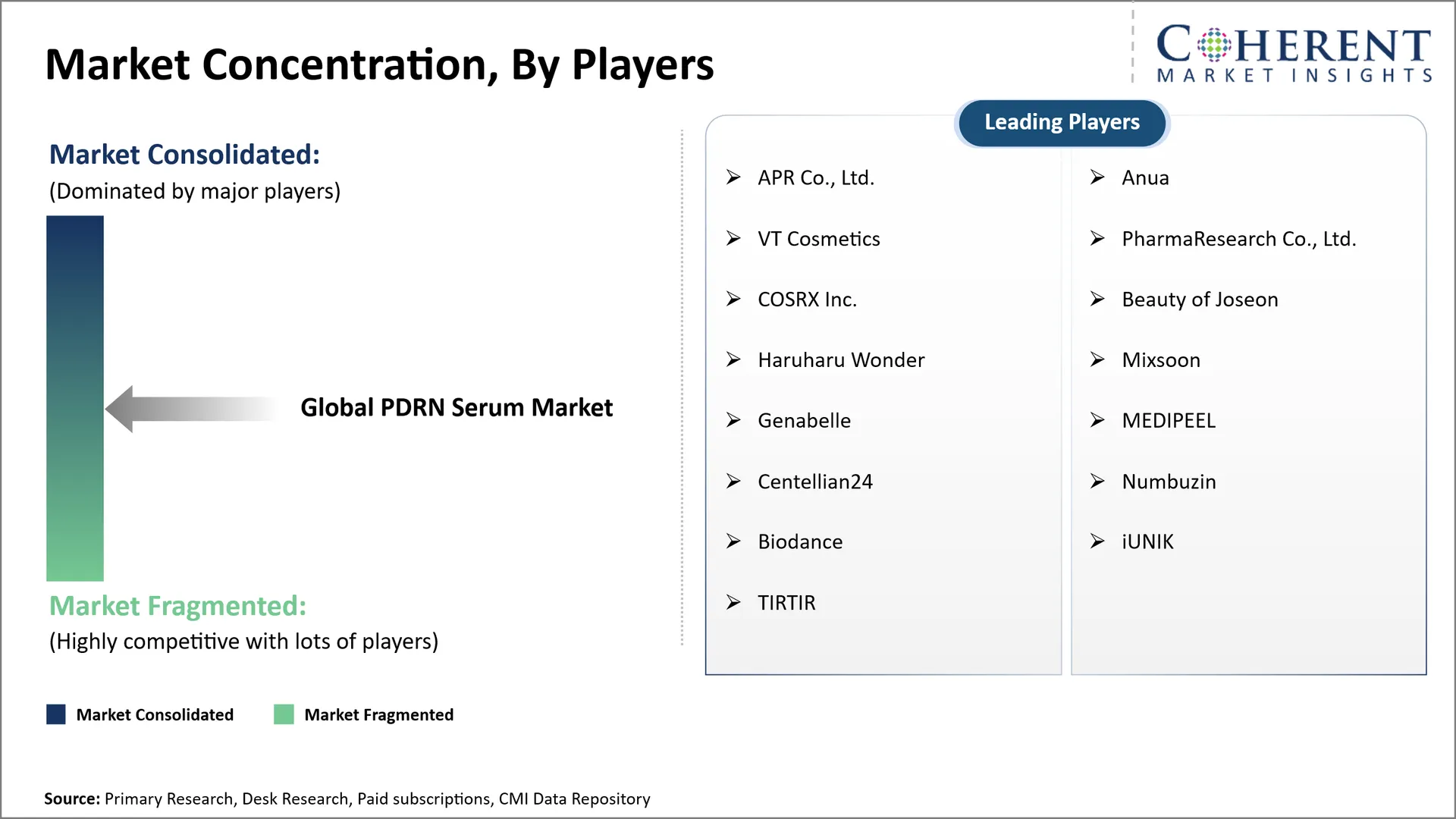
The global PDRN serum market seems to be fragmented and comprises Korean beauty specialists, dermatological skincare brands, ingredient suppliers and private-label manufacturers. The competition is largely based on product differentiation, formulation consistency, quality of raw materials and access to markets. Local manufacturers compete on the strength of local formulations and low pricing, whilst established companies have the advantage of their manufacturing capabilities, regulatory knowledge and large distribution networks.
Key focus areas include
- Raw Material Quality: Consistent purity of DNA and traceable sourcing.
- Product Performance: Documented cosmetic results and acceptable skin tolerance.
- Formulation Expertise: Compatibility between PDRN and complementary active ingredients.
- Pricing Strategies: Control of retail margins and manufacturing costs effectively.
- Manufacturing Reliability: consistent production quality & supplier availability.
- Regulatory Compliance: Documentation for the specific market and compliant cosmetic claims.
- Distribution Expansion: Fair Access to Online, Professional and Specialty Channels.
- Product Customization: Formulations that meet the special needs of different consumers.
Market Report Scope
PDRN Serum Market | |||
Report Coverage | Details | ||
Base Year | 2025 | Market Size in 2026: | USD 264.2 Mn |
Historical Data For: | 2020 to 2024 | Forecast Period: | 2026 to 2033 |
Forecast Period 2026 To 2033 CAGR: | 14.25% | 2033 Value Projection: | USD 671.3 Mn |
Geographies covered: |
| ||
Segments covered: |
| ||
Companies covered: | APR Co., Ltd., Anua, VT Cosmetics, PharmaResearch Co., Ltd., COSRX Inc., Beauty of Joseon, Haruharu Wonder, Mixsoon, Genabelle, MEDIPEEL, Centellian24, Numbuzin, Biodance, iUNIK, TIRTIR | ||
Growth Drivers: |
| ||
Restraints & Challenges: |
| ||
Analyst Opinion (Expert Opinion)
- Future Market Direction: The global PDRN serum market leadership is expected to shift from regular standalone product launches to structured portfolio management and better control over formulation economics. Manufacturers who can rapidly adapt serum textures, packaging configurations and production volumes to retailer needs may improve customer retention. Flexible manufacturing arrangements may be particularly valuable as product differentiation becomes more difficult to sustain.
- Transformative Trend or Disruption: Retailer-led product development may alter the power dynamics of the PDRN serum value chain. Specialty beauty chains and large distributors may increasingly commission their own exclusive formulations instead of relying entirely on independent brands. This would benefit contract manufacturers with strong development capabilities while putting pressure on smaller brands to build defensible intellectual property, customer loyalty and differentiated product experiences.
- Strategic priorities, risks and recommendations: Reliable ingredient specifications, stability testing and controlled formulation development should be the focus of market participants. Buy products that address particular concerns and have well-documented cosmetic claims. Organizations need to monitor the cost of raw materials, the risk of regulatory compliance, and the profit margins of distributors, and avoid over-investing in high-concentration formulations with unproven benefits. Long term supply contracts and selective manufacturing partnerships may enhance operational resilience.
Speak to the analyst
Want personalized insights?
Take the findings above to one of our principal consultants, or have the report rebuilt around the segments, geographies and competitors you actually track.
Market Segmentation
- Pdrn Source Insights (Revenue, USD Mn, 2021 - 2033)
- Salmon-Derived PDRN
- Trout-Derived PDRN
- Plant-Derived & Vegan PDRN Alternatives
- Synthetic & Biotechnology-Derived PDRN
- Product Form Insights (Revenue, USD Mn, 2021 - 2033)
- Conventional Liquid Serums
- Concentrated Ampoules
- Capsule & Dual-Phase Serums
- Formulation Type Insights (Revenue, USD Mn, 2021 - 2033)
- PDRN-Focused Serums
- PDRN with Hyaluronic Acid
- PDRN with Collagen & Peptides
- PDRN with Other Active Ingredients
- Application Insights (Revenue, USD Mn, 2021 - 2033)
- Anti-Aging & Skin Firming
- Skin Barrier Repair & Recovery
- Skin Hydration & Moisturization
- Skin Brightening & Even Tone
- Sensitive Skin Care
- Distribution Channel Insights (Revenue, USD Mn, 2021 - 2033)
- Dermatology Clinics & Aesthetic Centers
- Online Retail
- Specialty Beauty Stores
- Pharmacies & Drugstores
- Regional Insights (Revenue, USD Mn, 2021 - 2033)
- North America
- U.S.
- Canada
- Latin America
- Brazil
- Argentina
- Mexico
- Rest of Latin America
- Europe
- Germany
- U.K.
- Spain
- France
- Italy
- Russia
- Rest of Europe
- Asia Pacific
- China
- India
- Japan
- Australia
- South Korea
- ASEAN
- Rest of Asia Pacific
- Middle East
- GCC Countries
- Israel
- Rest of Middle East
- Africa
- South Africa
- North Africa
- Central Africa
- North America
- Key Players Insights
- APR Co., Ltd.
- Anua
- VT Cosmetics
- PharmaResearch Co., Ltd.
- COSRX Inc.
- Beauty of Joseon
- Haruharu Wonder
- Mixsoon
- Genabelle
- MEDIPEEL
- Centellian24
- Numbuzin
- Biodance
- iUNIK
- TIRTIR
Sources
Primary Research Interviews
- PDRN ingredient manufacturers and DNA extraction specialists
- Skincare brands, serum formulators, and contract manufacturers
- Dermatologists, aesthetic practitioners, and skincare specialists
- Beauty retailers, distributors, and e-commerce sellers
- Cosmetic R&D, quality testing, and regulatory experts
Stakeholders
- PDRN raw material and active ingredient suppliers
- Cosmetic serum manufacturers and private-label companies
- Dermatology clinics and aesthetic centers
- Specialty beauty retailers and online marketplaces
- Packaging, formulation, and cosmetic testing providers
End-use Sectors
- Personal Skincare: Daily anti-aging and hydration routines
- Dermatology Clinics: Professional skincare recommendations
- Aesthetic Centers: Post-procedure cosmetic skin care
- Premium Beauty: Specialized skin conditioning products
Product Applications
- Anti-aging and skin firming
- Skin barrier repair and recovery
- Skin hydration and moisturization
- Skin brightening and even tone
- Sensitive skin care
Regulatory and Industry Bodies
- U.S. Food and Drug Administration (FDA)
- European Commission and Scientific Committee on Consumer Safety (SCCS)
- South Korea Ministry of Food and Drug Safety (MFDS)
- China National Medical Products Administration (NMPA)
- Japan Ministry of Health, Labour and Welfare (MHLW)
- U.K. Office for Product Safety and Standards (OPSS)
Databases
- PubMed and ClinicalTrials.gov – PDRN Research
- UN Comtrade and ITC Trade Map – Cosmetic Product Trade
- Eurostat – Cosmetics Trade Statistics
- Google Trends – PDRN Serum Consumer Searches
- Company Annual Reports and Investor Presentations
- E-commerce Product Listings and Retail Pricing Databases
Magazines and Journals
- Journal of Cosmetic Dermatology
- International Journal of Cosmetic Science
- Skin Research and Technology
- Cosmetics
- Dermatologic Therapy
Associations
- Personal Care Products Council (PCPC)
- Cosmetics Europe
- Korea Cosmetic Association (KCA)
- Japan Cosmetic Industry Association (JCIA)
- International Cooperation on Cosmetics Regulation (ICCR)
Public Domain Sources
- PDRN serum product catalogs and ingredient specifications
- Salmon-derived and alternative DNA ingredient disclosures
- Cosmetic formulation patents and clinical studies
- Product safety, stability, and efficacy assessments
- Official product launches and distribution announcements
- Company financial reports and manufacturing disclosures
- Retail pricing, consumer reviews, and purchasing trends
Key Standards and Regulations
- EU Regulation (EC) No. 1223/2009 – Cosmetic Products
- EU Regulation 2023/1545 – Fragrance Allergen Labeling
- U.S. Modernization of Cosmetics Regulation Act (MoCRA), 2022
- South Korea Cosmetics Act – Cosmetic Safety and Labeling
- China Cosmetics Supervision and Administration Regulation (CSAR)
- ISO 22716 – Cosmetics Good Manufacturing Practices
- ASEAN Cosmetic Directive – Cosmetic Safety and Market Requirements
Proprietary Elements
- CMI Data Analytics Tool and proprietary research repository, supported by primary research, PDRN ingredient sourcing assessment, serum formulation benchmarking, product pricing analysis, consumer purchasing behavior, dermatology and aesthetic center demand assessment, distribution-channel evaluation, regional and country-level market sizing, cosmetic trade analysis, regulatory compliance assessment, manufacturer profiling, product launch tracking, and competitive intelligence.
Get access to 250+ pages report
Every segment, forecast, competitor profile and data table behind the analysis above — available for instant download.
- ESOMAR Member
- ISO 9001:2015 Certified
- D-U-N-S Registered
- GDPR & CCPA Compliant
Frequently Asked Questions
The CAGR of the global PDRN serum market is projected to be 14.25% from 2026 to 2033.
The global PDRN serum market is estimated to be valued at USD 264.2 million in 2026 and is expected to reach USD 671.3 million by 2033.
Opportunities include clinically supported skincare formulations, animal-free ingredient development, premium product differentiation, and expansion through professional skincare partnerships.
The market is fragmented, with established skincare manufacturers, K-beauty brands, and emerging specialists competing on the basis of product quality, formulation innovation, pricing, and brand positioning.
Key challenges include cosmetic ingredient compliance, substantiation of skin-repair claims, product safety testing, labeling requirements, and differences in regulations across international markets.
Investors should evaluate raw material reliability, manufacturing capabilities, product differentiation, regulatory compliance, customer acquisition costs, and long-term profitability.
The major factors driving the growth of the global PDRN serum market are the rising demand for regenerative skincare and hydration-focused products, along with K-beauty innovations that encourage at-home PDRN serum adoption.