
Pharmacokinetics Services Market Size and Share Analysis - 2026 To 2033
The global pharmacokinetics services market is estimated to be valued at USD 2.18 Bn in 2026 and is projected to reach USD 3.74 Bn by 2033, exhibiting a CAGR of 8.0%. The primary drivers are largely defined by increasing pharmaceutical and biopharmaceutical R&D expenditure, rising demand for outsourced drug development services, growing clinical trial activities, and increasing adoption of advanced pharmacokinetic modeling and simulation techniques. According to the U.S. Food and Drug Administration (FDA), pharmacokinetic studies evaluate drug absorption, distribution, metabolism, and excretion (ADME), thereby supporting drug development, dosage optimization, and the assessment of drug safety and efficacy.
Key Takeaways of the Global Pharmacokinetics Services Market
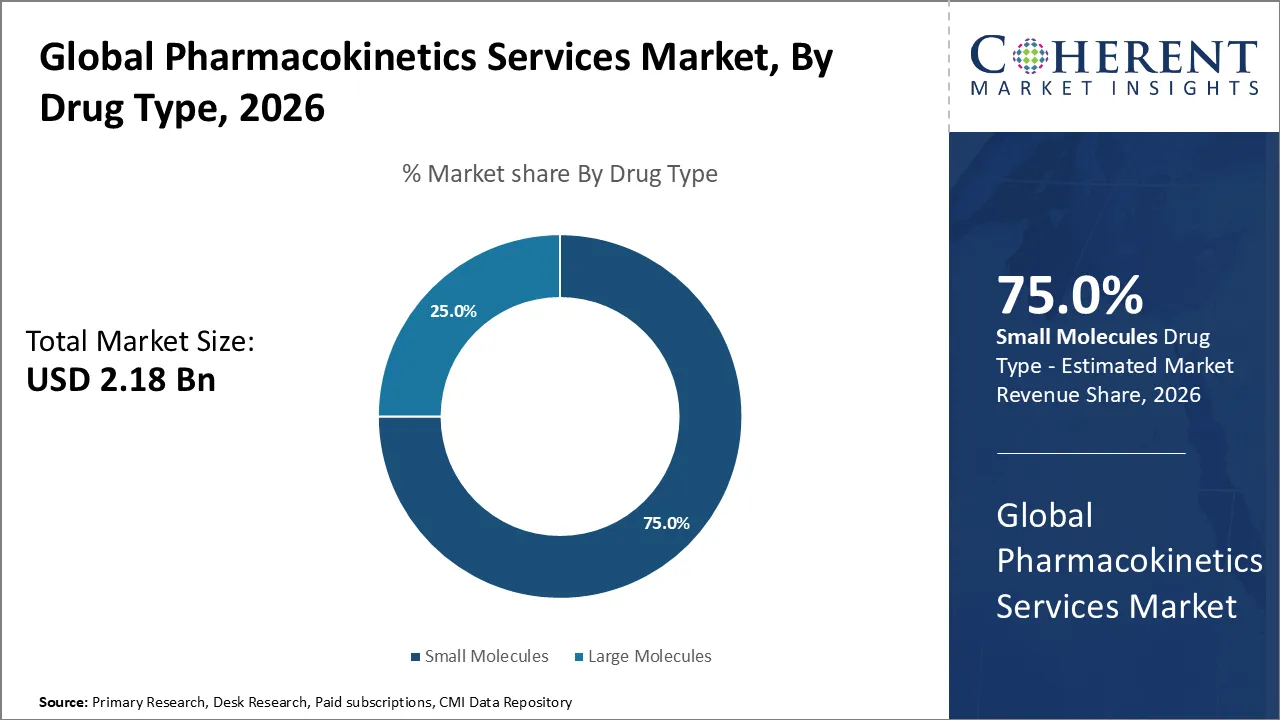
- The Small Molecules segment is expected to account for 75.0% of the global pharmacokinetics services market share in 2026. The segment’s growth is attributed to increasing demand for drug metabolism and bioavailability assessment, and ongoing development of small-molecule therapeutics. A scientific review published in the Journal of Enzyme Inhibition and Medicinal Chemistry in 2026 stated that out of the 46 drugs approved by the U.S. FDA in 2025, 31 were small-molecule drugs.
- The Preclinical ADME and Human Studies segment is projected to command 44.0% of the market share in 2026. The segment is anticipated to grow owing to increasing demand for drug absorption, metabolism, bioavailability and drug-food interaction assessments. In May 2026, the U.S. FDA issued a guidance document on the evaluation of the effects of food on investigational and new drugs. This guidance also emphasized the significance of clinical pharmacokinetic studies in drug development.
- The Oncology segment is projected to account for 32.0% of the market share by 2026. Rising incidence of cancer coupled with emergence of targeted anticancer therapeutics are driving the demand for pharmacokinetic studies and dose optimization services. The American Cancer Society estimates there will be nearly 21 million new cancer cases and 9.8 million cancer deaths worldwide in 2024.
- The Pharmaceutical & Biotechnology Companies segment is projected to account for 65.0% share of the market in 2026. The segment is driven by growing investment in innovative drug development and increasing outsourcing of specialized pharmacokinetic services. PhRMA’s 2025 Annual Membership Survey found that its member companies invested USD 104.3 Bn in pharmaceutical R&D in 2024, an 8.7% increase over the previous year.
- North America to account for the largest share, 37.0% of global pharmacokinetics services market in 2026 The presence of established pharmaceutical companies, advanced clinical research infrastructure, and increasing adoption of model-informed drug development are driving the regional market growth. According to the U.S. FDA’s 2025 New Drug Therapy Approvals report (published in 2026), approximately 70% (32 of 46) of new drugs approved in 2025 were approved in the U.S. before being approved in any other country.
- Asia Pacific is projected to hold 25.0% market share in 2026 and is anticipated to be the fastest-growing region in the forecast period. Factors such as increase in pharmaceutical R&D capabilities, rise in clinical trial activities, and rise in demand for cost-effective outsourced research services are boosting the growth of the regional market. On June 22, 2026, the China Drug Evaluation Center (CDE) announced that the number of clinical trial registrations in 2025 reached 5,215, a year-on-year increase of 6.4%.
Segmental Insights
Why Do Small Molecules Dominate the Global Pharmacokinetics Services Market?
The small molecules segment is expected to account for 75.0% of the global pharmacokinetics services market share in 2026. The increasing use of small molecule drugs to treat chronic and acute diseases is driving the demand for pharmacokinetic services. In small-molecule drug discovery, metabolic stability, membrane permeability, oral bioavailability and drug-drug interactions are all evaluated extensively. Pharmacokinetic studies help pharmaceutical companies determine optimal concentrations of drugs, dosing frequency and therapeutic exposure. Further, the growth of advanced generics, modified-release dosage forms and targeted oral therapies is driving the demand for specialized bioanalytical testing and pharmacokinetic modeling services.
According to a study published in the Journal of Medicinal Chemistry in November 2025 analyzed the dosing regimens, human pharmacokinetic profiles, and potential drug-drug interactions of 104 small molecule oral drugs that were approved by the U.S. FDA between 2020 and 2024.
- Current Industry Events of 2026
- Market Size Estimation
- Regional Breakdown
- Competitive Landscape
- Customer Intelligence
- Segmental Analysis
- Pricing Analysis
- Key Market Drivers, Challenges & Future Trends
- Customized Insights Section
Preclinical ADME and Human Studies Dominate the Global Pharmacokinetics Services Market
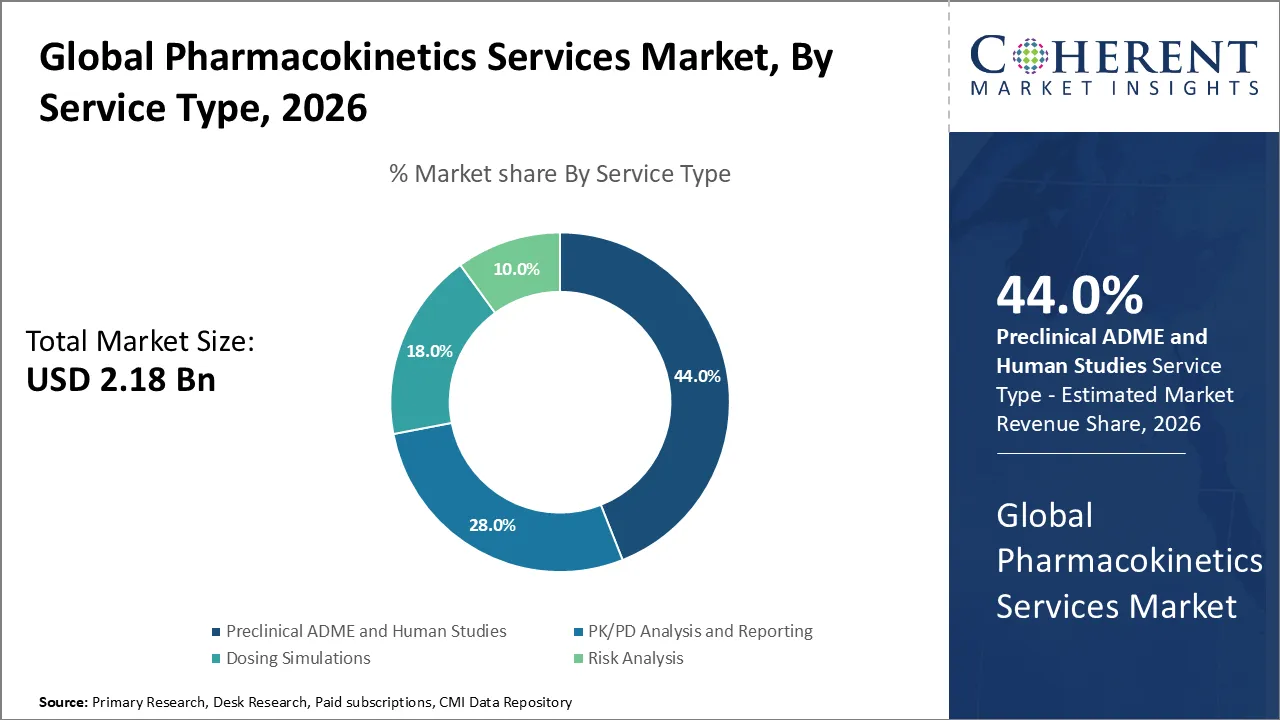
The preclinical ADME and human studies segment are estimated to capture 44.0% of the global pharmacokinetics services market share in 2026. The increasing concern on early stage drug safety evaluation and regulatory compliance has driven the demand of preclinical and clinical pharmacokinetic studies. Preclinical ADME studies are used to determine metabolic pathways, clearance mechanisms, tissue distribution and potential toxicity prior to human administration. Systemic exposure, bioavailability and the need for individual patient dosing can only be provided by human pharmacokinetic studies.
On May 28, 2026, the U.S. FDA published two final guidance documents on bioequivalence studies using pharmacokinetic endpoints and statistical approaches to determining bioequivalence. These guidelines enable harmonization of clinical study design and evaluation of pharmacokinetic data in generic drug development.
Why Does Oncology Dominate the Global Pharmacokinetics Services Market?
The oncology segment is estimated to capture 32.0% of the global pharmacokinetics services market share in 2026. The increasing development of precision oncology drugs, antibody-drug conjugates, kinase inhibitors and combination therapies is driving the need for enhanced pharmacokinetic services. Detailed exposure-response assessments should be performed in the development of oncology drugs to balance therapeutic efficacy and treatment-related toxicity. Pharmacokinetic modeling is used by investigators to evaluate drug accumulation, patient variability and optimal dosing regimens. The heightened focus on personalized cancer treatment and regulatory guidance to optimize dosages is also driving pharmaceutical companies to invest in specialized pharmacokinetic studies.
In 2026, the U.S. FDA Oncology Center of Excellence published its 2025 Annual Report, which detailed approvals for 70 oncology therapeutic products, including 17 new molecular entities or biological license applications. Ongoing innovation in oncology therapeutics supports demand for pharmacokinetic characterization and dose optimization services.
Pharmaceutical & Biotechnology Companies Dominate the Global Pharmacokinetics Services Market
The pharmaceutical & biotechnology companies segment is expected to account for 65.0% share of the global pharmacokinetics services market in 2026. Increasing pharmaceutical research spending, expanding therapeutic pipelines and increasing demand for specialized scientific expertise are driving growth of the segment. Pharmaceutical and biotechnology companies use pharmacokinetic services during drug discovery, pre-clinical development, clinical trials and regulatory submissions. Outsourcing allows companies to tap into cutting edge analytical instruments, computational modeling platforms and expert clinical pharmacologists while keeping their infrastructure to a minimum.
On January 29, 2026, Roche reported its financial results for 2025, stating that R&D spending on pharmaceuticals amounted to CHF 10.4 billion and that its development pipeline included 66 new molecular entities and 107 projects. Such extensive pharmaceutical development activities support demand for specialized pharmacokinetic and drug characterization services.
Current Events and Their Impact on the Pharmacokinetics Services Market (regulatory shifts, government policies)
Current Event | Description and its Impact |
U.S. FDA and EMA Implement Harmonized Guidelines for Model-Informed Drug Development (2026) |
|
U.S. FDA Advances Government Roadmap to Reduce Animal Testing in Drug Development (2026) |
|
Pharmacokinetics Services Market Dynamics
Market Drivers
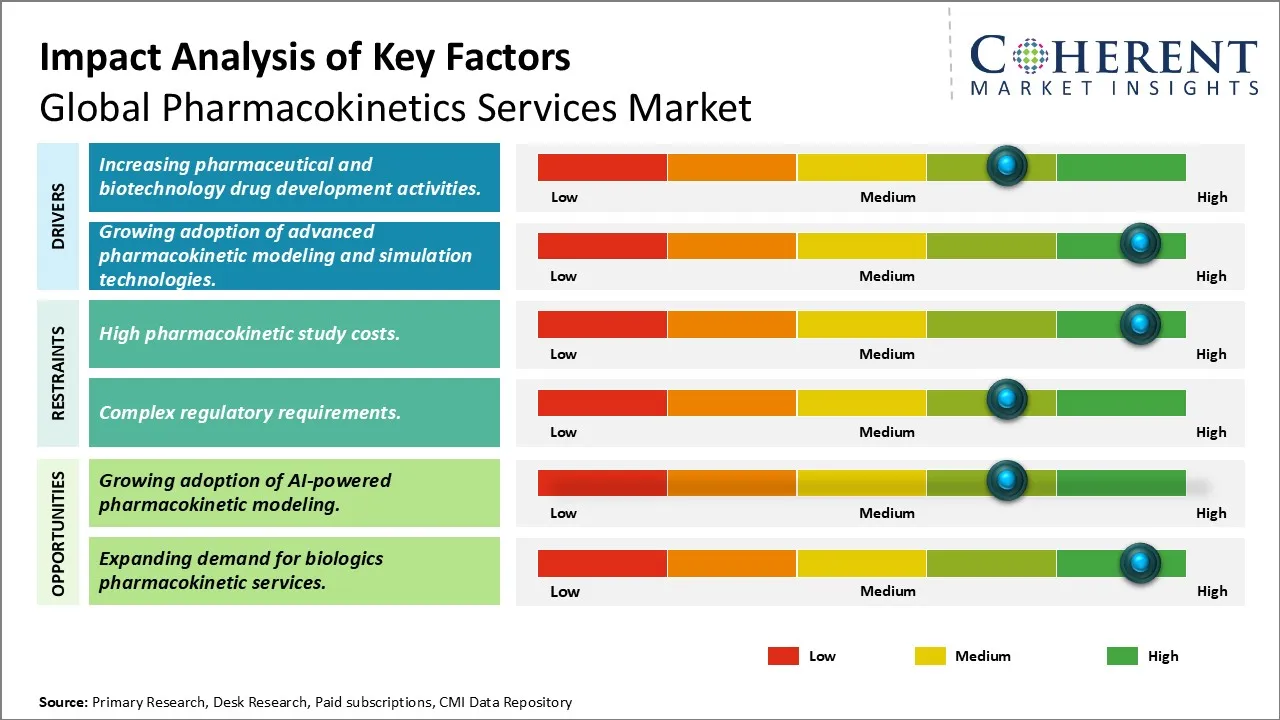
- Rising pharmaceutical and biotechnology drug development activities: Growing development of novel pharmaceutical and biological therapeutics is driving the growth of the global pharmacokinetics services market. During drug development, drug developers need to conduct thorough pharmacokinetic assessments to evaluate drug absorption, distribution, metabolism, excretion and systemic exposure. The increasing complexity of therapeutic candidates such as targeted small molecules, monoclonal antibodies and antibody-drug conjugates is driving the need for specialized bioanalytical and pharmacokinetic services. Increasingly, pharmaceutical companies are outsourcing these activities to benefit from advanced analytical technologies, to reduce development costs and to speed up regulatory submissions.
- According to the Association of the British Pharmaceutical Industry (ABPI) Annual Clinical Trials Report 2026 stated that in 2025, China had initiated 2,948 industry-sponsored clinical trials in one country, of which 1,968 were Phase I, 625 Phase II and 355 Phase III. The many early stage clinical trials are driving demand for drug exposure assessments, pharmacokinetic profiling and dose determination services.
- Increasing adoption of advanced technologies for pharmacokinetic modeling and simulation: Growing adoption of computational modeling and simulation technologies is driving growth of the global pharmacokinetics services market. Physiologically based pharmacokinetic (PBPK) modeling, population pharmacokinetics and pharmacokinetics/pharmacodynamics (PK/PD) analysis are increasingly being applied by pharmaceutical companies to predict drug behavior and optimize therapeutic dosing. They allow investigators to evaluate potential drug-drug interactions, assess exposure variability in patient populations, and optimize clinical trial designs. Advanced modeling approaches also help to cut down unnecessary clinical studies, reduce development risk, and improve the efficiency of regulatory submissions.
- A November 2025 study in Pharmaceutics reported that 65 of the 245 new drugs approved by the U.S. FDA between 2020 and 2024 had PBPK model as significant supporting evidence. The drug–drug interaction evaluation represented 81.9% of the PBPK application reported, followed by recommendations for dose in patients with organ impairment (7.0%) and predictions of pediatric dose (2.6%).
Pharmacokinetics Services Market Trends
- The growing adoption of remote sample collection in clinical pharmacology studies is enhancing patient convenience and flexibility of clinical research. We published the feasibility of at-home blood microsampling for centanafadine concentrations in two conventional Phase I trials and one exploratory pharmacokinetic trial in January 2026 in Clinical and Translational Science.
- Pharmacokinetic evaluations in vulnerable patient populations are improving with increasing use of limited-sampling strategies and Bayesian estimation techniques. In a 2025 study in critically ill children, single sample Bayesian estimation of vancomycin exposure resulted in a mean estimation bias of 0.4% and mean imprecision of 4.6% demonstrating the potential of optimized pharmacokinetic sampling strategies.
- Increasing standardization of bioanalytical methods for complex biological therapeutics is fostering collaboration among pharmaceutical companies, CROs and regulatory authorities. In 2026, the American Association of Pharmaceutical Scientists (AAPS) ADC Working Group, which includes more than 100 members from industry, CROs, and regulatory agencies, published an updated set of recommendations for antibody-drug conjugate bioanalysis.
Regional Insights
Why is North America a Strong Market for Pharmacokinetics Services?
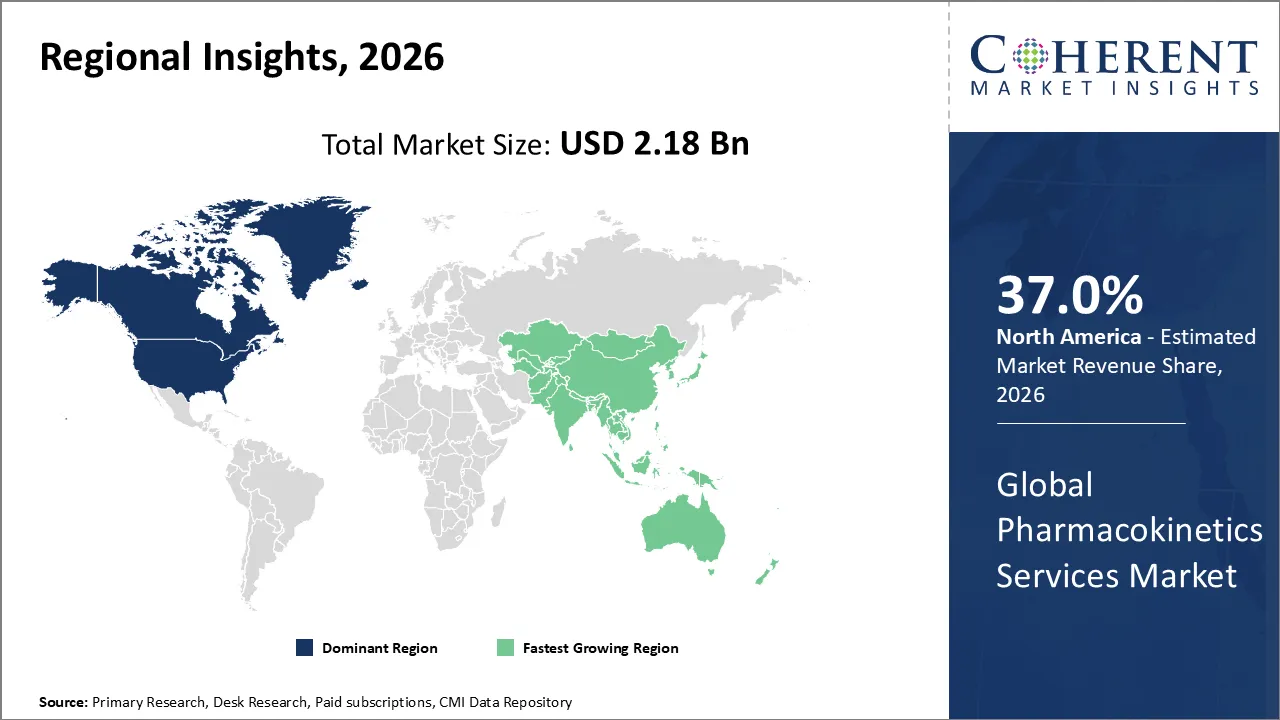
North America is expected to dominate the global pharmacokinetics services market with a market share of 37.0% in 2026. The region’s strong pharmaceutical and biotechnology industry, sophisticated clinical research infrastructure and deep investment in drug development are helping to spur demand for pharmacokinetic services. In the US, pharmaceutical companies are turning more to specialized contract research organizations to carry out preclinical ADME studies, bioanalytical testing and clinical pharmacokinetic assessments. In Canada, there is growing demand for clinical pharmacology services, bolstered by the country’s established life sciences ecosystem and academic research infrastructure. Furthermore, the adoption of advanced pharmacokinetic modeling technologies is being driven by strict regulatory requirements related to drug safety, bioavailability and exposure–response assessments. Moreover, the presence of specialized service providers and experienced clinical pharmacologists further strengthen the region’s market position.
According to the Association of the British Pharmaceutical Industry’s (ABPI) Annual Clinical Trials Report 2026, the United States led the world in Phase I, Phase II and Phase III multinational industry-sponsored clinical trial initiations in 2025. This strong clinical research ecosystem supports sustained demand for pharmacokinetic profiling, drug exposure assessments, and clinical pharmacology services.
Why Does the Asia Pacific Pharmacokinetics Services Market Exhibit High Growth?
Asia Pacific is expected to register the fastest growth during the forecast period and account for 25.0% of the global pharmacokinetics services market in 2026. The growth of pharmaceutical manufacturing capabilities, rising clinical trial activities, and increasing demand for cost-effective outsourced drug development services are driving growth in the regional market. China is enhancing its innovative drug development ecosystem, while India’s matured generic pharmaceutical industry is increasing the demand for bioavailability and bioequivalence studies. Investment in advanced biological therapeutics and clinical pharmacology research is increasing in Japan and South Korea. In addition, supportive government policies, growing bioanalytical laboratory infrastructure, and availability of skilled scientific professionals are attracting international pharmaceutical companies to outsource pharmacokinetic studies to regional service providers.
According to the ABPI Annual Clinical Trials Report 2026, China experienced 757 Phase II clinical trial initiations in 2025, surpassing the U.S. with 684 initiations. Australia also rose to 4th in the world with 216 Phase II clinical trial starts. Such developments reflect the growing clinical research capabilities of the region and the increasing potential for pharmacokinetic services.
Global Pharmacokinetics Services Market Outlook for Key Countries
Why is the U.S. Emerging as a Major Hub in the Pharmacokinetics Services Market?
The U.S. pharmacokinetics services market is driven by the well-established pharmaceutical and biotechnology industry, advanced clinical pharmacology infrastructure, and extensive drug development activities. Pharmaceutical companies are increasingly relying on pharmacokinetic services to evaluate drug exposure, metabolic pathways, drug-drug interactions and therapeutic dosing. Regulatory requirements for investigational new drug applications and new drug applications promote extensive pharmacokinetic characterization during clinical development. Increasing development of complex biological therapeutics and precision medicines is driving demand for specialized bioanalytical testing and exposure-response assessments.
According to the U.S. FDA’s Office of Clinical Pharmacology 2025 Annual Report, released in 2026, stated that the office completed more than 6,600 investigational new drug (IND) reviews in 2025. This high level of activity in regulatory review emphasizes the significance of clinical pharmacology, generation of pharmacokinetic data, and scientific assessment in the U.S. pharmaceutical development ecosystem.
Is China the Next Growth Engine for the Pharmacokinetics Services Market?
China's pharmacokinetics services market is being fueled by the rise of domestic pharmaceutical innovation, the increasing development of novel biological therapeutics and growing government support for drug research. Chinese pharmaceutical companies are ramping up their international licensing activities and developing new therapeutic candidates for commercialization in the global market. These activities are driving demand for preclinical ADME studies, bioavailability assessments, pharmacokinetic modeling and regulatory compliant bioanalytical services. By 2030, China will speed up the approval of innovative drugs and improve the protection of pharmaceutical research, the State Council Information Office said on September 21, 2026. China granted approval to a record 76 innovative drugs in 2025.
Germany Pharmacokinetics Services Market Analysis and Trends
The German pharmacokinetics services market is fueled by the robust pharmaceutical manufacturing sector, advanced biomedical research facilities, and growing biological drug development activities. To characterize therapeutic exposure, clearance mechanisms, and dose-dependent responses, pharmaceutical companies need specialized pharmacokinetic assessments. Germany’s research infrastructure and participation in multinational clinical trials benefit the contract research organizations providing clinical pharmacology and bioanalytical services. In 2025, the Paul-Ehrlich-Institut received 392 new applications for the approval of clinical trials, including 60 applications for trials conducted exclusively in Germany, as of 6 March 2026, according to the Paul-Ehrlich-Institute.
U.K. Pharmacokinetics Services Market Analysis and Trends
The U.K. pharmacokinetics services market is backed by a well-established life sciences research ecosystem, specialized clinical pharmacology centers, and government initiatives to improve the efficiency of clinical trials. The country’s updated clinical trial regulations came into effect on April 28, 2026, introducing reforms to ease regulatory processes and speed up clinical research. The Medicines and Healthcare products Regulatory Agency (MHRA) also approved 921 medicinal products in financial year 2025-2026, of which 39 were new medicines. The expanding clinical research ecosystem and enhanced regulatory efficiency are expected to drive the demand for first-in-human pharmacokinetic studies, drug exposure analysis, bioequivalence testing and specialized dose optimization services.
Japan Pharmacokinetics Services Market Analysis and Trends
Japan's pharmacokinetics services market is supported by its research-intensive pharmaceutical industry, advanced drug development capabilities, and focus on assessing drug safety and therapeutic efficacy. Pharmaceutical companies are using specialized pharmacokinetic services to understand how drug exposure varies, how metabolism changes with age, and how much of a drug a given population may require. The growing population of elderly people in the country also drives the development of therapeutics that need to be pharmacokinetically evaluated in elderly patients and in people with impaired organ function. Initial drug clinical trial notifications rose to 221 in FY 2025 from 192 in FY 2024, an increase of about 15.1% year-on-year, the Pharmaceuticals and Medical Devices Agency (PMDA) of Japan said. The increase will support opportunities for early stage pharmacokinetic assessments, clinical bioanalysis and drug metabolism research services.
How is the Adoption of AI-Powered Drug Metabolism Prediction Creating New Growth Opportunities in the Pharmacokinetics Services Market?
Growing use of artificial intelligence (AI) in prediction of drug metabolism and pharmacokinetics is creating growth opportunities in the global pharmacokinetics services market. Pharmaceutical and biotechnology companies are increasingly using machine learning algorithms to predict drug absorption, metabolic stability, clearance, bioavailability and potential drug-drug interactions in early-stage drug development. These technologies allow researchers to identify promising drug candidates, optimize the molecular frameworks, and reduce the need for large-scale experimental screening. AI integration with experimental ADME data can improve candidate selection and accelerate clinical development.
For instance, on May 26, 2026, Ginkgo Bioworks, in partnership with Tangible Scientific and Inductive Bio, launched ADME-One, an integrated platform that combines high-throughput ADME testing, AI-enabled human pharmacokinetic predictions, and automated compound management. The platform allows drug developers to make better decisions on candidate selection earlier in the discovery process, with automated workflows providing results in days instead of weeks, the companies.
Market Players, Key Development, and Competitive Intelligence
Key Developments
- On November 9, 2026, Charles River Laboratories International, Inc. announced its intention to acquire Frontage’s bioanalysis and drug metabolism and pharmacokinetics (DMPK) businesses. The acquisition is intended to enhance its clinical bioanalysis, biomarker testing and pharmacokinetic assessment capabilities for small molecule and large molecule therapeutics, expanding its service offerings in preclinical and clinical development.
- On October 19, 2026, Fortrea (formerly part of Labcorp Drug Development/Covance) announced the completion of its acquisition of Worldwide Clinical Trials' Early Phase Services division. The acquisition added a 60,000-square-foot bioanalytical laboratory and a 200-bed clinical pharmacology unit in Texas, U.S., strengthening its early-stage clinical research and pharmacokinetic assessment capabilities.
Competitive Landscape
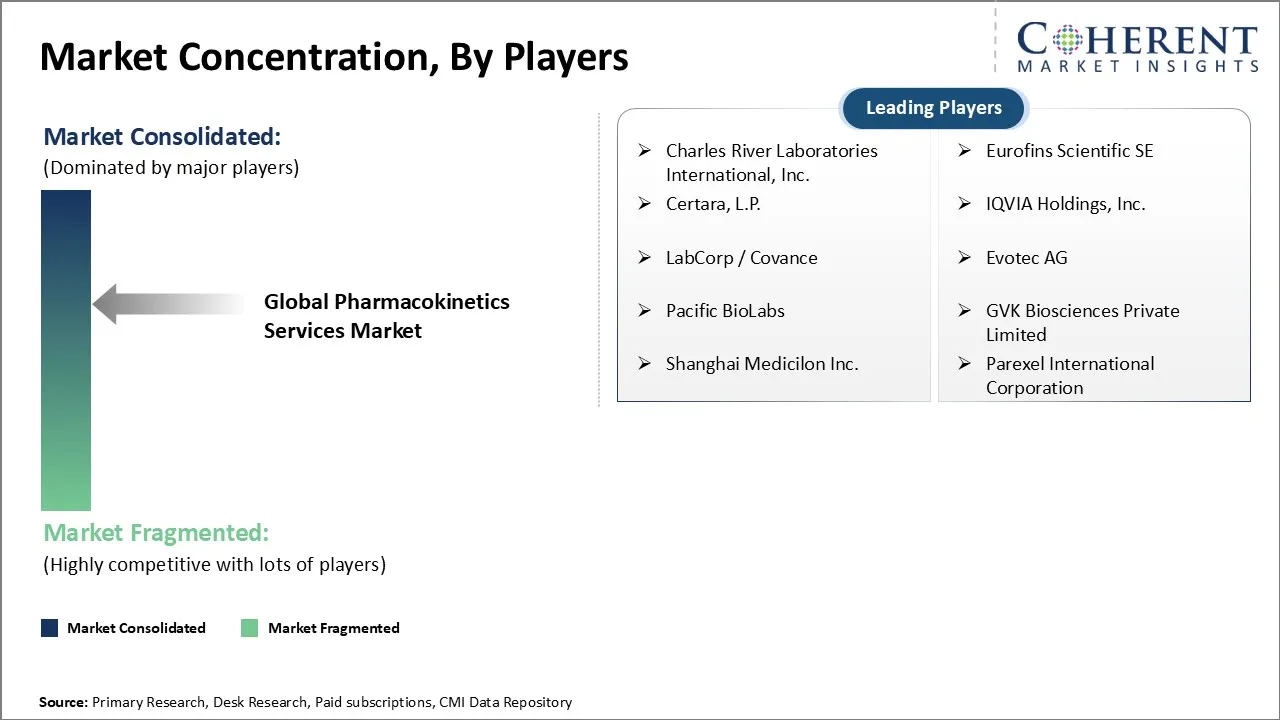
The global pharmacokinetics services market is characterized by established CROs and specialized bioanalytical service providers competing on technological innovation and regulatory expertise. Charles River Laboratories and Eurofins Scientific are specialists in ADME testing, bioanalysis and drug characterization services. Certara is focused on advanced pharmacokinetic modeling and biosimulation, while IQVIA and Parexel are leveraging their global clinical research capabilities. Evotec, Aragen Life Sciences and Shanghai Medicilon focus on integrated drug discovery and DMPK services. Analytical accuracy, AI-enabled forecasting, regulatory compliance and faster study turnaround times are increasingly important differentiators in the competition.
Top Manufacturers and Notable Products/Solutions in the Pharmacokinetics Services Market
Company/Manufacturer | Notable Product/Brand | Key Features |
Charles River Laboratories International, Inc. | Drug Metabolism and Pharmacokinetics (DMPK) Services | In vitro ADME testing, in vivo pharmacokinetic studies, metabolic profiling, drug-drug interaction assessment, bioanalytical testing |
Eurofins Scientific SE | Bioanalytical and Clinical Pharmacology Services | LC-MS/MS bioanalysis, pharmacokinetic profiling, bioavailability and bioequivalence studies, immunogenicity testing, biomarker analysis |
Certara, Inc. | Simcyp Simulator | Physiologically based pharmacokinetic (PBPK) modeling, drug-drug interaction prediction, dosing simulations, virtual clinical trials, population-specific drug exposure assessment |
Evotec SE | ADME-Tox and DMPK Services | Metabolic stability testing, permeability assessment, drug transporter studies, pharmacokinetic profiling, metabolite identification |
Market Report Scope
Pharmacokinetics Services Market Report Coverage
Report Coverage | Details | ||
Base Year: | 2025 | Market Size in 2026: | USD 2.18 Bn |
Historical Data for: | 2020 to 2024 | Forecast Period: | 2026 to 2033 |
CAGR: | 8.0% | 2033 Value Projection: | USD 3.74 Bn |
Geographies covered: |
| ||
Segments covered: |
| ||
Companies covered: | Charles River Laboratories International, Inc., Eurofins Scientific SE, Certara, L.P., IQVIA Holdings, Inc., LabCorp / Covance, Evotec AG, Pacific BioLabs, GVK Biosciences Private Limited, Shanghai Medicilon Inc., and Parexel International Corporation. | ||
Growth Drivers: |
| ||
Restraints & Challenges: |
| ||
Analyst Opinion (Expert Opinion)
- The global pharmacokinetics services market will be increasingly driven by integrated experimental and computational drug development solutions rather than by traditional standalone testing services in the future. Pharmaceutical companies will be able to predict drug exposure, optimize dosing regimens and identify potential drug-drug interactions earlier in development with the help of artificial intelligence, advanced bioanalytical technologies and physiologically based pharmacokinetic (PBPK) modeling. Between 2016 and 2023, the Center for Drug Evaluation and Research (CDER) has received more than 500 regulatory submissions that included AI components, according to the U.S. FDA’s 2026 update on artificial intelligence in drug development. This indicates the increasing role of computational technologies in drug development.
- The greatest growth opportunities are anticipated to be in specialized pharmacokinetic services for complex biologics, antibody-drug conjugates, oligonucleotide therapeutics and personalized medications. The U.S. has abundant opportunities via its strong pharmaceutical innovation ecosystem and Germany and the U.K. offer opportunities in advanced clinical pharmacology and biological drug development. The demand for outsourced ADME and bioequivalence studies and increased pharmaceutical research activities are likely to benefit China and India. Service providers should also emphasize therapeutic modality-specific analytical platforms, integrated preclinical and clinical research capabilities, and scalable outsourcing solutions.
- Market participants must differentiate themselves by demonstrating improved analytical accuracy, faster study turnaround times, greater predictive model reliability and better regulatory compliance. Investments in automated laboratory workflows, high-sensitivity LC-MS/MS platforms and validated pharmacokinetic modeling tools can improve operational efficiency. Companies should also focus on data integrity, method reproducibility and transparent model validation. In January 2025, the U.S. FDA issued draft guidance outlining recommendations for establishing the credibility of AI models used to support regulatory decision-making for pharmaceutical and biological products.
Speak to the analyst
Want personalized insights?
Take the findings above to one of our principal consultants, or have the report rebuilt around the segments, geographies and competitors you actually track.
Market Segmentation
- By Drug Type (Revenue, USD Bn, 2021-2033)
- Small Molecules
- Large Molecules (Biopharmaceuticals)
- By Service Type (Revenue, USD Bn, 2021-2033)
- Preclinical ADME and Human Studies
- PK/PD Analysis and Reporting
- Dosing Simulations
- Risk Analysis
- By Therapeutic Application (Revenue, USD Bn, 2021-2033)
- Oncology
- Cardiovascular Diseases
- Infectious Diseases
- Autoimmune Diseases
- Respiratory Disorders
- Neurological Disorders
- Others
- By End User (Revenue, USD Bn, 2021-2033)
- Pharmaceutical & Biotechnology Companies
- Contract Research Organizations (CROs)
- Academic & Government Research Institutes
- Global Pharmacokinetics Services Market, By Region (Revenue, USD Bn, 2021-2033)
- North America
- U.S.
- Canada
- Latin America
- Brazil
- Mexico
- Argentina
- Rest of Latin America
- Europe
- Germany
- U.K.
- France
- Italy
- Spain
- Russia
- Rest of Europe
- Asia Pacific
- China
- India
- Japan
- Australia
- South Korea
- ASEAN
- Rest of Asia Pacific
- Middle East
- GCC
- Israel
- Rest of Middle East
- Africa
- South Africa
- Central Africa
- North Africa
- North America
- Key Players
- Charles River Laboratories International, Inc.
- Eurofins Scientific SE
- Certara, L.P.
- IQVIA Holdings, Inc.
- LabCorp / Covance
- Evotec AG
- Pacific BioLabs
- GVK Biosciences Private Limited
- Shanghai Medicilon Inc.
- Parexel International Corporation
Sources
Primary Research Interviews
- Clinical pharmacologists and pharmacokinetic scientists
- Drug metabolism and pharmacokinetics (DMPK) specialists
- Bioanalytical laboratory directors and researchers
- R&D heads from pharmaceutical and biotechnology companies
- Contract research organization (CRO) executives
- Pharmacometricians and computational modeling experts
- Regulatory affairs professionals
- Key opinion leaders (KOLs) in clinical pharmacology and drug development
Databases
- ClinicalTrials.gov
- PubMed – National Library of Medicine (NLM)
- Drugs@FDA Database
- WHO International Clinical Trials Registry Platform (ICTRP)
- European Union Clinical Trials Information System (CTIS)
- Clinical Trials Registry – India (CTRI)
- Pharmaceutical Research and Manufacturers of America (PhRMA) Research Database
- Securities and Exchange Commission (SEC) EDGAR Database
Magazines
- Pharmaceutical Technology
- Drug Discovery World
- BioPharm International
- European Pharmaceutical Review
- Genetic Engineering & Biotechnology News (GEN)
- Contract Pharma
- Applied Clinical Trials
Journals
- Journal of Pharmacokinetics and Pharmacodynamics
- Clinical Pharmacokinetics
- Clinical Pharmacology & Therapeutics
- Drug Metabolism and Disposition
- Journal of Pharmaceutical Sciences
- Clinical and Translational Science
- Journal of Medicinal Chemistry
- CPT: Pharmacometrics & Systems Pharmacology
- Pharmaceutics
- Bioanalysis
Newspapers
- The New York Times
- The Guardian
- The Wall Street Journal
- Financial Times
- The Economic Times
- Reuters
Associations
- American Society for Clinical Pharmacology and Therapeutics (ASCPT)
- American Association of Pharmaceutical Scientists (AAPS)
- International Society of Pharmacometrics (ISoP)
- American College of Clinical Pharmacology (ACCP)
- Pharmaceutical Research and Manufacturers of America (PhRMA)
- Association of the British Pharmaceutical Industry (ABPI)
- European Federation of Pharmaceutical Industries and Associations (EFPIA)
- Association of Clinical Research Organizations (ACRO)
- International Society for the Study of Xenobiotics (ISSX)
Public Domain Sources
- U.S. Food and Drug Administration (FDA)
- European Medicines Agency (EMA)
- World Health Organization (WHO)
- National Institutes of Health (NIH)
- Pharmaceuticals and Medical Devices Agency (PMDA), Japan
- Medicines and Healthcare products Regulatory Agency (MHRA), U.K.
- Central Drugs Standard Control Organization (CDSCO), India
- National Medical Products Administration (NMPA), China
- International Council for Harmonisation (ICH) Guidelines
- Company Annual Reports and Investor Presentations
- Government Pharmaceutical Research and Development Publications
- Publicly Available Clinical Trial Reports and Regulatory Assessment Documents
- University Research Publications on Clinical Pharmacology and Drug Metabolism
- Patent Databases such as WIPO, USPTO, and Google Patents
Proprietary Elements
- CMI Data Analytics Tool
- Proprietary CMI Existing Repository of Information for the Last 10 Years
Get access to 250+ pages report
Every segment, forecast, competitor profile and data table behind the analysis above — available for instant download.
- ESOMAR Member
- ISO 9001:2015 Certified
- D-U-N-S Registered
- GDPR & CCPA Compliant
Frequently Asked Questions
The global Pharmacokinetics Services Market is expected to reach USD 3.74 Bn in 2033, increasing from USD 2.18 Bn in 2026.
Major players operating in the global Pharmacokinetics Services Market include Charles River Laboratories International, Inc., Eurofins Scientific SE, Certara, L.P., IQVIA Holdings, Inc., LabCorp / Covance, Evotec AG, Pacific BioLabs, GVK Biosciences Private Limited, Shanghai Medicilon Inc., and Parexel International Corporation.
High pharmacokinetic study costs and complex regulatory requirements are the key factors hampering growth of the market.
Increasing pharmaceutical and biotechnology drug development activities and growing adoption of advanced pharmacokinetic modeling and simulation technologies are the key factors driving market growth.
The Pharmacokinetics Services Market is anticipated to grow at a CAGR of 8.0% between 2026 and 2033.
Among regions, North America is expected to account for the largest market share of 37.0% in the global Pharmacokinetics Services Market in 2026.
Asia Pacific is expected to emerge as the fastest-growing region during the forecast period, accounting for 25.0% of the global market share in 2026.