

Global Real World Evidence Market Size and Forecast – 2026 To 2033
The global real world evidence market is expected to grow from USD 4,625.8 Mn in 2026 to USD 10,420.7 Mn by 2033, registering a compound annual growth rate (CAGR) of 12.3% from 2026 to 2033. The market for global real world evidence is poised for significant expansion, fueled by the growing adoption of electronic health records and digital health infrastructure, which is increasing the availability of structured, longitudinal healthcare data for RWE generation.
According to the Organisation for Economic Co-operation and Development (OECD), the average availability of online digital health services across OECD countries reached 82% in 2024, up from 79% in 2023. This expanding digital data infrastructure is strengthening the foundation for outcomes research, clinical evaluation, and evidence-based healthcare decision-making
Key Takeaways of the Global Real World Evidence Market
- Data sets are projected to hold 42.6% of the global real world evidence market share in 2026, making it dominant component segment across North America due to its mature healthcare data infrastructure and established regulatory use of real-world data. In July 2024, the U.S. Food and Drug Administration (FDA) issued final guidance on assessing EHR and medical claims data for regulatory decision-making, providing specific considerations for their use in clinical studies supporting drug and biologic safety or effectiveness decisions.
- Electronic health records (EHRs) are projected to hold 27.8% of the global real world evidence market share in 2026, making it dominant data source segment across Europe supported by increasing regulatory emphasis on RWD quality. In March 2026, the European Medicines Agency (EMA) published its final Data Quality Framework chapter for RWD, establishing a standardized approach for assessing RWD quality in medicines evaluation and regulatory decision-making.
- Drug development and clinical trials are projected to hold 24.7% of the global real world evidence market share in 2026, making it dominant application segment with Asia Pacific gaining importance as regulators increasingly incorporate RWD/RWE into medical product development. In March 2026, Japan's Pharmaceuticals and Medical Devices Agency (PMDA) updated its RWD-related regulatory information, including revised considerations for ensuring the reliability of registry and medical information database data used in drug approval and re-examination applications.
- North America market maintains dominance with an expected share of 41.8% in 2026, bolstered by mature healthcare data infrastructure and increasing regulatory integration of RWE. For instance, Health Canada’s 2025–26 Departmental Plan specifically prioritizes the use of RWE in regulatory decisions, including pre-market drug decisions and post-market oversight, while also advancing international RWE guidance.
- Asia Pacific is expected to exhibit the fastest growth in the global real world evidence market, registering an estimated CAGR of 17.8% during 2026–2033, driven by expanding digital health infrastructure and regulatory adoption of RWE. For instance, in September 2026, Australia’s Therapeutic Goods Administration (TGA) updated its RWE guidance for medical devices, recognizing RWE as a potential source for both post-market surveillance and premarket safety and performance assessments.
Segmental Insights
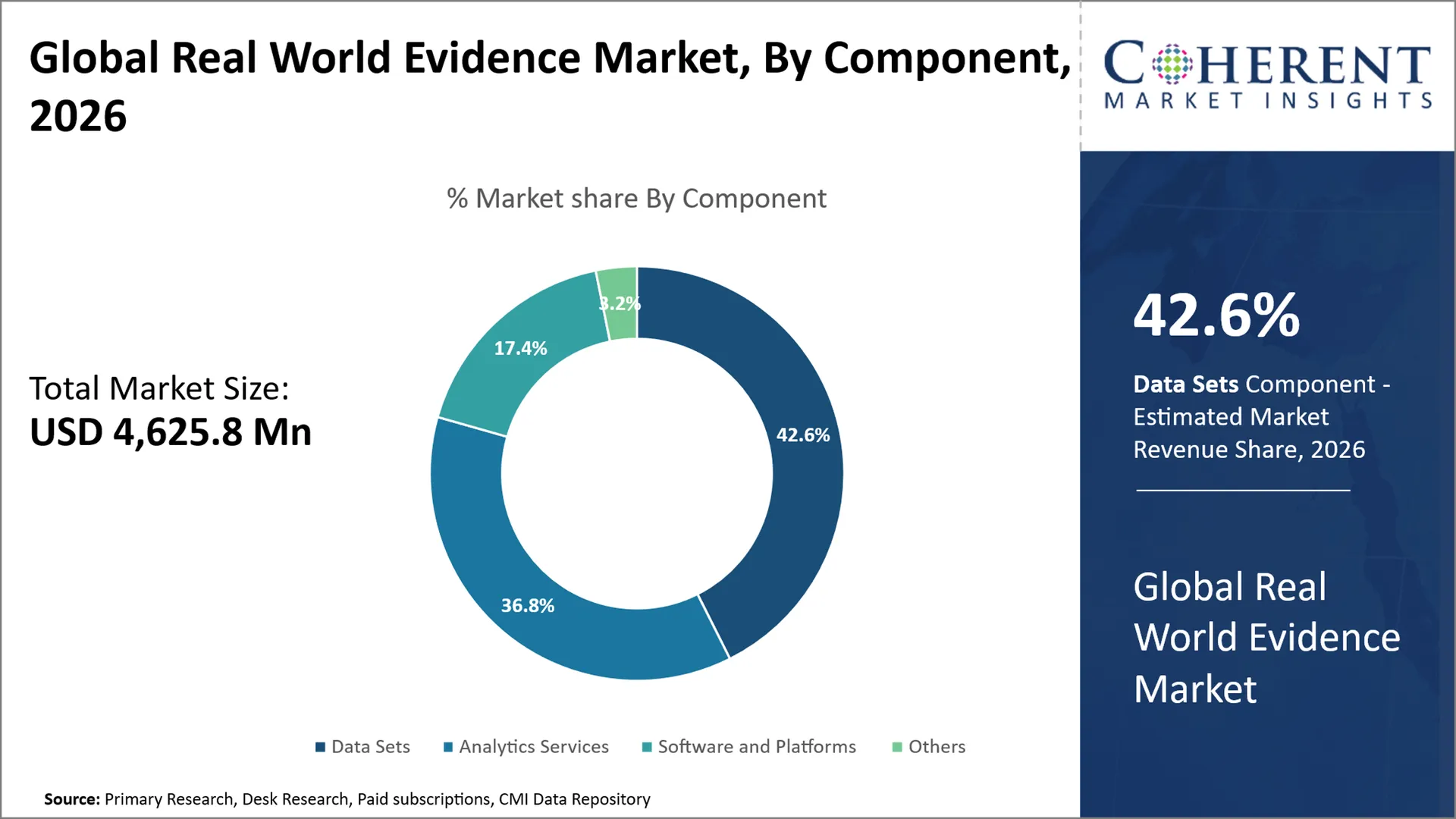
Why Do Data Sets Dominate the Global Real World Evidence Market?
Data sets are projected to hold the market share of 42.6% in 2026, attributed to the demand for diverse, longitudinal, and high-quality patient-level data. Growing regulatory emphasis on the quality and fitness-for-purpose of data is fueling the importance of EHRs, registries, administrative data, and other RWD sources. For instance, in July 2025, UK Medicines and Healthcare products Regulatory Agency (MHRA) published updated guidance on using RWD in clinical trials, including guidance on data quality and determining if the source RWD is good quality and fit for regulatory use. The guidance encompasses the EHRs, registries, administrative data, patient-reported outcomes and wearable-generated data.
- Current Industry Events of 2026
- Market Size Estimation
- Regional Breakdown
- Competitive Landscape
- Customer Intelligence
- Segmental Analysis
- Pricing Analysis
- Key Market Drivers, Challenges & Future Trends
- Customized Insights Section
Why Does Electronic Health Records (EHRs) Represent the Largest Data Source Segment in the Real World Evidence Market?
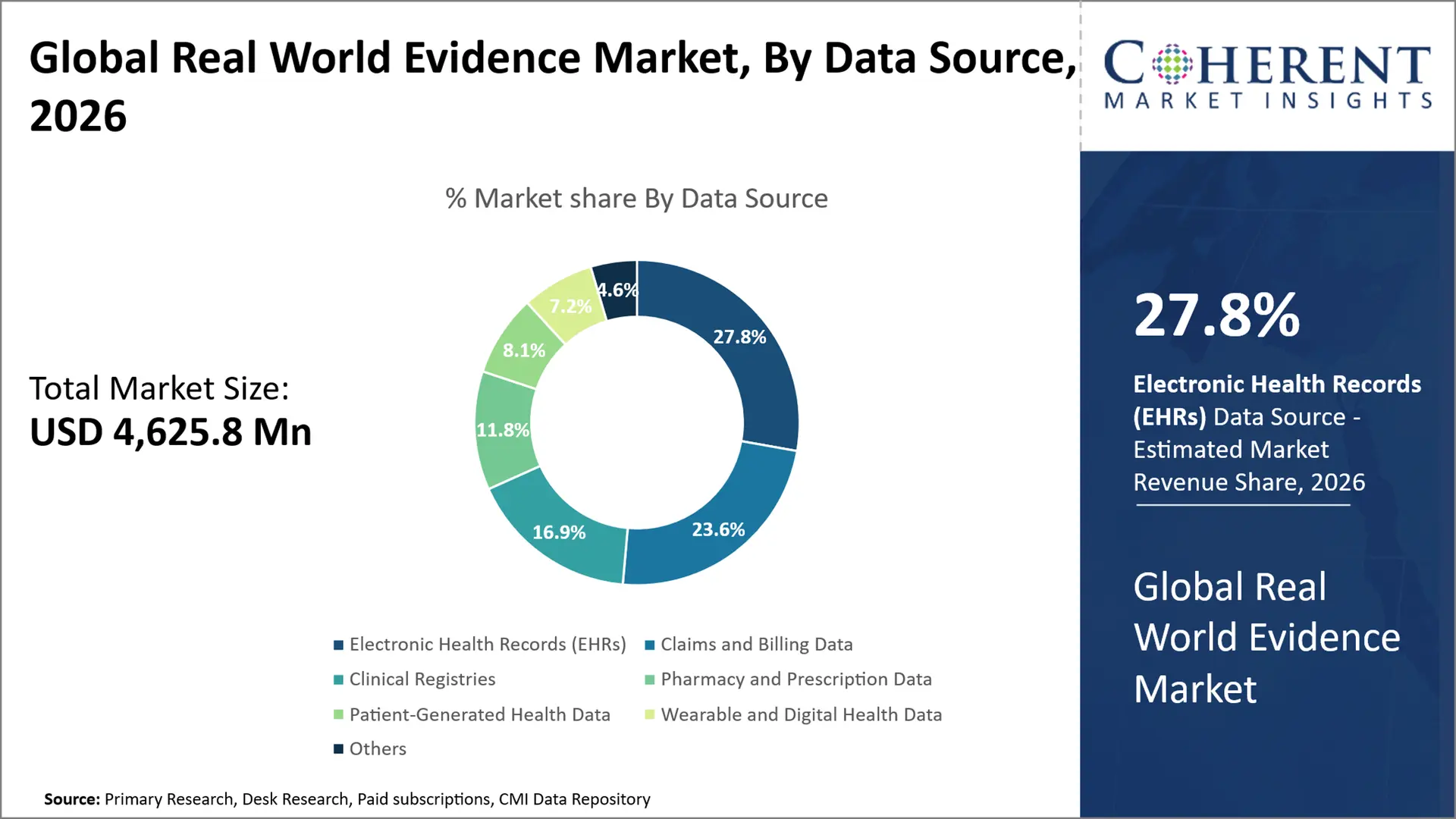
Electronic Health Records (EHRs) are projected to hold a market share of 27.8% in 2026, owing to the potential of offering long-term clinical details, treatment history, and patient results for evidence creation & outcomes research. The rising number of digital healthcare services is attributing to the growing availability and utilization of EHR data. For instance, in March 2025, NHS England reported that 92% of NHS trusts across England had adopted EPR systems with 40% having the most advanced EPR capabilities. The continuously expanding digital record architecture will generate a growing amount of structured clinical data for RWE generation and tracking of individual patients over time.
Drug Development and Clinical Trials Segment Dominates the Global Real World Evidence Market
The drug development and clinical trials segment is projected to hold a market share of 24.7% in 2026, owing to the rising integration of RWE in clinical trials to complement the existing evidence generated, and for the submissions to regulatory bodies. The use of RWE is on the rise in drug development to evaluate effectiveness, safety, and outcomes in more general populations. For instance, in FY2025, the U.S FDA reported 31 RWE-related protocols submitted to Center for Drug Evaluation and Research (CDER), up from 11 in FY2024, and 10 NDA/BLA submissions with RWE. This reflects the expanding integration of RWE into drug-development and regulatory evidence generation.
Current Events and their Impact
Current Events | Description and its Impact |
European Medicines Agency (EMA) Reported Expansion of Regulatory RWE Studies (June 2026) |
|
U.S. FDA Issued ICH M14 Guideline for RWD Studies (March 2026) |
|
European Medicines Agency (EMA) Finalized Real-World Data Quality Framework (March 2026) |
|
Real World Evidence Market Dynamics
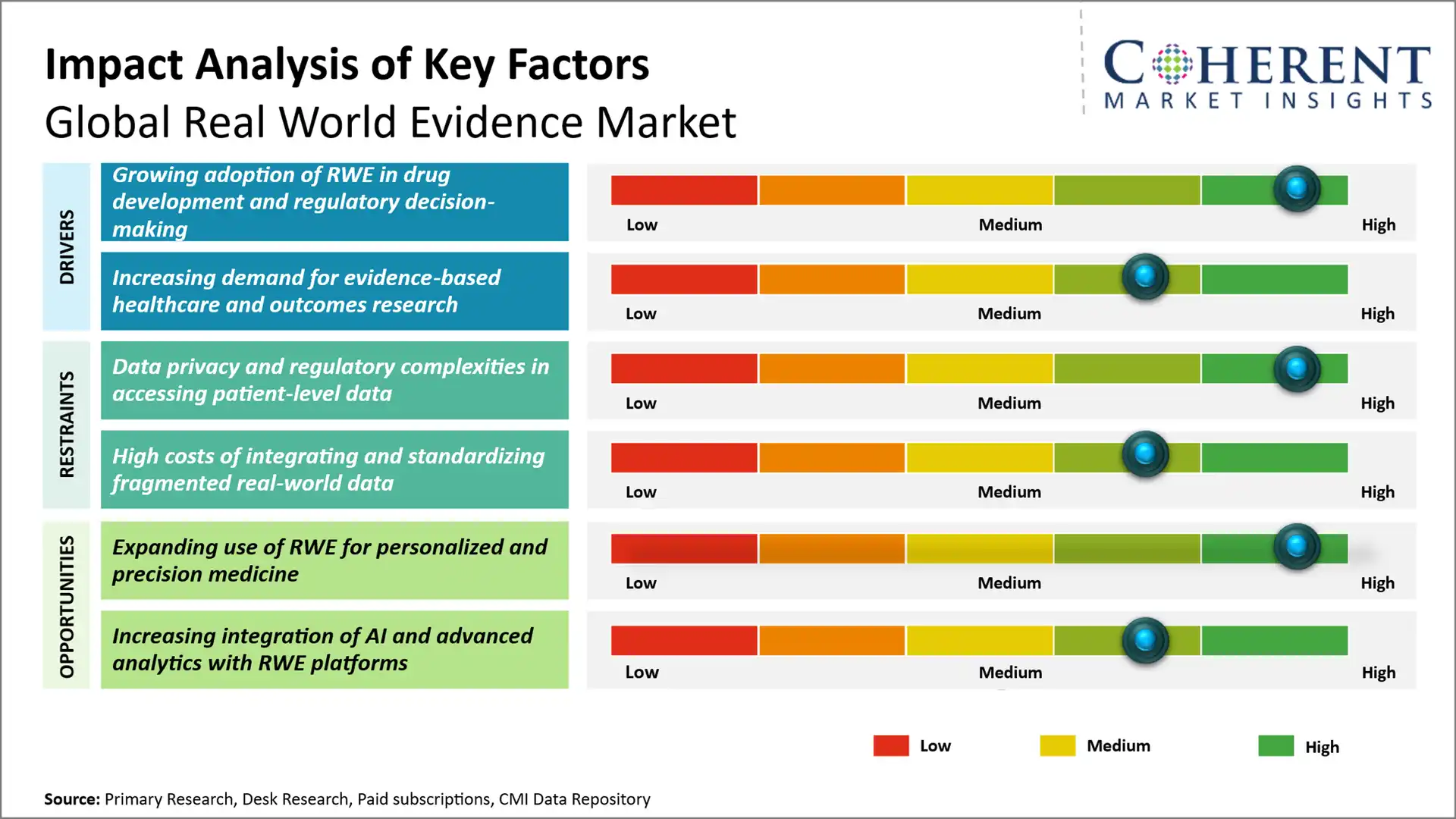
Market Drivers
- Growing adoption of RWE in drug development and regulatory decision-making: The increasing use of RWE in drug development and regulatory processes is driving market growth by providing evidence on treatment effectiveness, safety, and outcomes across broader patient populations. Its expanding role in regulatory submissions, safety assessments, and post-approval evaluations is encouraging pharmaceutical and biotechnology companies to integrate RWE throughout the product lifecycle. For instance, in March 2026, the U.S. FDA issued the final ICH M14 guideline, establishing harmonized principles for non-interventional studies using real-world data to assess medicine safety. The guidance supports more consistent RWE generation and regulatory evaluation.
- Increasing demand for evidence-based healthcare and outcomes research: The growing emphasis on evidence-based healthcare is increasing demand for RWE to evaluate treatment effectiveness, patient outcomes, healthcare utilization, and comparative effectiveness in routine clinical settings. The need for actionable evidence among healthcare providers, payers, and policymakers is further supporting the adoption of RWE and outcomes research. For instance, in July 2025, the U.S. Agency for Healthcare Research and Quality (AHRQ) awarded five-year contracts to 11 Evidence-based Practice Centers (EPCs) to produce rigorous evidence reports on medications, devices, and healthcare services. These evidence-generation activities support evidence-based healthcare decisions and comparative effectiveness research.
- Expansion of digital health data infrastructure: The rapid expansion of digital health infrastructure is increasing the availability of structured, longitudinal healthcare data for RWE generation. Growing digitization of health records and data systems is improving access to patient-level information and creating broader opportunities for outcomes research, clinical evaluation, and healthcare decision-making. In March 2026, WHO and partners launched a three-year initiative to help ASEAN countries transition from paper-based records to secure, interoperable digital health wallets, strengthening the availability and portability of digital health information.
Emerging Trends
- AI-Driven RWE Analytics: AI and machine learning are increasingly being integrated into RWE platforms to process complex datasets, identify clinical patterns, and generate evidence more efficiently.
- Integration of multimodal real-world data: RWE platforms are increasingly combining EHRs, claims, registries, genomic information, wearables, and patient-generated data to create more comprehensive and longitudinal patient profiles.
- Expansion of RWE in regulatory and market access decisions: The use of RWE is expanding beyond clinical research into regulatory submissions, health technology assessment, reimbursement, and post-market surveillance, increasing its strategic importance across the product lifecycle.
Regional Insights
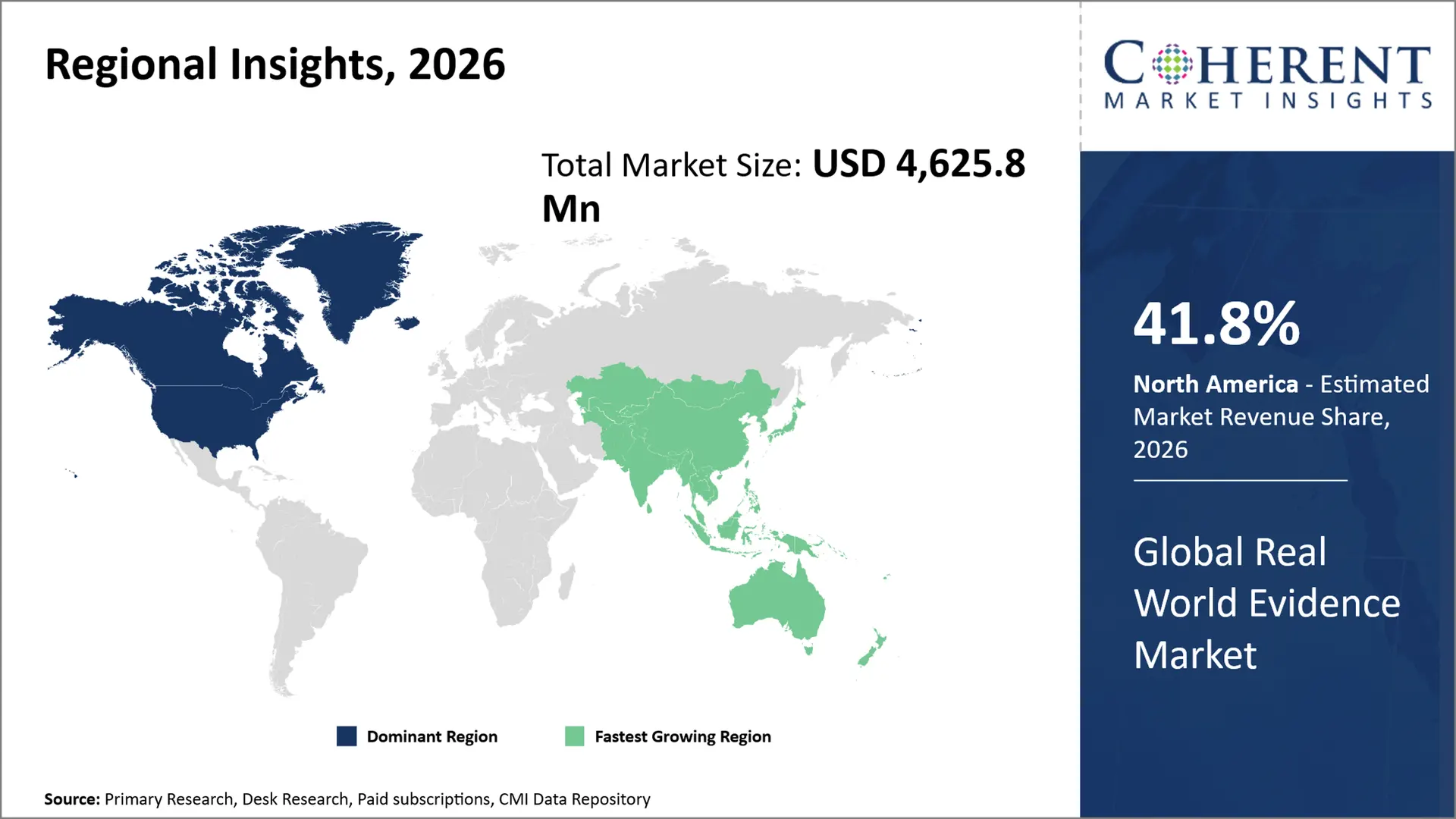
Why is North America a Strong Market for Real World Evidence?
North America leads the global real world evidence market, accounting for an estimated 41.8% share in 2026, owing to the mature healthcare ecosystem and strong regulatory environment and life sciences capabilities, along high levels of RWD adoption in life sciences and healthcare. Favorable government policies and regulatory incentives to leverage RWD for regulatory decision-making, and the highly mature healthcare IT infrastructure including general prevalence of electronic health record adoption, specialized healthcare databases, and advanced data analytics capabilities.
For instance, in September 2025, the U.S. Food and Drug Administration (FDA) unveiled FDA-RWE-ACCELERATE, its first agency-wide initiative to move the safe and appropriate use of RWE into the agency's regulatory decision-making through increased collaboration and standardization across all FDA centers. Moreover, strong pharmaceutical and biotechnology activity contribute to the use of RWE in drug development, regulatory support, and post-market surveillance.
Why Does Asia Pacific Real World Evidence Market Exhibit High Growth?
Asia Pacific is expected to exhibit the fastest growth in the global real world evidence market, registering an estimated CAGR of 17.8% during 2026–2033. The region is projected to account for 21.3% of the global market in 2026, owing to a rising healthcare expenditure, expanding pharmaceutical industry, and rising government initiatives for healthcare digitization in the countries such as India, China, Japan, and South Korea. For instance, India's Ayushman Bharat Digital Mission is building a unified digital health ecosystem called the ABDM that allow for creation, access and exchange of digital health records via Ayushman Bharat Health Account (ABHA) and Personal Health Records. (Source: National Health Authority)
Growing investments towards development of digital health infrastructure and electronic health record systems are enabling the access to structured healthcare data for RWE generation. Furthermore, growing adoption of personalized medicine and the demand for low-cost drugs development are further leading to expansion of the RWE market.
Global Real World Evidence Market Outlook for Key Countries
Why is the U.S. Leading Innovation and Adoption in the Real World Evidence Market?
The U.S. is at the forefront of the real world evidence market innovation and adoption, with its established regulatory pathways for the use of RWD/RWE in evidentiary generation for all types of medical products. An extensive healthcare data ecosystem underpins the integration of EMRs, claims, registries and other longitudinal data sources for regulatory and clinical use cases. U.S. FDA programs to advance RWE supports the maturation of evidence generation and incorporation into regulatory decision-making.
Is Japan a Favorable Market for Real World Evidence Market?
Japan is an attractive real world evidence market with existing use of RWD by regulators and healthcare databases. The country’s PMDA's MID-NET system leverages electronic medical record data, such as claims and other healthcare data, for regulatory safety analysis. Data from registries and medical databases is also being bolstered in terms of integrity and regulatory acceptance for drug approval and re-examination applications.
Is China Emerging as a Key Growth Hub for the Real World Evidence Market?
China represents a significant new growth opportunity for the real world evidence market, driven by increasing adoption of RWD in drug development and regulatory decision-making. The NMPA has published RWE-specific guidance and regulatory paths, and rapidly growing EHR, claims, hospital, and disease-registry databases are expanding China's RWD base.
Why Does Germany Top the European Real World Evidence Market?
Germany's role in the European real world evidence market is strengthened by an increasing national healthcare-data infrastructure and proposed measures to make health data available for secondary purposes. The FDZ Gesundheit, implemented as of October 2025, makes the claims data for some 74 million statutory health-insurance holders available to researchers and forms a large longitudinal database for RWE creation.
Is Real World Evidence Market Developing in the U.K.?
The U.K. is emerging as an important real world evidence market, notably for population-level health research and outcomes across a large, geographically dispersed population using publicly owned datasets linked to the NHS. The NHS Secure Data Environment (SDE) network enables controlled access to health and care data for research in a way that retains data governance and security.
Global Healthcare Data Availability by Data Source
Data Source | Key Data Captured | RWE Relevance |
Electronic Health Records (EHRs) | Diagnoses, clinical notes, laboratory results, treatment history | Supports longitudinal patient outcomes and treatment-effectiveness analysis |
Claims & Billing Data | Healthcare utilization, procedures, diagnoses, reimbursement, costs | Enables outcomes, utilization, cost, and HEOR analysis |
Clinical Registries | Disease-specific patient characteristics, treatments, and outcomes | Supports comparative effectiveness and long-term outcomes research |
Pharmacy & Prescription Data | Prescriptions, dispensing patterns, medication adherence | Enables treatment-pattern and medication-use analysis |
Patient-Generated Health Data | Symptoms, treatment experiences, patient-reported outcomes | Provides patient-centric evidence beyond clinical settings |
Wearable & Digital Health Data | Activity, vital signs, physiological measurements, continuous monitoring | Enables continuous and real-time outcome assessment |
How is the expanding use of RWE for personalized and precision medicine creating new growth opportunities in the real world evidence market?
As the adoption of personalized and precision medicine continues to grow, opportunities are opening for the real world evidence market by expanding the need for patient-level, longitudinal, and multimodal data for treatment out comes evaluation in patient populations. Incorporating EHRs, registries, genomic data, and patient-generated data with the rich patient data can promote patient stratification and benefit evaluation, enabling to improve the development of targeted therapies. For instance, in September 2024, U.S. National Institutes of Health (NIH) advanced its Data COUNTS (Collect Data Once, Use Numerous Times) initiative to establish a secure, standardized and reusable infrastructure for health data. The project aims to increase the availability and utility of high-quality real-world data to support research, precision medicine, and evidence generation.
Market Players, Key Development, and Competitive Landscape
Key Developments
- On September 17, 2026, the Mediterranean Network for Haemoglobinopathies (MNfH) was launched in Rome, bringing together clinical experts and patient representatives from Cyprus, Greece, and Italy. The network identified stronger use of registries, data, and real-world evidence as a key regional priority. This initiative is expected to support evidence-based improvements in haemoglobinopathy care and strengthen the use of RWE in healthcare decision-making.
- In April 2026, Thermo Fisher Scientific’s PPD clinical research business collaborated with HealthVerity to expand access to real-world data for clinical development and evidence generation. The collaboration provides access to a claims dataset covering more than 270 million de-identified U.S. patient lives and more than 70 curated data sources, supporting RWE generation, trial optimization, and HEOR.
- In March 2026, the University of Toronto launched the Toronto Centre for Real-World Evidence (T-RWE) at the Leslie Dan Faculty of Pharmacy to build research capacity in RWE for drugs and health technologies. The centre brings together academics, industry experts, policymakers, and trainees to advance RWE methodologies and responsible data use. The initiative aims to strengthen the use of RWE in healthcare policy and decision-making.
- In December 2024, Aptitude Health launched iPROPEL, a real-world evidence (RWE) registry platform and research network designed to capture longitudinal patient outcomes in community oncology settings. The platform integrates prospective and retrospective data, including patient-reported outcomes, to generate real-world insights for clinical and commercial decision-making.
Competitive Landscape
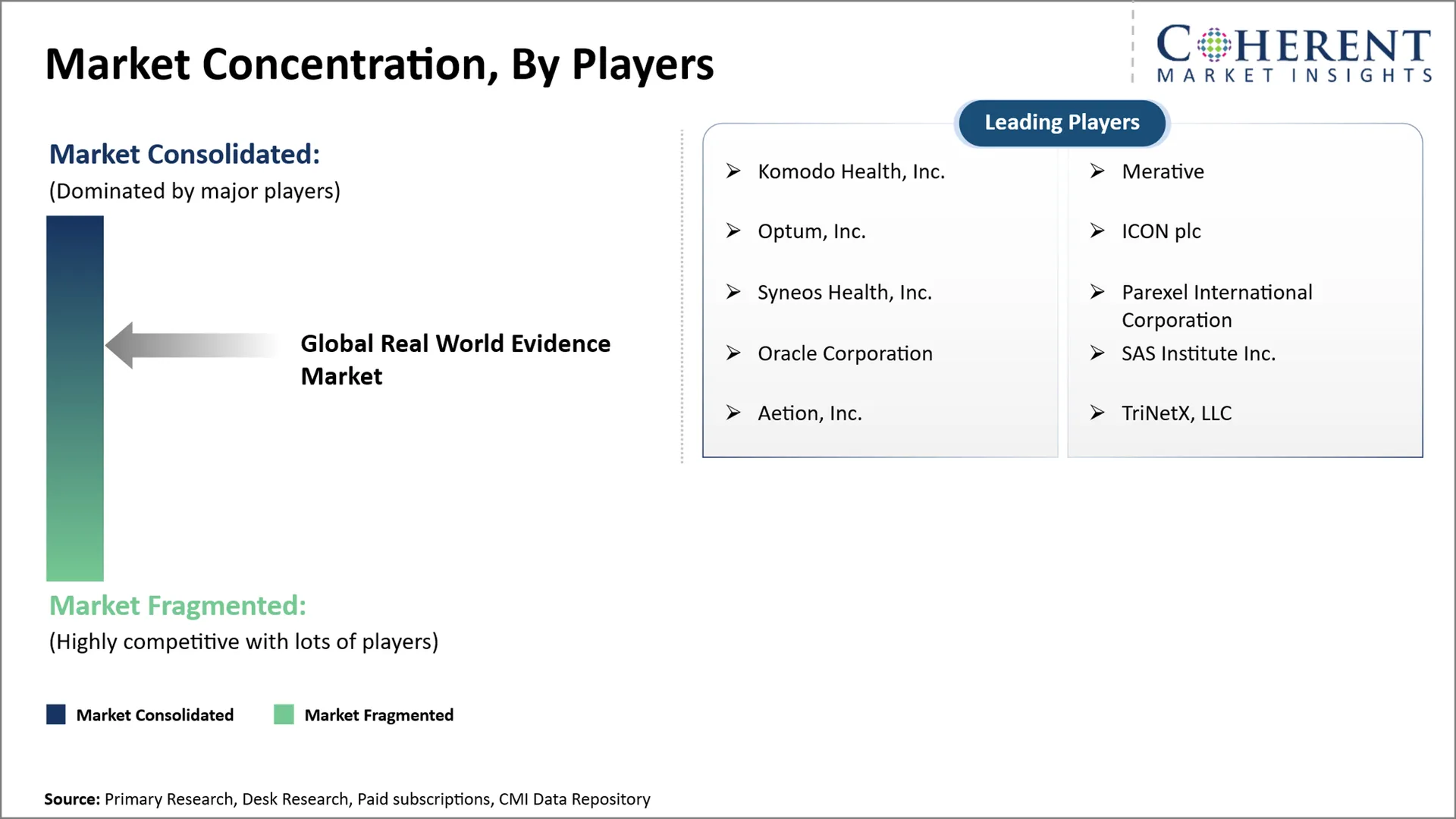
The global real world evidence market is moderately competitive, with competition centered on data coverage, analytics capabilities, data quality, interoperability, regulatory compliance, and integration of advanced technologies. Market participants are increasingly focusing on expanding real-world data assets, strengthening AI-driven analytics, developing specialized RWE solutions, and supporting evidence generation across drug development, regulatory decision-making, and post-market surveillance. Key focus areas include:
- Expansion and integration of comprehensive real-world data sets from diverse healthcare sources
- Development of AI- and machine learning-enabled RWE analytics and evidence-generation platforms
- Strengthening of RWE solutions for regulatory submissions and post-market surveillance
- Integration of EHRs, claims, registries, patient-generated data, and digital health data
- Enhancement of data interoperability, quality, privacy, security, and regulatory compliance
Market Report Scope
Real World Evidence Market Report Coverage | |||
Report Coverage | Details | ||
Base Year | 2025 | Market Size in 2026: | USD 4,625.8 Mn |
Historical Data For: | 2020 To 2024 | Forecast Period: | 2026 To 2033 |
Forecast Period 2026 To 2033 CAGR: | 12.3% | 2033 Value Projection: | USD 10,420.7 Mn |
Geographies covered: |
| ||
Segments covered: |
| ||
Companies covered: | Komodo Health, Inc., Merative, Optum, Inc., ICON plc, Syneos Health, Inc., Parexel International Corporation, Oracle Corporation, SAS Institute Inc., Aetion, Inc., TriNetX, LLC | ||
Growth Drivers: |
| ||
Restraints & Challenges: |
| ||
Analyst Opinion (Expert Opinion)
- In the coming years, global real world evidence market is expected to evolve toward integrated, data-rich evidence ecosystems that combine diverse real-world data sources with advanced analytics and AI-enabled technologies. RWE is likely to become increasingly embedded across the product lifecycle, extending from clinical development and regulatory submissions to post-market surveillance, market access, and outcomes-based decision-making. Greater emphasis will also be placed on interoperable, longitudinal, and patient-centric datasets.
- The maximum opportunities are foreseen within data sets for drug development and clinical trials in the U.S., where the combination of extensive healthcare data availability and sophisticated clinical research infrastructure can support large-scale evidence generation. Players can focus on longitudinal EHR, claims, registry, and patient-generated datasets that enable more efficient patient identification, trial design, treatment evaluation, and long-term outcomes analysis.
- In order to gain a competitive advantage, market players should prioritize building differentiated, high-quality data assets and integrating multiple data sources to provide more comprehensive patient-level insights. Investment in AI-driven analytics, interoperability, privacy-preserving technologies, and scalable evidence-generation platforms can strengthen differentiation. Strategic partnerships across data providers, healthcare organizations, technology companies, and life sciences firms can further expand data access and accelerate solution development.
Speak to the analyst
Want personalized insights?
Take the findings above to one of our principal consultants, or have the report rebuilt around the segments, geographies and competitors you actually track.
Market Segmentation
- Component Insights (Revenue, USD Mn, 2021 - 2033)
- Data Sets
- Analytics Services
- Software and Platforms
- Others
- Data Source Insights (Revenue, USD Mn, 2021 - 2033)
- Electronic Health Records (EHRs)
- Claims and Billing Data
- Clinical Registries
- Pharmacy and Prescription Data
- Patient-Generated Health Data
- Wearable and Digital Health Data
- Others
- Application Insights (Revenue, USD Mn, 2021 - 2033)
- Drug Development and Clinical Trials
- Regulatory Decision-Making
- Post-Market Surveillance
- Comparative Effectiveness Research
- Health Economics and Outcomes Research
- Safety and Risk Management
- Market Access and Reimbursement
- Others
- Therapeutic Area Insights (Revenue, USD Mn, 2021 - 2033)
- Oncology
- Cardiovascular Diseases
- Neurology
- Immunology
- Infectious Diseases
- Respiratory Diseases
- Rare Diseases
- Others
- End User Insights (Revenue, USD Mn, 2021 - 2033)
- Pharmaceutical and Biotechnology Companies
- Healthcare Providers
- Contract Research Organizations (CROs)
- Regulatory Authorities
- Payers and Health Insurance Providers
- Academic and Research Institutions
- Others
- Regional Insights (Revenue, USD Mn, 2021 - 2033)
- North America
- U.S.
- Canada
- Latin America
- Brazil
- Argentina
- Mexico
- Rest of Latin America
- Europe
- Germany
- U.K.
- Spain
- France
- Italy
- Russia
- Rest of Europe
- Asia Pacific
- China
- India
- Japan
- Australia
- South Korea
- ASEAN
- Rest of Asia Pacific
- Middle East
- GCC Countries
- Israel
- Rest of Middle East
- Africa
- South Africa
- North Africa
- Central Africa
- North America
- Key Players Insights
- Komodo Health, Inc.
- Merative
- Optum, Inc.
- ICON plc
- Syneos Health, Inc.
- Parexel International Corporation
- Oracle Corporation
- SAS Institute Inc.
- Aetion, Inc.
- TriNetX, LLC
Sources
Primary Research Interviews
- Clinical research professionals and epidemiologists involved in real-world evidence generation and outcomes research
- Real-world evidence and HEOR specialists supporting pharmaceutical and biotechnology companies
- Biostatisticians, data scientists, and clinical data experts analyzing real-world healthcare datasets
- Healthcare providers and clinical researchers involved in real-world data collection and evidence generation
- Regulatory and market-access specialists evaluating RWE for healthcare and reimbursement decisions
Stakeholders
- Pharmaceutical and biotechnology companies
- Contract research organizations (CROs) and RWE service providers
- Real-world data and healthcare analytics companies
- Hospitals, health systems, and healthcare providers
- Payers and health insurance providers
- Regulatory authorities and health technology assessment (HTA) organizations
- Academic and research institutions
- Digital health and healthcare technology companies
- End-use Sectors
- Pharmaceutical and Biotechnology Companies
- Healthcare Providers and Health Systems
- Contract Research Organizations
- Regulatory Authorities
- Payers and Health Insurance Providers
- Academic and Research Institutions
- Medical Device and Digital Health Companies
- Health Technology Assessment and Market Access Organizations
- Regulatory & Health Bodies
- U.S. Food and Drug Administration (FDA) – Real-world data and evidence frameworks, regulatory decision-making, and post-market evidence generation
- European Medicines Agency (EMA) – Real-world evidence, regulatory science, and evidence generation across the medicine lifecycle
- Medicines and Healthcare products Regulatory Agency (MHRA), United Kingdom – Real-world data, pharmacovigilance, and regulatory evidence
- Pharmaceuticals and Medical Devices Agency (PMDA), Japan – Regulatory evaluation and use of real-world data
- National Medical Products Administration (NMPA), China – Drug evaluation, safety monitoring, and real-world evidence-related regulatory activities
- Health Canada – Real-world evidence and health product regulatory information
Databases
- ClinicalTrials.gov – Clinical studies and research information supporting real-world evidence research
- WHO International Clinical Trials Registry Platform (ICTRP) – Global clinical trial and research information
- FDA Sentinel System – Large-scale real-world data for medical product safety surveillance
- Centers for Medicare & Medicaid Services (CMS) Data – Claims and healthcare utilization data for outcomes and health services research
- European Health Data & Evidence Network (EHDEN) – Distributed real-world data research infrastructure and analytics
- DARWIN EU® – Real-world data network supporting regulatory evidence generation in Europe
- ISPOR Real-World Evidence Registry – Registration and transparency of RWE study designs
Associations
- International Society for Pharmacoeconomics and Outcomes Research (ISPOR) – RWE methodologies, good practices, transparency, and outcomes research
- International Society for Pharmacoepidemiology (ISPE) – Pharmacoepidemiology and real-world evidence research standards
- Drug Information Association (DIA) – Regulatory science, clinical development, and RWE-focused industry collaboration
- International Society for Quality of Life Research (ISOQOL) – Patient-reported outcomes and health-related quality-of-life research
- Academy of Managed Care Pharmacy (AMCP) – Evidence-based healthcare, comparative effectiveness, and payer decision-making
Public Domain Sources
- National Institutes of Health (NIH) – Biomedical and clinical research information
- Centers for Disease Control and Prevention (CDC) – Population health, disease surveillance, and epidemiological data
- World Health Organization (WHO) – Global health, disease burden, and population-level health data
- U.S. Census Bureau – Population, demographic, and socioeconomic statistics
- Organisation for Economic Co-operation and Development (OECD) – Healthcare expenditure, health-system, and population statistics
- World Bank – Population, healthcare, economic, and country-level development indicators
- National health ministries and statistical agencies – Country-level healthcare, demographic, and disease-burden information
Proprietary Elements
- CMI Data Analytics Tool, Proprietary CMI Existing Repository of information for last 10 years.
Get access to 250+ pages report
Every segment, forecast, competitor profile and data table behind the analysis above — available for instant download.
- ESOMAR Member
- ISO 9001:2015 Certified
- D-U-N-S Registered
- GDPR & CCPA Compliant
Missing comfort of reading report in your local language? Find your preferred language:
Frequently Asked Questions
The global real world evidence market is estimated to be valued at USD 4,625.8 Mn in 2026 and is expected to reach USD 10,420.7 Mn by 2033.
Data sets dominates due to their critical role in providing large, diverse, and longitudinal real-world patient information for evidence generation.
Real World Evidence is clinical evidence generated from the analysis of real-world data collected outside traditional clinical trials.
The CAGR of global real world evidence market is projected to be 12.3% from 2026 to 2033.
Growing adoption of RWE in drug development and regulatory decision-making, and increasing demand for evidence-based healthcare and outcomes research are the major factors driving the growth of the global real world evidence market.
Data privacy and regulatory complexities in accessing patient-level data, and high costs of integrating and standardizing fragmented real-world data are the major factors hampering the growth of the global real world evidence market.
In terms of application, drug development and clinical trials are estimated to dominate the market revenue share in 2026.