

Global Real-World Evidence Validation Platforms Market Size and Forecast – 2026-2033
The global real-world evidence validation platforms market is expected to grow from USD 1.20 Bn in 2026 to USD 2.65 Bn by 2033, registering a compound annual growth rate (CAGR) of 12% from 2026 to 2033. The global real-world evidence validation platforms market is poised to grow at a high-rate owing to a rise in the acceptance level of real-world evidence (RWE).
The U.S. Food and Drug Administration (FDA) has reported that real world evidence (RWE) has played a role in regulatory decision making for medical devices, with 73 additional examples found between FY2020-FY2025. The increased use of RWE by regulatory bodies emphasizes the need for validation platforms that ensure data quality, integrity and traceability.
Key Takeaways of the Global Real-World Evidence Validation Platforms Market
- Services are projected to hold 56.3% of the global real-world evidence validation platforms market share in 2026, making it dominant component segment, particularly across North America owing to the need for data curation, validation and approval documentation. For instance, the U.S. FDA issued the revised guidance for the use of real-world evidence for medical-device regulatory decision-making in December 2025, informing data relevance and reliability.
- Cloud-based is projected to hold 72.4% of the global real-world evidence validation platforms market share in 2026, making it dominant deployment mode segment, across Europe owing to the usage of scalable data and uniform evidence management in Europe. For instance, the European Medicines Agency (EMA) has implemented real-world data quality framework in March 2026 to support consistent assessment of data used in medicines regulation.
- Data quality and validation are projected to hold 29.6% of the global real-world evidence validation platforms market share in 2026, making it dominant functionality segment, across Asia Pacific specifically Japan due to the regulatory emphasis on data quality to support evidence-based approvals. For instance, the Pharmaceuticals and Medical Devices Agency (PMDA) in Japan emphasizes specific requirements for data quality for applications including registry and medical-information database data.
- North America market maintains dominance with an expected share of 42.6% in 2026, due to the substantial research and development by pharmaceutical companies and acceptance of real-world evidence by regulators. For instance, in July 2024, the U.S. FDA provided guidance for evaluating electronic health record data and medical claims data for regulatory use highlighting the need for reliable, fit-for-purpose data validation
- Asia Pacific is expected to exhibit the fastest growth in the global real-world evidence validation platforms market, registering an estimated CAGR of 17.2% during 2026–2033, attributed to the change in the regulations and growing acceptance of real-world evidence in healthcare decision-making. For instance, Singapore's Agency for Care Effectiveness (ACE) issued the position statement on real-world data and real-world evidence and guidance on external control arms for health technology assessment, thus promoting the adoption of real-world evidence for healthcare resource allocation in the country.
Segmental Insights
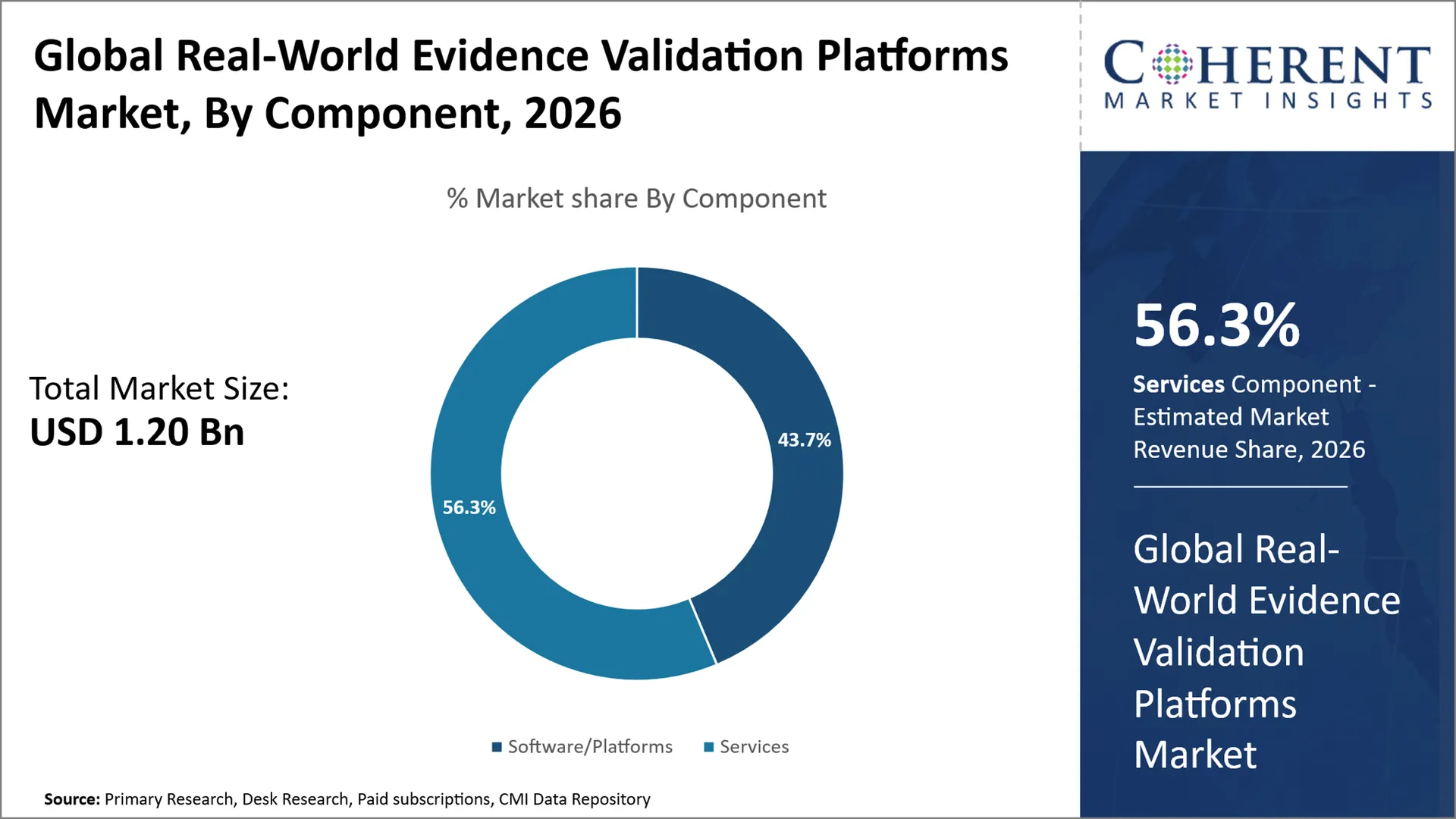
Why Do Services Dominate the Global Real-World Evidence Validation Platforms Market?
Services are projected to hold the market share of 56.3% in 2026, as pharmaceutical companies and healthcare organizations demand for comprehensive expertise in designing of study, evaluation of data quality, validation of data using statistical approaches, and interpretation of evidence. For instance, the UK's National Institute for Health and Care Excellence (NICE) published its Real-World Evidence Framework in which criteria related to data relevance, quality and reproducibility of findings in real-world evidence studies are focused. These requirements reinforce a need for specialist validation; method checks and regulatory evidence generation services. (Source: Becaris Publishing Limited)
- Current Industry Events of 2026
- Market Size Estimation
- Regional Breakdown
- Competitive Landscape
- Customer Intelligence
- Segmental Analysis
- Pricing Analysis
- Key Market Drivers, Challenges & Future Trends
- Customized Insights Section
Why Does Cloud-Based Represent the Largest Deployment Mode Segment in the Real-World Evidence Validation Platforms Market?
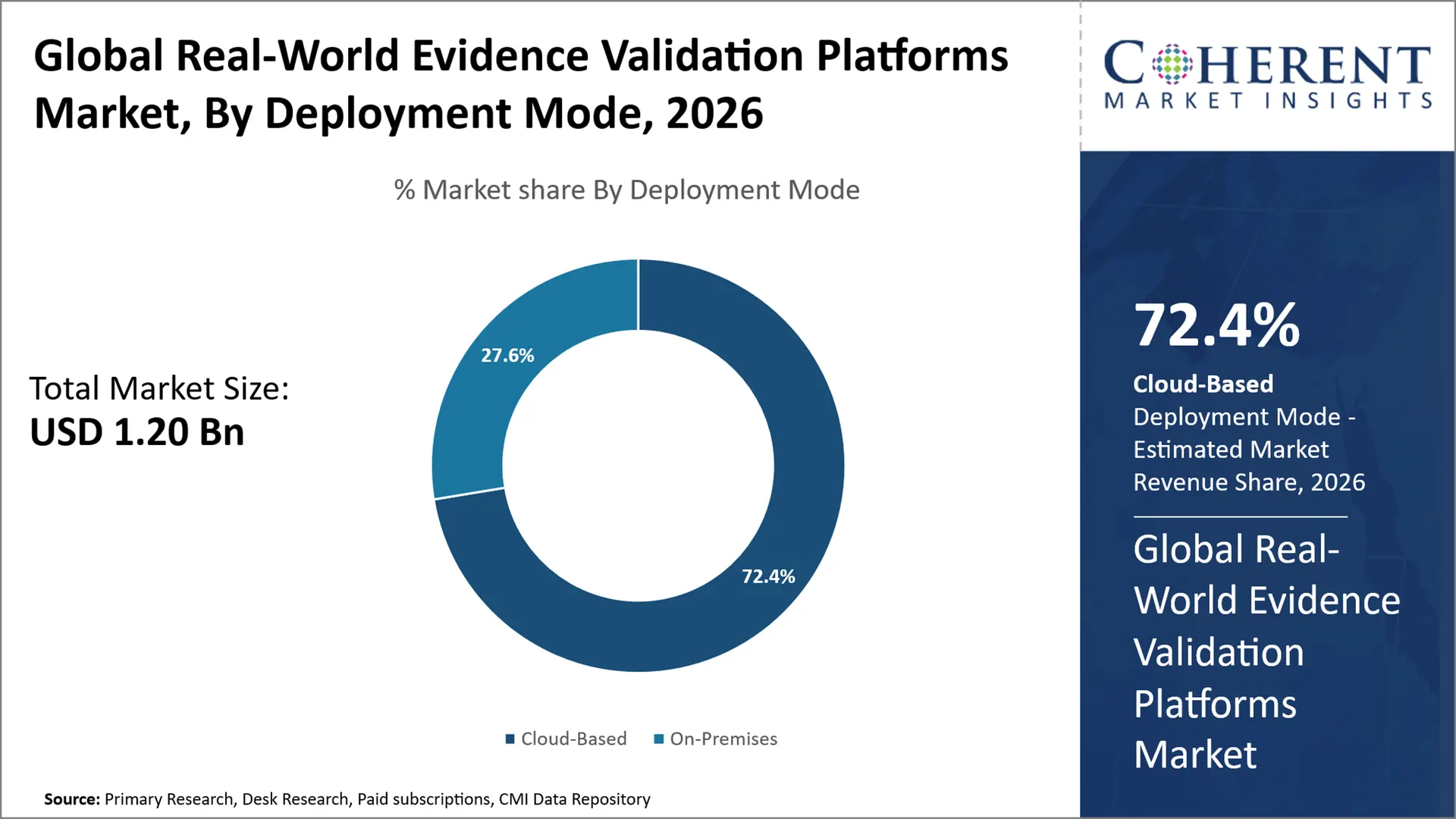
Cloud-Based is projected to hold a market share of 72.4% in 2026, owing to their offering of on-demand resources, remote access, and economical processing of large, multitudes of healthcare data. Additionally, these platforms enable all stakeholders to collaborate and provide updates, which further points towards their dominance. For instance, in July 2025, the U.S. Centers for Disease Control and Prevention (CDC) announced that its cloud enabled One CDC Data Platform enabled secure, real-time use of data with privacy protections and authorized access, demonstrating the potential cloud platform plays in RWE validation methods that require broad data access and collaborative security.
Data Quality and Validation Segment Dominates the Global Real-World Evidence Validation Platforms Market
The data quality and validation segment is projected to hold a market share of 29.6% in 2026, since the data has to be examined for missing, inconsistent, inaccurate, and biased data as it is analyzed from real-world data before it can be used for evidence generation. For instance, in May 2024, the U.S. Centers for Disease Control and Prevention (CDC) issued the baseline requirements for analyzing large healthcare data systems and research. The published document comprises the criteria for data completeness, consistency, plausibility, and fitness for intended use. These requirements address the need for RWE validation platforms as a precondition for considering data quality before performing RWE analysis and generating evidence.
Current Events and their Impact
Current Events | Description and its Impact |
U.S. FDA Publish Final Guidance on Real-World Data Studies for Drug Safety (March 2026) |
|
European Medicines Agency Releases Framework for the Quality of Real-World Data for Medicines Regulation (March 2026) |
|
Real-World Evidence Validation Platforms Market Dynamics
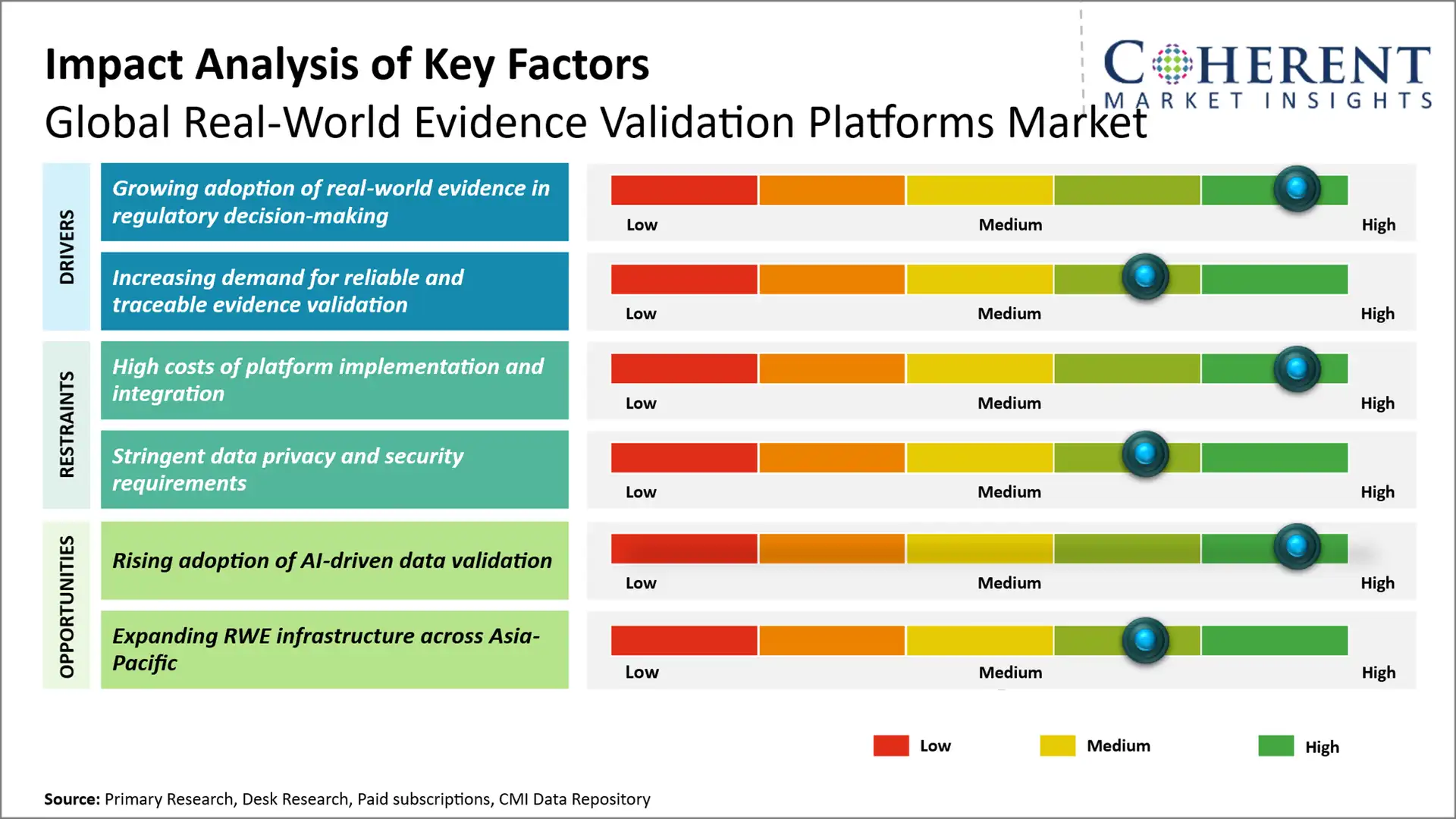
Market Drivers
- Growing adoption of RWE in drug development and regulatory decision-making: The growing reliance of regulatory decisions on real world evidence (RWE) has led to an increasing need for systems that can assure the quality, accuracy and traceability of data in drug development and safety monitoring. For instance, in March 2025, Japan’s Pharmaceuticals and Medical Devices Agency (PMDA) updated its guidance for the use of medical information databases in post-marketing safety evaluation. The update is focused on reliable management and validation of real-world data.
- Increasing demand for reliable and traceable evidence validation: There is an increasing need for reliable and auditable evidence validation, along with the need for solutions that offer clear data provenance, reproducible analysis and auditable workflows for clinical and regulatory research. For instance, in October 2024, U.S. FDA issues guidance on electronic records, electronic systems, and electronic signatures in clinical investigations emphasizing data reliability, integrity, and traceability.
- Growing integration of AI and automation in RWE data validation: As more healthcare data is generated and become complex, the proliferation of AI-enabled platforms capable of automation in data-quality checks, flagging of errors or inconsistencies, and improved validation speed may increase. For instance, in February 2025, U.S. Food and Drug Administration released guidance on the use of AI as a support tool in making regulatory decisions for drugs and biological products.
Emerging Trends
- Automated Data Quality and Validation with AI: The platforms are adopting artificial intelligence and machine learning capabilities to automate data-quality verification processes, including anomaly detection, detection of missing data, as well as detection of inconsistent records, aiding in validation and providing evidence for more robust findings.
- Adoption of Federated Data Architectures: Federated platform allows organizations to perform research over distributed health data without having to transfer and store patient level data on a centralized platform. The approach supports cross-institutional research as well as clinical data privacy and governance needs.
- Standardization of Regulatory-Grade Real-World Evidence: Regulators are increasingly focusing submissions on the relevance and reliability of the data, traceability, and the transparency of the analytical approach to real-world evidence. This focus is encouraging the platform vendors to adopt common data models, reproducible workflows, and audit-ready documentation.
Regional Insights
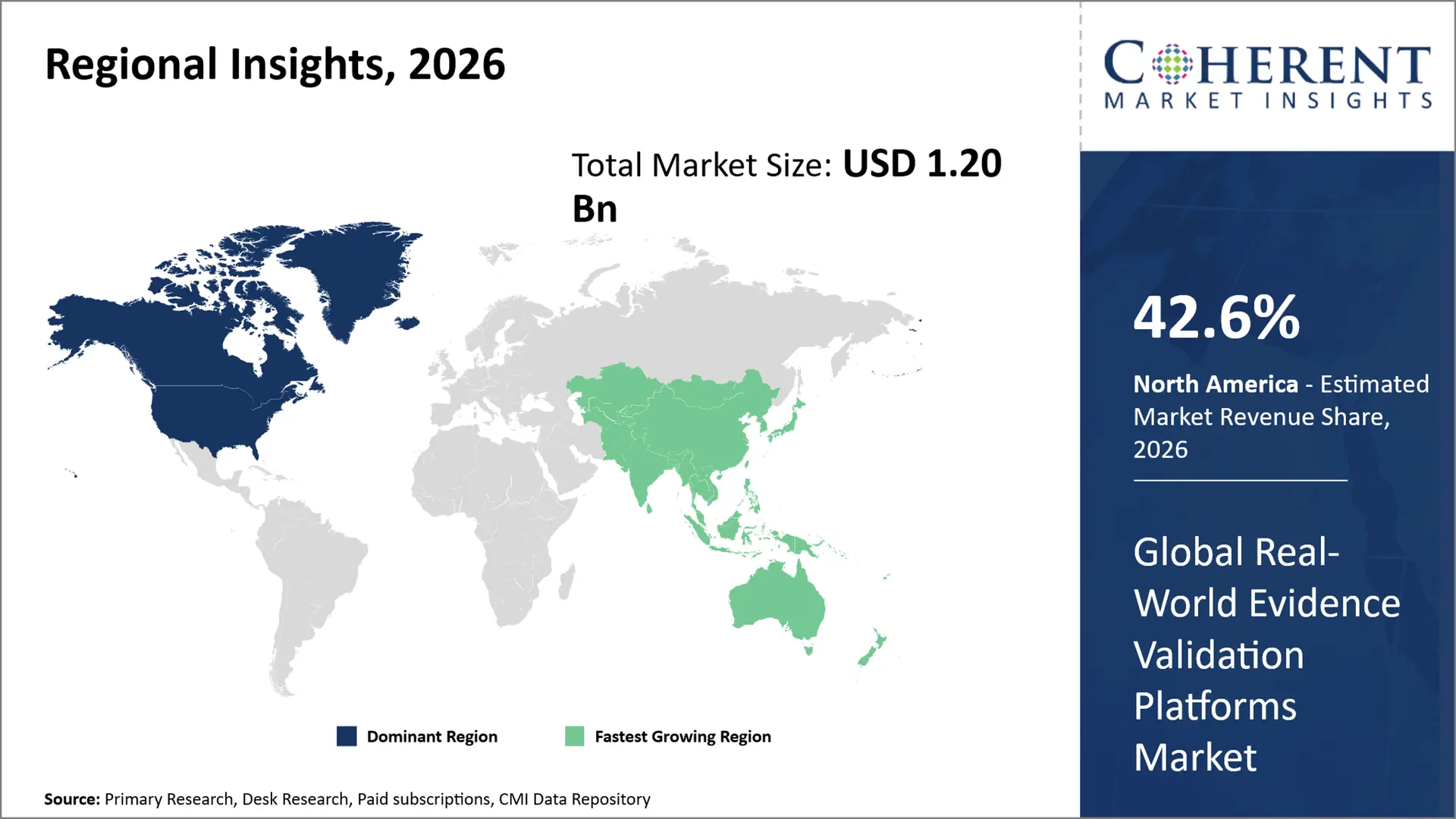
Why is North America a Strong Market for Real-World Evidence Validation Platforms?
North America leads the global real-world evidence validation platforms market, accounting for an estimated 42.6% share in 2026, owing to the highly developed healthcare infrastructure, large pool of healthcare data, and the presence of highly developed pharmaceutical ecosystem in the region. Additionally, existing regulatory environment in the region, including the policies of the FDA around use of real-world data for drugs approval and pharmacovigilance, is expected to favor the market.
For instance, in December 2023, the U.S. Food and Drug Administration (FDA) released finalized guidance on how to use real-world data (RWD) to inform regulatory decisions on drugs and biologics. The guidance provides advice on how to assess the appropriateness and veracity of data in regulatory submissions. As a result, the guidance increases the pressure for validation of RWE platforms that ensures the quality, traceability, and appropriateness of data for regulatory purposes.
Why Does Asia Pacific Real-World Evidence Validation Platforms Market Exhibit High Growth?
Asia Pacific is expected to exhibit the fastest growth in the global real-world evidence validation platforms market, registering an estimated CAGR of 17.2% during 2026–2033. The region is projected to account for 19.4% of the global market in 2026, due to the rising digitalization of healthcare sector, growing pharmaceutical research, and high government support for healthcare information technology advances. China, Japan, India, and South Korea are strengthening healthcare data platforms & pushing the adoption of real-world data in clinical research and regulatory decision-making.
For instance, India launched Strategy for AI in Healthcare (SAHI), in February 2026, to promote adoption of artificial intelligence and create digital health infrastructure for deeper utilization of healthcare data and evidence-based clinical decision-making. (Source: National Health Authority) Moreover, the increasing demand for flexible data validation, improved interoperability, and the trustworthiness of evidence generation is expected to propel the regional market.
Global Real-World Evidence Validation Platforms Market Outlook for Key Countries
Why is the U.S. Leading Innovation and Adoption in the Real-World Evidence Validation Platforms Market?
The U.S. occupies the leading position in the real-world evidence validation platforms market owing to the advanced regulatory pathways for real-world evidence, aligned linked healthcare databases and robust analytical capabilities. The U.S. Food and Drug Administration's Sentinel System and Real-World Evidence Data Enterprise enable standardized data quality assessments, linking of insurance claims and electronic health record data, and provision of reliable evidence for use in drug safety and regulatory decision making.
Is Japan a Favorable Market for Real-World Evidence Validation Platforms Market?
Japan is one of the best markets for real-world evidence validation platforms, referring to the PMDA established system for real-world data assessment within regulatory applications. The MID-NET claims integrated eHR/laboratory data system seems to stimulate the need for platform capable of harmonizing sets, confirming clinical endpoints, and establishing data integrity. Furthermore, there might be market potential in the demand for regulatory grade evidence and post-market safety surveillance.
Is China Emerging as a Key Growth Hub for the Real-World Evidence Validation Platforms Market?
China represents a significant new growth opportunity for the real-world evidence validation platforms market, driven by guidelines from the NMPA (National Medical Products Administration) on how to use real-world data to create evidence in drug development and regulatory decision making. Increasing emphasis on the quality of data, design of studies using this data in a consistent manner, and methods of rigorous analysis will likely lead to opportunities for healthcare data validation platforms in the coming future. Differences in data quality and interoperability across healthcare organizations remain a challenge.
Why Does Germany Top the European Real-World Evidence Validation Platforms Market?
Germany's role in the European real-world evidence validation platforms market is strengthened by its broad statutory health insurance data, its strong institutional health technology assessment system and its increasing demand for evidence-based decisions in healthcare. Additionally, the German Health Data Lab (FDZ Gesundheit) grants access to longitudinal health data of approximately 74 million beneficiaries of statutory health insurance, which probably enables the creation of real-world outcome research platforms validating data quality and patient records.
Is Real-World Evidence Validation Platforms Market Developing in UK?
UK real-world evidence validation platforms market is likely to grow due to increased use of healthcare data in clinical research and regulatory decision-making. The industry is making progress in terms of the collaboration between the MHRA and NICE to develop the tools used to assess the quality and value of real-world evidence. Additionally, the rising requirement for such standardized data validation is expected to be extended for use in pharmaceutical research, health technology assessment, and post-marketing safety surveillance.
Key Data Quality Dimensions for Real-World Evidence Validation
Data quality dimension | Validation focus | Relevance to RWE platforms |
Accuracy | Correctness of diagnoses, treatments, outcomes, and clinical measurements | Minimize mistakes that could mislead and affect the conclusions obtained from the evidence |
Completeness | Missing values, incomplete patient records, and gaps in follow-up | Assesses the degree to which datasets address the research question |
Consistency | Agreement across electronic health records, claims, and registries | Enhances reliability when data sources are integrated |
Traceability and provenance | Origin of data, transformations, linkage, and audit trails | Facilitates transparency and regulatory review |
Representativeness | Coverage of relevant patient populations and care settings | Helps assess possible selection bias and generalizability |
Timeliness | Recency of records and availability of updated clinical information | Supports safety monitoring and treatment benefit evaluations |
Interoperability | Compatibility of coding systems, formats, and data structures | Enables harmonization and analysis across multiple datasets |
How is the rising adoption of AI-driven data validation creating new growth opportunities in the real-world evidence validation platforms market?
Digital health data is becoming increasingly sophisticated, and this will open up opportunities for artificial intelligence-enabled RWE validation platforms that could automate the monitoring of data anomalies, flag contradictory information and improve data quality, from electronic health records, claims data and patient registries. Such capabilities are expected to enable the expansion of the use of real-world evidence for clinical research, regulatory submissions and post-market safety monitoring. For instance, in February 2026, the India launched the Benchmarking Open Data Platform for Health AI (BODH) to benchmark the Artificial Intelligence models by using diverse real-world datasets from the health care domain that can be used to assess performance, robustness, bias, and generalizability. (Source: Press Information Bureau)
Market Players, Key Development, and Competitive Landscape
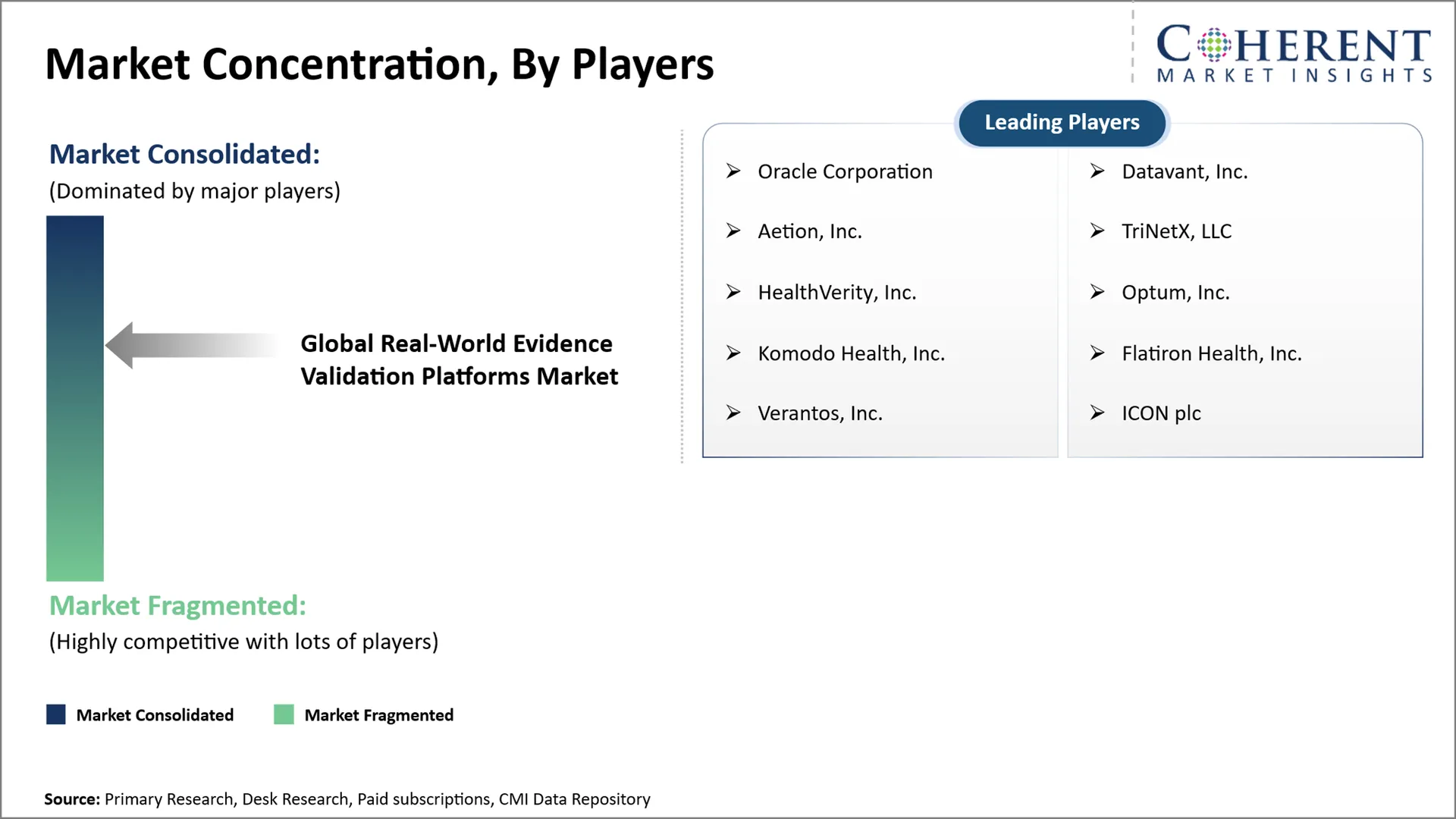
Key Developments
- On October 22, 2026, Aclarion unveiled new real-world clinical data on Nociscan which demonstrate a strong correlation to provocative discography to confirm painful lumbar discs. The data support the need for further investigation of Nociscan as a non-invasive diagnostic tool for the spine. Larger studies may be necessary to further establish clinical utility.
- In January 2026, Verana Health announced that it would formally merge with COTA, Inc. The combination will expand Verana's platform and capabilities in real-world data in oncology and specialty care by integrating Verana's clinically curated datasets and analytics to deliver high quality, validated and transparent data to better enable clinical research, support regulatory filings and accelerate evidence generation.
- In December 2024, Aptitude Health launched the iPROPEL platform, a registry of real-world evidence (RWE) and research network focused on oncology and hematology. This registry aims to gather longitudinal clinical outcomes in community care settings to drive outcomes research and evidence generation.
Competitive Landscape
The global real-world evidence validation platforms market is highly competitive, and the key players are focusing on factors such as data quality, accuracy, interoperability, regulation and ability to validate real-world evidence for clinical and regulatory purposes. Market vendors are focusing on integrating multiple sources of real-world data, boosting the AI-driven validation process, and improving the dependability and reproducibility of evidence. Key focus areas include:
- Seeking integration and harmonization of real-world data sets such as insurance claims data, electronic health records, patient registries and clinical data sources.
- Creation of platforms that leverage artificial intelligence and machine learning to validate data, identify bias, and evaluate evidence quality.
- For regulatory-grade real-world evidence to become a reality, investment in data provenance, traceability and reproducibility is crucial.
- Interoperability improvements across clinical trial/medical product, systems and workflows in healthcare data bases and clinical research environments, as well as regulatory reporting.
Market Report Scope
Global Real-World Evidence Validation Platforms Market | |||
Report Coverage | Details | ||
Base Year | 2025 | Market Size in 2026: | USD 1.20 Bn |
Historical Data For: | 2020 To 2024 | Forecast Period: | 2026 To 2033 |
Forecast Period 2026 To 2033 CAGR: | 12% | 2033 Value Projection: | USD 2.65 Bn |
Geographies covered: |
| ||
Segments covered: |
| ||
Companies covered: | Oracle Corporation, Datavant, Inc., Aetion, Inc., TriNetX, LLC, HealthVerity, Inc., Optum, Inc., Komodo Health, Inc., Flatiron Health, Inc., Verantos, Inc., ICON plc | ||
Growth Drivers: |
| ||
Restraints & Challenges: |
| ||
Analyst Opinion (Expert Opinion)
- In the coming years, global real-world evidence validation platforms market is expected to move towards the development of automated, AI-enabled validation platforms, which are meant to reduce bias and human error, improve the quality of evidence and ensure traceability and reproducibility of real-world data (RWD). The rising requirement of real-world data for clinical development, regulatory submissions and post-market surveillance activities is expected to stimulate the demand for platforms that help detect anomalies and minimize bias.
- The greatest avenue of opportunity exists in AI-enabled real-world evidence validation platforms for regulatory-grade evidence generation in drug development in the U.S. The synergy in leveraging these data and technology platforms is promising due to the heavy dependencies of pharma companies on reliable real-world data assets and reproducible analytics workflows for clinical and regulatory decision-making. Platforms that incorporate data quality checks, bias detection, and audit-ready reporting stand to thrive.
- The market players should focus on interoperable platforms providing validated data from electronic health records, claims repositories, patient registries, and clinical research infrastructures. Users' confidence can be gained through the use of explainable AI, validation rules that are transparent, provenance, and reproducible analytic flows that distinguish platforms. Partnerships with healthcare and pharma industry and the research community can accelerate patient matching and adoption across evidence-generation workflows.
Speak to the analyst
Want personalized insights?
Take the findings above to one of our principal consultants, or have the report rebuilt around the segments, geographies and competitors you actually track.
Market Segmentation
- Component Insights (Revenue, USD Bn, 2021 - 2033)
- Software/Platforms
- Services
- Deployment Mode Insights (Revenue, USD Bn, 2021 - 2033)
- Cloud-Based
- On-Premises
- Functionality Insights (Revenue, USD Bn, 2021 - 2033)
- Data Quality and Validation
- Evidence Generation and Analytics
- Data Integration and Harmonization
- Regulatory Compliance and Audit Trail Management
- Application Insights (Revenue, USD Bn, 2021 - 2033)
- Clinical Research and Clinical Trials
- Drug Safety and Pharmacovigilance
- Regulatory Submissions and Compliance
- Health Economics and Outcomes Research (HEOR)
- Post-Market Surveillance
- Others
- End User Insights (Revenue, USD Bn, 2021 - 2033)
- Pharmaceutical and Biotechnology Companies
- Contract Research Organizations (CROs)
- Healthcare Providers and Health Systems
- Payers and Health Technology Assessment (HTA) Organizations
- Regulatory and Public Health Organizations
- Others
- Regional Insights (Revenue, USD Bn, 2021 - 2033)
- North America
- U.S.
- Canada
- Latin America
- Brazil
- Argentina
- Mexico
- Rest of Latin America
- Europe
- Germany
- U.K.
- Spain
- France
- Italy
- Russia
- Rest of Europe
- Asia Pacific
- China
- India
- Japan
- Australia
- South Korea
- ASEAN
- Rest of Asia Pacific
- Middle East
- GCC Countries
- Israel
- Rest of Middle East
- Africa
- South Africa
- North Africa
- Central Africa
- North America
- Key Players Insights
- Oracle Corporation
- Datavant, Inc.
- Aetion, Inc.
- TriNetX, LLC
- HealthVerity, Inc.
- Optum, Inc.
- Komodo Health, Inc.
- Flatiron Health, Inc.
- Verantos, Inc.
- ICON plc
Sources
Primary Research Interviews
- Real-world evidence (RWE) and health economics and outcomes research (HEOR) specialists
- Biostatisticians, epidemiologists, and clinical data scientists
- Healthcare providers and clinical researchers involved in real-world data generation
- Regulatory affairs and market-access specialists
Stakeholders
- Pharmaceutical and biotechnology companies
- Contract research organizations (CROs) and RWE service providers
- Real-world data providers and healthcare analytics companies
- Hospitals, health systems, and healthcare providers
- Payers and health insurance providers
- Regulatory authorities and health technology assessment (HTA) organizations
- Academic and research institutions
- Medical device and digital health companies
- End-use Sectors
- Pharmaceutical and Biotechnology Companies
- Healthcare Providers and Health Systems
- Contract Research Organizations
- Regulatory Authorities
- Payers and Health Insurance Providers
- Regulatory & Health Bodies
- U.S. Food and Drug Administration (FDA)
- European Medicines Agency (EMA)
- Medicines and Healthcare products Regulatory Agency (MHRA), United Kingdom
- Pharmaceuticals and Medical Devices Agency (PMDA), Japan
Databases
- ClinicalTrials.gov
- WHO International Clinical Trials Registry Platform (ICTRP)
- FDA Sentinel System
- Centers for Medicare & Medicaid Services (CMS) Data
- European Health Data & Evidence Network (EHDEN)
Associations
- International Society for Pharmacoeconomics and Outcomes Research (ISPOR)
- International Society for Pharmacoepidemiology (ISPE)
- Drug Information Association (DIA)
- International Society for Quality of Life Research (ISOQOL)
- Academy of Managed Care Pharmacy (AMCP)
Public Domain Sources
- National Institutes of Health (NIH)
- Centers for Disease Control and Prevention (CDC)
- World Health Organization (WHO)
- U.S. Food and Drug Administration (FDA)
- European Medicines Agency (EMA)
Proprietary Elements
- CMI Data Analytics Tool, Proprietary CMI Existing Repository of information for last 10 years.
Get access to 250+ pages report
Every segment, forecast, competitor profile and data table behind the analysis above — available for instant download.
- ESOMAR Member
- ISO 9001:2015 Certified
- D-U-N-S Registered
- GDPR & CCPA Compliant
Frequently Asked Questions
The global real-world evidence validation platforms market is estimated to be valued at USD 1.20 Bn in 2026 and is expected to reach USD 2.65 Bn by 2033.
Services dominate owing to the surging demand of specialist competence in data validation, regulated compliance, analytical quality management and evidential efficacy. This dominance emphasizes the importance of specialized competencies.
Real-world evidence validation platforms include software and services that evaluate the quality, veracity, consistency, and regulatory suitability of real-world healthcare data and evidence.
The CAGR of global real-world evidence validation platforms market is projected to be 12% from 2026 to 2033.
Growing adoption of real-world evidence in regulatory decision-making, and increasing demand for reliable and traceable evidence validation are the major factors driving the growth of the global real-world evidence validation platforms market.
High costs of platform implementation and integration, and stringent data privacy and security requirements are the major factors hampering the growth of the global real-world evidence validation platforms market.
In terms of deployment mode, cloud-based are estimated to dominate the market revenue share in 2026.