

Global Robotic Rehabilitation Devices Market Size and Forecast – 2026 To 2033
The global robotic rehabilitation devices market is expected to grow from USD 1.08 Bn in 2026 to USD 3.42 Bn by 2033, registering a compound annual growth rate (CAGR) of 17.9% from 2026 to 2033. The global market for robotic rehabilitation devices is projected to grow substantially throughout the forecast period attributable to the increasing incidence of neurological disorders and augmentation in demand for rehabilitation.
As per World Health Organization (WHO), in 2021, a neurological disease affected over 3 billion people across the globe, thus, contributing to the world's top-most disease and disability burden which in turn increases the patient footfall for the hospital and specialist rehabilitation centers. The rising number of patients is thus expected to fuel the adoption of innovative robotic rehabilitation devices in the future.
Key Takeaways of the Global Robotic Rehabilitation Devices Market
- Exoskeleton robots are projected to hold 43.6% of the global robotic rehabilitation devices market share in 2026, making it dominant device type segment. North America has the mature spinal cord injury treatment services and the clear reimbursement policy for qualifying power exoskeletons by Medicare. The U.S. Centers for Medicare & Medicaid Services (CMS) has created HCPCS code K1007 for powered lower-body exoskeletons and designated qualifying personal exoskeletons as part of the Medicare brace benefit category.
- Lower extremity is projected to hold 46.2% of the global robotic rehabilitation devices market share in 2026, making it dominant body part segment. Asia Pacific specifically Japan is at the forefront of deploying robotic gait rehabilitation, and has been conducting public clinical research and rehabilitation programs for the purpose of advancing gait therapy. According to the clinical research registry maintained by the Ministry of Health, Labour and Welfare, Japan's 2025 study at the Tokyo Rehabilitation Center Setagaya (published in 2021) looked at robot-assisted gait training of patients post-proximal femoral fracture, with the primary outcome measures being gait performance and balance during standing.
- Neurological rehabilitation is projected to hold 49.8% of the global robotic rehabilitation devices market share in 2026, making it dominant application segment. The Europe is poised to grow the market with statutory rehabilitation and assistive device legislation. The European Union statutory accident insurance DGUV has issued statutory assistance aid standards for 2026 to expand access to assistive devices for treatment, recovery and participation needs can be met, thereby strengthening the existing rehabilitation infrastructure where the use of robotic systems can be considered.
- North America market maintains dominance with an expected share of 39.4% in 2026. The region has a sound rehabilitation infrastructure and care for spinal cord injuries, which is expected to drive market growth in the region. In April 2022, the U.S. Department of Veterans Affairs introduced the new Exoskeleton-Assisted Ambulation Program at the James A. Haley Veterans’ Hospital in Tampa, which uses several robotic exoskeleton systems for the locomotion rehabilitation of veterans with spinal cord injuries and neurological illnesses.
- Asia Pacific is expected to exhibit the fastest growth in the global robotic rehabilitation devices market, registering an estimated CAGR of 18.6% during 2026–2033. This growth can be attributed to the increasing number of rehabilitation centers, the rising care requirements for the elderly population, and growing adoption of robotic devices in public healthcare rehabilitation centers. By the end of 2025, Shanghai had 155 community rehabilitation centers that applied robotic exoskeletons and upper-limb rehabilitation devices to community centers for walking rehabilitation, mobility, neurological and other therapies.
Segmental Insights
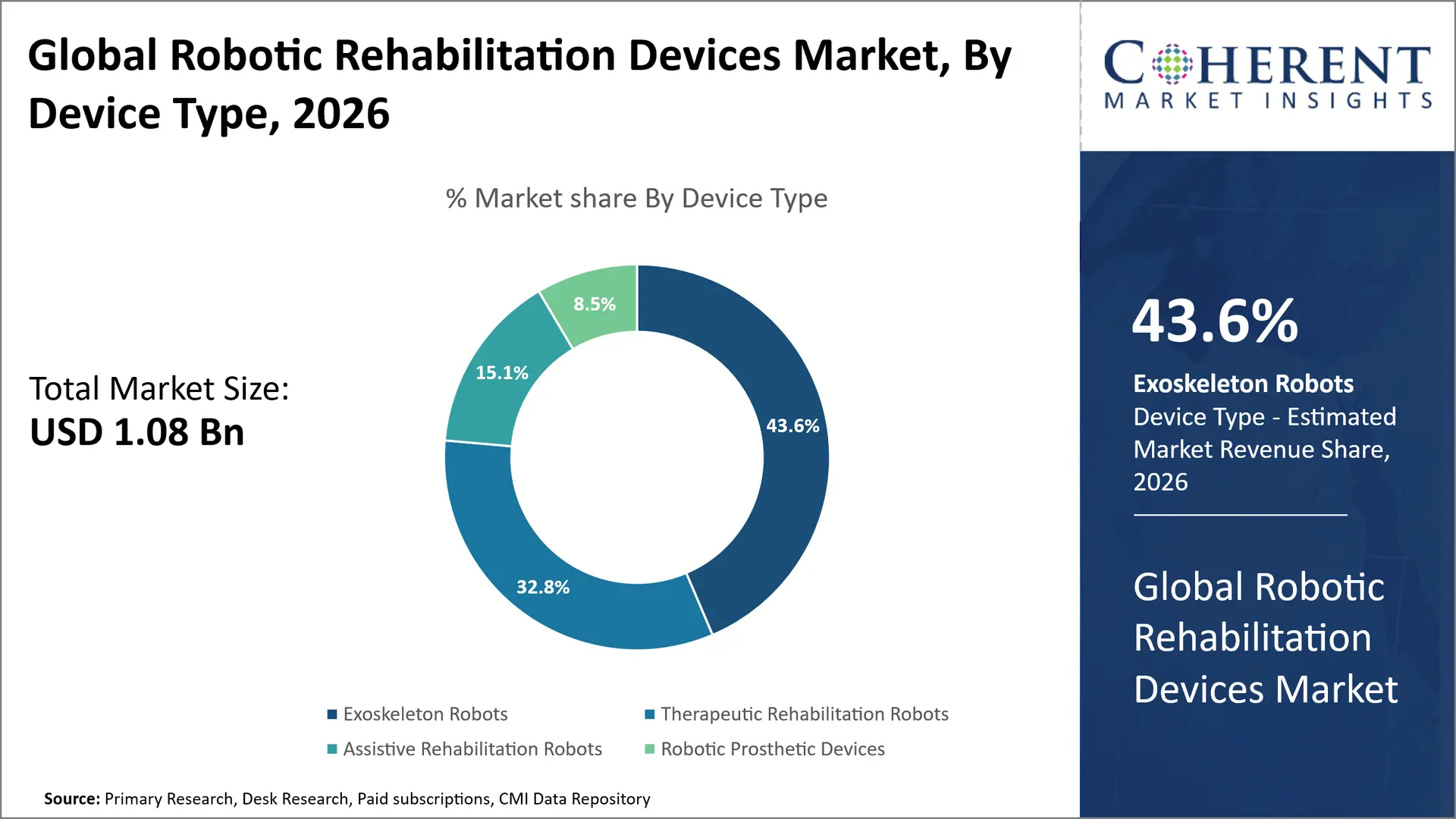
Why Do Exoskeleton Robots Dominate the Global Robotic Rehabilitation Devices Market?
Exoskeleton robots are projected to hold the market share of 43.6% in 2026, as they effectively aid patient motion, improve mobility and repetition of gait training exercises to those suffering from neurological disorders and mobility impairments. Increasing client use of exoskeletons for stroke and spinal cord injuries is expected to drive demand for these devices. For instance, the Kerala Government has adopted a robotic gait-training system at Noolpuzha Family Health Centre. A government sponsored scheme worth USD 25 million (INR 2.5 crore) under the Wayanad package gives free training for rehabilitative sessions, comprising nearly 900 training steps per patient. (Source: Kerala.Health)
- Current Industry Events of 2026
- Market Size Estimation
- Regional Breakdown
- Competitive Landscape
- Customer Intelligence
- Segmental Analysis
- Pricing Analysis
- Key Market Drivers, Challenges & Future Trends
- Customized Insights Section
Why Do Lower Extremity Represent the Largest Body Part Segment in the Robotic Rehabilitation Devices Market?
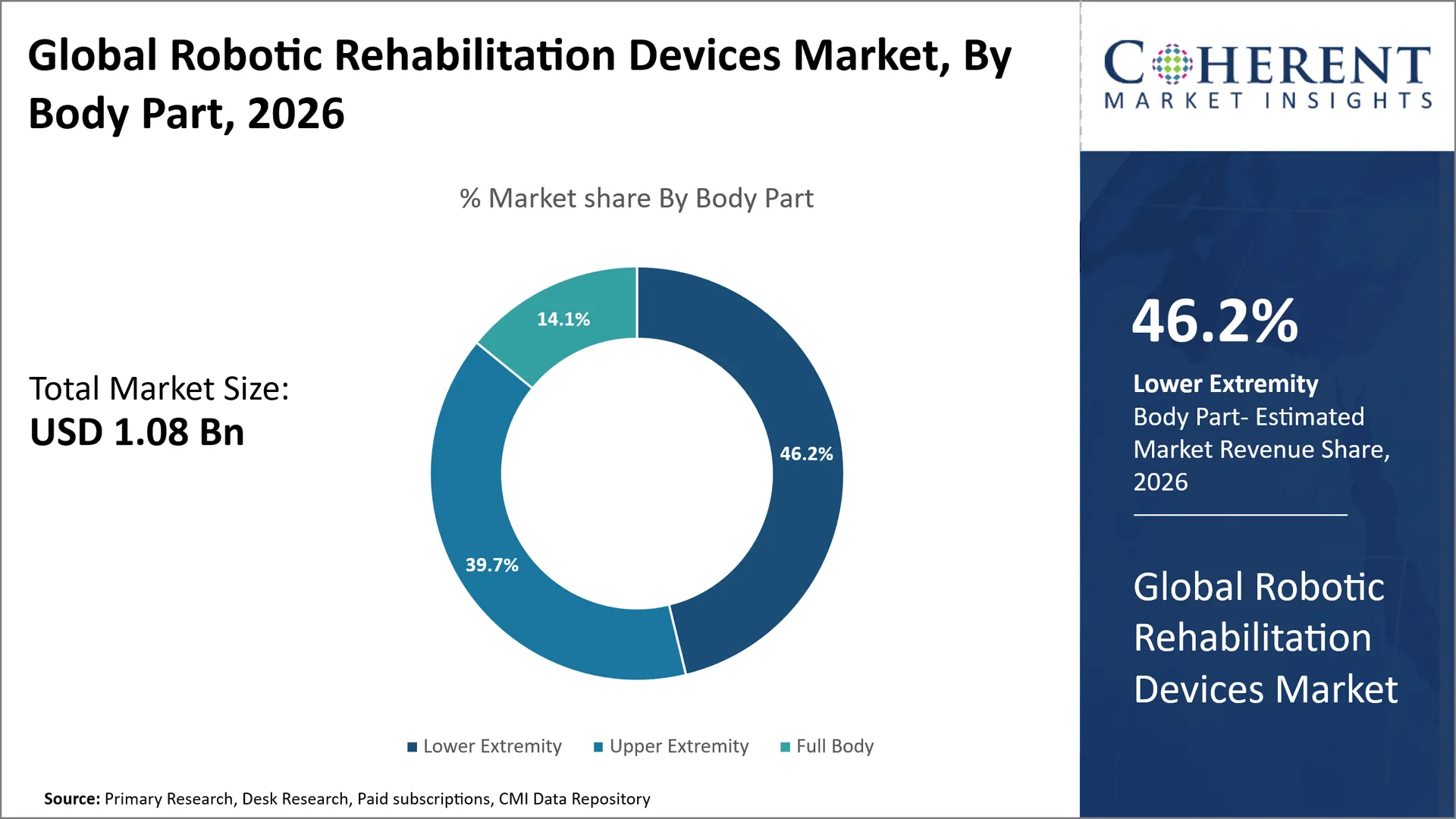
Lower extremity is projected to hold a market share of 46.2% in 2026, owing to high demand for gait training, postural control, mobility for stroke patients, age-related mobility issues, spinal cord injuries. The gait training devices are useful for re-training the pattern of walking in a controlled and repetitive manner. For instance, Japan's National Institute of Public Health clinical trial registry listed a 2024 study assessing the effects of high-speed robot-assisted gait training using the WellWalk WW-1000 system for stroke patients focusing on improvements in stride length and walking speed.
Neurological Rehabilitation Segment Dominates the Global Robotic Rehabilitation Devices Market
The neurological rehabilitation segment is projected to hold a market share of 49.8% in 2026, primarily due to increasing awareness among end users regarding high prevalence of strokes, spinal cord injuries and neurological impairments that require intensive, repetitive and task-specific therapies. The robotic devices can help in training of controlled movement, improvement in motor control and recovery of functional independence. For instance, the India’s Ministry of Health and Family Welfare has established the National Programme for Prevention and Control of Non-Communicable Diseases (NP-NCD). The programme includes stroke prevention, treatment, and rehabilitation provided by public health services, highlighting the need for organized neurological rehabilitation.
Current Events and their Impact
Current Events | Description and its Impact |
U.S. Department of Veterans Affairs Develops Robotic System for Wheelchair Transfers (February 2026) |
|
U.S. Department of Veterans Affairs Develops Exoskeleton Technology for Stroke Rehabilitation (May 2025) |
|
Robotic Rehabilitation Devices Market Dynamics
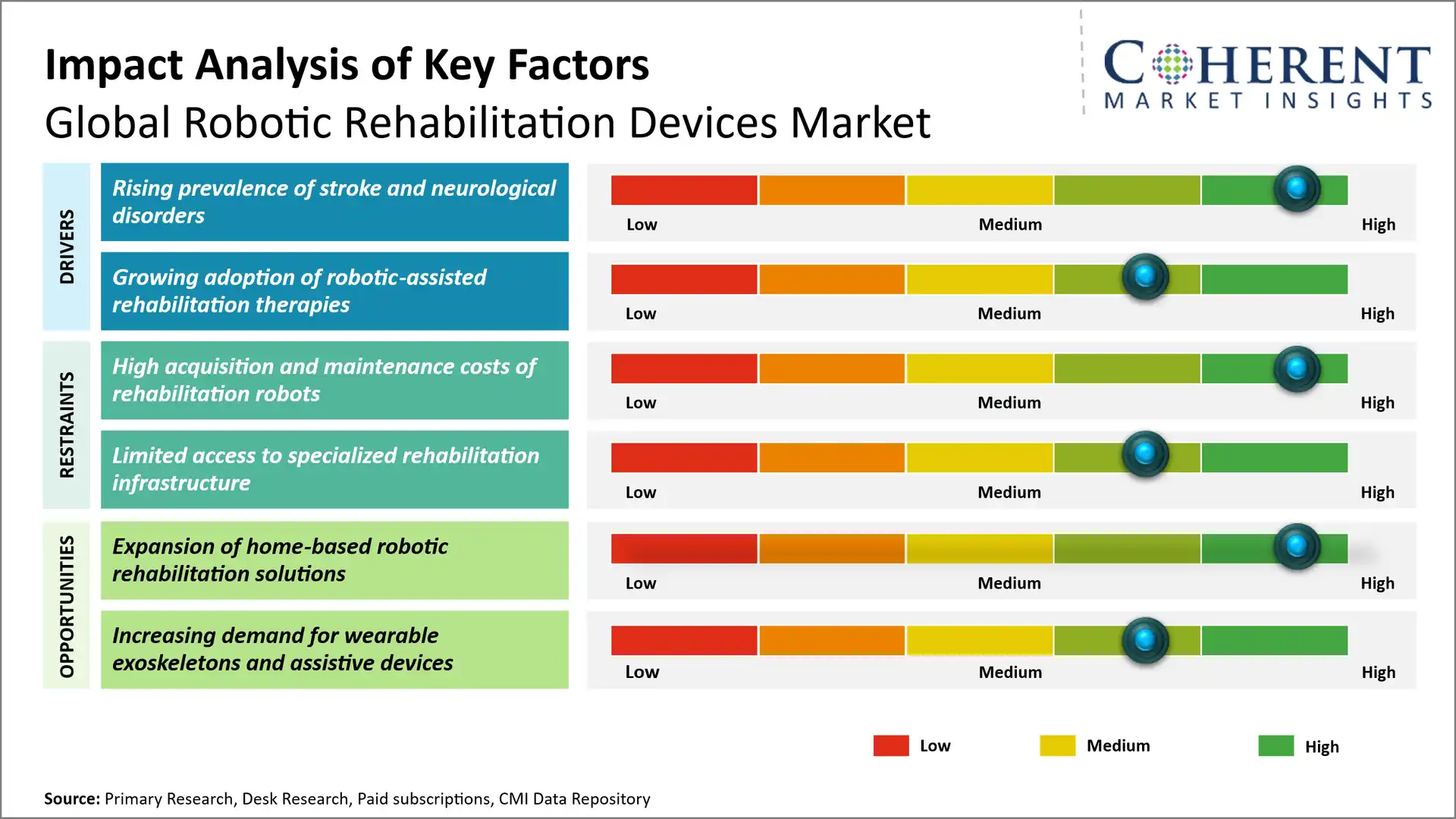
Market Drivers
- Rising prevalence of stroke and neurological disorders: The rising prevalence of stroke and neurological diseases on a global level is contributing towards increasing need for technologically advanced therapies that help in restoring mobility and muscle movement. As per the number of cases estimated for the Global Burden of Disease 2023, there were around 13.2 million newly diagnosed stroke incidences reported globally. This increasing burden of patients is expected to promote the use of robotic rehabilitation devices that enable repetitive and intensive physiotherapy.
- Growing adoption of robotic-assisted rehabilitation therapies: Clinicians are increasingly adopting robotic-assisted systems in rehabilitation regimens, to provide repetitive, programmed, and customized therapy movements to patients. The Government of Odisha has begun setting up Advanced Rehabilitation Centres in eight districts that will offer robot-assisted therapies to people with disabilities and senior citizens free of cost. Increased public investments in this sector are making technology-assisted rehabilitation accessible and popularizing demand for robots in rehabilitation.
- Growing aging population and demand for mobility rehabilitation: As the world’s population of elderly continues to grow, there is an increasing demand for robotic rehabilitation solutions that offer therapeutic intervention for age-related mobility impairment, muscle weakness and reduced physical function. According to World Health Organization (WHO) the world’s population aged 60 and over is projected to grow from 1.4 billion in 2030 to 2.1 billion in 2050. The aging population will create potential opportunities for robotic rehabilitation devices for mobility training, functional restoration, and independence.
Emerging Trends
- Integration of artificial intelligence in robotic rehabilitation systems: Robotic rehabilitation systems incorporating AI are in the process of incorporating sensors and adaptive algorithms to identify movement patterns that would allow them to adapt to the patient's response and their recovery progress to ensure optimal rehabilitation.
- Impact: This advancement leads to more precise treatment, will assist therapists in adjusting the treatment plan in real time, and lead to more effective rehabilitation.
- Market Relevance: This trend enhances the need for intelligent robotic platforms for use in neurological, orthopedic, and mobility rehabilitation.
- Increasing usage of wearable robotic exoskeletons: Wearable robotic exoskeletons are being increasingly adopted as they enable patients to stand and walk and to perform repeating movements of limbs during rehabilitation.
- Impact: These devices can enable greater mobility training and functional independence as well as continuation of rehabilitation outside the clinical setting.
- Market Relevance: This trend is providing opportunities for lower-extremity rehabilitation devices in hospitals, specialized rehabilitation centers, and homecare settings.
Regional Insights
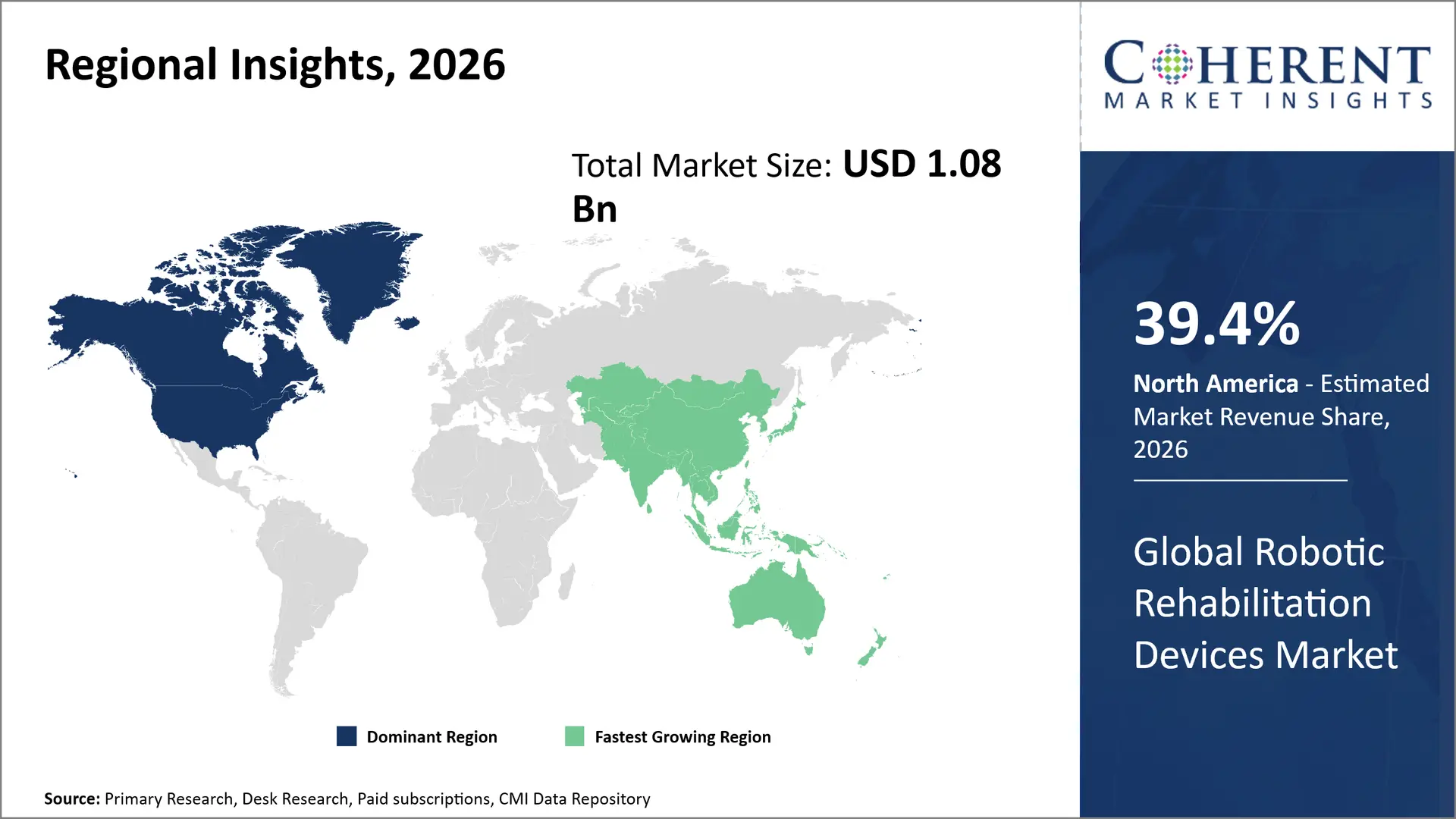
Why is North America a Strong Market for Robotic Rehabilitation Devices?
North America leads the global robotic rehabilitation devices market, accounting for an estimated 39.4% share in 2026, due to advanced healthcare structure, strong government support to enable medical innovations, and high acceptance of these devices. The U.S. in particular benefits from massive grants for the development of rehabilitation devices and increasing demand for such systems to treat persistent neurological diseases and mobility issues in North America.
For instance, the U.S. Department of Veterans Affairs granted an estimated USD 1.19 million for an investigation of a myoelectric orthosis to treat combat veterans with a significant chronic arm motor disability. The trial is set to run through April 2022-March 2027. Additionally, availability of reimbursement for such devices and well-established clinical research infrastructure strengthen the region's market leadership. For instance,
Why Does Asia Pacific Robotic Rehabilitation Devices Market Exhibit High Growth?
Asia Pacific is expected to exhibit the fastest growth in the global robotic rehabilitation devices market, registering an estimated CAGR of 18.6% during 2026–2033. The region is projected to account for 24.2% of the global market in 2026, owing to the expanding healthcare infrastructure and growing aging population as well as enhanced adoption of sophisticated rehabilitation devices. The countries like China, Japan, and South Korea are the leading nations for regional development supported by government programs to upgrade the healthcare system and strengthen post-acute rehabilitation functions with the aid of robotic technology.
For instance, the National Rehabilitation Center in South Korea offers a Translational Research Program for Rehabilitation Robots (TRPRR) that implements clinical application, evaluation, and commercialization of robotic rehabilitation. In addition, strong manufacturing base, low-cost factor, and rising investment in robotics and artificial intelligence is contributing to the evolution of devices in the region.
Global Robotic Rehabilitation Devices Market Outlook for Key Countries
Why is the U.S. Leading Innovation and Adoption in the Robotic Rehabilitation Devices Market?
The U.S. is at the forefront of innovation and commercialization of robotic rehabilitation devices owing to a vibrant mix of niche specialists for medical robotics development, rehabilitation engineering research, and high-end clinical rehabilitation clinics. The potential for a commercial advantage arises from the incorporation of wearable exoskeletons, robotic gait-training systems and other upper-limb rehab devices into existing specialized outpatient rehabilitation clinics, as well as a "pathway" (HCPCS K1007) for Medicare reimbursement of certain powered lower-extremity exoskeletons for eligible users.
Is Japan a Favorable Market for Robotic Rehabilitation Devices Market?
Japan is a suitable market for robotic rehabilitation devices supported by its rapidly aging population, mature robotics industry, and its developed rehabilitation market. As Japan focuses more on mobility issues of its senior population, there exists an expanding market for wearable exoskeletons, robotic gait-trainers, and upper extremity rehab robots. With the addition of some robot-assisted rehabilitation systems to the country's national health insurance system, this provides for clinical implementation and an outlook for Japan as a key market in the Asia Pacific.
Is China Emerging as a Key Growth Hub for the Robotic Rehabilitation Devices Market?
China is poised to be a major growth market in robotic rehabilitation devices driven by its fast-aging population and high demand for post-stroke rehabilitation as well as expanding healthcare infrastructure. Focus on indigenous growth of medical robotics in China and the use of advanced rehabilitation technology in hospitals and rehabilitation centers could propel exoskeleton robot adoption and have a positive impact on the market for upper-limb rehabilitation devices. Moreover, the increased funding into smart healthcare and rehabilitation services is expected to further establish China as a key growth market.
Why Does Germany Top the European Robotic Rehabilitation Devices Market?
Germany leads the European robotic rehabilitation devices due to a robust medical technology industry, a strong rehabilitation facilities infrastructure and a mature statutory health insurance system. A concentrated emphasis on rehabilitation engineering and assistive medical technologies in Germany creates an environment for an increased demand for robotic exoskeletons, gait trainers and upper-limb rehabilitation devices. Moreover, eligibility and reimbursement channels for medical aids under Germany's statutory health insurance system may contribute to improved access for users.
Is Robotic Rehabilitation Devices Market Developing in India?
The India robotic rehabilitation devices market is witnessing growth due to a rise in the stroke cases, growth in the demand for specialized rehabilitative care and increasing integration of technologies. Government supports and funding programs have been aimed at rehabilitation infrastructure development, including installation of robotic therapy setups in select public hospitals, which is consequently creating opportunities for exoskeletons and robot gait trainers. However, the market is facing a number of challenges like high device cost, limited access, and the need for trained rehabilitation professionals.
Regional Reimbursement and Coverage Landscape
Region | Key reimbursement framework / authority | Reimbursement and coverage landscape | Market implications |
North America | CMS (USA); provincial health insurance programmes (Canada) | The Medicare program of the United States added HCPCS Level II code K1007 for eligible powered lower-body exoskeletons in the prosthetic benefit. Coverage remains subject to applicable eligibility and payment requirements. | A defined reimbursement pathway for eligible exoskeletons supports adoption, although coverage is not universal across all robotic rehabilitation devices. |
Europe | National health insurance systems; statutory health insurers | Germany provides a potential reimbursement pathway for eligible medical aids under statutory health insurance, subject to medical necessity, product requirements, and insurer assessment. | Established medical-aid frameworks can support access to eligible assistive robotic devices, although reimbursement differs across countries and insurers. |
Asia Pacific | Japan's National Health Insurance; Australia's Medicare system; national health insurance programmes | Japan reimburses some device-assisted rehabilitation technologies, such as selected robot assisted training devices. Reimbursement is approved for the specific device and its designated reimbursement scheme. | Selected reimbursement pathways support institutional adoption, while coverage differences across countries create varied market opportunities. |
Latin America | National public health systems and social health insurance programmes | Dedicated reimbursement provisions for robotic rehabilitation devices are not consistently established across the region. Coverage and access depend on national healthcare policies, institutional procurement, and individual funding arrangements. | Uneven reimbursement maturity may limit widespread adoption, creating opportunities for cost-effective devices and public-sector rehabilitation investments. |
Middle East & Africa | National health insurance schemes and public healthcare funding programmes | Dedicated, region-wide reimbursement provisions for robotic rehabilitation devices are not established. Access is generally dependent on country-specific insurance policies, public hospital budgets, and individual funding arrangements. | Limited dedicated coverage may constrain affordability, while public healthcare investment and specialized rehabilitation infrastructure offer opportunities for market expansion. |
How is the expansion of home-based robotic rehabilitation solutions creating new growth opportunities in the robotic rehabilitation devices market?
The growing uptake of robotic home-based rehabilitation solutions opens up market opportunities for portable connected devices for customized therapy outside the clinical care environment. Advancements in tele-rehabilitation, sensor technology and artificial intelligence are improving remote patient observation and offering real-time feedback with better levels of patient engagement. For instance, all public hospitals in Singapore have started the TRUST multi-centre clinical trial (NCT06270459) to evaluate the effectiveness of home-based robot-assisted upper-limb rehabilitation with telemonitoring in post-stroke patients. Recruitment was carried out at 3 rehabilitation centres. This represents a step forward in supporting the future of home-based robotic therapy, and highlights the market potential of portable devices and tele-rehabilitation platform. (Source: ClinicalTrials.gov)
Market Players, Key Development, and Competitive Landscape
Key Developments
- In August 2026, Lifeward Ltd. launched a six-month pilot with Ottobock Care to expand access to its ReWalk 7 Personal Exoskeleton across the US. This pilot aims to expand access to ReWalk in rehabilitation hospitals and SCI centers, as well as support patient assessment, clinical education and reimbursement. The partnership highlighted how distribution channels and customized exoskeleton solutions will become key in expanding access to robotic rehabilitation.
- In June 2026, Bioxtreme launched its Dextreme 2.0 robotic rehabilitation system specially designed to treat patients suffering from stroke and neurological disorders. The robotic error-augmentation technology, adaptive artificial intelligence and immersive 3D therapy has been clubbed to make the rehabilitation process personalized and improve the movement accuracy. This product launch points towards the focus on introduction of more technological advancement in neurological and robotic assisted treatment.
Competitive Landscape
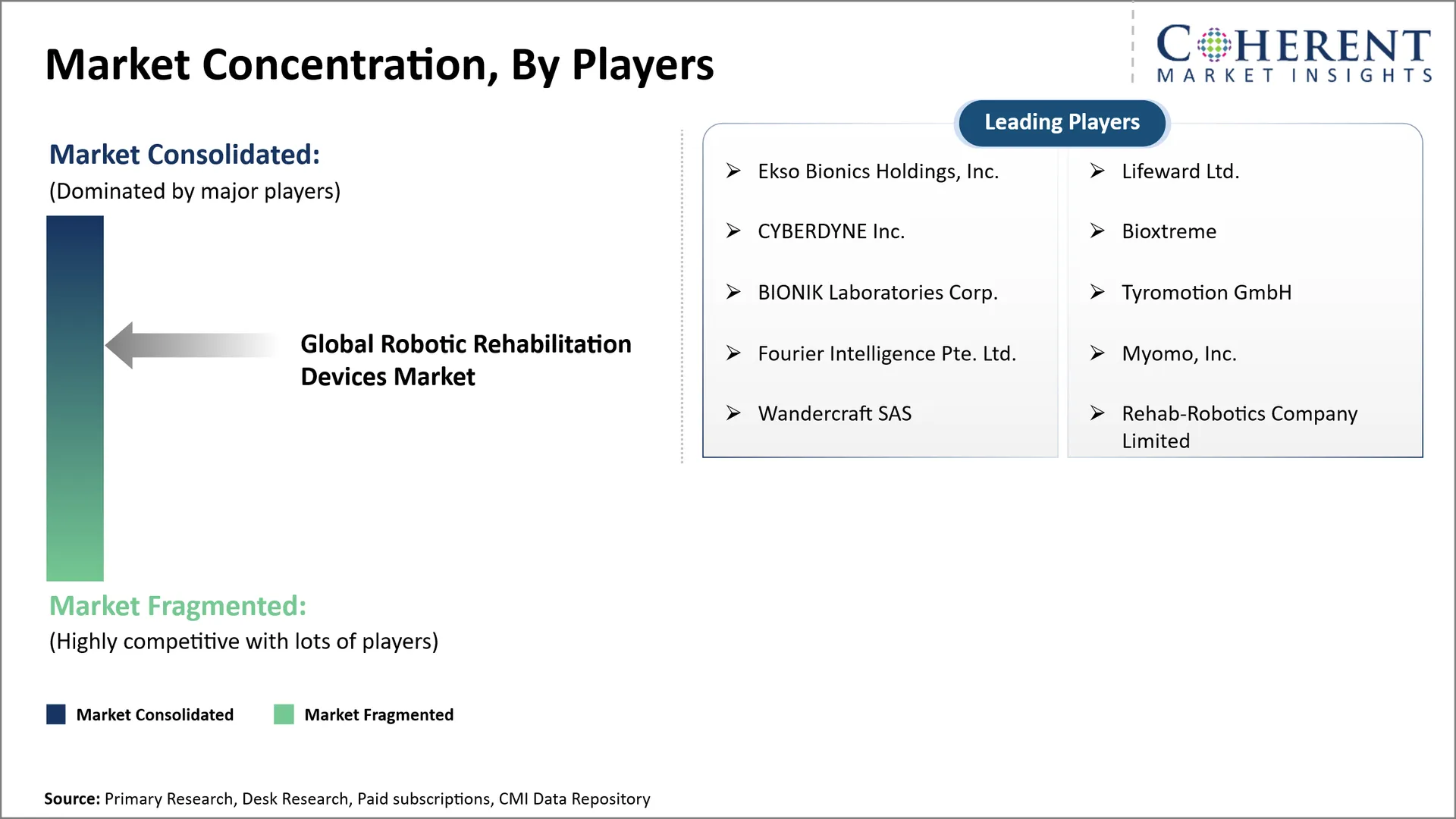
The global market for robotic rehabilitation equipment is extremely fragmented with a moderate level of concentration, primarily among specialized providers of robotic rehabilitation solutions, exoskeletons as well as assistive devices. Competition is majorly driven by device functionality, clinical outcomes, innovation, patient safety, cost, and ease of use. The key players are striving to develop and introduce advanced robotic assistance and lightweight wearable systems, and intelligent solutions to tailor rehabilitation for hospitals, rehabilitation centers, and home care. Key focus areas include:
- Development of advanced robotic exoskeletons for gait rehabilitation and mobility training.
- Development of upper limb and hand robots for stroke and neuro-rehabilitation.
- Artificial intelligence, sensing, and learning control systems for customized therapy.
- Deployment of ultra-lightweight, wearable and portable robotic rehabilitation devices for use in a home setting.
- Formation of strategic alliances with hospitals, clinics and research centres.
- Increase remote monitoring and tele-rehabilitation features for supervised home use.
Market Report Scope
Robotic Rehabilitation Devices Market | |||
Report Coverage | Details | ||
Base Year | 2025 | Market Size in 2026: | USD 1.08 Bn |
Historical Data For: | 2020 To 2024 | Forecast Period: | 2026 To 2033 |
Forecast Period 2026 To 2033 CAGR: | 17.9% | 2033 Value Projection: | USD 3.42 Bn |
Geographies covered: |
| ||
Segments covered: |
| ||
Companies covered: | Ekso Bionics Holdings, Inc., Lifeward Ltd., CYBERDYNE Inc., Bioxtreme, BIONIK Laboratories Corp., Tyromotion GmbH, Fourier Intelligence Pte. Ltd., Myomo, Inc., Wandercraft SAS, Rehab-Robotics Company Limited | ||
Growth Drivers: |
| ||
Restraints & Challenges: |
| ||
Analyst Opinion (Expert Opinion)
- The demand for robotic rehabilitation devices will grow as demand shifts away from conventional, therapist-controlled rehabilitation towards more data-driven, autonomous, data-driven personal rehabilitation options. New-generation, artificial intelligence-enabled robots, wearable exoskeletons, and advanced motion sensors are expected to enable more personalized treatment, better patient engagement, and participation in therapy. Furthermore, demand for at-home robotic rehabilitation and remote monitoring and supervision will drive the market towards shifting treatment from hospitals and specialist rehabilitation clinics towards users at home.
- The major opportunities are expected in the lower-extremity exoskeleton robots for neurological rehabilitation, especially for stroke and spinal cord injury recovery in Japan, China and the U.S. Opportunities exist in hospitals for gait training and in clinics for special rehabilitation programs driven by healthcare infrastructure in place and growing attention for advanced mobility restoration. Additionally, another opportunity exists in wearable upper-limb rehabilitation robots for post-stroke recovery in Japan and China, which are driven by aging population and the need for affordable and continuous rehabilitation in the hospitals.
- In order to gain a competitive advantage market players should focus on clinically proven devices that offer clear value for gait, mobility, motor function and rehabilitation outcomes. The creation of affordable, portable, simple-to-operate solutions that utilize AI-enabled tailoring, real-time feedback and remote monitoring will meet needs both within the clinic and at home. There also needs to be an increased engagement with clinics, rehab therapists and academia by the sector, so that clinical adoption can be speeded up, with solutions that include regionally targeted reimbursement strategies, professional training and durable after-sales support.
Speak to the analyst
Want personalized insights?
Take the findings above to one of our principal consultants, or have the report rebuilt around the segments, geographies and competitors you actually track.
Market Segmentation
- Device Type Insights (Revenue, USD Bn, 2021 - 2033)
- Exoskeleton Robots
- Therapeutic Rehabilitation Robots
- Assistive Rehabilitation Robots
- Robotic Prosthetic Devices
- Body Part Insights (Revenue, USD Bn, 2021 - 2033)
- Lower Extremity
- Upper Extremity
- Full Body
- Application Insights (Revenue, USD Bn, 2021 - 2033)
- Neurological Rehabilitation
- Orthopedic Rehabilitation
- Spinal Cord Injury Rehabilitation
- Geriatric Rehabilitation
- Others
- End User Insights (Revenue, USD Bn, 2021 - 2033)
- Hospitals and Clinics
- Rehabilitation Centers
- Homecare Settings
- Academic and Research Institutes
- Others
- Regional Insights (Revenue, USD Bn, 2021 - 2033)
- North America
- U.S.
- Canada
- Latin America
- Brazil
- Argentina
- Mexico
- Rest of Latin America
- Europe
- Germany
- U.K.
- Spain
- France
- Italy
- Russia
- Rest of Europe
- Asia Pacific
- China
- India
- Japan
- Australia
- South Korea
- ASEAN
- Rest of Asia Pacific
- Middle East
- GCC Countries
- Israel
- Rest of Middle East
- Africa
- South Africa
- North Africa
- Central Africa
- North America
- Key Players Insights
- Ekso Bionics Holdings, Inc.
- Lifeward Ltd.
- CYBERDYNE Inc.
- Bioxtreme
- BIONIK Laboratories Corp.
- Tyromotion GmbH
- Fourier Intelligence Pte. Ltd.
- Myomo, Inc.
- Wandercraft SAS
- Rehab-Robotics Company Limited
Sources
Primary Research Interviews
- Rehabilitation Medicine Specialists
- Physical and Occupational Therapists
- Neurologists and Stroke Rehabilitation Specialists
- Biomedical Engineering and Rehabilitation Robotics Experts
Stakeholders
- Public and Government Rehabilitation Hospitals
- Specialized Rehabilitation Centres
- Homecare and Mobility Rehabilitation Providers
- Academic and Clinical Rehabilitation Research Institutions
- End-use Sectors
- Hospitals and Multispecialty Healthcare Systems
- Specialized Rehabilitation Centres
- Homecare and Assisted Living Settings
- Academic and Research Institutes
- Regulatory & Health Bodies
- U.S. Department of Veterans Affairs (VA)
- Centers for Medicare & Medicaid Services (CMS)
- World Health Organization (WHO)
- Germany's Federal Joint Committee (G-BA)
Databases
- UMIN Clinical Trials Registry (UMIN-CTR)
- ClinicalTrials.gov
- CMS Healthcare Common Procedure Coding System (HCPCS)
- Japan National Health Insurance (NHI) reimbursement framework
Associations
- American Physical Therapy Association (APTA)
- American Academy of Physical Medicine and Rehabilitation (AAPM&R)
- International Society of Physical and Rehabilitation Medicine (ISPRM)
- Rehabilitation Engineering and Assistive Technology Society of North America (RESNA)
Public Domain Sources
- U.S. Department of Veterans Affairs – Research and Development
- U.S. Department of Veterans Affairs – VA/DoD Clinical Practice Guidelines
- Ministry of Social Security and Empowerment of Persons with Disabilities, Government of Odisha
- World Health Organization (WHO)
Proprietary Elements
- CMI Data Analytics Tool, Proprietary CMI Existing Repository of information for last 10 years.
Get access to 250+ pages report
Every segment, forecast, competitor profile and data table behind the analysis above — available for instant download.
- ESOMAR Member
- ISO 9001:2015 Certified
- D-U-N-S Registered
- GDPR & CCPA Compliant
Frequently Asked Questions
The global robotic rehabilitation devices market is estimated to be valued at USD 1.08 Bn in 2026 and is expected to reach USD 3.42 Bn by 2033.
Exoskeleton robots dominate due to their ability to enable gait training, help in mobility and repetitive movements therapy for neurologically impaired patients and mobility-impaired individuals.
Robotic rehabilitation devices are devices that assist the recovery and regain control and strength of the body in the form of controlled and repetitive movement.
The CAGR of global robotic rehabilitation devices market is projected to be 17.9% from 2026 to 2033.
Rising prevalence of stroke and neurological disorders, and growing adoption of robotic-assisted rehabilitation therapies are the major factors driving the growth of the global robotic rehabilitation devices market.
High acquisition and maintenance costs of rehabilitation robots, and limited access to specialized rehabilitation infrastructure are the major factors hampering the growth of the global robotic rehabilitation devices market.
In terms of body part, lower extremity is estimated to dominate the market revenue share in 2026.