

Global Smart Implantable Medical Devices Market Size and Forecast – 2026 to 2033
The global Smart Implantable Medical Devices Market is predicted to reach USD 25.53 Bn by 2033, growing from USD 7.6 Bn in 2026, with an 18.9% CAGR. The sector is advancing through the rapid commercialization of sensor-integrated therapeutic implants, wireless physiological monitoring systems, adaptive neurostimulation technologies, and programmable cardiac devices that are designed to provide responsive treatment and continuous clinical information.
On the other hand, the market's technological progression is evident and illustrated within the regulatory bodies supporting the transition from conventional programmed implants toward responsive, individualized therapeutic systems. Following this trail of development, in July 2026, Newronika S.p.A. gained CE-mark certification for its adaptive deep brain stimulation system, αDBS, incorporating integration with the company's proprietary cloud-based neural data platform, WebBioBank.
The global smart implantable medical devices market now encompass next-generation capabilities, defining scopes that are not possible to be met by conventional passive implants, external wearables, standalone remote monitoring software, and non-implantable therapeutic equipment. This distinction makes it an emerging field of the broader implantable medical devices market, standing out through MedTech developments.
Key Takeaways of the Global Smart Implantable Medical Devices Market
- By product type, cardiac implantable devices are modeled to lead with an estimated 53.8% share in 2026. This is a direct impact of the commercial maturity of pacemakers, implantable defibrillators, and cardiac monitoring systems. This can be evidence by the European Society of Cardiology (ESC) recording an implantation rate of 803.5 pacemakers per million people across Europe in 2024.
- By technology, wireless communication-enabled implants are expected to command the market with approximately 46.2% share in 2026, supported by emergence of remote device interrogation, telemetry, and connected clinical management. For instance, in 2024, 80% median remote-monitoring utilization among patients with cardiac implantable electronic devices, while the interquartile range being 40-90%, was reported in an international survey released by the National Library of Medicine (NLM), covering 302 responding centres across 47 countries.
- By application, cardiovascular disease management is forecast to contribute 54.6% of global market revenue in 2026, reflecting the importance of long-term rhythm surveillance and electronically controlled cardiac intervention. The leadership can also be testified by the massive patient pool of atrial fibrillation (AF), where the U.S. alone is estimated to account for approximately 8 million afflicted individuals by 2050, as per the NLM findings.
- By end user, hospitals are estimated to hold 61.4% of the global smart implantable medical devices market in 2026, owing to their role in complex implantation procedures, electrophysiology services, and specialist surgical programs. As evidence, 2024 NLM study recorded a notably greater participation from hospital-based cardiac implantable electronic devices (CIED) clinics across 47 countries worldwide, accounting for 62.3% of a total 302 responses, compared to the cases directly led by physicians (slightly over 60%).
- North America is modeled to account for the highest regional share of 39.6% in 2026, which is backed by the presence of established implantable-device developers and widespread clinical adoption. For instance, during the first nine months of 2026, a total 127 of EBR Systems’s WiSE cardiac resynchronization therapy system implants were found in use across 41 U.S.-based hospitals, with a record net sales value of USD 7.5 million.
- Asia Pacific is anticipated to record the fastest growth rate throughout 2033, with increasing population of eligible patients, availability of innovative cardiac & neurological care, and specialist treatment capabilities. Displaying the positive trajectory of the patient pool, by 2050, the number of older people (aged 65 years or over) in APAC is expected to reach 996 million, from 503 million in 2024, according to the United Nations Economic and Social Commission for Asia and the Pacific (ESCAP).
Segmental Insights
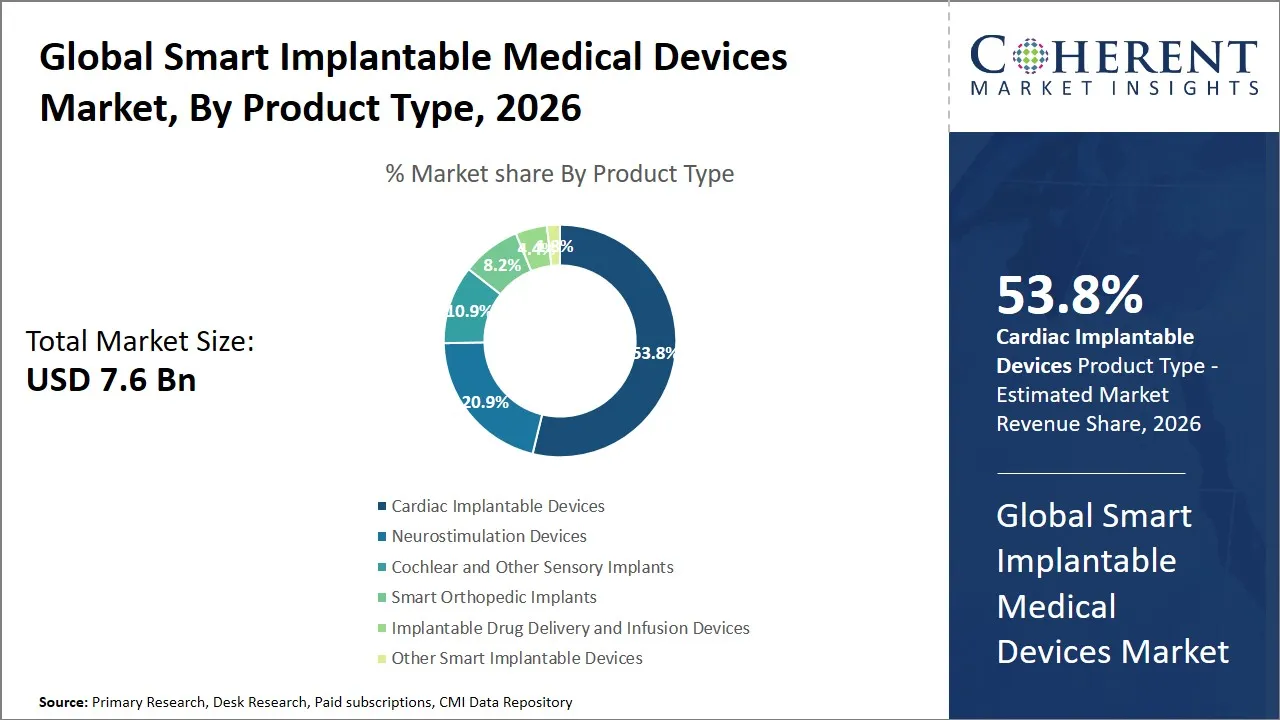
Why Are Cardiac Implantable Devices Leading the Global Smart Implantable Medical Devices Market?
Based on product type, the cardiac implantable devices segment is estimated to hold the largest market share of 53.8% in 2026. The segment's leading position is attributed to the clinically established use of intelligent cardiac pacemakers, implantable cardioverter-defibrillators, cardiac resynchronization systems, and insertable cardiac monitors. In this regard, a 2025 evaluation of the PRAETORIAN-XL trial demonstrated the clinical safety advantages of subcutaneous implantable cardioverter-defibrillators (S-ICDs), compared with conventional transvenous ICDs (TV-ICDs).
Clinical outcome | Advanced S-ICD | Conventional TV-ICD | Improvement with S-ICD |
Major device-related complications | 5.70% | 10.20% | 44.1% lower |
Lead-related complications | 2.40% | 8.30% | 71.1% lower |
All device-related complications | 8.00% | 11.60% | 31.0% lower |
These technologically advanced cardiac implants incorporate diagnostic sensing, rhythm classification algorithms, device-to-device communication, and remote interrogation capabilities, allowing clinicians to evaluate cardiac function and modify treatment as per need. Exemplifying the same, Abbott's October 2025 introduction of the AVEIR dual-chamber leadless pacemaker in India demonstrated an important technological progression, with two intracardiac devices communicating wirelessly on a beat-to-beat basis.
- Current Industry Events of 2026
- Market Size Estimation
- Regional Breakdown
- Competitive Landscape
- Customer Intelligence
- Segmental Analysis
- Pricing Analysis
- Key Market Drivers, Challenges & Future Trends
- Customized Insights Section
Why Are Wireless Communication-enabled Implants Emerging as the Leading Technology Segment?
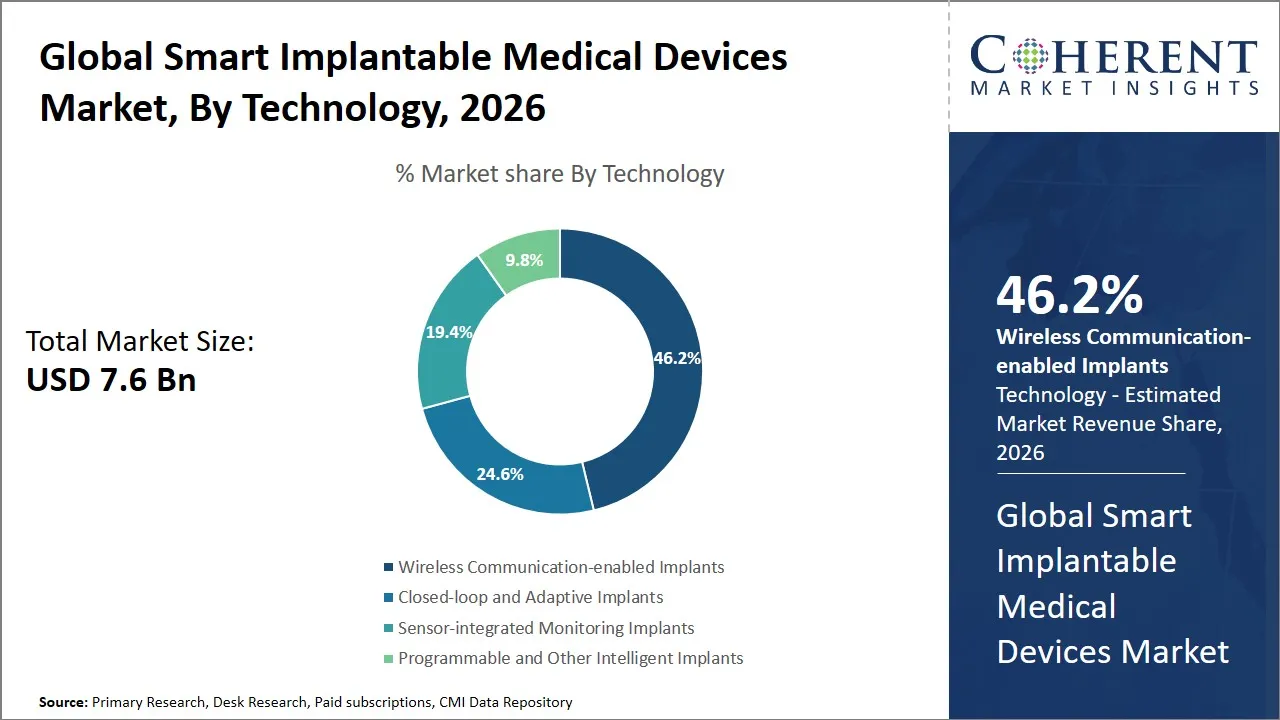
Wireless communication-enabled implants are poised to represent 46.2% of the global smart implantable medical devices market in 2026. This segment benefits largely from widespread clinical use of technologies that permit communication between implanted electronics and compatible external programmers, home monitoring units, or clinical data-management systems. For instance, in November 2024, Lower Bucks Hospital officially started availing Zimmer Biomet's Persona IQ for total knee replacement surgery, which is designed to collect and transmit six categories of patient movement information.
In addition, bluetooth Low Energy, proprietary telemetry, inductive communication, and other communication architectures of new pipelines support functions ranging from remote device checks to treatment-parameter adjustment, expanding the sub-segment’s consumer base. A measurable advantage of similar technology integration comes from Abbott’s proprietary BurstDR spinal cord stimulation (SCS) technology showing the long-term and sustained relief among with chronic pain, particularly pain in the back and legs, as per the four-year data released by the company in January 2025.
Why Do Hospitals Remain the Principal End Users of Smart Implantable Medical Devices?
Hospitals are expected to contribute the largest share of 61.4% in 2026, owing to their infrastructure that are critical to device implantation, perioperative imaging, specialist programming, and the management of surgical complications. Showing that complex implantable-device procedures are highly concentrated in hospitals, during 2024-2025, the U.K.'s National Cardiac Audit Programme reported 80,181 cardiac implantable electronic device procedures across 163 hospitals in England and Wales.
Furthermore, demonstrating the commercial and R&D importance of organized hospital-based implantation networks in this sector, in May 2024, NeuroPace, Inc. started increasing the outreach of its Project CARE pilot program up to community-based clinicians. This expansion was intended to enable greater patient access and adoption for its RNS responsive neurostimulation system outside Level 4 comprehensive epilepsy centres.
Current Events and Their Impact on the Smart Implantable Medical Devices Market
Current Event | Description and its Impact |
U.S. FDA Quality Management System Regulation (February 2026) |
|
European Union EUDAMED Mandatory Registration Framework (May 2026) |
|
Smart Implantable Medical Devices Market Dynamics
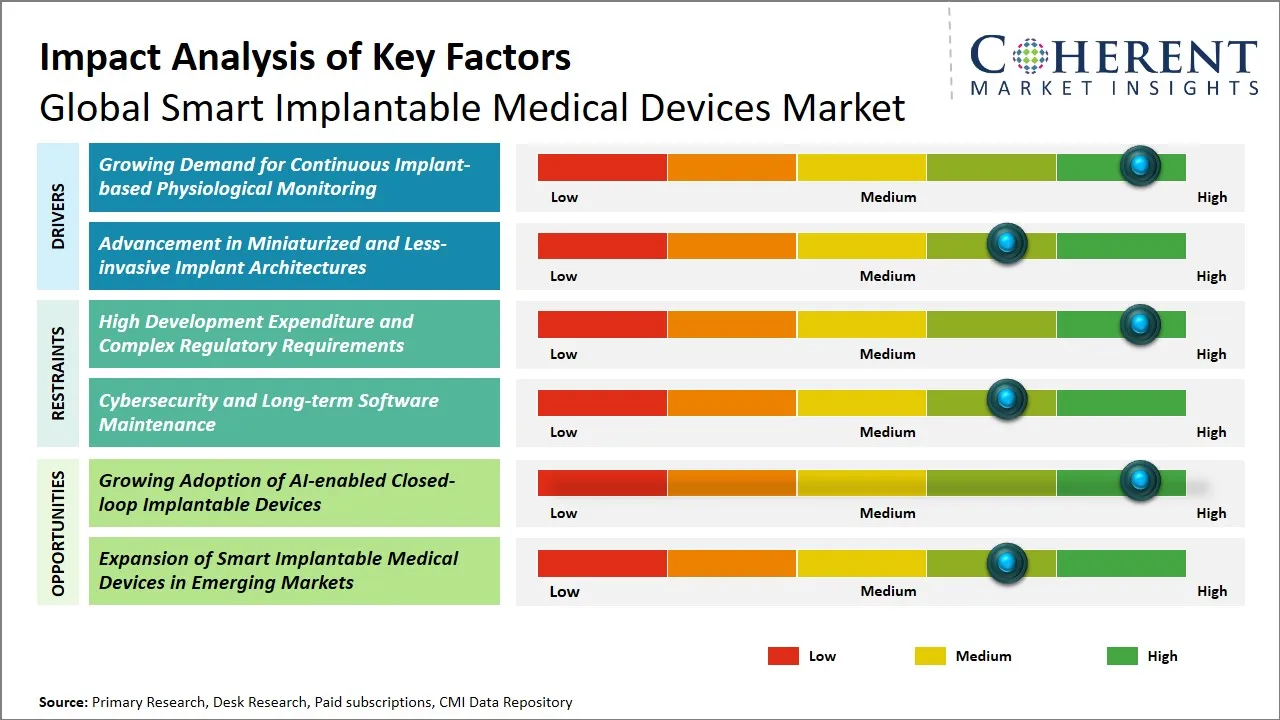
Market Drivers
- Growing Demand for Continuous Implant-based Physiological Monitoring: In cardiac rhythm management, insertable monitors and diagnostic-capable therapeutic implants can capture arrhythmia events and support longitudinal assessment. Even in neurologic applications, implanted electrodes can collect electrical activity associated with treatment response. These capabilities are increasing the clinical value of implantable technologies that are capable of generating clinically useful information between scheduled hospital appointments.
- For instance, the FDA's database recorded 33 premarket approval entries or supplements associated with leadless pacemakers in 2025, compared to 22 and 28 in 2023 and 2024, respectively. This escalation indicates ongoing product and lifecycle activity within the category.
- Advancement in Miniaturized and Less-invasive Implant Architectures: Smaller implantable electronics can improve placement flexibility and create new treatment configurations. Thus, manufacturers are reconsidering traditional device architectures, involving surgically created pockets, transvenous leads, and larger implanted components, to participate in the shift towards miniaturization. This portrays the continuous flow of progress in product development and use case expansion, fueling sustained growth in the smart implantable medical devices market.
- Abbott's AVEIR VR launch in India in November 2024 illustrated this direction, as it introduced a retrievable leadless ventricular pacemaker with a mapping capability that enables assessment of the implant location before final placement.
Emerging Trends
- Increasing Adoption of Closed-loop Neuromodulation: Implantable neurostimulation systems are progressing toward physiological feedback-based operation, as neural activity can inform stimulation adjustments, potentially reducing reliance on exclusively fixed programming schedules. Exemplifying the same, in February 2025, Medtronic's BrainSense Adaptive Deep Brain Stimulation (DBS) and Electrode Identifier (EI) earned FDA approval for treating people with Parkinson's.
- Expansion of Implantable Device Intelligence through AI: Rather than requiring all processing to occur within the implant, manufacturers are increasingly exploring combinations of implant-collected signals and external analytics platforms. For instance, in May 2024, Medtronic announced the deployment of its AccuRhythm AI algorithms to Reveal LINQ insertable cardiac monitors in the U.S., Australia, and New Zealand through a cloud-based update.
- Development of Firmware-upgradeable Implant Platforms: Manufacturers are seeking architectures that allow compatible functional enhancements during the implanted device's service life. A real-world use case of this technology is Cochlear launching its Nucleus Nexa System in July 2025, featuring an upgradeable firmware on the implant and a compact Nucleus 8 Nexa Sound Processor.
Regional Insights
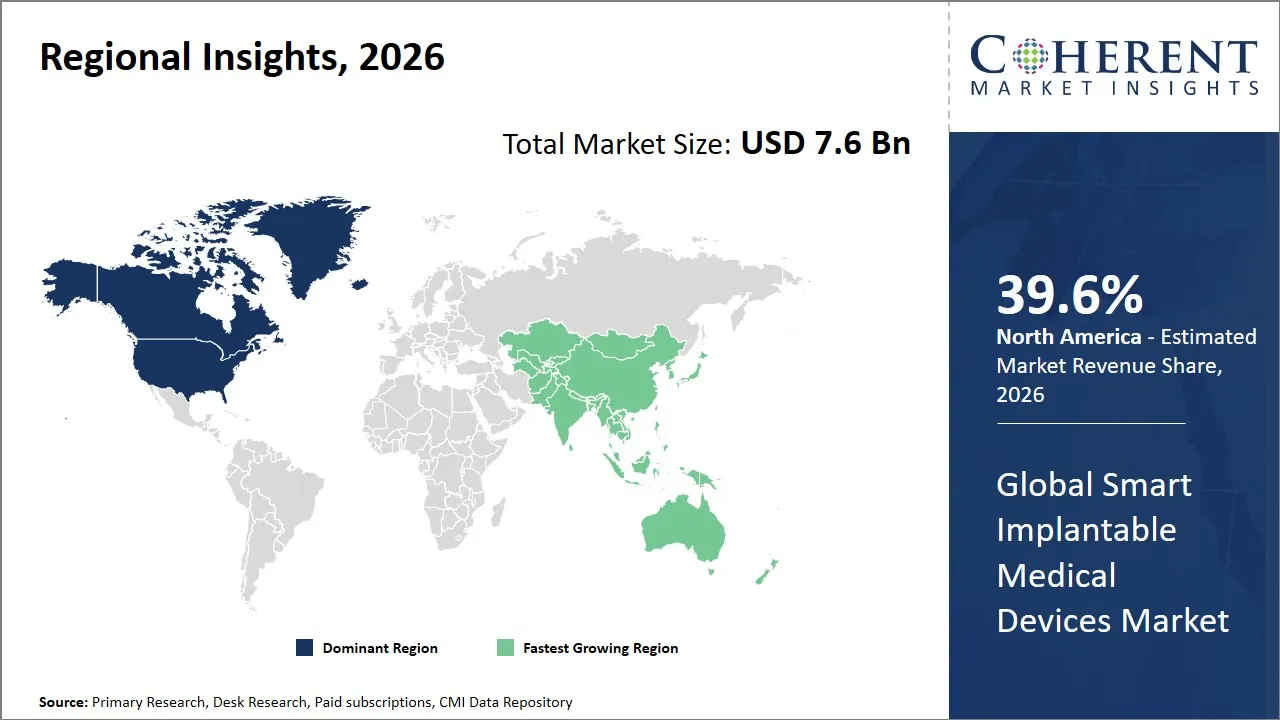
North America to Dominate the Global Smart Implantable Medical Devices Market with a 39.6% Share in 2026
The region's leading position in the market is closely anchored to the strong presence of globally leading medical technology manufacturers, established reimbursement pathways, specialist procedural centers, and advanced clinical research infrastructure. This can be testified by the massive scale of the installed cardiovascular device population in the U.S., where the American College of Cardiology (ACC) estimated the annual number of newly implanted cardiovascular devices till 2026 to be 1-2 million.
North America also plays a central role in developing next-generation implantable electronics, particularly responsive neurostimulation systems, intracardiac pacing technologies, and sensor-assisted orthopedic implants. Such a corporate innovation strengthening the regional ecosystem can be NeuroPace attaining FDA authorization for its AI-driven feature, ECoG Assistant, in May 2026 for reviewing intracranial electrophysiological data generated by its responsive neurostimulation platform in monitoring and managing epilepsy.
Asia Pacific Smart Implantable Medical Devices Market is Expected to Exhibit the Fastest CAGR Through 2033
Asia Pacific is projected to represent accelerated augmentation of the smart implantable medical devices during the forecast period. This progression is shaped under the influence from rapid commercialization of innovative implant technologies across developing Asian neurostimulation devices marketplaces, including China, Japan, India, South Korea, and Australia. As evidence, in April 2026, Medtronic announced the launch of its Adaptive Deep Brain Stimulation system in India to address 10% of the global burden residing within the country.
Increasing specialist clinical capabilities, device manufacturing localization, and expansion of advanced treatment access are also expected to influence regional demand. A regional indicator of the same comes from widespread cardiac device adoption across China in 2024, marking 8.2%, 7.4%, and 15.5% increase in the implantations of conventional pacemaker, cardiac resynchronization therapy device, and cardioverter-defibrillators, respectively, compared with 2023. This was recorded by the 2025 Report on Cardiovascular Health and Diseases in China.
Global Smart Implantable Medical Devices Market Outlook for Key Countries
Advanced Electrophysiology Infrastructure is Reinforcing Smart Implant Commercialization in the U.S.
The U.S. represents a regional center for smart implantable-device commercialization, as it is home to several established medical technology research, specialist surgical infrastructure, and regulatory pathways for high-risk therapeutic devices. Evidence of continued regulatory activity can be observed in the U.S. FDA's leadless pacemaker product category, which recorded a considerable 21 premarket approval entries and supplements in 2026 through the database's November 9 update.
The availability of experienced clinical teams further raises the level of nationwide adoption of devices requiring intricate implantation techniques and long-term technical follow-up. At the corporate level, Abbott outlined plans to initiate a clinical study, involving a leadless AVEIR platform-based conduction-system pacing device, in its 2026 technology pipeline. The investigational program demonstrates the industry's efforts to extend next-generation technologies into additional cardiac pacing applications.
Domestic Cardiac Device Innovation is Supporting China's Smart Implantable Medical Devices Market
China's global smart implantable medical devices market position is empowered by its expanding domestic medical-device industry, large cardiac treatment infrastructure, and increasing capabilities in precision electronics & implantable medical components. In this regard, the International Trade Administration (ITA) predicted the nationwide industry size of medical devices to cross USD 55 billion by the end of 2029, following an impressive CAGR of 8.9% from 2024.
Furthermore, domestic manufacturers are putting efforts to reduce import reliance by developing advanced pacing systems and related technologies, with multinational suppliers participate in the country's advanced therapeutic device ecosystem. Exemplifying this business atmosphere, in February 2025, MicroPort Sorin CRM (Shanghai) earned marketing approval for an innovative implantable cardiac pacing lead from the National Medical Products Administration (NMPA) of China.
Clinical Adoption of Leadless Technology is Advancing Japan's Smart Implantable Devices Industry
Japan also maintains an important position in the regional smart implantable medical devices market, owing to its established R&D culture, extensive medical electronics integration, and structured regulatory environment. Portraying the same, in March 2026, BIOTRONIK commenced its international BIO-LivIQ pivotal study for its next-generation leadless pacemaker system. The LivIQ pacemaker uses advanced far-field electrical sensing technology designed to provide atrioventricular-synchronous pacing through a single leadless implant.
Demand from Japan is further influenced by technological advancements that are designed to manage rhythm disorders in older patient populations, including miniaturized pacemakers, sophisticated cardiac resynchronization devices, and remote monitoring-compatible systems. Displaying such clinically proven advances, a 2026 NLM study reported a minimal 2.8% complication rate, no device-related infections, and an average procedure time of 16.9 minutes in using leadless pacemakers (Micra & Aveir). This was administered as an alternative to conventional pacemaker generator replacement among 71 elderly patients at Kokura Memorial Hospital in Japan.
Connected Hearing Implant Adoption is Expanding Opportunities in the U.K.
The U.K. smart implantable medical devices market is linked to favorable NHS treatment pathways, improved access to specialist auditory implant services, expansion of implant programming facilities, and institutional participation in innovative device introduction. This is evident in an October 2025 announcement by Betsi Cadwaladr University Health Board, which reported that one of the U.K.'s early recipients of a new smart cochlear implant underwent surgery in North Wales during July 2025.
Advances in intelligent cochlear systems are particularly relevant to the commercial success of the UK in this sector, as they enhance device lifecycle management and integrate with patients' individual hearing programs. This can be evidenced by Advanced Bionics launching a mobile application, named AB ListenFit, in March 2025 to help cochlear implant recipients monitor their hearing performance and track rehabilitation progress.
Expanding Specialist Surgical Capabilities are Creating Opportunities for Smart Implants in India
India's smart implantable medical devices market is progressing through significant improvement in tertiary healthcare services, expansion in electrophysiology capabilities, and increase in patient access to specialized neurological & cardiac treatments. A measurable indicator of similar procedural capacity escalation is the U. N. Mehta Institute of Cardiology and Research Centre recording 1,476 pacemaker procedures during 2025, compared with 1,247 in 2024.
The country's medical-device manufacturing policies also create opportunities for local component production, technical partnerships, and the development of more accessible implantable device solutions. For instance, in June 2025, Pacetronix entered into a technology-transfer agreement with the Bhabha Atomic Research Centre (BARC) for the ANUCHITRA Deep Brain Stimulator, which is developed jointly by BARC and the Sree Chitra Tirunal Institute for Medical Sciences and Technology.
How Intelligent Implant Data and Digital Care Platforms are Creating Opportunities in the Global Smart Implantable Medical Devices Market?
Smart implants can generate recurring data throughout the therapeutic lifecycle, enabling physicians to supplement episodic clinical examinations with information collected during normal patient activities. Thus, the increasing availability of physiological information from implantable sensors is creating wider scopes of revenue generation for device manufacturers, clinical software developers, and specialized healthcare service providers.
Moreover, these capabilities are encouraging manufacturers to develop integrated digital ecosystems rather than treating the implant as a standalone hardware product. Subsequently, the fields of application for these next-gen solutions are outstretching towards post-arthroplasty movement assessment, cardiac rhythm surveillance, personalized stimulation evaluation, and the management of compatible implant settings.
For instance, in January 2026, Zimmer Biomet collaborated with PatientIQ to integrate orthopedic patient data, including information collected from smart knee implants, into hospital electronic health record systems. This decision was particularly intended to allow physicians to assess patient mobility, rehabilitation progress, and recovery outcomes using implant-generated information alongside clinical records.
Market Players, Key Developments, and Competitive Intelligence
Key Developments
- In October 2026, Medtronic attained CE Mark approval for its next-generation Vitalis pacemaker portfolio, comprising ReSyncra CSP, Restoria CSP, Refina CSP, Effectra, and Confirma. The portfolio incorporates advanced conduction-system pacing algorithms, personalized therapy programming, and remote monitoring functions.
- In October 2026, Saluda Medical announced the full U.S. commercial release of its CAP24 Surgical Paddle Lead for the Evoke closed-loop spinal cord stimulation system, following FDA approval earlier in 2026. The technology enables the implantable system to measure patients' neural responses and automatically adjust stimulation delivery.
- In October 2026, Epiminder earned FDA clearance for an expanded indication of its Minder implantable continuous EEG monitoring system, extending eligibility from adults aged 18 years and older to patients aged 12 years and older with drug-resistant epilepsy. This enables physicians to evaluate brain activity during everyday patient activities.
Competitive Landscape
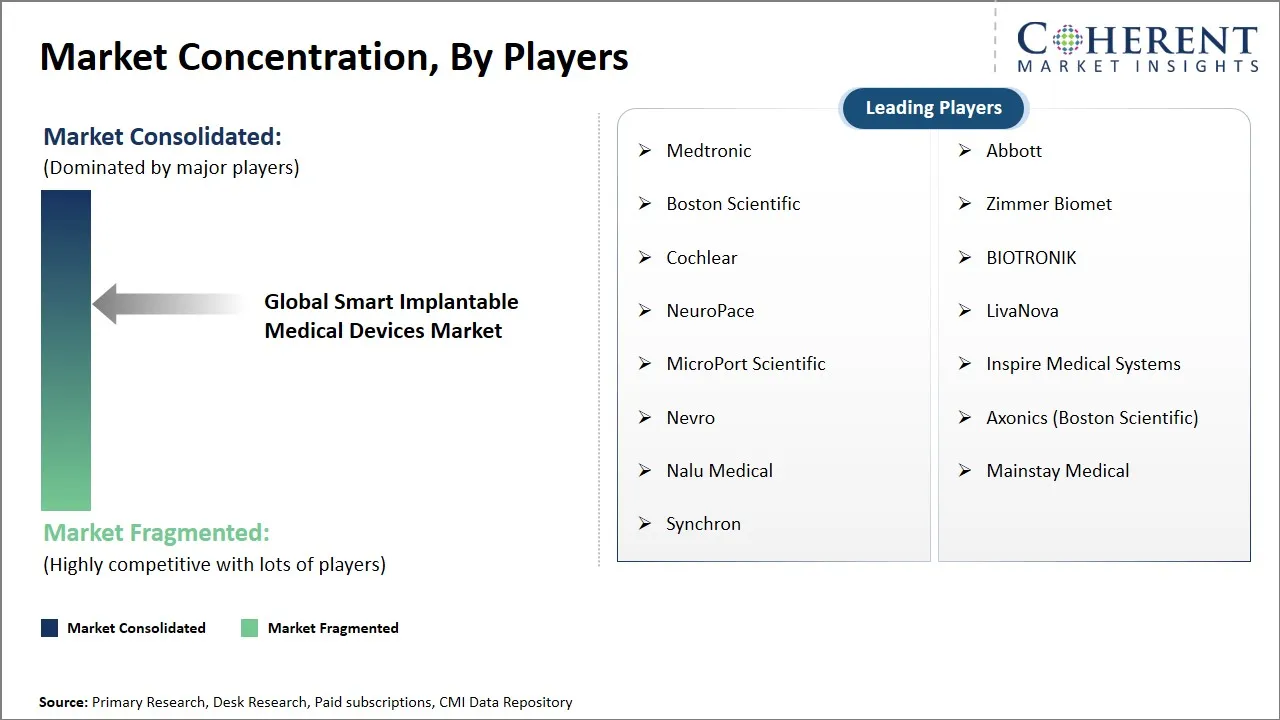
The competitive landscape of the global smart implantable medical devices market includes diversified medical technology manufacturers, specialized neurological-device developers, intelligent orthopedic implant companies, and implantable hearing technology providers. In this sector, large production houses typically compete through their extensive product portfolios, established clinical relationships, proprietary implant electronics, regulatory expertise, and advanced manufacturing capabilities. Besides, their comprehensive strategies emphasize product miniaturization, therapeutic reliability, longer battery performance, compatible programming systems, and expansion into additional clinical indications.
On the other hand, specialized manufacturers are focusing on differentiated technologies within specific therapeutic categories. These companies seek competitive advantages through proprietary sensing architectures, responsive stimulation algorithms, implantable communication systems, and disease-focused clinical evidence. Moreover, partnership between device manufacturers and digital health technology providers may influence product differentiation, as clinical monitoring becomes increasingly integrated with electronically enabled implants.
Leading Manufacturers and Notable Products in the Smart Implantable Medical Devices Market
Manufacturer | Notable Products / Technology | Strategic Relevance |
Medtronic plc | Percept DBS systems with BrainSense Adaptive technology; Micra leadless pacing systems | Major supplier across implantable cardiac and neurological technologies, with commercial adaptive stimulation capabilities. |
Abbott Laboratories | AVEIR leadless pacemakers; Proclaim Plus and Eterna neurostimulation systems | Competes through miniaturized cardiac electronics, pacing communication architecture, and programmable neurological therapies. |
Boston Scientific Corporation | WATCHMAN implantable cardiac devices; Vercise DBS systems; LUX-Dx insertable cardiac monitors | Participates in advanced cardiovascular and neuromodulation categories, with connected diagnostic capabilities in selected products. |
Zimmer Biomet Holdings, Inc. | Persona IQ Smart Knee | Focuses on implantable movement-sensing technology integrated with orthopedic care-management platforms. |
Cochlear Limited | Nucleus Nexa smart cochlear implant system | Develops implant-resident memory, software upgrade capabilities, and intelligent auditory processing systems. |
BIOTRONIK | BIOMONITOR implantable cardiac monitors; connected cardiac rhythm devices | Competes in cardiac diagnostics and therapeutic device connectivity. |
NeuroPace, Inc. | RNS System; ECoG Assistant | Specializes in responsive brain stimulation and long-term intracranial electrophysiological monitoring. |
LivaNova PLC | SenTiva and SenTiva DUO VNS therapy devices | Develops implantable vagus nerve stimulation technologies for neurological treatment. |
MicroPort Scientific Corporation | Implantable pacemaker and cardiac rhythm management technologies through its CRM operations | Participates in cardiac pacing hardware and associated implantable-device development. |
Inspire Medical Systems, Inc. | Inspire upper airway stimulation system | Focuses on implantable stimulation-based treatment for selected patients with obstructive sleep apnea. |
Nevro Corp. | HFX spinal cord stimulation technology | Participates in programmable implantable neurostimulation for chronic pain management. |
Axonics, Inc. | Sacral neuromodulation systems | Represents an implantable neuromodulation technology portfolio within Boston Scientific following its acquisition of Axonics. |
Nalu Medical, Inc. | Miniaturized neurostimulation systems | Develops compact implanted stimulation hardware supported by external power and control technologies. |
Mainstay Medical | ReActiv8 restorative neurostimulation system | Focuses on implantable electrical stimulation targeting selected forms of chronic mechanical low back pain. |
Synchron, Inc. | Stentrode investigational brain–computer interface | Develops investigational implantable neural-interface technologies, representing an emerging rather than established commercial segment. |
Market Report Scope
Global Smart Implantable Medical Devices Market Report Coverage | |||
Report Coverage | Details | ||
Base Year | 2025 | Market Size in 2026: | USD 7.6 Bn |
Historical Data For: | 2020 To 2024 | Forecast Period: | 2026 To 2033 |
Forecast Period 2026 To 2033 CAGR: | 18.9% | 2033 Value Projection: | USD 25.53 Bn |
Geographies covered: |
| ||
Segments covered: |
| ||
Companies covered: | Medtronic, Abbott, Boston Scientific, Zimmer Biomet, Cochlear, BIOTRONIK, NeuroPace, LivaNova, MicroPort Scientific, Inspire Medical Systems, Nevro, Axonics (Boston Scientific), Nalu Medical, Mainstay Medical, Synchron | ||
Growth Drivers: |
| ||
Restraints & Challenges: |
| ||
Key Takeaways from Analyst
- The Global Smart Implantable Medical Devices Market is expected to evolve from conventional electronically programmable devices toward increasingly responsive implants that integrate real-time sensing, intelligent control, and advanced communication functions. Manufacturers capable of demonstrating meaningful clinical benefits while maintaining long-term device reliability are likely to secure stronger competitive positions.
- Product differentiation is anticipated to depend increasingly on the interaction between implanted hardware and compatible digital clinical management systems. Advanced device programming, secure physiological data exchange, software-supported decision-making, and implant lifecycle management are expected to influence procurement and adoption decisions.
- Regional growth will remain dependent on specialist healthcare infrastructure, regulatory market access, affordability, reimbursement, and the availability of trained clinical professionals. While North America is expected to maintain its leading commercial position, Asia Pacific could generate significant incremental demand as advanced cardiac, neurological, and sensory implant technologies become more widely available.
Market Segmentation
- Product Type Insights (Revenue, USD Bn, 2021 - 2033)
- Cardiac Implantable Devices
- Neurostimulation Devices
- Cochlear and Other Sensory Implants
- Smart Orthopedic Implants
- Implantable Drug Delivery and Infusion Devices
- Other Smart Implantable Devices
- Technology Insights (Revenue, USD Bn, 2021 - 2033)
- Wireless Communication-enabled Implants
- Closed-loop and Adaptive Implants
- Sensor-integrated Monitoring Implants
- Programmable and Other Intelligent Implants
- Application Insights (Revenue, USD Bn, 2021 - 2033)
- Cardiovascular Disorders
- Neurological Disorders and Pain Management
- Hearing and Sensory Disorders
- Orthopedic and Musculoskeletal Conditions
- Metabolic and Other Chronic Conditions
- End User Insights (Revenue, USD Bn, 2021 - 2033)
- Hospitals
- Specialty Clinics
- Ambulatory Surgical Centers
- Regional Insights (Revenue, USD Bn, 2021 - 2033)
- North America
- U.S.
- Canada
- Latin America
- Brazil
- Argentina
- Mexico
- Rest of Latin America
- Europe
- Germany
- U.K.
- Spain
- France
- Italy
- Russia
- Rest of Europe
- Asia Pacific
- China
- India
- Japan
- Australia
- South Korea
- ASEAN
- Rest of Asia Pacific
- Middle East
- GCC Countries
- Israel
- Rest of Middle East
- Africa
- South Africa
- North Africa
- Central Africa
- North America
- Key Players Insights
- Medtronic
- Abbott
- Boston Scientific
- Zimmer Biomet
- Cochlear
- BIOTRONIK
- NeuroPace
- LivaNova
- MicroPort Scientific
- Inspire Medical Systems
- Nevro
- Axonics (Boston Scientific)
- Nalu Medical
- Mainstay Medical
- Synchron
Sources
Primary Research Interviews
- Smart implantable medical device manufacturers and technology developers
- Cardiac implantable electronic device (CIED) manufacturers and electrophysiologists
- Neurostimulation and adaptive deep brain stimulation (DBS) technology specialists
- Cochlear implant manufacturers and audiology professionals
- Smart orthopedic implant manufacturers and orthopedic surgeons
- Implantable sensor, semiconductor, and wireless communication technology developers
- Medical device regulatory affairs and quality assurance professionals
- Hospital procurement managers and implantable device distributors
- Clinical research organizations (CROs) and medical device clinical trial investigators
- Medical device cybersecurity and remote patient monitoring specialists
Stakeholders
- Global smart implantable medical device manufacturers
- Cardiac rhythm management and neurostimulation device developers
- Cochlear implant and hearing restoration technology providers
- Smart orthopedic implant and surgical technology manufacturers
- Implantable electronics, sensors, and battery technology suppliers
- Hospitals, specialty clinics, and ambulatory surgical centers
- Clinical research institutions and healthcare technology assessment organizations
- Digital health, AI-based clinical analytics, and remote monitoring platform providers
- Medical device distributors and technology commercialization partners
Therapeutic Areas
- Cardiac rhythm disorders and cardiovascular disease management
- Parkinson's disease and movement disorders
- Epilepsy and responsive neurostimulation
- Chronic pain and spinal cord stimulation
- Hearing impairment and cochlear implantation
- Orthopedic joint replacement and postoperative rehabilitation
- Obstructive sleep apnea and upper airway stimulation
- Sacral neuromodulation and pelvic floor disorders
- Implantable drug infusion and chronic therapeutic management
Regulatory and Government Bodies
- U.S. Food and Drug Administration (FDA)
- U.S. Centers for Medicare & Medicaid Services (CMS)
- European Commission – Medical Devices
- European Medicines Agency (EMA), for applicable combination products
- U.K. Medicines and Healthcare products Regulatory Agency (MHRA)
- National Medical Products Administration (NMPA), China
- Pharmaceuticals and Medical Devices Agency (PMDA), Japan
- Central Drugs Standard Control Organisation (CDSCO), India
- Department of Pharmaceuticals, Government of India
- Bhabha Atomic Research Centre (BARC), India
- Therapeutic Goods Administration (TGA), Australia
- Ministry of Food and Drug Safety (MFDS), South Korea
- U.S. National Institutes of Health (NIH)
Databases
- FDA Premarket Approval (PMA) Database
- FDA 510(k) Premarket Notification Database
- FDA Medical Device Reports (MAUDE)
- FDA Total Product Life Cycle (TPLC) Database
- FDA Medical Device Cybersecurity Guidance Database
- European Database on Medical Devices (EUDAMED)
- ClinicalTrials.gov
- World Health Organization International Clinical Trials Registry Platform (WHO ICTRP)
- PubMed and PubMed Central – National Library of Medicine (NLM)
- Japan PMDA Medical Device Approval Database
- U.S. Centers for Medicare & Medicaid Services Coverage Database
- WIPO PATENTSCOPE
- U.S. Securities and Exchange Commission (SEC) EDGAR Database
Magazines and Industry Publications
- Medical Device and Diagnostic Industry (MD+DI)
- Medical Device Network
- MedTech Dive
- Medical Design & Outsourcing
- Medical Product Outsourcing
- Cardiovascular Business
- Cardiovascular News
- MassDevice
- NeuroNews International
- Hearing Health & Technology Matters
- Healthcare IT News
- Medical Technology Magazine
Journals
- Circulation: Arrhythmia and Electrophysiology
- Heart Rhythm
- European Heart Journal
- Journal of the American Heart Association
- Journal of Neural Engineering
- IEEE Transactions on Biomedical Engineering
- IEEE Transactions on Neural Systems and Rehabilitation Engineering
- Nature Biomedical Engineering
- Journal of Medical Devices
- Journal of Orthopaedics
- The Journal of Arthroplasty
- Otolaryngology–Head and Neck Surgery
- Journal of Clinical Medicine
- Frontiers in Neurology
- Brain Stimulation
Associations
- American Heart Association (AHA)
- American College of Cardiology (ACC)
- European Society of Cardiology (ESC)
- Heart Rhythm Society (HRS)
- European Heart Rhythm Association (EHRA)
- Asia Pacific Heart Rhythm Society (APHRS)
- International Neuromodulation Society (INS)
- American Association of Neurological Surgeons (AANS)
- American Academy of Orthopaedic Surgeons (AAOS)
- American Cochlear Implant Alliance (ACI Alliance)
- Advanced Medical Technology Association (AdvaMed)
- MedTech Europe
- Medical Technology Association of India (MTaI)
- Association for the Advancement of Medical Instrumentation (AAMI)
Public Domain Sources
- Medical device manufacturers' annual reports, financial disclosures, and investor presentations
- Official product launches, regulatory approvals, and corporate technology announcements
- FDA, CE Mark, NMPA, and PMDA implantable medical device approval records
- National cardiac device implantation registries and clinical audit reports
- Government medical device manufacturing policies and investment initiatives
- Peer-reviewed clinical studies on leadless pacemakers and cardiac defibrillators
- Clinical investigations involving adaptive deep brain stimulation and responsive neurostimulation
- Published research on implantable sensors and smart orthopedic rehabilitation outcomes
- Cochlear implant clinical studies and intelligent hearing technology developments
- Medical device cybersecurity, software maintenance, and quality-management guidelines
- Hospital implantation procedure statistics and medical technology utilization reports
- Corporate collaborations, technology-transfer agreements, acquisitions, and licensing announcements
- Medical device patents, technical documentation, and instructions for use
- United Nations population ageing projections and healthcare demographic publications
Proprietary Elements
- CMI Data Analytics Tool
- Proprietary CMI Existing Repository of Information for the Last 10 Years
Sources
Primary Research Interviews
- Smart implantable medical device manufacturers and technology developers
- Cardiac implantable electronic device (CIED) manufacturers and electrophysiologists
- Neurostimulation and adaptive deep brain stimulation (DBS) technology specialists
- Cochlear implant manufacturers and audiology professionals
- Smart orthopedic implant manufacturers and orthopedic surgeons
- Implantable sensor, semiconductor, and wireless communication technology developers
- Medical device regulatory affairs and quality assurance professionals
- Hospital procurement managers and implantable device distributors
- Clinical research organizations (CROs) and medical device clinical trial investigators
- Medical device cybersecurity and remote patient monitoring specialists
Stakeholders
- Global smart implantable medical device manufacturers
- Cardiac rhythm management and neurostimulation device developers
- Cochlear implant and hearing restoration technology providers
- Smart orthopedic implant and surgical technology manufacturers
- Implantable electronics, sensors, and battery technology suppliers
- Hospitals, specialty clinics, and ambulatory surgical centers
- Clinical research institutions and healthcare technology assessment organizations
- Digital health, AI-based clinical analytics, and remote monitoring platform providers
- Medical device distributors and technology commercialization partners
Therapeutic Areas
- Cardiac rhythm disorders and cardiovascular disease management
- Parkinson's disease and movement disorders
- Epilepsy and responsive neurostimulation
- Chronic pain and spinal cord stimulation
- Hearing impairment and cochlear implantation
- Orthopedic joint replacement and postoperative rehabilitation
- Obstructive sleep apnea and upper airway stimulation
- Sacral neuromodulation and pelvic floor disorders
- Implantable drug infusion and chronic therapeutic management
Regulatory and Government Bodies
- U.S. Food and Drug Administration (FDA)
- U.S. Centers for Medicare & Medicaid Services (CMS)
- European Commission – Medical Devices
- European Medicines Agency (EMA), for applicable combination products
- U.K. Medicines and Healthcare products Regulatory Agency (MHRA)
- National Medical Products Administration (NMPA), China
- Pharmaceuticals and Medical Devices Agency (PMDA), Japan
- Central Drugs Standard Control Organisation (CDSCO), India
- Department of Pharmaceuticals, Government of India
- Bhabha Atomic Research Centre (BARC), India
- Therapeutic Goods Administration (TGA), Australia
- Ministry of Food and Drug Safety (MFDS), South Korea
- U.S. National Institutes of Health (NIH)
Databases
- FDA Premarket Approval (PMA) Database
- FDA 510(k) Premarket Notification Database
- FDA Medical Device Reports (MAUDE)
- FDA Total Product Life Cycle (TPLC) Database
- FDA Medical Device Cybersecurity Guidance Database
- European Database on Medical Devices (EUDAMED)
- ClinicalTrials.gov
- World Health Organization International Clinical Trials Registry Platform (WHO ICTRP)
- PubMed and PubMed Central – National Library of Medicine (NLM)
- Japan PMDA Medical Device Approval Database
- U.S. Centers for Medicare & Medicaid Services Coverage Database
- WIPO PATENTSCOPE
- U.S. Securities and Exchange Commission (SEC) EDGAR Database
Magazines and Industry Publications
- Medical Device and Diagnostic Industry (MD+DI)
- Medical Device Network
- MedTech Dive
- Medical Design & Outsourcing
- Medical Product Outsourcing
- Cardiovascular Business
- Cardiovascular News
- MassDevice
- NeuroNews International
- Hearing Health & Technology Matters
- Healthcare IT News
- Medical Technology Magazine
Journals
- Circulation: Arrhythmia and Electrophysiology
- Heart Rhythm
- European Heart Journal
- Journal of the American Heart Association
- Journal of Neural Engineering
- IEEE Transactions on Biomedical Engineering
- IEEE Transactions on Neural Systems and Rehabilitation Engineering
- Nature Biomedical Engineering
- Journal of Medical Devices
- Journal of Orthopaedics
- The Journal of Arthroplasty
- Otolaryngology–Head and Neck Surgery
- Journal of Clinical Medicine
- Frontiers in Neurology
- Brain Stimulation
Associations
- American Heart Association (AHA)
- American College of Cardiology (ACC)
- European Society of Cardiology (ESC)
- Heart Rhythm Society (HRS)
- European Heart Rhythm Association (EHRA)
- Asia Pacific Heart Rhythm Society (APHRS)
- International Neuromodulation Society (INS)
- American Association of Neurological Surgeons (AANS)
- American Academy of Orthopaedic Surgeons (AAOS)
- American Cochlear Implant Alliance (ACI Alliance)
- Advanced Medical Technology Association (AdvaMed)
- MedTech Europe
- Medical Technology Association of India (MTaI)
- Association for the Advancement of Medical Instrumentation (AAMI)
Public Domain Sources
- Medical device manufacturers' annual reports, financial disclosures, and investor presentations
- Official product launches, regulatory approvals, and corporate technology announcements
- FDA, CE Mark, NMPA, and PMDA implantable medical device approval records
- National cardiac device implantation registries and clinical audit reports
- Government medical device manufacturing policies and investment initiatives
- Peer-reviewed clinical studies on leadless pacemakers and cardiac defibrillators
- Clinical investigations involving adaptive deep brain stimulation and responsive neurostimulation
- Published research on implantable sensors and smart orthopedic rehabilitation outcomes
- Cochlear implant clinical studies and intelligent hearing technology developments
- Medical device cybersecurity, software maintenance, and quality-management guidelines
- Hospital implantation procedure statistics and medical technology utilization reports
- Corporate collaborations, technology-transfer agreements, acquisitions, and licensing announcements
- Medical device patents, technical documentation, and instructions for use
- United Nations population ageing projections and healthcare demographic publications
Proprietary Elements
- CMI Data Analytics Tool
- Proprietary CMI Existing Repository of Information for the Last 10 Years
Get access to 250+ pages report
Every segment, forecast, competitor profile and data table behind the analysis above — available for instant download.
- ESOMAR Member
- ISO 9001:2015 Certified
- D-U-N-S Registered
- GDPR & CCPA Compliant
Frequently Asked Questions
The Global Smart Implantable Medical Devices Market is projected to exhibit a CAGR of 18.90% from 2026 to 2033 under the preliminary forecast model.
Advancements in sensor-integrated implant technology, adaptive therapeutic systems, wireless device communication, and continuous implant-based patient monitoring are major factors supporting market growth.
High product development costs, stringent regulatory requirements, complex surgical procedures, cybersecurity considerations, and limited accessibility in price-sensitive healthcare markets are important challenges.
In terms of product type, cardiac implantable devices are modeled to dominate the market with a 53.8% revenue share in 2026.
Medtronic, Abbott, Boston Scientific, Zimmer Biomet, Cochlear, BIOTRONIK, NeuroPace, LivaNova, MicroPort Scientific, and Inspire Medical Systems are among the important participants.
North America is expected to lead the Global Smart Implantable Medical Devices Market, with a modeled 39.6% share in 2026.