

Global Smart Insole Market Size and Forecast – 2026 To 2033
The global smart insole market is expected to grow from USD 186.4 Mn in 2026 to USD 392.1 Mn by 2033, registering a compound annual growth rate (CAGR) of 11.2% from 2026 to 2033. The global smart insole market is predicted to register moderate growth rate over the forecast period owing to high adoption of fall-risk monitoring and mobility monitoring from aging population as smart insole continuously monitors gait analysis, balance and plantar pressure to help identify mobility impairment at an early stage.
In October 2026, the World Health Organization (WHO), estimated that there were nearly 842,000 deaths from falls worldwide in 2023, of which nearly 71% were experienced by adults aged 60 years and above. Therefore, the increasing requirement for fall-prevention and mobility-monitoring devices is resulting in the rising demand for smart insoles in geriatrics and rehabilitation.
Key Takeaways of the Global Smart Insole Market
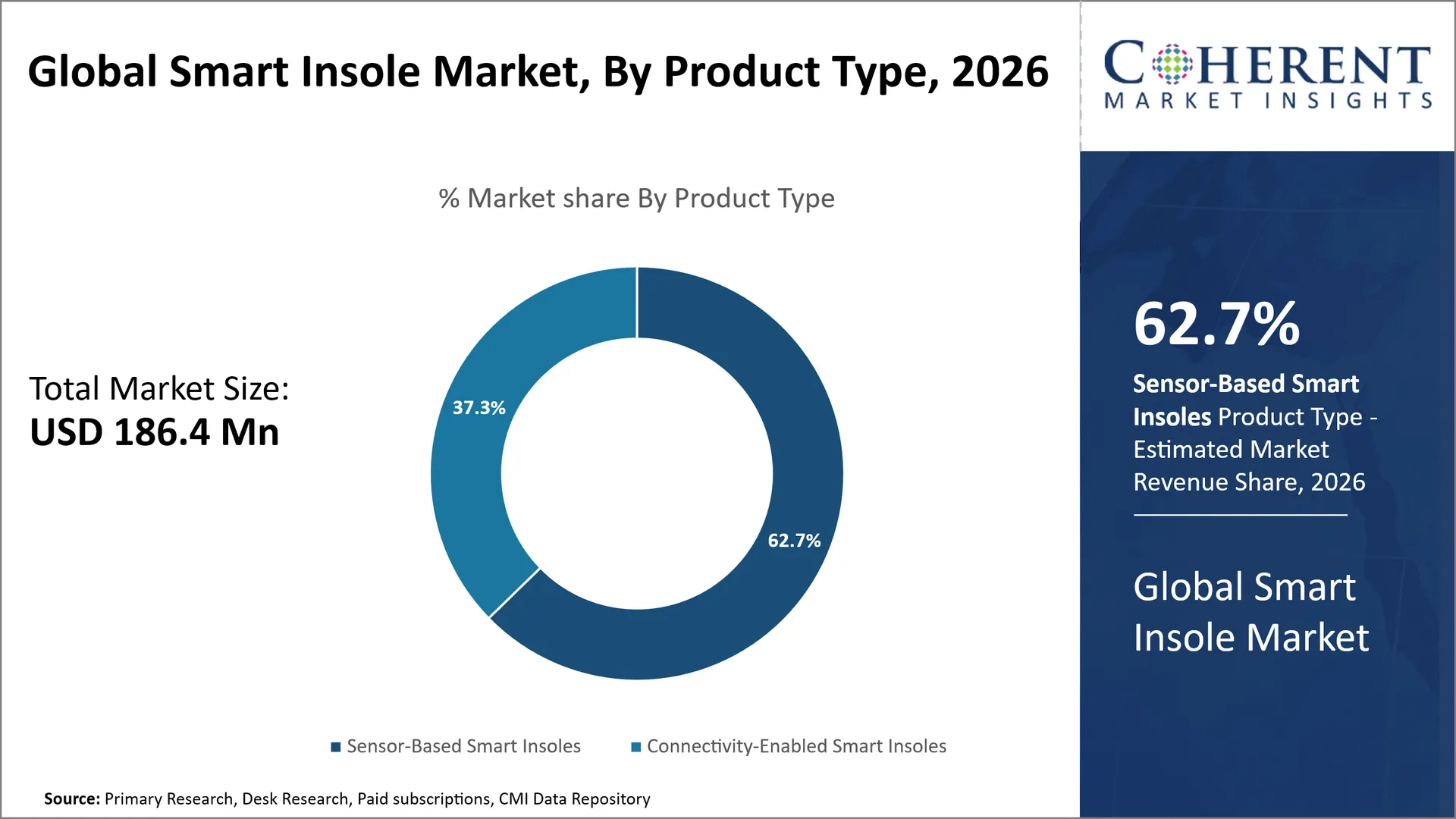
- Sensor-based smart insoles are projected to hold 62.7% of the global smart insole market share in 2026, making it dominant product type segment. North America is expected to see maximum adoption of smart insoles due to the highest demand for sensor-based gait monitoring, plantar pressure measurement and wearable mobility monitoring. In August 2024, Axioforce LLC has been awarded USD 1.83 million by the U.S. National Institutes of Health (NIH) award for the development of 3D force-sensing insoles for AI-enabled gait monitoring.
- Pressure sensors are projected to hold 41.8% of the global smart insole market share in 2026, making it dominant technology segment. Europe is expected to witness growth in the smart insole market, owing to increasing funding for sensor-integrated foot monitoring, diabetic foot, and biomechanical testing and analysis among others. The Federal Ministry of Education and Research (BMBF) of Germany funded over USD 548,250 (EUR 500,000) for the project GLUCOSole to enable the development of smart insoles based on sensor technology integrated with AI-based data analysis.
- Medical monitoring is projected to hold 28.6% of the global smart insole market share in 2026, making it dominant application segment. Asia-Pacific is expected to led due to growing adoption for low-cost diabetic foot monitoring, home health and activity monitoring and home rehabilitation-based solutions. The Centre of Excellence in Affordable Healthcare at IIT Kharagpur is designing an affordable smart foot-pressure insole to monitor activity and aid in rehabilitation. The research has received a fund of USD 26,970 (INR 25 lakh) to support the project from 2025-28.
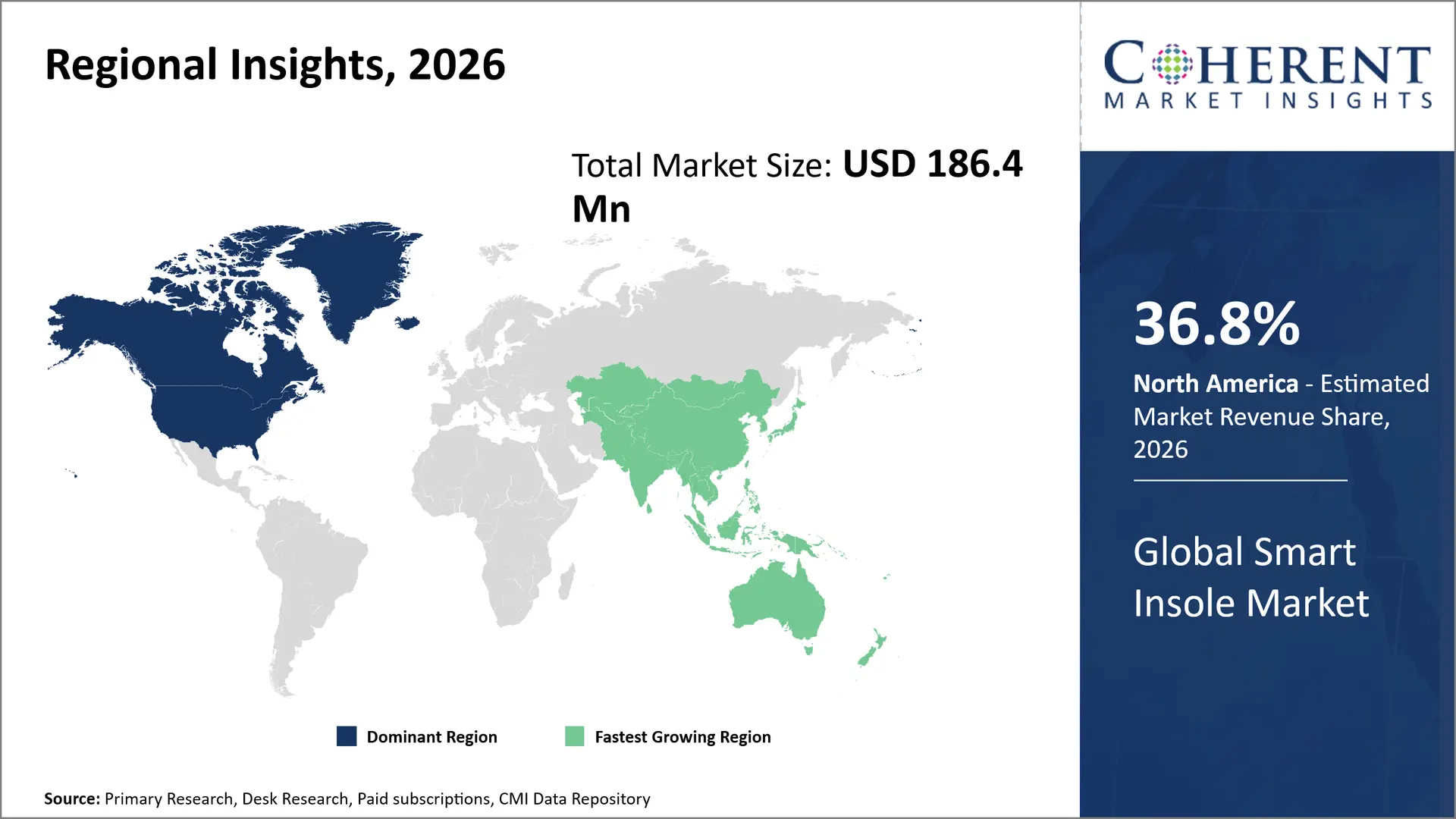
- North America market maintains dominance with an expected share of 36.8% in 2026, owing to wide availability of wearable health care devices, incontinence for continuous evaluation of mobility, and integration of sensor-based gait analysis in old age care. In September 2025, the U.S. National Institutes of Health (NIH) allotted USD 499,943 to Aster Labs Inc., for the creation of an insole-based wearable system for continuous monitoring of gait abnormalities and early indications of health deterioration in adults having Alzheimer's disease and related dementias.
- Asia Pacific is expected to exhibit the fastest growth in the global smart insole market, registering an estimated CAGR of 13.2% during 2026–2033. This growth can be attributed to the growth in number of wearable devices to track health, growing need for elderly care, and following trend of preventable walking/wheelchair mobility analysis. Japan’s Osaka prefecture displayed an AI-powered gait analysis system at a healthcare IT event in May 2025. The system included footwear embedded with sensors that demonstrated how a sensor-based walking assessment can identify gait issues and provide personalized recommendations to improve walking.
Segmental Insights
Why Do Sensor-Based Smart Insoles Dominate the Global Smart Insole Market?
Sensor-based smart insoles are projected to hold the market share of 62.7% in 2026, as they can measure real-time plantar pressure, gait-related features and foot movement by incorporating the sensing technology. The wide utility of sensor-based insoles in diabetic foot tracking, mobility evaluation and sports monitoring is impelling their growth. For instance, in April 2025, a research published by the National Library of Medicine, demonstrated a wireless, self-powered smart insole based on integrated pressure-sensing technology for real-time gait recognition and continuous gait monitoring, highlighting notable progress in sensor-based wearable foot-monitoring systems.
- Current Industry Events of 2026
- Market Size Estimation
- Regional Breakdown
- Competitive Landscape
- Customer Intelligence
- Segmental Analysis
- Pricing Analysis
- Key Market Drivers, Challenges & Future Trends
- Customized Insights Section
Why Do Pressure Sensors Represent the Largest Technology Segment in the Smart Insole Market?
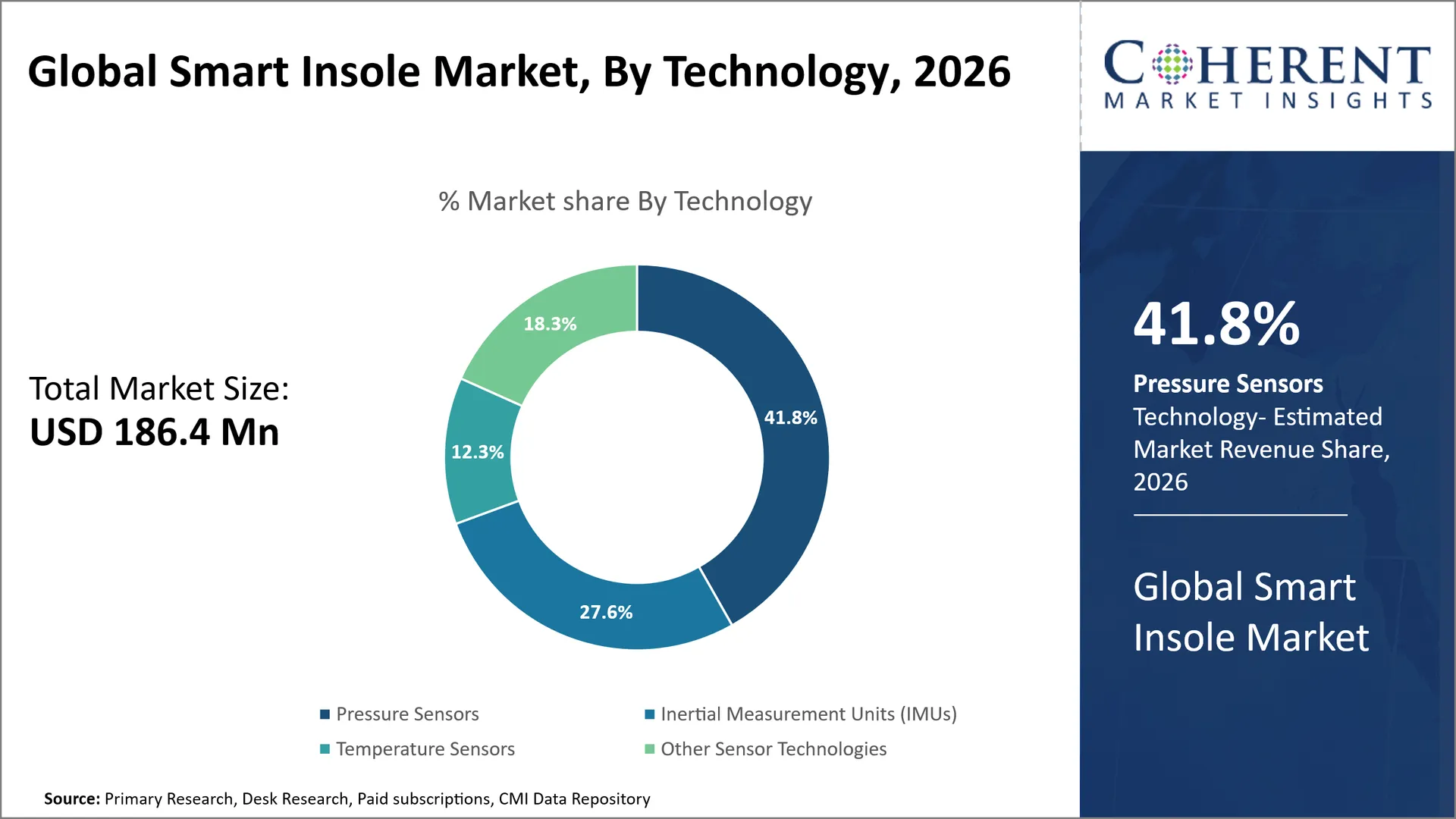
Pressure sensors are projected to hold a market share of 41.8% in 2026, as it can record the pressure distribution at the sole, foot loading, and pressure transfer pattern of the foot during walking and standing. Increasing usage in diabetic foot monitoring, sports & exercise monitoring, injury prevention is expected to augment growth. For instance, in July 2025, researchers reported a study on flexible smart insoles integrated with screen-printed nanomaterials and piezoresistive pressure sensors in ACS Applied Materials & Interfaces. The flexible sensor shows accurate pressure detection and real-time monitoring of the pressure distribution on the sole.
Medical Monitoring Segment Dominates the Global Smart Insole Market
The medical monitoring segment is projected to hold a market share of 28.6% in 2026, as it facilitates ongoing monitoring of plantar pressure, diabetic foot management, and remote patient monitoring. Use of sensor-based insoles allows clinicians to recognize irregular loading of the foot and plan treatment accordingly. For instance, in September 2025, Johns Hopkins University received USD 806,274 from the U.S. National Institute of Diabetes and Digestive and Kidney Diseases (NIDDK) for its wearable insoles for Recurrent Diabetic Ulcer Prevention (WIREDUP) project that tests interactive sensory insoles for monitoring plantar pressure, temperature, and gait dynamics to reduce recurrent diabetic foot ulcers. (Source: U.S. Department of Health & Human Services)
Current Events and their Impact
Current Events | Description and its Impact |
U.S. NIDILRR Awards Funding for Smart Insole Development to Address Diabetic Foot Disease (September 2026) |
|
Malta-Funded SIT-DIAB Project Completes Development of Smart Insole for Diabetic Foot Management (June 2025) |
|
Smart Insole Market Dynamics
Market Drivers
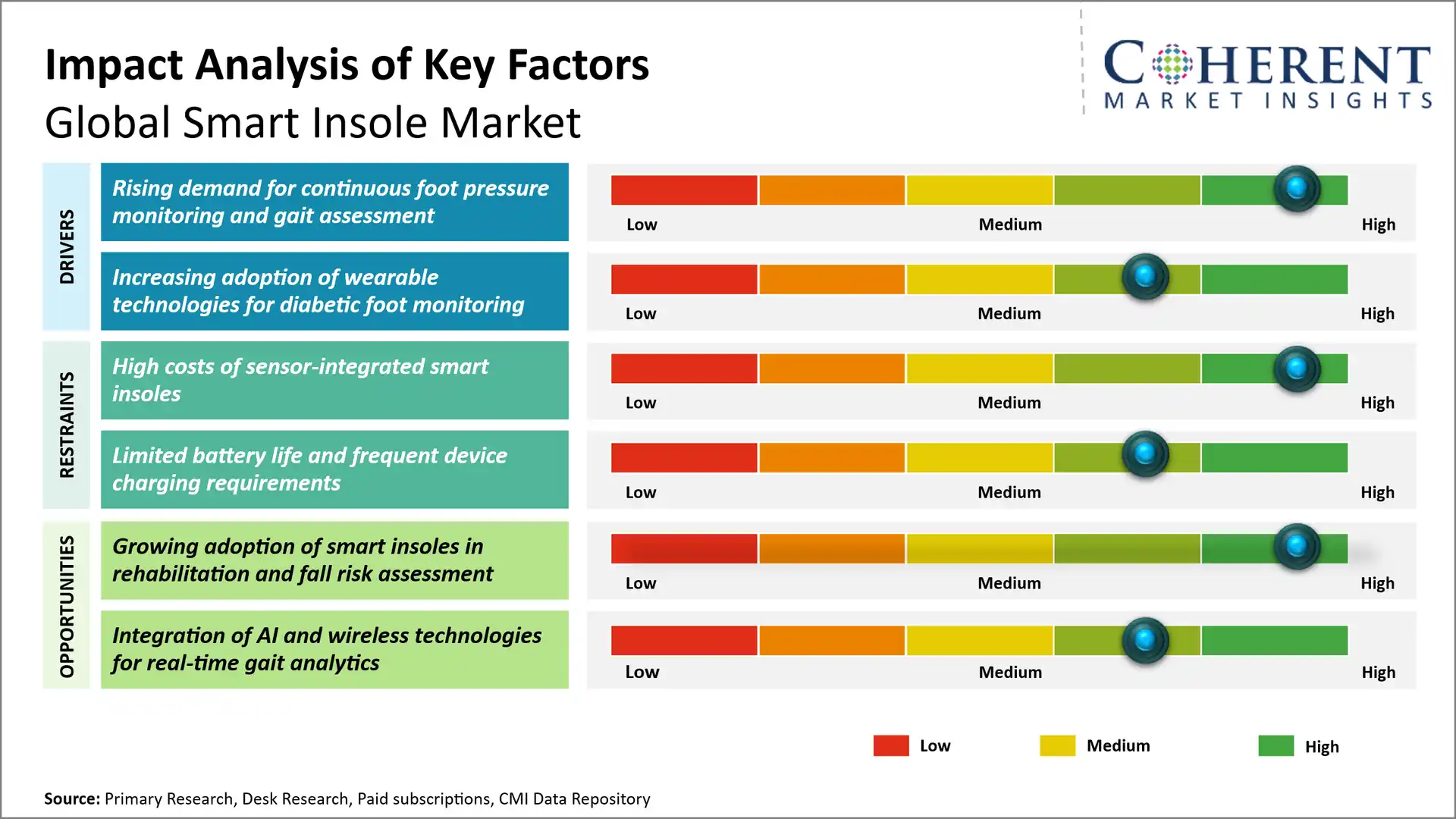
- Rising demand for continuous foot pressure monitoring and gait assessment: The growing inclination toward online plantar pressure measurement and gait monitoring is likely to drive the adoption of smart insoles in diabetic foot management, mobility monitoring, and rehabilitation. In January 2026, Korea University researchers developed an AI smart insole model that can identify abnormal gait patterns of Parkinson’s disease with 90.35% classification accuracy, using only 8 of the 32 plantar pressure sensors, reinforcing a potential application of smart insoles for continuous gait analysis.
- Increasing adoption of wearable technologies for diabetic foot monitoring: Increasing use of wearable devices to monitor the plantar pressure, foot temperature, and other parameters in diabetic foot complications is driving increased adoption of smart insoles. Smart insoles that enable early detection of pressure anomalies and risk of ulcer formation are further helping to solidify their role in diabetic foot prevention. in December 2025, researchers presented a multi-modal smart insole system with pressure, temperature, humidity and pulse oximetry sensors integrated with an AI model for detecting risk of diabetic foot ulcer and sending alerts.
- Growing demand for fall risk assessment and mobility monitoring: As the elderly population grows and mobility impairment rates rises, the market has a future of wearables that continuously track balance and fall risk. The smart insole can record pressure distribution of the foot and variations in gait to help determine if preventative action is needed. In February 2026, researchers developed a self-powered smart insole that can detect fall risk in real time. In the lab it’s been more than 87% accurate, and has wireless alerts via a smartphone.
Emerging Trends
- Integration of AI-based gait analysis: AI algorithms for smart insoles have been introduced to identify plantar pressure, assess gait and walking balance and detect irregular movement.
- Impact: The analytics through AI can help determine gait abnormalities from the initial assessments, obtain flexible mobility patterns, and give considerations for modern-era health issues.
- Market Relevance: Rising consumer need for intelligent mobility assessment is driving the usage of smart insoles with integrated artificial intelligence across applications like medical monitoring and rehabilitation.
- Development of flexible and miniaturized sensor technologies: Manufacturers are directing more efforts towards thin, flexible, and lightweight pressure sensors which can be accommodated into insoles without effecting the comfort level of shoes.
- Impact: Sensors are flexible and rugged to provide higher accuracy of measurement, comfortable wearability, and enable data collection throughout activity of daily living.
- Market Relevance: Development of flexible sensing technology will enable smart insole use for diabetic foot monitoring, sports and fitness applications and gait analysis.
Regional Insights
Why is North America a Strong Market for Smart Insole?
North America leads the global smart insole market, accounting for an estimated 36.8% share in 2026, owing to the presence of well-established healthcare infrastructure and technology ecosystem, increasing adoption of health and fitness wearables, technology innovation, and dominant presence of R&D capabilities. Robust R&D facilities and expenditure on wearable devices have led to new product launches.
Additionally, digital health initiatives and health reimbursement programs for diabetics and orthopedics help drive the growth of the market in the region. For instance, the U.S. Centers for Medicare & Medicaid Services (CMS) Medicare Part B provides diabetic shoes and inserts for therapeutic purposes using HCPCS codes A5500, A5501, A5512, A5513 and A5514 to eligible beneficiaries to obtain important diabetic foot-care items.
Why Does Asia Pacific Smart Insole Market Exhibit High Growth?
Asia Pacific is expected to exhibit the fastest growth in the global smart insole market, registering an estimated CAGR of 13.2% during 2026–2033. The region is projected to account for 28.1% of the global market in 2026, owing to the increasing geriatric and diabetic population in the region and increasing consumer adoption of wearable health devices. Increasing government initiatives in China, Japan, and South Korea to adopt digital health and smart medical devices accelerate the adoption of wearables.
For instance, in November 2025, the government of South Korea launched a USD 700 million (KRW 940.8 billion) investment drive (2026-2032) for advanced medical device research and development to promote AI- and robotics-based medical devices, clinical trials and commercialization, reinforcing the connected wearable medical devices ecosystem. (Source: Ministry of Culture, Sports and Tourism) Moreover, increasing electronics manufacturing base and wearable technology ecosystem contribute to affordable manufacturing.
Global Smart Insole Market Outlook for Key Countries
Why is the U.S. Leading Innovation and Adoption in the Smart Insole Market?
U.S. is the front-runner in innovation and adoption of smart insoles with its high converging areas of biomedical engineering, AI-based gait analytics, and digital health development. Government-funded research is promoting the development of new insole systems to collect 3D ground-reaction forces and mobility during daily movements. Moreover, the country leads in bringing sensor-based prototypes to the clinics and at-home monitoring markets.
Is Japan a Favorable Market for Smart Insole Market?
Japan is an attractive growth market for smart insoles for gait analysis, movement monitoring of the elderly, fall-risk evaluation and rehabilitation. The country has a high focus on healthy aging and proactive health management, thus providing opportunities for wearable products that monitor walking gait and deterioration of mobility. Furthermore, the country has a proven ecosystem for innovation in sensor-based healthcare technology, with successful programs from the Ministry of Economy, Trade and Industry to develop healthcare products, such as wireless plantar load measurement insoles.
Is China Emerging as a Key Growth Hub for the Smart Insole Market?
China is set to become a major growth center for the smart insole market due to its large manufacturing ecosystem around footwear and electronics and its expertise in integrating pressure sensors, wireless modules and other small electronics. The strategic opportunities lie in low-cost sensor-based insoles for gait analysis, sports performance and diabetic foot while manufacturing locally enables scale for both the domestic and export markets.
Why Does Germany Top the European Smart Insole Market?
Germany leads the European smart insole due to its mature ecosystem for biomechanics research, and knowledge-based technical and medical-technological industries. Home-grown knowledge in areas like plantar-pressure measurement, orthopedics and gait analysis ensures the realization and downstream use of sensor-based insole innovations. The companies such as Moticon and Novel offer insoles equipped with pressure sensors and inertial measurement units for use in clinical rehabilitation, sports biomechanics, and mobility assessment.
Is Smart Insole Market Developing in UK?
UK smart insole market is growing across segments, with ample opportunities in diabetic foot monitoring and rehabilitation. Key developments in the UK market include NHS-funded trials of pressure and temperature sensing insoles to enable early detection of diabetic foot ulceration, and further collaboration with UKRI and Innovate UK to fund the development of smart shoes for fall prevention and mobility monitoring. The biggest potential lies in clinical podiatry, falls prevention and home monitoring/rehabilitation.
Regional Government Reimbursement and Digital Health Initiatives Supporting the Smart Insole Market
Region | Country | Reimbursement programme / Government initiative | Relevance to the smart insole market |
North America | United States | Medicare Part B – Therapeutic Shoes and Inserts Benefit | Covers eligible diabetic footwear and inserts under HCPCS codes A5500, A5501, A5512, A5513 and A5514, supporting the diabetic foot-care ecosystem. |
Europe | Germany | Digital Healthcare Act (DiGA) | Enables reimbursement of eligible digital health applications through statutory health insurance, supporting the adoption of digital monitoring solutions. |
Asia Pacific | Japan | Advanced Medical Care and Digital Health Initiatives | Supports the development and integration of digital medical technologies and remote health-monitoring solutions. |
Asia Pacific | China | National Digital Health Initiatives | Promotes smart healthcare infrastructure, AI-enabled medical technologies, and digital medical device adoption. |
Middle East & Africa | UAE | National Digital Health Initiatives | Encourages AI, IoT, and connected healthcare technologies, supporting the wider adoption of wearable monitoring solutions. |
Latin America | Brazil | SUS Digital Programme | Promotes digital transformation of public healthcare, including the use of connected technologies and digital health solutions. |
How is the growing adoption of smart insoles in rehabilitation and fall risk assessment creating new growth opportunities in the smart insole market?
Increased adoption of smart insoles for rehabilitation and fall risk detection is opening up the potential of gait, balance and plantar-pressure sensor data to be used for continuous monitoring as well as real-time detection and personalized rehabilitation, helping prevent early signs of mobility deterioration. For instance, in February 2025, the UK government announced that one of 14 projects to benefit from more than USD 15.07 million (GBP 11.5 million) in co-funding by NIHR and UKRI was research into smart insoles developed to help monitor and promote adherence to exercise and balance in older people.
Market Players, Key Development, and Competitive Landscape
Key Developments
- In August 2025, Orpyx Medical Technologies Inc. released its sensory insole software that incorporates sensors to monitor foot pressure, foot temperature, step count and wear time for diabetic foot protection. The program uses wired data transmission, remote patient monitoring and individual clinical support to identify early symptoms of diabetic foot ulcers and injuries. It is an example of the increasing use of sensor-enabled smart insoles for medical monitoring and diabetic foot care.
- In May 2025, Bio_Sole International Group Ltd. announced the purchase of Atlantic Footcare, the U.S. manufacturer of insoles, to bring the AI insole technology platform to more domestically manufacturing. The acquisition will be used for large scale production and development of smart insoles with built in sensors and electronics. It will improve production of wearable health indicators and gait analysis.
Competitive Landscape
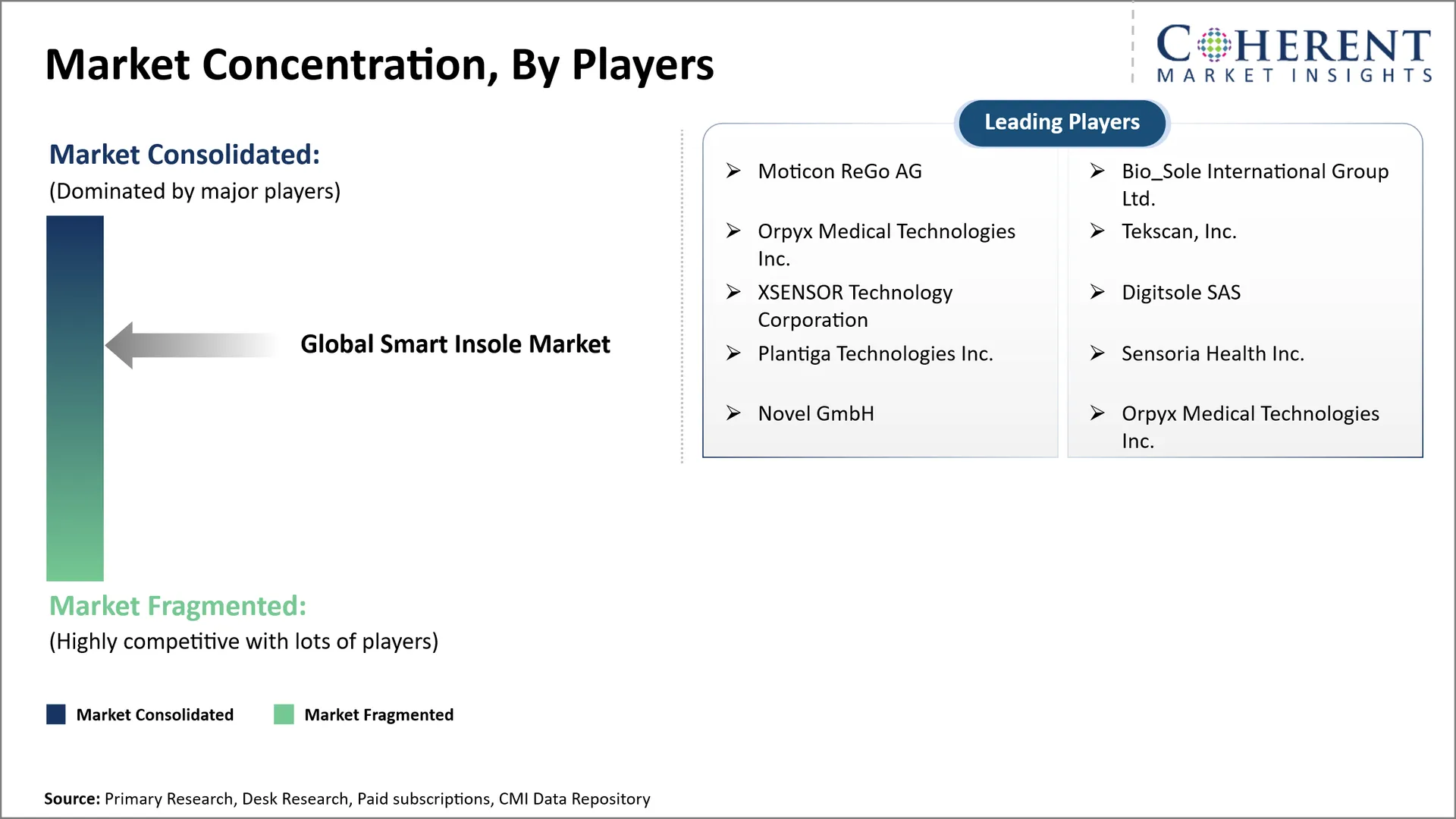
The global smart insole market is moderately competitive and consists of a few major players. Competition in the smart insole market is mainly based on the sensor accuracy, pressure-mapping features, gait-analysis software, wireless connectivity, clinical validation, and ease of wearability of the product. Major players in the market are competing among themselves to design smart insoles integrated with sensors and analytics platform for diabetic foot monitoring, gait analysis, sports, and rehabilitation. Key focus areas include:
- Advanced pressure sensing insole for continuous plantar pressure measurement and diabetic foot risk detection.
- Real-time gait tracking, balance monitoring, and assessing of the mobility through artificial intelligence and machine learning.
- Innovating of lightweight, flexible and miniaturized sensor technology to increase comfort and potentially extend usability over longer periods during everyday life.
- Bluetooth, IoT, mob app and cloud-based platform for remote monitoring and data analytics.
- Growing use of smart insoles for sports analysis, rehab, and fall-risk evaluation.
- Formation of strategic alliances with hospitals, rehabilitation centres, sports institutions, and research organizations to strengthen clinical validation and market penetration.
Market Report Scope
Smart Insole Market | |||
Report Coverage | Details | ||
Base Year | 2025 | Market Size in 2026: | USD 186.4 Mn |
Historical Data For: | 2020 To 2024 | Forecast Period: | 2026 To 2033 |
Forecast Period 2026 To 2033 CAGR: | 11.2% | 2033 Value Projection: | USD 392.1 Mn |
Geographies covered: |
| ||
Segments covered: |
| ||
Companies covered: | Moticon ReGo AG, Bio_Sole International Group Ltd., Orpyx Medical Technologies Inc., Tekscan, Inc., XSENSOR Technology Corporation, Digitsole SAS, Plantiga Technologies Inc., Sensoria Health Inc., Novel GmbH, Orpyx Medical Technologies Inc. | ||
Growth Drivers: |
| ||
Restraints & Challenges: |
| ||
Analyst Opinion (Expert Opinion)
- The smart insole market will shift from entry-level activity tracking devices to semi and fully intelligent foot-monitoring solutions with clinical and preventive healthcare potential. Continuous plantar-pressure data collection, AI-based gait analytics and remote connectivity will strengthen the market for use in diabetic foot care, mobility analysis and rehabilitation. Furthermore, rising demand for individualized healthcare will broaden the scope of smart insoles.
- The major opportunities are expected in the sensor-based smart insoles for medical monitoring in the U.S. to enable on-demand, mobile, and continuous plantar-pressure measurements and diabetic foot care. The second largest opportunity is for connectivity-enabled smart insoles for gait and mobility analysis in Japan to enable monitoring of elderly patients, support of rehabilitation, and fall-risk detection.
- In order to gain a competitive advantage market players should develop better sensor accuracy, battery performance, and flexibility and comfort of the product to enable all-day usage for most players. Better insight can be provided with AI-enabled analytics of the pressure and gait data to provide meaningful insights and difference. Engagement with large hospitals, referral with podiatrists, rehabilitation specialists, and footwear manufacturers will be key in the commercialization phase.
Speak to the analyst
Want personalized insights?
Take the findings above to one of our principal consultants, or have the report rebuilt around the segments, geographies and competitors you actually track.
Market Segmentation
- Product Type Insights (Revenue, USD Mn, 2021 - 2033)
- Sensor-Based Smart Insoles
- Connectivity-Enabled Smart Insoles
- Technology Insights (Revenue, USD Mn, 2021 - 2033)
- Pressure Sensors
- Inertial Measurement Units (IMUs)
- Temperature Sensors
- Other Sensor Technologies
- Application Insights (Revenue, USD Mn, 2021 - 2033)
- Medical Monitoring
- Gait and Mobility Analysis
- Sports and Fitness Monitoring
- Rehabilitation and Fall Risk Assessment
- Others
- End User Insights (Revenue, USD Mn, 2021 - 2033)
- Hospitals and Clinics
- Rehabilitation Centers
- Sports and Fitness Facilities
- Homecare Settings
- Others
- Regional Insights (Revenue, USD Mn, 2021 - 2033)
- North America
- U.S.
- Canada
- Latin America
- Brazil
- Argentina
- Mexico
- Rest of Latin America
- Europe
- Germany
- U.K.
- Spain
- France
- Italy
- Russia
- Rest of Europe
- Asia Pacific
- China
- India
- Japan
- Australia
- South Korea
- ASEAN
- Rest of Asia Pacific
- Middle East
- GCC Countries
- Israel
- Rest of Middle East
- Africa
- South Africa
- North Africa
- Central Africa
- North America
- Key Players Insights
- Moticon ReGo AG
- Bio_Sole International Group Ltd.
- Orpyx Medical Technologies Inc.
- Tekscan, Inc.
- XSENSOR Technology Corporation
- Digitsole SAS
- Plantiga Technologies Inc.
- Sensoria Health Inc.
- Novel GmbH
- Orpyx Medical Technologies Inc.
Sources
Primary Research Interviews
- Podiatrists and Diabetic Foot-Care Specialists
- Rehabilitation Medicine Specialists
- Biomechanics and Gait Analysis Specialists
- Wearable Medical Device Specialists
Stakeholders
- Hospitals and Multispecialty Healthcare Systems
- Specialized Rehabilitation Centres
- Diabetes and Podiatry Clinics
- Sports and Fitness Facilities
- End-use Sectors
- Hospitals and Clinics
- Rehabilitation Centres
- Sports and Fitness Facilities
- Homecare Settings
- Regulatory & Health Bodies
- Centers for Medicare & Medicaid Services (CMS)
- U.S. Department of Health and Human Services (HHS)
- National Institute on Disability, Independent Living, and Rehabilitation Research (NIDILRR)
- World Health Organization (WHO)
Databases
- CMS Healthcare Common Procedure Coding System (HCPCS)
- NIH Research Portfolio Online Reporting Tools (RePORTER)
- U.S. National Library of Medicine
- ClinicalTrials.gov
Associations
- American Podiatric Medical Association (APMA)
- American Physical Therapy Association (APTA)
- International Society of Biomechanics (ISB)
- International Society of Physical and Rehabilitation Medicine (ISPRM)
Public Domain Sources
- UK Government – Department of Health and Social Care
- University of Malta
- Xjenza Malta
- U.S. Department of Health and Human Services – TAGGS
Proprietary Elements
- CMI Data Analytics Tool, Proprietary CMI Existing Repository of information for last 10 years.
Get access to 250+ pages report
Every segment, forecast, competitor profile and data table behind the analysis above — available for instant download.
- ESOMAR Member
- ISO 9001:2015 Certified
- D-U-N-S Registered
- GDPR & CCPA Compliant
Frequently Asked Questions
The global smart insole market is estimated to be valued at USD 186.4 Mn in 2026 and is expected to reach USD 392.1 Mn by 2033.
Sensor-based smart insoles dominate due to their ability to record plantar pressure and gait, along with load on the foot, aiding medical monitoring, athletics, and rehabilitation applications.
A smart insole is a sensor system embedded into a shoe sole that measures foot pressure, gait, body movement, and other biomechanical factors in real time.
The CAGR of global smart insole market is projected to be 11.2% from 2026 to 2033.
Rising demand for continuous foot pressure monitoring and gait assessment, and increasing adoption of wearable technologies for diabetic foot monitoring are the major factors driving the growth of the global smart insole market.
High costs of sensor-integrated smart insoles, and limited battery life and frequent device charging requirements are the major factors hampering the growth of the global smart insole market.
In terms of application, pressure sensors are estimated to dominate the market revenue share in 2026.