

Global Structural Heart Imaging Market Size and Forecast – 2026 To 2033
The global structural heart imaging market is expected to grow from USD 11,240.0 Mn in 2026 to USD 18,470.0 Mn by 2033, registering a compound annual growth rate (CAGR) of 7.4% from 2026 to 2033. The market for global structural heart imaging is poised for significant expansion, fueled by the global burden of rheumatic heart disease and associated heart-valve damage.
According to the World Health Organization (WHO)’s 2025 update, rheumatic heart disease affects approximately 55 million people worldwide and causes around 360,000 deaths annually, creating sustained demand for imaging-based diagnosis and assessment of structural and valvular abnormalities.
Key Takeaways of the Global Structural Heart Imaging Market
- Echocardiography is projected to hold 32.8% of the global structural heart imaging market share in 2026, making it dominant imaging modality segment across Asia Pacific specifically Australia due to the formal inclusion of echocardiography within national diagnostic imaging coverage. For instance, the Australian Government’s Medicare Benefits Schedule (MBS) specifically lists echocardiography for the investigation of structural heart disease, valvular disease, and congenital heart disease, supporting routine utilization of echocardiographic assessment in clinical practice.
- Transcatheter aortic valve replacement (TAVR) is projected to hold 28.6% of the global structural heart imaging market share in 2026, making it dominant procedure segment across North America supported by established national coverage requirements for TAVR that incorporate structured pre-procedural assessment. For instance, the U.S. Centers for Medicare & Medicaid Services (CMS) updated its national TAVR coverage policy in September 2026, retaining requirements related to pre-procedural patient assessments, heart-team expertise, and hospital/operator procedural volumes, reinforcing the need for specialized imaging and assessment infrastructure around TAVR programs.
- Diagnosis is projected to hold 43.2% of the global structural heart imaging market share in 2026, making it dominant application segment across Asia Pacific supported by government-defined diagnostic imaging pathways for structural cardiac conditions. The Australian Government MBS categorizes echocardiography under Category 5 – Diagnostic Imaging Services and specifically identifies structural heart disease as an indication for transthoracic echocardiographic investigation, reinforcing the role of imaging in diagnostic assessment.
- North America market maintains dominance with an expected share of 36.2% in 2026, bolstered by its well-established cardiac imaging infrastructure, specialist availability, and structured diagnostic pathways. For instance, the Canadian Association of Radiologists’ Cardiovascular Referral Guideline provides modality-specific recommendations for cardiac CT, MRI, echocardiography, and nuclear imaging across cardiomyopathy conditions, reinforcing standardized use of advanced cardiovascular imaging in the region.
- Asia Pacific is expected to exhibit the fastest growth in the global structural heart imaging market, registering an estimated CAGR of 7.6% during 2026–2033, driven by expanding reimbursement and healthcare-system support for advanced diagnostic imaging. For instance, Japan’s Ministry of Health, Labour and Welfare (MHLW) implemented the FY2026 medical fee revision, which includes revisions covering diagnostic imaging and medical-device reimbursement, supporting continued integration of advanced imaging technologies into Japan’s healthcare system.
Segmental Insights
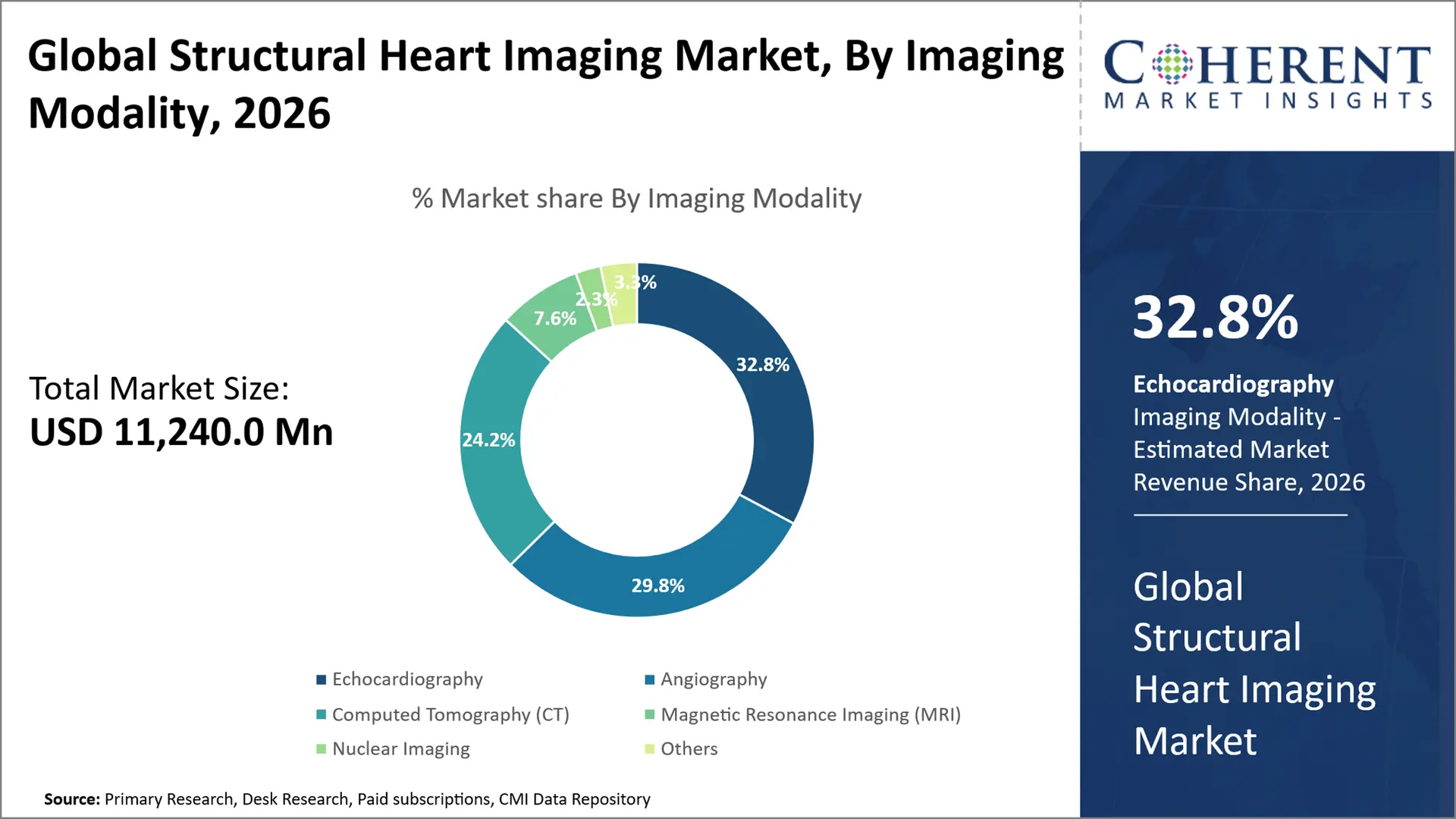
Why Do Echocardiography Dominate the Global Structural Heart Imaging Market?
Echocardiography is projected to hold the market share of 32.8% in 2026, because it is widely available, low-cost, non-invasive, offers real-time imaging without the use of radiation, and can visualize the heart in a range of cardiac conditions, including valve assessment, and cardiac structure and function, as well as guidance for both interventions and procedures. Moreover, ongoing developments in 3D echocardiography and strain imaging further expands its role in complex structural heart conditions. For instance, the U.S. Centers for Medicare & Medicaid Services (CMS) covers soundwave-based intra-cardiac assessment with transthoracic echocardiogram (TTE) and transesophageal echocardiography (TEE), citing the value of echocardiography in cardiovascular diagnosis and monitoring.
- Current Industry Events of 2026
- Market Size Estimation
- Regional Breakdown
- Competitive Landscape
- Customer Intelligence
- Segmental Analysis
- Pricing Analysis
- Key Market Drivers, Challenges & Future Trends
- Customized Insights Section
Why Does Transcatheter Aortic Valve Replacement (TAVR) Represent the Largest Procedure Segment in the Structural Heart Imaging Market?
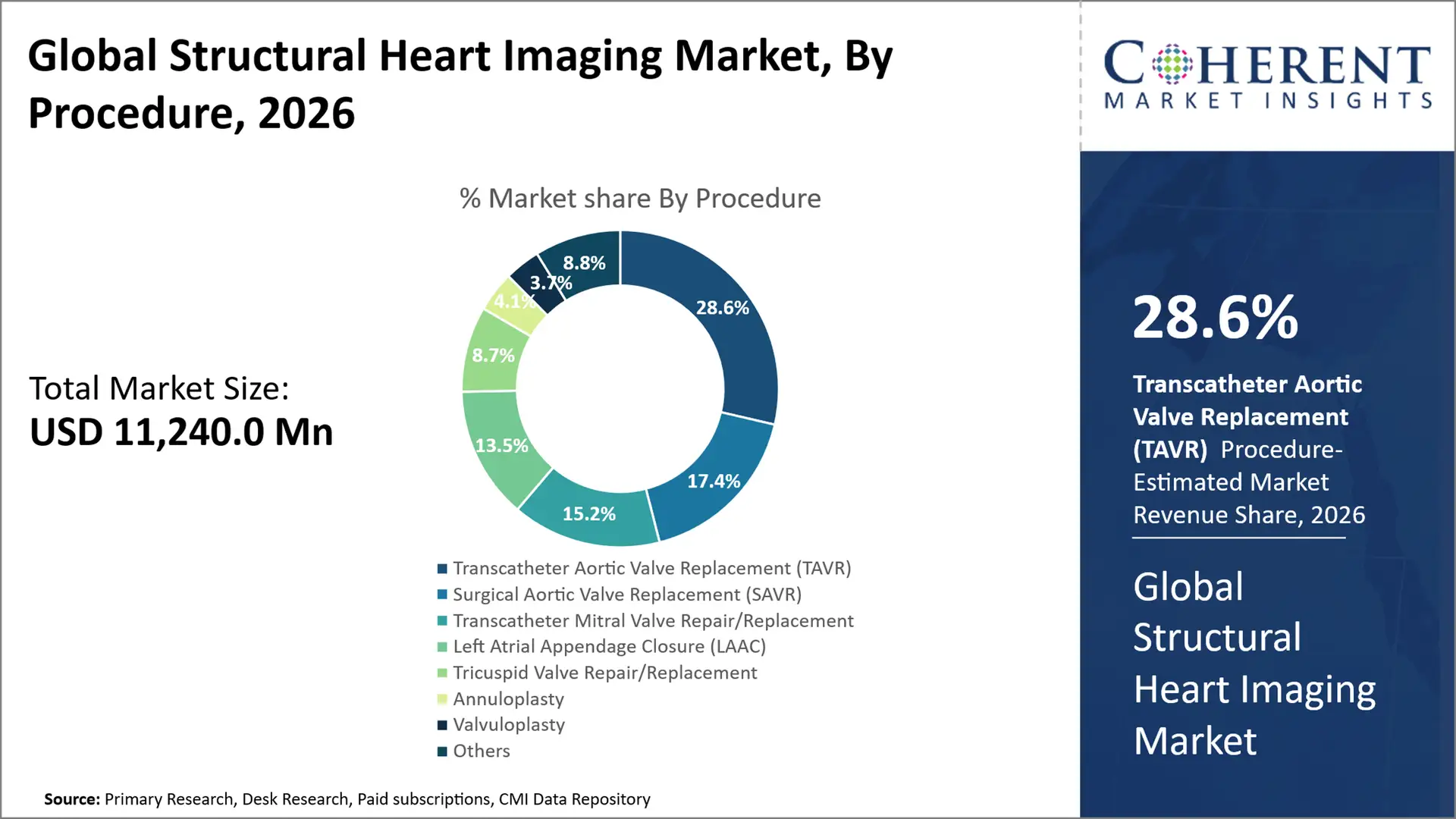
Transcatheter aortic valve replacement (TAVR) is projected to hold a market share of 28.6% in 2026, owing to its minimally invasive nature, increased clinical application and increasing requirement of advanced imaging in patient selection and procedure planning. Echocardiography, CT and angiography aids in valve sizing, delineating the anatomy, guiding the device placement and evaluation of the procedure outcome. For instance, in May 2026, the U.S. Food and Drug Administration (FDA) approved a CT-based TAVR planning software application, emphasizing the importance of innovative imaging in transcatheter valve interventions.
Diagnosis Segment Dominates the Global Structural Heart Imaging Market
The diagnosis segment is projected to hold a market share of 43.2% in 2026, as structural heart diseases require imaging for early diagnosis, morphology evaluation and therapeutic planning. AI-based image analysis and multimodality workflows are helping in better diagnosis and risk stratification. Additionally, echocardiography, CT and MRI are mutually corroborative modalities that allows structural and functional correlations to elucidate the abnormality and in turn, increase the diagnostic information. For instance, the U.K. NICE guideline suggests the use of echocardiography as an important investigation to evaluate suspected heart valve disease and as a means of determining disease severity.
Current Events and their Impact
Current Events | Description and its Impact |
U.S. Centers for Medicare & Medicaid Services (CMS) Updates National Coverage Policy for TAVR (September 2026) |
|
Australia Updates Medicare Coverage for Diagnostic Echocardiography (July 2026) |
|
Society for Cardiovascular Angiography & Interventions (SCAI) Issues Guidance on Intracardiac Echocardiography for Structural Heart Procedures (October 2025) |
|
Structural Heart Imaging Market Dynamics
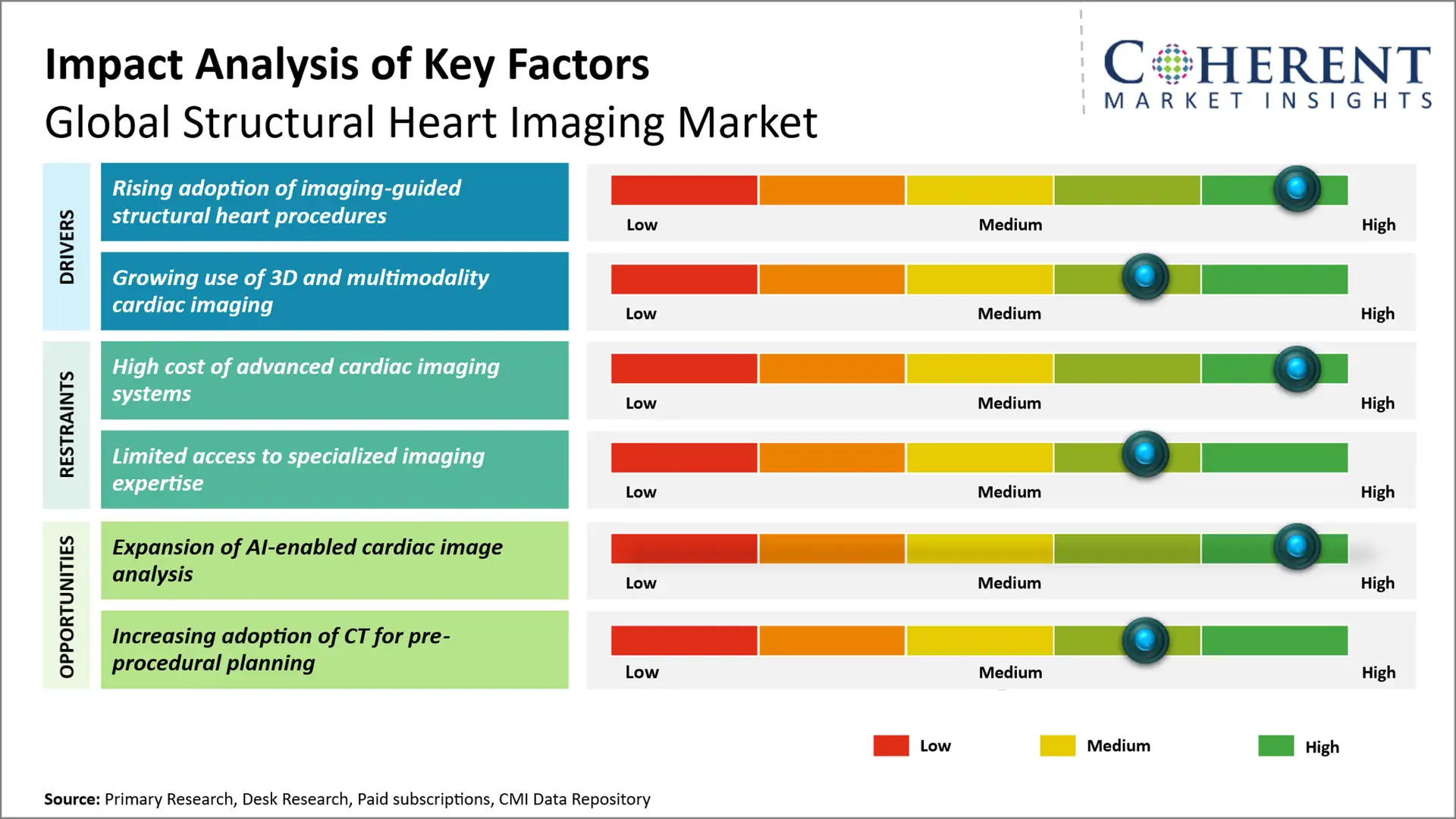
Market Drivers
- Rising adoption of imaging-guided structural heart procedures: The growing use of minimally invasive structural heart interventions is increasing the need for advanced imaging to support anatomical assessment, procedural planning, and real-time guidance. The expansion of catheter-based procedures is therefore creating sustained demand for echocardiography, CT, and other cardiac imaging modalities. For instance, in October 2025, the U.S. Centers for Medicare & Medicaid Services (CMS) updated its echocardiography coverage policy, recognizing the structural and functional information provided by transthoracic echocardiography and its clinical use in assessing cardiac abnormalities.
- Growing use of 3D and multimodality cardiac imaging: The growing use of 3D and multimodality cardiac imaging is expanding the ability to obtain detailed anatomical and functional information for complex structural heart conditions and interventions. For instance, the 2025 ACC/AHA/ASE/ASNC/SCCT/SCMR Advanced Training Statement emphasizes integrated use of cardiovascular CT, cardiac MRI, echocardiography, and nuclear cardiology, including 3D echocardiography and fusion imaging for structural heart disease and interventions.
- Increasing prevalence of structural and valvular heart disease: The growing burden of structural and valvular heart disease is increasing the need for regular cardiac imaging for disease detection, severity assessment, and clinical monitoring. This is supporting sustained demand for echocardiography and other imaging modalities across structural heart care pathways. For instance, Australia’s Medicare Benefits Schedule specifically recognizes echocardiography for the investigation of structural heart disease, with the schedule fee updated in July 2026, reinforcing its role in ongoing clinical assessment.
Emerging Trends
- AI-enabled cardiac imaging and automated analysis: AI is increasingly being integrated into echocardiography and other cardiac imaging workflows for automated image acquisition, chamber quantification, interpretation, and reporting, supporting faster and more standardized structural heart assessment.
- Growing adoption of intracardiac and 4D echocardiography: Intracardiac echocardiography is emerging as an important tool for real-time guidance of minimally invasive structural heart procedures, while 4D intracardiac imaging is expanding visualization capabilities for complex valve and left atrial appendage interventions.
- Multimodal and integrated cardiac imaging: Increasing integration of echocardiography, CT, MRI, fluoroscopy, and AI-based analytics is enabling more comprehensive anatomical assessment and personalized procedural planning across the structural heart care pathway.
Regional Insights
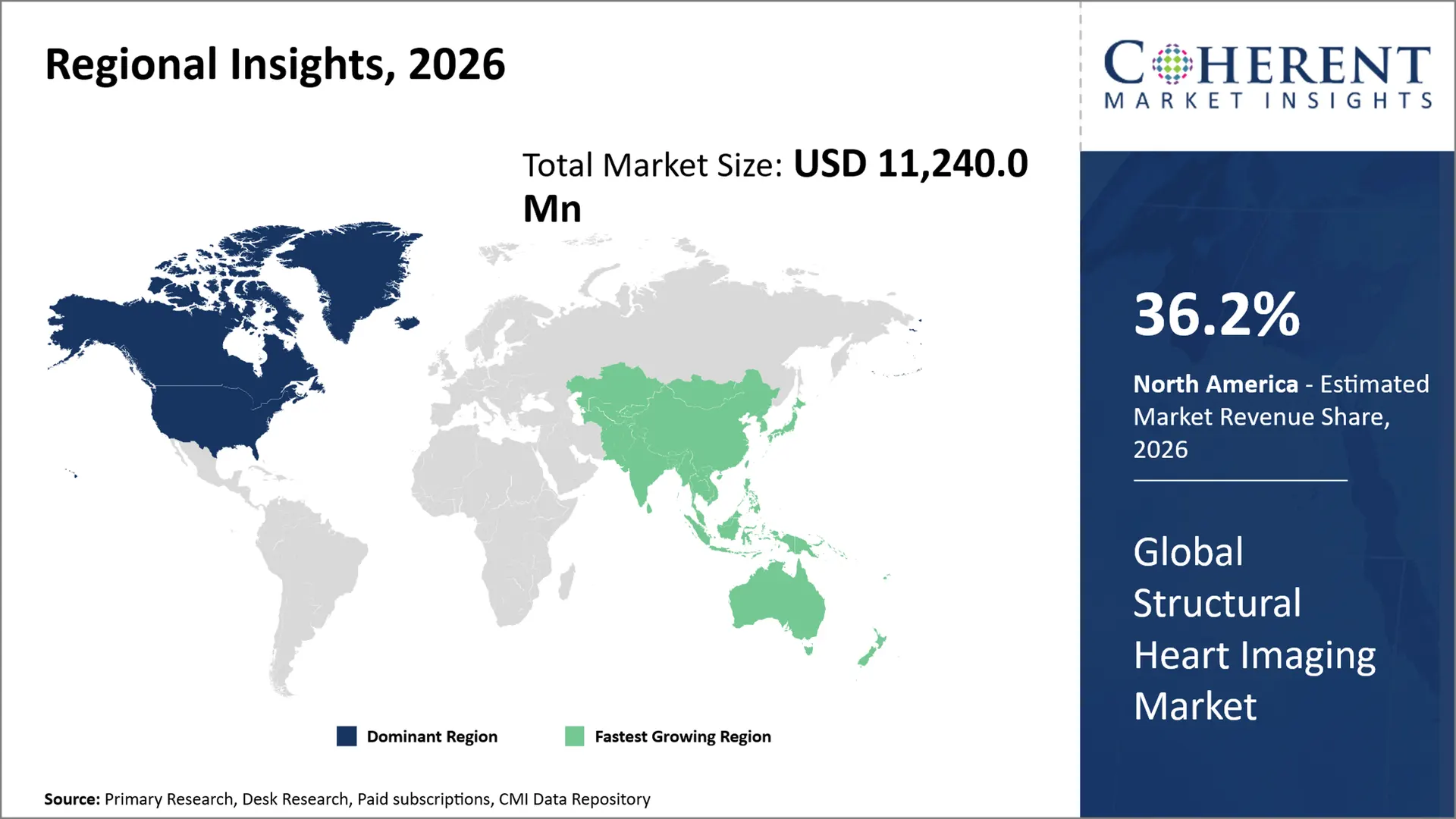
Why is North America a Strong Market for Structural Heart Imaging?
North America leads the global structural heart imaging market, accounting for an estimated 36.2% share in 2026, owing to rising need for advanced healthcare infrastructure, prevalence of cardiac imaging technology and capabilities in the region. Additionally, growing government awareness programs and commercialization of innovative technology through U.S. FDA regulatory services provide high investment in structural heart imaging as well as product approvals.
For instance, The U.S. Centers for Disease Control and Prevention (CDC) and Centers for Medicare & Medicaid Services (CMS)'s Million Hearts initiative promotes cardiovascular disease prevention, risk-factor management, and early detection, leading to greater demand and awareness of the cardiovascular diagnostic and imaging tests. Furthermore, the high burden of cardiovascular diseases in the region continue to attract demand for sophisticated imaging equipment, making the region a mature market.
Why Does Asia Pacific Structural Heart Imaging Market Exhibit High Growth?
Asia Pacific is expected to exhibit the fastest growth in the global structural heart imaging market, registering an estimated CAGR of 7.6% during 2026–2033. The region is projected to account for approximately 24.7% of the global market in 2026, owing to increasing healthcare spending, surging cardiovascular awareness, and growing availability of advanced imaging diagnostic solutions.
Healthcare infrastructure in several Asian countries including China and India is rapidly modernizing which, coupled with encouraging government policies for adoption of medical devices is driving the market growth. For instance, the National Medical Devices Policy, 2023 of India encourages the manufacturing and development of local products and technologies. It further aims at broader use of medical devices leading to upgrade in healthcare infrastructure and access to advanced imaging in healthcare. (Source: Government of India)
Global Structural Heart Imaging Market Outlook for Key Countries
Why is the U.S. Leading Innovation and Adoption in the Structural Heart Imaging Market?
The U.S. dominates the structural heart imaging market with well-established integration of advanced echocardiography, cardiac CT and fluoroscopy into transcatheter valve procedures. Many structural heart programs in the U.S. are expanding their use of multimodality imaging for structural heart patient selection, planning and live guidance of the procedure (mainly TAVR and mitral). Additionally, the country has a mature ecosystem of AI-enabled image interpretation and procedure-specific imaging software.
Is UK a Favorable Market for Structural Heart Imaging Market?
The UK has a strong market, with NHS structural heart services establishing dedicated multidisciplinary pathways to treat complex valve disease and perform transcatheter interventions. Increasing demand for imaging is driven by the requirements for multimodality detailed echocardiography assessment, cardiac CT for anatomical planning, and intraprocedural imaging for valve-repair and replacement procedures. Established centres of expertise for specialist cardiac services are also a base for advanced structural heart imaging adoption.
Is China Emerging as a Key Growth Hub for the Structural Heart Imaging Market?
China is becoming a major growth market aided by expansion of transcatheter structural heart procedures and the use of advanced echocardiography and cardiac CT for procedural planning and guidance. Growing number of dedicated structural heart programs (such as TAVR centers, transcatheter mitral valve programs, and left atrial appendage closure programs) is driving demand for 3D imaging, multimodality assessment and real-time procedural visualization.
Why Does Germany Top the European Structural Heart Imaging Market?
Germany is a significant European market for structural heart imaging, owing to advanced cardiac care infrastructure, experienced structural heart programs and high utilization of echocardiography and cardiac CT for valvular disease diagnosis and transcatheter procedures planning. The country has a robust network of specialist hospitals and adopts a variety of imaging modalities that are important for advance structural heart diagnosis.
Is Structural Heart Imaging Market Developing in Japan?
Japan's structural heart imaging market is emerging due to the growing aging population, rising prevalence of cardiovascular disease, and increased implementation of minimally invasive structural heart procedures. Growing demand for diagnostic, preprocedural planning and intraprocedural guidance of echocardiography, cardiac CT and multimodality imaging is witnessing elevated demand. Furthermore, adoption of diagnostic imaging technology is experiencing an uptrend due to evolving medical reimbursement system.
Imaging Requirements Across Major Structural Heart Procedures
Structural Heart Procedure | Pre-Procedural Imaging | Intra-Procedural Imaging | Key Imaging Modalities |
TAVR / TAVI | Valve anatomy, annular sizing, aortic root and vascular access assessment | Valve positioning, deployment and assessment of regurgitation | Echocardiography, Cardiac CT, Fluoroscopy |
Mitral TEER (M-TEER) | Mitral anatomy, leaflet morphology and severity assessment | Transseptal access, device positioning and residual MR assessment | 2D/3D TEE, ICE, Fluoroscopy |
Transcatheter Mitral Valve Replacement (TMVR) | Annular anatomy, sizing and LVOT assessment | Device positioning and valve function assessment | Cardiac CT, 3D TEE, Fluoroscopy |
Left Atrial Appendage Occlusion (LAAO) | LAA anatomy, dimensions and thrombus assessment | Device positioning and confirmation of closure | TEE, ICE, Cardiac CT, Fluoroscopy |
Transcatheter Tricuspid Valve Procedures | Tricuspid anatomy, leaflet morphology and annular assessment | Device positioning and assessment of residual regurgitation | 2D/3D Echocardiography, CT, Fluoroscopy |
How is the expansion of AI-enabled cardiac image analysis creating new growth opportunities in the structural heart imaging market?
AI adoption in cardiac imaging is also opening avenues for automating image analysis, segmentation, quantification and interpretation, which benefits workflow and reproducibility across all three imaging modalities – echocardiography, CT and MRI. Additionally, it allows the consistent evaluation of cardiac structure in its entirety, providing a faster route to clinical and procedural decision-making. For instance, in June 2026, the U.S National Institutes of Health (NIH) highlighted an AI system that performs real-time echocardiography analysis, includes automated image-quality assessment, view classification, segmentation, and quantification of cardiac biomarkers. This development underpins the potential for AI to speed up the structural heart imaging workflow and to enable more consistent clinical evaluation of the images.
Market Players, Key Development, and Competitive Intelligence
Key Developments
- In March 2026, Koninklijke Philips N.V. received U.S. FDA 510(k) clearance for EchoNavigator R5.0 with DeviceGuide, an AI-powered solution for real-time visualization and guidance during minimally invasive mitral valve repair. The technology combines live ultrasound and X-ray imaging to track and position the repair device during M-TEER procedures, supporting more precise structural heart intervention.
- In February 2026, Koninklijke Philips N.V. and Apollo Hospitals signed a non-exclusive MoU to strengthen stroke and structural heart disease care in India. The collaboration focuses on advanced imaging and image-guided therapy solutions, supporting technology adoption for structural heart interventions.
- In December 2025, Koninklijke Philips N.V. entered into an agreement to acquire SpectraWAVE, adding AI-supported intravascular imaging and physiological assessment technologies to its cardiac imaging portfolio. The acquisition includes HyperVue Imaging and X1-FFR technologies.
- In April 2025, LARALAB GmbH received FDA 510(k) clearance for its fully automated AI platform for Structural Heart CT analysis. The platform enables automated anatomical assessment of the aortic, mitral, and tricuspid valves and cardiac chambers, supporting procedural planning for TAVR, TMVR, and TTVR.
Competitive Landscape
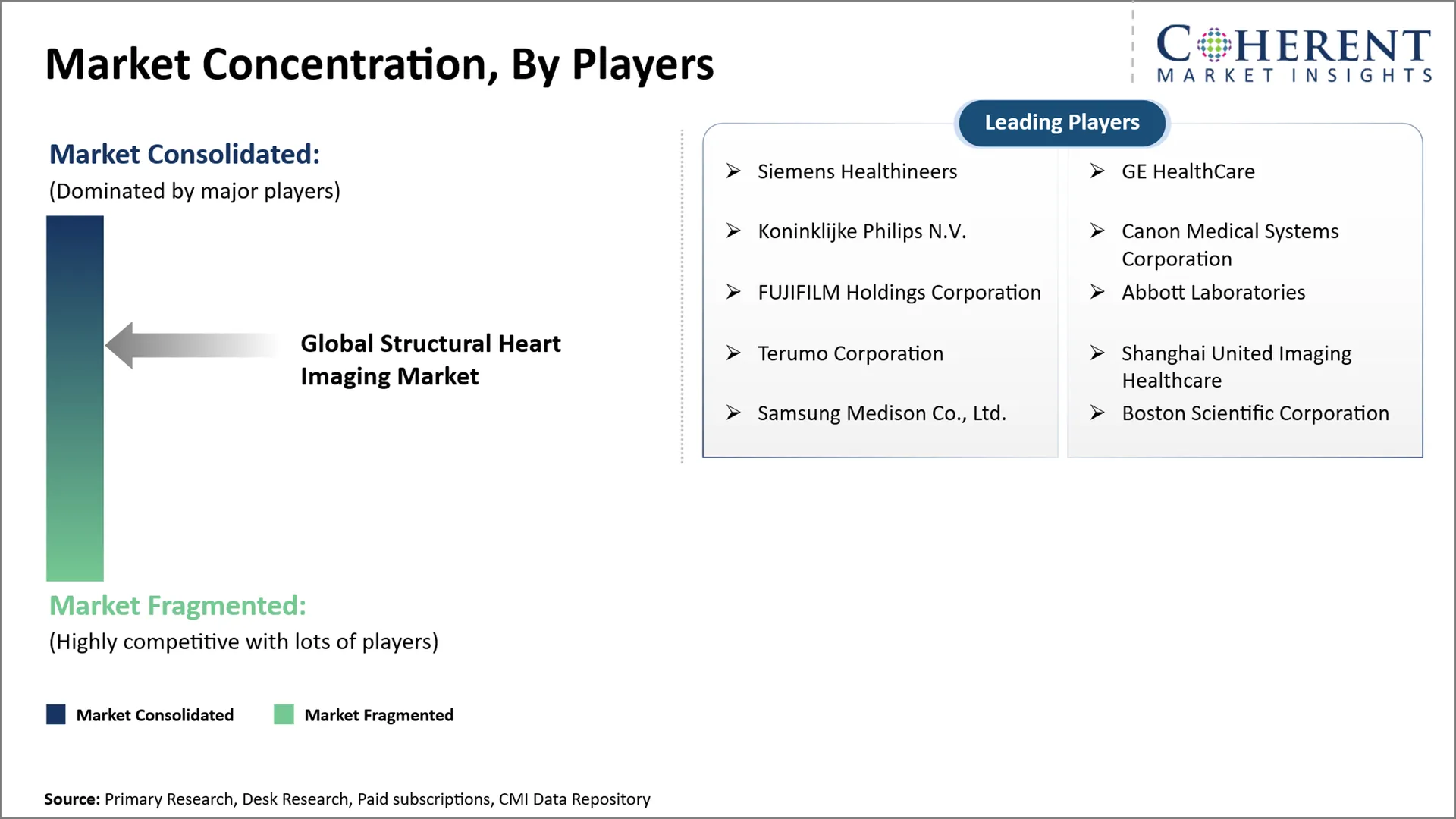
The global structural heart imaging market is moderately competitive, with market dynamics shaped by advances in 3D/4D cardiac imaging, multimodality imaging, AI-assisted image analysis, and real-time procedural visualization. Market participants are increasingly focusing on improving anatomical visualization, imaging accuracy, workflow integration, and procedural guidance while supporting the growing complexity of minimally invasive structural heart interventions. Key focus areas include:
- Development of 3D and 4D echocardiography for enhanced visualization of cardiac valves, chambers, and structural abnormalities
- Integration of AI-assisted image analysis and automated measurements to improve imaging workflow efficiency and consistency
- Expansion of multimodality imaging workflows integrating echocardiography, CT, MRI, and fluoroscopy for comprehensive structural heart assessment
- Development of advanced cardiac CT and MRI capabilities for anatomical characterization and pre-procedural planning
- Advancement of real-time intracardiac and transesophageal imaging for guidance of minimally invasive valve and structural heart interventions
Market Report Scope
Global Structural Heart Imaging Market Report Coverage | |||
Report Coverage | Details | ||
Base Year | 2025 | Market Size in 2026: | USD 11,240.0 Mn |
Historical Data For: | 2020 To 2024 | Forecast Period: | 2026 To 2033 |
Forecast Period 2026 To 2033 CAGR: | 7.4% | 2033 Value Projection: | USD 18,470.0 Mn |
Geographies covered: |
| ||
Segments covered: |
| ||
Companies covered: | Siemens Healthineers, GE HealthCare, Koninklijke Philips N.V., Canon Medical Systems Corporation, FUJIFILM Holdings Corporation, Abbott Laboratories, Terumo Corporation, Shanghai United Imaging Healthcare, Samsung Medison Co., Ltd., Boston Scientific Corporation | ||
Growth Drivers: |
| ||
Restraints & Challenges: |
| ||
Analyst Opinion (Expert Opinion)
- In the coming years, global structural heart imaging market is expected to be shaped by AI-enabled, 3D/4D, and multimodality imaging, with imaging increasingly becoming an integrated component of the entire structural heart intervention pathway. The shift toward minimally invasive valve procedures is expected to increase demand for faster anatomical assessment, automated measurements, real-time guidance, and personalized procedural planning.
- The maximum opportunities are foreseen within D/4D echocardiography for intra-procedural guidance in China, where expanding structural heart intervention capacity can create demand for advanced real-time visualization technologies. Players should focus on solutions that combine high-resolution imaging, automated anatomical measurements, and real-time device guidance for complex valve and structural heart procedures.
- In order to gain a competitive advantage, market players should integrate imaging platforms that connect pre-procedural CT/MRI with intra-procedural echocardiography and fluoroscopy, while embedding AI-based measurement and visualization capabilities. Building interoperable solutions, reducing examination and planning time, and developing applications specifically for TAVR, TMVR, LAAC, and tricuspid interventions can help strengthen competitive differentiation.
Speak to the analyst
Want personalized insights?
Take the findings above to one of our principal consultants, or have the report rebuilt around the segments, geographies and competitors you actually track.
Market Segmentation
- Imaging Modality Insights (Revenue, USD Mn, 2021 - 2033)
- Echocardiography
- Angiography
- Computed Tomography (CT)
- Magnetic Resonance Imaging (MRI)
- Nuclear Imaging
- Others
- Procedure Insights (Revenue, USD Mn, 2021 - 2033)
- Transcatheter Aortic Valve Replacement (TAVR)
- Surgical Aortic Valve Replacement (SAVR)
- Transcatheter Mitral Valve Repair/Replacement
- Left Atrial Appendage Closure (LAAC)
- Tricuspid Valve Repair/Replacement
- Annuloplasty
- Valvuloplasty
- Others
- Application Insights (Revenue, USD Mn, 2021 - 2033)
- Diagnosis
- Pre-Procedural Planning
- Intra-Procedural Guidance
- Post-Procedural Assessment
- End User Insights (Revenue, USD Mn, 2021 - 2033)
- Hospitals
- Specialty Cardiac Centers
- Diagnostic Imaging Centers
- Cardiology Clinics
- Ambulatory Surgical Centers
- Catheterization Laboratories
- Others
- Regional Insights (Revenue, USD Mn, 2021 - 2033)
- North America
- U.S.
- Canada
- Latin America
- Brazil
- Argentina
- Mexico
- Rest of Latin America
- Europe
- Germany
- U.K.
- Spain
- France
- Italy
- Russia
- Rest of Europe
- Asia Pacific
- China
- India
- Japan
- Australia
- South Korea
- ASEAN
- Rest of Asia Pacific
- Middle East
- GCC Countries
- Israel
- Rest of Middle East
- Africa
- South Africa
- North Africa
- Central Africa
- North America
Sources
Primary Research Interviews
- Structural heart cardiologists and interventional cardiologists involved in image-guided valve and structural heart procedures
- Cardiovascular imaging specialists specializing in echocardiography, cardiac CT, cardiac MRI, and multimodality imaging
- Cardiac sonographers and imaging technologists supporting structural heart imaging workflows
- Cardiac catheterization laboratory and structural heart program specialists involved in TAVR, TMVR, LAAC, and tricuspid interventions
- Hospital and specialty cardiac-center administrators responsible for procurement and implementation of advanced cardiac imaging systems
Stakeholders
- Structural heart imaging system manufacturers and cardiovascular imaging technology providers
- Hospitals and specialty cardiac centers
- Diagnostic imaging centers and cardiology clinics
- Cardiac catheterization laboratories and ambulatory surgical centers
- TAVR, TMVR, LAAC, and other structural heart procedure centers
- Cardiovascular imaging software and AI solution providers
- Distributors and specialized suppliers of cardiac imaging equipment
- End-use Sectors
- Hospitals
- Specialty Cardiac Centers
- Diagnostic Imaging Centers
- Cardiology Clinics
- Ambulatory Surgical Centers
- Cardiac Catheterization Laboratories
- Academic & Research Institutions
- Regulatory & Health Bodies
- U.S. Food and Drug Administration (FDA), U.S.
- Centers for Medicare & Medicaid Services (CMS), U.S.
- European Medicines Agency (EMA), European Union
- European Commission – Medical Devices, European Union
- National Medical Products Administration (NMPA), China
- Pharmaceuticals and Medical Devices Agency (PMDA), Japan
- Ministry of Health, Labour and Welfare (MHLW), Japan
- Therapeutic Goods Administration (TGA), Australia
- Health Canada, Canada
Databases
- U.S. FDA Medical Device Databases
- CMS Medicare Coverage Database
- European Database on Medical Devices (EUDAMED)
- ClinicalTrials.gov
- WHO International Clinical Trials Registry Platform (WHO ICTRP)
Journals
- Journal of the American College of Cardiology
- JACC: Cardiovascular Imaging
- European Heart Journal – Cardiovascular Imaging
- Circulation: Cardiovascular Imaging
- Journal of Cardiovascular Magnetic Resonance
- Echocardiography
- European Heart Journal
Associations
- American College of Cardiology (ACC)
- American Heart Association (AHA)
- American Society of Echocardiography (ASE)
- Society of Cardiovascular Computed Tomography (SCCT)
- Society for Cardiovascular Magnetic Resonance (SCMR)
- Society for Cardiovascular Angiography & Interventions (SCAI)
- European Society of Cardiology (ESC)
- European Association of Cardiovascular Imaging (EACVI)
Public Domain Sources
- U.S. FDA – medical device regulation, cardiac imaging technologies, and medical imaging safety requirements
- CMS – Medicare coverage policies and reimbursement information for cardiovascular imaging and structural heart procedures
- European Commission – medical device regulations and EUDAMED information
- ACC/AHA – cardiovascular imaging appropriate-use criteria, clinical guidance, and structural heart imaging recommendations
- ESC/EACVI – cardiovascular imaging guidelines, echocardiography guidance, and structural/valvular heart disease recommendations
- NMPA – medical device regulations and cardiovascular imaging-related regulatory information
- MHLW/PMDA – Japanese medical-device regulations and healthcare policy information
- TGA – Australian medical-device regulation and therapeutic-goods information
Proprietary Elements
- CMI Data Analytics Tool
- Proprietary CMI Existing Repository of information for last 10 years.
Get access to 250+ pages report
Every segment, forecast, competitor profile and data table behind the analysis above — available for instant download.
- ESOMAR Member
- ISO 9001:2015 Certified
- D-U-N-S Registered
- GDPR & CCPA Compliant
Missing comfort of reading report in your local language? Find your preferred language:
Frequently Asked Questions
The global structural heart imaging market is estimated to be valued at USD 11,240.0 Mn in 2026 and is expected to reach USD 18,470.0 Mn by 2033.
Echocardiography dominates due to its real-time visualization, non-invasive nature, and widespread use for diagnosing and guiding structural heart procedures.
Structural heart imaging uses cardiac imaging technologies to visualize heart valves, chambers, and other structural abnormalities for diagnosis, treatment planning, and procedural guidance.
The CAGR of global structural heart imaging market is projected to be 7.4% from 2026 to 2033.
Rising adoption of imaging-guided structural heart procedures, and growing use of 3D and multimodality cardiac imaging are the major factors driving the growth of the global structural heart imaging market.
High cost of advanced cardiac imaging systems, and limited access to specialized imaging expertise are the major factors hampering the growth of the global structural heart imaging market.
In terms of end user, hospitals are estimated to dominate the market revenue share in 2026.