

Structural Heart Devices Market Size and Share Analysis - 2026 To 2033
The global structural heart devices market size is anticipated to grow at a CAGR of 9.5%, increasing from USD 19.56 Bn in 2026 to approximately USD 36.91 Bn by 2033. The key factors that drive the market growth are the increasing incidence of structural heart disease, the rising usage of transcatheter treatments, the increased demand for transcatheter aortic valve replacement and mitral valve repair products, and the growing elderly population. According to the American College of Cardiology, the number of transcatheter aortic valve replacements conducted in the U.S. grew by 25 times during the past decade, with over 100,000 TAVR procedures being conducted annually by 2024.
Key Takeaways
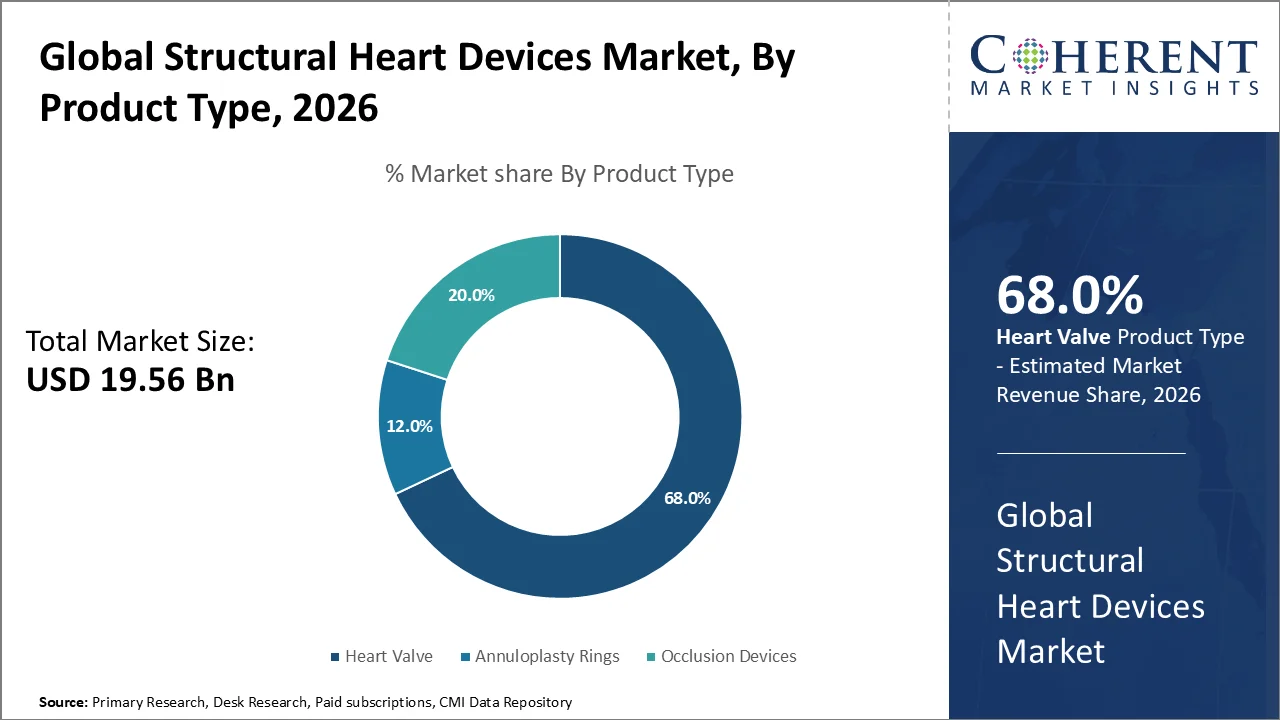
- The heart valve segment is expected to hold a major share of 68.0% in the global structural heart devices market in 2026. The growth in the heart valve category can be attributed to the growing incidence of valvular heart diseases, adoption of heart valve replacements & repairs, advancements in prosthetic valves, and preference for transcatheter procedures. Edwards Lifesciences reported USD 1.20 Bn in TAVR sales during the first quarter of 2026, an increase of 14.4% year-on-year, representing approximately 72.7% of the company’s USD 1.65 Bn quarterly sales.
- The valvular heart disease segment is set to lead the indication category with 75.0% share in 2026. The segment’s growth is owing to the increasing incidence of aortic stenosis, mitral and tricuspid regurgitation, ageing-related valve degeneration, and wider availability of transcatheter valve repair and replacement technologies. The European Society of Cardiology reported in August 2025 that aortic stenosis affects approximately 9 million people worldwide, while mitral regurgitation, the most prevalent treated and untreated valve disorder, affects approximately 24 million people globally.
- The hospital segment is anticipated to dominate the end-user category with 88.0% share in 2026. The segment’s growth is owing to the availability of specialized cardiac teams, catheterization laboratories, advanced imaging systems, intensive-care infrastructure, and surgical backup required for complex structural heart procedures. In its 2026 proposed TAVR coverage framework, the U.S. Centers for Medicare & Medicaid Services specified that TAVR must be performed in a hospital with on-site structural heart interventional cardiology and cardiac surgery programs, a post-procedure intensive care unit, and a continuous quality-improvement process.
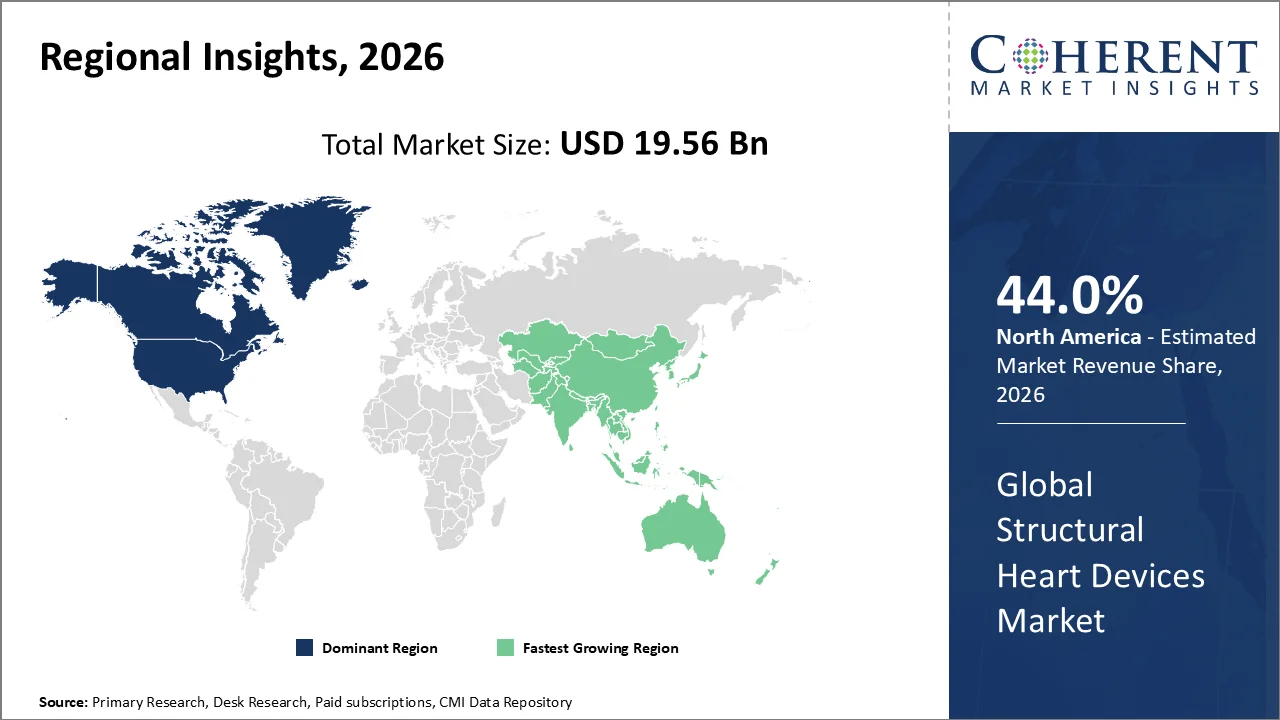
- North America is anticipated to dominate the global structural heart devices market with approximately 44.0% share in 2026. The region’s leadership is supported by the large U.S. structural heart procedure base, early adoption of transcatheter technologies, established specialist heart-valve programs, and continued regulatory expansion. The U.S. FDA expanded the indication of the SAPIEN 3 transcatheter heart valve systems on April 30, 2025, to include eligible patients with asymptomatic severe aortic stenosis, further enlarging the addressable patient population in the region.
Market Drivers
Expansion of Transcatheter Therapies Beyond Aortic Stenosis Is Broadening the Structural Heart Devices Market
The structural heart devices market is expanding as transcatheter technologies move beyond aortic valve replacement into mitral and tricuspid valve repair and replacement. These minimally invasive procedures provide treatment alternatives for elderly, high-risk and medically complex patients who may not be suitable for conventional open-heart surgery.
Recent clinical evidence is also strengthening the adoption potential of transcatheter mitral valve replacement. A 2026 CHOICE-MI Registry analysis involving 124 high-risk patients reported a 91% technical success rate, procedural mortality of 0.8%, and residual mitral regurgitation of grade 1 or lower in 95% of patients at discharge, with the reduction largely sustained through two years.
In May 2025, the U.S. FDA approved Abbott’s Tendyne Transcatheter Mitral Valve System for patients with severe mitral valve dysfunction associated with severe mitral annular calcification who were unsuitable for surgery or transcatheter edge-to-edge repair.
Improving Clinical Outcomes Are Accelerating the Adoption of Minimally Invasive Valve Repair
Favorable clinical outcomes are increasing the acceptance of catheter-based structural heart procedures among physicians, hospitals and patients. Transcatheter repair technologies can reduce valve regurgitation without sternotomy, cardiopulmonary bypass or prolonged recovery, making them particularly suitable for elderly patients and individuals considered high-risk for surgery.
The two-year outcomes of the TRILUMINATE Pivotal Trial from 2025 involved a cohort of 572 patients suffering from severe tricuspid regurgitation in five different countries. There was a reduction in the risk of re-hospitalizations due to heart failure in 28% for patients undergoing transcatheter edge-to-edge repair when compared to the patients on medical treatment alone. In 2 years, moderate tricuspid regurgitation occurred in 84% of device patients versus 21% in medical therapy patients.
Current Events and Their Impact on the Structural Heart Devices Market
Current Event | Description and its Impact |
CMS Proposes Expansion and Modernization of Medicare TAVR Coverage in the U.S. (June 2026) |
|
EU Makes EUDAMED Registration Mandatory and Strengthens Medical-Device Supply Continuity Rules (2025–2026) |
|
- Current Industry Events of 2026
- Market Size Estimation
- Regional Breakdown
- Competitive Landscape
- Customer Intelligence
- Segmental Analysis
- Pricing Analysis
- Key Market Drivers, Challenges & Future Trends
- Customized Insights Section
Segmental Insights
Why Are Heart Valves Acquiring the Largest Market Share?
On the basis of product type, the heart valve segment is projected to account for the largest structural heart devices market share of 68.0% in 2026. The segment’s leadership is owing to the extensive use of transcatheter and surgical valves for treating aortic, mitral, tricuspid, and pulmonary valve disorders. Expanding eligibility for minimally invasive valve replacement and continued innovation in tissue valves are further increasing procedural adoption.
In February 2026, Edwards Lifesciences reported that its global TAVR sales reached USD 4.5 billion in 2025, increasing 8.6% on a constant-currency basis. Its surgical structural heart business generated more than USD 1.0 billion, while fourth-quarter TAVR sales increased 12.0% to USD 1.16 billion. These figures demonstrate the substantial commercial scale of heart valves within the overall structural heart device industry.
The same company reported that global adoption of its transcatheter valve portfolio continued to expand across the U.S., Europe, and other international markets. Growing use of TAVR, along with newer mitral and tricuspid valve replacement technologies, is therefore expected to maintain the heart valve segment’s leading position through 2033.
Why Is Valvular Heart Disease Leading the Indication Category?
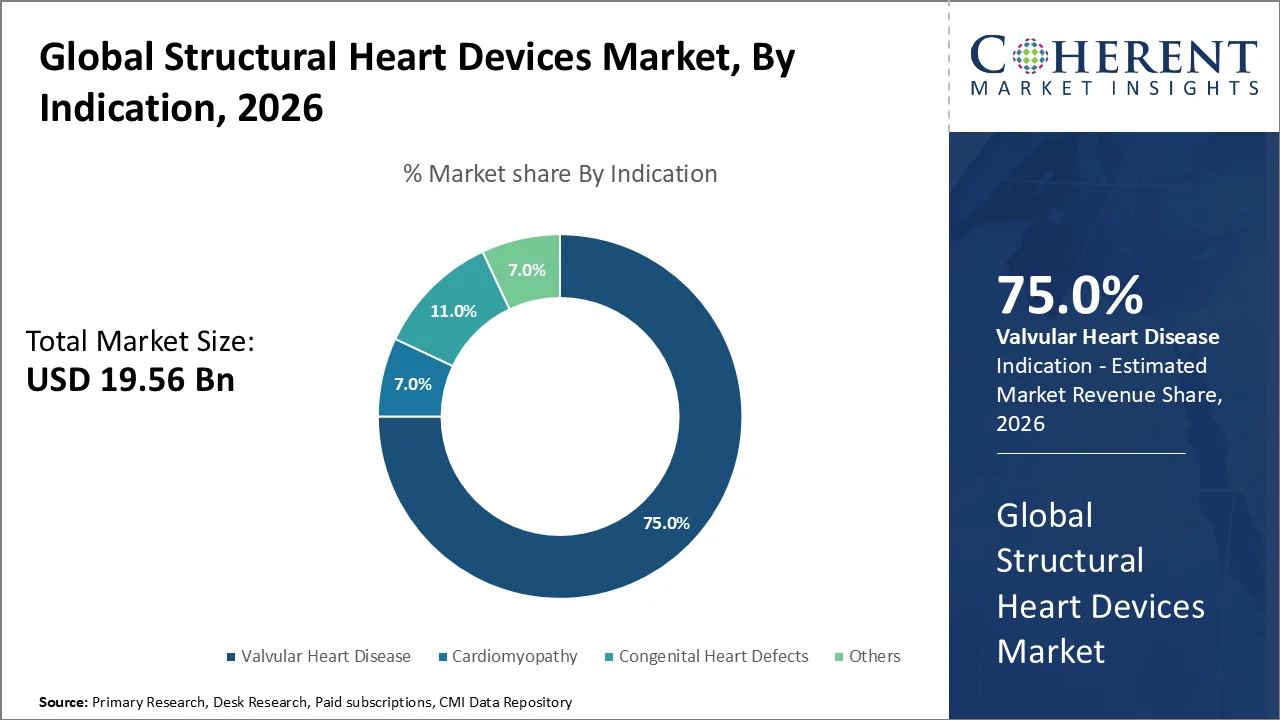
On the basis of indication, the valvular heart disease segment is projected to lead the structural heart devices market with 75.0% share in 2026. The segment includes aortic, mitral, tricuspid, and pulmonary valve stenosis and regurgitation. These conditions directly require heart valve replacement, valve repair, annuloplasty, or other transcatheter structural interventions.
The 2025 PREVUE-VALVE study screened 3,000 U.S. adults aged 65–85 years and found that 8.2% had moderate or greater valvular heart disease. The prevalence increased from 5.1% among people aged 65–69 years to 14.7% among those aged 80–85 years, demonstrating the strong relationship between ageing and clinically significant valve disease.
In March 2026, JenaValve received U.S. FDA premarket approval for the Trilogy Transcatheter Heart Valve System for patients with symptomatic, severe native aortic regurgitation who are at high or greater risk for surgical valve replacement.
Why Do Hospitals Hold the Largest Market Share?
On the basis of end user, the hospital segment is projected to dominate the structural heart devices market with 88.0% share in 2026. Structural heart interventions require advanced catheterization laboratories, cardiac imaging, anaesthesia support, intensive care, cardiac surgery backup, and multidisciplinary heart teams. These requirements make hospitals the primary setting for complex valve replacement, valve repair, and occlusion procedures.
In June 2026, proposed TAVR coverage policy by the Centers for Medicare & Medicaid Services in the U.S. stated that TAVR should be conducted in a facility having an on-site structural heart interventional cardiology program, a cardiac surgery program, intensive care unit after TAVR, and a quality improvement program. The essential heart team should have a cardiac surgeon and an interventional cardiologist with hospital privileges.
Structural Heart Devices Market Trends
- The adoption of transcatheter valve replacement in the relatively lower surgical risk population is broadening the structural heart devices market beyond the elderly and inoperable categories. In 2025 Evolut Low Risk involving 1,414 participants, there was a 15.5% of death and disabling stroke at five years in the TAVR category relative to 16.4% in surgical valve replacement category. The valve gradient of the former category was also significantly lower at 10.7 mmHg relative to 12.8 mmHg.
- The increase in transcatheter intervention of mitral and tricuspid valves is broadening the market scope beyond just aortic valve replacement. As per a study conducted by EuroTR Registry on 3,025 cases of tricuspid edge-to-edge repair till 2025, tricuspid regurgitation was found to be moderate or less in 80% of cases at the time of discharge, and in 69% cases after a median follow-up period of 269 days.
- Increased use of minimalist TAVI methods is lowering procedure complexity and helping patients recover more quickly. The 2025 DOUBLE-CHOICE trial included 752 patients and reported that non-sedated local anaesthesia was no less effective than standard anaesthesia; the rate of the composite endpoint at 30 days for both groups was 22.9% and 25.8%, respectively. The investigators estimated that approximately 80% of selected patients could be safely managed using the minimalist approach.
Regional Insights
North America Dominates Owing to the High Valvular Disease Burden and Established Structural Heart Treatment Infrastructure
The North American structural heart devices market is projected to account for the largest global share of approximately 44.0% in 2026. The region’s leadership is owing to the high burden of heart valve disease, strong adoption of transcatheter procedures, availability of specialized structural heart programs, and early introduction of advanced valve-repair and replacement devices.
In February 2025, the American Heart Association reported that heart valve disease contributes to more than 60,000 deaths annually in the U.S. It also stated that aortic stenosis affects approximately 5% of adults aged above 65 years, with the affected population expected to more than double by 2050. This large and expanding patient pool is sustaining demand for transcatheter heart valves, surgical valves, annuloplasty systems, and other valve-repair technologies across the region.
Asia Pacific Is Expected to Be the Fastest-Growing Regional Market
The Asia Pacific structural heart devices market is expected to record the fastest growth, at an estimated CAGR of approximately 11.2% from 2026 to 2033. Regional expansion is being supported by rapid population ageing, improving access to specialist cardiac care, growing hospital adoption of minimally invasive procedures, and the launch of advanced structural heart devices in markets such as Japan and India.
According to the UN Economic and Social Commission for Asia and the Pacific, there were about 516 million people aged above 65 years in the region in 2025, comprising 10.8% of the regional population. This figure is set to rise to 19.4% in 2050, which will significantly raise the number of patients with valve disease.
The regional product pipeline is also expanding. In July 2025, Abbott received regulatory approval in Japan for TriClip, a minimally invasive treatment for tricuspid regurgitation.
Strategic Investment and Expanding Device Portfolios Are Accelerating the Structural Heart Devices Market in the United States
The U.S. structural heart devices market is showing significant growth due to extensive industry investment, an already developed transcatheter procedure environment, and further growth in valve and heart occlusion devices. The manufacturers are working on next generation devices that will enhance valve life, anatomical fitting, implant accuracy, and patient suitability.
In May 2026, Boston Scientific invested USD 1.5 billion for an approximately 34% equity interest in MiRus, a U.S.-based company developing the SIEGEL balloon-expandable TAVR system. The agreement also provided Boston Scientific with an option to acquire the MiRus TAVR business for additional payments totalling up to USD 3.0 billion, subject to clinical and regulatory milestones.
China Structural Heart Devices Market Trends
The China structural heart devices market is expected to record strong growth owing to rapid population ageing, a substantial hospital burden of valvular heart disease, increasing availability of minimally invasive cardiac procedures, and the emergence of domestically developed transcatheter repair and replacement systems.
According to China’s National Bureau of Statistics, the country had approximately 223.65 million people aged 65 years and above at the end of 2025, representing 15.9% of the total population. The expanding elderly population is increasing the number of patients at risk of degenerative aortic stenosis, mitral regurgitation, tricuspid regurgitation, and other age-associated structural heart conditions.
In June 2025, the National Medical Products Administration approved Hangzhou Dawneo Medical Technology’s innovative Transcatheter Mitral Valve Clip System for marketing.
Who are the Major Companies in Structural Heart Devices Industry
Some of the major key players in Structural Heart Devices Market are Abbott Laboratories, Medtronic Plc., Edwards Lifesciences Corporation, Boston Scientific Corporation, CryoLife Inc., LivaNova Plc., Cook Group Incorporated, Endologix Inc., and W. L. Gore & Associates, Inc.
Key News
- In August 2025, Medtronic received U.S. FDA approval for an expanded Redo-TAVR indication for its Evolut PRO+, FX, and FX+ systems. The approval allows a new Evolut valve to be implanted inside any previously implanted transcatheter aortic valve that has failed.
- In July 2025, Cook Medical announced the U.S. commercial availability of the Zenith Iliac Branch Device, following FDA approval on May 30, 2025. The endovascular graft treats aortoiliac and iliac aneurysms while preserving internal iliac artery blood flow.
Market Report Scope
Structural Heart Devices Market Report Coverage
| Report Coverage | Details | ||
|---|---|---|---|
| Base Year: | 2025 | Market Size in 2026: | USD 19.56 Bn |
| Historical Data for: | 2020 To 2024 | Forecast Period: | 2026 To 2033 |
| Forecast Period 2026 to 2033 CAGR: | 9.5% | 2033 Value Projection: | USD 36.91 Bn |
| Geographies covered: |
| ||
| Segments covered: |
| ||
| Companies covered: | Abbott Laboratories, Medtronic Plc., Edwards Lifesciences Corporation, Boston Scientific Corporation, CryoLife Inc., LivaNova Plc., Cook Group Incorporated, Endologix Inc., and W. L. Gore & Associates, Inc. | ||
| Growth Drivers: |
| ||
| Restraints & Challenges: |
| ||
Analyst Opinion
- The structural heart devices market is expected to benefit increasingly from AI-enabled patient identification and faster specialist referrals. In March 2026, the ALERT trial across 35 U.S. hospitals found that electronic clinician alerts produced a 40% relative increase in valve interventions and a 27% increase in multidisciplinary heart-team evaluations within 90 days. Such digital care pathways can reduce undertreatment and expand the eligible patient pool for transcatheter valve procedures.
- Long-term clinical evidence is likely to accelerate the use of transcatheter valves among younger and lower-risk patients. In June 2026, the seven-year PARTNER 3 analysis of 948 valve recipients reported comparable structural valve deterioration rates for TAVR and surgery at 7% and 8%, respectively, while valve reintervention occurred in 6% of both groups. These outcomes reduce durability concerns and strengthen the role of TAVR in lifetime valve-management strategies.
- The next major growth opportunity is expected to emerge from mitral and tricuspid valve interventions, although adoption will remain dependent on careful patient selection. In June 2026, extended Tri.FR trial results showed that transcatheter tricuspid edge-to-edge repair reduced the combined risk of first heart-failure hospitalization, tricuspid surgery or cardiovascular death by 44% and reduced recurrent heart-failure hospitalizations by approximately 48% versus medical therapy.
Speak to the analyst
Want personalized insights?
Take the findings above to one of our principal consultants, or have the report rebuilt around the segments, geographies and competitors you actually track.
Market Segmentation
- By Product Type (Revenue, USD Bn, 2021-2033)
- Heart Valve
- Transcatheter Heart Valve
- Mechanical Heart Valve
- Surgical Heart Valve
- Annuloplasty rings
- Occlusion Devices
- Heart Valve
- By Indication (Revenue, USD Bn, 2021-2033)
- Valvular Heart Disease
- Regurgitation
- Stenosis
- Cardiomyopathy
- Congenital Heart Defects
- Others
- Valvular Heart Disease
- By End User (Revenue, USD Bn, 2021-2033)
- Hospitals
- Ambulatory Surgical Centers
- By Region (Revenue, USD Bn, 2021-2033)
- North America
- U.S.
- Canada
- Latin America
- Brazil
- Mexico
- Argentina
- Rest of Latin America
- Europe
- Germany
- U.K.
- France
- Italy
- Spain
- Russia
- Rest of Europe
- Asia Pacific
- China
- India
- Japan
- Australia
- South Korea
- ASEAN
- Rest of Asia Pacific
- Middle East
- GCC
- Israel
- Rest of Middle East
- Africa
- South Africa
- Central Africa
- North Africa
- North America
Sources
Primary Research Interviews
- Interventional cardiologists specializing in structural heart procedures
- Cardiothoracic and cardiovascular surgeons
- Structural heart program directors and heart-team coordinators
- Cardiac catheterization laboratory managers
- Clinical specialists in TAVR, TMVR, TTVR, and valve-repair procedures
- Product development and R&D executives from structural heart device manufacturers
- Hospital procurement managers and value-analysis committee members
- Medical device distributors and regional sales executives
- Regulatory affairs and reimbursement specialists
- Key opinion leaders in valvular and congenital heart disease
Databases
- World Health Organization Global Health Observatory
- Institute for Health Metrics and Evaluation – Global Burden of Disease
- Organisation for Economic Co-operation and Development Health Statistics
- Eurostat Health Database
- U.S. Centers for Medicare & Medicaid Services
- U.S. Food and Drug Administration Medical Device Databases
- ClinicalTrials.gov
- European Database on Medical Devices
- National Cardiovascular Data Registry
- STS/ACC Transcatheter Valve Therapy Registry
- United Nations Population Database
- World Bank Health and Population Database
Magazines
- TCTMD
- Cardiovascular Business
- Cardiac Interventions Today
- Cath Lab Digest
- Medical Device Network
- MedTech Dive
- Cardiovascular News
- Medical Device and Diagnostic Industry
Journals
- Journal of the American College of Cardiology
- JACC: Cardiovascular Interventions
- European Heart Journal
- EuroIntervention
- Circulation
- The New England Journal of Medicine
- The Lancet
- Structural Heart
- The Journal of Thoracic and Cardiovascular Surgery
- Annals of Thoracic Surgery
Newspapers and Business Publications
- Reuters
- The Wall Street Journal
- Financial Times
- Bloomberg
- The New York Times
- The Guardian
- The Economic Times
- Business Standard
Associations
- American College of Cardiology
- American Heart Association
- European Society of Cardiology
- Society for Cardiovascular Angiography and Interventions
- Society of Thoracic Surgeons
- European Association for Cardio-Thoracic Surgery
- Heart Valve Society
- European Association of Percutaneous Cardiovascular Intervention
- World Heart Federation
- Adult Congenital Heart Association
Public Domain Sources
- Company annual reports, SEC filings, and investor presentations
- Structural heart device product portfolios and technical documents
- FDA premarket approval and medical device approval databases
- European Commission medical device regulatory publications
- CMS national coverage determinations and reimbursement policies
- Clinical trial registries and published trial results
- STS/ACC TVT Registry reports and presentations
- ESC, ACC, AHA, and EACTS clinical practice guidelines
- Government epidemiology and population-ageing publications
- Hospital structural heart program publications
- Peer-reviewed clinical and health-economic studies
- Patent databases such as WIPO, USPTO, EPO, and Google Patents
- Publicly available product approval, launch, and recall announcements
Proprietary Elements
- CMI Data Analytics Tool
- Proprietary CMI Existing Repository of Information for the Last 10 Years
Get access to 250+ pages report
Every segment, forecast, competitor profile and data table behind the analysis above — available for instant download.
- ESOMAR Member
- ISO 9001:2015 Certified
- D-U-N-S Registered
- GDPR & CCPA Compliant
Missing comfort of reading report in your local language? Find your preferred language:
Transform your Strategy with Exclusive Trending Reports
Frequently Asked Questions
The global Structural Heart Devices Market is expected to reach approximately USD 36.91 Bn by 2033.
The global Structural Heart Devices Market is estimated to be valued at approximately USD 19.56 Bn in 2026.
The Structural Heart Devices Market is anticipated to grow at a CAGR of 9.5% between 2026 and 2033.
Major companies covered in the global Structural Heart Devices Market include Abbott Laboratories, Medtronic Plc., Edwards Lifesciences Corporation, Boston Scientific Corporation, CryoLife Inc., LivaNova Plc., Cook Group Incorporated, Endologix Inc., and W. L. Gore & Associates, Inc.
The increasing prevalence of valvular heart diseases, rising adoption of minimally invasive transcatheter procedures, expanding elderly population, improving clinical outcomes, and continued advancement of heart valve technologies are driving market growth.
High device and procedure costs, complex regulatory requirements, limited availability of trained structural heart specialists, procedural complication risks, and restricted access to advanced cardiac infrastructure in developing markets are the major challenges.
The heart valve segment is expected to account for the largest market share of approximately 68.0% in 2026, supported by growing adoption of transcatheter and surgical valve replacement and repair procedures.