

Computer Assisted Surgical Systems Market Size and Forecast – 2026 to 2033
The Computer Assisted Surgical Systems Market is anticipated to grow at a CAGR of 9.2% with USD 12.6 Bn share in 2026 and is expected to reach USD 19.7 Bn in 2033. The Computer Assisted Surgical Systems Market grows as healthcare providers adopt minimally invasive procedures, advanced surgical robotics, and innovative imaging technologies. AI-assisted robotic surgery reduced operative time by 25% and intraoperative complications by 30% compared with conventional manual surgery.
Key Takeaways:
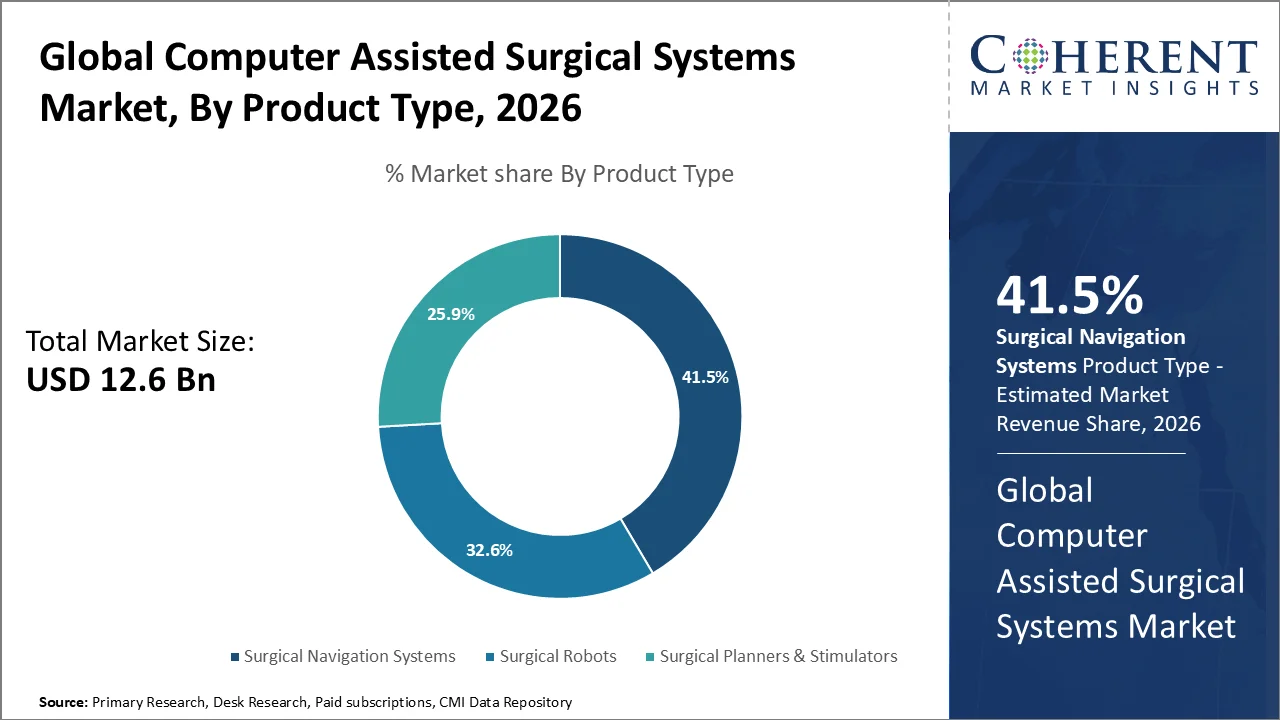
- Surgical Navigation Systems hold the largest market share of 41.5% in 2026 owing to its increasing demand for minimally invasive surgeries (MIS). According to our research, Global surgical navigation system industry is estimated to surpass USD 14.31 Bn by 2033.
- Gynecology Surgery expected to hold largest market share of 37.7% in 2026 owing to the rising prevalence of gynecological disorders. Overall, 61.2% of women reported at least one gynecological disorder, with dysmenorrhea (61.3%) being the most common, followed by irregular menstruation (36.1%).
- Hospitals acquired the prominent market share of 42.7% in 2026 owing to its increasing demand for advanced surgical technologies.
- North America is expected to acquire the dominant share of 42.8% in 2026 owing to its strong presence of leading medical device companies.
Current Events and Their Impact on the Computer Assisted Surgical Systems Market
Current Event | Description and its Impact |
FDA Clearances Expand the U.S. Computer-Assisted Surgical Systems Market (2024–2025) |
|
EU AI Act Introduces New Compliance Requirements for AI-Enabled Surgical Systems |
|
Segmental Insights
- Current Industry Events of 2026
- Market Size Estimation
- Regional Breakdown
- Competitive Landscape
- Customer Intelligence
- Segmental Analysis
- Pricing Analysis
- Key Market Drivers, Challenges & Future Trends
- Customized Insights Section
Why is Surgical Navigation Systems Acquiring the Largest Market Share?
Surgical Navigation Systems hold the largest market share of 41.5% in 2026. The increasing demand for minimally invasive surgeries, the rising prevalence of orthopedic, neurological, and spinal disorders, and the need for greater surgical precision drive the adoption of Surgical Navigation Systems in the Computer-Assisted Surgical Systems market. Healthcare providers are leveraging advancements in 3D imaging, artificial intelligence, real-time tracking, and augmented reality to enhance navigation capabilities. Hospitals are also expanding the use of robotic-assisted procedures, investing in advanced healthcare infrastructure, and adopting these technologies to reduce surgical complications and improve patient outcomes. For instance, in July 2026, Preethi Hospital launched an advanced surgical arthroscopy and navigation system to improve arthroscopic and orthopedic care while accelerating the adoption of precision-guided surgical technologies in Madurai.
Gynecology Surgery expected to hold largest market share
Gynecology Surgery expected to hold largest market share of 37.7% in 2026 owing to the growing adoption of robot-assisted gynecologic surgery. Healthcare providers are driving the adoption of Gynecology Surgery solutions in the Computer-Assisted Surgical Systems market by increasingly choosing minimally invasive procedures, addressing the growing burden of gynecological disorders, and seeking greater surgical precision. Surgeons are using advancements in robotic-assisted surgery, artificial intelligence, 3D imaging, and digital surgical technologies to enhance accuracy and improve patient outcomes. Hospitals are integrating computer-assisted systems for complex gynecological procedures, including oncology and fertility-preserving surgeries, while investments in advanced infrastructure and surgeon training continue to accelerate adoption. Medtronic announced major milestones to expand the U.S. indications for its Hugo robotic-assisted surgery system and advance the future of surgical care.
Which End User segment dominates the market?
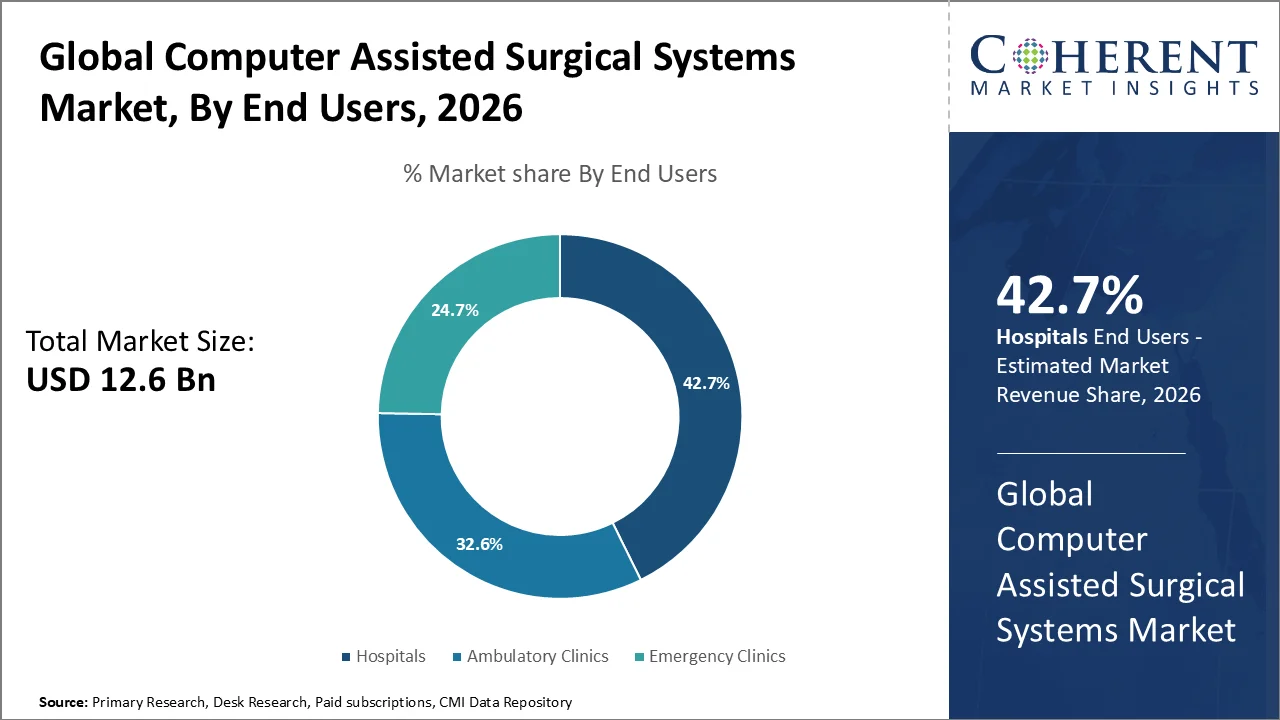
Hospitals acquired the prominent market share of 42.7% in 2026. Hospitals are accelerating growth in the Computer-Assisted Surgical Systems market by implementing advanced technologies that enhance surgical precision, operational efficiency, and patient outcomes. Healthcare providers are increasingly adopting these systems due to the rising demand for minimally invasive procedures, growing surgical volumes, and expanding robotic-assisted surgery programs. Hospitals are also leveraging artificial intelligence, 3D imaging, and digital surgical platforms to improve clinical capabilities. By focusing on patient safety, reducing complications, and optimizing surgical performance, healthcare facilities continue to drive the adoption of computer-assisted surgical solutions.
Computer Assisted Surgical Systems Market Trends
- Rising adoption of minimally invasive and robotic-assisted surgeries is improving surgical precision, reducing recovery time, and enhancing patient outcomes. According to the American College of Surgeons, minimally invasive procedures are associated with shorter hospital stays, reduced blood loss, lower postoperative pain, and faster recovery compared with conventional open surgery.
- An aging population and increasing burden of chronic diseases continue to drive demand for computer-assisted surgical systems. According to the World Health Organization, one in six people worldwide will be aged 60 years or older by 2030, increasing from 1.0 billion in 2020 to 1.4 billion. Additionally, the WHO estimates that 1.71 billion people worldwide live with musculoskeletal conditions, substantially increasing demand for orthopedic procedures such as joint replacement and spine surgery, where computer-assisted navigation is widely adopted.
- Favorable reimbursement policies and increasing healthcare investments are supporting broader adoption of advanced surgical technologies. In the United States, the Centers for Medicare & Medicaid Services provides reimbursement for numerous robot-assisted and computer-assisted procedures under existing Medicare payment systems when they are medically necessary. In parallel, governments across Europe and Asia continue investing in hospital modernization and surgical infrastructure, improving access to advanced computer-assisted surgical platforms.
Regional Insights
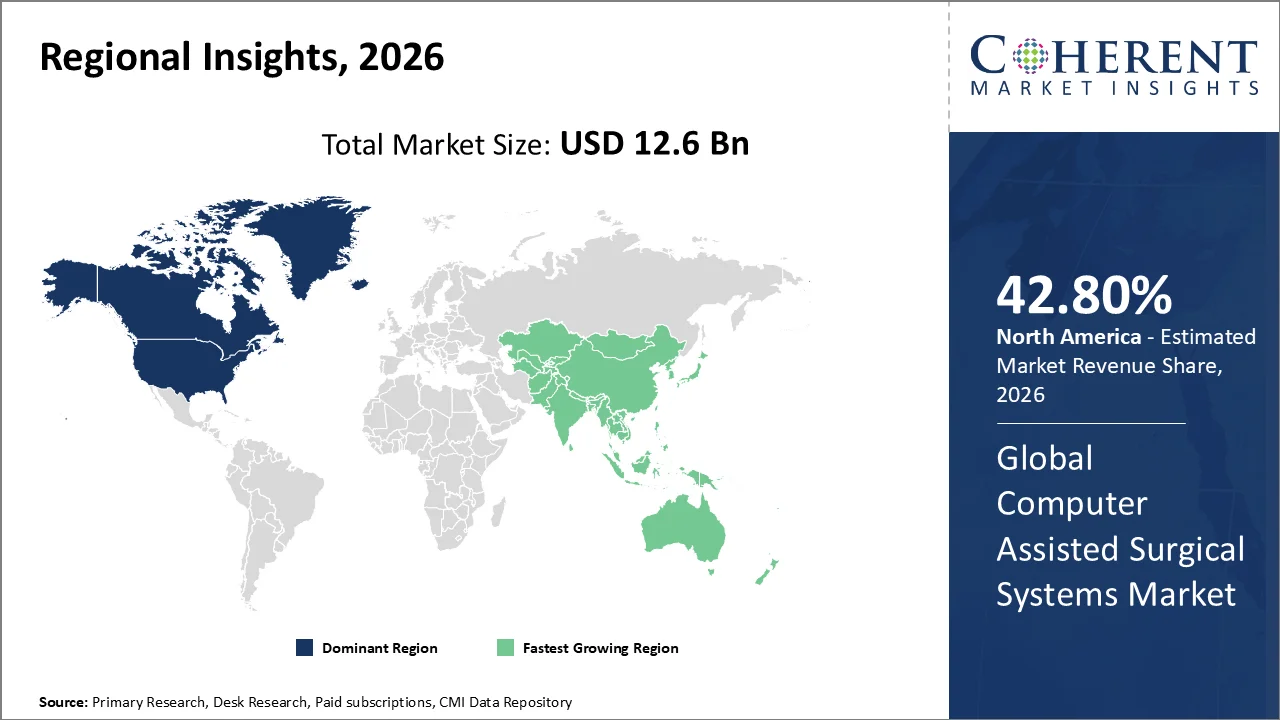
North America dominates owing to rising prevalence of chronic diseases and surgical procedures
North America is expected to acquire the dominant share of 42.80% in 2026. North America accelerates growth in the Computer-Assisted Surgical Systems market by adopting advanced healthcare technologies, expanding robotic-assisted surgery applications, and increasing the use of minimally invasive procedures. Healthcare providers across the region leverage advanced infrastructure, high surgical volumes, and investments in digital surgery platforms to enhance clinical capabilities. Hospitals and surgeons integrate artificial intelligence, 3D imaging, and surgical navigation technologies to improve precision and patient outcomes. The rising burden of chronic diseases and the strong presence of medical technology companies further drive market growth. The U.S. military hospital in Rota, Spain, introduced computer-assisted technology for hip and knee replacement procedures, becoming the first facility in the Defense Health Network–Europe to perform these surgeries using surgical navigation systems.
Asia Pacific Computer Assisted Surgical Systems Market Trends
The Asia Pacific Computer Assisted Surgical Systems Market grows as healthcare providers adopt advanced surgical technologies, expand infrastructure, and increase the use of minimally invasive procedures. Medical tourism, improved access to specialized healthcare services, and a growing pool of skilled surgeons further accelerate market development. Governments are modernizing healthcare facilities, while hospitals and medical institutions are investing in robotic surgery platforms. The region’s aging population also encourages healthcare providers to implement computer-assisted surgical systems to enhance surgical precision and improve patient outcomes. For instance, in September 2025, AIIMS Raipur inaugurated the 'Devhast' robotic surgery facility, becoming the first government hospital in Central India to deploy the da Vinci Xi Surgical System for highly precise minimally invasive procedures. In July 2026, Kauvery Hospital launched Kauvery 3X Chennai, an integrated robotic surgery program that unifies robotic surgical services across its three Chennai hospitals under standardized clinical protocols and multidisciplinary care.
United States Computer Assisted Surgical Systems Market Trends
The United States Computer Assisted Surgical Systems Market continues to expand as healthcare providers adopt advanced surgical solutions to enhance accuracy, efficiency, and patient care. Growing preference for minimally invasive techniques, rising surgical procedures, and the need for better clinical outcomes encourage hospitals to integrate computer-assisted technologies. The country’s robust healthcare infrastructure, continuous investment in medical research, and strong presence of innovative technology companies further drive market development. Increasing use of robotic-assisted and image-guided surgical platforms also strengthens adoption across hospitals and specialized healthcare facilities.
Japan Computer Assisted Surgical Systems Market Trends
Japan’s Computer Assisted Surgical Systems Market grows as the country leverages its advanced healthcare infrastructure, expands minimally invasive procedures, and increases demand for precise surgical solutions. The aging population drives healthcare providers to adopt technologies that enhance surgical accuracy and shorten recovery periods. Japan has the world's oldest population, with 29.3% (36.25 million) of its people aged 65 and older. More than 10% are 80 or older, and the country's median age is approximately 50.2 years. Medical companies and institutions invest in innovation, robotics, and artificial intelligence integration while strengthening collaborations to advance surgical capabilities. Government programs that support digital healthcare transformation also accelerate the adoption of advanced surgical systems across hospitals and medical centers in Japan.
Who are the Major Companies in Computer Assisted Surgical Systems Industry
Some of the major key players in Computer Assisted Surgical Systems are Intuitive surgical, Inc., Stryker Corporation, Mazor Robotics Ltd., Hansen Medical, Inc. (a subsidiary of Auris Surgical Robotics), Accuray Incorporated, Omnicell, Inc., Smith & nephew, and Zimmer Biomet.
Key News
- In August 2025, Udai Omni Hospital unveiled its advanced Misso robotic surgical system to enhance orthopedic and trauma care at its Chapel Road facility in South India.
Market Report Scope
Computer Assisted Surgical Systems Market Report Coverage
| Report Coverage | Details | ||
|---|---|---|---|
| Base Year: | 2025 | Market Size in 2026: | USD 12.6 Bn |
| Historical Data for: | 2020 To 2024 | Forecast Period: | 2026 To 2033 |
| Forecast Period 2026 to 2033 CAGR: | 9.2% | 2033 Value Projection: | USD 19.7 Bn |
| Geographies covered: |
| ||
| Segments covered: |
| ||
| Companies covered: | Intuitive surgical, Inc., Stryker Corporation, Mazor Robotics Ltd., Hansen Medical, Inc. (a subsidiary of Auris Surgical Robotics), Accuray Incorporated, Omnicell, Inc., Smith & nephew, and Zimmer Biomet. | ||
Analyst Opinion
- Ocular surgery demand is becoming a structural driver for Computer Assisted Surgical Systems, not a technology-led trend. The underlying clinical requirement remains significant, with the World Health Organization estimating that nearly 2.2 billion people globally experience vision impairment, including a substantial number of cases that could have been prevented or remain untreated. This unmet clinical burden creates a long-term foundation for computer-assisted surgical adoption, as surgeons increasingly require advanced visualization, navigation, and precision tools to improve outcomes and address complex ocular conditions.
- The scale of cataract procedures positions ophthalmology as a key application area for surgical assistance technologies. Cataract surgery remains one of the most frequently performed surgical procedures worldwide, with estimates indicating approximately 28 million procedures conducted annually. The sheer procedural volume makes cataract surgery a high-impact segment where improvements in surgical accuracy, workflow efficiency, and complication reduction can deliver measurable value for hospitals and surgeons. Technologies that support real-time guidance, imaging integration, and automated assistance are likely to gain stronger acceptance in high-volume ophthalmic centers.
- Advancements in laser-based vision correction are strengthening the case for computer-assisted platforms in refractive surgery. Clinical outcomes from modern LASIK procedures demonstrate strong effectiveness, with more than 99% of patients achieving 20/40 vision or better and around 90% reaching 20/20 vision or better. These results highlight how precision-driven technologies can improve consistency and patient confidence. The success of laser-assisted procedures will encourage broader integration of artificial intelligence, robotic assistance, and advanced imaging technologies, pushing ocular surgery toward more personalized and data-driven treatment approaches.
Speak to the analyst
Want personalized insights?
Take the findings above to one of our principal consultants, or have the report rebuilt around the segments, geographies and competitors you actually track.
Market Segmentation
- By Product Type
- Surgical Navigation Systems
- Surgical Robots
- Surgical Planners & Stimulators
- By Surgery Type
- Gynecology Surgery
- General Surgery
- Urology Surgery
- Cardiovascular Surgery
- Neurosurgery
- Orthopedic Surgery
- Other Surgeries
- By End Users
- Hospitals
- Ambulatory Clinics
- Emergency Clinics
- By Region
- North America
- U.S.
- Canada
- Latin America
- Brazil
- Mexico
- Argentina
- Rest of Latin America
- Europe
- Germany
- U.K.
- France
- Italy
- Spain
- Russia
- Rest of Europe
- Asia Pacific
- China
- India
- Japan
- Australia
- South Korea
- ASEAN
- Rest of Asia Pacific
- Middle East
- GCC
- Israel
- Rest of Middle East
- Africa
- South Africa
- Central Africa
- North Africa
Sources
Primary Research Interviews
- Healthcare professionals, surgeons, ophthalmologists, orthopedic specialists, and hospital administrators
- Medical device executives, technology developers, and industry experts involved in surgical robotics, navigation systems, and AI-enabled surgical platforms
- Key opinion leaders specializing in minimally invasive surgery and computer-assisted surgical procedures
Databases
- World Health Organization (WHO) healthcare databases
- U.S. Food and Drug Administration (FDA) medical device databases
- National Institutes of Health (NIH) clinical research databases
- National healthcare statistics and procedure databases from government health agencies
- Clinical trial and medical technology databases
Magazines
- Medical device and healthcare technology publications
- Surgical innovation and digital health magazines
- Ophthalmology, robotics, and medical engineering industry publications
Journals
- Peer-reviewed journals covering surgical robotics, artificial intelligence in healthcare, medical imaging, and minimally invasive surgery
- Clinical research journals focused on ophthalmology, orthopedics, neurosurgery, cardiovascular surgery, and general surgery
- Biomedical engineering and healthcare technology journals
Newspapers
- Healthcare and technology news publications
- Medical innovation and biotechnology news platforms
- Publications covering regulatory approvals, surgical technology advancements, and healthcare investments
Associations
- World Health Organization
- American Medical Association
- Association for the Advancement of Medical Instrumentation
- American Academy of Ophthalmology
- Surgical, robotics, and medical technology professional associations
Public Domain Sources
- Government healthcare reports and regulatory publications
- Clinical study publications and academic research repositories
- Hospital and healthcare institution reports
- Medical device approval documents and safety communications
- Publicly available healthcare technology and surgical innovation resources
Proprietary Elements
- CMI Data Analytics Tool
- Proprietary CMI Existing Repository of information for last 10 years
Get access to 250+ pages report
Every segment, forecast, competitor profile and data table behind the analysis above — available for instant download.
- ESOMAR Member
- ISO 9001:2015 Certified
- D-U-N-S Registered
- GDPR & CCPA Compliant
Missing comfort of reading report in your local language? Find your preferred language:
Transform your Strategy with Exclusive Trending Reports
Frequently Asked Questions
Computer Assisted Surgical Systems are advanced medical technologies that support surgeons by providing enhanced visualization, navigation, precision, and decision-making assistance during surgical procedures.
The market is driven by the increasing adoption of minimally invasive surgeries, rising demand for precision-based procedures, growing healthcare digitization, and the need to improve surgical outcomes while reducing recovery time.
Computer Assisted Surgical Systems are widely used in specialties such as orthopedics, neurosurgery, cardiovascular surgery, ophthalmology, gynecology, and general surgery.
Artificial intelligence enhances these systems by enabling real-time data analysis, surgical planning, image recognition, predictive insights, and decision support.
Minimally invasive procedures require high levels of precision because surgeons operate through smaller incisions and often rely on advanced imaging and navigation.