

Kidney Transplant Market Analysis & Forecast
The Kidney Transplant Market size is estimated to be valued at USD 10.44 Bn in 2026 and is expected to reach USD 14.49 Bn by 2033, exhibiting a compound annual growth rate (CAGR) of 4.8% from 2026 to 2033.
Key Takeaways
- By Type, The Living Donor Transplant Segment is projected to lead the kidney transplant market outlook with a 46.6% share in 2026.
- By Age, Adult Recipients are expected to dominate the market, accounting for 82% of kidney transplants in 2026.
- By End User, Hospitals & Clinics are anticipated to drive the market, representing 55.94% of the total kidney transplant procedures in 2026.
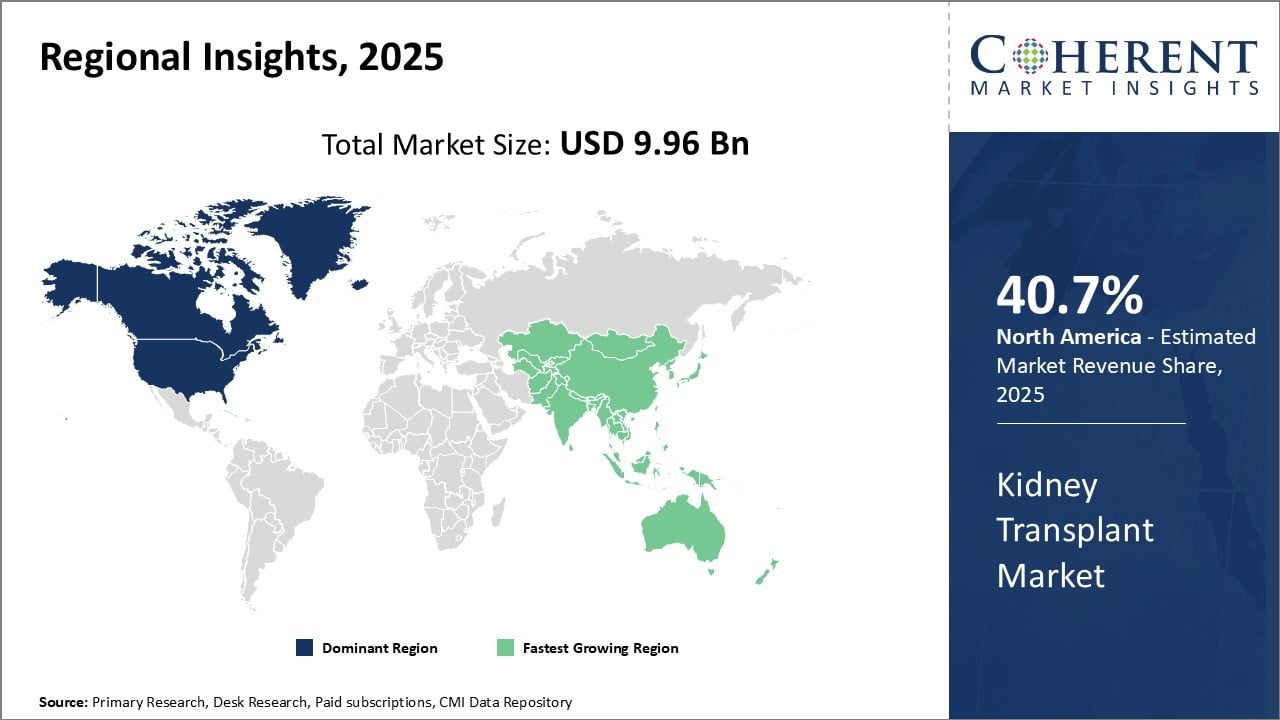
- By Region, North America is forecasted to hold the largest market share, accounting for over 40.7% of total kidney transplants worldwide in 2026.
Market Overview
The global kidney transplant market growth is driven by the rising prevalence of chronic kidney disease (CKD) and end-stage renal failure. Advances in surgical techniques, immunosuppressant drugs, and organ preservation have increased transplant success rates and patient awareness, boosting transplant volumes worldwide. For instance, in the United States, over 24,000 kidney transplants were performed in 2023—marking a steady increase fueled by improved immunosuppressive therapies and enhanced organ preservation methods.
Current Events and Its Impact on the Global Kidney Transplant Market
Event | Description and Impact |
Technological Advancements in Organ Preservation |
|
Regulatory Shifts in Organ Donation Policies |
|
Supply Chain and Pharmaceutical Disruptions |
|
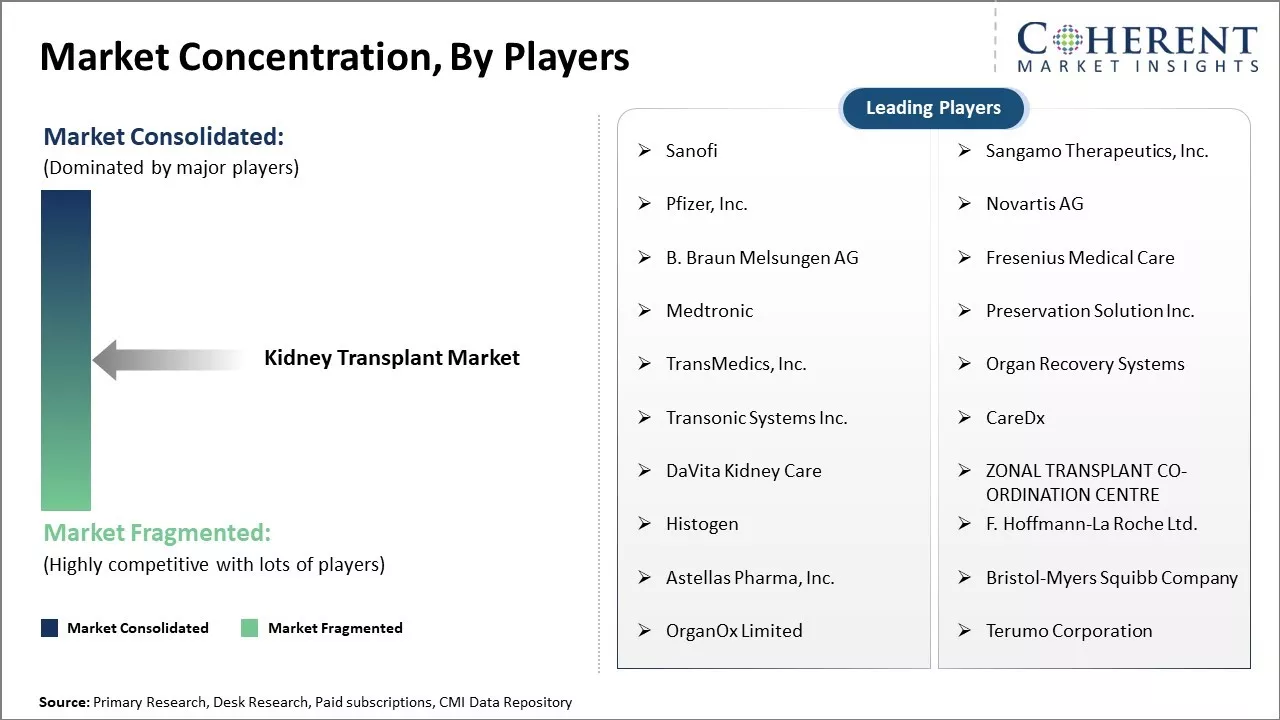
Market Concentration and Competitive Landscape
- Current Industry Events of 2026
- Market Size Estimation
- Regional Breakdown
- Competitive Landscape
- Customer Intelligence
- Segmental Analysis
- Pricing Analysis
- Key Market Drivers, Challenges & Future Trends
- Customized Insights Section
Kidney Transplant Market Trend
The demand for kidney transplant is expected to increase significantly during the forecast period. This is attributed to the rising prevalence of end-stage renal disease (ESRD) across the world. Additionally, technological advancements in transplant procedures such as laparoscopic devices and robotic-assisted kidney transplants are gaining popularity among both patients and surgeons. This is owing to benefits such as lesser post-surgery pain, faster recovery time, and fewer complications associated with open surgeries.
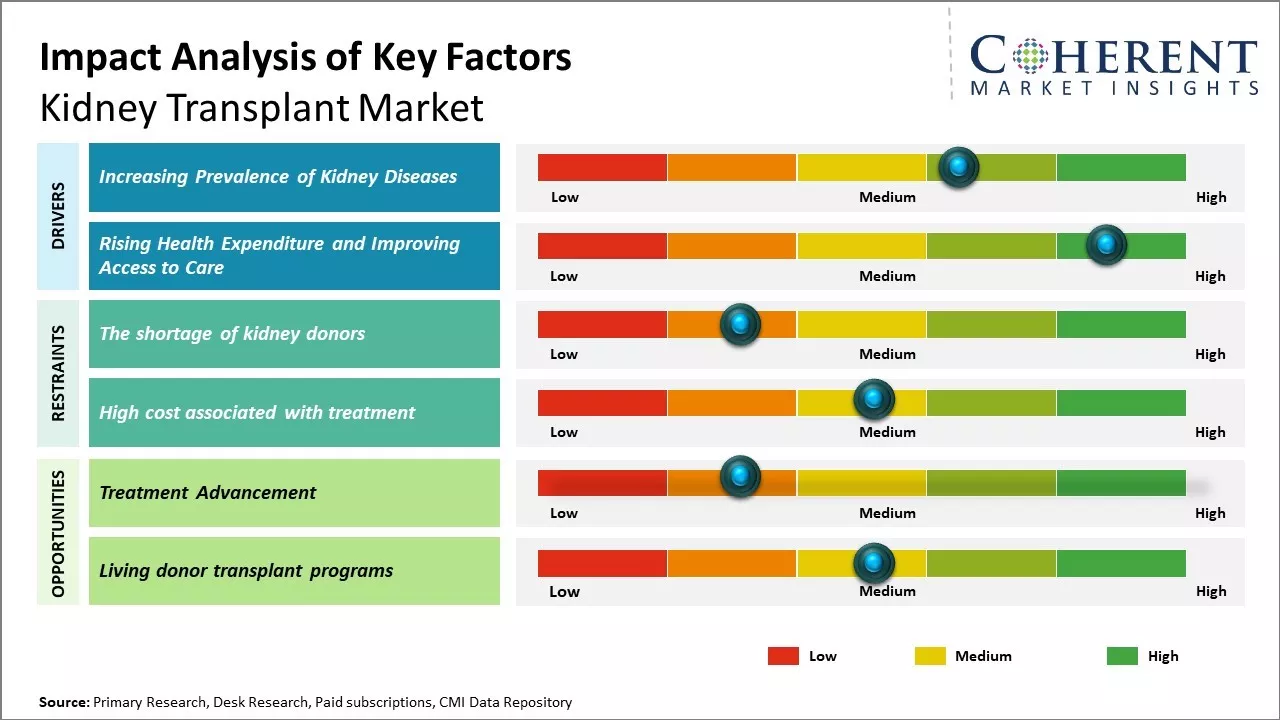
Moreover, increasing public-private investments to create awareness about organ donation and various transplant programs are further expected to drive the market growth during the forecast period. However, high cost associated with overall transplant procedure and immunosuppressant drugs for lifetime may hinder the growth of this market to some extent.
Increasing Prevalence of Kidney Diseases
The increasing prevalence of various kidney diseases across the globe is a key driver fueling the growth of the kidney transplant market. Kidney diseases have become a major public health problem affecting millions of people worldwide. The rising incidence of chronic conditions such as diabetes and hypertension, coupled with growing geriatric population has significantly contributed to the increasing burden of kidney failure globally.
As per statistical estimates, over 2 million people suffer from end-stage kidney disease each year requiring renal replacement therapy in the form of dialysis or kidney transplantation to stay alive. While dialysis offers a lifeline for patients suffering from kidney failure, kidney transplantation is considered the best treatment option as it restores near normal kidney function and improves quality of life. However, shortage of organ donors poses a major challenge. As a result, the number of patients requiring kidney transplantation is growing faster than the availability of donor organs, putting enormous pressure on the global kidney transplant market.
For instance, in April 2025, according to data by MJH Life Sciences, the consensus statement emphasizes the global prevalence of kidney disease, surpassing other non-communicable diseases prioritized by the WHO such as cardiovascular diseases, cancer, chronic diseases management, and diabetes. The mortality rates for kidney disease are rising alarmingly, with deaths expected to increase by 100% between 2016 and 2040. According to Mrs.Masaomi Nangaku, president of the International Society of Nephrology, kidney disease currently ranks as the third fastest-growing cause of death worldwide, with deaths increasing by 50% from 2000 to 2019.
Rising Health Expenditure and Improving Access to Care
Another important driver for the kidney transplant market is the overall increase in health expenditure globally. Rising disposable incomes, growing focus on healthcare as a priority, increasing medical insurance penetration, and better access to healthcare facilities have collectively enabled more patients to afford and qualify for expensive procedures such as kidney transplantation.
In developed nations, the overall rise in per capita healthcare spending supports ongoing technological advancements and innovations to improve success rates of organ transplantation. At the same time, developing markets which account for the majority of the disease burden are witnessing increased expenditures on complex transplant surgeries. This is primarily attributed to the extensive primary market research over time by governments and private organizations to elevate standards of medical care and make healthcare affordable for greater population.
Consequently, more patients worldwide now have access to various stages of kidney transplantation including pre-transplant evaluation, immunosuppressive therapy post transplantation and long-term medical management- ultimately driving higher demand for related services, devices and drugs.
For instance, in May 2024, AstraZeneca's modeling suggests significant cost savings for health systems in four European countries through early CKD screening and treatment. This could prevent numerous heart attacks, heart failure hospitalizations, and strokes. Studies presented at the ERA Congress support the benefits of targeted screening and guideline-directed treatment, showing potential clinical benefits and cost savings.
Real-world evidence from the DISCOVER CKD study reinforces the importance of early treatment, while survey data from the PaCE CKD trial highlights the burden of CKD on patients and caregivers. AstraZeneca is advocating for improved CKD policies globally through initiatives like 'Make the Change for Kidney Health.
Market Opportunities: Treatment Advancement
The development of more advanced immunosuppression medications may further reduce rejection rates. Expanding living donor programs and incentivizing donations could help close the organ supply gap over time. Medical technology innovations in areas such as organ preservation, organ support devices, and lab-grown organs also hold promise to make more kidneys available and improve.
Segmental Insights
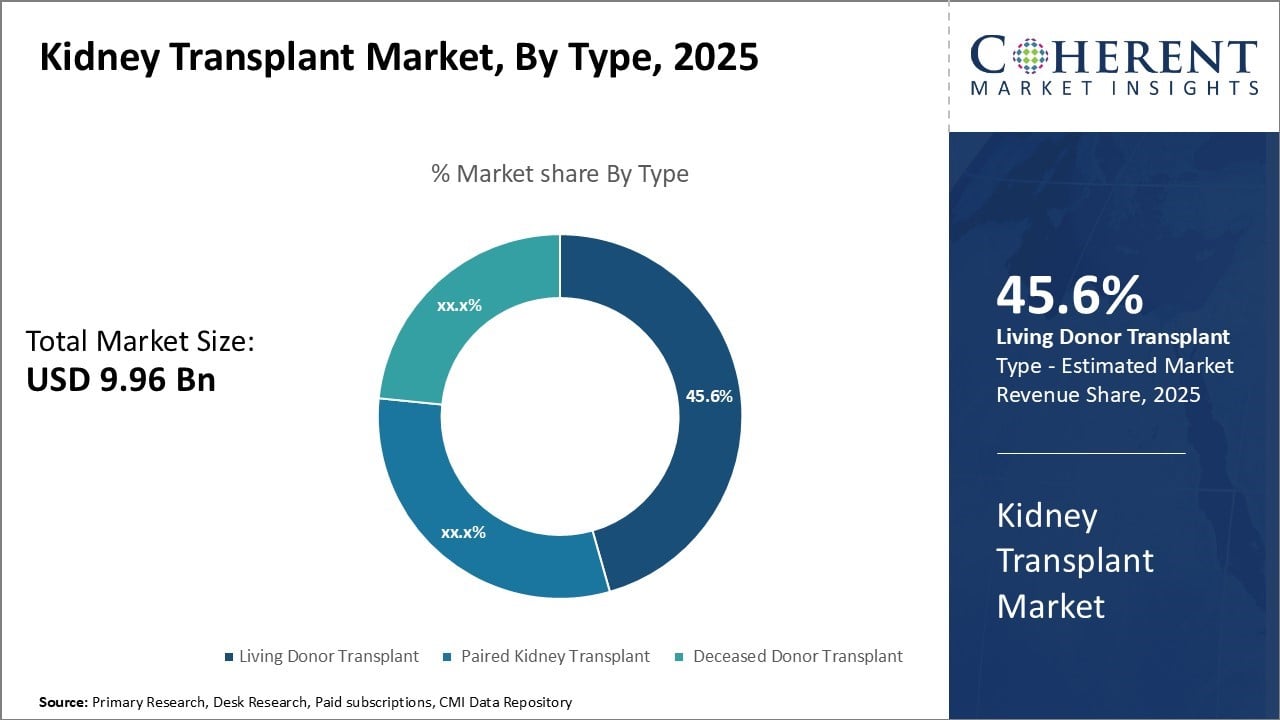
Kidney Transplant Market Insights, By Type
In terms of type, living donor transplant is expected to contribute the highest Kidney Transplant Market share, accounting for 46.6% in 2026 of the market shares owing to the strong demand for transplants from living donors. Living donor transplants offer several advantages over deceased donor transplants that increase their demand.
Living donor transplants have superior graft survival rates and kidney function outcomes compared to deceased donor transplants. This is because living donor kidneys are of higher quality as they come from healthy individuals. The living donor’s kidney is also a perfect match for the recipient's tissue type, reducing the chances of rejection.
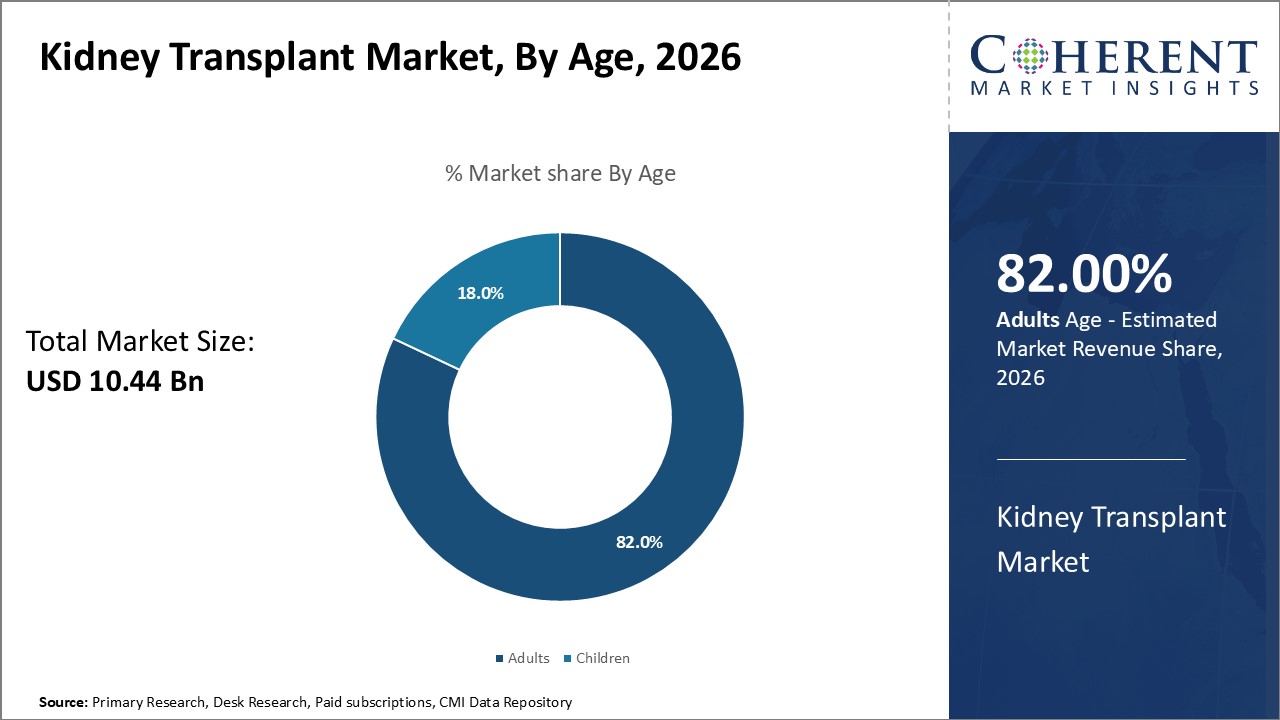
Kidney Transplant Market Insights, By Age
In terms of age, adults contribute the highest share of the kidney transplant market demand, accounting for 82% in 2026 of the market shares owing to the higher prevalence of kidney diseases among them. Chronic kidney diseases that eventually leads to kidney failure like diabetes, hypertension, and glomerulonephritis are largely seen in adult populations aged above 18 years.
Diabetes alone accounts for nearly 50% of newly diagnosed kidney failure cases annually. With advancing age, the cumulative effects of illnesses, infections, and dietary or lifestyle factors gradually damage kidney function over time. The risk of developing renal issues drastically increases after 40 years of age. This poses a serious healthcare challenge as lifespan and life expectancy continue growing globally.
The market is witnessing a surge in elderly end-stage renal disease patients above 65 years who are now surgical candidates for kidney transplantation thanks to modern medical care expanding their eligibility. Additionally, as more adults survive into their sixth, seventh or eighth decade, and age-related illnesses like renal cell carcinoma may sometimes require nephrectomies followed by transplant.
Kidney Transplant Market Insights, By End User
In terms of end user, hospitals & clinics contributes the highest share of the kidney transplant market value, accounting for 55.94% in 2026 of the market share due to leveraging superior infrastructure for transplants. Hospitals have dedicated renal wards, intensive care units, operating theatres, and post-surgery recovery facilities tailored for transplant patients. Their round-the-clock availability of multi-disciplinary transplant teams including nephrologists, urologists, surgeons, immunologists, and dedicated transplant coordinators allows for efficient patient management at every step.
Comprehensive support services such as transplant funding assistance, donor coordination, post-transplant follow-ups, and drug protocols are also most extensively available at hospitals. These integrated services help expedite the transplant process from initial evaluation to long-term allograft monitoring. Hospitals often have agreements with local organ procurement organizations, tissue matching laboratories, and transplant networks as well to handle logistical requirements. Larger hospitals may even perform 10-20 kidney transplants annually through well-oiled processes.
Regional Insights
North America Kidney Transplant Market Analysis and Trends
North America continues to lead the global kidney transplant market forecast, accounting for over 40.7% of total transplants worldwide in 2026, building on its dominance in 2023. The region’s leadership is underpinned by its highly advanced transplant centers, well-established reimbursement frameworks, and widespread public awareness about organ donation and transplantation.
The U.S. market alone is more than double the size of any other country, supported by significant R&D investments from leading medical device companies focused on innovations in immunosuppressive therapies, organ preservation technologies, and diagnostic tools. Despite the high transplant volume, the region faces a persistent demand-supply gap, resulting in organ imports to meet patient needs.
Asia Pacific Kidney Transplant Market Analysis and Trends
Asia Pacific has emerged as the fastest-growing kidney transplant market trend, driven by a rising prevalence of chronic kidney diseases, improving healthcare infrastructure, and increasing disposable incomes. China stands at the forefront of this growth, with proactive government initiatives aimed at reforming organ donation policies, enhancing local transplant production capabilities, and improving affordability and accessibility.
These reforms have attracted substantial investments from global medical technology firms, fostering partnerships and local manufacturing operations. The region’s expanding transplant volume reflects both demographic trends and heightened awareness, positioning Asia Pacific as a key growth frontier in the global kidney transplant market.
Dominating Countries in the Kidney Transplant Market
United States Kidney Transplant Market Analysis and Trends
The U.S. remains the largest contributor to the North American kidney transplant market, benefiting from a mature healthcare ecosystem, leading transplant centers, and substantial funding for transplant-related research. Innovation in immunosuppressant drugs and organ preservation methods continues to enhance transplant success rates.
Additionally, comprehensive insurance coverage and supportive government programs sustain demand and accessibility. Despite ethical and regulatory challenges related to organ sourcing, the U.S. maintains its dominant position through ongoing innovation and clinical excellence.
China Kidney Transplant Market Analysis and Trends
China is rapidly transforming its kidney transplant landscape through significant healthcare reforms and policy changes encouraging organ donation and transplantation. Investment in domestic manufacturing of transplant-related medical devices and pharmaceuticals has increased, supported by government incentives.
Growing patient awareness and expanding healthcare access, particularly in urban areas, have fueled transplant volume growth. Collaborations between global medical technology companies and local partners have accelerated innovation adoption, making China a focal point of the Asia Pacific kidney transplant market’s expansion.
Market Report Scope
Kidney Transplant Market Report Coverage
| Report Coverage | Details | ||
|---|---|---|---|
| Base Year: | 2025 | Market Size in 2026: | USD 10.44 Bn |
| Historical Data for: | 2020 To 2024 | Forecast Period: | 2026 To 2033 |
| Forecast Period 2026 to 2033 CAGR: | 4.8% | 2033 Value Projection: | USD 14.49 Bn |
| Geographies covered: |
| ||
| Segments covered: |
| ||
| Companies covered: | Sanofi, Sangamo Therapeutics, Inc., Pfizer, Inc., Novartis AG, B. Braun Melsungen AG, Fresenius Medical Care, Medtronic, Preservation Solution Inc., TransMedics, Inc., Organ Recovery Systems, Transonic Systems Inc., CareDx, DaVita Kidney Care, ZONAL TRANSPLANT CO-ORDINATION CENTRE, Histogen, F. Hoffmann-La Roche Ltd., Astellas Pharma, Inc., Bristol-Myers Squibb Company, OrganOx Limited, and Terumo Corporation | ||
| Growth Drivers: |
| ||
| Restraints & Challenges: |
| ||
Analyst Viewpoint
- The global kidney transplant market is poised to grow significantly in the coming years. The market is primarily driven by the increasing prevalence of kidney failure and kidney diseases.
- Other major growth drivers include growing awareness about organ donation and transplantation.
- Moreover, technological advancements in transplantation procedures are also fueling market expansion.
- However, high costs associated with kidney transplant surgeries and lifelong immunosuppressant drugs remain a key restraint to the market's growth.
- The limited availability of organ donors is another major challenge. Strict regulations regarding organ transplantation in some countries further inhibit the market growth to some extent.
- North America currently dominates the global kidney transplant market and is expected to continue its leadership during the forecast period.
Kidney Transplant Market: Key Developments
- In March 2025, Novartis announced the FDA approval of its new immunosuppressive drug, Tacrofen-X, designed to significantly reduce the risk of kidney graft rejection while minimizing nephrotoxic side effects. The drug is expected to improve long-term transplant success rates and patient quality of life.
- In January 2025, TransplantTech, a biotech startup, launched an AI-powered organ matching platform that uses advanced algorithms to enhance donor-recipient compatibility assessments. The platform is currently being piloted in major transplant centers across North America and Europe.
- In October 2024, the National Health Ministry of India initiated a nationwide organ donation awareness campaign aimed at increasing donor registrations, which has already resulted in a 15% increase in kidney donations across participating states.
- In July 2024, a leading research hospital in Germany reported the first successful implantation of a bioartificial kidney device in a human patient as part of an ongoing clinical trial, marking a significant milestone in regenerative medicine for ESRD.
Market Segmentation
- Type Insights (Revenue, USD Bn, 2021 - 2033)
- Living Donor Transplant
- Paired Kidney Transplant
- Deceased Donor Transplant
- By Age Insights (Revenue, USD Bn, 2021 - 2033)
- Children
- Adults
- By End User Insights (Revenue, USD Bn, 2021 - 2033)
- Hospitals & Clinics
- Transplant Centers
- Academic and Research Institutes
- Others
- Regional Insights (Revenue, USD Bn, 2021 - 2033)
- North America
- U.S.
- Canada
- Latin America
- Brazil
- Argentina
- Mexico
- Rest of Latin America
- Europe
- Germany
- U.K.
- Spain
- France
- Italy
- Russia
- Rest of Europe
- Asia Pacific
- China
- India
- Japan
- Australia
- South Korea
- ASEAN
- Rest of Asia Pacific
- Middle East
- GCC Countries
- Israel
- Rest of Middle East
- Africa
- South Africa
- North Africa
- Central Africa
- Key Players Insights
- Sanofi
- Sangamo Therapeutics, Inc.
- Pfizer, Inc.
- Novartis AG
- B. Braun Melsungen AG
- Fresenius Medical Care
- Medtronic
- Preservation Solution Inc.
- TransMedics, Inc.
- Organ Recovery Systems
- Transonic Systems Inc.
- CareDx
- DaVita Kidney Care
- ZONAL TRANSPLANT CO-ORDINATION CENTRE
- Histogen
- F. Hoffmann-La Roche Ltd.
- Astellas Pharma, Inc.
- Bristol-Myers Squibb Company
- OrganOx Limited
- Terumo Corporation
Sources
Primary Research Interviews
- Transplant Surgeons
- Nephrologists
- Hospital Administrators
- Organ Procurement Organizations
- Others
Databases
- World Health Organization (WHO) Database
- United Network for Organ Sharing (UNOS) Database
- Global Observatory on Donation and Transplantation (GODT) Database
- National Kidney Foundation Database
- Others
Magazines
- Transplantation Magazine
- Nephrology News & Issues
- Kidney International Magazine
- American Journal of Transplantation Magazine
- Others
Journals
- The Lancet
- Journal of the American Society of Nephrology
- Transplantation Journal
- Others
Newspapers
- The New York Times
- The Washington Post
- The Guardian
- The Wall Street Journal
- Others
Associations
- The Transplantation Society
- American Society of Transplantation
- European Society for Organ Transplantation
- International Society of Nephrology
- Others
Public Domain Sources
- Centers for Disease Control and Prevention (CDC)
- National Institutes of Health (NIH)
- World Kidney Day Organization
- Organ Procurement and Transplantation Network (OPTN)
- Others
Proprietary Elements
- CMI Data Analytics Tool
- Proprietary CMI Existing Repository of information for last 8 years
Get access to 250+ pages report
Every segment, forecast, competitor profile and data table behind the analysis above — available for instant download.
- ESOMAR Member
- ISO 9001:2015 Certified
- D-U-N-S Registered
- GDPR & CCPA Compliant
Missing comfort of reading report in your local language? Find your preferred language:
Transform your Strategy with Exclusive Trending Reports
Frequently Asked Questions
The Kidney Transplant Market size is estimated to be valued at USD 10.44 Bn in 2026, and is expected to reach USD 14.49 Bn by 2033.
The CAGR of the global Market is projected to be 4.8% from 2026 to 2033.
Increasing prevalence of kidney diseases and rising health expenditure and improving access to care are the major factors driving the growth of the kidney transplant industry.
The shortage of kidney donors and high cost associated with treatment are the major factors hampering the growth of the global market.
In terms of type, living donor transplant is estimated to dominate the market revenue share in 2026.
Sanofi, sangamo therapeutics, inc., pfizer, inc., novartis ag, b. Braun melsungen ag, fresenius medical care, medtronic, preservation solution inc., transmedics, inc., organ recovery systems, transonic systems inc., caredx, davita kidney care, zonal transplant co-ordination centre, histogen, f. Hoffmann-la roche ltd., astellas pharma, inc., bristol-myers squibb company, organox limited, and terumo corporation are the major players.
North America is expected to lead the global market.