

Medical Specialty Bags Market Size and Forecast: 2026-2033
The Medical Specialty Bags Market is estimated to be valued at USD 11.3 Bn in 2026 and is expected to reach USD 14.7 Bn by 2033, exhibiting a compound annual growth rate (CAGR) of 5.3% from 2026 to 2033.
Key Takeaways
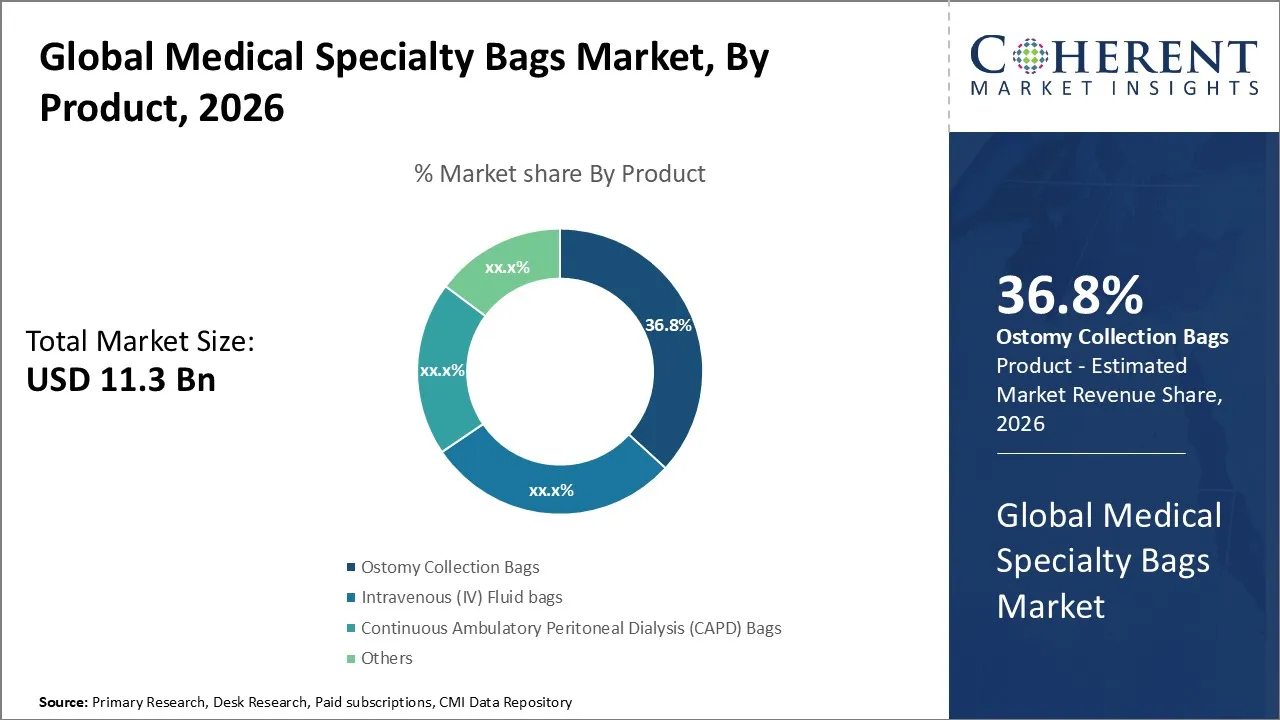
- By Product, Ostomy Collection Bags hold the largest market share of 36.8% in 2026 owing to the rising prevalence of gastrointestinal & chronic diseases.
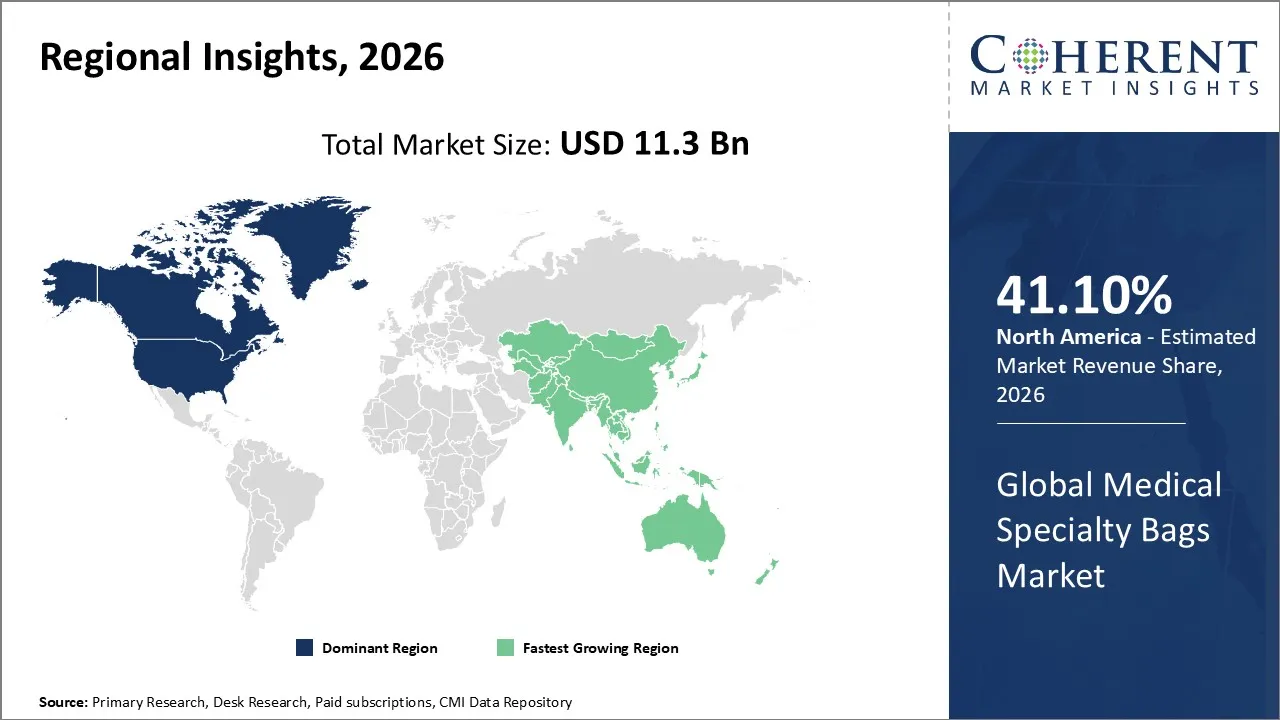
- By Region, North America dominates the overall market with an estimated share of 41.1% in 2026 owing to the well‑established and advanced healthcare infrastructure.
Market Overview
The Medical Specialty Bags Market serves healthcare by providing specialized bags that contain, collect, drain, and transport fluids safely in hospitals, clinics, and home care settings. It offers ostomy, urinary, IV fluid, blood, and other collection bags that ensure sterility and enhance patient care. Market growth results from the increasing prevalence of chronic diseases, a growing aging population, more surgical procedures, continuous improvements in bag materials and design, and a stronger emphasis on infection control and safety.
Current Events and their Impact on the Medical Specialty Bags Market
Current Events | Description and its impact |
Geopolitical Developments Affecting Medical Trade and Supply Chains |
|
Technological Advancements in Medical Bag Materials |
|
Nanolevel Industry and Market-Specific Events |
|
Segmental Insights
- Current Industry Events of 2026
- Market Size Estimation
- Regional Breakdown
- Competitive Landscape
- Customer Intelligence
- Segmental Analysis
- Pricing Analysis
- Key Market Drivers, Challenges & Future Trends
- Customized Insights Section
Medical Specialty Bags Market Insights, By Product - Ostomy Collection Bags contribute the highest share of the market owing to its rising awareness & patient education
Ostomy Collection Bags hold the largest market share of 36.8% in 2026. Rising cases of gastrointestinal disorders and cancers are increasing the number of patients undergoing colostomy, ileostomy, and urostomy procedures, driving demand for ostomy collection bags in the Medical Specialty Bags Market. Healthcare providers and patients actively adopt these bags due to growing awareness of ostomy care and improvements in design that enhance comfort, prevent leaks, and control odor. The expanding elderly population, improved healthcare access, and emphasis on home care further encourage consistent use of high-quality ostomy bags, fueling market growth. For instance, in June 2025, Northern Ireland’s Eakin Healthcare launched the world’s largest ostomy bag production line in Cardiff, investing £9 million as part of a £60 million expansion.
Regional Insights
North America Medical Specialty Bags Market Trends
North America dominates the overall market with an estimated share of 41.10% in 2026. In North America, healthcare providers and patients actively drive demand for advanced fluid containment and drainage solutions, such as IV, ostomy, and urinary bags, supported by a well‑developed healthcare infrastructure and strict regulatory standards. They increasingly choose single‑use, high-quality specialty bags to improve safety and minimize infection risks, while continuous innovations in materials and design enhance usability. The region’s rising chronic disease burden, expanding home healthcare services, and supportive reimbursement policies further encourage widespread adoption across hospitals, clinics, and outpatient care settings.
Asia Pacific Medical Specialty Bags Market Trends
In the Asia Pacific region, hospitals, clinics, and home healthcare providers are actively increasing demand for medical specialty bags used in surgeries, infusion therapy, and chronic care, driven by expanding healthcare infrastructure in China, India, and Southeast Asia. Providers are adopting sterile, single‑use solutions more widely as awareness of hygiene and safety rises. The growing number of patients with chronic conditions and the expanding home healthcare sector are prompting local manufacturers to produce and distribute specialty medical bags more broadly across diverse care settings.
United States Medical Specialty Bags Market Trends
In the United States, hospitals, clinics, and outpatient providers are actively increasing their use of advanced medical specialty bags for fluid management, waste collection, and sterile transport as they expand services. Healthcare facilities are adopting high‑quality, single‑use solutions to enhance patient safety, while continuous improvements in bag materials and design address diverse clinical requirements. Regulatory compliance and supportive reimbursement policies further motivate providers to implement these specialty products more widely, reinforcing their growing presence across the country’s healthcare system.
China Medical Specialty Bags Market Trends
In China, hospitals, clinics, and healthcare providers are actively increasing demand for medical specialty bags as the country expands healthcare infrastructure and improves access to quality care. Government programs aimed at enhancing patient outcomes and promoting modern medical technologies are prompting manufacturers to design and launch bags with advanced materials and features. Rising individual healthcare spending and growing awareness of hygiene and safety are encouraging providers to adopt sterile, single‑use specialty bags widely across hospitals, clinics, and home care settings. For instance, Gelesis partnered with China Medical System Holdings (CMS) to commercialize Plenity in China, leveraging CMS’s expertise in sales and marketing of specialty pharma products.
Medical Specialty Bags Market Trend
Adoption of Advanced Materials and Designs
Manufacturers are increasingly focusing on developing medical specialty bags using lightweight, durable, and biocompatible materials. Innovations such as leak-proof adhesives, odor control layers, and flexible yet strong polymers enhance patient comfort and usability. This trend addresses patient demands for safer, more ergonomic bags while meeting stringent hospital standards. Improved designs also facilitate handling, reduce waste, and support both hospital and home care environments, driving broader adoption across diverse healthcare settings.
Growth of Home Healthcare Services
The expansion of home healthcare services is reshaping demand for specialty bags. Patients increasingly rely on portable, easy-to-use bags for IV fluids, ostomy care, and urinary collection, allowing safe management outside hospitals. Providers are offering solutions tailored for home use, emphasizing simplicity, hygiene, and reliability. This shift not only reduces hospital stays but also encourages manufacturers to innovate products that support patient independence and continuous monitoring in home-based treatment programs.
Medical Specialty Bags Market Opportunity
Innovative Product Development
Developing specialty bags with enhanced comfort, odor control, skin-friendly adhesives, and modular designs presents growth potential. Incorporating technology, such as smart monitoring systems or easy‑to-use home care kits, can differentiate products and increase adoption. Continuous innovation that aligns with patient needs, ergonomic designs, and safety standards allows companies to capture more market share while improving compliance, usability, and patient satisfaction across ostomy, urinary, IV, and drainage bag segments.
Market Report Scope
Medical Specialty Bags Market Report Coverage
| Report Coverage | Details | ||
|---|---|---|---|
| Base Year: | 2025 | Market Size in 2026: | USD 11.3 Bn |
| Historical Data for: | 2020 To 2024 | Forecast Period: | 2026 To 2033 |
| Forecast Period 2026 to 2033 CAGR: | 5.3% | 2033 Value Projection: | USD 14.7 Bn |
| Geographies covered: |
| ||
| Segments covered: |
| ||
| Companies covered: | Braun Melsungen AG, Baxter International, Inc., Coloplast A/S, ConvaTec, Inc , Hollister Incorporated, Medline Industries Inc , Nolato AB, BD, Macopharma SA, Terumo Corporation, Smiths Medical, Fresenius SE & Co. KGaA, HLL Lifecare Limited, Ostique, Grifols, and AdaptHealth LLC | ||
| Growth Drivers: |
| ||
| Restraints & Challenges: |
| ||
Medical Specialty Bags Market News
- In June 2025, Eakin Healthcare launched the world’s largest ostomy bag production line at its Cardiff facility, boosting its global manufacturing capacity
Analyst Opinion (Expert Opinion)
- The current trajectory of the Medical Specialty Bags market reflects a nuanced intersection of clinical necessity and technological innovation. Ostomy collection bags remain dominant in product portfolios, with nearly a third of the market share globally, underscoring the persistent clinical burden of gastrointestinal diseases and the critical role of reliable waste management solutions in long‑term care settings. Concurrently, hospitals continue to drive demand as primary end‑users due to high procedure volumes across IV therapy, dialysis, and post‑operative care, where stringent infection control protocols mandate consistent use of sterile, single‑use bags.
- However, the market’s expansion is not merely volume‑driven; it is shaped by pragmatic adoption patterns and operational pressures. For instance, home infusion therapies in the U.S. grew significantly in recent years, signaling a shift toward decentralized care delivery that requires more user‑friendly, portable specialty bags and creates distinct procurement challenges for providers. Meanwhile, innovation bottlenecks—such as prolonged approval timelines for novel polymer materials—have delayed product enhancements, with approximately a quarter of new bag developments held up by regulatory friction. These dynamics suggest the market will evolve through targeted material science advances and strategic positioning within expanding home care and ambulatory segments.
Speak to the analyst
Want personalized insights?
Take the findings above to one of our principal consultants, or have the report rebuilt around the segments, geographies and competitors you actually track.
Market Segmentation
- By Product
- Ostomy Collection Bags
- Intravenous (IV) Fluid bags
- Continuous Ambulatory Peritoneal Dialysis (CAPD) Bags
- Resuscitation Bags
- Urinary Collection Bags
- Sterile Packaging Bags
- Anesthesia Breathing Bags
- Cadaver (Body) Bags
- Blood Bags
- Enema Bags
- Enteral Feeding Bags
- Bile Collection Bags
- Ice Bags
- By Regional Insights
- North America
- U.S.
- Canada
- Latin America
- Brazil
- Argentina
- Mexico
- Rest of Latin America
- Europe
- Germany
- U.K.
- Spain
- France
- Italy
- Russia
- Rest of Europe
- Asia Pacific
- China
- India
- Japan
- Australia
- South Korea
- ASEAN
- Rest of Asia Pacific
- Middle East
- GCC Countries
- Israel
- Rest of Middle East
- Africa
- South Africa
- North Africa
- Central Africa
- North America
- Key Players Insights
- Braun Melsungen AG
- Baxter International, Inc
- Coloplast A/S
- ConvaTec, Inc
- Hollister Incorporated
- Medline Industries Inc
- Nolato AB
- BD
- Macopharma SA
- Terumo Corporation
- Smiths Medical
- Fresenius SE & Co. KGaA
- HLL Lifecare Limited
- Ostique
- Grifols
- AdaptHealth LLC
Sources
Primary Research interviews
- Interviews with hospital procurement managers, clinical directors, and home healthcare service providers
- Discussions with R&D teams of medical device manufacturers and distributors
- Feedback from end-users including patients requiring ostomy, urinary, and IV care
Databases
- PubMed
- WHO Global Health Observatory
- FDA Device Registrations Database
- ClinicalTrials.gov
- National Center for Biotechnology Information (NCBI)
Magazines
- Medical Device and Diagnostic Industry (MD+DI)
- Healthcare Packaging
- Nursing Times
- BioPharm International
Journals
- Journal of Wound, Ostomy, and Continence Nursing (JWOCN)
- International Journal of Medical Devices and Technology
- BMC Health Services Research
- Journal of Clinical Nursing
Newspapers
- The New York Times – Health Section
- The Guardian – Health & Science
- The Wall Street Journal – Healthcare & Pharmaceuticals
- The Times of India – Health
Associations
- World Health Organization (WHO)
- International Ostomy Association (IOA)
- American Society of Nephrology (ASN)
- Association for the Advancement of Medical Instrumentation (AAMI)
Public Domain sources
- National Institutes of Health (NIH) Reports
- Government health ministry reports (US, China, India)
- Open-access clinical and epidemiology studies
- Healthcare expenditure and utilization statistics from OECD
Proprietary Elements
- CMI Data Analytics Tool
- Proprietary CMI Existing Repository of information for last 8 years
Get access to 250+ pages report
Every segment, forecast, competitor profile and data table behind the analysis above — available for instant download.
- ESOMAR Member
- ISO 9001:2015 Certified
- D-U-N-S Registered
- GDPR & CCPA Compliant
Missing comfort of reading report in your local language? Find your preferred language:
Transform your Strategy with Exclusive Trending Reports
Frequently Asked Questions
The Medical Specialty Bags Market is estimated to be valued at USD 11.3 Bn in 2026 and is expected to reach USD 14.7 Bn by 2033.
Ostomy Collection Bags segment held the major market share in 2019 owing to increasing product approvals is expected to propel growth of the market.
Major factor driving the growth of Global Medical Specialty Bags market during the forecast period increasing prevalence of chronic diseases, increasing product approvals , and adoption of expansion strategies from major companies.
Major factors hampering the growth of the Global Medical Specialty Bags market during the forecast period constitutes of product recalls.
North America market is expected to generate the highest revenue during the forecast period.
Some of the key players operating in the market are Braun Melsungen AG, Baxter International, Inc., Coloplast A/S, ConvaTec, Inc., Hollister Incorporated, Medline Industries Inc., Nolato AB, BD, Macopharma SA, Terumo Corporation, Smiths Medical, Fresenius SE & Co. KGaA, HLL Lifecare Limited, Ostique, Grifols, and AdaptHealth LLC.