

Lipid Analysis Devices Market Size and Forecast – 2026 to 2033
The Lipid Analysis Devices Market is anticipated to grow at a CAGR of 6.1% with USD 9.2 Bn share in 2026 and is expected to reach USD 11.8 Bn in 2033. The rising prevalence of cardiovascular diseases, obesity, diabetes, and metabolic disorders is driving demand for routine lipid testing, thereby accelerating the adoption of lipid analysis devices. In 2024, 35 million children under 5 were overweight, while in 2022, over 390 million children and adolescents aged 5–19 were overweight, including 160 million with obesity.
Key Takeaways
- Hyperlipidemia hold the largest market share of 38.8% in 2026 owing to the rising prevalence of obesity. Among U.S. adults, obesity prevalence was 39.8% in those aged 20–39 years, 44.3% in those aged 40–59 years, and 41.5% in adults aged 60 years and older.
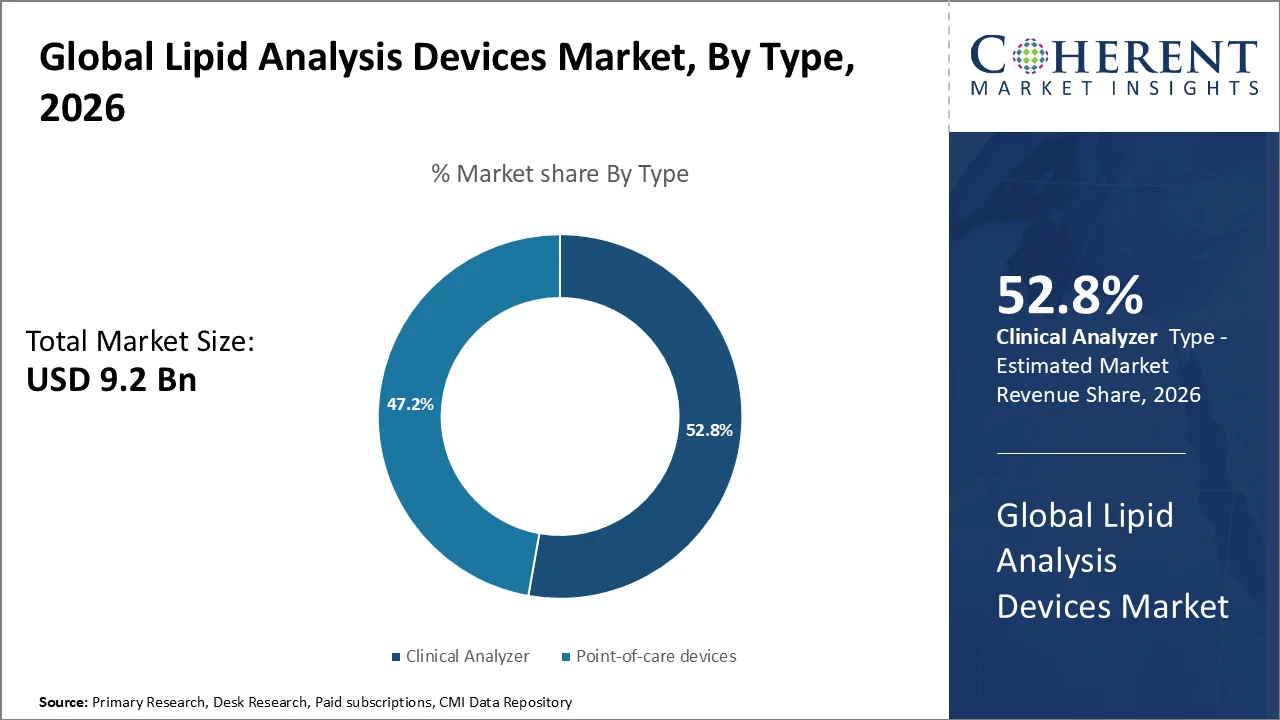
- Clinical Analyzer expected to hold largest market share of 52.8% in 2026 owing to its rising demand for routine lipid profile testing.
- Hospitals acquired the prominent market share of 41.1% in 2026 owing to the rising hospital admissions for cardiovascular diseases. Cardiovascular diseases (CVDs) are the leading global cause of death, accounting for an estimated 17.9 million deaths annually.
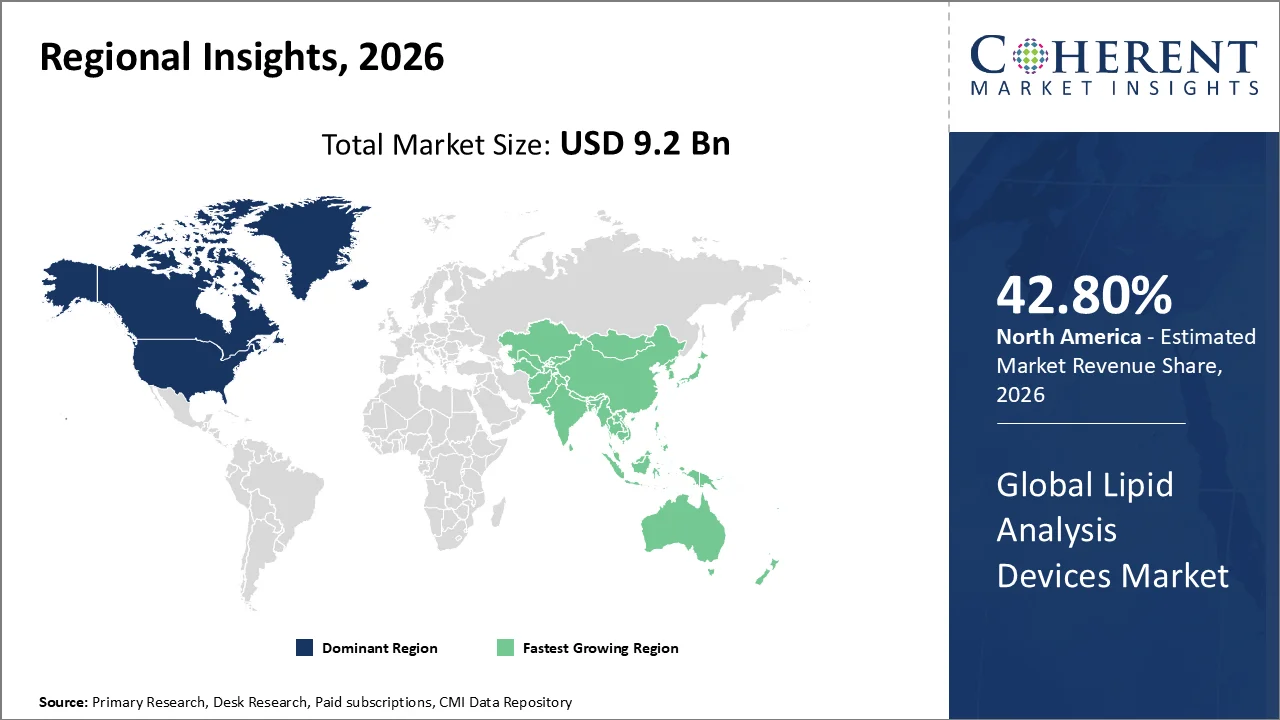
- North America is expected to acquire the dominant share of 42.8% in 2026 owing to its advanced healthcare infrastructure.
Current Events and Their Impact on the Lipid Analysis Devices Market
Current Event | Description and its Impact |
Implementation of the EU In Vitro Diagnostic Regulation (IVDR) |
|
FDA Oversight of In Vitro Diagnostic Devices |
|
Segmental Insights
- Current Industry Events of 2026
- Market Size Estimation
- Regional Breakdown
- Competitive Landscape
- Customer Intelligence
- Segmental Analysis
- Pricing Analysis
- Key Market Drivers, Challenges & Future Trends
- Customized Insights Section
Why is Hyperlipidemia Acquiring the Largest Market Share?
Hyperlipidemia hold the largest market share of 38.8% in 2026. The increasing prevalence of hyperlipidemia continues to drive the lipid analysis devices market by creating greater demand for routine cholesterol and triglyceride testing to support early diagnosis and effective disease management. Rising rates of obesity, sedentary lifestyles, unhealthy eating habits, diabetes, and an aging population contribute significantly to the growing incidence of lipid disorders. Healthcare providers are expanding preventive screening programs and regularly monitoring patients receiving lipid-lowering therapies, which is accelerating the adoption of accurate, automated, and point-of-care lipid analysis devices across hospitals, diagnostic laboratories, and other healthcare settings. In May 2026, LIB Therapeutics launched LEROCHOL (lerodalcibep-liga) Injection in the U.S., a once-monthly self-administered PCSK9 inhibitor for adults with primary hyperlipidemia, including HeFH. Clinical trials reported common adverse reactions such as nasopharyngitis, injection site reactions, and peripheral edema.
Clinical Analyzer expected to hold largest market share
Clinical Analyzer expected to hold largest market share of 52.8% in 2026 owing to its stringent quality and regulatory standards. Clinical analyzers drive the growth of the lipid analysis devices market by delivering fast, accurate, and high-throughput lipid profile testing across hospitals and diagnostic laboratories. Healthcare providers use these systems to efficiently manage increasing testing volumes linked to cardiovascular diseases, diabetes, and hyperlipidemia. Manufacturers enhance analyzer performance through advanced automation, integrated quality control, and laboratory information system connectivity, enabling laboratories to improve workflow efficiency and minimize manual errors. Their ability to perform multiple clinical chemistry tests on a single platform also boosts productivity and supports comprehensive diagnostic services. For instance, Beckman Coulter Diagnostics launched the DxU 1800 System in the U.S., combining automated chemistry analysis, consumables, and microscopy technology to deliver standardized laboratory results at scale.
Which End Users segment dominates the market?
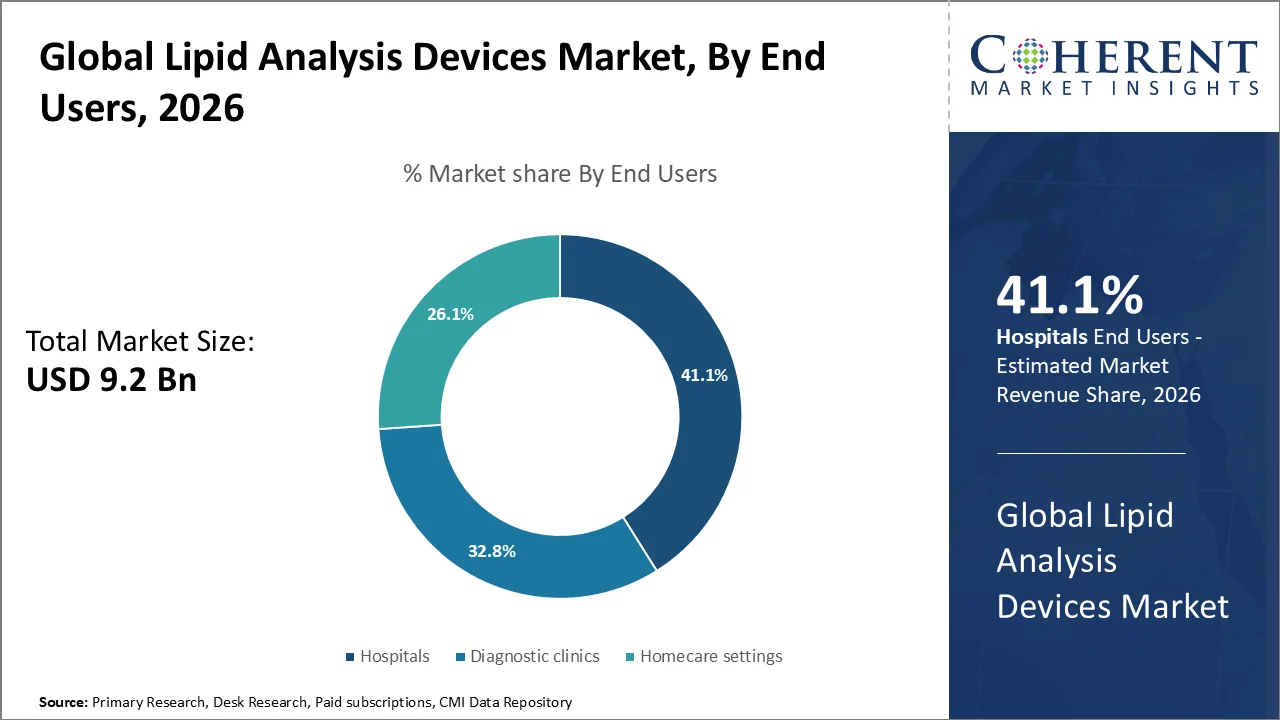
Hospitals acquired the prominent market share of 41.1% in 2026. Hospitals accelerate the lipid analysis devices market by adopting advanced diagnostic technologies for cardiovascular risk evaluation and chronic disease management. The increasing prevalence of hyperlipidemia, diabetes, and cardiovascular conditions drives hospitals to conduct regular lipid testing for precise diagnosis and continuous patient monitoring. India has the world's second-largest population of adults aged 20–79 years living with diabetes. Healthcare facilities invest in automated analyzers to enhance testing efficiency, shorten turnaround times, and optimize laboratory operations. Expanding hospital infrastructure and the growing emphasis on preventive healthcare initiatives further encourage the adoption of lipid analysis devices.
Lipid Analysis Devices Market Trends
- Increasing focus on preventive healthcare and cardiovascular risk screening is accelerating the use of lipid analysis devices for early detection and monitoring of hyperlipidemia, coronary artery disease, and metabolic disorders. The World Health Organization (WHO) estimates that cardiovascular diseases cause approximately 17.9 million deaths annually, making routine lipid profile testing a critical component of cardiovascular risk assessment and preventive healthcare strategies worldwide.
- Rising prevalence of obesity, diabetes, and cardiovascular diseases continues to drive demand for lipid testing solutions. According to the International Diabetes Federation (IDF), approximately 589 million adults aged 20–79 years were living with diabetes in 2024, while the WHO reported that over 1 billion people worldwide were living with obesity in 2022, including 880 million adults. These metabolic disorders significantly increase the risk of dyslipidemia, reinforcing the need for regular lipid monitoring and disease management.
- Expansion of healthcare infrastructure and diagnostic laboratory networks in emerging economies is improving access to advanced lipid analysis technologies. Government investments in healthcare modernization, increased establishment of accredited diagnostic laboratories, and broader access to clinical testing services are accelerating the deployment of automated lipid analyzers. For example, India's Ayushman Bharat initiative continues to strengthen primary healthcare infrastructure through thousands of Ayushman Arogya Mandirs (Health and Wellness Centres), expanding access to screening and diagnostic services for non-communicable diseases.
Regional Insights
North America dominates owing to increasing laboratory automation
North America is expected to acquire the dominant share of 42.80% in 2026. North America strengthens the lipid analysis devices market by leveraging its advanced healthcare infrastructure and addressing the growing burden of cardiovascular diseases, diabetes, obesity, and hyperlipidemia. Cardiovascular disease caused 919,032 deaths in 2023. Healthcare providers increasingly implement automated analyzers and point-of-care testing solutions to deliver accurate and efficient lipid monitoring. The region’s strong focus on preventive healthcare, cardiovascular screening, and chronic disease management accelerates the adoption of lipid analysis technologies. Additionally, healthcare investments, continuous technological innovations, and the presence of leading diagnostic companies actively support market expansion across North America. For instance, Waters Corporation launched BioResolve Peptide and GTxResolve Lipid Phenyl-Hexyl+ and C18+ Columns to improve the separation of complex impurities in GLP-1 peptides, insulin, and lipid nanoparticles.
Asia Pacific Lipid Analysis Devices Market Trends
Healthcare providers and researchers across Asia Pacific are driving the lipid analysis devices market by adopting advanced diagnostic technologies, increasing awareness of lipid-related disorders, and expanding healthcare investments. The rising burden of cardiovascular diseases, diabetes, and metabolic conditions encourages healthcare facilities to implement effective lipid testing solutions. India has an estimated 77 million adults with type 2 diabetes and nearly 25 million individuals with prediabetes. Organizations are strengthening healthcare infrastructure, advancing analytical technologies, and increasing research efforts in biotechnology and clinical laboratories, which further support market expansion. Greater adoption of preventive healthcare practices and personalized medicine also fuels demand for lipid analysis devices across the region. Thermo Fisher Scientific unveiled advanced mass spectrometry instruments and software at the ASMS Conference, enabling deeper biological insights and supporting multiomics, biopharma, environmental, and food safety research.
United States Lipid Analysis Devices Market Trends
The United States lipid analysis devices market is growing as healthcare providers address the rising burden of cardiovascular disorders and prioritize early disease detection and preventive care. Companies are advancing diagnostic technologies, strengthening laboratory infrastructure, and developing automated lipid testing systems to expand market opportunities. Leading medical device manufacturers, higher healthcare investments, and increased research efforts in lipid profiling are driving the adoption of advanced lipid analysis solutions in hospitals, clinics, and diagnostic centers across the country. In May 2026, Noom launched its at-home Biomarkers Test Kit in the U.S., enabling members to establish baseline health measurements and monitor changes in HbA1c, ApoB, triglycerides, and hs-CRP over time.
Japan Lipid Analysis Devices Market Trends
Japan’s Lipid Analysis Devices Market grows as healthcare providers and researchers demand advanced diagnostic technologies and increase their focus on cardiovascular and metabolic disease management. The aging population and strong emphasis on preventive healthcare drive hospitals and laboratories to adopt lipid testing solutions. According to the World Economic Forum, more than 10% of the country's population is aged 80 years or older. Manufacturers develop automated analyzers with enhanced accuracy, while research organizations and healthcare institutions invest more in biomedical studies, supporting market expansion. Japan’s well-established healthcare infrastructure further encourages the adoption and integration of lipid analysis devices.
Who are the Major Companies in Lipid Analysis Devices Industry
Some of the major key players in Lipid Analysis Devices are Polymer Technology Systems, Inc., Jant Pharmacal Corporation, Alere, F. Hoffmann-La Roche Ltd., Acon Laboratories, Inc., and Cholestech Corporation.
Key News
- In October 2025, Waters Corporation launched the Xevo Charge Detection Mass Spectrometer (CDMS) to improve the analysis and characterization of large biomolecules, supporting advances in cell and gene therapies, mRNA, and complex protein therapeutics.
Market Report Scope
Lipid Analysis Devices Market Report Coverage
| Report Coverage | Details | ||
|---|---|---|---|
| Base Year: | 2025 | Market Size in 2026: | USD 9.2 Bn |
| Historical Data for: | 2020 To 2024 | Forecast Period: | 2026 To 2033 |
| Forecast Period 2026 to 2033 CAGR: | 6.1% | 2033 Value Projection: | USD 11.8 Bn |
| Geographies covered: |
| ||
| Segments covered: |
| ||
| Companies covered: | Polymer Technology Systems, Inc., Jant Pharmacal Corporation, Alere, F. Hoffmann-La Roche Ltd., Acon Laboratories, Inc., and Cholestech Corporation. | ||
Analyst Opinion
- Lipid analysis is shifting from routine testing to proactive disease management. In my view, the strongest growth driver for lipid analysis devices is not technology adoption alone but the rising clinical need to identify and manage cardiovascular risk earlier. Cardiovascular diseases remain the leading cause of death globally, accounting for nearly 17.9 million deaths annually, according to the World Health Organization. With dyslipidemia recognized as a major modifiable risk factor, healthcare systems are increasingly prioritizing accurate lipid profiling to support preventive care rather than relying only on treatment after disease progression.
- The expanding burden of abnormal lipid levels is creating sustained demand for reliable testing solutions. Global health data indicates that more than 39% of adults worldwide have elevated cholesterol levels, highlighting the scale of unmet diagnostic needs. This burden ensures lipid analysis devices remain essential laboratory tools, particularly as physicians increasingly monitor LDL cholesterol, HDL cholesterol, triglycerides, and emerging lipid biomarkers to personalize cardiovascular treatment strategies.
- Advanced lipid testing technologies are gaining importance as precision medicine expands. Traditional lipid panels remain widely used, but demand is increasing for automated analyzers and high-sensitivity platforms capable of delivering faster and more detailed results. For example, guidelines from organizations such as the American College of Cardiology increasingly emphasize aggressive LDL cholesterol management for high-risk patients, strengthening the need for accurate lipid measurement technologies.
Speak to the analyst
Want personalized insights?
Take the findings above to one of our principal consultants, or have the report rebuilt around the segments, geographies and competitors you actually track.
Market Segmentation
- By Application (Revenue, USD Bn, 2021-2033)
- Hyperlipidemia
- Hypertriglyceridemia
- Familial Hypercholesterolemia
- Hyperlipoproteinemia
- Tangier Disease
- By Type (Revenue, USD Bn, 2021-2033)
- Clinical Analyzer
- Point-of-care devices
- By End Users (Revenue, USD Bn, 2021-2033)
- Hospitals
- Diagnostic clinics
- Homecare settings
- By Region (Revenue, USD Bn, 2021-2033)
- North America
- U.S.
- Canada
- Latin America
- Brazil
- Mexico
- Argentina
- Rest of Latin America
- Europe
- Germany
- U.K.
- France
- Italy
- Spain
- Russia
- Rest of Europe
- Asia Pacific
- China
- India
- Japan
- Australia
- South Korea
- ASEAN
- Rest of Asia Pacific
- Middle East
- GCC
- Israel
- Rest of Middle East
- Africa
- South Africa
- Central Africa
- North Africa
- North America
Sources
Primary Research interviews
- Interviews with healthcare professionals, clinical laboratory specialists, diagnostic equipment users, and industry experts involved in lipid testing and cardiovascular diagnostics.
- Discussions with laboratory managers, hospital procurement teams, and technology specialists to understand adoption trends, challenges, and evolving requirements for lipid analysis devices.
Databases
- World Health Organization (WHO) databases
- Centers for Disease Control and Prevention (CDC) health statistics databases
- National health databases and public healthcare statistics repositories
- Clinical trial databases and medical device regulatory databases
Magazines
- Diagnostic and laboratory medicine publications
- Healthcare technology magazines
- Medical device and biotechnology industry publications
Journals
- Peer-reviewed journals covering clinical chemistry, cardiovascular research, laboratory diagnostics, and medical device innovation
- Publications from biomedical research and healthcare technology journals focusing on lipid testing and diagnostic advancements
Newspapers
- Healthcare and science news publications covering cardiovascular disease trends, diagnostic technology developments, and healthcare innovation
Associations
- American Heart Association
- European Society of Cardiology
- International Federation of Clinical Chemistry and Laboratory Medicine
- National laboratory medicine and healthcare professional associations
Public Domain sources
- Government healthcare reports and public health statistics
- Regulatory information from medical device authorities
- Open-access scientific publications and research repositories
- Publicly available clinical guidelines and cardiovascular disease reports
Proprietary Elements
- CMI Data Analytics Tool
- Proprietary CMI Existing Repository of information for last 10 years
Get access to 250+ pages report
Every segment, forecast, competitor profile and data table behind the analysis above — available for instant download.
- ESOMAR Member
- ISO 9001:2015 Certified
- D-U-N-S Registered
- GDPR & CCPA Compliant
Missing comfort of reading report in your local language? Find your preferred language:
Transform your Strategy with Exclusive Trending Reports
Frequently Asked Questions
Lipid analysis devices are diagnostic instruments used to measure lipid levels in blood samples, including total cholesterol, low-density lipoprotein (LDL), high-density lipoprotein (HDL), and triglycerides.
The market is driven by the rising prevalence of cardiovascular diseases, increasing demand for preventive healthcare, and the need for faster and more accurate lipid profiling.
Lipid testing helps healthcare professionals evaluate cardiovascular risk, monitor cholesterol management, and guide treatment decisions.
Lipid analysis devices include automated laboratory analyzers, point-of-care lipid testing systems, portable analyzers, and clinical laboratories, physician offices, and research settings.
Technological advancements are improving device accuracy, automation, testing speed, and ease of use.