

Ophthalmology Diagnostics and Surgical Devices Market Analysis & Forecast: 2026-2033
The Ophthalmology Diagnostics and Surgical Devices Market is anticipated to grow at a CAGR of 6.8% with USD 63,273.2 Mn in 2026 and is expected to reach USD 98,950.1 Mn in 2033. Demand for ophthalmology diagnostic and surgical devices is being sustained by a large untreated vision burden and procedure-linked diagnostic need. World Health Organization reported in February 2026 that at least 2.2 billion people have vision impairment, with cataract and refractive error remaining the leading causes globally. U.S. surveillance also shows 9.6 million people living with diabetic retinopathy, supporting demand for OCT, fundus imaging, and surgery.
Key Takeaways
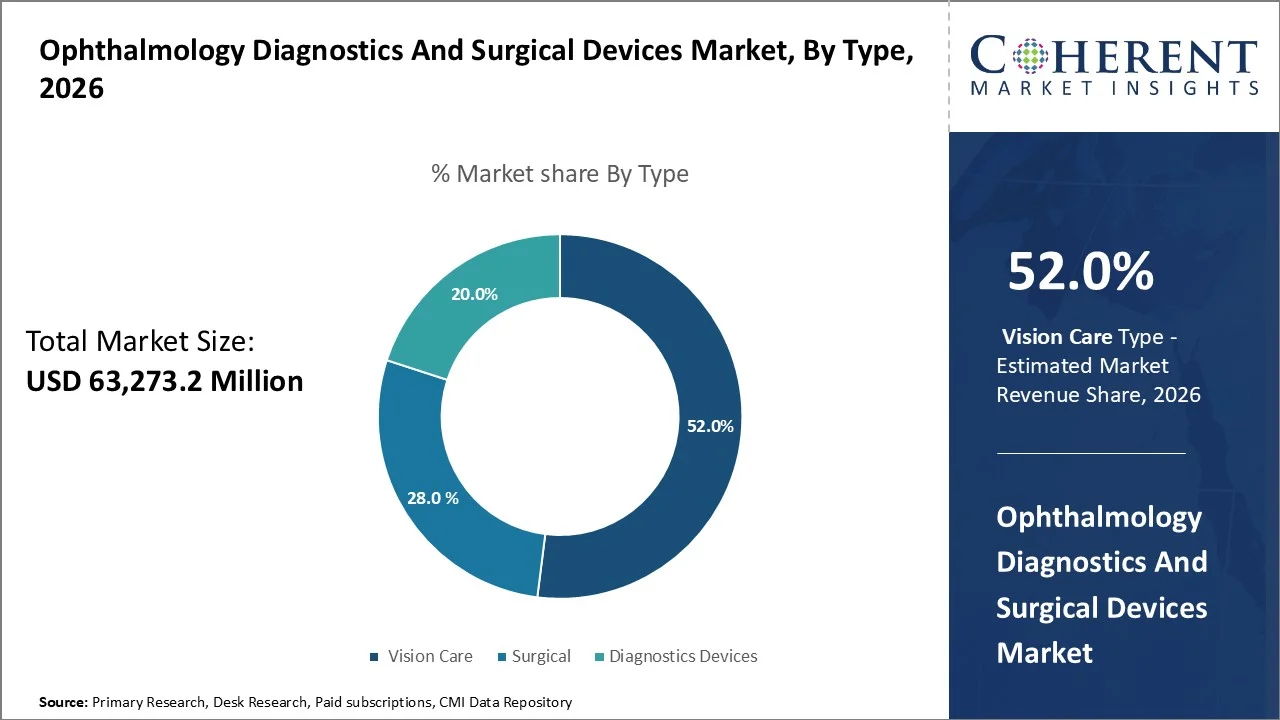
- Vision Care is expected to account the largest share of 52.0% in 2026, driven by the increasing prevalence of eye infection, to addresses the largest, most recurrent need in ophthalmology: refractive correction through spectacles and contact lenses, which creates high-volume, repeat purchases unlike one-time surgical devices. For instance, Studies (2024–2025) indicate that bacterial eye infections have a high pooled prevalence, with notable regional variation and rates exceeding 50% in some areas.
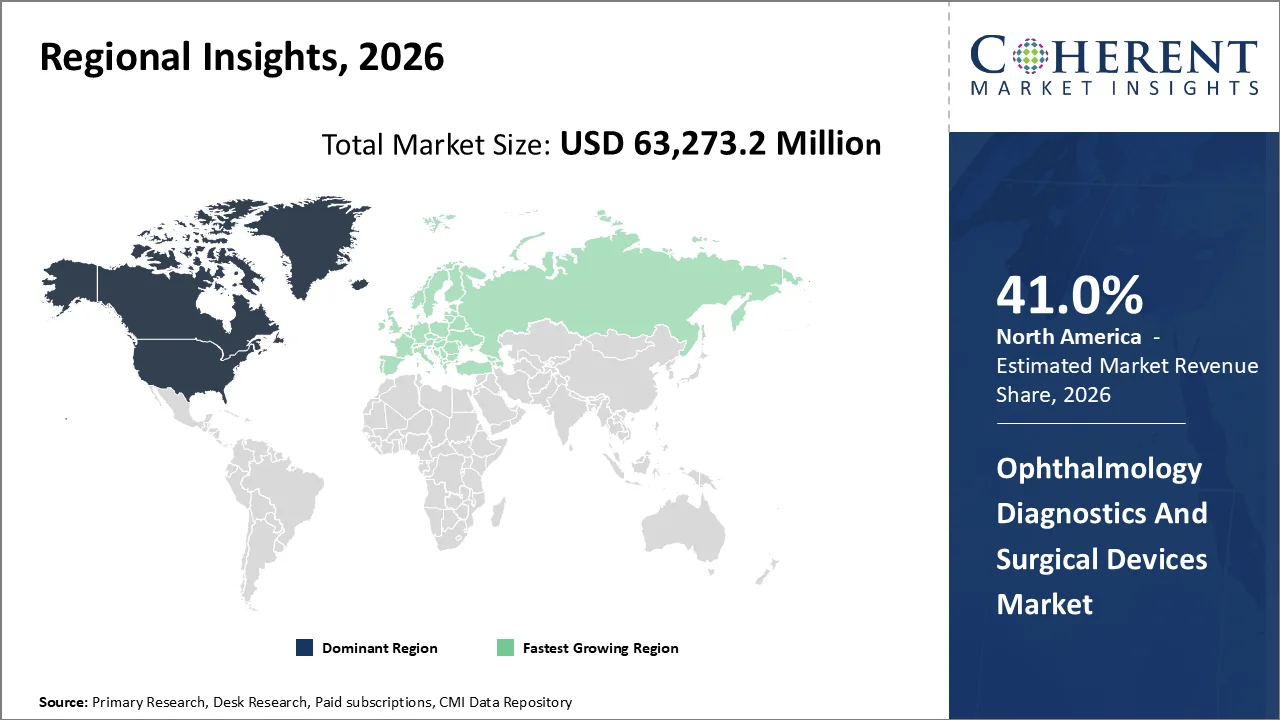
- North America is expected to acquire the dominant share of 41.0% in 2026, attributed to high diabetic retinopathy and glaucoma screening demand, broad cataract-surgery access through Medicare, and very high healthcare spending that supports adoption of advanced ophthalmology diagnostic and surgical devices. Medicare’s 2026 outpatient procedure pricing also confirms national average payments and copayments for cataract surgery, indicating continued procedural access. In addition, OECD reported that U.S. health spending reached USD 14,885 per person in 2024, the highest in the OECD, supporting adoption of advanced ophthalmology diagnostic and surgical devices.
Segmental Insights
Why is Vision Care Acquiring the Largest Market Share?
Vision care is projected to account for the largest share of ophthalmology diagnostics and surgical devices market in 2026, representing approximately 52.0% of the total volume. Vision care is the dominant segment because it serves the largest and most recurring pool of ophthalmology patients, especially those needing refractive correction rather than one-time surgery. Its leadership is supported by the large burden of refractive errors, continuous demand for spectacles and contact lenses, repeat replacement cycles, rising myopia management needs in children, broader accessibility compared with surgery, and strong adoption through retail optical chains, clinics, and e-commerce. The segment also benefits from lower patient hesitation, faster product innovation in lenses and coatings, and regular follow-up requirements, all of which create steady and recurring demand.
For instance, on February 10, 2026, according to the data published by the WHO’s fact sheet states that at least 2.2 billion people globally have near or distance vision impairment, and identifies refractive errors and cataracts as the leading causes; WHO also notes that 2 out of 3 people in low-income countries who need eyeglasses lack access.
In addition, on September 25, 2025, the U.S. FDA authorized EssilorLuxottica’s Essilor Stellest lenses after clinical data showed a 71% reduction in myopia progression and 53% reduction in axial elongation at 24 months, highlighting strong innovation-led demand in spectacle lenses. CDC further reports that approximately 6 million Americans have vision loss and 1 million have blindness, sustaining long-term demand for corrective vision products and follow-up care.
- Current Industry Events of 2026
- Market Size Estimation
- Regional Breakdown
- Competitive Landscape
- Customer Intelligence
- Segmental Analysis
- Pricing Analysis
- Key Market Drivers, Challenges & Future Trends
- Customized Insights Section
Market Driver
Increasing Geriatric Population
An increasing geriatric population drives the Ophthalmology Diagnostics and Surgical Devices Market because the main vision disorders that require screening, imaging, and surgery rise sharply with age.
In February 2025, according to the data published by the World Health Organization states the number of people aged 60 and older worldwide is projected to grow from 1.1 billion in 2023 to 1.4 billion by 2030, while the U.S. Census Bureau reported the 65+ population rose to 61.2 million in 2024, up 3.1% from 2023. Older adults are at higher risk of cataract, glaucoma, and age-related macular degeneration; in January 2026, National Eye Institute stated that people over age 60 are at higher risk for glaucoma, and in February 2026 described AMD as a leading cause of vision loss in people over 50. This expands demand for OCT, fundus cameras, tonometers, and cataract and retinal surgery systems.
Increasing Ophthalmic Diseases
Increasing ophthalmic diseases drive the ophthalmology diagnostics and surgical devices market by expanding the number of patients who need screening, diagnosis, ongoing monitoring, and surgical intervention. In February 2026, World Health Organization, reported that at least 2.2 billion people globally have near or distance vision impairment, and in at least 1 billion cases the condition was preventable or remains unaddressed, indicating a very large pool requiring ophthalmic care. WHO also identifies cataract, refractive error, glaucoma, age-related macular degeneration, and diabetic retinopathy among the major causes of visual impairment, directly supporting demand for fundus cameras, slit lamps, tonometers, ophthalmoscopes, OCT systems, and cataract and retinal surgery devices. The same trend is visible in the U.S. disease burden. According to the Centers for Disease Control and Prevention estimates that 9.6 million people in the U.S. were living with diabetic retinopathy in 2021, including 1.84 million with vision-threatening diabetic retinopathy, which supports rising use of retinal imaging and treatment-linked diagnostics. CDC also estimates that 19.8 million Americans aged 40 and older were living with age-related macular degeneration in 2019, including 1.49 million with vision-threatening AMD.
Additionally, in February 2026, according to the World Health Organization reports uncorrected refractive error is the leading cause of vision impairment, while the National Eye Institute stated in January 2026 that as many as half of people with glaucoma do not know they have it. These trends directly support demand for OCT, fundus cameras, slit lamps, tonometers, and cataract and retinal surgery devices.
Innovation and Technology Advancement to Accelerate the Market Growth
Technological advancement and innovation drive the ophthalmology diagnostic and surgical devices market by making eye care more accurate, faster, safer, and more outcome-oriented. When new devices improve disease detection, shorten procedure time, enhance visual outcomes, or widen the range of treatable patients, hospitals and eye-care centers are more willing to upgrade equipment and surgeons are more likely to adopt premium technologies. That directly supports replacement demand, procedure growth, and higher device ASPs across diagnostics and surgery.
The ophthalmology diagnostics and surgical devices market grow not only because of first-time adoption, but also because innovation pushes clinics to replace functioning equipment with better-performing systems. On April 6, 2026, Alcon, Ophthalmology company announced the U.S. launch of Clareon TruPlus, saying the new IOL is designed to increase depth of focus while maintaining high-quality distance vision. Alcon also stated that TruPlus demonstrated a 3.5-letter improvement in simulated visual acuity at -1.5 diopters (66 cm) versus Clareon Monofocal, and that the company would feature more than 60 scientific presentations at ASCRS 2026. Separately, in February 2026, Alcon reported that new product launches had helped accelerate sales. This is a direct example of how innovation converts into commercial growth.
Source: Alcon; https://investor.alcon.com
Current Events and Their Impact on the Ophthalmology Diagnostics and Surgical Devices Market
Current Event | Description and its Impact |
Increasing Approval from the Regulatory Bodies |
|
Shifts in Global Data Privacy Regulations & Increasing Government Initiatives |
|
Government Policy Support / Public Healthcare Initiative |
|
Reimbursement and Healthcare Coding Policy–Driven Growth Factor |
|
Ophthalmology Diagnostics and Surgical Devices Market Trends
- Connected, cloud-based workflows are becoming a major technology trend across diagnostics and surgery. The market is shifting from stand-alone instruments toward integrated platforms that connect diagnostics, planning, referrals, and surgery. On 2 April 2026, ZEISS, technology enterprise in optics and optoelectronics stated that it is advancing connected cataract and refractive workflows through tools such as IOLMaster 700, VERACITY Surgery Planner, Collaborative Care, and CLINIC 360, with secure data sharing and workflow analytics. This reflects a broader push toward cross-platform data continuity rather than isolated device use. The trend is reinforced by the growing long-term monitoring burden in eye care, as WHO notes that diseases such as glaucoma and diabetic retinopathy require long-term monitoring to control progression.
- Surgical platforms are being redesigned around speed, stability, and multi-procedure efficiency. Another major trend is the rise of platforms that combine cataract and vitreoretinal capability while improving fluidics, IOP stability, and throughput. In April 2025, Alcon, global leader in eye care stated that its UNITY VCS/CS systems include more than a dozen innovations for cataract and vitreoretinal surgery. The company also stated that the platform includes HYPERVIT 30K, UNITY 4D Phaco, and a TetraSpot probe that can reduce laser application time by up to three times. This shows how surgical device competition is shifting toward procedural efficiency and multi-functionality, not just basic surgical performance.
- Premium cataract technology and advanced intraocular lenses are expanding rapidly. Cataract remains one of the highest-impact ophthalmic procedure areas, and manufacturers are pushing premium IOL performance to differentiate outcomes. WHO’s 2026 eye-care materials note that 1 in 2 people globally who need cataract surgery do not have access to it, showing the scale of unmet procedural need. On the innovation side, Alcon, global leader in eye care announced in March 2026 that it had surpassed 175 million IOLs implanted globally. Additionally, Clareon PanOptix Pro, introduced in 2025, delivers 94% light utilization for a trifocal IOL and half the light scatter of the prior PanOptix platform. These numbers show how the market is moving beyond basic cataract extraction toward premium visual-performance technologies.
Source: WHO
- AI-assisted ophthalmic screening is moving closer to routine care. This trend is being driven by the large undiagnosed disease burden and growing regulatory visibility for AI tools. WHO stated in February 2026 that at least 2.2 billion people globally have near or distance vision impairment, and at least 1 billion cases remain preventable or unaddressed. In January 2026, National Eye Institute also stated that as many as half of people with glaucoma do not know they have it, which supports AI-based triage and earlier detection. On the commercial side, in July 2025 Topcon Corporation stated that IRIS, its AI-assisted diabetic retinopathy screening platform, had already enabled more than 1.8 million screenings, identified over 279,000 diabetic retinopathy cases, and supported 650+ healthcare organizations. U.S.FDA also maintains an actively updated list of AI-enabled medical devices, showing continued regulatory momentum for AI-based ophthalmic software and imaging workflows.
- The market is also trending toward more formal quality standards and care-pathway standardization. This is especially visible in cataract surgery and refractive correction. WHO’s eye-care programme published a Summary of recommendations for quality of care in cataract surgery management on 10 February 2026, and it also highlights the need for improved eye-care coverage. WHO states that eyeglasses are the most common intervention worldwide for refractive error and that both eyeglasses and cataract surgery are highly cost-effective interventions. This means device demand is increasingly being shaped by quality benchmarks, standardized pathways, and broader eye-care system integration rather than only by procedure volumes.
Regional Insights
North America dominates owing to Strong Technological Infrastructure
North America account 41.0% market share in 2026, supported by because the U.S. combines a large screened patient pool, a high chronic eye-disease burden, and strong reimbursement-backed procedure access. For instance, February 10, 2026, according to the data published by the World Health Organization, at least 2.2 billion people globally have near or distance vision impairment, and in at least 1 billion cases the impairment was preventable or remains unaddressed. This supports sustained demand for ophthalmic diagnostics and surgery worldwide, including high-device-adoption regions like North America. Furthermore, in January 2026, according to the data published by the National Eye Institute, as many as half of people with glaucoma do not know they have it. This supports regular screening demand for tonometers, ophthalmoscopes, OCT, and other diagnostic systems in North America. Moreover, in 2026, according to the data published by the Medicare, it has been stated that Part B covers cataract surgery, and its 2026 procedure price lookup says national averages are based on 2026 payments and copayments. This is a strong 2026 access-and-reimbursement instance supporting ophthalmic surgical device use in the U.S.
Asia Pacific Ophthalmology Diagnostics and Surgical Devices Market Trends
The Asia-Pacific region is poised to be as the fastest-growing region through 2026-2033, owing to very high unmet eye-care need with rapid healthcare expansion, aging, myopia growth, and stronger government eye-health programs. WHO reports that the Western Pacific Region has over 90 million people with visual impairment, including 10 million who are blind. WHO also notes that nearly 30% of the world’s 2.2 billion people with vision impairment live in the South-East Asia Region. This gives Asia-Pacific a much larger base for demand in diagnostics, vision correction, retinal screening, cataract devices, and surgical consumables.
Furthermore, population aging is a major reason Asia-Pacific is growing faster than more mature regions. Japan’s official statistics show that the population aged 65 years and over reached 36.243 million, or 29.3% of the total population, as of October 1, 2024, with the figure released officially in 2026. Older populations drive higher need for cataract surgery, glaucoma monitoring, OCT, fundus imaging, and vitreoretinal interventions.
Moreover, new development: stronger regional innovation and commercial activity in 2026. A notable recent development is the sharpening focus on myopia management and professional adoption in Asia-Pacific. EssilorLuxottica stated that APAO 2026 convened more than 11,000 eye care professionals from 111 countries, and used the event to highlight myopia-management pathways. The company also reported that Asia-Pacific revenue rose 9.0% at constant exchange rates in H1 2025, indicating strong recent commercial momentum in the region. This suggests Asia-Pacific is not only a high-need market, but also an active innovation and adoption hub.
Growing Technology Advancement & Regulatory Approval is Accelerating the Ophthalmology Diagnostics and Surgical Devices Market Demand in United States
The U.S. ophthalmology diagnostics and surgical devices market dominates North America given its driven by a large treatable patient pool, rapid device regulation, and reimbursement-backed procedure volumes. Census QuickFacts lists people aged 65+ at 18.0% of the U.S. population, while CDC’s 2026 diabetes update reports 40.1 million Americans with diabetes (12.0%), expanding risk for diabetic retinopathy, cataract, and glaucoma. CMS states cataract surgery with intraocular lens implantation remains a high-volume Medicare procedure, and Medicare continues annual glaucoma screening coverage for high-risk groups, including people with diabetes, African Americans aged 50+, and Hispanics aged 65+. On the regulatory side, U.S.FDA’s Division of Ophthalmic Devices continues active review pathways, with 2026 clearances such as Pentacam Cornea OCT and a Bausch + Lomb ophthalmic device, accelerating U.S. technology adoption.
India Ophthalmology Diagnostics and Surgical Devices Market Trends
India is one of the biggest players in the Asia Pacific ophthalmology diagnostics and surgical devices market in 2026. Increasing government initiatives are expanding screening and procedure volumes, which has driven the market growth significantly in the country. India is a strong example of policy-led growth in Asia-Pacific. Under the National Programme for Control of Blindness and Visual Impairment, the government reported that against a FY 2022–23 target of 7.5 million cataract surgeries, 8.344 million surgeries were performed. In January 2026, the Government of India state the programme continues to focus on cataract, refractive errors, glaucoma, diabetic retinopathy, childhood blindness, and corneal blindness, with a goal to reduce blindness prevalence to 0.20% by 2030. These initiatives support rising procurement of diagnostic and surgical ophthalmology equipment.
Additionally, on 23 March 2026, Press Information Bureau reported that 396 eye banks were functional across India, and cornea collection rose from 62,370 in 2022–23 to 69,848 in 2024–25. That points to strengthening transplant-linked ophthalmic infrastructure and equipment procurement. Wider public-health infrastructure improves access to diagnosis and referral drives the growth of the market. India also reported 5,457 urban primary health centres upgraded as Ayushman Arogya Mandirs, 8,636 urban sub-health centres operationalised, and 1,373 polyclinics functional as of late 2025. This expands the care network that can feed patients into ophthalmology diagnostics and surgery.
Source: Press Information Bureau; Government of India; PIB
Who are the Major Companies in Ophthalmology Diagnostics and Surgical Devices Market
Some of the major key players in Cognitive Systems Spending Marker are Abbott Medical Optics, Inc., Alcon Laboratories, Inc., Bausch & Lomb, Inc. (Valeant Pharmaceuticals), Carl Zeiss Meditec AG, CooperVision, Essilor International, Hoya Corporation, and Johnson & Johnson.
Key News
- On March 12, 2026, Johnson & Johnson announced FDA approval of the TECNIS PureSee intraocular lens (IOL) for U.S. cataract patients. The company stated that this is an extended depth of focus (EDOF) IOL intended for cataract surgery, and highlighted that 97% of patients reported no very bothersome visual disturbances such as halos or glare. The FDA PMA page also notes that the PureSee and PureSee Toric II IOLs provide improved intermediate visual acuity while maintaining comparable distance visual acuity versus an aspheric monofocal Intraocular lenses (IOLs).
Source: Johnson & Johnson
- On April 6, 2026, Alcon, ophthalmology company announced the U.S. launch of Clareon TruPlus at ASCRS 2026. According to Alcon, the new enhanced-design monofocal and toric IOLs are designed to increase depth of focus while maintaining high-quality distance vision. The company also reported that TruPlus showed a 3.5-letter improvement in simulated visual acuity at 66 cm compared with Clareon Monofocal and stated that the product will be introduced in additional markets later in 2026.
- On February 10, 2026, BVI Medical, surgical ophthalmic company focused on manufacturing products for refractive, retinal, cataract, glaucoma, and dry eye surgeries. announced the first successful U.S. implantations of its U.S.FDA-approved FINEVISION HP hydrophobic trifocal IOL. The company described this as the transition from regulatory clearance to real-world U.S. surgical use and reported that the initial implantations were completed by five leading cataract and refractive surgeons across multiple U.S. centers. BVI also noted that the product builds on more than 15 years of global clinical use.
- In March 2026, U.S.FDA issued a 510(k) substantial equivalence decision dated March 13, 2026 for OCULUS Pentacam Cornea OCT. FDA states that the device is a multifunction ophthalmic imaging system using Scheimpflug imaging and OCT for anterior-segment imaging, including cross-sectional and 3D imaging and measurement of corneal epithelium. The device is indicated to aid in the detection and management of ocular diseases affecting the anterior segment of the eye, making it a notable 2026 diagnostic-device approval.
- On January 13, 2026, Topcon Healthcare Solutions, Inc., leading provider of digital healthcare solutions announced a commercial partnership with RemoniHealth to advance remote monitoring and care continuity for chronic eye disease. Topcon stated that the platform integrates home-based diagnostic and monitoring tests, AI-enabled workflows, and remote care-management services for conditions such as AMD, diabetic retinopathy, and glaucoma. While this is not an FDA approval item, it is a meaningful 2026 market development in ophthalmic diagnostics and connected care.
- On February 2026, U.S. FDA revealed the clearance letter dated February 6, 2026 shows that Quantel Medical’s INTEGRE LIO was cleared as a Class II ophthalmic laser device. FDA states that the device is indicated for ophthalmic laser procedures including retinal photocoagulation, positioning it as a relevant 2026 surgical-device approval in retinal treatment.
Market Report Scope
Ophthalmology Diagnostics and Surgical Devices Market Report Coverage
| Report Coverage | Details | ||
|---|---|---|---|
| Base Year: | 2025 | Market Size in 2026: | USD 63,273.2 Mn |
| Historical Data for: | 2020 To 2024 | Forecast Period: | 2026 To 2033 |
| Forecast Period 2026 to 2033 CAGR: | 6.8% | 2033 Value Projection: | USD 98,950.1 Mn |
| Geographies covered: |
| ||
| Segments covered: |
| ||
| Companies covered: | Abbott Medical Optics, Inc., Alcon Laboratories, Inc., Bausch & Lomb, Inc. (Valeant Pharmaceuticals), Carl Zeiss Meditec AG, CooperVision, Essilor International, Hoya Corporation, and Johnson & Johnson. | ||
Analyst Opinion
- The ophthalmology diagnostics and surgical devices market is moving beyond routine eye-care equipment and becoming a high-priority clinical investment area, because the U.S. has a large aging population and a rising burden of diabetes-linked eye disease that directly expand demand for screening, imaging, and surgical intervention. In the U.S. Census Bureau QuickFacts, people aged 65 years and above accounted for 18.0% of the 40.1 million people in the U.S., or 12.0% of the population, have diabetes. Since diabetes increases the risk of diabetic retinopathy, cataract, and glaucoma, the analyst opinion is that these demographics are creating a sustained volume base for retinal imaging, OCT, slit-lamp diagnostics, cataract systems, and glaucoma management devices in the market.
- The U.S. remains a major growth engine for the ophthalmology diagnostics and surgical devices market because reimbursement support continues to sustain large procedural volumes and encourage diagnosis-linked testing. CMS states in its 2026 cataract services compliance page that cataract surgery with intraocular lens implantation is a “high-volume Medicare procedure.” CMS also notes that, in most medically necessary cataract cases, pre-surgical evaluation includes a comprehensive eye exam and a single scan for intraocular lens power calculation, which directly supports continued use of ophthalmic diagnostic equipment before surgery. The analyst opinion is that this reimbursement-backed procedure flow gives the U.S. a structural advantage in converting clinical need into actual device utilization across hospitals, ASCs, and ophthalmology clinics.
- The market is also benefiting from stronger coding and documentation infrastructure, which improves procedural reporting, payment alignment, and adoption confidence for ophthalmology-related services. CDC/CMS released the FY 2026 ICD-10-CM updated guidelines effective April 1, 2026, and the document states these guidelines are approved by AHA, AHIMA, CMS, and NCHS and are required under HIPAA for diagnosis coding across healthcare settings. The analyst opinion is that this kind of coding standardization does not directly sell devices, but it reduces administrative ambiguity around ophthalmic encounters, supports reimbursement workflows, and strengthens the operating environment for diagnostics and surgical device adoption in the U.S. market.
- Regulatory support is another major reason the U.S. leads the market, because the FDA maintains an active ophthalmic device review system that helps innovative technologies reach commercialization under a defined safety-and-effectiveness framework. FDA states that its Ophthalmic Devices Panel reviews data on marketed and investigational eye devices and, as of January 2026, listed 5 current vacancies, indicating an actively maintained advisory structure. In parallel, FDA’s 2026 device activity continues to show approvals and clearances relevant to eye care innovation; for instance, Bausch + Lomb announced on April 8, 2026 that it received FDA 510(k) clearance for its Bi-Blade+ Dual-Port Vitrectomy Cutter and Adaptive Fluidics advanced update. This regulatory ecosystem accelerates innovation uptake and reinforces U.S. dominance in North America.
Speak to the analyst
Want personalized insights?
Take the findings above to one of our principal consultants, or have the report rebuilt around the segments, geographies and competitors you actually track.
Ophthalmology Diagnostics and Surgical Devices Market Segmentation
- By Type
- Diagnostic
- Autorefractometers
- Slit Lamps
- Tonometers
- Ophthalmoscopes
- Fundus Cameras
- Optical Coherence Tomography
- Others
- Surgical
- Vitreoretinal Surgery
- Cataract Surgery
- Glaucoma Surgery
- Refractive Surgery
- Vision Care
- Contact Lens
- Spectacles Lenses
- Diagnostic
- Global Ophthalmology Diagnostics and Surgical Devices Market, By Region
- North America
- U.S.
- Canada
- Latin America
- Brazil
- Mexico
- Argentina
- Rest of Latin America
- Europe
- Germany
- U.K.
- France
- Italy
- Spain
- Russia
- Rest of Europe
- Asia Pacific
- China
- India
- Japan
- Australia
- South Korea
- ASEAN
- Rest of Asia Pacific
- Middle East
- GCC
- Israel
- Rest of Middle East
- Africa
- South Africa
- Central Africa
- North Africa
- North America
Sources
Primary Research Interviews
Primary Research Interviews
- Interviews with ophthalmologists, cataract surgeons, and retina specialists to assess procedure trends, device usage, and unmet needs.
- Insights from manufacturers, distributors, and product managers on innovation, pricing, approvals, and launch strategies.
- Discussions with hospital buyers, ASCs, and eye clinic managers to evaluate demand, procurement factors, and adoption barriers.
- Conversations with consultants, regulatory experts, and clinical advisors to understand market trends, compliance, and technology impact.
Databases
- U.S. Food and Drug Administration (FDA) Medical Device Databases
- CMS Medicare Coverage Database
- National Eye Institute (NEI), National Institutes of Health
- PubMed / National Center for Biotechnology Information (NCBI)
- World Health Organization (WHO) Vision and Eye Care Database
Magazines
- Glaucoma Today
- Cataract & Refractive Surgery Today
- EyeNet Magazine (published by American Academy of Ophthalmology
- Ophthalmology Times
- Retina Today
Journals
- Ophthalmology (American Academy of Ophthalmology)
- American Journal of Ophthalmology
- Journal of Cataract & Refractive Surgery
- Investigative Ophthalmology & Visual Science (ARVO)
- Clinical Ophthalmology
Newspapers
- Financial Times (Healthcare and Medical Technology Section)
- The Wall Street Journal (Health and MedTech Section)
- The New York Times (Health Section)
- The Guardian (Health and Science Section)
- MedTech Dive
Associations
- American Academy of Ophthalmology (AAO)
- Association for Research in Vision and Ophthalmology (ARVO)
- American Society of Cataract and Refractive Surgery (ASCRS)
- European Society of Cataract and Refractive Surgeons (ESCRS)
- International Council of Ophthalmology (ICO)
Public Domain Sources
- U.S. FDA ophthalmic device approval and clearance documents
- CMS reimbursement, coding, and coverage policy documents
- National Eye Institute (NIH) eye disease and vision research publications
- WHO vision impairment and blindness reports
- Company annual reports, SEC filings, and investor presentations from publicly listed ophthalmic device companies
Proprietary Elements
- CMI Data Analytics Tool
- Proprietary CMI Existing Repository of information for last 10 years
Get access to 250+ pages report
Every segment, forecast, competitor profile and data table behind the analysis above — available for instant download.
- ESOMAR Member
- ISO 9001:2015 Certified
- D-U-N-S Registered
- GDPR & CCPA Compliant
Missing comfort of reading report in your local language? Find your preferred language:
Transform your Strategy with Exclusive Trending Reports
Frequently Asked Questions
The Ophthalmology Diagnostics and Surgical Devices Market is expected to reach USD 98,950.1 Million in 2033.
Major players operating in the global Ophthalmology Diagnostics and Surgical Devices Market include Abbott Medical Optics, Inc., Alcon Laboratories, Inc., Bausch & Lomb, Inc. (Valeant Pharmaceuticals), Carl Zeiss Meditec AG, CooperVision, Essilor International, Hoya Corporation, and Johnson & Johnson.
Side effects and Stringent regulatory laws are the major factors hampering the growth of the ophthalmology diagnostics and surgical devices market.
Increasing geriatric population and increasing ophthalmic diseases are the key factors driving the growth of the ophthalmology diagnostics and surgical devices market.
The Ophthalmology Diagnostics and Surgical Devices Market is anticipated to grow at a CAGR of 6.8% between 2026 and 2033.
Among regions, North America is expected to account for a largest market share in the global Ophthalmology Diagnostics and Surgical Devices Market over the forecast period.