

Global Syringe Pump Market Size and Forecast – 2026 To 2033
The global syringe pump market is expected to grow from USD 2.06 Bn in 2026 to USD 3.22 Bn by 2033, registering a compound annual growth rate (CAGR) of 6.6% from 2026 to 2033. The global syringe pump market is expected to grow significantly during the forecast period owing to the increasing prevalence of chronic diseases, such as cancer, cardiovascular disease, diabetes, and chronic respiratory diseases.
The World Health Organization (WHO), estimates that noncommunicable diseases contributed to 74% of all deaths worldwide in 2023, compared to 58% of deaths in 2000, reflecting increasing demand for disease control and sustained drug-delivery solutions.
Key Takeaways of the Global Syringe Pump Market
- Infusion syringe pumps are projected to hold 66.1% of the global syringe pump market share in 2026, making it dominant product type segment. North America will continue to be a key market driven by the strong hospital infrastructure, high rates of adoption of precision drug-delivery devices and increased focus on safety of drugs in recent years. In September 2025, a study in Critical Care Nursing Clinics of North America assessed patient safety improvements with smart infusion pump usability testing in acute and critical care.
- Critical care is projected to hold 31.6% of the global syringe pump market share in 2026, making it dominant application segment. Asia-Pacific is estimated to show increasing demand for syringe pumps owing to improving infrastructure for intensive care and investments in improved advanced hospitals. In March 2025, the Ministry of Health and Family Welfare in India announced the PM-Ayushman Bharat Health Infrastructure Mission which proposes to establish 622 critical care blocks across district hospitals and government medical colleges.
- Hospitals are projected to hold 68.6% of the global syringe pump market share in 2026, making it dominant end user segment. Europe will continue to be a key market due to investments in connected healthcare infrastructure and smart medical devices. EU-funded 5G-TRACE project in 2026 is embedding smart infusion pumps within connected hospital infrastructure allowing for the precise delivery of medication as well as clinical connectivity in real time.
- North America market maintains dominance with an expected share of 40.8% in 2026, owing to high adoption of precision drug-delivery systems, well-developed healthcare infrastructure, string network of hospitals and remote clinics. In the U.S., the Department of Veterans Affairs (VA) had prepared 160 infusion pumps as of the end of FY2025 at their institution in Reno VA Medical Center for Close to Me infusion services.
- Asia Pacific is expected to exhibit the fastest growth in the global syringe pump market, registering an estimated CAGR of 8.3% during 2026–2033. The region is expecting to witness rapidly increasing healthcare infrastructure, technology introduction, and instrumentation procurement. In Indonesia, Strengthening of Primary Healthcare (SOPHI) project of the Ministry of Health has started the procurement of 3,785 infusion pumps worth approximately USD 7.05 Million, highlighting regional investments on modern drug-delivery infrastructure.
Segmental Insights
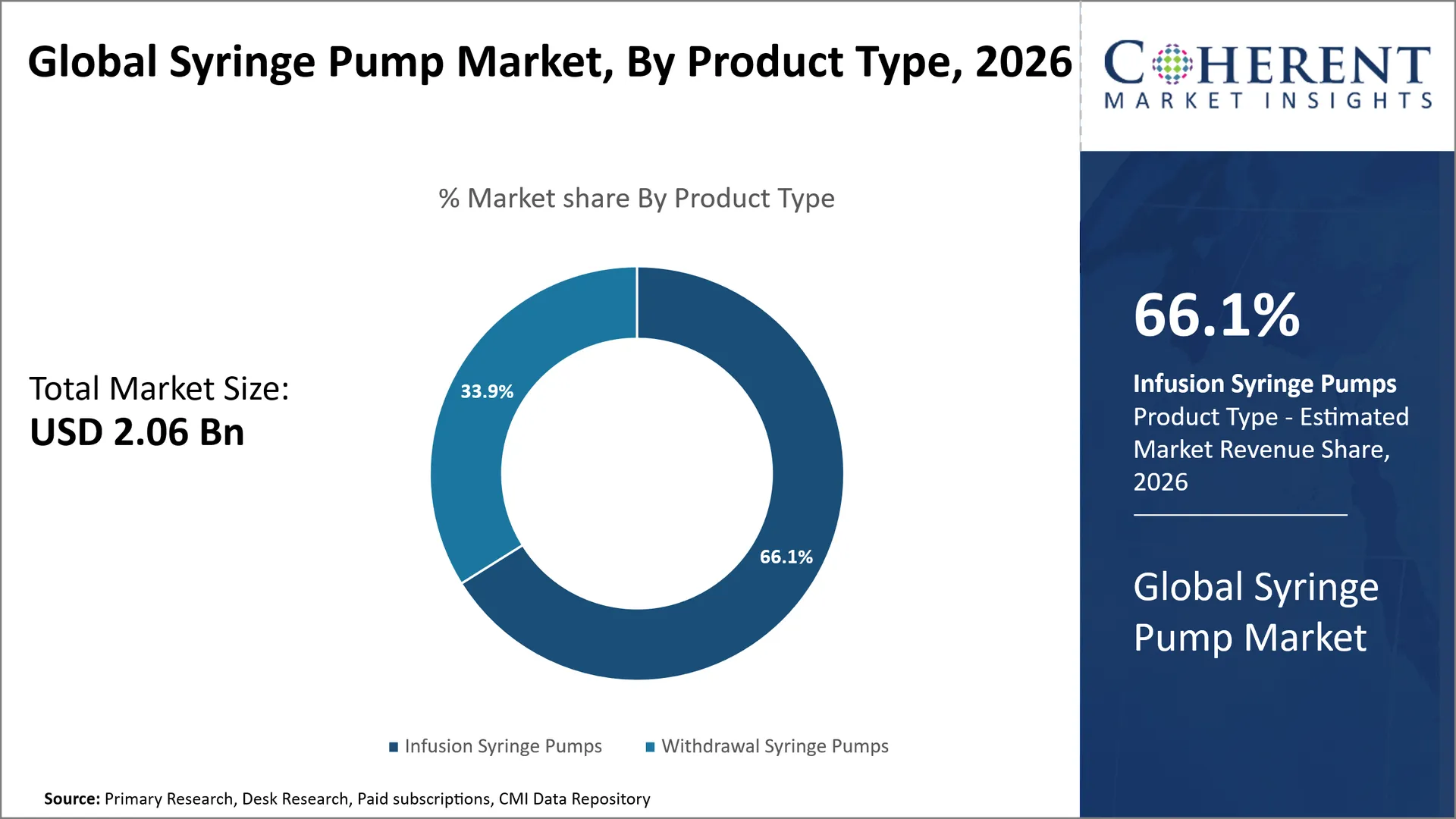
Why Do Infusion Syringe Pumps Dominate the Global Syringe Pump Market?
Infusion syringe pumps are projected to hold the market share of 66.1% in 2026, due to its widespread use in reliable continuous medication delivery in critical care, surgical, and oncology indications. Adoption rate is driven by increasing demand for dosing precision, programmable drug delivery and patient safety. For instance, in February 2026, Maharashtra Medical Goods Procurement Authority floated a tender for procurement of 852 syringe pumps for public health care institutions in the State, reinforcing institutional demand for these devices.
- Current Industry Events of 2026
- Market Size Estimation
- Regional Breakdown
- Competitive Landscape
- Customer Intelligence
- Segmental Analysis
- Pricing Analysis
- Key Market Drivers, Challenges & Future Trends
- Customized Insights Section
Why Do Critical Care Represent the Largest Application Segment in the Syringe Pump Market?
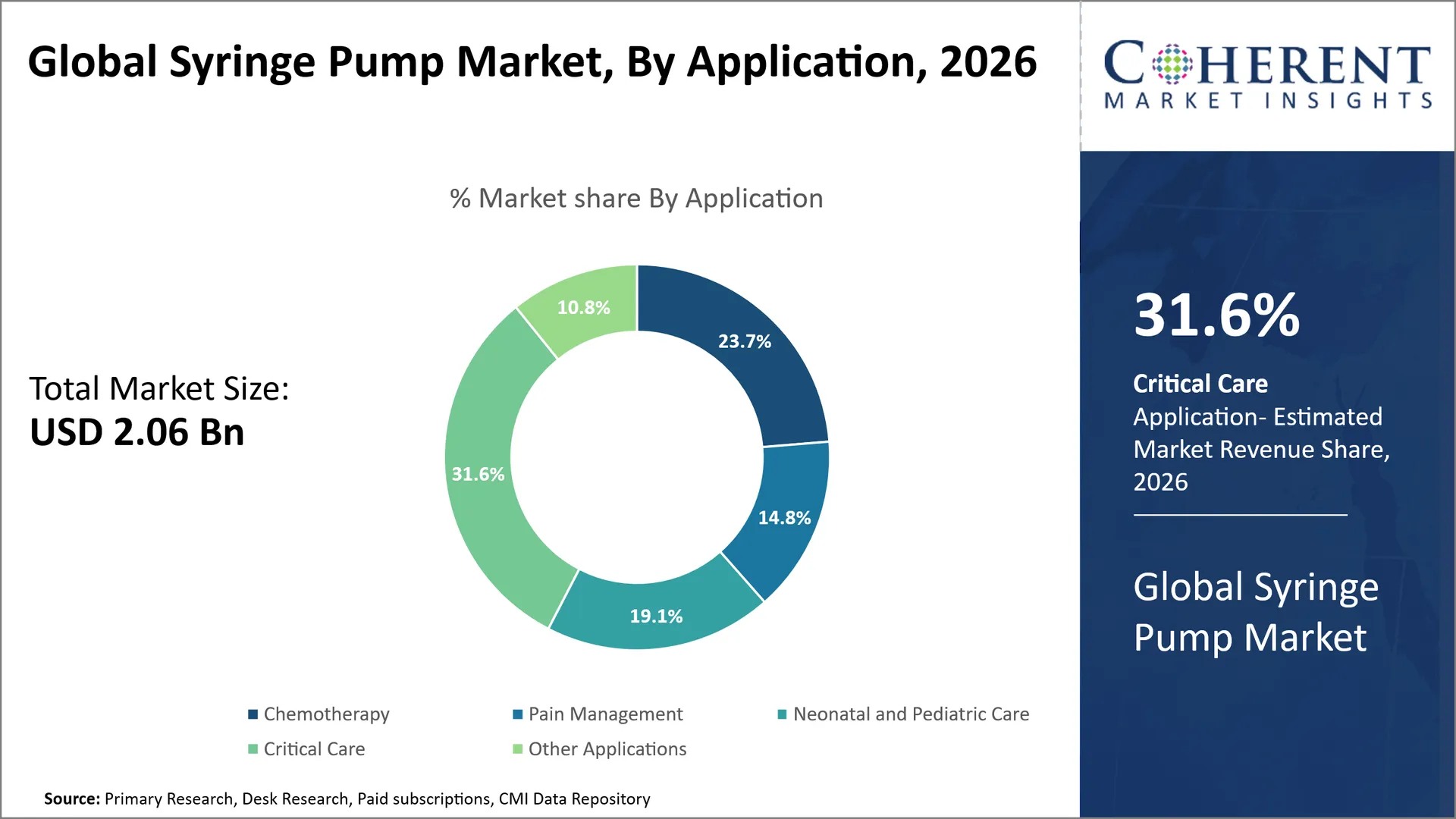
Critical care is projected to hold a market share of 31.6% in 2026, due to growing hospitalization and intensive care across the globe. Innovation in intensive care products, such as improved administration of vasopressors, sedatives, and other critical drugs are supplementing demand. Furthermore, rising investments in modern ICU facilities and drug therapy systems further propel their demand. For instance, in February 2026, AIIMS ordered 100 syringe infusion pumps for its Mangalagiri hospital, to include programmable flow rates, infusion duration controls, and dose based on patients' weight, highlighting continued demand in precision drug delivery for hospital-based treatment.
Hospitals Segment Dominates the Global Syringe Pump Market
The hospitals segment is projected to hold a market share of 68.6% in 2026, due to high adoption of syringe pumps in various hospital departments such as intensive care, oncology, anesthesia, and neonatal care units. Moreover, growing hospital infusion infrastructure is boosting procurement. For instance, in May 2026, Nottingham University Hospitals NHS Trust, UK, issued B. Braun with a USD 16.93 million (£12.9million) contract to supply the replacement of volumetric, syringe and patient-controlled analgesia (PCA) infusion pumps at the hospital, reaffirming a focus on hospital infusion pumps. (Source: BidSkim)
Current Events and their Impact
Current Events | Description and its Impact |
UK Government Announces Multi-Year Procurement Framework for Infusion Pumps (November 2026) |
|
Spanish Hospital Initiates Procurement of Syringe Infusion Systems (August 2026) |
|
Syringe Pump Market Dynamics
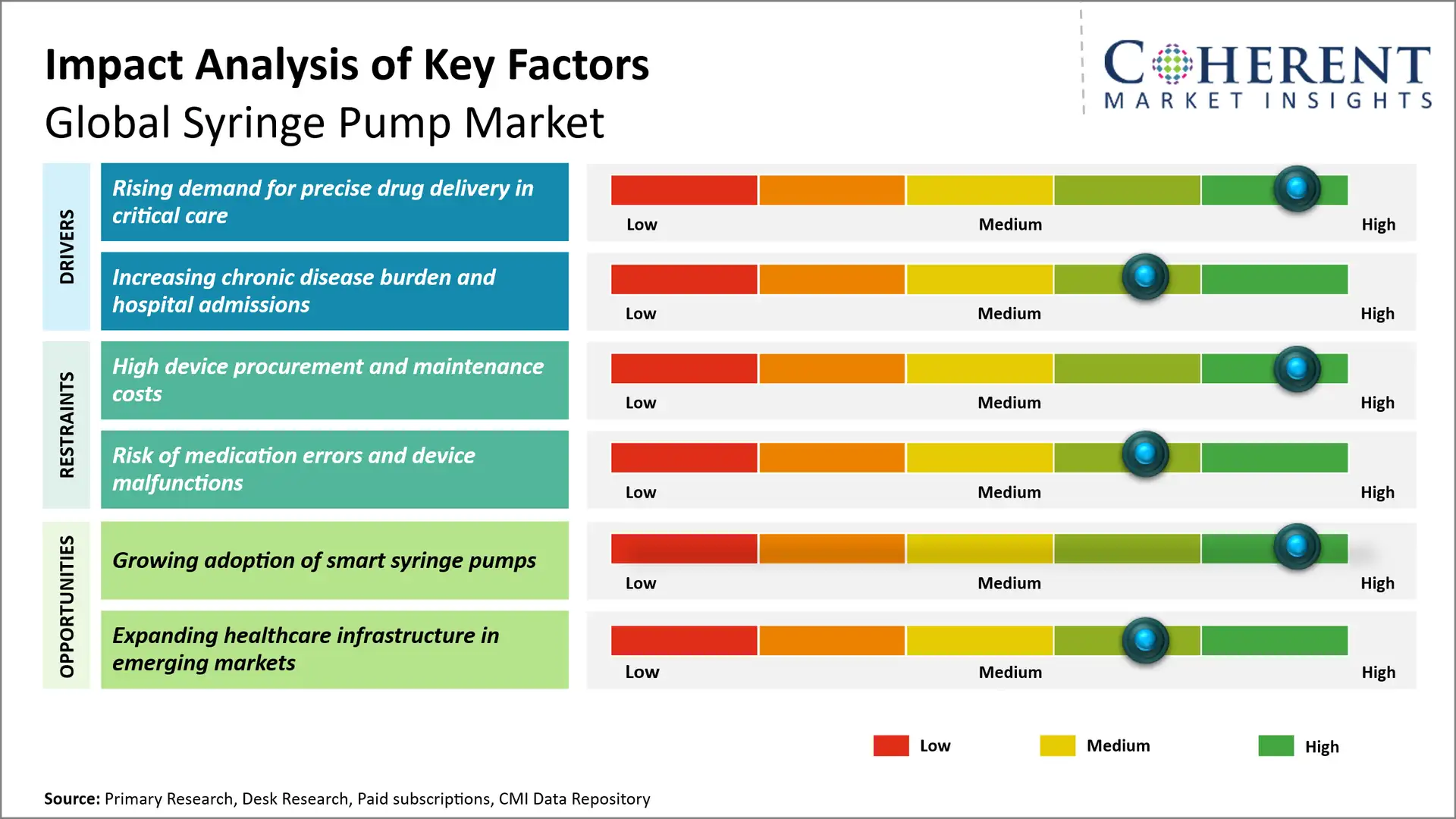
Market Drivers
- Rising demand for precise drug delivery in critical care: Increasing demand for accurate and continuous infusion of vasopressors, sedatives and other critical drugs is driving the adoption of syringe pumps in intensive care, anesthesia and neonatal care units. For example, Germany's Klinikum Garmisch-Partenkirchen stated in November 2026 that it would be replacing 215 syringe pumps in 2027, with instruments designed for use in anaesthesia, neonatal care, and general care and will be connected to medication databases and electronic patient data management systems.
- Increasing chronic disease burden and hospital admissions: The rising number of patients suffering from cancer, cardiovascular diseases, diabetes and chronic respiratory diseases is fueling demand for hospital treatment attributed to controlled drug administration. In July 2026, the International Agency for Research on Cancer (IARC) estimated around 20.6 million new cancer cases were reported globally in 2024 with the annual number anticipated to reach 35 million by 2050, reflecting the growing demand for hospital-based cancer management and supportive care.
- Increasing volume of surgical procedures: Increasing number of surgeries across the globe is expected to propel demand for syringe pumps to deliver anesthetics, analgesics and other medications in perioperative setting. In August 2025, Lancet surgical health policy analysis published an estimation that the unmet need for surgical procedures has reached 160 million operations every year, calling for increasing capacity of surgical care and thus underpin demand for precision drug-delivery devices.
Emerging Trends
- Smart and connected syringe pumps: Syringe pumps frequently integrate wireless connectivity, dose error reduction software, remote monitoring and hospital information system integration.
- Impact: These improvements will enhance medication safety, provide more immediate insight and allow for less infusion errors.
- Market Relevance: Increasing implementation of connected infusion devices is supporting the demand for more sophisticated syringe pumps at the hospital and acute care levels.
- Shift toward portable and ambulatory syringe pumps: New syringe pumps are miniature, portable, and battery-powered, appropriate for hospital, outpatient and home care use.
- Impact: With portability, the patient can control the delivery of the medication and move more freely, while taking away the burden of being confined to a hospital.
- Market Relevance: The increased use of home infusion therapy and outpatient treatment is increasing the needs for portable syringe pumps, particularly for pain management, palliative care, and subcutaneous immunoglobulin therapy.
Regional Insights
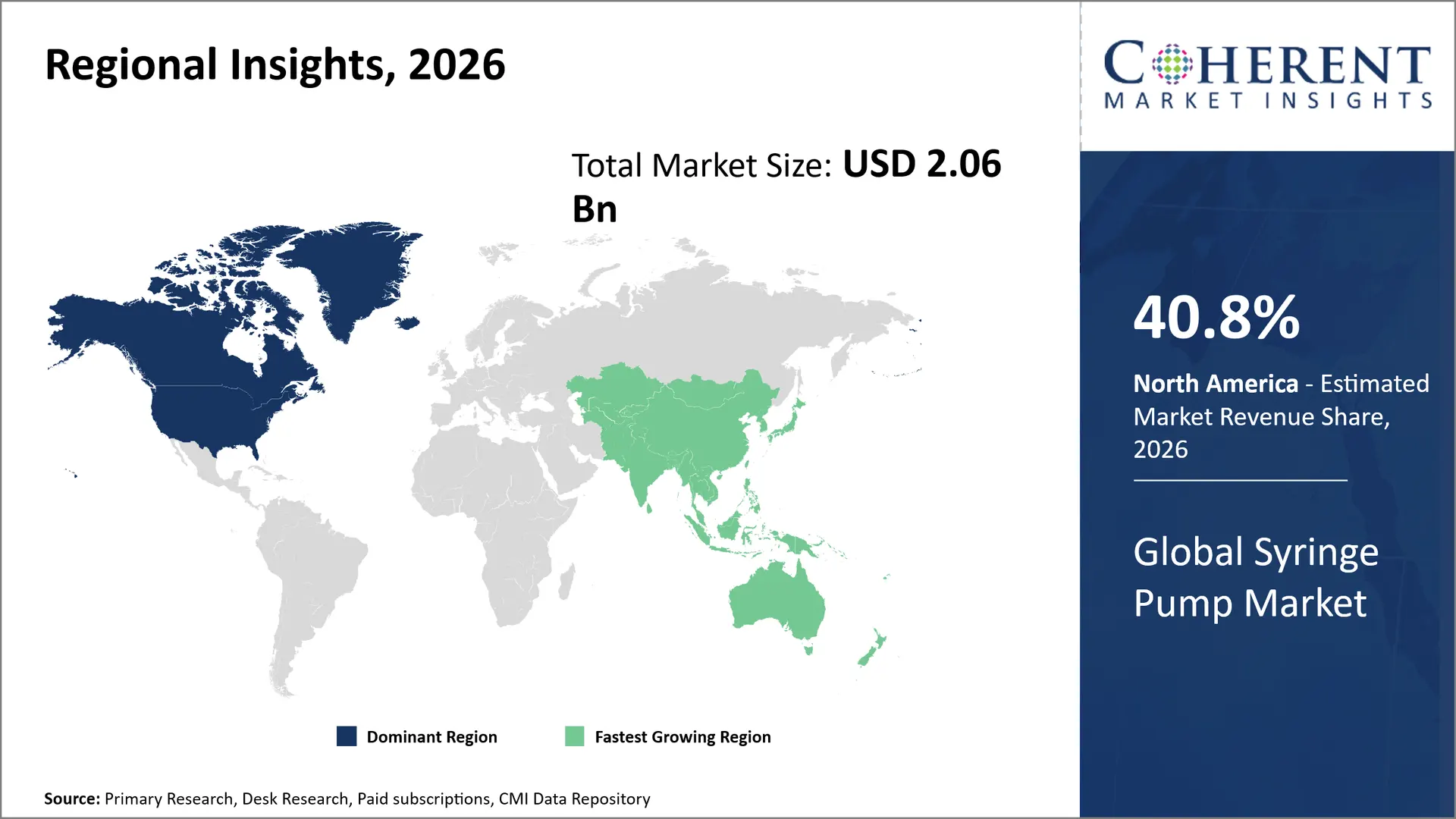
Why is North America a Strong Market for Syringe Pump?
North America leads the global syringe pump market, accounting for an estimated 40.8% share in 2026, owing to the presence of advanced healthcare sector, technological advancements, and large investments made in healthcare technology development. Favorable reimbursement policies with effective government regulations facilitates create a favorable environment for product approvals and adoption. For instance, the U.S. Centers for Medicare & Medicaid Services (CMS) provides home infusion Medicare coverage for appropriate ambulatory infusion pumps using HCPCS Level II code E0781, as well as appropriate syringe-type cartridges using code K0552. Moreover, high adoption of advanced infusion systems along with high prevalence of chronic disease and high hospital procurement capacity is also expected to drive regional market.
Why Does Asia Pacific Syringe Pump Market Exhibit High Growth?
Asia Pacific is expected to exhibit the fastest growth in the global syringe pump market, registering an estimated CAGR of 8.3% during 2026–2033. The region is projected to account for 24.1% of the global market in 2026, owing to increasing healthcare spending, developing hospital infrastructure, and high demand for infusion devices in emerging nations. Growing digital health adoption and government policies on healthcare access and infrastructure are key factors boosting the demand for syringe pumps in the region.
For instance, in September 2026, the World Health Organization (WHO) Southeast Asia Regional Committee adopted a resolution to enhance access to quality-assured and affordable medical devices through improved national procurement, regulatory systems, equipment management and digital health technology. The effort seeks to enhance capacity in the use and maintenance of medical devices in regional health systems. Furthermore, increasing rural population, high incidence of chronic disease, and improving local manufacturing capabilities are increasing the adoption of low-cost and advanced devices in the region.
Global Syringe Pump Market Outlook for Key Countries
Why is the U.S. Leading Innovation and Adoption in the Syringe Pump Market?
Innovation and adoption are led by the U.S. with the presence of the well-established ecosystem of smart infusion, drug-delivery systems and high-precision medical devices. Growing use of programmable syringe pump across oncology, neonatal and intensive care as well as anaesthesia is propelling continuous product innovation in the country. Additionally, need for interoperable devices, dose error reduction software and connected infusion management are growing in the U.S. to establish the hub for advanced syringe pump designs.
Is Japan a Favorable Market for Syringe Pump Market?
Japan has a lucrative market for syringe pumps owing to the modern healthcare infrastructure in the country and presence of a thriving medical devices manufacturing industry. Rising number of aging population and a high prevalence of targeted treatment for conditions like cancer and other critical care conditions is likely to drive demand for precision drug delivery systems. Critical care, oncology, anesthesia, and neonatal care provide growth opportunities for advanced infusion systems.
Is China Emerging as a Key Growth Hub for the Syringe Pump Market?
China will play a key role in driving expansion of the market, owing to the growth of tertiary hospitals and ICU beds, as well as a rising demand for precision infusion devices in oncology and neonatal applications. Domestic manufacturers are growing their market share by offering programmable syringe pumps with adjustable flow rates, occlusion alarms, and multi-channel capabilities. The most lucrative opportunities lie in smart infusion syringe pumps, which have multi-channel capabilities for critical care and neonatal applications, as well as the ability to deliver very low volumes of medication accurately.
Why Does Germany Top the European Syringe Pump Market?
Germany is a mature market with a well-established manufacturing base for medical technology, leading-edge hospital infrastructure and keen interest in precision infusion requirements in hospitals, intensive care, anaesthesia and neonatal units. A solid infusion technology manufacturing presence (e.g. B. Braun) will underpin the launch of new and innovative products, locally sourced syringe pumps and a focus on the aging equipment inventory, increased digitization and connected hospital equipment, medication safety and the need to replace agIing infusion systems.
Is Syringe Pump Market Developing in UK?
UK syringe pump market is gradually progressing due to the modernization of hospital equipment in NHS hospitals, rising demand for ambulatory infusion systems, and the integration of smart medication delivery systems. Programmable syringe pumps have potential in the ICU, oncology and palliative care where accurate doses of medication are needed and medication must be delivered consistently over a period of time. Replacement of aging infusion systems and increased focus on interoperability and infusion safety are likely to drive acquisitions in NHS hospitals and specialist healthcare facilities.
Clinical Application-Wise Utilization of Syringe Pumps Across Healthcare Settings
Clinical Application | Commonly Administered Medications | Key Usage Requirements | Primary Healthcare Setting |
Critical Care | Vasopressors, sedatives, inotropes | Continuous and highly precise dosing | Intensive Care Units |
Chemotherapy | Antineoplastic drugs | Controlled infusion rates and accurate dosing | Oncology Departments |
Anesthesia | Anesthetics, analgesics | Programmable delivery and dosage control | Operating Rooms |
Neonatal and Pediatric Care | Antibiotics, analgesics, nutrients | Very low flow rates and high dosing accuracy | NICUs and Pediatric Units |
Pain Management | Opioids and analgesics | Continuous and patient-controlled medication delivery | Hospitals and Home Healthcare |
How is the growing adoption of smart syringe pumps creating new growth opportunities in the syringe pump market?
Increasing integration of wireless connectivity, automated dosing controls, drug libraries and real-time monitoring are opening the potential for sophisticated syringe pumps into the healthcare environment. These can enhance the accuracy of infusion, aid remote monitoring and improve medication safety. For instance, in October 2025, the UK Medicines and Healthcare products Regulatory Agency (MHRA) published new guidance for Body Comm version 3.3 software (i.e., with Body Guard ambulatory syringe pumps), including software compatibility requirements with the use of Windows 11, highlighting the increasing importance of software compatibility for connected syringe pump systems. (Source: Department of Health)
Market Players, Key Development, and Competitive Landscape
Key Developments
- In July 2026, Numantec entered into a definitive agreement with Goldman Sachs Alternatives to acquire controlling interest in the Company from White Bridge Investments and other shareholders. The investment will help to grow the portfolio, drive new product development and capture strategic acquisitions and geographic expansion opportunities. The Company's portfolio comprises vascular access devices, injection systems, elastomeric and electronic pumps, pre-filled syringes and other infusion medical devices.
- In November 2025, KORU Medical Systems, Inc. announced a license and development agreement with a multinational pharmaceutical company to co-develop next generation subcutaneous immunoglobulin (SCIg) infusion systems for commercial drugs and clinical programs. Under the pact, the firms will create a vial and prefilled syringe infusion system that incorporates KORU’s Freedom60 and FreedomEDGE infusion technologies to enable home healthcare patients to self-administer and simplify delivery of large volume drugs.
Competitive Landscape
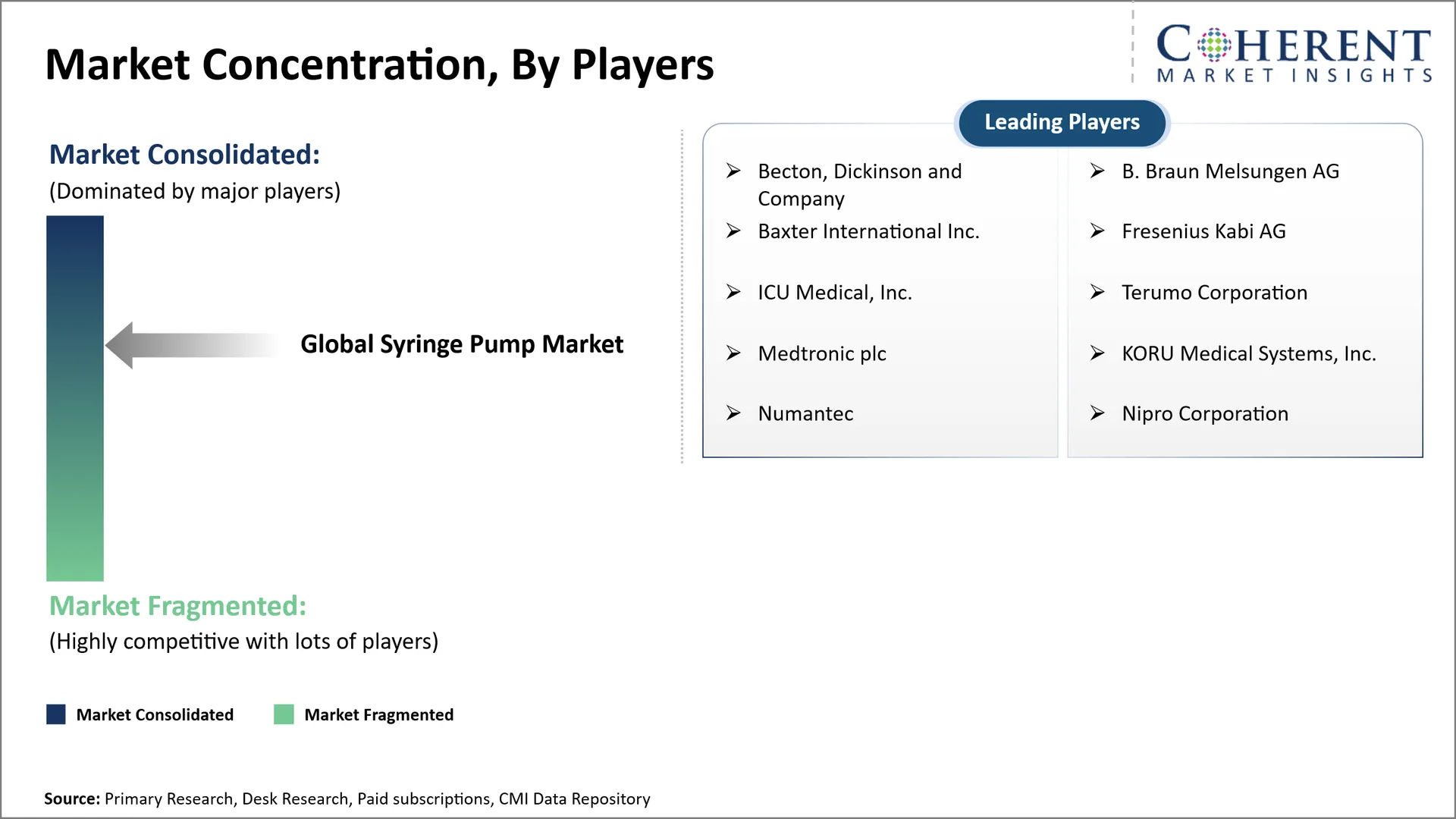
The global syringe pump market is moderately competitive, with major players competing on product efficiency, infusion safety, patent technology, product innovation, device reliability, price, and ease of use. The players in the market are developing the advanced syringe pumps which include advanced syringe pump with smart dosing, wireless connectivity, safety features, portable the device. Key focus areas include:
- Development of smart syringe pumps with dose error reduction systems (DERS), drug library and programmable infusion features.
- Wireless connectivity, real-time monitoring, and HIPAA compliance.
- Design and characterization of small, portable, battery-powered syringe pumps for ambulatory/in-home infusion therapy.
- Improvements in the accuracy of infusion, occlusion detection, electronic alarms and drug safety.
- Broadening the product range for specialized uses such as neonatal, oncology, anaesthesia and critical care.
- Build strategic partnerships with hospitals, healthcare providers and distributors to extend reach of the global market.
- Investments in software upgrades, cybersecurity and interoperability to enable connected infusion management.
Market Report Scope
Syringe Pump Market | |||
Report Coverage | Details | ||
Base Year | 2025 | Market Size in 2026: | USD 2.06 Bn |
Historical Data For: | 2020 To 2024 | Forecast Period: | 2026 To 2033 |
Forecast Period 2026 To 2033 CAGR: | 6.6% | 2033 Value Projection: | USD 3.22 Bn |
Geographies covered: |
| ||
Segments covered: |
| ||
Companies covered: | Becton, Dickinson and Company, B. Braun Melsungen AG, Baxter International Inc., Fresenius Kabi AG, ICU Medical, Inc., Terumo Corporation, Medtronic plc, KORU Medical Systems, Inc., Numantec, Nipro Corporation | ||
Growth Drivers: |
| ||
Restraints & Challenges: |
| ||
Analyst Opinion (Expert Opinion)
- In the coming years, the global syringe pump market is expected to witness a paradigm shift with the adoption of smarter, safer, and interconnected drug-delivery technologies, which will increasingly focus on the precision of the dosage and on automating infusion system management. Increasing portable and battery-operated device requirements to facilitate the delivery of care outside the four walls of hospitals will increase. Long term, syringe pump systems will be distinguished by AI-enabled monitoring, drug libraries, and interoperability.
- The key potential market is likely to be in smart infusion syringe pumps for critical care and neonatal use in China. The expansion of hospital infrastructure, growth of intensive care and demand for high-end drug delivery solutions, provides significant opportunities. Programmable infusion syringe pumps with precision low-flow capabilities, efficient occlusion detection and improved medication safety features should be focus areas.
- In order to gain a competitive advantage market players should focus on helping customers differentiate products on the basis of enhanced dosing, ease of use, wireless technology, and integrations with HIS (Hospital Information Systems). Establishing affordable product portfolios consisting of traditional, smart, and portable syringe pumps in developed and emerging markets will help develop purchase power in either type of market. Companies should also strengthen clinical training, service, and distribution relationships to boost penetration.
Speak to the analyst
Want personalized insights?
Take the findings above to one of our principal consultants, or have the report rebuilt around the segments, geographies and competitors you actually track.
Market Segmentation
- Product Type Insights (Revenue, USD Bn, 2021 - 2033)
- Infusion Syringe Pumps
- Withdrawal Syringe Pumps
- Application Insights (Revenue, USD Bn, 2021 - 2033)
- Chemotherapy
- Pain Management
- Neonatal and Pediatric Care
- Critical Care
- Other Applications
- End User Insights (Revenue, USD Bn, 2021 - 2033)
- Hospitals
- Ambulatory Surgical Centers
- Specialty Clinics
- Home Healthcare Settings
- Others
- Regional Insights (Revenue, USD Bn, 2021 - 2033)
- North America
- U.S.
- Canada
- Latin America
- Brazil
- Argentina
- Mexico
- Rest of Latin America
- Europe
- Germany
- U.K.
- Spain
- France
- Italy
- Russia
- Rest of Europe
- Asia Pacific
- China
- India
- Japan
- Australia
- South Korea
- ASEAN
- Rest of Asia Pacific
- Middle East
- GCC Countries
- Israel
- Rest of Middle East
- Africa
- South Africa
- North Africa
- Central Africa
- North America
- Key Players Insights
- Becton, Dickinson and Company
- B. Braun Melsungen AG
- Baxter International Inc.
- Fresenius Kabi AG
- ICU Medical, Inc.
- Terumo Corporation
- Medtronic plc
- KORU Medical Systems, Inc.
- Numantec
- Nipro Corporation
Sources
Primary Research Interviews
- Critical Care Specialists
- Anaesthesiologists
- Neonatologists
- Biomedical Engineers and Medical Device Procurement Managers
Stakeholders
- Hospital and Multispecialty Healthcare Administrators
- Intensive Care Unit (ICU) Equipment Procurement Managers
- Medical Device Distributors
- Infusion Therapy Service Providers
- End-use Sectors
- Hospitals and Multispecialty Healthcare Systems
- Ambulatory Surgical Centers
- Specialty Clinics and Oncology Centers
- Home Healthcare Settings
- Regulatory & Health Bodies
- U.S. Food and Drug Administration (FDA)
- Centers for Medicare & Medicaid Services (CMS)
- Medicines and Healthcare products Regulatory Agency (MHRA)
- European Medicines Agency (EMA)
Databases
- CMS Healthcare Common Procedure Coding System (HCPCS)
- CMS Medicare Coverage Database
- EU Tenders Electronic Daily (TED)
- UK Contracts Finder
Public Domain Sources
- U.S. Food and Drug Administration (FDA) – Infusion Pump Safety and Regulatory Guidance
- World Health Organization (WHO) – Technical Specifications for Infusion Devices
- Centers for Medicare & Medicaid Services (CMS) – External Infusion Pump Coverage
- European Union – TED Public Procurement Notices
Proprietary Elements
- CMI Data Analytics Tool, Proprietary CMI Existing Repository of information for last 10 years.
Get access to 250+ pages report
Every segment, forecast, competitor profile and data table behind the analysis above — available for instant download.
- ESOMAR Member
- ISO 9001:2015 Certified
- D-U-N-S Registered
- GDPR & CCPA Compliant
Frequently Asked Questions
The global syringe pump market is estimated to be valued at USD 2.06 Bn in 2026 and is expected to reach USD 3.22 Bn by 2033.
Infusion syringe pumps dominate as they are most widely used for accurate and continuous infusion of drugs in critical care, chemotherapy, anesthesia, and neonatal care.
A syringe pump is a small and portable device used to administer fluids or drugs in carefully measured volumes and at closely controlled flow rates.
The CAGR of global syringe pump market is projected to be 6.6% from 2026 to 2033.
Rising demand for precise drug delivery in critical care, and increasing chronic disease burden and hospital admissions are the major factors driving the growth of the global syringe pump market.
High device procurement and maintenance costs, and risk of medication errors and device malfunctions are the major factors hampering the growth of the global syringe pump market.
In terms of application, critical care is estimated to dominate the market revenue share in 2026.