

Global Targeted Radiopharmaceutical Therapy Market Size and Forecast – 2026 To 2033
The global targeted radiopharmaceutical therapy market is expected to grow from USD 6.35 Bn in 2026 to USD 13.86 Bn by 2033, registering a compound annual growth rate (CAGR) of 11.8% from 2026 to 2033. The global market for targeted radiopharmaceutical therapy is projected to witness significant growth during the forecast period attributed to the growing burden of cancer and the requirement for more accurate and effective therapies.
As per the World Health Organization (WHO), it has been projected that 20.6 million new cases of cancer and 10 million cancer death was accounted worldwide in 2024. Without more powerful intervention, the annual number of new cancer cases is predicted to reach almost 35 million by 2050, strengthening the need for advanced targeted cancer therapies.
Key Takeaways of the Global Targeted Radiopharmaceutical Therapy Market
- Beta emitters are projected to hold 91.3% of the global targeted radiopharmaceutical therapy market share in 2026, making it dominant radionuclide type segment. North America specifically Canada is bolstering its beta-emitter production. In February 2026, Ontario government launched a project supported by USD 176.3 million (CAD 250 million) funding in association with Bruce Power and Saugeen Ojibway Nation to boost the medical isotope production, which will include Lutetium-177 that is used in targeted radiotherapies of cancer.
- Lutetium-177 (Lu-177) is projected to hold 68.4% of the global targeted radiopharmaceutical therapy market share in 2026, making it therapeutic isotope segment. The Asia Pacific region specifically India is growing its domestic production and clinical availability of Lu-177 based products for various indications. The Department of Atomic Energy of India has reported that the Bhabha Atomic Research Centre (BARC) and the distribution of Lu-177-PSMA-617 for prostate cancer and Lu-177-DOTATATE for neuroendocrine tumors (NETs) radiopharmaceuticals by the Board of Radiation and Isotope Technology (BRIT) are available across over 400 nuclear medicine centers in India.
- Prostate cancer is projected to hold 51.6% of the global targeted radiopharmaceutical therapy market share in 2026, making it dominant application segment. Europe is strengthening its radioisotope production landscape to provide targeted cancer therapies. The European Commission launched the European Radioisotope Valley Initiative (ERVI) in September 2026 to deepen the regional radioisotope production and supply landscape as more than 10 million radioisotope-based procedures are currently performed each year within the European Union.
- North America market maintains dominance with an expected share of 43.8% in 2026, driven by large investment in manufacturing and research & development infrastructure of domestic radiopharmaceuticals. In October 2026, Government of Canada announced an investment of USD 17.2 million in a modernization and expansion project for a facility of Jubilant Radiopharma in Quebec to enhance the domestic radiopharmaceuticals manufacturing and research & development capabilities.
- Asia Pacific is expected to exhibit the fastest growth in the global targeted radiopharmaceutical therapy market, registering an estimated CAGR of 14.6% during 2026–2033. The high growth rate is due to strong government investments in local production of radioisotopes and radiopharmaceuticals. The Ministry of Science and ICT of South Korea announced the Radiation-Biotechnology Innovation Strategy that aims at 100% self-reliance in major core medical isotopes by 2030 and the commercialization of at least three radiopharmaceutical drug candidates with global potential.
Segmental Insights
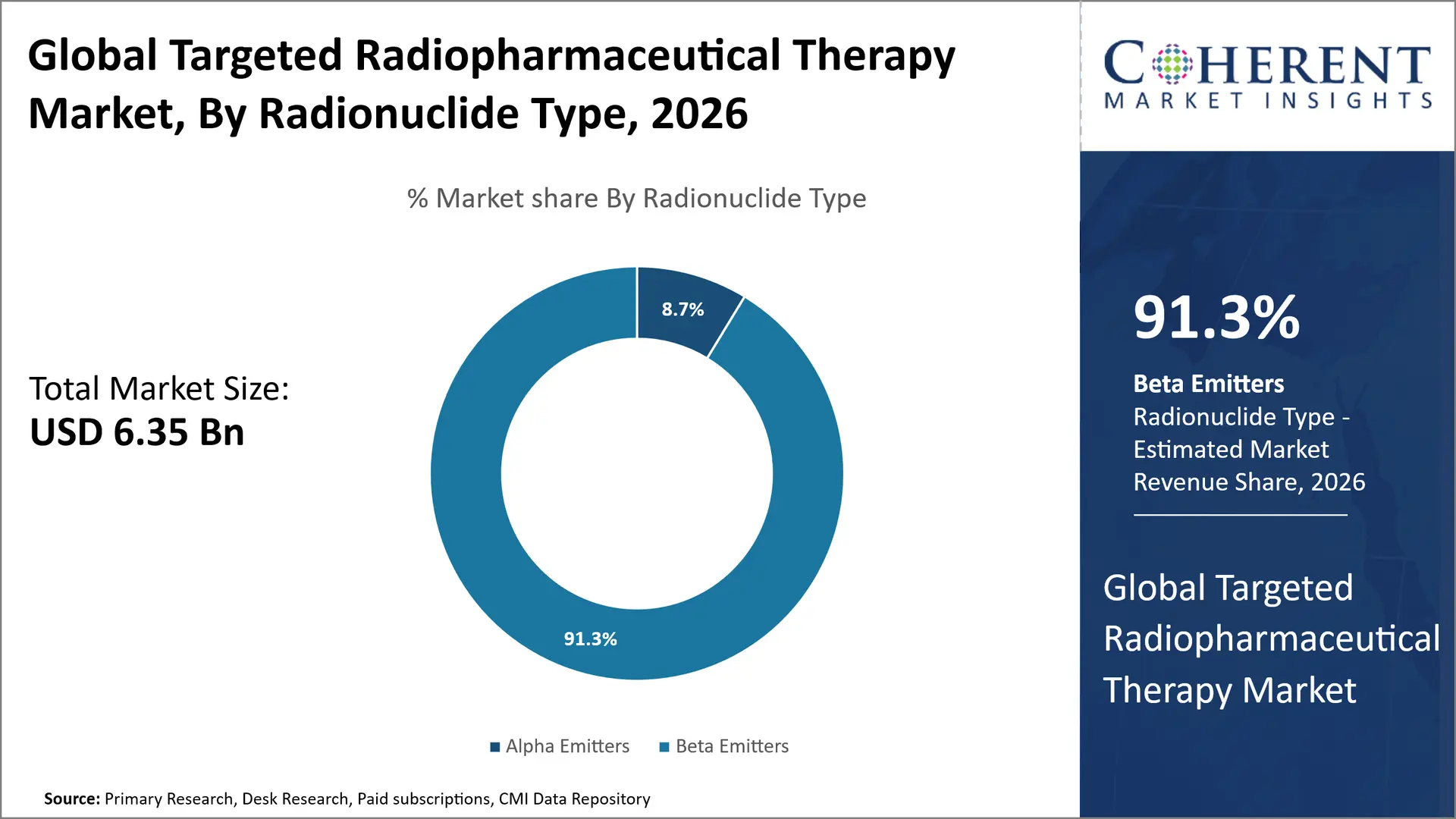
Why Do Beta Emitters Dominate the Global Targeted Radiopharmaceutical Therapy Market?
Beta emitters are projected to hold the market share of 91.3% in 2026, primarily because of the extensive clinical usage of beta emitters, especially in the indications of prostate cancer & neuroendocrine tumours. The use of Lu-177 and I-131 as target radiotherapeutics in various indications would therefore, have contributed towards their widespread clinical adoption. For instance, in February 2026, India's Department of Atomic Energy (DAE) announced the indigenous development of no-carrier added (NCA) Lu-177 based radiopharmaceuticals such as Lu-177-DOTA-TATE and Lu-177-PSMA-617 for targeted treatment of cancer. (Source: Press Information Bureau)
- Current Industry Events of 2026
- Market Size Estimation
- Regional Breakdown
- Competitive Landscape
- Customer Intelligence
- Segmental Analysis
- Pricing Analysis
- Key Market Drivers, Challenges & Future Trends
- Customized Insights Section
Why Do Lutetium-177 (Lu-177) Represent the Largest Therapeutic Isotope Segment in the Targeted Radiopharmaceutical Therapy Market?
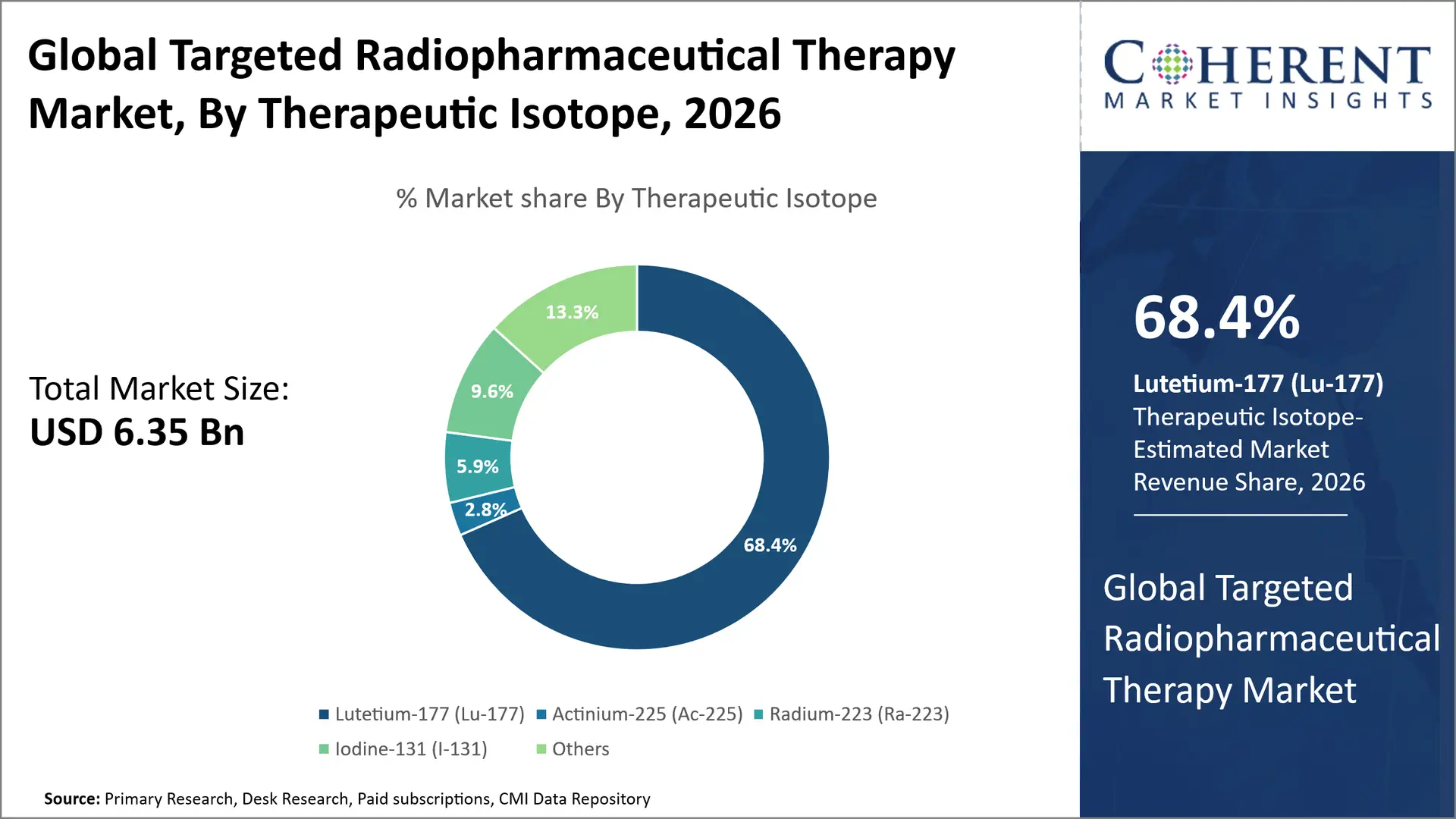
Lutetium-177 (Lu-177) is projected to hold a market share of 68.4% in 2026, because of its optimal combination of emission properties, dosimetry, imaging capabilities, and their proven use in prostate cancer and neuroendocrine tumors. The potential for wide use in combination with a variety of targeting ligands is expected to offer significant opportunities across numerous therapeutic indications. For instance, in March 2026, the University of Missouri Research Reactor (MURR) began providing GMP-grade no-carrier-added Lu-177 to research, clinical and commercial customers globally, with production planned for 52 weeks per year.
Prostate Cancer Segment Dominates the Global Targeted Radiopharmaceutical Therapy Market
The prostate cancer segment is projected to hold a market share of 51.6% in 2026, owing to the increasing acceptance of PSMA-targeted radioligand therapy for the treatment of advanced prostate cancer and/or metastatic castrate. In addition, patients with few treatment options can be treated with focused radiotherapy to attack cancer cells. For instance, in February 2025, NHS England established routine commissioning of PSMA PET-CT imaging for eligible adults with high-risk primary or recurrent prostate cancer, strengthening patient identification and selection for targeted treatment pathways.
Current Events and their Impact
Current Events | Description and its Impact |
BARC Advances Indigenous Development of Emerging Therapeutic Radionuclides (September 2026) |
|
OECD Nuclear Energy Agency and U.S. Department of Energy Address Medical Radioisotope Supply Security (April 2026) |
|
Targeted Radiopharmaceutical Therapy Market Dynamics
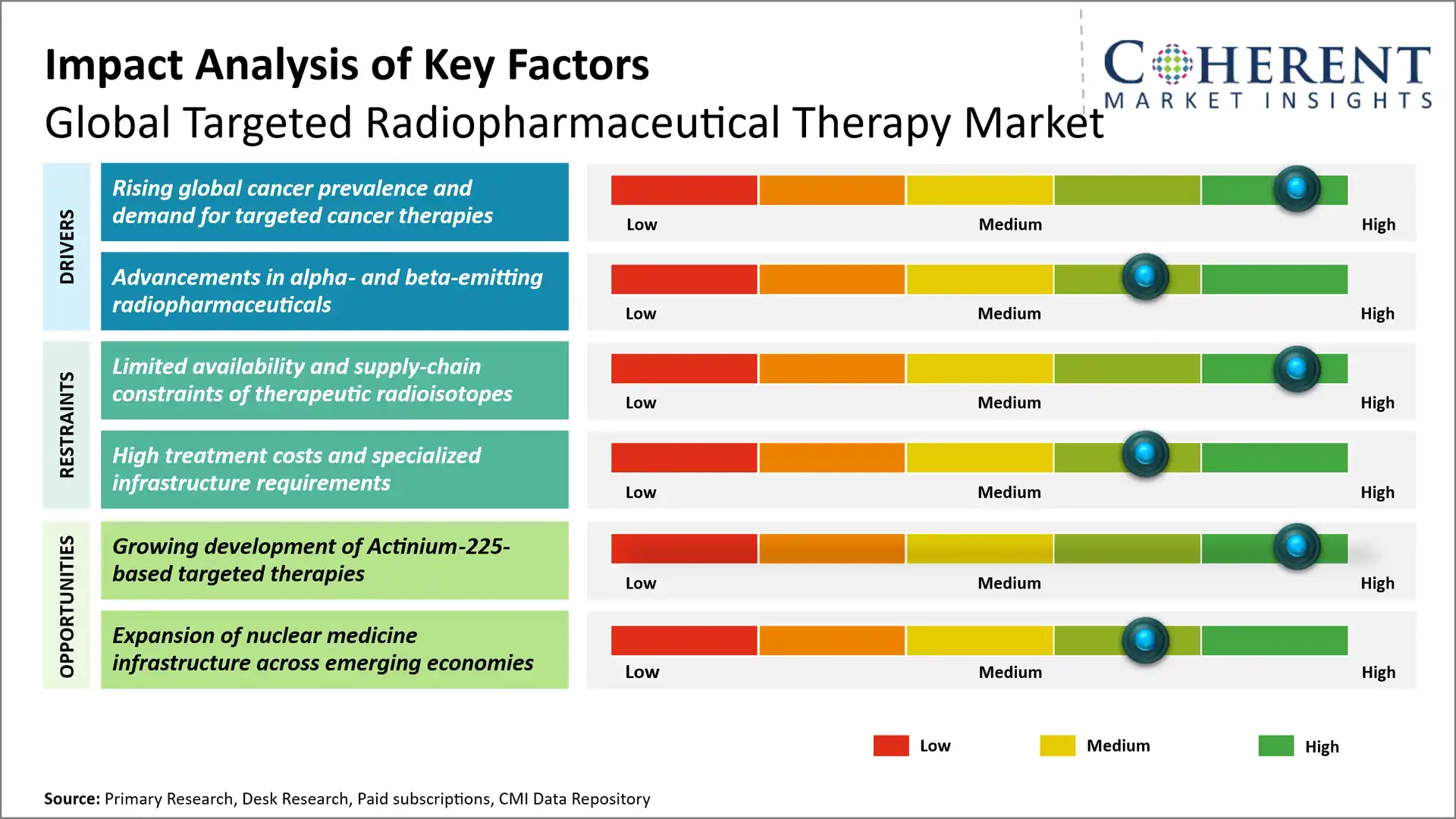 Market Drivers
- Rising global cancer prevalence and demand for targeted cancer therapies: With a growing worldwide cancer burden, there is an increasing need for novel therapeutic approaches that can more precisely target tumors whilst limiting off-target effects. The U.S. National Cancer Institute (NCI) estimated 2.04 million new cases of cancer in 2025 (including 313,780 cases of prostate cancer) and this underpins the need for targeted cancer therapies, such as radiopharmaceutical therapy.
- Advancements in alpha- and beta-emitting radiopharmaceuticals: The growth of alpha- and beta- emitting radiopharmaceuticals is improving targeted radiation delivery. While Lu-177 is helping to build on current therapies, Ac-225 is providing the future of precision cancer treatment. In March 2026, the U.S. Department of Energy's Oak Ridge National Laboratory announced research into a new PYTA chelator that was capable of chelating many isotopes like the alpha-emitting Ac-225 and the beta-emitting Lu-177 to advance the next generation of targeted radiopharmaceuticals.
- Expansion of radiopharmaceutical manufacturing infrastructure: Rising investments in dedicated radiopharmaceutical manufacturing are supplementing the manufacturing capacity and accessibility to target cancer medicines. In December 2025, Invest Ontario revealed the expansion project by Atom Vie Global Radiopharma, which included an investment of USD 97.3 million (CAD 138 million) or more for a new plant at Hamilton in Ontario. The expansion is believed to raise the radiopharmaceuticals manufacturing capacity of the company by at least 10-fold.
Emerging Trends
- Increasing use of alpha-emitter-based radiopharmaceuticals: Radionuclides that emit alpha particles such as Actinium-225 and Lead-212 are gaining a lot of popularity for the treatment of cancers that are hard-to-target and resistant to treatment.
- Impact: The penetrating ability of these radionuclides with high energy radiation may allow for increased tumor destruction and reduced non target tissue damage.
- Market Relevance: Clinical research to expand and pipeline development using alpha emitters is expected to enhance the portfolio of therapeutic isotope and offer new market opportunities.
- Advancement of personalized theranostic treatment approaches: The integration of diagnostic imaging agents with targeted therapeutic radiopharmaceuticals is a major step forward in the emergence of personalized care strategies for cancer. This is attributed to better molecular imaging and patient selection criteria for treatment.
- Impact: Theranostic strategies allow physicians to measure tumor targeting, determine treatment viability, and maximize the delivery of therapeutic radiation.
- Market Relevance: Growing utilization of paired diagnostic and therapeutic radiopharmaceuticals are projected to propel the usage of the targeted treatments and also to augment the clinical applications in the oncology field.
Regional Insights
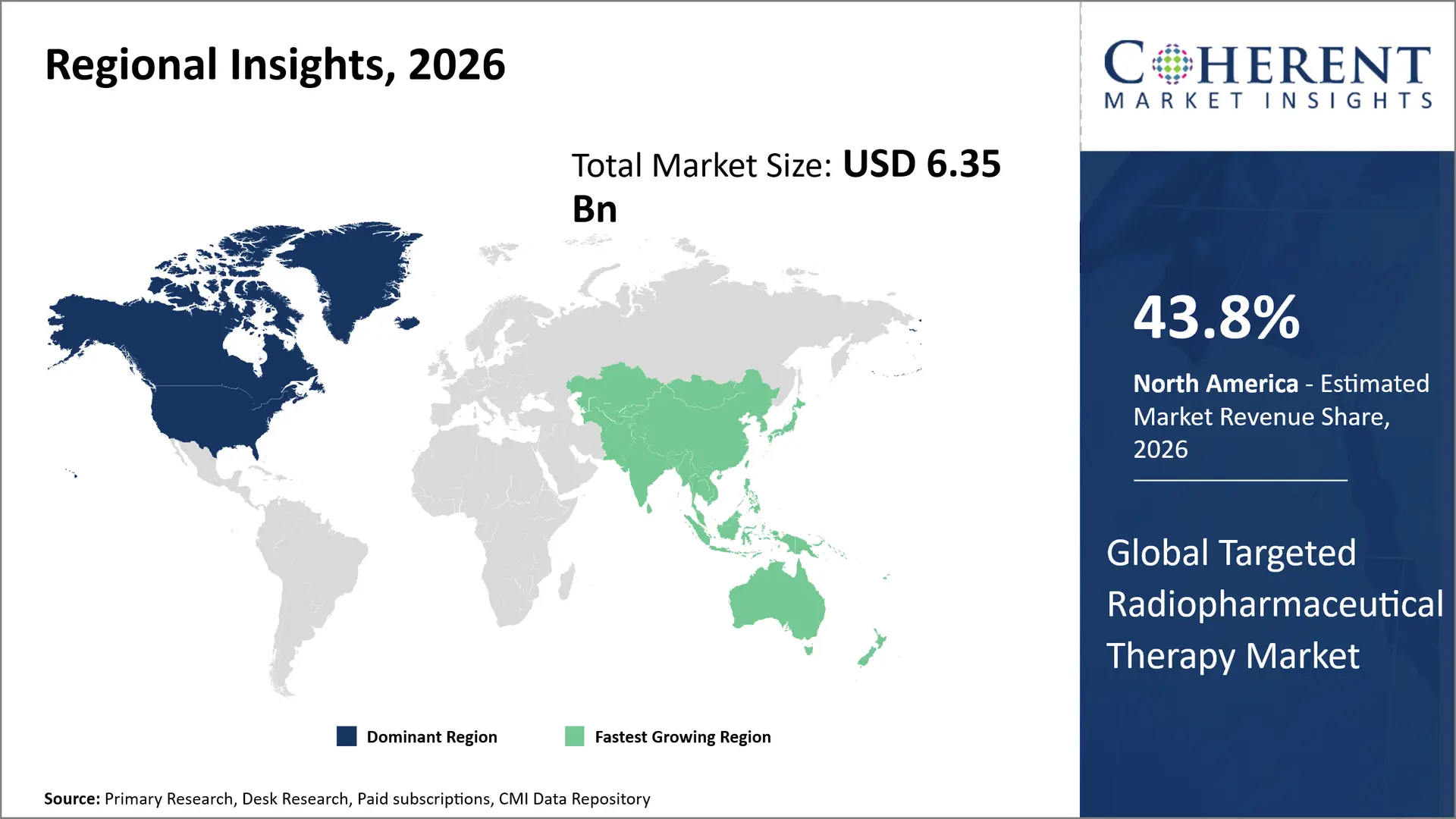
Why is North America a Strong Market for Targeted Radiopharmaceutical Therapy?
North America leads the global targeted radiopharmaceutical therapy market, accounting for an estimated 43.8% share in 2026, due to presence of mature healthcare industry with advanced research facilities, strong government support and regulated processes, such as Food and Drug Administration approval as well as clinical trials to encourage research & development for new products and innovative radiopharmaceutical therapies.
Additionally, the regional market is gaining momentum due to the implementation of reimbursement policies and government funding in cancer research. For instance, the U.S. National Cancer Institute (NCI) was awarded USD 7.35 billion in federal funding for FY 2026, an increase of USD 128 million compared to the FY25 enacted level. This allocation will enable cancer research, in basic translational and clinical areas, which will strengthen the broader research ecosystem for innovative cancer treatments including radiopharmaceutical therapies.
Why Does Asia Pacific Targeted Radiopharmaceutical Therapy Market Exhibit High Growth?
Asia Pacific is expected to exhibit the fastest growth in the global targeted radiopharmaceutical therapy market, registering an estimated CAGR of 14.6% during 2026–2033. The region is projected to account for 22.1% of the global market in 2026, attributed to the rising incidence of cancer, increasing healthcare investments, and better availability of next-generation nuclear medicine technologies. Countries like China, Japan and India are encouraging the use of nuclear medicine and specific treatments through policies and funding to strengthen healthcare infrastructure.
For instance, the Nuclear Technology Application Industry High-Quality Development Action Plan (2024-2026) was released by China's National Atomic Energy Administration in December 2024 and covers the domestic purchase of medical radioisotopes and radiopharmaceuticals and the construction of nuclear medicine innovation centres. The plan seeks to bring at least ten new Class I radioactive drugs to applications for clinical trial approval.
Global Targeted Radiopharmaceutical Therapy Market Outlook for Key Countries
Why is the U.S. Leading Innovation and Adoption in the Targeted Radiopharmaceutical Therapy Market?
The U.S. catalyzes innovation and adoption of targeted radiopharmaceutical therapy, as it is well-positioned to capitalize on the vast and established ecosystem of PSMA-targeted and somatostatin receptor-targeted treatment, supported by existing clinical research capacity. A mature pipeline of next-generation alpha-emitting therapies, such as novel Actinium-225 based prostate and other high-risk cancer-targeted therapies are being developed within the U.S. and commercialized using the country's experienced radiopharmaceutical development talent pool and dedicated nuclear medicine centers.
Is Japan a Favorable Market for Targeted Radiopharmaceutical Therapy Market?
Japan is an ideal country for targeted radiopharmaceuticals, and is home to world-renowned nuclear medicine technology, with substantial production expertise and a growing prevalence of targeted radioligand therapies being used in clinical practice. The established use of Lu-177 therapies for prostate cancer and neuroendocrine tumours, the ongoing research into alpha-emitting isotopes like Ac-225, aging population and thriving research environment make Japan a prime market for this emerging class of therapeutics within Asia Pacific.
Is China Emerging as a Key Growth Hub for the Targeted Radiopharmaceutical Therapy Market?
China is projected to emerge as an important growth ground for targeted radiopharmaceutical therapy market driven by the expansion of China's nuclear isotope manufacturing industry, growing investment in radiopharmaceutical research, and increasing targeted therapy pipeline enabling market growth within the country. The large patient pool of oncology cases in China, growing nuclear medicine market, and burgeoning targeted therapeutic pipeline based on Lu-177 and Ac-225 are encouraging several domestic as well as international radiopharmaceutical companies to participate in the market. Moreover, the overall increasing level of clinical trials activity and de-risking of domestic radiopharmaceutical manufacturing are anticipated to further foster the China market.
Why Does Germany Top the European Targeted Radiopharmaceutical Therapy Market?
Germany is expected to have major share in European targeted radiopharmaceutical therapy market because of its nuclear medicine infrastructure, advanced radiopharmaceutical manufacturing presence and better clinical research facilities. The country has specialized radiopharmaceutical developers, experienced nuclear medicine centers and proven infrastructure in case of Lu-177 based treatment for prostate cancer and neuroendocrine tumors. Additionally, the broad pharmaceutical research base and access to novel radioisotope production and radiochemistry technology advances would enable rapid development and commercialization of next-generation targeted therapies.
Is Targeted Radiopharmaceutical Therapy Market Developing in UK?
The UK has a developing targeted radiopharmaceutical therapy market, especially the rise of Lutetium-177-based therapy for prostate cancer and neuroendocrine tumors. It is also pioneering targeted alpha therapy with Lead-212-based therapies, which could set the UK up as a new market for next-generation radiopharmaceutical therapies. In November 2025, Innovate UK provided USD 13.1 million (£9.9 million) to Project Alpha, led by the UK National Nuclear Laboratory and the Medicines Discovery Catapult, to develop cancer drugs using lead-212 obtained from legacy nuclear materials, with the goal of strengthening UK capabilities in targeted alpha radiopharmaceuticals.
Global Therapeutic Radionuclide Production and Clinical Applications
Therapeutic isotope | Emission type | Production route | Major therapeutic application |
Lutetium-177 (Lu-177) | Beta | Nuclear reactor | Prostate cancer, neuroendocrine tumors |
Actinium-225 (Ac-225) | Alpha | Accelerator / generator | Prostate cancer, hematological malignancies |
Radium-223 (Ra-223) | Alpha | Nuclear reactor / decay chain | Bone-metastatic prostate cancer |
Iodine-131 (I-131) | Beta | Nuclear reactor | Thyroid cancer |
Lead-212 (Pb-212) | Alpha-emitting decay chain | Radionuclide generator | Solid tumors |
Terbium-161 (Tb-161) | Beta | Nuclear reactor | Prostate cancer and other solid tumors |
How is the growing development of Actinium-225-based targeted therapies creating new growth opportunities in the targeted radiopharmaceutical therapy market?
The expanding use of Ac-225 targeted treatments offers a potentially lucrative market opportunity due to its potential for potent, high energy alpha emitters in addition to their potential to treat malignant and resistant cancers. In April 2026, the Sylvia Fedoruk Canadian Center for Nuclear Innovation was awarded about USD 500,000 from the Canadian Medical Isotope Ecosystem’s (CMIE) federally funded Development Fund to develop its facility for large-scale production of Ac-225 for targeted alpha therapy. This project will provide better access to medical isotopes and support next-generation radiopharmaceutical therapies.
Market Players, Key Development, and Competitive Landscape
Key Developments
- On November 11, 2026, Actinium initiated the RADIANZ clinical imaging trial to enable the continued development of the radiotherapy agent ATNM-400, an experimental radiotherapy of HER3 based on Actinium-225. The trial investigates the biodistribution, tumor accumulation, and dosimetry of the experimental radiotherapy in several solid tumors using PET imaging Zr-89, such as ovarian, pancreatic, colorectal, lung, and breast cancers. The Program aims to expand the use of targeted alpha-radiotherapy beyond prostate cancer.
- In August 2026, Moffitt Cancer Center and Speros established the Moffitt Radiopharmaceutical Program to advance radiopharmaceuticals research, clinical development and manufacturing. This will be supported by more than USD 600 million in infrastructure investments and includes a radiochemistry lab and an Integrated Theranostics Center that will have radioisotope production capabilities. The program aims to accelerate clinical translation, expand radiopharmaceutical trials, and position the center as a regional center of excellence for innovative cancer therapies.
- In March 2026, Aptamer Group plc, with Radiopharmium Ltd. commenced a targeted radiopharmaceutical development programme based on the Optimer platform. This programme will develop a range of therapies across three defined clinical targets. Four radiotherapy assets are to be progressed with in vivo data expected by the end of 2026.
Competitive Landscape
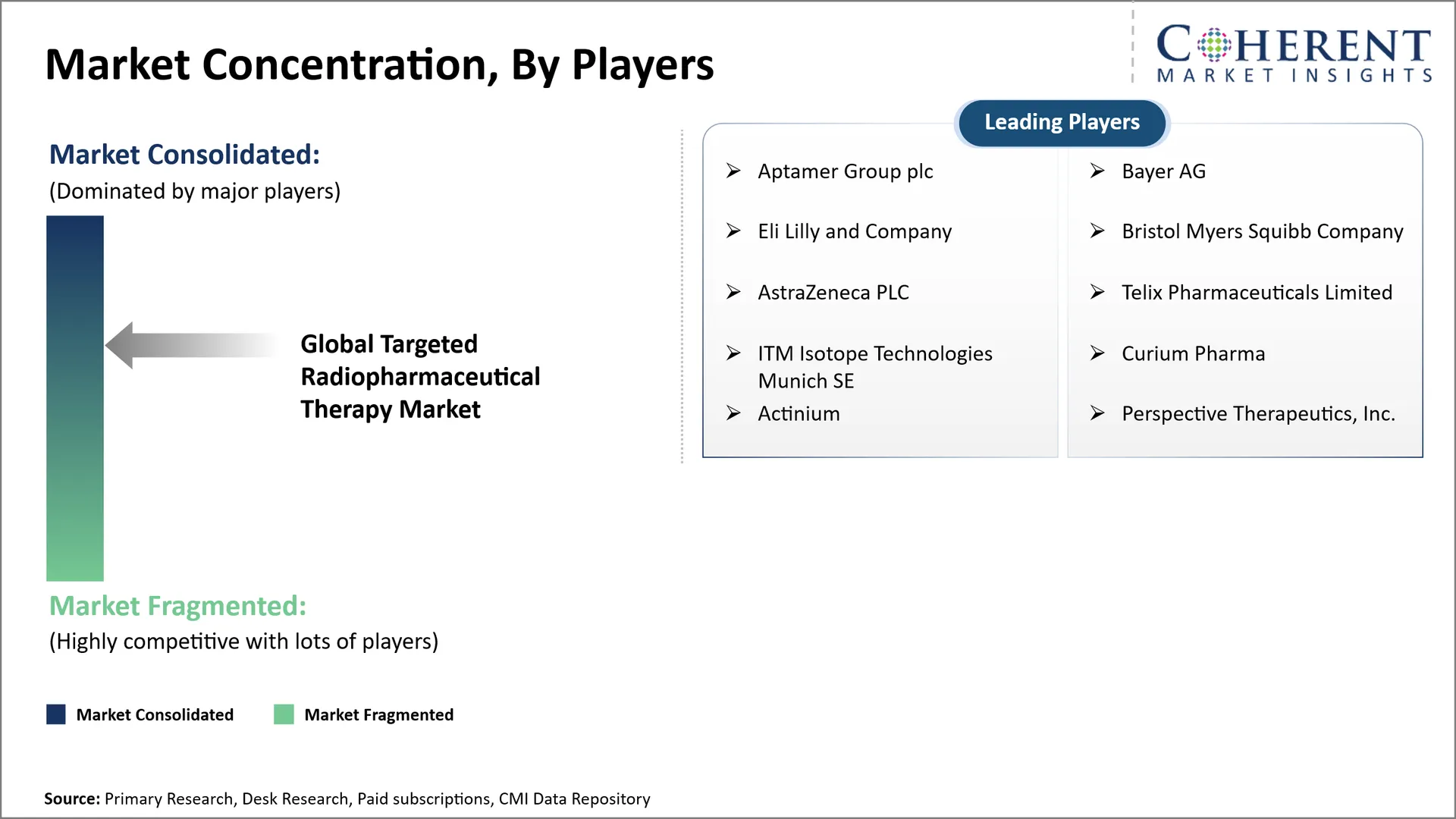
The global targeted radiopharmaceutical therapy market is relatively consolidated, with competition within the market driven by large pharmaceutical organizations, niche radiopharmaceutical developers and producers of medical isotopes. Companies currently compete in targeted Alpha and Beta emitting therapies, expanding production of therapeutic isotopes and radioligand technologies for precision oncology. Competition in the market will be primarily based on the strength of the pipeline, the ability to secure production of isotopes, ability to scale manufacturing, progress in regulatory pathways and access to nuclear medicine networks. Key focus areas include:
- Development of next generation radioligand therapies for prostate cancer, neuroendocrine tumors and other solid tumors.
- Enhancement of domestic manufacturing capacity of therapeutic isotopes- Lutetium-177, Actinium-225, Lead-212.
- Development of alpha-emitting radiopharmaceuticals for metastatic and refractory cancer.
- Building GMP-compliant manufacturing facilities, radiochemistry infrastructure and dedicated isotope distribution networks.
- Partnerships with academia, nuclear medicine and other healthcare providers.
Market Report Scope
Targeted Radiopharmaceutical Therapy Market | |||
Report Coverage | Details | ||
Base Year | 2025 | Market Size in 2026: | USD 6.35 Bn |
Historical Data For: | 2020 To 2024 | Forecast Period: | 2026 To 2033 |
Forecast Period 2026 To 2033 CAGR: | 11.8% | 2033 Value Projection: | USD 13.86 Bn |
Geographies covered: |
| ||
Segments covered: |
| ||
Companies covered: | Aptamer Group plc, Bayer AG, Eli Lilly and Company, Bristol Myers Squibb Company, AstraZeneca PLC, Telix Pharmaceuticals Limited, ITM Isotope Technologies Munich SE, Curium Pharma, Actinium, Perspective Therapeutics, Inc. | ||
Growth Drivers: |
| ||
Restraints & Challenges: |
| ||
Analyst Opinion (Expert Opinion)
- Although conventional radioligand-based therapies remain popular, the future of targeted radiopharmaceutical therapy will be determined by the migration towards targeted, cancer-specific treatments. Alpha-emitters including Actinium-225, Lead-212, and more will complement the existing Lu-177-based therapies, and patient selection improvements will open the treatment landscape to additional solid tumors as well as treatment-resistant disease. Every stage in this process including isotope availability, manufacturing scalability, and patient access will determine how quickly targeted radiopharmaceuticals are able to reach the market.
- The significant opportunities can be gained from the commercialization of Actinium-225 and Lead-212-based therapies for metastatic prostate cancer and difficult solid tumors, especially in the U.S. While PSMA-targeted alpha therapies should continue to be the focus, efforts should also include HER2 and other tumor target indications to achieve broader clinical utility. U.S. represents an attractive commercialization partner due to the extensive nuclear medicine and specialist oncology facilities, as well as the mature clinical development environment.
- In order to gain a competitive advantage market players should focus on establishing mechanisms to ensure their long-term supply of therapeutic isotopes through dedicated supply agreements, targeted sourcing, and scalable manufacturing infrastructure. To sustain commercial success in the face of competition, the right therapies will need differentiated targeting molecules that deliver more efficient tumor uptake and lower off-target radiation while demonstrating good safety profiles. Companies also need to forge partnerships with specialist oncology centers and research organizations to enable faster clinical validation, develop multiple indications for their products, and improve commercial distribution channels.
Speak to the analyst
Want personalized insights?
Take the findings above to one of our principal consultants, or have the report rebuilt around the segments, geographies and competitors you actually track.
Market Segmentation
- Radionuclide Type Insights (Revenue, USD Bn, 2021 - 2033)
- Alpha Emitters
- Beta Emitters
- Therapeutic Isotope Insights (Revenue, USD Bn, 2021 - 2033)
- Lutetium-177 (Lu-177)
- Actinium-225 (Ac-225)
- Radium-223 (Ra-223)
- Iodine-131 (I-131)
- Others
- Application Insights (Revenue, USD Bn, 2021 - 2033)
- Prostate Cancer
- Neuroendocrine Tumors
- Thyroid Cancer
- Bone Metastases
- Others
- End User Insights (Revenue, USD Bn, 2021 - 2033)
- Hospitals
- Specialty Cancer Centers
- Academic and Research Institutes
- Others
- Regional Insights (Revenue, USD Bn, 2021 - 2033)
- North America
- U.S.
- Canada
- Latin America
- Brazil
- Argentina
- Mexico
- Rest of Latin America
- Europe
- Germany
- U.K.
- Spain
- France
- Italy
- Russia
- Rest of Europe
- Asia Pacific
- China
- India
- Japan
- Australia
- South Korea
- ASEAN
- Rest of Asia Pacific
- Middle East
- GCC Countries
- Israel
- Rest of Middle East
- Africa
- South Africa
- North Africa
- Central Africa
- North America
- Key Players Insights
- Aptamer Group plc
- Bayer AG
- Eli Lilly and Company
- Bristol Myers Squibb Company
- AstraZeneca PLC
- Telix Pharmaceuticals Limited
- ITM Isotope Technologies Munich SE
- Curium Pharma
- Actinium
- Perspective Therapeutics, Inc.
Sources
Primary Research Interviews
- Nuclear medicine physicians and radiation oncologists
- Radiopharmaceutical research and development specialists
- Medical radioisotope production and radiochemistry experts
- Radio pharmacy manufacturing and distribution specialists
Stakeholders
- Radiopharmaceutical manufacturers and developers
- Medical radioisotope producers and suppliers
- Hospitals and specialized nuclear medicine centers
- Research reactors and radiopharmaceutical research institutions
- End-use Sectors
- Hospitals and integrated cancer care centers
- Specialty oncology and nuclear medicine centers
- Academic medical centers and research hospitals
- Diagnostic imaging and theranostic centers
- Regulatory & Health Bodies
- U.S. Food and Drug Administration (FDA)
- International Atomic Energy Agency (IAEA)
- Department of Atomic Energy (DAE), India
- European Commission
Databases
- IARC Global Cancer Observatory
- OECD Nuclear Energy Agency Medical Radioisotopes Database and Publications
- Board of Radiation and Isotope Technology (BRIT) Annual Reports
- National Cancer Institute (NCI) Cancer Statistics
Associations
- International Atomic Energy Agency (IAEA)
- OECD Nuclear Energy Agency (NEA)
- International Agency for Research on Cancer (IARC)
Public Domain Sources
- Department of Atomic Energy (DAE), Government of India
- Bhabha Atomic Research Centre (BARC)
- Board of Radiation and Isotope Technology (BRIT)
- U.S. Department of Energy (DOE) and Oak Ridge National Laboratory (ORNL)
Proprietary Elements
- CMI Data Analytics Tool, Proprietary CMI Existing Repository of information for last 10 years.
Get access to 250+ pages report
Every segment, forecast, competitor profile and data table behind the analysis above — available for instant download.
- ESOMAR Member
- ISO 9001:2015 Certified
- D-U-N-S Registered
- GDPR & CCPA Compliant
Frequently Asked Questions
The global targeted radiopharmaceutical therapy market is estimated to be valued at USD 6.35 Bn in 2026 and is expected to reach USD 13.86 Bn by 2033.
Beta emitters dominate in clinical use because of proven therapeutic efficacy and wide adoption in treating prostate cancer and neuroendocrine tumors.
Targeted radiopharmaceutical therapy is a highly precise cancer therapy that employs the use of radioactive molecules to deliver radiation specifically to malignant cells, sparing the surrounding healthy tissue as much as possible.
The CAGR of global targeted radiopharmaceutical therapy market is projected to be 11.8% from 2026 to 2033.
Rising global cancer prevalence and demand for targeted cancer therapies, and advancements in alpha- and beta-emitting radiopharmaceuticals are the major factors driving the growth of the global targeted radiopharmaceutical therapy market.
Limited availability and supply-chain constraints of therapeutic radioisotopes, and high treatment costs and specialized infrastructure requirements are the major factors hampering the growth of the global targeted radiopharmaceutical therapy market.
In terms of application, prostate cancer is estimated to dominate the market revenue share in 2026.