

Global Technology-Supported COPD Care Market Size and Forecast – 2026 To 2033
The global technology-supported COPD care market is expected to grow from USD 1.12 Bn in 2026 to USD 1.89 Bn by 2033, registering a compound annual growth rate (CAGR) of 7.8% from 2026 to 2033. The global technology-supported COPD care market is projected to show immense growth owing to the rising burden of COPD across the globe. This is expected to increase the utilization of technology for continuous respiratory monitoring and disease management.
According to the World Health Organization (WHO), COPD caused 3.4 million deaths in 2023, accounting for nearly 6% of all deaths worldwide, making it the third leading cause of death globally. Growing patient population is driving the acceptance of remote patient monitoring, connected respiratory devices and artificial intelligence-based solutions for early detection of exacerbations and better management of COPD.
Key Takeaways of the Global Technology-Supported COPD Care Market
- Software and digital platforms are projected to hold 41.7% of the global technology-supported COPD care market share in 2026, making it dominant component segment, across Europe owing to the well-established digital healthcare ecosystem and the proliferation of digital technologies in the management of chronic respiratory diseases. For instance, in February 2026, the UK's National Institute for Health and Care Excellence (NICE) published guidance on digital technologies for COPD self-management which include symptom tracking, remote monitoring, customized management plans and patient/clinician communication.
- Remote patient monitoring (RPM) solutions are projected to hold 28.7% of the global technology-supported COPD care market share in 2026, making it dominant technology segment, across Asia Pacific attributed to the increasing virtual healthcare infrastructure and continuous monitoring of a large set of chronic respiratory diseases. For instance, in October 2026, the Government of New South Wales in Australia announced updated remote patient monitoring guidelines that set out the different ways in which COPD can be monitored and discussed the role of digital health data in clinical care.
- Home-based care is projected to hold 42.8% of the global technology-supported COPD care market share in 2026, making it dominant care setting segment, across North America due to the presence of well-established home health care system as well as rise in technological adoption for managing chronic diseases. For instance, in September 2026, U.S. Centers for Medicare & Medicaid Services (CMS) announced to expanded access of its ACCESS Model to COPD from spring 2027. It will deliver virtual services, remote patient monitoring and connected devices to eligible Medicare beneficiaries for technological supported care.
- North America market maintains dominance with an expected share of 38.6% in 2026, owing to its advanced respiratory disease management system, along with the highest healthcare spending and next-generation connected medical devices market. For instance, according to the Centers for disease control and prevention (CDC) report in 2025, 4.4% of U.S. adults were diagnosed with chronic obstructive pulmonary disease (COPD), emphysema or chronic bronchitis, highlighting the substantial need for technology-enabled respiratory disease management.
- Asia Pacific is expected to exhibit the fastest growth in the global technology-supported COPD care market, registering an estimated CAGR of 14.8% during 2026–2033, owing to the expansion of digital healthcare infrastructure, augmented funding by the government bodies into the telemedicine industry, and growing accessibility to the technology-enabled care in developing nations. For instance, in October 2026, Ministry of Health and Family Welfare, India, reported that the eSanjeevani national telemedicine platform crossed 500 million consultations. This was backed by the addition of a clinical decision support system driven by artificial intelligence.
Segmental Insights
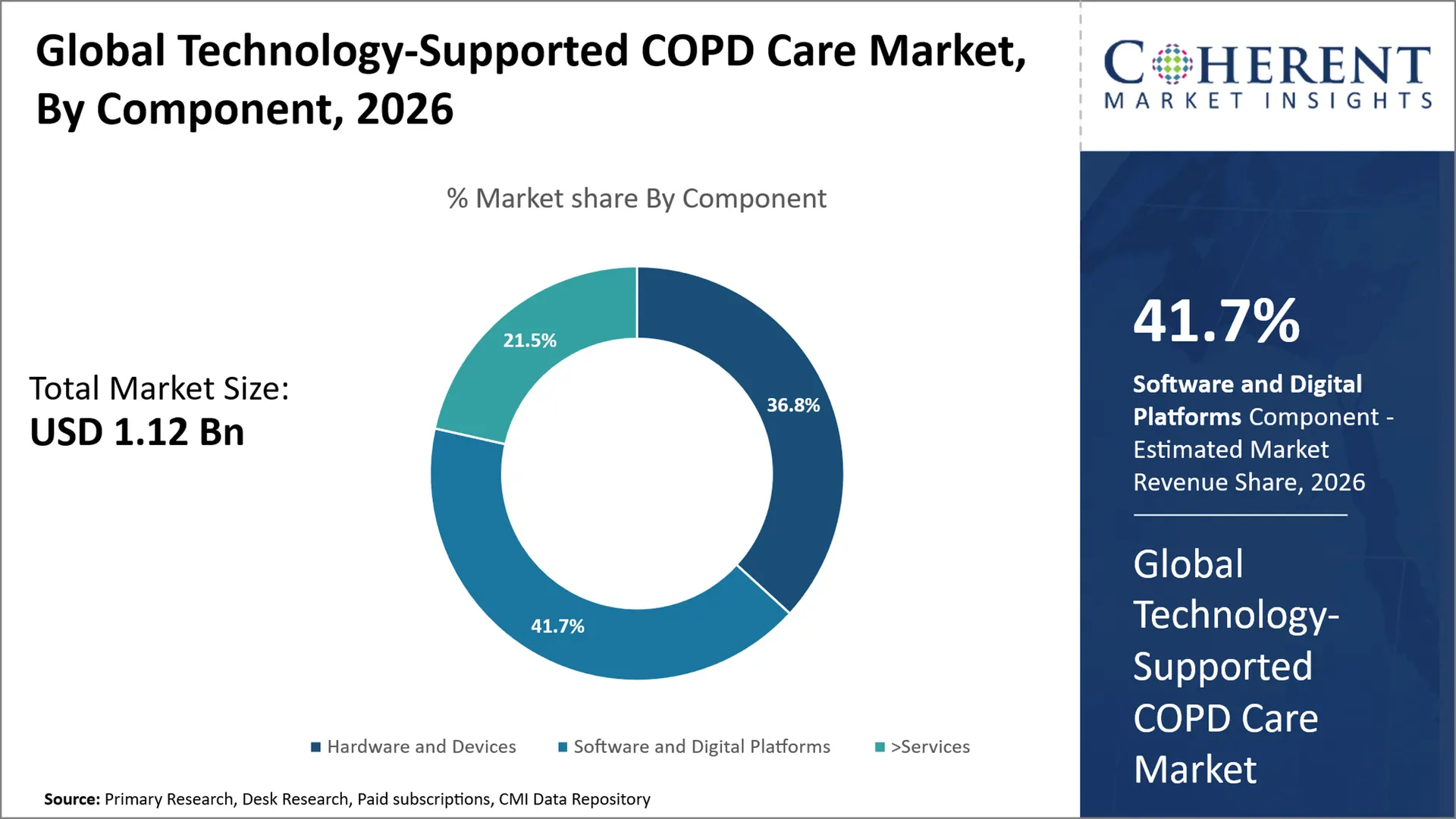
Why Do Software and Digital Platforms Dominate the Global Technology-Supported COPD Care Market?
Software and digital platforms are projected to hold the market share of 41.7% in 2026, owing to their ability to connect with the patient's healthcare data, support clinical decision making and enable continuous disease monitoring. Healthcare organizations can monitor the symptoms, respiratory parameters, and collaborate on appropriate care at a single digital platform. For instance, DOC@HOME's assessment by National Institute for Health and Care Excellence (NICE) highlights the ability of the digital platform to collect blood oxygen levels, vital signs and patient-reported symptoms, and produce alerts for healthcare professionals when vital changes are detected, adding to the growing role of software in the management of COPD.
- Current Industry Events of 2026
- Market Size Estimation
- Regional Breakdown
- Competitive Landscape
- Customer Intelligence
- Segmental Analysis
- Pricing Analysis
- Key Market Drivers, Challenges & Future Trends
- Customized Insights Section
Why Do Remote Patient Monitoring (RPM) Solutions Represent the Largest Technology Segment in the Technology-Supported COPD Care Market?
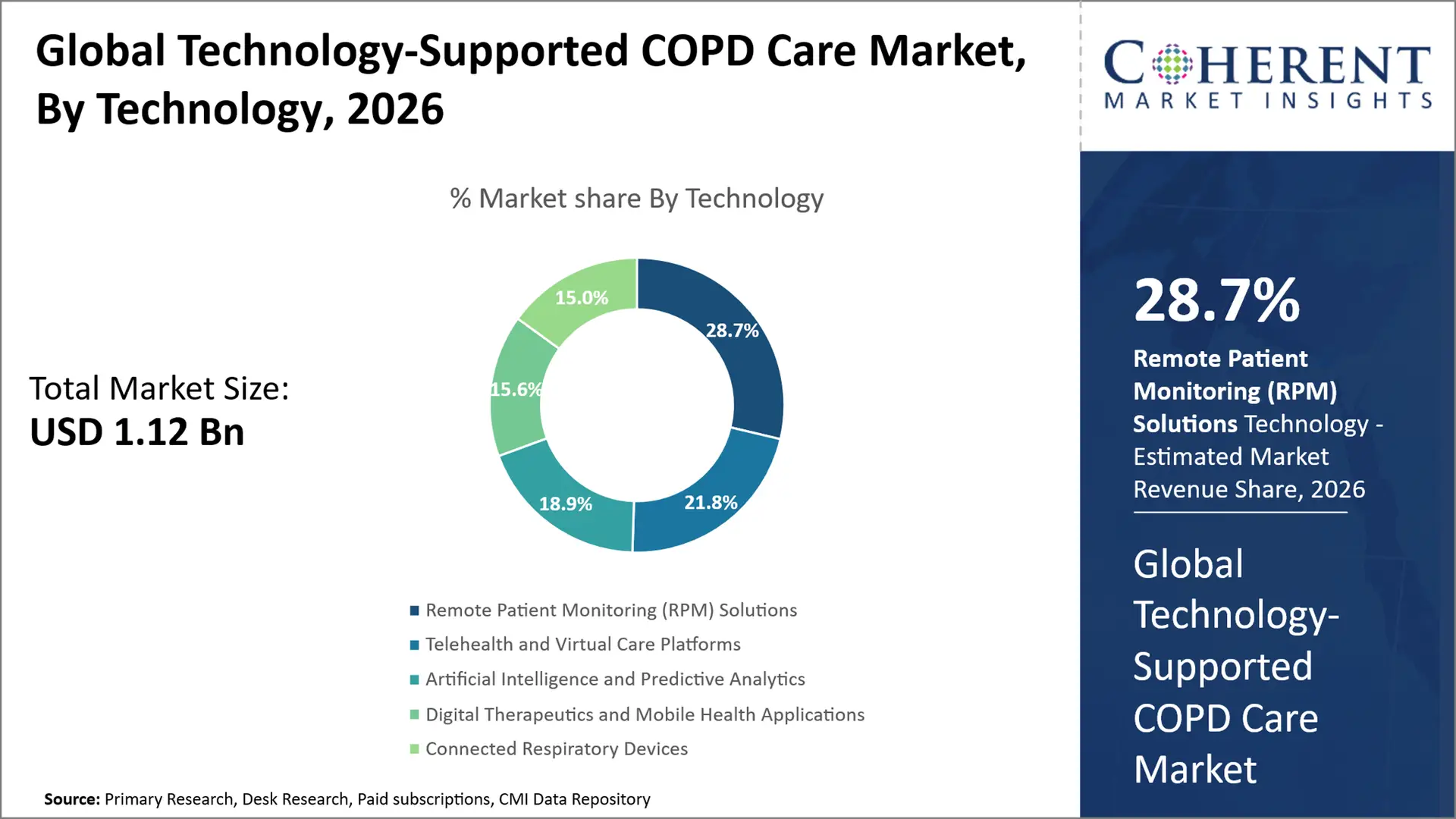
Remote patient monitoring (RPM) solutions are projected to hold a market share of 28.7% in 2026, as these solutions help to continuously monitor the patient's breath parameters and early symptoms of patient deterioration in an outpatient setting. COPD can be prevented or slowed down by receiving clinical intervention through continuous monitoring of oxygen saturation levels, pulse rate, and symptoms. For instance, the New South Wales Health RPM Program in Australia has a specific care pathway designed for COPD. Using this pathway clinicians can remotely track patients' saturation levels, pulse rate and symptoms among other parameters and detect early signs of deterioration to initiate clinical escalation. (Source: NSW Government)
Home-Based Care Segment Dominates the Global Technology-Supported COPD Care Market
The home-based care segment is projected to hold a market share of 42.8% in 2026, due to the rising adoption of long-term respiratory treatment and clinical support at the home-based set-up. It enables people to avoid visits to hospitals while providing tailored care, respiratory rehabilitation and continuous clinical care. For instance, Ontario Health atHome, Canada, operates the Telehomecare – COPD and Heart Failure Remote Monitoring Program, a six-month program to support connecting patients with monitoring technology, symptom reporting, and virtual nurse services for the management of COPD at home.
Current Events and their Impact
Current Events | Description and its Impact |
CMS Changes Home-Based Noninvasive Ventilation Coverage in COPD (May 2026) |
|
Maharashtra Increases Detection and Teleconsultation of COPD Through the National NCD Programme (April 2025) |
|
Technology-Supported COPD Care Market Dynamics
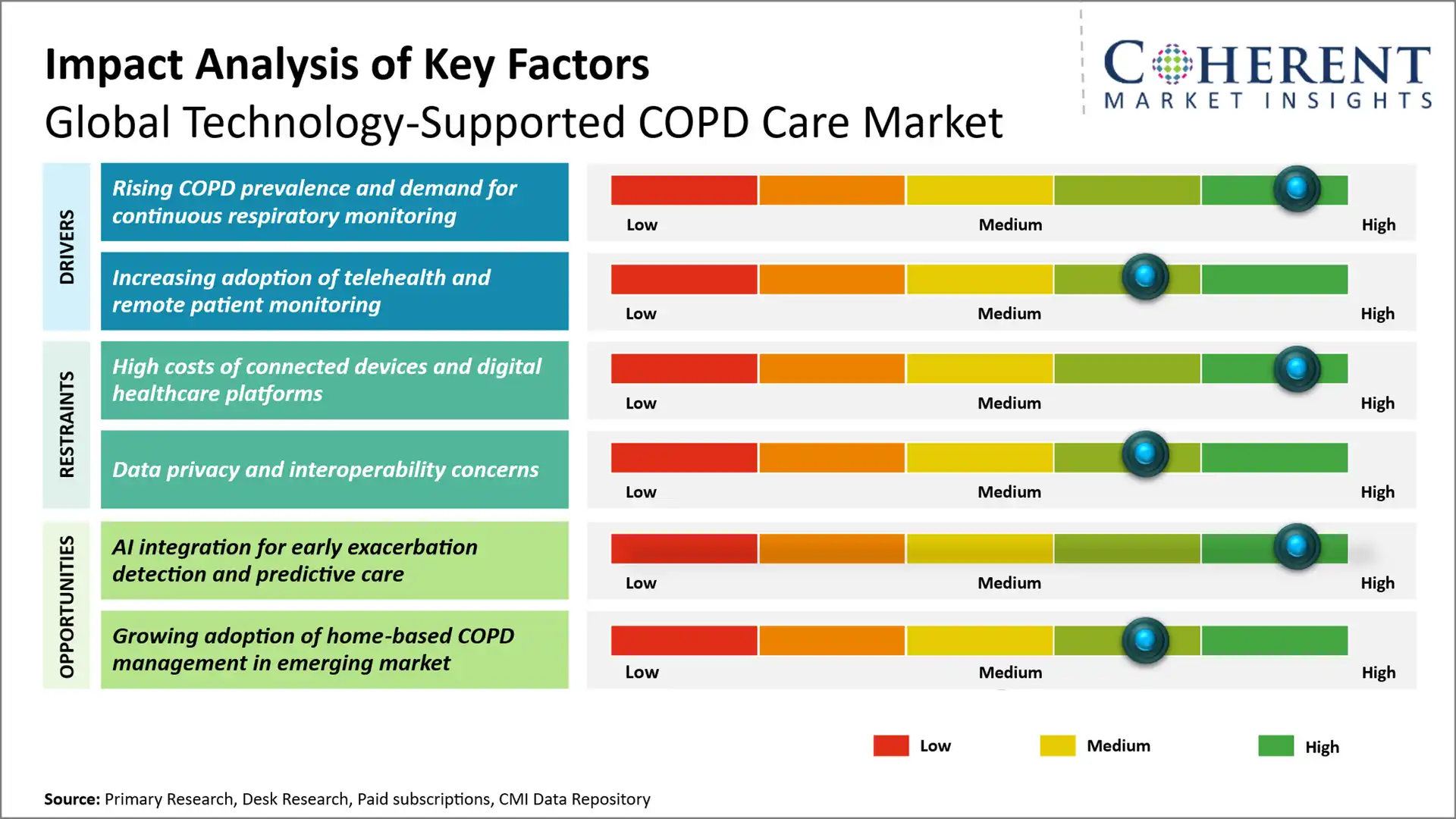
Market Drivers
- Rising COPD prevalence and demand for continuous respiratory monitoring: Rising incidence of COPD is increasing long-term respiratory monitoring and tech-enabled disease management. For instance, as per the Australian Institute of Health and Welfare (AIHW), around 496,000 persons aged 45 and above suffered from COPD in 2022, creating a demand for the increased long-term respiratory care.
- Increasing adoption of telehealth and remote patient monitoring: The use of virtual consultations and technology-enabled home monitoring is helping to make comprehensive, coordinated care more accessible to people with COPD in settings outside of the clinical environment. For instance, the South and West Hertfordshire COPD Virtual Ward evaluation undertaken by NHS England received a total of 50 admissions, covering 46 patients, between December 2021 and June 2022, demonstrating the use of remote monitoring and virtual clinical reviews in COPD care.
- Growing geriatric population and demand for long-term respiratory care: The increasing geriatric population is the primary factor driving the demand for remote monitoring of COPD & long-term disease management. For instance, as per the Japan Cabinet Office, senior citizens with age of 65 years & above accounted for 29.4% of the population in 2025, which in turn is expected to propel the demand for remote monitoring and disease management at home.
Emerging Trends
- AI-based predictive monitoring of COPD exacerbations: Artificial intelligence and machine learning are gradually rolling out as part of COPD monitoring solutions to predict exacerbations by using patient symptoms, physiological data, and other historical health data.
- Impact: This integration allows earlier detection of deterioration and timely intervention in the patient.
- Market Relevance: The demand for predictive analytics is on the rise and driving growth for artificial intelligence-powered monitoring software and COPD personalized management system.
- Linking connected respiratory devices to digital care platforms: Connected spirometers, smart inhalers, and wearables devices are seamlessly integrated with digital platforms to facilitate constant patient monitoring.
- Impact: This integration improves tracking of lung functions, medication compliance and information sharing between patients and physicians.
- Market Relevance: The rising adoption of connected devices is fueling a rise in demand for interoperable software platforms and technology-enabled home-based COPD care.
Regional Insights
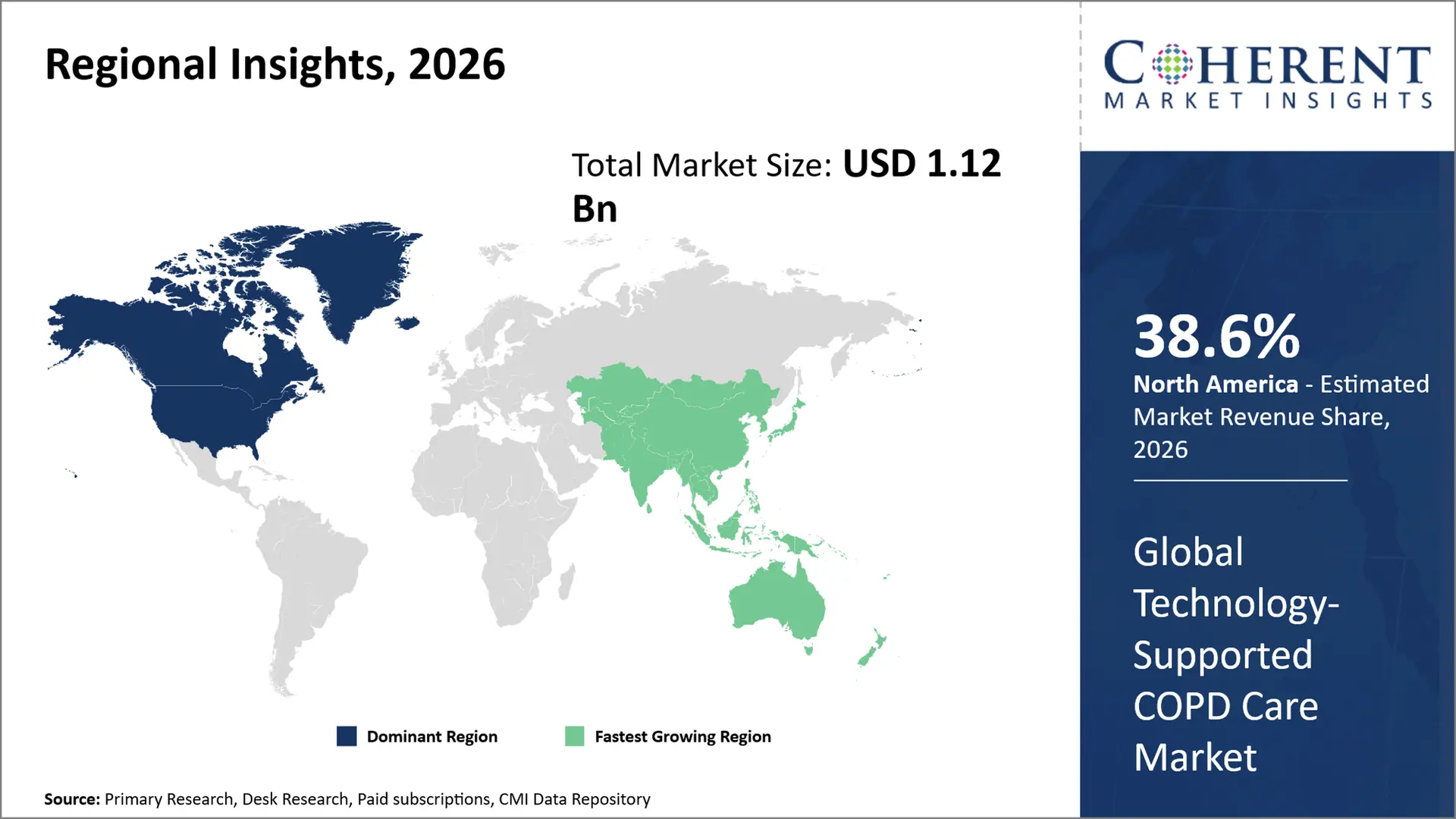
Why is North America a Strong Market for Technology-Supported COPD Care?
North America leads the global technology-supported COPD care market, accounting for an estimated 38.6% share in 2026, due to its well-developed healthcare infrastructure, large budget allocations to research and development, and high adoption of digital health solutions. The region is expected to witness high integration of artificial intelligence-enabled remote monitoring, connected respiratory care and respiratory management systems across healthcare settings.
Additionally, favorable government policies, including reimbursement structures and chronic disease management initiatives, is expected to drive the adoption of technology-enabled COPD care. For instance, U.S. Centers for Medicare & Medicaid Services (CMS) has supports reimbursement of Remote Therapeutic Monitoring (RTM) under Current Procedural Technology (CPT) codes 98975, 98976, 98979, 98980, and 98981. These reimbursement codes include device setup, respiratory system monitoring, and clinician-led treatment management, encouraging the use of technology-enabled care for COPD. (Source: Health Resources & Services Administration)
Why Does Asia Pacific Technology-Supported COPD Care Market Exhibit High Growth?
Asia Pacific is expected to exhibit the fastest growth in the global technology-supported COPD care market, registering an estimated CAGR of 14.8% during 2026–2033. The region is projected to account for 23.1% of the global market in 2026, owing to the rise in cases of COPD, the expansion of digitization of healthcare, and increased access to respiratory care in emerging economies. The rising government support for implementation of telemedicine coupled with benefits provided to digital health startups especially in countries like China, India, and South Korea is further strengthening the regional innovation ecosystem.
For instance, in November 2025, China’s National Health Commission (NHC) promulgated its “Implementation Opinions on Promoting and Regulating the Application of Artificial Intelligence in Healthcare”. It supports leveraging AI for chronic disease management, intelligent health monitoring and innovation in medical equipment which presents new opportunities to digital health developers and tech-enabled solutions for COPD. Moreover, the increasing investments in healthcare infrastructure and artificial intelligence-backed chronic disease management is further increasing the adoption of low-cost remote monitoring and home-based COPD care solutions.
Global Technology-Supported COPD Care Market Outlook for Key Countries
Why is the U.S. Leading Innovation and Adoption in the Technology-Supported COPD Care Market?
The U.S. is the market leader due to mature reimbursement schemes for remote monitoring, innovative digital respiratory care infrastructure, and mature connected inhaler integration into chronic obstructive pulmonary disease (COPD) management. Medicare reimbursement for remote physiologic and therapeutic monitoring provides an enabling environment for the shift towards technology enabled care. Also, the ACCESS Model by Centers for Medicare and Medicaid Services is expected to accelerate outcome-based technology-enabled care for COPD.
Is China a Favorable Market for Technology-Supported COPD Care Market?
China is an attractive growth market for the technology-supported COPD care, driven by the high prevalence of COPD, proliferation of digital health infrastructure, and uptake of AI-enabled respiratory management. The move by Chinese authorities into smart healthcare, telehealth and remote consultations and digital disease management is creating opportunities for connected respiratory devices, predictive monitoring, and home-based COPD care.
Is Japan Emerging as a Key Growth Hub for the Technology-Supported COPD Care Market?
Japan is considered as one of the most promising growth markets for technology-supported COPD care, driven by the aging population, growing prevalence of home respiratory care and increasing interest in digital health. The development of telemedicine and remote monitoring, together with clinical trials in smartwatch-based monitoring and home pulmonary rehabilitation, is creating new opportunities for connected devices and digital management of COPD.
Why Does Germany Top the European Technology-Supported COPD Care Market?
Germany is expected to maintain a leading position in the European Technology Supported COPD Care Market owing to its mature system for reimbursement of digital health applications, advanced healthcare infrastructure and digital adoption among statuary health. DiGA (Digital Health Applications) pathway enables reimbursement of authorizable prescription based digital medical applications by statutory health insurances, creating a pathway for the commercialization of digital disease monitoring & management solutions.
Is Technology-Supported COPD Care Market Developing in UK?
UK is an emerging market, enabled by NHS efforts and programs that push digital self-management, remote patient monitoring, and technology-enabled virtual wards. On 24 February 2026 NICE published its technology appraisal guidance on four digital COPD management technologies that recommends the use within the NHS while evidence is further developed. The technologies are Clinitouch, COPDhub, Luscii and myCOPD. The market offers incentives for digital platforms, connected respiratory monitoring, and home-based COPD management.
Technology-Supported COPD Care Solutions and Their Clinical Applications
Technology / Solution | Key parameters monitored or supported | Clinical application |
Remote Patient Monitoring | SpO₂, heart rate, respiratory rate | Early deterioration detection and continuous monitoring |
Connected Spirometers | FEV1, FVC, lung function | Respiratory function assessment |
AI-Based Predictive Analytics | Symptoms, vital signs, historical patient data | Exacerbation prediction and risk assessment |
Smart Inhalers | Medication usage, inhaler adherence | Treatment adherence and medication management |
Telehealth Platforms | Symptoms, consultations, patient progress | Virtual consultations and follow-up care |
Digital Therapeutics and Mobile Apps | Symptoms, physical activity, exercise progress | Pulmonary rehabilitation and self-management |
How is the AI integration for early exacerbation detection and predictive care creating new growth opportunities in the technology-supported COPD care market?
The integration of artificial intelligence (AI) for the prediction of COPD exacerbations offers significant potential for growth through the analysis of physiological, behavioral, and environmental data. AI enabled platforms can deliver early warning signals of disease progression that would enable clinicians to intervene in a timely manner and help to avoid unnecessary hospitalization. For instance, the U.S. National Institutes for Health (NIH) supports the BREATHWISE project, an AI-based early-warning system that aims to predict when a patient with COPD will experience an exacerbation up to 72 hours in advance by using wearables, smartphone and machine learning.
Market Players, Key Development, and Competitive Intelligence
Key Developments
- In October 2026, Koninklijke Philips N.V. added Oxygenate 5 to its portfolio of sleep and respiratory care in India. The new portable concentrator supplementing home oxygen therapy and patient's for oxygen supplementation comes with a continuous flow of 0.5 lpm to 5 lpm. The concentrator helps in better home-based respiratory care and long-term oxygen therapy for eligible patients suffering from chronic obstructive pulmonary disease.
- In October 2026, Kivo Health announced the results of a successful Series A funding round, consisting of USD 10 million in oversubscribed funding led by Allumia Ventures. The Series A funds will be used by the company for improving its virtual AI virtual COPD care services, developing relationships with health plans, expanding nationally through its clinical development, and further developing its artificial intelligence platform.
Competitive Landscape
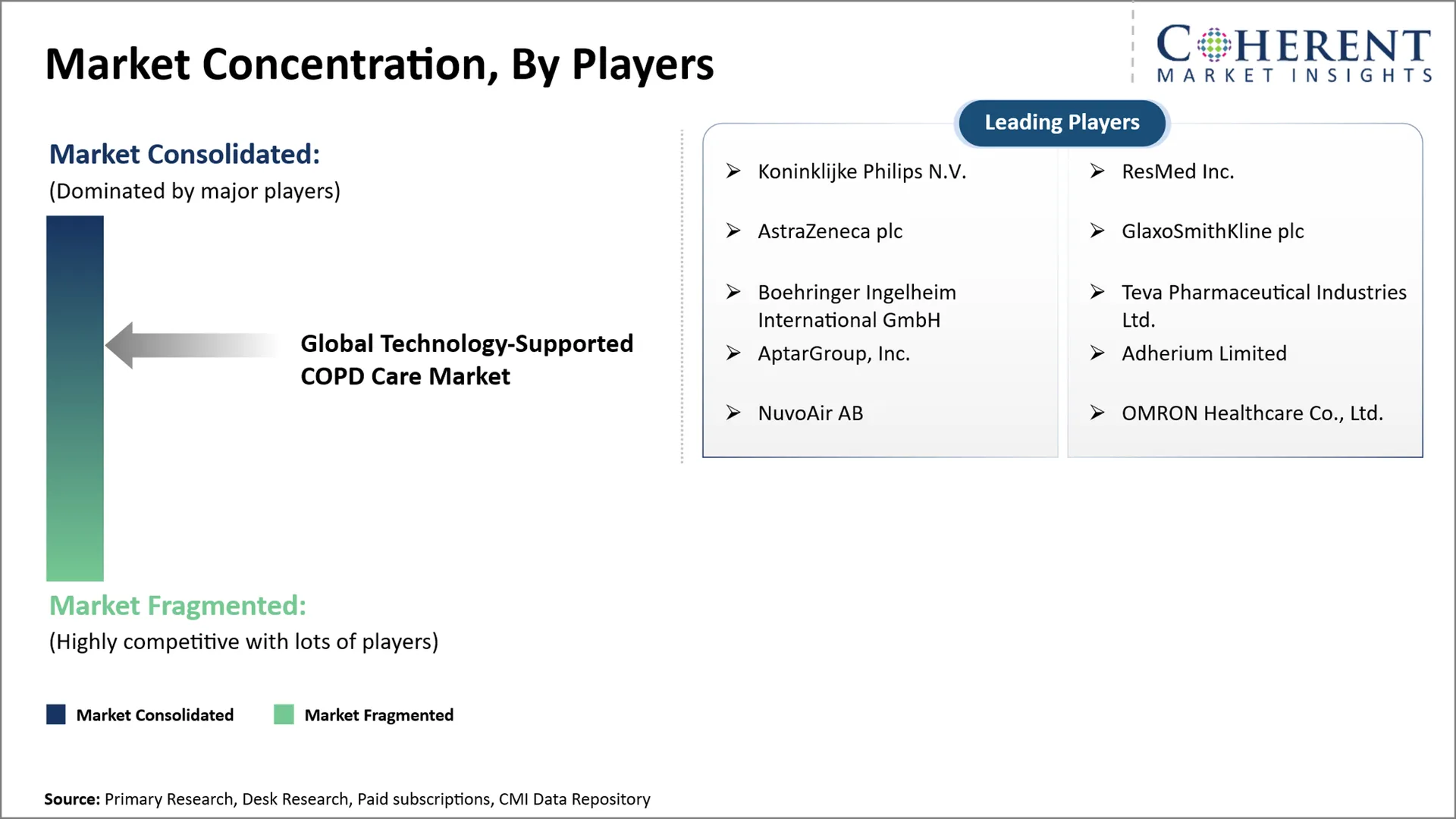
The global technology-supported COPD care market is fairly competitive. Competition is primarily centered around the development of enhanced remote patient monitoring, connected respiratory devices, digital COPD management platforms, telehealth, and artificial intelligence-enabled patient monitoring solutions. Major industry participants are extending their product portfolios to strengthen their respiratory care offerings across the COPD management continuum for symptom monitoring, exacerbation prediction, medication adherence, pulmonary rehabilitation, and home-based care.
Key focus areas include
- Development of connected respiratory devices and smart inhalers.
- AI integration for early COPD exacerbation prediction.
- Increase the availability of remote patient monitoring and telehealth solutions.
- Connection of online digital platforms to electronic health records (EHRs).
- Creation of a mobile app to track symptoms and support medication adherence.
- Strengthening data security and regulatory compliance.
Market Report Scope
Global Technology-Supported COPD Care Market Report Coverage | |||
Report Coverage | Details | ||
Base Year | 2025 | Market Size in 2026: | USD 1.12 Bn |
Historical Data For: | 2020 To 2024 | Forecast Period: | 2026 To 2033 |
Forecast Period 2026 To 2033 CAGR: | 7.8% | 2033 Value Projection: | USD 1.89 Bn |
Geographies covered: |
| ||
Segments covered: |
| ||
Companies covered: | Koninklijke Philips N.V., ResMed Inc., AstraZeneca plc, GlaxoSmithKline plc, Boehringer Ingelheim International GmbH, Teva Pharmaceutical Industries Ltd., AptarGroup, Inc., Adherium Limited, NuvoAir AB, OMRON Healthcare Co., Ltd. | ||
Growth Drivers: |
| ||
Restraints & Challenges: |
| ||
Analyst Opinion (Expert Opinion)
- In the coming years, global technology-supported COPD care market will evolve towards predictive, connected and home-based disease management – moving away from hospital-managed reactive care. AI in COPD exacerbation prediction, respiratory health monitoring, and digital disease management plans will be of critical importance. Future COPD care will be powered by platforms combining smart inhalers, remote monitoring and virtual consultation.
- Most significant opportunity will likely exist in using AI for exacerbation prediction and the tele-monitoring of COPD patients in India and China. Both countries have a huge number of COPD patients, a rapidly growing digital health ecosystem, and an increased need for affordable home-based respiratory care services. Applications which prevent deterioration, enable early diagnosis, and facilitate long-term disease management have the potential to fill huge gaps in COPD care.
- In order to gain a competitive advantage market players should focus on integrated Chronic Obstructive Pulmonary Disease (COPD) management platform comprising connected respiratory devices, artificial intelligence powered analytics, and telehealth solutions. Cost-effective and easy-to-use solutions with proven clinical validation and integrations will be key to market success. Additionally, collaborations with hospitals, healthcare providers, and insurers would help penetrate the market and generate revenues.
Speak to the analyst
Want personalized insights?
Take the findings above to one of our principal consultants, or have the report rebuilt around the segments, geographies and competitors you actually track.
Market Segmentation
- Component Insights (Revenue, USD Bn, 2021 - 2033)
- Hardware and Devices
- Software and Digital Platforms
- Services
- Technology Insights (Revenue, USD Bn, 2021 - 2033)
- Remote Patient Monitoring (RPM) Solutions
- Telehealth and Virtual Care Platforms
- Artificial Intelligence and Predictive Analytics
- Digital Therapeutics and Mobile Health Applications
- Connected Respiratory Devices
- Care Setting Insights (Revenue, USD Bn, 2021 - 2033)
- Home-Based Care
- Hospitals and Clinics
- Ambulatory Care Centers
- Application Insights (Revenue, USD Bn, 2021 - 2033)
- Symptom and Lung Function Monitoring
- Exacerbation Prediction and Prevention
- Medication Management and Adherence
- Pulmonary Rehabilitation
- Patient Education and Self-Management
- End User Insights (Revenue, USD Bn, 2021 - 2033)
- Patients
- Healthcare Providers
- Home Healthcare Providers
- Others
- Regional Insights (Revenue, USD Bn, 2021 - 2033)
- North America
- U.S.
- Canada
- Latin America
- Brazil
- Argentina
- Mexico
- Rest of Latin America
- Europe
- Germany
- U.K.
- Spain
- France
- Italy
- Russia
- Rest of Europe
- Asia Pacific
- China
- India
- Japan
- Australia
- South Korea
- ASEAN
- Rest of Asia Pacific
- Middle East
- GCC Countries
- Israel
- Rest of Middle East
- Africa
- South Africa
- North Africa
- Central Africa
- North America
- Key Players Insights
- Koninklijke Philips N.V.
- ResMed Inc.
- AstraZeneca plc
- GlaxoSmithKline plc
- Boehringer Ingelheim International GmbH
- Teva Pharmaceutical Industries Ltd.
- AptarGroup, Inc.
- Adherium Limited
- NuvoAir AB
- OMRON Healthcare Co., Ltd.
Sources
Primary Research Interviews
- Respiratory medicine specialists and pulmonologists
- Medical device and connected respiratory technology executives
- Digital health and remote patient monitoring experts
- Healthcare IT and clinical informatics professionals
Stakeholders
- Medical device and respiratory equipment manufacturers
- Digital health platform developers
- Remote patient monitoring solution providers
- Healthcare providers and hospital networks
- Home healthcare and pulmonary rehabilitation providers
- Pharmaceutical and smart inhaler manufacturers
- End-use Sectors
- Hospitals and Healthcare Systems
- Specialty Respiratory Clinics
- Home Healthcare and Remote Patient Monitoring
- Ambulatory Care Centers
- Regulatory & Health Bodies
- U.S. Food and Drug Administration (FDA)
- European Medicines Agency (EMA)
- Health Canada
- Central Drugs Standard Control Organisation (CDSCO)
Databases
- FDA 510(k) Premarket Notification Database
- FDA De Novo Database
- FDA Premarket Approval (PMA) Database
- ClinicalTrials.gov
Associations
- American Thoracic Society (ATS)
- European Respiratory Society (ERS)
- Global Initiative for Chronic Obstructive Lung Disease (GOLD)
- American Association for Respiratory Care (AARC)
Public Domain Sources
- World Health Organization (WHO)
- Centers for Disease Control and Prevention (CDC)
- National Heart, Lung, and Blood Institute (NHLBI)
- Centers for Medicare & Medicaid Services (CMS)
Proprietary Elements
- CMI Data Analytics Tool
- Proprietary CMI Existing Repository of information for last 10 years.
Get access to 250+ pages report
Every segment, forecast, competitor profile and data table behind the analysis above — available for instant download.
- ESOMAR Member
- ISO 9001:2015 Certified
- D-U-N-S Registered
- GDPR & CCPA Compliant
Frequently Asked Questions
The global technology-supported COPD care market is estimated to be valued at USD 1.12 Bn in 2026 and is expected to reach USD 1.89 Bn by 2033.
Software and digital platforms dominate due to the integration of patient data, digital disease management and remote monitoring.
Technology-supported COPD care includes the use of connected devices, digital health platforms, telehealth and solutions based on artificial intelligence to support monitoring and management of COPD.
The CAGR of global technology-supported COPD care market is projected to be 7.8% from 2026 to 2033.
Rising COPD prevalence and demand for continuous respiratory monitoring, and increasing adoption of telehealth and remote patient monitoring are the major factors driving the growth of the global technology-supported COPD care market.
High costs of connected devices and digital healthcare platforms, and data privacy and interoperability concerns are the major factors hampering the growth of the global technology-supported COPD care market.
In terms of technology, remote patient monitoring (RPM) solutions are estimated to dominate the market revenue share in 2026.