

Global Trihexyphenidyl Market Size and Forecast – 2026 to 2033
The Global Trihexyphenidyl Market is estimated to be valued at USD 220.4 Mn in 2026 and is expected to reach USD 304.0 Mn by 2033, exhibiting a compound annual growth rate (CAGR) of 4.7% from 2026 to 2033. This steady growth reflects increasing demand driven by the rising prevalence of Parkinson’s disease and other neurological disorders globally, coupled with expanding healthcare infrastructure and improved access to essential medications.
Key Takeaways of the Global Trihexyphenidyl Market
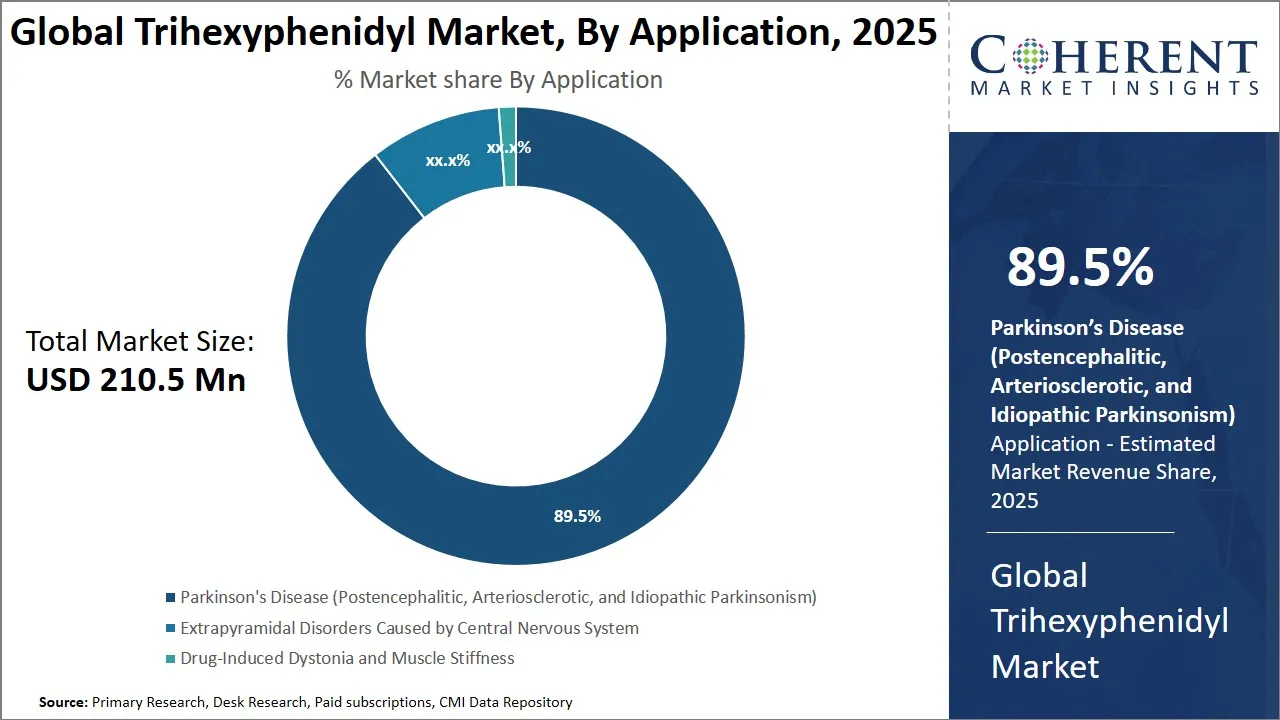
- In 2026, Parkinson’s Disease (Postencephalitic, Arteriosclerotic, and Idiopathic Parkinsonism) is expected to account for the largest share of the global trihexyphenidyl market, contributing 90.5%.
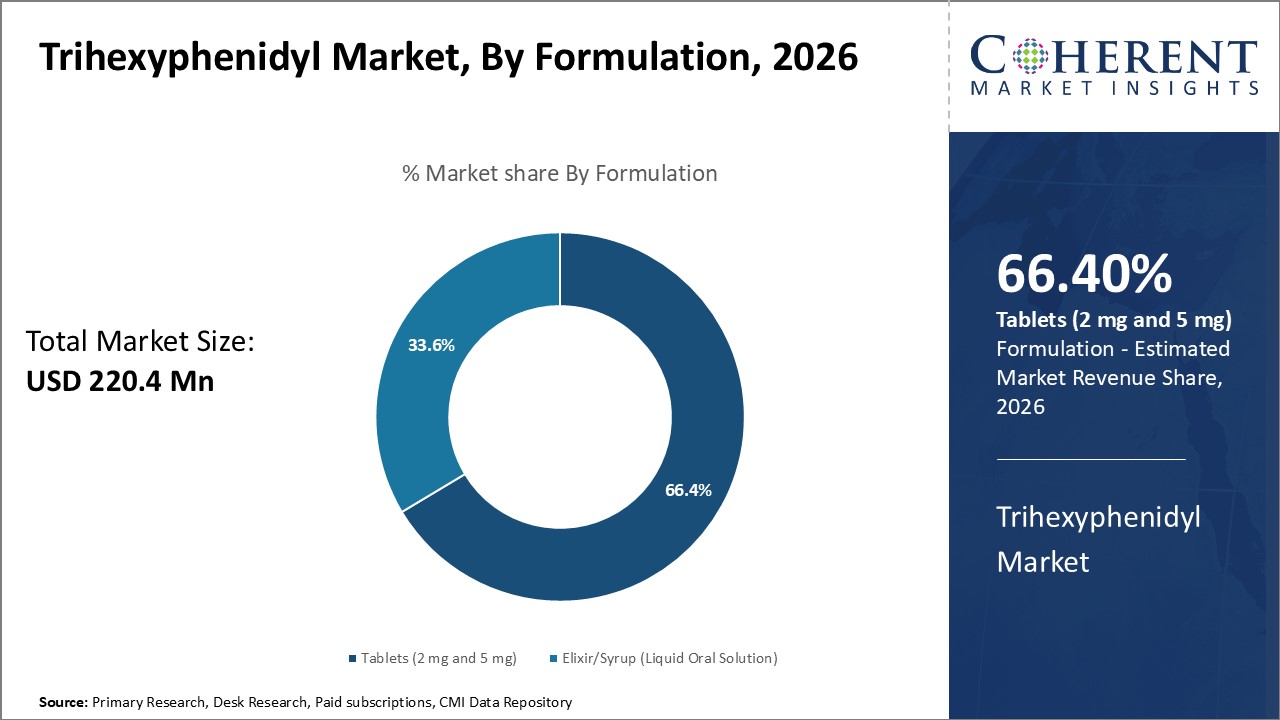
- Based on formulation, the tablets (2 mg and 5 mg) segment is expected to dominate the market, holding 66.4 % of the market share in 2026.
- In terms of type, the generic segment is projected to lead the market, holding a share of 81.5 % in 2026.
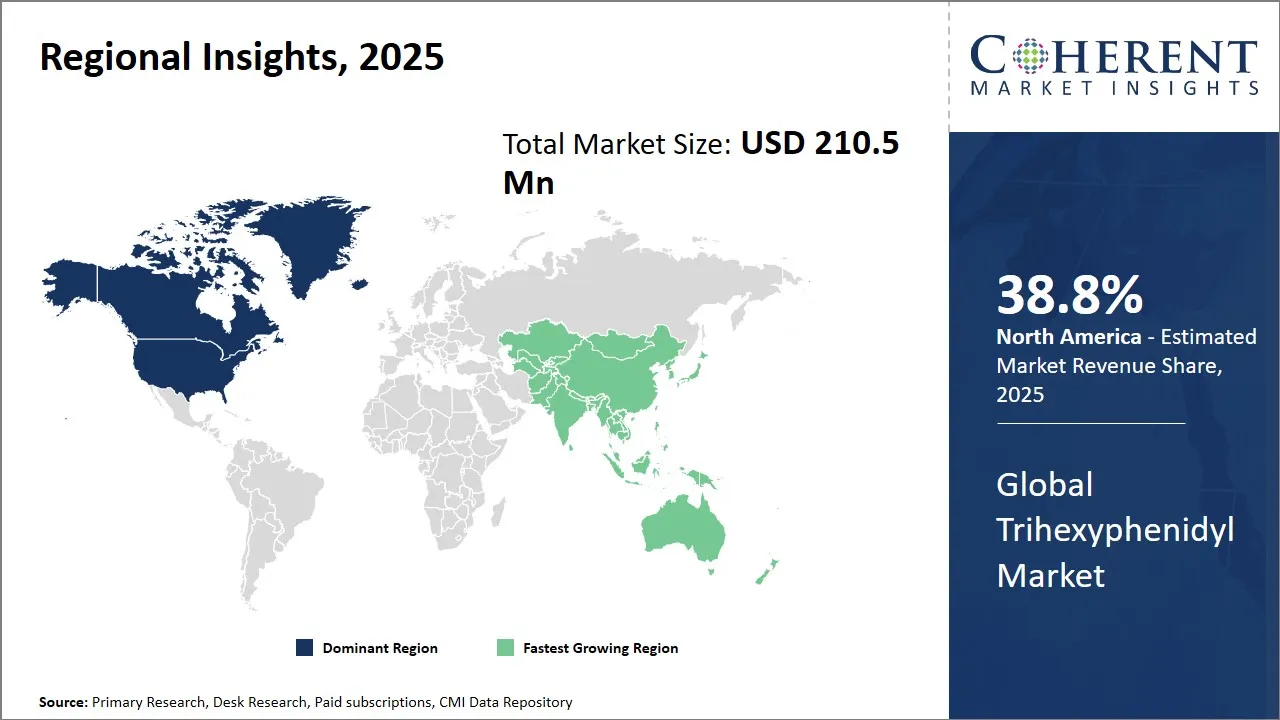
- North America is expected to lead the market, holding a share of 38.8 % in 2026. Asia Pacific is anticipated to be the fastest-growing region, with a market share of 24.5% in 2026.
Market Overview
Market trends indicate a growing preference for personalized treatment approaches and the development of newer formulations to enhance patient compliance and minimize side effects. Additionally, the integration of digital health technologies to monitor treatment outcomes and the rising awareness about early diagnosis are propelling market growth. Increasing investments in research and development by pharmaceutical companies to innovate and address unmet medical needs further underscore the positive trajectory of the Trihexyphenidyl market.
Current Events and Its Impact
Current Events | Description and its Impact |
Increased Generic Competition in Emerging Markets |
|
Patent Expiry of Key Brand-Name Formulations |
|
Segmental Insights
- Current Industry Events of 2026
- Market Size Estimation
- Regional Breakdown
- Competitive Landscape
- Customer Intelligence
- Segmental Analysis
- Pricing Analysis
- Key Market Drivers, Challenges & Future Trends
- Customized Insights Section
Trihexyphenidyl Market Insights, By Application - Dominance of Parkinson’s Disease Application is Driven by its Increasing Prevalence and Complex Therapeutic Needs
Parkinson’s Disease (Postencephalitic, Arteriosclerotic, and Idiopathic Parkinsonism) is the dominant application, and it is expected to contribute the most significant share of the Trihexyphenidyl Market, accounting for 90.5% in 2026. This growth is driven by the increased incidence of Parkinson’s disease around the world and its complicated therapeutic requirements to manage the disease.
Parkinson's disease is a slowly progressive neurodegenerative disorder that mainly exhibits motor symptoms like tremors, stiffness, and slowness of movement. The various causes of Parkinson's disease are grouped into three categories: postencephalitic, arteriosclerotic, and idiopathic parkinsonism, resulting in a large patient population that requires long-term drug treatment.
Trihexyphenidyl Market Insights, By Formulation - Predominance of Tablet Formulation is Fueled by Patient Convenience and Established Dosage Preferences
In terms of formulation, tablets (2 mg and 5 mg) hold the largest share in the global trihexyphenidyl market with an estimated share of 66.4% in 2026. This growth is primarily driven by factors such as ease of administration, precise dosing, and patient adherence considerations. The convenience of onscreen tablet formulations are highly appreciated by both the patients and healthcare professionals due to their ability to be carried, stored, and dispensed in a standard way, making the variations in the therapeutic results less likely.
The existence of trihexyphenidyl in 2 mg and 5 mg tablets meets the requirement for adjustable dose titration, which is a typical need in treating Parkinson's disease and other extrapyramidal disorders. Patients generally begin with lower strengths which are then gradually increased depending on the response and tolerance, and the tablet strengths perfectly fit such clinical protocols.
Trihexyphenidyl Market Insights, By Type - Generic Trihexyphenidyl Leads Market Share Backed by Cost-Effectiveness and Expanding Access
The Global Trihexyphenidyl Market is mostly controlled by the generic segment when categorized by type, which is expected to hold 81.5% of the market share in 2026. This is mainly because generics are cheaper and have widespread use among different income groups through patient access. The prolonged use of trihexyphenidyl can potentially lead to a significant financial burden for the patient.
The presence of generic trihexyphenidyl is rising and it is slowly dismantling the issue of high-priced treatments in the market, especially raising and sensitive regions where the price of the drug is a direct cause for lack of usage and poor health outcomes. For Example, Taj Pharma is a leading manufacturer and exporter of Trihexyphenidyl Hydrochloride Tablets 5mg, The medication is primarily used to treat Parkinson’s disease and extrapyramidal symptoms (EPS), providing relief by reducing muscle stiffness and improving movement control.
Regional Insights
North America Trihexyphenidyl Market Analysis and Trends
The share of North America in the global trihexyphenidyl market is expected to be 38.8% in 2026. The dominance can be attributed to the region having a strong healthcare system and a pharmaceutical ecosystem. One of the reasons that the region is anticipating the demand for trihexyphenidyl as the main drug is the continuous research being carried out in the fields of neurology and Parkinson's disease, which is supported by both the government and the private sector. Regulatory measures such as the quicker approval procedure of U.S. FDA lets the companies launch their innovative drug formulations faster than ever in the market.
For example, Alkem Laboratories is involved in the production of trihexyphenidyl tablets, contributing to the generic pharmaceutical market. Its products are aimed at providing affordable treatment options for Parkinson's disease and related disorders. Alkem's global presence supports the widespread distribution of its medications.
Asia Pacific Trihexyphenidyl Market Analysis and Trends
Asia Pacific is the fastest-growing region for the Trihexyphenidyl market, and it is expected to account for 24.5% of the market share in 2026. Several factors are driving market growth including rapid urbanization, the increasing number of Parkinson's patients because of the aging population, and better access to healthcare. The government and private sectors in India, China, and Japan have raised healthcare spending as well as taken steps to promote local pharmaceutical production which, in turn, has made the supply chain stronger.
For example, Lifecare Neuro Products in India offers trihexyphenidyl hydrochloride tablets in 2 mg and 5 mg strengths, branded as Epsinil. Its products are designed to manage symptoms of Parkinson's disease and related movement disorders. Lifecare Neuro emphasizes quality and precision in its manufacturing process.
Global Trihexyphenidyl Market Outlook for Key Countries
U.S. Trihexyphenidyl Market Trends
The trihexyphenidyl market in the U.S. is a key player mainly because of the availability of a highly developed healthcare sector and the fact that there is constant investment in neurological disorder treatment. The operation of pharmaceutical giants, such as Pfizer and Mylan, in this market area encourages the ready availability of the product. The U.S. regulatory framework is more focused on encouraging the innovation of drug formulations and delivery methods, which eventually results in the introduction of improved varieties of trihexyphenidyl. The same applies to long-term insurance coverage and increased awareness among physicians, both of which are key factors driving continued market growth.
For example, PAI Pharma is a leading U.S.-based pharmaceutical company specializing in generic oral liquid medications. With a focus on high-quality, affordable solutions, the company offers a wide range of products, including Trihexyphenidyl, a key medication for treating Parkinson's disease and drug-induced movement disorders.
Germany Trihexyphenidyl Market Trends
Germany's trihexyphenidyl market is subject to heavy regulation, and consequently, only products with the highest quality and efficacy can enter the market, and the same goes for trihexyphenidyl. The existence of large international pharma companies like Bayer and STADA Arzneimittel is a great advantage for product innovation and distribution. The German government's initiatives to cater to the elderly population and the country's solid health policies create a demand for the product that is not going to fluctuate easily.
For example, Midas Pharma GmbH, headquartered in Ingelheim, Germany, offers Trihexyphenidyl Hydrochloride as part of its drug substance portfolio. This active pharmaceutical ingredient (API) belongs to the group of muscarinic receptor antagonists, primarily used for the treatment of Parkinson's disease, particularly to manage tremors.
India Trihexyphenidyl Market Trends
The trihexyphenidyl market in India, which is a major pharmaceutical product for neurological disorders, is experiencing growth due to the increased accessibility of healthcare and the rising of public knowledge about neurological conditions. Price controls and drug distribution to rural areas through government schemes are the main drivers of this segment's growth. India is considered an emerging market and this is due to its low-cost production environments and being active in international pharmaceutical trade.
For example, Sun Pharma manufactures trihexyphenidyl tablets under the brand name, Parkitane. These tablets are used to treat symptoms of Parkinson's disease and drug-induced extrapyramidal disorders. Sun Pharma's extensive distribution network ensures broad availability of this medication.
Japan Trihexyphenidyl Market Trends
Japan is still at the forefront of pharmaceutical innovation, directing its efforts towards patient care in the Parkinson's disease area for advanced drug therapies. The involvement of pharmaceutical giants such as Takeda Pharmaceutical is essential for the production and marketing of trihexyphenidyl products that fit the user's requirements. The combination of Japan's strict regulations and the large investment in R&D plus government grants for aged care medicines keeps the market demand steady. The country is gaining the advantage of having good health care systems that are able to give early diagnosis and treatment.
For example, Daiichi Sankyo, a major player in the Japanese trihexyphenidyl market, manufactures and distributes a variety of drugs for central nervous system disorders, including trihexyphenidyl. The company’s commitment to research and development ensures continuous improvements in patient outcomes.
End User Feedback and Unmet Needs – Trihexyphenidyl Market
- Trihexyphenidyl users, mainly those treating their Parkinson's disease, always point out that the drug is quite effective in managing motor symptoms like tremors and muscle stiffness. Patients taking the 2mg and 5mg tablet forms observe very good changes in their daily activities resulting in improved quality of life. To illustrate, patients in geriatric care centers usually share their happy experiences with the drug's ability to reduce their mobility-related problems. Side effects, however, such as dizziness, blurred vision, and dry mouth keep on being major issues for concern, especially among the elder population and those with co-morbid conditions. These adverse effects can reduce the drug's usability and lead to poor patient compliance, particularly when the patient is taking several medications.
- Despite the benefits, the market faces unmet needs, such as the lack of alternative forms like extended-release tablets or liquids for easier administration and better dosage control. The high cost of Trihexyphenidyl also limits accessibility in economically challenged areas. If manufacturers develop more affordable and adaptable formulations while addressing side effects, they could enhance customer loyalty, expand market reach, and drive innovation in treatment options.
Market Players, Company Insights, and Competitive Intelligence
Company Insights
- Teva Pharmaceuticals USA Inc., a global leader in generic and specialty medicines, provides Trihexyphenidyl Hydrochloride Tablets, USP, an antiparkinsonian therapy equivalent to Artane. The company offers the drug in 2 mg and 5 mg tablet strengths, formulated for the management of Parkinson’s disease and drug-induced extrapyramidal symptoms. With an AA therapeutic equivalence rating, Teva ensures high-quality, affordable neurological treatments.
- Actiza Pharmaceutical Pvt. Ltd., a renowned pharmaceutical manufacturer, provides Trihexyphenidyl HCl Tablets to support the management of Parkinson’s disease and movement-related disorders. Available in 2 mg and 5 mg strengths, these tablets help alleviate muscle tension, tremors, and stiffness by blocking acetylcholine, a neurotransmitter involved in muscle movement.
- Pacitane by Pfizer (licensed from Wyeth Holdings LLC) is a treatment for Parkinson’s disease and drug-induced extrapyramidal disorders. Available in 2 mg tablets, it is used alongside Levodopa to control muscle rigidity and tremors. Manufactured in Goa, India, Pacitane helps manage Parkinson’s symptoms with a dosage of 6–10 mg daily, adjusted based on patient response. It comes in blister packs of 30 tablets and requires careful monitoring for side effects like Neuroleptic Malignant Syndrome and changes in intraocular pressure.
- ANI Pharmaceuticals, Inc. offers Trihexyphenidyl Hydrochloride Tablets, USP in 2 mg and 5 mg strengths. These tablets are used to manage Parkinson's disease and drug-induced movement disorders. Available in 100 and 1,000 tablet bottles, they are white, round, flat-faced, and debossed with "212/N" for 2 mg and "211/N" for 5 mg. Manufactured by ANI Pharmaceuticals, these tablets provide an effective solution for muscle rigidity and tremors associated with Parkinson's.
Top Strategies Followed by Global Trihexyphenidyl Market Players
- Top companies have a large portion of their investments going into R&D to ensure that they are always the first to bring an innovative product to the market and at the same time being able to produce and sell their new high-performance trihexyphenidyl formulations that meet the changing patient and regulatory standards. The new drugs resulted from their R&D not only have increased efficacy and safety but also offer new routes for delivering the drug which ultimately leads to better patient adherence to the treatment.
- Companies like Teva Pharmaceuticals and ANI Pharmaceuticals are key players in the trihexyphenidyl market, investing heavily in R&D to develop high-performance formulations. For instance, Teva has developed Trihexyphenidyl Hydrochloride Tablets with a focus on enhancing drug delivery methods.
- The mid-level players in the trihexyphenidyl market have their own unique way of working in a matter of balancing the cost and quality to attract the price-sensitive consumers and mainly in the developing market where affordability is the main factor in making a purchase. The firms are mainly engaged in providing less expensive but effective therapeutic options and also presenting themselves as value-based companies that are providing alternatives to the high-priced products by top companies.
- Mid-level players like Sandoz (a division of Novartis) and Dr. Reddy's Laboratories provide affordable alternatives to premium products. They focus on producing high-quality generic versions of trihexyphenidyl, balancing cost efficiency with maintaining therapeutic efficacy, and targeting emerging markets where pricing is a critical factor.
- Small players in the global trihexyphenidyl market focus on unique features and production of products tailored to specific patient populations or therapeutic applications. The companies apply modern technology, like digital formulations and new excipients, to make their products and improve the clinical outcomes.
- Small-scale players such as Hetero Drugs and Torrent Pharmaceuticals focus on specialized formulations and innovative drug delivery systems for specific patient populations. These companies invest in targeted therapies for conditions like Parkinson’s, offering tailored solutions for niche markets that larger companies may overlook.
Market Report Scope
Trihexyphenidyl Market Report Coverage
| Report Coverage | Details | ||
|---|---|---|---|
| Base Year: | 2025 | Market Size in 2026: | USD 220.4 Mn |
| Historical Data for: | 2020 To 2024 | Forecast Period: | 2026 To 2033 |
| Forecast Period 2026 to 2033 CAGR: | 4.7% | 2033 Value Projection: | USD 304.0 Mn |
| Geographies covered: |
| ||
| Segments covered: |
| ||
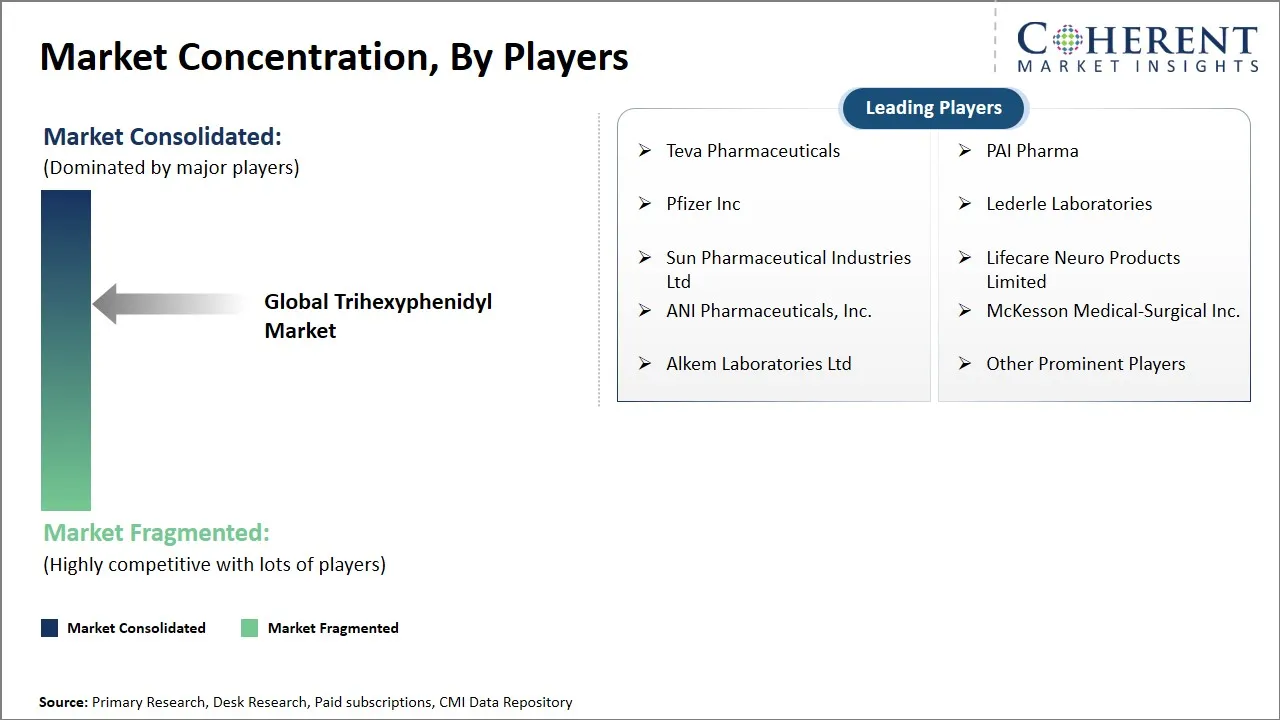
| Companies covered: | Teva Pharmaceuticals, PAI Pharma, Pfizer Inc, Lederle Laboratories, Sun Pharmaceutical Industries Ltd, Lifecare Neuro Products Limited, ANI Pharmaceuticals, Inc., McKesson Medical-Surgical Inc., Alkem Laboratories Ltd, and Other Prominent Players | ||
| Growth Drivers: |
| ||
| Restraints & Challenges: |
| ||
Trihexyphenidyl Market Dynamics
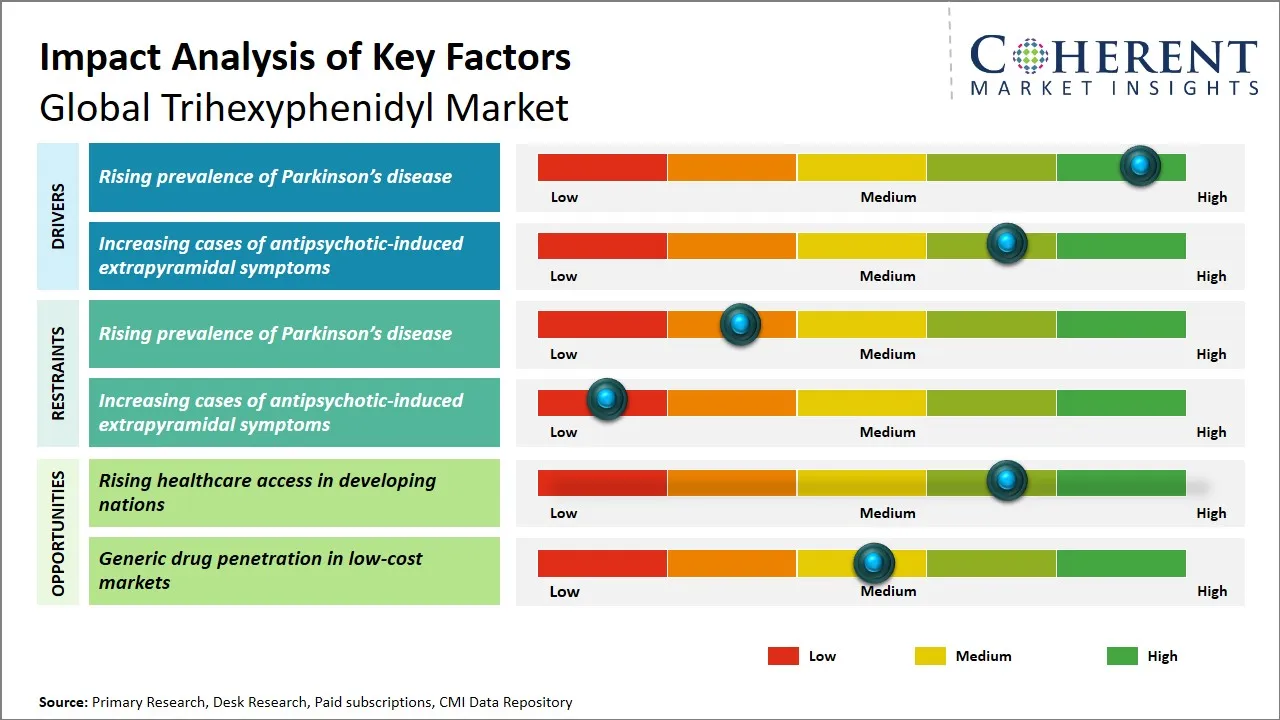
Trihexyphenidyl Market Driver - Rising Prevalence of Parkinson’s Disease
The trihexyphenidyl demand is strongly influenced by the global increase of Parkinson’s disease which is one of the main diseases trihexyphenidyl is usually prescribed for and that beautifully cures the symptoms associated with this disorder. Parkinson's disease, a neurodegenerative disorder, has a growing number of cases all around the world mainly due to the aging of the population and the modern way of diagnosing. With the increase in Parkinson's patients, the need for effective symptomatic treatment grows, thus making trihexyphenidyl a crucial drug in the motor symptoms alleviating therapeutic regimens.
For instance, in June 2022, the World Health Organization (WHO), a leading global health agency headquartered in Geneva, released its technical brief “Parkinson Disease: A Public Health Approach.” The report highlights that the number of people living with Parkinson’s disease has doubled in the past 25 years, reaching 8.5 million globally in 2019. It underscores the sharp rise in disability and deaths linked to the disorder and the widening treatment gap, particularly in low- and middle-income countries where access to neurologists remains limited.
Trihexyphenidyl Market Opportunity - Rising Healthcare Access in Developing Nations
The global trihexyphenidyl market is poised for significant growth, driven by advancements in healthcare infrastructure and the increasing accessibility in developing countries. Several nations within the Asia Pacific, Latin America, and Africa region are getting therapy services world class that are made possible by government backing, foreign investment, and working with the private sector. This improvement in medical care gives a chance to proper neurology disorder diagnosis and treatment where Trihexyphenidyl is the major drug used such as in Parkinson’s disease and drug-related extrapyramidal symptoms. Not only that, but also the medical community that is aware of the movement disorders and the patients wanting such treatments are the factors helping demand rise for pharmacological treatments that are effective.
For example, companies such as Sun Pharmaceutical Industries and Dr. Reddy’s Laboratories are expanding their neurology portfolios in India and Southeast Asia, improving access to affordable trihexyphenidyl formulations. Cipla Limited has strengthened medicine distribution through public health programs in Africa, while Teva Pharmaceuticals and Mylan are broadening generic drug availability across Latin America. These efforts reflect how better healthcare infrastructure and regional partnerships are fueling growth in the trihexyphenidyl market.
Analyst Opinion (Expert Opinion)
- The Trihexyphenidyl Market is growing at a slow but steady pace due to the increase in incidence of cases of Parkinson's disease and dystonia which are the main drivers behind the demand for affordable neurological treatments. It’s being included in essential medicines list of many countries and the public availability of low-cost generics have allowed the drug to penetrate even more new markets. However, the market still has to deal with some challenges like regulatory issues, limited supply, and side effects which have raised concerns among patients, but on the other hand, the new studies on optimized formulations and extended-release versions might turn out to be the differentiating factors that result in higher patient satisfaction.
- Among the most important industry meetings like the Movement Disorder Society Congress, the World Congress on Parkinson's Disease, and the International Conference on Neurology have had a decisive influence in the establishment of the therapeutic norms and in the development of partnerships between the industry and academia through their support for the latter. Alongside these, government-led health initiatives in Asia Pacific and Latin America and WHO-backed medicine-access programs are improving affordability and treatment coverage, signaling a positive long-term outlook for the trihexyphenidyl market.
Speak to the analyst
Want personalized insights?
Take the findings above to one of our principal consultants, or have the report rebuilt around the segments, geographies and competitors you actually track.
Market Segmentation
- Application Insights (Revenue, USD Mn, 2021 - 2033)
- Parkinson’s Disease (Postencephalitic, Arteriosclerotic, and Idiopathic Parkinsonism)
- Extrapyramidal Disorders Caused by Central Nervous System
- Drug-Induced Dystonia and Muscle Stiffness
- Formulation Insights (Revenue, USD Mn, 2021 - 2033)
- Tablets (2 mg and 5 mg)
- Elixir/Syrup (Liquid Oral Solution)
- Type Insights (Revenue, USD Mn, 2021 - 2033)
- Generic
- Brand
- Age Group Insights (Revenue, USD Mn, 2021 - 2033)
- Pediatric
- Adults
- Geriatric
- Distribution Channel Insights (Revenue, USD Mn, 2021 - 2033)
- Hospital Pharmacies
- Retail Pharmacies
- Online Pharmacies
- End User Insights (Revenue, USD Mn, 2021 - 2033)
- Hospitals
- Neurology Clinics
- Rehabilitation Centers
- Homecare Settings
- Others (e.g., Long-Term Care Facilities)
- Regional Insights (Revenue, USD Mn, 2021 - 2033)
- North America
- U.S.
- Canada
- Latin America
- Brazil
- Argentina
- Mexico
- Rest of Latin America
- Europe
- Germany
- U.K.
- Spain
- France
- Italy
- Russia
- Rest of Europe
- Asia Pacific
- China
- India
- Japan
- Australia
- South Korea
- ASEAN
- Rest of Asia Pacific
- Middle East
- GCC Countries
- Israel
- Rest of Middle East
- Africa
- South Africa
- North Africa
- Central Africa
- North America
- Key Players Insights
- Teva Pharmaceuticals
- PAI Pharma
- Pfizer Inc
- Lederle Laboratories
- Sun Pharmaceutical Industries Ltd
- Lifecare Neuro Products Limited
- ANI Pharmaceuticals, Inc.
- McKesson Medical-Surgical Inc.
- Alkem Laboratories Ltd
- Other Prominent Players
Sources
Primary Research Interviews
- Industry Stakeholders
- API suppliers for anticholinergic drugs
- Finished-dosage form manufacturers of trihexyphenidyl
- End Users
- Hospital pharmacy directors (neurology/movement disorders)
- Outpatient neurology clinic procurement leads
- National health-system drug-formulary decision-makers
- Generic drug distribution/wholesale procurement managers
Government & International Databases
- World Health Organization Datasets (Disease Prevalence, Essential Medicines)
- U.S. Food & Drug Administration Drug Approval/Licensing Data
- European Medicines Agency Authorizations Database
- World Bank/WHO Global Health Observatory Demographic and Ageing Data
- National health-authority registries (Australia, Canada, Japan, etc.)
- National Institutes of Health Public Clinical/Epidemiology Databases
Trade Publications
- Pharmaceutical manufacturing and API-supply magazines
- Generic-drugs market newsletters
- Supply-chain/API-disruption bulletins
- Regulatory-watch newsletters for neurology/anticholinergics
- Global generics-pricing reports in pharmaceutical trade journals
- Pharma industry supply-chain commentary in trade magazines
Academic Journals
- Pharmacology journals covering trihexyphenidyl
- Epidemiology journals on Parkinson’s disease treatment trends
- Movement-disorder drug-burden research papers
- Health-economics/epidemiology journals on neurology disorders
- Pharmaceutical-process/manufacturing engineering journals
- Research papers on global usage/off-label uses of anticholinergics
Reputable Newspapers & Media
- The New York Times – drug-shortage/pricing articles
- Financial Times – pharma-generics supply-chain coverage
- The Guardian – ageing‐population/neurology health pieces
- Bloomberg – generics-market and pharma-strategy coverage
- Reuters Health – regulatory/market news on neurology drugs
- Major global business/health-section newspapers
Industry Associations
- International Parkinson and Movement Disorder Society
- Parkinson’s Foundation
- International Generic and Biosimilar Medicines Association
- International Society for Pharmaceutical Engineering
- International Federation of Pharmaceutical Manufacturers & Associations
- Global Alzheimer’s & Parkinson’s Platform (or equivalent neurology-coalition)
Public Domain Resources
- WHO fact-sheets on Parkinson’s disease
- Open-access drug profiles (e.g., public domain drug information books)
- DrugBank/PubChem open-access drug entries
- Government-published drug-label PDFs and approval documents
- Open-access datasets on Parkinson’s incidence/prevalence
- National drug-usage statistics published by government health agencies
Proprietary Elements
- CMI Data Analytics Tool: Proprietary analytics tool to analyze real-time market trends, consumer behavior, and technology adoption in market
- Proprietary CMI Existing Repository of Information for Last 8 Years
Get access to 250+ pages report
Every segment, forecast, competitor profile and data table behind the analysis above — available for instant download.
- ESOMAR Member
- ISO 9001:2015 Certified
- D-U-N-S Registered
- GDPR & CCPA Compliant
Missing comfort of reading report in your local language? Find your preferred language:
Transform your Strategy with Exclusive Trending Reports
Frequently Asked Questions
The global trihexyphenidyl market is estimated to be valued at USD 220.4 Mn in 2026 and is expected to reach USD 304.0 Mn by 2033.
The CAGR of global trihexyphenidyl market is projected to be 4.7% from 2026 to 2033.
Rising prevalence of Parkinson’s disease and increasing cases of antipsychotic-induced extrapyramidal symptoms are the major factors driving the growth of the global trihexyphenidyl market.
Rising prevalence of Parkinson’s disease and increasing cases of antipsychotic-induced extrapyramidal symptoms are the major factors hampering the growth of the global trihexyphenidyl market.
In terms of application, Parkinson’s Disease (Postencephalitic, Arteriosclerotic, and Idiopathic Parkinsonism) is estimated to dominate the market revenue share in 2026.
Teva Pharmaceuticals, PAI Pharma, Pfizer Inc, Lederle Laboratories, Sun Pharmaceutical Industries Ltd, Lifecare Neuro Products Limited, ANI Pharmaceuticals, Inc., McKesson Medical-Surgical Inc., Alkem Laboratories Ltd, and other prominent players are the major players.
Trihexyphenidyl is primarily used to treat Parkinson’s disease and extrapyramidal symptoms caused by certain medications.