

Anxiety Disorders And Depression Treatments Market Size and Forecast – 2026 to 2033
The Anxiety Disorders And Depression Treatments Market is anticipated to grow at a CAGR of 7.2% with USD 22.7 Bn share in 2026 and is expected to reach USD 33.6 Bn in 2033. The rising prevalence of anxiety and depression, broader access to behavioral healthcare, increased use of antidepressants and anxiolytics, and advances in digital therapeutics are driving market growth. According to the WHO, approximately 4.4% of the global population currently lives with an anxiety disorder. (Source: WHO)
Key Takeaways
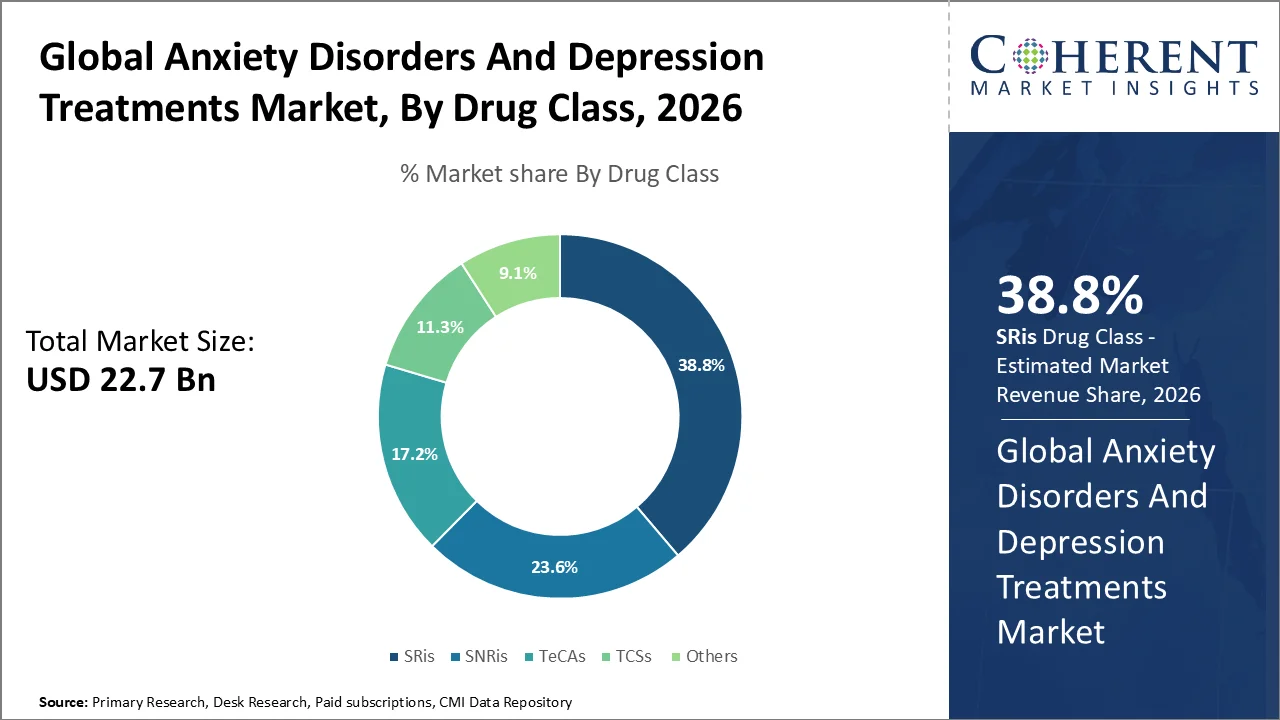
- SRis hold the largest market share of 38.8% in 2026 owing to its rising prevalence of depression. Approximately 5.7% of adults worldwide experience depression.
- Pharmacy stores expected to hold largest market share of 52.7% in 2026 owing to the growing demand for prescription medications. In September 2025, Cadila Pharmaceuticals launched Nu Nutridac, a clinically proven nutritional supplement designed to support patients with neurodegenerative and anxiety-related disorders.
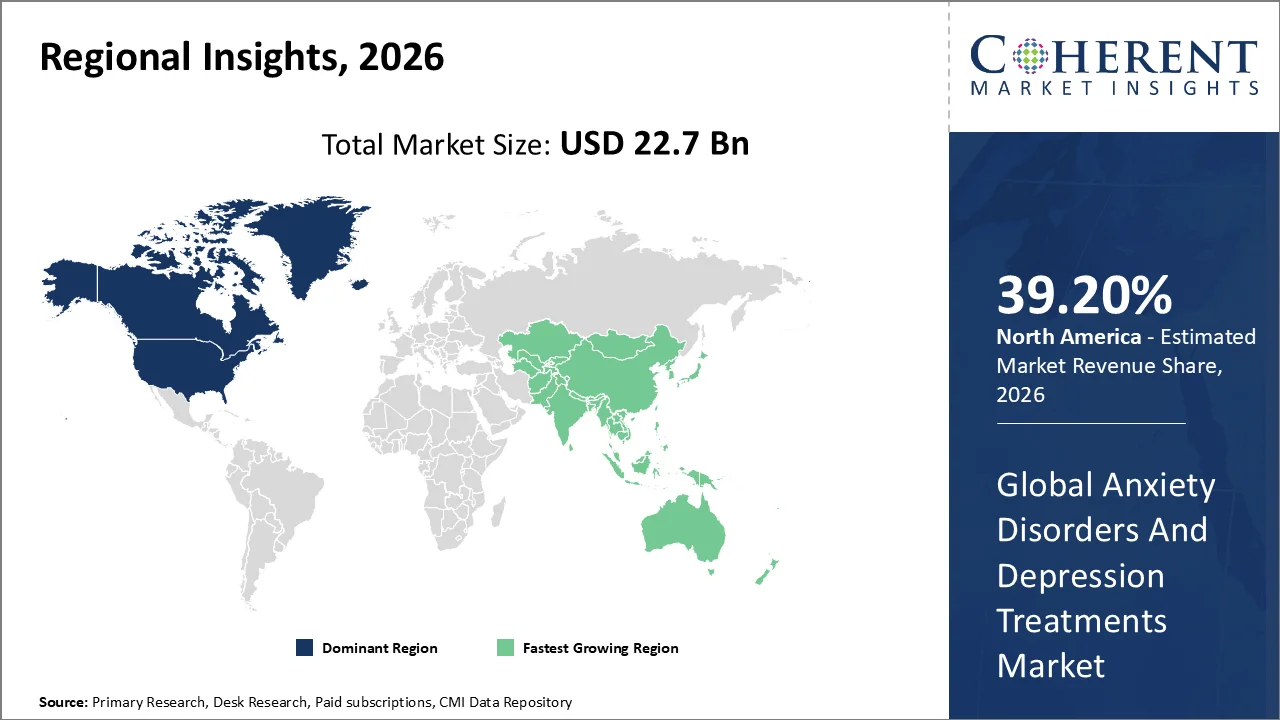
- North America is expected to acquire the dominant share of 39.2% in 2026 owing to the large unmet treatment need. Approximately 19.1% of U.S. adults experience an anxiety disorder each year.
Current Events and Their Impact on the Anxiety Disorders And Depression Treatments Market
Current Event | Description and its Impact |
U.S. Mental Health Parity Final Rule — Implementation Beginning in 2025 |
|
U.S. CMS Behavioral Health Strategy — 2026 |
|
Segmental Insights
- Current Industry Events of 2026
- Market Size Estimation
- Regional Breakdown
- Competitive Landscape
- Customer Intelligence
- Segmental Analysis
- Pricing Analysis
- Key Market Drivers, Challenges & Future Trends
- Customized Insights Section
Why is SRis Acquiring the Largest Market Share?
SRis hold the largest market share of 38.8% in 2026. The SRI segment in the anxiety disorders and Depression Treatments Market benefits from the rising prevalence of depression and anxiety disorders, increasing diagnosis and treatment-seeking, and widespread clinical adoption of SSRIs and SNRIs. Physicians prescribe these therapies to manage both depressive and anxiety symptoms, supported by their established safety profiles and extensive clinical familiarity. Generic availability also improves accessibility and affordability. Growing mental-health awareness, expanding healthcare access, and increasing demand for effective pharmacological therapies further drive segment growth.
Which Distribution Channel segment dominates the market?
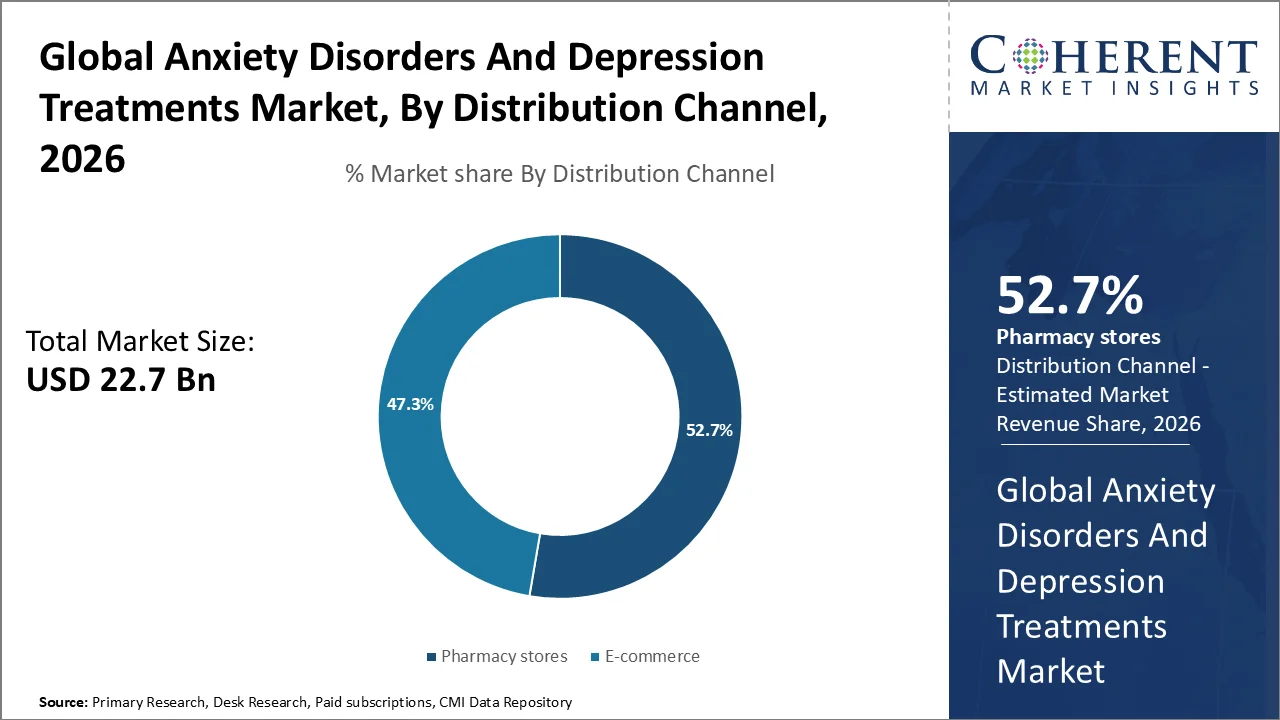
Pharmacy stores expected to hold largest market share of 52.7% in 2026. Pharmacy stores drive growth in the Anxiety Disorders and Depression Treatments Market by meeting rising demand for prescription medications, providing convenient community-based healthcare, and supporting regular medication refills. Pharmacists improve treatment outcomes through medication counseling, adherence monitoring, screening, and patient education. Expanding pharmacy networks, wider availability of generic antidepressants, and stronger integration with mental-health services further enhance this distribution channel. In February 2026, Lupin Limited, through its U.S. subsidiary Lupin Pharmaceuticals, Inc., launched Duloxetine 40 mg Delayed-Release Capsules, the first and only generic duloxetine product available in the 40 mg strength. The prescription medication is indicated for major depressive disorder (MDD) and generalized anxiety disorder (GAD).
Anxiety Disorders And Depression Treatments Market Trends
- Expansion of personalized and patient-centered treatment approaches is enabling healthcare providers to tailor treatment according to patients' symptoms, preferences, medical conditions, and treatment responses. WHO's 2023 Mental Health Gap Action Programme (mhGAP) guideline included 30 updated and 18 new recommendations, including new recommendations specifically addressing anxiety disorders, reinforcing the use of evidence-based and condition-specific treatment approaches.
- High global prevalence of anxiety and depression continues to support substantial treatment demand. WHO estimates that 359 million people worldwide had an anxiety disorder in 2021, while approximately 332 million people currently live with depression. Anxiety disorders are the world's most common mental disorders, while depression remains one of the leading mental-health conditions globally.
- The persistent mental-health treatment gap represents significant unmet demand. WHO estimates that only 27.6% of people with anxiety disorders receive treatment, meaning approximately three out of four people who require treatment do not receive it. For depression, WHO reports that only about one-third of people in high-income countries receive mental-health treatment. These gaps highlight continued opportunities to expand access to pharmacological, psychological, and digitally delivered treatments.
- Advancement of evidence-based psychological interventions is broadening treatment delivery models. WHO's 2023 mhGAP guideline specifically recommends psychological interventions based on cognitive behavioural therapy (CBT) for adults with generalized anxiety disorder and/or panic disorder. The continued development and implementation of evidence-based psychological interventions alongside pharmacological treatment is supporting more diversified treatment pathways.
Regional Insights
North America dominates owing to high healthcare spending and access to innovative therapies
North America is expected to acquire the dominant share of 39.20% in 2026. North America’s Anxiety Disorders and Depression Treatments Market grows as mental-health disorders become more prevalent, diagnosis and treatment-seeking increase, and awareness of available therapies expands. Well-developed healthcare infrastructure, established pharmaceutical networks, and broad access to prescription medications further support market development. Healthcare providers increasingly adopt telepsychiatry and digital mental-health services to improve treatment accessibility. Growing demand for psychotherapy, antidepressants, and innovative therapies, combined with initiatives to address unmet mental-health needs, continues to drive regional market growth. For instance, Definium Therapeutics launched “Wired for Worry,” a healthcare provider education initiative focused on generalized anxiety disorder (GAD).
Asia Pacific Anxiety Disorders And Depression Treatments Market Trends
Rising mental health awareness, greater acceptance of psychiatric care, and growing demand for effective therapies drive the Asia Pacific anxiety disorders and depression treatment market. Governments and healthcare providers are expanding infrastructure and pharmaceutical capabilities, particularly in China and India, to improve access to antidepressants and anxiolytics. In November 2025, Zydus Lifesciences received its first approval in China for Venlafaxine Extended-Release (ER) capsules in 75 mg and 150 mg strengths, marking the company’s entry into the Chinese antidepressant market and supporting its global expansion. Telemedicine, online counseling, and digital mental health platforms are also expanding treatment access. In addition, government initiatives, advocacy programs, declining stigma, rising stress-related disorders, and the integration of mental healthcare into primary care continue to support market growth.
United States Anxiety Disorders And Depression Treatments Market Trends
The U.S. anxiety disorders and depression treatment market is driven by the growing prevalence of mental health conditions, rising awareness, improved diagnosis, and wider acceptance of medications and psychotherapy. Healthcare providers are expanding services to meet demand for accessible mental healthcare and address treatment gaps. Telehealth improves access and convenience, especially for patients in underserved areas. In addition, better screening, digital mental health solutions, and increased investment in behavioral healthcare are strengthening treatment demand. For instance, Biogen and Sage Therapeutics announced that the FDA accepted their NDA for zuranolone to treat major depressive disorder and postpartum depression.
Japan Anxiety Disorders And Depression Treatments Market Trends
Japan’s anxiety disorders and depression treatment market is expanding as more people experience mental health conditions and seek professional care. An aging population and growing public awareness encourage earlier diagnosis and treatment. Japan has one of the world’s oldest populations, with 36.25 million people aged 65 and above, representing 29.3% of the total population. Healthcare providers are improving access to psychiatric services, while insurance coverage supports treatment adoption. Patients increasingly use antidepressants, other therapeutic options, digital therapeutics, telepsychiatry, and remote mental health services. Government initiatives, workplace mental health programs, and rising healthcare investments further strengthen treatment demand and support market growth.
Who are the Major Companies in Anxiety Disorders And Depression Treatments Industry
Some of the major key players in Anxiety Disorders And Depression Treatments are Pfizer Inc., GlaxoSmithKline Plc., H. Lundbeck A/S, Eli Lily and Company, Inc., Merck and Company, Inc., AstraZeneca Plc, Forest Laboratories, Sanofi Aventis and Johnson and Johnson.
Key News
- In May 2026, HHS Secretary Robert F. Kennedy Jr. announced a plan to curb psychiatric medication overprescribing, particularly among children, while promoting alternative treatments and medication discontinuation when appropriate.
Market Report Scope
Anxiety Disorders And Depression Treatments Report Coverage
| Report Coverage | Details | ||
|---|---|---|---|
| Base Year: | 2025 | Market Size in 2026: | USD 22.7 Bn |
| Historical Data for: | 2020 To 2024 | Forecast Period: | 2026 To 2033 |
| Forecast Period 2026 to 2033 CAGR: | 7.2% | 2033 Value Projection: | USD 33.6 Bn |
| Geographies covered: |
| ||
| Segments covered: |
| ||
| Companies covered: | Pfizer Inc., GlaxoSmithKline Plc., H. Lundbeck A/S, Eli Lily and Company, Inc., Merck and Company, Inc., AstraZeneca Plc, Forest Laboratories, Sanofi Aventis and Johnson and Johnson. | ||
Analyst Opinion
- Japan’s anxiety and depression treatment market is fundamentally driven by a large untreated and under-treated patient pool, rather than simply rising awareness. The World Mental Health Japan Survey found lifetime prevalence of anxiety disorders at 8.1% and major depressive disorder at 6.1%, while only about one in five people with any mental disorder received treatment. In our view, this treatment gap represents the market’s strongest structural opportunity, as improving diagnosis and patient engagement can unlock demand that already exists.
- Treatment avoidance remains a major commercial constraint—and therefore a major growth opportunity. Japanese survey data show that 68.8% of people who delayed seeking mental-health care wanted to manage the problem themselves, while 63.9% of those who did not seek care reported low perceived need. We believe companies that make treatment more accessible, discreet, and easier to initiate—particularly through telepsychiatry, digital interventions, and integrated care—are better positioned to convert this hidden demand into actual treatment uptake.
- Japan’s persistent stigma gives patient-friendly treatment models an unusually important role. Research indicates that only 58.9% of surveyed Japanese respondents believed pharmacotherapy was effective for depression, highlighting skepticism that can undermine adherence and treatment initiation. In our opinion, the strongest opportunities will not come from medication availability alone; they will come from therapies and services that demonstrate clear clinical value, simplify engagement, and reduce the psychological barrier associated with visiting a psychiatric facility.
- The market is shifting toward earlier and more accessible intervention, and this is where we expect the most meaningful competitive differentiation. Japan’s historical treatment gap suggests that simply adding conventional antidepressants will not be enough. Providers and therapy developers that combine pharmacological treatment with counseling, digital monitoring, remote consultations, and continuous patient support can address the behavioral barriers that have historically limited utilization. We view this shift from “treating diagnosed patients” to “capturing missed patients” as the defining opportunity in Japan’s anxiety and depression treatment landscape.
Speak to the analyst
Want personalized insights?
Take the findings above to one of our principal consultants, or have the report rebuilt around the segments, geographies and competitors you actually track.
Market Segmentation
- By Drug Class (Revenue, USD Bn, 2021-2033)
- SRis
- SNRis
- TeCAs
- TCSs
- others
- By Distribution Channel (Revenue, USD Bn, 2021-2033)
- Pharmacy stores
- E-commerce
- By Region (Revenue, USD Bn, 2021-2033)
- North America
- U.S.
- Canada
- Latin America
- Brazil
- Mexico
- Argentina
- Rest of Latin America
- Europe
- Germany
- U.K.
- France
- Italy
- Spain
- Russia
- Rest of Europe
- Asia Pacific
- China
- India
- Japan
- Australia
- South Korea
- ASEAN
- Rest of Asia Pacific
- Middle East
- GCC
- Israel
- Rest of Middle East
- Africa
- South Africa
- Central Africa
- North Africa
- North America
Sources
Primary Research interviews
- Psychiatrists and clinical psychologists
- Mental health professionals and behavioral health specialists
- Hospital and mental health clinic representatives
- Primary care physicians involved in anxiety and depression treatment
- Healthcare providers and treatment-center administrators
- Pharmaceutical and biotechnology industry professionals involved in CNS/psychiatric therapeutics
- Clinical researchers and investigators involved in anxiety and depression clinical trials
- Patients and caregivers, where appropriate and ethically permissible
- Pharmacy professionals and healthcare service providers
Databases
- PubMed/MEDLINE
- ClinicalTrials.gov
- Cochrane Library
- PsycINFO
- Embase
- Web of Science
- Scopus
- World Health Organization (WHO) Global Health Observatory
- CDC mental health and behavioral health datasets
- National Institute of Mental Health (NIMH) statistics and research databases
- Substance Abuse and Mental Health Services Administration (SAMHSA) datasets, including the National Survey on Drug Use and Health
- FDA databases and drug-related regulatory information
- National Center for Health Statistics (NCHS) datasets
Magazines
- APA Monitor on Psychology
- Psychiatric Times
- Psychology Today
- Scientific American – Health
- The Lancet Psychiatry – related news and updates
- Nature Medicine – mental health and neuroscience coverage
Journals
- The American Journal of Psychiatry
- JAMA Psychiatry
- The Lancet Psychiatry
- Journal of Clinical Psychiatry
- Journal of Affective Disorders
- Depression and Anxiety
- Psychological Medicine
- Journal of Anxiety Disorders
- International Journal of Methods in Psychiatric Research
- Molecular Psychiatry
- Frontiers in Psychiatry
- BJPsych Open
- World Psychiatry
- Psychiatric Services
- Journal of Psychiatric Research
Newspapers
- The New York Times
- The Washington Post
- The Guardian
- Reuters
- Associated Press
- The Times of India
- The Hindu
- Hindustan Times
- Financial Times
- The Wall Street Journal
Associations
- American Psychiatric Association (APA)
- American Psychological Association (APA)
- Anxiety and Depression Association of America (ADAA)
- World Psychiatric Association (WPA)
- World Federation for Mental Health (WFMH)
- National Alliance on Mental Illness (NAMI)
- European Psychiatric Association (EPA)
- Royal College of Psychiatrists (RCPsych)
- Indian Psychiatric Society (IPS)
- Indian Association of Clinical Psychologists (IACP)
Public Domain sources
- World Health Organization (WHO)
- U.S. National Institute of Mental Health (NIMH)
- U.S. Centers for Disease Control and Prevention (CDC)
- U.S. Food and Drug Administration (FDA)
- National Institutes of Health (NIH)
- National Library of Medicine (NLM)
- MedlinePlus
- ClinicalTrials.gov
- Substance Abuse and Mental Health Services Administration (SAMHSA)
- National Center for Health Statistics (NCHS)
- U.S. Census Bureau
- OECD health statistics
- World Bank health and demographic datasets
- Government health ministries and national statistical agencies
- European Centre for Disease Prevention and Control (ECDC), where relevant
- Eurostat health statistics
- Government publications, regulatory filings, epidemiological surveys, treatment guidelines, and publicly accessible clinical reports
Proprietary Elements
- CMI Data Analytics Tool
- Proprietary CMI Existing Repository of information for last 10 years
Get access to 250+ pages report
Every segment, forecast, competitor profile and data table behind the analysis above — available for instant download.
- ESOMAR Member
- ISO 9001:2015 Certified
- D-U-N-S Registered
- GDPR & CCPA Compliant
Missing comfort of reading report in your local language? Find your preferred language:
Transform your Strategy with Exclusive Trending Reports
Frequently Asked Questions
The Anxiety Disorders And Depression Treatments Market is anticipated to grow at a CAGR of 7.2% with USD 22.7 Bn share in 2026 and is expected to reach USD 33.6 Bn in 2033.
The market is primarily driven by the high prevalence of anxiety and depression, persistent treatment gaps, improved diagnosis, and greater access to psychological and pharmacological therapies.
Pharmacological treatments, particularly antidepressants such as SSRIs and SNRIs, remain important, while psychotherapy—especially cognitive behavioral therapy—is a core treatment approach.
The treatment gap is one of the strongest structural opportunities. WHO estimates that only about one in four people with an anxiety disorder receive treatment, despite the availability of effective therapies.
Telepsychiatry, digital therapeutics, mental-health applications, and online psychotherapy are expanding access beyond traditional clinical settings.
Psychotherapy remains a fundamental component of treatment, particularly cognitive behavioral therapy and exposure-based approaches for anxiety disorders.