

Chemotherapy Chairs Market Size and Forecast – 2026 to 2033
The Chemotherapy Chairs Market is estimated to be valued at USD 490.90 Mn in 2026 and is expected to reach USD 830.70 Mn by 2033, exhibiting a compound annual growth rate (CAGR) of 7.8% from 2026 to 2033.
Key Takeaways
- By Chair Type, Electric hold the largest market share of 34.6% in 2026 owing to its rising global cancer incidence.
- By Demographics, Adult Population expected to hold largest market share of 53.3% in 2026 owing to the aging population increases adult treatment demand.
- By End User, Hospitals acquired the prominent market share of 51.7% in 2026 owing to the high patient volumes and oncology caseloads.
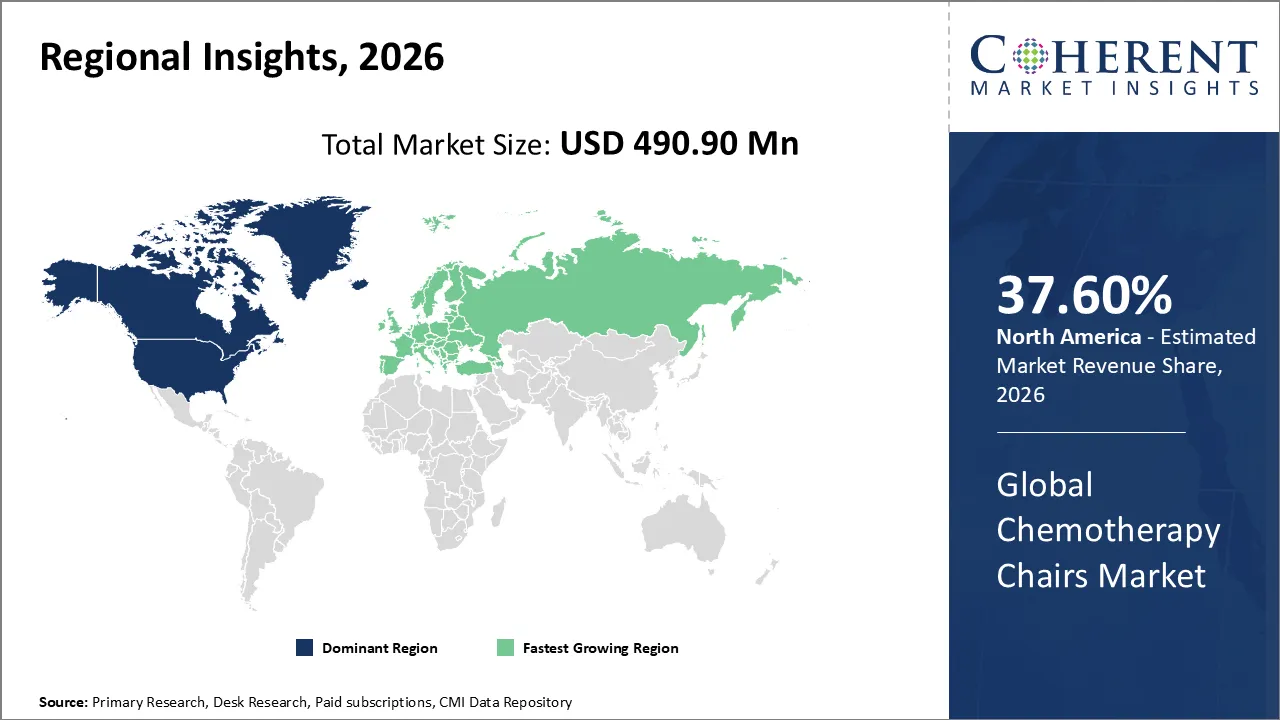
- By Region, North America dominates the overall market with an estimated share of 37.6% in 2026 owing to the high prevalence of cancer.
Market Overview
The global Chemotherapy Chairs Market is steadily growing as the rising prevalence of cancer and expanding oncology care facilities drive demand for patient‑focused treatment environments. Hospitals, outpatient clinics, and infusion centers are actively investing in advanced, ergonomic, and electric chairs to provide greater comfort during lengthy chemotherapy sessions. Continuous technological innovations, upgraded healthcare infrastructure, and efforts to improve workflow efficiency are accelerating market adoption. North America and Europe lead the market, while emerging regions are increasingly adopting modern chemotherapy seating solutions.
Current Events and Its Impact on the Chemotherapy Chairs Market
Current Events | Description and its impact |
Global Healthcare Supply Chain Disruptions |
|
Advances in Oncology Treatment Protocols |
|
Technological Innovations in Medical Equipment |
|
Role of Artificial Intelligence
In November 2025, with funding from Scale AI, Canada’s global AI innovation hub, the McGill University Health Centre (MUHC) will launch a new partnership with Canadian health technology company Gray to enhance chemotherapy scheduling at the Cedars Cancer Centre. The collaboration will use artificial intelligence to improve treatment timeliness, optimize chair utilization, and support nurses in delivering coordinated, patient-centred care.
- Current Industry Events of 2026
- Market Size Estimation
- Regional Breakdown
- Competitive Landscape
- Customer Intelligence
- Segmental Analysis
- Pricing Analysis
- Key Market Drivers, Challenges & Future Trends
- Customized Insights Section
Segmental Insights
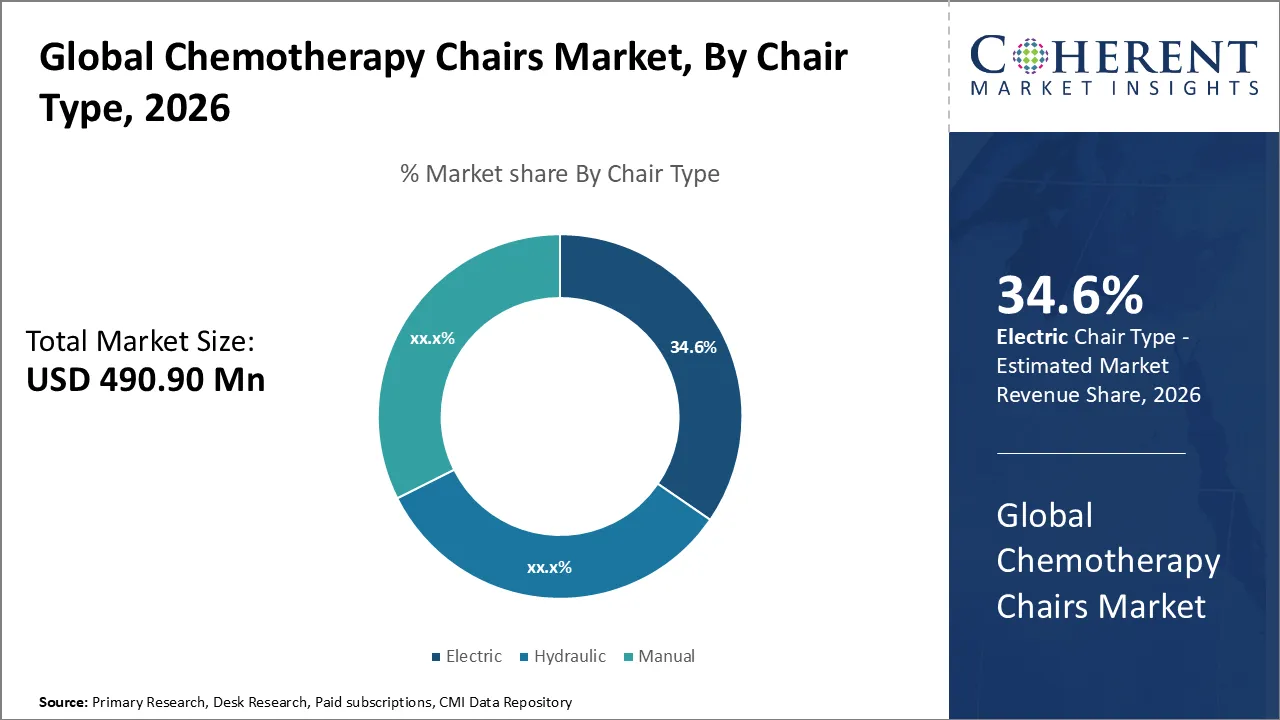
Chemotherapy Chairs Market Insights, By Chair Type: Electric contribute the highest share of the market owing to its hospital & clinic infrastructure upgrades.
Electric hold the largest market share of 34.6% in 2026. The electric segment of the Chemotherapy Chairs Market is expanding as healthcare providers focus on enhancing patient comfort and convenience during long treatment sessions. Hospitals and infusion centers are actively installing motorized chairs that enable smooth, effortless adjustments, easing strain on both patients and staff. Features such as programmable positions, ergonomic designs, and integrated amenities actively improve the treatment experience. The growing adoption of modern, technology‑driven healthcare infrastructure and the expansion of outpatient care are boosting preference for electric chemotherapy chairs over manual models. For instance, the Optium DC 44 features four motors that electronically adjust the backrest, legrest, height, and Trendelenburg position via a hand control and supports both hemodialysis and chemotherapy sessions.
Chemotherapy Chairs Market Insights, By Demographics: Adult Population contribute the highest share of the market owing to its rising healthcare spending and infrastructure enhancements.
Adult Population expected to hold largest market share of 53.3% in 2026. Demand for chemotherapy chairs for adults is rising as more patients undergo lengthy treatments. Healthcare providers offer ergonomic, comfortable chairs to reduce fatigue and enhance the patient experience. An aging population and increasing age-related cancers drive growth, while expanding outpatient and day-care services prompt hospitals and clinics to invest in specialized chairs that ensure comfort and support efficient clinical workflows.
Chemotherapy Chairs Market Insights, By End User: Hospitals contribute the highest share of the market owing to its focus on patient experience and clinical outcomes.
Hospitals acquired the prominent market share of 51.7% in 2026. Hospitals are expanding the chemotherapy chairs market by treating large numbers of cancer patients and offering comprehensive oncology services. They actively invest in advanced, adjustable, and durable chairs to ensure patient comfort during long infusion sessions. Hospitals also select equipment that improves staff efficiency and eases maintenance in busy clinical environments. By modernizing healthcare infrastructure, expanding cancer treatment units, and emphasizing patient-centered care, hospitals are driving the widespread adoption of high-quality chemotherapy chairs. For instance, the Huron Perth Healthcare Alliance has signed a construction contract to begin building a new chemotherapy unit and pharmacy at Stratford General Hospital.
Regional Insights
North America Chemotherapy Chairs Market Trends
North America dominates the overall market with an estimated share of 37.60% in 2026. In North America, advanced healthcare infrastructure and patient-focused care drive the chemotherapy chair market. Hospitals and outpatient centers adopt ergonomic, electric chairs with motorized adjustments and integrated amenities to enhance comfort during long treatments. The shift toward outpatient and ambulatory care, combined with strong healthcare spending and patient-centered practices, encourages investment in modern, efficient chairs, supporting widespread market adoption.
For instance, in March 2025, Novartis has received FDA approval for Pluvicto® to treat PSMA-positive metastatic castration-resistant prostate cancer in patients eligible to delay chemotherapy.
Europe Chemotherapy Chairs Market Trends
In Europe, healthcare providers drive the chemotherapy chair market by prioritizing patient comfort and clinical efficiency. Hospitals and infusion centers adopt adjustable, ergonomic chairs with electric controls and integrated amenities for long chemotherapy sessions. By modernizing facilities, expanding outpatient services, and maintaining high care standards, providers boost investment in advanced seating solutions that enhance patient experience and staff workflow, supporting market growth across the region.
United States Chemotherapy Chairs Market Trends
In the U.S., healthcare providers drive the chemotherapy chair market by prioritizing patient comfort and treatment efficiency. Hospitals and infusion centers adopt ergonomic, electric chairs with motorized adjustments and integrated features to reduce fatigue during long sessions. Expanding outpatient and ambulatory care, along with modernized infrastructure, boosts investment in high-quality seating that enhances patient experience and staff productivity, supporting market growth nationwide.
For instance, in January 2024, Coherus BioSciences has made LOQTORZI™ available in the U.S. for adults with advanced or recurrent nasopharyngeal carcinoma, either with cisplatin and gemcitabine chemotherapy or as monotherapy after platinum-based chemotherapy.
United Kingdom Chemotherapy Chairs Market Trends
In the UK, the NHS drives chemotherapy chair demand by upgrading treatment spaces and procuring ergonomic, adaptable seating for systemic anti-cancer therapy. Hospitals work with suppliers to meet operational needs, emphasizing comfort and flexibility for diverse care pathways. Buyers prioritize high-quality chairs that enhance patient wellbeing in busy oncology units and outpatient settings, supporting healthcare infrastructure modernization and improving the overall chemotherapy experience.
End-user Feedback and Unmet Needs in the Chemotherapy Chairs Market
- Comfort and Ergonomics: Patients often report discomfort during prolonged treatments, emphasizing the need for chairs that provide superior lumbar and neck support. Adjustable features, cushioning quality, and ergonomic design are critical. Chairs must accommodate diverse body types while minimizing pressure points to improve patient experience during lengthy infusion sessions.
- Infection Control and Hygiene: Healthcare providers highlight challenges in maintaining sanitation. Current designs may have hard-to-clean crevices, porous materials, or fabric surfaces that harbor bacteria. There is an unmet need for easily sanitized, antimicrobial surfaces and materials that prevent cross-contamination, ensuring patient safety and compliance with strict clinical hygiene protocols.
- Mobility and Flexibility: Nurses and staff report difficulty repositioning chairs within tight infusion rooms. Lightweight, maneuverable chairs with locking wheels and foldable or modular features are highly desired. Improved mobility can streamline workflow, enhance patient access, and reduce physical strain on healthcare personnel during patient transfers or room reconfigurations.
Chemotherapy Chairs Market Trend
Shift Toward Patient‑Centric Designs
There’s increasing focus on comfort, adjustability, and aesthetics that support patient well‑being during long infusion sessions. Manufacturers are innovating chairs with enhanced lumbar support, customizable positioning, and soft, easy‑clean materials. Designs are moving away from purely functional hospital models toward therapeutic seating that reduces anxiety, improves relaxation, and respects individual needs. This trend reflects broader healthcare emphasis on experience and dignity in treatment environments.
Integration of Technology and Connectivity
The market is evolving to include chairs with built‑in tech features that enhance treatment engagement and convenience. USB/charging ports, media mounts, ambient lighting, and biometric sensors are being incorporated to support patient comfort, monitoring, and distraction during therapy. This trend aligns with increasing demand for digital‑enabled clinical environments where comfort, efficiency, and real‑time data converge to improve overall care experiences.
Chemotherapy Chairs Market Opportunity
Enhanced Patient Experience Solutions
There’s a growing opportunity to design chairs that prioritize patient comfort and psychological well‑being. Solutions with advanced ergonomic support, customizable cushioning, and soothing aesthetics can meet unmet needs in infusion centers. Incorporating features like adjustable headrests, recline control, and distraction elements (e.g., built‑in media supports) can distinguish product offerings. Focusing on mood‑supportive design improves patient satisfaction, reduces anxiety during long sessions, and aligns with wider patient‑experience improvement initiatives across oncology care.
Market Report Scope
Chemotherapy Chairs Market Report Coverage
| Report Coverage | Details | ||
|---|---|---|---|
| Base Year: | 2025 | Market Size in 2026: | USD 490.90 Mn |
| Historical Data for: | 2020 To 2024 | Forecast Period: | 2026 To 2033 |
| Forecast Period 2026 to 2033 CAGR: | 7.8% | 2033 Value Projection: | USD 830.70 Mn |
| Geographies covered: |
| ||
| Segments covered: |
| ||
| Companies covered: | BMB Medical, Earthlite Medical, Nanning Passion Medical Equipment, Likamed GmbH, GREINER GmbH, Bionic Medizintechnik GmbH, and Paramount Bed Co. Ltd. | ||
| Growth Drivers: |
| ||
| Restraints & Challenges: |
| ||
Chemotherapy Chairs Market News
- In May 2025, Aishwarya Bandla, guided by ikigai, focuses on improving patient care through health technology and is developing solutions to prevent chemotherapy-induced peripheral neuropathy in cancer patients.
- In June 2025, Ballad Health has opened its expanded Cancer Care-Johnson City, adding 26,000 sq. ft., two new chemotherapy wings with 32 infusion bays, six private treatment rooms, and chairs with heated seats, TVs, and companion seating.
Analyst Opinion (Expert Opinion)
- The chemotherapy chairs market is evolving from a niche clinical furnishing category into a critical element of oncology care delivery, informed by measurable impacts on patient outcomes and operational performance. Data from oncology settings indicate that more than 85% of outpatient infusion centers now deploy ergonomic, adjustable chemotherapy chairs as a deliberate strategy to enhance patient satisfaction and comfort during prolonged sessions; one major cancer clinic reported a 15% improvement in patient comfort scores after upgrading to advanced seating solutions with integrated infusion access.
- This evolution reflects a broader healthcare recognition that seating design is not merely a comfort accessory but a component of clinical efficacy. Chairs with pressure‑relieving cushioning, multi‑position recline mechanisms, and easy‑clean upholstery directly influence the physical tolerance of patients undergoing 2–6 hour infusions, mitigating pressure sores and fatigue that otherwise compromise treatment adherence. Moreover, the integration of technological and functional enhancements — such as adjustable positioning controls, built‑in USB ports, and even biometric sensors in emerging models — moves the product from passive furniture into an active contributor to patient engagement and monitoring, aligning with modern hospital standards.
- Chemotherapy chairs that facilitate efficient caregiver access and infection control — through antimicrobial, seamless surfaces — have become indispensable in oncology units where immunocompromised populations are at high risk, as reflected in widespread adoption of easy‑to‑clean medical‑grade materials. The trend toward advanced, customizable, and smart seating underscores a shift in procurement logic: buyers now prioritize clinical value and patient experience alongside durability and hygiene, demonstrating that future competitive differentiation in this market will increasingly hinge on design innovation, demonstrable comfort metrics, and seamless integration with clinical workflows.
Speak to the analyst
Want personalized insights?
Take the findings above to one of our principal consultants, or have the report rebuilt around the segments, geographies and competitors you actually track.
Market Segmentation
- By Chair Type
- Electric
- Hydraulic
- Manual
- By Demographics
- Pediatric Population
- Adult Population
- By End User
- Hospitals
- Specialty Clinics
- By Regional Insights
- North America
- U.S.
- Canada
- Latin America
- Brazil
- Argentina
- Mexico
- Rest of Latin America
- Europe
- Germany
- U.K.
- Spain
- France
- Italy
- Russia
- Rest of Europe
- Asia Pacific
- China
- India
- Japan
- Australia
- South Korea
- ASEAN
- Rest of Asia Pacific
- Middle East
- GCC Countries
- Israel
- Rest of Middle East
- Africa
- South Africa
- North Africa
- Central Africa
- North America
- Key Players Insights
- BMB Medical
- Earthlite Medical
- Nanning Passion Medical Equipment
- Likamed GmbH
- GREINER GmbH
- Bionic Medizintechnik GmbH
- Paramount Bed Co. Ltd.
Sources
Primary Research interviews
- Oncologists and oncology nurses
- Hospital procurement managers
- Chemotherapy clinic administrators
- Medical equipment distributors
- Healthcare facility architects and interior designers
Databases
- PubMed
- ClinicalTrials.gov
- WHO Global Health Observatory
- FDA medical device database
- NIH Research Portfolio Online Reporting Tools (RePORT)
Magazines
- Oncology Times
- Cancer Therapy Advisor
- Health Facilities Management
- Medical Design & Outsourcing
- Modern Healthcare
Journals
- Journal of Clinical Oncology
- Cancer Nursing
- Supportive Care in Cancer
- European Journal of Oncology Nursing
- Journal of Oncology Practice
Newspapers
- The New York Times – Health Section
- The Guardian – Healthcare
- The Wall Street Journal – Health & Science
- BBC Health News
- Reuters Health
Associations
- American Society of Clinical Oncology (ASCO)
- European Society for Medical Oncology (ESMO)
- Oncology Nursing Society (ONS)
- National Cancer Institute (NCI)
- International Society of Paediatric Oncology (SIOP)
Public Domain sources
- U.S. National Library of Medicine
- WHO publications
- FDA and EMA reports
- CDC publications
- Open-access research repositories
Proprietary Elements
- CMI Data Analytics Tool
- Proprietary CMI Existing Repository of information for last 8 years
Get access to 250+ pages report
Every segment, forecast, competitor profile and data table behind the analysis above — available for instant download.
- ESOMAR Member
- ISO 9001:2015 Certified
- D-U-N-S Registered
- GDPR & CCPA Compliant
Missing comfort of reading report in your local language? Find your preferred language:
Transform your Strategy with Exclusive Trending Reports
Frequently Asked Questions
The global chemotherapy chairs market is estimated to surpass USD 830.70 Mn by 2033.
Major players operating in the global chemotherapy chairs market include BMB Medical, Earthlite Medical, Nanning Passion Medical Equipment, Likamed GmbH, GREINER GmbH, Bionic Medizintechnik GmbH, and Paramount Bed Co. Ltd.
Among chair type, electric chairs segment is estimated to generate highest revenue during the forecast period.
Increasing number of new cancer care centers where chemotherapy or infusion chairs are frequently usedis one of the major factors that is expected to propel growth of the market over the forecast period.
The global chemotherapy chairs market is estimated to exhibit a CAGR of 7.8% over the forecast period.
Among regions, North America is expected to hold dominant position in the global chemotherapy chairs market during the forecast period.