

Dermatological Therapeutic Market Size and Share Analysis - 2026 To 2033
The Dermatological Therapeutic Market is projected to grow at a CAGR of 8%, holding USD 54,760 Mn in 2026 and reaching USD 94,100 Mn The market growth drivers include increased prevalence of dermatological disorders, increasing demands for dermatological therapies, increased awareness of skincare, increasing adoption of biologic therapies, along with developments in the formulation of treatments.
Key Takeaways from the Dermatological Therapeutic Market Report
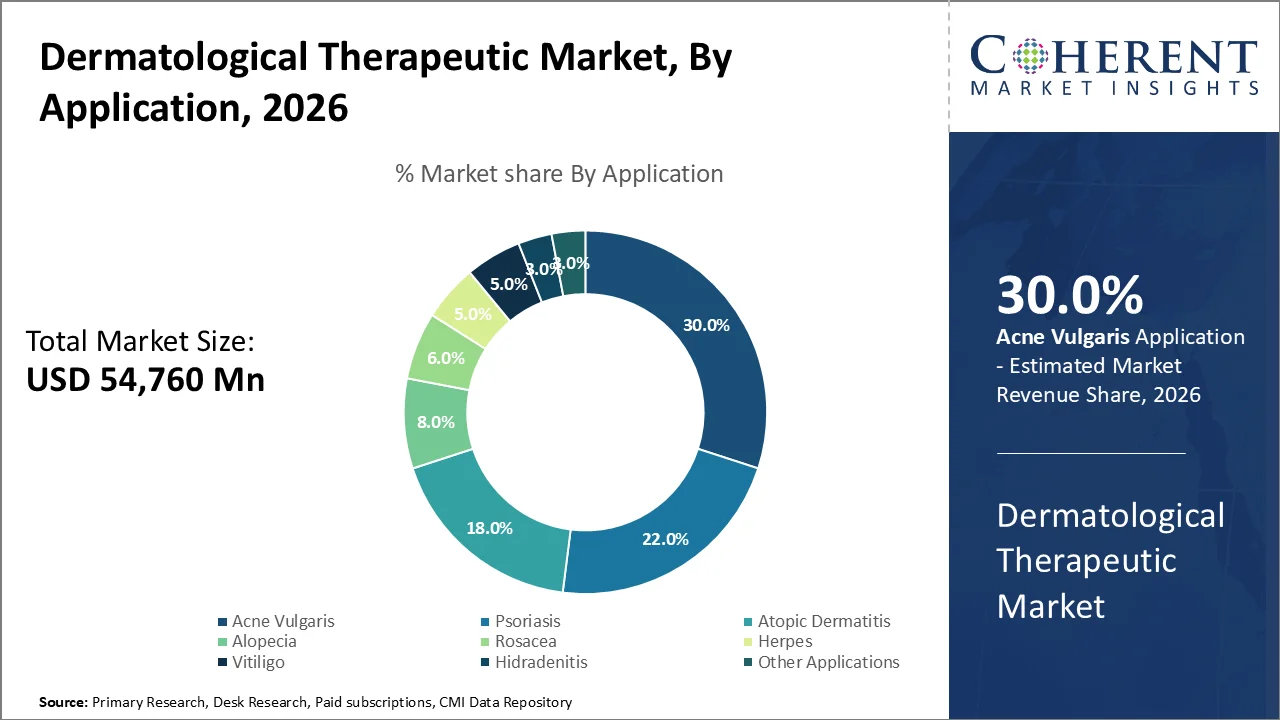
- The Acne Vulgaris segment is projected to dominate the industry share with more than 30%, driven by factors such as the widespread occurrence of acne conditions, rising demands for prescriptions from dermatological drugs, and heightened awareness about skin health treatment. According to the National Institute of Arthritis and Musculoskeletal and Skin Diseases
- The Corticosteroids segment is anticipated to dominate the market share with an approximate value of 24% in 2026 due to its extensive application in the management of skin disorders including psoriasis, eczema, dermatitis, and rosacea. It is estimated that topical corticosteroids are among the most frequently prescribed drugs for eczema treatment and skin inflammation by the National Eczema Association.
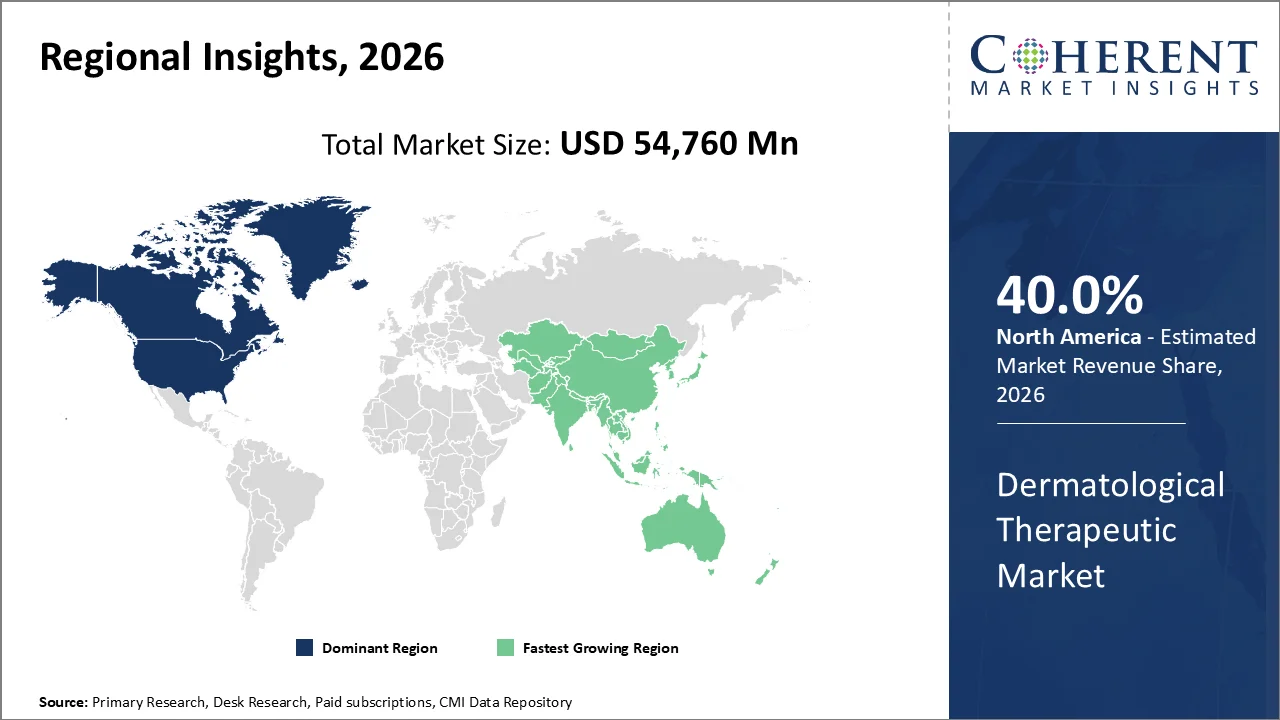
- North America is projected to hold the highest share in the Dermatological Therapeutic Market with a share of almost 40% in 2026 owing to well-established healthcare infrastructure, higher adoption rate of dermatological treatments, rising use of biologic therapies, and increasing number of cases of chronic skin disorders. The American Academy of Dermatology Association (AAD) states that acne is the most prevalent skin disorder in the U.S., impacting nearly 50 Mn Americans every year. Also, there are over 7.5 Mn cases of psoriasis across the country.
Segmental Insights
Why is Acne Vulgaris Leading the Dermatological Therapeutic Market?
The Acne Vulgaris segment is estimated to have the highest share in the overall market share for dermatological therapeutics in 2026, with around 30% of the entire application segment. This is attributed to the exceptionally high prevalence rates of the disease worldwide, and increased demand for topical and systemic prescriptions. Awareness about skincare and early adoption of dermatology visits are also contributing factors to the segment's supremacy.
Moreover, the rise in the use of combinational drug therapies (retinoids, antibiotics, and hormones) and teledermatology services is enhancing diagnostic efficiency and treatment availability, thereby propelling the growth of this segment.
In August 2025, Alembic Pharmaceuticals received final U.S. FDA approval for Tretinoin Cream USP 0.025%, a generic topical retinoid used for the treatment of acne vulgaris.
- Current Industry Events of 2026
- Market Size Estimation
- Regional Breakdown
- Competitive Landscape
- Customer Intelligence
- Segmental Analysis
- Pricing Analysis
- Key Market Drivers, Challenges & Future Trends
- Customized Insights Section
Why do Corticosteroids Dominate the Drug Class Segment?
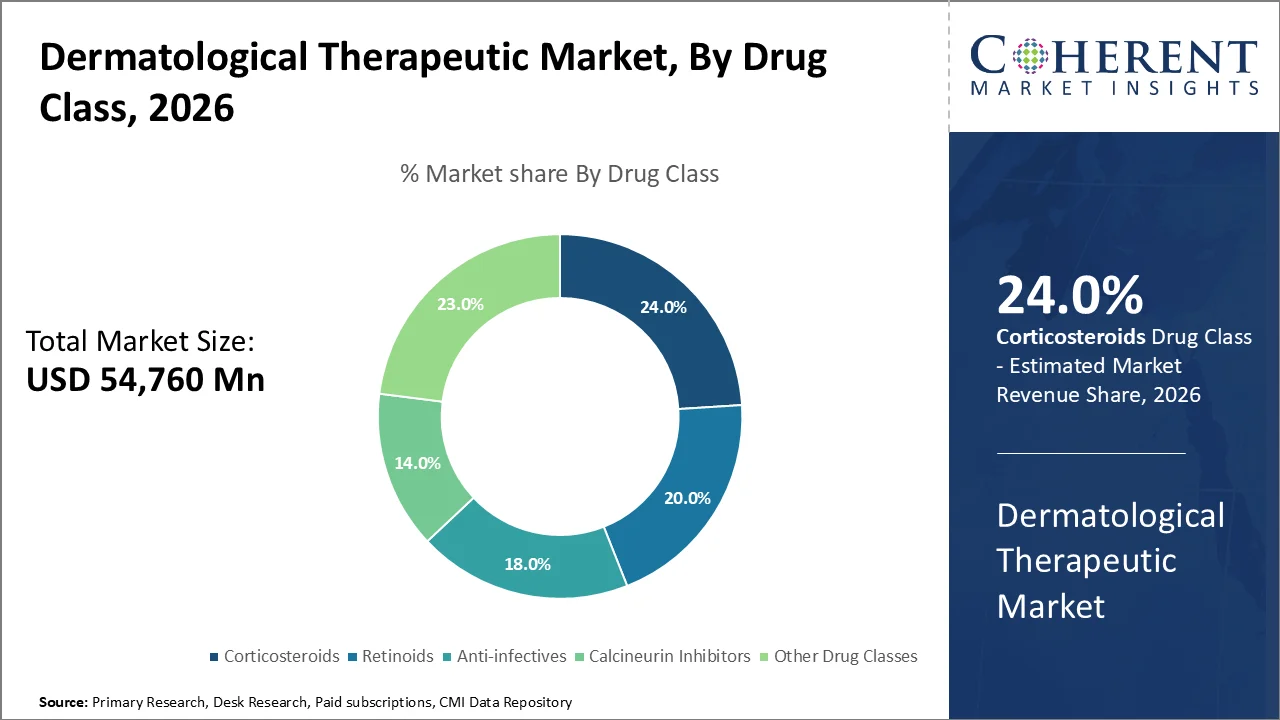
The Corticosteroids segment is expected to hold the major market share of around 24% in 2026 due to the extensive use of corticosteroids for treating skin diseases like psoriasis, eczema, dermatitis, and rosacea. Due to the efficiency of these drugs in fighting inflammation and redness and in stopping itchiness and irritation, corticosteroids emerge as the top choice among topical treatments.
According to the National Institutes of Health (NIH) highlights that corticosteroids continue to play a central role in managing inflammatory skin diseases due to their rapid symptom relief and broad therapeutic applicability.
Increasing Demand for Biologic Therapies is Accelerating the Dermatological Therapeutic Market
The increasing use of biological treatments has brought about a revolution in the dermatological treatment market all around the world. Biological medicines target chronic inflammatory skin conditions like psoriasis, hidradenitis suppurativa, and atopic dermatitis, among others, by targeting specific inflammatory immune pathways. Biological treatments are more effective in disease control and have lower relapse rates when compared to traditional corticosteroid and topical treatments.
The National Psoriasis Foundation reports that there are more than 125 million individuals worldwide living with psoriasis, thus there is considerable demand for sophisticated biological drugs. The foundation further notes that almost 30% of all those suffering from psoriasis eventually develop psoriatic arthritis.
Growing Awareness Regarding Skin Health is Supporting Market Expansion
Rising consumer awareness about skincare, early detection of diseases, and preventive dermatology plays a significant role in boosting the global dermatological therapeutics market. Individuals are increasingly getting interested in visiting doctors for treating conditions like acne, eczema, rosacea, hyperpigmentation, and fungal infections.
The American Academy of Dermatology Association reports that skin disease is one of the most prevalent diseases among humans worldwide, with acne alone affecting about 50 million Americans each year. The growing cases of visibly noticeable skin diseases continue to drive more visits to dermatologists for consultations and medications.
Current Events and Their Impact on the Dermatological Therapeutic Market
Current Event | Description and its Impact |
Expansion of Biologic Approvals and Label Extensions (2025–2026) |
|
Advancements in Biologic and Targeted Immunotherapies |
|
Dermatological Therapeutic Market Trends
- Adoption of combination treatments that utilize retinoid and antibiotic therapy or dual-action ointments increases effectiveness and resistance to treatment.
- The use of telemedicine is growing and leading to more prescriptions being written and better access to treatment facilities.
- Medicines delivery through nano-systems and sustained-release gels have enhanced drug absorption and compliance by patients.
- The increased demand for aesthetics and dermatology treatments such as anti-acne, anti-aging, and pigmentation correction is helping drive the market.
- Increase in patients suffering from atopic dermatitis and eczema is driving the continuous consumption of corticosteroids and biologics. There are approximately 31.6 million sufferers in the United States.
- Active research and development pipeline for next-generation therapies (IL-4, IL-13, JAK inhibitors) is driving innovations within dermatology.
Regional Insights
North America Dermatological Therapeutic Market Trends
North America dermatological therapeutic market is predicted to maintain dominance in the industry, accounting for almost 40% of the market share in 2026, owing to the presence of well-developed health infrastructure, acceptance of dermatology treatments, growing use of biologics, and the rise in the prevalence of chronic skin diseases like acne, psoriasis, and eczema.
North America dominates owing to increasing prevalence rates of skin diseases and increased need for treatments. In terms of aesthetic dermatological procedures, acne alone affects close to 50 million Americans every year, whereas eczema affects more than 31 million individuals in the United States.
Asia Pacific Dermatological Therapeutic Market Trends
Asia Pacific is anticipated to grow at a CAGR of around 10% over 2026-2033, becoming the most rapidly growing regional market for dermatological therapeutics, attributed to factors such as the fast-growing population, higher skin-related health awareness levels, better healthcare facilities, and easy availability of dermatological therapies in countries like China and India.
The region is witnessing a sharp rise in dermatological disorders due to urbanization, pollution, and lifestyle changes. According to WHO, skin diseases are one of the most prevalent health problems in Asia, especially in heavily populated nations where there have been improvements in dermatology treatment services.
United States Dermatological Therapeutic Market Trends
The United States dermatological therapeutic market is showing high potential due to factors like a growing elderly demographic, high rates of occurrence of chronic skin disease, and high usage rates of innovative skin therapies. Skin conditions like psoriasis, eczema, and skin cancer are more likely to affect the elderly population.
In March 2025, the American Academy of Dermatology (AAD) held its Annual Meeting (March 7–11, 2025, Orlando, USA) where leading dermatology experts presented late-breaking clinical research and treatment updates.
Japan Dermatological Therapeutic Market Trends
Japan’s dermatological therapeutic market is growing rapidly because Japan is considered a “super-aged” society, with almost 30% of its population being over the age of 65 years. This results in skin conditions such as eczema, psoriasis, and chronic dermatitis due to immune system weaknesses in the body.
In February 2026, Shionogi & Co., Ltd. announced the submission of a manufacturing and marketing approval application in Japan for CORECTIM lotion (delgocitinib 0.5%), a non-steroidal topical JAK inhibitor for the treatment of atopic dermatitis.
Who are the Major Companies in Dermatological Therapeutic Industry
Some of the major key players in Dermatological Therapeutic are Leo Pharma, Pfizer Inc., Novartis AG, Johnson & Johnson, GlaxoSmithKline PLC, Galderma, Amgen Inc., Almirall, S.A., XBiotech USA Inc., AbbVie Inc, and Bausch Health Companies Inc., among others.
Key News
- In July 2025, LEO Pharma announced U.S. FDA approval of ANZUPGO® (delgocitinib cream), the first topical JAK inhibitor approved in the U.S. for chronic hand eczema (CHE).
- In December 2025, Takeda Pharmaceutical Company Limited announced positive Phase 3 clinical trial results for zasocitinib (TAK-279), an AI-discovered once-daily oral TYK2 inhibitor for plaque psoriasis.
Market Report Scope
Dermatological Therapeutic Market Report Coverage
| Report Coverage | Details | ||
|---|---|---|---|
| Base Year: | 2025 | Market Size in 2026: | USD 54,760 Mn |
| Historical Data for: | 2020 To 2024 | Forecast Period: | 2026 To 2033 |
| Forecast Period 2026 to 2033 CAGR: | 8% | 2033 Value Projection: | USD 94,100 Mn |
| Geographies covered: |
| ||
| Segments covered: |
| ||
| Companies covered: | Leo Pharma, Pfizer Inc., Novartis AG, Johnson & Johnson, GlaxoSmithKline PLC, Galderma, Amgen Inc., Almirall, S.A., XBiotech USA Inc., AbbVie Inc, and Bausch Health Companies Inc., among others. | ||
| Growth Drivers: |
| ||
| Restraints & Challenges: |
| ||
Analyst Opinion
- The dermatology market is fueled mainly by high and increasing burden of diseases, including acne, eczema, and psoriasis that affect several hundred million individuals across the world. For instance, the condition of acne alone affects around 50 million people in America each year.
- The shift in the market is toward biologics and immunotherapy, as the new generation of drugs such as IL-17, IL-23, and JAK inhibitors provides better disease management with fewer relapses for chronic patients.
- Atopic dermatitis and psoriasis will be important sources of revenue for the company since these two diseases are chronic and recurring and require constant medication. An instance is psoriasis, which has an estimated prevalence of more than 125 million cases worldwide.
- Growing cosmetic and aesthetic dermatology demand is expanding the market beyond disease treatment, with increasing use of acne, anti-aging, and pigmentation therapies driven by lifestyle changes and rising awareness of skin health.
Speak to the analyst
Want personalized insights?
Take the findings above to one of our principal consultants, or have the report rebuilt around the segments, geographies and competitors you actually track.
Market Segmentation
- By Application (Revenue, USD Mn, 2021-2033)
- Alopecia
- Herpes
- Psoriasis
- Rosacea
- Atopic Dermatitis
- Acne Vulgaris
- Vitiligo
- Hidradenitis
- Other Applications
- By Drug Class (Revenue, USD Mn, 2021-2033)
- Anti-infectives
- Corticosteroids
- Calcineurin Inhibitors
- Retinoids
- Other Drug Classes
- By Region (Revenue, USD Mn, 2021-2033)
- North America
- U.S.
- Canada
- Latin America
- Brazil
- Mexico
- Argentina
- Rest of Latin America
- Europe
- Germany
- U.K.
- France
- Italy
- Spain
- Russia
- Rest of Europe
- Asia Pacific
- China
- India
- Japan
- Australia
- South Korea
- ASEAN
- Rest of Asia Pacific
- Middle East
- GCC
- Israel
- Rest of Middle East
- Africa
- South Africa
- Central Africa
- North Africa
- North America
Sources
Primary Research Interviews
- Dermatologists
- Immunodermatologists
- Hospital administrators
- Ambulatory care / dermatology clinic managers
- Medical device & pharmaceutical distributors
- Key Opinion Leaders (KOLs) in dermatology & immunology
Databases
- World Health Organization (WHO)
- Centers for Disease Control and Prevention (CDC)
- National Institutes of Health (NIH)
- Organisation for Economic Co-operation and Development (OECD)
Magazines
- Dermatology Times
- Skin & Allergy News
- Practical Dermatology
- Modern Aesthetics
Journals:
- Journal of the American Academy of Dermatology
- British Journal of Dermatology
- JAMA Dermatology
- Journal of Investigative Dermatology
Newspapers
- The New York Times
- The Guardian
- The Wall Street Journal
Associations
- American Academy of Dermatology
- European Academy of Dermatology and Venereology
- National Eczema Association
- Psoriasis Foundation
Public Domain Sources
- Company annual reports and investor presentations (e.g., pharma & biotech companies)
- Government health ministry publications (India, US, EU, etc.)
- Clinical trial registries such as ClinicalTrials.gov
Proprietary Elements
- CMI Data Analytics Tool
- Proprietary CMI historical repository (last 10+ years of dermatology market data)
Get access to 250+ pages report
Every segment, forecast, competitor profile and data table behind the analysis above — available for instant download.
- ESOMAR Member
- ISO 9001:2015 Certified
- D-U-N-S Registered
- GDPR & CCPA Compliant
Missing comfort of reading report in your local language? Find your preferred language:
Transform your Strategy with Exclusive Trending Reports
Frequently Asked Questions
The Dermatological Therapeutic Market is projected to grow from USD 54,760 Mn in 2026 to USD 94,100 Mn by 2033, expanding at a CAGR of 8% during the forecast period.
Major players operating in the global dermatological therapeutic market include LEO Pharma, Pfizer Inc., Novartis AG, Johnson & Johnson, GlaxoSmithKline PLC, Galderma, Amgen Inc., Almirall S.A., XBiotech USA Inc., AbbVie Inc., and Bausch Health Companies Inc.
Stringent regulatory approval processes, high development costs for biologics, and growing antimicrobial resistance in acne treatments are key factors limiting market growth.
Increasing prevalence of skin disorders such as acne, eczema, and psoriasis, rising adoption of biologics, growing awareness of skin health, and advancements in targeted therapies are major growth drivers.
The Dermatological Therapeutic Market is expected to grow at a CAGR of 8% between 2026 and 2033.
North America is expected to dominate the market with nearly 40% share in 2026, driven by advanced healthcare infrastructure, high treatment adoption, and strong biologics usage.
Dermatological therapeutics refers to the use of medical treatments, including topical drugs, oral medications, biologics, and immunotherapies, to diagnose, manage, and treat skin disorders such as acne, psoriasis, eczema, vitiligo, and rosacea.