

Digital Radiography Market Size and Share Analysis - Growth Trends and Forecast (2026 - 2033)
The global digital radiography market size is projected to grow from USD 7,055.5 Mn in 2026 to USD 9,410.3 Mn by 2033, registering a compound annual growth rate (CAGR) of 4.2% during the forecast period (2026–2033). The growth is being facilitated by the growing usage of sophisticated imaging technology, higher incidence of chronic diseases, which require early detection, and the development of technologies for digital images. According to a CDC report, over 90% of adults aged 65 and older have at least one chronic health condition.
Key Takeaways from the Digital Radiography Market Report (2026)
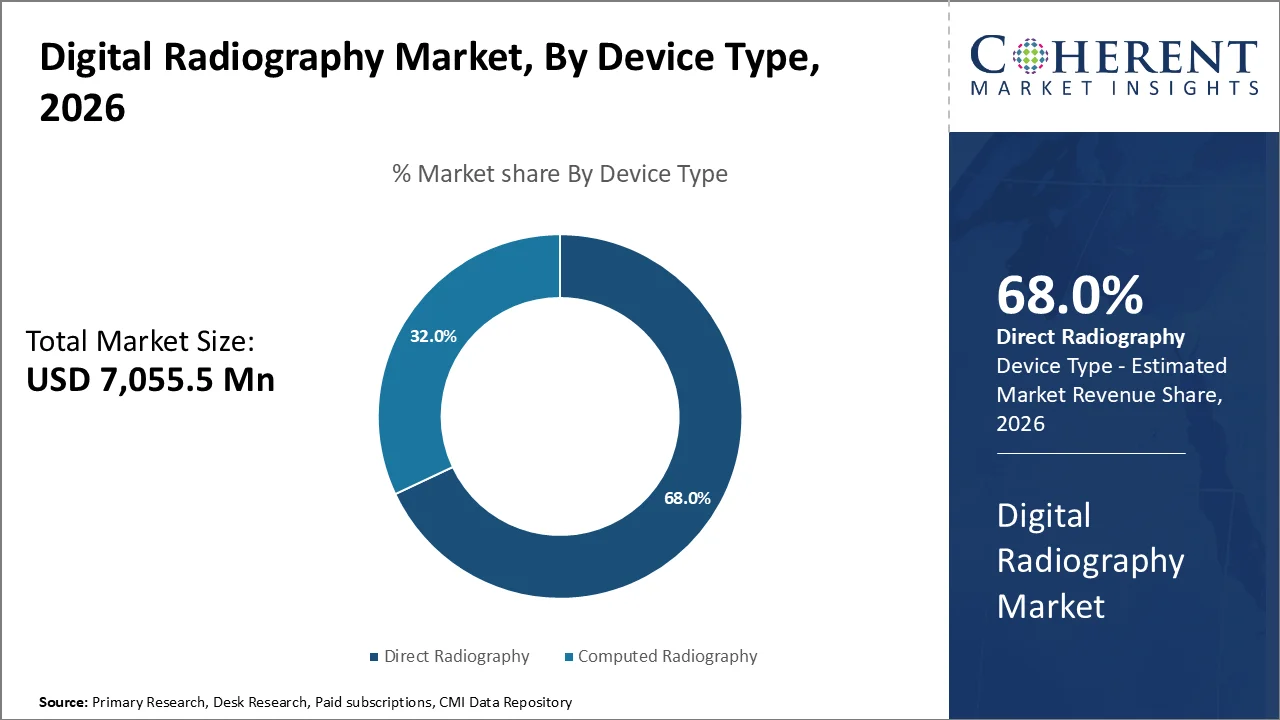
- Direct Radiography are projected to have a market share of around 68% by 2026 due to their better image quality and fast processing time. They will also replace computed radiography devices.
- Chest Imaging is anticipated to hold the maximum share of 32% in 2026, backed by the large imaging volume associated with various respiratory illnesses like pneumonia, tuberculosis (TB), and chronic obstructive pulmonary disorder (COPD). As per the Global Tuberculosis Report by WHO, TB continues to be amongst the foremost communicable illnesses that cause death across the globe.
- Fixed Digital Radiography Systems will account for 60% share by 2026 because of their presence across hospitals and imaging facilities, high throughput capability, and compatibility with hospital information systems. According to the Radiological Society of North America (RSNA), fixed radiography systems continue to form the basis of imaging facilities in hospitals due to their efficiency in managing large numbers of patients.
- Hospitals have the largest market share estimated at 58% by 2026, owing to the influx of patients and presence of sophisticated imaging facilities in addition to a growing use of digital imaging devices within emergency and inpatient care. According to IAEA, hospitals represent the major establishments for the application of diagnostic imaging technology worldwide, especially in developing healthcare systems.
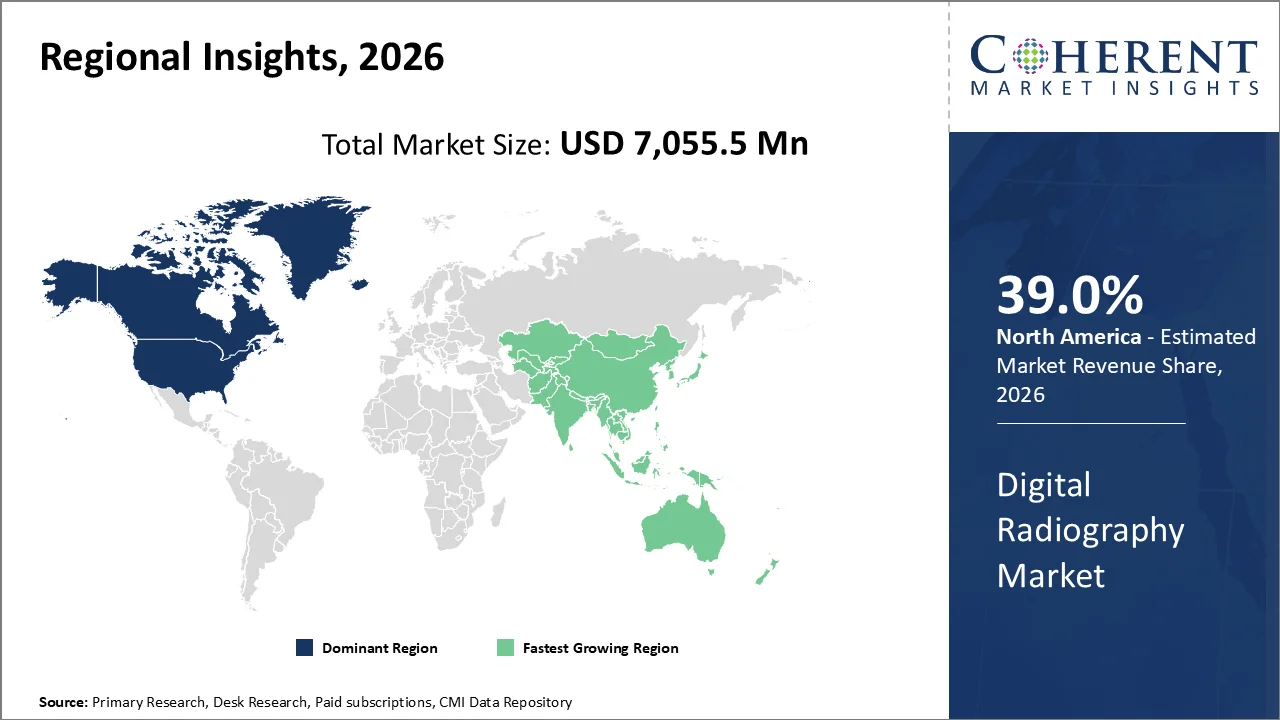
- North America region is projected to dominate the market share by contributing to 39% by 2026. This is due to the presence of advanced health care infrastructure, increased usage of digital imaging solutions, and investments made by hospitals toward the modernization of radiology departments. As per statistics released by the CDC, 6 out of 10 adults in the United States suffer from at least one chronic illness.
Segmental Insights
Why is Direct Radiography Acquiring the Largest Market Share?
Direct Radiography is expected to dominate the digital radiography market with a 68% market share in terms of devices in 2026. The primary reason behind its domination is its high-quality images, fast image capturing process, lower levels of radiation exposure, and absence of cassette technology, which makes it more effective than computed radiography.
For instance, Direct Radiography systems using flat panel detectors (FPDs) enable image capture in seconds, improving emergency and high-throughput diagnostic workflows in hospitals and trauma centers. In July 2025, GE HealthCare announced the commercial launch of its advanced floor-mounted Direct Digital Radiography (DR) system – Definium Pace Select ET.
- Current Industry Events of 2026
- Market Size Estimation
- Regional Breakdown
- Competitive Landscape
- Customer Intelligence
- Segmental Analysis
- Pricing Analysis
- Key Market Drivers, Challenges & Future Trends
- Customized Insights Section
Why is Chest Imaging Acquiring the Largest Market Share?
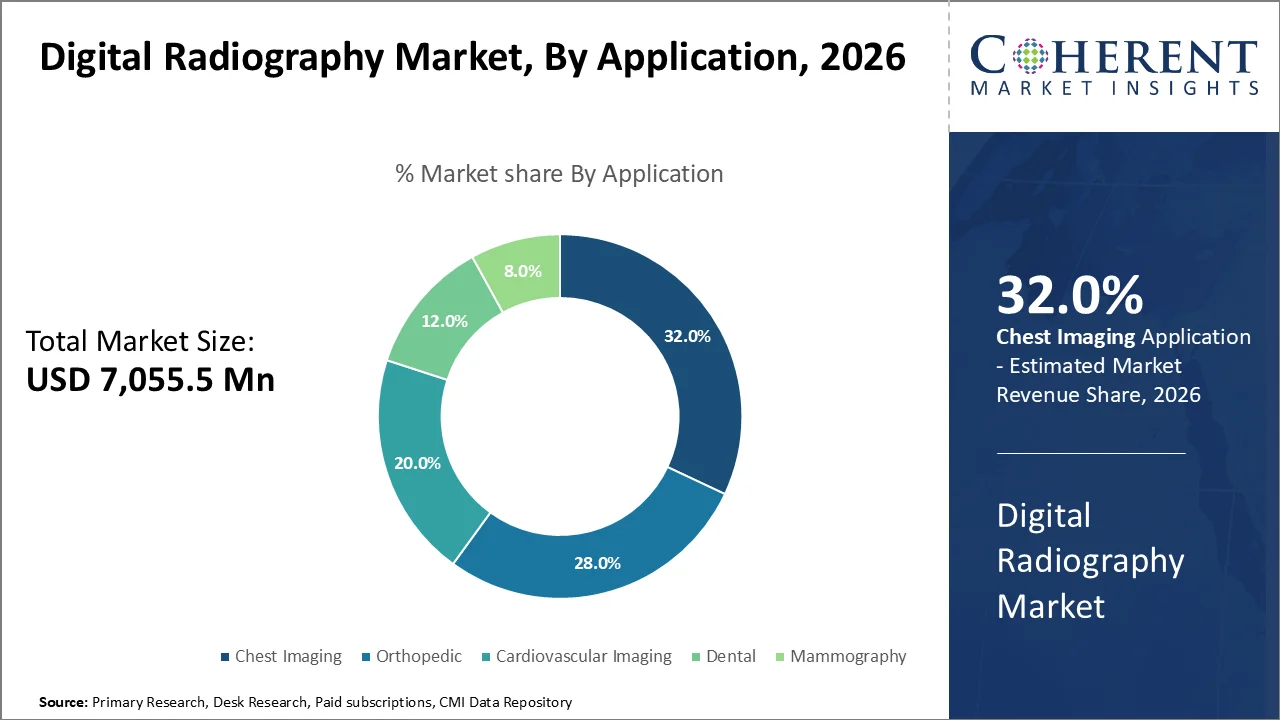
Chest Imaging is projected to command the maximum market share in 2026, accounting for around 32% of all application areas, owing to the increasing incidence of pulmonary and cardio-pulmonary disorders. Pneumonia, tuberculosis (TB), and chronic obstructive pulmonary disease (COPD) are conditions that demand regular imaging.
According to WHO, tuberculosis remains a major global health burden, requiring large-scale chest imaging for screening and monitoring.
Why are Fixed Digital Radiography Systems Acquiring the Largest Market Share?
Fixed Digital Radiography systems are predicted to dominate the market with nearly 60% market share due to their high usage in hospitals and diagnostic imaging centers. Fixed digital radiography systems provide higher patient throughput, improved workflow efficiency, and seamless integration with hospital information systems.
The Radiological Society of North America, RSNA, indicates that large healthcare institutions still use fixed radiography equipment because of their capability to accommodate heavy patient traffic and provide imaging services for advanced medical purposes within the emergency rooms and inpatient departments.
Why do Hospitals Dominate the Digital Radiography Market?
Hospitals will hold the largest market share, contributing 58% to the total market size by 2026 due to the presence of advanced imaging facilities, trained radiologists, and higher throughput of patients. Hospitals are the main centers where emergencies, in-patient services, and disease treatment take place, and these areas need continuous imaging.
Based on reports released by the International Atomic Energy Agency (IAEA), hospitals continue to be the biggest consumers of diagnostic imaging equipment in the world because of their functions in providing full medical care to chronic and emergency patients.
Market Drivers
Technological Advancements in Flat Panel Detectors and AI Integration are Accelerating Market Growth
Advancements in FPDs, AI-based imaging analytics, and low radiation imaging systems have made digital radiography more effective and patient-friendly. There is an opportunity to improve efficiency and avoid diagnostic errors using AI-based image processing techniques by radiologists.
As per the National Institutes of Health (NIH), AI-based radiology tools can improve diagnostic accuracy by up to 20–30% in certain imaging applications, particularly in chest and musculoskeletal imaging.
Increasing Burden of Chronic Diseases is Driving Demand for Digital Radiography
As the prevalence of chronic diseases such as cardiovascular disorders, cancer, and respiratory illnesses increases, demand for diagnostic imaging continues to rise. Digital radiography is one of the commonly employed imaging technologies when it comes to disease diagnoses and management.
According to WHO, non-communicable diseases cause an estimated 74 percent of all deaths globally on an annual basis, where cardiovascular diseases alone result in 17.9 million deaths annually.
Current Events and Their Impact
Current Event | Description and its Impact |
2026–2027 Healthcare Digitization and AI Integration Policies in the U.S. and EU |
|
Radiology Workforce Shortage and Rising Imaging Volumes (Global Healthcare Systems Pressure) |
|
Digital Radiography Market Trends
- Transition from CR to DR systems has been fastened by the growing trend towards better efficiency through faster imaging processes enabled by DR systems that allow for images to be acquired within seconds.
- Increasing demand for imaging globally has been fueling the adoption of DR systems.
- The use of AI in digital radiography is enhancing the accuracy and efficiency of diagnostics by about 20-30% in some instances.
- The rising popularity of portable and mobile DR solutions is resulting in greater POC imaging in ICUs and ERs.
- Rising burden of chronic diseases is driving continuous demand for diagnostic imaging. Non-communicable diseases account for around 74% of global deaths annually, increasing imaging requirements.
- Replacement of analog X-ray systems with digital radiography is accelerating in emerging markets due to better efficiency and lower long-term costs.
Regional Insights
North America Digital Radiography Market Trends
North America is forecasted to occupy around 39% of the global market share by 2026, driven by the rapid replacement of analog X-ray machines with innovative DR systems. North America continues to lead in digital radiography due to its superior healthcare facilities and widespread use of digital imaging equipment in addition to robust hospital spending on upgrading their radiography technology.
Technological advancement continues to accelerate regional growth. For instance, in November 2025, Canon Medical Systems Corporation expanded its North America portfolio by launching the Mobirex i9 / Smart Edition mobile X-ray system, designed for bedside imaging in emergency and ICU settings.
Asia Pacific Digital Radiography Market Trends
Asia Pacific is expected to be the fastest growing regional market from 2026 to 2033, due to strong growth in health care infrastructural development, hospital constructions, and deployment of diagnostic imaging systems in digital formats in developing nations including China, India, and Southeast Asian countries.
Over 100 million diagnostic imaging procedures alone are conducted in India per year due to growing investments in health care infrastructure by the Indian government through initiatives like Ayushman Bharat and the Digital Health Mission.
U.S. Digital Radiography Market Trends
The digital radiography market in the United States is projected to see robust growth during the forecast period. This will be mainly due to increased usage of sophisticated diagnostic imaging technologies, high health care costs, rising incidences of chronic conditions, and improved hospital infrastructure initiatives.
In November 2025, Fujifilm Healthcare Americas Corporation launched Synapse One, an advanced enterprise imaging and workflow solution in North America (U.S.-focused deployment).
China Digital Radiography Market Forecast
China will continue to be one of the fastest-growing and major players for digital radiography systems over the forecast period due to increased construction activities at hospitals, growing healthcare accessibility in the rural areas, increased prevalence of chronic diseases, and favorable government initiatives toward healthcare technology and medical imaging.
In July 2025, FUJIFILM Healthcare announced the launch and showcase of its advanced FDR Go iQ portable digital radiography system at the AHRA 2025 Annual Meeting (USA launch with strong Asia-Pacific deployment relevance, including China).
Who are the Major Companies in Digital Radiography Industry
Some of the major key players in Digital Radiography are GE Healthcare, North Star Imaging, Fujifilm Holdings, Fresenius Se & Co. KGaA, Koninklijke Philips N.V., Shimadzu Corporation, Toshiba Medical System Corporation, Carestream Health, 3DX-Ray, Canon, Inc., and Bosello High Technology.
Industry News
- In December 2025, GE HealthCare showcased its latest AI-powered X-ray and digital radiography workflow innovations at RSNA 2025 (Chicago, USA), focusing on automation, faster image acquisition, and improved chest imaging efficiency for high-volume hospitals.
- In January 2025, Siemens Healthineers introduced the MULTIX Impact E digital radiography system at AOCR 2025, designed for automated workflows, low-dose imaging, and improved diagnostic efficiency in general radiography applications.
Market Report Scope
Digital Radiography Market Report Coverage
| Report Coverage | Details | ||
|---|---|---|---|
| Base Year: | 2025 | Market Size in 2026: | USD 7,055.5 Mn |
| Historical Data for: | 2020 To 2024 | Forecast Period: | 2026 To 2033 |
| Forecast Period 2026 to 2033 CAGR: | 4.2% | 2033 Value Projection: | USD 9,410.3 Mn |
| Geographies covered: |
| ||
| Segments covered: |
| ||
| Companies covered: | GE Healthcare, North Star Imaging, Fujifilm Holdings, Fresenius Se & Co. KGaA, Koninklijke Philips N.V., Shimadzu Corporation, Toshiba Medical System Corporation, Carestream Health, 3DX-Ray, Canon, Inc., and Bosello High Technology | ||
| Growth Drivers: |
| ||
| Restraints & Challenges: |
| ||
Analyst Opinion
- Digital radiography adoption is being structurally driven by global healthcare digitalization rather than short-term demand cycles. With over 3.6 billion diagnostic imaging procedures annually worldwide, X-ray remains the backbone of medical imaging, ensuring sustained long-term demand for DR systems.
- The market is undergoing a rapid technology shift from computed radiography (CR) and analog X-ray systems to Direct Digital Radiography (DR), as hospitals prioritize faster workflow, lower radiation exposure, and higher diagnostic accuracy in emergency and high-volume settings.
- Chest imaging continues to dominate usage patterns, with X-ray accounting for the majority of frontline diagnostic procedures in hospitals and emergency departments.
- Artificial intelligence has become an increasingly crucial distinguishing factor when it comes to digital radiography devices because of findings suggesting that with AI-driven imagery, radiological diagnosis becomes faster and more accurate by 20-30% in certain instances.
- Emerging markets are expected to be the primary growth engine for DR adoption, as governments invest heavily in hospital infrastructure modernization and digital health systems. However, disparities in healthcare access and high equipment costs continue to slow full-scale penetration in rural and low-income regions.
Speak to the analyst
Want personalized insights?
Take the findings above to one of our principal consultants, or have the report rebuilt around the segments, geographies and competitors you actually track.
Market Segmentation
- By Device Type (Revenue, USD Mn, 2021-2033)
- Direct Radiography
- Charged Couple Device (CCD)
- Flat Panel Detector
- Computed Radiography
- By Application (Revenue, USD Mn, 2021-2033)
- Chest Imaging
- Orthopedic
- Cardiovascular Imaging
- Dental
- Mammography
- By Portability (Revenue, USD Mn, 2021-2033)
- Fixed
- Mobile
- By End User (Revenue, USD Mn, 2021-2033)
- Hospitals
- Diagnostic Centres
- Specialty Centres
- Global Digital Radiography Market, By Region: (Revenue, USD Mn, 2021-2033)
- North America
- U.S.
- Canada
- Latin America
- Brazil
- Mexico
- Argentina
- Rest of Latin America
- Europe
- Germany
- U.K.
- France
- Italy
- Spain
- Russia
- Rest of Europe
- Asia Pacific
- China
- India
- Japan
- Australia
- South Korea
- ASEAN
- Rest of Asia Pacific
- Middle East
- GCC
- Israel
- Rest of Middle East
- Africa
- South Africa
- Central Africa
- North Africa
- North America
- Key Players
- GE HealthCare
- North Star Imaging
- Fujifilm Holdings
- Fresenius SE & Co. KGaA
- Koninklijke Philips N.V.
- Shimadzu Corporation
- Toshiba Medical Systems Corporation
- Carestream Health
- 3DX-Ray
- Canon Inc.
- Bosello High Technology
Sources
Primary Research Interviews
- Interviews with radiologists, hospital administrators, diagnostic imaging center managers, biomedical engineers, PACS/RIS system integrators, OEM imaging equipment specialists, and clinical imaging experts
Databases
- World Health Organization (WHO) health statistics and imaging-related datasets
- International Atomic Energy Agency (IAEA) medical imaging and radiation safety databases
- National health ministry databases (U.S. HHS, NHS UK, China NHC, India MoHFW)
- OECD health statistics database
- Global disease burden and chronic disease datasets (GBD, IHME)
- Hospital and diagnostic imaging utilization databases
Magazines
- Diagnostic Imaging Magazine
- Health Imaging
- Radiology Business Journal
- AuntMinnie
- Imaging Technology News (ITN)
Journals
- Radiology (RSNA journal)
- European Radiology
- American Journal of Roentgenology (AJR)
- Journal of Digital Imaging
- Physics in Medicine & Biology
Newspapers
- Financial Times (Healthcare section)
- The Wall Street Journal (Health & Science coverage)
- The New York Times (Health/Medical technology reporting)
- The Guardian (Health innovation updates)
- Reuters Health
Associations
- Radiological Society of North America (RSNA)
- American College of Radiology (ACR)
- International Society of Radiology (ISR)
- European Society of Radiology (ESR)
- World Federation for Medical Ultrasound and Imaging (WFUMB)
Public Domain Sources
- WHO Global Health Observatory (GHO)
- IAEA medical imaging safety and radiation protection reports
- CDC (Centers for Disease Control and Prevention) imaging and disease data
- FDA (U.S.) medical device approvals database
- European Medicines Agency (EMA) device approvals
- National health ministry publications and hospital infrastructure reports
- Publicly available company annual reports and investor presentations (GE HealthCare, Siemens Healthineers, Philips, Canon Medical, Fujifilm Healthcare
- Patent databases (WIPO, USPTO, EPO)
Proprietary Elements
- CMI Data Analytics Tool
- CMI Proprietary Repository (historical data 10+ years)
Get access to 250+ pages report
Every segment, forecast, competitor profile and data table behind the analysis above — available for instant download.
- ESOMAR Member
- ISO 9001:2015 Certified
- D-U-N-S Registered
- GDPR & CCPA Compliant
Missing comfort of reading report in your local language? Find your preferred language:
Transform your Strategy with Exclusive Trending Reports
Frequently Asked Questions
The global Digital Radiography Market is estimated to be valued at USD 7,055.5 Mn in 2026.
The global Digital Radiography Market is expected to reach USD 9,410.3 Mn by 2033.
The market is projected to grow at a CAGR of 4.2% from 2026 to 2033.
Key growth drivers include rising chronic diseases, increasing respiratory infections, rapid shift from analog X-ray to digital systems, and growing adoption of AI-enabled imaging technologies.
Direct Radiography dominates the market with approximately 68% share in 2026, driven by superior image quality and faster image processing.
Chest Imaging leads the market with approximately 32% share in 2026, supported by high imaging demand for respiratory diseases such as TB, pneumonia, and COPD.
Fixed Digital Radiography systems dominate with approximately 60% share in 2026, due to high installation in hospitals and diagnostic centers.