

Global PACS and RIS Market Size and Forecast – 2026 To 2033
The global PACS and RIS market is expected to grow from USD 5,037.7 Mn in 2026 to USD 7,325.2 Mn by 2033, registering a compound annual growth rate (CAGR) of 5.5% from 2026 to 2033. The market for PACS and RIS is poised for significant expansion, fueled by the surging volume of diagnostic imaging procedures globally.
According to the Organisation for Economic Co-operation and Development (OECD), the combined utilization of CT, MRI, and PET diagnostic examinations surpassed 360 scans per 1,000 population in several major healthcare markets, including the U.S., France, South Korea, Austria, and Luxembourg, emphasizing the rising dependence on digital imaging infrastructure.
(Source: Organisation for Economic Co-operation and Development)
Key Takeaways of the Global PACS and RIS Market
- The Picture Archiving and Communication System (PACS) segment is projected to hold 64.5 % of the global PACS and RIS market share in 2026, making it the dominant product type segment across North America due to widespread healthcare digitization and advanced health IT infrastructure. For instance, according to the Office of the National Coordinator for Health Information Technology (ONC), as of 2021, nearly 4 in 5 office-based physicians (78%) and nearly all non-federal acute care hospitals in U.S. (96%) adopted a certified electronic health record (EHR). (Source: Office of the National Coordinator for Health Information Technology) The growth in adoption of digital health records enables effective integration of imaging information with clinical workflows, thereby creating demand for PACS solutions.
- Software is projected to hold 54.9 % of the global PACS and RIS market share in 2026, making it the dominant component segment across Europe due to the growing adoption of cloud-based imaging platforms and interoperable healthcare IT systems. For instance, the European Health Data Space initiative is developing an advanced and secure sharing of health data across borders, encouraging investment in advanced PACS and RIS software solutions. (Source: European Commission) The initiative is anticipated to improve interoperability between the various health networks, thereby expediting the rollout of advanced PACS and RIS software platforms across the region.
- Hospitals are projected to hold 41.8 % of the global PACS and RIS market share in 2026, making it the dominant end user segment throughout Asia Pacific specifically China due to robust hospital-based adoption supported by expanding healthcare infrastructure and increasing imaging capacity. For instance, the National Bureau of Statistics of China, reported that by the end of 2025, there were a total of 38,000 hospitals nationwide. Among these hospitals, 12,000 were public hospitals and 26,000 were private hospitals. This expanding hospital infrastructure is expected to accelerate the adoption of PACS and RIS platforms across China and the Asia Pacific region.
- North America maintains its dominance with an expected share of 35.6 % in 2026, bolstered by advanced healthcare IT infrastructure and widespread adoption of digital health technologies. For instance, the U.S. Department of Health and Human Services (HHS) continued advancing the Trusted Exchange Framework and Common Agreement (TEFCA), a nationwide interoperability framework designed to facilitate secure health information exchange across healthcare organizations. Through growth in inter-operable data-sharing infrastructure, imaging data is integrating with clinical systems more seamlessly, assisting in increased implementation of PACS and RIS across North America.
- Asia Pacific is expected to exhibit the fastest growth with an estimated contribution of 22.0 % share in 2026, driven by expanding healthcare infrastructure, and improving access to medical services. For instance, according to the National Health Commission of China, the number of grassroots healthcare institutions nationwide has grown from 970,000 to 1.04 million over the past five years. Additionally, over 90% of residents nationwide have access to nearby healthcare services within a 15-minute radius. (Source: China Daily) The growth in healthcare delivery networks create a sustained demand for digital imaging and information management systems, thus fostering adoption of PACS and RIS solutions.
- Rising Adoption of Enterprise Imaging Platforms Across Multi-Specialty Healthcare Networks: Increasing adoption of enterprise diagnostic imaging by healthcare providers is consolidating cardiology, pathology, radiology, ophthalmology, and other imaging information onto a single platform. This is leading to the growth in demand for enhanced PACS solutions capable of handling heterogeneous image formats and providing easier access to the same across departments. Integration of unified patient imaging records is accelerating PACS and RIS adoption in large healthcare networks.
- Growing Demand for Vendor-Neutral Archives (VNA) and Cross-Platform Interoperability: Healthcare organizations require increased flexibility when dealing with imaging data across facilities and software vendors. Vendor-neutral archive systems facilitate long-term image storage, which is removed from proprietary PACS system environments, helping to minimize problems related to data migration and vendor dependence. Interest in the interoperability of distributed imaging repositories is growing, opening a giant market for RIS/PACS providers that include vendor-neutral archive solutions.
Segmental Insights
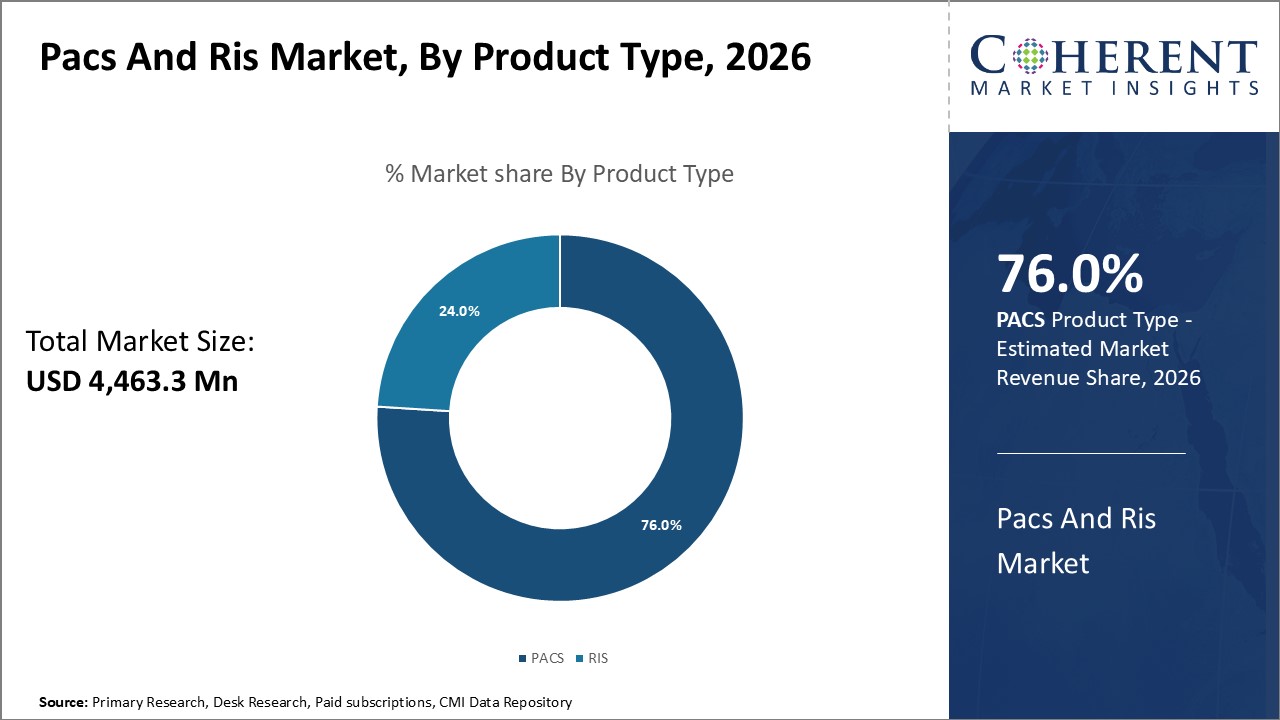
Why Does Picture Archiving and Communication System (PACS) Dominate the Global PACS and RIS Market?
Picture Archiving and Communication System (PACS) is projected to hold a market share of 64.5% in 2026, as it is the key system for archiving, storing and distributing medical images within a health care enterprise. With the increasing demand for advanced diagnostic imaging systems like CT, MRI, mammography and ultrasound, a significant amount of imaging data is produced and needs to be archived and retrieved efficiently. Additionally, care providers are more interested in employing enterprise-wide imaging to enhance work flow, improve communication between clinicians, and accelerate clinical decision-making.
A growing requirement for a scalable imaging solution across multi-site networks further boosts the demand for PACS. For instance, in October 2024, FUJIFILM Healthcare Americas unveiled Synapse VX (Viewer eXtension), which is included in version 7.4 of the Synapse PACS software. This new solution provides better access to images, faster image display speeds, and better performance in radiology and cardiology environments through a native application architecture. (Source: FUJIFILM Healthcare Americas)
- Current Industry Events of 2026
- Market Size Estimation
- Regional Breakdown
- Competitive Landscape
- Customer Intelligence
- Segmental Analysis
- Pricing Analysis
- Key Market Drivers, Challenges & Future Trends
- Customized Insights Section
Why Does Software Represent the Largest Component Segment in the PACS and RIS Market?
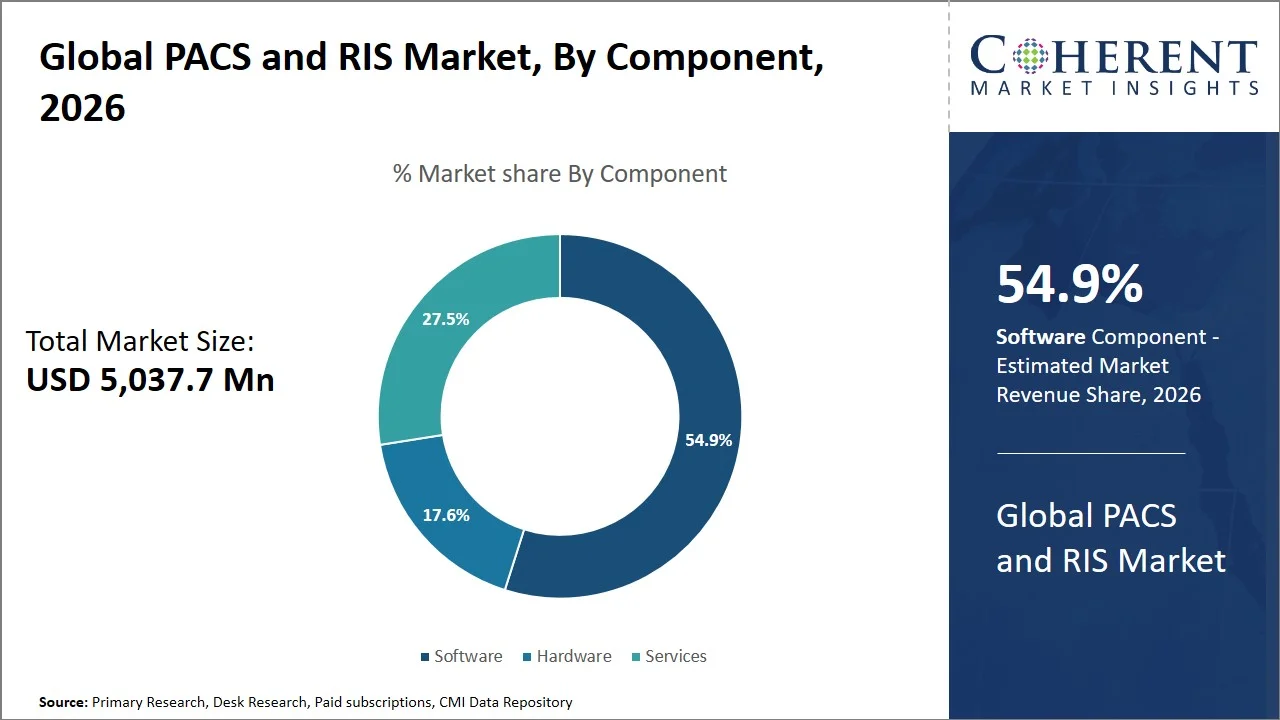
Software is projected to hold a market share of 54.9% in 2026, as it performs all critical operations including imaging management, workflow automation, interoperability and integration with clinical data. Organizations are increasing their investment in sophisticated software to enhance the automation of the radiology department workflow and enhance the reporting effectiveness and to support the connectivity between RIS and EHR/HIS systems.
The increase in AI-based applications, cloud native technologies, and enterprise imaging platform adoption will bolster the market growth. For instance, in April 2025, Konica Minolta Healthcare Americas, Inc. released a next-generation Exa PACS/RIS platform featuring integrated advanced visualization. The enhancement enables physicians to access advanced image processing and visualization tools within a unified workflow, thereby improving diagnostic efficiency through state-of-the-art image processing and visualization. (Source: Konica Minolta Healthcare Americas, Inc.)
Hospitals Segment Dominates the Global PACS and RIS Market
The hospitals segment is projected to hold a market share of 41.8% in 2026, due to high patient volumes, extensive diagnostic imaging requirement of integrated clinical workflows. These facilities need to use PACS and RIS systems in order to cope with the huge volume of imaging data, manage radiologic workflows and enabling departmental communication. The segment is growing due to the increasing adoption of enterprise-wide imaging solutions and the rising demand for data-driven clinical decision-making. For instance, in November 2024, Pro Medicus's subsidiary Visage Imaging entered into a ten-year agreement with Trinity Health to provide their Visage 7 Enterprise Imaging Platform. The agreement replaced Trinity Health's multi-system PACS installations across their network of 93 hospitals, emphasizing hospitals rising investments in enterprise imaging solutions as the need for easy image access and streamlined workflows for coordinated care increases.
Currents Events and their Impact
Current Events | Description and its Impact |
U.S. FDA Issues Draft Guidance for AI-Enabled Device Software Functions (January 2025) |
|
EU AI Act Implementation Begins for High-Risk Healthcare AI Systems (February 2025) |
|
(Source: Food and Drug Administration, European Commission)
PACS and RIS Market Dynamics
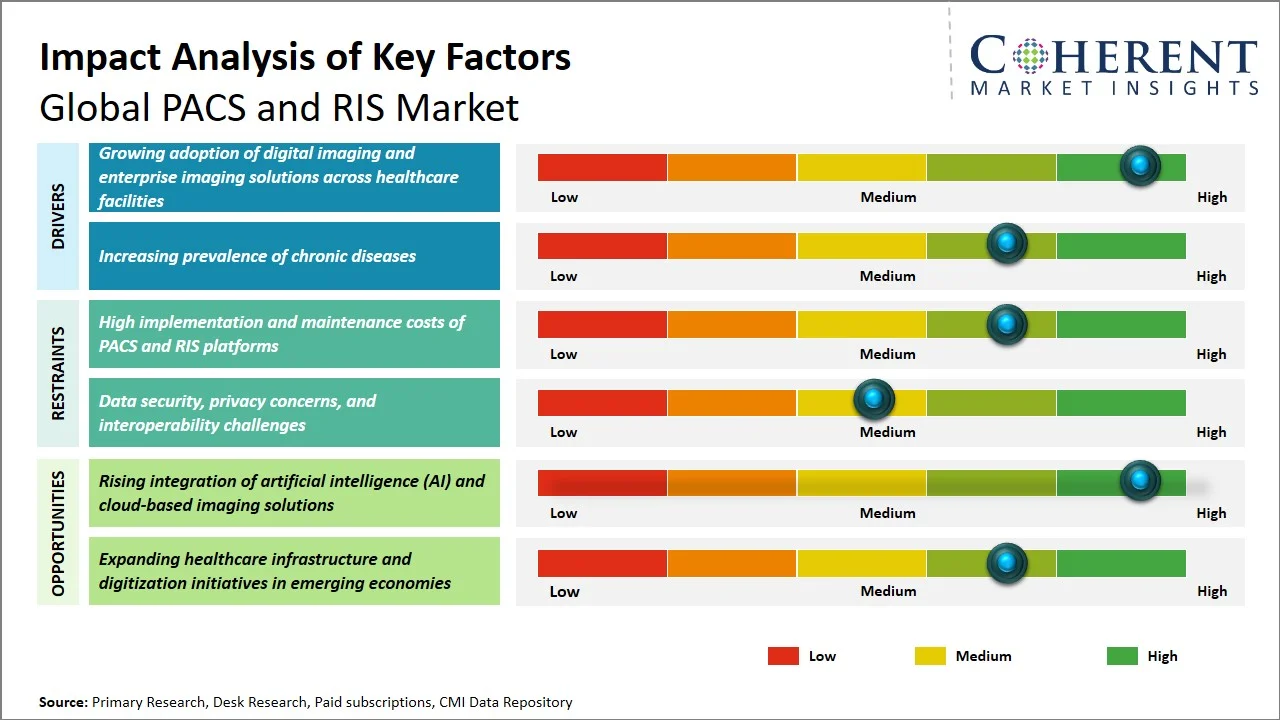
Market Drivers
- Growing adoption of digital imaging and enterprise imaging solutions across healthcare facilities: The healthcare facilities are implementing fully digital imaging platforms to make images more readily available to patients and other physicians, shorten reporting turnaround times, and to strengthen communication between the radiologist and physician. The demand for centrally stored images across multiple facilities makes it necessary for enterprise imaging solutions to become increasingly common in order to streamline clinical and operational work processes. For instance, in December 2023, NHS National Services Scotland (NSS) and Sectra AB entered into a multi-year contract for Sectra's cloud-based enterprise imaging platform, Sectra One Cloud, across Scotland's entire health system. The contract applies to all 15 NHS health boards and will allow radiology and other health professionals to share and view diagnostic images securely in a central imaging environment. (Source: Sectra AB)
- Increasing prevalence of chronic diseases: The increasing prevalence of chronic illnesses including cancer, cardiovascular disease, nervous system diseases and musculoskeletal conditions is responsible for a growing need for medical imaging diagnostic techniques on a global scale. This growth is attributable to the fact that such diseases generally require repeated imaging studies, contributing to vast quantities of imaging data. With increasing numbers of facilities seeking better methods for managing and accessing image data and to improve their image workflow, acceptance and implementation of PACS and RIS solutions is ever among medical facilities, and the hospital and the imaging center. For instance, according to the World Health Organization, non-communicable diseases have been responsible for over 43 million deaths worldwide, representing 75% of all deaths unrelated to pandemics. The mortality rate due to NCDs was about 18 million deaths per year before the age of 70 years, with about 82% of such early deaths occurring in developing countries. (Source: World Health Organization)
Emerging Trends
- Adoption of Zero-Footprint and Mobile Image Viewing Solutions: Health organizations are adopting zero-footprint viewers that allow clinicians to retrieve diagnostic images from web browsers, from various devices, without the need of installing software on the local computer, which can help remote consultation, teleradiology, and clinical decisions in distributed healthcare.
- Increasing Integration of Structured Reporting and Workflow Automation: Radiology departments are employing RIS-integrated structured reporting solutions to standardize diagnostic reports creation. These systems, combined with workflow automation functionality, are helping organizations to enhance reporting standardization, reduce turnaround time, and improve radiologist efficiency.
Regional Insights
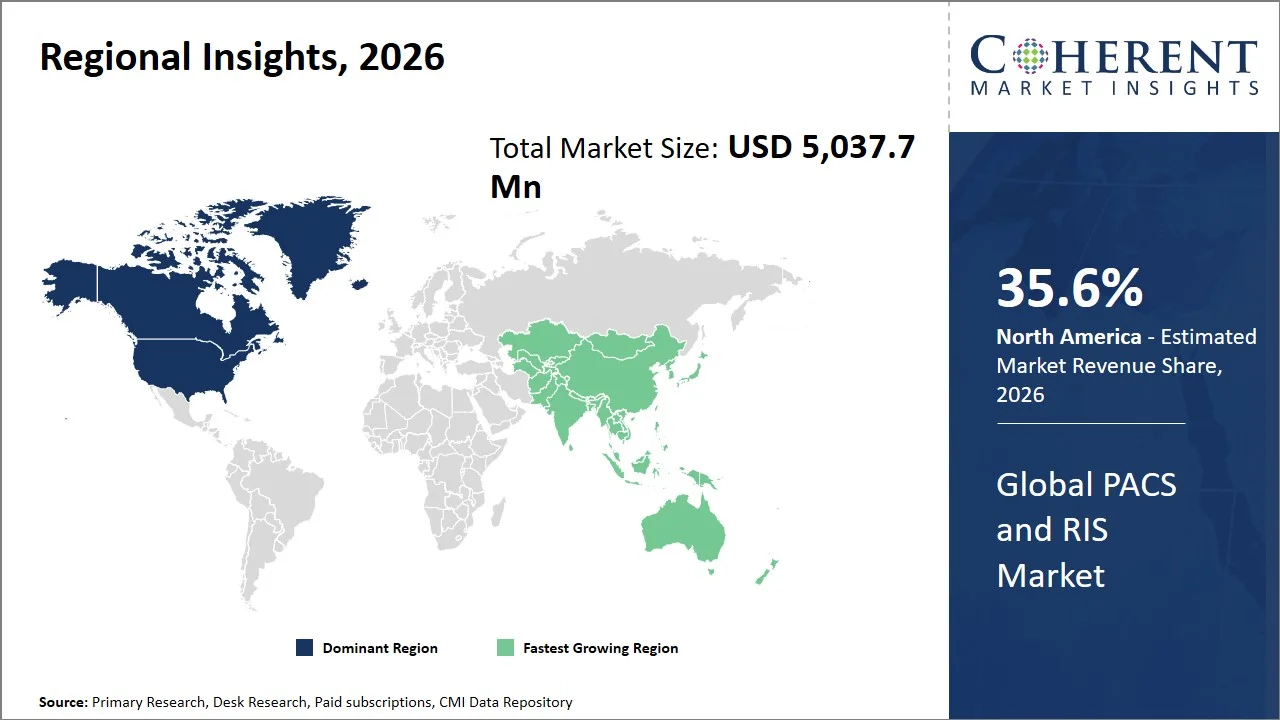
Why is North America a Strong Market for PACS and RIS?
North America leads the global PACS and RIS market, accounting for an estimated 35.6% share in 2026, as digital medical imaging solutions are widely adopted, hospitals are extensively networked and interoperable image management is widely sought after. Across the region, health facilities are deploying enterprise imaging platforms to simplify image access, enhance radiological workflows, facilitate inter-facility cooperation, and exploit burgeoning opportunities in cloud-based image management and standardized health data exchange. For instance, U.S. enterprise medical imaging 2024-2025 Vendor Assessment from IDC reports increasing adoption of enterprise imaging platforms where imaging data from radiology and non-radiology departments is stored together. Image vendors see strong demand for interoperable and cloud-based imaging solutions enabling better image accessibility, AI-enabled workflows and better coordination across providers. (Source: International Data Corporation)
Why Does the Asia Pacific PACS and RIS Market Exhibit High Growth?
The Asia Pacific PACS and RIS market is expected to exhibit the fastest growth with an estimated contribution of 22.0% share to the global market in 2026, due to rapid developing healthcare infrastructure and the surging demand for state-of-the-art medical imaging equipment as well as the growing initiative of government towards digitization of healthcare systems. For instance, the Indian government is pushing digital health forward via Ayushman Bharat Digital Mission (ABDM). This is enabling a complete digital health system by connecting health information records (interoperable), creating digital registries and sharing of health data, while encouraging healthcare institutions to use digital imaging and information systems, which will generate demand for PACS and RIS systems. (Source: National Health Authority) Additionally, increasing investments from both public health sector and private players further bolsters the market growth.
Global PACS and RIS Market Outlook for Key Countries
Why is the U.S. Leading Innovation and Adoption in the PACS and RIS Market?
The U.S. dominates the PACS and RIS market owing to its high rate of deployment of enterprise imaging platforms among large healthcare networks, and increased integration of AI capabilities in imaging workflows. Hospitals and health systems are opting for cloud PACS, vendor neutral archives and interoperable imaging systems to boost their workflow and data access. The robust presence of dominant imaging informatics vendors (such as GE HealthCare, Philips Healthcare, Oracle Health, Intelerad Medical Systems, and FUJIFILM Healthcare Americas) combined with ongoing technological advancements bolsters the country's market position.
Is Japan a Favorable Market for PACS and RIS?
Japan is a favorable market PACS and RIS with a sophisticated diagnostic imaging environment and a focused approach to digitalization. The market boasts of a significant number of CTs and MRIs, which produce high volume imaging data. Solutions to store, retrieve and workflow management this data are in demand. Moreover, the market is focusing on implementing enterprise imaging platform and interoperable health IT system to gain high level of radiology efficiency, image accessibility and clinical decisions.
Is China Emerging as a Key Growth Hub for the PACS and RIS Market?
China represents the key growth area for PACS and RIS market on account of massive growth in the development of health infrastructure and massive digitization in hospital functioning. Growing usage of enterprise imaging solutions has gained traction owing to rising numbers of diagnostic imaging data within healthcare provider institutions. Growing adoption of cloud-based health IT systems and up-gradation of Radiology departments will add to the growth of this market. Rise in adoption of multi-hospital networks will also contribute to the market growth on account of increase in the requirement of interoperable PACS and RIS solutions.
Why Does Germany Top the European PACS and RIS Market?
Germany is the leader in the European market for PACS and RIS, owing to the existence of well-developed healthcare infrastructure and advanced utilization of digital imaging technology throughout hospitals. Furthermore, Germany holds substantial numbers of installed imaging modalities, owing to which there is a constant need for sophisticated imaging management and radiology workflow applications. The increasing investments in enterprise imaging, cloud based PACS and interoperable healthcare IT systems by the health care professionals, are the driving forces for enhanced efficient and accessible information systems. Also, the modernization of digital hospital infrastructure keeps on adding power to the German position in the European market.
Is the PACS and RIS Market Developing in the U.K.?
The U.K. has emerged as a favorable market for PACS and RIS due to continuous update in the National Health Service (NHS) healthcare IT infrastructure. Many providers have already begun deploying enterprise imaging solutions, cloud image management solutions, and integrated radiology systems for better image availability and better integrated care. Centralized imaging archives and inter-site image sharing is one of the main factors that is driving the deployment of PACS and RIS. Furthermore, the extension of the digital health initiatives is fueling demand for advanced radiology workflow and imaging informatics solutions in the U.K. For instance, in July 2024, Agfa-Gevaert Group secured a significant tender covering 37 public hospitals in Greece to implement a universal imaging environment on its Enterprise Imaging platform. The goal is to standardize and provide image availability, optimize workflow, and allow easier collaboration among clinical departments. (Source: Agfa-Gevaert Group)
Technology Adoption Maturity and Future Outlook in the Global PACS and RIS Market
Technology | Evolution Stage | Current Adoption Trend | Key End Users | Future Outlook |
Traditional On-Premise PACS | Mature | Stable to Declining | Hospitals, Imaging Centers | Gradual migration to cloud platforms |
Cloud-Based PACS | Growth | Rapidly Increasing | Multi-site Hospital Networks | High-growth segment |
AI-Enabled PACS | Emerging | Increasing | Radiology Departments | Strong adoption potential |
Vendor Neutral Archive (VNA) | Growth | Increasing | Large Health Systems | Enhanced interoperability demand |
Enterprise Imaging Platforms | Emerging | Growing | Integrated Delivery Networks | Long-term industry direction |
How is the rising integration of artificial intelligence (AI) and cloud-based imaging solutions creating new growth opportunities in the PACS and RIS market?
Radiologists are using AI-powered imaging platforms to facilitate image interpretation, automate mundane and tedious tasks, and to improve the efficiency of their workflow in high volume diagnostic centers. Moreover, cloud-based services are becoming increasingly popular because of their scalability, cost-effectiveness, reduced hardware requirements, and ease of enabling remote access to images and collaborative environments across different medical facilities. Furthermore, these technologies enable easier interaction and interoperation between various imaging systems, Electronic Medical Records (EMRs) and other clinical applications.
As the efficiency, accessibility to data, and the capabilities for clinical decision-making of healthcare providers continue to grow in importance, there will be increasing adoption of AI-driven and cloud-native PACS and RIS solutions. For instance, in November 2023, Koninklijke Philips N.V. launched a next-generation version of their Vue PACS platform, cloud-based HealthSuite Imaging. Built on the Amazon Web Services (AWS) cloud, the offering includes AI-enhanced workflow orchestration, reporting, and high-speed remote access to imaging for diagnostic reads, enabling radiologists to improve their operational efficiency and workflows within their health organizations. (Source: Koninklijke Philips N.V.)
Market Players, Key Development, and Competitive Intelligence
Key Developments
- In May 2026, Essen Health Care launched RADIN Health—a single, cloud-based, all-in-one AI-powered RIS and PACS system that integrates all features for radiology information management, archiving images, scheduling, reporting, and patient interaction into a single interface. The launch is of a trend within healthcare toward the increased adoption of AI-powered and cloud-native imaging informatics.
- In November 2025, AI announced the release of the AVI platform, which enables healthcare professionals to implement an imaging artificial intelligence application in PACS and RIS environments. It helps to deploy and manage AI algorithms directly in a radiological workflow and significantly decreases integration challenges and increases operating efficiency. The launch underscores a further sign of the close integration of artificial intelligence and medical imaging informatics.
Competitive Landscape
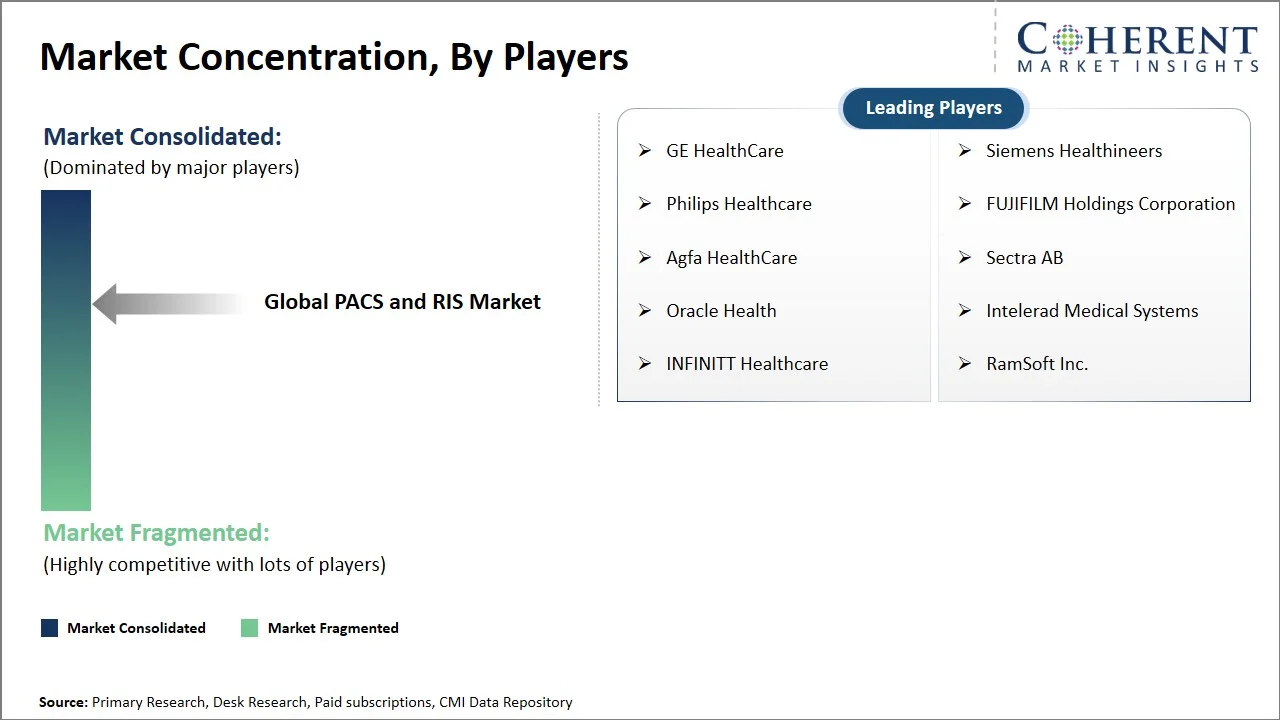
The global PACS and RIS market is moderately consolidated, with key players concentrating on cloud native imaging platforms, AI integration and enterprise-wide interoperability solutions. The companies in the PACS and RIS market are trying to enhance their position in the market by investing in next generation image management solutions, VNA and security enhancement of images. Partnership between IT vendors and healthcare providers, acquisition of healthcare IT companies and augmentation of cloud-based offerings are impacting the competitive structure. Key focus areas include:
- Integration of artificial intelligence for image analysis and workflow automation
- Expansion of cloud-based PACS and SaaS-enabled RIS platforms
- Development of interoperable and vendor-neutral imaging ecosystems
- Enhancement of cybersecurity and patient data protection capabilities
- Strategic collaborations with hospitals, imaging centers, and healthcare networks
Market Report Scope
PACS and RIS Market Report Coverage
| Report Coverage | Details | ||
|---|---|---|---|
| Base Year: | 2025 | Market Size in 2026: | USD 5,037.7 Mn |
| Historical Data for: | 2020 To 2024 | Forecast Period: | 2026 To 2033 |
| Forecast Period 2026 to 2033 CAGR: | 5.5% | 2033 Value Projection: | USD 7,325.2 Mn |
| Geographies covered: |
| ||
| Segments covered: |
| ||
| Companies covered: | GE HealthCare, Siemens Healthineers, Philips Healthcare, FUJIFILM Holdings Corporation, Agfa HealthCare, Sectra AB, Oracle Health, Intelerad Medical Systems, INFINITT Healthcare, and RamSoft Inc. | ||
| Growth Drivers: |
| ||
| Restraints & Challenges: |
| ||
Analyst Opinion (Expert Opinion)
- In the coming years, the future of PACS and RIS market will be defined by shift from standalone imaging system towards cloud based and AI powered enterprise imaging solution. Healthcare organizations are seeking unified, interoperable imaging solution across the domains of radiology, cardiology, pathology and beyond to streamline clinical workflow and improve decision-making. An increased focus on telehealth, remote diagnostics, and data-centric healthcare services will further propel demand for advanced PACS and RIS solutions.
- The maximum opportunities will probably exist within cloud-based PACS/RIS for hospital networks in Asia Pacific, especially China and India. Massive expansion in healthcare infrastructure coupled with growth in diagnostic imaging volume, digitalizing healthcare services, there is significant demand in scale enabled image management solutions. Hospitals with massive multi-site configurations will be the primary adopters as there would be need for integrated access of images across the networks and for more efficient operations.
- In order to obtain a competitive advantage, market participants must invest in a seamless integration of AI capabilities, improve interoperability with EMR/Enterprise Imaging Systems and broaden cloud-native portfolio in order to achieve market competitiveness. Future investments in security technologies, vendor-neutral archives and workflow automation will prove important in fulfilling various healthcare provider’s needs. Partnerships with hospital systems, diagnostic imaging services and healthcare IT companies will facilitate increased market penetration and continued growth.
Speak to the analyst
Want personalized insights?
Take the findings above to one of our principal consultants, or have the report rebuilt around the segments, geographies and competitors you actually track.
Market Segmentation
- Product Type Insights (Revenue, USD Mn, 2021 - 2033)
- Picture Archiving and Communication System (PACS)
- Radiology Information System (RIS)
- Component Insights (Revenue, USD Mn, 2021 - 2033)
- Software
- Hardware
- Services
- End User Insights (Revenue, USD Mn, 2021 - 2033)
- Hospitals
- Clinics
- Diagnostics Centers
- Others
- Regional Insights (Revenue, USD Mn, 2021 - 2033)
- North America
- U.S.
- Canada
- Latin America
- Brazil
- Argentina
- Mexico
- Rest of Latin America
- Europe
- Germany
- U.K.
- Spain
- France
- Italy
- Russia
- Rest of Europe
- Asia Pacific
- China
- India
- Japan
- Australia
- South Korea
- ASEAN
- Rest of Asia Pacific
- Middle East
- GCC Countries
- Israel
- Rest of Middle East
- Africa
- South Africa
- North Africa
- Central Africa
- North America
- Key Players Insights
- GE HealthCare
- Siemens Healthineers
- Philips Healthcare
- FUJIFILM Holdings Corporation
- Agfa HealthCare
- Sectra AB
- Oracle Health
- Intelerad Medical Systems
- INFINITT Healthcare
- RamSoft Inc.
Sources
Primary Research Interviews
- Radiologists and diagnostic imaging specialists utilizing PACS and RIS platforms
- Chief Information Officers (CIOs) and healthcare IT managers overseeing imaging informatics
- Radiology department administrators and imaging center directors
- Clinical workflow and interoperability specialists involved in imaging data integration
- Executives and product managers from PACS, RIS, and enterprise imaging solution providers
Stakeholders
- PACS and RIS software vendors and enterprise imaging platform providers
- Cloud service providers supporting medical image storage and management
- Healthcare IT system integrators and interoperability solution providers
- End-use Sectors
- Hospitals and integrated delivery networks (IDNs)
- Diagnostic imaging centers
- Ambulatory surgical centers (ASCs)
- Specialty clinics (oncology, cardiology, orthopedics)
- Academic medical centers and teaching hospitals
- Regulatory & Health Bodies
- U.S. Food and Drug Administration (FDA)
- European Commission Directorate-General for Health and Food Safety (DG SANTE)
- Medicines and Healthcare products Regulatory Agency (MHRA)
- National Medical Products Administration (NMPA)
- Pharmaceuticals and Medical Devices Agency (PMDA)
- Central Drugs Standard Control Organization (CDSCO)
Databases
- OECD Health Statistics Database
- WHO Global Health Observatory (GHO)
- Eurostat Health Database
- American College of Radiology (ACR) Data Science Institute Resources
- FDA Medical Device Registration and Listing Database
- Healthcare Information and Management Systems Society (HIMSS) Analytics Database
Magazines
- Radiology Today
- Imaging Technology News (ITN)
- Axis Imaging News
- Healthcare Informatics
Journals
- Journal of Digital Imaging
- European Radiology
- American Journal of Roentgenology (AJR)
- Insights into Imaging
Associations
- Radiological Society of North America (RSNA)
- European Society of Radiology (ESR)
- Society for Imaging Informatics in Medicine (SIIM)
- Healthcare Information and Management Systems Society (HIMSS)
Public Domain Sources
- World Health Organization (WHO) – Digital Health and Health Information Systems
- Centers for Disease Control and Prevention (CDC) – Medical Imaging and Health Informatics Resources
- Office of the National Coordinator for Health Information Technology (ONC) – EHR and Health IT Adoption Statistics
- European Commission – European Health Data Space (EHDS) and eHealth Initiatives
- National Health Commission (NHC) – Healthcare Infrastructure and Digital Health Statistics
Proprietary Elements
- CMI Data Analytics Tool, Proprietary CMI Existing Repository of information for last 10 years.
Get access to 250+ pages report
Every segment, forecast, competitor profile and data table behind the analysis above — available for instant download.
- ESOMAR Member
- ISO 9001:2015 Certified
- D-U-N-S Registered
- GDPR & CCPA Compliant
Missing comfort of reading report in your local language? Find your preferred language:
Transform your Strategy with Exclusive Trending Reports
Frequently Asked Questions
The global PACS and RIS market is estimated to be valued at USD 5,037.7 Mn in 2026 and is expected to reach USD 7,325.2 Mn by 2033.
Picture Archiving and Communication System (PACS) dominates due to its critical role in the storage, retrieval, sharing, and management of medical imaging data across healthcare facilities.
Picture Archiving and Communication System (PACS) and Radiology Information System (RIS) are healthcare IT solutions used to manage medical images and radiology workflows, respectively.
The CAGR of the global PACS and RIS market is projected to be 5.5% from 2026 to 2033.
Growing adoption of digital imaging and enterprise imaging solutions across healthcare facilities, and increasing prevalence of chronic diseases are the major factors driving the growth of the global PACS and RIS market.
PACS enables instant digital access to medical images, reducing retrieval time and improving collaboration among healthcare professionals.
Interoperability allows seamless exchange of imaging and patient data between PACS, RIS, EHRs, and other healthcare information systems.