

Recombinant Human (EGF) Market Size and Share Analysis - 2026 To 2033
The Recombinant Human (EGF) market is anticipated to grow at a CAGR of 8.6% with USD 3.04 Bn in 2026 and is expected to reach USD 5.4 Bn in 2033. The rising cases of chronic wounds, corneal damage, acute wounds (USD24 Bn), and others are expected to drive growth of recombinant human EGF market over the forecast period. Moreover, the increasing number of research and development activities for exploring various uses of recombinant human EGF is expected to aid in the growth of the market over the forecast period.
Key Takeaways
- Heparin Binding-EGF is expected to account the largest share of 30% in 2026, because it has a stronger combination of clinical usefulness, commercial maturity, and biological versatility compared to the other EGF-family proteins. Around 589 million adults aged 20 to 79 are living with diabetes worldwide, which means 1 in every 9 adults has the disease. This number is expected to increase to 853 million by 2050.
- 98% SDS-PAGE will dominate with 50% in 2026, required for clinical use, preferred by regulators, more reliable biologically, and used in high-value pharmaceutical India has the largest number of U.S. FDA-approved pharmaceutical manufacturing plants outside the United States. It also has the world's third-largest active pharmaceutical ingredient (API) industry and supplies about 57% of the APIs listed by the World Health Organization (WHO).
- Carrier protein will dominate with 60% in 2026, as it is more stable, easier to use, and more commercially practical across pharma, cosmetic, and research applications.
- Lyophilized Powder will dominate with 65% in 2026, it is more stable, easier to store and transport, and better suited for long-term use in pharmaceutical and biotech applications. The value of pharmaceutical licensing and partnership (PLS) deals went above USD 65 Bn in the first quarter of 2026, making it the strongest first quarter since 2020.
- Wound healing will dominate with 45% in 2026, it is the most clinically proven, widely used, and commercially scalable application of rhEGF, driven by high global demand for skin and tissue repair treatments. The global advanced wound care market exceeds USD 12 Bn, providing a large commercial market for rhEGF-based skin as well as tissue repair products.
- North America is expected to acquire the dominant share of 45% in 2026, as it combines strong biotech innovation, high healthcare spending, advanced regulatory systems, and early adoption of biologic therapies like rhEGF. U.S. medicine spending at net prices is forecast to grow 4.5 to 7.5% through 2030, while 6 to 9% at list prices.
Segmental Insights
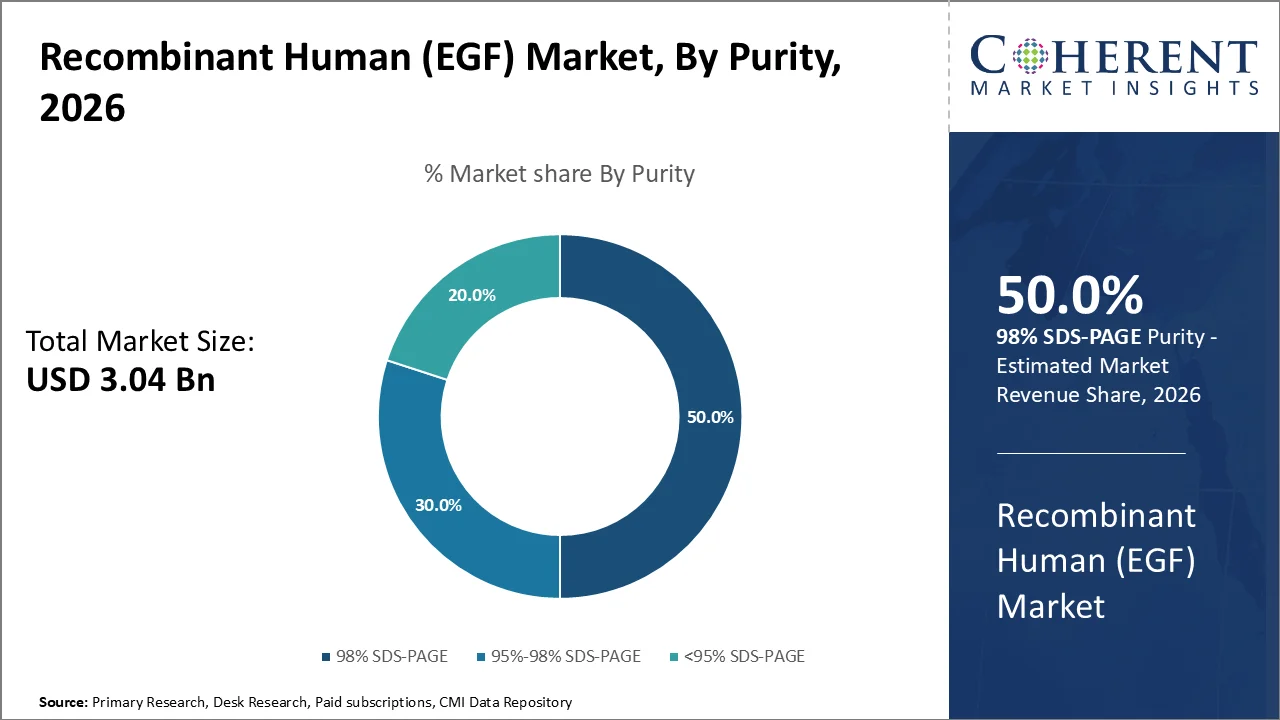
98% SDS-PAGE holds the Largest Market Share
Based on purity, 98% SDS-PAGE dominates the market, accounting for a significant 50% share in 2026, The ≥98% SDS-PAGE purity grade sets the gold standard for Recombinant Human EGF (rhEGF) across a broad spectrum of high-stakes applications, is stimulating the market growth.
Pharmaceutical-grade recombinant proteins intended for cell culture media supplementation, wound healing therapeutics, tissue engineering scaffolds, clinical-grade biomanufacturing, etc. This must conform to rigorous purity thresholds to remove any risk of adventitious agents, host cell protein contamination, endotoxin interference, etc., that could compromise biological assay outcomes or patient safety. Wound care is expected to reach a value of USD 10.4 billion by 2033. This growth is driven by rising demand for advanced wound treatments and increasing demand across different regions of the world.
Regulatory bodies including the U.S. Food and Drug Administration (FDA), the European Medicines Agency (EMA), etc., mandate that biological substances used in drug manufacturing processes or as active pharmaceutical ingredients (APIs) must show consistently better purity levels verified through validated analytical methods including SDS-PAGE, HPLC, and mass spectrometry.
- Current Industry Events of 2026
- Market Size Estimation
- Regional Breakdown
- Competitive Landscape
- Customer Intelligence
- Segmental Analysis
- Pricing Analysis
- Key Market Drivers, Challenges & Future Trends
- Customized Insights Section
Carrier Protein holds the Largest Market Share
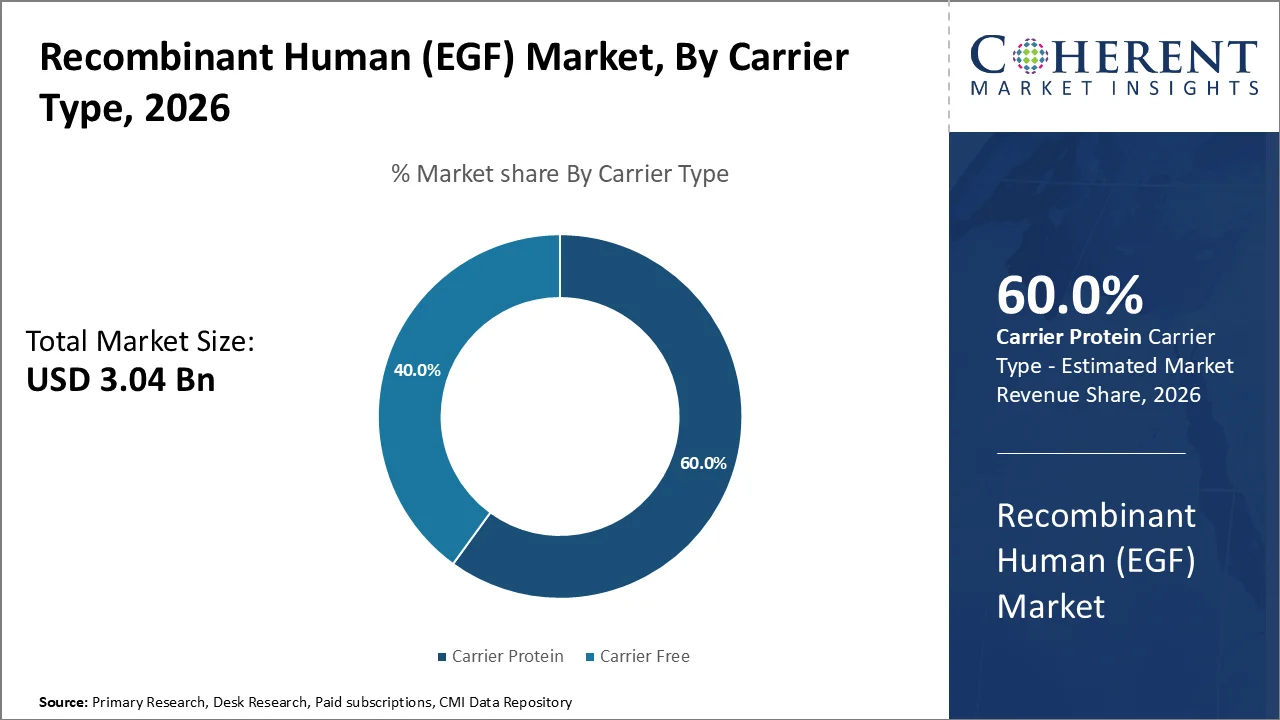
Based on carrier type, carrier protein dominates the market, accounting for a significant 60% share in 2026, the well-established role in enhancing the stability, shelf life, as well as functional efficacy of recombinant proteins during storage, handling, and downstream experimental applications are the factors propelling the growth.
Carrier proteins such as bovine serum albumin (BSA) are commonly co-formulated with recombinant human EGF to prevent adsorption of the active protein to container surfaces, minimize protein aggregation, and maintain biological activity over extended periods.
This technical advantage has made Carrier Protein-based formulations a preferred choice among a wide range of end users, including academic research laboratories, pharmaceutical development organizations, and contract research organizations (CROs) that routinely handle sensitive growth factor preparations. The pharmaceutical industry spends about 30% of its income on research and development (R&D), which is much higher than many other research-heavy industries in OECD countries.
The scientific rationale behind using carrier proteins is deeply embedded in standard laboratory protocols, as well as this has created a robust, self-reinforcing adoption cycle across the global research community.
Why is Heparin Binding-EGF Acquiring the Largest Market Share?
Heparin Binding-EGF is projected to account for the largest share of product type in 2026, representing approximately 30% of the total volume. HB-EGF is a member of the EGF superfamily that is synthesized as a transmembrane precursor protein and is capable of signaling in its soluble as well as membrane-anchored types.
This dual-functional nature offers it with a unique advantage for in vitro experimental models as well as in vivo therapeutic applications, setting its utility across a broad variety of biological investigations compared to many of its counterparts.
The National Institutes of Health (NIH) has supported various research programs examining HB-EGF's role in cardiac repair, particularly in myocardial infarction recovery, where the protein has shown commendable capacity to stimulate cardiomyocyte proliferation as well as lower infarct-related fibrosis.
Lyophilized Powder holds the Largest Market Share
Based on formulation, Lyophilized powder dominates the market, accounting for a significant 65% share in 2026, the superior stability, extended shelf life, as well as high adoption across pharmaceutical manufacturing, research laboratories, and clinical applications worldwide are the growth-inducing factors. In 2023, more than 93,279 laboratories, 14,549 inspection bodies, 746 proficiency testing providers, and 308 reference material producers were accredited by ILAC MRA signatories worldwide.
The biochemical nature of EGF as a protein, which is inherently vulnerable to degradation under conditions of heat, moisture, as well as light is another growth-inducing factor. Lyophilization, or freeze-drying, addresses these vulnerabilities effectively by discard nearly all moisture content from the protein formulation, hence preserving its biological activity as well as structural integrity over extended periods without the need for ultra-cold storage infrastructure.
Furthermore, the critical requirement for maintaining protein bioactivity throughout the supply chain is stimulating the growth of the market. Recombinant Human EGF is a delicate polypeptide consisting of 53 amino acid residues that are highly susceptible to aggregation, oxidation, as well as proteolytic degradation when stored in aqueous environments for a long duration.
Wound Healing holds the Largest Market Share
Based on application, wound healing dominates the market, accounting for a significant 45% share in 2026, owing to its well-established clinical utility, widespread adoption across healthcare settings, and a robust pipeline of EGF-based therapeutic formulations that have demonstrated consistent efficacy in accelerating tissue repair and regeneration across diverse wound types.
The global burden of chronic and acute wounds, which continues to escalate in parallel with rising incidences of diabetes, vascular disorders, and surgical procedures is propelling the growth. It is estimated that nearly 1 billion people worldwide are affected by either acute or chronic wounds.
Recombinant Human EGF has emerged as a critical therapeutic agent in this space as its fundamental biological role in stimulating cellular proliferation, migration, and differentiation all of which are major mechanisms underlying tissue regeneration.
The protein binds to EGF receptors on the surface of epithelial and fibroblast cells, triggering downstream signaling cascades that promote angiogenesis as well as extracellular matrix remodeling, hence majorly shortening wound healing timelines along with improving clinical results.
Innovations in Protein Engineering and Stability Enhancement: A major breakthrough in Recombinant Human (EGF)
A major technological advancement impacting the rhEGF market involves protein engineering strategies aimed at improving molecular stability, half-life, and receptor binding efficiency. Native EGF has a relatively short biological half-life, limiting its therapeutic window. Researchers have addressed this challenge through several innovative approaches:
PEGylation Technology: Conjugating polyethylene glycol (PEG) molecules to rhEGF has proven effective in extending its circulatory half-life and protecting it from proteolytic degradation. PEGylated rhEGF formulations demonstrate sustained activity, reducing dosing frequency and improving patient compliance in chronic wound management protocols.
Fusion Protein Technology: Scientists have developed rhEGF fusion proteins where the growth factor is linked to carrier proteins such as albumin or immunoglobulin Fc fragments. These engineered constructs maintain biological activity while significantly improving pharmacokinetic profiles, making them attractive candidates for next-generation wound healing products.
Site-Directed Mutagenesis: Advanced genetic engineering techniques allow precise amino acid substitutions that enhance rhEGF's thermal stability, resistance to oxidation, and receptor binding affinity. These engineered variants demonstrate superior performance under physiological conditions compared to native sequences.
Current Events and Their Impact on the Recombinant Human (EGF) Market
Current Event | Description and its Impact |
Stricter biologics regulation in major markets (FDA, EMA, NMPA updates) |
|
Expansion of advanced wound care reimbursement in the U.S. and Europe |
|
Recombinant Human (EGF) Market Trends
- One revolutionizing trends in the market is its high adoption in chronic wound treatments, including diabetic foot ulcers, pressure wounds, burn injuries, etc.
- The escalating global burden of diabetes with over 537 million adults currently living with the condition (IDF, 2021) has made an urgent demand for advanced wound care solutions, in which rhEGF-based therapies have shown clinically proven results.
- Major technological developments in microbial expression systems (particularly E. coli and Pichia pastoris-based production platforms) as well as mammalian cell culture technologies have effectively improved the yield, purity, and scalability of rhEGF manufacturing.
- An increasingly important trend is the utilization of rhEGF and EGF-receptor (EGFR) pathway modulation in oncology research and drug delivery systems.
Regional Insights
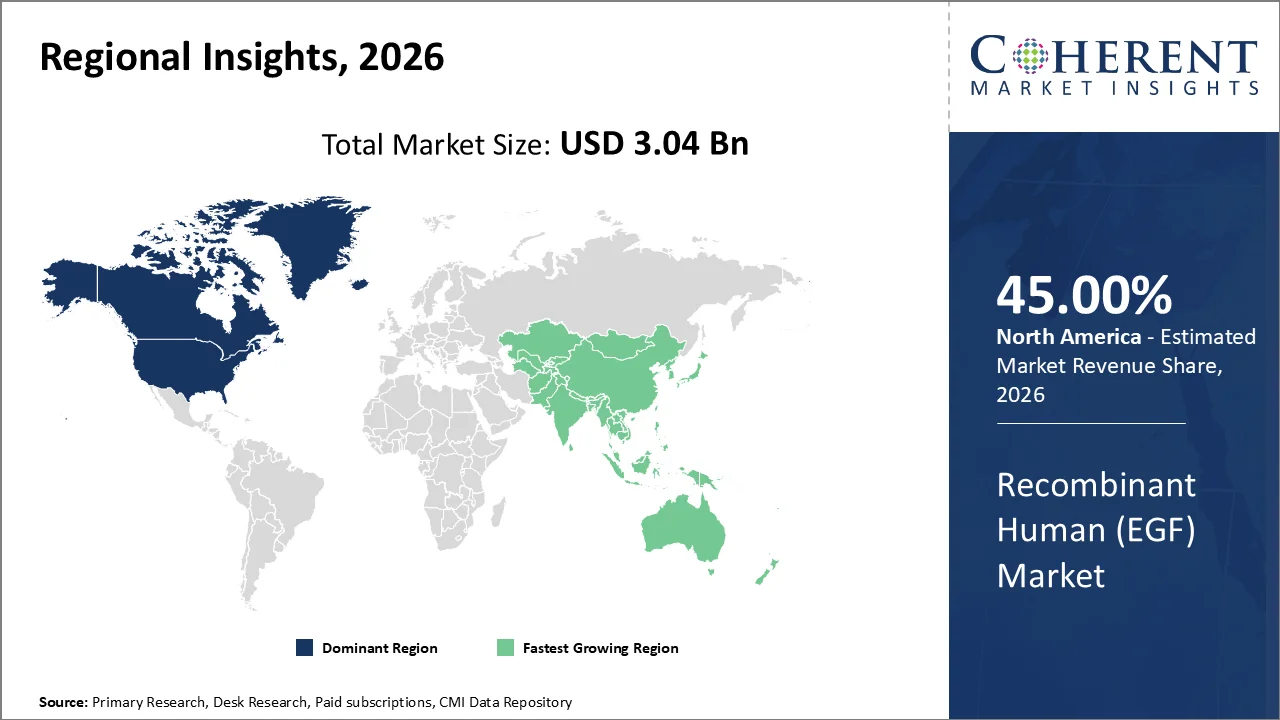
North America dominates owing to its deeply entrenched pharmaceutical and biotechnology infrastructure
North America account 45% market share in 2026, owing to its deeply entrenched pharmaceutical and biotechnology infrastructure, robust research and development ecosystem, and highly advanced clinical application framework that collectively drive consistent demand for recombinant human EGF across multiple end-use sectors. In 2022, biotechnology research and development made up 17% of all research and development in the United States, totaling about USD 117.1 billion out of USD 691.5 billion.
The United States, in particular, serves as the epicenter of biopharmaceutical innovation, supported by federal agencies including the National Institutes of Health (NIH), the U.S. Food and Drug Administration (FDA), etc., which are establishing clear regulatory pathways for recombinant protein-based therapeutics as well as wound care biologics.
According to the NIH National Institute of General Medical Sciences, the United States alone accounts for a disproportionately large share of global biomedical research funding, which directly catalyzes laboratory-grade and clinical-grade recombinant EGF utilization.
Asia Pacific Recombinant Human (EGF) Market Trends
The Asia Pacific region is poised to be the fastest-growing region through 2026-2033, expanding at a CAGR of approximately 6.8%. An accelerating convergence of government-backed biotech initiatives, a rapidly expanding pharmaceutical manufacturing base, as well as increasing clinical awareness of EGF's therapeutic relevance in wound management and anti-aging biologics are the growth inducing factors. China’s pharmaceutical industry earned more than 1.7 trillion yuan in revenue in 2025.
Countries such as China, South Korea, Japan, etc., have significantly increased their domestic production capabilities for recombinant proteins, lowering historical dependency on Western suppliers. The Ministry of Food and Drug Safety (MFDS) of South Korea has been particularly active in granting regulatory approvals for EGF-based cosmeceutical as well as wound-healing products, with domestic companies including Hugel, Daewoong Pharmaceutical, etc., expanding their biological portfolios.
In China, the National Medical Products Administration (NMPA) has been progressively revising its biologics approval guidelines to align with ICH standards, which has made a favorable environment for recombinant human EGF commercialization.
Robust Biotechnology and Pharmaceutical Infrastructure is Accelerating the Recombinant Human (EGF) Market Demand in United States
The U.S. contributes the highest share in the recombinant human epidermal growth factor (EGF) market in North America, owing to its exceptionally robust biotechnology and pharmaceutical infrastructure, which serves as the backbone for both production and consumption of advanced biological molecules.
The United States maintains one of the most comprehensive regulatory ecosystems globally through the U.S. Food and Drug Administration (FDA), which has established well-defined pathways for recombinant protein-based therapeutics as well as cosmeceutical ingredients, thereby accelerating commercial adoption of recombinant human EGF across multiple end-use verticals including wound care, dermatology, as well as regenerative medicine.
According to the U.S. Centers for Disease Control and Prevention (CDC), approximately 37.3 million Americans are living with diabetes, and diabetic foot ulcers remain a leading complication requiring advanced wound healing interventions, leading recombinant human EGF as a clinically relevant therapeutic agent within the American healthcare continuum.
China Recombinant Human (EGF) Market Trends
China contributes the highest share in the Recombinant Human Epidermal Growth Factor (rhEGF) market in APAC owing to its highly advanced biopharmaceutical manufacturing infrastructure, well-established regulatory frameworks, and strong government-backed initiatives promoting biotechnology innovation.
The strategic emphasis of the country on life sciences and biopharmaceutical development, particularly through national programs such as the "Made in China 2025" initiative and the 14th Five-Year Plan, which prioritize biotechnology as a pillar industry.
The National Medical Products Administration (NMPA) of China has ease approval pathways for recombinant protein-based therapeutics, supporting domestic manufacturers to invest heavily in rhEGF production for wound healing, burn treatment, as well as cosmetic dermatology applications. Chinese firms such as Shenzhen Neptunus Interlong Bio-Tech Co., Ltd. have been actively manufacturing and commercializing rhEGF-based topical formulations, establishing a robust domestic supply chain.
Who are the Major Companies in Recombinant Human (EGF) Industry
Some of the major key players in Recombinant Human (EGF) market include, Thermo Fisher Scientific, FUJIFILM Irvine Scientific, Inc., ScienCell Research Laboratories, R&D Systems, Abcam PLC, Cell Sciences, Inc., Eurofins DiscoverX, PeproTech, Inc., RayBiotech, Inc., Prospec-Tany TechnoGene Ltd., Miltenyi Biotec, Tonbo Biosciences, BioLegend, Inc., EnQuire BioReagents, STEMCELL Technologies Inc., Cell Guidance Systems Ltd., Creative BioMart, Sino Biological Inc., and BioVision, Inc.
Key News
- In July 2025, Eleva, a biotechnology company, has started giving the first dose in a Phase 1 clinical trial of its new treatment called Factor H (CPV-104). This study is testing the drug in healthy volunteers to see if it is safe and how the body reacts to different doses. The treatment is being developed for a rare kidney disease called C3-Glomerulopathy (C3G).
- In May 2026, PeptiGrowth Inc., a biotechnology company based in Tokyo, has announced that a research study from the Institute of Science Tokyo has been published in an international scientific journal called Stem Cell Research & Therapy.
Market Report Scope
Recombinant Human (EGF) Market Report Coverage
| Report Coverage | Details | ||
|---|---|---|---|
| Base Year: | 2025 | Market Size in 2026: | USD 3.04 Bn |
| Historical Data for: | 2020 To 2024 | Forecast Period: | 2026 To 2033 |
| Forecast Period 2026 to 2033 CAGR: | 8.6% | 2033 Value Projection: | USD 5.4 Bn |
| Geographies covered: |
| ||
| Segments covered: |
| ||
| Companies covered: | Thermo Fisher Scientific, FUJIFILM Irvine Scientific, Inc., ScienCell Research Laboratories, R&D Systems, Abcam PLC, Cell Sciences, Inc., Eurofins DiscoverX, PeproTech, Inc., RayBiotech, Inc., Prospec-Tany TechnoGene Ltd., Miltenyi Biotec, Tonbo Biosciences, BioLegend, Inc., EnQuire BioReagents, STEMCELL Technologies Inc., Cell Guidance Systems Ltd., Creative BioMart, Sino Biological Inc., and BioVision, Inc. | ||
| Growth Drivers: |
| ||
| Restraints & Challenges: |
| ||
Analyst Opinion
- The Recombinant Human Epidermal Growth Factor (EGF) market is witnessing remarkable momentum, primarily driven by its expanding applications across wound healing, skincare, and regenerative medicine sectors.
- The high prevalence of chronic wounds, diabetic ulcers, as well as burn injuries worldwide has majorly accelerated the clinical adoption of rhEGF-based therapeutic formulations. The risk of ulcers coming back is high, with about 42% of cases returning within 1 year and 65% returning within 5 years.
- However, the market is facing notable restraints, including stringent regulatory frameworks governing recombinant protein-based therapeutics as well as the high production costs associated with sophisticated biomanufacturing processes.
- Protein stability challenges and short shelf-life of EGF formulations continue to pose formulation-related hurdles for manufacturers. Intellectual property complexities and biosimilar competition also create pricing pressures across established markets.
Speak to the analyst
Want personalized insights?
Take the findings above to one of our principal consultants, or have the report rebuilt around the segments, geographies and competitors you actually track.
Market Segmentation
- By Product Type (Revenue, USD Bn, 2021-2033)
- Heparin Binding-EGF
- Transforming Growth Factor-α
- Epigen
- Neuregulins
- Amphiregulin
- Betacellulin
- Others
- By Purity (Revenue, USD Bn, 2021-2033)
- 98% SDS-PAGE
- 95%-98% SDS-PAGE
- <95% SDS-PAGE
- By Carrier Type (Revenue, USD Bn, 2021-2033)
- Carrier Protein
- Carrier Free
- By Formulation (Revenue, USD Bn, 2021-2033)
- Lyophilized Powder
- Liquid
- Others
- By Application (Revenue, USD Bn, 2021-2033)
- Wound Healing
- Gastrointestinal Ulceration
- Brain Tumor Therapy
- Others
- By Region (Revenue, USD Bn, 2021-2033)
- North America
- U.S.
- Canada
- Latin America
- Brazil
- Mexico
- Argentina
- Rest of Latin America
- Europe
- Germany
- U.K.
- France
- Italy
- Spain
- Russia
- Rest of Europe
- Asia Pacific
- China
- India
- Japan
- Australia
- South Korea
- ASEAN
- Rest of Asia Pacific
- Middle East
- GCC
- Israel
- Rest of Middle East
- Africa
- South Africa
- Central Africa
- North Africa
- North America
Sources
Primary Research Interviews
- Biotechnology Scientists & Researchers
- Pharmaceutical Manufacturing Executives
- Cell Culture & Regenerative Medicine Specialists
- Clinical & Medical Affairs Professionals
- Others
Databases
- PubChem (NIH Chemical Database),
- Cortellis Drug Intelligence Database
- BioPharmGPS
- Global Biotech & Pharma Market Database
- Others
Magazines
- BioPharm International
- Genetic Engineering & Biotechnology News (GEN)
- Drug Discovery & Development Magazine
- Pharmaceutical Technology Magazine
- Others
Journals
- Journal of Biotechnology
- Biomaterials and Bioengineering Journal
- Growth Factors Journal
- Others
Newspapers
- The Wall Street Journal (Pharma & Biotech Section)
- Financial Times (Life Sciences)
- Reuters Health & Pharma News
- BioPharma Dive
- Others
Associations
- Biotechnology Innovation Organization (BIO)
- International Society for Pharmaceutical Engineering (ISPE)
- Association for Molecular Pathology (AMP)
- Pharmaceutical Research and Manufacturers of America (PhRMA)
- Others
Public Domain Sources
- U.S. Food and Drug Administration (FDA) Official Portal
- World Health Organization (WHO) – Biologics & Biosimilars Data
- National Institutes of Health (NIH) – PubMed & NLM
- European Medicines Agency (EMA) – Biopharmaceuticals Registry
- Others
Proprietary Elements
- CMI Data Analytics Tool
- Proprietary CMI Existing Repository of information for last 10 years
Get access to 250+ pages report
Every segment, forecast, competitor profile and data table behind the analysis above — available for instant download.
- ESOMAR Member
- ISO 9001:2015 Certified
- D-U-N-S Registered
- GDPR & CCPA Compliant
Missing comfort of reading report in your local language? Find your preferred language:
Transform your Strategy with Exclusive Trending Reports
Frequently Asked Questions
The Recombinant Human (EGF) market is expected to reach USD 5.4 Bn in 2033.
Major players operating in the global Recombinant Human (EGF) market include Thermo Fisher Scientific, FUJIFILM Irvine Scientific, Inc., ScienCell Research Laboratories, R&D Systems, Abcam PLC, Cell Sciences, Inc., Eurofins DiscoverX, PeproTech, Inc., RayBiotech, Inc., Prospec-Tany TechnoGene Ltd., Miltenyi Biotec, Tonbo Biosciences, BioLegend, Inc., EnQuire BioReagents, STEMCELL Technologies Inc., Cell Guidance Systems Ltd., Creative BioMart, Sino Biological Inc., and BioVision, Inc.
The high cost and disparity in efficiency of various recombinant human EGF is one of the major factors that is expected to hamper growth of the market over the forecast period.
Increasing number of product launches, rising cases of diabetes and chronic wounds, increasing research and development activities by the market players are driving growth of the global Recombinant Human (EGF) market.
The Recombinant Human (EGF) market is anticipated to grow at a CAGR of 8.6% between 2026 and 2033.
Among regions, North America is expected to account for a largest market share in the global Recombinant Human (EGF) market over the forecast period.
The epidermal growth factor receptor (EGFR) family is a subclass of receptor tyrosine kinase (RTK) proteins and consists of 4 members: EGFR (ErbB1, HER1), ErbB2 (HER2, neu in rodents), ErbB3 (HER3) and ErbB4 (HER4).