

Global Advanced Cell Manufacturing Market Size and Forecast – 2026 To 2033
The global advanced cell manufacturing market is expected to grow from USD 9.35 Bn in 2026 to USD 29.78 Bn by 2033, registering a compound annual growth rate (CAGR) of 18% from 2026 to 2033. The market for global advanced cell manufacturing is poised for significant expansion, fueled by the rising global burden of cancer and the increasing need for advanced cell-based therapies, particularly CAR-T and other cellular immunotherapies.
According to the World Health Organization (WHO), 20.6 million new cancer cases were reported globally in 2024, with annual cases projected to reach 35 million by 2050, highlighting the growing need for advanced and scalable cancer treatment modalities, including cell-based therapies such as CAR-T and other cellular immunotherapies.
Key Takeaways of the Global Advanced Cell Manufacturing Market
- Immune Cells are projected to hold 52.4% of the global advanced cell manufacturing market share in 2026, making it dominant cell type segment across North America due to the region’s established CAR-T manufacturing and regulatory framework. For instance, the U.S. FDA’s 2024 guidance provides specific CMC recommendations for both autologous and allogeneic CAR-T products, covering manufacturing controls for these genetically modified immune-cell therapies.
- Autologous cell manufacturing is projected to hold 43.6% of the global advanced cell manufacturing market share in 2026, making it dominant manufacturing type segment across Europe due to region’s expanding ATMP development and regulated manufacturing ecosystem. For instance, the European Medicines Agency’s guideline, effective July 2025, establishes quality requirements for investigational cell and gene therapy products, including manufacturing-related quality data required for clinical development.
- Closed manufacturing systems are projected to hold 23.8% of the global advanced cell manufacturing market share in 2026, making it dominant manufacturing platform segment with Asia Pacific gaining importance as regulatory requirements for controlled cell processing strengthen. For instance, Japan’s Ministry of Health, Labour and Welfare revised its microbiological safety guidelines for specified cell-processed products in June 2026, including requirements applicable to cell-processing manufacturing facilities, reinforcing the need for controlled and contamination-managed production environments.
- North America market maintains dominance with an expected share of 43.7% in 2026, bolstered by its mature regulatory framework and established cell-therapy manufacturing ecosystem. For instance, in August 2026, the U.S. FDA issued draft guidance on potency assessment of active immunotherapy products, addressing potency testing relevant to the development and manufacturing of cellular immunotherapies.
- Asia Pacific is expected to exhibit the fastest growth in the global advanced cell manufacturing market, registering an estimated CAGR of 18.9% during 2026–2033, driven by expanding regenerative-medicine manufacturing infrastructure and regulatory oversight. For instance, in September 2026, Japan's MHLW opened a dedicated information and reporting portal for regenerative medicine strengthening regulatory monitoring of regenerative-medicine activities in the country.
Segmental Insights
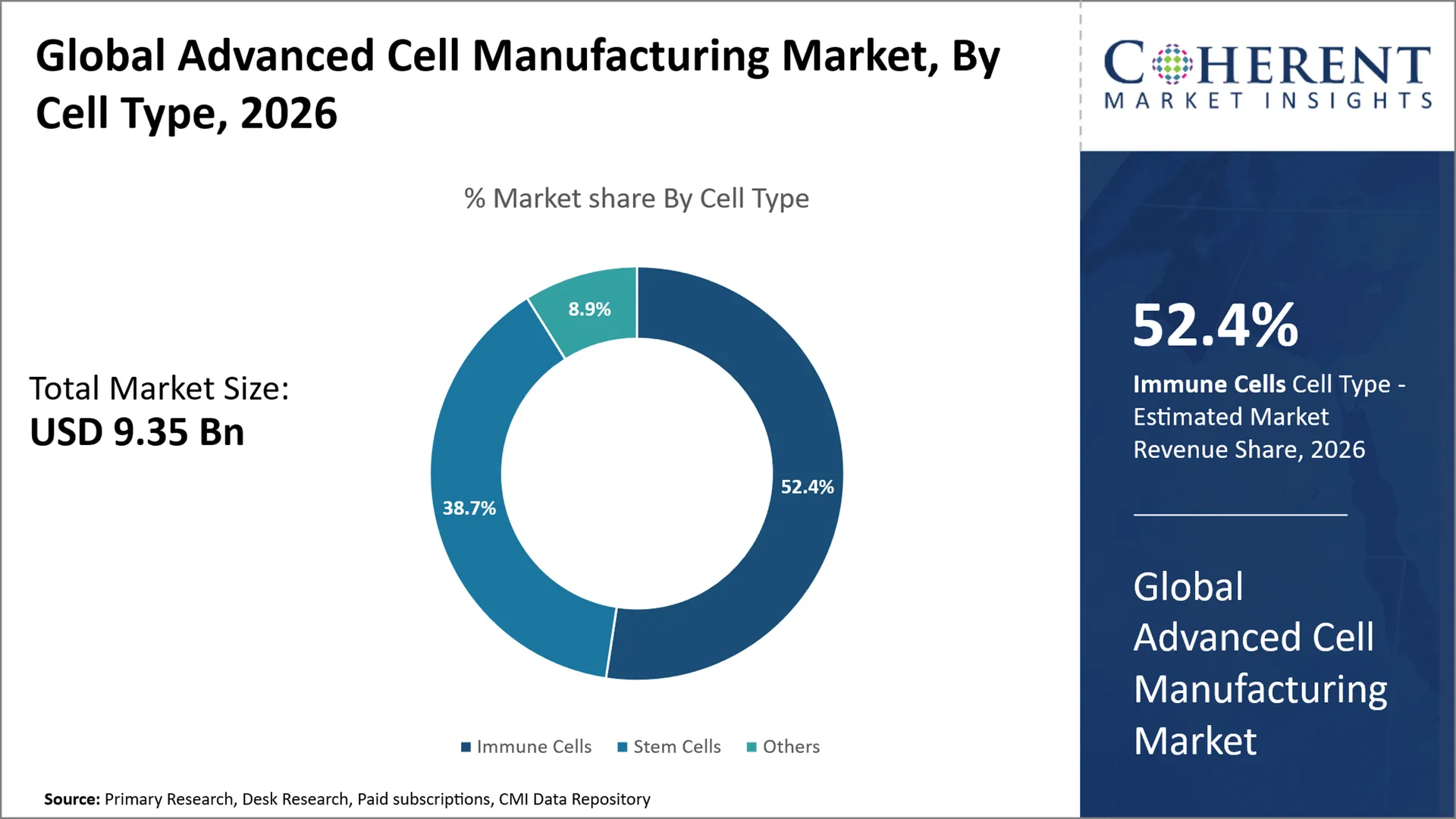
Why Do Immune Cells Dominate the Global Advanced Cell Manufacturing Market?
Immune cells are projected to hold the market share of 52.4% in 2026, supported by the increasing adoption of T cells, NK cells and other engineered immune-cell therapies for cancer and blood disorders. Additionally, the broadening range of therapeutic indications for immune-cell products is expected to boost the demand for cell isolation, activation, expansion and manufacturing capabilities. For instance, in March 2026, the U.S. Food and Drug Administration (FDA) approved Kresladi as the first gene therapy to treat severe leukocyte adhesion deficiency type I (LAD-I). Kresladi uses the patient’s own blood stem cells that have been genetically modified. The approval extends the scope of use for engineered cell products and highlights the growing need for expertise in cell processing and manufacturing.
- Current Industry Events of 2026
- Market Size Estimation
- Regional Breakdown
- Competitive Landscape
- Customer Intelligence
- Segmental Analysis
- Pricing Analysis
- Key Market Drivers, Challenges & Future Trends
- Customized Insights Section
Why Does Autologous Cell Manufacturing Represent the Largest Manufacturing Type Segment in the Advanced Cell Manufacturing Market?
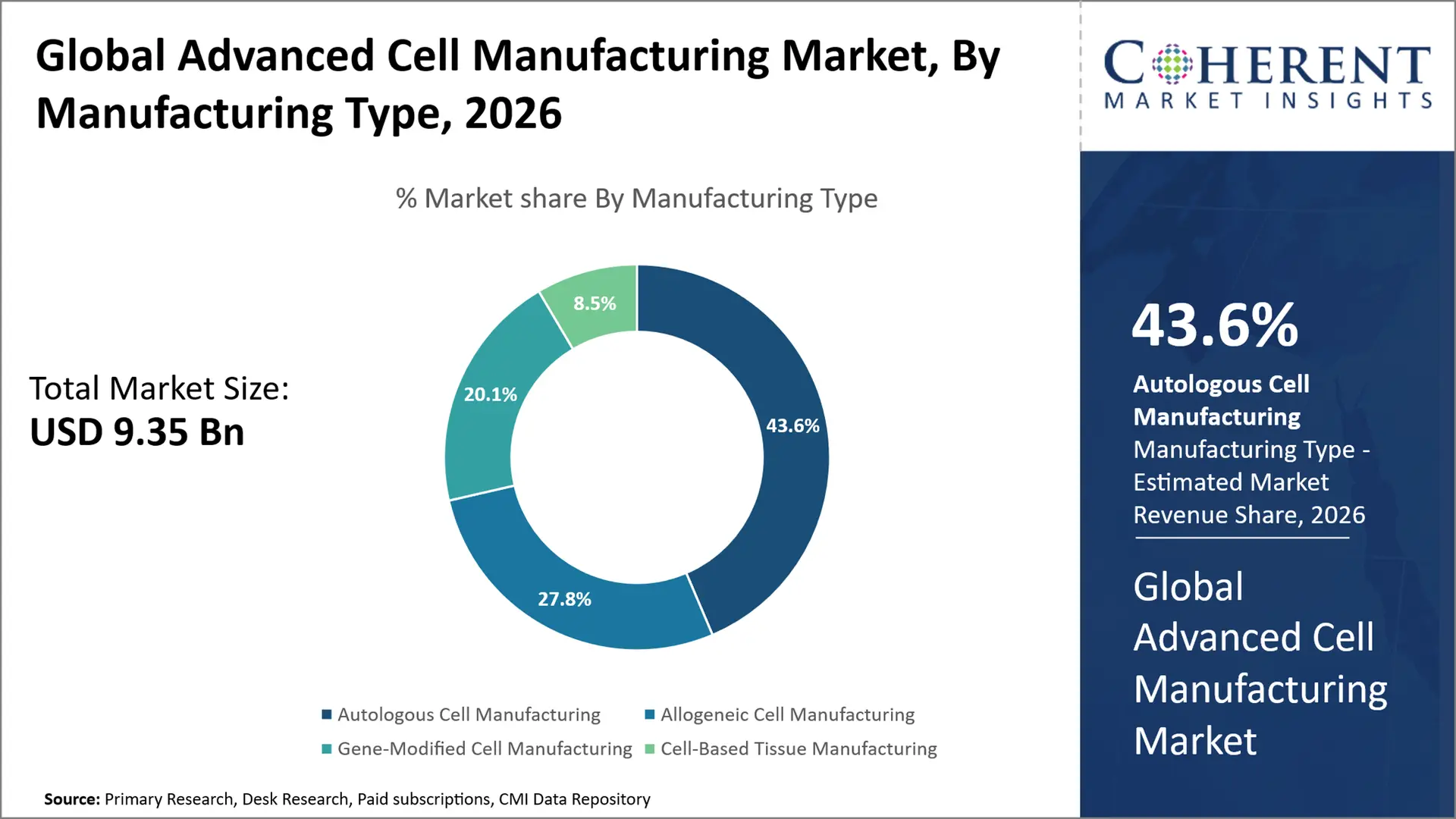
Autologous cell manufacturing is projected to hold a market share of 43.6% in 2026, driven by the rising adoption of patient-derived cell therapies, especially in cases of rare diseases and oncology. The need for customizing, processing, modifying and reinfusing individual patient cells is driving the demand for workflows that are unique, controlled and reproducible. For instance, in February 2026, the U.S. Food and Drug Administration (FDA) approved AUCATZYL (obecabtagene autoleucel) as an autologous CAR-T therapy to treat adults with relapsed or refractory B-cell precursor acute lymphoblastic leukemia (ALL). The approval highlights the use of cell manufacturing for individual patients.
Closed Manufacturing Systems Segment Dominates the Global Advanced Cell Manufacturing Market
The closed manufacturing systems segment is projected to hold a market share of 23.8% in 2026, owing to its potential to limit the contact with the surroundings, reduce the number of manual operations, and offer uniform processing conditions for sensitive cell therapies. Furthermore, its compatibility with automated monitoring and control, make the manufacturing reproducible and compliant to regulations. For instance, U.S. FDA’s BioFoundry initiative evaluates a scalable, modular, automated, enclosed manufacturing platform for cell-based medical products. Including conventional cell and gene therapy products and using inline monitoring to control product attributes and sterility.
Current Events and their Impact
Current Events | Description and its Impact |
India CDSCO Updates Manufacturing Permissions for Cell and Gene Therapeutic Products (July 2026) |
|
Japan Revises Microbiological Safety Guidelines for Cell-Processed Products (June 2026) |
|
U.S. FDA Introduces Greater CMC Flexibility for Cell and Gene Therapies (January 2026) |
|
Advanced Cell Manufacturing Market Dynamics
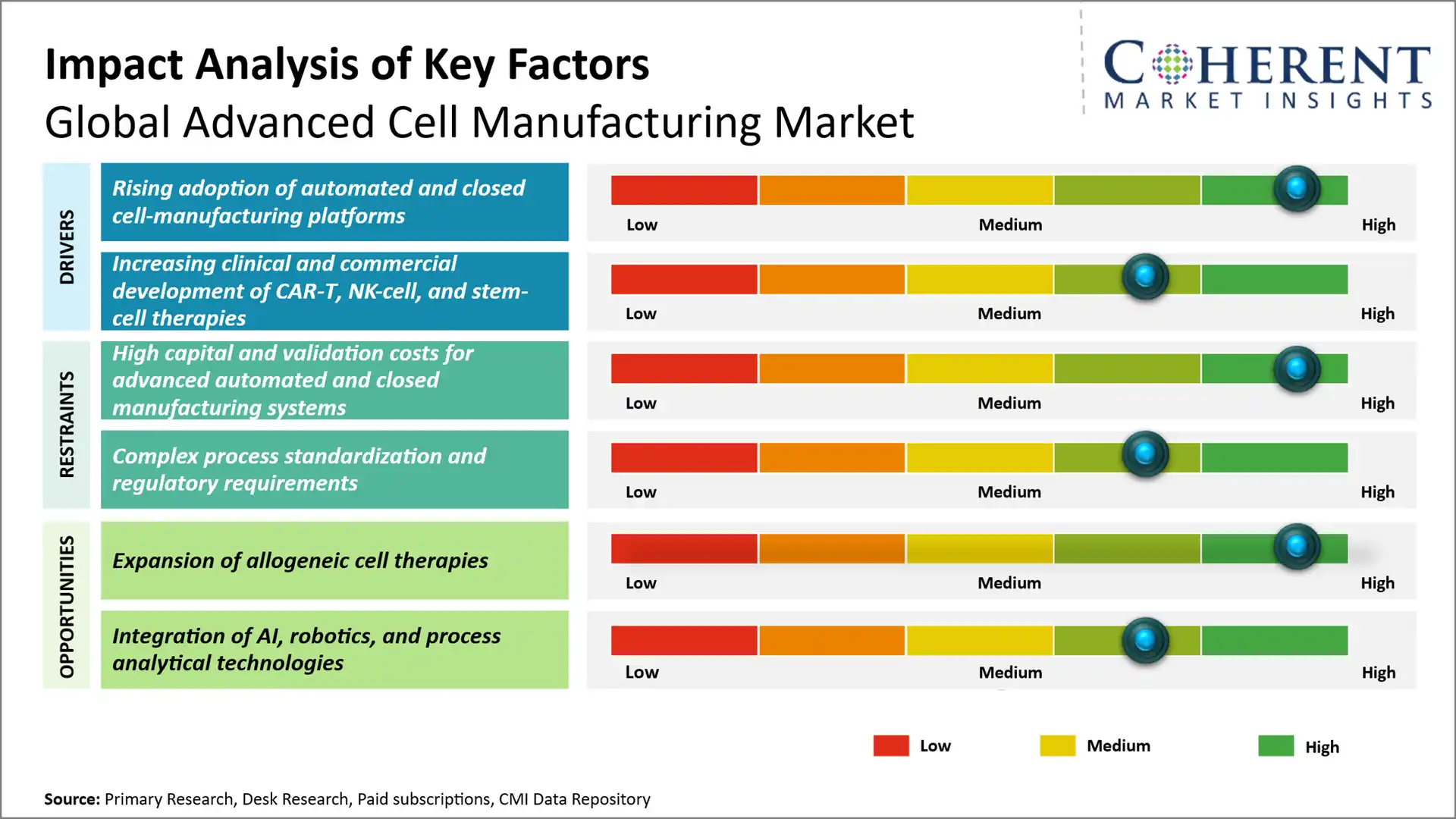
Market Drivers
- Rising adoption of automated and closed cell-manufacturing platforms: The adoption of automated and closed platforms is accelerating as manufacturers seek to reduce manual handling, contamination risks, process variability, and manufacturing time. These systems also support more standardized and scalable production of complex cell therapies, improving manufacturing consistency. For instance, in December 2025, Lonza’s Cocoon Platform received the U.S. FDA’s Advanced Manufacturing Technologies (AMT) Designation for its functionally closed and automated cell-therapy manufacturing capabilities, supporting broader adoption of automated manufacturing.
- Increasing clinical and commercial development of CAR-T, NK-cell, and stem-cell therapies: The expanding clinical and commercial pipeline of CAR-T, NK-cell, and stem-cell therapies is increasing demand for specialized manufacturing capacity and scalable production workflows. Growing approvals and late-stage development are encouraging manufacturers to invest in dedicated cell-processing infrastructure and improve production throughput. For instance, in June 2026, the U.S. FDA approved Tregzi, an allogeneic T-cell-based immunotherapy, marking another commercial milestone for cell-based therapies and supporting demand for advanced manufacturing capabilities.
- Growing investment in cell therapy manufacturing infrastructure: Increasing investment in commercial-scale GMP infrastructure is expanding manufacturing capacity for both autologous and allogeneic cell therapies and enabling developers to transition programs from clinical trials to commercial supply. The focus is shifting toward high-throughput facilities with automated processing and flexible manufacturing capabilities. For instance, in September 2026, Made Scientific acquired an 85,000-sq.-ft. cell-therapy manufacturing facility in Pennsylvania, expanding its U.S. East Coast network to approximately 145,000 sq. ft. and 15 qualified GMP manufacturing suites.
Emerging Trends
- Shift toward automated and closed manufacturing: Manufacturers are increasingly adopting automated, closed, and modular systems to reduce manual intervention, contamination risks, and batch variability while improving production scalability.
- Growing adoption of allogeneic cell manufacturing: The industry is moving toward donor-derived, off-the-shelf cell therapies that enable standardized, high-volume production and faster product availability compared with patient-specific manufacturing.
- Integration of AI and digital process control: AI, machine learning, and real-time analytics are increasingly being integrated into cell manufacturing to optimize process parameters, monitor product quality, and improve manufacturing consistency.
Regional Insights
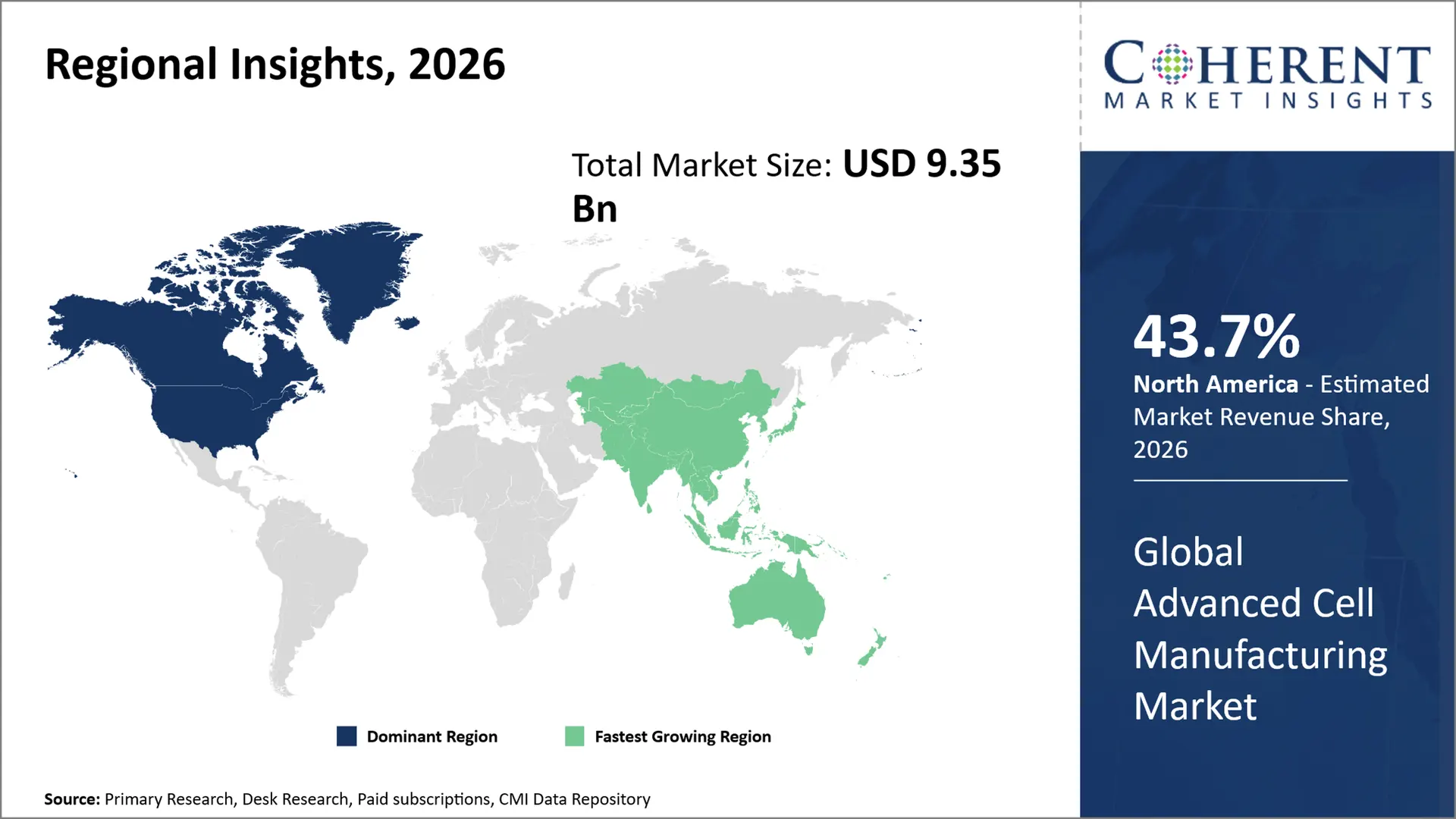
Why is North America a Strong Market for Advanced Cell Manufacturing?
North America leads the global advanced cell manufacturing market, accounting for an estimated 43.7% share in 2026, due to the presence of a well-established biotechnology market, advanced research infrastructure, significant investment, and cell-therapy development in the region. Additionally, the cell therapy industry in the region is benefiting from the regulatory framework laid down by the U.S. Food and Drug Administration for cell therapy products in the regenerative medicine space, as well as the impending buildup of manufacturing to bring novel cell therapies to the clinic.
For instance, in June 2026, the U.S. Food and Drug Administration publishes draft guidance allowing developers of genome editing gene therapies to rely on scientific and regulatory data already obtained, including Chemistry, Manufacturing and Controls data, to reduce unnecessary repetition of tests and accelerate development. Furthermore, the region is also best positioned to leverage strong academia-industry collaborations and established healthcare infrastructure.
Why Does Asia Pacific Advanced Cell Manufacturing Market Exhibit High Growth?
Asia Pacific is expected to exhibit the fastest growth in the global advanced cell manufacturing market, registering an estimated CAGR of 18.9% during 2026–2033. The region is projected to account for 21.6% of the global market in 2026, led by the surging biotechnology research activities, expanding healthcare facilities, and growing manufacturing capacities for cell-therapies in China, Japan, and South Korea. Furthermore, advantageous regulatory policies designed to quicken clinical trials and approval process for regenerative medicine are anticipated to augment growth in the region.
For instance, in November 2025, China’s National Medical Products Administration (NMPA) introduced a 30-working-day review and approval pathway for eligible innovative-drug clinical trials, including biological products, compared with the standard 60-day pathway. The reform is intended to accelerate clinical development and supports faster progression of innovative cell-based therapies toward clinical manufacturing. Moreover, increasing investments in advanced manufacturing centers and in-developed cell-based therapies is also stimulating demand in the region.
Global Advanced Cell Manufacturing Market Outlook for Key Countries
Why is the U.S. Leading Innovation and Adoption in the Advanced Cell Manufacturing Market?
The U.S. is expected to account for the majority of the global advanced cell manufacturing market owing to the high number of commercial cell-therapy pipelines, the availability of large GMP manufacturing capacity, and automated, specialized cell-processing platforms. The country has mature ecosystem of cell-therapy developers, CDMOs, technology vendors, and research institutions, making it well-positioned to allow swift translation of new cell-therapies from the clinic into commercial-scale GMP production for both autologous CAR-T and the emerging allogeneic cell-therapy market.
Is Japan a Favorable Market for Advanced Cell Manufacturing Market?
Japan’s unique pathway for regenerative medical product regulation and growing manufacturing ecosystem makes it an attractive market for advanced cell manufacturing. The PMDA regulates manufacturing quality through Good Gene, Cellular, and Tissue-based Products (GCTP) inspections, while the Japan Agency for Medical Research and Development (AMED) funds manufacturing facilities, automation, CDMO infrastructure and quality-control technologies for cell and gene therapies.
Is China Emerging as a Key Growth Hub for the Advanced Cell Manufacturing Market?
China is increasingly being identified as a key hub for growth in the advanced cell manufacturing market, primarily driven by the growth in cell-therapy development and the expansion of regulatory infrastructure to oversee manufacturing quality and process controls. In addition, the NMPA-specific cell-therapy requirements will help facilitate the standardization and commercialization of cell-manufacturing capabilities domestically.
Why Does Germany Top the European Advanced Cell Manufacturing Market?
Germany leads the European advanced cell manufacturing market driven by the high number of cell-therapy developers in the country, its GMP manufacturing facilities, as well as its bio-processing capabilities. Moreover, the country's ecosystem facilitates the development and scale-up of CAR-T, stem cell and other ATMPs, throughout their journey from clinical development to commercial manufacturing.
Is Advanced Cell Manufacturing Market Developing in the UK?
The U.K. is rapidly becoming an attractive market for Advanced Cell Manufacturing, due to its well-established ecosystem for Advanced Therapy Medicinal Products (ATMP) and mature specialized GMP skills. The country has a growing level of advanced expertise in CAR-T, Stem-Cell and Gene-Modified Cell Manufacturing with co-operation between biotech companies, research and specialized manufacturing companies in addition to a regulatory environment suitable for development and scale up of advanced cell-based therapies.
Advanced Cell Manufacturing Facilities and Manufacturing Capabilities, 2026
Company / Facility | Country | Cell Type / Therapy | Manufacturing Approach | Publicly Disclosed Manufacturing Scale |
Cellares – Smart Factories | U.S. / Europe / Japan | CAR-T and other cell therapies | Fully automated, closed, end-to-end | Global network designed for hundreds of thousands of patients annually from 2027 |
Made Scientific – Princeton | U.S. | Autologous & allogeneic cell therapies | Automated, high-throughput GMP manufacturing | Up to 2,000 additional batches/year after expansion |
Century Therapeutics – Branchburg | U.S. | iPSC-derived immune cells | Flexible multi-product GMP manufacturing | 53,000 sq. ft. facility |
Gracell Biotechnologies – Suzhou | China | CAR-T | Fully closed manufacturing | 66,000 sq. ft. facility; 21,500 sq. ft. GMP clean area |
Kincell Bio – Research Triangle Park | U.S. | CAR-T, CAR-NK, CAR-M, iPSC, TCR-T | GMP, single-use, multi-product manufacturing | 32,000 sq. ft. campus; 4 GMP suites |
Laurus Labs / ImmunoACT – Mumbai | India | CAR-T | GMP CAR-T development & manufacturing | ~3,100 treatments/year across two facilities |
How is the expansion of allogeneic cell therapies creating new growth opportunities in the advanced cell manufacturing market?
The development of off-the-shelf, allogeneic cell therapies indicates a significant market opportunity as these can be manufactured and scaled up to increase efficiencies, reducing the production time and therefore, costs, associated with patient-specific manufacturing. Additionally, the development of immunomodulation and gene-editing techniques, together with the use of closed-system manufacturing, is expected to make allogeneic therapies more feasible and accessible, providing for broader commercialization in oncology, autoimmune diseases and regenerative medicine. For instance, in January 2026, Cytora Therapeutics Ltd., Made Scientific, Inc. and Zeo ScientifiX, Inc. announced a collaboration to produce and commercialize an allogeneic stem-cell therapy for diabetic foot ulcers and other indications in the U.S. to enable scalable production.
Market Players, Key Development, and Competitive Landscape
Key Developments
- In September 2026, Kincell Bio and Cellipont Bioservices completed their merger to form Kincellis Advanced Therapies, a U.S.-based advanced-therapies CDMO. The combined company operates approximately 140,000 sq. ft. across three sites with 16 qualified GMP manufacturing suites, supporting autologous and allogeneic therapies including CAR-T, CAR-NK, MSCs and iPSCs.
- In February 2025, India’s Ministry of Heavy Industries signed a Programme Agreement with Reliance New Energy Battery Limited for 10 GWh of Advanced Chemistry Cell (ACC) manufacturing capacity under the USD 1.87 billion (INR 18,100-crore) PLI ACC Scheme. The agreement brings the cumulative capacity awarded under the scheme to 40 GWh out of the targeted 50 GWh. The initiative is intended to strengthen domestic advanced-cell manufacturing and reduce dependence on imported cells.
- In July 2022, Ola Electric signed an agreement under India’s ACC Production Linked Incentive (PLI) Scheme to establish 20 GWh of advanced cell manufacturing capacity, the maximum capacity awarded to an individual bidder under the first round. The company is developing in-house cell technology and manufacturing capabilities, including its gigafactory and Battery Innovation Center.
Competitive Landscape
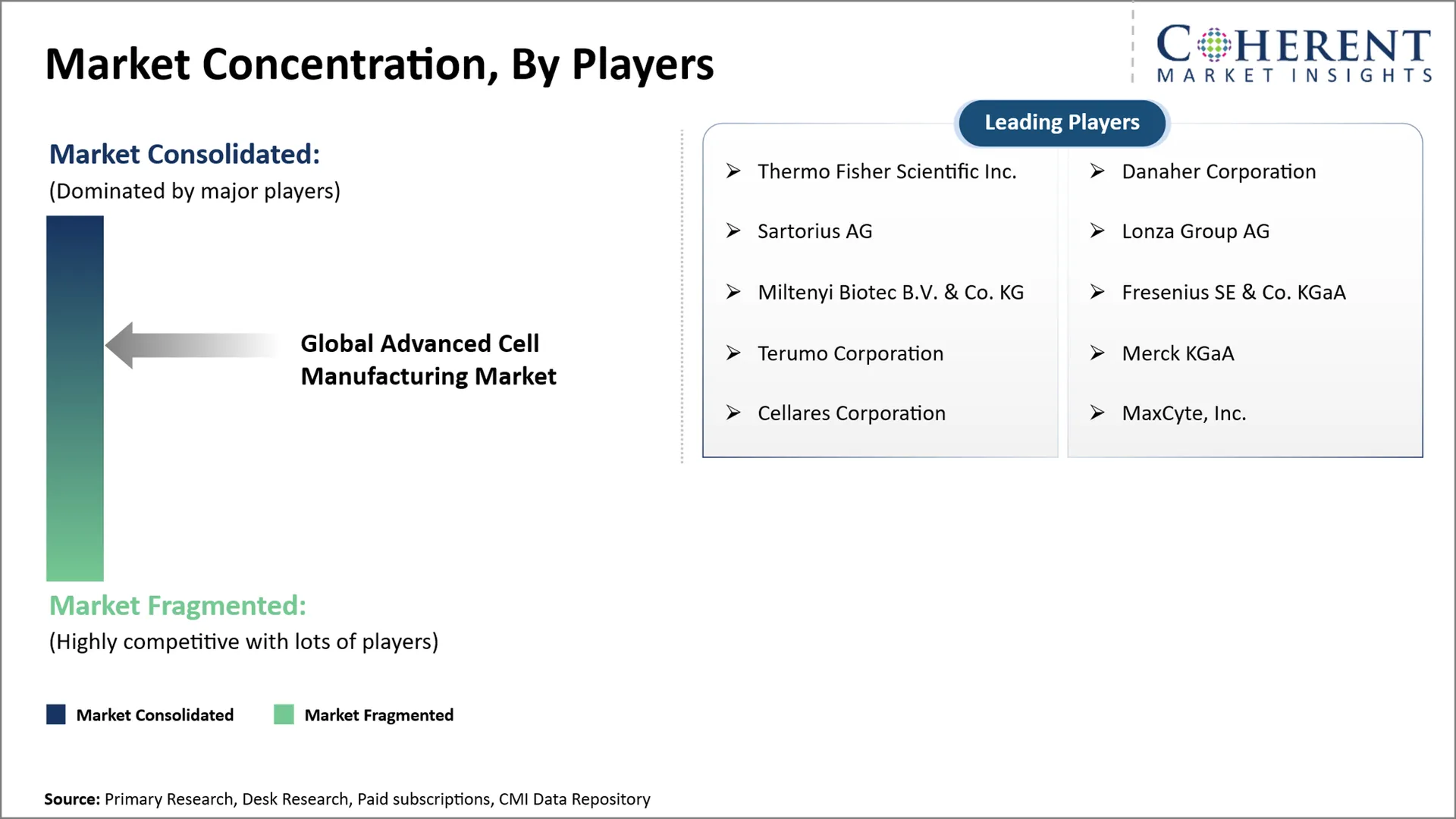
The global advanced cell manufacturing market is highly competitive, with participants focusing on manufacturing automation, closed-system processing, scalability, process standardization, and regulatory compliance. Market participants are advancing integrated cell-processing technologies, automated manufacturing platforms, single-use systems, and process-monitoring capabilities to improve manufacturing consistency, throughput, and cost efficiency. Key focus areas include:
- Development of automated and closed cell-manufacturing platforms for consistent and contamination-controlled production
- Integration of single-use bioreactors, cell expansion, and cell-processing technologies to improve scalability and manufacturing efficiency
- Advancement of modular and integrated end-to-end manufacturing platforms for streamlined cell-therapy production
- Expansion of allogeneic manufacturing capabilities to enable scalable, off-the-shelf cell therapies and higher production volumes
- Strategic collaborations, CDMO expansions, regulatory clearances, and manufacturing capacity investments to accelerate commercialization of advanced cell therapies
Market Report Scope
Advanced Cell Manufacturing Market Report Coverage | |||
Report Coverage | Details | ||
Base Year | 2025 | Market Size in 2026: | USD 9.35 Bn |
Historical Data For: | 2020 To 2024 | Forecast Period: | 2026 To 2033 |
Forecast Period 2026 To 2033 CAGR: | 18% | 2033 Value Projection: | USD 29.78 Bn |
Geographies covered: |
| ||
Segments covered: |
| ||
Companies covered: | Thermo Fisher Scientific Inc., Danaher Corporation, Sartorius AG, Lonza Group AG, Miltenyi Biotec B.V. & Co. KG, Fresenius SE & Co. KGaA, Terumo Corporation, Merck KGaA, Cellares Corporation, MaxCyte, Inc. | ||
Growth Drivers: |
| ||
Restraints & Challenges: |
| ||
Analyst Opinion (Expert Opinion)
- In the coming years, global advanced cell manufacturing market will shift from labor-intensive, batch-oriented production toward automated, closed, modular, and integrated manufacturing platforms. The industry will increasingly prioritize scalable allogeneic production, real-time process control, and standardized workflows to improve consistency, reduce manufacturing costs, and support commercial-scale cell therapies.
- The maximum opportunities are foreseen within immune-cell manufacturing for oncology in the U.S., particularly for CAR-T and other engineered immune-cell therapies. The combination of a large clinical/commercial pipeline, established cell-therapy infrastructure, and demand for faster, more scalable production creates the most attractive near-term opportunity for advanced manufacturing providers.
- In order to gain a competitive advantage market players should prioritize end-to-end automated and closed manufacturing platforms that integrate cell processing, monitoring, analytics, and quality control rather than offering standalone equipment. Building flexible platforms capable of supporting both autologous and allogeneic workflows, while reducing manufacturing time and cost per dose, will be critical for differentiation.
Speak to the analyst
Want personalized insights?
Take the findings above to one of our principal consultants, or have the report rebuilt around the segments, geographies and competitors you actually track.
Market Segmentation
- Cell Type Insights (Revenue, USD Bn, 2021 - 2033)
- Immune Cells
- Stem Cells
- Others
- Manufacturing Type Insights (Revenue, USD Bn, 2021 - 2033)
- Autologous Cell Manufacturing
- Allogeneic Cell Manufacturing
- Gene-Modified Cell Manufacturing
- Cell-Based Tissue Manufacturing
- Manufacturing Platform Insights (Revenue, USD Bn, 2021 - 2033)
- Closed Manufacturing Systems
- Automated Manufacturing Systems
- Single-Use Manufacturing Systems
- Continuous Manufacturing Systems
- Modular Manufacturing Systems
- Integrated End-to-End Manufacturing Platforms
- Scale of Operation Insights (Revenue, USD Bn, 2021 - 2033)
- Preclinical and Research Scale
- Clinical Manufacturing Scale
- Commercial Manufacturing Scale
- Application Insights (Revenue, USD Bn, 2021 - 2033)
- Oncology
- Regenerative Medicine
- Immunology
- Neurology
- Cardiovascular Diseases
- Musculoskeletal Disorders
- Others
- End User Insights (Revenue, USD Bn, 2021 - 2033)
- Pharmaceutical and Biotechnology Companies
- Contract Development and Manufacturing Organizations (CDMOs)
- Academic and Research Institutes
- Hospitals and Specialized Cell Therapy Centers
- Others
- Regional Insights (Revenue, USD Bn, 2021 - 2033)
- North America
- U.S.
- Canada
- Latin America
- Brazil
- Argentina
- Mexico
- Rest of Latin America
- Europe
- Germany
- U.K.
- Spain
- France
- Italy
- Russia
- Rest of Europe
- Asia Pacific
- China
- India
- Japan
- Australia
- South Korea
- ASEAN
- Rest of Asia Pacific
- Middle East
- GCC Countries
- Israel
- Rest of Middle East
- Africa
- South Africa
- North Africa
- Central Africa
- North America
- Key Players Insights
- Thermo Fisher Scientific Inc.
- Danaher Corporation
- Sartorius AG
- Lonza Group AG
- Miltenyi Biotec B.V. & Co. KG
- Fresenius SE & Co. KGaA
- Terumo Corporation
- Merck KGaA
- Cellares Corporation
- MaxCyte, Inc.
Sources
Primary Research Interviews
- Cell and gene therapy developers – cell-type selection, manufacturing workflows, scale-up requirements, process development, and commercialization strategies
- Cell therapy CDMOs and contract manufacturers – GMP manufacturing capacity, automation, closed systems, technology transfer, and production scalability
- Cell manufacturing technology providers – automated cell processing, bioreactors, single-use systems, cell expansion, cryopreservation, and integrated platforms
- Pharmaceutical and biotechnology companies – cell-therapy pipelines, manufacturing investments, outsourcing strategies, and commercial production requirements
- Hospitals and specialized cell therapy centers – autologous cell-processing workflows, manufacturing requirements, and clinical-scale implementation
- Academic and research institutions – emerging cell-engineering technologies, stem-cell manufacturing, process development, and translational research
Stakeholders
- Cell and gene therapy manufacturers
- Cell therapy CDMOs
- Cell-processing technology and equipment providers
- Pharmaceutical and biotechnology companies
- Hospitals and specialized cell therapy centers
- Academic and research institutions
- Raw-material and consumables suppliers
- End-use Sectors
- Pharmaceutical and Biotechnology Companies
- Contract Development and Manufacturing Organizations (CDMOs)
- Hospitals and Specialized Cell Therapy Centers
- Academic and Research Institutions
- Regenerative Medicine and Cell Therapy Centers
- Regulatory & Health Bodies
- U.S. Food and Drug Administration (FDA) – cellular and gene therapy regulation, CMC requirements, manufacturing guidance, product approvals, and GMP requirements
- European Medicines Agency (EMA) – advanced therapy medicinal product (ATMP) regulation, manufacturing, quality, and comparability requirements
- Medicines and Healthcare products Regulatory Agency (MHRA) – cell and gene therapy regulation, ATMP requirements, and clinical/manufacturing oversight in the UK
- Pharmaceuticals and Medical Devices Agency (PMDA) – regenerative medicine product review, quality, safety, and manufacturing requirements in Japan
- National Medical Products Administration (NMPA) – cell and gene therapy product regulation, clinical development, and manufacturing requirements in China
- Central Drugs Standard Control Organisation (CDSCO) – cell and gene therapeutic product permissions, clinical trials, and manufacturing oversight in India
Databases
- FDA Cellular & Gene Therapy Products Database – approved cellular and gene therapy products and regulatory information
- ClinicalTrials.gov – clinical trials involving cell therapies, gene-modified cells, stem cells, and advanced therapeutic products
- EU Clinical Trials Information System (CTIS) – clinical trial information for cell and gene therapy products in the European Union
- WHO International Clinical Trials Registry Platform (ICTRP) – global clinical trial information relevant to cell-based therapies
- FDA Cellular & Gene Therapy Guidance Database – CMC, potency, manufacturing changes, CAR-T, genome editing, and other cell/gene therapy guidance documents
- CDSCO Cell and Gene Therapeutics Database – Indian manufacturing permissions, import permissions, and clinical-trial permissions for cell and gene therapeutic products
Associations
- International Society for Cell & Gene Therapy (ISCT) – cell and gene therapy research, clinical translation, manufacturing, and regulatory resources
- Alliance for Regenerative Medicine (ARM) – regenerative medicine industry development, policy, investment, and commercialization
- International Society for Stem Cell Research (ISSCR) – stem-cell research, translational development, and clinical application resources
- BioPhorum – biopharmaceutical manufacturing, process development, technology, and operational resources
- United States Pharmacopeia (USP) – standards and quality resources relevant to cellular, tissue-based, and gene therapy products
Public Domain Sources
- U.S. Food and Drug Administration (FDA) – cellular and gene therapy approvals, regulatory guidance, CMC requirements, and manufacturing information
- National Institutes of Health (NIH) – cell and gene therapy research, biomedical research funding, and translational resources
- National Cancer Institute (NCI) – CAR-T, cellular immunotherapy, cancer-cell therapy research, and clinical development information
- European Medicines Agency (EMA) – ATMP regulatory, scientific, and manufacturing information
- Central Drugs Standard Control Organisation (CDSCO) – Indian cell and gene therapy regulatory and manufacturing information
- World Health Organization (WHO) – global health, biotechnology, cell therapy, and health-system information
- U.S. National Library of Medicine (NLM) – biomedical literature and clinical-trial information relevant to cell manufacturing and therapies
Proprietary Elements
- CMI Data Analytics Tool, Proprietary CMI Existing Repository of information for last 10 years.
Get access to 250+ pages report
Every segment, forecast, competitor profile and data table behind the analysis above — available for instant download.
- ESOMAR Member
- ISO 9001:2015 Certified
- D-U-N-S Registered
- GDPR & CCPA Compliant
Frequently Asked Questions
The global advanced cell manufacturing market is estimated to be valued at USD 9.35 Bn in 2026 and is expected to reach USD 29.78 Bn by 2033.
Immune cells dominate due to the strong demand for CAR-T, NK-cell, and other engineered immune-cell therapies, particularly in oncology.
Advanced cell manufacturing is the use of automated, closed, scalable, and digitally enabled processes to produce therapeutic cells consistently at clinical and commercial scales.
The CAGR of global advanced cell manufacturing market is projected to be 18% from 2026 to 2033.
Rising adoption of automated and closed cell-manufacturing platforms, and increasing clinical and commercial development of CAR-T, NK-cell, and stem-cell therapies are the major factors driving the growth of the global advanced cell manufacturing market.
High capital and validation costs for advanced automated and closed manufacturing systems, and complex process standardization and regulatory requirements are the major factors hampering the growth of the global advanced cell manufacturing market.
In terms of manufacturing type, autologous cell manufacturing is estimated to dominate the market revenue share in 2026.