
Global AgeTech Market Size and Forecast – 2026 To 2033
The global AgeTech market is expected to grow from USD 286.40 Bn in 2026 to USD 397.50 Bn by 2033, registering a compound annual growth rate (CAGR) of 9.2% from 2026 to 2033. The global AgeTech market is driven by rising demand for remote health monitoring and emergency response. On May 3, 2026, Royal Philips unveiled a new patient monitoring innovation strategy at its Innovation Summit in Singapore, designed to help hospitals address workforce shortages and improve care coordination.
Key Takeaways of the Global AgeTech Market
- The Health Monitoring Devices segment is expected to account for 43.0% of the global AgeTech market share in 2026. Expanding adoption of AI and connected wearable devices is driving the growth of the segment. On April 11, 2025, ASUS announced its VivoWatch 6 AERO smart band. The wearable introduced fingertip-based blood pressure and electrocardiogram measurements. Its 27-gram design incorporates an AMOLED touchscreen.
- The AI and Machine Learning segment is estimated to capture 38.0% of the market share in 2026. Increasing caregiver shortages and pressure on healthcare systems is majorly driving the growth of the segment. On January 7, 2026, U.K.-based Cera announced a new AI agent suite. The platform automates recruitment, staff scheduling, care coordination, and administrative activities.
- The Independent Living segment is estimated to capture 26.0% of the market share in 2026. Development of cognitive wellness applications and dementia support is driving the growth of the segment. On July 23, 2025, CaringAI announced its launch as a healthcare artificial intelligence company. Its first product provides voice-based cognitive screening and personalized care planning.
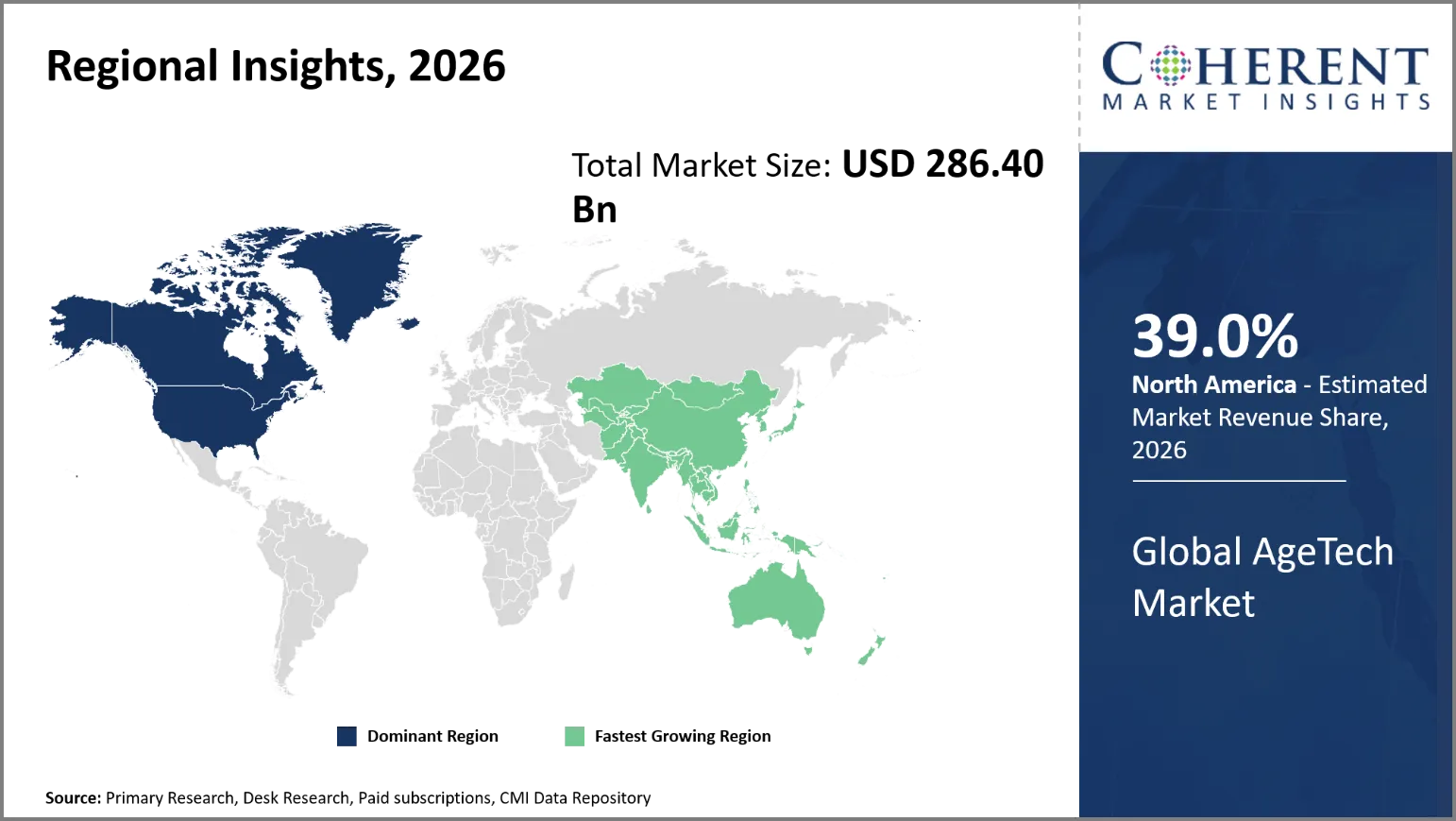
- North America is expected to dominate the AgeTech market in 2026 with a market share of 39.0%. Growing adoption of fall detection and predictive health monitoring in North America is driving the growth of the regional market. On August 5, 2025, Ntelcare revealed plans to launch its AI-enabled elder monitoring platform across the U.S. The device employs 4D radar imaging and machine learning for detection of dangerous bed-exit motions.
- Asia Pacific is expected to account for 27.0% share in 2026. Growing emphasis on remote caregiving platforms and connected assisted living facilities in Asia Pacific is driving the growth of the regional market. On November 12, 2025, AJJ Medtech Holdings collaborated with assisted living service provider Autagco to build and commercialize senior care robots. Six AJJ-HT-X1 humanoid robots were part of the deal, to be used in Autagco’s assisted living centers.
Segmental Insights
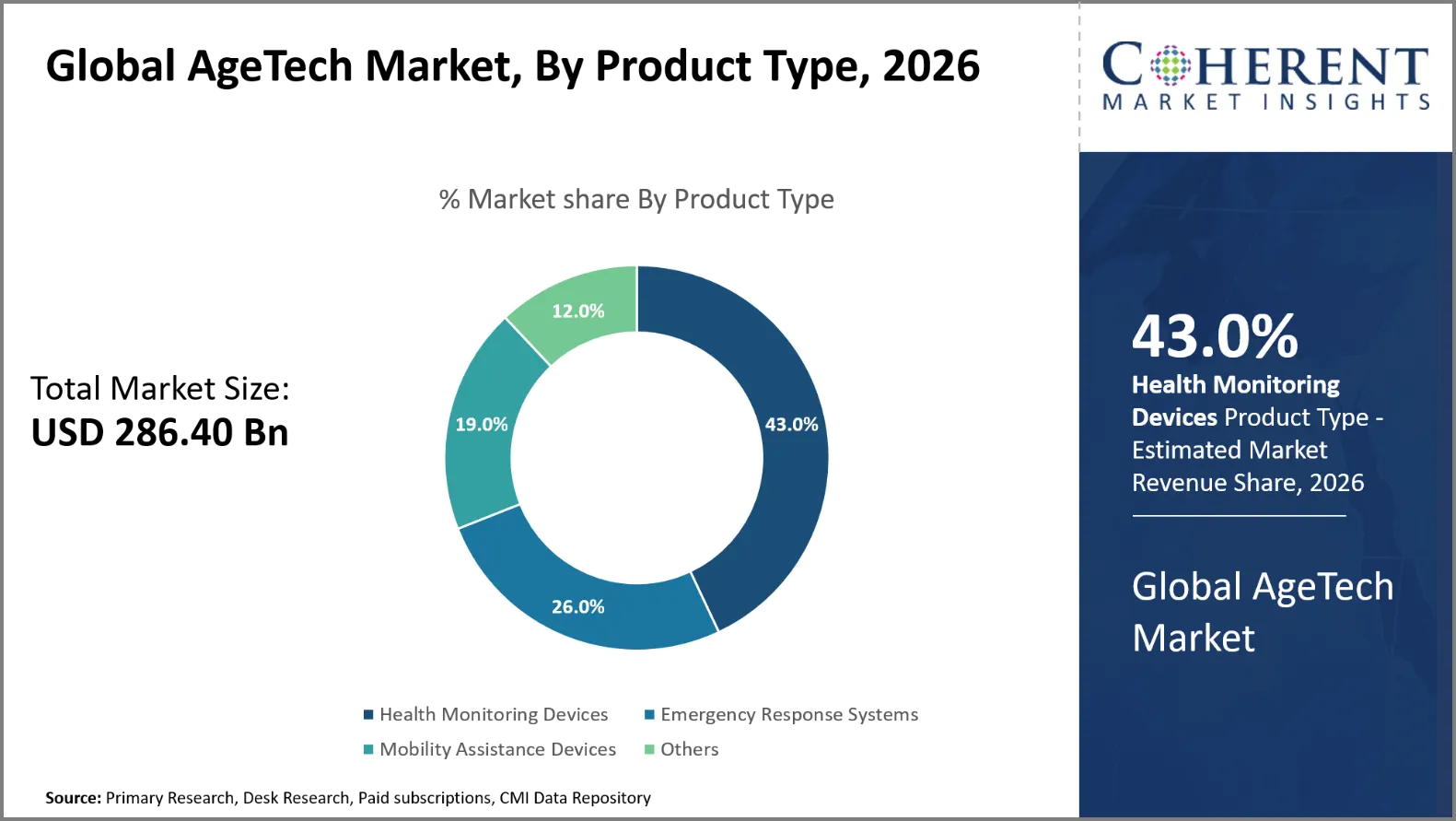
Why Does Health Monitoring Devices Dominate the Global AgeTech Market?
The health monitoring devices segment is expected to account for 43.0% of the global AgeTech market share in 2026. Health monitoring gadgets dominate as elderly persons need to be monitored for their health round the clock and demand immediate medical attention. These gadgets measure vital signs such as heart rate, blood pressure, oxygen saturation and glucose levels. Wearable sensors and smart medical devices help spot potential health problems early. Features like fall detection and emergency alarm increase the safety of elderly living alone. Remote monitoring also allows health care doctors to evaluate patients without the need for frequent visits to the hospital. They help manage chronic conditions and avoid unnecessary doctor appointments. Increasing usage of connected healthcare devices also helps the category domination.
On July 16, 2026, LifeLens Technologies received enhanced U.S. FDA authorization for its wearable physiological monitoring system. The clearance covers oxygen saturation, heart rate, respiration rate, heart rate variability, and skin temperature.
- Current Industry Events of 2026
- Market Size Estimation
- Regional Breakdown
- Competitive Landscape
- Customer Intelligence
- Segmental Analysis
- Pricing Analysis
- Key Market Drivers, Challenges & Future Trends
- Customized Insights Section
Why is AI and Machine Learning the Most Preferred Technology Type?
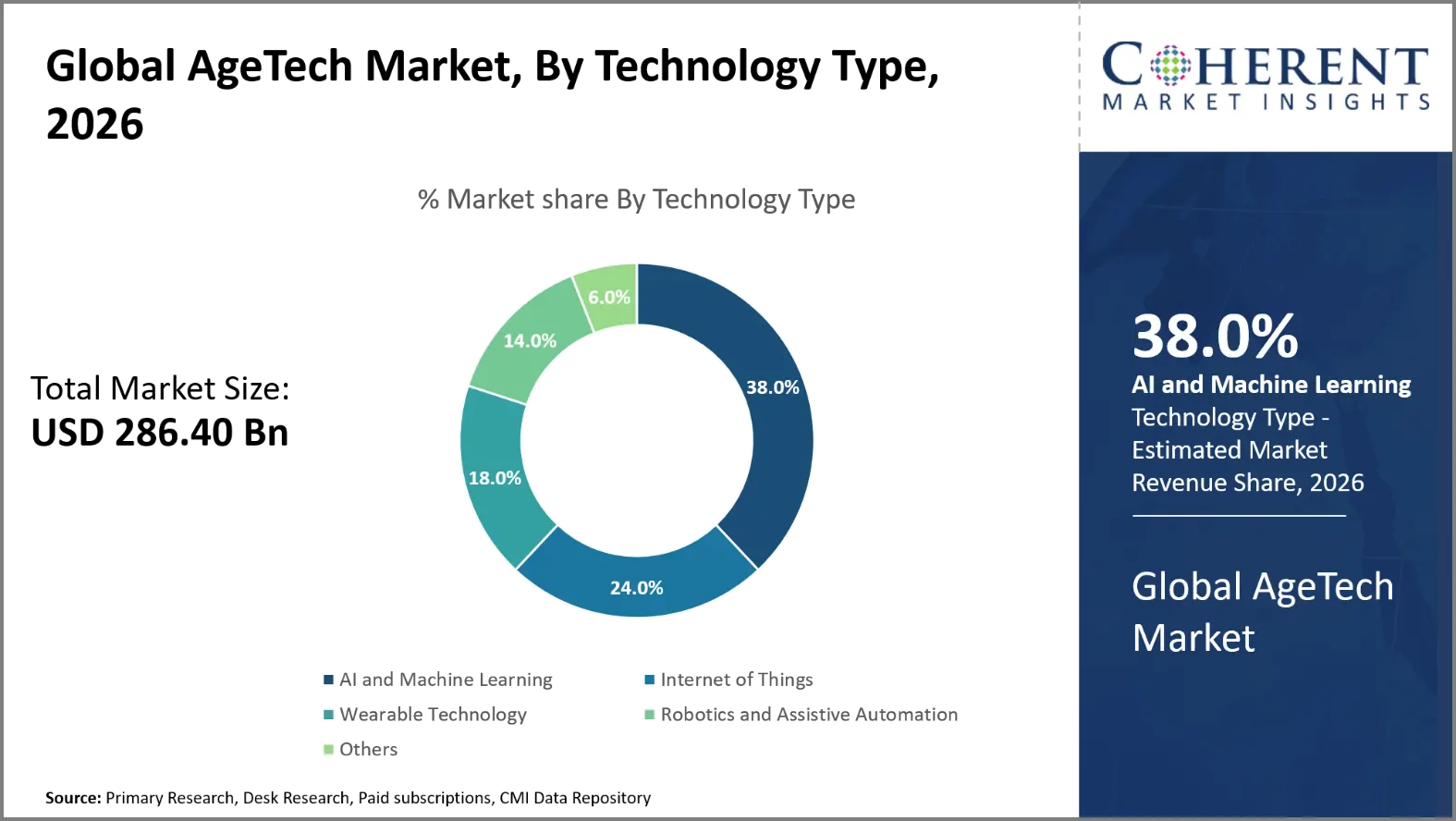
The AI and machine learning segment is expected to account for 38.0% of the global AgeTech market share in 2026. AI and Machine learning are the front runners as they provide tailored, predictive and automated geriatric care. These technologies are used to process health records, readings from wearable sensors and patterns of behavior. Algorithms can identify abnormal changes that may be indicative of health problems. Predictive analytics also helps caretakers identify emerging threats and prescribe actions. Virtual assistants powered by AI are used to remind people to take their prescription, schedule appointments, and manage day-to-day activities. Machine learning improves the accuracy of monitoring by identifying trends in the current health observations. Smart home technology integration increases safety and independent living.
On August 21, 2025, SafelyYou announced the launch of a groundbreaking new platform, SafelyYou Halo, utilizing world-leading AI to enable next-gen eCall. This is a huge leap forward in care delivery for senior living, because SafelyYou Halo never stops working to identify critical safety, wellness and staffing patterns.
Independent Living Dominates the Global AgeTech Market
The independent living segment is expected to account for 26.0% of the global AgeTech market share in 2026. The most common option is Independent Living, as older persons prefer to remain in familiar homes as they age. AgeTech products help in supporting daily activities while lowering dependency on family members and professional caregivers. Smart home devices automate lights, temperature, security and domestic functions. Wearable emergency response devices offer an extra degree of security for falls and medical crises. Medication management devices relieve the normal stress of caregiving and improve adherence to treatment. Assistive technologies and mobility aids can help seniors keep up with their everyday lives. Remote monitoring allows for safety monitoring for families without the need for regular physical assistance.
On June 3, 2025, Cairns Health’s Luna went commercial for senior living communities and homecare providers. The platform blends voice-based digital assistance with radar-based ambient sensing. It allows residents to get involved, check their wellbeing and control safety without the need for constant surveillance by caregivers.
Current Events and their Impact
Current Events | Description and its Impact |
European Union Artificial Intelligence Act Regulation (EU) 2024/1689 |
|
European Health Data Space Regulation (EU) 2025/327 |
|
AgeTech Market Dynamics
Market Drivers
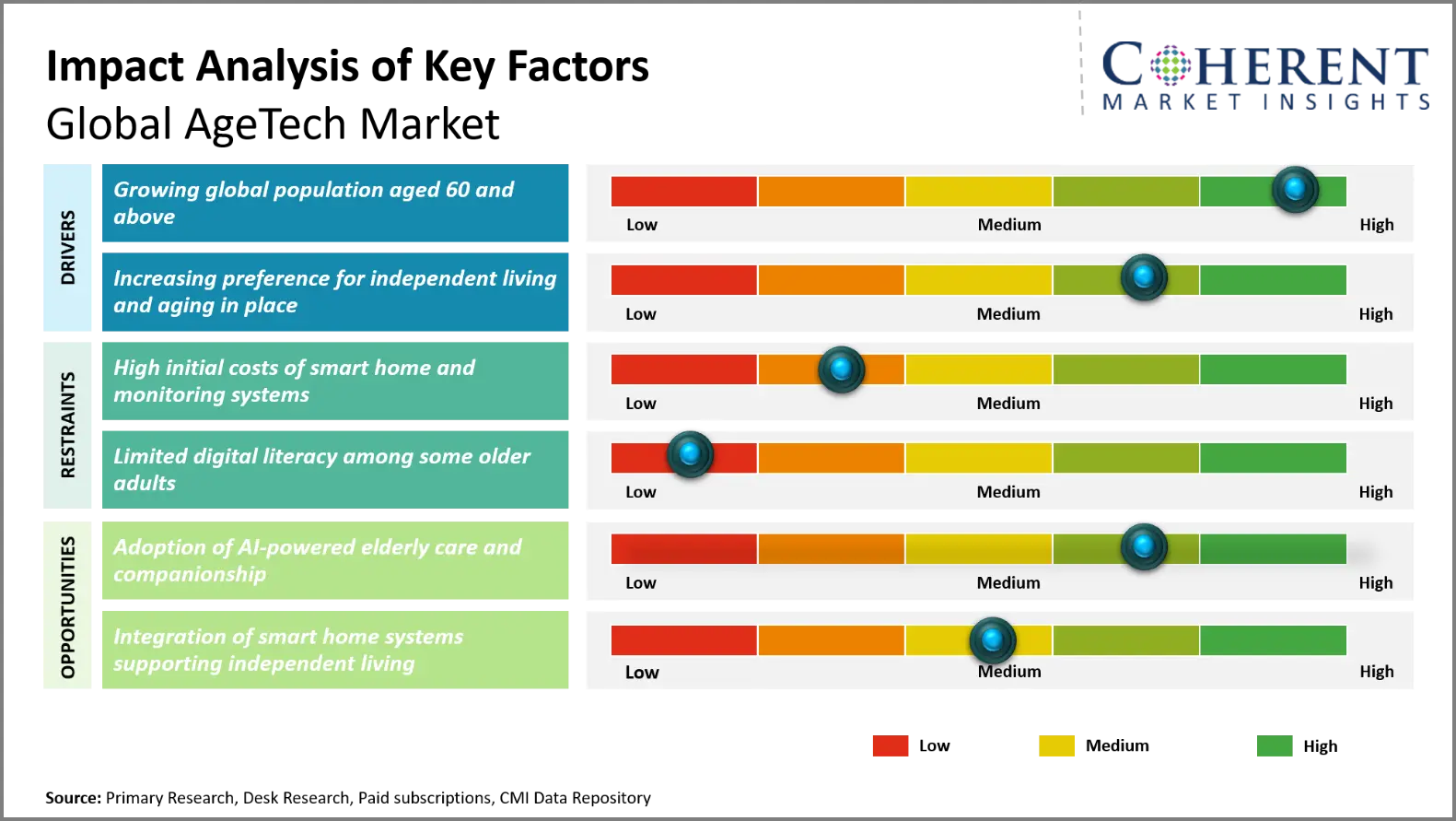
- Growing global population aged 60 and above: The growing population aged 60 and above is driving demand for specialist solutions to overcome functional limitations associated with age. The United Nations projects that the global population of those aged 60 years and over will reach 2.1 billion by 2050. This demographic change is increasing the addressable users for wearable health monitors, assistive robotics and cognitive support apps. Japan, China, Germany and Italy are especially vulnerable to aging challenges. Their health care systems are increasingly demanding technologies that can assist long-term condition monitoring and coordination of care for the aged. Indeed, manufacturers are creating solutions aimed at age-specific needs such as medication management, fall detection, mobility help and remote physiological monitoring.
- On May 24, 2026, Athulya Senior Care declared its intention to enter Mauritius. It is also looking at potential in Sri Lanka and Dubai. It signed memoranda of understanding with Singapore and Japan to supply skilled eldercare professionals.
- Increasing preference for independent living and aging in place: Increasing preference for independent living is driving demand for technology that enables older adults to securely stay in their own homes. AgeTech adoption is increasingly about replacing routine supervision with connected monitoring and automated assistance. Smart sensors can pick up unusual movements, long periods of inactivity and potential falls without the need for regular camera surveillance. Automated medicine dispensers allow elderly people to manage their prescribed drug prescriptions independently. Voice controlled home solutions can make it easier for persons with restricted mobility to control lighting, temperature and security. Companies are also creating emergency response systems that combine wearable gadgets and caregiver alerting platforms. These solutions help to overcome practical barriers to aging in home such as caregiver availability, household safety, and managing daily routines.
- On February 11, 2026, Wisdom stated that it had secured more than USD 1.3 million in pre-seed funding. The business is developing smart home technology for elderly people living alone. Its platform relies on ambient sensing and edge AI to identify changes in home activities.
Emerging Trends
- AI-Powered Predictive Elderly Care: AgeTech businesses are deploying AI with wearable sensors to detect health deterioration, sleep disruptions, cognitive shifts and fall dangers before they become serious concerns.
- Impact: Predictive monitoring allows caregivers to intervene sooner, improves management of chronic diseases and removes the need for continuous physical monitoring in residential and home-based elderly care.
- Relevance to the market: This trend creates demand for advanced monitoring platforms, connected medical devices, and personalized care software, offering opportunities for technology providers targeting older populations.
- Smart Home Integration for Aging in Place: Manufacturers are developing interconnected home systems that feature voice assistants, motion sensors, automatic lighting, fall detection, and emergency alerts to aid older people with mobility limitations.
- Impact: Integrated home automation can increase safety in the house, reduce the need for routine caregiver interaction, and allow older persons to carry out everyday tasks with greater freedom and confidence.
- Relevance to the market: This development opens up more prospects for smart home technology makers, assistive technology vendors and linked care platforms focused on independent living and residential care for the elderly.
Regional Insights
Why is North America a Strong Market for AgeTech?
North America is expected to account for a market share of 39.0% in 2026. North America benefits from a well-established digital healthcare infrastructure and increasing interaction between healthcare providers and technology enterprises. The U.S. is backing the adoption of AgeTech through Medicare reimbursement for remote patient monitoring. Medicare covers qualified linked devices that measure blood pressure, glucose, weight and other physiological markers. Canada’s publicly sponsored home and community care programs also provide options for remote monitoring and assistive technologies. Best Buy Health, for instance, offers remote patient monitoring and emergency response services. Research institutions and healthcare technology developers are also making progress in dementia monitoring, fall detection and assistive robotics. Regional demand increasingly centers on technologies supporting chronic disease management and coordinated home-based care.
Why Does Asia Pacific AgeTech Market Exhibit High Growth?
Asia Pacific is expected to register the fastest growth with a CAGR of 9.6% over the forecast period. Asia Pacific is projected to account for 27.0% of the global AgeTech market in 2026. Asia Pacific benefits from government-supported elderly care modernization and increasing investment in age-friendly technologies. Japan and South Korea are forging ahead with robotic help, smart rehabilitation and automated aged care systems. Singapore is pushing for technology-enabled community care through initiatives supporting aging in place. China’s smart senior care programs promote the use of linked monitoring, intelligent service platforms and assistive devices. Australia is increasing the uptake of digital care through telehealth and remote monitoring services. India’s burgeoning digital healthcare space has avenues for affordable assistive gadgets and mobile-based aged care services. The focus of regional development is increasingly on scalable options for the scarcity of caregivers, access to healthcare in remote areas and the efficiency of institutional care.
Global AgeTech Market Outlook for Key Countries
Why is U.S. Emerging as a Major Hub in the AgeTech Market?
Medicare reimbursement routes and a developed ecosystem of healthcare technology developers underpin the U.S. AgeTech sector. The Centers for Medicare and Medicaid Services supports qualifying remote patient monitoring services for both chronic and acute diseases. This concept is supported by connected blood pressure monitors, glucose gadgets, weight scales and pulse oximeters. Best Buy Health is among the many companies that sell Lively medical alert systems and emergency response services. Older individuals can also find Amazon Alexa-enabled gadgets useful for voice-controlled help and reminders. The rise of Programs of All-Inclusive Care for the Elderly is another key growth driver. These programs provide medical treatment, rehabilitation, transportation and community-based support to qualifying elders.
Is China the Next Growth Engine for the AgeTech Market?
China’s AgeTech sector is growing, owing to government-led smart senior care initiatives and the evolving robots at home. The government reported there were 310 million citizens aged 60 and over at the end of 2024. Eight central departments released technology-driven elderly care guidelines in January 2026. These rules promote brain-computer connections, exoskeleton robots and muscle-assist suits. The Ministry of Industry and Information Technology of China also initiated application trials of intelligent elderly care robotics. The program is aimed at home, community and institutional settings of care. The province of Zhejiang has started rehabilitation of mobility restrictions due to stroke using non-invasive brain-computer interfaces. These improvements open up potential for local robot producers and developers of rehabilitative technologies.
Germany AgeTech Market Analysis and Trends
Germany's AgeTech market benefits from statutory reimbursement pathways for approved digital healthcare applications. The Federal Institute for Drugs and Medical Devices maintains the Digital Health Applications directory. More than 60 digital health applications were available through this system in recent government investment information. From January 2025, electronic patient records will be available to almost 73 million statutory health insurance subscribers, according to the German Digital Act. Digital long-term care applications open up new avenues for home-based senior care. Applications supporting dementia exercises, fall prevention and medication management are also meeting particular needs associated with aging. These advances will fuel demand for regulated digital health platforms and connected care technology.
Japan AgeTech Market Analysis and Trends
Japan's AgeTech market is shaped by nursing labor constraints and the growing demand for automated aged care. The government’s 2025 report on the aging society said the pace of population aging was 29.3%. The Ministry of Economy, Trade and Industry and the Ministry of Health, Labor and Welfare have put priority on the deployment of technology in long-term care. Their structure includes transfer aid, mobility support, rehabilitation technologies and monitoring systems. Government subsidies support care robots, and the amount of aid even reaches USD 1 million for transfer and bathing support robots. It also supports infrastructure monitoring for sensor connectivity. These initiatives provide up potential for robotics manufacturers and specialized nursing technology providers.
U.K. AgeTech Market Analysis and Trends
The U.K. AgeTech market is propelled by the government’s digitization of adult social care and modernization of telecare infrastructure. According to the 2025 technology survey conducted in England, 43% of the care providers surveyed used sensor-based monitoring equipment. By July 2025 80% of registered providers had adopted a digital social care record. The government also put in place a Telecare National Action Plan in preparation for the changeover to the digital telephone network. Some two million people throughout the U.K. employ telecare services. Companies such Tunstall Healthcare offer personal alarms and solutions for fall detection and remote monitoring. The change drives demand for appropriate digital emergency response equipment and connected care platforms.
Global AgeTech Market - Population Aged 65 and Above
Country | Population aged 65+ (million) |
China | 209.74 |
India | 107.98 |
Japan | 37.00 |
Russia | 25.53 |
Brazil | 24.43 |
Germany | 19.79 |
France | 15.49 |
Italy | 14.79 |
Bangladesh | 11.72 |
Thailand | 11.47 |
How is Adoption of AI-Powered Elderly Care and Companionship Creating New Growth Opportunities in the AgeTech Market?
The use of artificial intelligence in aged care and companionship is creating opportunities for AgeTech businesses that are developing conversational robots, personalized wellness platforms and automated caregiving solutions. Intuition Robotics’ ElliQ is a case in point, with proactive chats, medicine reminders, cognitive tasks and wellbeing check-ins. As of May 2025, the state’s Office for the Aging said it had more than 3,500 applications and had enrolled 834 older persons in its ElliQ program. Japan’s Kanematsu Corporation invested in Intuition Robotics in September 2025 as part of a drive to enter the Japanese market, with a planned launch in 2026. In 2026, Washington State also adopted Medicaid funding for ElliQ customers who qualify. These trends generate economic potential in government procurement, healthcare reimbursement, subscription services, and collaborations with elder living providers.
On September 9, 2025, Kanematsu Corporation and Intuition Robotics Ltd. announced that they have entered into a strategic partnership for the co-development, sale, and provision of services related to the Japanese market version of ElliQ, Intuition Robotics’ AI companion robot for older adults. In addition, Kanematsu has invested in Intuition Robotics bringing total equity funding raised by the company to USD 85 million through the subscription to a third-party allocation of new shares, thereby acquiring a stake in the company.
Market Players, Key Development, and Competitive Intelligence
Key Developments
- On August 27, 2026, HKBN announced an expanded product portfolio with the launch of the Home Safety Package, a holistic smart sensor solution designed to enhance senior safety, complemented by 24-hour emergency support center services, and alleviate caregiver stress.
- On February 23, 2026, iWOW Technology Limited announced two Age-Tech products, BOP Monitor and BOP Presence, to augment the existing BOP Button, at CES 2025. The three devices are part of a wider suite of IoT solutions introduced by its subsidiary, BOP Pte Ltd, to keep seniors safe, connected and empowered to age in place with dignity.
- On April 10, 2025, Comarch announced the integration of their next generation WristBand with Care Daily, an AI-driven caring platform bringing together the Care Daily Alliance of home-focused AgeTech and HealthTech solutions. This collaboration strengthens AiDiDom’s Jeremi virtual caregiver deployments across Wallonia, Belgium.
Competitive Landscape
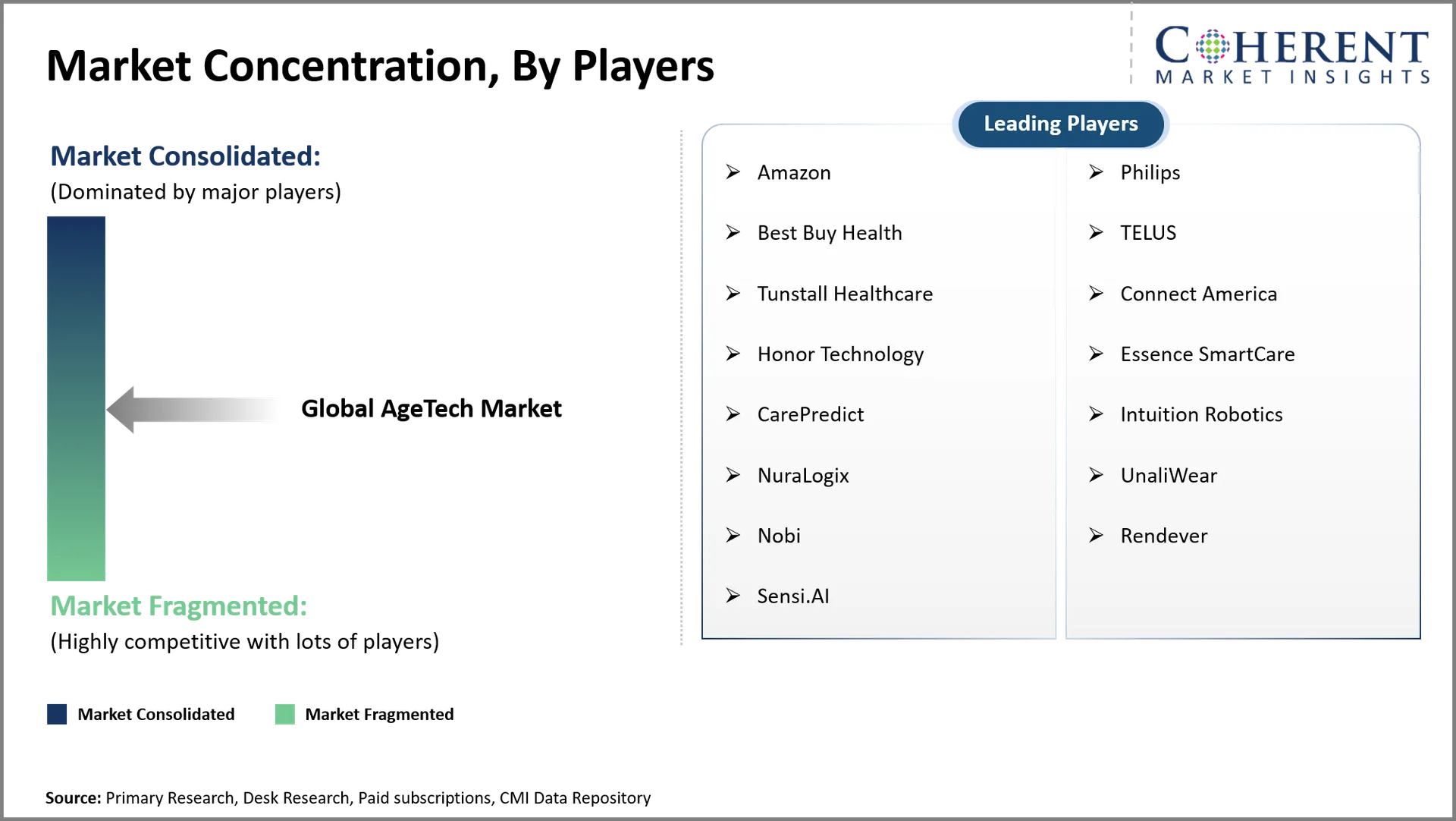
The global AgeTech market features technology companies, medical device manufacturers, and specialized elderly care providers. Best Buy Health focuses on connected aging solutions, including Lively medical alert devices, remote monitoring and caregiver support services. Intuition Robotics' product, ElliQ, is an AI-powered companion that provides proactive discussions, medicine reminders and cognitive engagement, and is their point of differentiation. Tunstall Healthcare is an expert in digital telecare, personal emergency response and integrated remote monitoring in residential care. Best Buy also utilizes its consumer electronics distribution network and its technical support capabilities. Current Health has a focus on hospital-at-home monitoring, clinical dashboards and connection with electronic health records. Competitive strategies increasingly emphasize integrated hardware, software, caregiver services, and institutional partnerships.
Top Manufacturers and Notable Products in the AgeTech Market
Manufacturer | Notable Product | Key features |
Best Buy Health | Lively Mobile2 | Emergency response, fall detection, 24/7 urgent response support, GPS location tracking |
Intuition Robotics | ElliQ | AI companionship, proactive conversations, medication reminders, wellness check-ins, cognitive engagement |
Tunstall Healthcare | Lifeline Vi | Emergency response, two-way communication, fall detection, remote monitoring, caregiver alerts |
CarePredict | Tempo Series | Wearable activity tracking, behavioral pattern analysis, predictive health insights, caregiver notifications |
Philips | Philips Lifeline with AutoAlert | Automatic fall detection, emergency response, two-way communication, 24/7 monitoring |
Market Report Scope
Global AgeTech Market Report Coverage | |||
Report Coverage | Details | ||
Base Year | 2025 | Market Size in 2026: | USD 286.40 Bn |
Historical Data For: | 2020 To 2024 | Forecast Period: | 2026 To 2033 |
Forecast Period 2026 To 2033 CAGR: | 9.20% | 2033 Value Projection: | USD 397.50 Bn |
Geographies covered: |
| ||
Segments covered: |
| ||
Companies covered: | Amazon, Philips, Best Buy Health, TELUS, Tunstall Healthcare, Connect America, Honor Technology, Essence SmartCare, CarePredict, Intuition Robotics, NuraLogix, UnaliWear, Nobi, Rendever, Sensi.AI | ||
Growth Drivers: |
| ||
Restraints & Challenges: |
| ||
Analyst Opinion (Expert Opinion)
- The future of the AgeTech industry will increasingly depend on technologies supporting independent living and proactive elderly care. Artificial intelligence will become more important in companionship, behavioral monitoring, medication management, and personalized assistance. Wearable devices will increasingly combine physiological monitoring with emergency alerts and predictive analytics. Smart home integration will also create opportunities for companies developing fall detection, automated safety controls, and voice-enabled assistance. Manufacturers offering connected products with simple interfaces and reliable caregiver communication will gain strategic advantages.
- The strongest prospects will be in AI-enabled aged care, remote patient monitoring and assistive technologies. Independent living will continue to be a major area of application as households need realistic solutions for routine aged care. The U.S., Japan and Germany provide attractive potential due to their developed healthcare infrastructure and specialized aged care needs. China offers prospects in rehabilitative robotics, mobility aid and intelligent caregiving devices. Companies should focus on cheap wearable monitoring systems, conversational companion robots and interoperable home-based care platforms.
- To gain a competitive edge, market participants will need to differentiate their services with features that are clinically relevant, easy to use and show clear operational benefits. Manufacturers should incorporate fall detection, medication reminders, emergency communication and caregiver dashboards into the ecosystems of connected products. Distribution can be enhanced by partnerships with hospitals, insurance companies, elder housing operators and home healthcare organizations. Companies should also create products that interface with existing electronic health records and assistive equipment. Strong privacy protections, trustworthy customer service and transparency about what artificial intelligence can do can help develop long-term consumer relations.
Speak to the analyst
Want personalized insights?
Take the findings above to one of our principal consultants, or have the report rebuilt around the segments, geographies and competitors you actually track.
Market Segmentation
- Product Type Insights (Revenue, USD Billion, 2021 - 2033)
- Health Monitoring Devices
- Emergency Response Systems
- Mobility Assistance Devices
- Others
- Technology Type Insights (Revenue, USD Billion, 2021 - 2033)
- AI and Machine Learning
- Internet of Things
- Wearable Technology
- Robotics and Assistive Automation
- Others
- Application Insights (Revenue, USD Billion, 2021 - 2033)
- Independent Living
- Chronic Disease Management
- Fall Detection and Prevention
- Medication Management
- Cognitive Health and Wellness
- Social Engagement
- Caregiver Support
- Financial Wellness and Security
- End User Insights (Revenue, USD Billion, 2021 - 2033)
- Individual Older Adults
- Family Caregivers
- Home Healthcare Providers
- Assisted Living Facilities
- Nursing Homes
- Hospitals and Healthcare Organizations
- Regional Insights (Revenue, USD Billion, 2021 - 2033)
- North America
- U.S.
- Canada
- Latin America
- Brazil
- Argentina
- Mexico
- Rest of Latin America
- Europe
- Germany
- U.K.
- Spain
- France
- Italy
- Russia
- Rest of Europe
- Asia Pacific
- China
- India
- Japan
- Australia
- South Korea
- ASEAN
- Rest of Asia Pacific
- Middle East
- GCC Countries
- Israel
- Rest of Middle East
- Africa
- South Africa
- North Africa
- Central Africa
- North America
Sources
Primary Research Interviews
- AgeTech Solution Providers & Developers
- Healthcare & Senior Care Facility Administrators
- Gerontology & Elder Care Technology Specialists
- Venture Capitalists & Investors in AgeTech Startups
Magazines
- Aging Today Magazine
- Senior Housing News
- McKnight's Long-Term Care News
- MIT Technology Review (Aging & Healthcare Tech)
Journals
- Journal of Aging and Health
- The Gerontologist (Oxford Academic)
- Journal of Medical Internet Research (JMIR Aging)
Associations
- AARP (American Association of Retired Persons)
- Global Ageing Network (GAN)
- LeadingAge Technology & Aging Advocacy
- Aging in Place Technology Watch
Public Domain Sources
- World Health Organization (WHO) - Ageing & Health Reports
- U.S. Administration for Community Living (ACL) - Elder Care Data
- European Commission - Digital Strategy for Ageing Population
- United Nations Department of Economic and Social Affairs (UN DESA) - World Population Ageing Report
Proprietary Elements
- CMI Data Analytics Tool
- Proprietary CMI Existing Repository of Information for Last 10 Years
Get access to 250+ pages report
Every segment, forecast, competitor profile and data table behind the analysis above — available for instant download.
- ESOMAR Member
- ISO 9001:2015 Certified
- D-U-N-S Registered
- GDPR & CCPA Compliant
Frequently Asked Questions
The global AgeTech market is expected to stand at USD 286.40 Bn in 2026 and is expected to reach USD 397.50 Bn by 2033.
The CAGR of the global AgeTech market is projected to be 9.2% from 2026 to 2033.
Growing global population aged 60 and above and Increasing preference for independent living and aging in place are the major factors driving the growth of the global AgeTech market.
High initial costs of smart home and monitoring systems and Limited digital literacy among some older adults are the major factors hampering the growth of the global AgeTech market.
In terms of product type, health monitoring devices segment is estimated to dominate the market revenue share in 2026.
The AgeTech market comprises technologies designed to improve older adults' health, independence, safety, and quality of life.
AI supports predictive health monitoring, conversational companionship, medication reminders, and personalized assistance.