

Global AI Gastroenterology Market Size and Forecast – 2026 To 2033
The global AI gastroenterology market is expected to grow from USD 1.72 Bn in 2026 to USD 5.48 Bn by 2033, registering a compound annual growth rate (CAGR) of 18% from 2026 to 2033. The market for global AI gastroenterology is poised for significant expansion, fueled by the growing burden of gastrointestinal diseases and increasing demand for efficient diagnostic procedures.
According to a 2025 study published in National Library of Medicine, gastrointestinal diseases accounted for USD 111.8 billion in healthcare expenditure, 14.5 million emergency department visits, and 2.9 million hospital admissions in 2021. Additionally, approximately 23.5 million GI endoscopies were performed in the U.S. in 2022, highlighting the potential for AI-assisted endoscopy to improve lesion detection and diagnostic efficiency.
Key Takeaways of the Global AI Gastroenterology Market
- Software is projected to hold 45.8% of the global AI gastroenterology market share in 2026, making it dominant component segment, across North America driven by its established digital healthcare infrastructure and active clinical research ecosystem. For instance, the U.S. National Cancer Institute lists an active clinical trial evaluating AI-informed colorectal cancer screening navigation among adults aged 45–49, demonstrating the application of AI software in screening pathways.
- Machine learning and deep learning is projected to hold 48.7% of the global AI gastroenterology market share in 2026, making it dominant technology segment, across Asia Pacific as healthcare providers and researchers evaluate AI-assisted diagnostic technologies. For instance, Japan’s official clinical research registry records a study assessing AI-assisted diagnosis of colonoscopy images, including the detection of small colorectal adenomas. This reflects regional clinical research activity directly related to machine-learning-based image analysis.
- AI-assisted endoscopy and lesion detection is projected to hold 31.8% of the global AI gastroenterology market share in 2026, making it dominant application segment, across Asia Pacific driven by demand for improved identification of polyps and precancerous lesions during gastrointestinal procedures. For instance, Japan’s National Cancer Center initiated Project CAD, a multicenter randomized clinical trial involving 13 centers across Japan, South Korea, Taiwan, Singapore, Hong Kong, and Thailand, to evaluate whether AI-based computer-aided detection improves lesion detection compared with conventional colonoscopy during colorectal cancer screening. The trial directly reflects regional efforts to evaluate AI-assisted endoscopy in clinical practice.
- North America market maintains dominance with an expected share of 38.6% in 2026, bolstered by strong biomedical research capabilities, established healthcare IT infrastructure, and investment in AI-driven clinical innovation. For instance, the U.S. National Institutes of Health’s Bridge2AI program develops high-quality, ethically sourced datasets and tools to advance AI research in biomedical and behavioral sciences, supporting the broader data infrastructure needed for future healthcare AI applications.
- Asia Pacific is expected to exhibit the fastest growth in the global AI gastroenterology market, registering an estimated CAGR of 21.8% during 2026–2033, driven by expanding digital health capabilities, increasing demand for early disease detection, and growing clinical AI research. For instance, Singapore’s National AI Strategy 2.0 identifies healthcare as an important area for AI deployment and supports the development of AI capabilities and implementation across sectors, providing a supportive policy environment for future AI-enabled gastroenterology solutions.
Segmental Insights
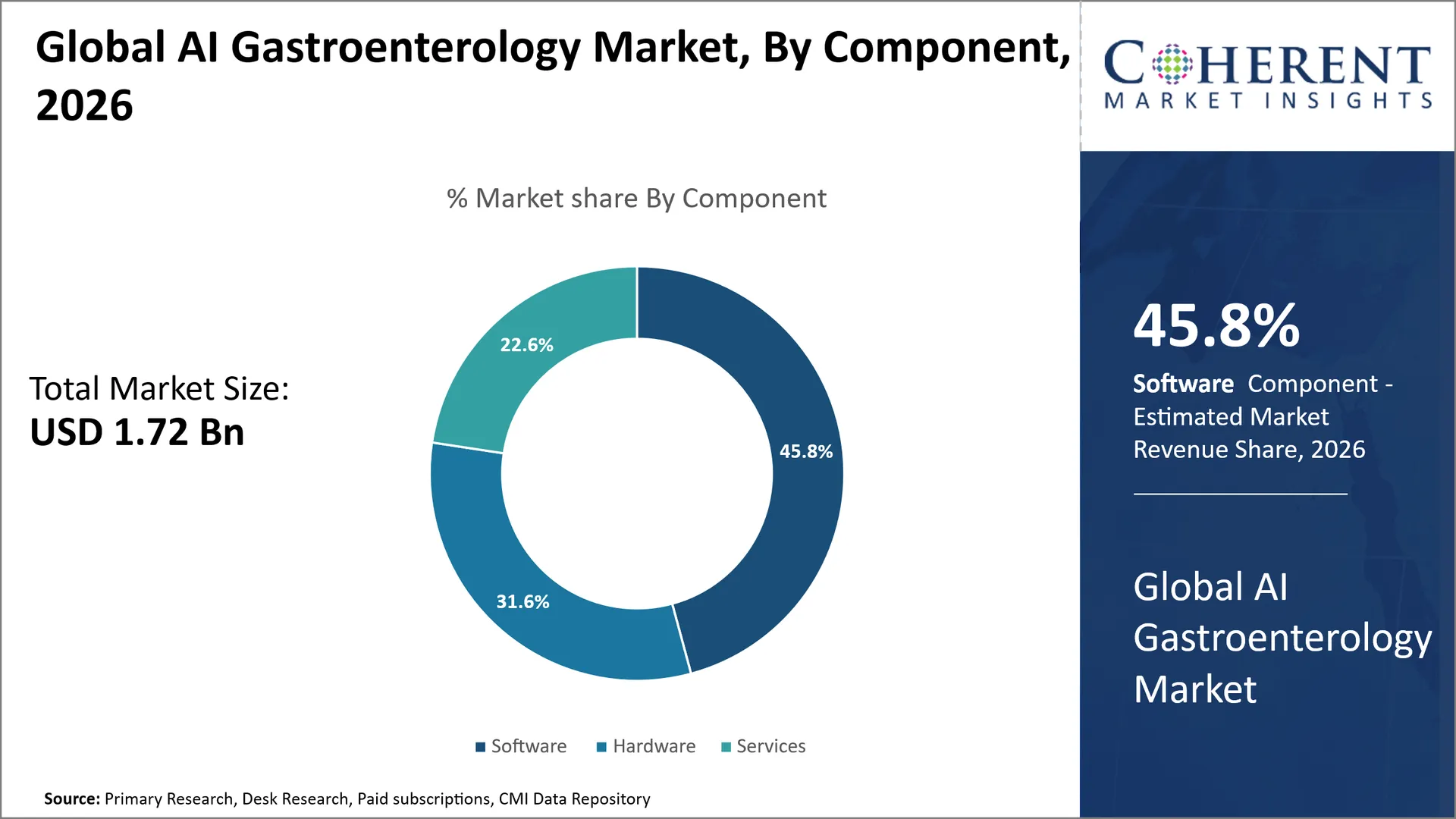
Why Do Software Dominate the Global AI Gastroenterology Market?
Software is projected to hold the market share of 45.8% in 2026, as it analyzes the images and looks for a lesion, enable visualization, make predictions, enhance decision making, and assist in the treatment. Software helps to analyze the capsule and endoscopic images, aligns with the clinical workflows, and receive algorithm updates without frequent hardware replacement. For instance, in February 2026, Medtronic has announced a CE Mark approval for the ColonPRO device that utilizes deep-learning algorithms for real-time polyp sizing and procedural highlight during colonoscopy, illustrating software innovation in AI-assisted gastroenterology diagnosis.
- Current Industry Events of 2026
- Market Size Estimation
- Regional Breakdown
- Competitive Landscape
- Customer Intelligence
- Segmental Analysis
- Pricing Analysis
- Key Market Drivers, Challenges & Future Trends
- Customized Insights Section
Why Do Machine Learning and Deep Learning Represent the Largest Technology Segment in the AI Gastroenterology Market?
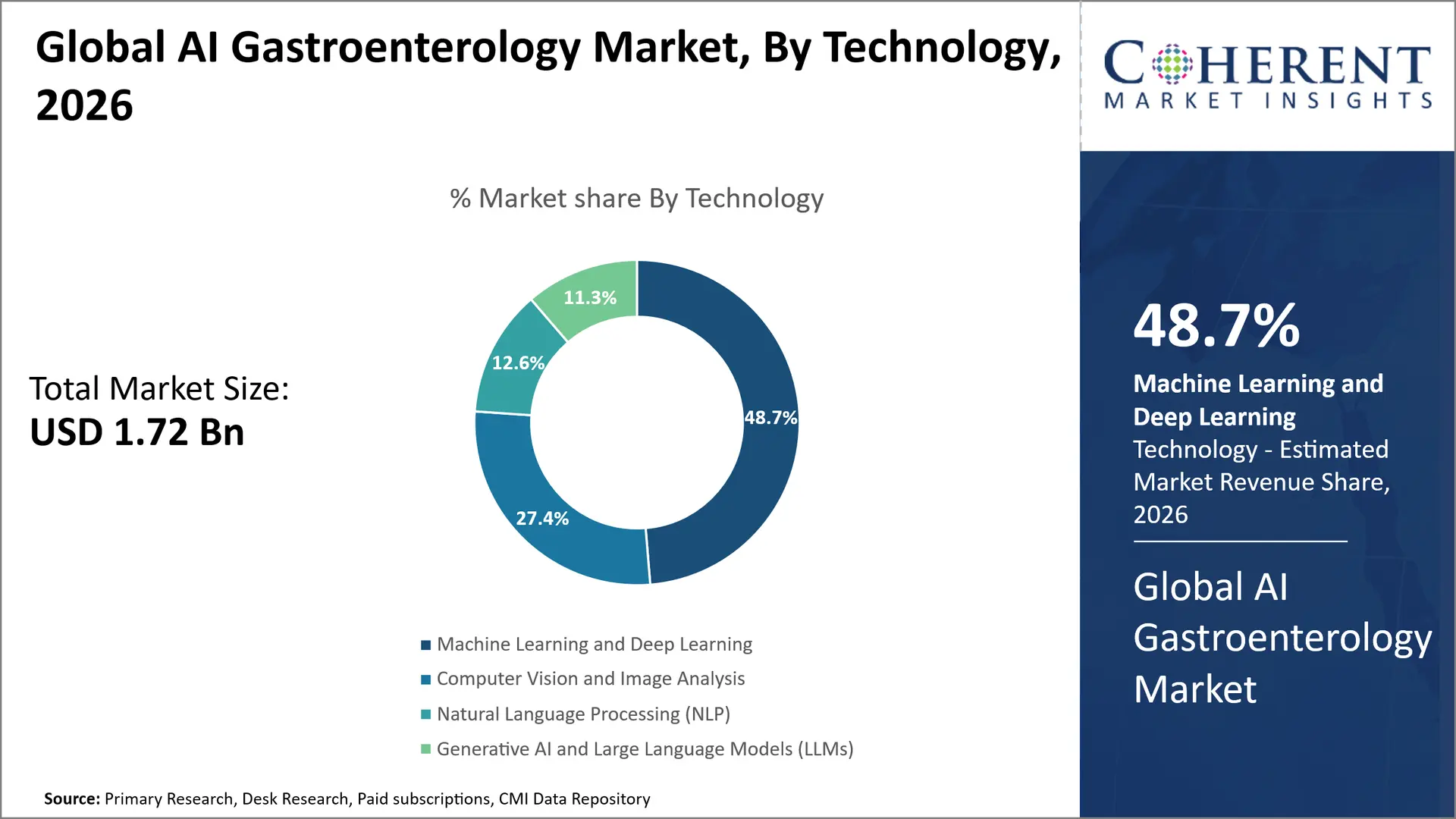
Machine learning and deep learning is projected to hold a market share of 48.7% in 2026, as it can recognize complex kinks from gastrointestinal images and clinical data and thereby enable automated lesion identification, disease classification, and diagnostic decisions. Convolutional neural networks are particularly valuable for endoscopic images to facilitate detection of lesions that can go unnoticed by clinicians. For instance, in August 2026, a multicenter randomized controlled trial of 1,407 colonoscopy patients published in Gastrointestinal Endoscopy evaluated the performance of DEtection of Elusive Polyps-2 (DEEP ²) CADe system. The trial demonstrated an increased number of detected adenomas per colonoscopy relative to traditional endoscopy, demonstrating the clinical utility of deep-learning-based polyp detection.
AI-Assisted Endoscopy and Lesion Detection Segment Dominates the Global AI Gastroenterology Market
The AI-assisted endoscopy and lesion detection segment is projected to hold a market share of 31.8% in 2026, owing to their ability to detect suspicious tissue during gastrointestinal procedures in real time. Studies have shown that endoscopy coupled with these systems may improve adenoma detection, decrease the rate of miss rate of lesions and lead to more standardized clinical evaluation. It is also likely to support their utility in early detection of colon cancers. For instance, in February 2026, a meta-analysis published in the National Library of Medicine, pooled data from 11 randomized control trials of 57,512 patients, and found that AI assisted upper gastrointestinal endoscopy could lead to a 57% rise in neoplasm detection per patient as compared to a conventional endoscopy.
Current Events and their Impact
Current Events | Description and its Impact |
NICE Issues Guidance on AI for Colorectal Polyp Detection (March 2026) |
|
India Launches Government Initiatives for AI-Based Cancer Screening (March 2026) |
|
China Issues National Policy to Expand AI Applications in Healthcare (February 2026) |
|
AI Gastroenterology Market Dynamics
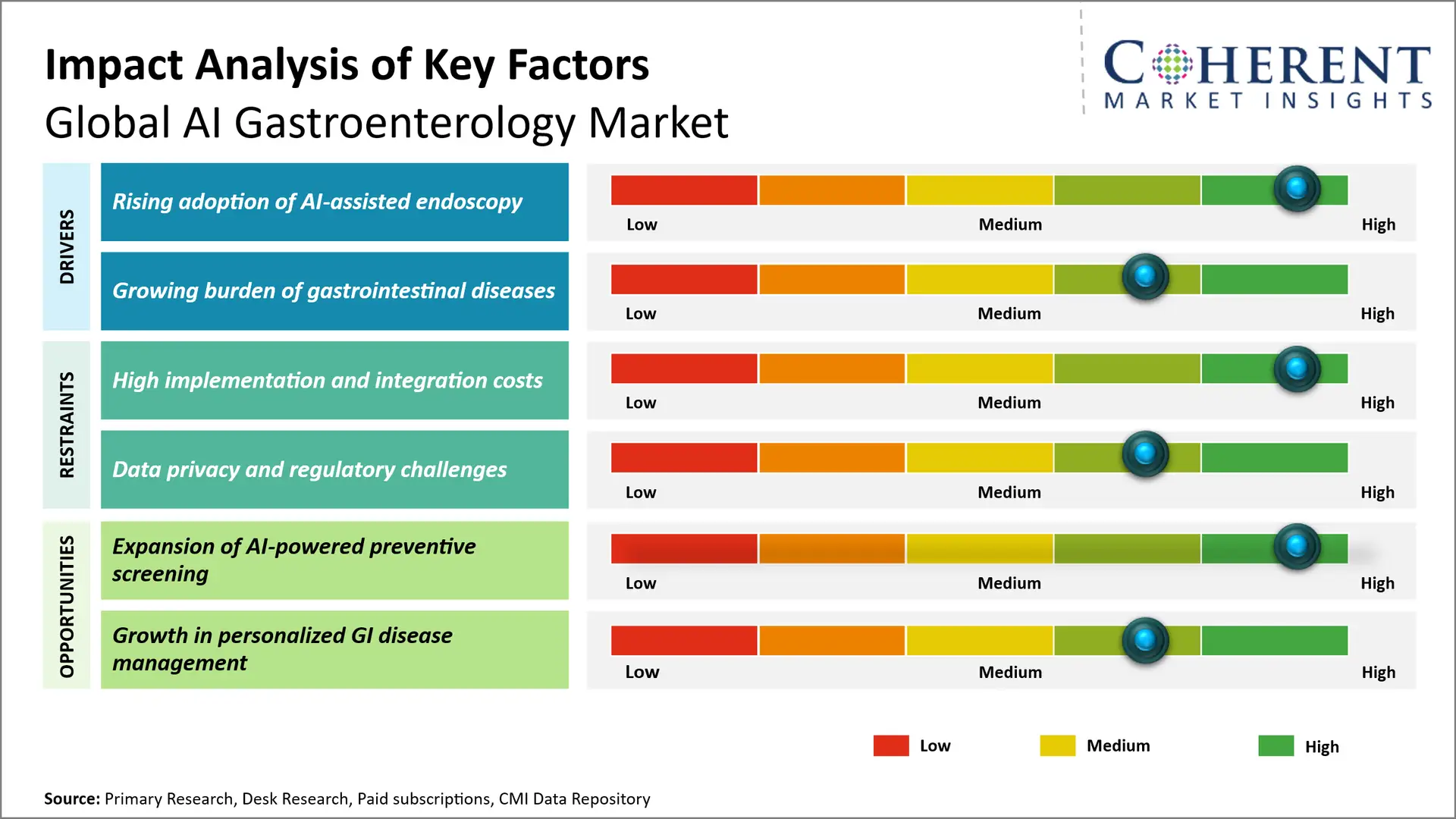
Market Drivers
- Rising adoption of AI-assisted endoscopy: The growing adoption of AI-assisted endoscopy is driving the global AI gastroenterology market by helping clinicians identify suspicious lesions during colonoscopy and improve examination consistency. For instance, in January 2024, Japan’s National Cancer Center announced a multicenter clinical trial to evaluate AI-based computer-aided detection during colonoscopy for colorectal cancer screening across several Asia-Pacific countries. This initiative highlights growing clinical interest in using AI to improve colorectal lesion detection and screening outcomes.
- Growing burden of gastrointestinal diseases: The rising prevalence of gastrointestinal diseases, including inflammatory bowel disease (IBD), colorectal cancer, and chronic digestive disorders, is increasing demand for accurate and timely diagnosis. For instance, in August 2026, the U.S. National Center for Health Statistics reported that approximately 4.1 million U.S. adults had been diagnosed with IBD, based on 2023–2024 survey data, reinforcing the need for improved disease assessment and monitoring tools. This growing disease burden creates opportunities for AI-enabled gastroenterology solutions to support clinical evaluation and care management
- Increasing demand for early and accurate diagnosis: The growing emphasis on early diagnosis of gastrointestinal disorders is driving demand for AI-powered gastroenterology solutions that can identify abnormalities, support clinical interpretation, and improve diagnostic consistency. For instance, in May 2024, the U.S. National Cancer Institute highlighted research on artificial intelligence applications in cancer screening and early detection, reflecting increasing interest in AI-supported diagnostic approaches. These developments create opportunities for AI-assisted endoscopy and risk-assessment tools in gastrointestinal care.
Emerging Trends
- Generative AI for gastroenterology clinical decision support: Generative AI and large language models are emerging as tools for summarizing patient records, interpreting clinical guidelines, and supporting gastroenterologists in treatment planning. Integration with electronic health records may improve clinical documentation and streamline decision-making for complex gastrointestinal disorders.
- AI-powered capsule endoscopy and small-bowel imaging: AI-powered image analysis is increasingly being explored to automate the review of capsule endoscopy recordings and identify abnormalities such as bleeding, ulcers, and inflammatory lesions. These capabilities can reduce manual image-review workloads and support faster interpretation of small-bowel examinations.
- Multimodal AI for personalized gastrointestinal disease management: Emerging AI systems combine endoscopic images, pathology findings, clinical records, laboratory results, and genomic data to support more comprehensive disease assessment. This approach could improve risk stratification, disease monitoring, and personalized treatment planning for conditions such as inflammatory bowel disease and colorectal cancer.
Regional Insights
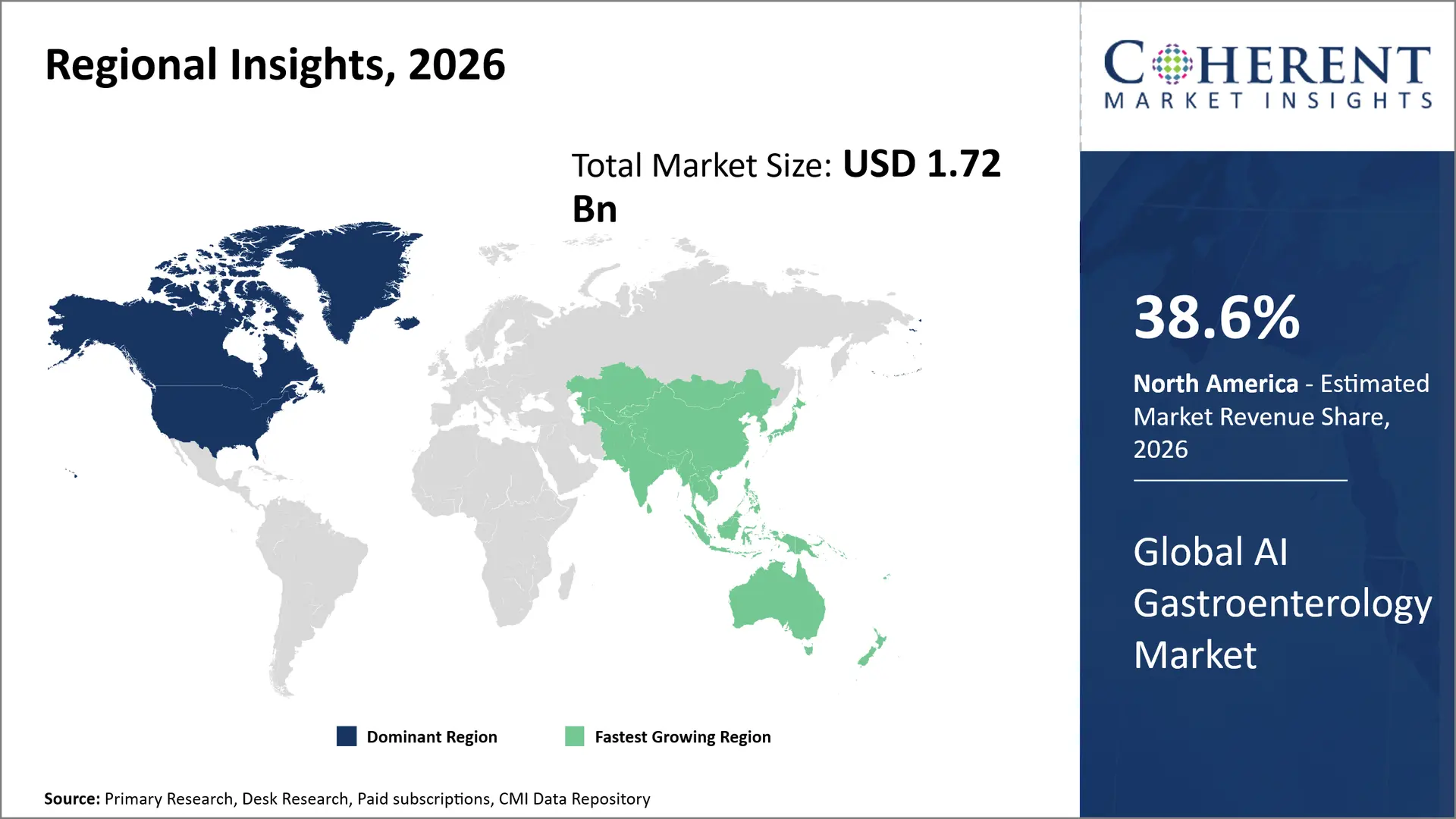
Why is North America a Strong Market for AI Gastroenterology?
North America leads the global AI gastroenterology market, accounting for an estimated 38.6% share in 2026, owing to presence of developed health care infrastructure, high technology innovation and well-developed AI research infrastructure. The region has well-established clinical infrastructure with favorable funding initiatives supported by government organizations, such as NIH, along with regulations which aid in trial evaluation.
For instance, in June 2026, the U.S. National Institutes of Health (NIH) announced the release of five PRIMED-AI funding opportunities to develop, validate, and translate AI solutions that combine medical imaging with other health data into tools for clinical decision making. These opportunities will foster industry-academic partnerships, focus on validation and bring greater focus to the funding landscape for medical AI development. Moreover, combining the expertise of clinicians with technology firms, and support for commercial collaboration may incentivize innovation in AI-assisted endoscopy, lesion detection, and clinical decision support.
Why Does Asia Pacific AI Gastroenterology Market Exhibit High Growth?
Asia Pacific is expected to exhibit the fastest growth in the global AI gastroenterology market, registering an estimated CAGR of 21.8% during 2026–2033. The region is projected to account for 25.1% of the global market in 2026, owing to high healthcare expenditure, rapid digital health infrastructure adoption, and rising need for diagnosis of gastrointestinal diseases at an early stage. Furthermore, government of various countries including Japan, China, and South Korea have been supporting AI research through various national initiatives and funding programs, which would further accelerate the adoption of AI in the diagnosis and management of gastroenterology.
For instance, In November 2025, the National Health Commission of China, along with other government agencies, released guidelines to provide guidance and regulation for applications of AI in medical services, such as clinical assistance, health management, and new healthcare service delivery. This policy provides a friendly environment for AI applications expansion, including potential development opportunities for applications of in the field of gastrointestinal disease diagnosis and screening.
Global AI Gastroenterology Market Outlook for Key Countries
Why is the U.S. Leading Innovation and Adoption in the AI Gastroenterology Market?
The U.S. is expected to be the dominant market in terms of innovation and market adoption of AI gastroenterology market owing to their developed medical technology ecosystems, path for adoption of AI in endoscopy workflows, and existing pathways to diagnostic assessment for AI enabled diagnostic solutions. In addition, close collaborated efforts between academic medical centers, gastroenterologists, and AI developers would serve as key evidence for clinical validation and technology optimization.
Is Japan a Favorable Market for AI Gastroenterology Market?
Japan is a promising market for AI solutions in gastroenterology including AI-assisted endoscopy, the diagnosis of gastric cancer, and colorectal lesions. With the current strength of endoscopy expertise and specific focus on the early detection of cancers of the gastrointestinal tract, Japan appears to be a good fit for computer vision and deep-learning approaches. There are also significant opportunities for lesion recognition tools and for solutions that can provide reliable diagnoses to standardize assessment.
Is China Emerging as a Key Growth Hub for the AI Gastroenterology Market?
China is gradually emerging as important hub of growth for the AI gastroenterology market, driven by innovations in the field of AI-assisted endoscopy, gastric cancer screening and gastrointestinal image analysis automation. With a high number of patients and demand for scalable diagnostics, the market for high-powered deep-learning algorithms improve detection of lesions and provide early diagnosis. Furthermore, domestic AI development and incorporation into the hospital-based diagnostic workflow could support market growth, particularly in endoscopy-intensive clinical settings.
Why Does Germany Top the European AI Gastroenterology Market?
Germany probably captures the largest share of the European AI gastroenterology market driven by its established clinical infrastructure in gastroenterology, endoscopy capabilities, as well as digital tools incorporated in the clinical operations. The need for AI-assisted colonoscopy, automatic detection of polyps and subsequent provision of image-based diagnosis support seems to be in line with the country’s focus on early detection of colorectal cancer. In addition, the collaboration of specialist clinical knowledge with medical device creation implies the adoption of AI solutions in hospitals and endoscopy clinics.
Is AI Gastroenterology Market Developing in UK?
The expansion of the AI gastroenterology market in the UK is driven by the rising interest in AI-assisted colonoscopy, automated detection of polyps, and digital clinical decision support. The UK market may provide opportunities for solutions that ensure the efficiency of endoscopy, bring standardization in the detection of lesions, and cater to the rising need for gastroenterology diagnostic services. Also, integration with the NHS clinical work practices and proof of clinical and cost-effectiveness will be important for broader adoption.
AI Gastroenterology Technologies – Development Landscape
Technology | Key Application | Development Status |
Machine Learning and Deep Learning | GI disease prediction, lesion classification, and diagnostic support | Advanced development; clinical validation and implementation across selected use cases |
Computer Vision and Image Analysis | Real-time polyp detection and characterization during colonoscopy | Clinical implementation in selected endoscopy workflows |
Natural Language Processing (NLP) | Extraction of GI findings from clinical notes and automated report generation | Growing adoption in clinical documentation and information extraction |
Generative AI and Large Language Models | Clinical decision support, patient communication, and summarization of GI records | Emerging; evaluation for accuracy, safety, and clinical integration |
AI-Enabled Capsule Endoscopy | Automated identification of abnormalities in small-bowel images | Clinical evaluation and adoption in selected diagnostic workflows |
Multimodal AI | Combining endoscopic images, pathology, laboratory results, and patient history | Early-stage development, with ongoing research into integrated clinical decision support |
How is the expansion of AI-powered preventive screening creating new growth opportunities in the AI gastroenterology market?
AI-enabled preventive screening is opening up potential prospects of the AI gastroenterology market across the globe as it can offer early detection of gastrointestinal aberrations, help interpret images and support clinical decisions in a timely manner. Machine learning algorithms in conjunction with advanced imaging can help improve screening efficacy, reduce the number of missed lesions and facilitate risk-based patient evaluation. Furthermore, emphasis on early diagnosis and more accessible care may further accelerate its uptake in hospitals and endoscopy centers. For instance, in March 2026, India’s Ministry of Health and Family Welfare announced the Cancer AI & Technology Challenge (CATCH) grant initiative to support the development and validation of AI-enabled cancer screening and diagnostic solutions. (Source: Press Information Bureau)
Market Players, Key Development, and Competitive Landscape
Key Developments
- In September 2026, the American College of Gastroenterology (ACG) and Jiro Health announced a content agreement to integrate ACG clinical guidelines and journal content into Jiro’s AI-powered clinician platform. The platform combines trusted medical evidence with real-world practice data to provide gastroenterologists with relevant, cited clinical guidance and support decision-making.
- In July 2026, the American Gastroenterological Association (AGA) launched Nigel, an AI assistant specifically designed for gastroenterology and hepatology. The tool provides clinicians with AI-powered access to clinical guidance and evidence-based information, supporting diagnostic and treatment decisions in digestive health.
- In May 2025, Virgo Surgical Video Solutions, Inc. launched EndoML at Digestive Disease Week (DDW) 2025. The AI development platform enables gastroenterologists and pharmaceutical researchers to build custom AI models from gastrointestinal endoscopy videos, supporting applications such as polyp segmentation, anatomical landmark recognition, and inflammatory bowel disease severity scoring.
- In March 2024, AI Medical Service Inc. announced the release of its AI-based gastric endoscopic diagnosis support system. The technology analyzes endoscopic images to assist physicians in detecting gastric abnormalities, demonstrating the growing application of AI in gastrointestinal diagnosis and early disease detection.
Competitive Landscape
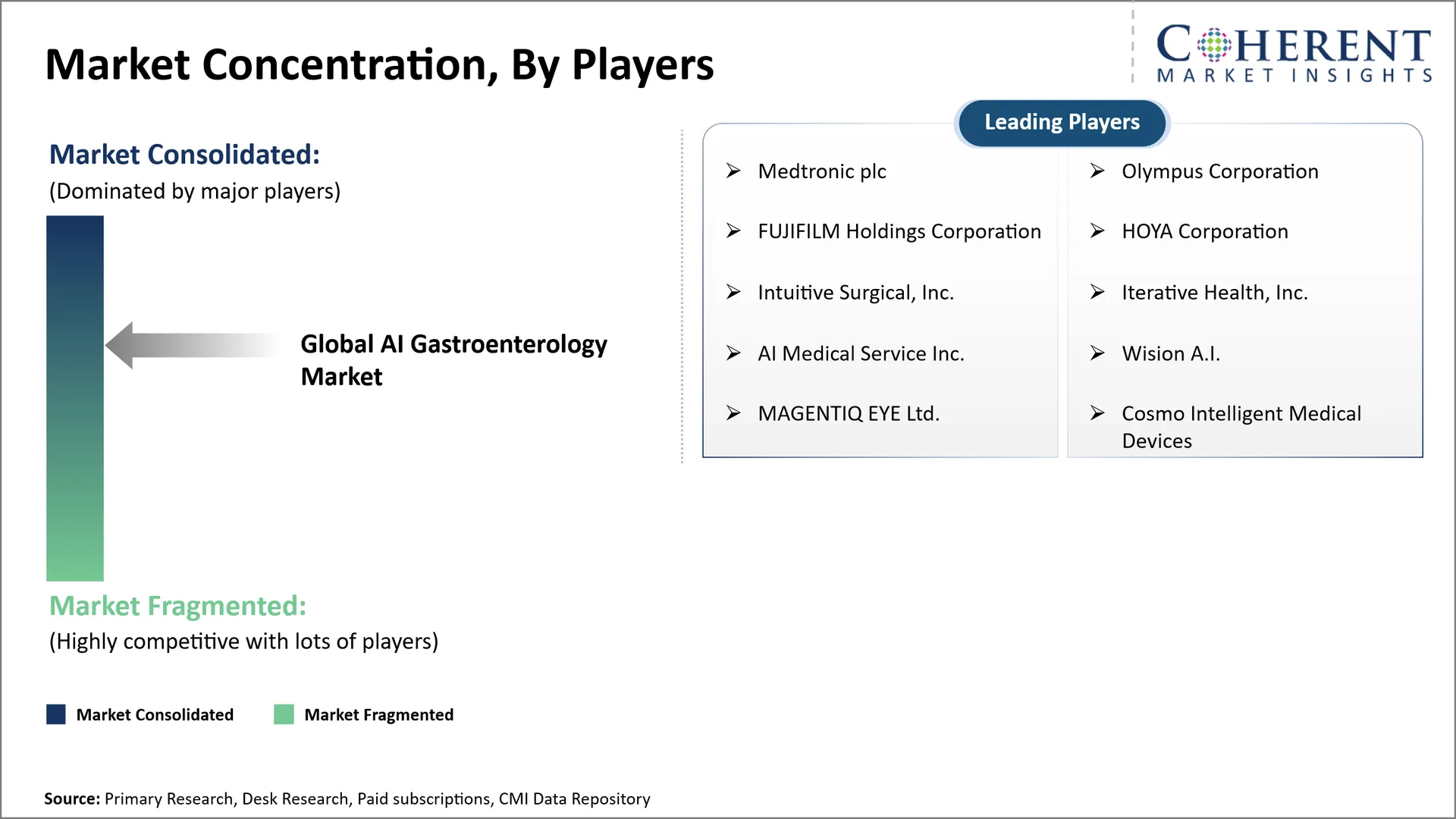
The global AI gastroenterology market is evolving as healthcare providers and technology developers focus on improving diagnostic accuracy, endoscopy workflows, clinical decision support, and patient management. Competition is shaped by advances in computer vision, machine learning, natural language processing, and multimodal AI, alongside the need for robust clinical validation, interoperable data infrastructure, and reliable performance across diverse patient populations. Key focus areas include:
- Development of AI-powered computer-aided detection and diagnosis for gastrointestinal lesions.
- Expansion of AI applications in capsule endoscopy, inflammatory bowel disease assessment, and liver disease management.
- Integration of generative AI and natural language processing into clinical documentation and gastroenterology workflows.
- Advancement of multimodal AI combining endoscopic images, pathology, laboratory results, and patient records.
- Strengthening of clinical validation, algorithm transparency, data quality, and standardized performance assessment.
Market Report Scope
AI Gastroenterology Market Report Coverage | |||
Report Coverage | Details | ||
Base Year | 2025 | Market Size in 2026: | USD 1.72 Bn |
Historical Data For: | 2020 To 2024 | Forecast Period: | 2026 To 2033 |
Forecast Period 2026 To 2033 CAGR: | 18% | 2033 Value Projection: | USD 5.48 Bn |
Geographies covered: |
| ||
Segments covered: |
| ||
Companies covered: | Medtronic plc, Olympus Corporation, FUJIFILM Holdings Corporation, HOYA Corporation, Intuitive Surgical, Inc., Iterative Health, Inc., AI Medical Service Inc., Wision A.I., MAGENTIQ EYE Ltd., Cosmo Intelligent Medical Devices | ||
Growth Drivers: |
| ||
Restraints & Challenges: |
| ||
Analyst Opinion (Expert Opinion)
- In the coming years, global AI gastroenterology market is expected to evolve from primarily AI-assisted lesion detection toward integrated clinical intelligence platforms that support the entire gastrointestinal care pathway, from screening and diagnosis to disease monitoring and treatment planning. Advancements in multimodal AI, generative AI, and real-time endoscopic image analysis are expected to improve diagnostic workflows and enable more personalized care. Over the longer term, commercial success will depend on demonstrating measurable clinical value, seamless integration into existing endoscopy systems, and reliable performance across diverse patient populations.
- The maximum opportunities are foreseen within AI-assisted endoscopy and lesion detection in the U.S., where established endoscopy infrastructure, colorectal cancer screening needs, and demand for improved diagnostic accuracy can support adoption. Additional opportunities exist in AI-powered gastric cancer detection in Japan and AI-based inflammatory bowel disease monitoring in China, where specialty-specific solutions can address regional clinical needs.
- In order to gain a competitive advantage market players should prioritize clinical differentiation, workflow integration, and evidence generation rather than competing primarily on software availability. Developing proprietary algorithms, demonstrating improvements in lesion detection and diagnostic efficiency, building interoperable platforms, and tailoring AI models to regional patient populations can strengthen clinical credibility, support adoption, and improve long-term customer retention.
Speak to the analyst
Want personalized insights?
Take the findings above to one of our principal consultants, or have the report rebuilt around the segments, geographies and competitors you actually track.
Market Segmentation
- Component Insights (Revenue, USD Bn, 2021 - 2033)
- Software
- Hardware
- Services
- Technology Insights (Revenue, USD Bn, 2021 - 2033)
- Machine Learning and Deep Learning
- Computer Vision and Image Analysis
- Natural Language Processing (NLP)
- Generative AI and Large Language Models (LLMs)
- Application Insights (Revenue, USD Bn, 2021 - 2033)
- AI-Assisted Endoscopy and Lesion Detection
- Gastrointestinal Disease Diagnosis and Risk Assessment
- Inflammatory Bowel Disease (IBD) Assessment and Monitoring
- Hepatology and Liver Disease Analytics
- Clinical Decision Support and Treatment Planning
- Clinical Documentation and Workflow Automation
- Others
- End User Insights (Revenue, USD Bn, 2021 - 2033)
- Hospitals
- Specialty Gastroenterology Clinics
- Ambulatory Surgical Centers and Endoscopy Centers
- Academic and Research Institutions
- Others
- Regional Insights (Revenue, USD Bn, 2021 - 2033)
- North America
- U.S.
- Canada
- Latin America
- Brazil
- Argentina
- Mexico
- Rest of Latin America
- Europe
- Germany
- U.K.
- Spain
- France
- Italy
- Russia
- Rest of Europe
- Asia Pacific
- China
- India
- Japan
- Australia
- South Korea
- ASEAN
- Rest of Asia Pacific
- Middle East
- GCC Countries
- Israel
- Rest of Middle East
- Africa
- South Africa
- North Africa
- Central Africa
- North America
- Key Players Insights
- Medtronic plc
- Olympus Corporation
- FUJIFILM Holdings Corporation
- HOYA Corporation
- Intuitive Surgical, Inc.
- Iterative Health, Inc.
- AI Medical Service Inc.
- Wision A.I.
- MAGENTIQ EYE Ltd.
- Cosmo Intelligent Medical Devices
Sources
Primary Research Interviews
- Gastroenterologists specializing in diagnostic and therapeutic endoscopy.
- Gastroenterology department heads and clinical decision-makers at hospitals and specialty centers.
- Endoscopists and clinical investigators working on AI-assisted polyp detection, lesion characterization, and colorectal cancer screening.
- Medical AI researchers specializing in machine learning, deep learning, computer vision, and gastrointestinal image analysis.
- Clinical informatics specialists involved in electronic health records, clinical decision support, and AI workflow integration.
Stakeholders
- Developers of AI-powered endoscopy and computer-aided detection software.
- Medical imaging and endoscopy equipment manufacturers integrating AI capabilities.
- Healthcare AI software developers specializing in gastrointestinal diagnosis and clinical decision support.
- Hospitals, gastroenterology clinics, and endoscopy centers implementing AI-enabled diagnostic workflows.
- Healthcare technology providers offering electronic health records, clinical data integration, and AI infrastructure.
- Research organizations and academic institutions specializing in gastrointestinal AI and clinical validation.
- End-use Sectors
- Hospitals and multispecialty healthcare facilities.
- Gastroenterology and endoscopy centers.
- Diagnostic imaging and medical screening centers.
- Academic medical centers and clinical research institutions.
- Healthcare technology and medical AI development organizations.
- Other healthcare facilities implementing AI-assisted gastrointestinal diagnosis.
- Regulatory & Health Bodies
- U.S. Food and Drug Administration (FDA) — AI-enabled medical devices, medical imaging software, and applicable device regulatory requirements.
- National Institutes of Health (NIH) — biomedical research, clinical research programs, and AI-related healthcare research.
- National Institute of Diabetes and Digestive and Kidney Diseases (NIDDK), U.S. — digestive disease research, clinical studies, and gastrointestinal disease epidemiology.
- European Medicines Agency (EMA) — relevant European medicines and health-technology regulatory information.
- Medicines and Healthcare products Regulatory Agency (MHRA), UK — medical devices and software-based medical technologies.
- Pharmaceuticals and Medical Devices Agency (PMDA), Japan — medical devices and applicable software-based medical technologies.
- National Medical Products Administration (NMPA), China — medical devices and software-based medical technologies.
- Central Drugs Standard Control Organisation (CDSCO), India — medical devices and applicable software-based medical technologies.
Databases
- ClinicalTrials.gov — clinical studies involving AI-assisted endoscopy, colorectal polyp detection, gastrointestinal diagnosis, and disease monitoring. Official database
- National Library of Medicine (NLM) — biomedical literature and research information. Official website
- NIH RePORTER — publicly funded biomedical research projects, including AI and digestive disease research. Official database
- NIDDK Clinical Research and Epidemiology Resources — digestive disease clinical research programs, datasets, and epidemiological resources. Official website
- FDA AI-Enabled Medical Devices Database — public information on AI-enabled medical devices, including relevant gastroenterology applications. Official database
- WHO International Clinical Trials Registry Platform (ICTRP) — international clinical trial information. Official database
- EU Clinical Trials Information System (CTIS) — clinical trial information for the European Union
Associations
- American Gastroenterological Association (AGA).
- American Society for Gastrointestinal Endoscopy (ASGE).
- American College of Gastroenterology (ACG).
- European Society of Gastrointestinal Endoscopy (ESGE).
- United European Gastroenterology (UEG).
- World Gastroenterology Organisation (WGO).
- Asian Pacific Association of Gastroenterology (APAGE).
- Japanese Gastroenterological Endoscopy Society (JGES).
- Gastroenterological Society of Australia (GESA).
- Indian Society of Gastroenterology (ISG).
Public Domain Sources
- U.S. Food and Drug Administration (FDA) — AI-enabled medical device information and medical device regulatory resources.
- National Institutes of Health (NIH) — biomedical research, clinical studies, and healthcare AI research programs.
- National Institute of Diabetes and Digestive and Kidney Diseases (NIDDK) — digestive disease research, clinical studies, and epidemiological information.
- National Cancer Institute (NCI) — colorectal cancer screening, cancer research, and early detection initiatives.
- National Library of Medicine (NLM) — PubMed and ClinicalTrials.gov resources for clinical and scientific evidence.
- European Medicines Agency (EMA) — relevant European regulatory information for medical products and healthcare technologies.
- World Health Organization (WHO) — global health statistics, disease information, and international clinical trial resources.
Proprietary Elements
- CMI Data Analytics Tool, Proprietary CMI Existing Repository of information for last 10 years.
Get access to 250+ pages report
Every segment, forecast, competitor profile and data table behind the analysis above — available for instant download.
- ESOMAR Member
- ISO 9001:2015 Certified
- D-U-N-S Registered
- GDPR & CCPA Compliant
Frequently Asked Questions
The global AI gastroenterology market is estimated to be valued at USD 1.72 Bn in 2026 and is expected to reach USD 5.48 Bn by 2033.
Software dominates due to its role in AI-powered endoscopy analysis, lesion detection, and clinical decision support.
AI gastroenterology uses artificial intelligence to improve the diagnosis, monitoring, and management of gastrointestinal diseases.
The CAGR of global AI gastroenterology market is projected to be 18% from 2026 to 2033.
Rising adoption of AI-assisted endoscopy, and growing burden of gastrointestinal diseases are the major factors driving the growth of the global AI gastroenterology market.
High implementation and integration costs, and data privacy and regulatory challenges are the major factors hampering the growth of the global AI gastroenterology market.
In terms of technology, machine learning and deep learning is estimated to dominate the market revenue share in 2026.