

Global Colorectal Cancer Market Size and Forecast – 2026 to 2033
The global colorectal cancer market is estimated to be valued at USD 14.43 Bn in 2026 and is expected to reach USD 20.30 Bn by 2033, exhibiting a compound annual growth rate (CAGR) of 5.0% from 2026 to 2033. This growth reflects increasing investments in colorectal cancer research, early diagnostic advancements, and expanding patient awareness about screening and treatment options, driving the demand across both developed and emerging markets.
Key Takeaways of the Global Colorectal Cancer Market
- In 2026, the colon cancer segment is projected to account for 66.3 % of the market share.
- By drug class, the chemotherapy agents segment is expected to lead with a 39.3 % share in 2026.
- By type, the metastatic segment is expected to capture 69.3 % share in 2026.
- North America is expected to lead the market, holding a share of 39.5 % in 2026. Asia Pacific is anticipated to be the fastest-growing region, with an estimated market share of 24.3% in 2026.
Market Overview
Market trends indicate a significant shift towards minimally invasive diagnostic tools and personalized treatment approaches in colorectal cancer care. The integration of advanced molecular diagnostics and targeted therapies is enhancing treatment efficacy and patient outcomes. Additionally, rising initiatives for early screening programs and an increasing elderly population contribute to sustained the market growth. The growing adoption of immunotherapy and precision medicine further underscores the evolving landscape, positioning the market for continuous innovation and expansion.
Current Events and Its Impact
Current Events | Description and its Impact |
Expansion of Immunotherapy and Precision Medicine |
|
Targeted Therapy Approvals |
|
Segmental Insights

- Current Industry Events of 2026
- Market Size Estimation
- Regional Breakdown
- Competitive Landscape
- Customer Intelligence
- Segmental Analysis
- Pricing Analysis
- Key Market Drivers, Challenges & Future Trends
- Customized Insights Section
Colorectal Cancer Market Insights, by Cancer Type - Colon Cancer Segment Contributes the Highest Share of the Market Owning to Increasing Prevalence and Diagnostic Advancements
The colon cancer segment is expected to hold the dominant position in the global colorectal cancer market, accounting for 66.3% share in 2026. This dominance is largely attributed to the higher incidence rate of colon cancer compared to rectal cancer across diverse populations worldwide. Several factors contribute to the prevalence of colon cancer, including dietary habits, sedentary lifestyle, obesity, and genetic predispositions, which are particularly notable in developed as well as emerging economies where lifestyle transitions have accelerated. This wider at-risk population base naturally drives a larger demand for effective diagnostic, therapeutic, and treatment options directed towards colon cancer.
In August 2025, Inova Schar Cancer, a leading U.S. cancer research center, released a study showing long-distance runners may face higher risks of advanced colon cancer at younger ages. The trial found 15% of marathoners and ultramarathoners aged 35 to 50 had advanced precancerous polyps, compared with just 1–2% in average-risk people, raising calls for earlier screening in endurance athletes.
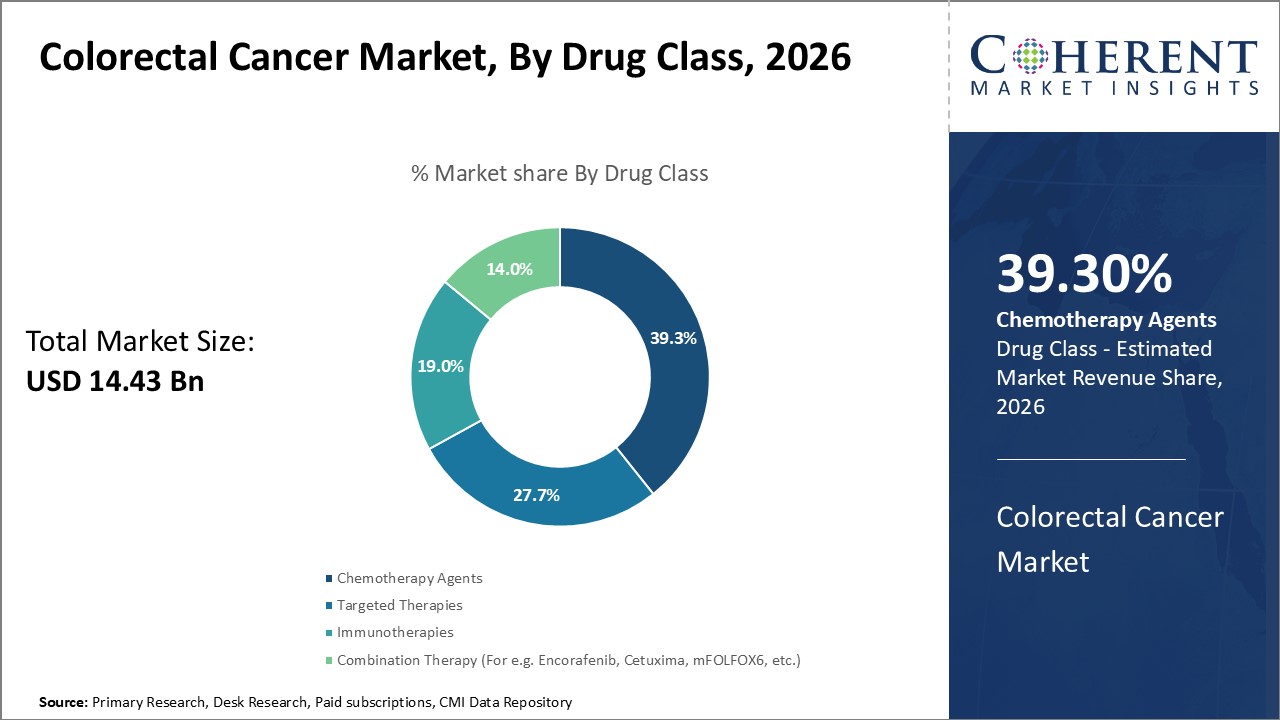
Colorectal Cancer Market Insights, by Drug Class - Chemotherapy Agents Segment Captures the Largest Market Share Due to their Established Efficacy and Diverse Use in Treatment Regimens
The chemotherapy agents segment is projected to lead the market, capturing a 39.3% share in 2026, driven by their long-standing, critical role in managing colorectal malignancies. Traditional chemotherapy agents such as 5-Fluorouracil (5-FU), Capecitabine, and Irinotecan remain foundational treatments, particularly given their broad applicability across different stages of colorectal cancer. Their widespread use is supported by extensive clinical evidence showcasing their effectiveness either as monotherapies or in combination with other agents to enhance patient outcomes.
The reliance on chemotherapy agents continues due to several key factors. Firstly, these drugs are often integral to first-line treatment protocols, especially in adjuvant and neoadjuvant settings, to reduce tumor burden before or after surgical interventions. They also serve as backbone therapies in metastatic colorectal cancer, where combination regimens involving oxaliplatin or leucovorin improve survival and quality of life.
Colorectal Cancer Market Insights, by Type - Metastatic Segment Dominates Due to the Complexity and Urgency of Advanced Disease Management
The metastatic segment is projected to account for 69.3% share in 2026, underscoring the critical need for complex treatment strategies addressing advanced-stage disease. Metastatic colorectal cancer is characterized by the dissemination of malignant cells beyond the primary colon or rectal site to distant organs such as the liver and lungs, leading to increased morbidity and a significantly challenging treatment landscape. The aggressive nature of metastatic disease necessitates multimodal therapeutic approaches that combine systemic chemotherapy, targeted therapies, and immunotherapies, all of which contribute to the robust market share of this segment.
The prevalence of metastatic colorectal cancer influences its market dominance, as a substantial proportion of new colorectal cancer cases are diagnosed at an advanced stage or progress to metastasis over time. This delay in early detection and the complex clinical management requirements fuel the demand for diverse and innovative treatment options tailored to individual patient profiles.
Reimbursement Landscape
- In the U.S., colorectal cancer screening is widely reimbursed under both public and private insurance, particularly for individuals aged 45–75, as recommended by the U.S. Preventive Services Task Force. Most payers, including Medicare and commercial insurers, cover stool-based tests like FIT and gFOBT annually, colonoscopy every 10 years, and other visualization methods such as flexible sigmoidoscopy or CT colonography. FIT-DNA (e.g., Cologuard) is typically covered once every three years, while tests like methylated Septin 9 or colon capsule endoscopy are not reimbursable. Beyond age 75, routine screening is generally not covered, reflecting clinical guidance that benefits diminish for older asymptomatic patients.
- Reimbursement plays a critical role in driving early detection and reducing long-term treatment costs, which were USD 24.3 billion in 2020. The U.S. Centers for Disease Control and Prevention (CDC) reported 147,931 new colorectal cancer cases in 2022 and 53,779 deaths in 2023, making it the second-highest cancer expenditure. CDC highlights that routine screening starting at age 45 can significantly lower cases and deaths—raising screening rates to 80% could cut diagnoses by 22% and deaths by 33% by 2030. Yet fewer than one-third of cancers are caught early, and only 61% of adults aged 45 to 75 are up-to-date with tests. Through its Colorectal Cancer Control Program, CDC partners with states, universities, and health systems to expand access, reminders, and reduce barriers to screening. Recent results show a 35% jump in screenings from July 2021 to June 2022, underscoring how reimbursement support combined with public health programs can lower costs and improve outcomes.
Regional Insights
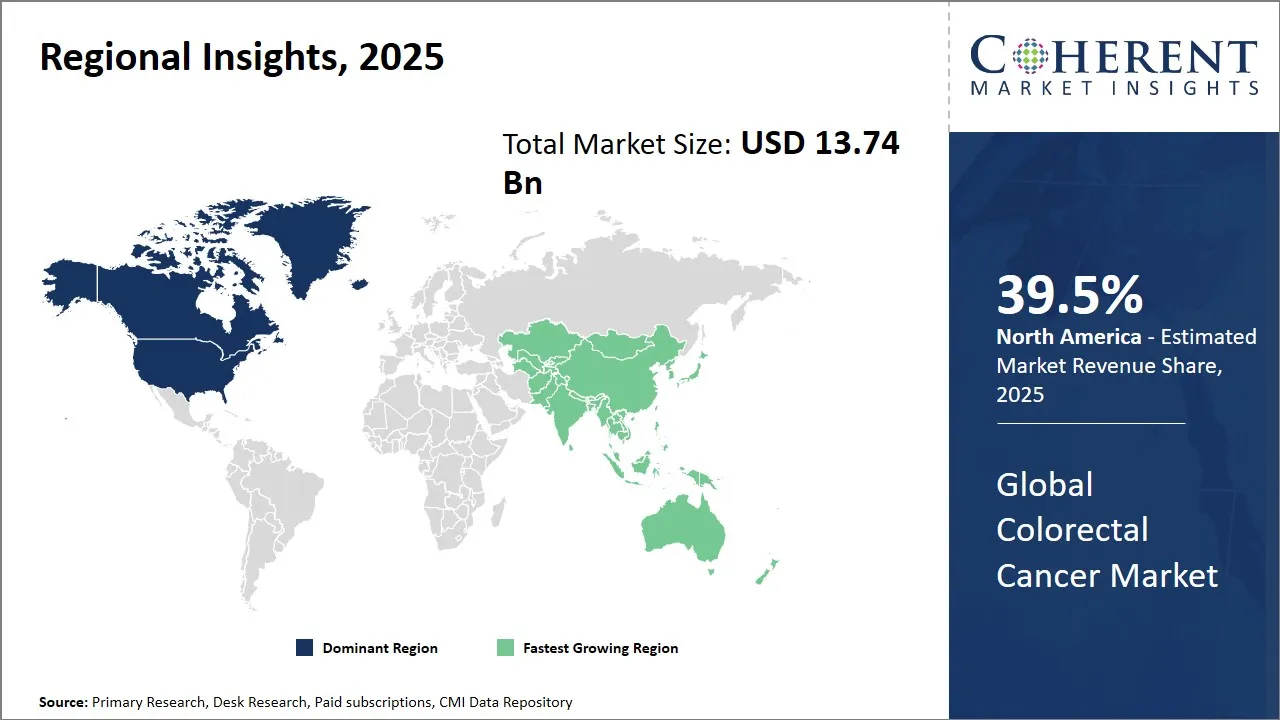
North America Colorectal Cancer Market Analysis and Trends
North America’s dominance in the global colorectal cancer market, with 39.5% share in 2026, can be attributed to a combination of advanced healthcare infrastructure, robust government support, and significant investments in research and development. Additionally, government initiatives promoting early screening and awareness programs through agencies like the Centers for Disease Control and Prevention and the National Cancer Institute foster the market growth.
In January 2026, the American Society of Clinical Oncology, highlighted new research from a Scandinavian trial showing that daily low-dose aspirin may reduce the risk of colorectal cancer recurrence in patients with PI3K pathway mutations, which occur in about one-third of cases. The study involving 626 patients across Sweden, Denmark, Finland and Norway found that taking 160 mg of aspirin for three years lowered recurrence rates by more than half compared to placebo, with benefits observed across different PI3K mutations.
Asia Pacific Colorectal Cancer Market Analysis and Trends
The Asia Pacific region exhibits the fastest growth, with 24.3% share in 2026, driven by rapidly expanding healthcare infrastructure, increasing prevalence of colorectal cancer, and rising awareness about early diagnosis and treatment options. Countries such as China, Japan, India, and South Korea are witnessing growth fueled by favorable government healthcare reforms focused on cancer care and accessibility. Additionally, increasing investments in diagnostics, coupled with rising disposable incomes and improved screening programs, contribute to the market expansion.
In May 2026, Apollomedics Hospital, a leading multispecialty hospital in Lucknow, India, launched ‘Colofit’, a colorectal cancer screening programme aimed at early detection and prevention. Led by Dr. Mayank Somani, MD and CEO, the initiative will use the Fecal Immunochemical Test (FIT), a simple and non-invasive tool that detects hidden blood in stool with high accuracy and no dietary restrictions.
Colorectal Cancer Market Outlook for Key Countries
U.S. Colorectal Cancer Market Analysis and Trends
The U.S. colorectal cancer market is characterized by extensive R&D activities and a high adoption rate of advanced treatments. Key industry players such as Merck & Co., Amgen, and Eli Lilly have contributed significantly with their innovative therapies and diagnostic platforms. Government agencies actively support widespread screening initiatives, enhancing early detection rates. Moreover, the presence of numerous cancer research institutes ensures a continuous pipeline of novel therapeutics, sustaining market momentum and patient-centric solutions.
In June 2026, Leap Therapeutics Inc., a U.S.-based biotechnology company developing targeted and immuno-oncology therapies, announced updated Phase 2 data from its DeFianCe study of sirexatamab (DKN-01), an anti-DKK1 antibody, in combination with bevacizumab and chemotherapy for advanced microsatellite stable colorectal cancer. The results showed statistically significant progression-free survival benefits in patients with high DKK1 levels, no prior anti-VEGF treatment, and liver metastases.
Japan Colorectal Cancer Market Analysis and Trends
Japan colorectal cancer market benefits from a well-established healthcare system and government policies emphasizing cancer treatment and prevention. Companies like Takeda and Chugai Pharmaceutical lead the market, focusing on targeted therapies and biologics tailored to the local patient population. The country's aging population increases demand for colorectal cancer care, while regulatory frameworks streamline the approval and commercialization of new medicines, driving steady market growth.
In November 2023, Takeda, a Japan-based global biopharmaceutical company, received U.S. FDA approval for FRUZAQLA (fruquintinib), an oral targeted therapy for previously treated metastatic colorectal cancer. It is the first new chemotherapy-free treatment option in more than a decade approved regardless of biomarker status, showing significant improvements in overall and progression-free survival in Phase 3 trials with a manageable safety profile, offering new hope for patients with limited options.
U.K. Colorectal Cancer Market Analysis and Trends
The U.K. colorectal cancer market is shaped by rising emphasis on early detection, wider adoption of noninvasive screening tests, and the integration of precision medicine into treatment pathways. Growing investment in immunotherapies and targeted therapies, alongside NHS-led screening expansions that now include younger age groups, are key drivers. Digital health tools, such as AI-assisted colonoscopy and biomarker-based diagnostics, are gaining traction, while affordability pressures continue to push demand for cost-effective solutions. Collaborations between biotech firms, academic institutions, and the NHS are also accelerating innovation and improving access to advanced care.
In December 2024, GSK, a global biopharmaceutical company announced that the U.S. FDA has granted Breakthrough Therapy Designation for Jemperli dostarlimab in treating patients with locally advanced dMMR or MSI-H rectal cancer. The designation is based on trial results from a GSK supported study with Memorial Sloan Kettering Cancer Center showing a 100% complete clinical response in all 42 patients who completed treatment.
China Colorectal Cancer Market Analysis and Trends
China colorectal cancer market growth is propelled by expanding healthcare infrastructure and rising public health initiatives promoting cancer awareness. Domestic companies such as BeiGene and Innovent Biologics are actively developing and commercializing innovative treatments, contributing to market competitiveness. Government reforms enhancing insurance coverage and reimbursement for cancer therapies improve patient access, while growing partnerships with global pharmaceutical firms support technology transfer and clinical research activities.
In July 2026, Pierre Fabre Laboratories, a France-based pharmaceutical company, gained marketing approval in China for BRAFTOVI (encorafenib) in combination with cetuximab to treat adults with BRAFV600E-mutant metastatic colorectal cancer who had previously received systemic therapy.
Market Players, Key Developments, and Competitive Intelligence
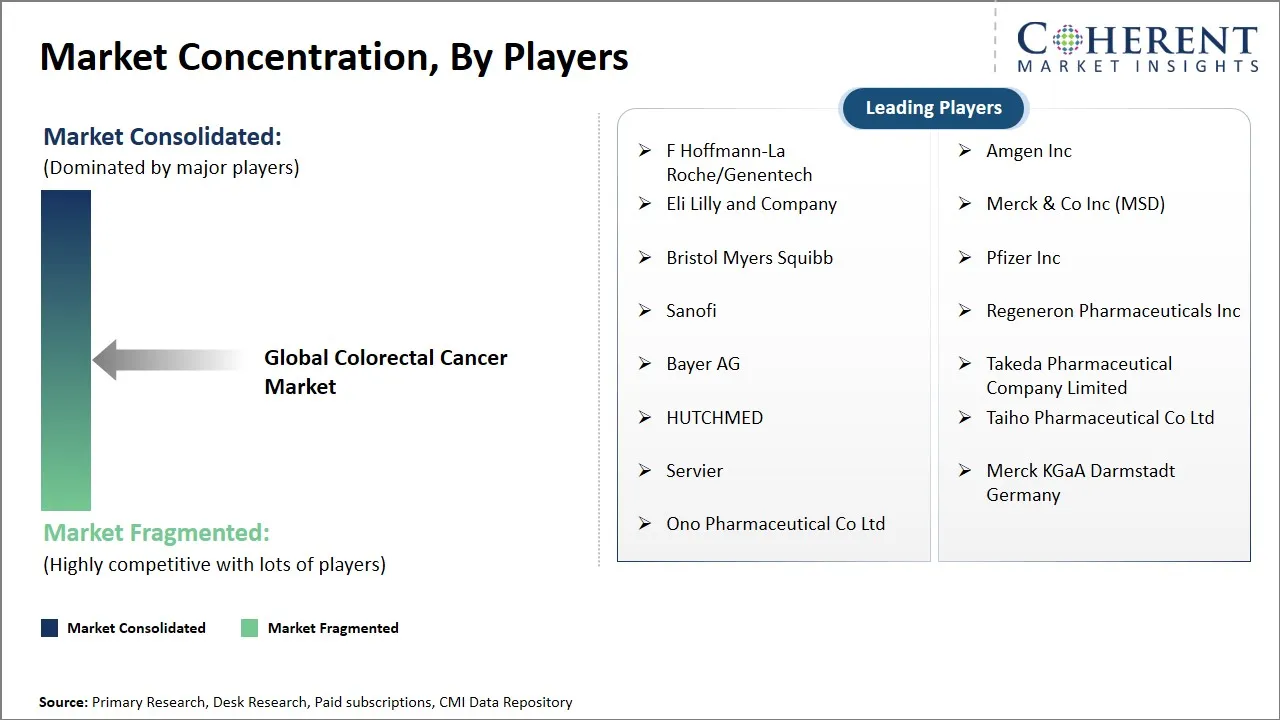
Key Developments
- In August 2025, Freenome, a biotechnology company focused on early cancer detection announced an exclusive license agreement with Exact Sciences a U.S. diagnostics leader to commercialize Freenome’s blood-based colorectal cancer screening test in a deal worth up to USD 885 million. The final module of the test has been submitted to the USFDA with approval and launch expected in 2026.
- In August 2025, UCLA Health Jonsson Comprehensive Cancer Center researchers reported final results from the AMPLIFY 201 Phase 1 trial showing that the off-the-shelf cancer vaccine ELI-002 2P generated durable T-cell responses and reduced relapse in patients with pancreatic and colorectal cancer. Published in Nature Medicine, the study found median relapse-free survival of 16.3 months and overall survival of 28.9 months, both surpassing historical norms, with the strongest benefit in patients who mounted robust mKRAS-specific T-cell responses.
- In June 2025, Exelixis, a U.S. biotechnology company announced that its Phase 3 STELLAR-303 trial showed zanzalintinib in combination with atezolizumab Tecentriq delivered a statistically significant overall survival benefit compared with regorafenib in patients with previously treated non-MSI-high metastatic colorectal cancer. The independent data monitoring committee confirmed the positive topline results in the intent-to-treat population, with safety profiles consistent with prior studies and no new concerns identified.
- In January 2025, Amgen, a leading U.S. biotechnology company announced that the U.S. FDA approved LUMAKRAS sotorasib in combination with Vectibix panitumumab for adults with KRAS G12C-mutated metastatic colorectal cancer who previously received standard chemotherapy. The approval is based on the Phase 3 CodeBreaK 300 study which showed the combination more than doubled progression-free survival compared to the investigated standard of care making it the first targeted treatment for chemorefractory KRAS G12C-mutated colorectal cancer to demonstrate superior outcomes.
Top Strategies Followed by Global Colorectal Cancer Market Players
- Established corporations, typically large cancers, are also crucial investors in research and development (R&D) and product introduction for high-performance products in diagnostics and therapeutics. These companies benefit from large R&D budgets to innovate in the field of medical technology and to develop improved screening options, treatments, and interventions, often making the medical procedure less invasive
- In April 2025, Bristol Myers Squibb, a global biopharmaceutical company announced that the U.S. FDA approved Opdivo nivolumab plus Yervoy ipilimumab as a first-line treatment for adults and children 12 years and older with unresectable or metastatic MSI-H or dMMR colorectal cancer. The approval was based on the Phase 3 CheckMate-8HW trial the largest immunotherapy study in this patient group which showed the dual regimen cut the risk of disease progression or death by 79% compared to chemotherapy in the first-line setting and by 38% compared to Opdivo alone across all lines of therapy.
- Mid-tier firms in the colorectal cancer market often offer more state-of-the art price conscious options that balance quality and affordability as many healthcare systems and consumers are price sensitive, especially in working with developing healthcare systems. Furthermore, they are looking for new products that offer reliable performance without the costs associated with developing advanced technologies. Mid-tier firms will explore partnerships and joint ventures with other firms and market competitors to improve their production and access advanced technology to remain competitive.
- For example, Companies such as Exact Sciences Corporation (known for its Cologuard non-invasive test) and Epigenomics AG (developer of Epi proColon) represent mid-level players. They focus on offering reliable and more affordable testing solutions compared to high-cost imaging or invasive procedures, and often form strategic partnerships with laboratories and diagnostic service providers to expand their reach.
- Small players are typically new start-up firms or small niche manufacturers in the colorectal cancer market. They typically operate in a highly specialized area of the market with unique products or unique technology. To be competitive with larger firms, small firms are applying new technologies in areas such as, artificial intelligence, precision biomarker assays, or a new drug delivery system for diagnostics and therapeutics. Their agility allows them to rapidly iterate and tailor solutions to unmet clinical needs or regional preferences that larger firms may overlook.
- For example, Startups like Guardant Health (liquid biopsy and AI-driven genomic profiling) and GRAIL Inc. (multi-cancer early detection including colorectal cancer) illustrate small-scale innovators. Their specialized focus on next-generation technologies enables them to address early detection gaps and precision oncology needs, while attracting investor interest for scaling up.
Market Report Scope
Colorectal Cancer Market Report Coverage
| Report Coverage | Details | ||
|---|---|---|---|
| Base Year: | 2025 | Market Size in 2026: | USD 14.43 Bn |
| Historical Data for: | 2020 To 2024 | Forecast Period: | 2026 To 2033 |
| Forecast Period 2026 to 2033 CAGR: | 5.0% | 2033 Value Projection: | USD 20.30 Bn |
| Geographies covered: |
| ||
| Segments covered: |
| ||
| Companies covered: | F Hoffmann-La Roche/Genentech, Amgen Inc, Eli Lilly and Company, Merck & Co Inc (MSD), Bristol Myers Squibb, Pfizer Inc, Sanofi, Regeneron Pharmaceuticals Inc, Bayer AG, Takeda Pharmaceutical Company Limited, HUTCHMED, Taiho Pharmaceutical Co Ltd, Servier, Merck KGaA Darmstadt Germany, and Ono Pharmaceutical Co Ltd | ||
| Growth Drivers: |
| ||
| Restraints & Challenges: |
| ||
Colorectal Cancer Market Dynamics
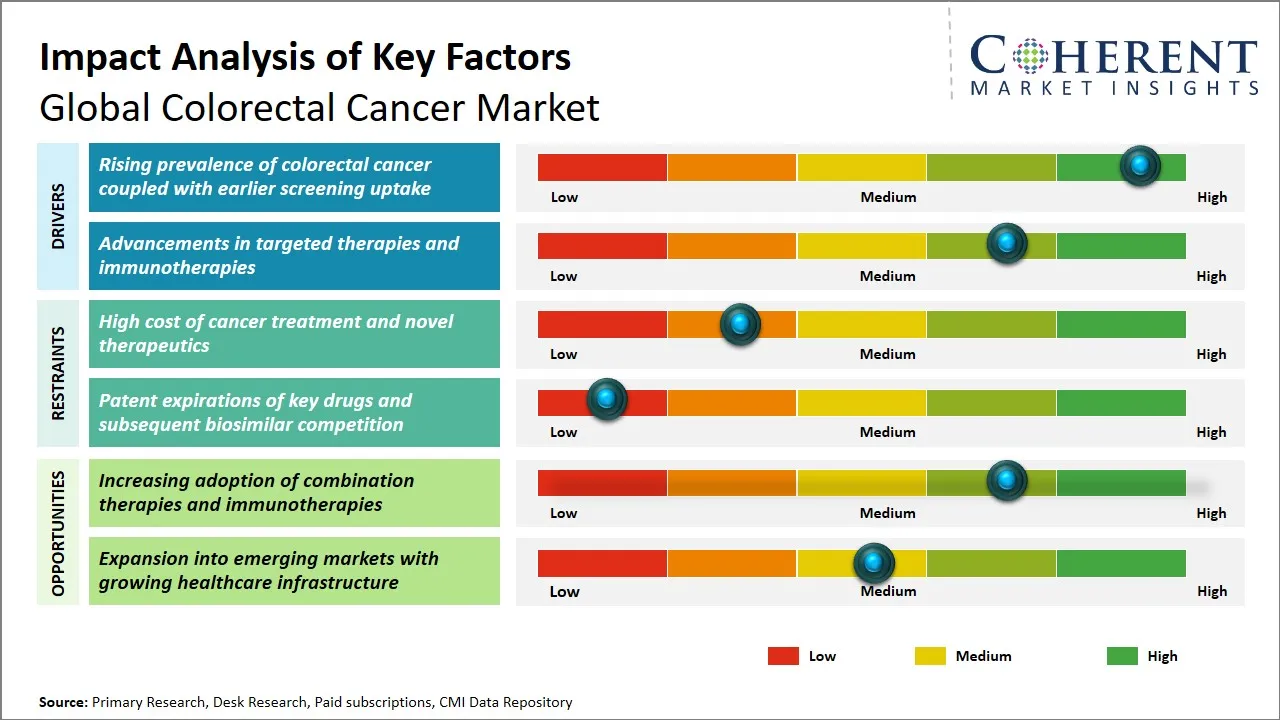
Colorectal Cancer Market Driver - Rising Prevalence of Colorectal Cancer Coupled with Earlier Screening Uptake
The growing global incidence of colorectal cancer is a key driver of growth and innovation in the colorectal cancer market. Increased incidence in colorectal cancer is a consequence of changing lifestyles, including diet, sedentary lifestyle, and obesity, in both developed and developing regions. Also, with the growing awareness of health care providers and patients, colorectal cancer screening programs have expanded to address the benefits of early detection. Although procedures such as colonoscopy, Fecal Immunochemical Tests (FIT), and new non-invasive molecular diagnostics have improved diagnosis rates enabling earlier intervention with better outcomes, the proactive screening trend is encouraged through government health programs and improved accessibility of screening programs, which increases demand for diagnostics, therapy, and monitoring.
For instance, in August 2025, the American Cancer Society ACS a leading U.S. nonprofit dedicated to cancer research and advocacy reported two new JAMA studies showing a sharp rise in colorectal cancer screening and early diagnosis among adults aged 45 to 49. Researchers found that local-stage diagnoses in this group increased by 50% between 2021 and 2022, a shift tied to earlier screening recommendations. A second study showed screening rates jumped 62% from 2019 to 2023, with colonoscopy use up 43% and stool-based testing rising more than fivefold. As per WHO study, Globally colorectal cancer is the third most common cancer type, with more than 1.9 million cases diagnosed in 2022, and it remains the second leading cause of cancer deaths at over 900,000 annually, even though effective screening techniques exist that could substantially reduce mortality.
Colorectal Cancer Market Opportunity - Increasing Adoption of Combination Therapies and Immunotherapies
The global colorectal cancer market is experiencing significant opportunity resulting from increased adoption of combination therapies and immunotherapies that will change treatment paradigms and improve outcomes. As conventional chemotherapy and radiotherapy will inevitably reach a point of resistance and/or side effect limitations, the trend among oncologists is the increase in immunotherapies such as immune checkpoint inhibitors and combined targeted therapies. These innovative treatment strategies not only enhance the efficacy of cancer management by stimulating the patient’s immune response but also offer personalized therapeutic options tailored to specific genetic and molecular tumor profiles.
For instance, in May 2025, Pfizer, a global biopharmaceutical company announced that its Phase 3 BREAKWATER trial showed the BRAFTOVI encorafenib combination with cetuximab and mFOLFOX6 cut the risk of death by 51% and reduced the risk of disease progression or death by 47% in patients with BRAF V600E-mutant metastatic colorectal cancer compared to standard chemotherapy. The results presented at the ASCO Annual Meeting and published in the New England Journal of Medicine mark the first significant survival benefit for this high-risk group, positioning the regimen as a potential new standard-of-care.
Analyst Opinion (Expert Opinion)
- The colorectal cancer market is evolving under the dual influence of clinical innovation and public health priorities. Advances in targeted therapies, immuno-oncology, and companion diagnostics are broadening treatment options, while regulatory support in the form of expedited approvals and reimbursement frameworks is accelerating access. At the same time, patient advocacy and early screening programs are fueling demand, especially in high-incidence regions. Yet, challenges such as treatment affordability, disparities in access between developed and emerging markets, and the complexity of integrating new technologies into standard care remain pressing. Opportunities are opening in precision medicine, biomarker-driven clinical trials, and digital health solutions that improve monitoring and adherence. Notable gatherings such as ASCO Annual Meeting, ESMO Congress, AACR Annual Meeting, World Cancer Congress, Digestive Disease Week, and the Colorectal Cancer Alliance’s Call-on Congress in the past three years have become critical platforms where breakthroughs are presented, guidelines debated, and collaborations shaped, helping align science, policy, and practice.
- In recent years, several initiatives have further highlighted how the market is being reshaped by real-world momentum. For example, the U.S. FDA’s approval of combination regimens such as encorafenib with cetuximab for BRAF-mutated colorectal cancer has set new benchmarks for targeted therapy. Governments in Europe have expanded national screening programs that lower the age of eligibility, directly increasing early diagnosis rates. Public–private collaborations like the Cancer Moonshot initiative in the U.S. and the EU’s Mission on Cancer are channeling resources into prevention, genomics, and treatment accessibility. Meanwhile, pilot projects in Asia, such as Japan’s integration of AI-based colonoscopy screening, reflect how technology adoption is influencing outcomes. Together, these initiatives signal a market that is dynamic, more patient-centric, and increasingly driven by data and partnerships, even as stakeholders navigate cost and equity challenges.
Speak to the analyst
Want personalized insights?
Take the findings above to one of our principal consultants, or have the report rebuilt around the segments, geographies and competitors you actually track.
Market Segmentation
- Cancer Type Insights (Revenue, USD Bn, 2021 - 2033)
- Colon Cancer
- Rectal Cancer
- Drug Class Insights (Revenue, USD Bn, 2021 - 2033)
- Chemotherapy Agents
- 5-Fluorouracil (5-FU)
- Capecitabine
- Irinotecan
- Others (Oxaliplatin, Leucovorin etc.)
- Targeted Therapies
- Bevacizumab
- Encorafenib
- Fruquintinib
- Cetuximab
- Regorafenib
- Others (Trifluridine/Tipiracil)
- Immunotherapies
- Nivolumab
- Pembrolizumab
- Others (Ipilimumab)
- Combination Therapy (For e.g. Encorafenib, Cetuxima, mFOLFOX6, etc.)
- Chemotherapy Agents
- Type Insights (Revenue, USD Bn, 2021 - 2033)
- Metastatic
- Non-Metastatic
- Stage Of Cancer Insights (Revenue, USD Bn, 2021 - 2033)
- Stage I
- Stage II
- Stage III
- Stage IV
- Route Of Administration Insights (Revenue, USD Bn, 2021 - 2033)
- Oral
- Parenteral
- Age Group Insights (Revenue, USD Bn, 2021 - 2033)
- Adult
- Pediatric
- Geriatric
- Gender Insights (Revenue, USD Bn, 2021 - 2033)
- Male
- Female
- End User Insights (Revenue, USD Bn, 2021 - 2033)
- Hospitals and Cancer Centers
- Specialty Clinics
- Diagnostic Centers
- Ambulatory Surgical Centers
- Research and Academic Institutes
- Distribution Channel Insights (Revenue, USD Bn, 2021 - 2033)
- Hospital Pharmacies
- Retail Pharmacies
- Online Pharmacies
- Regional Insights (Revenue, USD Bn, 2021 - 2033)
- North America
- U.S.
- Canada
- Latin America
- Brazil
- Argentina
- Mexico
- Rest of Latin America
- Europe
- Germany
- U.K.
- Spain
- France
- Italy
- Russia
- Rest of Europe
- Asia Pacific
- China
- India
- Japan
- Australia
- South Korea
- ASEAN
- Rest of Asia Pacific
- Middle East
- GCC Countries
- Israel
- Rest of Middle East
- Africa
- South Africa
- North Africa
- Central Africa
- North America
- Key Players Insights
- F Hoffmann-La Roche/Genentech
- Amgen Inc
- Eli Lilly and Company
- Merck & Co Inc (MSD)
- Bristol Myers Squibb
- Pfizer Inc
- Sanofi
- Regeneron Pharmaceuticals Inc
- Bayer AG
- Takeda Pharmaceutical Company Limited
- HUTCHMED
- Taiho Pharmaceutical Co Ltd
- Servier
- Merck KGaA Darmstadt Germany
- Ono Pharmaceutical Co Ltd
Sources
Primary Research Interviews
Industry Stakeholders list
- MD Anderson Cancer Center
- Memorial Sloan Kettering Cancer Center
- Mayo Clinic Comprehensive Cancer Center
- The Royal Marsden NHS Foundation Trust
- Gustave Roussy Cancer Campus
- National Cancer Center Japan
End Users List
- Colorectal Cancer Alliance
- Fight Colorectal Cancer
- Digestive Cancers Europe (EuropaColon)
- Bowel Cancer UK
- American Cancer Society Cancer Action Network
- Canadian Cancer Society
Government and International Databases
- WHO Global Health Observatory (GHO)
- IARC GLOBOCAN
- NCI SEER Program
- CDC WONDER
- OECD Health Statistics
- Eurostat Health Database
Trade Publications
- ASCO Daily News
- ESMO Oncology News
- Cancer Today (AACR)
- Cancer World (ESO)
- NCCN Insights
- UICC News
Academic Journals
- The Lancet Oncology
- Journal of Clinical Oncology
- Annals of Oncology
- JAMA Oncology
- Gastroenterology
- Gut
Reputable Newspapers
- The New York Times
- The Guardian
- Financial Times
- The Washington Post
- The Hindu
- The Wall Street Journal
Industry Associations
- American Society of Clinical Oncology (ASCO)
- European Society for Medical Oncology (ESMO)
- National Comprehensive Cancer Network (NCCN)
- American Association for Cancer Research (AACR)
- Union for International Cancer Control (UICC)
- American College of Surgeons – Commission on Cancer
Public Domain Resources
- U.S. FDA
- European Medicines Agency (EMA) – EPARs
- PMDA (Japan)
- NICE Guidance (UK)
- ClinicalTrials.gov
- WHO Model List of Essential Medicines
Proprietary Elements
- CMI Data Analytics Tool: Proprietary analytics tool to analyze real-time market trends, consumer behavior, and technology adoption in market
- Proprietary CMI Existing Repository of Information for Last 8 Years
Get access to 250+ pages report
Every segment, forecast, competitor profile and data table behind the analysis above — available for instant download.
- ESOMAR Member
- ISO 9001:2015 Certified
- D-U-N-S Registered
- GDPR & CCPA Compliant
Missing comfort of reading report in your local language? Find your preferred language:
Transform your Strategy with Exclusive Trending Reports
Frequently Asked Questions
The global colorectal cancer market is estimated to be valued at USD 14.43 Bn in 2026 and is expected to reach USD 20.30 Bn by 2033.
The CAGR of the global colorectal cancer market is projected to be 5.0% from 2026 to 2033.
Rising prevalence of colorectal cancer coupled with earlier screening uptake and advancements in targeted therapies and immunotherapies are the major factors driving the growth of the global colorectal cancer market.
High cost of cancer treatment and novel therapeutics and patent expirations of key drugs and subsequent biosimilar competition are the major factors hampering the growth of the global colorectal cancer market.
In terms of cancer type, the colon cancer segment is estimated to dominate the market revenue share in 2026.
F Hoffmann-La Roche/Genentech, Amgen Inc, Eli Lilly and Company, Merck & Co Inc (MSD), Bristol Myers Squibb, Pfizer Inc, Sanofi, Regeneron Pharmaceuticals Inc, Bayer AG, Takeda Pharmaceutical Company Limited, HUTCHMED, Taiho Pharmaceutical Co Ltd, Servier, Merck KGaA Darmstadt Germany, and Ono Pharmaceutical Co Ltd are the major players.
North America is expected to lead the global colorectal cancer market in 2026.