

Endometriosis Treatment Market Size and Forecast – 2026 to 2033
The Endometriosis Treatment Market is anticipated to grow at a CAGR of 11.2% with USD 2.3 Bn in 2026 and is expected to reach USD 4.9 Bn in 2033. Rising awareness of endometriosis, improved diagnosis, growing demand for effective pain management, and advances in hormonal treatments and minimally invasive procedures are driving market growth. Endometriosis affects approximately 10% of women and girls of reproductive age worldwide, equivalent to an estimated 190 million individuals globally.
Key Takeaways
- Progestin holds the largest market share of 38.7% in 2026 owing to the increasing prevalence of endometriosis. Endometriosis affects approximately 10% of women and girls of reproductive age worldwide, equivalent to an estimated 190 million individuals globally.
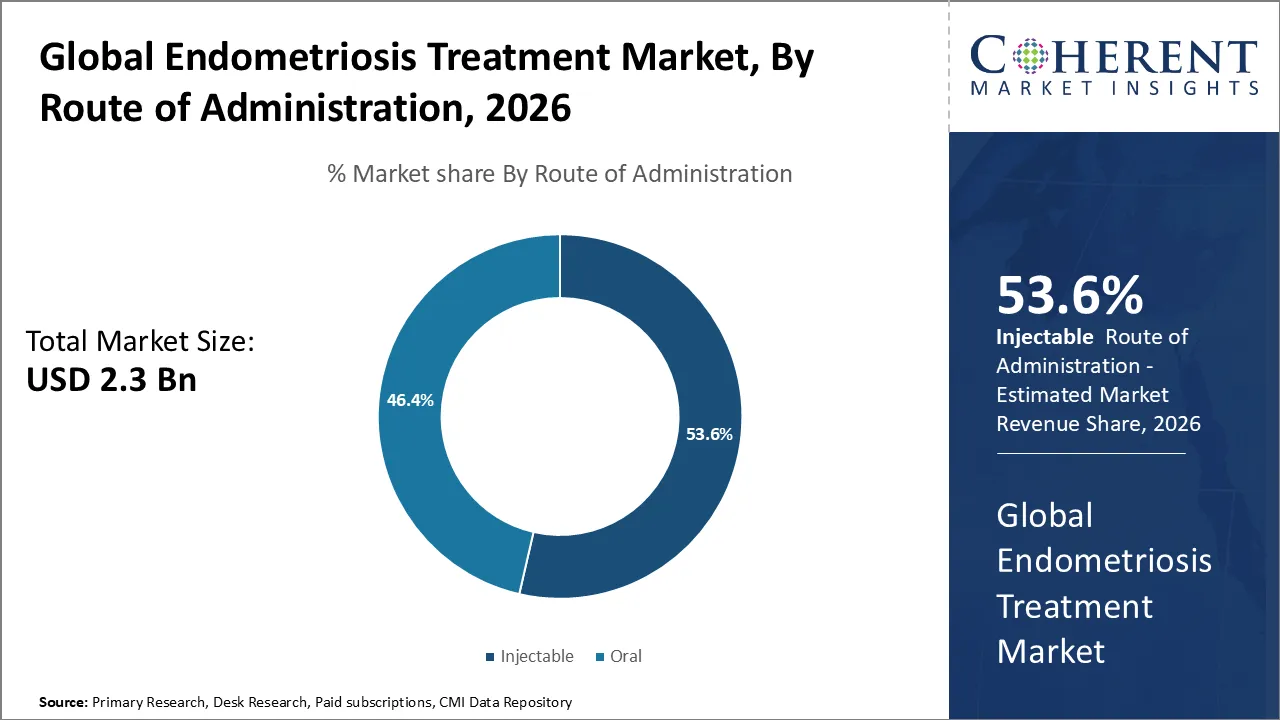
- Injectable expected to hold largest market share of 53.6% in 2026 owing to the need for effective pain and symptom control. NSAIDs, particularly naproxen, effectively reduce endometriosis-associated pain.
- Hospital Pharmacies acquired the prominent market share of 42.7% in 2026 owing to its rising demand for specialized therapies.
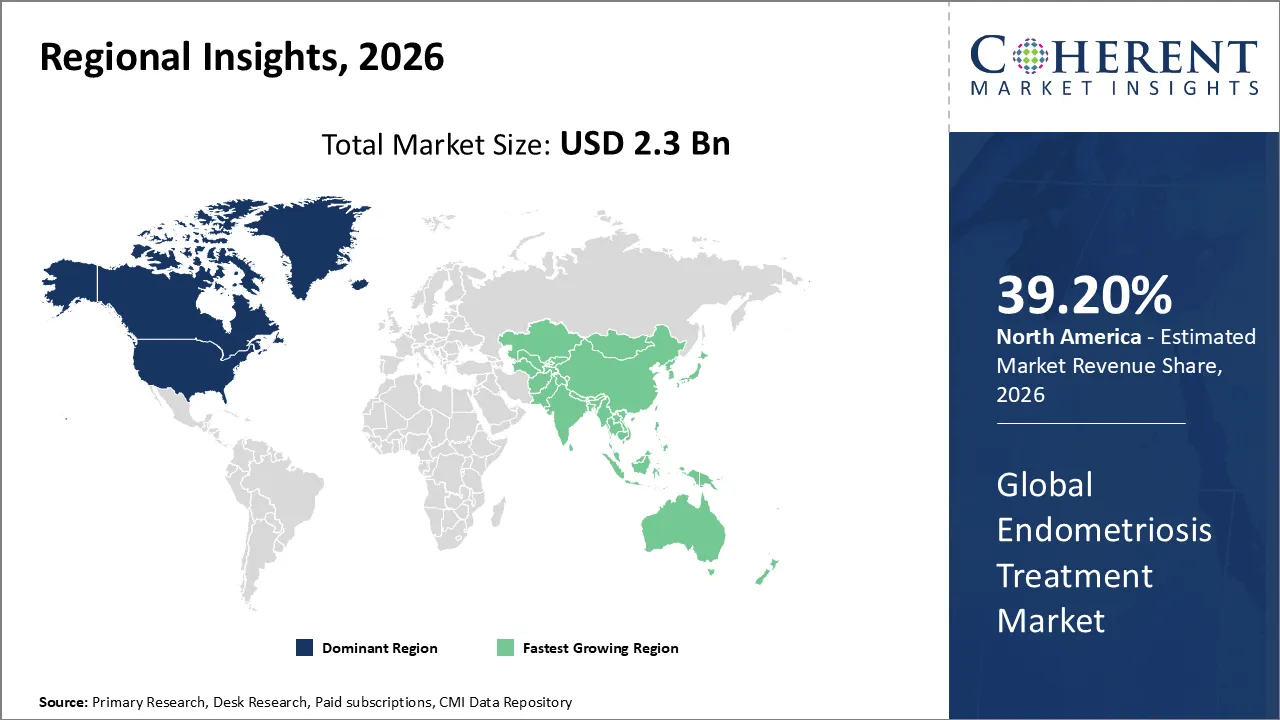
- North America is expected to acquire the dominant share of 39.2% in 2026 owing to its increasing diagnosis and disease awareness. Endometriosis affects approximately 6–11% of reproductive-age women in the United States, representing more than 6.5 million individuals.
Current Events and Their Impact on the Endometriosis Treatment Market
Current Event | Description and its Impact |
NICE reimbursement recommendation for relugolix combination therapy – England, April 2025 |
|
NICE reimbursement recommendation for linzagolix – England, June 2025 |
|
Segmental Insights
- Current Industry Events of 2026
- Market Size Estimation
- Regional Breakdown
- Competitive Landscape
- Customer Intelligence
- Segmental Analysis
- Pricing Analysis
- Key Market Drivers, Challenges & Future Trends
- Customized Insights Section
Why is Progestin Acquiring the Largest Market Share?
Progestin holds the largest market share of 38.7% in 2026. The progestin segment in the endometriosis treatment market continues to grow as patients seek effective long-term symptom management and healthcare providers diagnose more cases. Progestins suppress endometrial tissue growth and reduce pelvic pain and menstrual symptoms, making them an established treatment option. Manufacturers offer progestins in oral and other formulations, while generic availability improves affordability. Their suitability for prolonged treatment further supports demand. Rising disease awareness, improved access to gynecological care, and growing preference for non-surgical treatment options also drive progestin adoption. In August 2025, Gedeon Richter UK launched Nalvee, a 10 mg dydrogesterone tablet, in the UK, reintroducing a dydrogesterone-only formulation for hormone replacement therapy after more than 17 years. The oral treatment gives clinicians an additional progestogen option for non-hysterectomised women who receive oestrogen therapy.
Injectable expected to hold largest market share
Injectable expected to hold largest market share of 53.6% in 2026 owing to the established clinical use of injectable hormonal agents. The injectable segment in the endometriosis treatment market grows as patients and healthcare providers seek effective options for managing moderate-to-severe symptoms. Injectable hormonal therapies deliver sustained therapeutic effects and reduce dosing frequency, helping patients maintain treatment schedules. Physicians may prescribe injectable treatments when oral medicines fail to provide adequate symptom relief. Increasing disease awareness, expanding access to specialized gynecological care, rising demand for non-surgical treatment options, and continued development of long-acting formulations further encourage the adoption of injectable therapies.
Which Distribution Channel segment dominates the market?
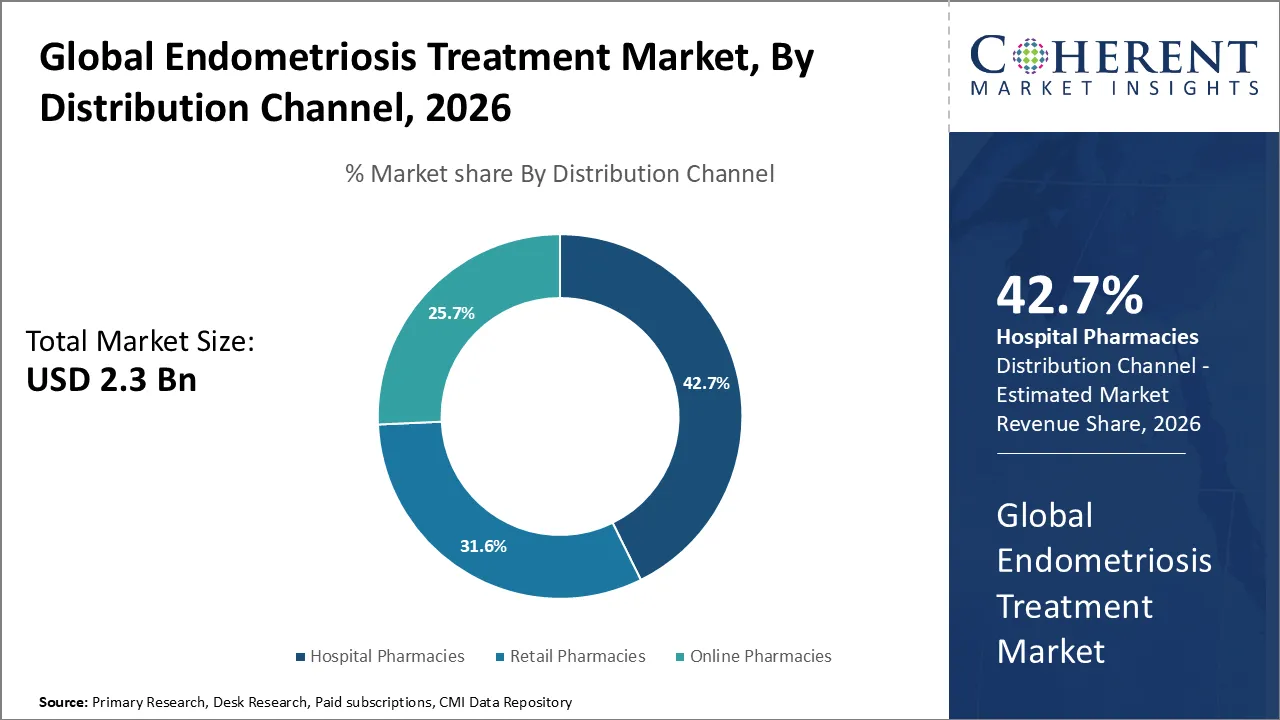
Hospital Pharmacies acquired the prominent market share of 42.7% in 2026. The hospital pharmacy segment in the endometriosis treatment market grows as specialized gynecology departments diagnose and treat more patients. Hospitals dispense prescription medicines, injectable therapies, and medications required before and after surgical procedures. Healthcare providers increasingly direct patients toward hospital pharmacies when treatments require specialist supervision.
Endometriosis Treatment Market Trends
- Rapid expansion of oral GnRH antagonist therapies: NICE recommended relugolix–estradiol–norethisterone in April 2025 and linzagolix with hormonal add-back therapy in June 2025 for reproductive-age adults with endometriosis who have previously received medical or surgical treatment. NICE estimates that approximately 81,400 patients could be eligible for relugolix combination therapy in England initially, increasing to 85,400 by year five. For linzagolix, the estimated eligible population increases from 86,300 to 89,500 over five years. These recommendations expand the reimbursed oral GnRH antagonist segment and create greater competition with conventional GnRH agonists, which are predominantly injectable.
- Persistent fertility-related treatment demand: The American Society for Reproductive Medicine reports that historical studies estimated 30–50% of women with endometriosis may be infertile, although it emphasizes that prevalence estimates vary considerably. Among women undergoing laparoscopy for infertility evaluation, historical studies reported endometriosis prevalence ranging from 9–50%. The established relationship between endometriosis and infertility supports continued demand for fertility-preserving surgery, reproductive evaluation, and fertility-related management alongside pain treatment.
- Expansion of the addressable treatment population through improved diagnosis and awareness: WHO estimates that endometriosis affects approximately 10% of reproductive-age women globally, equivalent to about 190 million women. WHO also notes that access to early diagnosis and effective treatment remains limited in many settings. The large affected population and persistent diagnostic and treatment gaps provide substantial potential for expansion of the diagnosed and treated patient population as access to evaluation and treatment improves.
Regional Insights
North America dominates owing to growing adoption of newer therapies
North America is expected to acquire the dominant share of 39.20% in 2026. North America’s endometriosis treatment market continues to expand as greater disease awareness and improved diagnostic practices encourage more women to seek care. Healthcare providers increasingly adopt hormonal therapies, minimally invasive procedures, and advanced treatment options supported by the region’s well-developed healthcare infrastructure. Patients also seek treatment more actively as awareness of endometriosis-related pain and infertility grows. Established pharmaceutical companies, specialized clinics, and comprehensive healthcare services strengthen treatment access, while ongoing research and the introduction of newer therapies further support market development. As awareness of endometriosis rises, Lotus Endometriosis Institute has launched a concise patient guide explaining the pathway to specialized care, from medical record review and telehealth consultations to treatment planning, surgery, costs, and travel for in-person care in California.
Asia Pacific Endometriosis Treatment Market Trends
The Asia Pacific endometriosis treatment market is expanding as rising disease burden and greater awareness of women’s health encourage more patients to seek diagnosis and care. Healthcare providers increasingly recognize endometriosis symptoms, while advances in hormonal therapies, pain management, minimally invasive surgery, and imaging technologies support treatment adoption. Rising healthcare spending, expanding gynecology services, government initiatives, and improved referral systems further strengthen the market. Increased research and growing demand for long-term disease management also create new opportunities across the region. P. D. Hinduja Hospital & Medical Research Centre launched a multidisciplinary Endometriosis Clinic at its Khar facility to address delayed diagnosis and fragmented care for patients. The clinic aims to improve coordinated management of the chronic condition.
United States Endometriosis Treatment Market Trends
The United States endometriosis treatment market continues to expand as rising disease awareness, improved diagnosis, and the need for effective symptom management increase demand. Healthcare providers treat a growing number of reproductive-age women with hormonal therapies, pain medications, and surgical procedures. Pharmaceutical companies are also expanding treatment options through FDA-approved therapies, including GnRH-based medicines. In addition, growing emphasis on quality of life, fertility preservation, personalized treatment preferences, and access to healthcare continues to drive demand for endometriosis treatments. Utepreva LLC launched the FDA 510(k)-cleared Utepreva Endometrial Sampler to improve tissue and fluid collection for early endometrial cancer evaluation. Its patented single-use design combines three sampling mechanisms in one pass.
Japan Endometriosis Treatment Market Trends
Japan’s endometriosis treatment market benefits from greater disease awareness, rising diagnosis rates, and sustained demand for effective pain and symptom management. Patients increasingly use hormonal therapies, while established treatments such as dienogest and GnRH agonists continue to support medication demand. Pharmaceutical companies are also expanding treatment options through newer GnRH antagonist therapies. Ongoing clinical research into long-term dienogest use and new drug approvals further promotes innovation. Additionally, healthcare providers emphasize early and continuous treatment to manage endometriosis-related pain and infertility effectively.
Who are the Major Companies in Endometriosis Treatment Industry
Some of the major key players in Endometriosis Treatment are Astra Zeneca Plc., Eli Lilly and Company, AStellas Pharma, Bayer AG, Meditrina Pharmaceuticals, Abbvie, PfizerInc, Takeda Pharmaceutica, and Neurocrine Biosciences Inc.
Key News
- In June 2026, FocalTherics launched Europe’s first commercial Focal One endometriosis program at Toulouse University Hospital in France. The hospital will use the robotic system to treat deep infiltrating endometriosis and prostate cancer.
Market Report Scope
Endometriosis Treatment Market Report Coverage
Report Coverage | Details | ||
Base Year: | 2025 | Market Size in 2026: | USD 2.3 Bn |
Historical Data for: | 2020 to 2024 | Forecast Period: | 2026 to 2033 |
Forecast Period 2026 to 2033 CAGR: | 11.2% | 2033 Value Projection: | USD 4.9 Bn |
Geographies covered: |
| ||
Segments covered: |
| ||
Companies covered: | Astra Zeneca Plc., Eli Lilly and Company, AStellas Pharma, Bayer AG, Meditrina Pharmaceuticals, Abbvie, PfizerInc, Takeda Pharmaceutica, and Neurocrine Biosciences Inc. | ||
Analyst Opinion
- Endometriosis treatment demand is fundamentally supported by a substantial and increasingly recognized patient pool. Real-world Japanese health-insurance data covering more than 4.9 million women and adolescent girls found that diagnosed endometriosis prevalence reached 3.62% in 2022, while the study estimated a hypothetical cumulative incidence of 37.34% by age 50 and medication-treated incidence of 20.08%. In our view, these figures indicate that treatment demand remains structurally underpenetrated rather than simply trend-driven.
- Japan’s treatment landscape strongly favors sustained pharmacological management, particularly with dienogest, because clinical evidence demonstrates meaningful control of both pain and recurrence. In a Japanese multicenter trial involving 271 women, dienogest produced symptom improvements comparable with buserelin while causing less bone-mineral-density reduction. This clinical profile reinforces our view that dienogest will remain a key therapeutic option in Japan, particularly where physicians prioritize longer-term disease suppression.
- Post-surgical recurrence prevention represents one of the most compelling demand drivers. A Japanese study of 81 women with ovarian endometriomas reported no recurrence among patients receiving dienogest, compared with recurrence rates of 16.5% at 12 months and 24.0% at 24 months among patients receiving expectant management. We believe this evidence strengthens the role of maintenance pharmacotherapy after surgery and shifts treatment from episodic intervention toward longer-term disease management.
- The evidence also supports continued investment in long-duration treatment strategies. In a 188-patient observational study, only 1 of 114 women receiving postoperative dienogest experienced sonographic recurrence during treatment, while the discontinuation rate was 5.2%. These outcomes suggest that tolerability and sustained symptom control can support prolonged therapy, making adherence and recurrence prevention important commercial considerations alongside initial symptom relief.
Speak to the analyst
Want personalized insights?
Take the findings above to one of our principal consultants, or have the report rebuilt around the segments, geographies and competitors you actually track.
Market Segmentation
- By Drug Type (Revenue, USD Bn, 2021-2033)
- Oral Contraceptive pills
- Progestin
- Gonadotropin releasing hormone
- Aromatase inhibitors
- Danazol
- Others
- By Route of Administration (Revenue, USD Bn, 2021-2033)
- Oral
- Injectable
- By Distribution Channel (Revenue, USD Bn, 2021-2033)
- Hospital Pharmacies
- Retail Pharmacies
- Online Pharmacies
- By Region (Revenue, USD Bn, 2021-2033)
- North America
- U.S.
- Canada
- Latin America
- Brazil
- Mexico
- Argentina
- Rest of Latin America
- Europe
- Germany
- U.K.
- France
- Italy
- Spain
- Russia
- Rest of Europe
- Asia Pacific
- China
- India
- Japan
- Australia
- South Korea
- ASEAN
- Rest of Asia Pacific
- Middle East
- GCC
- Israel
- Rest of Middle East
- Africa
- South Africa
- Central Africa
- North Africa
- North America
Sources
Primary Research interviews
- Gynecologists and obstetricians
- Endometriosis specialists and reproductive medicine specialists
- Gynecological surgeons and minimally invasive surgeons
- Fertility specialists and reproductive endocrinologists
- Hospital pharmacists and clinical pharmacists
- Healthcare professionals involved in pain management
- Hospital and specialty-clinic administrators
- Pharmaceutical industry professionals involved in women's health and endometriosis therapies
Databases
- PubMed/MEDLINE
- ClinicalTrials.gov
- Cochrane Library
- Embase
- Scopus
- Web of Science
- WHO Global Health Observatory
- U.S. FDA databases
- European Medicines Agency (EMA) databases
- Japan Pharmaceuticals and Medical Devices Agency (PMDA) databases
Magazines
- Medical and healthcare publications covering women's health, gynecology, reproductive medicine, and pharmaceutical developments
- Pharmaceutical industry publications covering drug approvals, clinical developments, and regulatory developments
- Healthcare technology and medical-device publications covering minimally invasive gynecological procedures
Journals
- Journal of Obstetrics and Gynaecology Research
- Human Reproduction
- Human Reproduction Update
- Fertility and Sterility
- Obstetrics & Gynecology
- American Journal of Obstetrics & Gynecology
- BJOG: An International Journal of Obstetrics & Gynaecology
- Reproductive BioMedicine Online
- European Journal of Obstetrics & Gynecology and Reproductive Biology
- Journal of Minimally Invasive Gynecology
- Nature Reviews Endocrinology
- The Lancet
- New England Journal of Medicine
Newspapers
- The New York Times
- The Guardian
- The Washington Post
- Financial Times
- The Japan Times
- Nikkei Asia
- The Wall Street Journal
- Reuters
- Associated Press
Associations
- World Health Organization (WHO)
- American College of Obstetricians and Gynecologists (ACOG)
- European Society of Human Reproduction and Embryology (ESHRE)
- Japan Society of Obstetrics and Gynecology (JSOG)
- Japan Society of Endometriosis
- Society of Obstetricians and Gynaecologists of Canada (SOGC)
- American Society for Reproductive Medicine (ASRM)
Public Domain sources
- World Health Organization (WHO) – Endometriosis fact sheets, disease burden, diagnosis, treatment, and women's health information
- U.S. Food and Drug Administration (FDA) – Drug approvals, prescribing information, safety communications, and regulatory documents
- European Medicines Agency (EMA) – Medicines assessments, regulatory decisions, and safety information
- Japan Pharmaceuticals and Medical Devices Agency (PMDA) – Japanese pharmaceutical approvals and regulatory information
- Japan Ministry of Health, Labour and Welfare (MHLW) – Healthcare policy, disease programs, pharmaceutical and healthcare statistics
- National Institutes of Health (NIH) – Biomedical research and health information
- National Library of Medicine (NLM) / PubMed – Peer-reviewed biomedical literature and clinical evidence
- ClinicalTrials.gov – Registered clinical trials and study information
- Cochrane Library – Systematic reviews and evidence assessments
- National Center for Biotechnology Information (NCBI) – Biomedical publications and research resources
- Government health statistics and publicly available national healthcare datasets
Proprietary Elements
- CMI Data Analytics Tool
- Proprietary CMI Existing Repository of information for last 10 years
Get access to 250+ pages report
Every segment, forecast, competitor profile and data table behind the analysis above — available for instant download.
- ESOMAR Member
- ISO 9001:2015 Certified
- D-U-N-S Registered
- GDPR & CCPA Compliant
Missing comfort of reading report in your local language? Find your preferred language:
Transform your Strategy with Exclusive Trending Reports
Frequently Asked Questions
The Endometriosis Treatment Market is anticipated to grow at a CAGR of 11.2% with USD 2.3 Bn in 2026 and is expected to reach USD 4.9 Bn in 2033.
The Endometriosis Treatment Market covers pharmaceutical and therapeutic solutions used to manage endometriosis, including oral contraceptives, progestins, GnRH therapies, aromatase inhibitors, danazol, and other treatments.
Key drivers include increasing disease awareness, improved diagnosis, growing demand for long-term pain management, and increasing emphasis on fertility preservation and personalized treatment.
Progestin is projected to represent the leading drug-type segment, supported by its established role in controlling endometriosis-associated pain and suppressing disease activity.
Progestins provide an established hormonal approach for controlling symptoms and suppressing endometrial tissue activity.
The injectable segment is projected to hold a leading position, supported by the use of injectable hormonal therapies for patients requiring sustained symptom control.