

Angiotensin Converting Enzymes (ACE) Inhibitors Market Size and Forecast
Angiotensin Converting Enzymes (ACE) Inhibitors Market size is estimated to be valued at USD 9,522.3 Mn in 2026 and is expected to reach USD 14,130.0 Mn in 2033, exhibiting a compound annual growth rate (CAGR) of 5.8% from 2026 to 2033.
Key Takeaways
- Based on Drugs, the Lisinopril segment is expected to hold the highest share of the market in 2026, owing to its clinical efficacy and broad use.
- Based on Indication, the Hypertension segment is expected to hold the largest share of the market in 2026, owing to the prevalence of heart disease globally.
- Based on Route Of Administration, the Oral segment, holding a share of 53.9% is expected to lead the market in 2026 due to their effectiveness and widespread use.
- Based on Distribution Channel, the Retail Pharmacies segment is expected to dominate the market with highest share in 2026, due to generic availability and affordability.
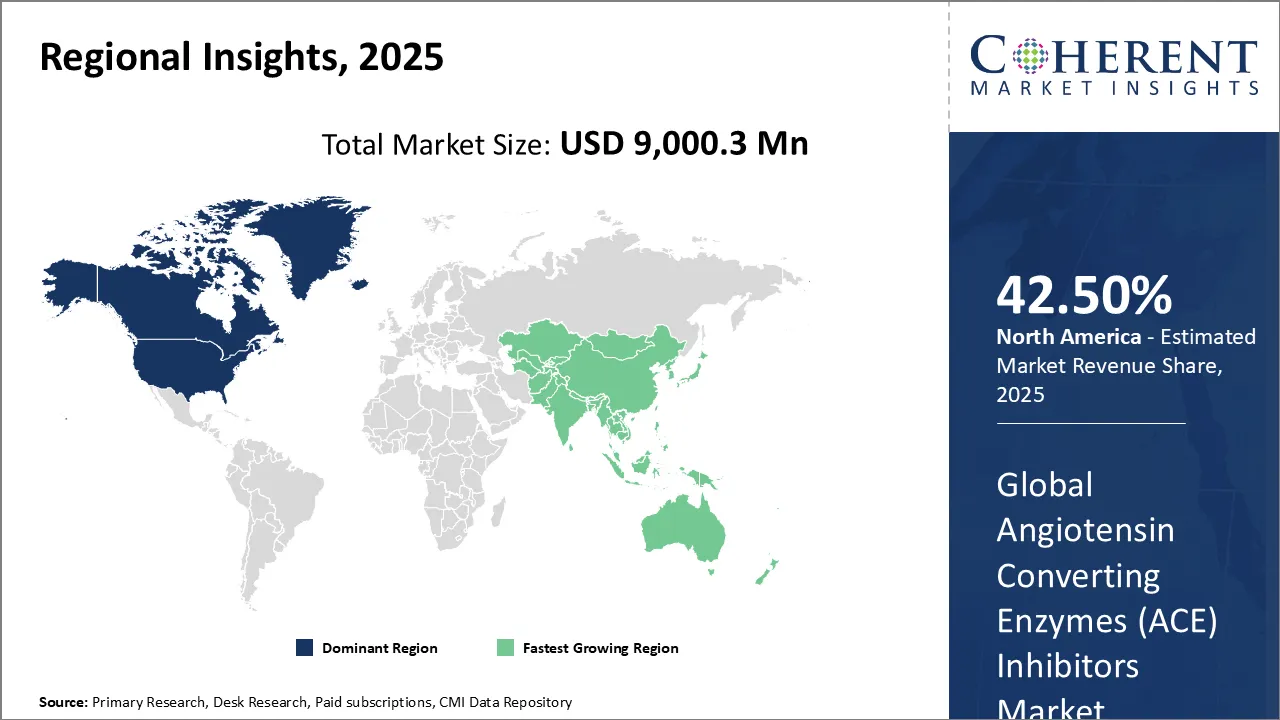
- Based on Region, North America is set to lead the global market in 2026 with a 42.5% share. While, Europe is the second largest region of the market in 2026, holding 28.7% share and Asia Pacific holding a share of 20.0% share.
Market Overview
Angiotensin converting enzymes inhibitors are used for the treatment of various medical conditions such as hypertension, coronary artery disease, heart failure, diabetes, chronic kidney diseases, scleroderma, and migraines. Frequently prescribed angiotensin converting enzyme (ACE) inhibitors are benazepril, perindopril, trandolapril, captopril, enalapril, lisinopril, and ramipril. ACE inhibitors are the first-choice drugs for the treatment of hypertension. The growing prevalence of these chronic conditions is significantly driving angiotensin converting enzymes (ACE) inhibitors market demand, as healthcare providers continue to rely on these medications for their proven efficacy, affordability, and favorable safety profile in long-term cardiovascular and renal management.
Current Events and their Impact on the Angiotensin Converting Enzymes (ACE) Inhibitors Market
Current Events | Description and Its Impact |
Healthcare Policy Reforms and Reimbursement Pressures |
|
Technological and Clinical Practice Evolution |
|
Pricing Analysis
In India, ACE inhibitors like enalapril and ramipril are extremely affordable, especially in their generic forms. Enalapril is one of the cheapest, with a 10-tablet strip often priced under ₹10 for the lowest strength. Ramipril tends to be more expensive, particularly for branded formulations, with some brands charging over ₹100 for a 10-tablet strip. The wide price range reflects brand positioning, manufacturing quality, and distribution costs.
In Europe, the daily cost of ACE inhibitors ranges from about €0.25 to €0.45, depending on the country. Prices vary significantly due to national health policies and procurement systems. Some countries negotiate lower prices through bulk purchasing and reference pricing, while others allow market-based competition. The same drug can cost four to five times more in one European country compared to another.
In India, the National Pharmaceutical Pricing Authority (NPPA) regulates the price of essential medications under the Drugs Price Control Order (DPCO). This has helped cap the price of several ACE inhibitors, especially those in the essential medicines list.
- Current Industry Events of 2026
- Market Size Estimation
- Regional Breakdown
- Competitive Landscape
- Customer Intelligence
- Segmental Analysis
- Pricing Analysis
- Key Market Drivers, Challenges & Future Trends
- Customized Insights Section
Segmental Insights
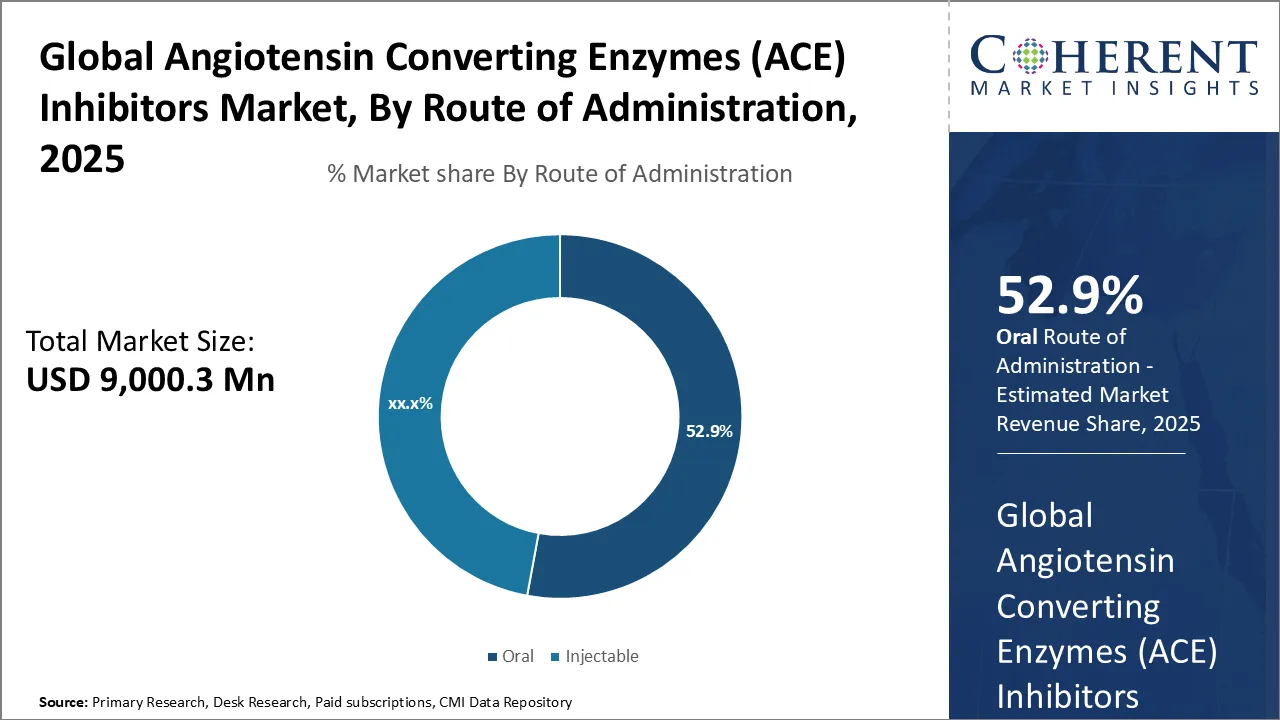
Angiotensin Converting Enzymes (ACE) Inhibitors Market Insights, By Route of Administration
Oral Segment Contributed the Highest Market Share owing to its Effectiveness and Widespread Use
In terms of route of administration, the oral segment is expected to lead the market with 53.9% share in 2026 due to their effectiveness and widespread use in treating various cardiovascular and kidney conditions, including hypertension, heart failure, and diabetic nephropathy. They are often a first-line treatment option due to their ability to lower blood pressure, reduce mortality, and slow the progression of kidney damage. Oral administration is preferred for chronic conditions like hypertension and heart failure, which require long-term or lifelong therapy. Tablets and capsules are easier for patients to manage outside clinical settings, leading to better adherence. According to recent angiotensin converting enzymes (ACE) inhibitors market research, oral formulations account for the largest revenue share and prescription volume globally, especially in the U.S., Europe, and Asia-Pacific regions.
-inhibitors-market-by-drugs.webp "Angiotensin Converting Enzymes (ACE) Inhibitors Market, By Drugs")
Angiotensin Converting Enzymes (ACE) Inhibitors Market Insights, By Drugs
Lisinopril Dominates the Overall Market
In terms of drugs, the lisinopril segment is expected to contribute the highest share of the market in 2026, owing to its clinical efficacy and broad use. Lisinopril is a front-line treatment for hypertension, heart failure post‑myocardial infarction, and diabetic kidney protection, making it a go‑to choice across diverse patient profiles. Lisinopril isa commonly prescribed angiotensin converting enzyme (ACE) inhibitor, does not lead to any measurable weight gain or weight loss based on clinical studies conducted by the manufacturer. For Instance, Lisinopril formulation patent extensions (e.g., Qbrelis until 2035) – Prolonged exclusivity for niche formulations could maintain premium pricing in pediatric/geriatric segments, further propelling the Angiotensin Converting Enzymes (ACE) Inhibitors market demand.
Angiotensin Converting Enzymes (ACE) Inhibitors Market Insights, By Indication
Hypertension Acquires the Largest Market Share
In terms of indication, the hypertension segment is expected to contribute the largest share of the market in 2026, owing to the prevalence of heart disease globally. ACE inhibitors remain the go-to initial treatment for high blood pressure in major clinical guidelines, due to their effectiveness and well-understood safety profile. The global prevalence of hypertension is observed to be with over 1.2 billion adults affected worldwide and nearly half undiagnosed the demand for reliable anti-hypertensive drugs is significant.
In May 2025, USV, in partnership with the World Hypertension League and the Indian Society of Hypertension, unveiled its “United for BP Control” initiative at the 6th World Hypertension Congress in Chennai. This initiative aims at tackling India’s hypertension burden, now affecting over 315 million people, the program features three pillars: awareness campaigns via print, TV and digital media; 25,000+ BP and ECG screening camps, targeting 250,000+ patients; and innovative patient-education strips, co-designed with feedback from healthcare professionals and patients to promote medication adherence and healthy habits.
Angiotensin Converting Enzymes (ACE) Inhibitors Market Insights, By Distribution Channel
Retail Pharmacies Holds the Dominant Market Share
In terms of distribution channel, the retail pharmacies segment is expected to contribute the highest share of the market in 2026, due to generic availability and affordability. ACE inhibitors are primarily prescribed for chronic cardiovascular conditions like hypertension, heart failure, and diabetic nephropathy. Patients on long-term medication prefer the convenience and familiarity of retail pharmacies for regular refills.
Most ACE inhibitors (e.g., enalapril, lisinopril, ramipril) are available as low-cost generics, widely stocked at retail pharmacies, making them accessible to a large population without specialty distribution requirements. Retail pharmacies provide real-time access to pharmacists for medication counseling, which is particularly important for adherence and managing side effects, crucial in cardiovascular therapies. For instance, in regions like Asia-Pacific and Latin America, retail pharmacies are more established and accessible than online platforms or hospital-based pharmacies, giving them a logistical advantage.
Regional Insights
North America Angiotensin Converting Enzymes (ACE) Inhibitors Market Analysis & Trends
North America is the largest market for angiotensin converting enzymes (ACE) inhibitors, accounting for around 42.50% of the global market in 2026. This is due to the high prevalence of cardiovascular diseases, well-established healthcare infrastructure, and a growing aging population. The region is characterized by a strong presence of pharmaceutical companies, which has facilitated research and development of ACE inhibitors. Additionally, robust healthcare reimbursement systems and increased awareness of cardiovascular health contribute to the sustained market expansion in North America. Moreover, increasing organic strategies such as product approval are expected to drive market growth over the forecast period.
For instance, in February 2023, Travere Therapeutics, a biopharmaceutical company headquartered in California, U.S., announced that the U.S. Food and Drug Administration (FDA) granted accelerated approval to FILSPARI (sparsentan), to reduce proteinuria in adults with primary IgAN at risk of rapid disease progression, generally with a urine protein-to-creatinine ratio (UPCR) ≥1.5 g/g. This is further accelerating the Angiotensin Converting Enzymes (ACE) Inhibitors market demand.
Europe Angiotensin Converting Enzymes (ACE) Inhibitors Market Analysis & Trends
Europe is the second largest market for angiotensin converting enzymes (ACE) inhibitors, accounting for around 28.7% of the global market in 2026. In Europe, the global angiotensin converting enzymes (ACE) inhibitors market presents a mature landscape, with a significant emphasis on healthcare access and quality. The European market has benefited from strong healthcare systems and comprehensive insurance coverage, which ensures easy access to medications. However, the market faces challenges due to stringent regulatory requirements and price controls in several European countries, which can impact profit margins for pharmaceutical companies.
Despite these challenges, the global angiotensin converting enzymes (ACE) inhibitors market in Europe continues to grow steadily, driven by a rising geriatric population and the increasing burden of cardiovascular diseases. For instance, the European Society of Cardiology published a report on a contemporary analysis of cardiovascular disease (CVD) statistics, which states that there are more than 6 million new cases of cardiovascular diseases in Europe and more than 11 million in Europe as a whole every year. With almost 49 million people living with the disease in Europe (EU), the cost to the EU economies is high at US 230.3 (€210) million a year.
Asia Pacific Angiotensin Converting Enzymes (ACE) Inhibitors Market Analysis & Trends
Asia Pacific is the fastest growing market for angiotensin converting enzymes (ACE) inhibitors, accounting for around 20.0% of the global market in 2026 In the Asia Pacific region, the angiotensin converting enzymes (ACE) inhibitors market is marked by dynamic growth opportunities. This is attributed to factors such as the expanding middle-class population, urbanization, and a rising awareness of the importance of cardiovascular health. Additionally, governments in several Asia Pacific countries are taking initiatives to improve healthcare infrastructure and access to medications, further fueling market growth. The pharmaceutical industry in the region is actively pursuing research and development efforts in the field of cardiovascular medicines, contributing to innovation in ACE inhibitors. The Asia Pacific market for ACE inhibitors is poised for significant expansion in the coming years, making it a promising area for market players to invest and establish a strong presence. Moreover, increasing awareness for heart diseases is expected to augment the market growth over the forecast period.
For instance, in June 2023, patient organizations, allied health professionals, academia, corporate partners launched the Asia Pacific Cardiovascular Disease Alliance (APAC CVD Alliance), a multisectoral coalition committed to improving heart health and reducing the CVD burden across nine countries in Asia (Australia, China, India, Indonesia, Japan, Malaysia, South Korea, Thailand, Vietnam) to tackle heart disease in Asia with our strategic partners, the Asia Pacific Federation for Clinical Biochemistry and Laboratory Medicine (APFCB), Global Alliance for Patient Access (GAfPA), Global Heart Hub (GHH), and Universiti Teknologi MARA (UiTM) Faculty of Medicine in Malaysia – and corporate partners Amgen, Novartis, and Roche Diagnostics, the APAC CVD Alliance.
Angiotensin Converting Enzymes (ACE) Inhibitors Market Outlook Country-wise
The U.S. Angiotensin Converting Enzymes (ACE) Inhibitors Market Trends
The U.S. angiotensin converting enzymes (ACE) inhibitors market continues to thrive, driven by high burden of hypertension and heart failure; aging population; strong healthcare infrastructure. The Unites States has an extensive use of generics, Medicare/Medicaid coverage, and a high rate of prescription drug consumption. According to the Million Hearts initiative of the US government, over 77 per cent of the 119.9 million Americans with hypertension fail to have their blood pressure levels under control. According to the U.S. Food and Drug Administration, in the United States, 9 out of 10 prescriptions filled are for generic drugs. Increasing the availability of generic drugs helps to create competition in the marketplace, which then helps to make treatment more affordable and increases access to healthcare for more patients.
China Angiotensin Converting Enzymes (ACE) Inhibitors Market Trends
China angiotensin converting enzymes (ACE) inhibitors market is experiencing rapid growth, fueled by rapid urbanization, lifestyle changes, and an aging population are increasing hypertension rates. Chinese government focus on cardiovascular health and generic drug affordability drive demand. The Chinese government is actively addressing cardiovascular disease (CVD) through various initiatives, including the "Healthy China 2030" plan and a national work plan for prevention and treatment of cardio-cerebrovascular diseases.
The UK Angiotensin Converting Enzymes (ACE) Inhibitors Market Trends
The UK continues to be the promising market for the angiotensin converting enzymes (ACE) inhibitors market, with a structured primary care model where ACE inhibitors are a first-line treatment. Along with that, the UK has NICE guidelines often recommend ACE inhibitors for hypertension and heart failure. The National Institute for Health and Care Excellence (NICE) continues to recommend ACE inhibitors as frontline treatment for adults under age 55 with hypertension, with dose escalation and dual therapy following protocol if blood pressure remains uncontrolled.
Market Report Scope
Angiotensin Converting Enzymes (ACE) Inhibitors Market Report Coverage
| Report Coverage | Details | ||
|---|---|---|---|
| Base Year: | 2025 | Market Size in 2026: | USD 9,522.3 Mn |
| Historical Data for: | 2020 To 2024 | Forecast Period: | 2026 To 2033 |
| Forecast Period 2026 to 2033 CAGR: | 5.8% | 2033 Value Projection: | USD 14,130.0 Mn |
| Geographies covered: |
| ||
| Segments covered: |
| ||
| Companies covered: | Novartis AG, Pfizer Inc., Merck & Co., AstraZeneca, Sanofi, Boehringer Ingelheim, GlaxoSmithKline, Lupin Limited, Torrent Pharmaceuticals Ltd., Dr. Reddy's Laboratories Ltd., Mylan and Other Prominent Players | ||
| Growth Drivers: |
| ||
| Restraints & Challenges: |
| ||
Global Angiotensin Converting Enzymes (ACE) Inhibitors Market Drivers
- Rising prevalence of hypertension: The rising prevalence of hypertension serves as a significant driver for the angiotensin converting enzymes (ACE) inhibitors market. Hypertension, commonly known as high blood pressure, is a leading global health concern affecting millions of individuals across North America, Europe, and the Asia Pacific. This chronic condition is a key risk factor for cardiovascular diseases, including heart attacks and strokes, making it a major public health issue. For instance, on March 16, 2023, the World Health Organization (WHO) provided a data according to which an estimated 46% of people with hypertension are unaware that they have the illness, and 1.28 million people between the ages of 30 and 79 have hypertension globally.
- Growing Research and Development Activities: Growing research and development (R&D) activities in the field of pharmaceuticals serve as a key driver for the angiotensin converting enzymes (ACE) inhibitors market across North America, Europe, and the Asia Pacific. The pharmaceutical industry's continuous commitment to innovation and the development of new medications, including ACE inhibitors, is significantly influencing market dynamics in these regions.
- Increasing Awareness of Cardiovascular Health: Continuous research and development efforts have led to the introduction of new and improved angiotensin converting enzymes (ACE) inhibitors in the market. These advancements include the development of novel molecules and formulation technologies that enhance the efficacy and safety profiles of insulin sensitizing medications. For instance, on September 29, 2023, on World Heart Day, there is an initiative set to commence - the #UseHeart movement in collaboration with Iqniter, a prominent company specializing in health training devices. This collaboration aims to promote physical activity through its Counting Hearts Initiative, striving to reduce the prevalence of cardiovascular disease (CVD), which currently holds the unfortunate title of being the primary cause of fatalities.
Global Angiotensin Converting Enzymes (ACE) Inhibitors Market Opportunities
- Innovative Drug Delivery Systems: Advancements in drug delivery systems, such as the development of more convenient and patient-friendly options like extended-release formulations or combination therapies, can enhance patient compliance and treatment effectiveness. Angiotensin converting enzymes (ACE) inhibitors market forecast suggests that these innovations will play a pivotal role in driving future growth, especially as companies focus on differentiated cardiovascular products. For example, the recent launch of Qbrelis, an FDA-approved oral solution of lisinopril tailored for pediatric and dysphagic patients—reflects this trend toward tailored, flexible dosing. Pharmaceutical companies can seize this opportunity to create differentiated products that offer improved patient outcomes and competitive advantages.
Global Angiotensin Converting Enzymes (ACE) Inhibitors Market Trends
- Patient-Centered Care: There is a growing emphasis on patient-centered care in the management of hypertension and related conditions. Patients are taking a more active role in their healthcare decisions. This trend is influencing the development of ACE inhibitors with improved tolerability, reduced side effects, and more convenient dosing schedules to enhance patient satisfaction and adherence.
- Patient Education and Adherence Support: Patient education and adherence support programs are becoming more prevalent in the management of hypertension and cardiovascular conditions. These programs aim to improve patients understanding of the importance of medication adherence and lifestyle modifications. Pharmaceutical companies are developing educational materials and digital tools to aid in patient engagement and adherence.
Recent Developments
- In June 2025, Acerand Therapeutics enrolled its first patient in a Phase 1 clinical trial (NCT06801236) testing ACE‑232, a potent and selective oral CYP11A1 inhibitor, for metastatic castration-resistant prostate cancer (mCRPC). Developed to block early steroid hormone production, ACE‑232 demonstrated superior preclinical efficacy and pharmacokinetics compared to earlier inhibitors, including ODM‑208. The open-label dose-escalation study in the U.S. and Canada aims to evaluate safety, tolerability, pharmacokinetics, and establish a maximum tolerated dose across 67 patients on androgen deprivation therapy.
- In May 2025, A recent real-world study published in Cardiovascular Diabetology indicates that angiotensin-converting enzyme inhibitors (ACEIs) offer superior cardiovascular protection compared to angiotensin II receptor blockers (ARBs) in older adults (65+) with type 2 diabetes (T2D). Analyzing data from China’s Yinzhou Regional Health Care Database (2010–2023), investigators reported a 14% lower risk of 3‑point major adverse cardiac events (MACE) myocardial infarction, stroke, or death—in ACEI users (adjusted HR 0.86). For a broader 4‑point MACE, including heart failure hospitalization, the adjusted HR was even stronger at 0.83.
- In May 2025, Senores Pharmaceuticals, via its U.S. unit Senores Pharmaceuticals, Inc., has secured the U.S. FDA-approved Abbreviated New Drug Application (ANDA) for enalapril maleate tablets in 2.5 mg, 5 mg, 10 mg, and 20 mg strengths from Wockhardt Limited. Enalapril, a cornerstone ACE inhibitor—treats hypertension, heart failure, and asymptomatic left ventricular dysfunction. The U.S. enalapril market is valued between $28.6 million.
- In September2023, Pharmascience Canada, a Quebec-based pharmaceutical company, launched pms-PERINDOPRIL-INDAPAMIDE (perindopril erbumine or indapamide), a generic drug for adults for the initial treatment of mild to moderate essential hypertension (high blood pressure).
Analyst Opinion (Expert Opinion)
The global angiotensin converting enzymes (ACE) inhibitors market value is entering a maturity phase marked by therapeutic commoditization, yet it remains structurally indispensable—particularly in regions where hypertension management is heavily protocolized. The clinical rationale for ACE inhibitors—particularly agents like enalapril, lisinopril, and ramipril—has become entrenched in treatment algorithms despite the availability of newer drug classes such as angiotensin receptor blockers (ARBs) and SGLT2 inhibitors. The loyalty to ACE inhibitors in first-line hypertensive and heart failure therapy is not merely historical; it is a calculated response to cost-containment and long-term efficacy in large patient populations.
Despite increasing biologic sophistication in cardiovascular drug development, over 62% of physicians in emerging economies continue to prescribe ACE inhibitors as a first-line therapy, according to a 2023 Global Cardiology Survey conducted across Brazil, India, and Southeast Asia. This is a reflection of two entrenched factors: economic pragmatism and well-documented longitudinal outcomes. The SOLVD and HOPE trials—though dated—continue to serve as foundational pillars in prescribing confidence. In contrast, SGLT2 inhibitors, while clinically compelling, face cost and access barriers that ACE inhibitors have long overcome.
In Western markets, particularly the U.S. and Germany, the ACE inhibitors segment is more defensive in nature. Generic saturation is nearly complete, with over 95% of all ACE inhibitor prescriptions in the U.S. now generic, according to 2024 data from IQVIA. Yet this segment has seen strategic differentiation through fixed-dose combinations (FDCs), particularly ACE inhibitors paired with diuretics or calcium channel blockers. These FDCs are not only preserving value but increasing adherence rates, adherence improved by 19% in patients switched to FDC regimens, according to a recent meta-analysis published in Circulation: Cardiovascular Quality and Outcomes.
Still, the Achilles' heel remains the risk of angioedema and chronic cough—side effects responsible for up to 15% discontinuation rates globally, disproportionately higher in East Asian populations. This pharmacogenomic sensitivity is under-discussed in commercial narratives but is increasingly influential in market segmentation strategies. Companies seeking geographic expansion must integrate these ethnic variabilities into formulary negotiations and patient monitoring strategies.
The real opportunity lies in therapeutic repositioning. A 2024 cross-sectional trial from Japan's Keio University found that ACE inhibitors reduced proteinuria by 27% in non-diabetic CKD patients, reigniting interest in their use for renal protection outside of diabetic populations. This should not be underestimated: as CKD screening scales up in aging populations, especially in APAC, ACE inhibitors may see a second life not through innovation, but through clinical rediscovery.
In summary, the ACE inhibitors market is no longer driven by competitive edge but by strategic entrenchment. It is the pharmaceutical equivalent of aspirin—overlooked but omnipresent. Stakeholders should focus on regional pharmacovigilance, adherence-boosting formulations, and indication repurposing to unlock what remains of its long but stable market lifecycle.
Speak to the analyst
Want personalized insights?
Take the findings above to one of our principal consultants, or have the report rebuilt around the segments, geographies and competitors you actually track.
Market Segmentation
- By Drugs (Revenue, USD Mn, 2021 - 2033)
- Benazepril
- Perindopril
- Trandfolapril
- Captopril
- Enalapril
- Lisinopril
- Others (Ramipril, etc.)
- By Indication (Revenue, USD Mn, 2021 - 2033)
- Hypertension
- Coronary Artery Disease
- Heart Failure
- Chronic Kidney Disease
- Scleroderma
- Others (Migraine, etc.)
- By Route of Administration (Revenue, USD Mn, 2021 - 2033)
- Oral
- Injectable
- By Distribution Channel (Revenue, USD Mn, 2021 - 2033)
- Hospital Pharmacies
- Retail Pharmacies
- Online Pharmacies
- By Region (Revenue, USD Mn, 2021 - 2033)
- North America
- U.S.
- Canada
- Latin America
- Brazil
- Argentina
- Mexico
- Rest of Latin America
- Europe
- Germany
- U.K.
- Spain
- France
- Italy
- Russia
- Rest of Europe
- Asia Pacific
- China
- India
- Japan
- Australia
- South Korea
- ASEAN
- Rest of Asia Pacific
- Middle East
- GCC Countries
- Israel
- Rest of Middle East
- Africa
- South Africa
- North Africa
- Central Africa
- North America
- Top companies in Global Angiotensin Converting Enzymes (ACE) Inhibitors Market
- Novartis AG
- Pfizer Inc.
- Merck & Co.
- AstraZeneca
- Sanofi
- Boehringer Ingelheim
- GlaxoSmithKline
- Lupin Limited
- Torrent Pharmaceuticals Ltd.
- Reddy's Laboratories Ltd.
- Mylan
- Other Prominent Players
Sources
Primary Research Interviews from the following stakeholders
Stakeholders
- Interviews with pharmaceutical manufacturers, clinical pharmacists, hospital procurement heads, regulatory compliance officers, formulary managers, and cardiovascular specialists across leading healthcare markets.
Databases
- World Health Organization (WHO) Pharmaceutical Consumption Data
- World Bank – Healthcare Access & Quality Index (HAQ)
- UN Comtrade Database – Pharmaceutical Product Codes (HS 30)
- Central Drugs Standard Control Organization (CDSCO), India
- U.S. FDA Drug Approval and Labeling Database
- European Medicines Agency (EMA) Drug Statistics
- gov – ACE Inhibitor-Related Trials
- Pharmaceutical Export Promotion Council (Pharmexcil), India
- Health Canada – Drug Product Database
- Japan Pharmaceutical Manufacturers Association (JPMA)
Magazines
- PharmaTimes
- Drug Topics
- Pharmaceutical Technology
- PharmaVOICE
- The Pharma Letter
- Modern Healthcare
- Cardiology Today
- Pharma Manufacturing
- HealthTech Magazine
Journals
- The Lancet – Cardiovascular Medicine
- European Heart Journal
- Journal of the American College of Cardiology (JACC)
- International Journal of Clinical Pharmacology and Therapeutics
- American Journal of Hypertension
- Journal of Pharmaceutical Sciences
- British Journal of Clinical Pharmacology
- Clinical Therapeutics
Newspapers
- The Wall Street Journal – Health Section
- The Economic Times – Pharma and Healthcare
- Financial Times – Global Pharma Reports
- The Hindu Business Line – Biopharma Coverage
- Nikkei Asia – Pharmaceutical Industry
- South China Morning Post – Healthcare and Regulatory Affairs
Associations
- International Society of Hypertension (ISH)
- American Heart Association (AHA)
- European Society of Cardiology (ESC)
- Indian Pharmacological Society (IPS)
- International Pharmaceutical Federation (FIP)
- Cardiological Society of India (CSI)
- International Society for Cardiovascular Pharmacotherapy (ISCP)
- Pharmaceutical Export Promotion Council (Pharmexcil), India
Public Domain Sources
- Ministry of Health and Family Welfare (Government of India)
- National Institutes of Health (NIH), U.S.
- European Commission – EU Health and Pharmaceuticals Portal
- National Health Service (NHS), U.K.
- Reserve Bank of India (RBI) Reports on Pharmaceuticals
- India Investment Grid – Pharmaceuticals and Healthcare
- U.S. Centers for Medicare & Medicaid Services (CMS)
- NITI Aayog – Pharma Vision 2020 & 2047
- Department of Pharmaceuticals (India) – API Production and Formulation Reports
Proprietary Elements
- CMI Data Analytics Tool, Proprietary CMI Existing Repository of information for last 8 years.
*Definition: The global angiotensin converting enzymes (ACE) inhibitors refers to the pharmaceutical products or interventions that are designed to improve insulin sensitivity in individuals with conditions such as insulin resistance, type 2 diabetes, metabolic syndrome, and polycystic ovary syndrome (PCOS). Insulin sensitizers help body to utilize insulin more effectively, leading to improved glucose control and metabolic outcomes. The market encompasses various types of angiotensin converting enzymes (ACE) inhibitors, including medications, therapies, and related products, as well as the research, development, manufacturing, and distribution activities associated with them.
Get access to 250+ pages report
Every segment, forecast, competitor profile and data table behind the analysis above — available for instant download.
- ESOMAR Member
- ISO 9001:2015 Certified
- D-U-N-S Registered
- GDPR & CCPA Compliant
Missing comfort of reading report in your local language? Find your preferred language:
Transform your Strategy with Exclusive Trending Reports
Frequently Asked Questions
The Angiotensin Converting Enzymes (ACE) Inhibitors Market is estimated to be valued at USD 9,522.3 Mn in 2026, and is expected to reach USD 14,130.0 Mn by 2033.
The CAGR of the Angiotensin Converting Enzymes (ACE) Inhibitors Market is projected to be 5.8% from 2026 to 2033.
The rising prevalence of hypertension, growing research and development activities, and increasing awareness of cardiovascular health are anticipated to drive market growth over the forecast period.
Injectable is the leading route of administration segment in the global angiotensin converting enzymes (ACE) inhibitors market.
Major players operating in the global angiotensin converting enzymes (ACE) inhibitors market are Novartis AG, Pfizer Inc., Merck & Co., AstraZeneca, Sanofi, Boehringer Ingelheim, GlaxoSmithKline, Lupin Limited, Torrent Pharmaceuticals Ltd., Dr. Reddy's Laboratories Ltd., Mylan and Other Prominent Players.
North America is expected to lead the global angiotensin converting enzymes (ACE) inhibitors market.
ACE inhibitors reduce strain on the heart, easing symptoms by lowering blood pressure and improving cardiac output.