

Anosmia Market Size and Forecast: 2026-203 3
The Anosmia Market is anticipated to grow at a CAGR of 8.5% with USD 11.4 Bn in 2026 and is expected to reach USD 18.7 Bn in 2033. Rising prevalence of anosmia, Growing awareness and diagnosis and Advancements in treatment and technology. In February 2026, Anosmia Awareness Day was marked to raise awareness of smell and taste impairments. The day featured two powerful stories that highlighted how significant yet often invisible these sensory conditions can be. SmellTaste, the only UK charity dedicated to supporting people affected by smell and taste loss, continues its vital work and encouraged ongoing support, including regular donations, to help sustain its services.
Key Takeaways
- Idiopathic Anosmia hold the largest market share of 52.8% in 2026 owing to its aging population and neurodegeneration. According to a September 2024 article by the National Institute on Deafness and Other Communication Disorders, about 3% of Americans experience anosmia or severe hyposmia.
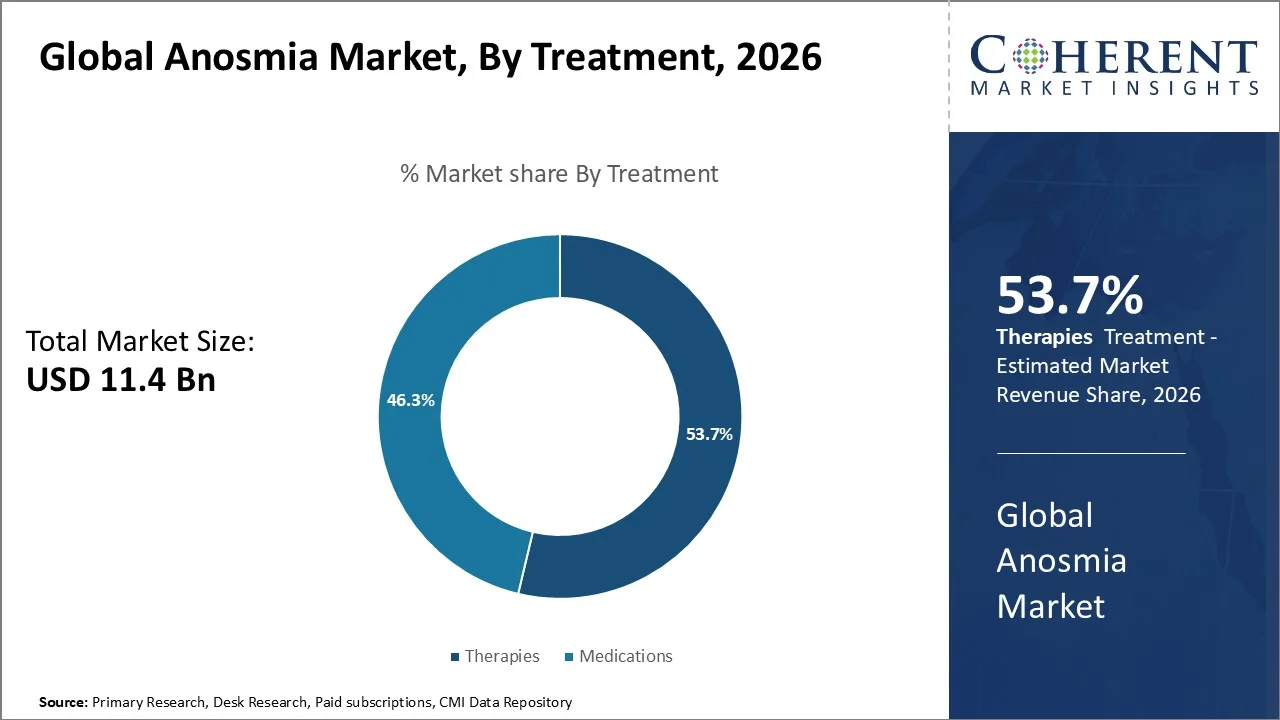
- Therapies expected to hold the largest market share of 53.7% in 2026. Anosmia (loss of smell) treatment depends on the underlying cause, often involving Smell Retraining Therapy (SRT) (sniffing scents like rose, lemon, eucalyptus, clove for 10-20 seconds daily) and nasal corticosteroids to reduce inflammation.
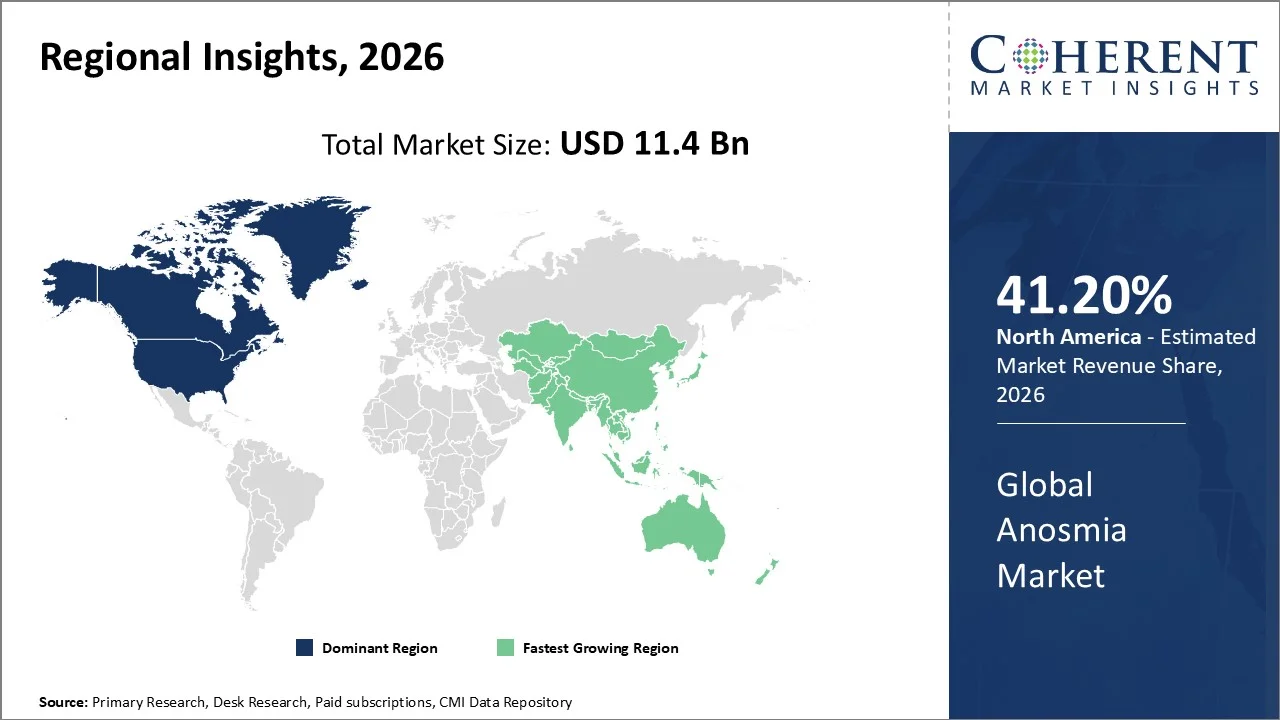
- North America is expected to account for the dominant share of 41.2% in 2026, supported by high diagnosis rates, advanced healthcare infrastructure, and strong research activity. The region benefits from a well-established network of specialized ENT clinics, access to advanced diagnostic technologies, and higher healthcare spending. According to the data from the Centers for Medicare & Medicaid Services, U.S. healthcare expenditure exceeded USD 4.5 trillion in 2022, reflecting strong infrastructure and accessibility, which supports early diagnosis and treatment adoption, further driving market growth in the region.
Current Events and Their Impact on the Anosmia Market
Current Event | Description and its Impact |
UK NHS expansion of biologic treatment access for smell loss linked to CRSwNP (Dupilumab access debate 2025–2026) |
|
Public health awareness campaigns led by charities (Anosmia Awareness Day 2025–2026) |
|
Segmental Insights
- Current Industry Events of 2026
- Market Size Estimation
- Regional Breakdown
- Competitive Landscape
- Customer Intelligence
- Segmental Analysis
- Pricing Analysis
- Key Market Drivers, Challenges & Future Trends
- Customized Insights Section
Therapies hold the Largest Market Share
Therapies expected to hold the largest market share of 53.7% in 2026 owing to the growth of post-viral & long-term anosmia cases. The rising prevalence of smell disorders, especially from viral infections and aging-related conditions, drives therapies in the anosmia market. A February 2024 study published in Tobacco Induced Diseases reported that about 40.2 million adults in the United States experience smell or taste disorders. It found that 9.8% of adults reported taste impairment, while 13.4% reported smell impairment. The limited effectiveness of drug treatments pushes patients and clinicians to rely more on non-pharmacological and supportive therapies. In response, in September 2025, Rapid City Medical Center has announced that ENT physician Dr. Dallin Christensen now offers Platelet-Rich Plasma (PRP) injections to treat patients experiencing loss of smell (anosmia). He is the first ENT specialist in the Black Hills region to provide this advanced therapy.
Why is Idiopathic Anosmia Acquiring the Largest Market Share?
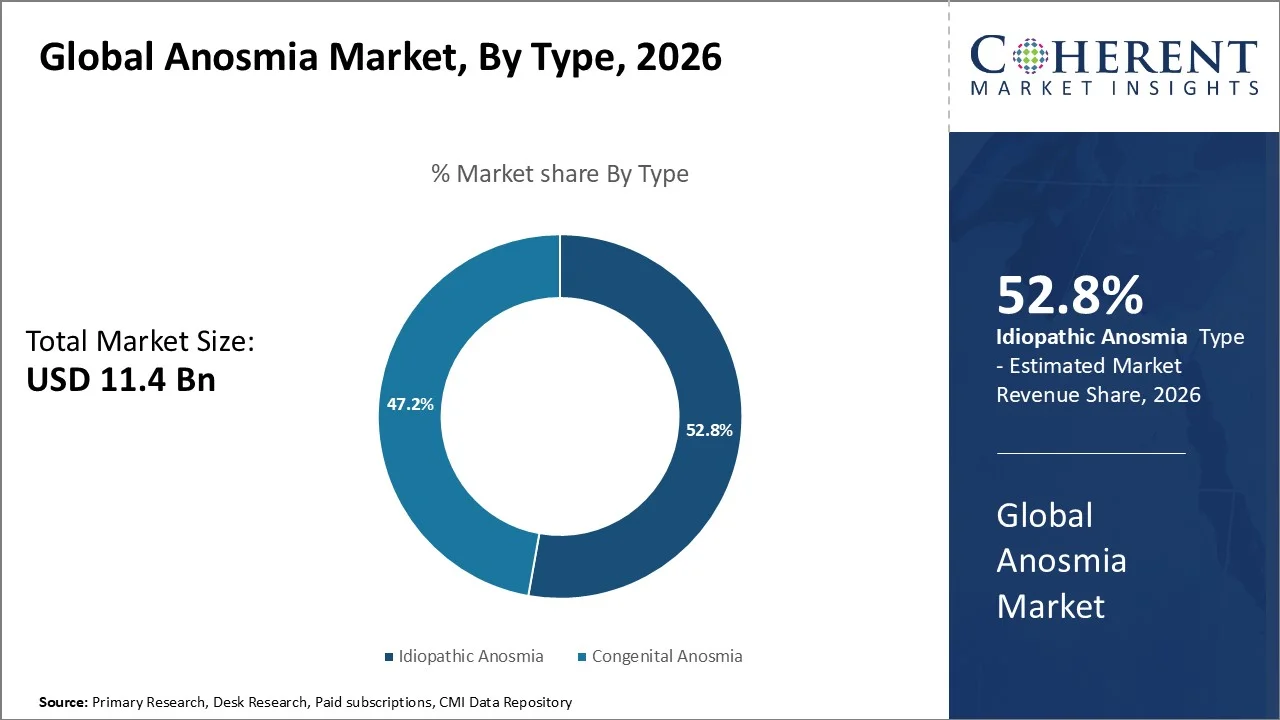
Idiopathic Anosmia hold the largest market share of 52.8% in 2026. Diagnostic limitations drive idiopathic anosmia in the anosmia market by leaving many cases without a clear cause, thereby expanding this segment. Aging populations and underlying neurodegenerative changes further increase unexplained smell loss. By 2030, around 1 in 6 people worldwide will be aged 60 or older, with this age group growing from 1 billion in 2020 to 1.4 billion. By 2050, the global population aged 60 and above is projected to double to 2.1 billion, while those aged 80 and above are expected to triple to 426 million. Greater awareness and improved healthcare access encourage clinicians to diagnose more cases, even when the cause remains uncertain. Persistent post-viral conditions often shift into the idiopathic category. Moreover, the lack of targeted treatments pushes demand for broad therapeutic approaches and stimulates research into advanced diagnostics and regenerative solutions, supporting continued market growth.
Anosmia Market Trends
- Rising demand for non-invasive and home-based therapies, such as olfactory training, improves patient compliance and supports long-term management of smell disorders. Clinical studies show that olfactory training can improve smell function in up to 30–50% of patients with post-viral olfactory loss, particularly when followed consistently for 12–24 weeks. This has made home-based smell rehabilitation a globally recommended first-line intervention for anosmia management.
- Increasing adoption of regenerative medicine techniques, such as stem cell therapy and platelet-rich plasma (PRP), drives innovation and expands treatment possibilities. Early clinical trials, including pilot studies in the UK and Europe, have shown that PRP injections into the olfactory epithelium may improve smell function in patients with chronic anosmia, though evidence is still emerging. This reflects a shift toward regenerative ENT therapies beyond conventional symptom management.
- Supportive healthcare policies, improved access to ENT specialists, and integration of digital health solutions enhance treatment accessibility and patient engagement across regions.
Regional Insights
North America dominates owing to Strong R&D ecosystem and innovation leadership
North America is projected to hold the largest share of the anosmia market at 41.2% in 2026, driven by a high burden of olfactory disorders and strong healthcare infrastructure. In the United States alone, anosmia affects about 3% of adults over 40, while olfactory dysfunction increases sharply with age, reaching up to 39% in individuals over 80 years. Post-COVID-19 research further highlights a sustained clinical burden, with studies reporting that up to 24% of previously infected individuals still experience long-term smell dysfunction more than two years after infection.
In addition, North America benefits from substantial biomedical investment, with the U.S. National Institute on Deafness and Other Communication Disorders (NIDCD) allocating over $45 million annually toward smell and taste disorder research, accelerating innovation in diagnostics and therapeutics.
Asia Pacific Anosmia Market Trends
Asia Pacific is emerging as a key growth region in the anosmia market, driven by a rapidly ageing population and increasing neurological and post-viral olfactory disorders. In community-based studies from Asia, around 34% of older adults show some form of olfactory impairment, with about 13.5% experiencing complete smell loss (anosmia), highlighting a significant regional disease burden. Similarly, large population studies report that over one-third of older Asian adults may have olfactory dysfunction, with age being a major risk factor for smell decline.
Prevalence data also show that in Asia, olfactory dysfunction can range widely from around 5% in general populations to over 20% in elderly groups depending on testing methods and geography, indicating underdiagnosis in several regions.
United States Anosmia Market Trends
The United States drives the anosmia market because it records a high prevalence of smell disorders linked to viral infections, neurological diseases, and aging populations. Advanced healthcare infrastructure and strong access to ENT specialists enable clinicians to diagnose cases early and adopt effective treatments. High awareness among patients and healthcare professionals increases reported cases and encourages timely care. A strong pharmaceutical and biotechnology ecosystem supports continuous research and innovation in therapies. Favorable reimbursement policies and high healthcare spending improve access to advanced treatment options and support market growth. For instance, in February 2025, U.Va. Health launched its Center for Smell and Taste on Jan. 17 to treat disorders such as anosmia and ageusia. Dr. Jose Mattos, co-director of the center, stated that about 20% of adults experience some form of smell or taste disorder.
China Anosmia Market Trends
China drives the anosmia market with its large population base and a rising prevalence of smell disorders linked to respiratory infections, pollution exposure, and aging-related conditions. Rapid improvements in healthcare infrastructure expand access to ENT specialists and diagnostic services. Increasing awareness of olfactory dysfunction among patients and healthcare providers promotes earlier diagnosis and treatment adoption. Expanding government healthcare initiatives and growing investments in medical research strengthen market growth. Additionally, post-viral cases and environmental factors sustain demand for effective anosmia management solutions.
Who are the Major Companies in Anosmia Industry
Some of the major key players in Anosmia Industry are Mylan N.V., Pfizer Inc., Atom Pharma, RANBAXY LABORATORIES LIMITED, Alde Medi Impex, GlaxoSmithkline plc, Sandoz (Novasrtis AG), Inke S.A., Taj Pharmaceuticals Limited, and Sanofi, amongst others.
Key News
- In September 2025, Rapid City Medical Center announced that ENT specialist Dr. Dallin Christensen began offering Platelet-Rich Plasma (PRP) injections for patients with smell loss, becoming the first ENT physician in the Black Hills region to provide this treatment.
Market Report Scope
Anosmia Market Report Coverage
| Report Coverage | Details | ||
|---|---|---|---|
| Base Year: | 2025 | Market Size in 2026: | USD 11.4 Bn |
| Historical Data for: | 2020 To 2024 | Forecast Period: | 2026 To 2033 |
| Forecast Period 2026 to 2033 CAGR: | 8.5% | 2033 Value Projection: | USD 18.7 Bn |
| Geographies covered: |
| ||
| Segments covered: |
| ||
| Companies covered: | Mylan N.V., Pfizer Inc., Atom Pharma, RANBAXY LABORATORIES LIMITED, Alde Medi Impex, GlaxoSmithkline plc, Sandoz (Novasrtis AG), Inke S.A., Taj Pharmaceuticals Limited, and Sanofi, amongst others. | ||
Analyst Opinion
- The anosmia market is not expanding due to lifestyle trends but because of a large, unresolved clinical burden that healthcare systems continue to underestimate. This creates a structural treatment gap rather than a cyclical demand pattern.
- Clinical evidence also highlights the scale of unmet need: studies show that up to 20% of upper respiratory infection patients develop temporary or persistent olfactory dysfunction, yet fewer than half receive specialized diagnostic evaluation.
- Olfactory training, one of the few widely recommended interventions, demonstrates response variability ranging from 30% to over 60% improvement depending on duration and patient adherence, reflecting inconsistent therapeutic outcomes rather than standardized care pathways.
- Emerging regenerative approaches further reinforce the market’s clinical urgency. Early studies in platelet-rich plasma (PRP) therapy for olfactory dysfunction show measurable improvement in smell identification scores in controlled patient cohorts, but these interventions remain experimental and are not yet widely accessible.
- Overall, the anosmia market is fundamentally driven by persistent post-viral sequelae, high idiopathic diagnosis rates, and limited therapeutic efficacy. The demand is not speculative, it is anchored in unresolved sensory loss affecting millions of patients globally who still lack reliable, standardized recovery options.
Speak to the analyst
Want personalized insights?
Take the findings above to one of our principal consultants, or have the report rebuilt around the segments, geographies and competitors you actually track.
Market Segmentation (Revenue, USD Bn, 2021-2033)
- By Type
- Idiopathic Anosmia
- Congenital Anosmia
- By Treatment (Revenue, USD Bn, 2021-2033)
- Therapies
- Nasal Endoscopy
- Imaging
- Medications
- Decongestants
- Antihistamines
- Steroid Nasal Sprays
- By Region (Revenue, USD Bn, 2021-2033)
- North America
- U.S.
- Canada
- Latin America
- Brazil
- Mexico
- Argentina
- Rest of Latin America
- Europe
- Germany
- U.K.
- France
- Italy
- Spain
- Russia
- Rest of Europe
- Asia Pacific
- China
- India
- Japan
- Australia
- South Korea
- ASEAN
- Rest of Asia Pacific
- Middle East
- GCC
- Israel
- Rest of Middle East
- Africa
- South Africa
- Central Africa
- North Africa
- North America
- Key Players
- Mylan N.V.
- Pfizer Inc.
- Atom Pharma
- RANBAXY LABORATORIES LIMITED
- Alde Medi Impex
- GlaxoSmithkline plc
- Sandoz (Novasrtis AG)
- Inke S.A.
- Taj Pharmaceuticals Limited
- Sanofi
Sources
Primary Research Interviews
- ENT specialists (Otolaryngologists)
- Neurologists and sensory disorder researchers
- Patients suffering from anosmia (post-viral, COVID-related, congenital cases)
- Clinical researchers in smell and taste disorders
- Hospital and diagnostic laboratory professionals
Databases
- National health and medical statistics databases
- Clinical trial registries related to olfactory disorders
- Public health surveillance databases
- Biomedical research databases (peer-reviewed indexed repositories)
- Hospital electronic medical record aggregates (anonymized datasets)
Magazines
- Medical science and healthcare magazines
- Neuroscience and sensory health publications
- General health and wellness magazines
- Biotechnology and life sciences industry magazines
Journals
- Otolaryngology (ENT) journals
- Neurology and neuroscience journals
- Sensory science and olfactory research journals
- Infectious disease journals (post-viral anosmia studies)
- Clinical medicine journals
Newspapers
- National and regional newspapers covering healthcare developments
- Science and health sections of major newspapers
- Articles reporting post-COVID-19 anosmia trends
- Public health awareness news reports
Associations
- ENT and head & neck medical associations
- Neurology professional associations
- Public health organizations focused on sensory disorders
- Patient advocacy groups for smell and taste disorders
- Medical research and clinical societies
Public Domain Sources
- Government health department publications
- World health statistical reports
- Open-access medical research papers
- Publicly available epidemiological studies
- Health awareness campaign materials
- WHO-style global health datasets (public summaries)
Proprietary Elements
- CMI Data Analytics Tool
- Proprietary CMI Existing Repository of information for last 8 years
Get access to 250+ pages report
Every segment, forecast, competitor profile and data table behind the analysis above — available for instant download.
- ESOMAR Member
- ISO 9001:2015 Certified
- D-U-N-S Registered
- GDPR & CCPA Compliant
Missing comfort of reading report in your local language? Find your preferred language:
Transform your Strategy with Exclusive Trending Reports
Frequently Asked Questions
The Anosmia Market is anticipated to grow at a CAGR of 8.5% with USD 11.4 Billion share in 2026 and is expected to reach USD 18.7 Billion in 2033.
The value of the global anosmia market is estimated to be valued at USD 18.7 Bn in 2033.
Mylan N.V., Pfizer Inc., Atom Pharma, RANBAXY LABORATORIES LIMITED, Alde Medi Impex, GlaxoSmithkline plc, Sandoz (Novasrtis AG), Inke S.A., Taj Pharmaceuticals Limited, and Sanofi are some of the prominent players operating in the global anosmia market.
North America is the prominent region in the global anosmia market.
Increasing number of anosmia cases and rising research grants and research activities for drug development for anosmia by the market players are some of the key factors driving the global anosmia market growth.