

Rapid Self-Healing Gel Market Size and Share Analysis- 2026 To 2033
The Rapid Self-Healing Gel Market size is anticipated to grow at a CAGR of 8.2% with USD 363.3 Mn in 2026 and is expected to reach USD 630.6 Mn by 2033. The market growth is primarily driven by the increasing demand for advanced wound care solutions, rising prevalence of chronic wounds and burn injuries, growing adoption of self-healing biomaterials in healthcare, and continuous advancements in hydrogel technologies. According to a 2025 review published in Nanomedicine, smart self-healing hydrogels are increasingly being developed for diabetic wound treatment because they can dynamically respond to changes in the wound environment, autonomously repair structural damage, improve mechanical stability, and support broader clinical adoption in advanced wound care.
Key Takeaways
- Chemical segment is likely to dominate the market with 61.8% in 2026. The segment’s growth is owing to its superior mechanical strength, enhanced structural stability, improved durability, and widespread use in wound healing, tissue engineering, and controlled drug delivery applications. According to a 2025 review in the journal Biomaterials Science (Royal Society of Chemistry) found that chemical crosslinking results in hydrogels with better mechanical strength, stronger tissue adhesion, enhanced structural stability, and predictable drug-release kinetics than those that are physically crosslinked.
- Wound healing segment is expected to lead with 42.6% in 2026. Growth in this segment can be attributed to high prevalence rates of chronic wounds, diabetic foot ulcers, burns, and pressure ulcers along with the rising demand for better biomaterials that would help regenerating tissues and decreasing the duration of the healing process. According to the report by Human Wound and Its Burden 2025 of the University of Pittsburgh, approximately 10.5 Mn Medicare beneficiaries suffer from chronic wounds in the US, which costs Medicare around USD 22.5 billion per year.
- North America is expected to dominate the market share of the Rapid Self-Healing Gel Market with a market share of 35.4% in 2026. The growth of this region is driven by the presence of highly developed healthcare infrastructure, extensive investments in biomaterials and regenerative medicine, increasing adoption of innovative solutions for wound care treatments, and robust research and development activities in self-healing hydrogels. According to 2025 NIH data, the extramural biomedical research grant award was USD 35.3 billion, indicating the ongoing investment in biomaterials, regenerative medicine, and tissue engineering.
Market Drivers
Increasing Burden of Chronic Wounds and Regenerative Medicine is Driving the Rapid Self-Healing Gel Market
The increasing occurrence of chronic wounds, diabetic foot ulcers, burns, surgical wounds and pressure ulcers is a key driver for the demand for fast self-healing gels. These new biomaterials offer dynamic self-repair, improved mechanical stability, continuous medication release and a wet healing environment that encourages tissue regeneration and minimizes the risk of infection. The growing investment in regenerative medicine, biomaterials research, and sophisticated wound care technologies is driving further proliferation of self-healing gels in clinical and biomedical settings.
According to the U.S. Centers for Medicare & Medicaid Services (CMS), healthcare expenditure in the United States is expected to climb to USD 8.6 trillion by 2033, indicating the continuing use of state-of-the-art medical technology, regenerative medicine, and advanced wound healing solutions which enable the use of self-healing biomaterials.
Smart Biomaterials and Injectable Self-Healing Hydrogels are Accelerating Innovation in the Rapid Self-Healing Gel Market
The Rapid Self-Healing Gel Market presents significant growth opportunities due to rapid breakthroughs in smart biomaterials, injectable hydrogels and tissue engineering. The injectable, stimuli-responsive and biodegradable characteristics of contemporary self-healing gels increase drug administration, cell encapsulation and tissue restoration with the ability to perform minimally invasive therapeutic treatments. Next-generation self-healing gel technologies are being commercialized and translated clinically at an accelerating pace due to increasing collaboration among academic institutions, biotech businesses, and healthcare providers.
The European Commission’s 2025 Horizon Europe Work Programme has pledged more than €500 million to research programs supporting advanced materials, regenerative medicine, biotechnology and innovative healthcare technologies, fueling the development of next-generation biomaterials, including self-healing hydrogels.
Current Events and Their Impact on the Rapid Self-Healing Gel Market
Current Event | Description and its Impact |
Growing Global Focus on Advanced Wound Care and Chronic Wound Management |
|
Regulatory Support for Regenerative Medicine and Advanced Biomaterials is Accelerating Market Growth |
|
- Current Industry Events of 2026
- Market Size Estimation
- Regional Breakdown
- Competitive Landscape
- Customer Intelligence
- Segmental Analysis
- Pricing Analysis
- Key Market Drivers, Challenges & Future Trends
- Customized Insights Section
Segmental Insights
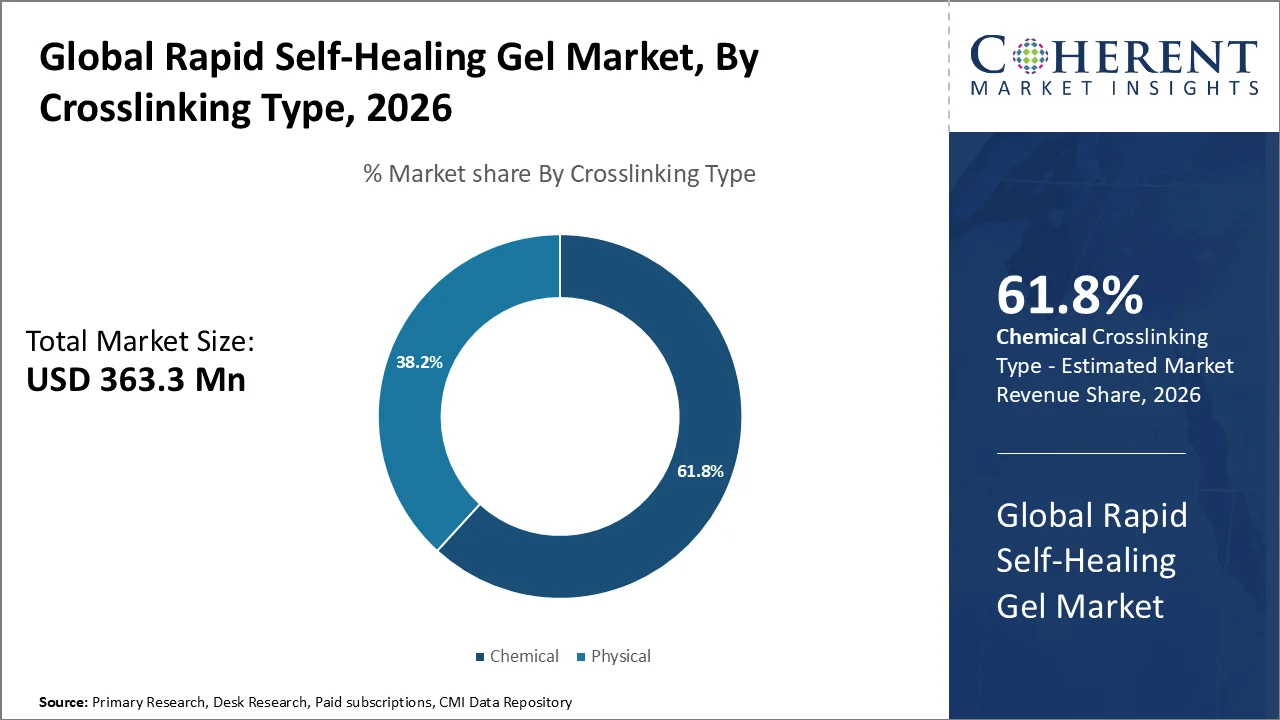
Why is the Chemical Crosslinking Segment Acquiring the Largest Share?
On the basis of crosslinking type, the chemical segment is projected to account for the largest Rapid Self-Healing Gel Market share of 61.8% in 2026. The segment's growth is driven by its superior mechanical strength, enhanced structural stability, long-term durability, and excellent performance in wound healing, tissue engineering, and controlled drug delivery applications. Chemically crosslinked self-healing gels offer better resistance to degradation and improved therapeutic efficacy, making them the preferred choice for advanced biomedical applications.
According to the U.S. Food and Drug Administration (FDA), the Center for Devices and Radiological Health (CDRH) cleared 124 novel medical devices during FY 2024, many of which utilize advanced biomaterials, hydrogels, tissue adhesives, and regenerative technologies, reflecting the increasing commercialization of high-performance biomaterial platforms.
In March 2025, Researchers from Aalto University and University of Bayreuth introduced a new chemically polymerized self-healing hydrogel featuring a nanoconfined polymer network with exceptional mechanical strength and autonomous self-repair.
Why does the Wound Healing Segment Hold the Largest Market Share?
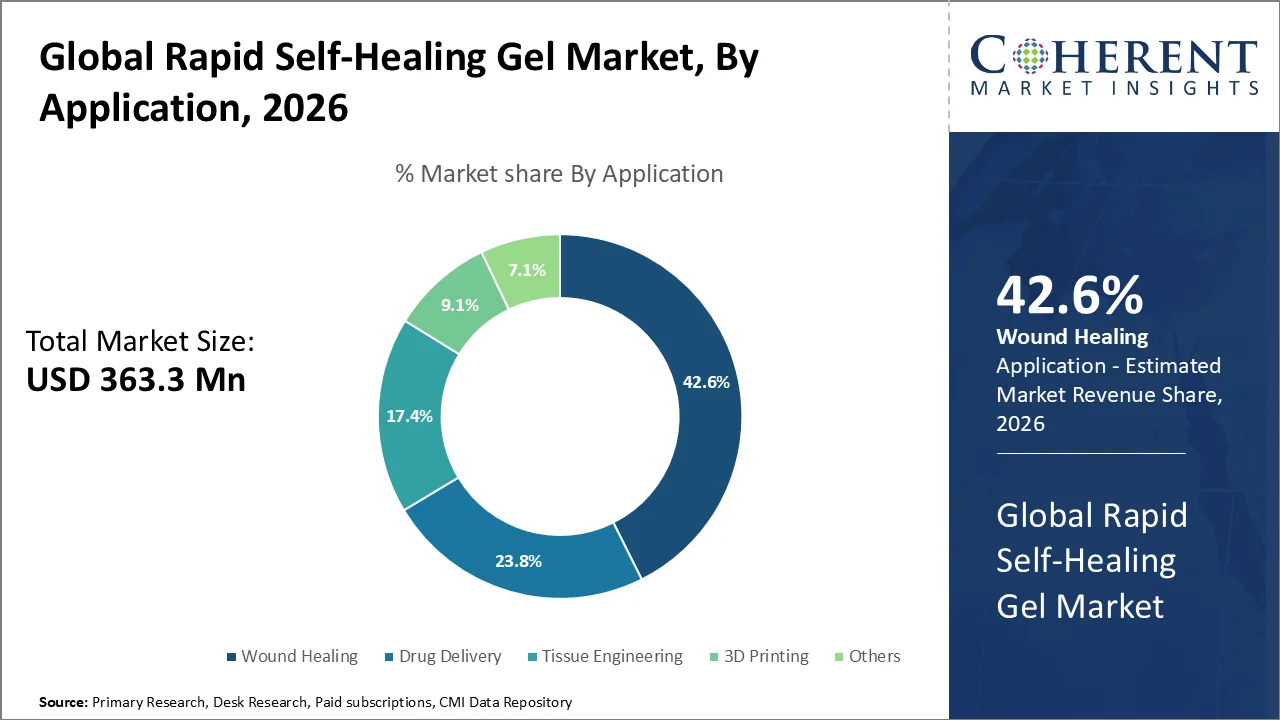
By application, the wound healing segment is expected to hold a share of 42.6% in the Rapid Self-Healing Gel Market by 2026. The expansion of the segment is attributed to the increasing prevalence of chronic wounds, diabetic foot ulcers, burns, and pressure ulcers, and increasing acceptance of advanced biomaterials that promotes faster tissue regeneration, reduces the risk of infection, and enhance healing results.
According to the World Health Organization (WHO), burns are responsible for more than 180,000 fatalities worldwide each year, and millions more require long-term medical treatment and rehabilitation, which highlights the increasing need for sophisticated wound care materials such as self-healing gels.
In May 2026, Smith+Nephew announced the launch of ALLEVYN COMPLETE CARE Foam Dressing and the RENASYS EDGE Negative Pressure Wound Therapy (tNPWT) System at the European Wound Management Association (EWMA) 2026 conference.
Rapid Self-Healing Gel Market Trends
- The market growth is expected to be driven by the increasing adoption of self-healing hydrogels in advanced wound care due to their capacity to provide a moist healing environment, promote tissue regeneration, enable controlled drug release, and reduce the frequency of dressing changes for chronic wounds, burns, and diabetic foot ulcers. The International Diabetes Federation (IDF) Diabetes Atlas 2025 states that there are over 589 million persons worldwide with diabetes, leading to a much-increased need for enhanced wound-healing materials.
- The increasing development of self-healing hydrogel-based wearable sensors is demanding for multifunctional polymer networks with stretchability, conductivity, durability and autonomous repair. A 2026 systematic review in Discover Polymers analyzed 19 recent studies, finding that new self-healing wearable materials can restore more than 80% of their functionality in 10 seconds under ambient conditions. Several of the hydrogel composites showed close to 100% self-healing efficiency.
- The fast growth of hybrid hydrogel technologies is fueling innovation in pressure sensing, strain sensing, temperature monitoring, wound management, and flexible electronics. A 2026 review in Small (Wiley) states that next-generation hybrid hydrogels with better self-healing, conductivity, stretchability, and multifunctionality for biomedical applications are enabled by reversible covalent, irreversible covalent, and non-covalent crosslinking methods.
Regional Insights
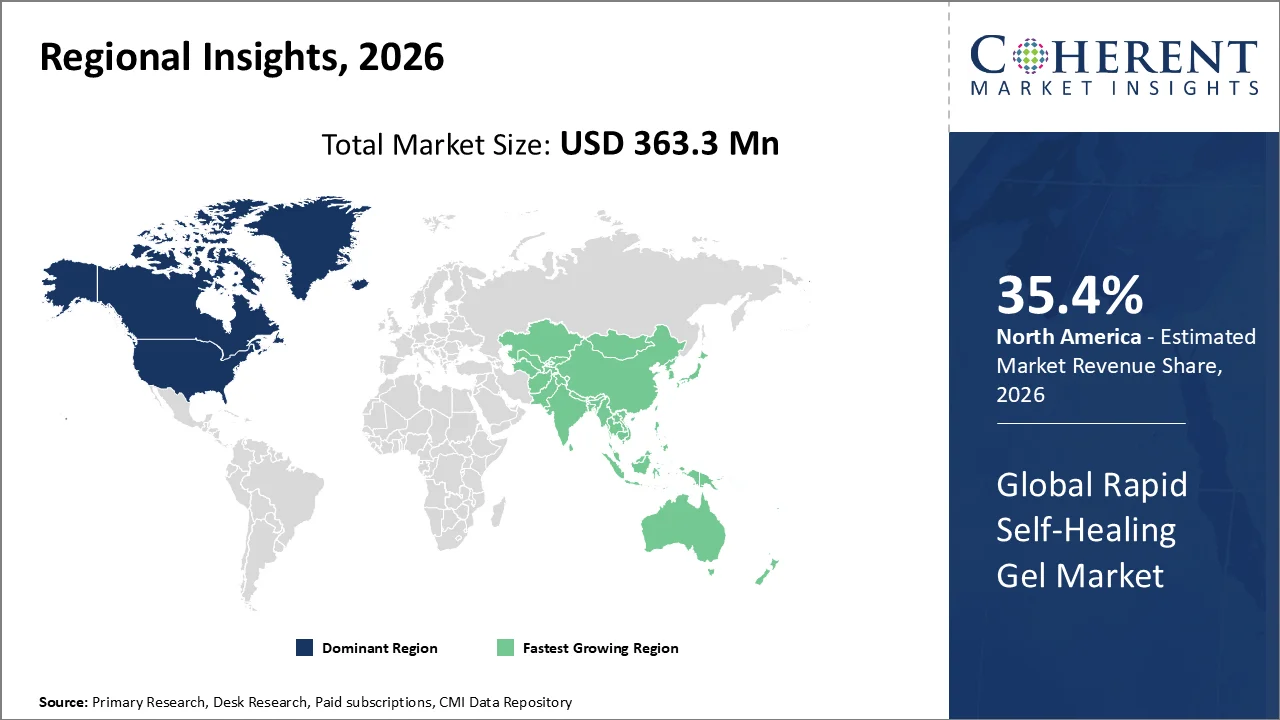
North America Dominates Owing to Strong Biomedical Innovation and Advanced Wound Care Infrastructure
North America is predicted to have 35.4% of the Rapid Self-Healing Gel Market by 2026. The region’s rise is credited to the presence of a strong biomedical research environment, improved healthcare infrastructure, growing commercialization of regenerative biomaterials, and growing use of innovative wound care technology. Strong collaborations among biotech businesses, academia, and healthcare organizations continue to advance the clinical translation of self-healing hydrogels for wound healing, tissue engineering, and drug delivery applications.
According to the U.S. National Institute of Dental and Craniofacial Research (NIDCR) dedicated over USD 73 million to regenerative medicine research in FY2024, including the development of smart biomaterials, tissue engineering, wound healing and translational regenerative therapies.
Asia-Pacific is Expected to Register the Fastest Growth Due to Expanding Regenerative Medicine Research and Healthcare Investments
Asia Pacific is predicted to show the highest growth rate in the Rapid Self-Healing Gel Market during the forecast period. The growing healthcare expenditure, increasing prevalence of diabetes and chronic wounds, increasing investments in regenerative medicine, and increasing research activities in biomaterials, tissue engineering, and hydrogel technologies in China, Japan, South Korea, and India are the factors driving the growth of the region.
According to the Japan Agency for Medical Research and Development (AMED), the FY2025 budget will still fund specialized programs for Regenerative Medicine and Cell and Gene Therapies. These will foster research in various fields of study from basic science to clinical research in the area of biomaterials, cell therapies, and tissue engineering technologies.
Rising Regenerative Medicine Research and Advanced Wound Care Innovation are Accelerating the Rapid Self-Healing Gel Market in the United States
The U.S. Rapid Self-Healing Gel Market is witnessing significant expansion due to heavy investment in regenerative medicine, advanced biomaterials, tissue engineering, and chronic wound management. Injectable hydrogels, smart biomaterials and sophisticated wound-healing technologies are being developed and commercialized as biotech firms, academia research institutions and healthcare organizations forge growing partnerships.
According to the U.S. Food and Drug Administration (FDA) has reported that the number of requests for Regenerative Medicine Advanced Therapy (RMAT) designation has increased to 91 requests in FY2025 from 59 in FY2024, reflecting a rapidly growing clinical development activity in the field of regenerative medicine and advanced therapeutic technologies.
In November 2025, researchers at Texas A&M University created an injectable self-healing hydrogel that employed dynamic covalent bonding to allow continuous therapeutic protein administration while keeping the ability to rapidly self-heal from mechanical damage.
China Rapid Self-Healing Gel Market Trends
The China Rapid Self-Healing Gel Market is growing at a fast rate because to the high government funding for biomaterials, regenerative medicine, biotechnology, and high-performance medical devices. The increasing investments in biomedical research, growing prevalence of chronic diseases and increasing demand for enhanced wound care products are the key factors driving the development of hydrogel-based regeneration therapies. The country’s vibrant academic research environment and commercialization efforts are also driving innovation in self-healing biomaterials.
According to China’s Ministry of Science and Technology (MOST) continues to highlight biotechnology, regenerative medicine, biomaterials, and high-end medical devices as key areas in the National Key R&D Program under the 14th Five-Year Plan (2021–2025) to facilitate the translation of advanced hydrogel technologies to clinical applications.
Who are the Major Companies in Rapid Self-Healing Gel Industry
Some of the major key players in Rapid Self-Healing Gel Market are Cardinal Health, Katecho Inc., Scapa Healthcare, R&D Medical Products, Inc., Advanced Medical Solutions Group PLC, Axelgaard, Hydromer Inc., Alliqua Biomedical, Contura International, and Cytogel Pharma.
Key News
- In May 2026, Advanced Medical Solutions Group PLC announced continued expansion of its wound closure and tissue repair portfolio, highlighting ongoing commercial progress for its LiquiBand topical skin adhesives and Seal-G surgical sealants.
- In May 2026, Convatec announced that it will showcase its strongest-ever Advanced Wound Care innovation pipeline at the European Wound Management Association (EWMA) 2026.
Market Report Scope
Rapid Self-Healing Gel Market Report Coverage
| Report Coverage | Details | ||
|---|---|---|---|
| Base Year: | 2025 | Market Size in 2026: | USD 363.3 Mn |
| Historical Data for: | 2020 To 2024 | Forecast Period: | 2026 To 2033 |
| Forecast Period 2026 to 2033 CAGR: | 8.2% | 2033 Value Projection: | USD 630.6 Mn |
| Geographies covered: |
| ||
| Segments covered: |
| ||
| Companies covered: | Cardinal Health, Katecho Inc., Scapa Healthcare, R&D Medical Products, Inc., Advanced Medical Solutions Group PLC, Axelgaard, Hydromer Inc., Alliqua Biomedical, Contura International, and Cytogel Pharma | ||
| Growth Drivers: |
| ||
| Restraints & Challenges: |
| ||
Analyst Opinion
- The Rapid Self-Healing Gel Market is likely to see increasing commercialization as smart hydrogels move from lab research to clinical applications in wound healing, regenerative medicine and drug delivery. The National Institute of Biomedical Imaging and Bioengineering says its Tissue Engineering and Regenerative Medicine programs continue to support translational research in smart biomaterials, injectable hydrogels and tissue-engineered scaffolds, speeding the development of next generation therapeutic materials.
- Enhanced public and private sector investments are leading to an improved ecosystem for advanced hydrogel technologies that work as delivery matrices and regenerative scaffolds. The cell and gene therapy sector attracted global financing of about USD15.2 billion in 2025, which underscores sustained investor confidence in regenerative medicine platforms increasingly relying on advanced biomaterials, said the Alliance for Regenerative Medicine.
- Continued investment in biomaterials research and commercialization will broaden the clinical application of self-healing gels in wound healing, tissue engineering and localized drug delivery. Increasing federal support for commercialization of next-generation hydrogel technologies National Science Foundation awards 2025 SBIR Phase I funding for development of bioactive hydrogel dressings for burn wound treatment and hemostatic tough adhesive hydrogels for advanced biosurgery.
Speak to the analyst
Want personalized insights?
Take the findings above to one of our principal consultants, or have the report rebuilt around the segments, geographies and competitors you actually track.
Market Segmentation
- By Crosslinking Type (Revenue, USD Mn, 2021-2033)
- Chemical
- Physical
- By Application (Revenue, USD Mn, 2021-2033)
- Wound Healing
- Drug Delivery
- Tissue Engineering
- 3D Printing
- Others
- By Region (Revenue, USD Mn, 2021-2033)
- North America
- U.S.
- Canada
- Latin America
- Brazil
- Mexico
- Argentina
- Rest of Latin America
- Europe
- Germany
- U.K.
- France
- Italy
- Spain
- Russia
- Rest of Europe
- Asia Pacific
- China
- India
- Japan
- Australia
- South Korea
- ASEAN
- Rest of Asia Pacific
- Middle East
- GCC
- Israel
- Rest of Middle East
- Africa
- South Africa
- Central Africa
- North Africa
- North America
Sources
Primary Research Interviews
Regenerative medicine researchers
- Biomaterials scientists
- Wound care specialists
- Tissue engineering researchers
- Plastic and reconstructive surgeons
- Biomedical engineers
- Hospital wound care managers
- Medical device manufacturers
- Pharmaceutical and drug delivery experts
- Key opinion leaders (KOLs) in regenerative medicine
- Hydrogel technology developers
Databases
- World Health Organization (WHO)
- U.S. National Institutes of Health (NIH)
- U.S. Food and Drug Administration (FDA)
- Centers for Medicare & Medicaid Services (CMS)
- National Science Foundation (NSF)
- International Diabetes Federation (IDF)
- Japan Agency for Medical Research and Development (AMED)
Magazines
- Medical Design & Outsourcing
- MedTech Dive
- Drug Discovery & Development
- Biomedical Engineering Today
- Advanced Science News
Journals
- Biomaterials
- Biomaterials Science
- International Journal of Biological Macromolecules
- Advanced Functional Materials
- Acta Biomaterialia
- Nature Reviews Materials
- Small
- Nanomedicine
Newspapers:
- The New York Times
- The Wall Street Journal
- Financial Times
- The Guardian
Associations
- Wound Healing Society
- European Wound Management Association
- Alliance for Regenerative Medicine
- Tissue Engineering and Regenerative Medicine International Society
- International Society for Biofabrication
Public Domain Sources
- Company annual reports and investor presentations
- Government health ministry publications
- FDA medical device databases
- NIH and NCBI publications
- Clinical trial registries such as ClinicalTrials.gov
- University research publications and technology transfer offices
- Patent databases (USPTO, WIPO, EPO)
Proprietary Elements
- CMI Data Analytics Tool
- Proprietary CMI existing repository of information for the last 10 years
Get access to 250+ pages report
Every segment, forecast, competitor profile and data table behind the analysis above — available for instant download.
- ESOMAR Member
- ISO 9001:2015 Certified
- D-U-N-S Registered
- GDPR & CCPA Compliant
Missing comfort of reading report in your local language? Find your preferred language:
Transform your Strategy with Exclusive Trending Reports
Frequently Asked Questions
The Rapid Self-Healing Gel Market is expected to reach USD 630.6 Mn by 2033.
Major players operating in the global Rapid Self-Healing Gel Market include Cardinal Health, Katecho Inc., Scapa Healthcare, R&D Medical Products, Inc., Advanced Medical Solutions Group PLC, Axelgaard, Hydromer Inc., Alliqua Biomedical, Contura International, and Cytogel Pharma.
The high development and manufacturing costs, stringent regulatory approval requirements, limited long-term clinical validation, and scalability challenges in commercial production are the major factors restraining market growth.
The increasing demand for advanced wound care solutions, rising prevalence of chronic wounds and burn injuries, growing adoption of regenerative medicine and tissue engineering, and continuous advancements in self-healing hydrogel technologies are driving the Rapid Self-Healing Gel Market.
The Rapid Self-Healing Gel Market is anticipated to grow at a CAGR of 8.2% between 2026 and 2033.
North America is expected to account for the largest market share in the global Rapid Self-Healing Gel Market during the forecast period.
Self-healing gels are increasingly adopted because they offer enhanced mechanical stability, autonomous repair, controlled drug release, excellent biocompatibility, and improved tissue regeneration, making them suitable for wound healing, tissue engineering, and regenerative medicine.