

U.S. Degenerative Disc Disease Treatment Market Size and Share Analysis – 2026 To 2033
The U.S. Degenerative Disc Disease Treatment Market is anticipated to grow at a CAGR of 5.9% with an estimated 3.52 Mn in 2026 and is expected to reach approximately 5.26 Mn by 2033.
The market growth is mainly attributed to the increased incidence of spinal disorders associated with aging, the increase in the geriatric population, increased instances of obesity, the advancement of minimally invasive spine surgery, increased use of regenerative medicine, and better availability of diagnostic imaging technology. As stated by the U.S. Census Bureau, all baby boomers will be 65 years or older by 2030, which implies that one out of five residents in the United States will be of retirement age, thus causing an increase in spinal disorders associated with aging.
Key Takeaways
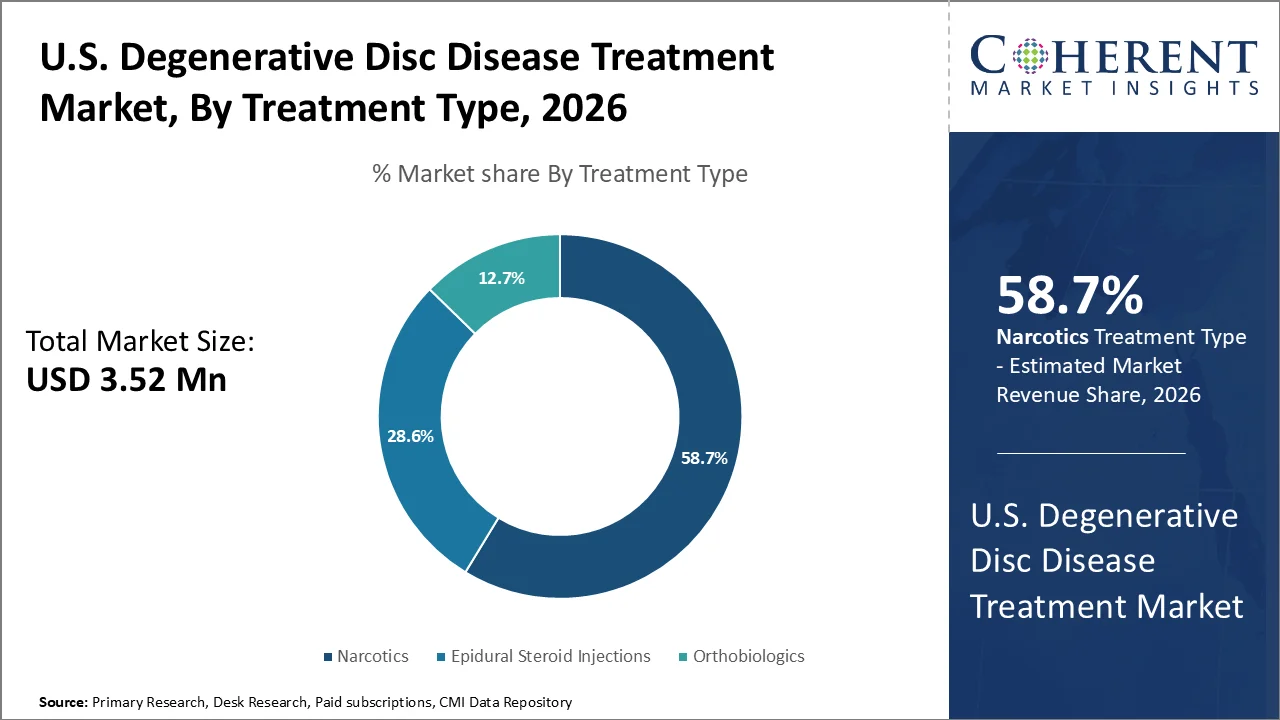
- The narcotics segment is likely to dominate the U.S. Degenerative Disc Disease (DDD) Treatment Market, holding a market share of about 58.7% in 2026. The growth of this segment is attributed to the high prevalence of opioid pain medications used for the treatment of moderate-to-severe back pain, especially in people who do not respond well to treatments other than opioids. As per the data provided by the Centers for Disease Control and Prevention, an estimate of 8.6 million people in the USA used prescription opioids improperly in 2023.
- Mid-stage degenerative disc disease segment is anticipated to dominate the industry with 46.3% share of the market in 2026. This segment is aided by the presence of numerous patients who require conservative care for prolonged periods via medicines, epidural steroid injections, and physiotherapy before undergoing surgery. WHO reports that about 619 million people suffered from low back pain and is expected to increase to 843 million in 2050, leading to increased treatment of patients in the middle stage of degenerative spine diseases.
- The hospital pharmacies segment is expected to gain dominance in the distribution channel with 52.8% market share by 2026. Growth in this segment is attributed to the rising trend of inpatient management of spinal conditions, administration of injectable pain drugs, and dispensation after spine surgery. The American Hospital Association reported that there were more than 6,100 hospitals offering inpatient and outpatient services in the U.S. by 2024.
Market Drivers
Rising Burden of Aging Population Driving Market Expansion
The U.S. market for the treatment of degenerative disc disease (DDD) will see high growth due to aging of the population because such diseases depend heavily on age. An increase in the number of seniors leads to an increase in the target patient population for treatment.
According to the Centers for Disease Control and Prevention, the older population represents an overly large proportion of healthcare utilization for spine disorders. This includes out-patient visits, imaging and surgeries for spine problems.
In December 2025, Companion Spine LLC completed the acquired Paradigm Spine GmbH (Coflex and CoFix systems), greatly enhancing its line of minimally invasive spine stabilization technologies for the treatment of lumbar spinal stenosis and degenerative disc disease – two most common age-related spine diseases in America and worldwide.
Rising Obesity Prevalence Accelerating Degenerative Spine Disorders
Obesity is an important mechanical risk factor and an inflammatory agent associated with degenerative disc disease, where it adds mechanical burden on the spine and hastens the process of disc degeneration especially in the lumbar spine area.
According to a 2026 peer-reviewed study, found in the International Journal of Obesity, explains how obesity leads to the breakdown of intervertebral discs through chronic low-grade inflammation and high levels of pro-inflammatory cytokines such as TNF-α and IL-6 coupled with increased mechanical stress on the spine.
In October 2025, researchers from Mass General Brigham have published their research in the Journal of the American Medical Association Network Open on how many adults in the United States met the new criteria of obesity, which is 68.6%, while using the old BMI criteria only 42.9% met the criteria.
Current Events and Their Impact on the U.S. Degenerative Disc Disease Treatment Market
Current Event | Description and its Impact |
CMS Launched Medicare GLP-1 Bridge for Obesity Treatment (July 2026) |
|
CDC Reports High Adult Obesity Burden Across All U.S. States (December 2025) |
|
- Current Industry Events of 2026
- Market Size Estimation
- Regional Breakdown
- Competitive Landscape
- Customer Intelligence
- Segmental Analysis
- Pricing Analysis
- Key Market Drivers, Challenges & Future Trends
- Customized Insights Section
Segmental Insights
Why are Narcotics Acquiring the Largest Share?
On the basis of treatment type, the narcotics segment is projected to account for the largest U.S. Degenerative Disc Disease Treatment Market share of 58.7% in 2026. The segment’s growth is owing to the continued use of opioid/narcotic analgesics for moderate-to-severe chronic back pain, acute pain flare-ups, post-surgical pain, and patients who do not achieve adequate relief from first-line therapies.
According to a Frontiers in Pain Research study using MEPS data found that 1.91 million U.S. adults with spine-related diagnoses received pain medications annually, and 63.92% received opioid prescriptions. The same study found that patients with high pain interference had 2.92 times higher odds of opioid use, showing why narcotics remain important in severe spine-related pain treatment
In February 2026, Hikma Pharmaceuticals launched the authorized generic of Nucynta, tapentadol immediate-release, in the U.S. Hikma noted this launch in its March 2026 Nucynta ER announcement. Immediate-release opioid options are relevant for acute DDD pain flare-ups, breakthrough pain, and short-term pain control when non-opioid treatments are insufficient.
Why is Mid-Stage Degenerative Disc Disease Acquiring the Largest Share?
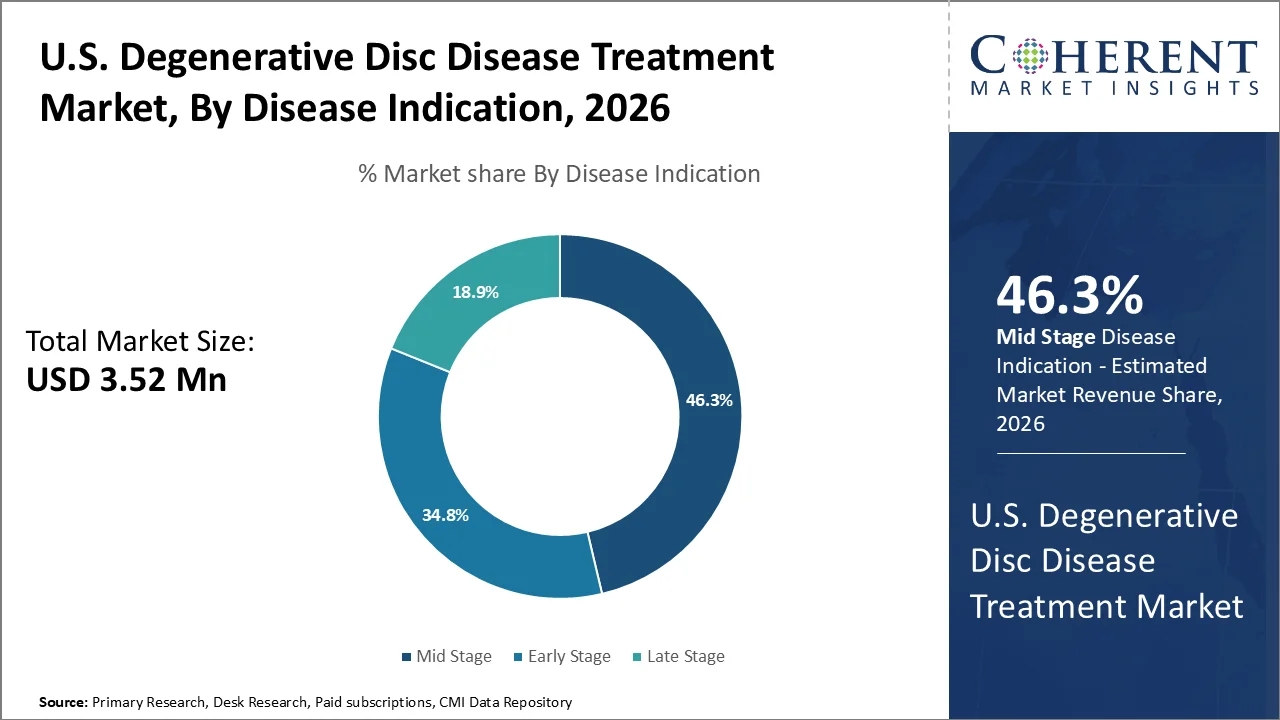
On the basis of disease stage, the mid-stage degenerative disc disease segment is expected to lead the market with an estimated 46.3% share in 2026. The segment’s growth is owing to higher diagnosis rates among patients with recurring back pain, disc bulging, reduced disc hydration, nerve irritation, and functional discomfort before the disease progresses to severe structural collapse or surgical dependency.
According to a 2025 lumbar disc degeneration study reported that Grade 3 degeneration predominated across all lumbar levels, indicating that moderate disc degeneration was the most common severity observed.
In July 2026, Angitia Biopharmaceuticals ended its Phase 3 AGA111 program for degenerative disc disease patients undergoing lumbar interbody fusion. AGA111 was a recombinant human BMP-6 candidate intended to improve spinal fusion outcomes, but Angitia terminated the late-stage study and shifted focus to earlier-stage bone-disease assets.
Why Do Hospital Pharmacies Hold the Largest Market Share?
On the basis of distribution channel, the hospital pharmacies segment is projected to account for the largest U.S. Degenerative Disc Disease Treatment Market share of 52.8% in 2026. The segment’s growth is owing to the high volume of spine-related care delivered through hospitals, including pain management, imaging-based diagnosis, interventional procedures, inpatient spine surgeries, post-operative medication dispensing, and controlled-substance monitoring.
According to the ASHP also reported that U.S. prescription drug spending is expected to cross USD 1 trillion in 2026, with hospital drug spending projected to rise 4–6%, supporting the continued role of hospital pharmacies in high-value and procedure-linked medication distribution.
U.S. Degenerative Disc Disease Treatment Market Trends
- Growing use of biologics in spine fusion procedures is strengthening surgical treatment outcomes for advanced DDD patients. In February 2026, Medtronic received FDA approval for INFUSE™ Bone Graft in one- and two-level TLIF spine procedures from L2-S1. Medtronic stated that INFUSE™ became the only PMA-approved growth factor bone graft product approved for spine fusion, including two-level TLIF constructs.
- Increasing shift toward outpatient and ASC-based spine care is changing treatment delivery for degenerative disc disease. CMS announced the final OPPS and ASC payment updates for CY 2026, impacting about 4,000 hospitals and 6,000 ASCs, with a payment update of 2.6% for eligible hospitals and ASCs. The announcement facilitates the shift of appropriate pain management and spine surgeries to less expensive outpatient facilities.
- Cervical disc replacement innovation is expanding the DDD treatment landscape as companies focus on motion preservation and spinal alignment. In February 2026, Synergy Spine Solutions received FDA approval for the Synergy Disc, an artificial cervical disc designed to treat cervical DDD while preserving motion and supporting sagittal alignment. The company planned U.S. commercialization in spring 2026
Who are the Major Companies in U.S. Degenerative Disc Disease Treatment Industry
Some of the major key players in U.S. Degenerative Disc Disease Treatment Market are AnGes Inc., Ankasa Regenerative Therapeutics, Inc., BIOPHARM GMBH, BioRestorative Therapies Inc., Biosplice Therapeutics, Inc., Bone Therapeutics SA, Cerapedics Inc, CO.DON, Creative Medical Technology Holdings, Inc., DiscGenics Inc., Eli Lilly and Company, Ferring Pharmaceuticals, FibroGenesis, Geistlich Pharma AG, Harbor View Medical Services, PC, Intralink-Spine, Inc., Isto Biologics, Johnson & Johnson, Kolon TissueGene Inc., Kunovus, Lineage Cell Therapeutics, Inc., Mesoblast, NC Biomatrix BV, Notogen Inc., Pfizer, Inc., R3 Stem Cell, Smith & Nephew, Spine BioPharma, Stayble Therapeutics AB, US Stem Cell Inc., and VIVEX Biologics, Inc.
Key News
- In January 2026, Cerapedics received FDA approval for expanded indications for PearlMatrix P-15 Peptide Enhanced Bone Graft, allowing use in all major lumbar interbody fusion approaches for adult DDD patients after at least six months of nonoperative care.
- In May 2026, DePuy Synthes entered an exclusive distribution agreement with CGBIO for NOVOSIS, an advanced bone-graft substitute, covering the U.S., Canada, and Australia. The company also noted that a U.S. IDE spine study is approved and actively enrolling.
Market Report Scope
U.S. Degenerative Disc Disease Treatment Market Report Coverage
| Report Coverage | Details | ||
|---|---|---|---|
| Base Year: | 2025 | Market Size in 2026: | USD 3.52 Mn |
| Historical Data for: | 2020 To 2024 | Forecast Period: | 2026 To 2033 |
| Forecast Period 2026 to 2033 CAGR: | 5.9% | 2033 Value Projection: | USD 5.26 Mn |
| Segments covered: |
| ||
| Companies covered: | AnGes Inc., Ankasa Regenerative Therapeutics, Inc., BIOPHARM GMBH, BioRestorative Therapies Inc., Biosplice Therapeutics, Inc., Bone Therapeutics SA, Cerapedics Inc, CO.DON, Creative Medical Technology Holdings, Inc., DiscGenics Inc., Eli Lilly and Company, Ferring Pharmaceuticals, FibroGenesis, Geistlich Pharma AG, Harbor View Medical Services, PC, Intralink-Spine, Inc., Isto Biologics, Johnson & Johnson, Kolon TissueGene Inc., Kunovus, Lineage Cell Therapeutics, Inc., Mesoblast, NC Biomatrix BV, Notogen Inc., Pfizer, Inc., R3 Stem Cell, Smith & Nephew, Spine BioPharma, Stayble Therapeutics AB, US Stem Cell Inc., and VIVEX Biologics, Inc. | ||
| Growth Drivers: |
| ||
| Restraints & Challenges: |
| ||
Analyst Opinion
- The U.S. Degenerative Disc Disease Treatment Market is strongly supported by the aging population, as disc degeneration rises with age and older adults require more imaging, pain management, injections, fusion, and rehabilitation services. According to the U.S. Census Bureau, the U.S. population aged 65 years and above reached 61.2 million in 2024, increasing 3.1% from 2023 to 2024, which indicates a growing patient pool for age-related spine disorders.
- Obesity is becoming a major treatment-volume driver because excess body weight increases lumbar mechanical stress and worsens surgical risk in DDD patients. CDC data released in December 2025 showed that in 2024, every U.S. state and territory had adult obesity prevalence of 25% or higher, with the Midwest at 35.9% and the South at 34.5%. This supports higher demand for conservative therapy, pain medicines, interventional care, and preoperative optimization before spine surgery.
- The market is shifting toward biologic and regenerative treatment pathways, especially for mild-to-moderate and mid-stage lumbar DDD patients who want to avoid fusion. In January 2026, DiscGenics treated the first patient in its Phase 3 trial of IDCT/rebonuputemcel for single-level, symptomatic mild-to-moderate lumbar DDD, showing that injectable cell therapies are moving closer to late-stage clinical validation in the U.S.
Speak to the analyst
Want personalized insights?
Take the findings above to one of our principal consultants, or have the report rebuilt around the segments, geographies and competitors you actually track.
Market Segmentation
- By Treatment Type (Revenue, USD Mn, 2021-2033)
- Epidural Steroid Injections
- Narcotics
- Morphine
- Methadone Hydrochloride
- Codeine
- Hydrocodone
- Tramodol
- Oxycodone
- Others
- Orthobiologics
- Phase I
- Phase II
- Phase III
- By Disease Indication (Revenue, USD Mn, 2021-2033)
- Early Stage
- Mid Stage
- Late Stage
- By Distribution Channel (Revenue, USD Mn, 2021-2033)
- Hospital Pharmacies
- Retail Pharmacies
- Online Pharmacies
Sources
Primary Research Interviews
- Spine surgeons and orthopedic specialists
- Neurosurgeons treating degenerative spine disorders
- Pain management physicians and anesthesiologists
- Hospital pharmacists and pharmacy procurement heads
- Rehabilitation and physiotherapy specialists
- Regenerative medicine and orthobiologics researchers
- Executives from spine implant and biologics companies
- Clinical trial investigators working on DDD therapies
- Key opinion leaders (KOLs) in spine care and interventional pain management
Databases
- U.S. Food and Drug Administration (FDA)
- Centers for Disease Control and Prevention (CDC)
- Centers for Medicare & Medicaid Services (CMS)
- National Institutes of Health (NIH)
- U.S. Census Bureau
- American Hospital Association (AHA)
- ClinicalTrials.gov
- Agency for Healthcare Research and Quality (AHRQ)
Magazines
- SpineUniverse
- Becker’s Spine Review
- Orthopedics This Week
- Medical Device Network
- MedTech Dive
- Healthcare Dive
Journals
- The Spine Journal
- Spine
- European Spine Journal
- Journal of Neurosurgery: Spine
- Journal of Orthopaedic Research
- Pain Medicine
- Frontiers in Pain Research
- Journal of Bone and Joint Surgery
Newspapers
- The New York Times
- The Wall Street Journal
- Reuters
- Bloomberg
- Financial Times
- USA Today
Associations
- North American Spine Society (NASS)
- American Academy of Orthopaedic Surgeons (AAOS)
- American Association of Neurological Surgeons (AANS)
- American Society of Interventional Pain Physicians (ASIPP)
- American Society of Health-System Pharmacists (ASHP)
- International Society for the Advancement of Spine Surgery (ISASS)
- American Physical Therapy Association (APTA)
Public Domain Sources
- Company Annual Reports and Investor Presentations
- FDA Approval Databases and PMA/510(k) Records
- Clinical Trial Registries
- Government Healthcare and Medicare Payment Publications
- Hospital and ASC Procedure Statistics
- University Research Publications
- Patent Databases such as USPTO, WIPO, and Google Patents
- Publicly Available Company Press Releases
Proprietary Elements
- CMI Data Analytics Tool
- Proprietary CMI Existing Repository of Information for the Last 10 Years
Get access to 250+ pages report
Every segment, forecast, competitor profile and data table behind the analysis above — available for instant download.
- ESOMAR Member
- ISO 9001:2015 Certified
- D-U-N-S Registered
- GDPR & CCPA Compliant
Missing comfort of reading report in your local language? Find your preferred language:
Transform your Strategy with Exclusive Trending Reports
Frequently Asked Questions
The U.S. Degenerative Disc Disease Treatment Market is expected to reach USD 5.26 Mn by 2033, from USD 3.52 Mn in 2026.
The market is anticipated to grow at a CAGR of 5.9% between 2026 and 2033.
Major players operating in the market include AnGes Inc., Ankasa Regenerative Therapeutics, Inc., BIOPHARM GMBH, BioRestorative Therapies Inc., Biosplice Therapeutics, Inc., Bone Therapeutics SA, Cerapedics Inc, CO.DON, Creative Medical Technology Holdings, Inc., DiscGenics Inc., Eli Lilly and Company, Ferring Pharmaceuticals, FibroGenesis, Geistlich Pharma AG, Harbor View Medical Services, PC, Intralink-Spine, Inc., Isto Biologics, Johnson & Johnson, Kolon TissueGene Inc., Kunovus, Lineage Cell Therapeutics, Inc., Mesoblast, NC Biomatrix BV, Notogen Inc., Pfizer, Inc., R3 Stem Cell, Smith & Nephew, Spine BioPharma, Stayble Therapeutics AB, US Stem Cell Inc., and VIVEX Biologics, Inc.
The market growth is driven by the rising prevalence of chronic low back pain and spine degeneration, growing aging population, rising obesity burden, increasing adoption of minimally invasive spine procedures, and growing use of regenerative and biologic therapies.
The high cost of advanced spine surgery and regenerative treatments, limited reimbursement for novel biologic and cell-based therapies, opioid prescribing restrictions, and uncertain outcomes of emerging disc regeneration therapies are key factors hampering market growth.
The narcotics segment is expected to dominate the market with an estimated 58.7% share in 2026, driven by its use in moderate-to-severe chronic back pain, acute flare-ups, and post-surgical pain management.
The mid-stage degenerative disc disease segment is expected to lead the market with an estimated 46.3% share in 2026, owing to the high number of patients requiring long-term conservative treatment before surgical intervention.