

Degenerative Disc Disease Treatment Market Analysis & Forecast
Degenerative Disc Disease Treatment Market is estimated to be valued at USD 3,183.87 Bn in 2026 and is expected to reach USD 5,971.40 Bn in 2033, exhibiting a compound annual growth rate (CAGR) of 9.4% from 2026 to 2033.
Key Takeaways
- According to Product Type, The Devices Category is anticipated to account for the largest share of 53.0% in the Degenerative Disc Disease Treatment market in 2026.
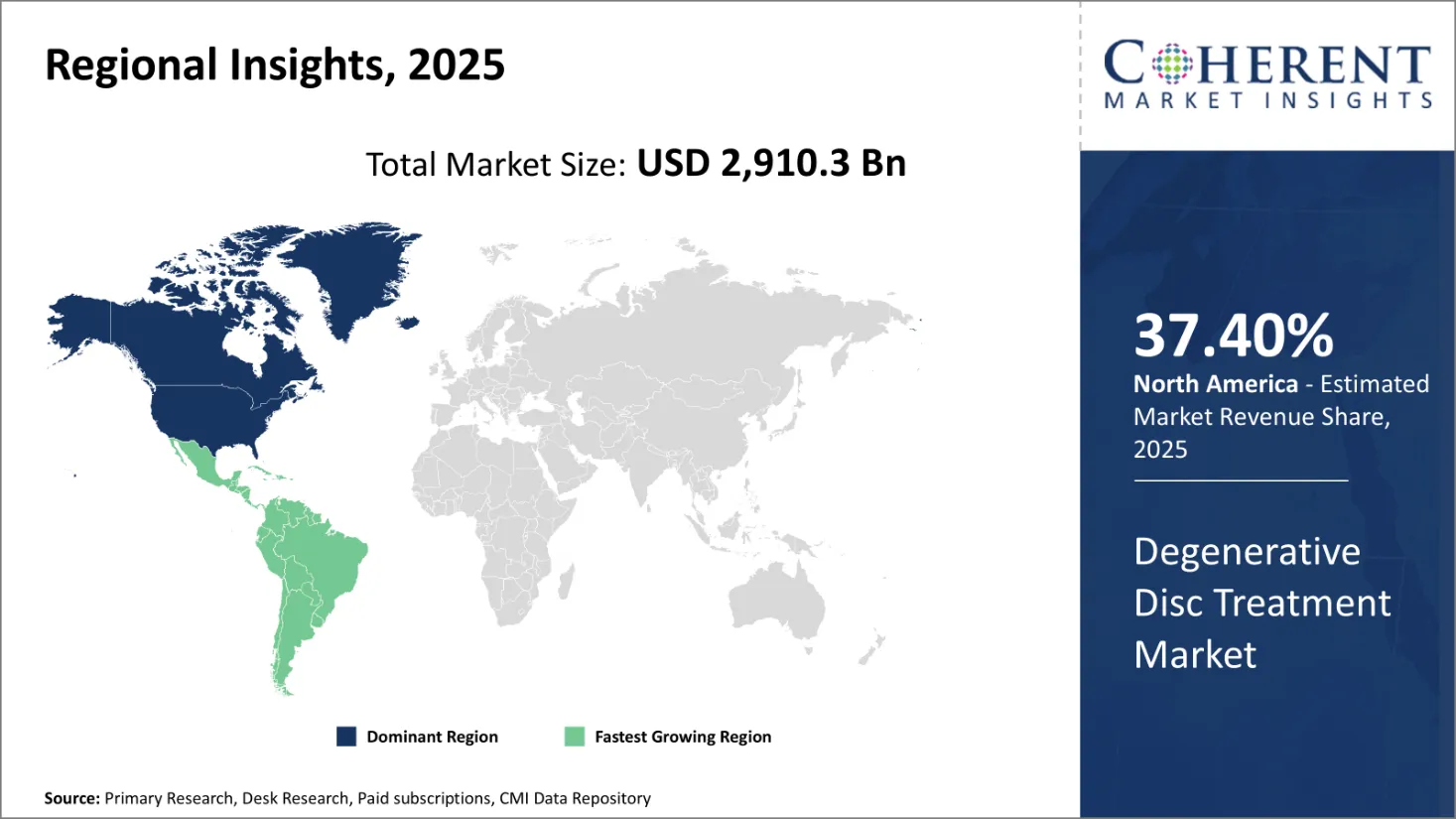
- According to region, North America holds the largest market share of 37.4% for Degenerative Disc Disease Treatment market growth by 2026.
Market Overview
The Degenerative Disc Disease Treatment Market Size has grown steadily as a result of growing customer preferences for convenience foods, higher disposal incomes, and growing demand for packaged and processed goods. The market for treatments for degenerative disc disease (DDD) is expanding rapidly because to improvements in medical technology and the increased incidence of chronic lower back pain, particularly in the elderly population.
For instance, in July 2024, DiscGenics, Inc., announced it has gained acceptance from the U.S. Food and Drug Administration (FDA) for the clinical protocols and Chemistry, Manufacturing, and Controls (CMC) clinical development plan for Phase III clinical program of its allogeneic, injectable disc progenitor cell therapy (IDCT or rebonuputemcel) for painful lumbar degenerative disc disease (DDD), allowing the study to proceed.
Current Events and Its Impact on the Degenerative Disc Disease Treatment Market
Event | Description and Impact |
FDA approval of Injectable Disc Cell Therapy |
|
Adoption of AI and Machine Learning in Automation |
|
Pipeline Analysis
The degenerative disc disease (DDD) treatment market is witnessing significant innovation, with a robust and diverse pipeline comprising biologics, regenerative therapies, and advanced device-based solutions. As of 2024, approximately 79% of pipeline candidates are in clinical development phases namely phase 1, phase 2, and phase 3 indicating a strong focus on bringing new therapies to market.
Notably, more than 15 companies are actively developing over 15 pipeline drugs, including novel cell-based and regenerative medicine approaches. For example, DiscGenics’ Injectable Disc Cell Therapy (IDCT) recently received a Regenerative Medicine Advanced Therapy (RMAT) designation from the U.S. FDA, highlighting the momentum in advanced, cell-based interventions for DDD. These innovations are expected to diversify treatment options and drive market growth in the coming years.
- Current Industry Events of 2026
- Market Size Estimation
- Regional Breakdown
- Competitive Landscape
- Customer Intelligence
- Segmental Analysis
- Pricing Analysis
- Key Market Drivers, Challenges & Future Trends
- Customized Insights Section
Patent Landscape
The patent landscape for degenerative disc disease treatment is highly competitive, reflecting ongoing R&D and technological advancements. Pharmaceutical companies and medical device manufacturers are expanding their portfolios with new drugs, biologics, implants, and devices tailored to various stages and manifestations of DDD.
The field is characterized by patents covering minimally invasive surgical techniques, regenerative therapies, and advanced imaging technologies, which offer companies opportunities for market differentiation and protection of intellectual property. The presence of major players such as Medtronic, Johnson & Johnson, and DiscGenics underscores the strategic importance of patents in securing market position and fostering innovation.
Reimbursement Scenario
- Reimbursement policies play a crucial role in the adoption and accessibility of DDD treatments. In regions like North America, advanced healthcare infrastructure and favorable reimbursement frameworks support the uptake of both conventional and innovative therapies, contributing to the region’s dominant market share.
- The introduction of novel therapies, such as cell-based treatments and minimally invasive procedures, is prompting updates to reimbursement guidelines to accommodate higher costs and demonstrate value through improved patient outcomes.
- As the prevalence of DDD rises, especially among the aging population, payers are increasingly focusing on evidence-based coverage decisions, which can influence the speed and extent of market penetration for new treatments.
Prescribers’ Preference
- Prescribers’ preferences in DDD treatment are shaped by efficacy, safety profiles, and patient-specific factors. Conventional drugs, particularly NSAIDs, remain the first-line therapy due to their established efficacy and widespread use.
- However, there is a growing inclination toward minimally invasive surgical techniques and regenerative medicine, especially for patients unresponsive to conservative management.
- Physicians are also considering patient quality of life, recovery time, and long-term outcomes when recommending treatments. The increasing availability of advanced therapies, such as injectable cell-based products and device-based solutions, is gradually influencing prescriber behavior, with a trend toward integrated, multidisciplinary approaches for optimal patient care.
Segmental Insights
Degenerative Disc Disease Treatment Market Insights, By Product Type
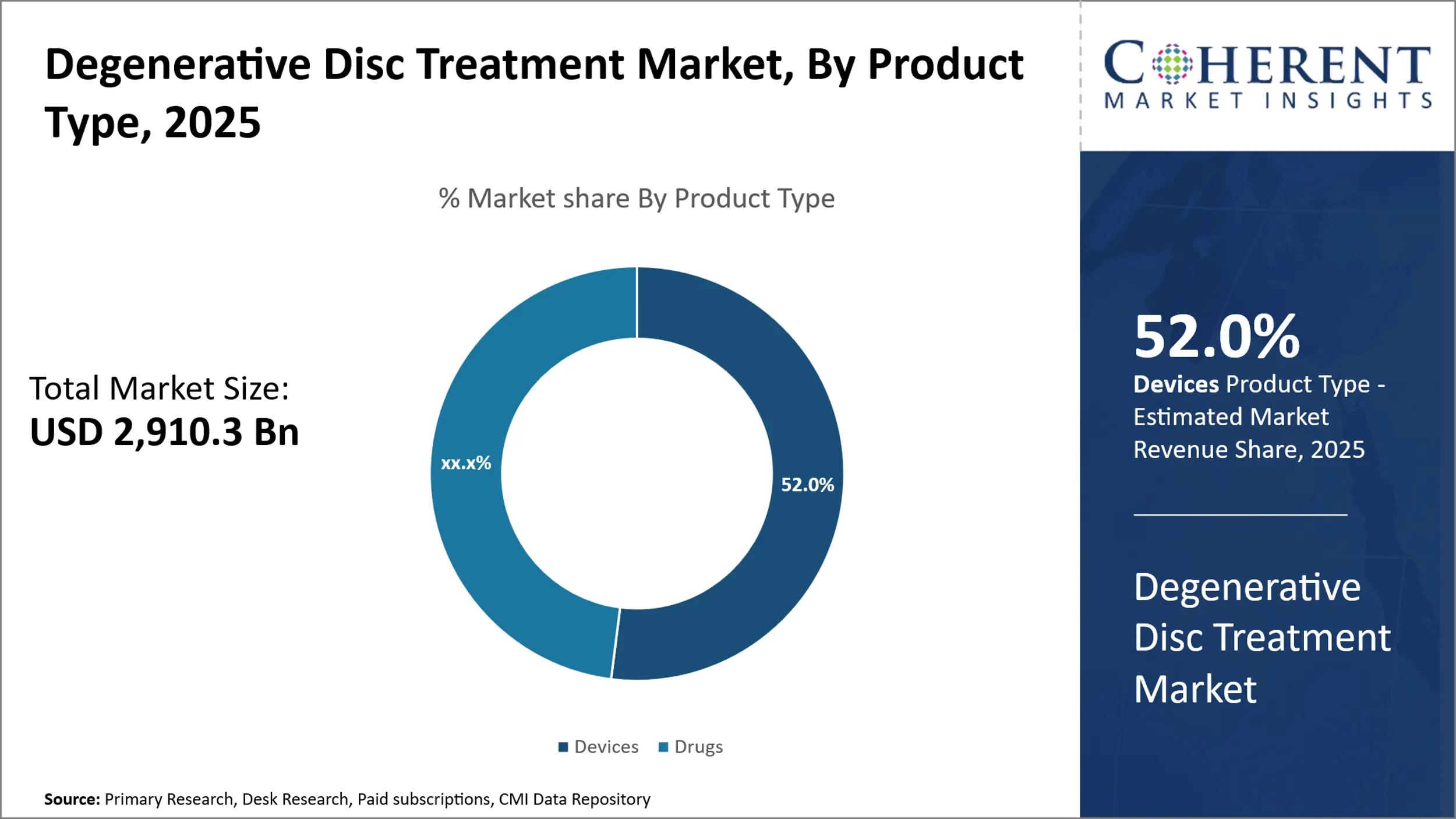
In terms of product type, the Devices (Cervical Spine, Lumbar Spine, Thoracic Spine, Spinal Fusion) segment is expected to contribute largest share of 53.0% for the Degenerative Disc Disease Treatment market trends in 2026. In the market for treating degenerative disc disease (DDD), the devices segment which includes cervical, lumbar, thoracic, and spinal fusion devices holds a leading position.
According to estimations, devices held the greatest revenue share, of the global market. The increasing popularity of minimally invasive surgical procedures, artificial discs, and sophisticated spinal implants all of which are valued for their ability to stabilize the spine, restore disc height, and enhance patient outcomes is fueling this market's expansion.
Degenerative Disc Disease Treatment Market, Insights By Type
In terms of type, the automated segment is expected to contribute largest share of the Degenerative Disc Disease Treatment market trends in 2026, Hospitals are the primary centers for degenerative disc disease procedures, offering comprehensive care through specialized departments in orthopedics, neurology, and spine care, equipped with advanced diagnostic tools and treatment modalities.
The rise in chronic back pain cases and the expanding surgical infrastructure in hospitals, including the adoption of minimally invasive and robotic-assisted surgical technologies, have further strengthened their role in degenerative disc disease treatment. Hospitals provide multidisciplinary teams, enabling personalized treatment plans and coordinated care, which are crucial for managing complex spinal conditions like degenerative disc disease.
Degenerative Disc Disease Treatment Market – Regional Insights
North America Degenerative Disc Disease Treatment Market
North America is also at the forefront of technological advancements, with widespread adoption of minimally invasive surgical techniques, regenerative therapies, and advanced imaging technologies that enhance both diagnosis and treatment outcomes.
Government initiatives, improved healthcare access, and strong support for research and development further fuel market growth in this region. The market is expected to continue its robust expansion, supported by rising demand for innovative therapies and a strong presence of leading medical device and pharmaceutical companies.
Asia Pacific Degenerative Disc Disease Treatment Market
Leading contributors include China, India, Japan, and Australia, which have made large expenditures in healthcare infrastructure and have embraced cutting-edge diagnostic and treatment technology. Additional factors driving market expansion include the introduction of new medical equipment, rising healthcare costs, and the increase of clinical research.
Furthermore, improved access to expert orthopedic and rehabilitation treatments, a move toward patient-centric care, and the incorporation of digital health technologies are all contributing to the improvement of DDD management in the Asia Pacific area.
Degenerative Disc Disease Treatment Market In Europe
The market is characterized by dynamic innovation, as companies leverage technological advancements and data-driven insights to differentiate their products and enhance patient outcomes. There is a notable shift toward minimally invasive surgical techniques and advanced imaging technologies, which are improving diagnostic accuracy and surgical precision. However, high costs associated with treatments such as artificial disc replacement and spinal fusion remain a challenge for broader market adoption.
Degenerative Disc Disease Treatment Market Dominating Countries
U.S Degenerative Disc Disease Treatment Market
A big aging population, a high incidence of persistent lower back pain, and considerable investments in healthcare innovation and infrastructure are the main drivers of this dominance. The U.S. market is distinguished by the significant presence of large pharmaceutical and medical device businesses, as well as the quick acceptance of cutting-edge therapies including artificial discs and spinal fusion devices. However, barriers to wider acceptance still exist due to the high expense of surgical procedures and possible adverse effects of some treatments.
India Degenerative Disc Disease Treatment Market
The market for treating degenerative disc disease in India is developing quickly because to factors like an aging population, growing awareness of spinal illnesses, and rising healthcare costs. Both traditional and cutting-edge therapies are in high demand throughout the nation, with accessibility and price being key factors.
Degenerative Disc Disease Treatment Market In China
China stands out as a major and fast-growing market for DDD treatment, reflecting the country’s large population, rapid urbanization, and increasing prevalence of spinal disorders. The Chinese market emphasizes affordability and accessibility, with a strong inclination toward generic pharmaceuticals and cost-effective therapies.
Market Report Scope
Degenerative Disc Disease Treatment Market Report Coverage
| Report Coverage | Details | ||
|---|---|---|---|
| Base Year: | 2025 | Market Size in 2026: | USD 3,183.87 Bn |
| Historical Data for: | 2020 To 2024 | Forecast Period: | 2026 To 2033 |
| Forecast Period 2026 to 2033 CAGR: | 9.4% | 2033 Value Projection: | USD 5,971.40 Bn |
| Geographies covered: |
| ||
| Segments covered: |
| ||
| Companies covered: | Medtronic, Globus Medical, Johnson & Johnson Services, Inc., Zimmer Biomet, B. Braun SE, RTI Surgical, Cousin Biotech, ulrich medical USA, Fresenius Kabi AG, Abbott, Spine Wave, Inc., RIVANNA MEDICAL, ZAVATION, Orthofix US LLC., Spinal Simplicity, Nexus Spine, NuVasive, Inc., Aurora Spine, Inc., 4WEB Medical. | ||
| Growth Drivers: |
| ||
| Restraints & Challenges: |
| ||
Degenerative Disc Disease Treatment Market: Growth Drivers
Increasing adoption of inorganic strategies such as product launch by key market players is expected to drive the global degenerative disc disease treatment market growth over the forecast period.
For instance, in December 2020, NuVasive, Inc., a medical device company, announced that they launched C360 cervical spine portfolio. They had also announced commercial launch of new Anterior Cervical Plating system which is designed to minimize common postoperative complications such as dysphagia, malalignment and adjacent level ossification.
Degenerative Disc Disease Treatment Market: Trends
The market for treatments for degenerative disc disease (DDD) is expanding rapidly due to a number of important trends. One of the main reasons driving demand for DDD treatments is the rising incidence of persistent lower back pain, especially in the elderly population. With advancements like injectable disc cell therapies and sophisticated spinal implants gaining popularity, there is a noticeable movement toward minimally invasive procedures and regenerative medicine.
Degenerative Disc Disease Treatment Market: Opportunities
Over the upcoming years, the market for treatments for degenerative disc disease (DDD) offers a number of attractive prospects for expansion and innovation. Both traditional and cutting-edge treatments are in greater demand due to the constantly increasing frequency of chronic lower back pain, especially among the world's elderly and sedentary population. The creation of biologics, regenerative medicine, and minimally invasive surgical methods are examples of technological developments that are creating new opportunities for less invasive and more effective treatment alternatives.
Degenerative Disc Disease Treatment Market: Key Developments
- July 2024, Spine BioPharma, Inc., announced that it has signed an agreement with Korean Company Ensol BioSciences, Inc. to expand the indications (treatment scope) of its therapeutic drug treatment candidate, SB-01 For Injection.
- September 2024, Innosys, a Korean research and manufacturing firm specializing in orthopedic implants, claimed that its 3D-printed spine device has successfully treated degenerative disc patients in the United States for the first time, following its FDA 510(k) approval.
- January 2023, Companion Spine SAS has acquired Backbone SAS, a company that develops implantable functional motion restoration devices for treating spinal disorders. The inclusion of Backbone's flagship medical device, Lisa a lumbar implant for stiffness augmentation completes the Companion Spine portfolio.
Analyst Opinion
- Advances in less invasive surgical procedures, the incorporation of regenerative medicine, and the uptake of cutting-edge technology like artificial intelligence (AI) and wearables for patient monitoring and diagnosis are important growth drivers.
- However, also point up difficulties such exorbitant medical expenses, legal restrictions, and the requirement for more extensive patient education.
- The future is bright despite these challenges, as continued clinical research, better healthcare facilities, and increased payment coverage are anticipated to substantially boost market growth and improve patient outcomes worldwide.
Speak to the analyst
Want personalized insights?
Take the findings above to one of our principal consultants, or have the report rebuilt around the segments, geographies and competitors you actually track.
Market Segmentation
- Global Degenerative Disc Disease Treatment Market, By Product Type (Revenue, USD Bn, 2021 - 2033)
- Drugs
- Acetaminophen
- NSAIDs
- Oral steroids
- Muscle Relaxants
- Devices
- Cervical Spine
- Lumbar Spine
- Thoracic Spine
- Spinal Fusion
- Drugs
- Global Degenerative Disc Disease Treatment Market, By End User (Revenue, USD Bn, 2021 - 2033)
- Hospitals
- Ambulatory Surgical Centers
- Orthopedic Center
- Global Degenerative Disc Disease Treatment Market, By Region (Revenue, USD Bn, 2021 - 2033)
- North America
- U.S.
- Canada
- Latin America
- Brazil
- Argentina
- Mexico
- Rest of Latin America
- Europe
- Germany
- U.K.
- Spain
- France
- Italy
- Russia
- Rest of Europe
- Asia Pacific
- China
- India
- Japan
- Australia
- South Korea
- ASEAN
- Rest of Asia Pacific
- Middle East
- GCC Countries
- Israel
- Rest of Middle East
- Africa
- South Africa
- North Africa
- Central Africa
- North America
- Company Profiles
- Medtronic
- Globus Medical
- Johnson & Johnson Services, Inc.
- Zimmer Biomet
- B.Braun SE
- RTI Surgical
- Cousin Biotech
- ulrich medical USA
- Fresenius Kabi AG
- Abbott
- Spine Wave, Inc.
- RIVANNA MEDICAL
- ZAVATION
- Orthofix US LLC.
- Spinal Simplicity
- Nexus Spine
- NuVasive, Inc.
- Aurora Spine, Inc.
- 4WEB Medical
Sources
Primary Research interviews
- Orthopedic Surgeons
- Spine Specialists / Neurosurgeons
- Pain Management Physicians
- Rehabilitation & Physical Therapy Experts
- Hospital Procurement Officers
- Medical Device Distributors
- Regenerative Medicine Researchers
Databases
- ClinicalTrials.gov
- WHO International Clinical Trials Registry
- U.S. FDA MAUDE Database
- National Health Interview Survey (NHIS)
- OECD Health Statistics
- Medicare & Medicaid Utilization Data
Magazines
- Orthopedic Design & Technology
- Spine Universe
- Medical Device and Diagnostic Industry (MD+DI)
- Pain Medicine News
- Rehab Management
- BioTechniques
Journals
- Spine (Lippincott)
- The Spine Journal (North American Spine Society)
- Journal of Orthopaedic Research
- Pain
- European Spine Journal
- Journal of Neurosurgery Spine
Newspapers
- The New York Times – Health Section
- The Guardian – Health
- The Times of India – Health
- Hindustan Times – Wellness
- The Wall Street Journal – Health
- USA Today – Medical News
- Economic Times – Healthcare
Associations
- North American Spine Society (NASS)
- American Academy of Orthopaedic Surgeons (AAOS)
- International Society for the Study of the Lumbar Spine (ISSLS)
- American Pain Society
- World Federation of Neurosurgical Societies (WFNS)
Proprietary Elements
- CMI Data Analytics Tool, Proprietary CMI Existing Repository of information for last 8 years
*Definition: Degenerative disc disease treatment refers to the range of medical and therapeutic interventions used to manage the symptoms and underlying causes of degenerative disc disease—a condition where the spinal discs wear down or deteriorate over time, often resulting in back or neck pain, stiffness, and reduced mobility.
Get access to 250+ pages report
Every segment, forecast, competitor profile and data table behind the analysis above — available for instant download.
- ESOMAR Member
- ISO 9001:2015 Certified
- D-U-N-S Registered
- GDPR & CCPA Compliant
Missing comfort of reading report in your local language? Find your preferred language:
Transform your Strategy with Exclusive Trending Reports
Frequently Asked Questions
The Degenerative Disc Disease Treatment Market size is estimated to be valued at USD 3,183.87 Bn in 2026, and is expected to reach USD 5,971.40 Bn by 2033.
The CAGR of the global Market is projected to be 9.4% from 2026 to 2033.
Factors such as increasing adoption of inorganic strategies such as product launch by key market players are expected to drive the market
Devices is the leading product type segment in the market
Increasing number of product recalls by regulatory authorities such as the U.S. Food and Drug Administration are the major factors hampering the market
Major players operating in the market include Medtronic, Globus Medical, Johnson & Johnson Services, Inc., Zimmer Biomet, B. Braun SE, RTI Surgical, Cousin Biotech, ulrich medical USA, Fresenius Kabi AG, Abbott, Spine Wave, Inc., RIVANNA MEDICAL, ZAVATION, Orthofix US LLC., Spinal Simplicity, Nexus Spine, NuVasive, Inc., Aurora Spine, Inc., 4WEB Medical.