

Blood Processing Devices and Consumables Market Size and Forecast — 2026-2033
Blood Processing Devices and Consumables Market is estimated to be valued at USD 55.62 Bn in 2026 and is expected to reach USD 88.73 Bn in 2033, exhibiting a compound annual growth rate (CAGR) of 6.9% from 2026 to 2033.
Analysts’ Views on Global Blood Processing Devices and Consumables Market:
Rising number of patients with blood transfusion diseases and , among other diseases is expected to drive growth of the global blood processing devices and consumables market over the forecast period as blood processing devices & consumanles are used in the treatment of these diseases. Thus, this is expected to offer opportunity for various manufacturers to offer various blood processing devices & consumables.
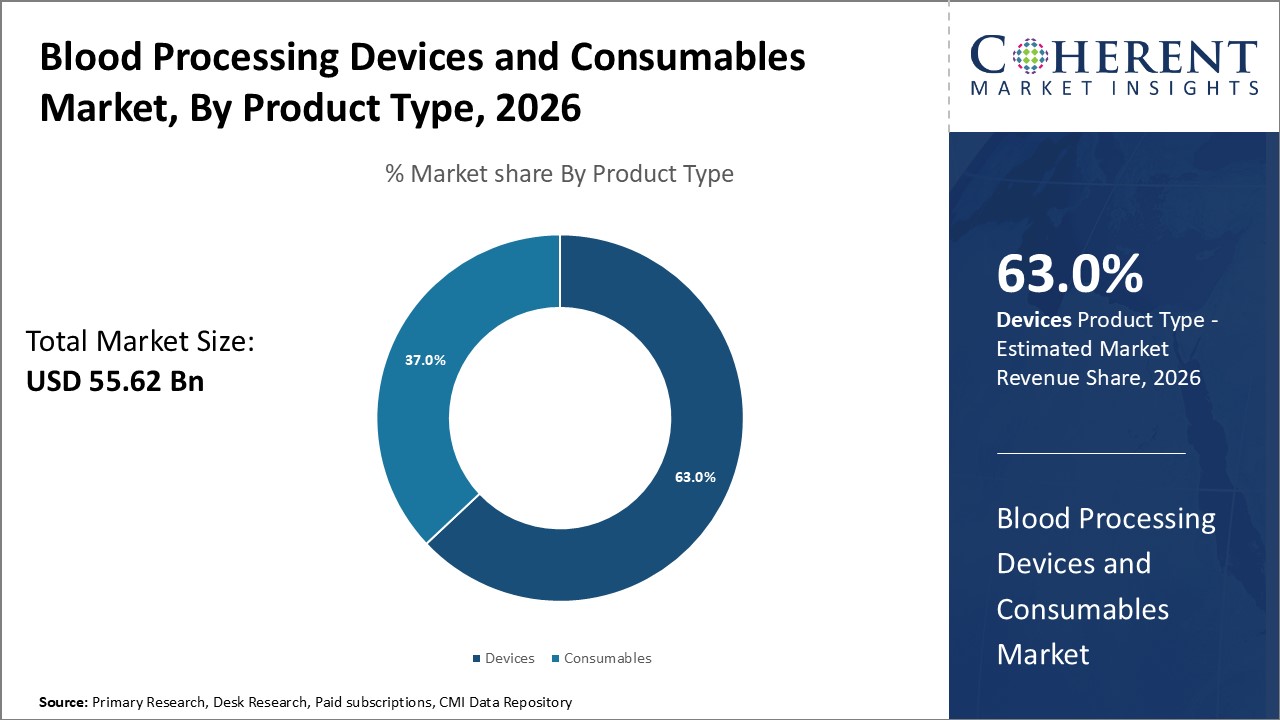
Figure 1. Global Blood Processing Devices and Consumables Market Share (%), By Product Type, 2026
Global Blood Processing Devices and Consumables Market– Drivers
- Increasing research and development in the field of life sciences: Increasing key developments and growing research in the field of life sciences to carry out the processing of blood efficiently and effectively is expected to boost the global blood processing devices and consumables market growth. For instance, in June 2021, according to Kings College London, neuro-degenerative diseases such as down syndrome can be diagnosed by the levels of protein present in blood called neurofilament light chain. Thus, research and development in blood screening that requires blood processing is expected to drive the global blood processing devices and consumables market growth.
- Increasing government initiatives for blood and plasma donations: Increasing government initiatives for the blood and plasma donations is expected to boost demand for blood processing devices and consumables for the storage of blood and plasma. For instance, in August 2022, U.S. Department of Health and Human Services (HHS) launched a campaign named Giving = Living to increase blood and plasma donations in the U.S. The campaign aimed at increasing awareness about importance of donating blood and plasma, and to encourage the U.S. population to develop new and regular donation habits.
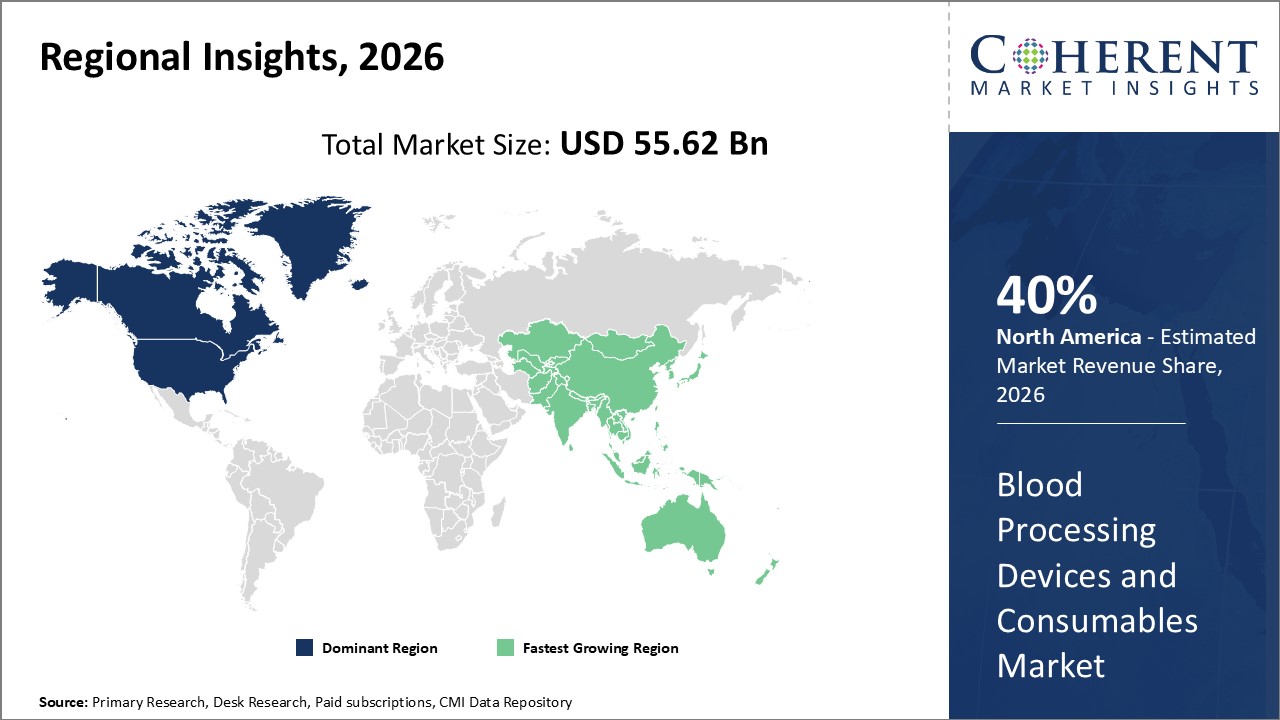
Figure 2. Global Blood Processing Devices and Consumables Market Share(%), By Region, 2026
Global Blood Processing Devices and Consumables Market- Regional Analysis
Among region, North America is estimated to hold a dominant position in the global blood processing devices and consumables market over the forecast period. North America is estimated to hold 40% of the market share in 2026. Increasing number of product launches in the North America region is expected to boost the market growth. For instance, in July 2026, Rhinostics, a U.S. based manufacturer of sample collection devices, launched VERIstic Collection Device that focuses on small volume blood collection. The VERIstic is a highly effective and it is high-throughput replacement for dried blood spot (DBS) cards, genetic testing, clinical trials, and other applications that is made possible by easy finger prick collection. It is ideal for use in at-home and clinician-assisted collection methods.
- Current Industry Events of 2026
- Market Size Estimation
- Regional Breakdown
- Competitive Landscape
- Customer Intelligence
- Segmental Analysis
- Pricing Analysis
- Key Market Drivers, Challenges & Future Trends
- Customized Insights Section
Blood Processing Devices and Consumables Market Report Coverage
| Report Coverage | Details | ||
|---|---|---|---|
| Base Year: | 2025 | Market Size in 2026: | USD 55.62 Bn |
| Historical Data for: | 2020 To 2024 | Forecast Period: | 2026 To 2033 |
| Forecast Period 2026 to 2033 CAGR: | 6.9% | 2033 Value Projection: | USD 88.73 Bn |
| Geographies covered: |
| ||
| Segments covered: |
| ||
| Companies covered: | Beckman Coulter, Inc., Thermogenesis Holdings, Inc., Maco Pharma International GmbH, Immucor, Inc., Becton, Dickinson and Company, Bio-Rad Laboratories, Inc., Grifols, S.A., Abbott Laboratories, Global Scientific Company, Sigma Laborzentrifugen GmbH, Terumo BCT, Inc., Poly Medicure Ltd, and Thermo Fisher Scientific, Inc. | ||
| Growth Drivers: |
| ||
| Restraints & Challenges: |
| ||
Global Blood Processing Devices and Consumables Market Segmentation:
Global blood processing devices and consumables market is segmented by product type, end user, and region.
- By product type, the market is segmented into Devices (plasma freezers, blood bank refrigerators, lab refrigerators, lab freezers, ultralow temperatures, shock freezers, grouping analyzers, warmers, hematocrit centrifuges, and cell processors) and consumables (blood administration sets, blood bags, blood collection needles, blood collection tube, blood filters, blood lancets, blood grouping reagents, blood coagulation reagents, hematology reagents, slides, sedimentation tubes, slide stainer, test tube racks, and vials). Out of which, the devices segment is expected to hold a dominant position in the global blood processing devices and consumables market during the forecast period due to increasing product launches.
- By end user , the market is segmented into hospitals and clinics, diagnostic laboratories, and others. Out of which, hospitals and clinics segment is expected to dominate the market over the forecast period due to increasing usage of blood processing devices and consumables in the hospitals and clinics.
- By region, the market is segmented into North America, Latin America, Europe, Asia Pacifis, Middle East, and Africa. Out of which, North America region is expected to dominate the region due to increasing number of product launch by market players operating in the region.
Among all the segmentation, the product type segment is expected to dominate the market over the forecast period due to increasing product offerings by the market players. For instance, in February 2022, Abacus dx, a Australia-based medical supply store, announced the addition of blood collection tube portfolio in its product offerings. The newly added blood collection tubes are manufactured by Streck, a company that engages in developing and manufacturing of products in hematology, and immunology among others.
Global Blood Processing Devices and Consumables Market- Cross Sectional Analysis
till June 01, 2023.
Global Blood Processing Devices and Consumables Market: Key Developments
- In January 2022, Hemanext Inc., a medical equipment manufacturer, announced that the Association for the Advancement of Blood & Biotherapies ("AABB"), an international organisation in transfusion of medicine and biotherapies, acknowledged Hemanext ONE, the company’s cutting-edge blood processing and storage system, for compliance with its industry-recognized quality and safety standards SCoPE Programme. It is the first system that offers both blood processing and storage to receive this designation of the Hemanext ONE technology.
- in July 2021, BD (Becton, Dickinson and Company), a global healthcare company, announced that it had acquired Velano Vascular, a company that focuses on developing/manufacturing needle-free blood draw technology. The Velano Vascular acquisition is in line with BD's growth strategy to enter new categories that deal with unmet needs and have a more positive impact on patients and health systems.
- In July 2020, Beckman Coulter, Inc., a company that manufactures biomedical products, announced that the company had received 510(k) clearance from the U.S. Food & Drug Administration (FDA) for its PK7400 Automated Microplate System, a blood banking analyzer. It offers the industry’s highest throughput for a single analyzer in its class, processing up to 300 samples per hour with a maximum of 12 tests per sample. Assay menu includes ABO blood grouping, Rh typing, weak D testing, Rh-Kell phenotyping, as well as syphilis, and CMV qualitative screening.
Global Blood Processing Devices and Consumables Market: Trends
- Launch of ultra-low temperature controlled logistics service: Global blood processing devices and consumables market is increasingly influenced by the pivotal trend of launching ultra-low temperature controlled logistic services for the pharmaceutical industry. This development addresses the critical need for the safe and reliable transportation of the blood products. For instance, in June 2022, Nippon Express Co., Ltd., a logistic company, launched a logistics service capable of handling goods that requires ultra-low temperatures (-20°C to -85°C) for the pharmaceutical industry. As a result, pharmaceutical goods such as blood products can be transported and stored at extremely low temperatures while still in the research and development phase as well as during the formulation process. As a result, Nippon Express provides temperature-controlled shipping services for a variety of pharmaceutical products including raw materials, intermediates, active pharmaceutical ingredients, and finished goods.
Global Blood Processing Devices and Consumables Market: Restraint
- High cost of blood processing devices: High cost of the blood processing devices such as plasma freezers or blood bank refrigerators is expected to hinder growth of market over the forecast period. For instance, the average cost of blood bank refrigerator which is manufactured by Biobase, a global company that manufactures scientific equipment, varies between US$ 300 to US$ 950.
- Counterbalance: Optimization of manufacturing process of blood processing devices is expected to reduce the cost of blood processing devices
Global Blood Processing Devices and Consumables Market - Key Players
Major players operating in the global blood processing devices and consumables market includes Beckman Coulter, Inc., Thermogenesis Holdings, Inc., Maco Pharma International GmbH, Immucor, Inc., Becton, Dickinson and Company, Bio-Rad Laboratories, Inc., Grifols, S.A., Abbott Laboratories, Global Scientific Company, Sigma Laborzentrifugen GmbH, Terumo BCT, Inc., Poly Medicure Ltd, and Thermo Fisher Scientific, Inc.
Sources
Primary Research Interviews
- Blood bank directors and medical directors at regional and hospital-based blood centers
- Manufacturers of apheresis systems, centrifuges, cell separators, and blood bags (e.g., Terumo BCT, Haemonetics, Fresenius Kabi, Grifols)
- Transfusion medicine specialists and hematologists
- Procurement heads at national blood services (e.g., American Red Cross, NHS Blood and Transplant)
- Quality assurance and regulatory affairs leaders for blood collection consumables
- Plasma fractionation and plasma-derived therapeutics manufacturers
Databases
- U.S. FDA Center for Biologics Evaluation and Research (CBER) databases
- WHO Global Database on Blood Safety (GDBS)
- European Directorate for the Quality of Medicines & HealthCare (EDQM)
- European Blood Alliance (EBA) statistics
- Centers for Disease Control and Prevention (CDC) – Blood, Organ, and Other Tissue Safety
- Eurostat and national health ministry blood donation statistics
Magazines
- AABB News
- Transfusion News
- BioProcess International
- Medical Device and Diagnostic Industry (MD+DI)
- MedTech Dive
Journals
- Transfusion (AABB / Wiley)
- Vox Sanguinis (ISBT / Wiley)
- Transfusion Medicine Reviews (Elsevier)
- British Journal of Haematology
- Blood (American Society of Hematology)
- Journal of Clinical Apheresis (Wiley)
Newspapers
- Reuters Health
- Financial Times – Life Sciences coverage
- The Wall Street Journal – Health section
Associations
- AABB (Association for the Advancement of Blood & Biotherapies)
- International Society of Blood Transfusion (ISBT)
- European Blood Alliance (EBA)
- American Society of Hematology (ASH)
- Plasma Protein Therapeutics Association (PPTA)
- Asia Pacific Blood Network (APBN)
Public Domain Sources
- U.S. Food and Drug Administration (FDA) – Blood Products
- European Medicines Agency (EMA) – Blood and blood components
- World Health Organization (WHO) – Blood Transfusion Safety
- National Heart, Lung, and Blood Institute (NHLBI)
- ResearchGate publications on transfusion medicine and blood processing technologies
Proprietary Elements
- CMI Data Analytics Tool
- CMI Proprietary Repository of Blood Processing and Transfusion Devices Intelligence (Last 10 Years)
Definition: Blood processing devices and consumables are essential components of blood banks. Blood is processed at blood banks so that it can be kept for an extended period of time.
Get access to 250+ pages report
Every segment, forecast, competitor profile and data table behind the analysis above — available for instant download.
- ESOMAR Member
- ISO 9001:2015 Certified
- D-U-N-S Registered
- GDPR & CCPA Compliant
Missing comfort of reading report in your local language? Find your preferred language:
Transform your Strategy with Exclusive Trending Reports
Frequently Asked Questions
The Blood Processing Devices and Consumables Market is estimated to be valued at USD 55.62 Bn in 2026, and is expected to reach USD 88.73 Bn by 2033.
The CAGR of the Blood Processing Devices and Consumables Market is projected to be 6.9% from 2026 to 2033.
Increasing research and development in the field of life sciences and increasing government initiatives for blood and plasma donations are expected to drive the global blood processing devices and consumables market growth.
Devices is the leading product type segment in the global blood processing devices and consumables market.
High cost of blood processing devices is expected to hinder the global blood processing devices and consumables market growth over the forecast period.
Major players operating in the global blood processing devices and consumables market are Beckman Coulter, Inc., Thermogenesis Holdings, Inc., Maco Pharma International GmbH, Immucor, Inc., Becton, Dickinson and Company, Bio-Rad Laboratories, Inc., Grifols, S.A., Abbott Laboratories, Global Scientific Company, Sigma Laborzentrifugen GmbH, Terumo BCT, Inc., Poly Medicure Ltd, and Thermo Fisher Scientific, Inc.