

Global Opioid Use Disorder Market Size and Forecast – 2026 to 2033
The global opioid use disorder market is estimated to be valued at USD 6,303.4 Mn in 2026 and is expected to reach USD 9,860.2 Mn by 2033, exhibiting a compound annual growth rate (CAGR) of 9.4% from 2026 to 2033. This significant growth reflects increasing awareness, advancements in treatment options, and rising prevalence of opioid use disorders worldwide, driving demand for innovative therapies and support services in this critical healthcare sector.
Key Takeaways of the Global Opioid Use Disorder Market
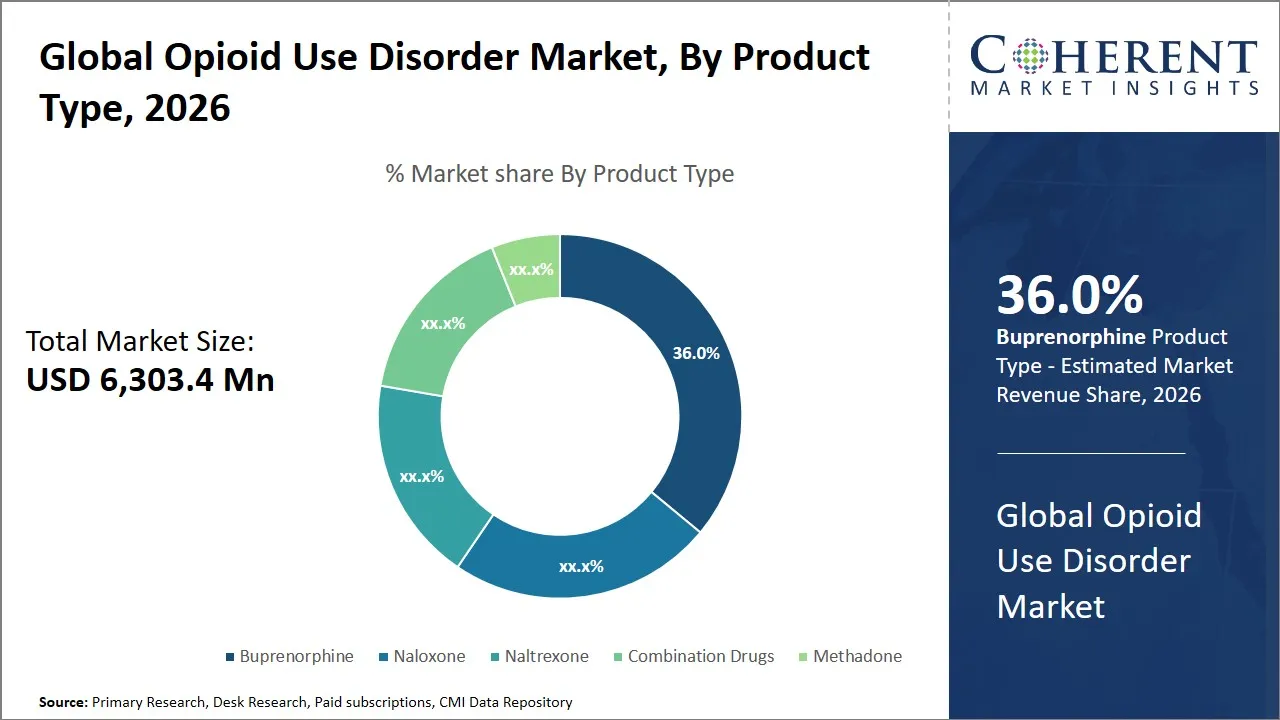
- Buprenorphine segment is expected to lead the opioid use disorder market, capturing 36% share in 2026.
- Parenteral segment is estimated to represent 47.3% of the opioid use disorder market share in 2026.
- Injections segment is projected to dominate with 47.3% of the global opioid use disorder share in 2026.
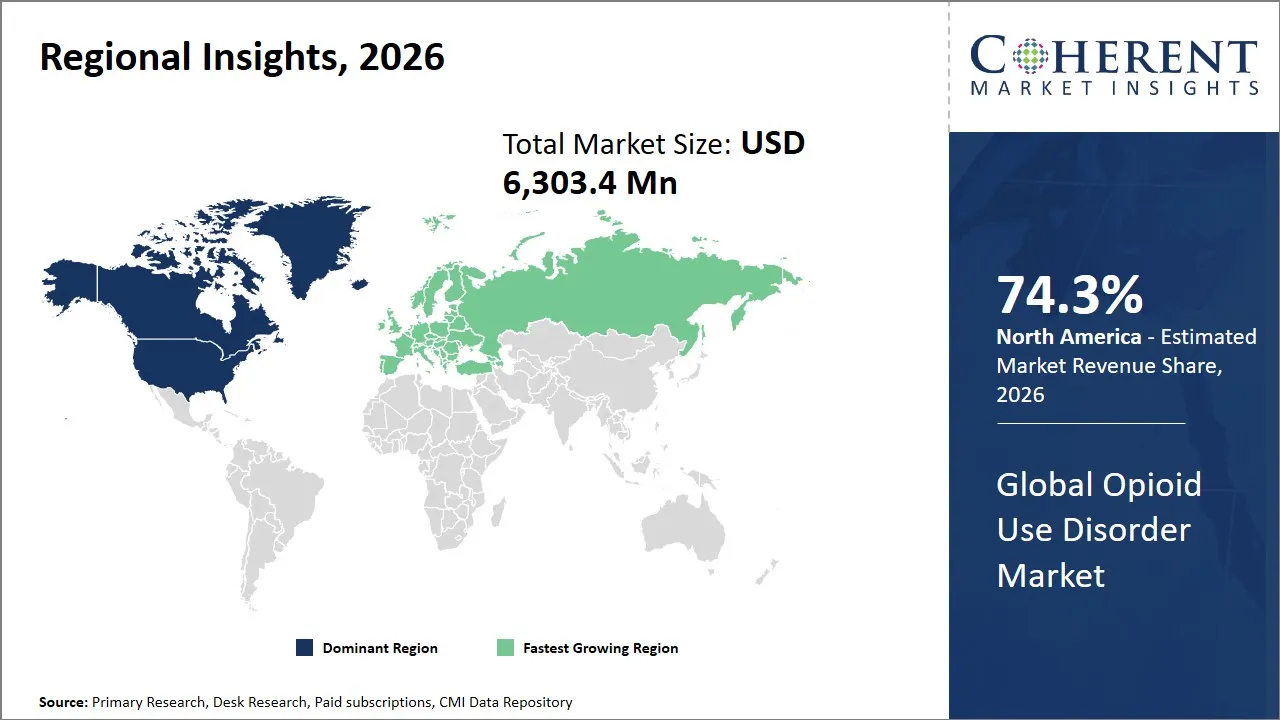
- North America is expected to lead the market, holding a share of 74.3% in 2026. Europe is anticipated to be the fastest-growing region, with 12.7% share in 2026.
Market Overview
- The global opioid use disorder market is fundamentally supported by the fact that methadone, buprenorphine, and naltrexone remain established U.S. FDA approved treatment options, which keeps the category clinically relevant and commercially durable.
- One of the strongest current growth drivers is regulatory support for telemedicine-based treatment.
- A major market trend is the shift toward easier and faster treatment initiation, especially in buprenorphine-based products.
- Another major opportunity is the expansion of treatment into correctional and high-risk care settings.
Currents Events and their Impact
Current Events | Description and its Impact |
Permanent U.S. telemedicine rule for buprenorphine prescribing |
|
Ongoing expansion of office-based buprenorphine prescribing after waiver removal |
|
Segmental Insights
- Current Industry Events of 2026
- Market Size Estimation
- Regional Breakdown
- Competitive Landscape
- Customer Intelligence
- Segmental Analysis
- Pricing Analysis
- Key Market Drivers, Challenges & Future Trends
- Customized Insights Section
Why Does the Buprenorphine Segment Dominate the Global Opioid Use Disorder Market in 2026?
The buprenorphine segment is expected to hold the largest market share of 37.0% in 2026, attributed primarily to its well-established safety profile and superior efficacy in managing opioid dependency. The pharmacological action of buprenorphine, a partial opioid agonist, is the reason why it is often preferred by healthcare providers because it lowers the risk of misuse and overdose, unlike full opioid agonists. This safety benefit is inherent and is a major driving factor behind its use as the first-line treatment of opioid use disorder (OUD).
The fact that the drug is able to greatly reduce the withdrawal symptoms and decrease the cravings indicates its usefulness in the process of long-term recovery. The flexibility in formulation of Buprenorphine, such as: oral, parenteral and others, also increases the access of patients to it and allows to facilitate individual treatment strategies. Also, its use has been enhanced by the regulatory support as well as prescription policies in different areas that have attracted its use compared to other opioid antagonists such as Naloxone and Naltrexone, which could have restricted clinical use.
For instance, in May 2024, the U.S. Food and Drug Administration approved Brixadi, a long-acting buprenorphine injection available in weekly and monthly formulations to treat moderate to severe opioid use disorder. The therapy is designed to provide sustained medication delivery and improve treatment adherence within comprehensive recovery programs.
(Source- U.S. Food and Drug Administration)
Why Does the Parenteral Segment Dominate the Global Opioid Use Disorder Market in 2026?
The parenteral segment is expected to hold 47.3% of the market share in 2026, due to its ability to provide rapid and consistent drug absorption while maintaining patient safety. Treatment of opioid use disorders must be conscientious in dosage and fast action, to adequately manage withdrawal syndrome and decrease relapses, and parenteral routes: including subcutaneous and intramuscular injections, provide these significant clinical attributes.
Parenteral administration of extended-release injections has acquired significant momentum since it allows a steady state of the drug concentrations to be established at a prolonged duration of time, minimizing dose potentials and increasing patient ease. It is especially important when it comes to the treatment of OUD, whereby it may be difficult to secure treatment adherence since the disorder is a chronic and relapsing condition. Continuity of treatment is improved because parenteral therapies bypass the problem of noncompliance in daily dosing that is observed with oral or sublingual methods of administration.
The Injections Segment Dominates the Global Opioid Use Disorder Market
The injections segment is expected to hold the largest market share of 47.3% in 2026, because of its precision in dosing and capacity to improve patient compliance. Being a route of administration, injections are an effective and efficient way of administering therapeutic agents, which in many cases affect faster onset of action than oral or sublingual preparations. It has been important in OUD treatment, where the quick reduction of withdrawal symptoms could have a major effect on patient retention and engagement in care.
The use of injections, particularly long-acting formulations allows the creation of fewer dosing regimes, which allows the circumvention of the barriers to adherence to daily medications. Injectable dosage forms facilitate the treatment process by alleviating the burden and burden associated with treatment, thereby enhancing consistency in the treatment process by patients thereby minimizing the risk of relapse. Additionally, the injections administered in a supervised environment provide to the benefit of monitoring and support opportunities, which is necessary due to the multifaceted psychosocial aspects of opioid addiction.
Growing Availability of Telemedicine-Based Addiction Treatment
- Telemedicine-based addiction treatment is now becoming increasingly permanent as its availability has improved sharply. In the U.S., DEA and HHS declared that buprenorphine-related telemedicine flexibilities will be permanent on January 29, 2026, meaning that eligible prescribing would be permitted under audio only and audio-visual visits, in specified situations. That is important as it lessens the barrier to access among patients in rural settings, people who have barrier to transport, and those who are less likely to remain involved in the in-person treatment alone.
- Telemedicine is no longer an emergency workaround, as seen through the prism of the market. It is becoming a scaled-up path of treatment that facilitates the initiation of treatment earlier, the continuity of care and the expansion of the coverage of addiction services. It has the most potential in the area of opioid use disorder management, where remote prescribing, digital follow up, and app supported care models are growing treatment access yet provider shortages, reimbursement problems, and uneven digital infrastructure continue to reduce its adoption in many areas.
Regional Insights
North America Opioid Use Disorder Market Analysis and Trends
The North America region is projected to lead the market with a 74.3% share in 2026, attributed to several key factors. The presence of a well-developed healthcare infrastructure and a large rate of opioid use disorder in the region contributes to the unwavering need to find efficient treatment options. Strict state policies like the U.S. Substance Abuse and Mental Health Services Administration (SAMHSA) programs and additional funding of addiction treatment assist the market expansion. There is also strong industry representation by having such large pharmaceutical companies like Alkermes, Indivior, and Braeburn Pharmaceuticals that actively develop and promote novel treatments that affirm leadership in North America.
For instance, in February 2025, Health Canada expanded support for community-based substance use programs under the Substance Use and Addictions Program, including projects linked to treatment access, virtual care, recovery support, and overdose response, highlighting continued market growth potential for opioid use disorder treatment in North America.
(Source- Health Canada)
Europe Opioid Use Disorder Market Analysis and Trends
The Europe region is expected to exhibit the fastest growth in the opioid use disorder market contributing 12.7% share in 2026, owing to the established opioid agonist treatment system, backed by public health programs and ongoing demand for long term therapy. The European Union Drugs Agency reported that about 511,000 clients received opioid agonist treatment in 2023 across 26 EU member states, with methadone accounting for 55% of treatment use and buprenorphine 35%, showing a well-established treatment base that supports market demand. Growth is also supported by rising policy attention on overdose prevention, broader integration of psychosocial support, and updated global treatment guidelines that continue to favor medication-assisted treatment for most opioid-dependent patients.
For instance, in June 2024, the European Monitoring Centre for Drugs and Drug Addiction, now the European Union Drugs Agency EUDA reported that more than half of patients receiving opioid agonist treatment in Europe were treated with methadone while a large share received buprenorphine-based medicines across EU countries.
(Source- EUDA)
Global Opioid Use Disorder Market Outlook for Key Countries
How is the U.S. Helping in the Growth of the Opioid Use Disorder Market?
The U.S. is one of the leading markets for opioid use disorder because of the high rate of opioid abuse and the existence of a complex system of laws aimed at fighting the crisis. Other programs like Medication-Assisted Treatment (MAT) are also commonly embraced, with companies like Indivior (using its Suboxone medication) and Alkermes (using Vivitrol).
Good relationships between the government and pharmaceutical companies will encourage the research and innovation of new treatments. In the U.S opioid use disorder market, there is an already developed insurance coverage of opioid use disorder drugs, which help in achieving treatment. Also, the continuous government programs constantly revise policies to achieve good care provision and reduce abuse.
How is Canada Helping in the Growth of the Opioid Use Disorder Market?
The Canada opioid use disorder market is defined by the progressive government policies with focus on reduction of harm and treatment accessibility. The Canadian government promotes the general access to opioid use disorder medications under the form of governmental healthcare coverage. Two major participants, like Purdue Pharma and Braeburn Pharmaceuticals, are actively involved in the provision of both prescription and extended-release formulations which are appropriate to the needs of the patients.
The comprehensive healthcare systems in Canada and a focused strategy in the field of mental health services are associated with better outcomes in patients and encourage a gradual implementation of opioid use disorder treatments.
Key Drivers for the Growth of the China Opioid Use Disorder Market
The market for opioid use disorder in China is developing very fast, as the population becomes more aware of the issues of substance abuse and the governmental efforts to increase access to mental health care. Companies such as Johnson & Johnson and local pharmaceutical companies invest in the development of treatment facilities and the implementation of new therapies. The growing medical spending and adoption of national interventions to fight drug abuse are some of the reasons why China has better rates of diagnosis and access to treatment. The government is also concerned with the delivery of healthcare in the rural areas, which increases accessibility to hitherto under-served segments, as well as market penetration.
India Opioid Use Disorder Market Trends
India is also becoming an important developmental market and opportunities are facilitated by the growth in healthcare facilities and growing awareness of the population on the problem of addiction to opioids. The Ministry of Health and Family Welfare initiatives are in the process of incorporating mental health services in primary care. Pharmaceutical firms like Cipla and Sun Pharmaceutical are playing their role by coming up with accessible and affordable treatment of opioid use disorder with local market orientation. In spite of the difficulties in providing healthcare services in rural regions and stigma, the focus on substance use disorders on the part of the government is establishing a more productive setting to expand the market.
Global Medication Assisted Treatment Access and Treatment Gap Overview
Metric | Global Status |
Global number of Medication Assisted Treatment programs | There is no single standardized global count of MAT programs because countries track opioid treatment capacity differently and often report medication availability or treatment coverage instead of exact program numbers. What is clear is that MAT availability remains fragmented and uneven across regions. WHO continues to recommend opioid agonist maintenance treatment using methadone and buprenorphine as a core evidence-based approach for opioid dependence treatment. |
Treatment gap patients needing treatment vs receiving therapy | The treatment gap remains severe at the global level. UNODC reported that only 1 in 12 people with drug use disorders received any form of treatment in 2023, showing that the majority of people needing care are still outside the treatment system. |
Opioid specific burden supporting MAT demand | WHO estimates that about 125,000 people died of opioid overdose in 2019, and opioid overdoses that do not lead to death are several times more common. This continuing mortality burden supports the need for wider MAT access globally. |
Regional evidence of uneven access | Access is also highly inconsistent across health systems. In WHO’s Eastern Mediterranean Region progress update published in September 2025, only eight countries reported having at least one opioid agonist agent available for maintenance treatment, underlining how limited MAT infrastructure still is in several regions. |
Concentration and Competitive Landscape
Key Developments
- In September 2025, Purdue Pharma partnered with the MMCAP cooperative purchasing program to expand access to low-cost buprenorphine-naloxone tablets for government healthcare facilities and correctional systems. The initiative aims to distribute millions of tablets annually to increase medication-assisted treatment coverage among underserved populations.
- In February 2025, Indivior received the U.S. FDA approval for label updates to its extended-release buprenorphine injection, Sublocade used in opioid use disorder treatment. The update introduced a rapid-initiation protocol reducing induction time from about one week to roughly one hour and added alternative injection sites, improving treatment flexibility and patient adherence in OUD therapy programs.
- In April 2024, Amneal Pharmaceuticals launched an over-the-counter Naloxone Hydrochloride nasal spray, a generic equivalent to Narcan. The product was introduced following U.S. FDA approval and aims to expand access to life-saving overdose reversal medicines, supporting public-health strategies to combat opioid overdose deaths globally.
Top Strategies Followed by Global Opioid Use Disorder Players
Player Type | Strategic Focus | Examples |
Established Market Leaders | Established players in the global opioid use disorder market maintain leadership by investing heavily in research and development to improve treatment effectiveness and expand medication options. They also strengthen their position through partnerships with pharmaceutical companies and healthcare providers while expanding distribution networks into emerging markets where treatment demand is rising. | Indivior demonstrates this strategy through continuous innovation in its buprenorphine portfolio. In February 2025, the U.S. FDA approved a label update for Sublocade, allowing a rapid treatment initiation pathway, which reflects how leading companies use product development to improve patient access and reinforce their market presence. |
Mid-Level Players | Mid-level players in the opioid use disorder market compete by offering cost-effective treatment options that balance affordability and clinical effectiveness. They often focus on price-sensitive markets and expand their reach through partnerships with technology providers, contract manufacturers, and regional distributors to improve production capacity and distribution efficiency. | Amneal Pharmaceuticals represents a mid-tier strategy by launching over-the-counter naloxone hydrochloride nasal spray in the U.S. in 2024, providing a lower-cost overdose reversal option and expanding access to opioid overdose treatment. |
Small-Scale Players | Smaller scale players in the global opioid use disorder market usually compete by targeting niche gaps that larger companies do not fully address. They tend to focus on specialized formulations, digital support tools, or more tailored treatment approaches, and they often rely on partnerships with local distributors, academic groups, or technology developers to build market access without needing the scale of major pharma companies. | Orexo is a strong example. The company positions itself around OUD focused treatment solutions and has combined its core medicine Zubsolv with digital support offerings such as MODIA for patients undergoing clinical treatment plans for opioid use disorder. That shows how a smaller player can stay relevant by pairing a niche OUD focus with innovation and targeted partnerships rather than competing head on across the full market. |
Market Report Scope
Opioid Use Disorder Market Report Coverage
| Report Coverage | Details | ||
|---|---|---|---|
| Base Year: | 2025 | Market Size in 2026: | USD 6,303.4 Mn |
| Historical Data for: | 2020 To 2024 | Forecast Period: | 2026 To 2033 |
| Forecast Period 2026 to 2033 CAGR: | 9.4% | 2033 Value Projection: | USD 9,860.2 Mn |
| Geographies covered: |
| ||
| Segments covered: |
| ||
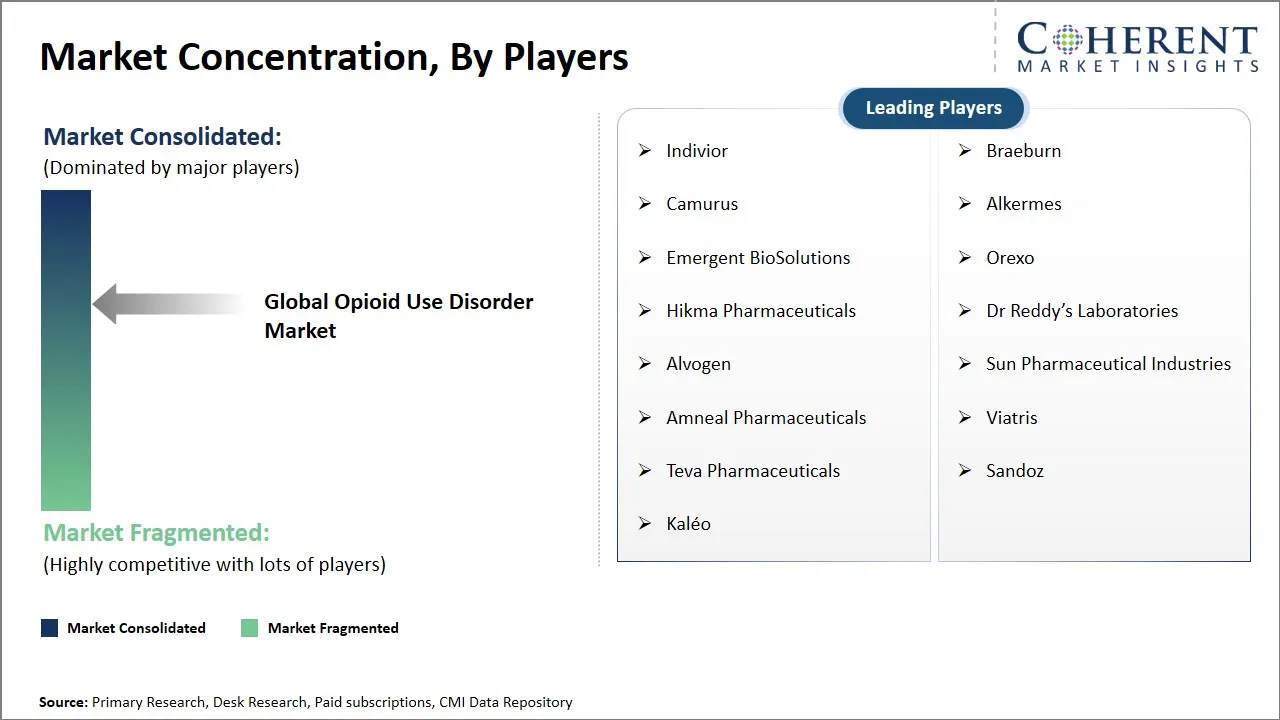
| Companies covered: | Indivior, Braeburn, Camurus, Alkermes, Emergent BioSolutions, Orexo, Hikma Pharmaceuticals, Dr Reddy’s Laboratories, Alvogen, Sun Pharmaceutical Industries, Amneal Pharmaceuticals, Viatris, Teva Pharmaceuticals, Sandoz, and Kaléo | ||
| Growth Drivers: |
| ||
| Restraints & Challenges: |
| ||
Global Opioid Use Disorder Market Dynamics
Global Opioid Use Disorder Market Driver - Rising Prevalence of Opioid Dependence and Overdose Burden
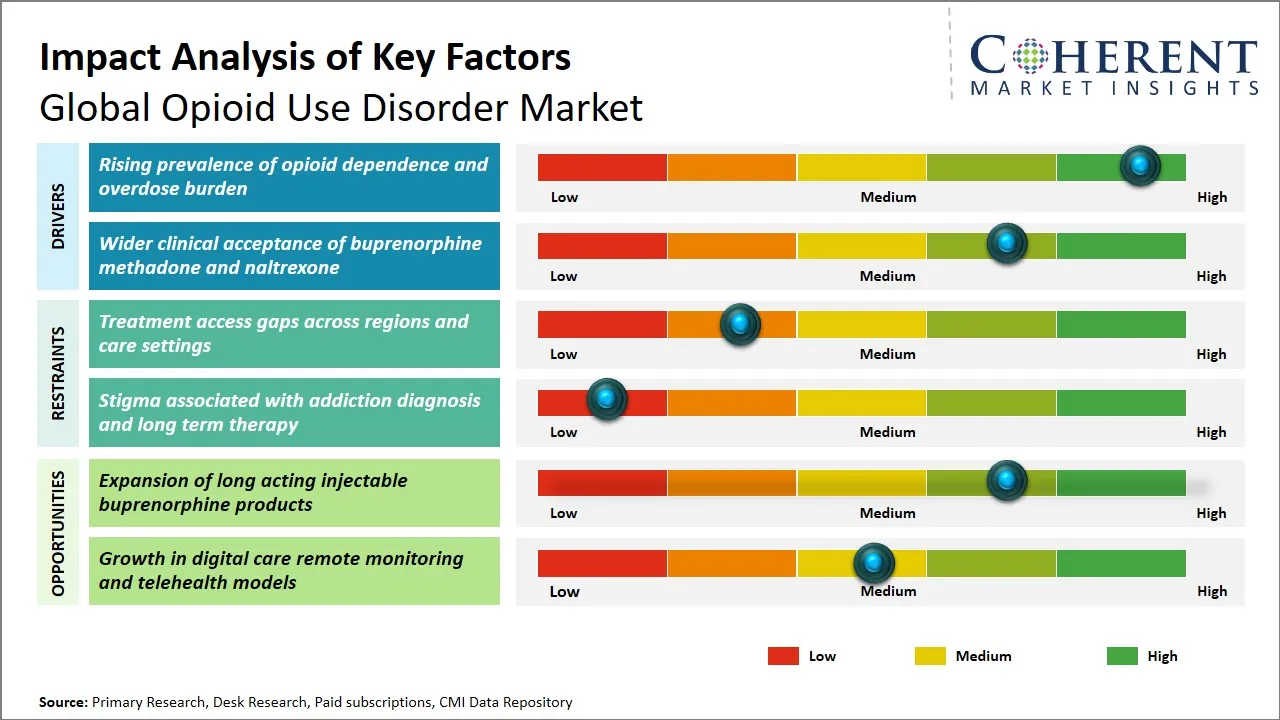
The rising cases of opioid dependence in the world today has emerged as a pressing issue that is fueling the need of having viable means to remedy the market in opioid use disorder. Prescription opioids have become widely abused and numerous illegal opioids like heroin and synthetic forms including fentanyl have been on the rise leading to an increasing number of people being affected as a result of opioid addiction. This increase has been met with an agonizing upsurge in cases of opioid-related overdoses, and this compounds a lot of pressure on any healthcare system to deliver timely and holistic interventions. The complicated nature of opioid use disorder management, as well as the persistence of long-term care to prevent relapse and treatment of comorbid mental health conditions, predetermines the necessity of sophisticated pharmacological interventions and support services.
For instance, in November 2024, the Centers for Disease Control and Prevention (CDC) reported over 100,000 drug overdose deaths in the U.S. during the 12-month period ending June 2024, with opioids responsible for the majority of cases, underscoring the growing global burden of opioid dependence and overdose.
(Source- CDC)
Global Opioid Use Disorder Market Opportunity - Expansion of Long-Acting Injectable Buprenorphine Products
The market of opioid use disorder globally is a great opportunity due to the growth of long-acting injectable buprenorphine. The partial agonist, opioid buprenorphine has played a significant role in medication-assisted treatment (MAT) because it is effective in alleviating withdrawal symptoms and cravings. Nevertheless, the conventional sublingual dosage is often vulnerable to the non-adherence factors in patients, such as the need to take the medication daily and the possibility of misuse or diversion.
Long-acting injectable formulations help counter these weaknesses by offering extended drug release during longer periods usually weeks or months, thereby improving compliance and limiting chances of abuse. This system of administration does not only enhance the efficacy of treatment but also helps to reduce the workload of healthcare providers by the fact that they do not need to visit patients as often to administer the treatment. New regulatory approvals and the increasing acceptance within the clinical practice have facilitated the increased uptake of these products.
For instance, in May 2023, the U.S. FDA approved Brixadi extended-release buprenorphine injection, available in weekly and monthly doses, highlighting the expanding availability of long-acting injectable buprenorphine products for opioid use disorder treatment.
(Source- U.S. FDA)
Analyst Opinion (Expert Opinion)
- The opioid use disorder market is increasingly shifting toward long-term treatment approaches rather than emergency response, which is supporting overall market growth globally. The access is being reinforced by regulatory assistance, with access in January 2026 with the DEA and HHS permanently making the flexibilities on telemedicine buprenorphine prescribing to expand treatment access. Even product innovation is also a factor, as in the case of Indivior, the label update of Sublocade in February 2025 allowed to initiate treatment faster. The long-acting injectable therapies, telehealth enhanced care, correctional health programs, and the incorporation of OUD treatment into primary care are key opportunities that are emerging, yet the stigma, limited provider capacity, and reimbursement gaps remain limiting the treatment uptake.
- The recent developments are also indicative of the direction in which the market is going. The ASAM Annual Conference 2025 and 2026 remain the sources of knowledge sharing and policy-making regarding the addiction treatment based on medication. Furthermore, NIH-funded research published in September 2025 demonstrated that the delivery of medications through opioid use disorder in jail settings increased treatment engagement and helped decrease overdose deaths, which indicates the susceptibility of new treatment settings to the opioid use disorder therapeutic requirement.
Speak to the analyst
Want personalized insights?
Take the findings above to one of our principal consultants, or have the report rebuilt around the segments, geographies and competitors you actually track.
Market Segmentation
- Product Type Insights (Revenue, USD Mn, 2021 - 2033)
- Buprenorphine
- Oral
- Parenteral
- Others
- Naloxone
- Parenteral
- Others
- Naltrexone
- Oral
- Parenteral
- Combination Drugs
- Methadone
- Buprenorphine
- Route of Administration Insights (Revenue, USD Mn, 2021 - 2033)
- Parenteral
- Extended-release Injection for Subcutaneous
- Intramuscular
- Oral
- Sublingual Tablet
- Sublingual Film
- Suspension
- Others
- Parenteral
- Dosage Form Insights (Revenue, USD Mn, 2021 - 2033)
- Injections
- Sublingual film
- Sublingual or Buccal
- Tablet
- Suspension
- Others
- Availability Insights (Revenue, USD Mn, 2021 - 2033)
- Prescription
- Over the Counter
- Brand Insights (Revenue, USD Mn, 2021 - 2033)
- Sublocade
- Suboxone
- Brixadi
- Vivitrol
- Zubsolv
- NARCAN
- Others
- Age Group Insights (Revenue, USD Mn, 2021 - 2033)
- Adult
- Children
- Type Insights (Revenue, USD Mn, 2021 - 2033)
- Branded
- Generic
- Indication Insights (Revenue, USD Mn, 2021 - 2033)
- Opioid Addiction
- Pain Management
- Acute
- Chronic
- Distribution Channel Insights (Revenue, USD Mn, 2021 - 2033)
- Hospital Pharmacies
- Retail Pharmacies
- Online Pharmacies
- Regional Insights (Revenue, USD Mn, 2021 - 2033)
- North America
- U.S.
- Canada
- Latin America
- Brazil
- Argentina
- Mexico
- Rest of Latin America
- Europe
- Germany
- U.K.
- Spain
- France
- Italy
- Russia
- Rest of Europe
- Asia Pacific
- China
- India
- Japan
- Australia
- South Korea
- ASEAN
- Rest of Asia Pacific
- Middle East
- GCC Countries
- Israel
- Rest of Middle East
- Africa
- South Africa
- North Africa
- Central Africa
- North America
- Key Players Insights
- Indivior
- Braeburn
- Camurus
- Alkermes
- Emergent BioSolutions
- Orexo
- Hikma Pharmaceuticals
- Dr Reddy’s Laboratories
- Alvogen
- Sun Pharmaceutical Industries
- Amneal Pharmaceuticals
- Viatris
- Teva Pharmaceuticals
- Sandoz
- Kaléo
Sources
Primary Research Interviews
- Industry Stakeholders list
- Addiction medicine specialists
- Psychiatrists specializing in substance use disorders
- Pharmacologists working on opioid therapies
- Clinical researchers in addiction treatment
- Hospital pharmacy directors
- Public health policy experts
End Users list
- Addiction treatment centers
- Hospitals and health systems
- Community health clinics
- Correctional healthcare providers
- Telehealth addiction care providers
- Outpatient rehabilitation centers
Government and International Databases
- U.S. Centers for Disease Control and Prevention CDC
- Substance Abuse and Mental Health Services Administration SAMHSA
- U.S. National Institute on Drug Abuse NIDA
- World Health Organization Global Health Observatory
- United Nations Office on Drugs and Crime UNODC
- OECD Health Statistics
Trade Publications
- Addiction Professional
- Behavioral Healthcare Executive
- PharmaTimes
- Pharmaceutical Executive
- Drug Discovery World
- BioPharma Dive
Academic Journals
- The Lancet Psychiatry
- American Journal of Psychiatry
- Journal of Substance Abuse Treatment
- Addiction
- Drug and Alcohol Dependence
- BMJ Open
Reputable Newspapers
- The New York Times
- The Washington Post
- Financial Times
- The Wall Street Journal
Industry Associations
- American Society of Addiction Medicine
- International Society of Addiction Medicine
- National Association of Addiction Treatment Providers
- American Public Health Association
- European Monitoring Centre for Drugs and Drug Addiction
- World Federation Against Drugs
Public Domain Resources
- ClinicalTrials.gov
- WHO Institutional Repository for Information Sharing
- OpenAlex
- Google Scholar
Proprietary Elements
- CMI Data Analytics Tool: Proprietary analytics tool to analyze real-time market trends, consumer behavior, and technology adoption in market
- Proprietary CMI Existing Repository of Information for Last 8 Years
Get access to 250+ pages report
Every segment, forecast, competitor profile and data table behind the analysis above — available for instant download.
- ESOMAR Member
- ISO 9001:2015 Certified
- D-U-N-S Registered
- GDPR & CCPA Compliant
Missing comfort of reading report in your local language? Find your preferred language:
Transform your Strategy with Exclusive Trending Reports
Frequently Asked Questions
The Opioid Use Disorder Market is estimated to be valued at USD 4.17 Bn in 2026, and is expected to reach USD 7.58 Bn by 2033.
The CAGR of global opioid use disorder market is projected to be 9.4% from 2026 to 2033.
Rising prevalence of opioid dependence and overdose burden and wider clinical acceptance of buprenorphine methadone and naltrexone are the major factors driving the growth of the global opioid use disorder market.
Treatment access gaps across regions and care settings and stigma associated with addiction diagnosis and long-term therapy are the major factors hampering the growth of the global opioid use disorder market.
The core U.S. FDA approved medicines remain methadone buprenorphine and naltrexone. These continue to anchor the market because they are the main evidence based pharmacologic options used to reduce opioid use and support long term recovery.
The CAGR of the Opioid Use Disorder Market is projected to be 8.9% from 2026 to 2033.
In terms of product type, Buprenorphine is estimated to dominate the market revenue share in 2026.