

Antibiotic Bone Cement And Casting Materials Market Size and Forecast – 2026 to 2033
The Antibiotic Bone Cement And Casting Materials Market is anticipated to grow at a CAGR of 8.2% with USD 3.4 Bn share in 2026 and is expected to reach USD 6.8 Bn in 2033. The rising prevalence of orthopedic infections, increasing joint replacement procedures, growing geriatric population, and advancements in infection prevention technologies drive the Antibiotic Bone Cement and Casting Materials Market. The global and regional geriatric population is increasing rapidly. Adults aged 60 years and above comprise approximately 11% of India's population and 22% of China's population. Globally, this age group is projected to grow from 12% of the population in 2015 to 22% by 2050.
Key Takeaways
- Poly-Methyl-Methacrylate (PMMA) holds the largest market share of 38.8% in 2026 owing to the rising number of orthopedic surgeries. In 2024, approximately 30.5 million orthopedic surgical procedures were performed, representing a 4.5% increase from 2023.
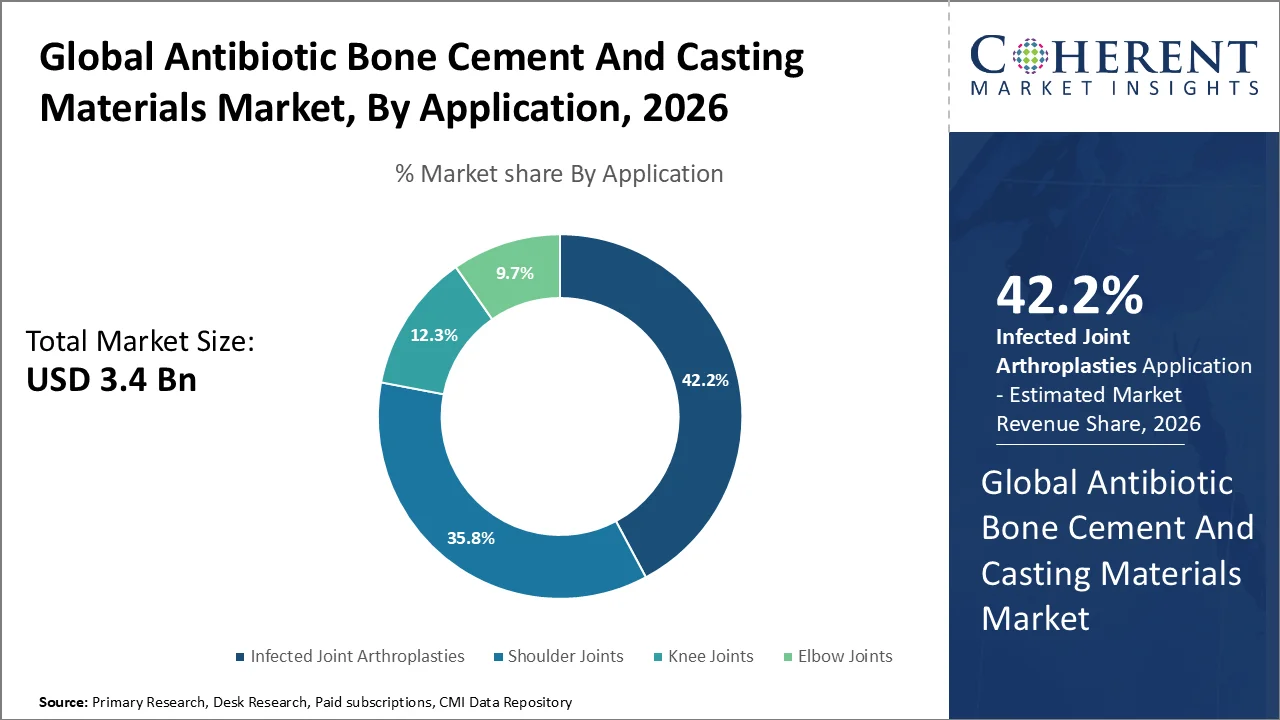
- Infected Joint Arthroplasties expected to hold largest market share of 42.2% in 2026 owing to its increasing volume of joint replacement surgeries. According to The Journal of Bone & Joint Surgery, revision total knee replacements are projected to reach 268,200 by 2030.
- Hospitals acquired the prominent market share of 45.8% in 2026 owing to the rising burden of periprosthetic joint infections (PJIs). Periprosthetic joint infection (PJI) affects 0.5%–2.3% of joint replacements, with a 1-year mortality of 4%–8% after primary hip replacement and an overall pooled mortality of approximately 11%.
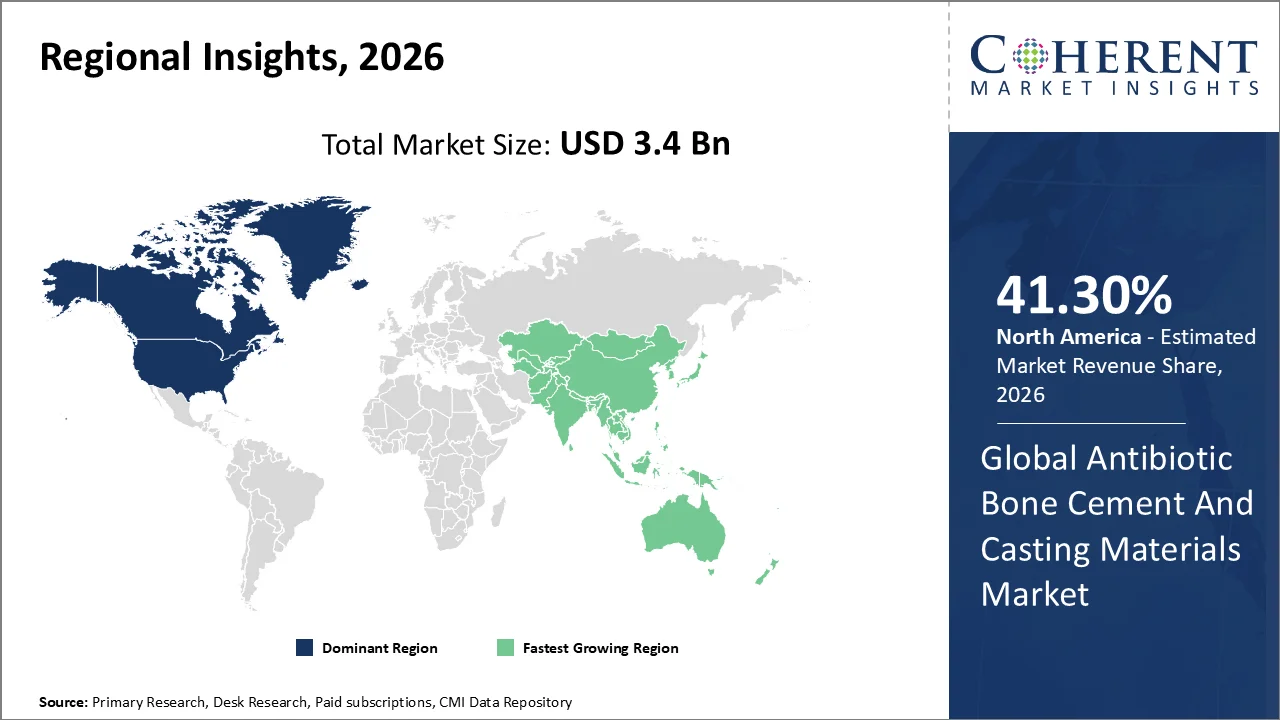
- North America is expected to acquire the dominant share of 41.3% in 2026 owing to its high volume of joint replacement surgeries.
Current Events and Their Impact on the Antibiotic Bone Cement And Casting Materials Market
Current Event | Description and its Impact |
European Union Medical Device Regulation (EU MDR) Compliance |
|
EU Antimicrobial Resistance (AMR) Policies and Antibiotic Stewardship |
|
Segmental Insights
- Current Industry Events of 2026
- Market Size Estimation
- Regional Breakdown
- Competitive Landscape
- Customer Intelligence
- Segmental Analysis
- Pricing Analysis
- Key Market Drivers, Challenges & Future Trends
- Customized Insights Section
Infected Joint Arthroplasties expected to hold largest market share
Infected Joint Arthroplasties expected to hold largest market share of 42.2% in 2026 owing to its growing demand for revision arthroplasty procedures. Infected joint arthroplasties boost demand in the antibiotic bone cement and casting materials market as healthcare providers seek effective solutions for managing periprosthetic joint infections. The rising number of joint replacement procedures, increasing implant-related complications, and growing adoption of revision surgeries accelerate market growth. Antibiotic bone cement delivers localized antimicrobial therapy, supports joint stability, and enhances treatment outcomes during infection management. Advances in antibiotic-loaded formulations further expand its application in orthopedic infection control procedures. For instance, in March 2026, Peptilogics enrolled the first patient in its phase 2/3 RETAIN trial evaluating PLG0206, an anti-biofilm therapy for treating prosthetic joint infections, a complication affecting around 2% of joint replacement procedures.
Why is Poly-Methyl-Methacrylate (PMMA) Acquiring the Largest Market Share?
Poly-Methyl-Methacrylate (PMMA) holds the largest market share of 38.8% in 2026. Poly-Methyl-Methacrylate (PMMA) drives growth in the antibiotic bone cement and casting materials market through its strong mechanical properties, dependable fixation performance, and extensive use in orthopedic procedures. Growing joint replacement surgeries, increasing implant-related infections, and rising demand for antibiotic-loaded cement in revision arthroplasty procedures are accelerating its adoption. PMMA enables localized antibiotic delivery, ensures structural support, and improves infection management, reinforcing its importance in advanced orthopedic treatments. For instance, in March 2026, Rohm has launched an in-house recycling technology at its Worms site that chemically recycles PMMA waste into high-quality MMA through industrial-scale depolymerization.
Which End User segment dominates the market?
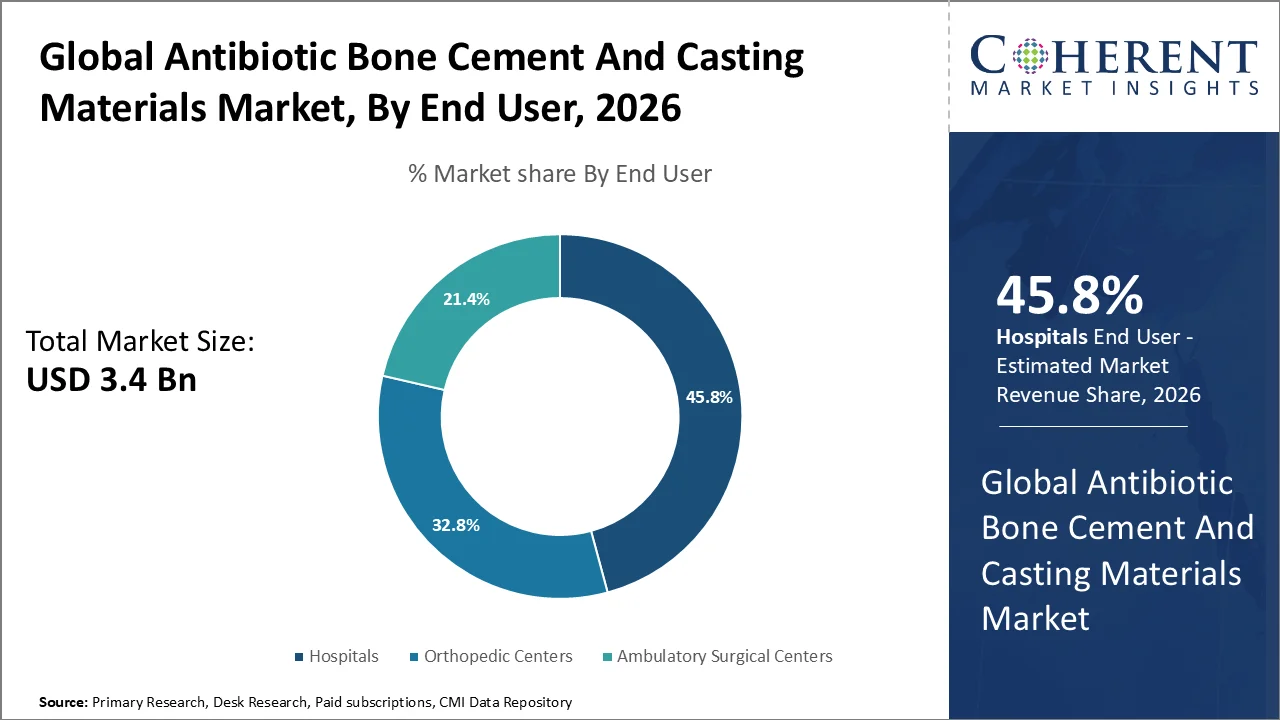
Hospitals acquired the prominent market share of 45.8% in 2026. Hospitals fuel growth in the antibiotic bone cement and casting materials market by performing a growing number of orthopedic surgeries, trauma procedures, and revision arthroplasties. Healthcare providers increasingly adopt antibiotic-loaded bone cement solutions to prevent and treat implant-related infections. Expanding healthcare infrastructure, advanced surgical capabilities, and stronger infection control practices further drive demand. Hospitals use these materials to achieve reliable implant fixation, deliver targeted antibiotic therapy, and improve overall patient care outcomes.
Antibiotic Bone Cement And Casting Materials Market Trends
- Rising adoption of antibiotic-loaded bone cement in orthopedic procedures enhances infection prevention and treatment outcomes, particularly in joint replacement surgeries, revision arthroplasty, and trauma-related bone repair. These materials provide localized antibiotic delivery, reduce infection risks, and support improved surgical recovery. Approximately 2.8 million hip and knee replacement procedures are performed annually across OECD countries, and procedure rates have steadily increased over the past decade, expanding the potential use of ALBC in primary and revision surgeries.
- Aging global populations increase the prevalence of osteoarthritis, osteoporosis, fractures, and degenerative joint disorders, strengthening demand for orthopedic surgeries and bone cement applications. Elderly patients represent a major population group requiring joint replacements and fracture management, increasing the need for reliable fixation and infection-control materials. According to the World Health Organization (WHO), the global population aged 60 years and older will increase from 1 billion in 2020 to 2.1 billion by 2050, substantially expanding the patient pool requiring orthopedic interventions.
- Rising incidence of periprosthetic joint infections (PJIs) drives demand for antibiotic bone cement in revision arthroplasty procedures. Healthcare providers increasingly use antibiotic-loaded cement spacers during staged revision surgeries to deliver targeted antimicrobial therapy and manage complex implant-related infections. PJI occurs in approximately 0.5–2.3% of joint replacement surgeries and remains one of the leading causes of revision arthroplasty worldwide.
- Supportive healthcare policies, improved reimbursement frameworks, and expanding access to orthopedic care encourage the adoption of advanced bone cement and casting materials. Increased insurance coverage for joint replacement and trauma care procedures enables more patients to access surgical treatments requiring orthopedic biomaterials. The Centers for Medicare & Medicaid Services (CMS) continues to reimburse hip and knee arthroplasty under Medicare, while many European healthcare systems provide universal reimbursement for medically necessary joint replacement procedures, supporting sustained procedural volumes.
Regional Insights
North America dominates owing to Growing Burden of Chronic Diseases and Risk Factors
North America is expected to acquire the dominant share of 41.30% in 2026. North America fuels growth in the antibiotic bone cement and casting materials market by performing a large number of orthopedic surgeries, maintaining advanced healthcare infrastructure, and adopting effective infection management solutions. Healthcare providers increase the use of these materials as joint replacement procedures rise, implant-related infections become more prevalent, and revision arthroplasty demand expands. Skilled orthopedic specialists, modern surgical facilities, and improved healthcare access enable wider adoption of antibiotic-loaded bone cement and casting materials for reliable fixation, infection control, and enhanced patient outcomes. For instance, Zimmer Biomet received FDA Breakthrough Device Designation for its iodine-treated total hip replacement system, marking the first product in the company’s history to earn this recognition.
Asia Pacific Antibiotic Bone Cement And Casting Materials Market Trends
The Asia Pacific antibiotic bone cement and casting materials market gains momentum as orthopedic disorders become more prevalent, joint replacement procedures increase, and the geriatric population expands. China's population aged 60 years and older is projected to reach 28% by 2040, driven by increasing life expectancy and declining fertility rates. Healthcare providers are strengthening infrastructure, improving access to advanced treatments, and promoting infection prevention awareness in orthopedic surgeries, which drives market adoption. Manufacturers are also advancing antibiotic-loaded bone cement formulations, while healthcare investments across emerging economies encourage the wider use of these innovative materials. In February 2025, Zimmer Biomet launched TEKCEM 1G and TEKCEM 3G antibiotic bone cements in India for prosthesis fixation in primary, revision, and trauma-related arthroplasty procedures.
United States Antibiotic Bone Cement And Casting Materials Market Trends
The United States Antibiotic Bone Cement and Casting Materials Market grows as more patients undergo orthopedic surgeries, bone infections become more prevalent, and healthcare providers seek advanced infection prevention solutions. An aging population, rising joint disorder cases, and innovations in antimicrobial materials actively drive market development. Higher healthcare investments, enhanced surgical techniques, and the adoption of advanced casting and bone repair products strengthen demand across hospitals and orthopedic care facilities. For instance, Heraeus Medical launched the PALACOS R & R+G pro All-in-One Fixation System, integrating PALACOS bone cement into a ready-to-mix closed vacuum system to simplify and standardize joint arthroplasty procedures.
China Antibiotic Bone Cement And Casting Materials Market Trends
China’s antibiotic bone cement and casting materials market grows as healthcare providers perform more orthopedic surgeries, treat more bone infection cases, and adopt advanced medical solutions. Expanding healthcare infrastructure, improved surgical methods, and increased use of infection control products actively drive demand for these materials. An aging population, rising trauma-related injuries, and stronger emphasis on faster patient recovery further encourage hospitals and healthcare facilities to use antibiotic-loaded bone cement and innovative casting materials.
Who are the Major Companies in Antibiotic Bone Cement And Casting Materials Industry
Some of the major key players in Antibiotic Bone Cement And Casting Materials are Smith & Nephew plc, Zimmer Biomet Holdings, Exactech, BSN medical GmbH, 3M Health Care Ltd, Stryker Corporation, Orthofix International, and DePuy Orthopaedics.
Key News
- In February 2026, Biocomposites launched its Synicem bone cement products in the UK for orthopaedic surgeries. Synimed, a Biocomposites subsidiary, has manufactured the Synicem bone cement line for over 25 years.
Market Report Scope
Antibiotic Bone Cement And Casting Materials Market Report Coverage
| Report Coverage | Details | ||
|---|---|---|---|
| Base Year: | 2025 | Market Size in 2026: | USD 3.4 Bn |
| Historical Data for: | 2020 To 2024 | Forecast Period: | 2026 To 2033 |
| Forecast Period 2026 to 2033 CAGR: | 8.2% | 2033 Value Projection: | USD 6.8 Bn |
| Geographies covered: |
| ||
| Segments covered: |
| ||
| Companies covered: | Smith & Nephew plc, Zimmer Biomet Holdings, Exactech, BSN medical GmbH, 3M Health Care Ltd, Stryker Corporation, Orthofix International, and DePuy Orthopaedics. | ||
Analyst Opinion
- The growth of the antibiotic bone cement and casting materials market is primarily driven by the unavoidable clinical burden of orthopedic infections and trauma cases rather than short-term healthcare trends. Periprosthetic joint infection (PJI) remains one of the most serious complications after joint replacement procedures, with studies estimating infection rates of around 1–2% after primary hip and knee arthroplasty and higher rates in revision surgeries. In my view, the continued rise in joint replacement procedures globally will keep infection prevention as a critical surgical priority, directly supporting demand for antibiotic-loaded bone cement.
- Antibiotic bone cement is becoming an essential tool in complex orthopedic reconstruction, particularly for revision surgeries and infection management. Clinical evidence shows that two-stage revision procedures using antibiotic-loaded spacers achieve infection control rates often exceeding 80–90% in chronic prosthetic joint infections. This level of effectiveness positions antibiotic cement not as an optional product but as a key component in orthopedic infection treatment protocols, especially in hospitals managing high volumes of joint replacement and trauma cases.
- Casting materials are also shifting from traditional plaster-based solutions toward lightweight synthetic alternatives due to improved patient comfort, durability, and faster recovery requirements. Fiberglass casting materials offer advantages such as water resistance, higher strength-to-weight ratios, and easier mobility compared with conventional plaster casts. With road accidents, sports injuries, and osteoporosis-related fractures contributing to millions of fracture cases annually, I believe healthcare systems will increasingly prioritize advanced casting materials that improve patient outcomes and reduce treatment limitations.
- The strongest future opportunity lies in the integration of antimicrobial technologies and advanced biomaterials within orthopedic care. As antibiotic resistance becomes a growing concern, manufacturers that develop safer, targeted antibiotic delivery systems and next-generation casting solutions are likely to gain stronger clinical acceptance. Hospitals are increasingly focusing on reducing post-surgical complications, shortening recovery periods, and improving infection management, making innovation a more important growth factor than basic product availability.
Speak to the analyst
Want personalized insights?
Take the findings above to one of our principal consultants, or have the report rebuilt around the segments, geographies and competitors you actually track.
Market Segmentation
- By Material (Revenue, USD Bn, 2021-2033)
- Poly-Methyl-Methacrylate (PMMA)
- Calcium Sulfate
- Coralline Hydroxyapatite
- Calcium Phosphate Cement
- By Application (Revenue, USD Bn, 2021-2033)
- Infected Joint Arthroplasties
- Shoulder Joints
- Knee Joints
- Elbow Joints
- By End User (Revenue, USD Bn, 2021-2033)
- Hospitals
- Orthopedic Centers
- Ambulatory Surgical Centers
- By Region (Revenue, USD Bn, 2021-2033)
- North America
- U.S.
- Canada
- Latin America
- Brazil
- Mexico
- Argentina
- Rest of Latin America
- Europe
- Germany
- U.K.
- France
- Italy
- Spain
- Russia
- Rest of Europe
- Asia Pacific
- China
- India
- Japan
- Australia
- South Korea
- ASEAN
- Rest of Asia Pacific
- Middle East
- GCC
- Israel
- Rest of Middle East
- Africa
- South Africa
- Central Africa
- North Africa
- North America
Sources
Primary Research interviews
- Orthopedic surgeons and healthcare professionals specializing in joint replacement, trauma care, and bone infection treatment
- Hospital procurement managers and medical device purchasing teams
- Manufacturers and suppliers of antibiotic bone cement and orthopedic casting materials
- Distributors and channel partners involved in orthopedic product supply chains
- Researchers and academicians involved in biomaterials, orthopedic implants, and infection prevention technologies
Databases
- Clinical trial databases and medical research repositories
- Government healthcare databases and regulatory databases
- Hospital and healthcare infrastructure databases
- Medical device registration and approval databases
- Scientific and biomedical literature databases
Magazines
- Orthopedic technology and medical device industry publications
- Healthcare innovation and medical technology magazines
- Surgical practice and hospital management magazines
- Biomaterials and life sciences industry publications
Journals
- Peer-reviewed orthopedic surgery journals
- Bone and joint research journals
- Biomaterials and tissue engineering journals
- Infection control and antimicrobial research journals
- Medical device technology and healthcare engineering journals
Newspapers
- Healthcare and medical technology news publications
- Business and industry newspapers covering healthcare manufacturing and innovation
- Regulatory and policy-related healthcare news sources
Associations
- American Academy of Orthopaedic Surgeons
- European Federation of National Associations of Orthopaedics and Traumatology
- International Osteoporosis Foundation
- National orthopedic and medical device associations
- Healthcare professional societies and surgical associations
Public Domain sources
- Government health department publications and healthcare statistics
- Regulatory authority databases for medical devices and materials
- Publicly available clinical guidelines and treatment protocols
- Open-access scientific publications and research repositories
- Hospital and healthcare infrastructure reports
- Patent databases and publicly available intellectual property records
Proprietary Elements
- CMI Data Analytics Tool
- Proprietary CMI Existing Repository of information for last 10 years
Get access to 250+ pages report
Every segment, forecast, competitor profile and data table behind the analysis above — available for instant download.
- ESOMAR Member
- ISO 9001:2015 Certified
- D-U-N-S Registered
- GDPR & CCPA Compliant
Missing comfort of reading report in your local language? Find your preferred language:
Transform your Strategy with Exclusive Trending Reports
Frequently Asked Questions
Demand is mainly driven by the increasing number of orthopedic procedures, rising cases of bone and joint infections, growing trauma-related injuries, and the need for effective infection prevention solutions in surgical care.
Antibiotic bone cement is widely used because it provides mechanical fixation while delivering antibiotics directly to the affected area.
Casting materials support bone healing by stabilizing fractures and protecting injured areas during recovery.
The adoption of advanced casting materials is influenced by the growing demand for faster recovery, better patient mobility, improved comfort, and reduced treatment limitations.
Technological advancements are improving antibiotic delivery systems, material strength, and compatibility with orthopedic applications.