

Global Peptide Synthesis Market Size and Share Analysis – Growth Trends and Forecasts (2026-2033)
The Global Peptide Synthesis Market size is expected to reach USD 946.5 Mn by 2033, from USD 559.5 Mn in 2026, exhibiting a CAGR of 7.8% during the forecast period.
Key Takeaways
- By product, Reagents and consumables segment lead the market in peptide synthesis with 57.2% share. This is because they have constant demand in each cycle of synthesis. Specific amino acids, coupling agents, and solvents are needed in each production of peptide, which have to be replenished regularly.
- North America is expected to be the largest market for peptide synthesis during the forecast period, accounting for over 35.7% of the market share in 2026. This is due to presence of major pharmaceutical and biotechnology companies.
- Asia Pacific is poised to be the second largest region with 25.2% shares in 2026, owing to increasing investment by international manufacturers.
- Europe is considered as the third largest region holding around 19% shares during the forecast period, due to rising prevalence of sexually transmitted diseases.
Market Overview
The peptide synthesis market has been witnessing consistent growth over the past few years, fueled by enhanced demand for peptide-based therapeutics, growing investments in pharmaceutical R&D, and advances in synthetic chemistry. Peptides are also being researched more and more in oncology, metabolic disorders, and infectious disease indications due to their specificity and good safety profiles. Growth of custom peptide services and automation of synthesis processes is also driving the market. In addition, solid-phase synthesis and liquid-phase synthesis methods are further increasing productivity and purity, and peptides are thus becoming more readily available for research and commercial use.
Current Events and Its Impact on Global Peptide Synthesis Market
Current Events | Description and its impact |
AI-Driven Peptide Design and Optimization Platforms |
|
Enlargement of High-Capacity Automated Mass-Scale Peptide Production Manufacturing |
|
Pipeline Analysis
Peptide synthesis market pipeline is healthy, propelled by increasing drug discovery activity and the rise of peptide therapeutic candidates. As of early 2025, there are more than 630 peptide-based clinical trials active, with over 80 peptides already approved in multiple indications—such as cancer, metabolic, and autoimmune disorders. This strong pipeline indicates increasing dependence on peptides as precision-targeted therapies.
Contract Development and Manufacturing Organizations (CDMOs) are central to this network. There are 75+ companies worldwide that provide peptide API manufacturing and associated services. These CDMOs facilitate scalable synthesis, purification, and regulatory assistance for sophisticated therapeutic peptides. Industry leaders such as Bachem, Thermo Fisher, Merck, GenScript, CordenPharma, and PolyPeptide Group own this pipeline, managing together early-stage and late-stage peptide projects.
Technological advancements are driving peptide pipeline throughput. Specifically, Cambrex (through Snapdragon Chemistry) introduced a liquid-phase peptide synthesis (LPPS) platform in September 2024, pairing batch reactors with continuous flow to minimize solvent usage and increase yields—a significant benefit for high-volume synthesis. In parallel, academic innovations like CreoPep, a deep-learning platform developed mid‑2025, facilitate label-free design of high-affinity peptides—efficiently guiding candidate selection early in the pipeline.
On the production side, firms such as Corden Pharma invested more than USD 526 million in early 2025 to construct a new GMP peptide production plant in Switzerland to increase capacity for research and commercial peptide production. Moreover, BioDuro established an automated SPPS-scale laboratory in early 2025 in Shanghai to facilitate greater throughput for commercial peptide API supply. In total, the pipeline for peptide synthesis is growing fast—with ongoing innovation in discovery as well as manufacturing—aided by an increasing CDMO ecosystem and disruptive technologies.
- Current Industry Events of 2026
- Market Size Estimation
- Regional Breakdown
- Competitive Landscape
- Customer Intelligence
- Segmental Analysis
- Pricing Analysis
- Key Market Drivers, Challenges & Future Trends
- Customized Insights Section
Patent Landscape
The market for peptide synthesis is dominated by a thick patent landscape with dominant players and focused innovators in possession of seminal intellectual property in technologies such as Liquid‑Phase Peptide Synthesis (LPPS) and enzymatic coupling. Companies such as Ajinomoto, Bachem, Eli Lilly, Jitsubo, Enzypep/Almac, Novozymes, and Exactmer dominate core LPPS and enzymatic approaches, with closely overlapping patent clusters forming thickets that restrict the competitors' freedom-to-operate in high-efficiency, continuous synthesis methods.
Although foundational LPPS patents such as Jitsubo’s early filings and Ajinomoto’s mid‑2010s filings are not yet expired—in fact many extend into the early 2030s—expiration of some in the late 2020s is expected to open opportunities for broader adoption. Similarly, key enzymatic synthesis patents (e.g. Enzypep’s 2008–2013 filings) are due to lapse between 2028 and 2033, which may enable entry by generic manufacturers or smaller players using these greener coupling routes.
Thematic filings for patents peaked from 2015 to 2025, indicating industry investment in patented technology such as continuous flow LPPS reactors, enzyme-engineered systems with increased substrate scope, and solvent-minimizing green processes. There are typical licensing partnerships—in the case of Bachem, enzyme-platforms have been licensed—and control over patents tends to rest with small innovators, while larger CMO and pharma companies maintain complementary IP for scale-up.
Filing is also emerging on AI-designed peptides and green synthesis technologies, with companies patenting on bio‑informatics‑based library generation and waste‑minimizing chemistry platforms. Patent analytics tools based on AI such as Patent Agent are also being patented to automate IP strategy in pharma R&D.
Overall, the patent environment remains protective and concentrated: competitors must carefully negotiate licensing or await expirations to access key innovations in LPPS or enzymatic peptide synthesis, while future generics entry is tied to expiry cycles and new licenses.
Global Peptide Synthesis Market- Drivers
- Growing Demand from Pharmaceutical Industry
The global peptide synthesis market is expected to witness significant growth over the coming years owing to the rising demand from the pharmaceutical industry worldwide. Peptides have emerged as an important class of therapeutic molecules that offer several advantages over conventional small molecule drugs, such as high selectivity and potency. Several peptide-based drugs are already on the market for the treatment of cancer, metabolic disorders, cardiovascular diseases, and other chronic conditions.
Moreover, peptides can be customized and modified through chemical synthesis to improve their activity, selectivity, and bioavailability. With increasing focus on developing novel biotherapeutics, pharmaceutical companies are actively involved in peptide-based drug discovery and development programs. Peptide drugs currently under clinical trials or U.S. Food and Drug Administration review have demonstrated efficacy in conditions where conventional treatments have limitations.
- Rising Research in Proteomics and Genomics
Another key driver propelling the peptide synthesis market is the rising academic and industrial research in the areas of proteomics and genomics. Proteomics deals with the large-scale study of proteins, particularly their structures, functions, and interactions. It helps in a comprehensive understanding of physiological and pathological processes in living systems. Peptide synthesis plays a critical role in proteomics, as peptides serve as convenient surrogates for proteins in analytical methods and assay development. They are also used as signature tags for protein identification and biomarker discovery through mass spectrometry.
Genomics research involving the identification of protein-protein interactions and protein expression profiling also relies on customized peptide synthesis. With advancements in high-throughput techniques, the scope and scale of proteomics and genomics investigations have grown significantly in recent years. Major academic institutions and contract research organizations have set up core proteomics facilities to support multi-disciplinary research applying these ‘omics’ approaches. As these studies increasingly focus on clinical applications related to precision medicine, healthcare, and disease pathology, it will generate a persistent demand for specialized peptide synthesis services.
The market is witnessing new product launches catering to emerging proteomics and genomics applications such as specialized resin beads, novel linkers, and reagent kits for multiplex assays. This increasing adoption of proteomics and genomics technologies by research organizations is driving growth of the global peptide synthesis market.
- Growing focus on customized peptides
The global peptide synthesis market is indeed witnessing a growing focus on customized peptides, which cater to specific research, therapeutic, and commercial needs. Custom peptides are tailor-made to specific sequences and modifications required by researchers and pharmaceutical companies. Here is an overview of why customized peptides are gaining prominence.
Global Peptide Synthesis Market- Opportunities
- Growing applications of peptides in cosmeceuticals and nutraceuticals: The global peptide synthesis market is indeed experiencing an expansion into diverse sectors, including cosmeceuticals and nutraceuticals. The unique properties of peptides, such as their biological activity, specificity, and relative safety, make them attractive ingredients for products in these markets. Here is how peptides are being utilized.
- Cosmeceuticals: Cosmeceutical products typically combine cosmetics with therapeutically active ingredients to provide added benefits beyond traditional cosmetics.
- Anti-aging Peptides are incorporated into skincare products for their anti-aging properties. They may stimulate collagen production, which improves skin elasticity and reduces the appearance of wrinkles.
- Skin Repair and Protection Some peptides have been found to facilitate skin repair and regeneration and protect against damage from environmental factors like UV radiation.
- Targeted Solutions Peptides in cosmeceuticals can be designed to target specific skin concerns, such as pigmentation, redness, and uneven texture.
- Delivery Mechanisms Advances in peptide synthesis technologies have led to the development of more stable peptides and improved delivery systems that enhance the efficacy of cosmeceutical products.
- Nutraceuticals: Nutraceuticals are products derived from food sources with extra health benefits in addition to their basic nutritional value.
- Functional Foods Peptides are being added to functional foods to enhance health and well-being. For instance, bioactive peptides can have antioxidant, antimicrobial, or anti-hypertensive effects.
- Supplements Peptide supplements are gaining popularity for various applications, including weight management, muscle growth, and immune system support.
- Health and Disease Management Specific bioactive peptides may play roles in the management and prevention of diseases, such as metabolic syndrome, cardiovascular diseases, and type II diabetes.
- Rising Healthcare Expenditure: One of the significant factors influencing the growth rate of the global peptide synthesis market is the growing healthcare expenditure, which helps in improving its infrastructure. For instance, according to the International Health Care System of the U.S., in June 2020, U.S. government organizations aim to improve the healthcare infrastructure by increasing funding, setting legislation and national strategies, and cofounding and setting basic requirements and regulations for the Medicaid program.
- Advancements in peptide technologies: Advancements in peptide technologies have been pivotal in catalyzing growth within the biotechnology and pharmaceutical sectors. These advancements are broad-ranging and impact peptide synthesis, modification, and utilization in several ways:
- Solid-Phase Peptide Synthesis (SPPS) Innovations in SPPS, including new resin materials and linker technologies, have improved efficiency and quality of peptide synthesis. This has also enabled the synthesis of longer and more complex peptides with greater purity.
- Automated Synthesis The widespread adoption of automated synthesizers has increased the throughput and reproducibility of peptide synthesis, making scalable production more viable for commercial purposes.
- Peptide Libraries Development of combinatorial chemistry techniques has facilitated the creation of extensive libraries of peptides for high-throughput screening. This is particularly useful in drug discovery for identifying peptides with favorable biological activities.
- Peptide Modifications Advances in chemical ligation techniques, such as native chemical ligation (NCL) and expressed protein ligation (EPL), have allowed scientists to create peptides with post-translational modifications, enhancing their stability and bioactivity.
Global Peptide Synthesis Market- Trends
- Increased outsourcing of peptide synthesis: The trend of increased outsourcing of peptide synthesis solutions for biotech and pharma are often seeking to expedite drug development processes and reduce costs. There are several reasons behind this trend:
- Specialization Peptide synthesis requires a high degree of specialization, and dedicated peptide synthesis companies possess the needed expertise, facilities, and technology.
- Cost-Effectiveness Outsourcing peptide synthesis can be more cost-effective than in-house production, especially for companies without the necessary infrastructure or for short-term projects.
- R&D Focus By outsourcing, companies can focus their internal resources on research and development, as well as on their core competencies, leaving the complexities of peptide synthesis to specialized vendors.
- Rapid Turnaround Contract Research Organizations (CROs) can offer rapid turnaround times due to their focus on peptide synthesis, enabling faster progression from research to clinical phases.
- Growing preference for automated peptide synthesis: The global peptide synthesis market is indeed witnessing a growing preference for automated peptide synthesis, which presents several advantages over manual synthesis methods. The following points highlight the key factors behind this trend:
- Efficiency and Throughput Automated synthesis machines can produce multiple peptides simultaneously at a rapid pace, greatly increasing the throughput and efficiency of peptide production.
- Reproducibility and Accuracy Automation minimizes human error, leading to highly reproducible peptides with consistent quality, which is crucial for research as well as therapeutic applications.
- Scalability Automated synthesizers can often be easily scaled to accommodate larger or smaller synthesis scales, allowing for flexible production volumes as needed.
- Cost-Effectiveness Over time, automation can reduce the cost per peptide synthesis by optimizing the use of reagents and reducing labor costs, especially for large-scale or high-volume productions.
Segmental Insights
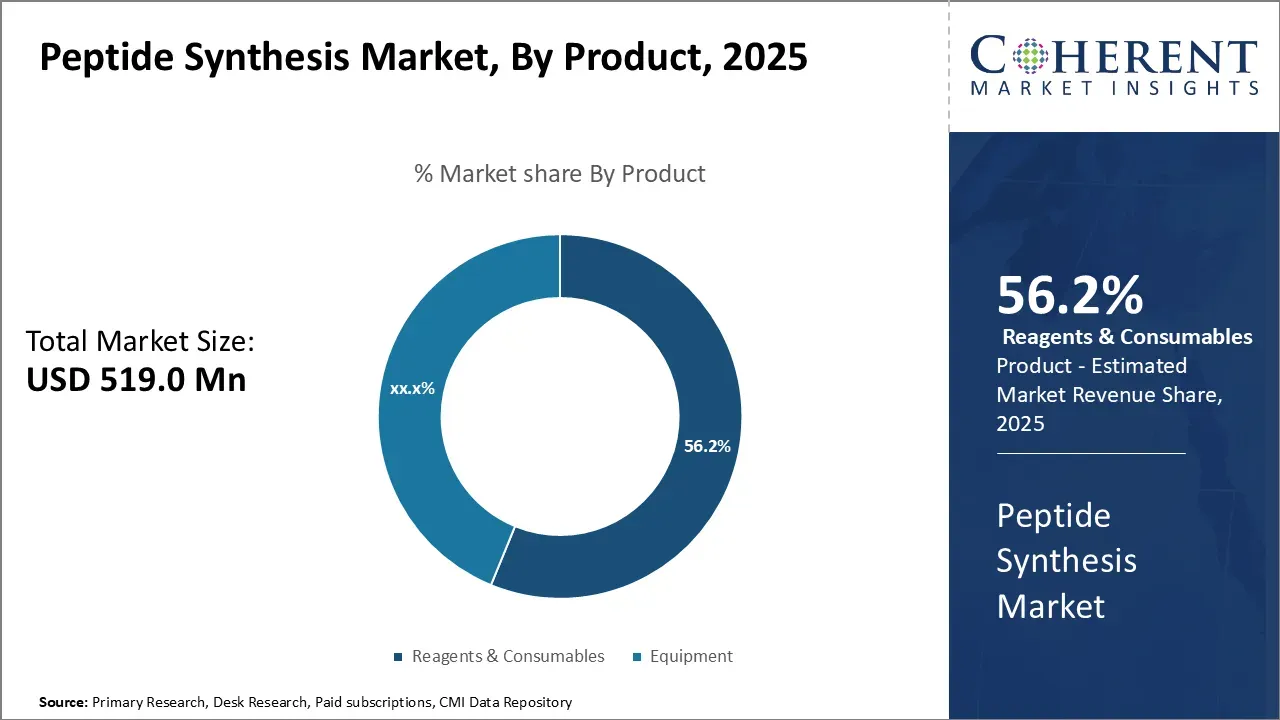
Peptide Synthesis Market Insights, By product
Reagents and consumables dominate the peptide synthesis market with a 57.2% share due to their recurring demand in every synthesis cycle. Each peptide production requires specific amino acids, coupling agents, and solvents, which must be replenished regularly. Unlike instruments, which are long-term assets, reagents are consumed with each batch. The growing number of research activities and peptide-based drug development increases their usage. Additionally, advancements in reagent efficiency and purity have boosted their adoption across labs and pharma companies.
Regional Insights
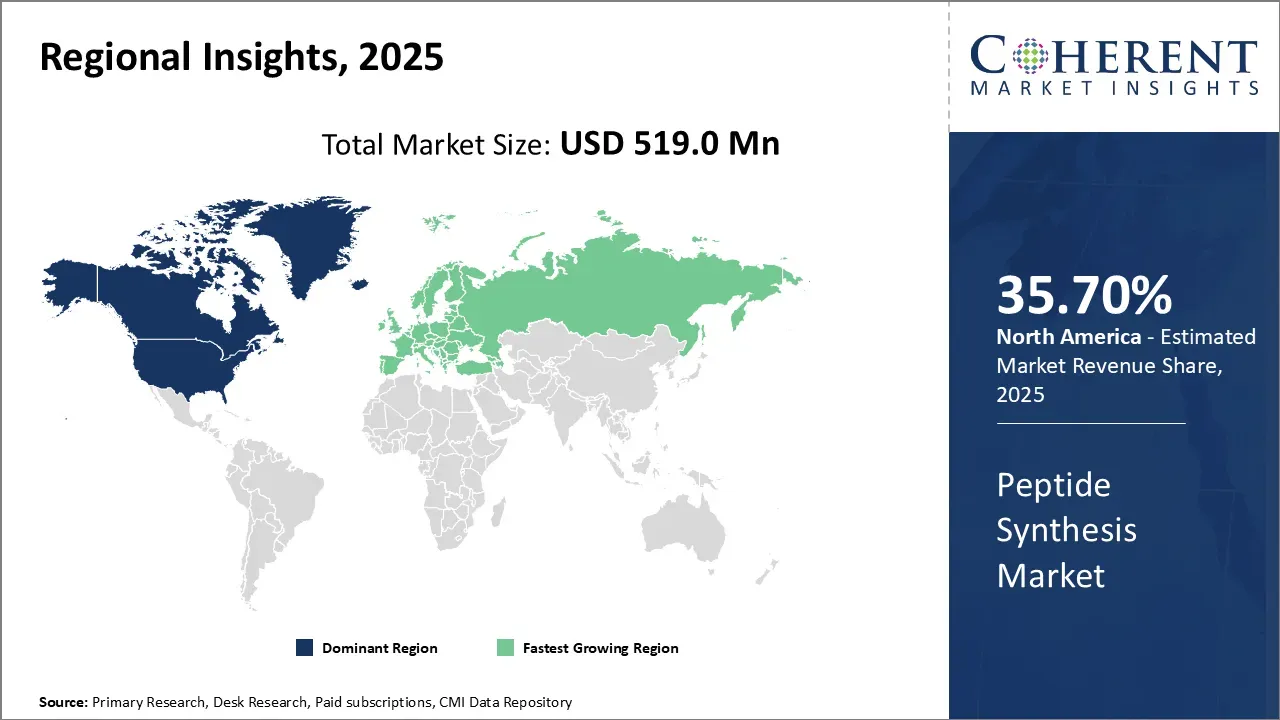
Global Peptide Synthesis Market- Regional Insights
North America is expected to be the largest market for peptide synthesis during the forecast period, accounting for over 35.70% of the market share in 2026. North America has remained the dominant region in the global peptide synthesis market over the past decade. The presence of major pharmaceutical and biotechnology companies in the U.S. and Canada has fueled research and development activities in this field.
These companies are actively investing in developing novel peptide-based drugs and therapeutics. Furthermore, strong government funding for healthcare and life sciences research provides impetus to peptide-based drug discovery and drives regional market growth.
The pricing of synthesized peptides in North America is among the highest globally due to the advanced technologies and production capabilities of players in this region. For instance, most American companies offering peptide synthesis services employ sophisticated techniques like solid-phase peptide synthesis, which enable the production of complex peptides.
This sophisticated production comes at a premium but ensures the highest purity and yield for customers. Several North American companies also have extensive custom peptide libraries that allow academic researchers to screen millions of peptide sequences at once for their studies.
Asia Pacific market is expected to be the second-largest market for peptide synthesis, accounting for over 25.2% of the market share in 2026. Asia Pacific has emerged as the fastest-growing regional market for peptide synthesis in recent times on account of increasing investments by international manufacturers to tap into the opportunities in this region.
Countries like China, India, and South Korea have emerged as global hotspots for outsourced drug discovery and manufacturing activities due to the availability of a low-cost and highly skilled scientific workforce. Domestic players in Asia Pacific are gaining expertise in custom peptide synthesis, which is attracting several multinational pharmaceutical companies to outsource their peptide needs to this region.
Moreover, governments across Asia Pacific are promoting investments in biotech and biopharma sectors through initiatives like tax rebates and the easing of regulations, which is positively impacting the regional peptide synthesis market.
Europe market is expected to be the fastest-growing market for peptide synthesis, with a share of 19% during the forecast period. The growth of the market in Europe is attributed to the increasing prevalence of sexually transmitted diseases in the region.
Peptide Synthesis Market Dominating Countries
United States Peptide Synthesis Market Analysis and Trend
The U.S. dominates the market for peptide synthesis globally owing to strong pharmaceutical R&D, intense biotech infrastructure, and a high volume of clinical trials using peptide-based drugs. Key companies such as Thermo Fisher Scientific, CEM Corporation, and AAPPTec have their headquarters in the country, furthering technology and large-scale peptide production.
Germany Peptide Synthesis Market Analysis and Trend
Germany leads the European peptide synthesis market owing to its sophisticated chemical manufacturing infrastructure and focus on life sciences innovation. Peptide production and research facilities are managed by companies such as Merck KGaA and Bachem, complemented by robust academic–industry partnership in biotechnology.
Switzerland Peptide Synthesis Market Analysis and Trend
Switzerland is a central hub for peptide synthesis due to its concentration of specialized peptidyl manufacturers like Bachem and CordenPharma. The nation excels in high-purity GMP peptide synthesis and custom synthesis options to suit global pharmaceutical firms with a strong focus on oncology and metabolic disorder uses.
India Peptide Synthesis Market Analysis and Trend
India is a rising force in peptide synthesis, with increasing export demand and competitive pricing. Indian companies provide custom synthesis, research-grade peptides, and manufacturing services at scale. Support from the government for drug innovation and broader CDMO capabilities is fueling this expansion.
Market Report Scope
Peptide Synthesis Market Report Coverage
| Report Coverage | Details | ||
|---|---|---|---|
| Base Year: | 2025 | Market Size in 2026: | USD 559.5 Mn |
| Historical Data for: | 2020 To 2024 | Forecast Period: | 2026 To 2033 |
| Forecast Period 2026 to 2033 CAGR: | 7.8%2033 Value Projection: | USD 946.5 Mn | |
| Geographies covered: |
| ||
| Segments covered: |
| ||
| Companies covered: | GenScript Biotech Corporation, Merck KGaA, ThermoFisher Scientific Inc., Syngene, Lonza, Novo Nordisk A/S, Bachem Holding AG, Gyros Protein Technologies, Creative Diagnostics, CEM Corporation, PuroSynth, AAPPTec, Biotage AB, AnaSpec, ABclonal, Inc. and Novelgene Technologies | ||
| Growth Drivers: |
| ||
| Restraints & Challenges: |
| ||
Global Peptide Synthesis Market- Recent Developments
- In September 2024, Snapdragon Chemistry (a Cambrex subsidiary) launched a groundbreaking liquid-phase peptide synthesis process based on conventional API batch reactors and continuous flow. This method reduces the use of solvent and reagent waste over traditional solid-phase synthesis, increasing cost-effectiveness and eco-friendliness—particularly for peptides with up to 12 residues in length.
- On 16 July 2024, CordenPharma laid out a three-year record €900 million investment plan to expand its Peptide Platform. The expansion includes increasing existing capacities in Colorado and building a greenfield plant close to Basel, with the aim of more than doubling sales to over €1 billion by 2028. This is driven by soaring demand for GLP‑1 peptide APIs and capacity for large-scale peptide production.
Analyst View
- The global peptide synthesis market is poised to grow significantly over the coming years. The market is driven by several factors, such as rising investment in research and development activities for novel drug discovery and increasing demand for personalized medicine.
- Furthermore, the growing prevalence of chronic diseases like cancer and diabetes is expected to propel the demand for peptide-based drugs and boost market growth. The role of peptide synthesis in cancer therapy involves enabling the creation of targeted peptide-based drugs that improve treatment efficacy and reduce side effects.
- North America currently dominates the global peptide synthesis market owing to major biopharma companies investing heavily in peptide-related R&D. However, Asia Pacific is likely to be the fastest-growing region due to increasing government support for drug development research and rising biotech investments. While the market opportunities are plentiful, high capital requirements and costs associated with peptide synthesis equipment and reagents pose challenges to market players. Stringent regulatory norms also increase the time and costs involved in developing and commercializing peptide-based drugs.
- However, the growth of outsourcing activities to contract manufacturing organizations is expected to provide opportunities for market expansion. Key players are making efforts to introduce innovative technologies like automated peptide synthesizers to streamline the synthesis process and reduce production costs.
- Additionally, greater adoption of oral drug delivery methods could help address major restraints in the market. In conclusion, the future prospects for the global peptide synthesis market appear bright, driven by demand for novel therapeutics.
Market Segmentation
- By Product (Revenue, USD Mn, 2021 - 2033)
- Reagents & Consumables
- Equipment
- Peptide Synthesizers
- Lyophilizer
- Chromatography Equipment
- By Technology (Revenue, USD Mn, 2021 - 2033)
- Solid Phase
- Liquid Phase
- Hybrid and Recombinant
- By Application (Revenue, USD Mn, 2021 - 2033)
- Therapeutics
- Metabolic Disorders
- Cardiovascular Disorders
- Respiratory Disorders
- Infectious Diseases
- Others
- Diagnosis
- Research
- Therapeutics
- By End User (Revenue, USD Mn, 2021 - 2033)
- Biopharmaceutical Companies
- Contract Development & Manufacturing Organization (CDMO)/Contract Research Organization (CRO)
- Research Institutes
- Others
- By Region (Revenue, USD Mn, 2021 - 2033)
- North America
- U.S.
- Canada
- Latin America
- Brazil
- Argentina
- Mexico
- Rest of Latin America
- Europe
- Germany
- U.K.
- Spain
- France
- Italy
- Russia
- Rest of Europe
- Asia Pacific
- China
- India
- Japan
- Australia
- South Korea
- ASEAN
- Rest of Asia Pacific
- Middle East
- GCC Countries
- Israel
- Rest of Middle East
- Africa
- South Africa
- North Africa
- Central Africa
- North America
- Top companies in Global Peptide Synthesis Market
- GenScript Biotech Corporation
- Merck KGaA
- ThermoFisher Scientific Inc.
- Syngene
- Lonza
- Novo Nordisk A/S
- Bachem Holding AG
- Gyros Protein Technologies
- Creative Diagnostics
- CEM Corporation
- PuroSynth
- AAPPTec
- Biotage AB
- AnaSpec
- ABclonal, Inc.
- Novelgene Technologies
Sources
Primary Research Interviews
- Contract Research Organizations (CROs) specializing in peptide synthesis
- Pharmaceutical and biotechnology companies utilizing peptide synthesis services
- Academic researchers and institutions involved in peptide research
- Online peptide synthesis service providers and platform operators
- Others
Databases
- Scopus
- Web of Science
- Chemical Abstracts Service (CAS)
- Others
Magazines
- Chemical & Engineering News
- Nature Biotechnology Magazine
- Drug Discovery & Development Magazine
- Pharmaceutical Manufacturing Magazine
- Others
Journals
- Journal of Peptide Science
- Bioconjugate Chemistry
- Organic & Biomolecular Chemistry
- Others
Newspapers
- The Wall Street Journal
- Financial Times
- Reuters Business News
- Bloomberg News
- Others
Associations
- American Peptide Society (APS)
- European Peptide Society (EPS)
- International Peptide Society
- Association of Biotechnology Led Enterprises (ABLE)
- Others
Public Domain Sources
- U.S. Food and Drug Administration (FDA) databases
- European Medicines Agency (EMA) publications
- World Health Organization (WHO) reports
- National Institutes of Health (NIH) databases
- Others
Proprietary Elements
- CMI Data Analytics Tool
- Proprietary CMI Existing Repository of information for last 8 years.
*Definition: Peptide synthesis is the process of chemically creating peptides, which are chains of amino acids linked together by peptide bonds. It involves the step-by-step addition of amino acids in a specific sequence to build a peptide of a defined length with a specific structure. This process is fundamental in biochemistry and molecular biology and has significant applications in both research and therapeutic developments.
Get access to 250+ pages report
Every segment, forecast, competitor profile and data table behind the analysis above — available for instant download.
- ESOMAR Member
- ISO 9001:2015 Certified
- D-U-N-S Registered
- GDPR & CCPA Compliant
Missing comfort of reading report in your local language? Find your preferred language:
Transform your Strategy with Exclusive Trending Reports
Frequently Asked Questions
The Peptide Synthesis Market size is estimated to be valued at USD 559.5 Mn in 2026, and is expected to reach USD 946.5 Mn by 2033.
High capital investment for equipment and technology is the key factors hampering growth of the global market.
Peptide synthesis enables the creation of specific antigenic peptides for developing targeted vaccines and studying immune responses.
The leading countries in peptide synthesis production include the United States, China, and Germany due to their advanced biotech industries and manufacturing capabilities.
Peptide synthesis is used in diagnostics to produce synthetic peptides that serve as biomarkers or probes for detecting diseases through assays and tests.
Growing demand from pharmaceutical industry, rising research in proteomics and genomics, and a growing focus on customized peptides are the major factors driving the market.
Among product, Reagents & Consumables in the major segment in market, which accounted for the largest share of over 56.2% in 2023 owing to increasing product launch by the key market players.