

Global AI in Drug Discovery Market Size and Forecast – 2026 To 2033
The global AI in drug discovery market is expected to grow from USD 3,240.0 Mn in 2026 to USD 15,536.2 Mn by 2033, registering a compound annual growth rate (CAGR) of 25.1% from 2026 to 2033. The market for global AI in drug discovery is poised for significant expansion, fueled by the increasing public investment in AI-enabled biomedical research and drug discovery.
In FY2025, the U.S. National Institutes of Health (NIH) awarded USD 35.3 billion in biomedical research grants, while its data science initiatives are supporting AI/ML applications using omics, imaging, electronic health record, and other biomedical datasets. This highlights the expanding availability of public funding and data infrastructure for AI-enabled biomedical research, creating a stronger foundation for the adoption of AI across target identification, molecular analysis, compound screening, and other drug discovery workflows.
Key Takeaways of the Global AI in Drug Discovery Market
- Software is projected to hold 66.8% of the global AI in drug discovery market share in 2026, making it dominant offering segment across North America due to the region’s established AI infrastructure and regulatory experience. For instance, the U.S. FDA reported experience with more than 500 submissions containing AI components between 2016 and 2023, covering nonclinical, clinical, manufacturing, and postmarketing applications and demonstrating the expanding role of AI-enabled software across drug development workflows.
- Machine Learning is projected to hold 47.6% of the global AI in drug discovery market share in 2026, making it dominant technology segment across Europe supported by increasing regulatory acceptance of AI-based methodologies in medicines development. For instance, in March 2025, the European Medicines Agency (EMA) issued its first qualification opinion on an AI-based methodology, AIM-NASH, recognizing AI-assisted analysis of liver biopsy images as scientifically valid evidence for clinical trials, demonstrating the growing regulatory acceptance of AI-based analytical methods in medicines development.
- Hit identification and screening is projected to hold 26.1% of the global AI in drug discovery market share in 2026, making it dominant drug discovery process segment across Asia Pacific supported by increasing regulatory integration of AI into pharmaceutical development. For instance, in April 2026, China's NMPA issued its “Artificial Intelligence + Drug Regulation” implementation opinions, calling for AI integration across drug R&D, review and approval, testing, surveillance, and the broader pharmaceutical lifecycle, alongside development of high-quality datasets and large models.
- North America market maintains dominance with an expected share of 51.6% in 2026, bolstered by its large pharmaceutical R&D base and increasing integration of AI into drug-development workflows. For instance, in May 2026, the U.S. FDA launched HALO, a consolidated platform integrating more than 40 application and submission data sources, together with an expanded AI system for FDA scientific reviewers and investigators, strengthening the data infrastructure supporting AI-enabled regulatory and pharmaceutical activities.
- Asia Pacific is expected to exhibit the fastest growth in the global AI in drug discovery market, registering an estimated CAGR of 27.2% during 2026–2033, driven by expanding pharmaceutical R&D capabilities and increasing regulatory focus on responsible AI use. For instance, in June 2026, Japan’s PMDA established a cross-sectional project team to develop guiding principles for the appropriate use of AI across the lifecycle management of medical products, specifically addressing accountability, transparency, and data and personal-information handling. This regulatory initiative supports the development of a clearer framework for AI adoption within the region’s pharmaceutical ecosystem.
Segmental Insights
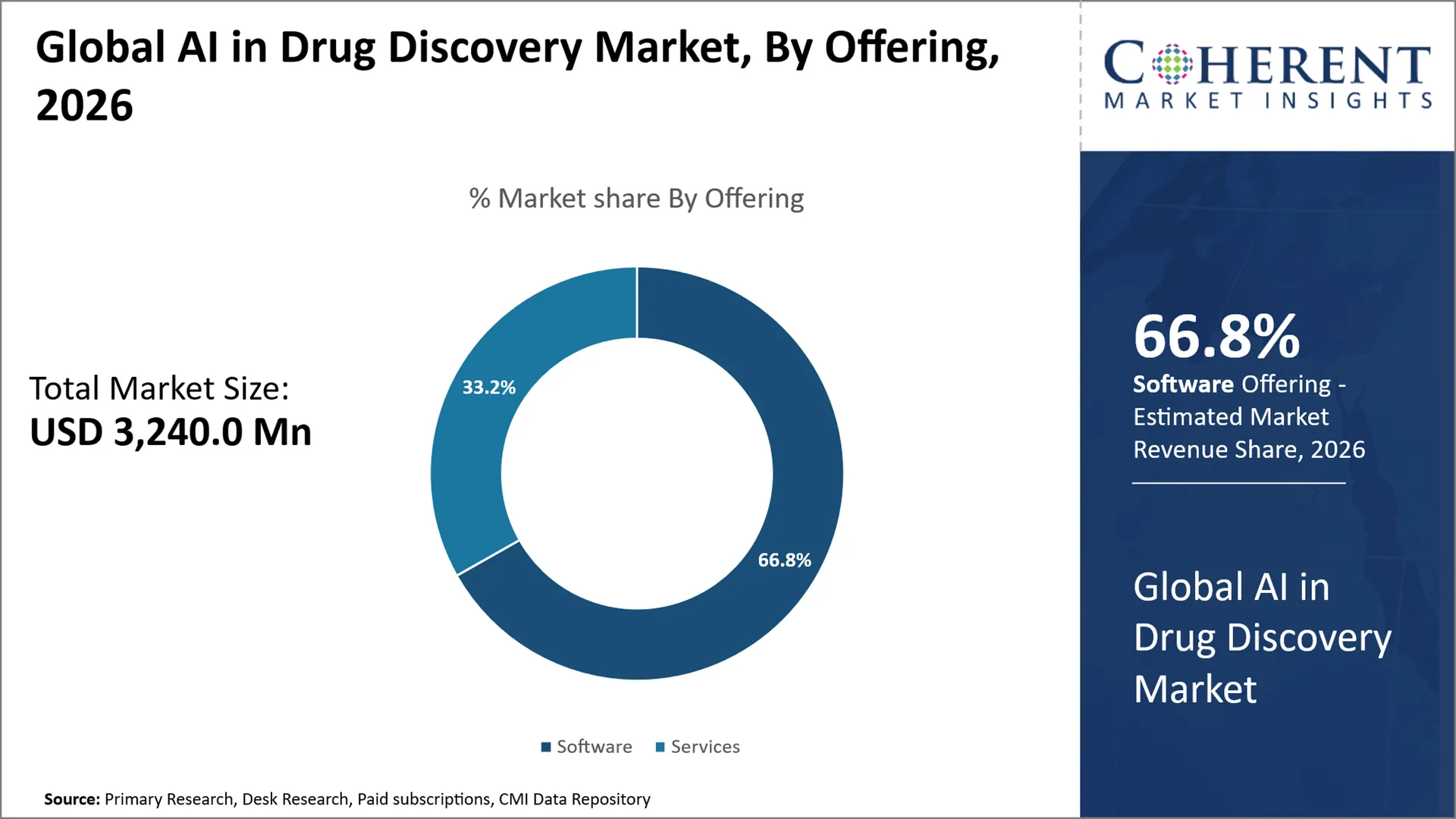
Why Do Software Dominate the Global AI in Drug Discovery Market?
Software is projected to hold the market share of 66.8% in 2026, owing to its ability to analyze complex data sets and automate computational processes, and carry out large-scale molecular analysis. The increasing convergence of AI and regulatory practices is expected to drive the creation and adoption of a dedicated software platform. For instance, in June 2026, UK's 'Medicines and Healthcare products Regulatory Agency (MHRA) established an artificial intelligence sandbox in order to evaluate the role of artificial intelligence in vaccine design, optimizing safety assessment, risk prediction and reducing use of animal testing, highlighting the importance of validated digital and artificial intelligence-based tools for medicines R&D.
- Current Industry Events of 2026
- Market Size Estimation
- Regional Breakdown
- Competitive Landscape
- Customer Intelligence
- Segmental Analysis
- Pricing Analysis
- Key Market Drivers, Challenges & Future Trends
- Customized Insights Section
Why Does Machine Learning Represent the Largest Technology Segment in the AI in Drug Discovery Market?
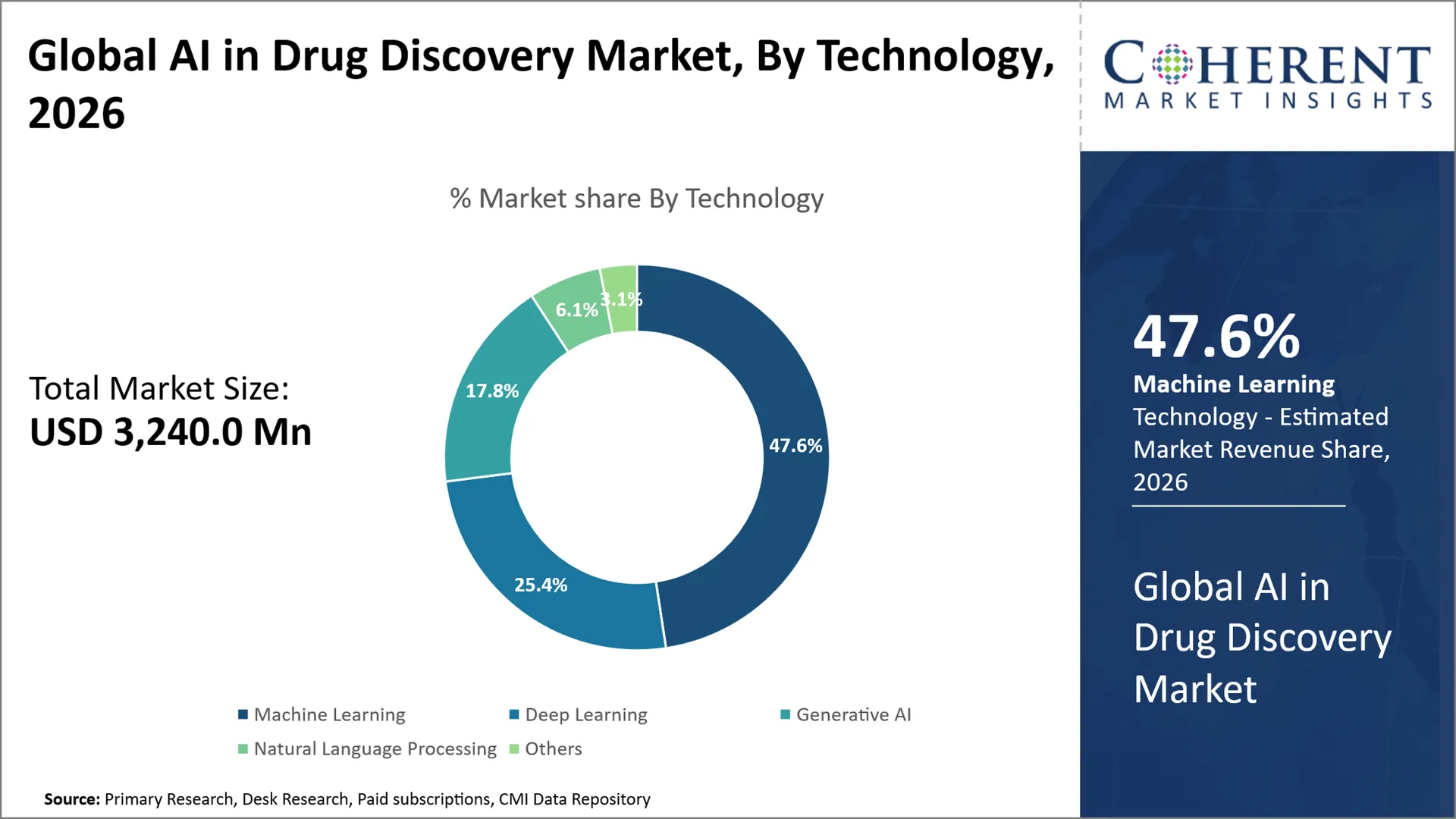
Machine learning is projected to hold a market share of 47.6% in 2026, due to its ability to handle large, complex and biomedical data sets, identify structure-activity relationships, predict molecular properties, and select high-priority drug candidates. Additionally, ML-based target identification, virtual screening, ADMET prediction and lead optimization is gaining greater adoption in pharmaceutical research and development. For instance, in January 2026, the U.S Food and Drug Administration and the European Medicines Agency jointly introduced 10 principles to facilitate the use of artificial intelligence in the development of drugs. These principles cover data management, the development of models, the evaluation of performance, and the management of their lifecycle, and provide a more regulated framework for medicine development using machine learning.
Hit Identification and Screening Segment Dominates the Global AI in Drug Discovery Market
The hit identification and screening segment is projected to hold a market share of 26.1% in 2026, attributed to the ability of AI to screen compound libraries rapidly, estimate compound interactions, and identify & shortlist potential drug candidates for experimental validation. Additionally, AI-empowered virtual screening may also lower the need for experimental test and expedite early-stage drug discovery. For instance, in June 2026, the AI Adoption Plan for Life Sciences by UK Government highlighted virtual compound screening as an AI application that has the potential to accelerate time-consuming experimental processes, screen larger numbers of therapeutics and rank compounds prior to experimental testing.
Current Events and their Impact
Current Events | Description and its Impact |
ICH Finalizes Model-Informed Drug Development Guideline (June 2026) |
|
EMA and U.S. FDA Establish Guiding Principles for AI Use in Drug Development (January 2026) |
|
EMA Expands Regulatory Monitoring of AI Applications in Medicines Development (July 2025) |
|
AI in Drug Discovery Market Dynamics
Market Drivers
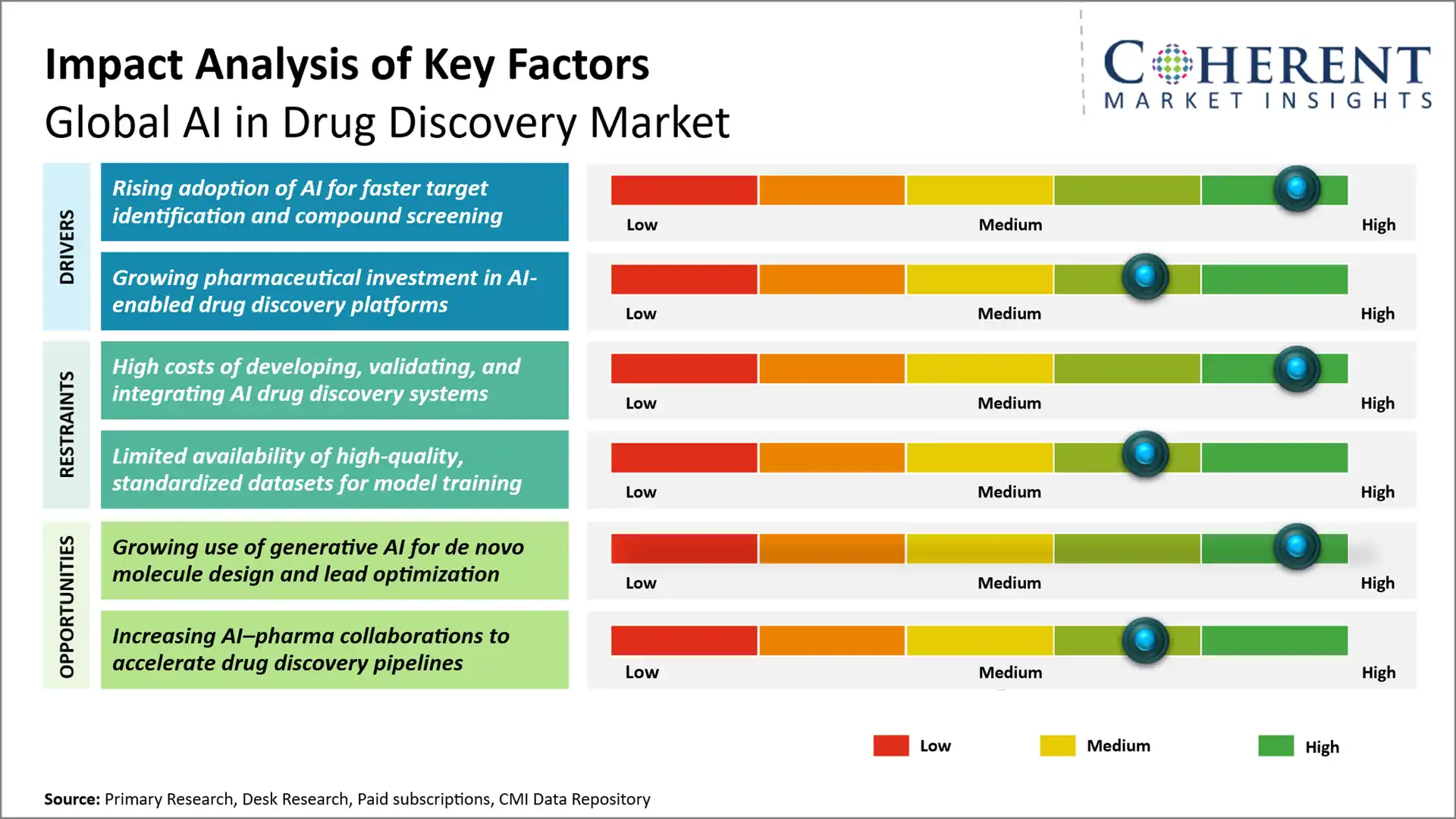
- Rising adoption of AI for faster target identification and compound screening: The growing adoption of AI is enabling pharmaceutical and biotechnology companies to analyze complex biological data, identify potential therapeutic targets, and prioritize promising compounds more rapidly. AI-based approaches can reduce the time required for target discovery and compound screening while improving the efficiency of early-stage R&D workflows. For instance, in April 2026, QIAGEN and NVIDIA expanded their collaboration to apply graph-based AI and accelerated computing to disease-mechanism analysis, therapeutic-target identification, and biomarker discovery, supporting faster evaluation of biological relationships in drug discovery.
- Growing pharmaceutical investment in AI-enabled drug discovery platforms: Increasing pharmaceutical investment in AI-enabled platforms is strengthening the integration of artificial intelligence across drug discovery and R&D workflows. Pharmaceutical companies are allocating capital toward AI infrastructure, computational platforms, and strategic technology partnerships to accelerate target identification, molecular design, virtual screening, and candidate optimization. For instance, in March 2026, Roche expanded its AI infrastructure by deploying 2,176 NVIDIA Blackwell GPUs, bringing its total hybrid-cloud AI infrastructure to more than 3,500 GPUs to support therapeutic and diagnostic development.
- Increasing use of AI across early-stage drug discovery: Pharmaceutical companies are increasingly integrating AI and machine learning into early-stage R&D to analyze complex biological datasets, identify novel targets, and accelerate hit identification and lead optimization. The adoption of AI across these workflows is helping researchers evaluate larger datasets and prioritize promising candidates more efficiently. For instance, in July 2026, Novartis highlighted the use of AI across its R&D workflows to identify promising biological targets and molecules by integrating genetic, multi-omic, imaging, clinical, and scientific literature data.
Emerging Trends
- Generative AI for De Novo Drug Design: Generative AI is increasingly being used to design novel molecules with targeted biological and physicochemical properties, enabling broader exploration of chemical space and faster lead generation and optimization.
- Multimodal AI and Foundation Models: Drug discovery platforms are increasingly integrating genomic, proteomic, molecular, chemical, and clinical datasets through multimodal AI and foundation models, supporting improved target identification, compound prioritization, and candidate selection.
- AI-Driven Drug Discovery Collaborations: Pharmaceutical and biotechnology companies are increasingly partnering with AI technology providers to integrate predictive models, generative AI, and automated workflows across target discovery, virtual screening, molecular design, and lead optimization.
Regional Insights
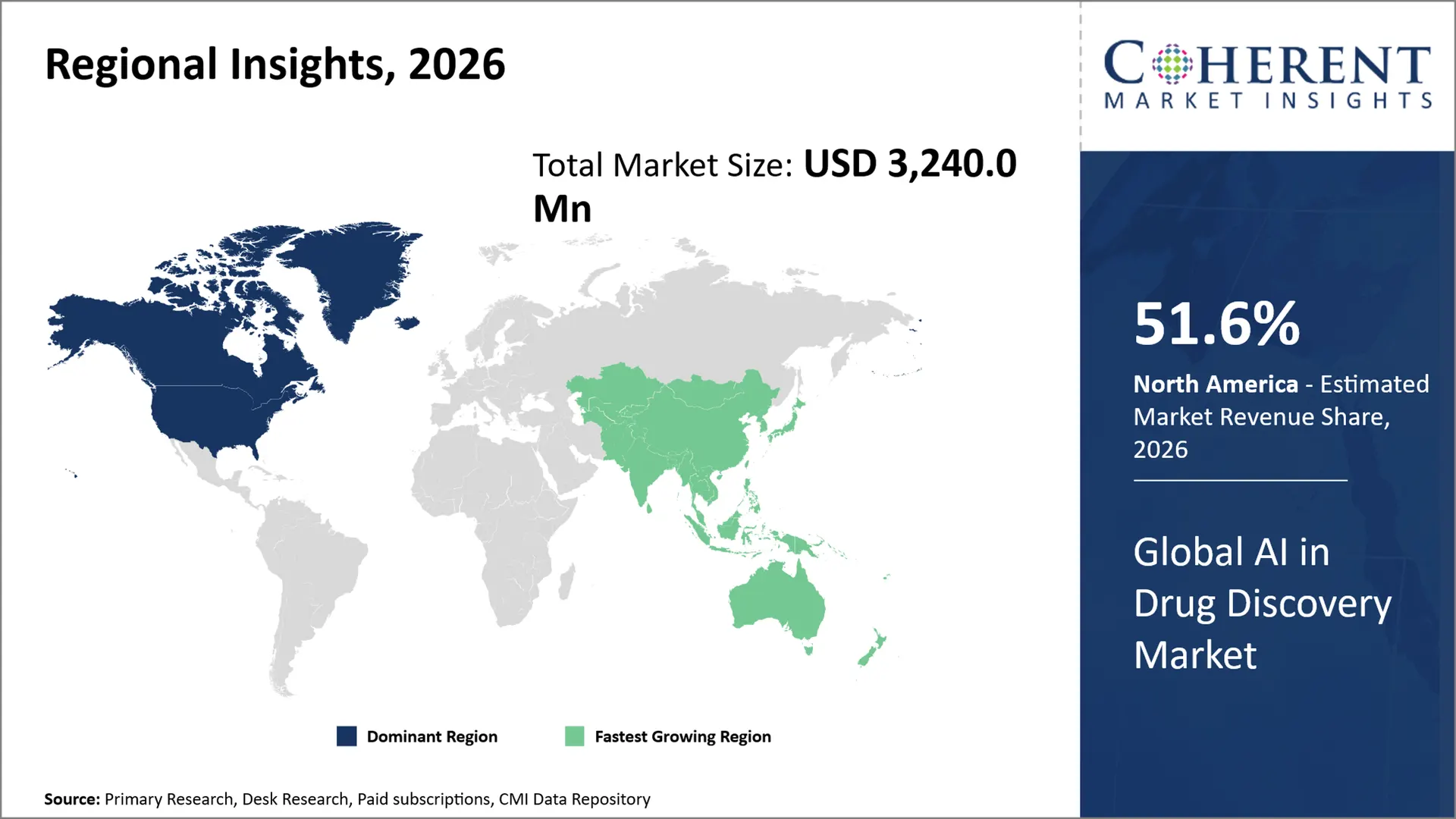
Why is North America a Strong Market for AI in Drug Discovery?
North America leads the global AI in drug discovery market, accounting for an estimated 51.6% share in 2026, owing to its high technological edge, high R&D investment, and thriving pharma and biotech industry. Besides, government policies and incentives for digital health companies with a favorable regulatory environment may augment the market growth, such as the large number of funding of the digital health companies' by government bodies such as the National Institute of Health (NIH), defense advanced research projects agency (DARPA), among others.
For instance, in July 2026, the U.S. National Institutes of Health (NIH) launched the Bio Genesis Mission, a transformative approach that applies artificial intelligence and advanced computing to accelerate biomedical discovery including drug discovery and clinical translation while promoting AI-enabled research infrastructure and collaboration. Furthermore, increasing AI penetration and collaborations among pharma, technology, and contract research organizations networks are expected to accelerate drug discovery innovation.
Why Does Asia Pacific AI in Drug Discovery Market Exhibit High Growth?
Asia Pacific is expected to exhibit the fastest growth in the global AI in drug discovery market, registering an estimated CAGR of 27.2% during 2026–2033. The region is projected to account for 20.0% of the global market in 2026, due to the growing advancement in biotechnology capabilities, digital adoption, and increased investments in AI infrastructure. Moreover, rising digital health transformation initiatives and government support for AI-enabled research in the region will be driving factors for the Asia-Pacific market.
For instance, in May 2026, IndiaAI Mission Partnered with Indian Council of Medical Research (ICMR) to build a unified, interoperable, country-wide AI ecosystem in healthcare and biomedical research in India, facilitating increased government support for innovative AI initiatives. (Source: Press Information Bureau) Additionally, favorable government guidelines for digital innovation and the rise of AI hubs boost the growth of the regional market. Besides this, rising collaboration with external foreign pharma companies and technology transfer supports the implementation of AI in the drug discovery process in the Asia-Pacific region.
Global AI in Drug Discovery Market Outlook for Key Countries
Why is the U.S. Leading Innovation and Adoption in the AI in Drug Discovery Market?
The U.S. drives innovation and adoption due to a quick spread in usage across all AI-enabled applications in target ID, virtual screening, molecular design, and drug discovery processes. Its density of pharmaceutical R&D in tandem with biotech firms in the realm of artificial intelligence should enable quicker validation of computational hits for future use in the drug pipeline. Additionally, pre-existing ties between artificial intelligence firms and those within the pharmaceutical realm coupled with sophisticated computationally capabilities likely fuel large-scale analyses on biological and chemical Data.
Is Japan a Favorable Market for AI in Drug Discovery Market?
Japan is a favorable market for AI in drug discovery due country’s strong base of pharmaceutical R&D, advanced healthcare system, and rapidly expanding use of AI within biomedical research. In addition, the country’s rising focus on AI-assisted drug design, precision medicine and computational methods will create opportunities in target discovery, screening, and lead optimization.
Is China Emerging as a Key Growth Hub for the AI in Drug Discovery Market?
China is rapidly emerging as a principal growth center enabled by greater adoption of artificial intelligence (AI) in the drug research and development (R&D) process and by government policies facilitating the use of AI in drug development. The NMPA's (the former CFDA) AI + Drug Regulation program is expected to accelerate the use of AI in drug R&D, data processing, and regulatory oversight. Greater capabilities in target discovery, virtual screening, and molecular design offer additional support for market growth.
Why Does Germany Top the European AI in Drug Discovery Market?
Germany leads the European AI in drug discovery market due to its solid pharmaceutical research infrastructure, high-quality artificial intelligence power and a mature biotech landscape. Government actions fostering the use of AI for drug research are expected to promote the rise of computational workflows in drug discovery. Moreover, the country’s focus on AI, biotech and health data may further support AI workflows adoption in drug discovery.
Is AI in Drug Discovery Market Developing in UK?
The U.K. is evolving as an AI in drug discovery market due to strong research capabilities in life sciences and government incentives for AI. For example, in 2026, UK's AI for Science Strategy outlined a specific mission to accelerate drug discovery that included AI for target discovery, binding-affinity prediction, and lead optimization. Furthermore, the UK government's Life Sciences Sector Plan seems to explicitly encourage a patient-centric approach, and AI-enabled drug discovery.
AI-Enabled Therapeutic Pipeline by Clinical Development Stage, 2025
Clinical Development Stage | AI-Enabled Therapeutic Assets | Key Observation |
Entered Phase I–III Clinical Trials | 117 | AI-enabled therapeutic assets across 63 companies had entered interventional human trials |
Completed Phase I | 60 | 51.3% of the 117 assets had completed Phase I |
Completed Phase II | 8 | 6.8% of the 117 assets had completed Phase II |
Phase III / Late-Stage Development | At least 2 | AI-enabled programs had reached Phase III/late-stage development, including Insilico Medicine’s Rentosertib and Generate: Biomedicines’ GB-0895 |
Regulatory Approval | 0 | No drug whose discovery/design is classified as AI-driven had received full FDA approval as of 2026; FDA does not maintain a specific AI-discovery classification for approved drugs |
How is the growing use of generative AI for de novo molecule design and lead optimization creating new growth opportunities in the AI in drug discovery market?
The rise of the use of generative artificial intelligence in drug discovery represents the potential for faster de novo design of molecules, virtual screening, and lead optimization. This will allow investigators to search larger chemical spaces and screen out fewer potential lead compounds. This can also significantly reduce ongoing repetitive synthesis and testing cycles, while the ability to design molecules with one or more targeted properties can make the drugs even more potent. For instance, on September 2, 2026, Alnylam Pharmaceuticals, Inc. and Inceptive announced collaboration to develop next-generation RNA interference therapeutics by leveraging advanced generative artificial intelligence models for the design of potential therapeutics, which combines AI-based design with experimental validation.
Market Players, Key Development, and Competitive Landscape
Key Developments
- On September 16, 2026, Insilico Medicine launched its Longevity Vaccines research initiative, applying generative AI, Pharma.AI, and aging foundation models alongside programmable RNA medicine to develop single-administration, self-limiting therapies targeting early cellular drivers of age-related diseases. The initiative initially focuses on eliminating senescent, fibrotic, and autoreactive cells and advancing immune-system rejuvenation, highlighting the expanding application of AI in target identification and therapeutic design
- On September 16, 2026, Novo Nordisk and Anthropic announced a collaboration to advance AI-driven drug discovery, with Novo planning to use Anthropic’s Claude Science and frontier AI models across selected R&D workflows. The collaboration will address specific biological and computational challenges, support scientific reasoning, and strengthen AI-driven software development, with data governance and human oversight built into the initiative, highlighting the growing integration of advanced AI models into pharmaceutical research
- In August 2026, Tata Consultancy Services (TCS) launched TCS ADD AgentHub, an agentic AI platform designed to help pharmaceutical companies scale AI across drug development, clinical development, and pharmacovigilance workflows. The platform uses role-based AI agents with human oversight, built-in auditability, and defined responsibilities to support activities such as clinical data review, study design, medical monitoring, and literature analysis, highlighting the growing adoption of AI across the drug development value chain
Competitive Landscape
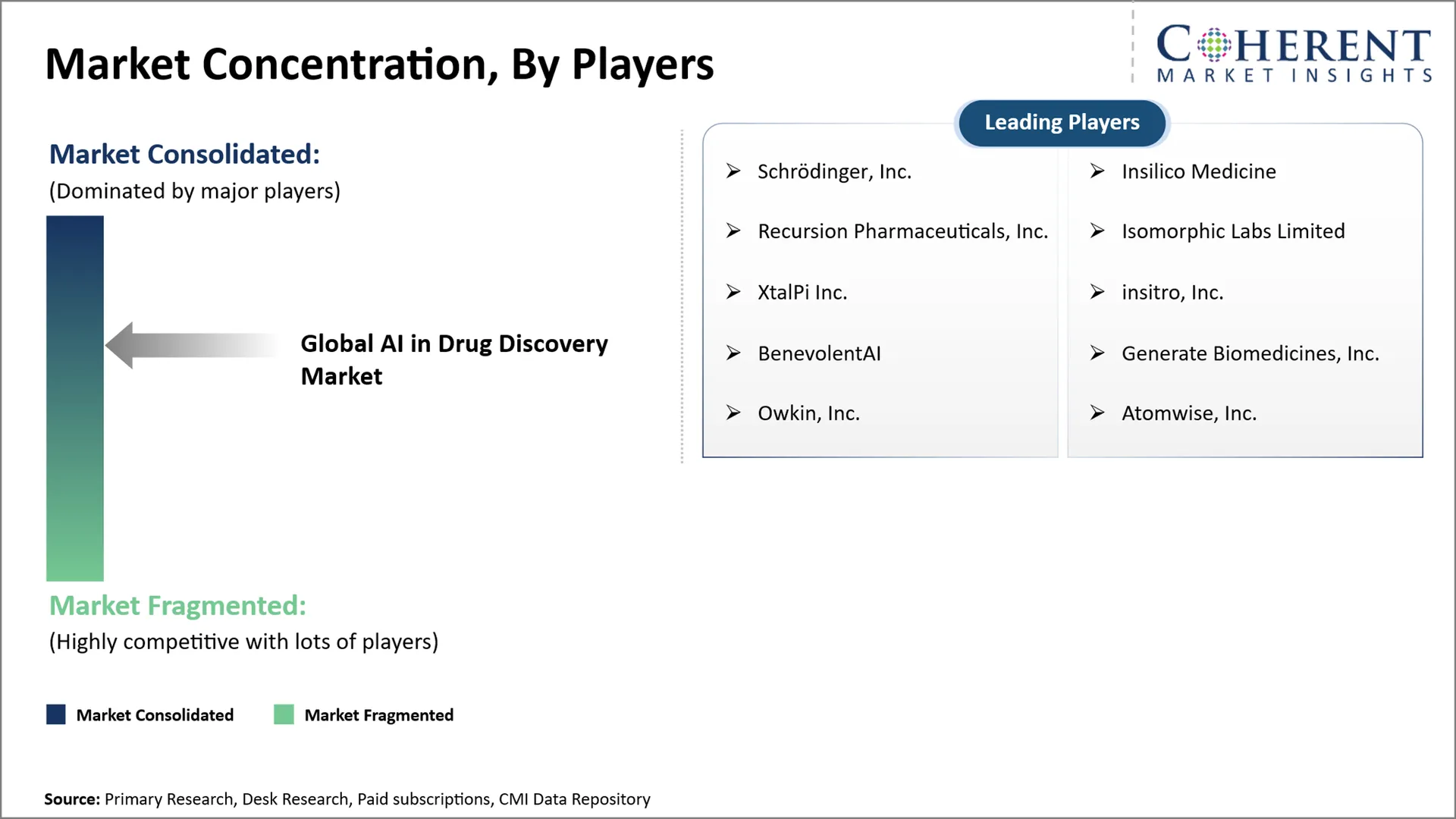
The global AI in drug discovery market is highly dynamic, with competition centered on AI platform innovation, generative AI capabilities, predictive modeling, data integration, workflow automation, and strategic collaborations across the pharmaceutical value chain. Market participants are increasingly focusing on expanding AI-powered drug discovery platforms, improving molecular design and target identification capabilities, integrating multimodal biological data, and developing solutions that accelerate discovery timelines and improve candidate selection. Key focus areas include:
- Development of integrated AI platforms for target identification, virtual screening, molecular design, and lead optimization
- Advancement of generative AI and machine learning models for de novo drug design and molecular property prediction
- Integration of multimodal biological, genomic, proteomic, and chemical datasets to improve drug discovery insights
- Expansion of AI-enabled platforms for drug repurposing, biomarker discovery, and predictive toxicity assessment
- Strategic collaborations and technology partnerships between AI companies, pharmaceutical firms, biotechnology companies, and research institutions to accelerate AI adoption
Market Report Scope
AI in Drug Discovery Market Report Coverage | |||
Report Coverage | Details | ||
Base Year | 2025 | Market Size in 2026: | USD 3,240.0 Mn |
Historical Data For: | 2020 To 2024 | Forecast Period: | 2026 To 2033 |
Forecast Period 2026 To 2033 CAGR: | 25.1% | 2033 Value Projection: | USD 15,536.2 Mn |
Geographies covered: |
| ||
Segments covered: |
| ||
Companies covered: | Schrödinger, Inc., Insilico Medicine, Recursion Pharmaceuticals, Inc., Isomorphic Labs Limited, XtalPi Inc., insitro, Inc., BenevolentAI, Generate Biomedicines, Inc., Owkin, Inc., Atomwise, Inc. | ||
Growth Drivers: |
| ||
Restraints & Challenges: |
| ||
Analyst Opinion (Expert Opinion)
- In the coming years, global AI in drug discovery market will be shaped by the transition from standalone predictive tools toward integrated, multimodal and generative AI platforms that support multiple stages of the discovery workflow. Increasingly capable AI systems are expected to improve target identification, molecular design, screening, and lead optimization while reducing dependence on fragmented computational workflows. The industry is likely to move toward AI platforms that combine biological, chemical, clinical, and real-world datasets with greater automation and human oversight
- The maximum opportunities are foreseen within Generative AI for De Novo Drug Design in the U.S, where the combination of advanced AI capabilities, extensive pharmaceutical R&D activity, strong biotechnology ecosystems, and access to large-scale biological and chemical datasets can support rapid commercialization of AI-designed candidates. Players should also evaluate opportunities in Asia-Pacific, particularly where pharmaceutical R&D and AI infrastructure are expanding rapidly
- In order to gain a competitive advantage market players should focus on developing proprietary, high-quality datasets and integrated AI platforms rather than competing solely on individual algorithms. Building validated models, strengthening explainability and data governance, establishing partnerships across pharmaceutical and biotechnology ecosystems, and demonstrating measurable improvements in discovery timelines and candidate quality will be critical for achieving differentiation and long-term competitive advantage
Speak to the analyst
Want personalized insights?
Take the findings above to one of our principal consultants, or have the report rebuilt around the segments, geographies and competitors you actually track.
Market Segmentation
- Offering Insights (Revenue, USD Mn, 2021 - 2033)
- Software
- Services
- Technology Insights (Revenue, USD Mn, 2021 - 2033)
- Machine Learning
- Deep Learning
- Generative AI
- Natural Language Processing
- Others
- Drug Discovery Process Insights (Revenue, USD Mn, 2021 - 2033)
- Target Identification and Validation
- Hit Identification and Screening
- Lead Identification and Optimization
- Preclinical Development
- Drug Type Insights (Revenue, USD Mn, 2021 - 2033)
- Small-Molecule Drugs
- Large-Molecule Drugs
- Application Insights (Revenue, USD Mn, 2021 - 2033)
- Drug Repurposing
- De Novo Drug Design
- Virtual Screening
- Biomarker Discovery
- Others
- End User Insights (Revenue, USD Mn, 2021 - 2033)
- Pharmaceutical and Biotechnology Companies
- Contract Research Organizations (CROs)
- Academic and Research Institutes
- Others
- Regional Insights (Revenue, USD Mn, 2021 - 2033)
- North America
- U.S.
- Canada
- Latin America
- Brazil
- Argentina
- Mexico
- Rest of Latin America
- Europe
- Germany
- U.K.
- Spain
- France
- Italy
- Russia
- Rest of Europe
- Asia Pacific
- China
- India
- Japan
- Australia
- South Korea
- ASEAN
- Rest of Asia Pacific
- Middle East
- GCC Countries
- Israel
- Rest of Middle East
- Africa
- South Africa
- North Africa
- Central Africa
- North America
- Key Players Insights
- Schrödinger, Inc.
- Insilico Medicine
- Recursion Pharmaceuticals, Inc.
- Isomorphic Labs Limited
- XtalPi Inc.
- insitro, Inc.
- BenevolentAI
- Generate Biomedicines, Inc.
- Owkin, Inc.
- Atomwise, Inc.
Sources
Primary Research Interviews
- AI and computational drug discovery scientists involved in target identification, virtual screening, molecular design, and lead optimization
- Pharmaceutical R&D executives responsible for AI adoption and drug discovery strategy
- Computational biologists and machine learning scientists developing AI models for drug discovery
- Bioinformatics and cheminformatics specialists working with genomic, molecular, and chemical datasets
- AI platform and software experts involved in generative AI, molecular modeling, and predictive analytics
Stakeholders
- AI-driven drug discovery platform providers
- Pharmaceutical and biotechnology companies
- Contract research organizations (CROs)
- Computational chemistry and bioinformatics technology providers
- Cloud computing and AI infrastructure providers
- Academic and research institutions involved in AI-enabled drug discovery
- End-use Sectors
- Pharmaceutical Companies
- Biotechnology Companies
- Contract Research Organizations (CROs)
- Academic and Research Institutions
- Government and Research Organizations
- Regulatory & Health Bodies
- U.S. Food and Drug Administration (FDA) – AI/ML use in drug development, regulatory considerations, and guidance for AI-generated evidence
- European Medicines Agency (EMA) – AI applications across the medicine lifecycle, regulatory guidance, and AI methodology considerations
- Medicines and Healthcare products Regulatory Agency (MHRA), U.K. – Medicines regulation, AI adoption, and data-driven approaches in pharmaceutical development
- National Medical Products Administration (NMPA), China – Pharmaceutical regulation, drug evaluation, and AI-related innovation in drug development
- International Council for Harmonisation (ICH) – International technical standards and regulatory harmonization relevant to pharmaceutical development
Databases
- ChEMBL – Curated bioactivity and chemical data supporting target analysis, compound screening, and drug discovery research
- ClinicalTrials.gov – Clinical study and results data supporting drug development and analysis
- Protein Data Bank (PDB) – Structural information on proteins, nucleic acids, and molecular complexes used in computational drug discovery
- DrugBank – Drug, target, mechanism, and molecular information supporting drug discovery and repurposing research
Associations
- Biotechnology Innovation Organization (BIO) – Biotechnology and pharmaceutical industry resources and policy information
- Drug Information Association (DIA) – Drug development, regulatory science, and pharmaceutical innovation resources
- International Society for Pharmaceutical Engineering (ISPE) – Pharmaceutical technology, digital transformation, and AI-related industry resources
- Pharmaceutical Research and Manufacturers of America (PhRMA) – Pharmaceutical R&D and innovation resources
- Association of Clinical Research Organizations (ACRO) – Clinical research and technology adoption resources
Public Domain Sources
- U.S. Food and Drug Administration (FDA) – AI in drug development, regulatory guidance, and medical product information
- European Medicines Agency (EMA) – AI in the medicine lifecycle and regulatory science information
- National Institutes of Health (NIH) – Biomedical research, genomics, drug discovery, and AI-related research information
- National Center for Biotechnology Information (NCBI) – Genomic, biomedical, and scientific databases supporting AI-driven drug discovery
- National Institute of Standards and Technology (NIST) – AI standards, evaluation, risk management, and technical frameworks
- ClinicalTrials.gov – Public clinical trial registration and results information supporting pharmaceutical research
Proprietary Elements
- CMI Data Analytics Tool, Proprietary CMI Existing Repository of information for last 10 years.
Get access to 250+ pages report
Every segment, forecast, competitor profile and data table behind the analysis above — available for instant download.
- ESOMAR Member
- ISO 9001:2015 Certified
- D-U-N-S Registered
- GDPR & CCPA Compliant
Missing comfort of reading report in your local language? Find your preferred language:
Frequently Asked Questions
AI accelerates drug discovery by analyzing large biological and chemical datasets, predicting molecular properties, and prioritizing promising drug candidates
The global AI in drug discovery market is estimated to be valued at USD 3,240.0 Mn in 2026 and is expected to reach USD 15,536.2 Mn by 2033.
Software dominates due to its ability to automate complex discovery workflows, analyze large datasets, and enable scalable AI-driven molecular modeling and prediction.
AI in drug discovery uses artificial intelligence technologies to identify targets, screen compounds, design molecules, and optimize drug candidates more efficiently
The CAGR of global AI in drug discovery market is projected to be 25.1% from 2026 to 2033.
Rising adoption of AI for faster target identification and compound screening, and growing pharmaceutical investment in AI-enabled drug discovery platforms are the major factors driving the growth of the global AI in drug discovery market.
High costs of developing, validating, and integrating AI drug discovery systems, and limited availability of high-quality, standardized datasets for model training are the major factors hampering the growth of the global AI in drug discovery market.