

Global AI Laboratory Automation Market Size and Forecast – 2026 To 2033
The global AI laboratory automation market is expected to grow from USD 1.74 Bn in 2026 to USD 5.32 Bn by 2033, registering a compound annual growth rate (CAGR) of 17.3% from 2026 to 2033. The market for global AI laboratory automation is poised for significant expansion, fueled by the surging demand for automated, high-throughput laboratory workflows that can accelerate experimentation while improving reproducibility.
In September 2026, the U.S. National Institutes of Health (NIH) committed more than USD 88 million to biomedical research infrastructure, including a laboratory integrating robotics, AI, standardized organoid models, and advanced data capabilities for closed-loop experimentation. This investment demonstrates growing government support for AI-enabled laboratory automation to increase research throughput and accelerate scientific discovery.
Key Takeaways of the Global AI Laboratory Automation Market
- Hardware is projected to hold 48.7% of the global AI laboratory automation market share in 2026, making it dominant component segment, across North America due to the region’s established regulatory framework for automated laboratory infrastructure. For instance, in May 2025, the U.S. Food and Drug Administration (FDA) recognized CLSI standards covering laboratory automation system operational requirements, specimen carriers, electromechanical interfaces, and communications between automated laboratory systems and instruments. These standards strengthen the regulatory foundation for deployment and interoperability of automated laboratory hardware across U.S. clinical laboratories.
- Machine learning (ML) is projected to hold 34.7% of the global AI laboratory automation market share in 2026, making it dominant technology segment, across Europe due to regulatory integration of AI and ML across pharmaceutical research and laboratory workflows. For instance, in June 2026, the European Medicines Agency (EMA) published its 2025 AI Observatory report as part of its 2026–2028 AI workplan, which covers AI use for productivity, automation, and data-driven decision-making across the medicines lifecycle. The EMA's regulatory framework for AI and ML supports wider adoption of ML-enabled analytical and experimental workflows in European pharmaceutical laboratories.
- Pharmaceutical and biotechnology laboratories are projected to hold 32.6% of the global AI laboratory automation market share in 2026, making it dominant laboratory type segment, with Asia-Pacific showing strong adoption potential led by China. For instance, in April 2026, China’s National Medical Products Administration (NMPA) issued its “Artificial Intelligence + Drug Regulation” implementation opinions, directing AI applications across drug R&D, manufacturing, quality testing, inspection, and post-market surveillance, with a target of establishing an integrated AI-enabled drug-regulation system by 2030. This regulatory push is expected to accelerate AI integration into pharmaceutical and biotechnology laboratory processes across China.
- North America market maintains dominance with an expected share of 40.8% in 2026, bolstered by substantial federal investment in AI-programmable laboratory infrastructure. For instance, in July 2026, the U.S. National Science Foundation (NSF) announced a USD 380 million investment across 20 teams to establish a nationwide network of AI-enabled automated laboratories through its Programmable Cloud Laboratories initiative. The program is designed to test and scale automated science capabilities, expanding access to AI-driven laboratory infrastructure across U.S. research institution.
- Asia Pacific is expected to exhibit the fastest growth in the global AI laboratory automation market, registering an estimated CAGR of 15.7% during 2026–2033, driven by the expansion of government-supported AI and automation capabilities in scientific research. For instance, in February 2026, the Indian Council of Agricultural Research (ICAR) inaugurated a dedicated Robotics and Artificial Intelligence Laboratory at ICAR-IARI, equipped for the design, rapid prototyping, and laboratory-scale testing of agricultural robots and automated systems. The establishment strengthens the region's institutional capacity for AI-enabled lab automation and intelligent laboratory research.
Segmental Insights
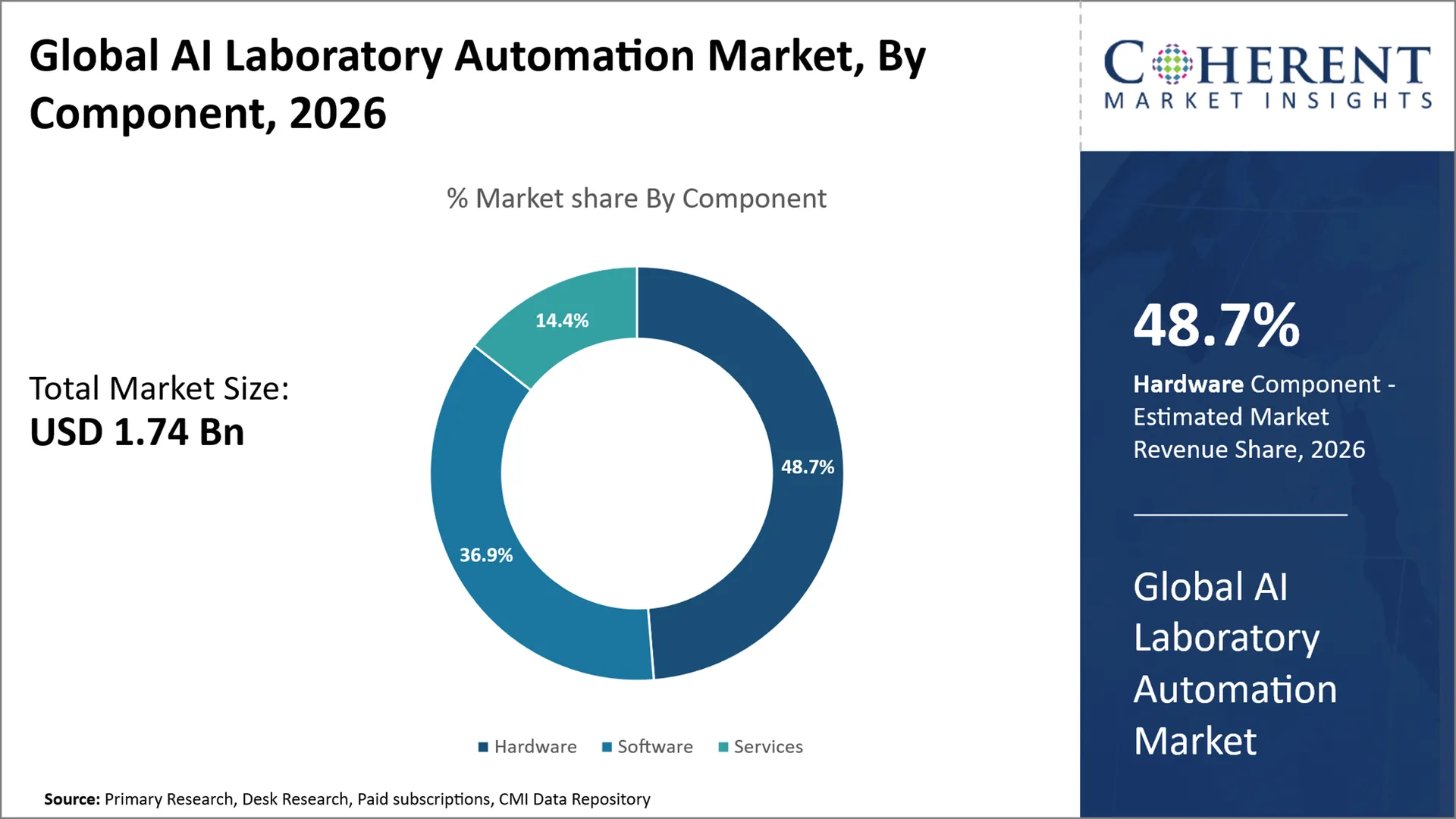
Why Do Hardware Dominate the Global AI Laboratory Automation Market?
Hardware is projected to hold the market share of 48.7% in 2026, due to the presence of robotic systems, automated liquid handlers, sensors, imaging equipment and other physical platforms that act as the foundation for automated high-throughput and reproducible execution of experiments guided by artificial intelligence. Furthermore, the rising adoption of robotics along with AI-based experimental design indicates a strong demand for laboratory hardware. For instance, in May 2026, the U.S. Advanced Research Projects Agency for Health (ARPA-H) launched its Intelligent Generator of Research (IGoR) program with a specific focus to support the use of laboratory automation and robotics for fast, standardized execution of experiments. This government program emphasizes the need for physical automation infrastructure to support AI laboratories.
- Current Industry Events of 2026
- Market Size Estimation
- Regional Breakdown
- Competitive Landscape
- Customer Intelligence
- Segmental Analysis
- Pricing Analysis
- Key Market Drivers, Challenges & Future Trends
- Customized Insights Section
Why Does Machine Learning (ML) Represent the Largest Technology Segment in the AI Laboratory Automation Market?
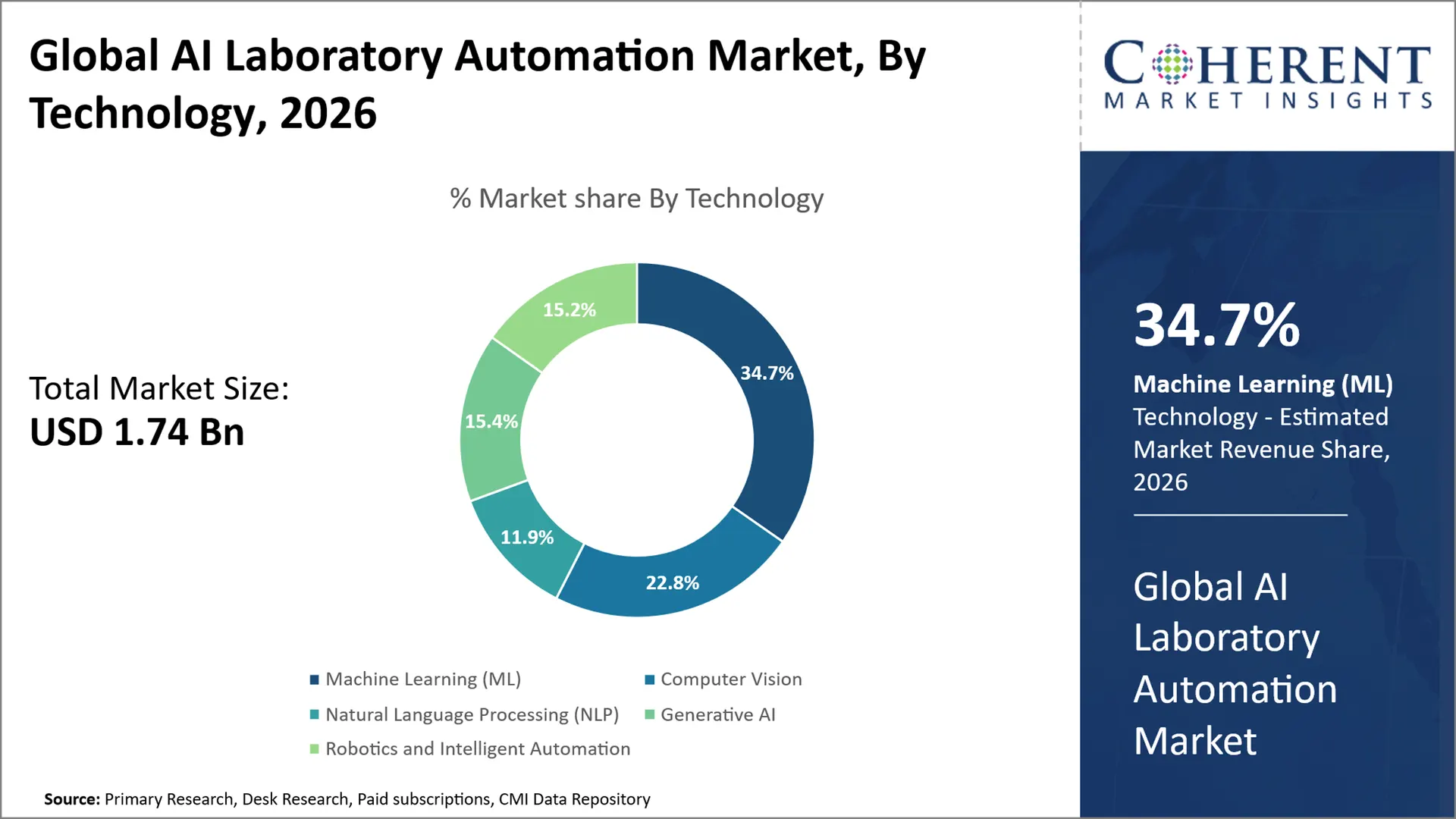
Machine learning (ML) is projected to hold a market share of 34.7% in 2026, due to its ability to analyze complex experimental data, discover patterns and incrementally improve automated processes. The role of ML is likely to be expanded by the automation of experiments, machine learning driven experiment optimization and predictive analytics as well as high-throughput research. For instance, in April 2026, Innovate UK, the UK government’s innovation agency, launched a USD 9.9 million (£7.5 million) “Labs of the Future” funding competition backing AI/ML, data-driven decision-making, lab automation and robotics specifically for the manufacturing of medicines. This government-backed program reinforces ML’s integration with automated laboratory workflows.
Pharmaceutical and Biotechnology Laboratories Segment Dominates the Global AI Laboratory Automation Market
The pharmaceutical and biotechnology laboratories segment is projected to hold a market share of 32.6% in 2026, attributed to the need to accelerate drug discovery, improve reproducibility of experiments, and handle data-intense R&D workflow. Additionally, the automation empowered by AI enables high-throughput experimentation, predictive capabilities, and automated lab procedures during drug development. For instance, in June 2026, the UK's Medicines and Healthcare products Regulatory Agency (MHRA) launched an AI Sandbox program to help evaluate AI tools for drug development and to promote the safe use of AI across the entire drug discovery and development process. This program provides regulatory support for AI inclusion in drug development activities. (Source: UK Government)
Current Events and their Impact
Current Events | Description and its Impact |
China Launches First Autonomous Laboratory Alliance (July 2026) |
|
European Commission Expands RAISE Support for Scientific Laboratory Automation (February 2026) |
|
South Korea Expands Government Investment in AI Autonomous Laboratories (January 2026) |
|
AI Laboratory Automation Market Dynamics
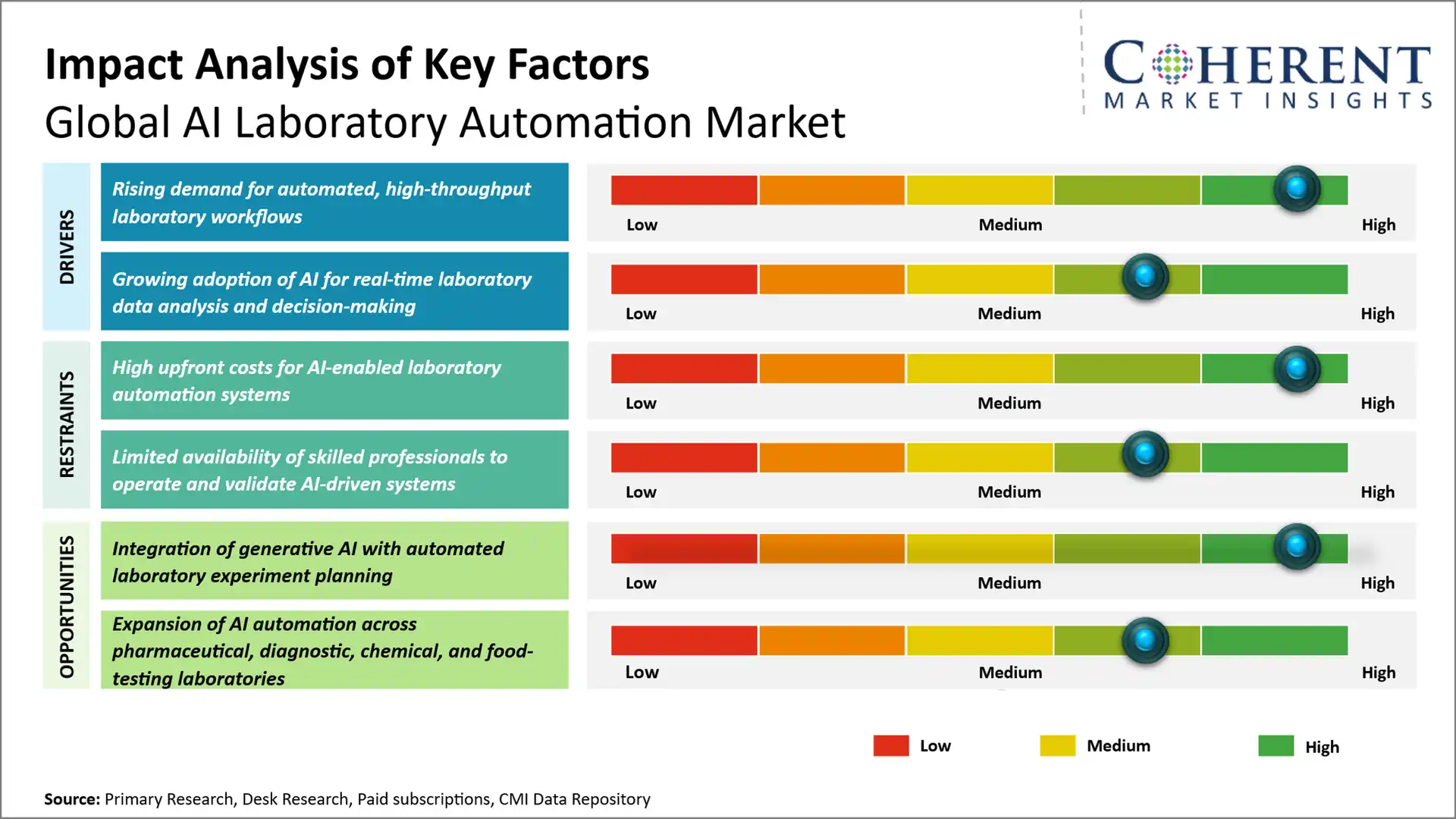
Market Drivers
- Rising demand for automated, high-throughput laboratory workflows: The increasing volume and complexity of laboratory testing and experimentation is driving demand for automated, high-throughput workflows that can process larger numbers of samples with greater speed and consistency. AI-enabled automation helps laboratories reduce manual processing, improve workflow efficiency, and scale research without proportionally increasing labor requirements. This trend is particularly relevant to pharmaceutical, biotechnology, chemical, and testing laboratories. For instance, in April 2026, India’s DBT-ICGEB Biofoundry implemented bio-automation and AI to establish integrated, high-throughput design-build-test-learn workflows, enabling faster strain development and reducing reliance on manual laboratory processes.
- Growing adoption of AI for real-time laboratory data analysis and decision-making: AI The growing volume of laboratory-generated data is increasing demand for AI systems that can analyze experimental results in real time and support faster scientific decisions. AI can identify patterns, quantify uncertainty, detect anomalies, and use analytical results to determine the next experiment, enabling laboratories to move toward closed-loop and data-driven operations. For instance, in July 2026, the U.S. Department of Energy selected 278 projects under its Genesis Mission to develop and demonstrate AI-enabled scientific workflows. The initiative includes AI agent frameworks, advanced AI models, and high-performance computing to help researchers design, test, and refine experiments, strengthening real-time, data-driven scientific decision-making.
- Increasing demand for skilled and automated laboratory operations: The growing complexity of laboratory workflows is increasing demand for automation that reduces repetitive manual tasks and supports consistent, scalable operations. AI-enabled robotics allows scientists to focus on experimental design and analysis while automated systems handle standardized laboratory processes. For instance, in July 2026, Oak Ridge National Laboratory (ORNL) reported that more than a dozen self-driving laboratories were operating across its facilities, combining robotics, sensors, automation, and AI to conduct experiments with limited human intervention. ORNL also noted that these systems enable experiments to run continuously, while operations teams increasingly support the infrastructure required for autonomous laboratory workflows.
Emerging Trends
- Rise of Autonomous “Self-Driving” Laboratories: Laboratories are moving toward autonomous systems that can plan experiments, execute protocols through robotic platforms, analyze results, and select subsequent experiments with minimal human intervention. This is accelerating the transition from task automation to closed-loop scientific discovery.
- Generative AI-Powered Laboratory Operations: Generative AI is increasingly being integrated into laboratory workflows to convert natural-language research objectives into experimental protocols, assist with experiment planning, and summarize or interpret laboratory data. This is creating more intuitive interfaces between scientists, laboratory software, and automated equipment.
- Integration of AI, Robotics, and Laboratory Informatics: AI laboratory automation is increasingly shifting toward connected ecosystems that integrate robots, instruments, LIMS, ELN, and laboratory data platforms. This integration enables real-time data exchange, coordinated workflow execution, and greater interoperability across laboratory operations.
Regional Insights
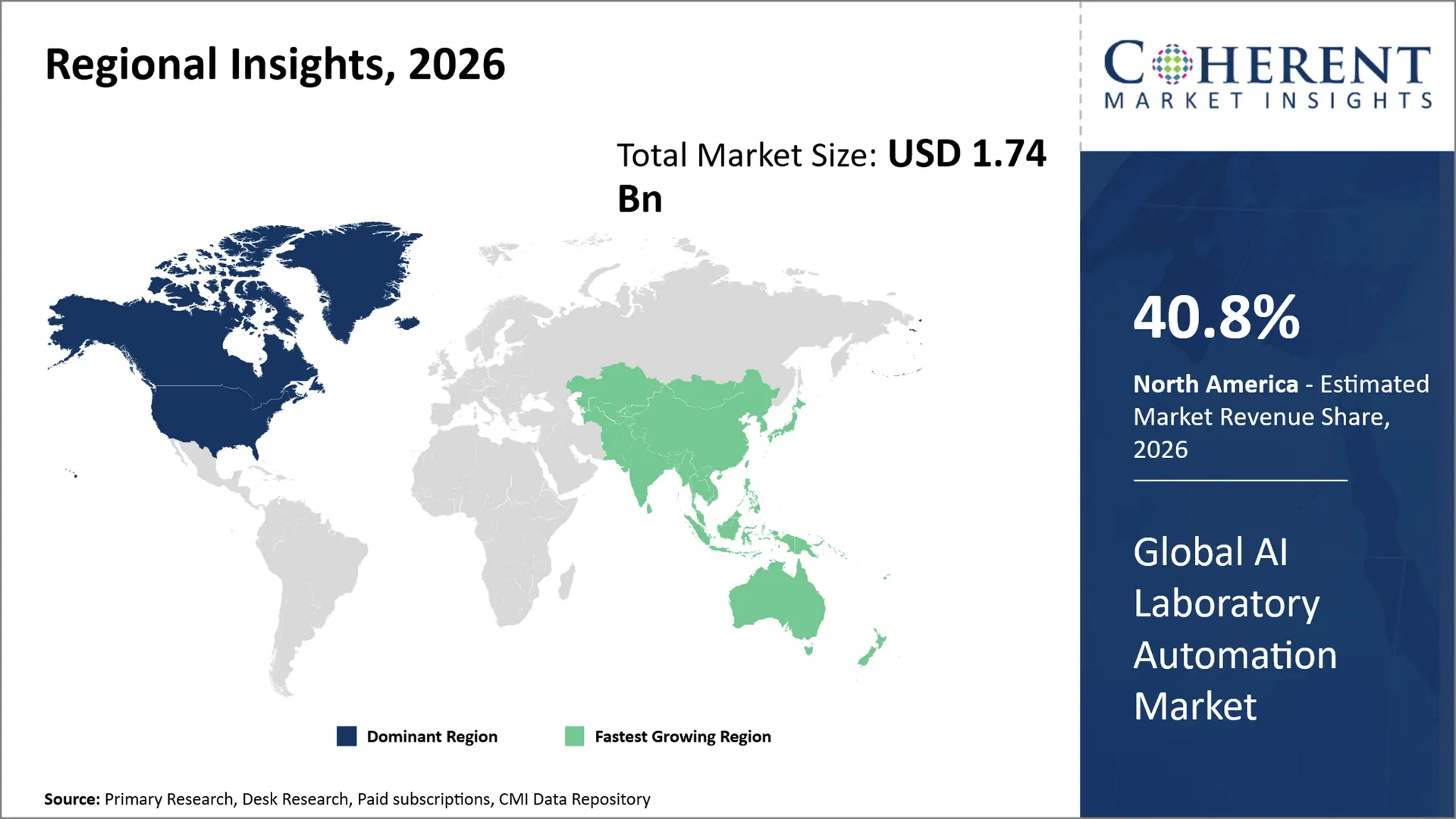
Why is North America a Strong Market for AI Laboratory Automation?
North America leads the global AI laboratory automation market, accounting for an estimated 40.8% share in 2026, primarily driven by advanced research infrastructure, R&D ecosystem, and investment in AI-enabled healthcare, pharma and biotech applications. Furthermore, the government programs and policies for AI adoption and digital transformation like federal programs supporting AI-based biomedical research and automated laboratory infrastructure can drive adoption in research institutes.
For instance, in July 2026, the U.S. National Institutes of Health (NIH) announced the establishment of a new Bio Genesis Autonomous Human Biology Laboratory that will leverage a comprehensive, integrated set of standardized organoid platforms, robotics, AI and data capabilities on an integrated, closed-loop experimental platform as part of NIH investment of over USD 1.2 billion in FY 2026 and FY 2027. Moreover, established healthcare system, regulatory scenario, and high-throughput reproducible experimentation further support regional adoption.
Why Does Asia Pacific AI Laboratory Automation Market Exhibit High Growth?
Asia Pacific is expected to exhibit the fastest growth in the global AI laboratory automation market, registering an estimated CAGR of 15.7% during 2026–2033. The region is projected to account for 24.0% of the global market in 2026, owing to the increasing pharmaceutical and biotechnology R&D infrastructure development, the rising adoption of smart laboratories, and the rising government support for AI and automation related technologies, to support R&D in the region. Governmental programs in nations like China, Japan, South Korea, and India are bolstering R&D infrastructure related to AI, encouraging automation in laboratories and research centers in the clinical and scientific settings.
For instance, in May 2026, Japan Science and Technology Agency (JST) launched the ARiSE program supported by the Ministry of Education, Culture, Sports, Science and Technology, to fund research related to artificial intelligence on the science frontier. The program recommends development of AI agent, next-generation AI laboratory system, and researches related to these areas to contribute to strengthen the research environment for automated scientific experimentation and promote the use of AI lab. Furthermore, factors like increasing R&D infrastructure, cost-efficient technological ecosystem, and an increasing high throughput experimentation needs in pharmaceutical, clinical and biotechnology and research centers are expected to surge the growth in the region.
Global AI Laboratory Automation Market Outlook for Key Countries
Why is the U.S. Leading Innovation and Adoption in the AI Laboratory Automation Market?
The U.S. is probably well-placed to be a leader for innovation and implementation because of the large focus of pharma and biotech R&D in the country along with the sophisticated lab automation capacity. Additionally, the country is advancing research that combines AI with robotics, automated experiments and lab data infrastructure allowing them to potentially have more autonomous research workflows. High demand for high-throughput drug discovery and sophisticated biomedical experiments further supports the deployment of AI-enabled laboratory automation.
Is China a Favorable Market for AI Laboratory Automation Market?
China offers an attractive opportunity market attributed to a solid research and development base of chemistry, material science and biotechnology. There is probably going to be a demand for automated experimentation largely outside the traditional scope of pharmaceutical in China. The country is also involved with AI-enabled scientific instruments and high throughput experimentation platforms, supporting applications including materials discovery, synthesis, and automated testing.
Is Japan Emerging as a Key Growth Hub for the AI Laboratory Automation Market?
Japan is emerging as a significant hub for the development of the AI laboratory automation market aided by strong precision-instrumentation and robotics technology that is particularly adaptable to automated sample handling, analytical testing and high throughput experimentation. There may even be a demand for automated workflows that are highly reproducible, given the existing base of pharmaceutical, chemical and materials research.
Why Does Germany Top the European AI Laboratory Automation Market?
Germany leads the European AI laboratory automation market as a result of its sturdy industrial lab base in pharmaceuticals, chemicals, life sciences, and advanced manufacturing. The country's excellence in precision engineering and laboratory instrumentation implies that it adopted the automation of robotics, validated testing, and AI-enabled analytical workflows. Additionally, because of its strength in the research environment Germany expects rapid adoption of high-throughput and more autonomous systems.
Is AI Laboratory Automation Market Developing in South Korea?
South Korea is developing as a promising market with a strong underlying industrial infrastructure led by advanced semiconductors, biotechnology and precision manufacturing in the country providing a strong platform for AI-enabled laboratory systems. Additionally, the rise in the utilization of automated experimentation, intelligent analytical equipment and data- driven R&D practices in biotechnology, pharma and advanced materials creates further opportunities for the market growth.
Competitive Benchmarking of Key Companies and Products in AI Laboratory Automation
Company | Key Products / Platforms | Key Competitive Advantage |
Thermo Fisher Scientific Inc. | Thermo Fisher Connect, Momentum, SampleManager LIMS | Broad end-to-end integration of laboratory instruments, robotics, workflow orchestration, informatics, and connected data infrastructure, enabling automation across multiple stages of laboratory operations. |
Danaher Corporation | CellXpress.ai, Biomek i7, digital laboratory solutions | Strong combination of AI-enabled cell culture, automated laboratory workstations, analytical tools, and digital workflow capabilities, supporting integrated automation across research and drug-development processes. |
Agilent Technologies, Inc. | OpenLab Sync, OpenLab CDS | Advantage in connecting laboratory execution, sample management, instruments, analytical data, and guided workflows within a unified laboratory informatics environment, particularly for regulated analytical laboratories. |
Siemens Healthineers AG | Atellica Solution, Atellica Integrated Automation | Strong positioning in clinical laboratory automation through intelligent sample management, automated sorting and transport, integrated testing workflows, and software-enabled laboratory control. |
Tecan Group AG | Fluent Automation Workstation, FluentControl | High flexibility and configurability through modular liquid handling, third-party integration, customizable workflows, and real-time monitoring, making the platform adaptable to diverse laboratory applications. |
Eppendorf SE | epMotion, VisioNize Lab Suite | Combines automated liquid handling with vendor-agnostic laboratory connectivity, enabling monitoring and management of both Eppendorf and third-party laboratory equipment through a connected digital environment. |
Hamilton Company | Microlab STAR, VENUS Software | Strong advantage in highly configurable liquid-handling automation, supported by flexible programming, dynamic scheduling, remote monitoring, LIMS integration, and real-time process monitoring. |
Becton, Dickinson and Company | BD Kiestra TLA, BD Kiestra ReadA | Specialized strength in automated clinical microbiology, covering inoculation, incubation, imaging, culture reading, and reporting within scalable and modular workflows. |
Revvity, Inc. | Signals One, JANUS G3 | Differentiates through the combination of AI-enhanced R&D informatics with automated liquid handling, enabling scientific data management, analysis, workflow configuration, and automated assay execution. |
ABB Ltd | ABB Robotics laboratory automation solutions, GoFa | Strong robotics-centric positioning, with collaborative robots designed to automate laboratory tasks from simple pipetting to complex workflows and integrate with laboratory instruments and software. |
How is the integration of generative AI with automated laboratory experiment planning creating new growth opportunities in the AI laboratory automation market?
The use of generative AI combined with experiment planning offers the possibility of evolving laboratories from following a programmed set of instructions to conducting experiments guided by AI. Generative AI could transform research goals into a plan of experiments, optimize the experiments and adapt the workflow based on experimental outcome in the way that labs in drugs, biotech and chemical industries can increase throughput, minimize trial and error approaches and make the labs more autonomous. For instance, in September 2026, scientists at Pacific Northwest National Laboratory (PNNL) demonstrated Auto Labs, a multi-agent generative AI platform that independently converts natural-language experiment instructions into procedures and configuration files for automation, including robotic operations. Testing found an improved reasoning model slashed stoichiometric errors by over 85%. A multi-agent AI system, which uses domain-specific tools and tools to self-correct its outputs, achieved F1-scores greater than 0.89 on complex multi-step chemical synthesis tasks.
Market Players, Key Development, and Competitive Intelligence
Key Developments
- On October 1, 2026, Kyndryl Inc. launched its first U.S. AI Innovation Lab in Dallas–Fort Worth, providing an environment for AI experimentation, rapid prototyping, and development of AI-enabled workflows. The lab is expected to create up to 300 AI, technology consulting, and engineering jobs over four years.
- In September 2026, Zifo Technologies Inc. announced the launch of REAL 2026 (Readiness & Enablement for Automated Labs), an industry summit focused on connected, AI-enabled laboratory environments. The initiative brings together pharma, biotech, automation, data, and AI leaders to advance integrated “lab-in-the-loop” environments combining robotics, scientific data, analytics, and AI/ML.
- In August 2026, DKSH Holding Ltd. and Bioyond Robotics announced a distribution partnership to expand AI-driven autonomous laboratory and robotics solutions across Australia. The agreement covers sales, installation, technical support, maintenance, and applications support, increasing access to automated laboratory workflows for research, biotechnology, and industrial laboratories.
- In February 2026, Cenevo launched two AI agents to advance agentic laboratory operations, including AI-driven automation of scientific workflows. The agents are designed to automate laboratory tasks, convert protocols into traceable workflows, and enable scientists to create automated workflows using natural language.
Competitive Landscape
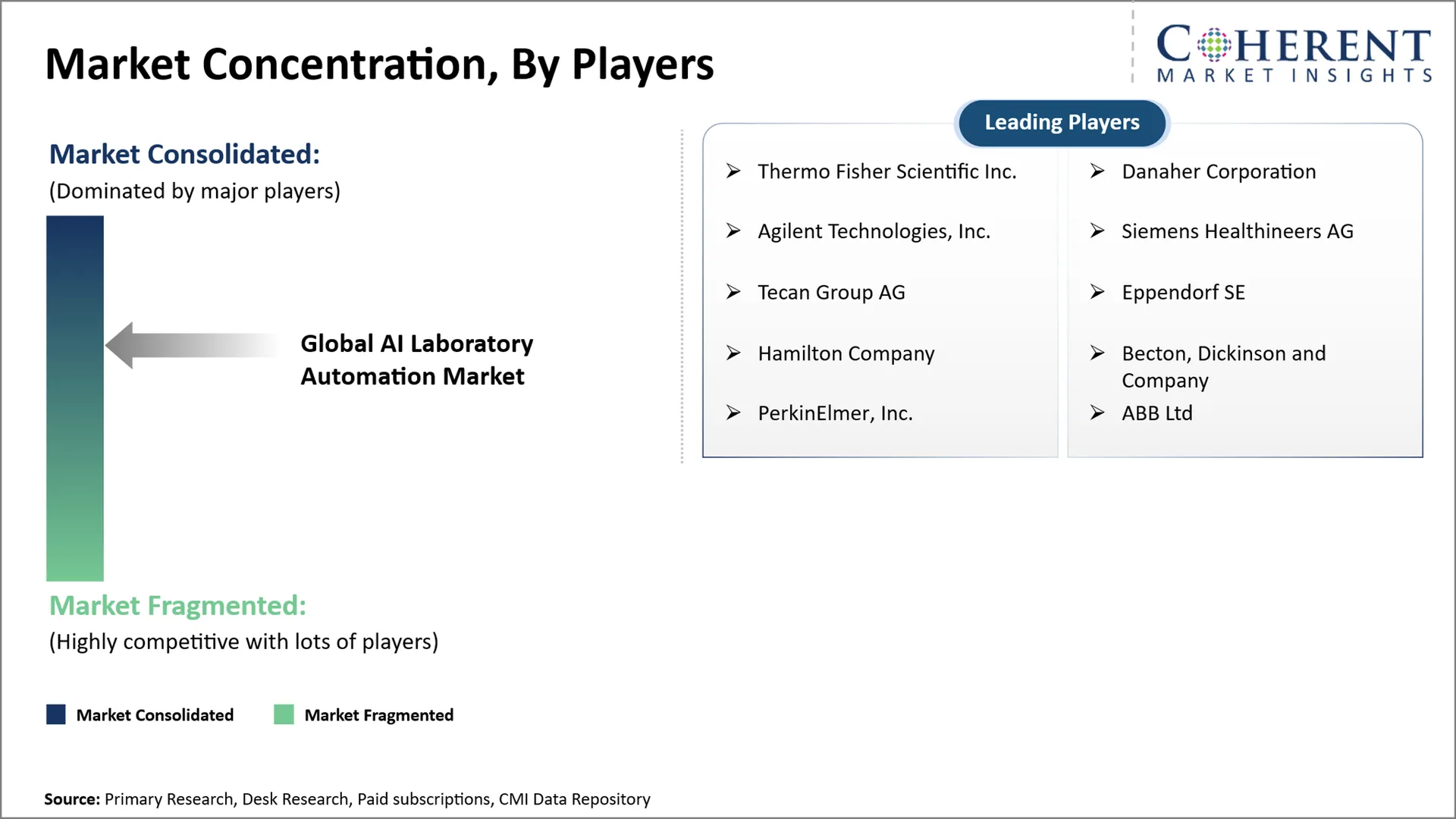
The global AI laboratory automation market is moderately competitive, with competition centered on intelligent workflow execution, laboratory robotics, AI-enabled experimentation, data connectivity, and autonomous decision-making. Market participants are increasingly strengthening capabilities that connect laboratory planning, physical execution, data interpretation, and continuous optimization.
Key focus areas include
- AI-enabled workflow orchestration and autonomous laboratory operations
- Robotic automation for sample handling, preparation, transfer, and instrument operation
- AI-driven experiment planning, optimization, and closed-loop experimentation
- Intelligent analysis of laboratory data, images, measurements, and experimental results
- Interoperability across laboratory instruments, LIMS, ELN, and automation platforms
- Generative AI and natural-language interfaces for laboratory planning, execution, and documentation
Market Report Scope
Global AI Laboratory Automation Market Report Coverage | |||
Report Coverage | Details | ||
Base Year | 2025 | Market Size in 2026: | USD 1.74 Bn |
Historical Data For: | 2020 To 2024 | Forecast Period: | 2026 To 2033 |
Forecast Period 2026 To 2033 CAGR: | 17.3% | 2033 Value Projection: | USD 5.32 Bn |
Geographies covered: |
| ||
Segments covered: |
| ||
Companies covered: | Thermo Fisher Scientific Inc., Danaher Corporation, Agilent Technologies, Inc., Siemens Healthineers AG, Tecan Group AG, Eppendorf SE, Hamilton Company, Becton, Dickinson and Company, PerkinElmer, Inc., ABB Ltd. | ||
Growth Drivers: |
| ||
Restraints & Challenges: |
| ||
Analyst Opinion (Expert Opinion)
- In the coming years, global AI laboratory automation market will shift from isolated automated instruments toward AI-coordinated, connected, and increasingly autonomous laboratory environments. AI will increasingly support the complete workflow from experiment planning and sample handling to execution, data interpretation, and workflow optimization enabling laboratories to operate with greater speed, consistency, and scalability. Generative AI and closed-loop experimentation are expected to become increasingly important in reducing manual intervention and improving experimental decision-making.
- The maximum opportunities are foreseen within AI-enabled experiment planning and optimization within pharmaceutical and biotechnology laboratories in the U.S. This combination offers substantial scope for automating complex experimental workflows, integrating laboratory instruments and data systems, and accelerating drug discovery and development. Solutions that connect AI-based decision-making with robotic execution are likely to capture the greatest value.
- In order to gain a competitive advantage, market players should move beyond standalone automation equipment and develop integrated AI laboratory platforms that connect robotics, instruments, laboratory data, and intelligent decision-making. Building interoperable solutions, strengthening generative AI and autonomous experimentation capabilities, and offering modular systems that can integrate with existing laboratory infrastructure can create a stronger competitive position.
Speak to the analyst
Want personalized insights?
Take the findings above to one of our principal consultants, or have the report rebuilt around the segments, geographies and competitors you actually track.
Market Segmentation
- Component Insights (Revenue, USD Bn, 2021 - 2033)
- Hardware
- Software
- Services
- Technology Insights (Revenue, USD Bn, 2021 - 2033)
- Machine Learning (ML)
- Computer Vision
- Natural Language Processing (NLP)
- Generative AI
- Robotics and Intelligent Automation
- Laboratory Type Insights (Revenue, USD Bn, 2021 - 2033)
- Pharmaceutical and Biotechnology Laboratories
- Clinical Laboratories
- Research and Development Laboratories
- Academic and Research Laboratories
- Industrial Laboratories
- Application Insights (Revenue, USD Bn, 2021 - 2033)
- Sample Preparation and Handling
- Laboratory Data Analysis
- Experiment Planning and Optimization
- Quality Control and Testing
- Laboratory Workflow Management
- Drug Discovery and Development
- Others
- End User Insights (Revenue, USD Bn, 2021 - 2033)
- Pharmaceutical and Biotechnology Companies
- Contract Research Organizations (CROs)
- Hospitals and Diagnostic Laboratories
- Academic and Research Institutions
- Chemical Companies
- Food and Beverage Companies
- Others
- Regional Insights (Revenue, USD Bn, 2021 - 2033)
- North America
- U.S.
- Canada
- Latin America
- Brazil
- Argentina
- Mexico
- Rest of Latin America
- Europe
- Germany
- U.K.
- Spain
- France
- Italy
- Russia
- Rest of Europe
- Asia Pacific
- China
- India
- Japan
- Australia
- South Korea
- ASEAN
- Rest of Asia Pacific
- Middle East
- GCC Countries
- Israel
- Rest of Middle East
- Africa
- South Africa
- North Africa
- Central Africa
- North America
Sources
Primary Research Interviews
- Laboratory Automation and Operations Leaders overseeing laboratory workflow automation, robotics integration, instrument connectivity, and process optimization.
- Laboratory Scientists and Research Managers involved in experiment planning, sample preparation, laboratory testing, and high-throughput research.
- AI/ML and Data Science Specialists developing machine learning, computer vision, NLP, generative AI, and predictive analytics applications for laboratory environments.
- Laboratory Informatics Professionals responsible for LIMS, ELN, laboratory data management, instrument integration, and workflow interoperability.
- Pharmaceutical and Biotechnology R&D Professionals adopting AI-enabled automation for drug discovery, screening, experimentation, and analytical workflows.
- Clinical Laboratory Professionals evaluating automated testing, specimen processing, quality control, and AI-enabled laboratory operations.
- Automation Engineers and Robotics Specialists designing and implementing robotic systems, automated liquid handling, sample management, and laboratory workflow orchestration.
- Quality Assurance and Regulatory Professionals assessing data integrity, system validation, laboratory automation, and compliance requirements.
Stakeholders
- Pharmaceutical and Biotechnology Companies adopting AI-enabled laboratory automation for drug discovery, screening, experimentation, and development.
- Clinical Laboratories and Diagnostic Centers implementing automated testing, specimen handling, analysis, and quality-control workflows.
- Contract Research Organizations (CROs) providing automated research, screening, analytical testing, and laboratory services.
- Academic and Research Institutions using automated platforms for high-throughput experimentation, genomics, materials research, and scientific discovery.
- Chemical Companies applying laboratory automation to formulation, materials analysis, analytical testing, and quality control.
- Food and Beverage Companies using automated laboratory systems for food safety, contaminant testing, microbiological analysis, and quality assurance.
- Laboratory Automation and Robotics Providers developing automated instruments, robotic systems, and intelligent workflow platforms.
- AI and Laboratory Informatics Companies developing AI, machine learning, data-management, and decision-support solutions for laboratory environments.
- Laboratory Instrument and Equipment Manufacturers integrating automation, connectivity, and intelligent software into laboratory equipment.
- Technology and Cloud Infrastructure Providers supporting AI model development, laboratory data processing, storage, and connected laboratory environments.
- End-use Sectors
- Pharmaceutical Companies
- Biotechnology Companies
- Contract Research Organizations (CROs)
- Hospitals and Diagnostic Laboratories
- Academic and Research Institutions
- Chemical Companies
- Food and Beverage Companies
- Regulatory & Health Bodies
- U.S. Food and Drug Administration (FDA), U.S. – laboratory automation, in vitro diagnostics, medical-device software, AI applications, and data-integrity considerations.
- National Institutes of Health (NIH), U.S. – biomedical research, laboratory automation, high-throughput research, and AI-enabled scientific infrastructure.
- National Institute of Standards and Technology (NIST), U.S. – autonomous laboratories, laboratory automation, AI/ML, experimental design, laboratory data management, and interoperability.
- European Medicines Agency (EMA), Europe – pharmaceutical development, laboratory data, AI applications, and scientific/regulatory considerations.
- European Commission, European Union – AI governance, digital technologies, research infrastructure, and regulatory frameworks relevant to laboratory applications.
Databases
- ClinicalTrials.gov – clinical research and study information relevant to pharmaceutical and biotechnology laboratory applications.
- National Center for Biotechnology Information (NCBI) – biological research, genomics, molecular data, and biomedical datasets.
- NIH National Library of Medicine (NLM) – biomedical research literature, datasets, and scientific information.
- FDA Databases – medical-device, diagnostic, regulatory, and laboratory-technology information.
- NIST Data and Research Resources – laboratory, measurement, AI, automation, and scientific data resources.
- WHO Global Health Observatory (GHO) – health-system, laboratory, diagnostic, and global health data.
- Eurostat – European R&D, biotechnology, pharmaceutical, industrial, and scientific research statistics.
- OECD Data – R&D expenditure, biotechnology, innovation, scientific research, and industry datasets.
Associations
- Association for Laboratory Automation (ALA) – laboratory automation, robotics, instrumentation, and laboratory informatics.
- Clinical Laboratory Management Association (CLMA) – clinical laboratory operations, management, automation, and technology adoption.
- Association of Biomolecular Resource Facilities (ABRF) – research laboratory technologies, automation, genomics, proteomics, and scientific infrastructure.
- American Society for Biochemistry and Molecular Biology (ASBMB) – biochemical and molecular research relevant to AI-enabled laboratory applications.
- American Chemical Society (ACS) – chemistry research, analytical technologies, laboratory workflows, and scientific innovation.
- American Society for Microbiology (ASM) – microbiology research, laboratory testing, diagnostics, and laboratory technologies.
- International Society for Automation (ISA) – automation, instrumentation, control systems, and industrial technology.
- International Society for Pharmaceutical Engineering (ISPE) – pharmaceutical manufacturing, laboratory systems, automation, digitalization, and technology implementation.
Public Domain Sources
- U.S. Food and Drug Administration (FDA) – laboratory automation, medical devices, diagnostics, AI, and regulatory information.
- National Institutes of Health (NIH) – biomedical research, laboratory infrastructure, automation, and scientific research resources.
- National Institute of Standards and Technology (NIST) – autonomous laboratories, AI/ML, automation, laboratory informatics, and research data management.
- U.S. Department of Energy (DOE) – AI-driven autonomous laboratories, robotics, experimental workflows, and scientific automation.
- European Medicines Agency (EMA) – medicines development, scientific research, laboratory technologies, and regulatory resources.
- European Commission – European research, innovation, AI, digital technologies, and laboratory-related policy resources.
Proprietary Elements
- CMI Data Analytics Tool
- Proprietary CMI Existing Repository of information for last 10 years.
Get access to 250+ pages report
Every segment, forecast, competitor profile and data table behind the analysis above — available for instant download.
- ESOMAR Member
- ISO 9001:2015 Certified
- D-U-N-S Registered
- GDPR & CCPA Compliant
Frequently Asked Questions
The global AI laboratory automation market is estimated to be valued at USD 1.74 Bn in 2026 and is expected to reach USD 5.32 Bn by 2033.
Hardware dominates due to the growing deployment of automated instruments, robotic systems, and equipment required to execute laboratory workflows with greater speed, precision, and consistency.
AI laboratory automation integrates AI, robotics, and intelligent software to automate laboratory workflows, optimize experiments, and enable data-driven decision-making.
The CAGR of global AI laboratory automation market is projected to be 17.3% from 2026 to 2033.
Rising demand for automated, high-throughput laboratory workflows, and growing adoption of AI for real-time laboratory data analysis and decision-making are the major factors driving the growth of the global AI laboratory automation market.
High upfront costs for AI-enabled laboratory automation systems, and limited availability of skilled professionals to operate and validate AI-driven systems are the major factors hampering the growth of the global AI laboratory automation market.
In terms of technology, machine learning (ML) is estimated to dominate the market revenue share in 2026.