
Global AI Medical Device Lifecycle Assurance Market Size and Forecast – 2026 To 2033
The global AI medical device lifecycle assurance market is expected to grow from USD 1,180.0 Mn in 2026 to USD 2,956.0 Mn by 2033, registering a compound annual growth rate (CAGR) of 14% from 2026 to 2033. The global AI medical device lifecycle assurance market is projected to grow rapidly owing to the high demand for continuous validation, performance monitoring, and regulatory compliance of AI devices.
As of September 2026, the U.S. Food and Drug Administration (FDA) had approved more than 1,600 AI-enabled medical devices for marketing in the U.S. With the growing portfolio of devices, there is an increasing need for continuous validation, ongoing performance monitoring and lifecycle risk management to provide safe and effective devices.
Key Takeaways of the Global AI Medical Device Lifecycle Assurance Market
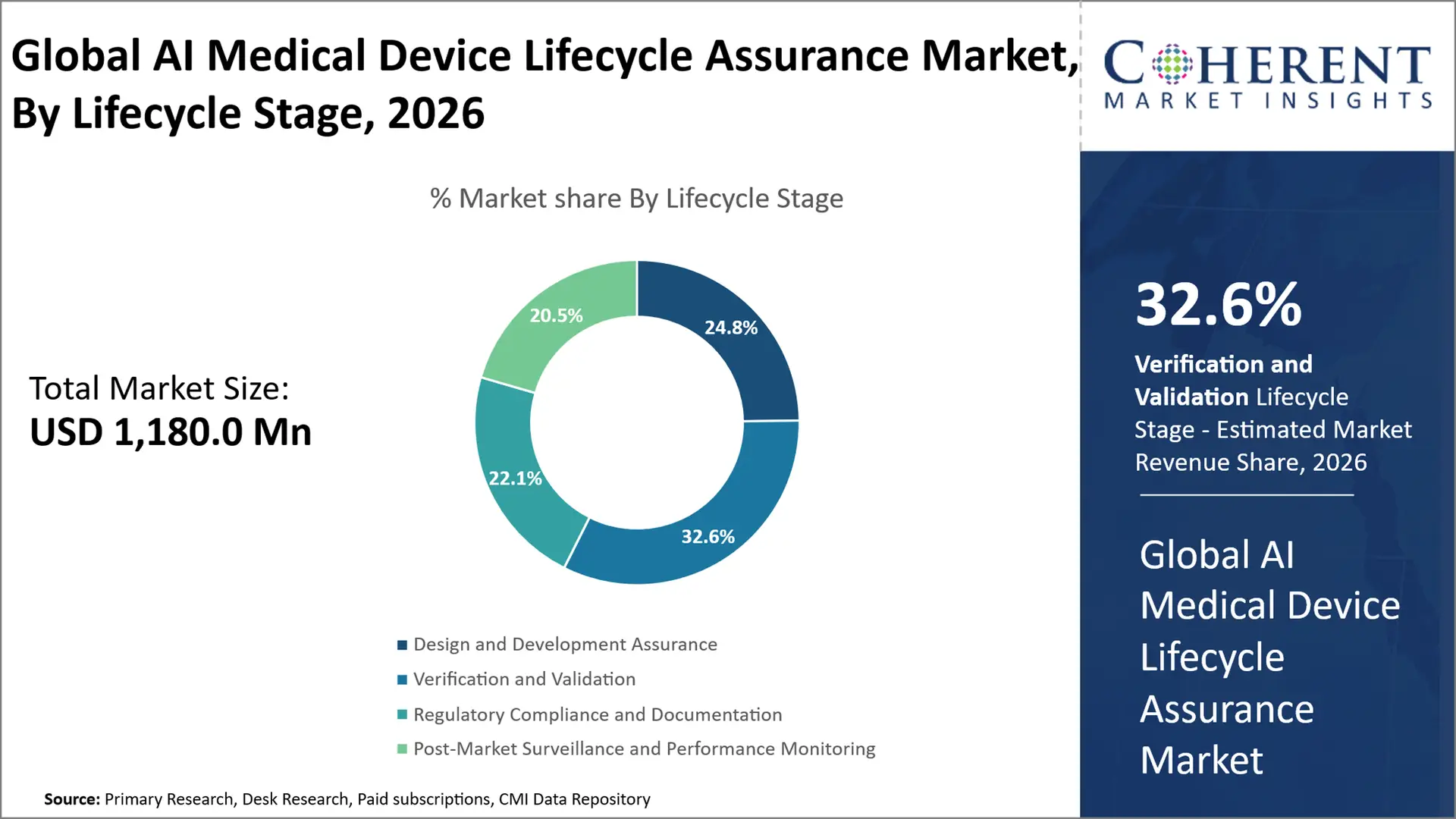
- Verification and validation are projected to hold 32.6% of the global AI medical device lifecycle assurance market share in 2026, making it dominant lifecycle stage segment, across North America due to the expansive U.S. FDA authorization and review system for AI-enabled medical devices. For instance, the FDA's database of authorized AI-enabled medical devices maps these devices to the corresponding premarket review entries.
- Clinical safety and performance assurance is projected to hold 24.7% of the global AI medical device lifecycle assurance market share in 2026, making it dominant assurance type segment, across Europe owing to the European Union MDR regulation which stresses on risk assessment and safety of AI used in medical devices. For instance, according to the guidelines on clinical evaluation and post-market surveillance of medical devices, the European Union Medical Device Regulation (MDR) states the need for performance and safety data of the device.
- AI-enabled software as a medical device (SaMD) is projected to hold 38.6% of the global AI medical device lifecycle assurance market share in 2026, making it dominant device type segment, with North America poised to provide growth opportunities as countries strengthen regulations of AI-enabled medical software and digital health innovation. For instance, a major regional regulatory benchmark Health Canada proposed guidance around machine learning-enabled medical devices in April 2026, inclusive of design, testing, clinical validation and post-market monitoring.
- North America market maintains dominance with an expected share of 39.6% in 2026. The region has a mature paradigm for assessing medical device risk and intervention, with particular expertise in safety controls relevant to AI technology. For instance, the U.S. Food and Drug Administration (FDA) recognizes the AAMI CR34971:2022 standard and provides recommendations that support the use of medical device risk-management best practices with artificial intelligence and machine-learning-based medical devices throughout the product lifecycle.
- Asia Pacific is expected to exhibit the fastest growth in the global AI medical device lifecycle assurance market, registering an estimated CAGR of 20.2% during 2026–2033, owing to the growing regulatory pressure for AI enabled medical devices. For instance, in September 2026, Japan’s Pharmaceuticals and Medical Devices Agency issued review points for medical devices with functional generative AI. These review points are on evaluation and post-market responses.
Segmental Insights
Why Do Verification and Validation Dominate the Global AI Medical Device Lifecycle Assurance Market?
Verification and validation are projected to hold the market share of 32.6% in 2026, because of the extensive testing needed for AI enabled medical devices to set the software reliability, clinical efficacy and patient safety. Validation may be more important for detecting algorithmic bias, inconsistency and errors in the AI enabled system in the intended-use environment. For instance, in October 2025, UK's Medicines and Healthcare products Regulatory Agency (MHRA) announced seven AI health care tech for the second cohort of its "AI Airlock" program. The Airlock program was created to provide a framework for testing and learning about the safety, effectiveness, and regulatory issues with deploying new AI before scaling.
- Current Industry Events of 2026
- Market Size Estimation
- Regional Breakdown
- Competitive Landscape
- Customer Intelligence
- Segmental Analysis
- Pricing Analysis
- Key Market Drivers, Challenges & Future Trends
- Customized Insights Section
Why Do Clinical Safety and Performance Assurance Represent the Largest Assurance Type Segment in the AI Medical Device Lifecycle Assurance Market?
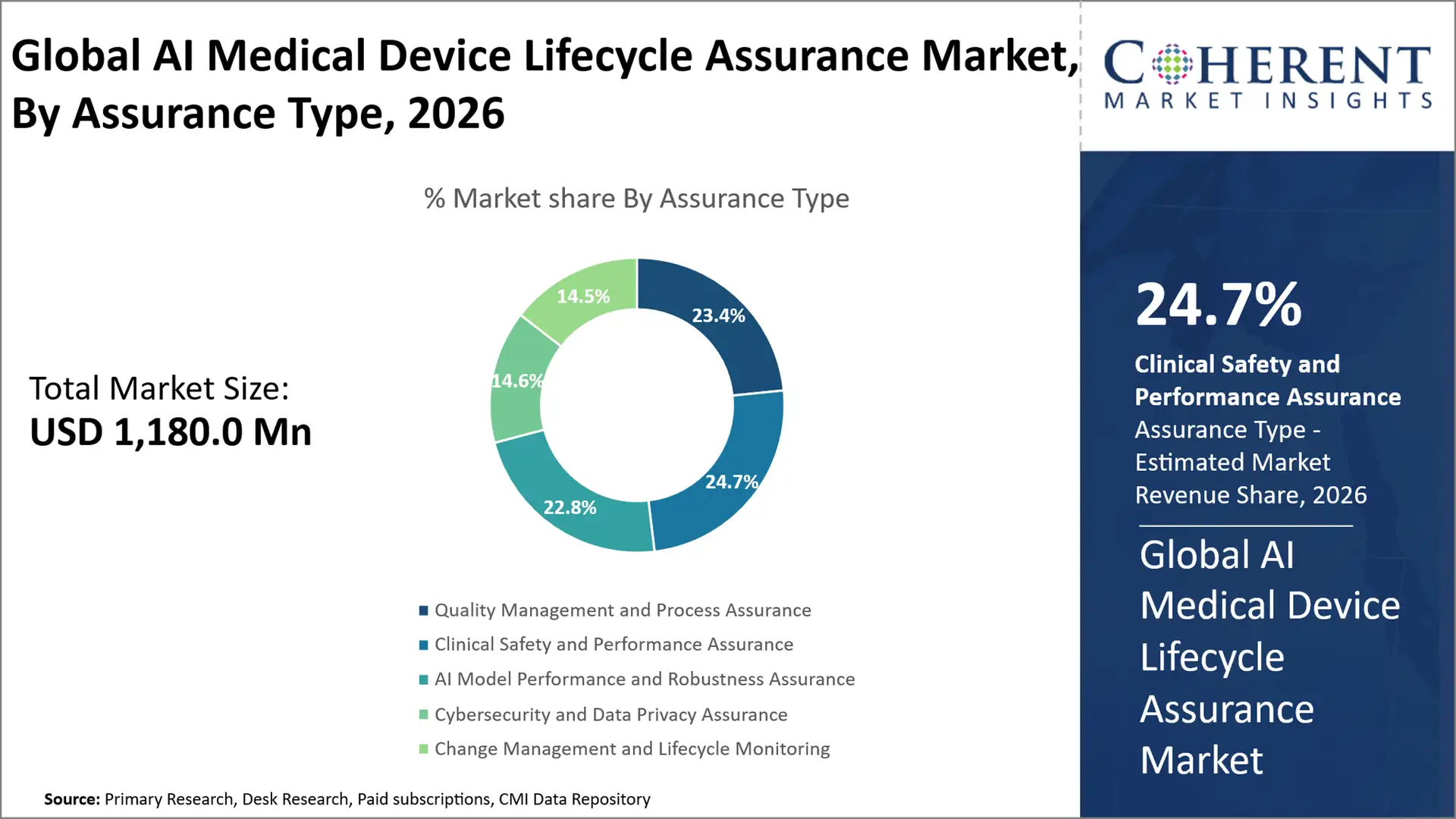
Clinical safety and performance assurance is projected to hold a market share of 24.7% in 2026, as clinical medical devices using artificial intelligence in medical diagnosis or treatment selection have a direct effect on the diagnosis, choice of treatment, and the patient outcome. Clinical safety and performance assurance addresses the clinical validity and risk, and performance of a device or system in a wide range of patients. For instance, in January 2025, the International Medical Device Regulators Forum (IMDRF) published 10 good machine learning practice (GMLP) principles to promote the safe, effective, and high-quality development of AI/ML-enabled devices during the product lifecycle. They emphasize the necessity of evaluating clinical performance, controlling risk and ensuring safety over the product’s lifetime.
AI-Enabled Software as a Medical Device (SaMD) Segment Dominates the Global AI Medical Device Lifecycle Assurance Market
The AI-enabled software as a medical device (SaMD) segment is projected to hold a market share of 38.6% in 2026, as the software can be scaled across settings and deployed in a clinical environment. Furthermore, software-based solutions can be updated after deployment and don't require hardware replacement. This would imply a rise in the need for software verification, cybersecurity testing, algorithm validation and version-change testing. For instance, in July 2026, India’s Central Drugs Standard Control Organization (CDSCO) issued its final Guidance Document on Medical Device Software in accordance with MDR-2017. This guidance sets out the regulation of software including classification, safety and performance, technical documentation, quality management and post-market obligations.
Current Events and their Impact
Current Events | Description and its Impact |
UK Government Accepts Recommendations for Lifecycle-Based AI Healthcare Regulation (October 2026) |
|
Health Canada Issues Pre-Market Guidance for Machine Learning-Enabled Medical Devices (April 2026) |
|
U.S. FDA Updates Computer Software Assurance Guidance for Medical Device Quality System (February 2026) |
|
AI Medical Device Lifecycle Assurance Market Dynamics
Market Drivers
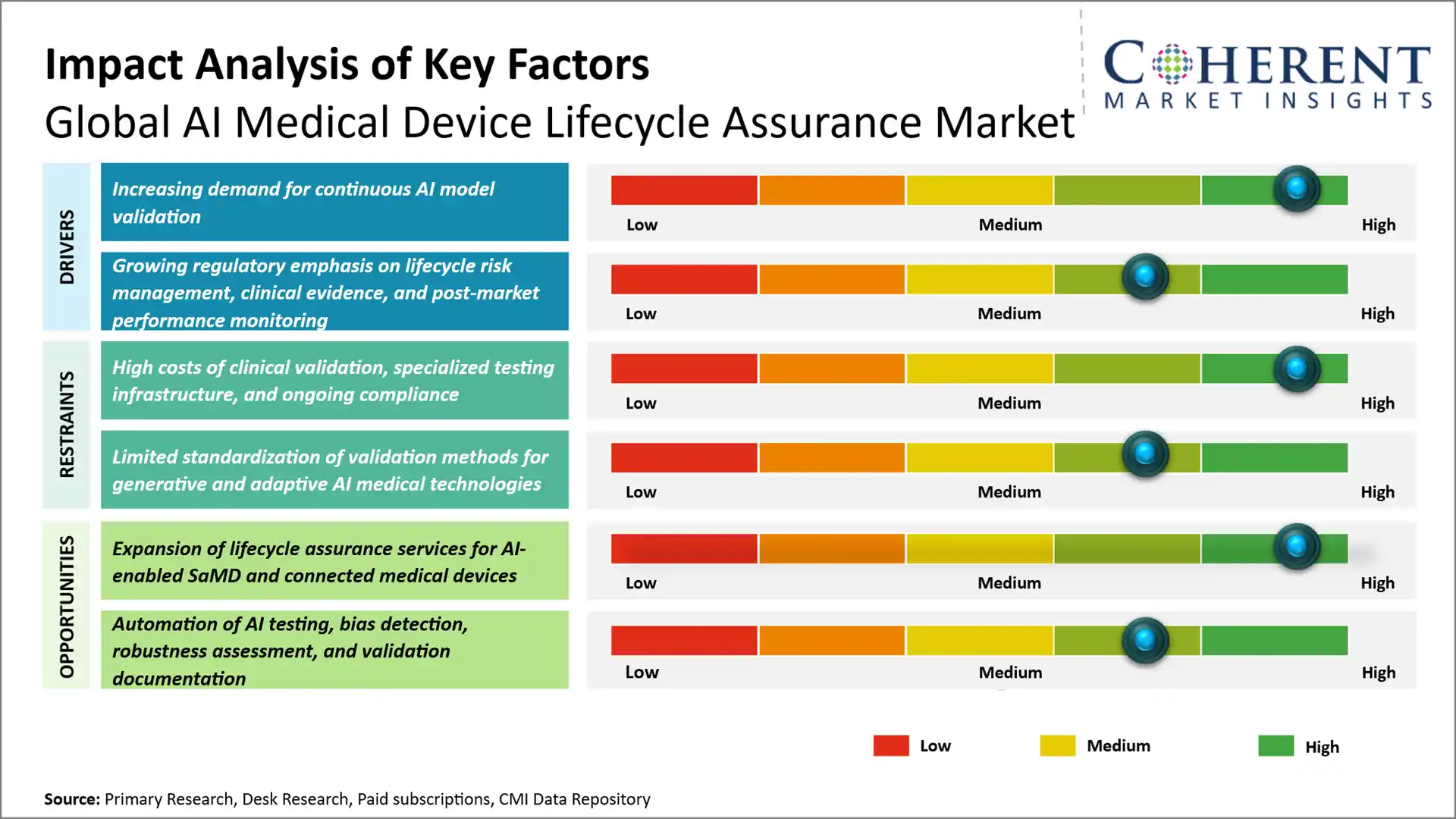
- Increasing demand for continuous AI model validation: As artificial intelligence enabled medical devices are used more frequently, continuous validation is required to monitor for any model drift, decline in performance, or change in performance when applied in clinical settings. For instance, in September 2025, the U.S. FDA has published a public consultation on how to measure and assess the performance of artificial intelligence enabled medical devices in real life, specifically addressing methods to identify and reduce performance shifts when the models are in use.
- Growing regulatory emphasis on lifecycle risk management, clinical evidence, and post-market performance monitoring: Regulatory agencies are strengthening standards for clinical data, risk evaluation, and ongoing monitoring to ensure that the safety and efficacy of AI-enabled medical devices continue after commercialization. For instance, in October 2026, United Kingdom, Medicines and Healthcare Products Regulatory Agency (MHRA) launched its third phase of AI Airlock regulatory sandbox. This phase is working on post-market surveillance and safe supervision of the entire life cycle of AI-enabled medical devices.
- Increasing adoption of AI-enabled medical devices across healthcare settings: As more diagnostic, monitor and clinical decision support devices driven by artificial intelligence become adopted, the need for structured assurance mechanisms to deliver assurance across the numerous clinical environments will become even more critical to ensure efficiency, safety and accuracy. For instance, in January 2025, the International Medical Device Regulators Forum (IMDRF) released a guidance document titled Good Machine Learning Practice for Medical Device Development: Guiding Principles, which covers lifecycle aspects such as the use of representative data, independent testing and monitoring of deployed models that responds to the growing requirement for holistic lifecycle assurance solutions of AI medical devices.
Emerging Trends
- Automated AI model monitoring and drift detection: Medical device manufacturers are implementing automated tools to monitor the performance of an AI model in terms of accuracy, robustness, and quality at every stage after its deployment. These tools help mitigate the deterioration of performance and help take corrective measures on time in the device lifecycle.
- Generative AI-specific validation and testing: With generative AI becoming more widely used for clinical decision support, medical imaging and medical documentation, AI validation needs to adapt accordingly, and testing activities are beginning to focus more on hallucinations, consistency, algorithmic bias, and clinical accuracy of AI generated outputs.
- Continuous lifecycle risk management: Manufacturer-validated assurance of AI medical devices is evolving from a one-time premarket validation to a comprehensive risk-based approach that covers all lifecycle processes from design and development to deployment and beyond. Data quality, software updates and traceability and ongoing device performance are areas of focus.
Regional Insights
Why is North America a Strong Market for AI Medical Device Lifecycle Assurance?
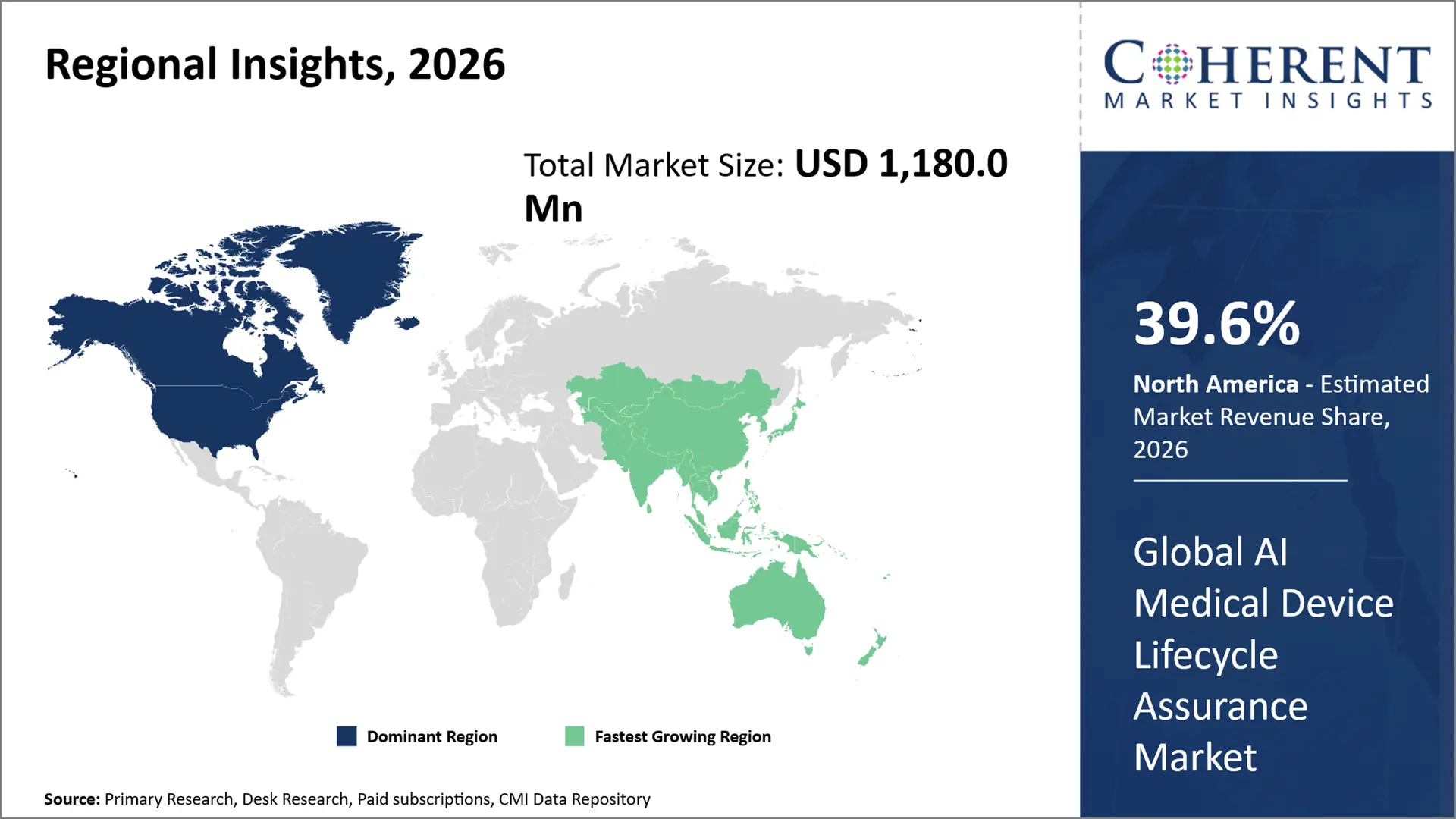
North America leads the global AI medical device lifecycle assurance market, accounting for an estimated 39.6% share in 2026, attributed to the well-developed healthcare infrastructure, growing AI innovation ecosystem, and the existing regulatory structure for medical devices. The presence of favorable government policies such as the AI-specific regulatory pathway by the FDA and the complete set of guidelines on Predetermined Change Control Plans (PCCPs) for applicable medical devices allow for the systematic modification and continuous validation of AI-enabled medical devices. For instance, in August 2025, the U.S. Food and Drug Administration (FDA) issued formal guidance on the development of Predetermined Change Control Plans for AI-enabled medical device software. This guidance refers to prospective modifications, validation approaches, implementation strategies, and impact analysis.
Why Does Asia Pacific AI Medical Device Lifecycle Assurance Market Exhibit High Growth?
Asia Pacific is expected to exhibit the fastest growth in the global AI medical device lifecycle assurance market, registering an estimated CAGR of 20.2% during 2026–2033. The region is projected to account for 23.4% of the global market in 2026, owing to the accelerating digitization of healthcare industry, booming medical device manufacturing, growing AI enabled diagnostics adoption. Emerging digital health-oriented regulations by Japan, China and South Korea are setting new standards for innovation in healthcare, which would help to increase the requirement of software validation, clinical performance validation and post-market surveillance. For instance, in July 2025, China’s National Medical Products Administration (NMPA) announced measures to strengthen full-lifecycle oversight of innovative medical devices, including AI-enabled devices, with provisions for performance evaluation, registration changes, and post-market safety monitoring. These measures support demand for AI model validation, change-management testing, and ongoing surveillance services. Moreover, the escalating adoption of healthcare AI along with the advanced medical infrastructure in the region would positively fuel the overall industry growth.
Global AI Medical Device Lifecycle Assurance Market Outlook for Key Countries
Why is the U.S. Leading Innovation and Adoption in the AI Medical Device Lifecycle Assurance Market?
The presence of a mature medical device regulation system, well-established AI implementation in clinical diagnosis, and the surge in demand for comprehensive software verification & clinical validation are expected to show a significant growth rate in the U.S. The availability of niche testing, certification, and regulatory consulting service help manufacturers to comply with safety, performance, cybersecurity, and documentation requirements. Moreover, growing use of AI-enabled software as a medical device rises the demand for continuous performance monitoring, model-change validation, and post-market risk management.
Is China a Favorable Market for AI Medical Device Lifecycle Assurance Market?
China is an attractive growth market for the AI medical device lifecycle assurance, strengthened by a robust regulatory system and the development of the AI-enabled medical software development industry. The National Medical Products Administration (NMPA) has established rules for AI-enabled medical software registration, including classification rules, and placed continuous requirement on the safety, efficacy, quality, and traceability of medical devices during their lifecycle. This, in turn, opens a new business opportunity for verification and validation, regulatory documentation, quality management and post-market activities.
Is Japan Emerging as a Key Growth Hub for the AI Medical Device Lifecycle Assurance Market?
Japan is emerging as a key growth territory in the AI medical device lifecycle assurance market owing to the regulatory focus on AI enabled software as a medical device (SaMD). The Pharmaceuticals and Medical Devices Agency (PMDA) provide a dedicated review pathway and evaluates AI/ML related issues, including algorithmic bias and post-market performance variances. There are significant opportunities for model validation, change management, evaluation of clinical performance, and post-market surveillance.
Why Does Germany Top the European AI Medical Device Lifecycle Assurance Market?
Germany leads the European AI medical device lifecycle assurance market owing to its strong medical technology manufacturing industry, mature testing & certification ecosystem, and EU-compliance mandates for medical devices. Germany is home to notified bodies as well as designated technical assessment bodies (TABs). These help support clinical evaluation, software validation, quality management, and post-market surveillance and monitoring. Integrating the EU Medical Device Regulation (MDR) with the EU AI Act will additionally drive the demand for AI-specific risk management, documentation, and lifecycle monitoring.
Is AI Medical Device Lifecycle Assurance Market Developing in UK?
The UK represents an attractive new market for AI medical device lifecycle assurance, as the UK Medicines and Healthcare products Regulatory Agency increases regulation and post-market monitoring of AI-enabled medical software. Additional surveillance obligations and a heightened focus on real-world safety and efficacy offers significant growth opportunities for software validation, risk management, regulatory documentation and ongoing monitoring services.
Regulatory Lifecycle Assurance Requirements for AI-Enabled Medical Devices
Lifecycle stage | Key assurance requirements | Relevance to the market |
Design and Development | Data quality, algorithm design controls, risk assessment, bias evaluation | Drives the need for earlier AI risk and quality assurance. |
Verification and Validation | Model accuracy, clinical performance, robustness, software testing | Increases demand for independent testing and validation services. |
Regulatory Approval | Technical documentation, clinical evidence, quality management, regulatory submissions | Supports demand for regulatory compliance and documentation services. |
Deployment and Integration | Interoperability, cybersecurity, data privacy, system integration testing | Creates opportunities for implementation and security assurance. |
Post-Market Surveillance | Real-world performance monitoring, model drift detection, incident reporting | Drives recurring demand for continuous lifecycle assurance. |
Software Updates and Change Management | Revalidation, version control, change impact assessment, ongoing risk management | Supports demand for lifecycle monitoring and adaptive change-control services. |
Expanding Lifecycle Assurance for AI SaMD and Connected Devices
How is the expansion of lifecycle assurance services for AI-enabled SaMD and connected medical devices creating new growth opportunities in the AI medical device lifecycle assurance market?
The widespread adoption of artificial intelligence-enabled medical devices presents an avenue for lifecycle assurance services in model validation, performance monitoring, cybersecurity and regulatory compliance. Additionally, as clinical data and patient populations shift, it is expected that manufacturers will seek such data to monitor for model drift and ensure device safety. For instance, in September 2025, UK Medicines and Healthcare products Regulatory Agency (MHRA) introduced a format for post-market surveillance (PMS) reports on medical devices. The new format addresses the reporting of device safety, performance, events and corrective actions. This increases the requirement for lifecycle assurance services that help device manufacturers to track device performance, address issues and meet regulatory requirements.
Market Players, Key Development, and Competitive Landscape
Key Developments
- In August 2026, Enlil, Inc. launched its Governed AI Foundation to support medtech companies to become and remain AI regulated. Covering a range of practices around the importance of AI governance, documentation traceability, controlled records, and human oversight, the program aims to facilitate AI regulated readiness throughout the entire medtech device lifecycle.
- In July 2026, Dassault Systèmes announced the signing of a binding agreement for the acquisition of Aris Global for approximately USD 1.8 billion. Dassault Systèmes will take control of a unified AI platform for the life sciences industry and combine an AI-enabled Regulatory, Safety, and Quality platform with Research, Clinical, and Manufacturing capabilities building compliance and assurance end-to-end.
- In May 2026, Rialtic and Exponential AI announced a strategic merger that would combine healthcare payment accuracy technology with artificial intelligence-powered decision intelligence. The integrated platform will enable claims processing, clinical workflows, audits, and real-time decisions, which represented an adjacent development, rather than a direct market event.
Competitive Landscape
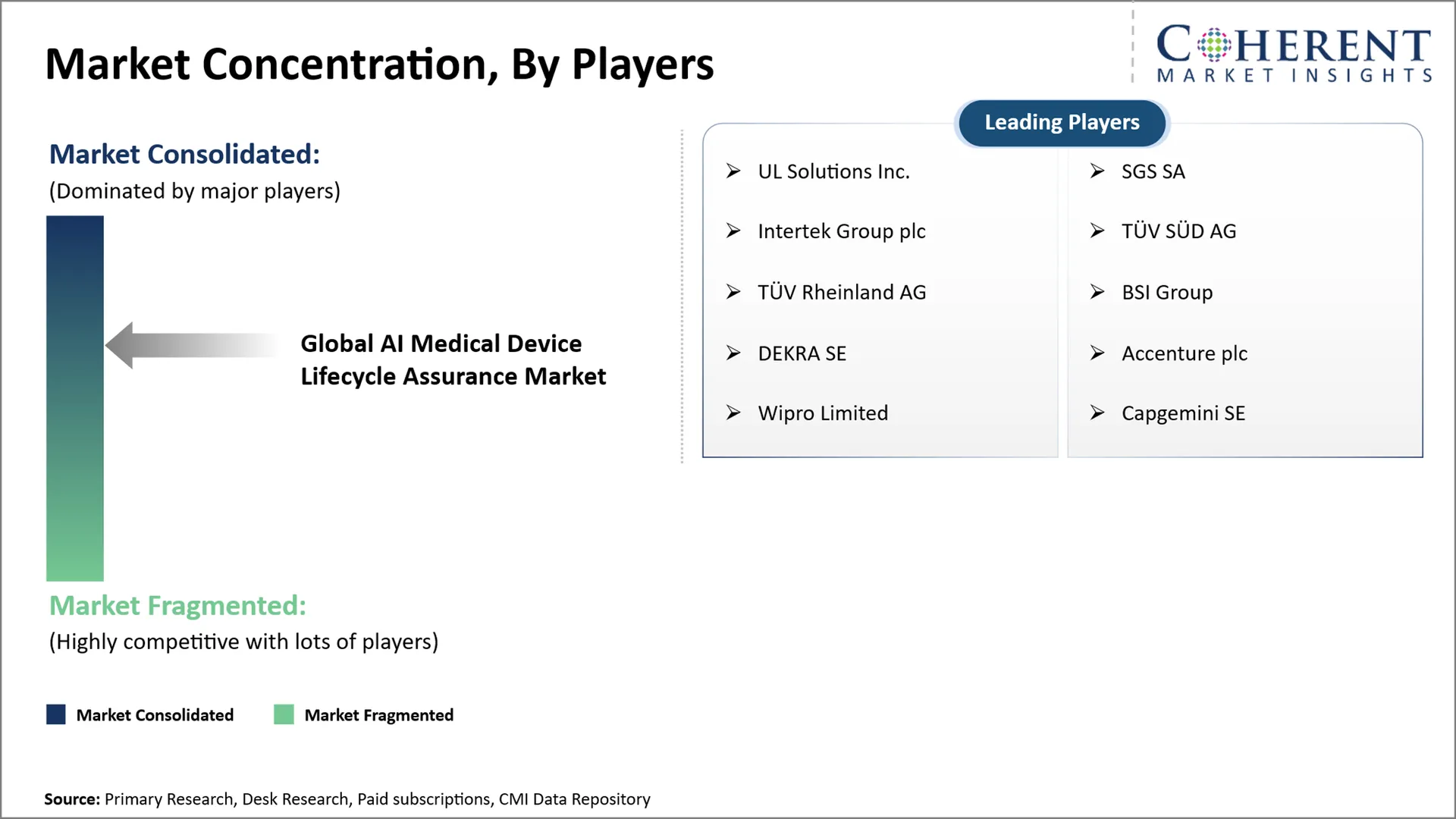
The global AI medical device lifecycle assurance market is moderately competitive. Competition within this market is mainly in the areas of AI model validation and verification, clinical safety testing, quality management, regulation, cybersecurity, and post-market performance monitoring. The key players are expanding their offerings to support manufacturers throughout the lifecycle of AI-enabled software and medical devices, which include AI software and device development, premarket testing, post-market monitoring, and change management. Key focus areas include:
- Testing and validation of AI models in terms of accuracy in all intended clinical applications
- Need for clinical safety, risk management and evidence development for AI-enabled medical devices.
- Regulatory compliance, such as technical documentation and traceability
- Cybersecurity evaluation, data privacy protection, and vulnerability tracking of connected AI-enabled medical devices
Market Report Scope
AI Medical Device Lifecycle Assurance Market Report Coverage | |||
Report Coverage | Details | ||
Base Year | 2025 | Market Size in 2026: | USD 1,180.0 Mn |
Historical Data For: | 2020 To 2024 | Forecast Period: | 2026 To 2033 |
Forecast Period 2026 To 2033 CAGR: | 14% | 2033 Value Projection: | USD 2,956.0 Mn |
Geographies covered: |
| ||
Segments covered: |
| ||
Companies covered: | UL Solutions Inc., SGS SA, Intertek Group plc, TÜV SÜD AG, TÜV Rheinland AG, BSI Group, DEKRA SE, Accenture plc, Wipro Limited, Capgemini SE | ||
Growth Drivers: |
| ||
Restraints & Challenges: |
| ||
Analyst Opinion (Expert Opinion)
- In the coming years, global AI medical device lifecycle assurance market will move towards new capability for continuous, AI-specific lifecycle assurance (including development, clinical validation, deployment and post-market) for premarket verification. Automated validation, model-drift detection, risk-based change management, and traceability of all compliance documentation will become more prevalent.
- Most significant opportunity will likely exist in the U.S. for AI-enabled SaMD verification and validation, as the proof of accuracy, robustness, and clinical performance is essential throughout the device lifecycle. Furthermore, Japan is expected to witness additional opportunity related to post-market performance monitoring and change management of AI-enabled diagnostic devices.
- In order to gain a competitive advantage market players should develop integrated assurance platforms that bring together model testing, clinical validation, risk management, cybersecurity and post market surveillance. Automated bias and robustness tests, regulatory knowledge, interoperable quality management systems and scalable services will support the maturation of adoption and competitiveness.
Speak to the analyst
Want personalized insights?
Take the findings above to one of our principal consultants, or have the report rebuilt around the segments, geographies and competitors you actually track.
Market Segmentation
- Lifecycle Stage Insights (Revenue, USD Mn, 2021 - 2033)
- Design and Development Assurance
- Verification and Validation
- Regulatory Compliance and Documentation
- Post-Market Surveillance and Performance Monitoring
- Assurance Type Insights (Revenue, USD Mn, 2021 - 2033)
- Quality Management and Process Assurance
- Clinical Safety and Performance Assurance
- AI Model Performance and Robustness Assurance
- Cybersecurity and Data Privacy Assurance
- Change Management and Lifecycle Monitoring
- Device Type Insights (Revenue, USD Mn, 2021 - 2033)
- AI-Enabled Software as a Medical Device (SaMD)
- AI-Enabled Medical Devices with Embedded Software
- AI-Enabled Diagnostic Devices
- AI-Enabled Monitoring and Therapeutic Devices
- Deployment Mode Insights (Revenue, USD Mn, 2021 - 2033)
- Cloud-Based
- On-Premises
- Hybrid
- End User Insights (Revenue, USD Mn, 2021 - 2033)
- Medical Device Manufacturers
- Healthcare Providers and Hospital Networks
- Contract Research and Testing Organizations
- Regulatory, Quality, and Compliance Service Providers
- Others
- Regional Insights (Revenue, USD Mn, 2021 - 2033)
- North America
- U.S.
- Canada
- Latin America
- Brazil
- Argentina
- Mexico
- Rest of Latin America
- Europe
- Germany
- U.K.
- Spain
- France
- Italy
- Russia
- Rest of Europe
- Asia Pacific
- China
- India
- Japan
- Australia
- South Korea
- ASEAN
- Rest of Asia Pacific
- Middle East
- GCC Countries
- Israel
- Rest of Middle East
- Africa
- South Africa
- North Africa
- Central Africa
- North America
- Key Players Insights
- UL Solutions Inc.
- SGS SA
- Intertek Group plc
- TÜV SÜD AG
- TÜV Rheinland AG
- BSI Group
- DEKRA SE
- Accenture plc
- Wipro Limited
- Capgemini SE
Sources
Primary Research Interviews
- Medical device quality and regulatory affairs executives
- Medical device testing and certification experts
- Clinical safety and medical affairs leaders
- Post-market surveillance and vigilance professionals
- AI/ML engineering and software verification specialists
- Healthcare technology and digital health implementation leaders
Stakeholders
- Medical device manufacturers
- Healthcare providers and hospital networks
- Regulatory affairs and quality management service providers
- Contract research, testing, and certification organizations
- AI software and medical technology developers
- Cybersecurity and data privacy providers
- Electronic quality management and product lifecycle technology providers
- End-use Sectors
- Hospitals and Healthcare Systems
- Diagnostic Laboratories and Imaging Centers
- Medical Device Manufacturers
- Ambulatory Surgical Centers
- Specialty Clinics and Outpatient Care Centers
- Home Healthcare and Remote Patient Monitoring
- Academic and Research Institutions
- Contract Research, Testing, and Certification Organizations
- Regulatory & Health Bodies
- U.S. Food and Drug Administration (FDA)
- European Commission
- European Medicines Agency (EMA)
- Health Canada
Databases
- FDA AI-Enabled Medical Devices List
- FDA Premarket Approval (PMA) Database
- FDA 510(k) Premarket Notification Database
- FDA De Novo Database
- EUDAMED
Associations
- Association for the Advancement of Medical Instrumentation (AAMI)
- AdvaMed
- Regulatory Affairs Professionals Society (RAPS)
- Medical Device Innovation Consortium (MDIC)
Public Domain Sources
- U.S. Food and Drug Administration (FDA)
- Centers for Medicare & Medicaid Services (CMS)
- National Institute of Standards and Technology (NIST)
- National Institutes of Health (NIH)
- European Commission
Proprietary Elements
- CMI Data Analytics Tool, Proprietary CMI Existing Repository of information for last 10 years.
Get access to 250+ pages report
Every segment, forecast, competitor profile and data table behind the analysis above — available for instant download.
- ESOMAR Member
- ISO 9001:2015 Certified
- D-U-N-S Registered
- GDPR & CCPA Compliant
Frequently Asked Questions
The global AI medical device lifecycle assurance market is estimated to be valued at USD 1,180.0 Mn in 2026 and is expected to reach USD 2,956.0 Mn by 2033.
Verification and validation dominate as they are needed to determine the accuracy, clinical safety, and regulatory conformity of the AI models before they are scaled up for commercial purposes.
AI medical device life cycle assurance involves the approach to validate, manage, and continuously monitor the safety, performance, and reliability, and compliance throughout the life cycle of AI-enabled medical devices.
The CAGR of global AI medical device lifecycle assurance market is projected to be 14% from 2026 to 2033.
Increasing demand for continuous AI model validation, and growing regulatory emphasis on lifecycle risk management, clinical evidence, and post-market performance monitoring are the major factors driving the growth of the global AI medical device lifecycle assurance market.
High costs of clinical validation, specialized testing infrastructure, and ongoing compliance, and limited standardization of validation methods for generative and adaptive AI medical technologies are the major factors hampering the growth of the global AI medical device lifecycle assurance market.
In terms of device type, AI-enabled software as a medical device (SaMD) is estimated to dominate the market revenue share in 2026.